Sony Interactive Entertainment has entered an agreement to acquire Cinemersive Labs, a UK-based machine learning and computer vision company, in a move that signals a deeper push into AI-driven graphics, rendering and visual tools for PlayStation. Sony said the team will join its Visual Computing Group and help advance visual computing inside games, with work aimed at enhancing gameplay visuals, improving rendering techniques and raising visual fidelity […]
The head of the International Monetary Fund on Monday defined the direction of glbal economic travel with unusual clarity. “All roads now lead to higher prices and slower growth,” said managing director Kristalina Georgieva in an interview. The IMF had expected global growth of 3.3% in 2026. Six weeks of war centred on Iran and the disruption of the Strait of Hormuz have already forced a rethink. […]
By Nitya Chakraborty China and Russia are the two major countries which are going the wholehog in boosting the Myanmar junta chief Min Aung Hlaing who has just been elected as the new President following national elections which were rigged, according to the international poll observers. India also exercised its diplomatic pragmatism by doing away […]
A high-speed TGV travelling from Dunkirk to Paris struck a military truck at a level crossing in northern France on Tuesday, killing the train driver and injuring passengers in a crash that has renewed scrutiny of rail safety on one of Europe’s most intensively used networks. Authorities said the collision happened in Pas-de-Calais, between Béthune and Lens, after the train hit a trailer carrying military equipment. Emergency […]
Microsoft has warned that a threat actor it tracks as Storm-1175 is exploiting vulnerabilities in internet-facing systems at high speed to deliver Medusa ransomware, in some cases moving from initial access to data theft and encryption within 24 hours. The alert points to a pattern that security teams have feared for months: a shrinking window between vulnerability disclosure, exploitation and full-scale ransomware deployment. The group, described […]
Arabian Post Staff -Dubai UAE businesses are sharply increasing their use of artificial intelligence to cut costs, raise output and strengthen resilience, with AI-related spending rising 521 per cent over the past 13 months, according to a new market snapshot based on corporate payment data. The findings point to a shift from trial use to operational deployment, particularly among smaller businesses seeking quicker productivity gains in a […]
China’s electric-arc furnace steelmakers are lifting output at the fastest pace in more than two years, helped by improving margins and a seasonal pickup in construction demand, giving the lower-carbon segment a rare competitive opening in a market still burdened by oversupply and weak property-linked consumption. Industry data showed average capacity utilisation among 94 independent EAF mills rose to 61.2% in the week of March 27 to April 2, the highest level since January 2024 and the fifth straight weekly increase.
The rebound matters because EAF steel has long struggled to gain ground in China despite official support for cleaner production. The route relies mainly on scrap rather than iron ore and coking coal, making it structurally less carbon intensive than the blast furnace-basic oxygen furnace model that still dominates the country’s steel industry. World Steel Association figures show the global production mix is far more tilted towards EAF than China’s, with electric-arc furnaces accounting for 28.6% of world crude steel output, while average carbon intensity for scrap-based EAF steelmaking is markedly below that of the conventional blast furnace route.
For Chinese mills, the immediate story is not only about decarbonisation but about economics. Higher finished-steel prices and steadier demand for construction steel have made it easier for some EAF operators to restart or raise run-rates after a prolonged spell in which many were squeezed by electricity bills, uneven scrap supply and patchy orders. Reuters reported in late February that warmer weather and the resumption of building activity typically support steel demand in March, while temporary production curbs in northern blast-furnace regions also helped firm futures prices. That backdrop has narrowed the gap between scrap-fed mills and traditional producers, even if the advantage remains fragile.
Yet the broader steel market in China remains difficult. Official and consultancy data cited by Reuters show crude steel output in 2025 fell to 960.1 million tonnes, down 4.4% from 2024 and below one billion tonnes for the first time since 2019. That decline reflected a managed effort by Beijing to address overcapacity, but it also underscored softer domestic demand and the long shadow cast by the property downturn. State-backed forecasts cited by Reuters indicate steel demand is expected to slip again in 2026 after contracting sharply in 2025, suggesting that EAF mills are recovering within a shrinking overall market rather than riding a broad-based industrial boom.
That tension helps explain why Beijing continues to press for structural change. The National Development and Reform Commission said in March that China would curb excess capacity in steel and other heavy industries in an orderly way, renewing a campaign that has featured repeatedly in official policy language. The cleaner EAF route fits that policy direction because it uses recycled feedstock and can reduce reliance on imported iron ore, but steelmakers still take their cues from margins first. When profits weaken, producers often retreat to whichever process best matches raw material costs, local power tariffs and available supply chains.
The environmental case for EAF expansion remains strong. Reuters reported last year that China had aimed to raise EAF steel’s share of crude steel production to 15% by 2025 and 20% by the end of the decade, but the actual share had been stuck around 10%. A 2025 review by the Centre for Research on Energy and Clean Air said missing the 15% milestone would add more than 160 million tonnes of carbon dioxide emissions compared with a stronger shift towards cleaner steelmaking, while high electricity costs, unreliable scrap flows and financial strain had kept many EAF operators on the back foot.
China’s steel industry also faces an external pressure point: trade. Even as domestic demand softened, exports climbed to a record 119.02 million tonnes in 2025, up 7.5% from a year earlier, according to Reuters. That export surge helped keep mills running, but it also intensified complaints abroad over cheap supply and raised the risk of more trade barriers. For EAF producers, this creates a mixed picture. Strong export channels can support domestic steel prices and improve mill economics, yet any escalation in trade restrictions would feed back into the entire sector, including the greener producers now regaining confidence.
Oil prices pushed higher on Tuesday as Donald Trump intensified pressure on Iran, sharpening investor anxiety over the fate of the Strait of Hormuz and the risk of a wider supply shock across global energy markets. Brent crude traded above $110 a barrel and US West Texas Intermediate rose past $113, extending a rally driven by fears that a prolonged disruption in the Gulf could squeeze flows […]
Arabian Post Staff -Dubai Iran said on Monday it wanted a durable end to the war with the United States and Israel rather than a temporary truce, rejecting pressure to reopen the Strait of Hormuz on Washington’s timetable as President Donald Trump warned the country could be “taken out” if it failed to meet his Tuesday night deadline for a deal. Tehran’s stance underscored how far apart […]
Arabian Post Staff -Dubai Jazeera Airways has postponed a decision on its cash dividend for 2025, saying the move reflects caution rather than financial weakness as the Kuwait-based low-cost carrier responds to mounting regional disruption. In a board decision disclosed on 6 April, the airline said it had amended its recommendation to shareholders and would instead revisit the payout after first-quarter 2026 results, with the annual general […]
KUALA LUMPUR, MALAYSIA – Media OutReach Newswire – 7 April 2026 – The ACES Institute has officially released its latest comprehensive research publication titled “Doing Things Right, Doing the Right Things: The Scramble for the Soul of an Organisation.” The study provides a rigorous analysis of the modern corporate dilemma between operational efficiency and ethical conviction, introducing a leadership framework designed to help global organizations navigate increasingly fragmented stakeholder expectations.
Ren Li, Founder and CEO of Letright Industrial Corp., Ltd., whose commitment to ‘doing the right things’ led the company’s pivotal shift toward sustainable materials long before it became an industry standard.
The research, authored by Research Strategist Ager Freddy, Senior Researcher Timothy Benson, and ACES Institute President Dr. Shanggari Balakrishnan, argues that the phrase “doing the right thing” is frequently invoked in business discourse as a universal moral ideal, yet it is rarely examined through the lens of operational cost and strategic trade-offs. The study identifies that what is considered “right” varies significantly depending on the stakeholder ranging from regulatory compliance for governments and governance standards for investors to fair wages for employees and responsible resource use for environmental advocates.
The 4Cs Framework and Institutional Resilience
Central to the publication is the introduction of the 4Cs leadership framework: Creativity, Conscientiousness, Constancy, and Collaboration. According to the ACES Institute, these four pillars are essential for embedding ethical considerations directly into an organization’s product design, engineering processes, and corporate culture. The researchers suggest that by moving beyond surface-level corporate social responsibility and toward an institutionalized philosophy, companies can build a foundation for long-term differentiation and resilience.
The study acknowledges that this values-driven approach often necessitates difficult decisions that may carry significant short-term costs. Organizations pursuing deep sustainability or ethical strategies may face higher production expenses, skepticism from traditional market analysts, and resistance from consumers who express support for sustainability in theory but remain sensitive to price in practice. Furthermore, the research explores how global economic and political dynamics, such as shifting regulations and differing sustainability standards across international markets, complicate the efforts of leaders to maintain a consistent ethical stance.
Case Study Analysis: Letright Industrial Corp., Ltd.
To provide empirical evidence for these findings, the report examines the multi-decade journey of Letright Industrial Corp., Ltd., a manufacturer of premium outdoor living products. Under the leadership of founder and CEO Ren Li, the company made a pivotal decision in the early 2000s to abandon wood then the dominant material in the industry in favor of recyclable materials such as aluminum. This decision was driven by personal conviction regarding environmental impact rather than immediate market demand or regulatory requirements.
The case study illustrates the “Constancy” pillar of the ACES framework, noting that the move initially triggered significant resistance. During this period, customers continued to prefer traditional materials, employees questioned the strategic shift, and management warned of the financial consequences of declining orders. However, the research highlights that by persisting through this uncertainty, Letright successfully transitioned from an original equipment manufacturer (OEM) to an original design manufacturer (ODM). This shift allowed the company to build its own intellectual property, eventually leading to the development of the Ombra solar smart pergola, which integrates photovoltaic technology for renewable energy generation.
Executive Perspective on Global Leadership
“Organisations today operate in a landscape where expectations rarely align,” stated the authors of the study. “What appears responsible to one group may be viewed as inadequate or even harmful by another. Ultimately, ethical leadership does not mean achieving universal approval or avoiding difficult decisions. Instead, it requires organisations to define their own principles and align strategy, operations, and innovation around those values.”
The publication concludes that while “doing the right things” does not guarantee universal agreement, organizations that clearly define their values and consistently act on them are statistically more likely to build lasting relevance and resilience in an increasingly complex business environment. This research forms a key part of the ACES Institute’s ongoing mission to examine the intersection of leadership, sustainability, and responsible corporate transformation across global industries. Hashtag: #ACESInstitute #LetrightIndustrial
The issuer is solely responsible for the content of this announcement.
About ACES Institute
ACES Institute is a Kuala Lumpur-based research and thought leadership organisation focused on responsible leadership, sustainability, and organisational transformation. Through industry research, case studies, and strategic insights, the institute works with global companies and experts to explore how organisations can create long-term value while addressing complex economic, social, and environmental challenges.
About Letright Industrial Corp., Ltd. | Ombra Brand
Letright Industrial Corp., Ltd. is a global manufacturer of premium outdoor living solutions, specialising in innovative pergolas, outdoor furniture, and lifestyle products. Headquartered in Hangzhou, China, the company combines design innovation, advanced engineering, and environmentally responsible materials to deliver sustainable outdoor experiences for residential and commercial markets worldwide.
Dubai, UAE — At the forefront of Middle East’ innovative medical community is the name of talented surgeon Dr. Vardan Khachatrian, a visionary specialist and celebrity doctor, whose methods are increasingly shaping expectations across high-end patient segments not only in MENA region, but globally. Industry observers note a growing demand for natural, long-lasting results with minimal visible intervention, particularly among international patients travelling to Dubai for advanced […]
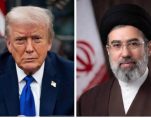
Arabian Post Staff -Dubai Donald Trump has said a Tuesday deadline for Iran to accept a deal remains final, sharpening a crisis that has already pushed energy markets higher, intensified diplomatic pressure and raised fresh concern over the risk of a broader Middle East conflict. Speaking on April 6 at the White House, the US president said Tehran had made what he described as a significant move […]
Singapore’s parliament is set to turn its attention on Tuesday to the economic and security consequences of the war involving Iran, with lawmakers filing 62 questions and three ministers due to deliver statements on how the conflict could affect energy supplies, inflation, transport costs and broader national resilience. The questions, lodged by 32 members from both the ruling People’s Action Party and the opposition, underline growing concern in the trade-dependent city-state over the fallout from turmoil in the Middle East.
The scale of parliamentary scrutiny is notable even by Singapore’s standards. According to the order paper for the 7 April sitting, Deputy Prime Minister and Minister for Trade and Industry Gan Kim Yong, Coordinating Minister for National Security K. Shanmugam, and Acting Transport Minister and Senior Minister of State for Finance Jeffrey Siow are scheduled to address the chamber. The questions range from the immediate effect of higher oil and gas prices to the security of liquefied natural gas supplies and the government’s plans to shield households and businesses from a prolonged external shock.
At the centre of concern is Singapore’s dependence on imported energy and its exposure to global shipping routes. The order paper shows MPs asking whether damage to Qatar’s Ras Laffan LNG facilities could materially affect short- and medium-term supply, whether alternative procurement arrangements would be enough to offset any shortfall, and whether disruption in the Middle East might accelerate efforts to diversify the energy mix, including greater investment in alternatives such as nuclear power. That line of questioning reflects a deeper vulnerability: Singapore generates most of its electricity from natural gas and has little room to escape sudden swings in international fuel markets.
Cost pressures are another major theme. Lawmakers have asked how rising fuel and electricity prices may feed through to household expenditure, transport operators and the wider cost of living. For a government already balancing inflation management with fiscal prudence, the debate offers an opportunity to show whether existing buffers are sufficient or whether targeted support may be needed if the conflict persists. Prime Minister Lawrence Wong, in a video message on 2 April, had already warned Singaporeans that instability in the Middle East could affect the economy through higher energy prices, supply chain disruption and weaker global confidence, signalling that the government was preparing the public for a potentially difficult external environment.
Singapore’s predicament is shaped by geography as much as policy. The republic sits far from the conflict zone, yet its economy is tied tightly to global trade, imported food and imported fuel. Any threat to Gulf energy production or maritime passage through strategic chokepoints can ripple quickly into Asian benchmark prices, freight costs and business sentiment. Questions filed for parliament suggest MPs are not only concerned about immediate supply disruption, but also about second-round effects on manufacturers, logistics firms, electricity generation and consumers already sensitive to living costs.
The breadth of the questions also points to a broader political calculation. Singapore’s leaders have long framed resilience as a whole-of-government and whole-of-society effort, particularly when external shocks threaten domestic stability. The debate now unfolding in parliament is likely to test how far that framework can stretch in the face of a conflict whose trajectory remains uncertain. Opposition members, including Workers’ Party figures, have pressed for details on fuel reserves, assistance for workers dependent on transport and the likely effect on household budgets, while ruling-party MPs have focused heavily on energy security, diversification and inflation spillovers.
Beyond energy, the parliamentary discussion may widen into questions of diplomacy, national security and public confidence. K. Shanmugam’s planned statement suggests the government sees the crisis as more than a commodity shock. Singapore has consistently sought to position itself as stable, rules-based and open to commerce, which means geopolitical conflict in a key producing region carries implications not only for prices but also for investor confidence and regional security calculations. Ministers will face pressure to reassure the public that contingency planning is in place, even as they acknowledge that a small open economy cannot fully insulate itself from a major war-driven disruption.
Arabian Post Staff -Dubai AirAsia X has raised ticket prices by between 31% and 40% and lifted fuel surcharges by as much as 20% after jet fuel costs surged following the Iran war, according to Group Chief Executive Officer Bo Lingam, underscoring how quickly conflict in the Middle East is feeding into Asian aviation costs and passenger fares. The Malaysia-based low-cost carrier said average jet fuel prices […]
A Python package presented as a privacy-first shortcut to AI models has been unmasked as a supply-chain threat that quietly captures user prompts, leans on a private university service without authorisation and repurposes proprietary Claude material to make the deception look convincing. Security researchers said the package, hermes-px, was uploaded to PyPI as a supposed “Secure AI Inference Proxy” offering OpenAI-compatible access over Tor and claiming users […]
Google has expanded Chrome’s native lazy-loading system to cover audio and video elements, extending a browser feature once centred on images and iframes into richer media formats that often consume far more data and trigger earlier connections to outside servers. The change allows developers to use the loading=”lazy” attribute on ` and so that files outside the visible viewport can be deferred until a user is closer […]
Arabian Post Staff -Dubai ADNOC Gas said its domestic supply chain remains intact after damage at part of the Habshan complex on April 3, with gas demand inside the UAE being met through other facilities and no disruption to customer supply. The company told the Abu Dhabi Securities Exchange that the affected area had been isolated and that a full assessment of damage to the Habshan train […]
Greenlogue/AP Solar power capacity across the Gulf Cooperation Council has expanded at an exceptional rate, with a new GCC-Stat report showing average annual growth of 88.1 per cent between 2013 and 2024, underscoring how one of the world’s leading hydrocarbon-producing regions is accelerating investment in cleaner energy while also strengthening climate resilience measures. The same report said electricity generated from solar energy climbed from 0.13 thousand gigawatt-hours […]
Gold prices extended their retreat as investors recalibrated expectations for US interest rates after stronger labour-market signals collided with a worsening conflict in the Middle East, a combination that lifted the dollar, pushed oil higher and revived concerns that inflation could stay stubborn for longer. Spot bullion has come under pressure even as geopolitical risk remains elevated, an unusual pattern that reflects how sharply energy costs and […]
Solana’s effort to prepare for a future quantum-computing threat is exposing a basic tension for high-speed blockchains: the safer the signature system becomes, the heavier and slower it is likely to be. That trade-off has moved into sharper focus as Bitcoin developers debate draft quantum-safe address proposals, Ethereum’s post-quantum team lays out a multi-year migration plan, and new research from Google and outside experts brings forward the […]
Dentsu has appointed Yusuke Kagohara as chief financial officer for Southeast Asia, handing him a mandate that goes beyond traditional finance oversight as the advertising and marketing group tightens governance and prepares for a more disciplined phase of expansion across one of Asia’s most competitive markets. The appointment took effect immediately, and Kagohara will report to Sanjay Bhasin, chief executive for Southeast Asia.
The move lands at a sensitive point for global agency networks. Growth remains available across Southeast Asia, but margins, client expectations and regulatory scrutiny are all sharpening. Dentsu’s own framing makes clear that this is not merely a replacement hire. Company statements and industry reports describe the post as part of a wider effort to deepen strategic and financial discipline and strengthen governance across the regional cluster, which covers Indonesia, Malaysia, the Philippines, Singapore, Thailand and Vietnam. The business employs more than 4,000 people in the region under what Dentsu describes as a borderless operating model formed in 2023.
Kagohara arrives with a profile that fits that brief. Before this appointment, he served as group head of risks and controls at Dentsu Group Inc., where he worked on internal controls, enterprise risk management and broader governance and remediation efforts. Earlier assignments included chief financial officer and deputy chief financial officer roles in Beijing and at Dentsu Creative China, experience that gave him exposure to large and complex operating environments in Asia. Industry coverage of the appointment has also highlighted his background in corporate strategy, transformation and all-round finance, suggesting the company wanted someone comfortable with both compliance architecture and commercial execution.
That background matters because agency finance chiefs are no longer judged only on forecasting, cost control and reporting. They are increasingly central to how networks integrate acquisitions, police internal controls, price AI-enabled services and defend profitability while clients demand more measurable returns. Dentsu has been signalling this shift at group level for months. Its global management overhaul announced in February was pitched around stronger execution, while its 2025 integrated report and governance materials emphasised capital discipline, internal investment, productivity and the strengthening of leadership and controls.
Southeast Asia gives that challenge extra complexity. The cluster spans fast-growing but highly uneven markets, each with different media structures, regulatory standards, client mixes and digital maturity. Dentsu has described the region as one of the world’s fastest-growing, and its own ad spend outlook has projected Asia Pacific growth ahead of the wider global economy. In December, the company forecast that global advertising spend would rise 5.1 per cent in 2026 to more than $1 trillion, with Asia Pacific remaining the fastest-growing region. For a network trying to convert that momentum into durable earnings, stronger financial control becomes a strategic tool rather than a back-office function.
Bhasin’s comments underline that point. In remarks carried by multiple reports and company-linked posts, he said growth on its own was not enough and that the business needed expansion that was “accountable, resilient, and built to last”. He described Kagohara’s experience in governance, transformation and complex markets as critical to the next stage of Southeast Asia’s development. Kagohara, for his part, said the region stood out for its scale, complexity and ambition, adding that strong fundamentals were universal even when market conditions varied widely. Those comments indicate a leadership view that the next test for Dentsu is not whether Southeast Asia can grow, but whether it can do so with tighter controls and greater consistency across markets.
The timing also follows a change in the seat Kagohara is filling. Trade reports late last month said Bharti Agrawal, who had served as CFO for Southeast Asia at Dentsu, had moved to Monks as chief financial officer for APAC marketing services. That succession gives the new appointment a sharper operational significance, because it suggests Dentsu moved quickly to avoid drift in a role that sits at the centre of planning, compliance and regional coordination.
Italy has introduced temporary jet fuel limits at four airports as supply strains tied to the Middle East conflict begin to hit European aviation, raising the prospect of operational disruption just as airlines prepare for heavier spring and summer traffic. Notices to airmen issued for Bologna, Milan Linate, Venice and Treviso said Jet A1 availability from Air BP Italia was limited, with restrictions running between April 2 […]
Cash briefly replaced cards and QR payments across parts of Russia on April 3 after a widespread disruption hit banking and payment services, an outage that Telegram founder Pavel Durov said was triggered by Moscow’s efforts to block virtual private networks as part of a broader clampdown on online communications. The disruption affected shoppers, commuters and businesses, and has sharpened scrutiny of how far the Kremlin’s drive […]