Just in:
EBANX and Eneba strengthen partnership in Latin America with 138% YoY growth in payment volume // UAE crews sustain coastal oil removal as beaches reopen // IEA forecasts fourth-quarter oil surplus as Gulf shipments rebound // Woman found dead as bank moves to repossess home // L’OCCITANE Celebrates 50 Years Of Provençal Craftsmanship With Holiday 2026 Collection // Nvidia appoints Colette Kress interim chief after Huang departure // Crescent Enterprises venture arm funds Oyster Therapeutics development // Hackers falsify NVIDIA GPU readings to mask cryptomining // Inpex reaffirms Gulf oil strategy despite shipping constraints // 11 Boutique Xinjiang Wineries to Debut in Singapore // US authorities dismantle North Korean cryptocurrency deception infrastructure // OpenAI unveils ChatGPT Wallet for agent-led purchases // From Dubai to the EU: how UAE-based crypto firms can expand under MiCA // Yicura BioMed Advances Dual Capital and Industrial Strategy: Completes First Closing of Series B Financing Led by Gobi Partners // Lego restores BrickLink marketplace after security investigation // TORRAS Launches Two New iPhone Duo Cases from Its Popular Ostand Series, Addressing Foldable Phone Users’ Concerns About Difficult Stand Positioning and Scratches // Messi affair SIT finds all-round violations // China Reconciled To U.S. Curbs On Chips Exports, Woos South Korea For Supply // Sun World Ba Den Mountain marks Vietnam Culture Day, welcoming Cambodian visitors over Bon Om Touk // US resumes flights after nationwide air traffic shutdown //

News related to
Immediate

Portuguese quantum computing firm Quantica Tech has revealed a new digital currency, Quantic Bitcoin, engineered to resist attacks from future quantum computers. The project rests on a proprietary “Quantum Interoperability” protocol designed to allow conventional blockchains and quantum‐era architectures to communicate and co-operate.

BTCQ is intended to preserve Bitcoin’s proof-of-work consensus but replace vulnerable cryptographic signatures with algorithms that conform to NIST-approved post-quantum standards. In transitional phases, the system runs quantum algorithm emulation on classical hardware—enabling development without immediate dependence on quantum hardware. Quantica has also introduced tiered fractional units, named Photons, Quarks and Bosons, to mirror Bitcoin’s Satoshi model at microtransaction scale.

The announcement reflects intensifying concern within cryptographic and blockchain communities about quantum threats to existing systems. Shor’s algorithm, for instance, is capable of undermining widely used public-key schemes, such as ECDSA, that secure most cryptocurrencies today. A literature review of quantum impacts on blockchain estimates that, although scalable quantum machines remain a work in progress, the threat horizon is accelerating, pushing many in the industry to preemptively explore quantum-safe alternatives.

Quantica says its interoperability protocol enables smart contracts in languages such as Solidity, Rust, Plutus and Vyper to invoke quantum layer functions through external script calls. The firm claims it has already shared the initial design of that protocol with the scientific community, though specific cryptographic details remain withheld. Plans are in place to issue Simple Agreements for Future Tokens in late 2025 and conduct a pre-sale of the token units ahead of public launch. The company is also working in parallel on related projects—Quanticacoin, USDT-Q and Q-Solana—to extend its quantum-capable ecosystem.

BTCQ joins a growing number of blockchain initiatives adopting quantum-resistant techniques. The Quantum Resistant Ledger, for example, has long leveraged XMSS to offer protection against quantum attacks, and many networks have begun integrating lattice-based or hash-based post-quantum cryptography.

Still, implementation and security challenges loom. Recent academic analysis warns that purely algorithmic guarantees do not suffice; side-channel attacks and hardware vulnerabilities may undermine post-quantum schemes if not carefully addressed. Analysts caution that the “harvest now, decrypt later” risk remains active: encrypted data captured today may be decrypted when quantum capabilities mature.

Market reception has been cautious. Many observers view Quantica’s claims as ambitious, given the dearth of open cryptographic proofs or independent audits so far. Some see the project as an early bet on quantum transition rather than an immediate substitute for existing value chains. Others argue the broader utility of quantum-resistant assets will depend heavily on regulatory frameworks, interoperability standards, and community adoption.

Quantica’s announcement arrives against the backdrop of intensifying activity in quantum and cryptographic infrastructure. Hardware vendors and research institutions are racing to scale error correction, qubit coherence and interconnects. Meanwhile, financial and security firms are preparing migration strategies for sensitive systems. Among commercial players, SEALSQ has unveiled hybrid cryptographic hardware intended to safeguard blockchain systems and IoT devices against quantum attacks.

Quantica has positioned BTCQ’s development as a shift from theoretical readiness to pragmatic construction. The firm contends it can build bridges between classical chains and quantum systems without heavy disruption to existing protocols. Early access via SAFTs and token presales aim to bootstrap an ecosystem of developers and enthusiasts.
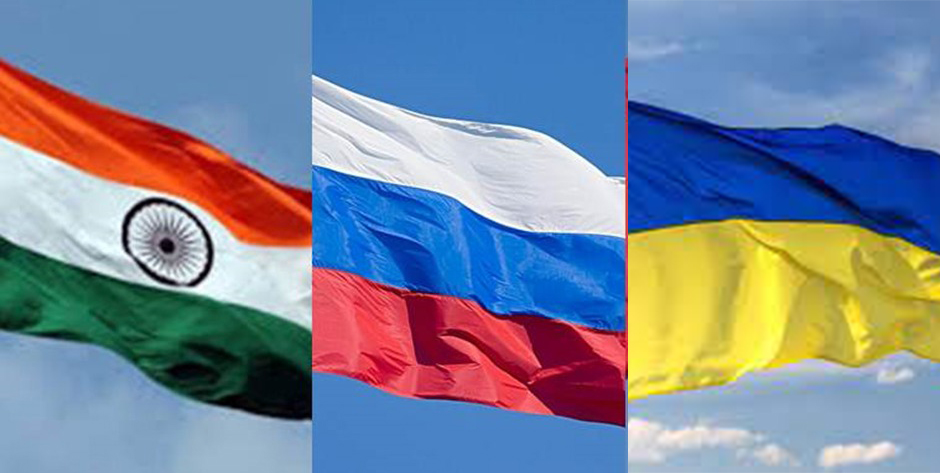

Ukraine’s 63rd Mechanised Brigade has released footage claiming that a 22-year-old Indian national, Majoti Sahil Mohamed Hussein from Morbi, Gujarat, surrendered to Ukrainian forces after fighting for Russia. The Indian Ministry of External Affairs stated it is investigating the matter, having not yet received formal confirmation from Ukrainian authorities.

In the video, Hussein says he travelled to Russia for university studies but was later convicted on drug charges and handed a seven-year prison sentence. He states that to avoid incarceration, he accepted a Russian military contract to fight in Ukraine. After only 16 days of training, he was deployed to the front lines on 1 October, and after three days of combat, asserted that a dispute with his commander prompted him to approach a Ukrainian trench position and surrender. “I immediately put down my rifle … I didn’t want to fight. I needed help,” he is heard saying in Russian. He further claims he never received promised financial compensation and that he would rather remain in custody in Ukraine than return to Russia.

Indian officials have neither confirmed his capture nor denied it. A spokeswoman from the MEA said New Delhi is “ascertaining the veracity of the report.” The Indian mission in Kyiv is reported to be seeking clarity from Ukrainian counterparts. The MEA noted it has not yet received an official notification.

If confirmed, this would mark the first verified case of an Indian national being held by Ukrainian forces after participating directly in combat on Russia’s side—although Indian nationals have previously been reported among Russian-aligned forces. In January, Indian authorities disclosed that 12 citizens had died fighting for Russia, while 16 others were listed as missing. New Delhi has repeatedly raised the issue with Moscow, urging the repatriation or discharge of Indians serving in the Russian military.

The broader phenomenon of third-country nationals entering the Russia-Ukraine war as combatants has drawn increasing scrutiny. Independent investigations estimate that more than 1,500 foreign fighters from over 48 nations have joined Russia’s military ranks. Some are believed to have been recruited under misleading promises, including job opportunities, visa benefits, or leniency in legal cases. In India’s case, accusations of coercion or trafficking have been made—families of slain Indian fighters have claimed their relatives were enticed with assurances but ultimately compelled into frontline service.

Analysts note that this case, if corroborated, underscores the murky legal and ethical terrain of foreign national participation in armed conflict. Under international humanitarian law, combatants captured in war zones may face prosecution, detainee protections, or diplomatic processes, depending on their status. The Indian government, maintaining a non-aligned posture regarding the Russia-Ukraine conflict, must balance protecting its citizens abroad with adherence to international norms and pressure from both Moscow and Kyiv.

Within India, this development is likely to intensify scrutiny over how students or migrants abroad might be exposed to recruitment schemes, particularly in countries engaged in conflict. Some previous admissions of Indians fighting for Russia suggested recruitment via third-party agents or recruitment drives run under the guise of employment for non-combat roles—later displaced into military duty. Families have, in past instances, sought intervention from Indian diplomatic missions, urging more robust preventive mechanisms.

Meanwhile, in Russia, foreign conscripts—or contracted soldiers from abroad—have been increasingly leveraged to supplement manpower. Ukrainian authorities have touted captures of foreign fighters in multiple instances, often publicising their nationality to highlight alleged exploitation or coercion. These reports frequently appear in social media or Telegram channels operated by Ukrainian units, although independent verification is sometimes challenging, given the fog of war and conflicting narratives.

Gold climbed past $4,000 per ounce for the first time, propelled by soaring investor demand for safer assets in the face of intensifying economic and political uncertainty. Spot gold reached about $4,011.18 per ounce, while U. S. gold futures for December delivery touched $4,033.40. The rally reflects mounting expectations that the U. S. Federal Reserve will begin trimming rates, combined with a weakening dollar, heavy central bank […]

Oil markets climbed modestly on Wednesday as traders digested OPEC+’s decision to raise production by only 137,000 barrels per day from November — a figure widely viewed as cautious and aimed at managing oversupply pressures. Brent crude gained about 0.7 per cent to $65.93 a barrel, while US West Texas Intermediate added 0.8 per cent, reaching $62.24.

The measured increase is part of an ongoing tug-of-war between easing supply fears and softening demand estimates. Analysts argue that the restrained hike helped calm immediate market jitters about a flood of new barrels entering global markets. At the same time, the surge in output from non-OPEC producers—especially the United States—is tipping the scale toward a heavier supply environment.

The U. S. Energy Information Administration raised its 2025 forecast for domestic oil production to a record 13.53 million barrels per day, up from earlier projections. That upward revision intensifies concerns that global inventories could swell, placing downward pressure on prices. The EIA warns that crude inventories may build further, potentially squeezing prices in the coming months.

OPEC+ has signalled a cautious approach. The bloc’s members, including Saudi Arabia and Russia alongside six others, opted for incremental supply additions rather than aggressive increases. The decision underscores a balancing act: securing market share without triggering a disruptive oversupply.

Some market watchers believe the group is constrained by internal capability limits and the risk of destabilising the market. Only about 75 per cent of the targeted 2.7 million bpd raise since April has actually materialised, as certain member states struggle to meet output goals. Meanwhile, signs of macro slowdown and tepid fuel demand, especially in Asia and Europe, loom as headwinds.

Large oil majors are already adjusting strategies to navigate the tighter margins. Chevron, ExxonMobil, BP, Shell, and TotalEnergies are implementing cost cuts, trimming share buybacks, and streamlining operations to preserve balance sheets. Oil prices under $65 are straining profitability across the sector, particularly for producers with high breaking-even costs. Shell, for instance, has taken a $600 million impairment hit tied to biofuel and remediation operations in Europe.

In Argentina, falling oil revenues threaten the government’s ambitious economic plans centred on energy exports. Output at the country’s Vaca Muerta formation peaked in August but has shown signs of deceleration due to weaker global pricing and elevated costs. Local industry sources warn that strapped fiscal conditions and foreign-exchange restrictions are discouraging further investment.

Futures markets also reflect a state of tension. The structure remains sensitive to signals that either reassure or alarm about supply and demand balances. Traders are closely watching upcoming US inventory data, geopolitical developments affecting Russian shipments, and demand dynamics from China. Some analysts regard the cautious output hike as a temporary reprieve, with the risk that a sharper fall may take prices into the $50–$60 range if oversupply intensifies.

The International Energy Agency projects a potential surplus of 3.3 million barrels per day in 2026, even if current output levels persist — a scenario that would further test OPEC+’s capacity to contain downside. In contrast, OPEC’s internal modeling suggests a smaller deficit under the same conditions, reflecting wide divergences in forecasting assumptions. Investors and policymakers now wait for signs of demand resilience or fresh supply shocks, both of which could dictate whether oil stabilises in the $60s or slips further.

Turkish authorities reaffirmed their commitment to maintaining energy ties with Russia, dismissing US appeals to cut off Moscow from the country’s gas supply network. The Turkish Energy Minister, Alparslan Bayraktar, emphasised that existing contracts and technical dependencies render any abrupt withdrawal impractical. Bayraktar told CNNTurk that “we cannot tell our citizens: We have run out of gas,” adding that Turkey must ensure continuous supply from Russia, Azerbaijan, […]

The U. S. Cybersecurity and Infrastructure Security Agency has designated CVE-2021-43226, a privilege-escalation vulnerability in Microsoft’s Common Log File System driver, as actively exploited and added it to its Known Exploited Vulnerabilities catalog. The flaw allows a local, authenticated user to bypass security controls and elevate privileges to the SYSTEM level—a shift that can lead to full system compromise. Microsoft rates the vulnerability with a CVSS 3.1 […]

A consortium led by Saudi Arabia’s Public Investment Fund, with Silver Lake and Jared Kushner’s Affinity Partners, has struck a deal to acquire Electronic Arts for approximately $55 billion, taking the iconic game publisher private. Under the agreement, EA’s shareholders will receive $210 per share, a 25 percent premium over the share price before the deal emerged, as the consortium combines fresh equity with a leveraged debt […]

Advertisements

Rania Gule Over the past few months, silver prices have witnessed a strong rally — not only as a safe-haven asset alongside gold, but also due to fundamental factors rooted in industrial supply and demand dynamics. As of early October 2025, silver is trading around $48.65 per ounce in spot market data, while ETFs such as iShares SLV show a slightly lower net asset value (NAV), reflecting […]

HONG KONG SAR – Media OutReach Newswire – 6 October 2025 – The anime IP “BUCKET MAN”, created by filmmaker Stephen Fung, has been awarded the Rising IP Award at DesignerCon 2025, held at AsiaWorld-Expo, in recognition of its outstanding potential in creativity, technology, and cultural development. “BUCKET MAN”, created by filmmaker Stephen Fung DesignerCon (DCon) first launched in California in 2005 as a gathering for toy […]

HANOI, VIETNAM – Media OutReach Newswire – 6 October 2025 – This November, for the very first time, Vietnamese audiences will be immersed in an unprecedented music event: the global superstar G-DRAGON’s world tour, landing right on the Eastern bank of Hanoi. Few realize that securing the nod from G-DRAGON required 8Wonder, the mega-festival brand of Vingroup, to overcome the incredibly stringent standards set by this S-tier […]

WhatsApp is rolling out a mechanism that allows users to reserve their preferred handles ahead of its planned shift to username-based identities. The feature was uncovered in the Android beta version 2.25.28.12, which includes settings linking to “username reservation” in preparation for the broader username rollout. The reservation system acts as a precursor to a full username feature that is still under development. It aims to mitigate […]

Hamas has announced that it will free the final Israeli hostages taken in its October 2023 assault on Israel, but insisted that other elements of a U. S.-backed 20-point peace plan remain subject to negotiation, leaving the path ahead fraught with uncertainty. President Donald Trump welcomed the announcement, calling for an immediate halt to Israeli bombardment and offering indications that he might allow flexibility on the broader proposal.

Under the deal endorsed by Israel, all hostages—alive and deceased—are to be returned within 72 hours of Israel’s public acceptance, in exchange for the release of around 1,950 Palestinian detainees. The agreement envisages a phased Israeli withdrawal, transfer of Gaza’s administrative functions to apolitical technocrats, and demilitarization of Hamas. But Hamas has declined to commit to disarmament, signalling that parts of the plan will undergo further negotiation.

Trump, in a public message, said Israel “must immediately stop” its bombing of Gaza and asserted that he believed Hamas was “ready for lasting peace.” He also warned that failure to accept the terms by the deadline—Sunday at 6 p. m. Eastern Time—would provoke severe consequences. Israel has given tentative backing to the first phase of the plan, though it maintains reservation about Hamas’s retention of weapons.

Israeli Prime Minister Benjamin Netanyahu has accepted the peace initiative in principle but imposed caveats: Israel’s withdrawal will be partial, and Gaza will remain under strong security oversight. Netanyahu rejected formation of a Palestinian state under this framework, warning that such a move would reward terrorism. He has also suggested that Hamas participants who commit to peaceful transition could be granted amnesty.

Egypt, Qatar and other regional powers are acting as intermediaries to push Hamas toward acceptance. Israeli officials have reportedly reduced ground operations in Gaza City following U. S. pressure, instructing troops to limit activities to defensive operations even as the air campaign continues. Meanwhile, humanitarian groups warn that any ceasefire in name must be accompanied by unimpeded aid delivery and infrastructure repairs.

Some opposition voices in Israel—particularly among far-right coalition partners—view the latest developments as insufficient, demanding continued military pressure. Families of hostages have expressed cautious optimism, although they remain sceptical of open-ended guarantees.

In Hamas’s statement, the group claimed that the hostage release marks a gesture of “good faith,” but stressed that Israel’s withdrawal, guarantees on the safety of Gaza’s population, and the future role of Palestinian governance must be negotiated further. It described disarmament as “off the negotiating table” and refused to accept unconditional terms.

Analysts caution that the hostages’ release, while important, does not resolve deep structural issues: the role of Hamas in governance, security guarantees for Israel, and Gaza’s long-term reconstruction remain unresolved. Regional watchers view the moment as the most significant opening for a potential ceasefire in years—but one that may collapse without strict adherence to implementation timelines and third-party oversight.

International leaders have responded with varying tones. Some support the deal as a rare breakthrough, while others urge caution, calling for clear mechanisms to enforce demilitarization and civilian protections. The United Nations has reiterated its demand for accountability under international law and its role in aid operations.

OpenAI has surged past its prior valuation to reach an estimated $500 billion after current and former employees sold approximately $6.6 billion worth of shares to a consortium of investors. The deal, structured as a secondary share transaction, elevates OpenAI to the top of private tech valuations globally. Buyers in the transaction include Thrive Capital, SoftBank, Dragoneer Investment Group, Abu Dhabi’s MGX and T. Rowe Price. Although […]

HONG KONG SAR – Media OutReach Newswire – 2 October 2025 – In 2025, Hong Kong has already issued 51 rainstorm warnings, including four top-tier black rainstorm signals, highlighting the city’s increasing vulnerability to extreme weather. These severe weather events have not only disrupted daily life but also significantly impacted travel plans for many residents. As a leading travel insurance provider, Chubb Insurance Hong Kong (“Chubb Insurance”) […]

A U. S. government shutdown commenced at 00:01 EDT after Congress failed to enact the necessary funding bills, placing an estimated 750,000 federal employees at risk of furlough or unpaid work, according to Congressional Budget Office projections. The Transportation Department has announced that more than 11,000 employees of the Federal Aviation Administration will be furloughed, even as over 13,000 air traffic controllers remain mandated to continue working […]

Vanguard, the formidable asset manager overseeing over $9 trillion in assets, is reported to be preparing to permit its U. S. brokerage clients access to crypto exchange-traded funds offered by third parties, marking a notable departure from its previously cautious stance.

According to insiders, the firm has initiated internal evaluations and external consultations as demand from clients for exposure to digital assets has intensified. The move would not involve Vanguard issuing its own crypto products, but rather offering access to selected ETFs managed by external providers.

Vanguard’s transformation of its policy comes amid evolving regulatory signals. The Securities and Exchange Commission has recently approved a generic listing standard designed to streamline the approval process for new ETFs, including those that track cryptocurrencies. That change is credited with spurring wider institutional interest in crypto products.

At the centre of speculation is Vanguard’s CEO, Salim Ramji, who played a pivotal role in the development of BlackRock’s Bitcoin ETF. While Ramji has publicly reiterated that Vanguard has no immediate plans to launch proprietary crypto products, his background has heightened expectations that the firm’s strategic direction may be shifting.

Industry observers note that Vanguard’s entry into the crypto ETF space could provoke competitive pressures. Firms such as BlackRock and Fidelity have already embraced digital asset offerings; BlackRock’s Bitcoin ETF has attracted substantial inflows since its launch. This push by Vanguard suggests it is seeking to retain client engagement and not fall behind in the financial innovation race.

Despite momentum, significant uncertainties remain about the roadmap. There is currently no public timeline for the rollout, no confirmation on which crypto ETFs may be made available, and little clarity on eligibility criteria or platform integration. Some sources caution that regulatory, operational and compliance hurdles could delay or scale back the plans.

Sceptics argue that Vanguard’s caution is warranted. The inherent volatility of crypto markets, ongoing regulatory scrutiny, and custody risks for digital assets represent real challenges. For clients accustomed to Vanguard’s historically conservative and low-cost approach, the shift may raise questions about risk exposure and fee structures.

Still, proponents contend that the move is a logical evolution. With growing client appetite for digital exposure and a maturing ecosystem of regulated crypto products, access via established financial infrastructure may help reduce barriers and integrate crypto more deeply into mainstream investing.

By Anjan Roy Donald Trump’s high fees for H1B visas are a serious headache for India, not just for the sake of its impact on India’s IT sector and services exports to USA. This is a huge worry for the overall security environment and strategic- diplomatic scenario for India. Among others, if China is able […]


The article China Is Making Every Effort To Attract Talent Thrown Out By America appeared first on Latest India news, analysis and reports on Newspack by India Press Agency).

India defeated Pakistan in the Asia Cup final in Dubai, but it was the trophy presentation that has reverberated across cricketing circles. Indian players refused to accept the trophy or medals from Mohsin Naqvi, the head of the Pakistan Cricket Board and President of the Asian Cricket Council, turning what should have been a moment of celebration into a publicly charged standoff.

Tensions ripple beyond the pitch because of this act. Through the refusal, both nations have set what analysts say is a dangerous template where political grievances eclipse sport itself. The decision to rebuff a symbolic handover, traditionally steeped in sporting civility, signals that future India-Pakistan fixtures may be shaped less by cricketing merit than by national narratives.

The refusal drew immediate attention. India’s captain, Suryakumar Yadav, lamented that his team was denied the rightful moment of recognition. Across national media, voices questioned the boundaries between patriotism and play. In Pakistan, captain Salman Ali Agha accused India of disrespecting the spirit of cricket, while insisting that gestures made behind closed doors had been misrepresented.

For India, the refusal came after repeated snubs in the tournament — players declined to shake hands with their Pakistani counterparts. The Board of Control for Cricket in India confirmed that the team had resolved not to accept the trophy from Naqvi. The BCCI plans to lodge a formal protest at the upcoming ICC meeting.

Observers see this as the collapse of the practice known as “cricket diplomacy” — the idea that cricketing encounters might ease broader geopolitical tensions. Analysts warn that once such norms crumble, they are difficult to resurrect. The absence of handshakes, the broken presentation protocol, and accusations of politicisation all feed into a narrative that cricket is simply another front in the bilateral rivalry.

This is not the first time politics has shadowed India-Pakistan cricket, but few moments match the clarity of this rupture. Political polarisation in both countries has long influenced bilateral relations, and the 2025 military flare-ups between them have deepened fissures. Some critics argue that the match-day conduct was unavoidable given the broader climate of hostility. Others contend that the sanctity of the game deserves insulation from statecraft.

Stakeholders are now walking a tightrope. The ACC must decide whether to uphold its leadership’s neutrality or face accusations of bias. The ICC will be pressured to weigh in — either by endorsing standards that separate sport from politics or by allowing countries to redefine the conduct of play. Grassroots cricket lovers, meanwhile, worry that the spectacle of national identities may overshadow the joy of the game itself.

U. S. securities regulators have delivered a rare favourable response to a crypto infrastructure startup, granting a “no-action” letter to DoubleZero that clears its 2Z token from immediate enforcement risk under securities laws. The Division of Corporation Finance stated that, based on the facts presented, it would not recommend enforcement action and that the 2Z token need not be registered as a class of equity securities.

The letter, dated 29 September 2025, indicates that the Division accepted the argument that DoubleZero’s programmatic transfers of 2Z tokens—automatic distributions tied to network contribution—fall outside the classic securities framework if conducted as specified. The Division emphasised that its position is fact-sensitive: any deviation from the described token model could alter the assessment.

SEC Chief Counsel Michael Seaman signed the response, and the Division’s stance affirms that, under the conditions laid out by DoubleZero and its counsel, compliance with Sections 5 and 12 of U. S. securities law is not required for this token model. The decision does not amount to a general opt-out for all tokens, but offers a regulatory precedent for projects structured similarly.

Commissioner Hester Peirce, in a public statement accompanying the action, framed the move as a model for how the SEC might engage with innovation without expanding its reach beyond mandates set by Congress. She observed that Decentralized Physical Infrastructure Network projects like DoubleZero differ fundamentally from capital-raising schemes: tokens issued in DePIN networks are intended to incentivise contributors rather than to deliver profits derived from managerial efforts. Peirce argued that applying securities laws to such tokens risks stifling infrastructure growth rather than protecting investors.

DoubleZero’s model reconstructs how blockchain systems interact with underutilised physical fibre infrastructure. Contributors supplying fibre bandwidth or network connectivity can earn 2Z tokens as compensation. The company asserts that these tokens function primarily as utility instruments—facilitating access and rewarding service—not as speculative investments. The SEC’s letter affirms that under its described assumptions, Howey-style securities analysis does not capture this design.

Market response was muted. Tokens in the DePIN ecosystem dipped by around 2 % in the 24 hours following the announcement—suggesting that while the regulatory clarity is a positive signal for builders, traders may be cautious about immediate upside.

Industry stakeholders view this as a potentially transformative moment. Legal and crypto analysts argue that the DoubleZero relief may embolden other infrastructure-oriented projects to seek direct regulatory engagement, rather than assuming hostile enforcement. The letter gives craftable guardrails for teams to align token economic models with functional incentives.

Nevertheless, the relief comes with caveats. The Division reserves the right to reconsider if conditions change. As critics note, this decision does not immunise DePIN tokens universally—each must be evaluated on whether token distribution is truly non-speculative, decentralised, and aligned with service contribution. Projects must maintain transparent, algorithmic issuance plans and avoid marketing that emphasises profits or speculation.

By Nitya Chakraborty In Nepal, following the tumultuous developments on September 8, 9 and 10 as a result of Generation Z uprising, the 2.9 crore nation is crawling back to normalcy . Under the leadership of interim Prime Minister Sushila Karki, the new administration is making sincere efforts to ensure law and order to prepare […]


The article Nepal’s Political Course Till March 5 Elections Gripped In Uncertainties appeared first on Latest India news, analysis and reports on Newspack by India Press Agency).

A shareholder meeting of Kuwait Airways authorised an accounting manoeuvre to eliminate 300 million dinars in accumulated losses by reducing its paid-up capital, the official gazette confirmed. The extraordinary general assembly, convened on 2 September, approved a cut in paid-up capital from 977.7 million dinars to 683.7 million dinars, and a 6 million dinar diminution of its legal reserve. Simultaneously, issued capital will be increased by 300 […]

Air raid sirens blared across Ukraine before dawn on 28 September as waves of Russian drones and missiles struck Kyiv and multiple regions, leaving fatalities and dozens of injuries while the assault continued into the morning, according to officials. Authorities in the capital reported deaths and widespread damage across more than 20 sites, including homes, a medical facility and a kindergarten; emergency services worked through debris as […]

Bitcoin nudged higher overnight, trading around $109,448, as markets showed signs of stabilisation following a wave of forced liquidations across crypto derivatives.

Stock market information for Bitcoin
Bitcoin is a crypto in the CRYPTO market.
The price is 109448.0 USD currently with a change of 30.00 USD from the previous close.
The intraday high is 110305.0 USD and the intraday low is 108741.0 USD.

Ethereum outperformed, crossing the $4,000 threshold, while broader sentiment remains under strain amid macro uncertainty.

Crypto markets endured brutal deleveraging earlier in the week, with more than $1.5 billion in long positions wiped from derivatives across major tokens. Analysts report that Ether accounted for a significant share of that, prompting cascade liquidations in leveraged positions. Some firms with heavy Bitcoin exposure have seen their stock valuations collapse below the value of token holdings.

Investors tagged this as the sharpest deleveraging event of 2025, emphasising how excess leverage built up in recent months is being violently unwound. That same vulnerability leaves markets sensitive to any surprise in macro data or central bank commentary.

The immediate bounce in Bitcoin and Ether is viewed as corrective rather than structural—several traders suggest the market may trade sideways or drift lower unless fresh catalysts emerge. The rebound succeeded in erasing some losses, but resistance above $110,000 for Bitcoin and around $4,200 for Ether remained challenging.

The U. S. personal consumption expenditures index for August showed year-on-year inflation of 2.7%, broadly in line with expectations. That alignment suggests policymakers are threading a narrow path between supporting growth and avoiding inflation surprises. Some strategists believe the muted inflation reading reduces pressure on central banks to delay easing; others caution that sticky core inflation still leaves room for hawkish surprises.

Crypto sentiment has weakened sharply. The Fear & Greed Index plunged to levels last seen in mid-April, underscoring elevated trader anxiety. According to strategists, over $3 billion of leveraged long positions have been liquidated in the past few sessions, pushing the long-to-short ratio in many tokens toward one-to-nine. That extreme positioning could set the stage for short squeezes—but not without attendant risk.

On-chain flows hint at institutional accumulation, a counterpoint to retail panic. Ethereum has seen meaningful inflows tied to existing ETH ETFs, while some large wallets have made ETH-to-BTC swaps. That movement could reflect growing conviction in Ethereum as a structural play for DeFi and smart contract demand, rather than a pure speculative asset. But challenges remain: Ethereum’s fee-based economics have softened, and alternative chains are gaining traction in niche sectors.

Seasonal models bolster optimism toward the year-end. Historically, Bitcoin has delivered an average return of over 80 per cent in the final quarter, with November being the strongest month on record. Ether, though more volatile, also has a track record of strong Q4 performance. These patterns are not guarantees, but they influence positioning among quantitative funds.

Arabian Post Staff -Dubai Google has begun deploying firmware version 4.467 to Pixel Buds Pro 2 units, introducing several enhancements designed to make the earbuds more context-aware, safer, and easier to control without touching your phone. The most significant addition, Adaptive Audio, lets the device adjust noise cancellation in real time rather than forcing users to pick between full ANC, transparency mode or off. The system analyses […]

VISHNU RAJA
RYO YAMADA
HITORI GOTOH
IKUYO KITA