News related to
Indian

By Nantoo Banerjee India’s economy is navigating severe stress. The impact of Persian Gulf war, high cost of imported crude oil, frequent upward adjustment of retail oil prices, rising commodity rates, soaring transportation costs, weakening Rupee and continuous exit of foreign portfolio investors (FPI) are posing a big challenge to the economy. The government appears […]

The article Rising Prices, Falling Rupee And FPI Exit Pose Big Challenge To Economy appeared first on Latest India news, analysis and reports on Newspack by India Press Agency).

Arabian Post Staff -Dubai Sharjah has waived truck toll gate fees for cargo vehicles arriving from Oman and operating along approved logistics corridor routes, in a move aimed at cutting freight costs, easing cross-border movement and strengthening the emirate’s role in regional supply chains. The measure applies to cargo trucks entering through the Khatmat Malaha and Al Madam border crossings, provided shipments meet the initiative’s conditions and […]

K Raveendran Cockroach Janta Party may have begun as satire, but its popularity has exposed something far more serious than a passing joke on the internet. The response it has drawn from government functionaries suggests that the ruling establishment is less disturbed by the humour itself than by the possibility that the satire has found a willing audience. That audience is not laughing merely because the idea […]

By K Raveendran Cockroach Janta Party may have begun as satire, but its popularity has exposed something far more serious than a passing joke on the internet. The response it has drawn from government functionaries suggests that the ruling establishment is less disturbed by the humour itself than by the possibility that the satire has […]

The article Cockroach Party Exposes A Deeper Political Unease Among New Generation appeared first on Latest India news, analysis and reports on Newspack by India Press Agency).

State-run fuel retailers raised petrol and diesel prices on Saturday for the third time in eight days, extending a phased pass-through of higher crude costs to consumers after nearly four years of broadly frozen pump rates.

Petrol in New Delhi rose by 87 paise to ₹99.51 a litre, while diesel increased by 91 paise to ₹92.49 a litre. The latest increase takes the cumulative rise in both fuels to about ₹5 a litre this month, following the first retail fuel price increase since April 2022.

The pricing move reflects mounting pressure on oil marketing companies as international crude benchmarks remain elevated amid conflict in West Asia and supply concerns around key shipping routes. The controlled increases also point to a calibrated approach by the government, which is seeking to protect refiners’ balance sheets without delivering a sharp one-time shock to household budgets, freight operators and small businesses.

Indian Oil Corporation, Bharat Petroleum Corporation and Hindustan Petroleum Corporation dominate the retail fuel market, operating more than 90 per cent of the country’s roughly 103,000 fuel stations. Their pricing decisions carry wide implications for transport costs, food supply chains, inflation expectations and fiscal calculations.

The latest revision follows a ₹3-a-litre increase on May 15 and another smaller increase during the week, marking a clear shift from the long freeze that had shielded consumers from global volatility while pushing losses onto state-run refiners. That freeze had become harder to sustain as crude prices climbed and the rupee’s movement added to import costs.

The country imports more than four-fifths of its crude oil requirements, leaving domestic retail prices exposed to global oil markets and exchange-rate swings. Refiners have been selling petrol and diesel at discounted rates relative to landed costs, with diesel under-recoveries remaining larger because of its central role in freight, agriculture, public transport and industry.

Losses on diesel sales have been estimated at ₹25-30 a litre even after the first hike, while petrol losses have been placed at about ₹10-14 a litre. The fresh increase narrows that gap only modestly, suggesting further upward revisions could follow if crude prices stay high or the currency weakens.

Diesel is the more sensitive fuel for the broader economy. It powers trucks, buses, farm equipment, construction machinery and a large part of the country’s goods movement. Even modest increases can feed into freight rates, especially for smaller fleet operators with limited capacity to absorb higher running costs.

Petrol demand has also stayed firm, supported by urban commuting, two-wheeler use and private vehicle ownership. April consumption data showed petrol sales at about 3.7 million tonnes, up more than 6 per cent from a year earlier, while gasoil sales stood near 8.3 million tonnes, marginally higher than last year. The numbers indicate that demand has not weakened sharply despite higher living costs.

Bulk fuel demand has added another layer of pressure. Large users such as transport operators, mining companies and industrial consumers often respond quickly to price differences between retail outlets and direct industrial supply. A spike in retail buying can worsen supply imbalances and deepen losses for refiners if pump prices remain below market-linked levels.

The government has so far signalled little appetite for direct subsidies to compensate refiners for continuing under-recoveries. That stance increases the likelihood of gradual price adjustments, particularly if global crude remains above levels assumed in company projections. A sudden subsidy programme would also complicate fiscal planning at a time when public spending priorities remain stretched across infrastructure, welfare and defence.

State-level taxes mean consumers across major cities will see different pump prices even when the base increase is broadly similar. Mumbai, Kolkata, Chennai, Bengaluru and Hyderabad typically record higher retail rates than New Delhi because of local levies, dealer commissions and freight costs. That variation also affects inflation differently across regions.

Compressed natural gas prices have moved higher as well, with Delhi seeing another ₹1-per-kg increase, the third rise in ten days. The parallel increase in CNG adds pressure on taxis, autorickshaws and urban commuters who had shifted to gas-based transport as a cheaper alternative to petrol and diesel.

For oil marketing companies, the price increases may support margins but are unlikely to restore full profitability immediately. Investor attention is now focused on how quickly the companies can recover past losses, whether demand holds up, and whether policymakers allow market-linked pricing to continue if inflationary pressure grows.

Seychelles and Bangladesh have moved to accelerate bilateral cooperation, with pending agreements and memoranda of understanding now expected to take clearer shape this year after talks in Victoria between Bangladesh High Commissioner Dr Zokey Ahad and Seychelles Foreign Affairs and Diaspora Minister Barry Faure. The meeting, held on 21 May at Maison Quéau de Quinssy, centred on formalising cooperation frameworks that have been under discussion since Dr […]

Arabian Post Staff -Dubai Flydubai and Cyprus Airways have launched an interline partnership that gives passengers from Larnaca wider one-stop access to destinations across the Gulf, Asia, Africa and the Indian Ocean through Dubai International. The agreement allows customers to book travel on a single itinerary, with coordinated baggage handling and smoother transfers at DXB. For Cyprus Airways passengers, the arrangement opens connections beyond Dubai to flydubai […]

Advertisements

Dubai will host the fifth Middle Eastern Alliance for Parenteral and Enteral Nutrition Congress on 4 and 5 June 2026, bringing more than 500 participants from over 15 countries to the InterContinental Dubai Festival City for a two-day programme focused on evidence-based nutrition support, patient safety and multidisciplinary care. The congress, known as MEAPEN 2026, will be held at Al Ras Hall and is expected to feature […]

Arabian Post Staff -Dubai Abu Dhabi schoolgirl Nakshatra Prem has built a free mobile app to help classmates manage fear, uncertainty and stress during emergency alerts, turning her own moment of panic into a student-led mental health tool. Nakshatra, a 12-year-old Grade 7 pupil at Abu Dhabi Indian School, developed the Android app “Al Amal – The Hope” after hearing emergency alerts for the first time amid […]

Prime Minister Narendra Modi and UAE President Sheikh Mohamed bin Zayed Al Nahyan have agreed to widen cooperation on strategic crude and gas reserves, giving New Delhi a larger buffer against supply shocks at a time of heightened volatility across West Asia and global energy markets.

The agreement, reached during Modi’s official visit to Abu Dhabi on 15 May 2026, includes a strategic collaboration between Indian Strategic Petroleum Reserves Limited and Abu Dhabi National Oil Company to expand the UAE’s participation in India’s strategic petroleum reserves to 30 million barrels. Both sides will also work on establishing strategic gas reserves, a move that signals a broader shift from emergency crude storage towards a more diversified energy security framework.

The pact places ADNOC at the centre of New Delhi’s stockpiling strategy. The UAE became the first country to partner with India in strategic petroleum storage when ADNOC stored crude in the Mangaluru cavern under an earlier arrangement. The new framework is substantially larger and comes as India seeks to reduce exposure to sudden disruptions in the Strait of Hormuz, sanctions-driven shifts in trade flows, shipping risks, and sharp swings in spot fuel prices.

India, the world’s third-largest oil consumer, imports more than 85 per cent of its crude requirement and nearly half of its natural gas needs. Its existing strategic petroleum reserve system has underground rock caverns at Visakhapatnam, Mangaluru and Padur, with a combined capacity of about 5.33 million tonnes, equivalent to roughly 39 million barrels. These reserves are separate from commercial inventories held by refiners and oil marketing companies.

The current reserve base covers only a limited number of consumption days, making expansion a long-standing policy priority. Phase-two plans have included additional capacity at Padur and a new facility at Chandikhol in Odisha, while officials have explored public-private partnership models to bring in foreign oil producers and trading firms. The UAE arrangement is likely to support that model by tying storage capacity to assured supply and commercial flexibility.

The energy package also includes a long-term LPG supply arrangement between Indian Oil Limited and ADNOC. The UAE is already the largest source of LPG for India, meeting about 40 per cent of its import requirement. A deeper supply contract is significant for household energy security, as LPG remains a politically sensitive fuel linked to cooking gas access, subsidy management and inflation expectations.

Gas cooperation is another important element. New Delhi has been trying to raise the share of natural gas in its energy mix, but price volatility and limited storage have slowed progress. Strategic gas reserves could help shield fertiliser plants, city gas distributors, power producers and industrial users from abrupt supply constraints. The concept remains more complex than crude storage because gas requires specialised infrastructure, including LNG terminals, underground storage or converted reservoirs, but the agreement shows that both governments see gas security as part of the next phase of their partnership.

The Abu Dhabi talks also build on a wider hydrocarbons relationship. The UAE was among India’s top crude suppliers last year and has become a central partner in LNG, LPG, upstream investment and petroleum product trade. State-backed companies from India hold stakes in Abu Dhabi oil assets, including the Lower Zakum concession and Onshore Block 1, marking a rare upstream footprint for New Delhi in the Gulf.

The timing gives the agreement strategic weight. West Asian tensions have renewed concern over maritime chokepoints and insurance costs for energy cargoes. Any prolonged disruption near the Gulf would affect Asia’s largest consuming economies first, particularly import-dependent buyers such as India, Japan, South Korea and China. Larger stockpiles do not remove that vulnerability, but they give policymakers more room to manage price spikes, refinery supply schedules and emergency releases.

For the UAE, the pact strengthens its role as a long-term energy partner beyond crude sales. ADNOC has been widening its international storage, trading, LNG and downstream footprint as Abu Dhabi positions itself as both a reliable supplier and a capital partner. Participation in overseas strategic reserves gives the company access to storage optionality while reinforcing diplomatic ties with major demand centres.

The Modi-Sheikh Mohamed meeting also covered defence, investment, infrastructure and regional security, underscoring the shift in bilateral ties from labour, remittances and trade towards a broader strategic partnership. The UAE hosts a large expatriate community from India and remains one of New Delhi’s most important Gulf economic partners, with strong links in logistics, ports, food security, renewable energy and financial services.

Arabian Post Staff -Dubai ADNOC has exchanged two strategic collaboration agreements with partners from India, widening Abu Dhabi’s role in crude storage, LPG supply and energy-security planning at a time of volatile shipping routes and rising fuel demand across Asia. The agreements were announced in Abu Dhabi on 15 May 2026 during Prime Minister Narendra Modi’s visit to the UAE, in the presence of President Sheikh Mohamed […]

When AI Meets Artistic Intelligence — Cross-City, Cross-Disciplinary Creative Education in Action

HONG KONG SAR – Media OutReach Newswire – 15 May 2026 – As artificial intelligence (AI) sweeps across the globe, how should humanity redefine the core competencies needed to shape the future? Funded by The Hong Kong Jockey Club Charities Trust and organised by AFTEC, Knowledge Exchange 2026—Artistic Intelligence: Shaping Human Achievement opens today for two days at Hong Kong’s newest cultural landmark—the East Kowloon Cultural Centre—marking the venue’s first major international arts education event. As a flagship annual initiative of the AFTEC Jockey Club Creative Futures Project, the forum has attracted nearly 260 educators, artists and stakeholders to explore how creative teaching and learning can inspire learning, spark creativity and nurture talent, laying the foundation for a better future.

Bringing Together Education and Cultural Leaders to Build a Cross-Disciplinary Creative Network

The opening ceremony was officiated by Ms Winnie Yip, Head of Charities (Culture & Sports Cluster; Community Engagement), The Hong Kong Jockey Club.

In her opening speech, Ms Winnie Yip, Head of Charities (Culture & Sports Cluster; Community Engagement), The Hong Kong Jockey Club, said: “The Club has been supporting the AFTEC Jockey Club Creative Futures Project since 2021. The results have been truly encouraging. The programme has strengthened participating students’ understanding of and care for others, while deepening their interest in arts and interdisciplinary learning. With the second phase now underway, we look forward to further supporting the growth and transformation of students and teachers.”

The opening ceremony also featured Prelude in Light, Sound & Video, a multimedia work created by students of the School of Theatre and Entertainment Arts at The Hong Kong Academy for Performing Arts (HKAPA), setting the stage for the forum and showcasing the creative potential of the younger generation.

Ms Lynn Yau, Chief Executive Officer of AFTEC and Project Director of the AFTEC Jockey Club Creative Futures Project, said: “In an era dominated by artificial intelligence, we need to redefine the unique value of humanity more than ever. AFTEC has always been committed to training teachers and creative practitioners, nurturing the ‘5Cs’ core competencies—Creativity, Critical Thinking, Communication, Collaboration, and Contribution—through systematic teaching strategies. By integrating creative learning into school curricula, we nurture a new generation equipped with resilience and problem-solving skills, while actively building a cross-disciplinary learning network. We are deeply grateful for the vision and support of The Hong Kong Jockey Club Charities Trust and the participation of our partners from various sectors, allowing us to collaboratively shape human achievement through Artistic Intelligence and mould the future with creativity.”

Redefining AI — Nurturing Irreplaceable “first-class humans”

The highlight of the forum’s first day was the first cross-city dialogue, a keynote entitled Creative Cities, Creative Mindsets: Bath, Hong Kong, New Delhi. Ms Kate Cross MBE, Director of The Egg at Theatre Royal Bath, United Kingdom; Ms Jigyasa Labroo, CEO and Co-founder of Slam Out Loud, New Delhi, India; Professor Anna CY Chan, Director of The Hong Kong Academy for Performing Arts; and Ms Lynn Yau, Chief Executive Officer of AFTEC, delivered the keynote together. The four creative visionaries highlighted that Artistic Intelligence is an indispensable competency for humanity in the age of AI, and shared how global frameworks can be adapted to local practice across the three cities’ distinctive educational and cultural ecosystems to cultivate young people’s imagination, empathy and meaning-making — core competencies for navigating an ever-changing future.

Ms Kate Cross introduced the School Without Walls programme, a groundbreaking initiative that immerses students in cultural venues for seven weeks, significantly enhancing their writing, emotional expression, and self-directed learning abilities. Ms Jigyasa Labroo shared Slam Out Loud’s work, which, through over 100 hours of arts-based social-emotional learning (SEL) curriculum, has successfully boosted the confidence, curiosity, and emotional regulation of 700,000 children across two Indian states. Professor Anna CY Chan, from the macro perspective of higher education and talent cultivation, emphasised the bridging role of Artistic Intelligence between professional arts training and primary/secondary creative education. Ms Lynn Yau showcased how the AFTEC Jockey Club Creative Futures Project transforms artists into “Teaching Artists,” shifting schools’ vision from “Arts Provisioned” towards being “Arts Empowered,” enabling Hong Kong students to demonstrate stronger vitality in cross-disciplinary learning.

The session also featured internationally acclaimed arts educator Professor Anne Bamford OBE, FCGI, Director of the International Research Agency; Professor Anne Mette Hjort, Director of The Research Centre for Creative Arts and Public Value, The Education University of Hong Kong; Mr Victor Kwok, Deputy Research Director of Our Hong Kong Foundation and Committee Member of the All-China Youth Federation; and Ms Heidi Lee, Executive Director of Hong Kong Ballet, as respondents. They offered diverse perspectives from policy research, cultural promotion and professional development, exploring how the arts and creativity can nurture outstanding talent of the future through structured and sustainable educational approaches in Hong Kong.

Collaborative Workshops—From Theory to Practice

The forum also featured collaborative workshops, where participants experienced first-hand how educational visions can be translated into practical teaching plans in an interactive setting.

In today’s (15 May) sessions, Creative Classroom LIVE!, led by teaching teams from Tin Shui Wai Methodist Primary School and Tuen Mun Government Primary School, brought authentic teaching plans to life in the theatre, allowing participants to experience the transformative power of creativity in local schools’ setting. Professor Anne Bamford OBE, FCGI, Director of the International Research Agency, facilitated the session The How Factor Lab: Designing Arts-rich Learning that Lasts?, discussing how the arts can be incorporated into education through sustainable policy and teaching strategies to establish a long-term and stable creative ecosystem in schools and communities.

Day Two Highlights — The Many Dimensions of Artistic Intelligence

On the second day of the forum (16 May), discussions will build upon the first day’s highlights and continue to delve deeper into the theme of Artistic Intelligence. In the keynote The Real AI: Artistic Intelligence and the Future of Human Potential, Professor Anne Bamford OBE, FCGI, Director of the International Research Agency, will discuss how the integrated development of personal cognitive, creative, social and digital capabilities can unlock human potential and shape a new generation equipped with innovation and adaptability, calling on education systems, cultural institutions and communities to collaborate in ensuring that young people maintain their unique edge in the age of AI.

Two collaborative workshops will also take place. School Without Walls: Changing Sites of Learning, led by Ms Kate Cross MBE, Director of The Egg at Theatre Royal Bath, United Kingdom, will demonstrate how learning spaces can be extended beyond school campuses to curate meaningful and personalised arts education experiences through the School Without Walls programme. What if We All Had a Voice? The Possibilities of the Arts in Social-Emotional Learning, led by Ms Jigyasa Labroo, CEO and Co-founder of Slam Out Loud, New Delhi, India, will share how locally rooted curriculum resources that address social issues can be developed to empower children to use creativity to tackle life and societal challenges and to weave their dreams.

Mutual Growth—Frontline Teachers and Artists Share Their Journeys and Learning

The forum also invited schools and creative practitioners from the AFTEC Jockey Club Creative Futures Project to share their practical experiences. In the panel discussion From Traditional to Creative Teaching, Vice Principal Kiley Tse of Ho Lap Primary School (Sponsored by Sik Sik Yuen), Ms Katherine Ip of Hong Kong and Macau Lutheran Church Primary School, and Ms Jourdan Wong of Cheung Sha Wan Catholic Primary School will share insights and explore the far-reaching impact of creative teaching and learning on teachers’ personal growth, students, the learning environment, and the overall creative learning culture of schools.

Another panel discussion, From Introspective Artists to Communicative Teaching Artists, features creative practitioners Ms Grace Cheng; Mr Reds Cheung of Laichankee; Ms Cally Yip of Passoverdance; and Ms Priscilla Lai, Lead Creative Practitioner of the AFTEC Jockey Club Creative Futures Project. Their sharing proves that the Project’s collaborative model not only benefits schools—teachers’ and creative practitioners’ artistic practices are also nourished through the teaching process, fostering mutual growth and grooming the community of practice of teaching artists in Hong Kong.

Creative Learning Arts Awards — Celebrating Local Education Transformation

To showcase the Project’s impact over the years, the forum will host the Creative Learning Arts Awards ceremony, recognising outstanding schools, teachers and creative practitioners, and celebrating the remarkable progress of the local education community in advancing creative thinking and whole-person development.

For more information, please visit:

AFTEC Jockey Club Creative Futures Project: https://creativefutures.aftec.hk/home-en/

Knowledge Exchange 2026—Artistic Intelligence: Shaping Human Achievement: https://creativefutures.aftec.hk/knowledge-exchange/ke2026/

Hashtag: #AFTEC

The issuer is solely responsible for the content of this announcement.

About AFTEC Jockey Club Creative Futures Project

Funded by The Hong Kong Jockey Club Charities Trust, the AFTEC Jockey Club Creative Futures Project is a multi-level creative learning scheme designed to provide a much-needed system-led approach to creative thinking in educational institutions from tertiary to primary.

Based on a successful pilot (2021 – 2024), the key focus in this expanded version is in training teachers and creative practitioners.

With practical strategies for professionals to teach across the curriculum based on the 5C’s—Creativity, Critical Thinking, Communication, Collaboration, and Contribution— creative practitioners join teachers for in-school classes to co-design and co-create lesson plans for use in classroom throughout the year.

About AFTEC

Advancing creative learning and arts education in Hong Kong

Creativity allows us to recognise potential within ourselves and the world around us. It promotes problem-solving, nurtures relationships, cultivates resilience, and can transform lives in countless ways. At AFTEC, we work with students, educators, and creative practitioners to plant the seeds of creativity in our community.

As a proudly homegrown Hong Kong organisation, we nurture the city’s greatest natural resource — its people. Through co-designed, collaborative, and inclusive bilingual education programmes, we create supportive environments where young minds are free to explore, express, and flourish. We spark imagination, build confidence, and foster a sense of growth and belonging together.

Website:

Arabian Post Staff -Dubai Abu Dhabi has condemned an attack on an Indian-flagged cargo vessel off Oman, calling it a terrorist act that threatens international navigation, regional stability and the security of vital maritime corridors. The UAE Ministry of Foreign Affairs said the strike represented a dangerous escalation against commercial shipping at a time when the Gulf of Oman and nearby Strait of Hormuz remain central to […]

Foxconn has confirmed a cyberattack on some of its North American factories after the Nitrogen ransomware group claimed it stole 8 terabytes of data and more than 11 million files from the world’s largest electronics contract manufacturer. The company said its cybersecurity team activated response measures to protect production and deliveries, with affected factories returning to normal operations. The statement did not identify the number of sites […]

By Nitya Chakraborty The developments in eastern and north eastern parts of India are getting increasing attention from Washington in the context of China’s planned moves to expand its control in Bangladesh and Myanmar, the two countries bordering the Indian states.US President Donald Trump’s unusual message sent to the Indian Prime Minister Narendra Modi on […]

The article North East India Is Emerging As The Battle Ground For Power Between U.S. And China appeared first on Latest India news, analysis and reports on Newspack by India Press Agency).

By T N Ashok NEW DELHI: As the war in Iran deepens and flames spread across West Asia’s energy corridors, India finds itself confronting an uncomfortable truth: its economic vulnerabilities are once again tied to oil tankers navigating distant waters. Rising crude prices, disrupted shipping lanes, soaring aviation fuel costs, fears over fertiliser imports, and […]

The article PM’s Advisory On Austerity Measures Exposes His Govt’s Loss Of Control appeared first on Latest India news, analysis and reports on Newspack by India Press Agency).

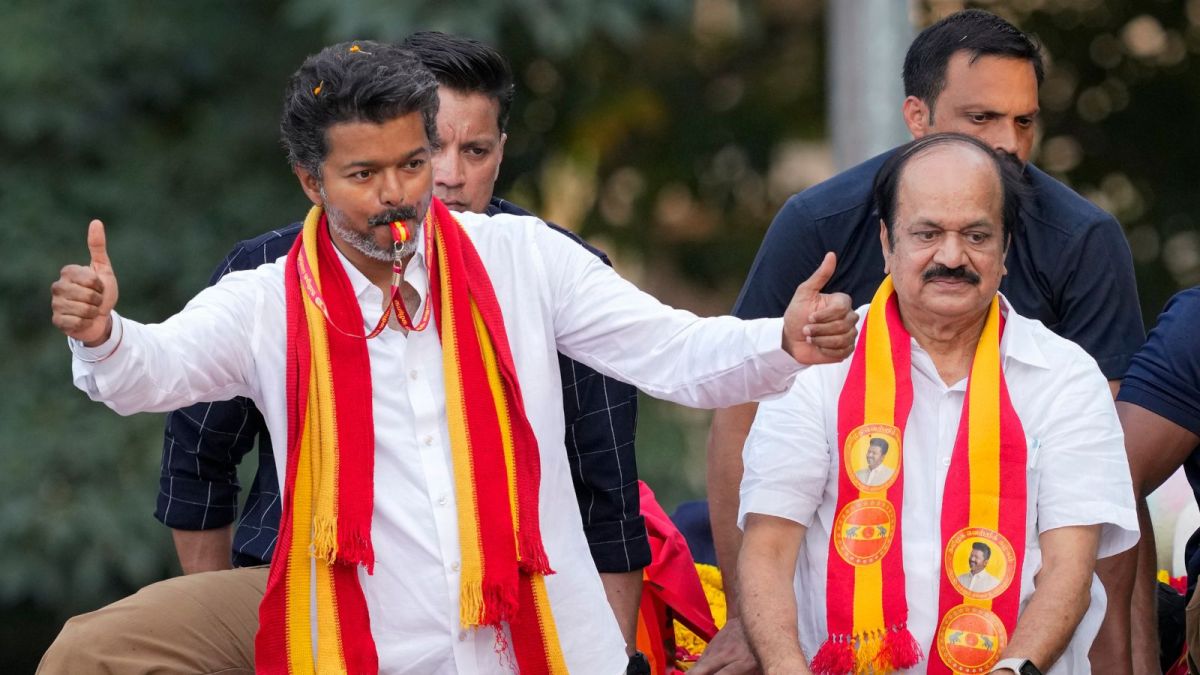
Cinema star C. Joseph Vijay took office as Tamil Nadu Chief Minister on Sunday after his Tamilaga Vettri Kazhagam secured outside support from smaller parties, ending decades of dominance by the DMK and AIADMK in one of the country’s most industrialised states.

Vijay was sworn in by Governor Rajendra Vishwanath Arlekar in Chennai after TVK, which emerged as the single largest party in the 234-member assembly, crossed the majority threshold with backing from allies and smaller groups. The result marks a dramatic transition for a politician who launched his party only two years ago and built his campaign around welfare promises, anti-corruption messaging, youth mobilisation and a direct appeal to voters frustrated with entrenched Dravidian party structures.

TVK won 108 seats, short of the 118 needed for a simple majority, but support from Congress, Left parties, Viduthalai Chiruthaigal Katchi and the Indian Union Muslim League gave Vijay the numbers to stake claim to power. The Bharatiya Janata Party said it would neither support nor participate in government formation, leaving the new administration dependent on a coalition arrangement that will test Vijay’s ability to move from mass politics to legislative management.

The swearing-in has wider economic significance because Tamil Nadu is a key manufacturing base for automobiles, electronics, textiles, renewable energy components and iPhone assembly. The state hosts major production networks linked to Apple suppliers, including Foxconn near Chennai, Tata Electronics in Hosur and facilities connected with Pegatron’s operations. Its industrial corridors around Chennai, Sriperumbudur, Hosur, Coimbatore and Tiruchirappalli have made it central to efforts to expand high-value manufacturing supply chains outside China.

Vijay’s first orders signalled an effort to combine welfare politics with a law-and-order pitch. His early decisions included 200 units of free electricity for households, a dedicated anti-drug task force and a separate mechanism for women’s safety. He also moved to seek a white paper on the outgoing government’s finances, a step likely to shape the first phase of political confrontation with the DMK.

The new Chief Minister used his first speech to frame the victory as a social justice mandate, telling supporters that his government would represent ordinary people rather than political dynasties. His language echoed themes that powered TVK’s campaign: dignity for poorer households, jobs for young voters, clean administration and a break from the established rivalry between the DMK and AIADMK.

Tamil Nadu’s business community will be watching how the new government handles investment approvals, land acquisition, labour relations, power subsidies and infrastructure spending. The state has attracted large investments in electronics and electric vehicles while retaining a strong automobile base built over several decades. Any uncertainty in policy execution could affect expansion plans, but a stable administration could strengthen Tamil Nadu’s position as a production hub at a time when global manufacturers are diversifying supply chains.

Vijay’s cabinet includes a mix of TVK loyalists and figures brought in to manage administration, political outreach and coalition discipline. N. Anand, Aadhav Arjuna and other senior party functionaries are expected to play central roles in converting a campaign-driven organisation into a governing machine. The inclusion of experienced political hands will be closely scrutinised because TVK lacks the administrative depth of the DMK and AIADMK.

The DMK, led by M. K. Stalin, now faces a sharp reversal after years in office, while the AIADMK’s weakened position raises questions about the future of the opposition space. Vijay’s rise has disrupted the familiar structure of Tamil Nadu politics, where cinema and politics have long intersected but power has remained largely within parties rooted in the Dravidian movement. His victory shows that celebrity appeal, when tied to welfare messaging and anti-incumbency sentiment, can still reshape electoral arithmetic.

Coalition pressures may emerge quickly. Parties extending support to TVK will expect policy consultation, constituency-level influence and space in governance decisions. Welfare commitments, including subsidised power, will also place pressure on state finances unless matched by revenue growth and investment-led job creation.

By K Raveendran Friday’s twin constitutional dramas exposed two serious threats to Indian democracy: the refusal of a defeated ruler to leave office, and the reluctance of a constitutional referee to invite a claimant who appeared to be assembling the numbers to form a government. Mamata Banerjee’s refusal to resign after the Trinamool Congress lost […]

The article Indian Democracy’s Black Friday: Popular Will Held Hostage By Power And Prejudice appeared first on Latest India news, analysis and reports on Newspack by India Press Agency).

UAE education authorities will announce on Sunday evening whether schools and higher education institutions will continue with remote learning or return to in-person classes, following a safety review coordinated with relevant government bodies. The Ministry of Education and the Ministry of Higher Education and Scientific Research said the approved learning model for the coming period would be disclosed on May 10, 2026, after a full assessment of […]

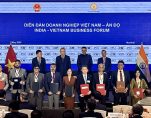
MUMBAI, INDIA – Media OutReach Newswire – 9 May 2026 – Vinpearl Joint Stock Company has signed Memoranda of Understanding (MoUs) with Thomas Cook India, SOTC Travel, and MakeMyTrip, three of India’s leading travel and tourism companies. The strategic partnerships are aimed at directly and comprehensively reaching all customer segments, helping position Vietnam as a “preferred destination” in the world’s most populous country.

Caption

The agreements were signed at the Vietnam–India Business Forum, held as part of the State visit of General Secretary and President To Lam to India, in the presence of General Secretary and President To Lam and Maharashtra Chief Minister Shri Devendra Fadnavis.

The partnerships are expected to open direct access channels to all customer segments, stimulate travel demand and experiential tourism, and ultimately position Vietnam as a “preferred destination” for India’s 1.47 billion people.

Representing India are three of the country’s most influential and trusted travel distribution channels: Thomas Cook India, SOTC Travel, and MakeMyTrip. Thomas Cook India has strong expertise in group travel, corporate travel, and large-scale MICE tourism. SOTC Travel is well known for family vacations, group tours, and mid- to high-end leisure travel. Meanwhile, MakeMyTrip, India’s leading online travel platform, has a strong advantage in reaching younger travelers, independent tourists, and digitally-driven booking behaviors.

Representing Vietnam is Vinpearl, the country’s leading hospitality, tourism, and entertainment brand, operating nearly 60 properties nationwide. Its diverse five-star “all-in-one” ecosystem offers accommodation, shopping, dining, entertainment, golf, and MICE services, making it particularly well-suited to the travel preferences of Indian visitors, including large group travel, multi-generational family vacations, and experience-rich holidays.

Through these partnerships, the parties aim to maximize each other’s strengths, enhance tourism development capabilities, and shape tailored travel products, gradually positioning Vietnam as a “preferred destination” for Indian travelers in the near future.

Speaking at the event, Ms. Ngo Thi Huong, CEO of Vinpearl, said: “India is one of the key markets in Vinpearl’s international expansion strategy. Through partnerships with leading industry players, we are not only broadening our market reach but also proactively developing products tailored to each customer segment. Vinpearl aims to strengthen its presence in the Indian market while contributing to positioning Vietnam as an attractive and distinctive destination on the global tourism map.”

Mr. Anubhav Bansal, Vice President of MakeMyTrip and representative of the three Indian partners, added: “Vinpearl operates one of the region’s leading integrated tourism and hospitality ecosystems, with a scale, product diversity, and destination experience portfolio that increasingly align with the preferences of Indian travelers. We believe Vinpearl is playing an important role in positioning Vietnam as an attractive destination for this market. Combined with the extensive distribution strengths of both sides, this partnership is expected to significantly boost Indian tourist arrivals to Vietnam in the coming years.”

India is currently the world’s most populous country, with 1.47 billion people. The country’s rapidly expanding middle class is driving a strong surge in demand for international travel.

Recognizing the strategic importance of the Indian market, Vinpearl has not only leveraged its scale and integrated “all-in-one” ecosystem but has also continuously developed specialized offerings for Indian travelers, including luxury wedding tourism, MICE travel, multi-generational family holidays, group trips, and couple getaways. In 2025, the number of Indian guests staying within the Vinpearl system surged by a record 402% year-on-year, followed by a further 335% increase during the first four months of this year compared to the same period last year.

The signing of MoUs with these three major market access partners marks the next step in Vinpearl’s strategy to sustainably grow its visitor base from the 1.47 billion-population Indian market, while also helping position Vietnam as a “preferred destination” for Indian travelers.

Hashtag: #Vinpearl

The issuer is solely responsible for the content of this announcement.

About Vinpearl

Vinpearl is Vietnam’s leading hospitality, tourism, and entertainment brand, currently operating 60 properties across 20 provinces and cities nationwide. Its ecosystem includes a network of five-star hotels and resorts in 35 provinces and cities with more than 17,300 rooms; 15 VinWonders theme parks offering attractions for all age groups; six world-class golf courses; and three international-standard convention centers and theaters under the VinPalace brand. The ecosystem also features two semi-wildlife conservation and care parks, an equestrian academy, and spectacular multi-million-dollar live performance shows in destinations such as Nha Trang and Phu Quoc, attracting millions of visitors each year.

About Thomas Cook India

Founded in 1881, Thomas Cook (India) Limited (TCIL) is one of India’s leading omnichannel travel and tourism groups, operating across foreign exchange, corporate travel, MICE, leisure travel, and value-added services.

TCIL owns and operates several major B2C and B2B brands, including Thomas Cook, SOTC, TCI, SITA, Sterling Holiday Resorts, Asian Trails, and Desert Adventures. The group has a presence in 28 countries across five continents and is one of the largest travel service networks headquartered in the Asia-Pacific region.

About SOTC Travel

Established in 1949, SOTC Travel is one of India’s oldest and most reputable travel and tourism brands. The company is part of Fairfax Financial Holdings through Thomas Cook (India) Limited (TCIL).

Operating through an omnichannel model, SOTC offers a wide range of services across leisure travel, incentive travel, and corporate travel. With more than 75 years of experience, SOTC has served millions of travelers across destinations worldwide and is recognized for its deep understanding of Indian travelers’ preferences and behaviors.

About MakeMyTrip

MakeMyTrip is India’s leading online travel booking platform, holding a dominant position in flight bookings, hotel reservations, and travel packages. With tens of millions of users and a strong digital ecosystem, MakeMyTrip covers the entire customer journey while maintaining a strong advantage in reaching younger travelers and independent tourists.

Fraudulent Android apps promising private call records for any phone number drew more than 7.3 million downloads on Google Play before being removed, exposing fresh weaknesses in app-store screening, digital payments oversight and consumer protection around subscription fraud. The 28 apps, tracked under the name CallPhantom, advertised access to call histories, SMS records and WhatsApp call logs, a service they could not legitimately provide. Users were asked […]

Arabian Post Staff -Dubai AD Ports Group has signed a memorandum of understanding with CMA Terminals Khalifa Port and CMA CGM Group to extend container logistics beyond Khalifa Port into inland markets across the UAE and the wider region, sharpening Abu Dhabi’s bid to become a more integrated trade and distribution hub. The agreement, signed on Tuesday, brings together AD Ports Group’s consolidated inland intermodal network with […]

MUMBAI, INDIA – Media OutReach Newswire – 5 May 2026 – ECOVACS Robotics, a global leader in home service robotics, is raising comfort this season with its Summer Holiday Campaign, bringing smarter, faster, and hands-free cleaning to Indian homes. Convenient, effortless and designed for modern city hustlers, their all-in-one solutions empower consumers to come home to spotless spaces without lifting a finger.

ECOVACS is rolling out limited-time, high-impact deals on Amazon India from 8th to 13th May, with discounts of up to 75%, making this the perfect moment for first-time consumers to switch from manual to intelligent cleaning and upgrade their routines with cutting-edge technology. ECOVACS’ entry-level range makes that transition seamless.

ECOVACS Robotics Summer Sale

From everyday dust to hard-to-reach corners and even windows, ECOVACS Robotics cleaning solutions deliver full-home coverage, blending intelligent technology with powerful performance and seamless automation to take the stress out of summer cleaning.

The DEEBOT N50 Pro OMNI brings this vision to life with a powerful combination of vacuuming and intelligent mopping, effortlessly tackling dust, debris, and pet hair across all floor types. With up to 300 minutes of runtime, anti-hair tangle technology, and intuitive app-enabled controls, users can easily customize schedules, zones, and cleaning modes right from their smartphones or wearable devices—making smart living feel truly effortless.

Enhancing this experience further is the All-in-One OMNI Station, which streamlines maintenance with automated mop washing and drying, auto-refill, and dust emptying—delivering a hygienic, hands-free cleaning routine that keeps your home consistently fresh with minimal effort.

For homes with more compact layouts, the DEEBOT MINI is also part of the lineup. Designed to take up less space while still offering the All-in-One OMNI Station and a hands-free cleaning experience, this is another ideal choice for users seeking efficiency without compromising on performance.

As modern homes face rising levels of dust and pollution, maintaining cleanliness in homes goes beyond just floors. Windows, constantly exposed to outdoor dust and changing weather conditions, require equal attention to keep living spaces truly spotless. ECOVACS’ WINBOT robotic window cleaners address this by effectively removing dust, rain stains, and pollution buildup, leaving windows crystal-clear and helping your home shine from the inside out.

Beyond windows, the WINBOT MINI is also designed to clean a wide range of glass surfaces, including glass panels, balcony glass, and shower screens — ensuring comprehensive coverage across vertical spaces in the home.

Its compact and slim design enables it to access and clean areas that are often difficult to reach, such as narrow windows, spaces behind grills or railings, and other tight or confined surfaces. This makes it a practical solution for urban homes where accessibility can be a challenge.

Explore ECOVACS’ Summer Holiday deals to unlock special, limited-time pricing. Make the switch smarter this summer—to faster, easier, and more effective deep cleaning—at your fingertips. Visit ECOVACS’ official marketplace to grab these can’t-miss deals!

Hashtag: #ECOVACS

The issuer is solely responsible for the content of this announcement.

Tamil Nadu’s vote count pointed to a dramatic political rupture on Monday, with actor Vijay’s Tamilaga Vettri Kazhagam emerging as the strongest challenger to the ruling DMK and threatening to redraw the balance of power in one of the country’s most important industrial states.

Trends through the afternoon showed TVK ahead in more than 100 seats in the 234-member Assembly, close to the 118-seat majority mark. The AIADMK alliance was holding second place in several tallies, while the DMK, led by Chief Minister M K Stalin, slipped sharply from its dominant position. The count remained fluid, with leads shifting by constituency and round, but the scale of TVK’s performance confirmed that Vijay’s first full electoral test had moved beyond symbolism.

The most striking signal came from Kolathur, Stalin’s long-held constituency in Chennai, where TVK candidate V S Babu established a lead during counting. Udhayanidhi Stalin also faced pressure in Chepauk-Thiruvallikeni, intensifying the perception of an anti-incumbency wave cutting through the DMK’s urban and welfare-heavy support base. Vijay himself was leading in both seats he contested, strengthening expectations that he could become central to government formation if TVK sustains its advantage.

TVK’s surge is particularly significant because Tamil Nadu has for decades been shaped by two Dravidian blocs, with the DMK and AIADMK alternating in power. Vijay entered politics with a campaign built around corruption allegations, youth unemployment, social justice language and a promise to offer an alternative to entrenched party networks. His appeal among young voters, first-time voters and urban families appears to have translated into a statewide challenge rather than a personality-driven protest vote.

The outcome carries implications well beyond party politics. Tamil Nadu is a manufacturing and export powerhouse, with deep clusters in automobiles, electronics, textiles, leather, engineering, logistics and renewable energy. Chennai and its surrounding industrial belt host major auto and component manufacturers, while Hosur, Sriperumbudur, Coimbatore, Tiruppur and Ranipet have become key nodes in supply chains tied to smartphones, electric vehicles, garments and precision manufacturing.

Investors will be watching whether a possible TVK-led government preserves policy continuity. The state has benefited from a predictable administrative culture, skilled labour, ports, highways, renewable energy capacity and sector-specific industrial policies. Major projects involving Tata Electronics, Foxconn-linked supply chains, Hyundai, Renault Nissan, Ola Electric, VinFast, Tata Motors’ Jaguar Land Rover facility and a wide network of small suppliers rely on stable land, power, logistics and labour arrangements.

Vijay’s party has promised cleaner governance and a people-focused administration, but it is yet to demonstrate how it would manage fiscal pressures, industrial incentives, welfare spending and Centre-state relations. Tamil Nadu’s welfare model is expensive, and any new government would inherit commitments on subsidies, social schemes, infrastructure projects and public-sector obligations. A sharp shift in policy could unsettle investors, while a calibrated transition could allow TVK to combine political change with economic stability.

For the DMK, the trends represent a severe test of its governance record. Stalin’s administration has promoted Tamil Nadu as a trillion-dollar economy contender, pushed investment summits, expanded electronics manufacturing and defended its welfare programmes. Yet voter fatigue, price pressures, local grievances, perceptions of dynastic control and the attraction of Vijay’s outsider image appear to have weakened the ruling party’s hold.

The AIADMK, despite remaining competitive in parts of western and southern Tamil Nadu, also faces a strategic challenge. TVK’s ability to draw votes across urban, semi-urban and rural seats threatens to disrupt the opposition space that the AIADMK had hoped to consolidate. If no party crosses the majority mark, negotiations with smaller parties and alliance partners could determine the next government.

VISHNU RAJA
RYO YAMADA
HITORI GOTOH
IKUYO KITA