News related to
Indian

U. S. President Donald Trump declared that Indian Prime Minister Narendra Modi has pledged to halt India’s purchases of Russian crude oil, a shift that would significantly upend global energy flows if implemented. Trump told reporters that Modi made the commitment during their conversation, stating that phasing out Russian imports would not happen overnight but would take place “within a short period of time.” The Indian embassy […]

Matein Khalid I have made no secret about my conviction that Brazil’s Nu Bank (NU) and China’s Alibaba (BABA) are my two fave emerging market’s fintechs of destiny since 2024. Alibaba has risen almost 100% since I accumulated its shares in the mid 80’s in its New York ADR once it was evident that the Politburo had pivoted to Big Bang fiscal/monetary stimulus to goose the dormant […]

Organisers have confirmed that Bengaluru will host India’s inaugural UbuCon conference on 15–16 November at the Indian Institute of Science. The event is expected to bring together developers, contributors and Ubuntu enthusiasts from across the country to engage on topics spanning cloud, IoT, documentation and AI. The Ubuntu India LoCo group leads the organisation, emphasising the grassroots, volunteer-driven nature of UbuCon events. Unlike many conferences dominated by […]

Dubai’s 45th edition of GITEX GLOBAL opened on 13 October at the Dubai World Trade Centre, attracting what organisers call unprecedented global participation. The event hosts more than 6,800 exhibitors, 2,000 startups and 1,200 investors from over 180 countries. Sheikh Mohammed bin Rashid Al Maktoum inaugurated the event, underscoring the UAE’s ambition to lead in AI-driven economies. Dubai’s leadership has signalled this edition will be the last […]

Emirates NBD is in advanced negotiations to acquire up to a 25 percent stake in Mumbai-based RBL Bank through a preferential allotment of equity and warrants, two people familiar with the matter told Reuters. The proposal would mark a major move by the Dubai-based lender into India’s private banking sector.

The Dubai bank is evaluating the terms of the deal, including pricing and structure, though both parties have yet to confirm the arrangement publicly. One of the sources indicated that the deal may be announced once approvals are in place.

On the Indian equities front, news of the talks propelled RBL’s shares higher: the stock climbed over 3 percent on 14 October, reaching its highest level since January 2024, and became one of the top gainers among private banks. Investor optimism stemmed from expectations that a reputable foreign investor might bolster transparency, governance and capital strength at RBL Bank.

Under Indian banking regulations, strategic foreign investors are generally restricted to a 15 percent stake, although exceptions have been made in high-profile cases. The Reserve Bank of India earlier permitted Sumitomo Mitsui Banking Corporation to hold 20 percent in Yes Bank, setting a precedent for flexibility in exceptional circumstances. Simultaneously, India is exploring adjustments to foreign ownership rules to enhance capital inflows into its banking sector.

Emirates NBD already holds regulatory approval in principle to convert its branches in India into a wholly owned subsidiary, positioning itself to operate on par with domestic Indian banks. That architecture would facilitate compliance with local regulations and provide greater autonomy to its Indian operations.

RBL Bank maintains a dispersed shareholding structure, with retail investors, mutual funds and small institutional holders driving most of its capital. It has no traditional promoter group. In June 2024, the bank had announced plans to raise ₹65 billion through a mix of institutional share issuance and debt instruments to support growth plans.

Previous media reports spanning earlier in 2025 suggested Emirates NBD’s interest in acquiring a minority stake in RBL, via a preferential allotment route, as part of its Asian expansion push. Those earlier discussions laid the groundwork for the current advanced negotiations.

The deal—if consummated—would align with Emirates NBD’s broader strategy of deepening its footprint in India, a market it already serves through branches in Mumbai, Chennai and Gurugram, and via its approved subsidiary structure. The bank has posted robust growth: in the first quarter of 2025, it exceeded profit expectations, buoyed by strong loan expansion and net interest income.

Still, multiple hurdles remain. Key among them are regulatory approvals from the RBI and possibly the finance ministry, clearances from capital markets regulators, and acceptance by RBL Bank’s board. Moreover, the valuation will be closely scrutinised, since acquiring a wedge of 25 percent may require pricing the equity at a premium to prevailing market values.

On the regulator’s side, officials have been deliberating over changes to banking ownership norms to attract foreign capital, particularly in systems where capital demand is rising rapidly. Some observers view case-by-case relaxation of limits as a likely path forward.

Institutional analysts have viewed Emirates NBD’s possible entry as a positive for RBL. One equity research note from ICICI Direct argued that the presence of a well-capitalised global investor could strengthen governance practices and investor confidence.

By K Raveendran Sushil Kutty, who passed away on Sunday night, lived and wrote like a man apart — a loner in every sense, and yet deeply connected to the world through the force of his words. A regular columnist for the India Press Agency for the last ten years, Sushil was that rare journalist whose writing transcended political lines, winning admiration from across the ideological spectrum. […]

By Nantoo Banerjee There is little to be excited about the recent inauguration of predominantly mountainous Arunachal Pradesh’s first commercial coal mine at Namchik-Namphuk in the Changlang district jointly by Union Coal & Mines Minister G Kishan Reddy and Arunachal Chief Minister Pema Khandu, marking the state’s first coal mine project. With an officially estimated […]

The article India Must Cut Down Coal Consumption appeared first on Latest India news, analysis and reports on Newspack by India Press Agency).

Advertisements

Larsen & Toubro’s hydrocarbon onshore unit, in partnership with Greek firm Consolidated Contractors Group, has booked an ultra-mega contract valued at over ₹150 billion to build a natural gas liquids plant and associated processing facilities in the Middle East. The engineering, procurement, construction, installation and commissioning scope will cover the handling of rich associated gas, integration of utilities, and interfacing with existing infrastructure. L&T will lead engineering […]

South East Asia, with its vibrant tapestry of cultures, landscapes, and histories, boasts a myriad of must-see attractions that captivate travelers from around the world. From the awe-inspiring ancient temples of Angkor Wat in Cambodia to the stunning limestone karsts of Halong Bay in Vietnam, the region offers a rich array of experiences. In Thailand, the bustling streets of Bangkok and the serene beauty of Phuket’s beaches […]

By Nitya Chakraborty There is a big possibility of renewal of India-US bilateral ties impacting the ongoing trade talks following the proposed one on one meeting between the Indian Prime Minister Narendra Modi and the U.S. President Donald Trump during their presence in Kuala Lumpur to attend the summit of ASEAN members on October 26 […]

The article Trump-Modi Meet At ASEAN Summit In Malaysia Can Remove Irritants In Indo-US Ties appeared first on Latest India news, analysis and reports on Newspack by India Press Agency).

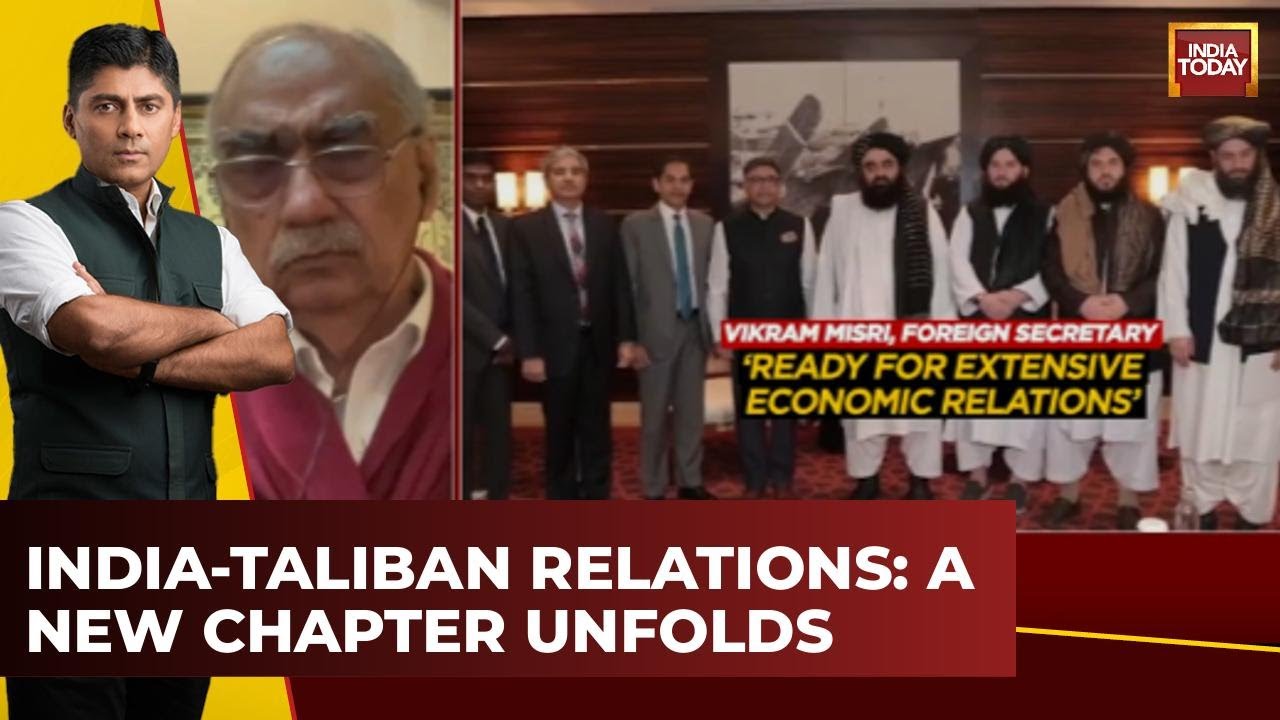
By Girish Linganna In a move that would have seemed unthinkable just a few years ago, Taliban Foreign Minister Amir Khan Muttaqi arrived in New Delhi on October 9 for an eight-day official visit that marks a watershed moment in India’s foreign policy. His meetings with External Affairs Minister S. Jaishankar, followed by visits to […]

The article The Price Of Pragmatism: What India Gains (And Loses) By Courting The Taliban appeared first on Latest India news, analysis and reports on Newspack by India Press Agency).

India is dispatching over 450 technology firms and startups to GITEX Global 2025 in Dubai, anchoring the India Pavilion under the aegis of ESC. The pavilion will span multiple halls and spotlight more than 100 Indian enterprises across sectors such as AI, cybersecurity, cloud computing, IoT, smart mobility, fintech and digital infrastructure. Organisations will also engage in high-stakes networking, investor roundtables and B2B matchmaking.

GITEX Global 2025, running from 13 to 17 October at the Dubai World Trade Centre, draws more than 6,800 tech companies and some 2,000 startups from about 180 countries. It is expected to be the largest edition to date, integrating themes such as physical AI, quantum computing, biomedicine and semiconductor innovation. Across the co-located Expand North Star event, over 1,200 investors managing assets exceeding US$1.1 trillion will scout opportunities among scale-ups and unicorns.

The India Pavilion marks a concerted push to convert India–UAE strategic frameworks into tangible tech commerce. With the India–UAE Comprehensive Economic Partnership Agreement and the Local Currency Settlement System operational, cross-border ICT trade has surged. Bilateral trade crossed US$100 billion during fiscal year 2024–25, and electronics exports alone reached US$3.7 billion, positioning the UAE as a key destination for Indian hardware shipments.

At a preparatory briefing, Kamal Vachani, ESC’s regional director for Dubai, described the pavilion as more than a display — “a living showcase of India’s tech prowess and growing synergy with the UAE.” ESC’s CEO, Gurmeet Singh, noted that many participating companies are MSMEs or first-time exporters, and that the pavilion aligns with India’s ambition to emerge as a global electronics hub.

India’s strategy at GITEX goes beyond sheer numbers. Firms are bringing solutions purpose-built for global markets — from smart city platforms to blockchain-enabled supply chains. The pavilion will host curated sessions on cross-border compliance, regulatory alignment, and scalable deployment across Middle Eastern and African markets.

For the UAE, the event reinforces its vision of acting as a global nexus for innovation and capital. Major corporate names such as G42, e&, IBM, AMD, Huawei, Microsoft, Oracle and Amazon Web Services will anchor the exhibitions. New entrants including Cerebras, Tata Electronics, Qualcomm and Tenstorrent will attempt to break in. The show also emphasises future-critical infrastructure: hyperscale data centres, quantum systems, and semiconductor roadmaps are front and centre.

Globally, one of the event’s linchpin themes is the maturation of AI into domain-specific systems. The AI Semicon track will address sovereign technology imperatives in chip design, while the Quantum Expo will present fault-tolerant architectures. At the intersection of AI and healthcare, companies like Mammoth Biosciences and Paradromics will illustrate how gene-editing and neurotech are being reimagined. Robotics firms will showcase humanoid prototypes and autonomous “robocars,” underscoring the pivot to “physical AI.”

Strategic partnerships form a parallel narrative. India and the UAE are finalising memorandum exchanges via the UAE-India Business Council to deepen collaboration across fintech, logistics, digital infrastructure and state-level investment. The CEPA Start-up Series launched earlier this year in New Delhi underscores a joint intent to foster innovation-led cross-border growth.


A Singapore High Court hearing is scheduled on 13 October 2025 to consider WazirX’s proposed Scheme of Arrangement, marking a pivotal moment in the embattled crypto exchange’s restructuring efforts. The court will hear further arguments on HC/SUM 940/2025, a case central to the platform’s ability to repay creditors and revive operations.

The hearing follows a tumultuous legal process. In June 2025, the court declined to sanction the original scheme submitted by Zettai Technologies, WazirX’s parent entity, citing structural concerns and ambiguities in how the proposal would address creditor claims. Zettai responded by seeking an opportunity for further arguments. The court acceded to that request, setting the stage for the October proceedings.

Prior to this hearing, the court has directed both Zettai and opposing parties to submit additional written submissions. Zettai filed on 26 September 2025, and the court issued further directions on 29 September requiring clarifications by 3 October 2025. Until now, no hearing date had been formally fixed.

The background to this process dates to July 2024, when WazirX suffered a cyberattack resulting in the loss of roughly $235 million. Nearly 16 million users were affected, with withdrawals and trading suspended indefinitely. The attack was widely attributed to North Korea’s Lazarus Group.

In January 2025, the Singapore High Court allowed users to vote on a restructuring plan. The vote concluded in March, with approximately 93.1% of users endorsing the scheme. However, in May, the court declined to give the scheme its sanction, stating the proposal failed to meet the required legal standards and flagged concerns over compliance with evolving Singapore regulations. Zettai was then directed to revise the scheme and conduct a revote.

In July 2025, after further oral arguments before the court, the original June decision was set aside and a revote was permitted to consider an amended Scheme. The court also extended the moratorium until 16 September 2025. Zettai responded by preparing an updated Scheme and explanatory statement, organising a town hall for creditors, and initiating a refreshed vote.

Analysts observe that the October hearing is likely to be decisive. If the court approves the amended plan, the process could move quickly toward fund distribution, theoretically within ten business days of the effective date. Should the court require further modifications or reject the proposal, the process could be delayed significantly, potentially pushing payouts into late 2025 or beyond.

Critically, the court has scrutinised how Indian law provisions intersect with its jurisdiction. Much of WazirX’s user base resides in India, prompting concerns about cross-border legal compliance and enforceability of creditor rights. By demanding detailed supplementary submissions, the court signals caution in approving a scheme that might expose it to legal vulnerabilities.

Creditors and industry watchers remain under strain, facing uncertainty over when and whether they will receive recovered funds. Many users have awaited payouts for more than a year, and confidence in centralised exchanges has been tested further by this case.

By Nitya Chakraborty Just forty eight hours within the external affairs minister Dr. S Jaishankar’s candid statement that Trump has to respect red lines drawn by India at trade talks, Indian officials joining China, Russia, Taliban government of Afghanistan and even Pakistan denouncing President Trump’s bid to take over Bagram air base in Afghanistan, is […]

The article India’s Opposition To Trump Bid To Take Over Bagram Airbase Has Special Significance appeared first on Latest India news, analysis and reports on Newspack by India Press Agency).

Ukraine’s 63rd Mechanised Brigade has released footage claiming that a 22-year-old Indian national, Majoti Sahil Mohamed Hussein from Morbi, Gujarat, surrendered to Ukrainian forces after fighting for Russia. The Indian Ministry of External Affairs stated it is investigating the matter, having not yet received formal confirmation from Ukrainian authorities.

In the video, Hussein says he travelled to Russia for university studies but was later convicted on drug charges and handed a seven-year prison sentence. He states that to avoid incarceration, he accepted a Russian military contract to fight in Ukraine. After only 16 days of training, he was deployed to the front lines on 1 October, and after three days of combat, asserted that a dispute with his commander prompted him to approach a Ukrainian trench position and surrender. “I immediately put down my rifle … I didn’t want to fight. I needed help,” he is heard saying in Russian. He further claims he never received promised financial compensation and that he would rather remain in custody in Ukraine than return to Russia.

Indian officials have neither confirmed his capture nor denied it. A spokeswoman from the MEA said New Delhi is “ascertaining the veracity of the report.” The Indian mission in Kyiv is reported to be seeking clarity from Ukrainian counterparts. The MEA noted it has not yet received an official notification.

If confirmed, this would mark the first verified case of an Indian national being held by Ukrainian forces after participating directly in combat on Russia’s side—although Indian nationals have previously been reported among Russian-aligned forces. In January, Indian authorities disclosed that 12 citizens had died fighting for Russia, while 16 others were listed as missing. New Delhi has repeatedly raised the issue with Moscow, urging the repatriation or discharge of Indians serving in the Russian military.

The broader phenomenon of third-country nationals entering the Russia-Ukraine war as combatants has drawn increasing scrutiny. Independent investigations estimate that more than 1,500 foreign fighters from over 48 nations have joined Russia’s military ranks. Some are believed to have been recruited under misleading promises, including job opportunities, visa benefits, or leniency in legal cases. In India’s case, accusations of coercion or trafficking have been made—families of slain Indian fighters have claimed their relatives were enticed with assurances but ultimately compelled into frontline service.

Analysts note that this case, if corroborated, underscores the murky legal and ethical terrain of foreign national participation in armed conflict. Under international humanitarian law, combatants captured in war zones may face prosecution, detainee protections, or diplomatic processes, depending on their status. The Indian government, maintaining a non-aligned posture regarding the Russia-Ukraine conflict, must balance protecting its citizens abroad with adherence to international norms and pressure from both Moscow and Kyiv.

Within India, this development is likely to intensify scrutiny over how students or migrants abroad might be exposed to recruitment schemes, particularly in countries engaged in conflict. Some previous admissions of Indians fighting for Russia suggested recruitment via third-party agents or recruitment drives run under the guise of employment for non-combat roles—later displaced into military duty. Families have, in past instances, sought intervention from Indian diplomatic missions, urging more robust preventive mechanisms.

Meanwhile, in Russia, foreign conscripts—or contracted soldiers from abroad—have been increasingly leveraged to supplement manpower. Ukrainian authorities have touted captures of foreign fighters in multiple instances, often publicising their nationality to highlight alleged exploitation or coercion. These reports frequently appear in social media or Telegram channels operated by Ukrainian units, although independent verification is sometimes challenging, given the fog of war and conflicting narratives.

The World Bank has trimmed its projection for South Asia’s economic expansion in 2026, citing elevated U. S. tariffs on Indian exports as a key drag. The region’s growth is now forecast at 5.8 percent, down from 6.6 percent this year.

The updated “South Asia Development Update” flags the U. S. trade measures as a major headwind, especially given India’s size and its integration into regional supply chains. The report sets India’s growth for fiscal year 2025–26 at 6.5 percent, up from its earlier estimate of 6.3 percent, but warns of a drop to 6.3 percent in 2026–27 as tariff pressures intensify.

The U. S. has imposed tariffs of up to 50 percent on a broad swath of Indian goods—impacting sectors such as textiles, gems and jewellery and seafood—affecting nearly $50 billion in exports. These are among the highest duties levied on any U. S. trading partner. The World Bank notes that these tariffs will particularly bite in 2026 as initial buffers from public spending fade.

Franziska Ohnsorge, chief economist for South Asia at the World Bank, asserted that the toll from trade restrictions reflects “a reversal of the gains” India had made in integrating into global value chains. She urged structural adjustments: lowering tariffs and signing free trade agreements to support export competitiveness.

Beyond India, Bangladesh and Sri Lanka show varying trajectories. The Bank upgrades forecasts for Bangladesh and Sri Lanka, citing easing fiscal strain and improving external balances. Meanwhile, Nepal and the Maldives bear the brunt of tighter global conditions, with their outlooks revised downward.

Policy responses in India are already in motion. The government launched sweeping tax cuts spanning consumer goods to automobiles, one of the largest fiscal interventions in recent years. Concurrently, infrastructure spending is being boosted to drive domestic demand and counterbalance export headwinds. The Reserve Bank of India held its repo rate at 5.50 percent in October, citing subdued inflation and leaving open room for a future cut.

Indian officials remain confident. Finance Minister Nirmala Sitharaman called the economy “resilient,” expressing faith it could absorb external shocks while targeting an ambitious 8 percent growth. The Chief Economic Adviser affirmed earlier forecasts of 6.3–6.8 percent GDP growth, downplaying long-term damage from trade friction.

International institutions have also flagged downside risks. The Asian Development Bank cut India’s FY 26 forecast to 6.5 percent from 6.7 percent, pointing to duty pressures and policy uncertainty. The IMF earlier trimmed India’s 2025-26 prediction to 6.2 percent, citing heightened global trade tensions.

The World Bank’s report emphasises that over the medium term, trade liberalisation combined with labour flexibility and investment in digital infrastructure could help South Asia reclaim momentum. Within the document, a scenario of tariff cuts and deeper trade integration is modelled to yield significant gains in productivity, employment, and output per capita.

Still, the path ahead is fraught. The report cautions that the region is vulnerable to a global slowdown, geopolitical shocks and labor market disruptions from artificial intelligence. In particular, it warns that weaker export growth from India will spill over across the region via trade, financial and migrant-worker channels.

More than 70 percent of H-1B visa recipients are citizens of India, underscoring the country’s dominant role in the U. S. skilled-worker pipeline. According to U. S. Citizenship and Immigration Services data, in fiscal year 2024, India accounted for 71 percent of approved H-1B petitions. China followed distantly with 11.7 percent.

The H-1B visa programme allows U. S. companies to employ foreign nationals in “specialty occupations,” typically requiring at least a bachelor’s degree, over periods of up to six years. The annual statutory cap is 65,000 new visas plus 20,000 reserved for holders of advanced U. S. degrees.

The Indian concentration in the H-1B cohort has persisted over decades, yet its scale is striking under renewed policy pressure. A recent presidential proclamation raised the cost for new H-1B petitions to $100,000—a move critics say targets exactly the cohort with the greatest concentration in India.

Industry analysts warn the fee hike could shrink participation in the programme or push firms to avoid new petitions, particularly when the number of new visas is strictly limited. The policy excludes existing visa holders and those whose petitions were filed before the proclamation.

The Indian government has cautioned that such steep increases in visa costs may have “humanitarian consequences” for workers and families. It has also expressed concern about disruption to bilateral skilled labour mobility and urged U. S. authorities to reconsider the policy in light of its broader economic implications.

Indian IT firms such as Tata Consultancy Services and Infosys have historically been among the top sponsors of H-1B workers. But recent years have seen U. S. tech firms like Amazon, Microsoft, Google and Meta increasingly dominate the list of petitioners, reflecting evolving dynamics in who hires global talent.

Critics of the visa fee hike argue that Congress—not the executive branch—retains authority to impose fees and that the move could contravene statutory limits on visa allocation. A coalition of industry groups, unions and educational organisations has filed a federal lawsuit challenging the policy’s legality.

Supporters of the change frame it as a measure to prioritise domestic wage levels and reduce abuse of the H-1B system by contractors hiring at low rates. They contend the increased barrier will press firms to invest more in U. S.-based workforce development, though critics counter that American companies rely heavily on foreign technical talent to stay globally competitive.

By Nitya Chakraborty Indian foreign policy makers have at last showing some mature understanding of the geopolitics of the post-Trump.2 months if the external affairs minister Dr. S Jaishankar’s observations at the concluding session of Kautilya Economic Conclave in New Delhi on Sunday, are any indication. The minister was quite candid in explaining the complexity […]

The article EAM Jaishankar Is Right: Trump Has To Respect India’s Red Lines appeared first on Latest India news, analysis and reports on Newspack by India Press Agency).

A major cross-border deal is underway as Abu Dhabi’s International Holding Company will invest about ₹8,850 crore to acquire a 43.5 per cent stake in Sammaan Capital, formerly Indiabulls Housing, making IHC the company’s key promoter and granting it control over board appointments. Sammaan Capital, a publicly listed non-bank financial company specialising in mortgage lending, will issue 330 million equity shares and 306.7 million convertible warrants to […]

Hub71, Abu Dhabi’s global technology ecosystem, has inked its first partnership in the US with the New Jersey Economic Development Authority, opening pathways for startups to scale across continents. The memorandum of understanding was signed at the Abu Dhabi Investment Forum in New York, signalling the start of reciprocal support between the two innovation hubs. The agreement enables joint programming, market visits and curated introductions to investors, […]

By K Raveendran It was a week of contradictions for India’s image on the world stage, marked by a curious interplay of critique, affirmation, and manoeuvring. Rahul Gandhi, in his address at Columbia University, painted a picture of India that was dark and distressing, describing the country’s democratic decline in sweeping terms. At the same […]
The article A Week Marking The Worst And Best For India On Global Stage appeared first on Latest India news, analysis and reports on Newspack by India Press Agency).

Matein Khalid Will we still be dancing when the music stops as Citigroup and UBS were in the autumn of 2007. Even my friends dissed me when I predicted a global financial crash as early as January 2007, but I track credit cycles like a bloodhound and it flashed the mother of all distressed SOS’s as it does now. In 2007, the trillion dollar daisy chain of […]

By K Raveendran Bill Gates’ recent revelation about how a critical recruitment drive of fifteen Indian engineers had once saved Microsoft from slipping into irrelevance comes at a time when the United States under Donald Trump is imposing restrictive visa measures that are designed to block the very talent pool that had proven indispensable for […]

The article Trump’s Visa Tariff May Be Blessing In Disguise For India’s Talent Reservoir appeared first on Latest India news, analysis and reports on Newspack by India Press Agency).

By Anjan Roy Donald Trump’s high fees for H1B visas are a serious headache for India, not just for the sake of its impact on India’s IT sector and services exports to USA. This is a huge worry for the overall security environment and strategic- diplomatic scenario for India. Among others, if China is able […]


The article China Is Making Every Effort To Attract Talent Thrown Out By America appeared first on Latest India news, analysis and reports on Newspack by India Press Agency).

VISHNU RAJA
RYO YAMADA
HITORI GOTOH
IKUYO KITA