News related to
Indian

By K Raveendran The sharp note of disappointment sounded by Scott Bessent over the India–European Union free trade agreement says less about a single deal and more about a changing geometry of power in the global economy. At one level, Washington’s frustration reflects a familiar concern that sanctions and trade penalties are losing their bite […]

The article India-EU Free Trade Deal Redraws Balance Of Economic Power appeared first on Latest India news, analysis and reports on Newspack by India Press Agency).

UAE and India have moved to deepen cooperation in civil aviation as senior officials reviewed capacity, connectivity and regulatory coordination, underlining the scale and strategic importance of one of the world’s busiest air travel corridors. The discussions highlighted sustained growth in passenger flows and the need to align policy, infrastructure and airline strategies to keep pace with demand.

Speaking during the engagement, Abdulla bin Touq Al Marri, Minister of Economy of the United Arab Emirates, said air traffic between the UAE and India continues to show strong momentum, with around 1,231 direct flights operating each week between cities in both countries. Those services are spread across multiple carriers and hubs, reflecting the depth of commercial, tourism and people-to-people ties that underpin the aviation relationship.

The scale of connectivity has few parallels globally. The UAE serves as a critical transit and destination market for travellers from India, while Indian cities form the largest single source of international passengers for UAE airports. Industry data indicates that traffic has surpassed pre-pandemic benchmarks on several routes, driven by a rebound in business travel, a sustained flow of expatriate workers, and rising leisure demand in both directions.

Officials discussed measures to ensure that bilateral air services arrangements remain responsive to market realities. Capacity management, slot allocation at congested airports, and coordination on safety and security standards featured prominently. There was also a focus on ensuring that regulatory processes keep pace with airline expansion plans, particularly as carriers introduce new wide-body aircraft and add frequencies to secondary cities.

Bin Touq noted that aviation cooperation has spillover benefits for wider economic engagement, supporting tourism, trade in services and cargo connectivity. Air freight was identified as a growing pillar, with belly-hold capacity on passenger aircraft playing an increasing role in moving high-value and time-sensitive goods, including pharmaceuticals, electronics and perishables.

From the Indian side, officials emphasised the importance of predictable access to UAE hubs for carriers as they scale up international operations. India’s airport expansion programme, which has added new terminals and greenfield airports across several states, is expected to unlock further growth in outbound travel. That expansion has altered traffic patterns, enabling more direct international services from tier-two and tier-three cities, many of which already have links to the UAE.

Airlines operating on the corridor include network carriers and low-cost operators, creating a competitive landscape that has helped keep fares in check while expanding choice. The presence of multiple hubs in the UAE has also diversified routing options, strengthening resilience during peak travel periods and operational disruptions.

Beyond capacity, the talks addressed cooperation on sustainability and workforce development. Both sides acknowledged mounting pressure on the aviation sector to curb emissions and improve fuel efficiency. While sustainable aviation fuel remains limited in supply and expensive, officials discussed the importance of policy alignment, pilot projects and knowledge sharing to accelerate adoption over time.

Training and skills were another area of interest, as airlines and airports face shortages of pilots, engineers and air traffic management professionals. Partnerships between training institutions and recognition of certifications were flagged as practical steps to ease bottlenecks without compromising safety standards.

Technology and digitalisation also featured, with attention on passenger processing, biometric systems and data sharing to improve the travel experience. As passenger volumes rise, authorities are seeking to reduce congestion through smarter border controls and interoperable systems that can be scaled across airports.

The civil aviation dialogue sits within a broader economic partnership that has deepened over the past two years, including trade and investment initiatives across manufacturing, energy and digital services. Aviation remains a visible barometer of that relationship, given its sensitivity to economic cycles and consumer confidence.


Dr C. J. Roy, the founder and chairman of Bengaluru-based Confident Group, died by suicide at his company office on Friday as officials from the Income Tax Department were conducting searches and questioning him, police and local authorities said. The 57-year-old was found with a gunshot wound inside his Langford Road office near Richmond Circle and was declared dead after being rushed to a hospital in HSR Layout. Authorities have launched a full investigation into the circumstances of his death, with forensic teams completing initial examinations and a post-mortem underway.

Police said staff heard a shot during the afternoon and alerted authorities, who found Roy injured in an inner room. He had reportedly been retrieving documents at the request of investigators when the incident occurred. Bengaluru Police Commissioner Seemant Kumar Singh described the case as a suspected suicide, noting that formal determinations will follow once the investigation and autopsy are complete. No suicide note has been confirmed at this stage.

The Income Tax Department’s presence at the Confident Group’s premises was part of a broad examination of financial records and compliance, which has extended over several days, according to law enforcement sources. Officers from the department were reviewing documentation linked to tax filings and other regulatory matters when Roy took his life. While some observers have drawn a link between the tax probe and his actions, senior police officials emphasised that motive has not been officially established and will be determined through detailed inquiry.

Confident Group has been a prominent name in the real estate sector for nearly two decades. Founded by Roy in 2005, the company grew from regional developments in Karnataka and Kerala to a diversified conglomerate with interests spanning residential and commercial real estate, hospitality and international ventures. The group’s portfolio included a large number of projects across southern India, and it had expanded into markets such as the UAE and the United States as part of its global strategy.

Roy, born Chiriankandath Joseph Roy and originally from Kerala, was widely recognised within Indian and international business communities. He held a PhD and had previously worked in the corporate sector before building his own enterprise into a major developer known for its ambitious projects and rapid growth. Beyond real estate, Roy was active in film production, backing several Malayalam films, and was seen as a cultural figure in his home state’s entertainment circles.

Industry analysts said the shock of his death will be felt across the real estate sector, where business leaders are already navigating a complex regulatory environment. The dual pressures of compliance with income tax requirements and ongoing litigation in tax and financial courts had placed significant strain on the leadership of Confident Group in recent months. Commentators on social media and industry platforms highlighted the need for greater support systems for executives coping with legal and financial scrutiny, although specific links between the probe and Roy’s decision are yet to be confirmed by officials.

Confident Group’s operations included a mix of residential communities, commercial complexes and mixed-use developments, with the company touting a “zero-debt” business approach that set it apart from many competitors in a sector often challenged by leveraged growth models. The firm’s international footprint, including property development in Dubai, had positioned it as a notable player in cross-border real estate development.

Family representatives and close associates have been approached by investigators as part of the inquiry, and police have indicated that statements from relatives and colleagues are being recorded to build a clearer picture of Roy’s state of mind and the events leading up to his death. As the probe continues, authorities have pledged to share further details when available.

Hong Kong’s first exchange-traded fund directly tracking physical gold prices posted a sharp rise on its trading debut on Thursday, underscoring renewed investor appetite for safe-haven assets as bullion climbed to a fresh all-time high in international markets.

The Hang Seng Gold ETF gained more than 9% within hours of listing, according to exchange data, drawing robust turnover from institutional and retail investors seeking exposure to gold without holding the metal outright. The launch coincided with spot gold touching a record level just below $2,500 an ounce, driven by a combination of monetary policy expectations, geopolitical uncertainty and sustained central bank demand.

Market participants said the strength of the debut reflected pent-up demand in Hong Kong for simple, exchange-based gold products that track global prices more closely. While futures-linked and commodity-basket funds have existed for years, the new ETF is structured to mirror spot prices using physical gold holdings, reducing tracking error and rollover costs.

Gold’s advance has been underpinned by expectations that major central banks are approaching an inflection point in interest-rate policy. Slowing inflation in the United States and Europe has reinforced the view that rate cuts could come later this year, weakening the dollar and lowering the opportunity cost of holding non-yielding assets such as gold. The metal has also benefited from persistent buying by central banks seeking to diversify reserves amid currency volatility and sanctions-related risks.

In Hong Kong, the ETF’s issuer said the product was designed to meet demand from investors who view gold as both a hedge against macroeconomic shocks and a portfolio diversifier. The fund allows trading in local currency during market hours, offering an alternative to offshore accounts or over-the-counter bullion purchases.

Analysts noted that the timing of the launch proved advantageous. Global gold prices have risen by more than 20% over the past year, supported by strong inflows into bullion-backed products in Asia and the Middle East. In contrast, flows into some gold ETFs listed in North America had been uneven earlier in the cycle, reflecting higher real yields and competition from cash-like instruments. That pattern has shifted as expectations around policy easing firmed.

Hong Kong’s exchange has been seeking to broaden its commodity and currency-linked offerings to attract regional capital, particularly from mainland investors using cross-border trading channels. Although access rules vary by product, fund managers said interest from family offices and private banks was a key driver of early demand for the gold ETF.

Spot gold’s climb to record territory has also been fuelled by geopolitical tensions spanning Eastern Europe and the Middle East, alongside concerns about sovereign debt sustainability in several advanced economies. Such factors have reinforced gold’s role as a store of value during periods of heightened uncertainty.

Bullion dealers in Asia reported steady physical demand from jewellery manufacturers and investors, even as higher prices tempered buying in some price-sensitive markets. Premiums in major trading hubs narrowed but remained positive, signalling underlying support rather than speculative excess.

The strong opening performance of the Hang Seng Gold ETF contrasts with more subdued debuts for some equity-linked funds in the city this year, highlighting the divergence between defensive assets and riskier sectors. Equity markets in the region have faced headwinds from uneven growth prospects and regulatory uncertainty, pushing some investors to rebalance portfolios towards commodities and hard assets.

Industry observers cautioned that gold prices can be volatile in the short term, particularly if inflation data or central bank guidance shifts market expectations. A stronger-than-expected rebound in growth or a delay in policy easing could trigger profit-taking after the metal’s sharp run-up. Even so, many strategists maintain that structural factors, including reserve diversification by monetary authorities and long-term fiscal pressures, provide a supportive backdrop.

Negotiators from India and the European Union have moved into the final stretch of talks on a long-pending free trade agreement that both sides now describe as a strategic necessity, as uncertainty over United States trade policy reshapes global supply chains and export strategies. Officials involved in the discussions say most market-access chapters are broadly settled, with remaining work focused on sensitive tariff lines, regulatory safeguards and timelines for implementation.

The proposed pact, under negotiation for more than a decade with several pauses, has regained momentum over the past two years as Brussels and New Delhi seek to reduce exposure to external shocks. For the European Union, diversifying trade ties beyond the US and China has become an explicit policy goal. For India, securing preferential access to one of the world’s largest consumer markets offers a counterweight to potential tariff pressures elsewhere.

Trade specialists say the structure of the deal reflects this shared urgency. India is expected to secure phased tariff reductions on a wide range of labour-intensive exports, including textiles, apparel, leather goods, footwear, gems and jewellery, and certain engineering products. These sectors employ millions and are among the most exposed to changes in external demand. Ajay Srivastava, a former trade official, has said that improved access to the EU market would help exporters partly offset the impact of higher duties or restrictive measures imposed by the US on selected product categories.

European manufacturers, in turn, are seeking lower tariffs and clearer rules for automobiles, high-end machinery, wines and spirits, medical devices and chemicals. Current import duties on some of these products remain among the highest faced by EU exporters in major economies. Brussels has also pressed for stronger commitments on intellectual property protection, government procurement and regulatory transparency, areas that have historically slowed progress.

People familiar with the talks say negotiators have narrowed differences on goods tariffs by agreeing to longer transition periods for politically sensitive items, allowing domestic industries time to adjust. Agriculture remains a delicate chapter, with India resisting broad concessions on dairy and certain farm products, while offering limited quotas and safeguards to protect small producers. The EU has signalled flexibility, recognising the social and political weight of agriculture in India’s economy.

Beyond goods, services and investment provisions are central to the pact’s commercial value. India is pushing for easier movement of professionals in information technology, engineering and healthcare, alongside mutual recognition of qualifications. European counterparts are cautious, balancing labour-market concerns with industry demands for skilled talent. Investment protection rules are also under discussion, with both sides aiming to avoid disputes that have characterised earlier bilateral treaties.

Geopolitics has added another layer to the negotiations. Heightened trade frictions involving the US have reinforced the case for dependable partners and rules-based commerce. European policymakers increasingly view India as a key pillar in their Indo-Pacific strategy, while New Delhi sees the EU as a stable market that complements its manufacturing and export ambitions. The alignment is evident in parallel talks on a separate investment protection agreement and a framework for cooperation on sustainable development.

Environmental and labour standards have emerged as important, though contentious, elements. The EU has sought binding commitments linked to climate goals and workers’ rights, consistent with its newer trade agreements. India has pushed back against provisions it views as intrusive or misaligned with domestic development priorities, arguing for cooperation rather than enforcement-driven clauses. Compromise language is being explored to bridge these positions without derailing the broader deal.

Economists note that the scale of potential gains is significant, though uneven across sectors. The EU is already one of India’s largest trading partners, with bilateral goods trade running into tens of billions of euros annually. A comprehensive agreement could lift trade volumes further by lowering costs, improving predictability and encouraging investment flows. Export-oriented clusters in states with strong manufacturing bases are expected to be among the main beneficiaries.

Industry groups on both sides have stepped up engagement, urging negotiators to maintain momentum. Indian exporters highlight the risk of losing market share to competitors that already enjoy preferential access to the EU. European businesses argue that delayed agreement leaves them at a disadvantage in a fast-growing market with rising consumer demand and infrastructure spending.

By Asad Mirza In today’s fractured world, fissures caused mostly by the ongoing Trumpomania, every nation is working post haste to forge new alliances particularly focussed on trade. The best example of this is the India-EU partnership FTA, to be formalized on January 27.. The enhanced partnership is going to eliminate tariffs on more than […]

The article India-EU FTA Gives A Strong Political Message Of Europe To Trump appeared first on Latest India news, analysis and reports on Newspack by India Press Agency).

By Nantoo Banerjee India’s transport sector, combining road, rail, air and water, is ready for a significant job boom, with the logistics industry alone projected to grow at a 10.7 percent compound annual growth rate (CAGR) through the current year. The national budget for 2026-27, which is scheduled to be placed in Parliament on February […]

The article Union Budget Should Focus On Transport Sector As India’s Most Potential Growth Engine appeared first on Latest India news, analysis and reports on Newspack by India Press Agency).

Advertisements

Strong international validation for India’s ambitions in semiconductors and artificial intelligence has emerged during Union minister Ashwini Vaishnaw’s visit to Veldhoven, the Netherlands, where he held discussions centred on advanced manufacturing technologies and long-term collaboration. Vaishnaw described the engagement as a major opportunity to understand cutting-edge systems and align partnerships that could accelerate India’s high-technology ecosystem.

The visit to Veldhoven, home to the world’s most sophisticated chipmaking equipment capabilities, comes at a time when New Delhi is pushing to anchor itself more firmly in global semiconductor supply chains while building domestic capacity. Vaishnaw indicated that interlocutors acknowledged India’s policy direction and scale as compelling factors for deeper cooperation across semiconductors and artificial intelligence, two areas that are increasingly intertwined in next-generation computing and industrial automation.

Discussions during the trip focused on lithography technologies, supply-chain resilience and skills development, according to people familiar with the engagements. India’s pitch rests on a combination of policy incentives, a large engineering workforce and expanding demand from electronics, automotive and data-driven sectors. Officials accompanying the minister underlined that partners in Europe see India as a credible long-term manufacturing and innovation base rather than merely a consumption market.

The Netherlands occupies a critical position in the global chip industry because of its dominance in extreme ultraviolet lithography, a technology essential for producing advanced semiconductors. India’s engagement with Dutch stakeholders is therefore viewed as strategically important, particularly as countries and companies diversify supply chains amid geopolitical and commercial pressures. Vaishnaw’s meetings sought to map pathways for collaboration spanning equipment ecosystems, materials, precision engineering and research linkages.

Artificial intelligence featured prominently in the conversations, reflecting the convergence between advanced chips and AI workloads. Executives and policymakers discussed how specialised processors, high-performance computing and data infrastructure underpin AI deployment across sectors such as healthcare, mobility, energy management and public services. Indian officials emphasised the country’s growing base of AI startups, public digital platforms and applied research, arguing that closer alignment with global technology leaders would strengthen both sides.

The endorsement referenced by Vaishnaw also reflects broader international assessments of India’s semiconductor strategy, which combines fiscal incentives with infrastructure support and regulatory facilitation. Several fabrication and assembly projects have been announced across different states, while partnerships with global firms aim to address gaps in design, packaging and testing. Industry analysts note that execution risks remain, including timelines, talent depth in specialised manufacturing and integration into mature supply networks, yet acknowledge that momentum has improved.

From the Dutch perspective, collaboration with India offers access to a fast-growing market and diversification beyond traditional hubs. European technology firms have been recalibrating their engagement with Asia, balancing commercial interests with strategic considerations. India’s emphasis on trusted partnerships and standards-based cooperation resonates in this context, particularly in areas linked to critical technologies.

Vaishnaw’s visit also included interactions with research institutions and industry representatives to understand best practices in precision manufacturing and workforce training. Officials highlighted the importance of skilling programmes that align academic curricula with industry needs, a factor seen as decisive for sustaining semiconductor operations. India has been expanding such initiatives, including specialised training for chip design and manufacturing processes.

The talks in Veldhoven are part of a broader diplomatic and industrial outreach aimed at positioning India within high-value segments of global technology chains. Previous engagements with partners in East Asia and North America have similarly stressed co-development, supply assurance and innovation partnerships rather than transactional sourcing. The Netherlands visit adds a European dimension to that strategy.

By Nitya Chakraborty With the final list of eligible candidates announced on January 21 just three weeks before the crucial elections on February 12 in Bangladesh, the campaign has started in full swing. The trends so far give all the elements of a total polarization between the Bangladesh Nationalist Party and the Jamaat-e-Islami each heading […]

The article Jamaat-e-Islami Forges Ahead Bridging Gap With Dominant BNP Before Bangladesh Polls appeared first on Latest India news, analysis and reports on Newspack by India Press Agency).

UAE and India have elevated their strategic partnership with a sweeping set of agreements signed during the visit of Sheikh Mohamed bin Zayed Al Nahyan, signalling a calibrated push to broaden cooperation across defence, energy, space, trade, investment and food safety. The pacts, endorsed alongside Narendra Modi, reflect a shared intent to anchor bilateral ties in long-term economic and security interests while navigating a volatile global environment.

The visit culminated in the exchange of multiple memoranda of understanding that collectively aim to translate political goodwill into operational outcomes. Officials from both sides framed the agreements as an expansion of the Comprehensive Strategic Partnership, emphasising implementation timelines and institutional coordination rather than aspirational language. At the centre of the package is a defence cooperation framework that strengthens military-to-military engagement, joint exercises, training exchanges and defence industrial collaboration, an area that has gathered momentum as both countries diversify security partnerships.

Energy cooperation featured prominently, with accords spanning hydrocarbons, clean energy and grid resilience. State-linked firms and private players outlined pathways to scale joint investments in upstream oil and gas while accelerating collaboration in renewables, green hydrogen and energy storage. The emphasis on clean energy dovetails with the UAE’s net-zero ambitions and India’s drive to expand non-fossil capacity, positioning both as partners in technology transfer and project financing across third markets.

Space cooperation agreements mark another pillar of the evolving relationship. Space agencies from Abu Dhabi and New Delhi committed to deeper collaboration in satellite development, earth observation, data sharing and human spaceflight training. The arrangements are designed to support applications ranging from climate monitoring and disaster management to urban planning and agriculture, underscoring the commercial and societal dividends of space-based assets.

Trade and investment pacts seek to build on the momentum generated by the Comprehensive Economic Partnership Agreement, which has reshaped tariff structures and supply chains between the two economies. New understandings focus on easing customs procedures, aligning standards and expanding market access for small and medium-sized enterprises. Investment promotion agencies agreed to coordinate sectoral roadmaps in manufacturing, logistics, digital services and infrastructure, with sovereign investors and development funds expected to play a catalytic role.

Food safety and agricultural cooperation agreements address a strategic priority for both governments. Protocols on standards, certification and inspection aim to streamline the movement of agri-food products while safeguarding consumer interests. Joint research initiatives are set to target crop resilience, post-harvest technologies and cold-chain logistics, reflecting lessons from climate stress and supply disruptions that have sharpened the focus on food security.

Diplomatic engagements during the visit also underscored people-to-people ties, education and skills. Universities and research institutions announced partnerships in advanced materials, artificial intelligence and health sciences, while vocational training programmes were aligned to labour market needs in construction, healthcare and digital services. These measures are intended to deepen the talent pipeline that underpins commercial ties.

Officials were careful to situate the agreements within a broader regional and global context. With shipping lanes under strain and commodity markets exposed to geopolitical shocks, both sides highlighted coordination on maritime security and supply chain resilience. The defence and logistics components of the package are expected to reinforce cooperation in the Indian Ocean region, where the UAE’s ports and India’s maritime capabilities intersect.

Economists note that the breadth of the accords reduces concentration risk by spreading cooperation across multiple sectors, while governance mechanisms embedded in the agreements could improve execution. Joint working groups, periodic reviews and dispute-resolution channels were outlined to ensure progress is measurable. Business leaders welcomed the clarity on standards and compliance, arguing that predictability lowers the cost of capital and accelerates project timelines.

Critics caution that delivery will depend on regulatory alignment and the pace of domestic approvals, particularly in capital-intensive sectors such as energy and defence manufacturing. Past initiatives have sometimes faced delays linked to procurement processes and technology transfer rules. Both governments acknowledged these constraints and signalled intent to address bottlenecks through empowered committees.

Bolna has raised $6.3 million in funding from General Catalyst, marking a significant capital infusion for the Bengaluru-based startup as it expands its voice orchestration platform designed for enterprises operating across multiple languages and customer touchpoints. The investment positions Bolna to deepen its presence in India-focused use cases while sharpening its technology for regulated sectors that demand reliability, security and compliance in automated voice interactions.

Founded to address the growing demand for natural, human-like voice interfaces in customer engagement, Bolna develops software that allows companies to design, deploy and manage AI-driven voice agents across telephony systems. The platform focuses on orchestrating speech recognition, natural language understanding, dialogue management and speech synthesis in a single workflow, enabling businesses to automate calls without sacrificing contextual awareness or linguistic nuance. The funding round underscores investor confidence in voice as a critical interface as enterprises look beyond chat-based automation.

Executives familiar with the company’s roadmap say the capital will be directed towards product development, hiring in engineering and applied linguistics, and expanding enterprise partnerships. Bolna has prioritised support for multiple Indian languages and dialects, a feature that has become central as companies in banking, insurance, logistics and commerce seek to reach customers outside metropolitan centres. Industry analysts note that voice automation in India faces distinct challenges due to code-switching, accent variation and noisy environments, making orchestration and model tuning more complex than in English-only deployments.

General Catalyst’s backing reflects a broader venture trend towards applied AI infrastructure rather than consumer-facing chatbots alone. Investors have increasingly focused on platforms that sit beneath applications, enabling enterprises to integrate AI safely into existing workflows. In Bolna’s case, the emphasis on orchestration allows companies to plug in different speech-to-text or text-to-speech engines, including proprietary or open-source models, while maintaining control over call logic and data handling. This flexibility has become attractive as organisations navigate data residency rules and sector-specific compliance obligations.

Voice AI adoption has accelerated as call centres confront rising costs and labour shortages, while customers continue to rely on phone-based interactions for sensitive or complex queries. Research firms tracking enterprise automation report that voice remains the dominant channel for high-value customer service in India, particularly in financial services and public-facing utilities. Bolna’s platform aims to complement human agents rather than fully replace them, handling routine calls and triage before escalating complex cases. Company officials have said this hybrid approach improves efficiency while reducing customer frustration associated with rigid interactive voice response systems.

Competition in the voice AI space has intensified, with global players offering end-to-end solutions and local startups focusing on language coverage and integration with domestic telecom infrastructure. Bolna differentiates itself by positioning as an orchestration layer rather than a monolithic model provider. This approach aligns with enterprise preferences to avoid vendor lock-in and to adapt quickly as speech and language models improve. Analysts also point to the growing importance of observability and analytics in voice systems, areas where Bolna has invested to give clients visibility into call outcomes, latency and error rates.

The funding arrives amid heightened scrutiny of AI ethics and transparency. Voice systems, in particular, raise concerns around consent, disclosure and bias. Bolna has stated that it builds safeguards into deployments, including clear disclosures when callers are interacting with automated agents and configurable controls to limit sensitive data capture. Such measures are increasingly demanded by enterprise clients as regulators and consumers push for responsible AI use.

Arabian Post Staff -Dubai   EDGE, a specialised business unit operating under Trust’s industrial solutions portfolio, has signed a dealership agreement with Allison Transmission, marking a strategic step that broadens its footprint in high-performance propulsion systems and aftersales support across key regional markets. The agreement positions EDGE as an authorised dealer for Allison Transmission’s fully automatic transmissions, covering sales, service, genuine parts and technical support. The partnership […]

By Nitya Chakraborty The annual summit of World Economic Forum began in the Alpine hills of Davos in Switzerland on January 19 with the European leaders and the businessmen rattled over the confrontationist approach taken by the U.S. President Donald Trump on Greenland annexation. After imposing 10 per cent tariff on the EU countries taking […]

The article Davos 2026 Delegates Are Panicky As Trump Is Set To Explode His Policy Bomb On January 21 appeared first on Latest India news, analysis and reports on Newspack by India Press Agency).

By Ashok Nilakantan Ayers When India’s finance minister Ms Nirmala Sitharaman rises to present the 7th Union Budget on February 1, a record of sorts, the moment will carry an uncommon weight. This is no routine fiscal exercise, no mere balancing of columns and commas. Instead, the budget is being cast — by industry leaders, […]
The article 2026-27 Budget Offers Modi Govt A Great Opportunity To Reshape Strategy appeared first on Latest India news, analysis and reports on Newspack by India Press Agency).

Matein Khalid The tragic images of the bloodbath in Iran, caused by the regime’s crackdown on protests have horrified the world and amplified the price surge in both oil and precious metal markets, with silver at $95 an ounce and tin up almost 30% in the first two weeks of 2026. Emerging markets will unquestionably be the dominant theme of 2026 now that the macro data suggests […]

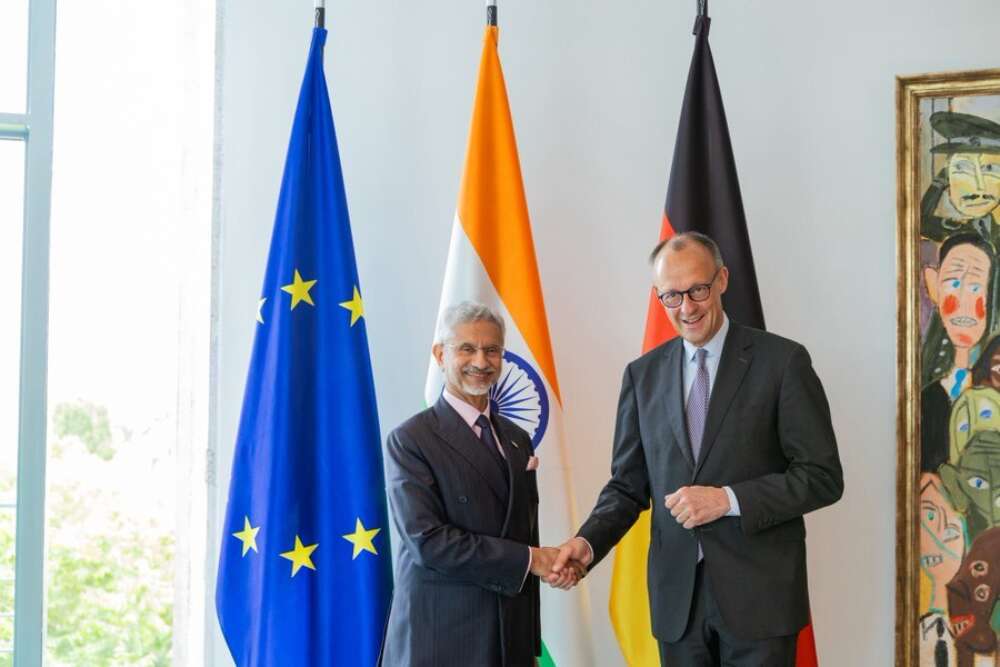
Germany’s opposition leader Friedrich Merz has suggested that a long-stalled trade agreement between the European Union and India could be clinched by the end of January, injecting momentum into negotiations that Brussels and New Delhi have struggled to close for more than a decade as global supply chains remain under strain from geopolitical frictions.

Speaking at a policy forum, Friedrich Merz said the bloc and India were “closer than many assume” to resolving key differences, adding that the economic case for a deal had sharpened after prolonged disruptions linked to strategic competition between major powers. His comments come as European manufacturers continue to grapple with uneven access to critical inputs following China’s tightening of export controls on minerals vital for electric vehicles, electronics and defence applications.

Negotiations for an EU–India free trade agreement were relaunched in 2022 after an eight-year hiatus, with both sides aiming to expand trade that exceeded €120 billion in goods and services last year. Officials involved in the talks say progress has been made on tariff reductions and rules governing digital trade, though sensitive areas such as agriculture, labour standards and intellectual property remain contentious. Merz’s remarks underscore a growing sense in Berlin and other capitals that the agreement has moved from a strategic aspiration to an economic necessity.

Germany, Europe’s largest economy, has been among the strongest advocates of diversifying trade ties beyond China, particularly after export controls imposed by Beijing on gallium, germanium and graphite created months of bottlenecks for automotive and renewable energy firms. Those controls, introduced amid the broader U. S.–China trade dispute, highlighted vulnerabilities in Europe’s dependence on a narrow set of suppliers for critical raw materials.

Executives in the auto sector say shortages of battery-grade materials last year forced production adjustments and delayed investment decisions. While some supply has since stabilised, industry groups argue that long-term resilience requires deeper partnerships with alternative producers and manufacturing hubs. India, with its expanding industrial base and policy push to attract foreign investment, has emerged as a central pillar of that strategy.

European officials note that the proposed agreement would not only cut tariffs—currently as high as 60 per cent on some vehicles entering India—but also establish clearer rules for public procurement and data flows. For India, the deal promises greater access to the European market for pharmaceuticals, textiles and IT services, while also encouraging technology transfer and skills development.

Trade analysts caution that closing the pact by late January would require political compromises on both sides. European negotiators have pressed for stronger environmental and labour commitments, while Indian counterparts have sought flexibility to protect small farmers and domestic manufacturers. Still, the geopolitical context is shifting calculations. The European Union has accelerated its “open strategic autonomy” agenda, seeking to balance openness with security of supply, and India has signalled willingness to align more closely with Western economies without abandoning its strategic independence.

Merz’s intervention also reflects domestic pressures within Germany, where exporters are seeking new growth markets as demand in China cools. German industry groups have repeatedly urged policymakers to prioritise agreements with fast-growing economies, arguing that delays risk ceding ground to competitors from East Asia and North America.

The broader backdrop includes intensifying scrutiny of China’s role in global supply chains. Beijing has defended its export controls as legitimate measures to safeguard national security and manage resources, but the ripple effects have reinforced calls in Europe for diversification. The European Commission has already launched initiatives to secure access to lithium, cobalt and rare earths through partnerships in Africa, Latin America and Asia, with India seen as both a market and a manufacturing partner.

Diplomats familiar with the EU–India talks say technical chapters are largely drafted, leaving political decisions to bridge remaining gaps. Any agreement would still need approval from member states and the European Parliament, a process that could extend beyond the negotiating deadline even if a political deal is struck.

By Nitya Chakraborty U.S. commerce secretary Howard Lutnick’s stunning podcast on Thursday claiming that the bilateral India-US trade deal was almost ready but was not signed as Prime Minister did not call the U.S. President Donald Trump as was expected by the Americans. This lack of proper gesture on the part of the Indian PM […]

The article Modi Mustn’t Rush To Appease Trump On Trade Deal, Explore Options appeared first on Latest India news, analysis and reports on Newspack by India Press Agency).

VinFast’s breakout year, capped by its 200,000th vehicle and growing presence from India to the Middle East, shows how Vietnam is rewriting its industrial reputation, with electric cars leading the charge.

HAI PHONG, VIETNAM – Media OutReach Newswire – 8 January 2026 – On the final day of 2025, VinFast’s Hai Phong manufacturing complex ended the year at full throttle, rolling off the 200,000th vehicle from its production line. For Vietnam’s first and only global carmaker, the number capped off a year of achievements that highlighted Vietnam’s growing capability as a manufacturing hub.

VinFast's Hai Phong manufacturing complex ended the year at full throttle, rolling off the 200,000th vehicle from its production line.
VinFast’s Hai Phong manufacturing complex ended the year at full throttle, rolling off the 200,000th vehicle from its production line.

For more than a year, VinFast has led Vietnam’s car market, outselling brands that once defined what success on four wheels looked like, a welcome change in a country long used to importing its automotive identity. VinFast vehicles are now part of daily traffic as commuter cars, family haulers, and long-distance companions, judged and praised with the same standards buyers apply to Japanese, Korean, or German imports.

Scale, however, tells only part of the story. In the same year, VinFast revealed a far more technical project: the Lac Hong 900 LX, an armored electric vehicle certified to meet the VPAM VR7 ballistic protection standard. Very few automakers globally can build vehicles at that level of protection, and even fewer can do so with a fully electric platform.

Outside Vietnam, over the past two years, VinFast has pushed into North America, Europe, Asia, and the Middle East. Notably, in 2025, three new plants came online, one in Vietnam and two more in India and Indonesia. The Indian factory in Tamil Nadu entered a market famous for thin margins and even thinner patience. It is not a place that waits politely for newcomers to find their footing. Yet by December, just months after starting sales, VinFast had risen to become India’s fourth largest EV brand, prompting one Indian outlet to note that its market entry “proved to be a huge success.”

Much of VinFast’s momentum, across every market it has entered, comes from how it thinks about ownership. Rather than treating sales as an endpoint, the company tends to enter markets with an entire support system designed to remove local anxieties. In regions where electric vehicles still prompt practical questions, those details carry weight.

VinFast VF 8 model in UAE.

The Middle East offers a clear case. There, the VF 8 is positioned as a premium midsize electric SUV, supported by policies designed to reduce hesitation. Buyers receive a ten-year or 200,000-kilometer vehicle warranty, a ten-year unlimited-mileage battery warranty, and five years of free servicing, along with mobile service units, round-the-clock roadside assistance, and guaranteed parts availability.

For many buyers in the Middle East, Vietnam was not previously associated with car manufacturing, an image VinFast is steadily undoing for a country long thought of mainly as an exporter of rice and shoes. Beyond the vehicles themselves, that kind of normalization may be VinFast’s most lasting export.

There was a time when cars from South Korea were treated as a punchline in Western markets, but those jokes have not aged well. Vietnam’s turn is arriving in a different moment, shaped by electrification and fewer fixed ideas about who belongs in the global auto club. And this time, nobody is laughing.

Hashtag: #VF8 #VinFast

The issuer is solely responsible for the content of this announcement.

By Nitya Chakraborty India’s isolation from Global South on the issue of Trump’s invasion of Venezuela is now complete. Prime Minister Narendra Modi claims himself as the leader of Global South. Both at the SCO summit and BRICS meeting last year, Modi was active in articulating the aspirations and the programmes of the developing and […]

The article Narendra Modi Has Lost His Moral Right To Lead 2026 BRICS Presidency appeared first on Latest India news, analysis and reports on Newspack by India Press Agency).

Coinbase has said a former customer-support agent has been arrested in India following an investigation into a security breach that exposed limited user data on the US-based cryptocurrency exchange, marking a significant step in efforts to trace accountability for one of the platform’s most closely watched incidents. The exchange said the individual, who had worked for a third-party support contractor, was taken into custody by law-enforcement authorities […]

By Prabhat Patnaik The BJP-led government has just got parliament to pass a legislation permitting up to 100 percent foreign equity-ownership in India’s insurance sector. This, the Prime Minister has announced, marks the beginning of a major “reform” in India’s financial sector, towards presumably much greater private, including foreign, ownership of financial institutions. This would […]

The article Pushing The Financial System Towards A Dangerous Direction appeared first on Latest India news, analysis and reports on Newspack by India Press Agency).

By Dr. Gyan Pathak Gig workers of India have concluded the year 2025 with an all-India strike action on the last day, December 31, 2025, demanding fair wages and working conditions, which have undergone marked deterioration in the last three months. It happened despite the Union government’s repeated claim that they have been doing everything […]

The article Gig Workers Concluded 2025 With All-India Strike, Will Have To Do More In 2026 appeared first on Latest India news, analysis and reports on Newspack by India Press Agency).

By K Raveendran As Indian corporates step into the new year buoyed by stronger growth momentum and easing inflationary pressures, a sense of anticipation is spreading across boardrooms and policy circles alike over a dispute that dwarfs most corporate battles seen in the country’s history. At the heart of this confrontation lies the Indian government’s […]


The article Sensation Building Up Around Country’s Biggest Ever Arbitration Award appeared first on Latest India news, analysis and reports on Newspack by India Press Agency).

By Ashis Biswas Within the South Asian context, a noticeable coarsening of diplomatic discourse among four countries has occurred, following the violent regime change in Bangladesh, a brief encounter involving India and Pakistan and sporadic skirmishes between Pakistan and Afghanistan. A new political alignment, whose contours will be clearer after the Bangladesh general elections, is […]

The article Disturbing Decline Of Diplomacy Across South Asia Bodes Ill For All appeared first on Latest India news, analysis and reports on Newspack by India Press Agency).

VISHNU RAJA
RYO YAMADA
HITORI GOTOH
IKUYO KITA