News related to
Indian

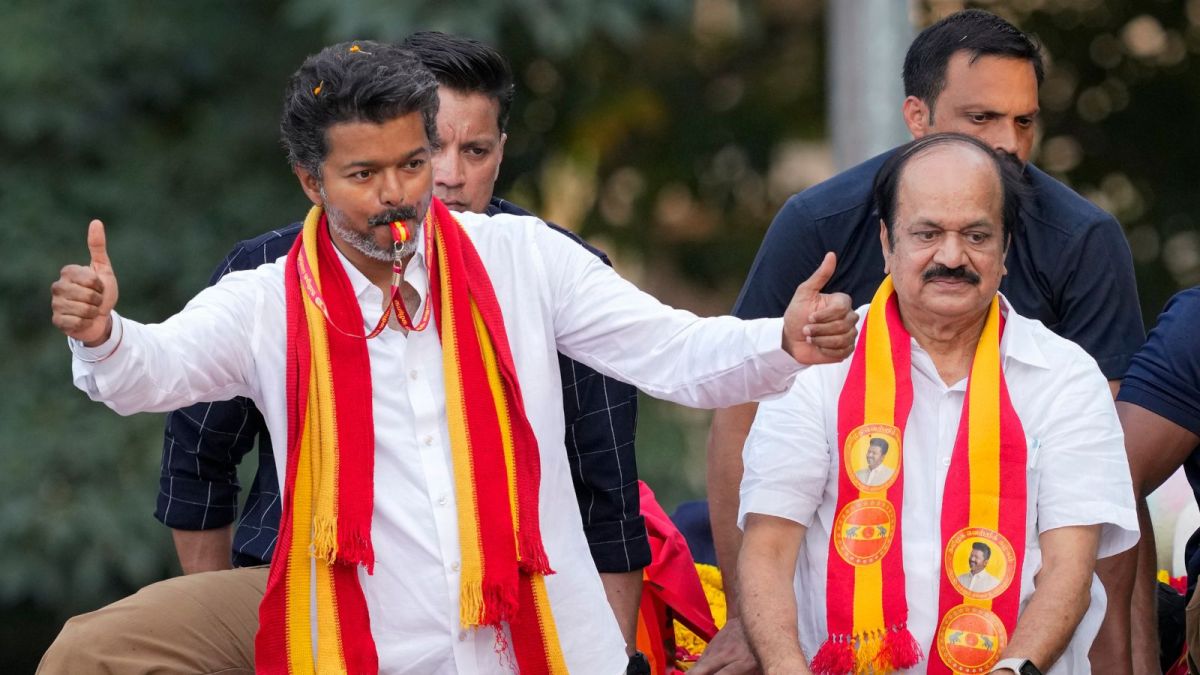
Tamil Nadu’s vote count pointed to a dramatic political rupture on Monday, with actor Vijay’s Tamilaga Vettri Kazhagam emerging as the strongest challenger to the ruling DMK and threatening to redraw the balance of power in one of the country’s most important industrial states.

Trends through the afternoon showed TVK ahead in more than 100 seats in the 234-member Assembly, close to the 118-seat majority mark. The AIADMK alliance was holding second place in several tallies, while the DMK, led by Chief Minister M K Stalin, slipped sharply from its dominant position. The count remained fluid, with leads shifting by constituency and round, but the scale of TVK’s performance confirmed that Vijay’s first full electoral test had moved beyond symbolism.

The most striking signal came from Kolathur, Stalin’s long-held constituency in Chennai, where TVK candidate V S Babu established a lead during counting. Udhayanidhi Stalin also faced pressure in Chepauk-Thiruvallikeni, intensifying the perception of an anti-incumbency wave cutting through the DMK’s urban and welfare-heavy support base. Vijay himself was leading in both seats he contested, strengthening expectations that he could become central to government formation if TVK sustains its advantage.

TVK’s surge is particularly significant because Tamil Nadu has for decades been shaped by two Dravidian blocs, with the DMK and AIADMK alternating in power. Vijay entered politics with a campaign built around corruption allegations, youth unemployment, social justice language and a promise to offer an alternative to entrenched party networks. His appeal among young voters, first-time voters and urban families appears to have translated into a statewide challenge rather than a personality-driven protest vote.

The outcome carries implications well beyond party politics. Tamil Nadu is a manufacturing and export powerhouse, with deep clusters in automobiles, electronics, textiles, leather, engineering, logistics and renewable energy. Chennai and its surrounding industrial belt host major auto and component manufacturers, while Hosur, Sriperumbudur, Coimbatore, Tiruppur and Ranipet have become key nodes in supply chains tied to smartphones, electric vehicles, garments and precision manufacturing.

Investors will be watching whether a possible TVK-led government preserves policy continuity. The state has benefited from a predictable administrative culture, skilled labour, ports, highways, renewable energy capacity and sector-specific industrial policies. Major projects involving Tata Electronics, Foxconn-linked supply chains, Hyundai, Renault Nissan, Ola Electric, VinFast, Tata Motors’ Jaguar Land Rover facility and a wide network of small suppliers rely on stable land, power, logistics and labour arrangements.

Vijay’s party has promised cleaner governance and a people-focused administration, but it is yet to demonstrate how it would manage fiscal pressures, industrial incentives, welfare spending and Centre-state relations. Tamil Nadu’s welfare model is expensive, and any new government would inherit commitments on subsidies, social schemes, infrastructure projects and public-sector obligations. A sharp shift in policy could unsettle investors, while a calibrated transition could allow TVK to combine political change with economic stability.

For the DMK, the trends represent a severe test of its governance record. Stalin’s administration has promoted Tamil Nadu as a trillion-dollar economy contender, pushed investment summits, expanded electronics manufacturing and defended its welfare programmes. Yet voter fatigue, price pressures, local grievances, perceptions of dynastic control and the attraction of Vijay’s outsider image appear to have weakened the ruling party’s hold.

The AIADMK, despite remaining competitive in parts of western and southern Tamil Nadu, also faces a strategic challenge. TVK’s ability to draw votes across urban, semi-urban and rural seats threatens to disrupt the opposition space that the AIADMK had hoped to consolidate. If no party crosses the majority mark, negotiations with smaller parties and alliance partners could determine the next government.

NEW DELHI, INDIA – Media OutReach Newswire – 3 May 2026 – The Indo-Pacific region continues to be the focal point of global growth dynamics and strategic competition, and relations between Vietnam and India are facing new opportunities to develop in a deeper, more substantive, and more sustainable manner. Building on the Comprehensive Strategic Partnership established in 2016, cooperation in the fields of economy, science and technology, and environment has increasingly been identified by both sides as key pillars.

In 2024, the two sides adopted an Action Plan to implement the Comprehensive Strategic Partnership for the 2024-2028 period. This document not only consolidates traditional areas of cooperation but also expands into new domains such as science and technology, innovation, digital transformation, energy and sustainable development.

Economy continues to be a bright spot in bilateral cooperation

Over the past decade, Vietnam-India economic cooperation has recorded significant positive developments. Bilateral trade turnover has maintained steady growth, increasing from over USD 14 billion in 2023 to nearly USD 16.5 billion in 2025, reflecting the increasingly close integration between the two dynamic Asian economies.

The structure of two-way trade has increasingly demonstrated complementarity. Vietnam has strengthened its exports of electronics, machinery, processed agricultural products, wood, and seafood, while India serves as an important supplier of steel, pharmaceuticals, chemicals, and textiles to Vietnam.

Amid the ongoing restructuring of global supply chains, both Vietnam and India are intensifying efforts to diversify their partners and reduce dependency risks. This creates significant room for the two countries to promote supply chain linkages in areas such as processing and manufacturing industries, supporting industries, logistics, and high-tech agriculture. Vietnam, with its strategic location in Southeast Asia, can serve as a gateway for Indian enterprises to expand their presence deeper into ASEAN, while India represents a vast market with rapidly increasing consumer demand.

Science and technology: a new driver for deeper cooperation

Scientific and technological cooperation has seen remarkable development recently, gradually shifting from exchanges to more substantive collaboration, tied to specific products and developmental needs. Priority areas of cooperation include information technology, biotechnology, clean energy, and digital transformation.

Several representative projects, such as the Satellite Data Receiving Station and Satellite Image Processing Center, the Vietnam-India Nuclear Science Center (Da Lat), the Army Software Park (Nha Trang), and the Center of Excellence in Software Development and Training (CESDT), have been contributing to enhancing Vietnam’s technological capacity. Notably, the Indian Technical and Economic Cooperation (ITEC) program continues to be an effective channel for human resource training, helping Vietnamese officials and experts access modern management knowledge and experience.

Against the backdrop of the vigorous Fourth Industrial Revolution, the potential for cooperation between the two countries remains vast. The two sides can expand their cooperation into emerging areas such as Artificial Intelligence, semiconductors, cybersecurity, fintech, and biotechnology, aiming for the goals of co-development and co-innovation. ­

Environmental cooperation and sustainable development are gradually expanding

In the context of increasingly complex climate change, environmental cooperation between Vietnam and India is becoming an important component of the bilateral agenda. Areas such as renewable energy, water resource management, circular economy, and disaster-resilient infrastructure are receiving growing attention and promotion from both sides.

Cooperation agreements in marine science, along with Quick Impact Projects (QIPs) supporting communities, such as clean water supply, drought mitigation, and saline intrusion prevention in the Mekong Delta, have delivered practical results. Vietnam’s participation in the Coalition for Disaster Resilient Infrastructure (CDRI), initiated by India, also opens up opportunities to strengthen cooperation in sustainable infrastructure and climate change adaptation.

In the coming period, areas encompassing solar energy, energy storage, waste management, marine pollution monitoring, and early warning systems for natural disasters are considered promising directions for cooperation.

Prospects for cooperation

The prospects for cooperation in the coming period are assessed as positive. With the economic and scientific-technological complementarity, along with strong political will from both sides, Vietnam-India relations have many favorable conditions to grow more strongly, particularly in areas such as the digital economy, green economy, innovation.

Orientations for promoting cooperation in the coming period

With a foundation of excellent relations and significant room for cooperation, the two countries have the basis to elevate the Comprehensive Strategic Partnership to a new height, making it increasingly substantive and effective in the new phase, particularly in the context of the two countries heading towards new high-level engagements with the state visit of General Secretary and President To Lam to India in May 2026.

To effectively capitalize on opportunities, both sides need to continue maintaining high-level exchanges, intergovernmental mechanisms and specialized dialogues, and further translate strategic commitments into cooperation programs and projects with clear roadmaps and resources.

In the economic field, efforts should be intensified to remove trade barriers, improve logistics connectivity, and promote the review and upgrading of the ASEAN – India Trade in Goods Agreement (AITIGA); strengthen the development of large-scale investment projects in priority areas such as pharmaceuticals, the marine economy, renewable energy, and supporting industries.

In the field of science and technology, establishing joint research cooperation mechanisms, strengthening linkages between research institutes, universities, enterprises, as well as promoting expert exchanges, technology transfer, and human resource training will play an important role.

In the environmental field, efforts should be directed toward building a comprehensive green cooperation framework, focusing on water management, marine science, plastic pollution reduction, clean energy, and disaster-resilient infrastructure, while also effectively leveraging regional initiatives such as the CDRI.

Hashtag: #MAE

The issuer is solely responsible for the content of this announcement.

By K Raveendran Election-season restraint on fuel pricing is giving way to a harsher economic reality, and Indian consumers are likely to feel the impact first through the everyday costs that rarely appear as headline inflation until they have already entered household budgets. Petrol, diesel and cooking fuel are not merely energy products in India; […]

The article With Elections Over, Realistic Pump Prices Only A Matter Of Time appeared first on Latest India news, analysis and reports on Newspack by India Press Agency).

By Dr. Gyan Pathak The theme of May Day 2026 focuses on “Ensuring a Healthy Psychosocial Working Environment” which reminds us how the working environment has deteriorated in recent times. In India, the recent workers unrests in April in Noida and the states in the National Capital Regions, show it. Protesting workers demanded chiefly two […]

The article May Day 2026 Marks Critical Turning Point For Labour Movement In India appeared first on Latest India news, analysis and reports on Newspack by India Press Agency).

By Saifur Rahman GCC financial wealth is projected to grow by roughly 4.7–5.2 percent annually, reaching US$3.5 trillion by 2026–2027, up from US$2.7–US$2.8 trillion in 2021–2022, driven by high oil prices, robust IPO activity in the UAE and Saudi Arabia, and a rising influx of high-net-worth individuals, according to a report by Boston Consulting Group. The recently announced plans by the UAE Government to automate 50 per […]

SINGAPORE – Media OutReach Newswire – 28 April 2026 – Asia Pacific Rayon (APR), a leading global manufacturer of viscose rayon, has reinforced its long-term commitment to customers in Indonesia and India through a series of targeted industry engagements.

The company recently marked its eighth consecutive participation at Indo Intertex Expo in Jakarta, where it showcased new opportunities for viscose and lyocell fibres and strengthened relationships across the textile value chain. The exhibition brought together suppliers and buyers seeking new product ideas and business opportunities, giving APR a platform to deepen collaboration and expand market connections.

Central to APR’s Jakarta presence was a showcase featuring seven partner companies spanning spinning, weaving, knitting and garment manufacturing. By presenting these partners together, APR, a member of the RGE group of companies founded by Sukanto Tanoto, demonstrated the interconnected ecosystem underpinning Indonesia’s textile sector and the shared value created through close collaboration between fibre producers and downstream manufacturers.

A highlight of the showcase was a dedicated display of lyocell fabrics designed for batik applications. Batik, the wax-resist dyeing craft recognised by UNESCO as part of Indonesia’s cultural heritage, remains central to the nation’s textile identity. Lyocell’s compatibility with traditional dyeing methods offers artisans the opportunity to combine heritage craftsmanship with modern fibre innovation.

Building on this momentum, APR continued its engagement in India through participation in the Fibers & Yarns Expo in Mumbai, one of India’s premier textile trade fairs and a vital networking platform for the country’s extensive supply chain. The event enabled APR to deepen market engagement, forge new partnerships and reconnect with a rapidly expanding customer base.

At the Mumbai exhibition, APR introduced BVF, a finer denier viscose engineered for fine count spinning applications and targeting premium segments such as high-end fashion, athleisure, intimate apparel and home textiles. The Indian market continues to present significant growth potential as manufacturers seek reliable fibre supply, consistent product quality and proactive technical support to meet evolving consumer demands both domestically and internationally.

Sachin Malik, Commercial Head, Asia Pacific Rayon, said: “In the current market scenario, success is not a solo pursuit. It is about how effectively we integrate into our customers’ reality. Our strategy in Indonesia and India demonstrates that fibre producers must align their growth with the success of customers and the wider textile value chain.”

As regional supply chains face increasing pressure to become more resilient, APR’s exhibition strategy underscores a clear message: in textiles, competitive advantage is built not through scale alone, but through trusted partnerships that deliver stability, technical expertise and shared progress.
Hashtag: #RGE #APR #viscose #rayon #Indonesia #India

The issuer is solely responsible for the content of this announcement.

About Asia Pacific Rayon

Asia Pacific Rayon (APR), based in Indonesia, is Asia’s first fully integrated viscose rayon producer, from plantation to fibre. APR, which has a capacity of 325,000 tons per year, is located in Pangkalan Kerinci, Riau Province, Indonesia. APR is committed to becoming a leading viscose staple fibre producer with the principles of sustainability, transparency and operational excellence, and serving the interests of the community, country and climate, while providing value to customers. APR is part of the RGE group of companies.

By T N Ashok In most democracies, high voter turnout is read as a simple good—an affirmation of faith in the system. In India, it is rarely that straightforward. The extraordinary participation seen in the 2026 assembly elections in Tamil Nadu and West Bengal—with turnout brushing past 84% and 90% respectively—demands a more layered reading. […]

The article What Record Turnouts In Tamil Nadu And West Bengal Really Signal On Results? appeared first on Latest India news, analysis and reports on Newspack by India Press Agency).

Advertisements

By T N Ashok India’s electoral map is not a monolith; it is a collection of distinct, often defiant political idioms. As Tamil Nadu enters its final hours of campaigning and West Bengal readies for a high-stakes, multi-phase marathon, the subtext is singular and urgent: the traditional regional bastions that have long acted as the […]

The article India’s Regional Titans Facing Seize From The Rulers Of The North appeared first on Latest India news, analysis and reports on Newspack by India Press Agency).

Andhra Pradesh Chief Minister N. Chandrababu Naidu has cast Amaravati’s quantum push as a test of whether the country can build strategic technology capacity at home rather than remain tied to foreign platforms, using the launch of two indigenous open-access facilities to argue that partnership with global companies need not mean dependence. The remarks came days after the state unveiled Amaravati 1S and Amaravati 1Q on World Quantum Day, presenting the project as both a technology milestone and a political statement about capability.

Speaking in Amaravati, Naidu pushed back on questions over reliance on companies such as IBM, saying the starting point mattered less than whether domestic institutions could absorb, adapt and eventually build. He described the new facility as proof that companies and researchers in the country are capable of producing quantum systems, while acknowledging that the path to scale will involve collaboration. That framing is central to the state government’s pitch: use foreign alliances where useful, but ensure design, testing, skills and manufacturing depth are developed locally.

The immediate trigger for that argument was the April 14 launch of the Amaravati Quantum Reference Facility, or AQRF, spread across SRM University-AP in Amaravati and Medha Towers in Gannavaram. Andhra Pradesh has described the systems as the country’s first indigenously built, open-access quantum computer test beds, intended to let researchers, startups and industry users test hardware under operating conditions rather than rely only on closed imported machines. Officials say the site is designed to validate processors, cryogenic systems, amplifiers and control electronics, with access for hands-on study and benchmarking.

That matters because quantum computing remains a field in which much of the world’s high-end hardware is controlled by a small number of companies and laboratories. Andhra Pradesh officials and syndicated reports on the launch said about 85 per cent of the facility’s components were manufactured domestically, a claim being used to support the government’s assertion that a “sovereign hardware ecosystem” is now possible. The systems were developed with support from institutions including the Tata Institute of Fundamental Research, the Indian Institute of Science and the Defence Research and Development Organisation, alongside younger firms working on hardware integration.

Yet the sovereignty message sits alongside a second reality: Amaravati’s longer-term quantum ambitions still rely on international corporate participation. IBM, Tata Consultancy Services and the Andhra Pradesh government announced in May 2025 that the planned Quantum Valley Tech Park in Amaravati would seek to host an IBM Quantum System Two with a 156-qubit Heron processor, subject to export licences and final agreements, while TCS would work on algorithms and applications. Naidu himself described that project at the time as part of the National Quantum Mission and a route to job creation and industrial use cases.

That leaves Andhra Pradesh trying to strike a careful balance. On one hand, the state wants the credibility, tooling and developer ecosystem that come with IBM and TCS. On the other, Naidu is signalling that strategic depth cannot rest on access alone. His comparison with the telecom sector was meant to make that case: the country did not master mobile and network technologies overnight, but built capability over time through policy support, local firms and institutional confidence. In quantum, he appears to be arguing for the same sequence — collaborate first where necessary, but move steadily towards domestic competence.

The wider national backdrop supports that ambition. The National Quantum Mission, approved in April 2023 with an outlay of Rs 6,003.65 crore running through 2030-31, is meant to seed research, industrial development and applications across computing, communications, sensing and materials. The Department of Science and Technology says the mission aims to develop intermediate-scale quantum computers in the 50 to 1,000 physical qubit range and has already set up four thematic hubs led by IISc Bengaluru, IIT Madras, IIT Bombay and IIT Delhi. Amaravati’s project is therefore not operating in isolation; it is seeking to attach itself to a national push that is still in its build-out phase.

Alarm over the Strait of Hormuz is spilling far beyond the Gulf, sharpening attention on the Malacca Strait near Singapore as traders, shipowners and Asian governments weigh what a prolonged disruption in West Asian energy flows could mean for the region’s busiest maritime corridor. The immediate military confrontation is centred on Hormuz, where Iran has tightened restrictions and the United States has imposed a blockade on Iranian […]

New Delhi is treating the fallout from the Iran war as more than a passing oil shock, with the strain spreading from shipping lanes and fertiliser markets to trade flows and inflation risks. The concern inside government and industry is that even if fighting eases, higher freight, insurance and input costs could leave a long tail for an economy that still depends heavily on imported energy and exposed maritime routes.

Pressure on the economy is already visible in trade and commodity data. Merchandise trade with the Middle East has been hit by shipping disruption linked to the conflict, even as stronger exports to the United States helped keep March’s overall trade deficit lower than expected. At the same time, the fertiliser bill has jumped sharply: urea import offers to Indian Potash Ltd clustered near $1,000 a tonne this week, roughly double the level seen two months ago, raising the prospect of a larger subsidy burden just as the kharif cycle approaches. For policymakers, that combination matters because it hits both external accounts and domestic costs, especially in food production.

Energy remains the central fault line. The Strait of Hormuz handles about a fifth of global oil and gas shipments, and for India it is a vital corridor for roughly half of crude and LPG imports. That vulnerability has been laid bare by delays to vessel movements and the stranding of India-flagged ships in the Gulf. Iran’s envoy in New Delhi has denied any toll demand on tankers, and India has also said no such payments were made, but the broader message from the episode is that the route can no longer be treated as a routine artery for commerce when conflict risk is this high.

Oil traders have taken some comfort from ceasefire diplomacy and indirect talks between Washington and Tehran, yet prices remain elevated because markets do not believe a durable fix is close. Brent crude was still around $95 a barrel on April 16, and analysts say disruptions to flows through Hormuz remain severe. That leaves New Delhi facing a familiar but uncomfortable calculation: protect households from a fuel shock and risk wider fiscal stress, or let higher import costs work their way through the system and accept stronger inflation. The International Monetary Fund and World Bank have both warned that the conflict could scar global growth, raise prices and impose lasting damage even if the battlefield quietens.

Those warnings matter because the shock is broader than petrol and diesel. Wholesale prices are already climbing, and manufacturers are absorbing costlier freight, energy and feedstock. Fertiliser is a particular worry. If elevated urea prices persist, the state may have to spend more to shield farmers, while any squeeze on supply would carry risks for sowing costs and food inflation later in the year. Economists have argued for targeted support rather than broad subsidies, but that is easier said than done in a country where energy and fertiliser costs have immediate political as well as economic consequences.

There are, however, offsets that could soften the blow. March trade numbers showed that stronger shipments to the United States helped compensate for weaker business with the Middle East, and India continues to diversify its energy basket through Russian supplies and other alternatives where pricing works in its favour. A sanctioned LNG cargo from Russia is heading to Dahej, underlining the government’s willingness to prioritise supply security and consumer interests over diplomatic noise around purchasing patterns. That flexibility has given India more room than many pure importers, though it does not erase the strategic dependence on Gulf routes.

  Slate Auto, the electric vehicle start-up backed by Jeff Bezos, has raised $650 million as it pushes towards launching an affordable electric pickup priced in the mid-$20,000 range, handing the company one of the bigger funding rounds in a US EV market that has turned markedly harsher for newcomers. The company said the money will support the rollout of its first vehicles later this year, with […]

Reserve Bank officials have opened discussions with commercial lenders on how to attract larger and more stable deposits, as the banking system grapples with a widening mismatch between loan growth and deposit mobilisation. The push comes as households channel a bigger share of savings into equities and mutual funds, leaving banks under pressure to compete harder for retail money and rely more on costlier wholesale funding.

The backdrop is a funding strain that has become harder for lenders to ignore. Data cited in market reports show credit growth has continued to outpace deposit growth, with loans rising 14.5% year on year as of late February against deposit growth of 11.9%. By mid-March, the system credit-deposit ratio had climbed above 83%, a level analysts describe as historically stretched, underscoring how aggressively banks have had to deploy funds to sustain lending across retail, corporate and small business segments.

That imbalance is feeding directly into banks’ funding costs. Lenders have increasingly turned to certificates of deposit, a short-term market instrument used to raise money from institutional investors, because traditional deposit inflows have not kept pace with credit demand. Reuters reported that outstanding certificates of deposit had risen to a record 6.64 trillion rupees by February 28, while the premium banks were paying over comparable treasury bill yields had widened to levels last seen during the Covid-era funding stress of 2020.

Senior bankers have acknowledged the pressure. Indian Bank managing director and chief executive Binod Kumar told Reuters that some lenders had already raised fixed deposit rates, but that strong credit growth meant funding pressure was likely to persist. That suggests the central bank’s consultations are not merely precautionary; they reflect a structural concern inside the financial system over the quality and stability of bank liabilities, especially at a time when competition for household savings is no longer confined to rival banks.

A key reason lies outside the banking sector. The Economic Survey for 2025-26 said the share of equity and mutual funds in annual household financial savings had risen from about 2% in FY12 to more than 15.2% in FY25, a sharp reallocation that captures how retail investors are moving towards market-linked products. The same survey said individual investors’ share in equity ownership had reached 18.8% by September 2025, while household equity wealth had expanded by about 53 lakh crore rupees between April 2020 and September 2025.

That shift has continued into this year. Reuters reported that inflows into equity mutual funds rose 56% in March to 404.5 billion rupees, the highest in eight months, while monthly SIP contributions climbed to a record near 321 billion rupees. Data published by the Association of Mutual Funds in India separately showed total SIP collections of 32,087 crore rupees in March. Together, those figures point to a household investor base that remains willing to keep allocating money to market instruments even during volatile trading conditions.

For banks, the result is a more expensive contest for deposits. Lenders have already been raising term deposit rates in pockets of the market, particularly where they need to defend margins or maintain funding for loan books growing faster than system averages. Yet higher deposit rates carry their own cost, squeezing net interest margins at a time when analysts are already warning that wholesale funding dependence and tighter liability conditions could drag on profitability.

The RBI is trying to contain the wider liquidity effects while keeping monetary transmission orderly. In its April monetary policy communication, the central bank said it wanted the weighted average call rate, its operative rate, to stay close to the 5.25% repo rate. It indicated that maintaining liquidity surplus in a range of 0.6% to 1.1% of deposits would help keep the spread between the call rate and the policy rate within 5 to 10 basis points. Banking system liquidity surplus has already risen above 4 trillion rupees this month, giving lenders some immediate relief even as the deeper deposit challenge remains unresolved.

By Dr. Gyan Pathak Election Commission of India (ECI) has caused miscarriage of democracy in West Bengal, which is rejoiced by the Union Government of India led by PM Narendra Modi and RSS-BJP clan, lamented by millions of voters whose names were deleted from the electoral roll under Special Intensive Revision (SIR), and strongly resisted […]

The article ECI Caused Miscarriage Of Democracy In West Bengal appeared first on Latest India news, analysis and reports on Newspack by India Press Agency).

By Nantoo Banerjee The country is experiencing a significant surge in commodity and transportation costs following geopolitical tensions in the Persian Gulf region and a weak Indian Rupee. Retail prices of daily essentials are rising rapidly. The prices of edible oils, pulses and packaged foods, including drinking water, have moved up since last month. Precious […]

The article Prices Are Fast Shooting Up Fanning Inflation appeared first on Latest India news, analysis and reports on Newspack by India Press Agency).

Qatar and India have moved to reinforce one of Asia’s most important energy relationships, with senior ministers in Doha pledging closer cooperation and calling for urgent protection of global supply chains as conflict-linked disruption continues to unsettle oil and gas markets. During talks on April 9 and 10, Qatar’s Minister of State for Energy Affairs and QatarEnergy chief executive Saad Sherida Al-Kaabi told India’s Minister of Petroleum and Natural Gas, Hardeep Singh Puri, that Doha would remain a reliable energy supplier, while both sides stressed the need for uninterrupted navigation and the free flow of commerce.

The meeting carried weight beyond bilateral symbolism. Qatar is India’s largest supplier of liquefied natural gas and a major source of liquefied petroleum gas, making the Gulf state central to India’s fuel security at a time when shipping risks and production interruptions have tightened markets. New Delhi’s outreach came as it sought assurances on supply after weeks of strain across West Asian energy routes and amid concern over the effect of regional instability on domestic fuel availability and industrial consumption.

Doha’s message was also framed by diplomacy. The official Indian statement said the ministers welcomed the two-week ceasefire agreed on April 8 and underlined the need for an early end to disruption in global energy supplies. It added that Puri conveyed greetings and a message of solidarity from Prime Minister Narendra Modi to Qatar’s leadership, reflecting how the energy relationship is now closely tied to broader strategic engagement covering trade, investment and regional stability.

For India, the stakes are immediate. The country depends on imports for about half of its natural gas needs, and the supply shock has already exposed vulnerabilities in infrastructure and procurement. GAIL’s finance director said this week that the Dabhol LNG terminal in Ratnagiri was operating at less than half its 5 million-tonnes-a-year capacity because of constrained global supplies. Hindustan Petroleum’s Chhara LNG terminal in Gujarat has also faced difficulties after missing two cargoes in March and April that were expected from Qatar via ADNOC Trading.

The background to the Doha talks is a sharp deterioration in regional energy logistics. Reuters reported on April 8 that QatarEnergy was preparing to restart LNG production after attacks in March forced stoppages at facilities in Ras Laffan and Mesaieed. Two of three trains at QELNG North 1 had been restarted, but a full return depended on vessels being able to pass safely through the Strait of Hormuz, one of the world’s most sensitive energy chokepoints. The same disruption has inflated spot prices and increased anxiety among large importers across Asia.

That makes Qatar’s long-term importance to India even clearer. In February 2024, QatarEnergy and Petronet LNG signed their largest single LNG supply agreement, under which Qatar will deliver 7.5 million metric tonnes a year from 2028 to 2048. Reuters reported at the time that Qatar planned to lift LNG liquefaction capacity to 126 million tonnes a year by 2027, up from 77 million, as it sought to strengthen its role in Asian and European markets. The scale of that agreement gives India a measure of stability, but it also underlines how deeply its gas strategy remains linked to a single Gulf supplier.

That dependence has advantages and risks. Qatar has earned a reputation for contractual reliability and remains among the lowest-cost LNG producers in the world, qualities prized by importers facing volatile spot markets. At the same time, the events of March and April have shown that even long-established energy corridors can be shaken by military escalation, damage to infrastructure and pressure on maritime routes. For policymakers in New Delhi, that is likely to sharpen interest in diversification through additional long-term contracts, more storage, broader sourcing and faster domestic gas infrastructure expansion.

India’s longer-term energy ambitions add another layer to the relationship. The government has repeatedly said it wants to raise the share of natural gas in the energy mix to 15 per cent by 2030, from just over 6 per cent at present. That target cannot be met without dependable imported LNG, even as the country pushes renewables, domestic gas output and cleaner urban fuels. Reliable Qatari supply therefore remains integral not only to short-term energy security, but also to India’s broader transition strategy and industrial planning.

By Nitya Chakraborty All nations in the globe except perhaps Israel have welcomed the ceasefire agreement for two weeks between U.S. and Iran announced by President Donald Trump on April 7 evening US time and later endorsed by the Iranian government. The ceasefire is fragile – Israel has bombed Lebanon killing 254 persons on Wednesday […]

The article Ceasefire Agreement Is Fragile But Islamabad Talks Must Be Used For Stable Peace appeared first on Latest India news, analysis and reports on Newspack by India Press Agency).

The head of the International Monetary Fund on Monday defined the direction of glbal economic travel with unusual clarity. “All roads now lead to higher prices and slower growth,” said managing director Kristalina Georgieva in an interview. The IMF had expected global growth of 3.3% in 2026. Six weeks of war centred on Iran and the disruption of the Strait of Hormuz have already forced a rethink. […]

By Nitya Chakraborty China and Russia are the two major countries which are going the wholehog in boosting the Myanmar junta chief Min Aung Hlaing who has just been elected as the new President following national elections which were rigged, according to the international poll observers. India also exercised its diplomatic pragmatism by doing away […]

The article China Goes All Out To Boost The New President Of Myanmar Min Aung Hlaing appeared first on Latest India news, analysis and reports on Newspack by India Press Agency).

India has moved to secure 2.5 million tonnes of imported urea ahead of the kharif sowing season, opening one of its largest buying exercises in months as the West Asia war squeezes gas availability, disrupts shipping routes and cuts domestic fertiliser output. State-run Indian Potash Ltd has invited bids for 1.5 million tonnes for west coast ports and 1 million tonnes for east coast ports, with vessels required to sail by 14 June and bids due on 15 April.

The timing reflects pressure building across the farm supply chain just before planting for rice, maize and soybean gathers pace in June. India is the world’s biggest urea importer and remains exposed not only to overseas fertiliser shipments but also to liquefied natural gas supplies from the Gulf, a key feedstock for domestic urea plants. Market disruption linked to the conflict has forced policymakers and import agencies to act earlier and at larger scale than usual to avoid a supply gap during the monsoon cropping cycle.

The tender itself underlines the urgency. Indian Potash’s notice, dated 4 April, shows the company is seeking granular or prilled urea in bulk for agriculture use, with separate pricing required for FOBT and C&FFO terms. The notice also sets the bid opening for 15 April and says offers must remain valid until 23 April. Those details matter because India’s tenders often serve as a benchmark for global trade, influencing price expectations far beyond its own market.

Supply stress has emerged on two fronts. First, disruption around the Gulf has affected fertiliser cargo movements through the Strait of Hormuz, one of the most sensitive trade chokepoints for both natural gas and finished fertiliser. Second, tighter LNG availability has curtailed feedstock for urea manufacturing at home. Reuters reported that the conflict had cut domestic output by about 600,000 to 700,000 tonnes a month, while other reports in the domestic press said production in one month had slipped to about 18 lakh tonnes from around 24 lakh tonnes.

That drop is striking because domestic capacity had been strengthened over the past decade. Official figures released last month said urea production in 2024-25 stood at 306.67 lakh metric tonnes, after touching a record 314.07 lakh metric tonnes in 2023-24. The broader policy effort has been to reduce import dependence through revived plants and brownfield additions, yet the present disruption shows that energy exposure still leaves the sector vulnerable when conflict hits upstream supply and freight corridors.

Trade data had already pointed to a more import-dependent year even before the latest escalation. Fertiliser Association of India data reported in January showed urea imports jumped 120.3 per cent year on year to 7.17 million tonnes in April-November 2024-25. That surge suggested domestic output and demand were already misaligned, leaving little buffer when the external shock arrived. The latest tender therefore looks less like a one-off emergency purchase and more like an attempt to rebuild a thinning pipeline before farm demand accelerates.

The price implications are equally important. Reuters said India’s previous tender had cleared at $418.40 a tonne, and traders now expect the new purchase to test higher levels because global availability has tightened. Argus reported that the war had effectively cut off exports from major Gulf producers including Qatar, Saudi Arabia, the UAE and Bahrain, which together usually account for roughly 1 million tonnes a month, or about a fifth of global urea trade. It also cited Kpler data showing more than 900,000 tonnes on stranded vessels beyond Hormuz.

Officials have also been working on contingency planning outside the tender route. Domestic reports said a task group had been formed to assess global urea sources and prepare import options, while gas supply to fertiliser units has been partially restored through spot purchases and reallocation. That may soften the production hit, but it does not fully remove the risk because any prolonged interruption in Gulf shipping or LNG flows would keep pressure on both landed prices and physical availability.

By Nantoo Banerjee The Reserve Bank of India and the government may officially deny or even pretend to ignore the adverse impact of the continuous downhill journey of the Indian Rupee against the US Dollar on the economy, the disturbing trend, if not contained, is bound to lead the heavily import-reliant nation to high inflation […]

The article Indian Rupee’s Continuous Downtrend Is A Big Concern appeared first on Latest India news, analysis and reports on Newspack by India Press Agency).

Arabian Post Staff -Dubai   Dubai lender Emirates NBD has won approval from the Reserve Bank of India to acquire up to 74 per cent of Mumbai-based RBL Bank, a decision that moves one of the largest cross-border banking deals in the country closer to completion and could reshape the private lender’s ownership, governance and market position. The approval, disclosed on April 2, allows Emirates NBD to […]

Vessel traffic through the Strait of Hormuz has begun to edge higher for ships deemed acceptable by Tehran, but the Gulf’s main maritime chokepoint remains tightly controlled and effectively shut to most commercial operators without Iranian clearance. Tracking data cited by Bloomberg showed a gentle rise in signal-on transits, while Reuters and other maritime reports indicate that only a narrow stream of ships linked to countries Iran […]

By Nantoo Banerjee The central excise duty cut on petrol and diesel oil to help petro-fuel producers and marketeers partly cover their losses on account of the rising crude oil import prices is an internal government matter. It is not meant to have any impact on retail prices which continue to be very high and […]

The article Petrol, Diesel Levies Need Drastic Cuts For Inflation Control, Economic Growth appeared first on Latest India news, analysis and reports on Newspack by India Press Agency).

VISHNU RAJA
RYO YAMADA
HITORI GOTOH
IKUYO KITA