News related to
Investment

GITEX, the iconic technology and innovation expo, is broadening its footprint by expanding into Vietnam, heralding a new chapter for the Southeast Asian nation’s burgeoning digital economy. With the event’s successful history in the Middle East and Asia, this expansion signals a strong shift towards positioning Vietnam as a central player in the global digital arena. The launch aligns with Vietnam’s ambitious vision to develop a digital economy worth over $200 billion by 2030, driven by the country’s evolving tech ecosystem, government-backed initiatives, and an increasingly connected population.

GITEX Vietnam, set to take place in Hanoi, is expected to be a major catalyst for the nation’s digital transformation. The expo, known for showcasing the latest advancements in AI, cloud computing, cybersecurity, and smart technologies, will provide a platform for global tech giants and local startups to foster collaboration. This shift not only promises to boost local innovation but also offers international companies the opportunity to tap into Vietnam’s rapidly growing market. The country’s young, tech-savvy population and expanding digital infrastructure make it an ideal destination for the event, underscoring the symbiotic relationship between GITEX’s global platform and Vietnam’s digital future.

The expansion into Vietnam is a testament to GITEX’s strategic move to capture the rising tide of digitalisation across Southeast Asia. According to industry analysts, Vietnam’s digital economy is one of the fastest-growing in the region. With the government’s commitment to building a robust digital infrastructure, the country aims to integrate digital solutions across key sectors, including healthcare, education, logistics, and manufacturing. This government push is expected to further accelerate innovation in AI and blockchain technologies, sectors where Vietnam has begun to make notable strides.

One of the main drivers behind Vietnam’s digital economy ambitions is the government’s Digital Transformation Program, which aims to equip businesses and individuals with the tools to thrive in the new digital world. As part of this initiative, the Vietnamese government has pledged to support local startups and foster an environment conducive to technological advancements. Public-private partnerships are expected to play a pivotal role in bridging the gap between government policy and the commercial sector, ensuring that both infrastructure and innovation go hand in hand.

GITEX’s involvement in this transformation is poised to elevate Vietnam’s digital capabilities on the global stage. By offering a comprehensive view of the latest trends, technologies, and business solutions, the event will expose Vietnamese enterprises to the tools and insights needed to enhance productivity, efficiency, and innovation. As part of the expansion, Vietnam’s homegrown tech companies will also be able to showcase their capabilities, fostering collaboration with global leaders in digital technologies.

The 2025 edition of GITEX Vietnam will feature a broad spectrum of sectors, including digital health, fintech, artificial intelligence, and cybersecurity. These areas align closely with the country’s vision to modernise key industries and improve overall living standards through technology. AI, for instance, is expected to play a crucial role in enhancing Vietnam’s manufacturing sector, enabling greater automation and precision in production. Additionally, fintech’s rise in Vietnam promises to boost financial inclusion by offering innovative solutions to underserved populations, with digital payments and mobile banking expanding rapidly in urban and rural areas alike.

The growing momentum of GITEX in Southeast Asia is evident through its ongoing success in regions like the UAE, India, and Saudi Arabia, where it has served as a crucial platform for digital transformation discussions. The move into Vietnam further strengthens its position as a global tech hub, providing valuable opportunities for cross-border collaboration. Vietnamese companies, eager to expand their reach, will benefit immensely from the international exposure GITEX provides, potentially paving the way for future partnerships, investments, and technological breakthroughs.


Sub-Saharan Africa’s gross domestic product is now projected to grow by about 3.8 percent in 2025, up from 3.5 percent in 2024, as inflation moderates and foreign exchange markets stabilise across many nations. The updated outlook emerges from the latest “Africa’s Pulse” report by the World Bank, which highlights a more favourable macroeconomic backdrop enabling central banks to ease policy constraints and stimulating consumption and investment. The […]

The subscription window for Abdulaziz Ahmad Al-Twijri Trading Company’s initial public offering on the Nomu–Parallel Market will run from 2 to 9 November 2025, focusing exclusively on qualified investors. The offering involves 1 million shares — equivalent to 20 % of the company’s post-IPO capital. The Capital Market Authority approved the registration in June 2025.

Al-Twijri had earlier attempted an IPO in June 2023, when it proposed to list 600,000 shares; the attempt was cancelled after failing to attract full subscription. The current issue is built on a base capital prior to offering of SAR 40 million, paid up via 4 million shares at a nominal value of SAR 10 each. Post-offering, the company will issue 5 million shares, with the floated portion representing 20 %.

Al-Twijri’s core operations span wholesale of food, hygiene and personal care products, medical supplies, plus real-estate leasing and management. In its prospectus, the firm indicates plans to channel proceeds toward expansion of storage capacity and related working capital needs.

The company has appointed Yaqeen Capital as financial advisor and bookrunner, and a spectrum of Saudi capital firms — including Derayah, Al Rajhi Capital, SNB Capital, Riyad Capital, Albilad Capital, AlJazira Capital, Alistithmar Capital, Alinma Capital, ANB, Alkhabeer, SAB Capital, Sahm Capital, GIB Capital and Musharaka Capital — as receiving agents.

Under Saudi capital markets rules, the offering is limited to qualified investors as defined by CMA guidelines. The CMA has emphasised that its approval is procedural; it does not constitute an investment endorsement.

Analysts note that the timing taps into broader momentum in Saudi Arabia’s IPO market. During the second quarter of 2025, Saudi listings captured about 76 % of all GCC IPO proceeds, with strong interest in offerings on both the main market and Nomu. Participation by institutional or high-net-worth investors will be critical to achieving full allocation.

Al-Twijri’s promoters — chiefly members of the Al-Twijri family — will retain controlling interest. In past filings, Mohamed and Khalid Al-Twijri held 30.5 % each, with minority holders covering the remainder. Post-IPO, their combined share will remain significant.

Celebrating Thai Culture and Soft Power on the Global Stage While Highlighting the Success of Korea’s Clean Energy Transformation BANGKOK, THAILAND – Media OutReach Newswire – 9 October 2025 – B.Grimm Power, a leading global energy producer, proudly announced its successful role as the main sponsor of the “Sawasdee Seoul Thai Festival 2025,” a vibrant celebration of Thai culture held in Seoul, South Korea. The festival highlighted […]

The U. S. Department of Commerce has granted export licences for several billion dollars’ worth of Nvidia chips destined for the United Arab Emirates under a bilateral AI agreement struck in May, paving the way for a high-stakes test of America’s artificial intelligence diplomacy. The licences were issued through the Commerce Department’s Bureau of Industry and Security, marking the first concrete implementation of the Trump-era pact with […]

Abu Dhabi National Oil Company announced that its six publicly traded subsidiaries will distribute AED 158 billion in dividends through to 2030, nearly doubling the AED 86 billion cumulative payout since the first listing in 2017.

The announcement came during ADNOC’s inaugural Investor Majlis in Abu Dhabi, where the group underscored its commitment to shareholder returns and transparent governance. The dividend programme is subject to customary approvals and will provide long-term visibility to investors across its diversified portfolio of listed entities.

ADNOC’s six listed companies currently account for more than AED 550 billion in market capitalisation on the Abu Dhabi Securities Exchange and represent nearly 40 percent of the annual dividends distributed on the market. Under the new plan, three additional entities—ADNOC Distribution, ADNOC Gas, and ADNOC Logistics & Services—will join ADNOC Drilling in issuing quarterly dividends.

Dr Sultan Ahmed Al Jaber, ADNOC’s Managing Director and CEO, also serving as UAE Minister of Industry and Advanced Technology, described the dividend target as a “landmark step” adding clarity to the group’s capital return path. He stated the move would “enhance value” for citizens, residents, and partners, and reaffirmed ADNOC’s focus on cost discipline, efficiency and growth.

Each listed unit announced specific dividend floors and policy reforms. ADNOC Drilling set a cumulative floor of AED 25 billion by 2030, representing a 26 percent minimum return over the period. ADNOC Gas pledged a target of AED 90 billion, with dividends moving to a quarterly basis from 2025 onward. ADNOC Logistics & Services raised its guidance to AED 8.1 billion for 2025–2030 and intends to adopt quarterly distributions from the third quarter of 2025.

Other units will also tighten their dividend structures. ADNOC Distribution expanded its dividend policy through 2030 and targets cumulative returns exceeding 30 percent over the 2025–2030 period. Borouge affirmed a dividend floor for 2025 and envisaged a payout ratio of 90 percent of net profit in future years. Fertiglobe flagged interim dividend payments and share buybacks for 2025 to support yield.

Beyond dividends, ADNOC disclosed key developments across its upstream, LNG and petrochemical segments. ADNOC Gas has secured a long-term feedstock agreement worth AED 147 billion with its Ruwais LNG facility. Over 80 percent of project capacity is under contract. The group also reported that the merger of its petrochemical assets with OMV—that is, combining Borouge and Borealis into Borouge Group International —remains on course for completion in Q1 2026. Financing for the transaction, valued at AED 56.6 billion, is in place and synergies of at least AED 1.8 billion annually have been identified.

Earlier this year, ADNOC transferred its stakes in several listed subsidiaries—namely Distribution, Drilling, Gas and Logistics & Services—to its wholly owned investment arm, XRG, via off-market moves. The transfers, completed or pending regulatory clearance, were explicitly stated not to affect operations, leadership or dividend policies. Control remains with ADNOC via its 100 percent ownership of XRG.

Analysts view the dividend pledge as a strategic signal in a more competitive capital-raising environment. It strengthens the case for long-term investor confidence, especially amid global volatility in energy markets and shifting sector dynamics. Some warn, however, that such large commitments require careful balance with capital expenditure demands, especially for exploration, decarbonisation and upstream expansion to meet rising regional energy and gas demand.

JAKARTA, INDONESIA – Media OutReach Newswire – 9 October 2025 – PT Bank Amar Indonesia Tbk. (“Amar Bank”, IDX: AMAR), a pioneer in digital banking serving the retail and MSME segments, today announces that SBI Holdings, Inc. (“SBI Holdings”, TYO:8473), a leading Japanese financial services conglomerate, has taken a stake in Amar Bank. Following this transaction, SBI Holdings now holds more than 5% of Amar Bank’s shares, […]

Advertisements

Intercontinental Exchange, the parent company of the New York Stock Exchange, is committing up to $2 billion in cash to back Polymarket, giving the prediction-market platform a pre-investment valuation of $8 billion. ICE will also serve as the global distributor of Polymarket’s event-driven data and collaborate on tokenisation efforts.

The deal signals a bold shift by a major financial infrastructure firm into the realm of speculative markets tied to politics, culture, economics and sports. ICE’s announcement states the investment will not have a material impact on its 2025 financials.

Polymarket, launched in 2020 by Shayne Coplan, allows traders to take positions on the probability of real-world outcomes. The platform had earlier barred U. S. users after settling in 2022 with the CFTC over operating an unregistered exchange. But it has since acquired QCEX, a CFTC-licensed derivatives exchange and clearinghouse for $112 million, positioning itself for compliant U. S. operations.

In public statements, ICE’s Chair and CEO, Jeffrey C. Sprecher, described the move as connecting “trusted financial infrastructure” with a next-generation platform that leverages user behaviour and probability markets. Coplan said the partnership will help bridge “how individuals and institutions use probabilities to understand and price the future.”

Analysts view the crux of ICE’s interest lies in monetising Polymarket’s crowd-driven data. The platform’s users collectively assign probabilities to outcomes, producing sentiment indicators ICE can package and distribute to institutional clients. Michael Ashley Schulman, partner at Running Point Capital Advisors, noted that ICE sees more value in data distribution than in clearing event contracts.

Regulatory conditions have softened under the current federal regime. Polymarket had reported that investigations by the Department of Justice and the CFTC closed without new charges, eliminating a regulatory overhang. Legal experts note that its acquisition of QCEX gives it a structural path to U. S. markets that was unavailable earlier.

Despite that progress, legal risks remain. Some jurisdictions still view event-betting as gambling, not financial activity. In Belgium, for example, authorities recently banned the platform’s use within the country. Polymarket’s own disclosures show it had raised around $205 million in earlier rounds before ICE’s investment, but with limited access to established trading jurisdictions.

Institutional interest in prediction markets has surged since the 2024 U. S. election cycle, which fuelled growth in platforms wagering on election outcomes, geopolitical events and social trends. ICE’s investment may prompt legacy financial firms to explore similar tie-ups or launches of probabilistic trading models.

In markets, ICE’s shares nudged upward following the announcement. The platform’s next test will be demonstrating whether prediction markets, previously the domain of retail and niche crypto users, can scale under institutional frameworks while satisfying securities, derivatives and gambling regulators.

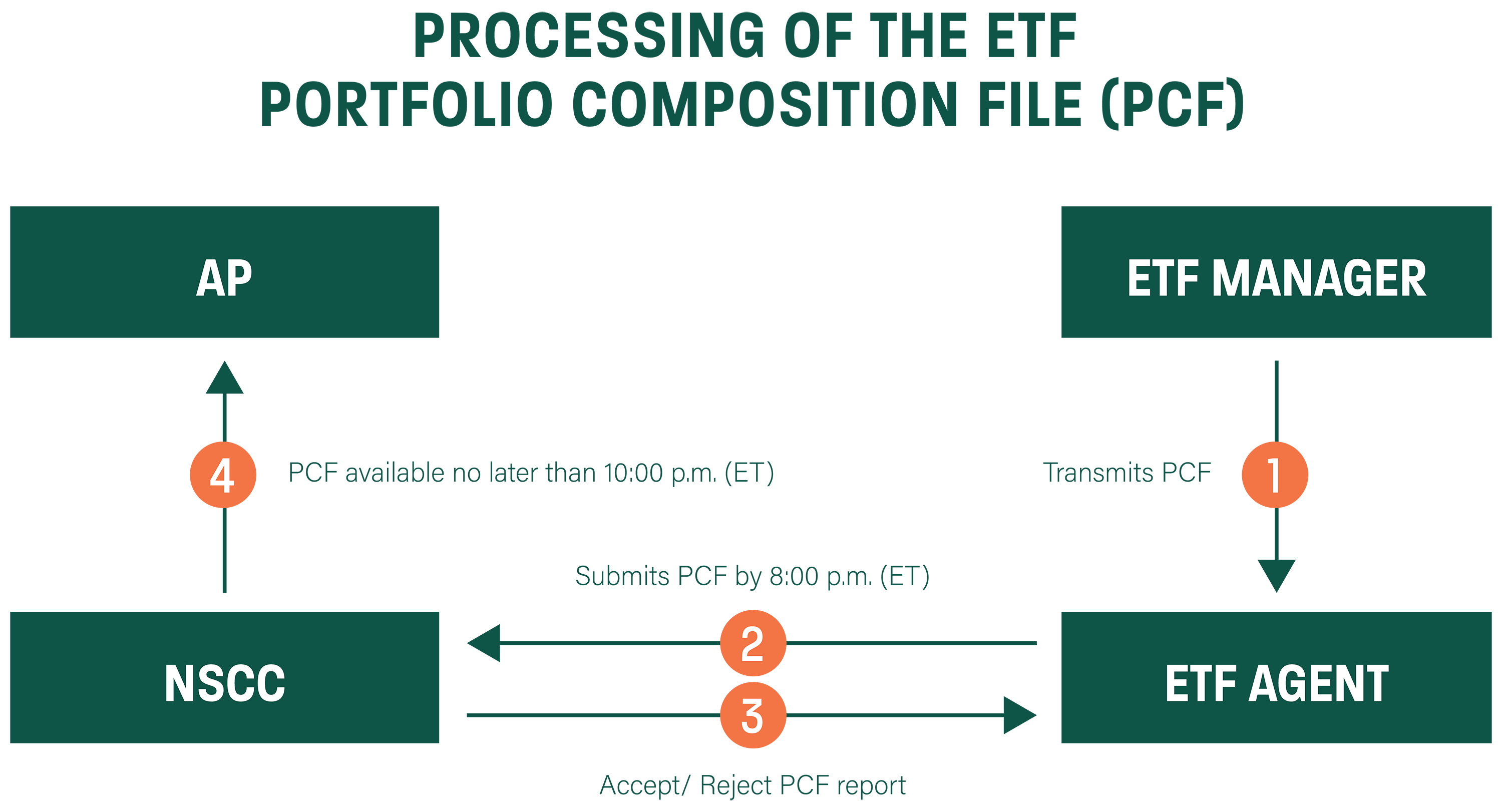
A proposed ETF tracking the TRUMP meme coin has appeared on the Depository Trust & Clearing Corporation’s system — an infrastructural step that signals intent, though it falls short of regulatory approval.

Canary Capital, which filed an S-1 registration with the U. S. Securities and Exchange Commission for the ETF, now sees its TRUMP Coin fund listed in DTCC systems alongside other altcoin ETF candidates. The DTCC listing enables clearing and settlement readiness should approval arrive.

Analysts view the development as a technical milestone. Bloomberg ETF specialist Eric Balchunas observed that once a ticker appears on DTCC’s eligibility file, it rarely retracts — underscoring the forward momentum for the product. Nonetheless, he and others caution that DTCC inclusion is procedural and does not guarantee SEC consent.

Canary’s filing proposes that the ETF would offer exposure to the price dynamics of TRUMP token without requiring investors to self-custody the asset. To cover transaction costs inherent in the blockchain architecture, the filing permits the fund to hold up to 5 percent in Solana’s native token SOL, although it will not treat SOL as a core investment.

The TRUMP coin is a Solana Program Library token whose market value hinges heavily on political sentiment, community engagement and volatility rather than fundamental utility. Critics have raised concerns about the blending of political interests with speculative finance, warning of conflicts of interest and reputational risks to the broader crypto ecosystem.

This development coincides with DTCC’s addition of other altcoin ETFs — namely Fidelity’s Solana ETF and Canary’s XRP and Hedera funds — to its eligibility files. These moves have injected renewed optimism into altcoin ETF markets, though all such listings still await the SEC’s green light.

Momentum for altcoin ETFs has accelerated since spot Bitcoin and Ethereum funds gained approval. Still, the SEC has kept other proposals on ice, deferring decisions and delaying rulings. The regulator’s patience underscores the risk-management pressures it faces in balancing innovation and investor protection.

Canary’s TRUMP ETF filing follows earlier efforts by Trump Media & Technology Group, which has sought SEC approval for a suite of thematic “Truth Social Funds” ETFs covering areas such as energy, infrastructure and American icons.

Abu Dhabi’s Department of Health will present a portfolio of artificial intelligence–based healthcare solutions at the upcoming GITEX Global 2025 event in Dubai. The showcase is intended to reinforce the emirate’s ambitions to lead in digital health transformation and embed AI into clinical and public health systems.

DoH plans to display tools ranging from predictive diagnostics to personalised wellness platforms, emphasising preventive care and data-driven interventions. H. E. Dr Noura Khamis Al Ghaithi, Undersecretary of DoH, stated that leveraging AI is central to “reshaping how care is delivered” and enabling people to “live healthier, longer lives.”

The Abu Dhabi delegation will also highlight the emirate’s efforts to integrate AI across healthcare infrastructure, including hospital systems and community services. As part of the pitch, DoH intends to advance models that predict health risks, flag early disease onset, and streamline patient journeys from diagnosis to treatment.

The timing of this unveiling aligns with Abu Dhabi’s broader push into AI research and high-tech partnerships. In September 2025, Nvidia and Abu Dhabi’s Technology Innovation Institute launched a joint lab focusing on robotics and advanced AI models, including deployment of Nvidia’s “Thor” chip for robotic applications. That initiative is part of the UAE’s wider effort to become a global AI player.

At GITEX Global—a technology exhibition scheduled from 13 to 17 October at the Dubai World Trade Centre—the DigiHealth & Biotech track is expected to draw startups, tech firms and health ministries showcasing innovations across genomics, diagnostics, telemedicine and biotech. The exhibition emphasises frontier domains: physical AI, quantum computing, semiconductors and data-centre infrastructure.

Abu Dhabi is also seeking to signal that its AI investments are more than pilot projects. Through collaborations with private technology firms, academic institutions and regional health authorities, DoH aims to build a scalable, interoperable health data ecosystem. Under its strategy, AI modules would be deployed not just in tertiary hospitals, but in primary care, clinics, remote monitoring and wellness programmes.

Critics point to challenges ahead, including data privacy, algorithmic bias, regulatory oversight and integration with legacy systems. Effective AI deployment in health requires robust patient consent frameworks, transparent models and continuous validation across diverse populations. Observers note that many AI health systems falter when scaled beyond controlled environments.

Nvidia CEO Jensen Huang dismissed assertions that the artificial intelligence boom is mirroring the dot-com bubble, saying the current momentum rests on strong fundamentals rather than speculation. He defended Nvidia’s recent investments in AI startups and pitched infrastructure build-out as the engine sustaining growth. During a wide-ranging interview on CNBC, Huang stated that what differentiates today’s environment from the dot-com era is the depth of demand: global […]

The World Bank has trimmed its projection for South Asia’s economic expansion in 2026, citing elevated U. S. tariffs on Indian exports as a key drag. The region’s growth is now forecast at 5.8 percent, down from 6.6 percent this year.

The updated “South Asia Development Update” flags the U. S. trade measures as a major headwind, especially given India’s size and its integration into regional supply chains. The report sets India’s growth for fiscal year 2025–26 at 6.5 percent, up from its earlier estimate of 6.3 percent, but warns of a drop to 6.3 percent in 2026–27 as tariff pressures intensify.

The U. S. has imposed tariffs of up to 50 percent on a broad swath of Indian goods—impacting sectors such as textiles, gems and jewellery and seafood—affecting nearly $50 billion in exports. These are among the highest duties levied on any U. S. trading partner. The World Bank notes that these tariffs will particularly bite in 2026 as initial buffers from public spending fade.

Franziska Ohnsorge, chief economist for South Asia at the World Bank, asserted that the toll from trade restrictions reflects “a reversal of the gains” India had made in integrating into global value chains. She urged structural adjustments: lowering tariffs and signing free trade agreements to support export competitiveness.

Beyond India, Bangladesh and Sri Lanka show varying trajectories. The Bank upgrades forecasts for Bangladesh and Sri Lanka, citing easing fiscal strain and improving external balances. Meanwhile, Nepal and the Maldives bear the brunt of tighter global conditions, with their outlooks revised downward.

Policy responses in India are already in motion. The government launched sweeping tax cuts spanning consumer goods to automobiles, one of the largest fiscal interventions in recent years. Concurrently, infrastructure spending is being boosted to drive domestic demand and counterbalance export headwinds. The Reserve Bank of India held its repo rate at 5.50 percent in October, citing subdued inflation and leaving open room for a future cut.

Indian officials remain confident. Finance Minister Nirmala Sitharaman called the economy “resilient,” expressing faith it could absorb external shocks while targeting an ambitious 8 percent growth. The Chief Economic Adviser affirmed earlier forecasts of 6.3–6.8 percent GDP growth, downplaying long-term damage from trade friction.

International institutions have also flagged downside risks. The Asian Development Bank cut India’s FY 26 forecast to 6.5 percent from 6.7 percent, pointing to duty pressures and policy uncertainty. The IMF earlier trimmed India’s 2025-26 prediction to 6.2 percent, citing heightened global trade tensions.

The World Bank’s report emphasises that over the medium term, trade liberalisation combined with labour flexibility and investment in digital infrastructure could help South Asia reclaim momentum. Within the document, a scenario of tariff cuts and deeper trade integration is modelled to yield significant gains in productivity, employment, and output per capita.

Still, the path ahead is fraught. The report cautions that the region is vulnerable to a global slowdown, geopolitical shocks and labor market disruptions from artificial intelligence. In particular, it warns that weaker export growth from India will spill over across the region via trade, financial and migrant-worker channels.

Dubai Investments has revealed that its wholly owned subsidiary, Emirates Float Glass, will expand its float-glass manufacturing capacity by launching a second production line that will raise output from 600 tonnes per day to 1,200 tonnes. The upgrade is slated to introduce Ultra Clear low-iron glass—marketed as a first in the MENA region—with advanced automation and energy-efficient systems, and is scheduled for commissioning between late 2027 and early 2028.

Under the plan, the second line will incorporate next-generation process control technology to ensure consistent product quality while curbing energy consumption and lowering the environmental footprint. Dubai Investments emphasises that this aligns with its broader industrial growth strategy and the UAE’s ambitions in high-value manufacturing.

Abdulaziz Bin Yakub Al Serkal, CEO of Dubai Investments’ Industrial Platform, described the move as crucial for strengthening regional competitiveness. He said the introduction of Ultra Clear glass will allow EFG to penetrate premium markets, give clarity advantages over conventional float glass, and support growing demand from architectural, infrastructure and design sectors. The project involves a collaboration with Germany’s HORN Glass Industries, which will supply glass-melting furnaces and associated systems, while local civil-works contractors and international project teams will oversee implementation.

EFG currently operates out of its float plant in the Industrial City of Abu Dhabi, where its capacity now stands at 600 tonnes per day. The expansion marks the second phase of investment in the plant. Dubai Investments’ announcement underlines its commitment to scaling up industrial assets and achieving technological differentiation in its manufacturing portfolio.

The expanded capacity is seen as a response to rising demand across the Gulf and broader regional markets, where premium architectural glass is gaining traction, driven by growth in high-rise construction, sustainability mandates and demand for energy-efficient façades. Analysts note that the move helps EFG hedge against rising competition from international glass producers by offering higher-clarity, value-added products.

Greenlogue/AP Mubadala Energy achieved a 36.5 per cent drop in its Scope 1 and 2 greenhouse gas emissions in 2024, the company’s newly published Sustainability Report reveals, underscoring the firm’s accelerating role in the energy transition. The decline was complemented by a sharp 55 per cent fall in emissions intensity, from 15.57 to 6.95 tonnes CO₂e per kilo barrel of oil equivalent. Emissions from flared gas fell […]

Oil markets climbed modestly on Wednesday as traders digested OPEC+’s decision to raise production by only 137,000 barrels per day from November — a figure widely viewed as cautious and aimed at managing oversupply pressures. Brent crude gained about 0.7 per cent to $65.93 a barrel, while US West Texas Intermediate added 0.8 per cent, reaching $62.24.

The measured increase is part of an ongoing tug-of-war between easing supply fears and softening demand estimates. Analysts argue that the restrained hike helped calm immediate market jitters about a flood of new barrels entering global markets. At the same time, the surge in output from non-OPEC producers—especially the United States—is tipping the scale toward a heavier supply environment.

The U. S. Energy Information Administration raised its 2025 forecast for domestic oil production to a record 13.53 million barrels per day, up from earlier projections. That upward revision intensifies concerns that global inventories could swell, placing downward pressure on prices. The EIA warns that crude inventories may build further, potentially squeezing prices in the coming months.

OPEC+ has signalled a cautious approach. The bloc’s members, including Saudi Arabia and Russia alongside six others, opted for incremental supply additions rather than aggressive increases. The decision underscores a balancing act: securing market share without triggering a disruptive oversupply.

Some market watchers believe the group is constrained by internal capability limits and the risk of destabilising the market. Only about 75 per cent of the targeted 2.7 million bpd raise since April has actually materialised, as certain member states struggle to meet output goals. Meanwhile, signs of macro slowdown and tepid fuel demand, especially in Asia and Europe, loom as headwinds.

Large oil majors are already adjusting strategies to navigate the tighter margins. Chevron, ExxonMobil, BP, Shell, and TotalEnergies are implementing cost cuts, trimming share buybacks, and streamlining operations to preserve balance sheets. Oil prices under $65 are straining profitability across the sector, particularly for producers with high breaking-even costs. Shell, for instance, has taken a $600 million impairment hit tied to biofuel and remediation operations in Europe.

In Argentina, falling oil revenues threaten the government’s ambitious economic plans centred on energy exports. Output at the country’s Vaca Muerta formation peaked in August but has shown signs of deceleration due to weaker global pricing and elevated costs. Local industry sources warn that strapped fiscal conditions and foreign-exchange restrictions are discouraging further investment.

Futures markets also reflect a state of tension. The structure remains sensitive to signals that either reassure or alarm about supply and demand balances. Traders are closely watching upcoming US inventory data, geopolitical developments affecting Russian shipments, and demand dynamics from China. Some analysts regard the cautious output hike as a temporary reprieve, with the risk that a sharper fall may take prices into the $50–$60 range if oversupply intensifies.

The International Energy Agency projects a potential surplus of 3.3 million barrels per day in 2026, even if current output levels persist — a scenario that would further test OPEC+’s capacity to contain downside. In contrast, OPEC’s internal modeling suggests a smaller deficit under the same conditions, reflecting wide divergences in forecasting assumptions. Investors and policymakers now wait for signs of demand resilience or fresh supply shocks, both of which could dictate whether oil stabilises in the $60s or slips further.

Arabian Post Staff -Dubai Abu Dhabi-based PureHealth Holding has finalised the acquisition of a 60 percent stake in Hellenic Healthcare Group, valued at €800 million, in a move that places HHG’s full equity valuation at around €1.3 billion. This deal represents a major step in PureHealth’s plan to build a globally connected, innovation-driven healthcare platform from its base in the UAE. PureHealth will acquire its majority stake […]

Edgecore Networks will reveal its latest open infrastructure solutions at the OCP Global Summit in San Jose and GITEX Global in Dubai, with demonstrations of next-generation AI, networking, and compute platforms designed to ease deployment and boost performance.

The Taiwanese firm plans four flagship showcases: new Tomahawk 6–based data centre switches, a proof-of-concept for co-packaged optics, its Nexvec™ turnkey AI solution, and an upgraded Nous infrastructure controller offering composable compute management. The exhibitions will take place during the week of 13 October: at the OCP Summit from 13–16 October and at GITEX from 13–17 October.

Edgecore emphasises that the Tomahawk 6 switches can deliver more than 100 Tbps of bandwidth, supporting AI cluster demands with low latency and high density. The company adds that its CPO concept demonstrates integration of optical elements directly into switch silicon, reducing power and footprint. Its Nexvec™ offering is a pre-validated stack combining open networking with GPU compute, while Nous enables dynamic allocation of GPU, memory and compute resources.

Mingshou Liu, President of Edgecore, is quoted as saying that as AI workloads accelerate, simplifying deployment is crucial, and that the firm seeks to lead in the open infrastructure community with turnkey and scalable offerings.

Edgecore’s push comes at a time when hyperscale data centre operators are under pressure to manage burgeoning AI compute demands without ballooning costs or power draws. Industry trends point to co-packaged optics, disaggregated architectures, and composable resource frameworks as priorities for the next wave of infrastructure evolution. At the OCP Summit, the AI HW/SW co-design and open systems tracks will explore modular compute, memory architectures and photonic interconnects for AI clusters.

In parallel, GITEX Global has become a high-stakes stage for showcasing AI infrastructure, especially in the UAE’s drive to scale AI capabilities and attract global tech investment. With over 45 editions, the event draws global vendors and governments presenting AI, semiconductors, networking, and startup innovation. Edgecore’s presence signals its intention to engage key markets in the Middle East, where data centre growth, AI deployment, and regional cloud expansion are strong levers.

Edgecore is not alone in spotlighting AI infrastructure at these events. Major networking suppliers, chip vendors, and cloud players are expected to present competing solutions, particularly around optical integration, disaggregation, and hardware-software co-design. Observers will closely track how well Edgecore’s offerings stack up in power efficiency, interoperability, and ease of deployment.

Within its broader strategic frame, Edgecore continues to emphasise open, standards-based infrastructure. Its public messaging highlights disaggregated networking, composable compute, and software-defined manageability. The timing of product demonstrations at both OCP and GITEX gives the company a dual audience of deeply technical integrators and regional enterprise buyers.

At the OCP Summit, Edgecore’s participation also coincides with evolving community priorities—AI, sustainability, modular compute, and photonics interconnect are central tracks. During the event, Edgecore’s representative Tim Zhou will present on simplifying large-scale “agentic AI” deployments in a session scheduled for 16 October.][5])

ASUS has confirmed that it will spotlight a broad suite of AI-enabled products and infrastructure at GITEX Global 2025, framing its participation around the theme “Ubiquitous AI. Incredible Possibilities.” The corporation aims to demonstrate how artificial intelligence can permeate devices, enterprise systems and urban environments.

The company’s exhibit will cover four core domains: AI-first design, cloud integration, sustainability and education technology. On the hardware front, ASUS plans to showcase the B5405 ergonomic laptop, the P5405 with a 47 TOPS NPU, and the B9403 weighing under 1 kg with all-day battery life. Chromebook models such as the CX5403 Plus and Windows devices like the BR1204 will cater to education users.

In its infrastructure tier, ASUS will highlight its AI POD, HGX servers and the Ascent GX10 platform powered by the NVIDIA GB10 Grace Blackwell superchip. Workspace innovation will include compact offerings such as the NUC 15 Pro and NUC 14 Pro AI. On the edge side, embedded systems for smart cities and autonomous systems—such as the PE2200U, PE6000G, and PE2100N—are also in the lineup.

ASUS emphasises the role of partnership in its vision. It plans to accentuate cooperation with NVIDIA via its “Enterprise AI Factory” programme, which supports AI-ready racks and POD designs tuned for large language models and immersive workloads. The company will also underline measures in security, durability and ease of maintenance across its product line.

Tolga Özdil, Regional SYS Commercial Director for META at ASUS, remarked that the Middle East is positioned at a digital inflection point, with AI shaping institutional and economic evolution. He framed GITEX as a platform to bring the company’s latest innovations into conversation with regional stakeholders. ASUS’s Regional Director for Middle East & Africa, Senic Chiu, added that the event offers opportunity to show how intelligent tools can reshape industries and daily life.

ASUS’s timing comes against the backdrop of an intensifying global push for AI infrastructure. GITEX 2025 is expected to draw more than 6,800 tech firms and 2,000 startups from 180 countries. Key event themes include advancements in quantum, biotech, data centres and robotics.

Beyond individual exhibitors, the show underscores the rapid expansion of the global AI economy. According to organisers, investment in data centres alone is forecast to surpass US$500 billion in 2025. Meanwhile, GITEX’s startup track, Expand North Star, will run in parallel and feature over 1,200 investors managing US$1.1 trillion in assets.

ASUS’s introduction of its AI roadmap at this scale signals that device manufacturers are no longer content to remain at the periphery of the AI stack. As more process layers—from silicon to application—are exposed to AI optimisation, hardware firms are positioning themselves to own more of the value chain. However, challenges remain: power efficiency, thermal constraints, ethical AI integration and data security are frontlines ASUS must navigate.

The World Bank has upgraded its 2025 growth forecast for the Middle East, North Africa, Afghanistan, and Pakistan region to 2.8 percent, up from 2.6 percent, while trimming the outlook for 2026 amid intensifying conflict and faltering oil output. Expansion in the Gulf and non-oil sectors is driving the upward revision in 2025, securing a more optimistic tone for this year. But persistent geopolitical stress—particularly in Iran, […]

Greenlogue/AP Saudi Arabia’s Public Investment Fund has mandated Crédit Agricole CIB, JPMorgan and Société Générale to arrange a dual-tranche, euro-denominated green bond issue in three- and seven-year maturities, sources close to the matter said. This marks the fund’s inaugural euro green bond issuance and appears set to be its only green debt deal of the year. By pursuing this move, the sovereign wealth fund signals a further […]

Dubai Aerospace Enterprise has enlisted a consortium of international and regional banks to host a series of fixed income investor calls beginning 6 October 2025, with the aim of gauging demand for a potential benchmark 5-year senior unsecured US dollar sukuk issuance. The mandate positions Emirates NBD Capital, First Abu Dhabi Bank, Goldman Sachs International and HSBC as active bookrunners, while Abu Dhabi Commercial Bank, Ajman Bank, […]

Sammaan Capital will sharply expand its affordable housing lending operations after Abu Dhabi’s International Holding Company invested $1 billion for a controlling stake, the non-banking lender’s CEO, Gagan Banga, told Reuters. The infusion is expected to accelerate the drive toward an assets-under-management goal of ₹1 trillion by fiscal 2027. To underpin its expansion, Sammaan plans to launch about ten new branches monthly, concentrating on tier-4 and tier-5 […]

Omnix International will unveil its HOT Systems suite—built in collaboration with PNY—at GITEX Global Dubai from 13 to 17 October, spotlighting AI workstations, liquid-cooled laptops and a new system-monitoring tool dubbed HOT Guard.

Visitors to the Hall 5, Booth 30 installation will see across-industry demonstrations—architecture, engineering, media, research—illustrating how tailored hardware accelerates digital transformation, reduces thermal throttling, and boosts reliability under sustained loads. HOT Guard introduces a continuous monitoring layer that oversees thermal behaviour, utilisation and system health, integrated with Omnix’s Hardware Optimization Technology stack.

The partnership with PNY ensures integration of high-performance memory and NVIDIA RTX graphics. PNY’s regional manager for MEA, Talus A Arukalil, emphasised that this collaboration positions the company to deliver “technology that doesn’t just keep pace with the future but defines it in the region.” On the HOT Systems side, Joseph John, Regional Sales Manager, asserted that the hardware is engineered “for today’s demands and tomorrow’s innovation,” targeting sectors where sustained compute power and system stability matter most.

According to Omnix’s own announcements, the new laptop models under the HOT Systems brand will be equipped with cutting-edge silicon—Intel Core Ultra 9 200HX or AMD Ryzen 9000 HX—matched with NVIDIA RTX 5080/5090 GPUs, DDR5 memory up to 128 GB, PCIe Gen 5 SSDs, Wi-Fi 7 and optional liquid cooling. These designs aim to balance high thermal headroom with energy efficiency and sustained performance even under intense workloads such as CAD, simulation and AI/ML inference.

Liquid cooling in a laptop format is still relatively rare. During previews, the company has framed this design choice as essential for holding consistent clock speeds over long renders or training sessions, reducing throttling under heat stress. As TBreak put it, the “pitch is stable clocks over flash specs,” targeting firms that can’t afford dips in performance mid-job.

With the industry steadily shifting from experimental AI use cases to full deployment, enterprises are increasingly looking for turnkey, dependable solutions—not just proof-of-concepts. In this environment, Omnix seeks to differentiate itself by offering not just hardware, but optimised stacks, monitoring, service support and aligned component integration.

GITEX Global 2025 is expected to host over 6,800 exhibitors from around 180 countries, showing advances across semiconductors, data centres, quantum computing, biotech and AI infrastructure. With global AI infrastructure investments accelerating sharply, regional companies and integrators are keen to showcase solutions tailored to local conditions—particularly in arid climates and metropolises with high operating temperatures.

Dubai Airports has announced an extended 10-year strategy aimed at transforming Dubai International and Dubai World Central – Al Maktoum into the world’s most accessible and inclusive airports by 2035. The plan underscores a shift from enhancing infrastructure alone to driving cultural change, embedding empathy and user-centred design in every element of the passenger journey.

The strategy rests on three pillars: reinforcing existing accessibility frameworks, improving guest experience across every touchpoint, and elevating the airports’ status as global benchmarks in inclusive aviation. The commitment aligns with the UAE’s broader obligations to support the rights of People of Determination and Dubai’s ambition to become a disability-friendly city.

Majed Al Joker, Chief Operating Officer of Dubai Airports, emphasised that accessibility is a “core pillar” rather than a peripheral initiative. He noted that, for the first time, the airport authority is co-creating programmes with the PoD community to redesign the passenger journey from their lived perspective. The launch coincides with the debut of a public awareness campaign called “DXB for All”, which presents six narratives of travellers with sensory sensitivities, mobility challenges, hearing or visual impairments, and highlights their airport experiences.

This new phase builds on the 2022 “We All Meet the World Differently” campaign. While that initiative focused primarily on raising awareness, the current strategy delves deeper by integrating accessibility into operations, staff training, and passenger interactions. Airport operators intend to cultivate empathy across staff, travellers, and the public, encouraging all stakeholders to reframe how they engage with PoD.

To facilitate inclusive travel, Dubai Airports already provides a suite of services: a Travel Planner visual guide, the Sunflower Lanyard to signal discreet assistance, free two-hour parking, dedicated taxis, wheelchair support from curb to gate, over 520 hearing loops across terminals, and a sensory-friendly Assisted Travel Lounge in Terminal 2. These measures will be expanded and refined under the new strategy.

The initiative is being deployed through the “oneDXB” partnership network, which includes Emirates, flydubai, Dubai Police, GDIFA, Dubai Customs, dnata, Dubai Health, Dubai Duty Free, Serco, and other stakeholders. The collaborative structure ensures that airport services, security, passenger handling, health and taxi operations all align with inclusivity goals.

Challenges are considerable. DXB is already operating near capacity: in 2024 it handled 92.3 million passengers, its highest ever annual volume. That puts pressure on space, queueing, and infrastructure to adapt without undermining operational efficiency. Meanwhile, DWC is undergoing significant expansion—with a projected $35 billion investment to scale it toward handling up to 260 million passengers annually. Dubai Airports plans to shift major operations to DWC by 2032, adding urgency to ensuring that new terminals and systems are fully accessible from the start.

VISHNU RAJA
RYO YAMADA
HITORI GOTOH
IKUYO KITA
Just in:
Hill’s Enhances Cat and Dog Food with Prebiotics to Support Senior Pet Health in Hong Kong // IBS Proposes HK$563 Million Acquisition of AI Chip Enterprise // US intelligence suspects Megaspeed executive of Chinese espionage // A Better Start, Ready for the Day: Green SM Elevates the Urban Mobility Experience in the U.S. // US intelligence suspects Megaspeed executive of Chinese espionage // High Court opens toddy shop jobs to women // Sharjah Islamic Bank’s $500 million sukuk joins Nasdaq Dubai // Lancet researchers seek global health emergency recognition for climate // New authentication research charts shift away from passwords // LiveWire flags survival doubts as cash reserves shrink // Crown Workspace wins Gold and special Trinity recognition at HR Vendors of the Year Awards 2026 // Mumbai to host global blockchain leaders at November conference // 10 CENTS CAPITAL Completes US$20 Million Financing and Sets Out a Phased Deployment Plan // ZJLD Group Returns to Hong Kong Wine & Dine Festival 2026 // 10 CENTS CAPITAL Completes US$20 Million Financing and Sets Out a Phased Deployment Plan // Lancet researchers seek global health emergency recognition for climate // Lancet researchers seek global health emergency recognition for climate // Anchored in Data Sovereignty, the Engagement Enables the Legal Sector to Adopt Generative AI Safely and Confidently // CPM role in Mammootty cyber attacks ruled out // UK competition watchdog examines Meta publisher contract terms //