News related to
Investment

Binghatti Holding Ltd, a Dubai-based developer, has initiated steps toward an initial public offering in the United Arab Emirates, as it looks to harness momentum from a strong real estate market climb. The company is in discussions with banks to assist in going public, according to persons with knowledge of the matter who spoke under condition of anonymity. A spokesperson declined to comment, calling the IPO talk “market rumour and speculation.”

Earnings performance is underpinning the move. For the first half of 2025, Binghatti reported a net profit of AED 1.82 billion, up 172 percent year-on-year. Total sales rose 60 percent to AED 8.8 billion, while revenue jumped about 189 percent to AED 6.3 billion. These figures reflect strong demand for its residential offerings.

Non-resident buyers are accounting for a growing share of Binghatti’s business, with about 61 percent of sales in H1 2025 coming from outside the UAE. That shift underscores Dubai’s continued appeal to international investors.

This potential IPO follows recent capital market activity by Binghatti. It issued a USD 500 million Sukuk under its USD 1.5 billion Trust Certificate Issuance Programme; the offering was oversubscribed by five times, with orders exceeding USD 2.5 billion from regional and global investors.

In June, Binghatti launched an asset management arm, Binghatti Capital, based in Dubai International Financial Centre and regulated by the DFSA. The new entity is targeting roughly USD 1 billion in assets under management, focused on Sharia-compliant real estate investment and private credit strategies.

Several analysts view the IPO bid as a strategic move to broaden funding sources beyond debt and sukuk, enable more institutional investment in the company, and leverage its rising profile. Real estate analysts note that the surge in demand—both domestic and foreign—is creating a favourable window for property players to tap equity markets. Oversupply concerns persist in some segments of Dubai’s housing market, but differentiated developers like Binghatti, known for branded luxury residences and fast construction delivery, appear well positioned.
Eshraq Investments has struck sale and purchase agreements totalling AED 264 million with Blue Lake Properties and Al Ain Properties to dispose of several land plots on Al Reem Island. The move forms part of its strategy to monetise land holdings and respond to mounting financial losses.

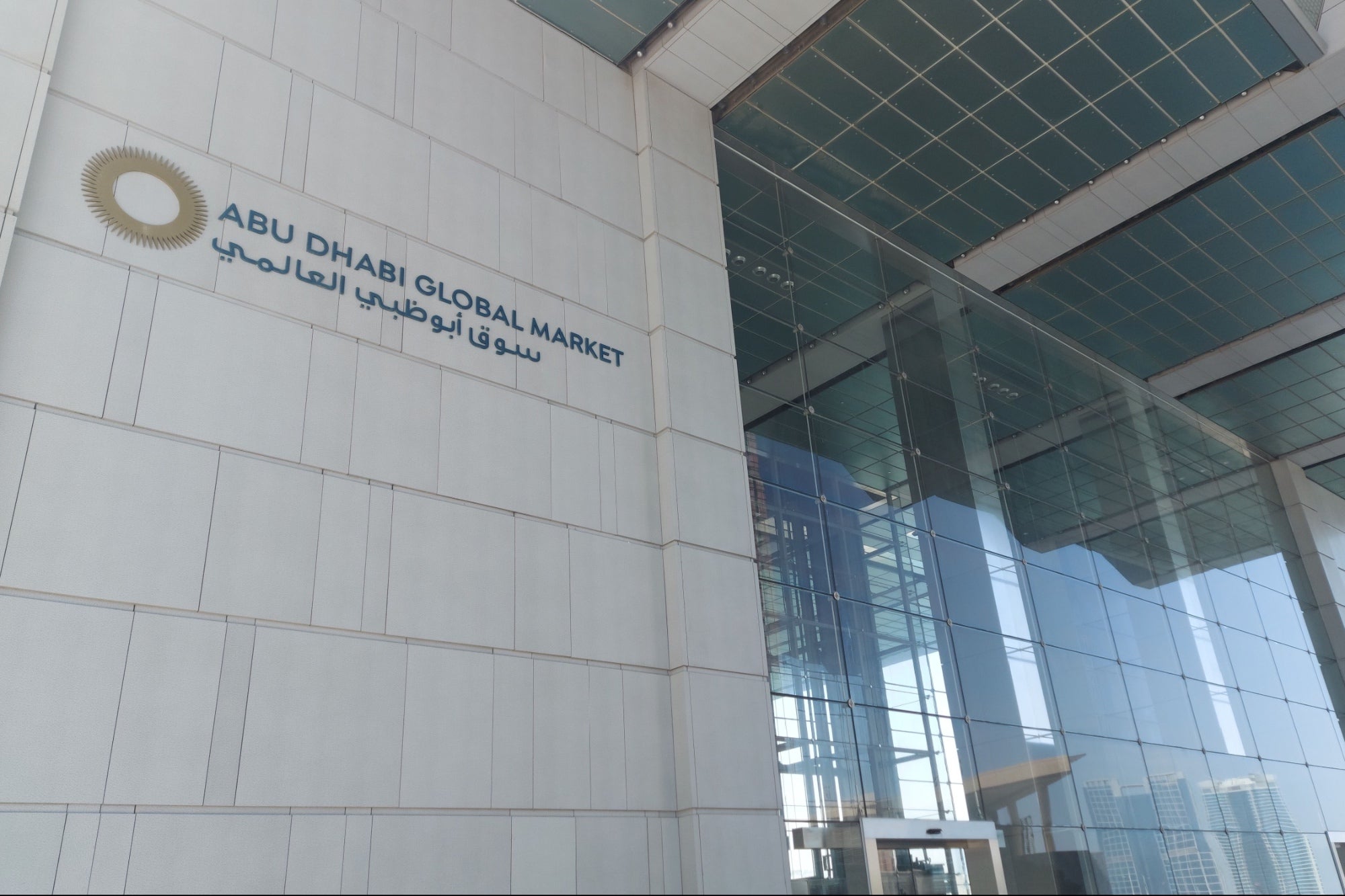
The sale takes place in prime zones of Al Reem Island adjacent to Al Maryah Island and inside the jurisdiction of the Abu Dhabi Global Market, locations particularly attractive to developers seeking centrality and regulatory stability. The agreements bolster Eshraq’s land monetisation drive, which has become a priority as the company seeks to improve its financial footing.

Financial filings show that accumulated losses for the first half of 2025 reached AED 484.85 million, equal to 18.05% of Eshraq’s capital. That marks an improvement from a loss of AED 526.55 million at the end of 2024, helped by gains from independent valuations of assets held by Goldilocks Investments, which rose by AED 55.14 million during the same period.

Goldilocks, a key non-core investment, had its net investment value boosted to AED 827.70 million as at 30 June 2025, up from AED 772.56 million in December 2024, offering some cushion against Eshraq’s operating losses.

In its first quarter of 2025, Eshraq reported a net loss of AED 27.03 million, a sharp decline from AED 306.05 million in the same period of 2024. Revenue across its portfolio has faltered, prompting management to accelerate the disposal or development of under-utilised land.

Industry observers note that investor appetite for Al Reem Island remains strong, driven by its proximity to key business hubs, relatively favourable regulatory environment, and demand for residential and mixed‐use projects. The sale with Blue Lake and Al Ain Properties underscores that even amidst financial pressure, prime real estate in central Abu Dhabi retains market confidence.

The Trump administration has filed a motion in U. S. District Court, Maryland, to cancel the 2024 approval of the Maryland Offshore Wind Project established under the previous administration. It asserts that the authorisation underestimated impacts on search-and-rescue operations and commercial fisheries, and argues the permitting process was flawed under the Outer Continental Shelf Lands Act. The planned wind farm, developed by US Wind, would include 114 […]

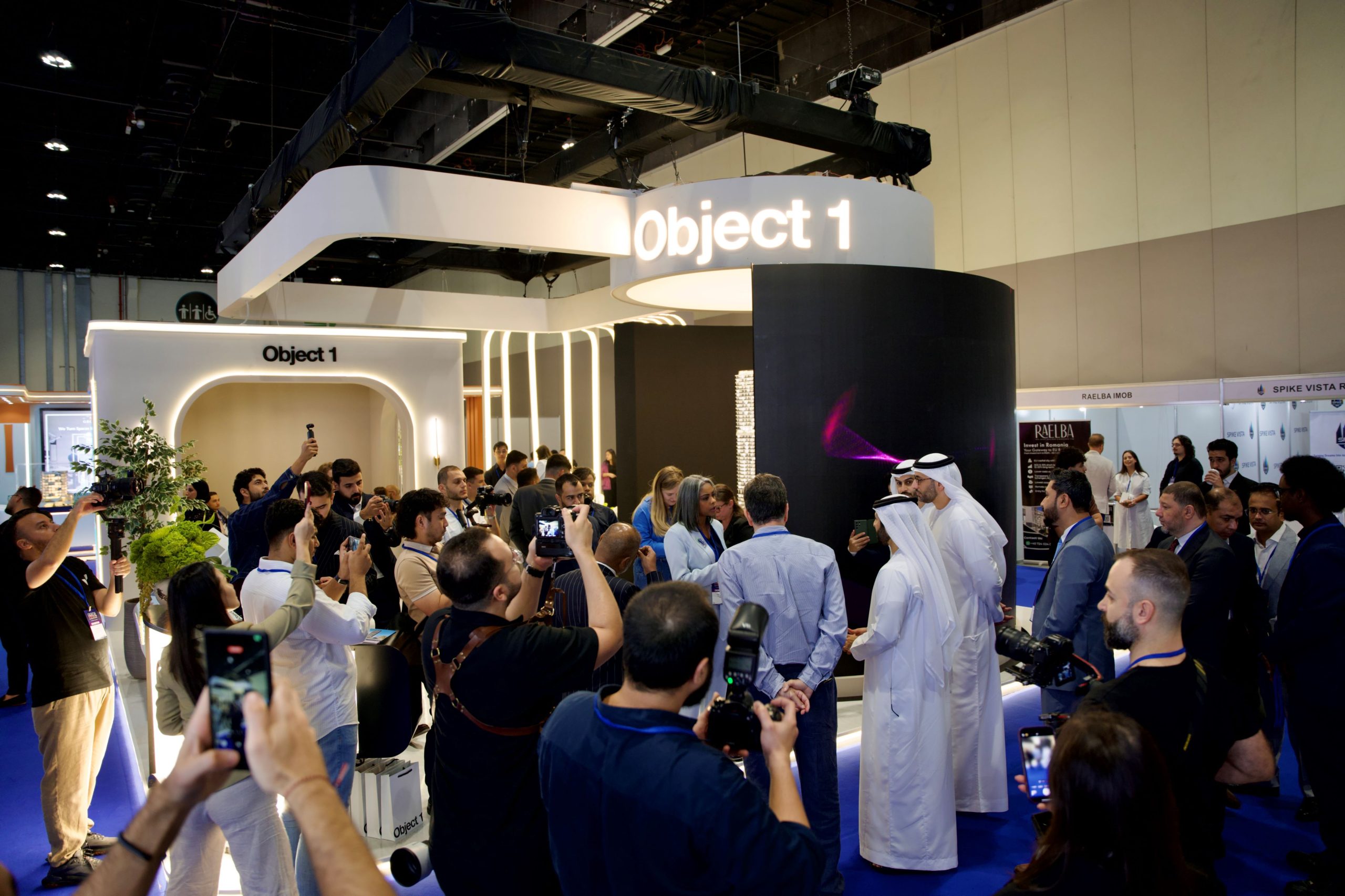
Abu Dhabi-based developer Object 1 is accelerating its expansion into the capital, using the platform of the International Real Estate & Investment Show at ADNEC to roll out its latest developments and strategic vision. Head of Business Development, Ismail Gasanov, will speak on panels addressing investment prospects for foreign nationals, sustainability, and intentional design.

The company is opening its first sales gallery in Abu Dhabi to serve investors, brokers, and homebuyers. Sales figures for Abu Dhabi’s wider real-estate sector demonstrate strong performance: Abu Dhabi Real Estate Centre reported Dh25.3 billion worth of transactions in the first quarter of 2025, a year-over-year increase of 34.5 %, with demand shifting toward lifestyle, waterfront, and premium residences.

Object 1’s growth in Abu Dhabi builds on its rapid ascendance in Dubai. With over 17 active projects, the developer has become a top-ten player in Dubai’s development landscape within just a few years. The company claims sales value jumped 188 % in the first half of 2025 compared to the same period in 2024, while transaction volume rose 157 %. Its development pipeline now exceeds 4.5 million square feet, including ALTA V1EW, its newest tower slated to rank among the tallest in Jumeirah Village Circle.

At IREIS 2025, with more than 35 exhibitors and over 2,000 investors expected, Object 1 joins Gold Sponsors such as Reportage Properties, Danube Properties, and Dugasta Properties. The show features an Investment Conference that will examine foreign investment, property law reforms, new ownership models, and how proptech, smart cities, and sustainability are reshaping the market.

Tatiana Tonu, CEO of Object 1, said that Abu Dhabi’s stable economy, high-quality infrastructure, and affluent communities continue to draw discerning investors seeking both capital growth and lifestyle excellence. The expansion into the capital reflects the firm’s long-term confidence in Abu Dhabi as a hub for design-led, sustainable developments that combine community living and investment value.

Abu Dhabi’s active development pipeline is considerable. A report by BNC Network puts the total value of active projects at about US$758.79 billion, with the urban construction component contributing some US$221.56 billion. Residential supply is increasing, with around 2,400 units already delivered in Abu Dhabi city this year; by year end, about 10,400 units are projected, and 11,000 more scheduled for delivery in 2026.

By D. Raja The coming to power of the BJP with an absolute majority in the 2014 general elections was not merely a routine transfer of power from one democratically elected government to another. It marked a qualitative shift in the very nature of our polity. The BJP is the political arm of the Rashtriya […]

Why CRM Matters in Dubai’s Real Estate The UAE has emerged as one of the world’s leading destinations for real estate investment, drawing interest from international buyers, institutional investors, and local clients. With intense competition, high transaction volumes, and multi-stakeholder deals, developers face unique operational challenges: Managing relationships with hundreds of brokers and agencies simultaneously. Coordinating international buyers who expect fast, transparent communication. Handling complex contracts, payments, […]

HONG KONG SAR – Media OutReach Newswire – 12 September 2025 – The 10th edition of the Belt and Road Summit in Hong Kong (September 10-11) gathered about 6 200 high-profile participants from governments, international organisations, companies and the global media to celebrate a decade of achievements in promoting the Belt and Road Initiative (B&RI). Jointly organised by the Hong Kong Special Administrative Region (HKSAR) Government and […]

Advertisements

The role of artificial intelligence in reshaping the global economy has never been more critical. According to the latest projections, AI is poised to add a staggering $15.7 trillion to global GDP by 2030. This growth is expected to revolutionise various sectors and create new economic paradigms as nations and industries race to harness the transformative potential of AI. The growth trajectory of AI is being driven […]

Namibia is stepping up sulphuric acid production to support surging output in uranium, copper and manganese mining, as two major industry players commit to scaling local supply. Green Metals Refining will build a new plant in Walvis Bay, and Vedanta aims to restart its dormant sulphuric acid facility at the Skorpion zinc operations. London-based Green Metals Refining plans an investment of US$59 million for the first phase […]

Greenlogue/AP African leaders have set a target of mobilising US$50 billion annually to fund a new continental climate solutions initiative unveiled at the second Africa Climate Summit in Addis Ababa. The initiative, led by Prime Minister Abiy Ahmed of Ethiopia, aims to deliver 1,000 climate innovations by 2030 through mechanisms such as the Africa Climate Innovation Compact and the African Climate Facility. The funding goal forms part […]

ReNew Energy Global Plc is negotiating with several international banks to secure a loan of about $815 million aimed at refinancing its debt, according to sources familiar with the matter. The funds would help the renewable energy firm restructure existing liabilities and improve its financial flexibility.

The discussions involve major global lenders, though the identities of those banks have not been confirmed. The loan is expected to offer terms that reflect both ReNew’s large asset base in wind, solar and hydroelectric power, and the current pressure in credit markets driven by rising interest rates.

ReNew, founded by Sumant Sinha with operations largely in India, has been expanding aggressively across clean energy segments. The company has more than 150 projects across ten states and is developing a supply-chain business through its solar cells and modules units. The refinancing exercise appears linked to balancing growth investments while managing existing financial obligations.

Financial analysts see this move as part of ReNew’s broader strategy to optimise its debt servicing costs. Earlier fundraising rounds for ReNew include a sizeable investment by British International Investment into its solar manufacturing arm, which underscores the company’s aim to develop internal manufacturing capabilities. Cost of debt and maturity profiles of its outstanding instruments have been flagged by market watchers as challenges in the current high-rate environment.

Singapore is gearing up to reveal a comprehensive “value unlock” package by the end of the year aimed at reviving the nation’s stock market, regulators said. Key initiatives will likely build on the Equity Market Development Programme, stronger listing incentives, streamlined regulations and enhanced shareholder rights, intended to improve liquidity, listings and investor confidence.

The EQDP, a S$5 billion programme announced earlier in the year, will see its first tranche of S$1.1 billion allocated to three asset managers—Avanda Investment Management, JP Morgan Asset Management and Fullerton Fund Management—to invest in Singapore-listed equities. These selections were made partly based on alignment with objectives to broaden participation beyond large-cap stocks and strengthen asset-management capabilities.

Alongside co-investment funding, tax incentives are being offered for primary and secondary listings. A 20 per cent corporate income tax rebate applies for qualifying new primary listings, and a 10 per cent rebate for secondary ones. There is also pressure to ease regulatory requirements around prospectus disclosures, shorten IPO-approval timelines, and allow earlier investor outreach in IPOs.

Regulatory reforms under consideration include reducing the profit requirement for Mainboard listings, aligning secondary listing rules with international disclosure standards, and possibly removing the financial watch-list mechanism for loss-making firms while increasing the role of disclosure over prescriptive reporting.

Market analysts welcome the measures but caution that they may not address deeper structural weaknesses. Singapore’s exchange has seen more delistings than IPOs in many months, a low number of growth-stage listings, a prevalence of companies with weak profitability, and low free floats among many issued shares. These factors have limited trading depth and made it harder for mid-caps to attract institutional investors.

Insolvency reform is also part of the picture. Proposed changes to Singapore’s Companies Act would broaden the so-called cross-class “cram-down” powers, letting restructuring plans be imposed even over dissenting shareholders in certain cases. The proposals include streamlining processes for issuing new shares or disposing of assets during restructuring, and revising compensation frameworks for restructuring managers.

Regulatory agencies such as the Monetary Authority of Singapore, Singapore Exchange Regulation, and the Equities Market Review Group are all involved in shaping the yet-to-be-announced package. Public consultations on many proposals have taken place or are underway, especially around IPO rules, listing thresholds, and listing admission criteria.

Shares of Orascom Construction leapt sharply when the company began trading on the Abu Dhabi Securities Exchange, underscoring investor appetite for infrastructure-linked growth in the Gulf. The stock closed its first session up about 27 per cent at AED 38.10, having opened near AED 30.15, valuing the company at approximately AED 4.2 billion. Orascom Construction shifted its primary listing from Nasdaq Dubai, while maintaining its secondary listing […]

Infosys Ltd cleared a share buyback plan worth ₹18,000 crore, its biggest to date, offering ₹1,800 per share under a tender‐route offer. The price represents a 19% premium over closing levels on the BSE and NSE.

The company intends to repurchase roughly 10 crore shares, amounting to about 2.41% of its equity. Approval came through a board resolution disclosed in regulatory filings.

Infosys’s share price had been under pressure, falling more than 1% on the day prior. The buyback announcement triggered mixed reactions: U. S.‐listed ADS shares edged up marginally, while shares in Mumbai closed lower, reflecting investor caution.

Company financials show free cash flow at ₹7,533 crore for the quarter ending 30 June, down about 17.7% year-on-year, though still exceeding net profit by a small margin. The firm held cash and investments totalling ₹45,204 crore at that date.

Analysts view the buyback as a signal of confidence in long-term cash flows, but also warn that slowing revenue growth in some verticals could weigh on future performance. The move follows pressure from investors for IT companies to not just return capital but also step up investments in cloud, AI, and product development.

BEIJING, CHINA – Media OutReach Newswire – 11 September 2025 – Against the backdrop of repurposed blast furnaces and industrial relics of Shougang Park in western Beijing, the 2025 China International Fair for Trade in Services (CIFTIS) opened on Wednesday, striking a tone of open markets and digital innovation. People visit a booth of Pop Mart during the 2025 China International Fair for Trade in Services (CIFTIS) […]

Wynn Resorts and its partners have earmarked land for a potential second integrated resort in Ras Al Khaimah, signaling long-term ambitions for expanding its gambling and hospitality footprint in the UAE. Under a shareholders’ agreement signed on 21 June 2024, Wynn, RAK Hospitality Holding and Al Marjan Island LLC designated multiple development plots on Al Marjan Island beyond their main Wynn Al Marjan Island project. The “Second […]

China has seen financial flows totalling about US$4.5 trillion, a figure that many analysts believe marks a turning point in how its markets are engaging with the world. The scale of cross-border investment—both inbound and outbound—is now surpassing trade in many respects, reflecting Beijing’s accelerating liberalisation efforts and a growing confidence among foreign and domestic investors.

The financial sum comprises equity, bond, and other capital movements, and corresponds with recent policy moves designed to reduce restrictions and open up China’s capital markets. One key driver is the Stock Connect programme, which allows mainland Chinese investors to purchase eligible Hong Kong–listed stocks and gives international investors access to A-shares. Southbound flows—money moving from mainland China into Hong Kong—have been especially significant, gathering close to US$100 billion within the first half of 2025. That alone matched the total stock in 2024 via that channel.

Yields on Chinese government bonds have hit highs not seen since late 2024, suggesting investors are now demanding greater returns, but also that they perceive risks such as inflation and currency pressures to be easing. The 10- and 30-year yields climbing indicates that institutions expect stabilization in key macro indicators, even if headline economic growth remains uneven. The bond market, however, has also become more volatile, driven by leveraged buying of equities and speculative pressure in certain sectors.

Another contributing factor is the behaviour of domestic institutional investors. With over 160 trillion yuan in household savings, China’s policy makers are encouraging pension funds, insurance companies, and sovereign funds to shift more capital into domestic equities. These kinds of flows reinforce the internal market strength, even as external capital enters or exits depending on global risk appetite.

Hong Kong’s IPO market has benefited greatly. Several major mainland firms—including tech and battery makers—have either listed in Hong Kong or signalled plans to do so. This has helped Hong Kong reclaim its spot among the world’s most active IPO hubs in 2025. The changes to listing rules, including shorter approval times for eligible mainland firms, have been essential in this revival.

Nearly 90% of Chinese companies plan expansion across the Middle East, with Saudi Arabia and the UAE emerging as the most favoured para­l­lel investment destinations, according to a PwC survey of 136 firms. The findings show that 84% of respondents are targeting Saudi Arabia and 79% favour the UAE. The study, conducted between April and May 2025, reveals that 44% of these companies have already formalised business […]

Greenlogue/AP Australian Retirement Trust, the nation’s second-largest pension fund, has committed almost A$1 billion to the Macquarie Green Energy and Climate Opportunities Fund, aiming to scale up its sustainable investing strategy. The sum is among ART’s first substantial investments under its target to allocate at least A$2 billion by 2030 into assets that generate both member returns and environmental or social impact. Under the deal, ART will […]

General Catalyst has led a Pre-Series A funding round in PRYPCO, marking its first investment in a proptech venture in the Middle East. PRYPCO, a UAE-based property technology startup, has so far facilitated over AED 10 billion in mortgages, helped more than 3,000 people obtain UAE Golden Visas, and attracted upwards of 50,000 users to its platforms. PRYPCO was founded in 2022 by Amira Sajwani, who previously […]

Matein Khalid Klarna hits the IPO hit parade in New York on Wednesday and the grapevine suggests that the Swedish fintech IPO is oversubscribed by at least 10X. The investment bankers priced Klarna last night at $40, even above the 35-37 range where Sequoia capital, Silver Lake and lesser grandees on Sand Hill Road, Dai Nippon, Sing and Oz will now pocket a multi-billion dollar paydirt as […]

Galaxy Macau’s dynamic lifestyle hotel Andaz Macau marks its 2nd anniversary by reviving the celebrated “Sino-Luso Gastronomic Bazaar” on September 13 – an epicurean fête blending Portuguese flair and Cantonese verve, curated with local Macanese savoire-faire. MACAU SAR – Media OutReach Newswire – 10 September 2025 – Macau – In a city famed for its seamless fusion of East and West, where Chinese and Portuguese cultures have […]

du is offering up to 342 million shares—equating to 7.55 per cent of its share capital and roughly three-quarters of Mamoura’s holding—to the public under a secondary offering that boosts liquidity and investor access. The shares are priced between AED 9.00 and AED 9.90, with the final offer price announced via a book-building process set for 15 September. This sale, orchestrated entirely by Mamoura Diversified Global Holding, […]

Abu Dhabi Global Market recorded more than 11,000 active licences and a striking 42 per cent rise in assets under management in the first half of 2025, underpinning its emergence as the Middle East and North Africa region’s leading international financial centre. ADGM Exceeds 11,000 Licences, AUM Surges 42 %.

The expansion sees ADGM surpass AED 500 billion in market capitalisation of its listed entities on the Abu Dhabi Securities Exchange, reflecting its pivotal role in strengthening the emirate’s non-oil economy, which grew to 9.1 per cent in the first quarter of 2025.

More than 2,970 firms—comprising 308 financial and 2,664 non-financial entities—are now operating from ADGM, marking a 42 per cent year-on-year increase. The centre issued 1,869 new licences during the period, the highest ever in a half-year span, up by 47 per cent from the previous year.

Asset management continued to thrive: ADGM is now home to 154 fund and asset managers overseeing 209 funds, driving AUM up by 42 per cent over the year to June 2025.

Powerful global partnerships fuelled the centre’s momentum. Fortress Investment Group set up an office in ADGM and joined a US$1 billion co-investment venture with Mubadala. Kimmeridge opened its ADGM branch and inked an MoU with Mubadala Energy to develop natural gas and LNG projects. Meanwhile, IHC, BlackRock and ADGM-based Lunate launched an AI-native reinsurance platform worth over US$1 billion. A private credit joint venture between Mubadala and Alpha Dhabi scaled to US$2.5 billion—all anchored at ADGM.

ADGM’s increasing workforce reflects its expanding influence: by end-June 2025, nearly 36,000 professionals were working across Al Maryah and Al Reem Islands.

ADGM’s achievements are underpinned by enhanced regulatory frameworks. The Financial Services Regulatory Authority issued 52 In-Principle Approvals and 45 new Financial Services Permissions. The Registration Authority implemented improvements such as the AccessRP digital platform for property interest verification, Commercial Permit Regulations to support non-financial businesses, and revised fees to simplify market entry. Mutual recognition of digital platforms with Astana International Financial Centre and a 223 per cent increase in supervision assessments further underscore ADGM’s commitment to governance and global alignment.

International engagement has also grown: ADGM participated in CityWeek 2025 in London, held roadshows in China and Japan, and concluded MoUs with regulators in Azerbaijan, Bhutan, Hong Kong and Sweden. These moves have promoted cross-border regulatory collaboration, innovation in capital markets, and sustainable finance initiatives.

VISHNU RAJA
RYO YAMADA
HITORI GOTOH
IKUYO KITA