News related to
Investment

Gold surged past $4,300 per ounce this week, setting fresh records as investors turned decisively to safe-haven assets amid mounting geopolitical strain and expectations of forthcoming U. S. rate cuts. The run has intensified scrutiny over gold’s role in modern portfolios—and reopened questions about the value of what critics label a “sterile” asset. Spot gold climbed about 2.5 per cent to $4,316.99, while December futures peaked at […]

Abu Dhabi’s MDGH GMTN priced a one-billion dirham Reg S five-year bond at par, carrying a coupon of 4.20 per cent. The issuer tightened guidance from an initial 4.45 per cent, and book orders surpassed AED 4.7 billion, not counting joint lead manager interest, signalling strong investor demand.

The unsecured bond is guaranteed by Mamoura Diversified Global Holding, with settlement set for 23 October and a planned listing on the London Stock Exchange Main Market. Fitch is expected to assign an “AA” rating in line with Mamoura’s sovereign backing. The issuance was led by a syndicate including Abu Dhabi Commercial Bank, Bank of China, Citi, Emirates NBD Capital, First Abu Dhabi Bank, Goldman Sachs International, HSBC, Industrial and Commercial Bank of China, National Bank of Kuwait and Standard Chartered.

This city-currency issue follows a $750 million ten-year dollar bond issued less than ten days earlier by MDGH, priced at about 55 basis points over U. S. Treasuries under the same guarantee structure. That transaction underlined the group’s growing presence in global markets.

MDGH is wholly owned by Mubadala Investment Company and plays a central role in Abu Dhabi’s strategy to diversify its economic base. In its 2024 financials, the company reported revenues of AED 39,528 million and a net profit attributable to owners of AED 37,376 million, with total assets reaching AED 596,168 million.

Credit agencies currently align Mamoura’s rating with the sovereign, with Fitch affirming an “AA” rating and stable outlook in late 2023. Moody’s and S&P assign comparable ratings of Aa2 and AA respectively.

Analysts note that the new issue shows how Abu Dhabi-linked issuers are able to tap demand for high-grade Gulf debt amid tighter global credit markets. The bond’s tight pricing and oversubscription point to strong appetite among fixed-income investors for Gulf credits backed by sovereign guarantees.

Gulf Cooperation Council states are positioning themselves to tap into the projected $2 trillion global sports tourism market by 2030, with a new PwC Middle East study underlining the region’s evolving role from event host to year-round destination.

According to the report Game on for the GCC – Turning sporting ambition into lasting tourism impact, the region already boasts world-class events such as the 2022 FIFA World Cup in Qatar and a string of Formula 1 races, and now aims to leverage that prestige to build sustained tourism flows.

The global sports tourism market is estimated to account for 10 percent of all tourism spending and is expected to surpass $2 trillion by 2030. GCC nations are racing to convert episodic sporting moments into immersive fan experiences, integrated visitor journeys and continuous attraction pipelines.

Saudi Arabia is emerging as the region’s most aggressive investor in sport, with projections that its domestic sports economy may grow from about $8 billion to $22.4 billion by 2030—creating around 39,000 jobs and adding over $13 billion to GDP. The Kingdom’s Vision 2030 reforms emphasise sports as a diversifier of its oil-dependent economy.

Across the GCC, national governments, sovereign wealth funds, private investment and public-private partnerships are converging. According to PwC’s Global Sports Survey 2024, the Middle East now commands 24 percent of global sports investments, a notable shift in capital flows toward the Gulf.

To sustain momentum, the report argues, GCC states must go beyond marquee events and build a resilient sports tourism ecosystem. That means aligning infrastructure, regulation, destination branding, transport and hospitality standards—not just for big events but for ongoing seasonal and niche attractions.

Qatar’s experience is instructive. The 2022 World Cup is estimated to have generated between $2.3 billion and $4.1 billion in tourism spending and broadcast revenues, contributing $1.6 billion to $2.4 billion in GDP impact. But the challenge is to retain visitor engagement in non-World Cup years.

In that respect, the PwC analysis calls for “sport-led destinations” combining competition, culture and entertainment. The aim is to extend visitor stays, unlock repeat visitation and cross-sell other forms of tourism—heritage, wellness, sustainability and cultural experiences.

Women’s sports are emerging as a key growth frontier. In the GCC, 85 percent of sports executives expect double-digit growth in women’s sports revenues over the coming years. Investment in female participation, media rights and sponsorship is viewed as critical to widening the revenue base.

Yet several constraints loom. Many Gulf states rely heavily on imported talent in event operations, face seasonal desert climates, and must balance aggressive development with long-term maintenance costs. Ensuring accessibility, connectivity and visa ease are also essential for maintaining global appeal.

One forward move: GCC officials have greenlit a Schengen-style unified tourist visa scheme to allow seamless travel across member states—an effort aimed at boosting cross-border “bleisure” travel and strengthening regional integration of tourism flows.

Meanwhile, event diversification is underway. Saudi Arabia recently launched the Esports Nations Cup, with the inaugural edition slated for Riyadh in November 2026, expecting participation from over 100 nations and some 1,500 players across multiple titles. The country’s wider gaming and esports strategy is aligned with broader youth, technology and cultural industry goals.

HONG KONG SAR – Media OutReach Newswire – 17 October 2025 – DL Holdings Group Limited (HKEX: 1709) today announced a comprehensive strategic partnership with Antalpha, a global leader in digital asset financial services. The collaboration—valued at up to US$200 million—covers tokenised gold assets and Bitcoin mining infrastructure, establishing a dual-track strategy that bridges traditional and digital finance. On the gold-asset side, DL Holdings is in the […]

A sweeping storm unleashed by the extratropical remnants of Typhoon Halong has destroyed two remote Alaskan villages and displaced more than 1,500 residents, triggering one of the largest emergency airlifts in state history. Officials confirmed at least one fatality and two missing persons as rescue and recovery efforts intensify. Winds exceeding 100 mph combined with an extraordinary storm surge—measured at 6.6 feet in the hardest-hit hamlet of […]

SINGAPORE – Media OutReach Newswire – 16 October 2025 – Primech Holdings Ltd. (“Primech” or the “Company”), a leader in AI-powered hygienic robotics, today announced the signing of a strategic Memorandum of Understanding with GAIB, the economic layer for AI infrastructure. The partnership establishes a framework to tokenize Primech’s HYTRON autonomous cleaning robots and enable next-generation AI Robotics-as-a-Service (ARaaS) business models that open new capital pathways and […]

Multiply Group, the Abu Dhabi investment holding firm, will acquire 2PointZero and Ghitha Holding via a share-swap deal, creating a combined enterprise with an estimated valuation of AED 120 billion. The transaction involves issuing around 23.36 billion new shares, lifting Multiply’s share capital from AED 2.8 billion to AED 8.64 billion and expanding the total shares to 34.56 billion. Approval from shareholders and regulators is pending.

The decision follows board sanction and aligns with a broader move by IHC to consolidate its leading portfolio companies—Multiply, 2PointZero, and Ghitha—into a unified listed entity under the name 2PointZero Group PJSC. The merger is pitched as an effort to streamline governance, deepen synergies across sectors, and accelerate growth. The transaction is slated for completion by mid-November 2025, contingent on formal clearances.

Under the proposed structure, Multiply will absorb full ownership of 2PointZero and a majority of Ghitha Holding. The merged entity will retain its listing on the Abu Dhabi Securities Exchange. With combined operations across energy, mining, financial services, agrifood, consumer goods, media, logistics, and related verticals, the new 2PointZero Group aims to harness diversification and integrated scale.

2PointZero brings to the table AI, energy transition, mining and financial services capabilities. Its role as a facilitator in cleantech and future resource assets is central to the logic of the merger. Ghitha Holding contributes a robust agriculture, food production, processing and distribution footprint—one of the UAE’s key players in national food security. Multiply already has stakes in sectors including mobility, media & communications, retail/apparel, packaging, and beauty.

Syed Basar Shueb, Chairman of Multiply, called the deal “a natural evolution of our portfolio strategy,” emphasising the aim to “optimise scale and strengthen the platforms we have built.” Samia Bouazza, Group CEO and Managing Director, framed the merger as aligning capital with megatrends, stating the unified entity would “grow bottom line both organically and inorganically, unlock value through AI, and deliver consistent long-term returns.” The new group will operate across more than 85 countries and target service to one billion people globally.

IHC’s own communications parallel Multiply’s narrative. The parent firm describes the merger as a means to craft a “next-generation investment powerhouse” anchored in a dual focus on energy and consumer sectors, intended to enhance operational efficiency and strategic scale. Sheikh Tahnoon bin Zayed Al Nahyan, IHC Chairman, cited the move as reaffirming IHC’s role as a catalyst of transformation, leveraging AI and value networks. Sheikh Zayed bin Hamdan bin Zayed Al Nahyan, Chairman of 2PointZero, said the consolidation would further the mission of driving energy transition, enabling AI, and empowering communities.

Advertisements

ASML’s blowout third-quarter orders tell the real story of the global economy right now. The world is not slowing down — it’s retooling itself for the AI age. The Dutch company, which makes the advanced lithography machines needed to produce the most powerful AI chips, reported €5.4 billion in new bookings for the quarter, well above forecasts. This figure matters far beyond Europe’s borders. It signals that […]

Macau’s cornerstone culinary event brings the region’s top talents to Galaxy Macau from November 14 to 15 with early-bird ticketing by October 26. MACAU SAR – Media OutReach Newswire – 15 October 2025 – Galaxy Macau Presents Tatler Off Menu returns to Galaxy Macau from November 14 to 15, once again celebrating the extraordinary artistry of gastronomy with a meticulously curated international ensemble of award-winning chefs recognised […]

Europe’s industrial firms are expected to outperform across corporate sectors in the coming earnings cycle, as sharp increases in artificial intelligence investment and defence procurement drive demand for advanced machinery, components and systems. Industrial-sector earnings per share for the MSCI Europe Industrials Index are projected to rise by about 4.9 percent year-on-year, reflecting the strength of capital goods manufacturers amid surging AI and defence spending. Analysts attribute […]

Volkswagen’s truck arm Scania has inaugurated its first wholly-owned manufacturing facility in China, signalling a bold push to deepen its footprint in Asia and buffer against global trade risks. The plant, built at Rugao in Jiangsu province, commands an investment of €2 billion and is designed to produce both for the domestic Chinese market and export destinations across Asia and Oceania. CEO Christian Levin said the facility […]

KUALA LUMPUR, MALAYSIA – Media OutReach Newswire – 15 October 2025 – Organised by the Ministry of Natural Resources and Environmental Sustainability (NRES) and co-organised by the Malaysian Green Technology and Climate Change Corporation (MGTC), the International Greentech & Eco Products Exhibition and Conference Malaysia (IGEM) 2025 opened its doors today at the Kuala Lumpur Convention Centre, marking the start of three days dedicated to innovation, collaboration, […]

The 2025 Global Fraud Index ranks Africa as the world’s most exposed region to digital fraud, marking a significant shift in the global fraud landscape. Sumsub’s study, covering 112 countries across four structural pillars, places Nigeria, Tanzania, Uganda, Kenya and Senegal among the least protected nations. Sumsub built its index on four weighted dimensions: fraud activity, resource accessibility, government intervention, and economic health. The combined framework aims […]

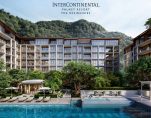
BANGKOK, THAILAND – Media OutReach Newswire – 15 October 2025 – Proud Real Estate Public Company Limited (PROUD) announces the launch of The Residences at InterContinental Phuket Resort, a prestigious development with an investment exceeding THB 2.5 billion (around $77 million USD). This is the company’s second Branded Residences project in Thailand under the globally renowned InterContinental brand, introducing a transformative concept of residential living themed ‘Live […]

Dubai’s Roads and Transport Authority inked three major Memoranda of Understanding this week at GITEX Global 2025, forming strategic partnerships with KHDA, Parkin PJSC, and PayPal to deepen integration of the nol card ecosystem.

Under the agreement, RTA and the Knowledge and Human Development Authority, in partnership with GTS Alive Middle East, will roll out the “Study in Dubai – nol ISIC” card, enabling students to use nol across campus services and lifestyle benefits. The nod with Parkin aligns its digital parking operations with the nol payment interface, while the PayPal deal aims to embed nol into broader digital commerce and point-of-sale systems.

Mohammed Al Mudharreb, Chief Executive Officer of RTA’s Corporate Technology Support Services Sector, led the signings on behalf of RTA. On the KHDA side, Dr Saeed Mubarak bin Kharbash and Michal Lezo signed for KHDA and GTS Alive Middle East respectively; Parkin’s participation was endorsed by Mohamed Abdulla Al Ali, and PayPal was represented by Otto Williams, SVP and General Manager for PayPal Middle East and Africa.

According to RTA, the thrust of the MoUs is to position nol as more than a public transport card — it aims to transition nol into a multifunctional payment instrument across retail outlets, restaurants, parking, entertainment venues, events, and institutional services. The authority hopes that expanding acceptance will drive convenience, reduce cash reliance, and support Dubai’s smart city ambitions.

KHDA emphasized the student-centric angle: the “Study in Dubai – nol ISIC” card is expected to be accepted across higher education institutions in the emirate, granting students access to discounts, campus services, and lifestyle perks under a unified payment mechanism. Officials stated it will enhance the student experience and streamline campus operations.

From Parkin’s standpoint, the collaboration enables interoperability between its parking systems and the nol platform — motorists may use nol directly for parking payments, potentially eliminating the need for separate digital wallets or parking apps. Meanwhile, PayPal’s role is to act as a bridge for merchants and service providers to adopt nol-based transactions, especially in digital and brick-and-mortar payment contexts.

These moves come amid a broader push by Dubai authorities to accelerate digital payment adoption and integrate city services under unified ecosystems. The expansion from transit to wider commerce mirrors trends in other global cities, where transport payment cards or mobile passes are becoming de facto urban wallets.

A challenge will lie in merchant adoption and technological integration. To be effective, retail outlets, parking operators, education institutions, and event venues must invest in infrastructure to accept nol-based payments, whether via terminals or backend systems tied to PayPal’s network. RTA has framed these partnerships as a pathway to co-developing nol-linked products and value-added services, creating new revenue streams and customer experiences.

Customer satisfaction is a recurring pillar in RTA’s narrative: by enabling one card to handle multiple daily transactions, the authority expects to reduce friction and improve uptake. Sustainability is also a stated goal — shifting transactions away from paper tickets and cash is presented as an environmental benefit.

Notably, Dubai is also spotlighting innovations in mobility at GITEX: the Trackless Tram, an AI-driven, driverless tram solution, is among projects on display. The new MoUs dovetail with such transport-led technology investments, reinforcing Dubai’s intent to integrate mobility and payments as part of its future city blueprint.

Within the education sector, KHDA’s endorsement of nol for student services signals a bridging of infrastructure between municipal systems and institutions — a model that, if successful, could serve as a template for other smart city programmes. The partnership with PayPal is particularly significant, since its global payments reach gives nol a pathway into cross-border and e-commerce transactions, beyond typical fare or local merchant payments.


BlackRock chief executive Larry Fink asserted that cryptocurrencies carry a role akin to gold in investment portfolios, calling Bitcoin “a decent tool for diversification” while warning that it should not form a major slice of one’s holdings.

Speaking on 60 Minutes on CBS, Fink said: “There is a role for crypto in the same way there is a role for gold … For those looking to diversify, it is not a bad asset, but I don’t believe that it should be a large component of your portfolio.”

Fink’s remarks mark a notable shift from earlier positions. In the past, he dismissed Bitcoin as a facilitator of money laundering, stating that none of his clients expressed interest in crypto. The evolution of his thought underscores how digital assets have moved further into mainstream investment discourse.

His comments come amid rising institutional engagement with digital asset markets, with BlackRock among firms championing the development of spot Bitcoin ETFs. The firm has also begun pushing into tokenization, envisioning the conversion of traditional financial products such as equities, bonds or real estate into digital token formats. Fink described tokenization of all assets as “the next wave of opportunity” over the coming decades.

Analysts view Fink’s balanced tone—acknowledging both potential and restraint—as calibrated for the climate of heightened volatility and regulatory uncertainty in crypto markets. He is signalling openness without forfeiting caution.

Some investors welcomed the endorsement as validation from one of finance’s most influential figures, though sceptics note that Fink’s insistence on limiting crypto to a small portfolio slice reflects enduring reservations.

Crypto proponents point out that Bitcoin’s often low correlation with equities or bonds—and its non-sovereign character—make it attractive as a diversification instrument. BlackRock itself in earlier internal research has characterised Bitcoin as a “unique diversifier,” citing its tendency to behave differently from traditional assets during episodes of macro stress.

Yet the environment remains fraught. Price swings, regulatory fragmentation across jurisdictions, and infrastructure challenges continue to deter widespread adoption. For instance, debates persist around how to regulate digital assets, custody risks, taxation, and classification.

Al Mal Capital REIT has sealed its first move into the healthcare sector by acquiring the real estate asset housing NMC Royal Hospital in Dubai Investments Park. The transaction lifts AMCREIT’s portfolio valuation to around AED 1.4 billion across six assets. The facility spans 492,332 square feet and comprises two hospital blocks alongside a fully leased commercial wing. The hospital, which supports nearly 120 inpatient beds, outpatient […]

Sharjah’s government has successfully raised Rmb 2 billion by issuing a three-year panda bond in China’s onshore renminbi market. The issuance marks the emirate’s return to the panda bond space after its inaugural foray seven years ago. The pricing range for the bond was initially indicated in the 2.5 % to 3.2 % area. The transaction was arranged through a syndicate led by Bank of China, with […]

Davidson Kempner Capital Management has inaugurated an office at the Abu Dhabi Global Market, marking its first physical presence in the Gulf and becoming the latest global hedge fund to deepen its footprint in the United Arab Emirates. The new office will be led by partner Chris Krishanthan together with managing director Naveen Sabharwal.

The firm, which manages approximately $37 billion in assets, aims to tap deeper into regional capital flows and align more closely with sovereign and institutional investors across the Gulf Cooperation Council. Tony Yoseloff, managing partner and chief investment officer, described the move as a step to “further expand our investable universe” and strengthen “local relationships in a highly dynamic market.”

For years, Abu Dhabi has steadily worked to position itself as a rival to Dubai in financial services. Its strategy has included tailoring tax incentives, loosening regulatory constraints, and courting global asset managers to relocate or open branches there. As part of this wave, major hedge funds such as Brevan Howard and Marshall Wace have already established bases in ADGM; Davidson Kempner joins their ranks in what is being viewed as a consolidation of the emirate’s appeal to global capital.

The timing dovetails with a broader uptick in cross-regional trading. The CME Group recently reported a 16 percent rise in average daily trading volumes from the Middle East, with hedge fund activity surging nearly 30 percent this year. The firm’s commercial officers noted the region has become its fastest-growing market. Many attributers point to favourable time zones, regulatory allure, and close proximity to sovereign wealth capital as key drivers.

Internally, the ADGM office is intended both as a regional sourcing hub and a local relationship engine. Krishanthan and Sabharwal have previously overseen Davidson Kempner’s Middle Eastern investment activity, so the new base is meant to formalise and deepen ongoing operations. The firm describes its core strategy as rooted in credit and event-driven investing, spanning public and private markets globally.

This expansion comes amid headwinds in certain corners of the firm. In 2024, Davidson Kempner moved to shutter its Distressed Opportunities fund — once managing around $2 billion — as evolving market conditions rendered that strategy less compelling in a constrained restructuring environment. The firm indicated it would reorient distressed allocations into closed-end and multi-strategy vehicles.

Observers see the firm’s Abu Dhabi entry as both adaptive and opportunistic. By embedding itself in ADGM, Davidson Kempner seeks proximity to capital allocators, deal flow, and regional intelligence — all of which matters in markets where local networks and relationships often play outsized roles.

Competition in the region is intensifying. Abu Dhabi’s Lunate recently acquired a minority stake in Brevan Howard, launching a joint investment platform with an initial commitment of $2 billion. Regional investors have also targeted global fund firms for partnerships or co-investment models. That push underscores Abu Dhabi’s ambition to evolve into a globally competitive asset management hub, alongside regulatory hubs like London, Singapore, and Hong Kong.

GITEX Global 2025 in Dubai has become a battleground for dominance in nation-scale artificial intelligence, as governments and tech giants compete to control the infrastructure that will underpin the next wave of the digital economy. The event has already featured multiple high-stakes unveilings of sovereign AI platforms, hyperscale data centres, and public-service automation systems illustrating how computing power is being weaponised as strategic capital. The opening day […]

The International Monetary Fund has lifted its projection for the United Arab Emirates’ economic expansion to 4.8 per cent in 2025 and sees 5.0 per cent growth in 2026, citing accelerating non-hydrocarbon activity and a rebound in oil output.

Stronger-than-expected performance in tourism, construction, trade and financial services is underpinning the upward revision. The IMF attributes resilience to the country’s diversified strategy and structural reforms such as enhanced trade agreements and sustained investment in infrastructure.

Analysts say the revision contrasts sharply with broader regional downgrades. The IMF now expects growth across the Middle East and North Africa to expand by only 2.6 per cent in 2025, constrained by policy uncertainty, volatile energy markets and geopolitical tensions.

Within the UAE, central bank data reinforce the narrative of dual expansion. The non-hydrocarbon sector is forecast to grow by around 4.5 per cent annually in both 2025 and 2026, while the hydrocarbon segment is expected to rebound more sharply—by 5.8 per cent in 2025 and 6.5 per cent in 2026—on increased output as OPEC+ quotas are relaxed.

When IMF staff visited the UAE in January 2025, they noted that domestic demand remained robust amid modest oil production, forecasting real GDP growth at about 4 per cent for the year. They projected that fiscal and external surpluses would remain comfortable, helped by elevated non-oil revenues and cautious fiscal management.

Still, risks linger. The UAE’s banking sector, while well capitalised, faces exposure to real estate, and high house prices pose concerns for asset quality. In mid-2025, exposure to property in banks’ portfolios stood at around 18 to 19 per cent of risk-weighted assets. A sudden shift in investor sentiment or capital flows could test the stability of credit markets.

On the external front, the current account surplus is projected at about 7.5 per cent of GDP, supported by stronger non-oil exports and moderating import growth. Liquidity buffers remain healthy, with international reserves covering more than eight months of imports.

Greenlogue/AP The global green hydrogen market, valued at roughly USD 7.98 billion in 2024, is on track to grow to about USD 60.6 billion by 2030, propelled by steep declines in renewable energy costs, advances in electrolysis technologies and intensifying decarbonisation efforts across industry and transport. Projections indicate a compound annual growth rate of approximately 38.5 percent through 2030. This forecast assumes that many announced projects will […]

Abidjan — The World Food Programme has secured a US$9.3 million grant from the Korea International Cooperation Agency to support a five-year school meals and resilience programme across northern Côte d’Ivoire. The initiative will target 200 primary schools and 50,000 pupils from 2025 to 2029, backed by support for local farmers and community health efforts.

Under the partnership, WFP will channel the Korean funding into locally sourced, nutritious meals intended to enhance students’ concentration, health and retention. Alongside direct school feeding, 100 farmer groups will receive training and technical assistance to improve crop quality and yield, while forging supply links with school kitchens — aiming to stimulate rural markets and buttress food systems. The programme also includes capacity-building in hygiene and nutrition education, investment in hand-washing stations, and multisectoral coordination with national ministries of education, health and agriculture.

Olivia Hantz, WFP’s Representative and Country Director in Côte d’Ivoire, described the cooperation as “an investment in the country’s future”, noting that bolstering national systems and empowering local producers helps advance both nutrition and resilience. Kim Sangjun, the KOICA Country Director in Côte d’Ivoire, emphasized that linking schools with nearby farmers ensures the programme’s sustainability and reflects Korea’s own experience in leveraging school meals to support development.

Government agencies in Côte d’Ivoire will play a leading role in implementation. The Ministries of National Education and Literacy, Agriculture and Food Production, and Health and Public Hygiene will work through departmental directorates such as the Directorate of School Canteens to integrate this project with national plans. WFP already operates school feeding across 733 schools nationwide, reaching over 166,000 pupils, and this new injection will focus on underserved northern regions.

The strategy centres on what is often called a “home-grown school feeding” model: meals are locally procured, thereby linking educational support with rural livelihoods. This approach is intended not only to support children, but to stimulate smallholder agriculture, strengthen supply chains and reduce dependency on external imports.

Côte d’Ivoire faces persistent inequalities in food access. In rural and northern areas, food insecurity and chronic malnutrition remain major challenges. According to WFP’s internal data, more than 30% of children in those regions suffer from stunting, and households face high post-harvest losses, limited access to credit or inputs, and exposure to climate stresses. WFP’s country briefing from mid-2025 highlights programmes aiming to strengthen climate resilience among women and youth in zones such as Poro by promoting sustainable agricultural practices.

WFP’s school feeding and resilience operations in Côte d’Ivoire are embedded in a broader strategy. The agency seeks to scale national social protection systems, enhance disaster preparedness, and support agriculture-led recovery. The KOICA-funded project aligns with both Côte d’Ivoire’s national development plan, which emphasises human capital and inclusive growth, and with global objectives on nutrition, education and resilience.

Analysts view the agreement as part of a broader trend of South–South development cooperation. Korea has expanded its development financing across Africa in recent years, often emphasising education, agriculture and infrastructure. The model adopted here reflects that emphasis: combining direct welfare support with investment in domestic capacity. For WFP, the strategy offers a way to reduce long-term dependency on donor aid by anchoring programmes in national institutions and markets.

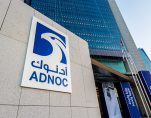
European Commission officials are poised to grant approval to Abu Dhabi’s state oil company for its €14.7 billion acquisition of Germany’s Covestro, conditional on minor adjustments to compliance measures, according to sources familiar with the process. The decision could mark one of the most significant Gulf-to-EU corporate takeovers to date.

Brussels opened a detailed investigation into the deal earlier this year under its Foreign Subsidies Regulation, citing concerns that the United Arab Emirates might have leveraged state-backed advantages—such as an unlimited state guarantee and pledged capital injections—to win the bid. The Commission’s probe, initially suspended in September pending additional information, has now resumed as ADNOC submits remedial proposals.

In its revised remedy package, ADNOC has committed to removing language referencing the unlimited guarantee from Covestro’s articles of association and to preserving Covestro’s intellectual property within Europe. Sources suggest the Commission may insist on further tweaks before final clearance, but no major restructuring is expected.

ADNOC’s international investment arm, XRG, has framed the concessions as reflective of its long-term investor stance and asserted confidence that the proposals are “robust and proportionate.” The supreme size of the deal amplifies scrutiny—a deal described by analysts as ADNOC’s largest ever and among the biggest foreign acquisitions of a European company by a Gulf state.

Opponents and industry peers have raised flags about the competitive effects of the transaction. Critics argue that ADNOC’s state backing might have deterred rival bidders, distorting the playing field in Europe’s chemicals sector. Regulators collected feedback from market participants as part of the remedy review, a standard stage in EU merger oversight.

In September, the EU paused its review, citing gaps in the information submitted by the parties. ADNOC responded by accusing the Commission of issuing “disproportionate and invasive” demands. It warned such tactics jeopardised the deal’s viability. Brussels has indicated it will reset its decision deadline after receiving all necessary material. Its previous deadline had been 2 December.

Analysts suggest that the minimal expected adjustments reflect the Commission’s confidence that the core concerns have been addressed. Some believe that failure to clear the deal now would signal strained investment relations between EU institutions and sovereign-backed acquirers. Others caution that even small remedial changes—especially on governance rights or intellectual property handling—could materially alter deal returns.

Covestro, a leader in polymer materials, chemicals, coatings and adhesives, stands to bolster its growth potential under ADNOC’s ownership. The acquisition aligns with ADNOC’s drive to diversify beyond hydrocarbons toward higher-value downstream chemical operations. Yet the deal also pits strategic ambition against regulatory sensitivity—a balancing act now unfolding in the corridors of Brussels.

VISHNU RAJA
RYO YAMADA
HITORI GOTOH
IKUYO KITA