News related to
Investment

Beacon Media, the entertainment venture co-founded by wellness advocate Dr Deepak Chopra, has joined forces with MovieVerse Studios — the mainstream content arm of IN10 Media Network — to launch a content alliance aimed at elevating storytellers across the Global South. The partnership seeks to establish a “borderless content ecosystem” connecting Hollywood, India, the Middle East, Africa and Latin America — with a prospective audience reach exceeding […]

Dubai has secured a position among the world’s top four FinTech centres, according to the latest Global Financial Centres Index published on 25 September, signalling a pivotal shift in the emirate’s financial technology trajectory.

The GFCI report places Dubai at 11th globally in the overall ranking of financial centres, but underscores its standing as one of the most dynamic hubs for FinTech innovation. The Dubai International Financial Centre has played a central role in driving this transformation.

DIFC now houses over 1,500 companies focused on AI, FinTech, and innovation, making it the region’s largest cluster of its kind. These firms have collectively raised more than US$4.2 billion in funding, strengthening the UAE’s appeal as a destination for growth-stage tech ventures. Sheikh Maktoum bin Mohammed bin Rashid Al Maktoum, First Deputy Ruler of Dubai and Minister of Finance, credited the rise to the strategic goals of the Dubai Economic Agenda D33 and to Dubai’s business-friendly infrastructure and regulatory regime.

Essa Kazim, Governor of the DIFC, stressed that the momentum reflects long-term planning and deep investment. He noted that positioning Dubai among the top global FinTech players has required calibrated incentives, robust legal frameworks, and international partnerships. Arif Amiri, Chief Executive Officer of the DIFC Authority, said the locale’s success stems from synergy among institutional support, talent attraction, and ecosystem-building efforts.

Dubai’s ascent in the FinTech league emerges amid intensifying global competition. Traditional financial centres such as London, Singapore, and Hong Kong continue to maintain strong footholds, leveraging established networks, global institutions, and mature regulatory systems. Yet Dubai’s rapid rise indicates that newer hubs with nimble regulation and aggressive incentives can leapfrog in the tech-driven financial services landscape.

The GFCI 38 ranking shows Dubai overtaking several peers in the Gulf and Asia, with the city gaining one rank to 11th place overall and closing gaps in score metrics used to assess competitiveness, such as human capital, reputation, and business environment. The GFCI emphasises that “expected future significance” is one of the domains in which Dubai leads globally—an indication that market participants foresee further growth in its influence.

The Union Cabinet has cleared a major scheme under the Department of Scientific and Industrial Research and the Council of Scientific and Industrial Research to infuse ₹2,277.397 crore into capacity building and human resource development in science and technology over the 2021–22 to 2025–26 span.

The “Capacity Building and Human Resource Development ” scheme will be implemented by CSIR and will extend support to research and development institutions, national laboratories, Institutes of National Importance, Institutes of Eminence and universities across the country. It aims to nurture talent in fields spanning science, technology, engineering, medicine and mathematics.

Officials describe the initiative as a strategic instrument to shore up India’s research ecosystem. It offers four sub-programmes: doctoral and postdoctoral fellowships; an extramural research scheme including Emeritus and Bhatnagar Fellowships; awards for scientific excellence; and grants to promote travel and symposia.

Science and Technology Minister Jitendra Singh stated that the scheme will “strengthen the research and development ecosystem by training researchers, nurturing scientific talent and promoting innovation to build a future-ready India.” Under this plan, promising scientists will receive institutional support through mentoring, infrastructure access and networking opportunities.

The government places renewed emphasis on bridging gaps in the researcher base. India currently ranks 39th in the Global Innovation Index, and the authorities expect the new scheme to push that further upward. Higher numbers of researchers per million population, more publications, and stronger institutional linkages are cited as expected outcomes.

Within CSIR, the umbrella programme is designed to consolidate scattered efforts and reduce duplication. Many laboratories and institutes already run fellowships or grant schemes; under CBHRD, these are to be aligned, coordinated and accelerated. CSIR is now in its 84th year of operation and oversees the umbrella scheme.

One critical ambition is to stem brain drain, particularly among early-stage researchers. The fellowship provisions and funding for travel and international collaboration are meant to give Indian-based scientists incentives to stay. Experts in the policy space note that merit, institutional support and continuity of funding will be decisive in preventing talent outflow.

A potential challenge lies in implementation. Institutions in more remote or underserved regions may lack existing capacity in infrastructure or mentoring frameworks. Ensuring equitable distribution of resources will test administrative agility. Monitoring and evaluation mechanisms will be crucial to track how funds are deployed and whether intended outcomes are achieved.

Beyond the scheme, India is deploying complementary initiatives. For example, the National Quantum Mission—approved earlier—allocates over ₹6,000 crore to develop quantum technology capabilities from 2023 to 2031. This too hinges on a pool of highly qualified researchers and labs equipped for frontier science.

The CBHRD scheme also dovetails with India’s Sustainable Development Goals in science and technology, aiming to boost research intensity and capacity across states and institutions. Coordinated investments and policy coherence may drive systemic transformation in the scientific sector.

Critics caution that past announcements in the research domain often fall short in sustaining funding beyond initial phases. Long-term maintenance, recurring costs, infrastructure upkeep and human capital churn are likely stress points. The success of this scheme will depend on consistent funding flows, institutional accountability, and adaptability.


Three companies—The Littlestone Company, Alpha Ledger Technologies and Celadon Capital Markets—have launched a joint initiative to convert up to $1 billion of essential housing projects into blockchain-based tokens on the Solana network. The programme aims to democratise real estate investment by enabling fractional ownership, automated income flows and secondary market trading.

At the core of the effort, Littlestone brings decades of housing development experience, particularly in underserved communities. Alpha Ledger will supply the tokenisation infrastructure, mapping property ownership rights into programmable digital assets. Celadon will manage legal structuring, compliance and investor onboarding. Their first focus is on multifamily housing in Texas, with plans to scale thereafter.

Littlestone’s CEO, Peter Wasserman, frames the collaboration as a way to “accelerate delivery of sustainable, high-quality communities for workforce families and active adults 55+,” stressing that tokenisation can reduce capital constraints while broadening investor participation. Celadon’s Armand Pastine says the partnership targets the so-called “Missing Middle”—teachers, nurses and seniors underserved by conventional housing finance—and intends to unlock that segment through blockchain.

Solana’s mechanics—fast settlement, low fees and built-in tooling for real-world assets—make it a natural fit for such endeavours. The network already supports token extensions, permissioned environments and “transfer hooks” to embed KYC/AML rules directly into on-chain logic. Solana itself promotes the concept of real-world assets onchain, arguing that its architecture enables instant, cross-border settlement and programmable compliance at scale.

This project is not an outlier. The asset tokenisation sector has seen explosive growth in 2025, with estimates for real-world asset capital on chain rising from under $10 billion at the year’s start to over $60 billion by mid-year. The rise reflects growing institutional and retail demand, as well as regulatory openings. Meanwhile, major players like Securitize are expanding their issuance and trading platforms for tokenised securities, and firms such as Tokeny, ADDX and Ondo are becoming increasingly active in the tokenisation ecosystem.

Still, the initiative faces structural challenges. Regulatory uncertainty over securities laws, valuation complexities, liquidity concerns and investor protection remain key hurdles. The need to map off-chain legal claims into on-chain expression requires careful design, often involving special purpose vehicles or trust structures. Token liquidity may rely on secondary markets that are still nascent.

Abu Dhabi-based XRG P. J. S. C. has finalised its acquisition of an 11.7 percent equity interest in Phase 1 of the Rio Grande LNG project in Brownsville, Texas, marking the company’s first natural gas investment in the United States. The purchase was made through a joint-venture structure involving Global Infrastructure Partners, an investment vehicle affiliated with BlackRock. Phase 1 of Rio Grande LNG is one of […]

The UAE Ministry of Finance, acting as issuer with the Central Bank of the UAE as issuing and payment agent, has completed the September 2025 auction for dirham-denominated Islamic Treasury Sukuk, issuing AED1.1 billion in two tranches.

Investor appetite proved robust: total bids reached AED5.1 billion, representing an oversubscription rate of 4.6 times. The two tranches mature in August 2028 and May 2030. Yields to maturity were set at 3.64 percent for the 2028 tranche and 3.72 percent for the 2030 tranche, with spreads of up to 5 basis points over comparable US Treasuries. The new Sukuk are now listed under the UAE Treasury Islamic Sukuk Programme on Nasdaq Dubai, bolstering their tradability in secondary markets.

This issuance is part of the 2025 T-Sukuk programme designed to deepen the UAE’s domestic Islamic capital market and to help establish a dirham yield curve. Authorities view it as a tool for liquidity management and as a mechanism to broaden investment options for both regional and international investors participating in the UAE’s fixed-income markets.

Market observers note that the oversubscription signals confidence in the UAE’s fiscal credentials and its commitment to injecting dynamism into its debt capital markets. The tight pricing relative to US Treasuries is seen as competitive and attractive for institutional players seeking yield in the Gulf region.

In recent months, the UAE has steadily pursued domestic sovereign Islamic issuances as a complement to conventional instruments, seeking to accommodate demand from Islamic financial institutions as well as conventional banks’ Shariah-compliant units. The coordination between the Ministry of Finance and the Central Bank ensures that these issuances are integrated into broader monetary and financial stability objectives.

Across the Gulf, sovereign issuers have increasingly leaned into domestic currency Islamic instruments to reduce dependence on external funding, develop local capital markets, and provide alternative yield playbooks for investors. Within that context, the UAE’s T-Sukuk programme is gaining traction as a benchmark vehicle.

Primary dealers participating in the auction included eight banks, all mandated under the program to support both primary and secondary market activity. Their participation is key to maintaining liquidity and encouraging wider investor participation beyond the initial subscription.

GROW’s new platform equips advisers with advanced tools and delivers a seamless wealth-building experience for clients SINGAPORE – Media OutReach Newswire – 26 September 2025 – GROW with Singlife (“GROW”), an integrated investment platform under leading financial services company Singlife, has launched its enhanced adviser and client platform – marking a key milestone in its strategy to scale wealth solutions and elevate adviser-client experience in Singapore. The […]

Advertisements

The Export-Import Bank of the United States has authorised over $100 million in financing guarantees to support two flagship digital infrastructure projects in Côte d’Ivoire. The package includes a $66 million guarantee for a national data centre and $47 million for technology exports intended to digitalise the Ministry of Commerce and Industry. The deals, approved in August under EXIM’s China and Transformational Exports Program, were formally unveiled […]

HANGZHOU, CHINA – Media OutReach Newswire – 25 September 2025 – From September 25 to 29, Hangzhou, capital city of east China’s Zhejiang Province, will play host to the 4th Global Digital Trade Expo. As the world’s gaze turns to eastern China, the city is using this premier digital trade gathering to paint a vivid picture of the “AI +” era. Official picture of the 4th Global […]

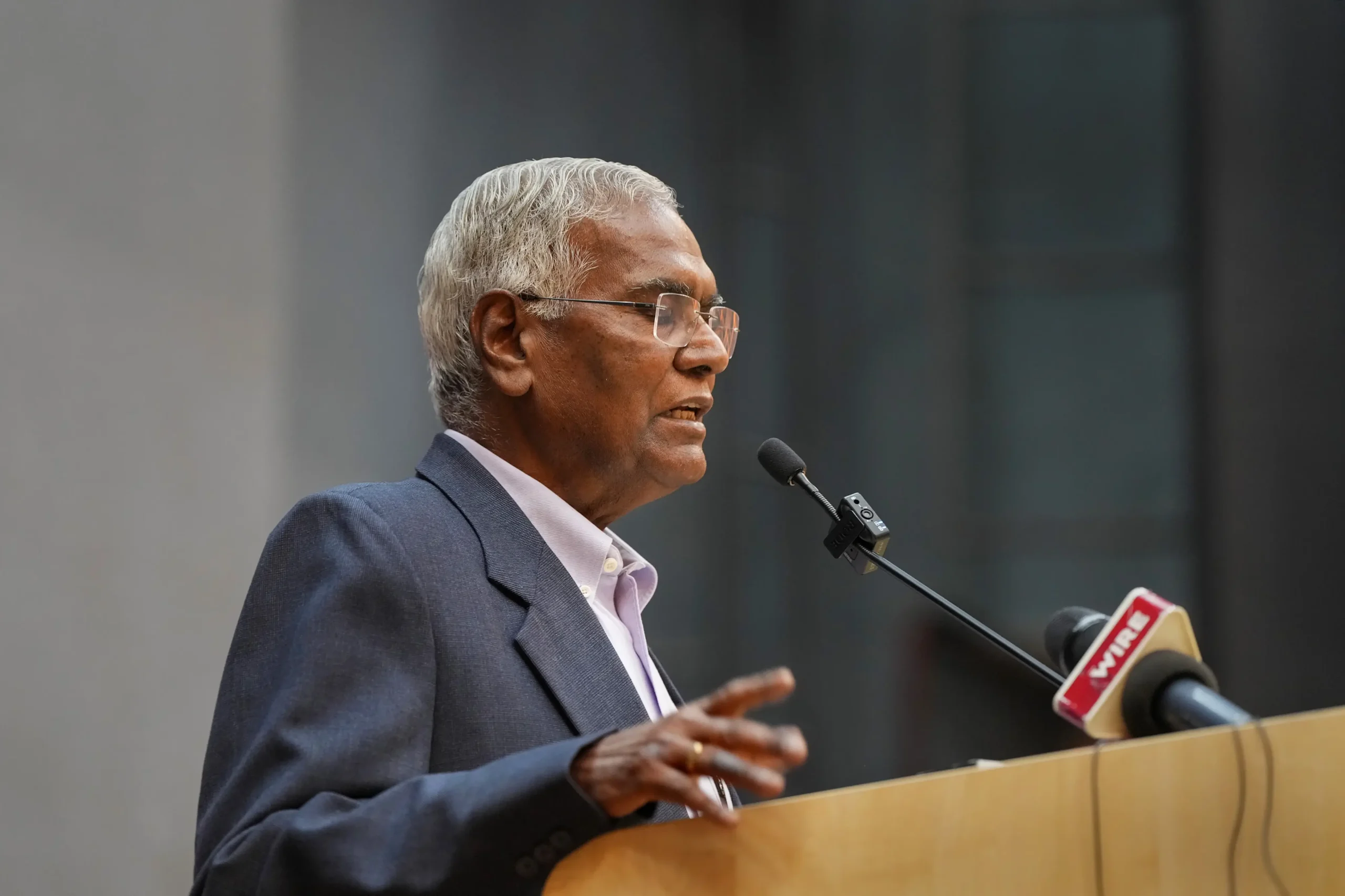
By Satyaki Chakraborty The Communist Party of India(CPI) concluded its five day Party Congress at Chandigarh on September 25 reelecting D. Raja as the general secretary of the CPI for another three year term. Raja is the first dalit leader to head the CPI in 2019 after the then party secretary S Sudhakar Reddy sought […]

The article CPI’s 25th Party Congress Elects D Raja As The General Secretary For The Third Time appeared first on Latest India news, analysis and reports on Newspack by India Press Agency).

Crafting a serene but vigorous harvest season for guests with a repertoire of exquisite multifaceted dining, wining, and playing choices MACAU SAR – Media OutReach Newswire – 25 September 2025 – As the air begins to cool in Macau, the city’s appetite turns towards indulgence; nourishment for the body, soul, and appetite becomes a premier priority. At Galaxy Macau™ Integrated Resort (hereafter “Galaxy Macau”), autumn is a […]

A high-profile gathering scheduled for 29 September in Singapore will convene health professionals, AI innovators and medtech entrepreneurs to examine the evolving intersection of artificial intelligence and clinical care. Titled CliniConnect: AI X Healthcare SG Edition, the event aims to catalyse collaboration across disciplines and continents.

Organisers say the agenda will include interactive panels, pitch sessions, and roundtable debates focused on real-world adoption of AI in diagnostics, hospital systems, and patient care. They expect participation from clinicians, researchers, startup founders and regulatory stakeholders alike. The event is expected to coincide with TOKEN2049, a major AI & blockchain gathering, offering cross-domain exposure and synergy.

CliniConnect has hosted several prior editions in Singapore and other regional hubs, with past speakers including Dr Adam Chee, founding lead of Singapore’s Centre for AI-Enabled Health. These gatherings have emphasised bridging the gap between algorithm development and clinical deployment, with attention to ethics, data governance and system integration.

One central topic will be how hospitals and health systems can scale AI solutions beyond pilot phase. Many institutions struggle to integrate point-solutions into legacy electronic health records or workflows. Executives and innovation leads at the event will share strategies for deploying AI at scale without fragmenting operations.

Another critical strand will explore trust, explainability and regulatory oversight. While AI is making strides in pathology, radiology and triage, clinicians often resist “black-box” models. Some speakers plan to advocate hybrid approaches combining model outputs with human oversight or modular interpretability frameworks.

Regulatory perspectives are expected to feature heavily. Several jurisdictions are updating medical device rules to account for adaptive algorithms. Singapore’s Health Sciences Authority has begun consultations on AI frameworks, and regional alignment across ASEAN markets remains a challenge. CliniConnect hopes to provide a forum for convergence on standards, data privacy and cross-border validation.

On the entrepreneurship front, medtech startups will pitch innovations aimed at workflow automation, predisposition risk modeling, remote patient monitoring, and imaging augmentation. Organisers have indicated that venture capital and hospital innovation arms will be present, seeking collaborations or early investments.

The event also intends to showcase case studies from institutions that have begun deploying AI in clinical settings. Narratives are expected from hospitals in Singapore, South Korea, India and Dubai on how they piloted decision-support tools, performance-monitoring systems or diagnostic assistants, and the bottlenecks they encountered in scaling. These stories will help attendees assess trade-offs, resource requirements and institutional readiness.

Observers note CliniConnect’s growing ambition: it now brands itself not just as a regional meetup but as a bridge between Asia’s health tech communities and global AI networks. By aligning with TOKEN2049 and leveraging cross-sector partnerships, it hopes to attract more international participants and raise its influence in defining health AI standards.

SHANGHAI, CHINA – Media OutReach Newswire – 25 September 2025 – During HUAWEI CONNECT 2025, Huawei released the ISP/MSP Business Success Driven by RAMS White Paper at the summit themed “Powering the ISP/MSP Industry with All Intelligence and Resilience.” The white paper introduces the RAMS framework—ROI, Availability, Maintenance, and Security, aiming to help ISPs and MSPs thrive with AI by transitioning from providing connectivity to offering intelligent […]

Arada has acquired a 75 percent stake in London-based residential developer Regal as part of a Dhs 2.5 billion investment that marks its first UK foray and second international expansion after Australia. The UK business will be rebranded as Arada London, with an ambition to turbocharge Regal’s pipeline from 10,000 units across 11 projects to over 30,000 within three years.

The acquisition was formalised in a ceremony attended by Sheikh Sultan bin Ahmed bin Sultan Al Qasimi, Chairman of Arada. Arada’s Group CEO, Ahmed Alkhoshaibi, said that more than half of the capital will be channelled into accelerating development and securing new land parcels. He described the London market environment as one presenting “right opportunities to acquire the right sites at the right price”.

Regal’s chief executive, Jonathan Seal, and the existing executive team will remain in post after the transaction. Seal remarked that Arada’s alignment with Regal’s strategic values and long-term vision made it a fitting partner to lead the next phase of growth.

The deal gives Arada an immediate platform in London, tapping into Regal’s diversified portfolio, which spans for-sale residential units, purpose-built student accommodation, and mixed-use regeneration schemes. Among ongoing developments is the Fulton & Fifth project in Wembley, comprising 876 homes of which 40 percent are designated as affordable housing, and Orchard Wharf in Tower Hamlets, which recently secured approval for 1,365 student beds and 200 homes.

Analysts see strategic logic in entering London via acquisition rather than greenfield development, citing the complexities and regulatory friction in the UK housing sector. Arada’s move follows a wave of Gulf-based developers expanding into London, including Damac, Aldar, and Modon, often via partnerships or subsidiaries.

However, entering the London residential market is not without risk. Regal’s 2024 accounts showed £252 million in short-term debt, contrasted against £196 million of investment property, reflecting potential balance-sheet stress. The UK housing sector continues to face headwinds from construction inflation, planning delays, and demand volatility.

Arada has defended the timing. Alkhoshaibi stated that entering markets when sentiment is subdued allows for acquiring desirable assets at lower cost, positioning for upside when conditions recover. He noted that Arada’s approach is to maintain momentum in its UAE operations while layering growth abroad.

Beyond the UK, Arada is also contemplating further regional expansion. The company is reportedly in discussions with Saudi Arabia’s Public Investment Fund about a large mixed-use project in the kingdom. In the UAE itself, Arada plans a Dhs 3 billion development project in Ras Al Khaimah next year, reinforcing its domestic footprint.

AVEVA has begun rolling out its AVEVA Advanced Analytics solution, integrated with its CONNECT platform, across multiple global industrial clients, claiming significant gains in efficiency, quality and energy use. The deployment underscores AVEVA’s push into industrial AI and predictive analytics within the manufacturing and consumer goods sectors. The offering, designed as a no-code, cloud-native framework, is built to transform large volumes of raw operational data into predictive […]

Defence stocks will rally and global investors will be paying attention, I believe. The reason the bullish analysis is a catalyst came the moment President Donald Trump, after meeting Ukraine’s President Volodymyr Zelenskyy at the UN General Assembly, declared that Kyiv can reclaim all territory seized by Russia, an abrupt and market-moving pivot from his earlier calls for compromise. In a single statement, the world’s largest economy […]

Fitch Ratings changed Thailand’s long-term foreign-currency issuer outlook to Negative from Stable, citing mounting pressures on public finances, fragile growth prospects and ongoing political fragility. The sovereign rating itself remains at BBB+.

The credit agency warned that escalating risks to fiscal stability — especially rising debt and persistent budget deficits — are aggravated by uncertainty over government continuity and policy direction. Economic growth slowing below peer averages and vulnerabilities in the tourism and export sectors further reinforce downside risks.

Fitch singled out Thailand’s general government debt reaching about 59.4 percent of GDP, a level close to median thresholds for ‘BBB’-rated sovereigns, noting it has risen sharply from pre-pandemic levels. Persistent fiscal deficits of 4.6 percent of GDP in fiscal 2025 and 4.3 percent in 2026 are projected, and though Fitch expects stabilisation beyond 2027, the window for improvement is narrow.

Fitch also emphasised Thailand’s external buffers — a consistent current account surplus and conservative composition of government debt — as mitigants that support the affirmed rating despite the negative outlook. It noted that average debt servicing costs relative to revenues remain lower than peer country averages, which grants some breathing room.

The political backdrop has intensified the strain. The constitutional court’s removal of Prime Minister Paetongtarn Shinawatra over an ethics violation tied to a leaked phone conversation triggered a swift transition. Anutin Charnvirakul assumed the premiership through a deal with the opposition party that mandates a general election within four months, introducing turbulence to fiscal continuity and policy clarity. Fitch warned that this political flux could amplify short-term spending pressures and generate unpredictable policy shifts.

Macro-economic forecasts reinforce the downgrade rationale. The World Bank has trimmed Thailand’s projected GDP growth in 2025 to 1.8 percent and 1.7 percent in 2026, citing weak external demand, slowed tourism recovery and waning domestic consumption — outcomes likely exacerbated by political volatility. Inflation has turned slightly negative, prompting central bank expectations of further rate cuts; Fitch expects two more 25 basis point cuts this year and in 2026.

Thailand’s central bank has already lowered its policy rate 100 basis points over the past year to 1.5 percent, and with inflation below zero, the case for easing remains plausible — though constrained by high household debt levels. The Bank of Thailand has signalled readiness to act if growth weakens further.

Analysts caution that structural deficiencies — such as sluggish productivity gains, reliance on tourism, and high household debts — limit upside recovery. Institutional weakness and frequent leadership turnover further deter investment confidence.

To reverse the negative trajectory, Fitch emphasised that Thailand’s government must demonstrate strong fiscal consolidation, stabilise public debt dynamics and restore growth momentum. A return to a stable outlook would require credible cuts to the fiscal deficit, credible medium-term plans to reduce debt, and a more predictable policy environment that supports private investment.

Leading Financial Institutions, Regulators, and Tech Innovators Converge to Accelerate Hong Kong’s AI Readiness and Global Leadership HONG KONG SAR – Media OutReach Newswire – 24 September 2025 – Citi Hong Kong, in collaboration with Mastercard and the FinTech Association of Hong Kong (FTAHK), successfully co-hosted the “Creating an AI Ready Economy” forum yesterday. Riding on the success of last year, this flagship event, now in its […]

Aldar Properties has acquired Modon Holding’s full 17.45 per cent indirect stake in Aldar Estates, pushing its total ownership to 82.55 per cent. The shares had been held through Modon’s subsidiary ADNEC Group. Financial terms of the deal were not made public. With the transaction, Aldar retains its position as majority stakeholder, consolidating its influence over the real-estate services arm. Aldar Estates, launched in 2023 via a […]

Dubai’s engineering and construction powerhouse ALEC Holdings PJSC has fixed its IPO share price between AED 1.35 and AED 1.40, opening subscriptions for a 20 percent stake in the company. The offering will feature 1 billion existing shares, valuing the company at AED 6.75 billion to AED 7 billion at the time of listing. The subscription period began on 23 September and will close on 30 September […]

Abu Dhabi’s Presight and investment company Shorooq have introduced a $100 million fund called Presight–Shorooq Fund I to back artificial intelligence start-ups worldwide. The fund, which is hosted in the Abu Dhabi Global Market, combines both capital investment and access to infrastructure to help scale promising ventures. The fund targets start-ups at early and growth stages developing in areas such as AI/ML, smart cities, energy, fintech, AR/VR, […]

Saudi Arabia’s capital markets are poised for a transformative leap as the Capital Market Authority moves toward allowing foreigners to hold more than 49 percent stakes in listed firms, marking one of the most consequential policy reversals in decades. Abdulaziz Abdulmohsen Bin Hassan, a CMA board member, confirmed that the regulator is in advanced stages of softening the ownership ceiling.

The current 49 percent cap on foreign ownership, introduced in the latest regulations, restricts the extent to which overseas investors can control local companies. Under the new proposal, non-Saudi investors would be able to exceed that threshold in select cases. The CMA has not publicly disclosed the new upper limit, but Bin Hassan suggested that the change could take effect before the end of the year.

Market analysts view this as a critical push by Saudi authorities to deepen global investor participation in the Kingdom’s equity market. By raising the allowable foreign shareholding, Saudi stocks would likely climb in weighting within MSCI and FTSE emerging-market indexes, thus drawing fresh capital flows.

Despite the momentum, several caveats remain. The draft change still requires sign-offs from multiple government bodies. Observers note that any permitted increase may come with conditions—such as lock-in periods, sectoral restrictions, or thresholds specific to strategic or institutional investors.

Over the past year, Saudi regulators have introduced a series of capital market reforms to bridge the gap between local standards and international norms. In July, the CMA approved amendments to rules governing investment funds and procedures for opening investment accounts for foreign individuals and institutions. Those changes broadened access and simplified cross-border investment mechanisms.

Under current rules, a foreign strategic investor is exempt from the 49 percent cap if it commits to holding shares for at least two years. These strategic investors are often long-term institutional players with operational or financial interests in the Kingdom. The expanded ownership proposal may build on this classification.

In 2025, Saudi Arabia also opened the door to foreign investment in listed companies owning real estate in Mecca and Medina—previously off limits to non-Saudi investors. That move allowed participation in shares and convertible instruments up to 49 percent.

For many Gulf and global fund managers, the prospective loosening is a signal that Saudi markets are gearing up to compete more aggressively with financial hubs like Dubai and Singapore. Some institutional investors have been reluctant to commit heavily to Saudi equities due to restrictions on ownership, market liquidity and governance complexity.

But not everyone is unconstrained by the cap: a handful of foreign firms already command regulatory exceptions or use swap agreements and licenced intermediaries to gain indirect exposure. The push to raise the ownership ceiling could simplify such structures or render them unnecessary.

Saudi sovereign and public funds may play a central role in cushioning any shocks from greater foreign participation. Observers expect state-backed capital to anchor or co-invest in large deals, reinforcing stability.

Citadines strengthens leadership in the resilient upper-midscale segment through rapid conversions and geographical diversification Franchise model gains momentum as a driver of scalable, efficient growth Global brand campaign amplifies refreshed Citadines lifestyle with activ∞ and “For the Love of Coffee” experiences across operational properties SINGAPORE – Media OutReach Newswire – 24 September 2025 – The Ascott Limited (Ascott), the wholly owned lodging business unit of CapitaLand Investment […]

OpenAI, Oracle and SoftBank have unveiled plans for five new artificial intelligence data centres across the United States under their Stargate infrastructure initiative, pushing the programme’s capacity to almost 7 gigawatts and investment to over US$400 billion over the next three years. Three of the new sites will be developed in partnership between OpenAI and Oracle, located in Shackelford County, Texas; Doña Ana County, New Mexico; and […]

VISHNU RAJA
RYO YAMADA
HITORI GOTOH
IKUYO KITA