News related to
Investment

A protocol on phytosanitary standards agreed upon during President Emmerson Mnangagwa’s visit to Beijing has unlocked the possibility of Zimbabwe exporting blueberries to China, the Horticultural Development Council has announced. This agreement offers local growers access to one of the world’s fastest-growing blueberry markets, although actual export volumes will depend on their ability to meet stringent sanitary conditions and manage compliance-related costs. Zimbabwe’s blueberry production is set […]

A surge in hunger has struck Nigeria, as sharply diminished aid inflows have forced closures of nutrition centres and blocked treatment for countless children at risk of malnutrition. Aid cuts from the United States and other Western donors have triggered an abrupt collapse in food assistance across northeast regions, particularly Borno State, the epicentre of a long-standing insurgency. In northeastern Nigeria, the United Nations’ World Food Programme […]

Tether is weighing entry into the gold industry by initiating discussions with mining, refining, trading and royalty firms to channel its crypto-generated profits into bullion-linked ventures. The company holds US $8.7 billion in gold reserves stored in Zurich as collateral, and already holds a minority stake in a royalty firm, with talks underway to expand that involvement. This move marks a strategic shift toward physical assets, seeking to broaden its exposure across the gold supply chain and diversify beyond the cryptocurrency market. While CEO Paolo Ardoino has likened gold to “natural bitcoin”, the gold sector has responded to the overture with caution and scepticism.

Tether’s consideration of investments in new realms of the gold industry underscores a calculated attempt to strengthen its position beyond USDT’s dollar peg. The firm has reportedly held talks with multiple royalty companies and even mining investment vehicles—but not all discussions have yielded results. Notably, Tether’s efforts include growing its exposure via Elemental Altus, a Toronto-listed gold royalty company in which it holds a minority stake, with potential for further investment. Talks with Terranova Resources reportedly ended without agreement.

Tether already anchors its stablecoin operations with nearly US $8.7 billion in gold backing, using physical bullion to support its broader digital asset ecosystem. The gold-backed token XAU₮ remains modest in scale compared to its dollar-pegged counterpart, holding a market value of approximately US $880 million.

Parallel to these strategic talks, Tether’s gold-backed offering—Tether Gold —demonstrates measurable growth. As of the end of June 2025, around 246,524 XAU₮ tokens were in circulation, each representing one fine troy ounce of physical gold; the total backing equates to more than 7.66 metric tonnes of gold. A paraphrase of the headline above encapsulates the thrust: Tether eyes gold mining expansion.

Abu Dhabi state oil giant ADNOC criticised the European Commission’s antitrust investigators for issuing what it described as excessive and intrusive information demands in their examination of its €14.7 billion bid for Covestro. The company cautioned that such regulatory pressure could endanger the takeover. Under the EU’s Foreign Subsidies Regulation, the Commission is scrutinising whether ADNOC benefited from unfair advantages—such as an unlimited UAE government guarantee and […]

Arabian Post Staff Dubai has again claimed first place in the Savills Executive Nomad Index 2025 as the most sought-after destination for executive nomads worldwide, while Abu Dhabi holds second place for the second year running. Dubai’s dominance stems from its unmatched airline connectivity and comprehensive amenities, with Dubai Maintains No-1 Spot as Executive Nomads’ Top Choice capturing the essence of its appeal. The index, evaluating 30 […]

Astana International Exchange and Abu Dhabi Securities Exchange have activated a direct connection between their central securities depositories, enhancing post-trade infrastructure and extending investor access across markets. The move, under the October 2021 memorandum of understanding that brought AIX into the Tabadul digital hub, expands on the existing Tabadul network and enables fully operational CSD-to-CSD communication.

The newly established arrangement builds on Tabadul’s digital trading network, which launched in mid-2023 when AIX formally joined and began enabling bilateral trading with ADX. Tabadul, introduced in 2022, operates on a mutual market access model, facilitating cross-exchange trading across member markets.

Under the framework established in October 2021, AIX had integrated into Tabadul, paving the way for today’s deeper integration via its direct CSD link with ADX.

Assel Mukhanova, chief executive of AIX, welcomed the formalisation, noting that this will bring tangible benefits to participants through more efficient trading corridors and deeper cross-border investment flows. Abdulla Salem Alnuaimi, group chief executive of ADX, emphasised that the direct CSD connection supports capital markets accessibility, post-trade connectivity, and opens new avenues for both global and regional investors.

This development underscores a strategic commitment from both exchanges to deepen connectivity, bolster liquidity, and accelerate regional capital market integration. By complementing the stronger ties forged through Tabadul, the new ADX–AIX direct CSD link strengthens market access for issuers and investors alike.

Falcon Finance has reached a new milestone as the circulating supply of its decentralized stablecoin, USDf, climbs to an all-time high of $1.5 billion, signalling sharply increased adoption and confidence in its DeFi infrastructure. The expansion tracks a surge from $1.12 billion over approximately one month, a performance driven by a blend of yield innovation, enhanced transparency, and risk-mitigation frameworks.

The $10 million on-chain insurance fund plays a pivotal role in strengthening institutional trust. Seeded initially with USD1 and replenished via protocol fees, the fund is structured to act as a financial buffer during market stress—supporting yield commitments, offsetting rare instances of negative returns, and serving as a fallback bidder for USDf to uphold its peg. Premium collateral strategies further bolster systemic resilience.

Yield generation remains a cornerstone: the yield-bearing counterpart of USDf, sUSDf, has delivered a standout 30-day APY of 9.30 per cent as of 30 August, outperforming notable competitors such as Ethena’s sUSDe, Maple’s SyrupUSDC, Sky’s sUSDS, Ondo’s OUSG, and BlackRock’s BUIDL.

To deepen engagement and expand utility, Falcon Finance launched the frxUSD–USDf Curve liquidity pool, which offers participants more than 20 per cent APR and rewards denominated as “40× Miles.” The community-oriented Yap2Fly campaign—run in partnership with Kaito—distributed $50,000 in rewards to its top 50 users in August, further stimulating active participation.

Transparency remains central to the protocol’s ethos. Falcon now publishes full reserve breakdowns and supports these with weekly third-party attestations. As per the latest reporting, USDf reserves amount to $1.29 billion—comprising $640.16 million in bitcoin, $375.65 million in stablecoins, with remaining allocation across Dogecoin, Fetch. ai, TRON, TON, and Ethereum. Custody spreads across Fireblocks, Ceffu, and multisignature setups, with 72.2 per cent held under multisig, fostering verifiable security.

These developments are underpinned by earlier strategic investments and roadmap expansions. A $10 million funding from World Liberty Financial in July accelerated technical integration with the fiat-backed USD1 stablecoin, facilitating liquidity sharing and conversion infrastructure. By mid-2025, USDf had already breached the $1 billion supply threshold, demonstrating steady growth ahead of its latest benchmark.

Falcon portrays USDf as more than a synthetic dollar; it is positioned as a global liquidity solution. The protocol’s architecture permits any custody-ready asset—including crypto, stablecoins, and real-world tokenised assets—to be turned into USD-pegged on-chain liquidity. This dual-token model is geared towards unlocking yield while safeguarding against volatility, effectively merging traditional risk frameworks with DeFi innovation.

Market observers note that USDf’s climb to $1.5 billion is emblematic of a broader shift in DeFi: users and institutions are increasingly seeking stable, yield-bearing alternatives to both fiat and traditional stablecoins. Falcon’s layered risk-management systems, institutional-grade safeguards, and developer partnerships appear to answer that demand with growing credibility.

Advertisements

Abu Dhabi will host the BRIDGE Summit from 8 to 10 December 2025 at the ADNEC Centre, uniting heads of state, media executives, policymakers, technologists and content creators in an ambitious bid to redefine the global media landscape. Announced in Washington by Abdulla bin Mohammed bin Butti Al Hamed, chairman of the National Media Office, alongside Dr Jamal Mohammed Obaid Al Kaabi, director-general of the NMO, the summit pledges to foster dialogue, innovation and sustainable growth across the sector. Attendance is expected to exceed 5,000 participants, underpinning its status as a global media landmark.

Preparatory efforts have extended worldwide. In June, a roundtable in London convened Al Hamed and Al Kaabi with media experts during London Tech Week to reinforce the summit’s commitment to transparency, accountability and cross-sector collaboration in an increasingly digital era. In Asia, the BRIDGE roadshow landed in Shanghai, following stops in New York, London and Osaka, each event contributing insights to shape the summit’s agenda. A mission to Seoul in August further advanced partnerships with technology and media firms, including I-ON Communications on AI and data storytelling; Dentons on regulatory frameworks; Lotte Caliverse on immersive media; and SM Entertainment on cultural collaboration. These discussions cemented shared goals around content credibility, technology ethics and investment in creative startups.

The BRIDGE Summit is embedded within a broader ecosystem spearheaded by the National Media Office. Alongside the summit lies the BRIDGE Foundation, a non-profit body dedicated to empowering media professionals, funding research and supporting startups. This aligns with the UAE’s pursuit of media as a force for societal development and economic progress. A recently published fact sheet outlines the summit’s six thematic zones—Academy, Diplomacy, Forum, Marketplace, Impact and Spotlight—designed to foster skills, policy engagement, tech innovation, social impact and cultural exchange across a three-day programme.

AI and ethics feature prominently among the summit’s themes. Organisers emphasise human values in storytelling amid accelerating digital disruption and algorithmic influence. Al Hamed has characterised media as a humanitarian force that must uphold integrity and cohesion, not merely chase clicks. The summit will address responsible AI’s potential and pitfalls, ethical journalism, and media business models fit for the digital age.

Beyond content and tech, BRIDGE seeks to bridge policy and practice. With roundtables and forums designed to foster international dialogue, policymakers, creators and academics will collaborate on frameworks that safeguard credibility while embracing innovation.

The summit’s global scope is reflected in its steady itinerary of international engagements. From Washington to London, Shanghai to Seoul, each stop has contributed regional perspectives and partnerships that will inform the summit’s structure, themes and participant networks.

A bitcoin wallet, untouched since 2012, has activated and realised a windfall worth $53 million from an initial investment of just $4,400 after nearly 13 years of dormancy. The wallet remained idle through multiple eras of bitcoin’s volatility before movement on 4 September 2025 triggered fresh attention.

The activation points to the investor’s decision to hold steadfast—“…patently holding their BTC holdings for over 12 years,”—a remarkable example of long-term strategic patience in the notoriously volatile cryptocurrency space.

Blockchain tracking services and on-chain analysts, while not identifying the holder, confirm that the bitcoin moved from a cold storage wallet first funded around 2012 has now matured into a substantial fortune thanks to the soaring bitcoin price. Historical price data indicates that the $4,400 stake likely purchased the bitcoin when its value was in the low-hundreds of dollars or even under $100 per coin.

This event occurs amid renewed upward momentum in bitcoin markets, where price action above the $111,000 level hints at a potential breakout to surpass $112,500. Analysts caution that maintaining momentum will be key, noting that the current ascent could falter under resistance.

While stories of dormant wallets awakening to deliver vast profits are not unprecedented, this case underscores the dramatic impact of time in cryptocurrency investing. Earlier this year, another long-term bitcoin holder netted nearly $30 million in profit after liquidating 300 BTC originally acquired in 2013 for around $60,000—a 496-fold return after more than a decade. In August 2025, yet another investor moved 300 BTC mined in 2013, transforming a $50 valuation per coin into a $30 million gain.

These developments highlight three evolving trends:

Firstly, long-term holding remains a potent strategy. The volatility of crypto is tempered by the compounding power of holding through cycles when the asset appreciates significantly over time.

Secondly, dormant wallets serve as markers of early adoption, especially during bitcoin’s infancy around 2010–2013. Their reactivation often signals profound gains to long-forgotten investors.

Thirdly, current market dynamics favour such histories. With bitcoin approaching and testing six-figure levels, such reawakenings may become more visible as early investors reclaim their positions.

The ethics of reporting such cases demand sensitivity. Without identifying individuals, disclosures should remain factual and avoid speculation about motives. What matters most is the concrete data: time-stamped transactions, verified wallet histories, and precise investment-to-return comparisons.

Matein Khalid Gold’s 38% surge in 2025 to as high as 3570 an ounce in the New York spot market is not just about central bank anti-dollar reserve accumulation, expectations of a Fed rate cut at the September FOMC or inflation/deficit angst but also a very rational response to President Trump’s repeated assaults on the political independence of the Federal Reserve, which raises the likelihood of deliberate […]

Private firms are allocating an average of 22 per cent of their profits into Bitcoin, as revealed by a new analysis from River, a specialist in Bitcoin financial services. The move underscores an accelerating wave of adoption from traditional companies across sectors from real estate to hospitality, driven by favourable regulation, strengthened accounting clarity, and a buoyant bull market.

River’s data shows that real estate businesses are leading this charge, with nearly 15 per cent reinvesting profits into Bitcoin, while hospitality, finance, and software firms direct between 8 per cent and 10 per cent. Even smaller, diverse businesses—including fitness studios, painting outfits, roofing contractors, and religious nonprofits—are joining the trend. By 2025, these private firms have quietly amassed 84,000 bitcoins, amounting to roughly a quarter of what institutional fund managers and corporate treasury holders combined have acquired.

The underlying conditions for this surge are clear. River attributes the shift to improved Bitcoin accounting standards, regulatory certainty, growing institutional acceptance, and a strong bull market that has seen Bitcoin’s value surge—creating an “ideal environment for widespread adoption”.

Smaller businesses, typically with fewer than 50 employees, account for 75 per cent of River’s clients, and appear to find Bitcoin adoption simpler than larger corporations. Those with complex, committee-based governance are more cautious, often awaiting peer precedent before committing—even when convinced of Bitcoin’s long-term value.

Adoption patterns also vary in scale. Over 40 per cent of the businesses allocate between 1 per cent and 10 per cent of profits to Bitcoin, while just 10 per cent invest more than half of their net income into the cryptocurrency.

This wave of grassroots participation complements broader institutional demand. River reports that public and private firms—the latter including treasury-managed corporations—are purchasing approximately 1,755 BTC per day on average in 2025. Exchange-traded funds and other investment vehicles are acquiring about 1,430 BTC per day, and governments add another 39 BTC daily. These figures stack up sharply against miner output, which is only around 450 BTC per day—raising the likelihood of a supply squeeze if exchange inventories continue to deplete.

Institution-grade buyers are also piling in. Bitcoin treasury firms accounted for 159,107 BTC acquired in the second quarter of 2025, pushing the total corporate and business-held Bitcoin to around 1.3 million BTC. Michael Saylor’s company Strategy remains the dominant corporate holder, with more than 630,000 BTC under its control.

Parallel developments illustrate the growing strategic shift toward Bitcoin within corporate finance. In the United States, investor Anthony Pompliano orchestrated a $1 billion SPAC merger to launch ProCap Financial, a new Bitcoin treasury firm with an ambition to manage up to $1 billion in cryptocurrency holdings. The firm plans to monetise its holdings through lending, derivatives, and other services, pushing the boundaries of Bitcoin treasury strategies.

Across the Atlantic, UK markets are witnessing their own momentum. At least nine London-listed companies—from technology to mining ventures—have either acquired Bitcoin or announced plans to do so, seeking similar boosts in investor appeal. Despite historical resistance from regulators concerned about money‑laundering risks, the Financial Conduct Authority appears open to easing restrictions, offering a potential regulatory tailwind to adoption in Britain.

This widespread movement mirrors and builds upon earlier corporate Bitcoin trends. As of mid‑2025, nearly 130 publicly traded companies held about $87 billion in Bitcoin, or 3.2 per cent of the total supply, driven by the ‘Bitcoin treasury’ blueprint pioneered by Strategy. Firms including Tesla, Metaplanet, Twenty One Capital, Block, GameStop, and Trump Media & Technology Group have followed suit, deploying equity issuance, bonds, and convertible debt to fund their Bitcoin accumulation.

Analysts also project an enormous potential inflow of corporate capital: Bernstein Research estimates that corporate demand could funnel as much as $330 billion into Bitcoin by 2029, with up to $124 billion attributable to Strategy alone.

BEIJING, CHINA – Media OutReach Newswire – 4 September 2025 – On August 27, Mengniu Dairy (2319.HK) released its interim results for 2025, reporting revenue of RMB 41.57 billion for the first half of the year, with operating profit reaching RMB 3.54 billion—an increase of 13.4% year-on-year. Thanks to the company’s ongoing implementation of lean management practices, Mengniu also achieved a 46.2% year-on-year growth in operating cash […]

Central bankers rarely admit defeat. But Jerome Powell’s latest remarks left little doubt: the Federal Reserve now sees the labour market faltering before inflation is fully tamed. This shift in focus – from bringing down prices to protecting jobs – marks a profound change in the policy backdrop. For investors, it is a wake-up call. For two years, the dominant story was inflation. Central banks tightened aggressively […]

Entrepreneurship is a challenge, especially when it comes to your own project: a small restaurant, a boutique, or an online store. For many women, starting a business feels like a personal trial, a test of resilience. But in reality, any business is a game, an opportunity to grow, create something of your own, and bring ideas to life. And yes, every business faces crises. But this is […]

Beautyworld Middle East will run from 27 to 29 October 2025 at the Dubai World Trade Centre, drawing an extensive global delegation of beauty professionals to explore innovations across the full spectrum of the industry. Organised by Messe Frankfurt Middle East, the event has become the region’s preeminent platform for unveiling trends, forging partnerships, and showcasing global brands and breakthrough technologies. Projected attendance data highlights the scale […]

Northern Ireland stands to benefit significantly from growing economic and technological ties with India, as boosted trade, tariff relief, and joint research initiatives begin to materialise. A free-trade agreement between India and the United Kingdom promises a settlement that could deliver a multi-million-pound boost to Northern Ireland’s economy, particularly in advanced engineering, technology, and services. At the same time, enhanced academic and innovation partnerships are expanding the region’s opportunities.

Northern Ireland’s technology, services and manufacturing sectors are especially poised for growth under the new trade agreement, which includes substantial tariff reductions and near-elimination on key exports such as medical devices and engineering goods. Analysis shows that the deal is expected to generate around £50 million in economic benefit for the province. The agreement also unlocks access to India’s growing services market, opening new pathways for Northern Irish firms to scale internationally and enhance competitiveness.

Simultaneously, India and the UK have elevated their broader strategic engagement, having signed the Comprehensive Economic and Trade Agreement on 24 July 2025. This landmark deal opened India’s government procurement market—worth £38 billion annually—to UK businesses for the first time, offering additional opportunities for Northern Ireland firms in technology, infrastructure and innovation services sectors. Negotiations had culminated in May 2025, after extensive rounds that resolved issues including visas, whisky, automobiles and pharmaceuticals.

Beyond trade, there is growing momentum in research collaboration. Imperial College London has launched a global science hub in Bengaluru, aiming to deepen its research alliances across AI, climate resilience, food security and antimicrobial resistance. Such initiatives highlight the intensifying India–UK scientific partnership, which Northern Ireland research institutions could tap into—particularly given the province’s established strengths in digital innovation and software engineering, with major global tech firms like Microsoft, Nvidia and SAP already present.

The launch of a joint India–Ireland Joint Economic Commission, as agreed by Indian External Affairs Minister S Jaishankar and Irish counterparts, further sets the stage for elevated economic and tech engagement involving Northern Ireland. The commission aims to enhance trade, investment and technology linkages; discussions have also included cybersecurity, artificial intelligence, fintech, semiconductors and higher education cooperation. Moreover, a new Indian consulate in Belfast reflects deepening diplomatic and commercial engagement with the region.

Northern Ireland benefits not only economically but also in innovation ecosystems. The UK–India Technology and Security Initiative, launched in July 2024, emphasises strategic collaboration across seven core areas including semiconductors, AI, quantum, biotech and advanced materials. The initiative is being overseen and reviewed by senior officials from both nations, reinforcing a structured framework for bilateral tech partnerships and supply-chain resilience; Northern Irish tech organisations with capabilities in cybersecurity, data analytics and smart infrastructure are well-positioned to participate.

These developments dovetail with the broader UK-wide free-trade agenda and strategic dialogues. India is the United Kingdom’s fastest-growing trade partner, with goods trade up to £17.8 billion in 2024 and services trade exceeding £24 billion—both substantial increases from pre-pandemic levels. Yet, awareness among UK firms, including in Northern Ireland, remains low, with only a small fraction actively exporting to India, despite high willingness among Indian consumers to pay premiums for UK products. Areas such as advanced engineering, manufacturing, and innovation services remain ripe for expansion.

Northern Ireland’s existing attributes further reinforce its readiness. The region hosts a cluster of world-class tech operations, supported by local firms such as Kainos and FD Technologies, and connectivity to universities and innovation centres. Access to India’s large and diverse markets—combined with policy support under the free-trade agreement—sets the scene for emerging partnerships in fintech, med-tech, smart infrastructure, and green technologies.

Finally, though not specific to Northern Ireland, institutions such as the UK India Business Council provide advisory networks and policy advocacy that can help local businesses navigate market entry, regulatory frameworks, and collaboration models with Indian partners across sectors including digital innovation, life sciences and advanced manufacturing.

Abu Dhabi’s Hub71 has just onboarded its most AI‑centric cohort yet, inviting 26 startups that have collectively raised more than USD 223 million—marking the highest funding milestone in the initiative’s history, a testament to growing investor confidence and Abu Dhabi’s elevated position in the global AI landscape. The majority of this intake—over eighty per cent—are AI‑driven ventures focused on tackling high‑impact challenges across HealthTech, FinTech, and ClimateTech. Their arrival not […]

A $2.62 billion, 10‑year credit facility has been secured by Khazna Data Centres, underwritten by a consortium led by Abu Dhabi Commercial Bank and First Abu Dhabi Bank, providing a substantial boost to the company’s strategy for regional and global expansion. The funds are earmarked to accelerate build‑out of high‑capacity data hubs across the Middle East and North Africa, with a clear focus on supporting high‑demand, AI‑intensive infrastructure. […]

EU antitrust authorities have pressed pause on the investigation into Abu Dhabi National Oil Company’s €14.7 billion takeover of Germany’s Covestro, granting the European Commission extra time to collect detailed information on the transaction. Authorities have set a decision deadline of 2 December 2025. The deal, agreed last October, stands as ADNOC’s largest-ever acquisition and one of the most significant foreign takeovers within the European Union by a […]

Anthropic has secured a monumental US $13 billion Series F funding round, propelling its post-money valuation to approximately US $183 billion and firmly establishing itself as one of the highest valued private startups globally. The round was spearheaded by Iconiq Capital, Fidelity Management & Research, and Lightspeed Venture Partners, with the Qatar Investment Authority joining as a “significant” investor alongside an impressive roster of global financial institutions and sovereign wealth funds.

Anthropic’s valuing nearly tripled since March, climbing from US $61.5 billion, when it completed a US $3.5 billion Series E raise earlier in 2025. This leap reflects the surging investor appetite for generative AI developers, despite growing debates over tech spending sustainability.

Anthropic’s growth trajectory is underpinned by its financial performance. The company’s run-rate revenue soared from roughly US $1 billion at the start of 2025 to over US $5 billion by August. The enterprise customer base now tops 300,000, with so-called “large accounts” expanding nearly seven-fold in just one year.

The rise of Claude Code, Anthropic’s developer-centric AI tool launched fully in May 2025, has been especially impactful. It currently generates over US $500 million in run-rate revenue, and usage has surged more than ten-fold within three months.

Anthropic’s research credentials and product roadmap also underpin its valuation. In August, the company rolled out Opus 4.1, an upgrade tailored to agentic tasks, coding, and reasoning. Its rapid expansion, focus on AI safety, and growing international footprint were cited by investors as further proof of its potential.

The participation of the Qatar Investment Authority marks a notable chapter in Gulf sovereign wealth funds’ deepening role in AI financing. While Anthropic did not disclose the precise QIA investment amount, it was highlighted as a “significant” backer in the funding syndicate. QIA’s April 2025 holdings were estimated at around US $557 billion, underscoring the strategic weight that such sovereign investments carry in global tech markets.

This infusion of capital will enable Anthropic to scale its enterprise operations, intensify its AI safety research, and accelerate international growth of its Claude platform. Amazon, already a stakeholder, may deploy the funding to expand its cloud infrastructure support for Anthropic, particularly through AWS Project Rainier. Analysts note this could meaningfully boost Anthropic’s spending on cloud services, with projections suggesting an uptick to as much as US $5 billion by 2026.

Amid this whirlwind of funding and growth, some experts caution about the long-term sustainability of such capital-intensive AI ventures. Infrastructure demands for large language model development can rival those of tech giants like Google, Microsoft, or Meta.

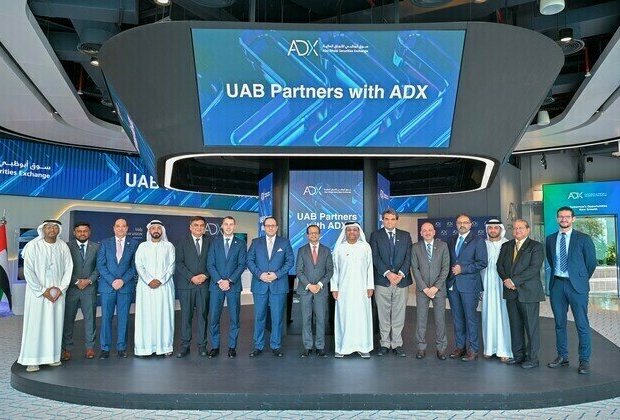
United Arab Bank has formed a strategic alliance with Abu Dhabi Securities Exchange to enable its customers to subscribe for upcoming IPOs through the bank’s digital channels or ADX’s eIPO Investor Portal. This arrangement aims to simplify the process of accessing capital markets, offering a secure and intuitive experience to investors.

At a ceremony held at ADX’s headquarters in Abu Dhabi, the agreement was formalised in the presence of Abdulla Salem Alnuaimi, Group Chief Executive Officer of ADX, and Shirish Bhide, Chief Executive Officer of UAB, alongside senior officials from both organisations.

This collaboration is designed to strengthen UAB’s wealth management proposition by embedding investment opportunities within its digital ecosystem. Customers will now be able to access IPO applications directly via UAB’s mobile application, replacing previously cumbersome procedures with streamlined, guided pathways that enhance transparency and usability.

According to Shirish Bhide, this partnership reflects the bank’s dedication to innovation and long-term value creation. By integrating investment services within UAB’s digital channels, customers gain more inclusive access to the UAE’s capital markets. Abdulla Salnuaimi added that this initiative reaffirms ADX’s aim to enhance the investor experience by collaborating with leading financial institutions and advancing digital solutions.

The move aligns with UAB’s broader digital transformation strategy, as demonstrated by prior efforts such as launching RegPRISM, an AI-powered regulatory intelligence platform developed with Smarbl to improve compliance and operational efficiency.

Further underpinning UAB’s financial robustness is its first-quarter 2025 performance. The bank reported a 49 per cent year-on-year increase in net profit—rising to AED 102 million—driven by growth in assets, loans, Islamic financing, and investments. Capital adequacy remains solid, with a CET1 ratio of 12.6 per cent and a total capital adequacy ratio of 17.1 per cent. Non-performing loans saw improvement from 4.8 per cent to 3.4 per cent, with coverage at 118 per cent.

These financial strengths were in part bolstered by a rights issue completed earlier, which raised around AED 1.03 billion and strengthened UAB’s capital position.

ADX, for its part, continues to pursue innovation in financial market infrastructure. In July, it collaborated with First Abu Dhabi Bank and HSBC to launch the Middle East’s first DLT-based digital bond, reinforcing its frontier role in tokenised finance.

Through this latest agreement, UAB and ADX are promoting a more integrated, accessible investment landscape—blending digital banking and capital markets participation in a manner that could redefine customer expectations and market engagement.

Saudi Aramco is poised to issue U. S.‑dollar denominated sukuk within September in a bid to fortify its financial position amid subdued oil prices. The company aims to raise between $3 billion and $4 billion through Shariah‑compliant bonds, according to insiders familiar with the matter.

Aramco’s timing underscores a strategic response to heightened volatility in oil markets. The company’s dividend payouts remain intact—$21.1 billion in Q2 and still on track for an $85.4 billion annual total—demonstrating a commitment to returns despite pressure on profit margins. The sukuk issuance follows a $5 billion conventional bond sale in May, as indicated by Aramco’s sukuk prospectus filing with the London Stock Exchange on 30 May. That filing allows up to one year for issuance, signalling flexibility in debt deployment.

Despite the fall in crude prices, Aramco’s gearing remains among the lowest in the global oil industry—a point highlighted during the company’s August earnings call. That financial cushion gives it room to tap capital markets when conditions are favourable.

The sukuk issuance aligns with broader Kingdom‑level bond activity. Saudi Arabia has raised $5.5 billion through a dual‑tranche sukuk offering, comprising a $2.25 billion five‑year tranche and a $3.25 billion ten‑year tranche—sold at spreads of 65 bps and 75 bps over U. S. Treasuries respectively, substantially tighter than initial guidance. Investor demand exceeded $17 billion.

Aramco’s anticipated issuance would tap into the same deep liquidity pool, appealing to Islamic finance and ESG‑oriented investors while preserving fiscal discipline. This approach mirrors the Kingdom’s strategy to diversify its funding base and reduce reliance on hydrocarbons. The proceeds are likely to support refinancing, cost‑management efforts, and strategic asset redeployment.

In parallel, measures such as an $11 billion lease‑and‑leaseback deal for Jafurah gas processing assets with a BlackRock‑led consortium, reflect efforts to raise liquidity without reducing shareholder returns. CFO Ziad Al‑Murshed emphasised the aim to “redirect capital away from low‑return assets to core operations” during the earnings briefing.

This financial planning arrives at a time when Aramco continues to face earnings pressure—second‑quarter profit fell by 22 per cent—but the dividend pledge remains firm, maintaining investor confidence.

Football legends and leaders amazed by the city’s dim sum and stunning Victoria Harbour views on top of Hong Kong’s potential as a global sporting hub for industry advancement HONG KONG SAR – Media OutReach Newswire – 4 September 2025 – Hong Kong, has established itself as Asia’s premier showcase for football, having held a series of high-profile events – from Manchester United Tour of Asia 2025 […]

Nigeria has secured a production-sharing contract with TotalEnergies and South Atlantic Petroleum for two deepwater offshore blocks, under a novel legal structure designed to prioritise gas development alongside oil. The agreement spans units PPL 2000 and PPL 2001—a territory of some 2,000 square kilometres in the Niger Delta Basin—and marks Nigeria’s first PSC under its transformative Petroleum Industry Act of 2021. The PIA, enacted in 2021, acknowledges the differing […]

VISHNU RAJA
RYO YAMADA
HITORI GOTOH
IKUYO KITA