Just in:
Democrats capture Senate majority with seven Republican seats // Wired earphones regain buyers as 2016 nostalgia spreads // DIP Holding targets Dh1.12 IPO price and $529m proceeds // xCube Access Welcomes Entrust Capital Limited  Expanding Access to Professional Portfolio Management // As AI Reshapes Education, Singapore Convenes Global Dialogue on the Future of Early Childhood Education // Binance SAFU bitcoin holdings halve after security breach // Vingroup And Legends Global Announce Strategic Partnership For VinFast – Trong Dong Stadium // XRG secures agreement for $1.45bn Australian LNG stake // Assembly ruckus trial begins after 11 years // Bank99 launches business accounts through Austrian postal network // Arrow Electronics showcases technologies advancing intelligent robotics, mobility and digital infrastructure // America On Edge: November 3 Mid Term Polls Outcome May Weaken Trump // Anthropic to prohibit persistent abuse of Claude chatbot // ChatGPT billing fraud deploys rotating sites for card theft // Ondine Capital Announces First Close of Fund III to Drive AI and Semiconductor Innovation // CPI, CPM dispute portrayal of Vayalar uprising leaders // ONYX Hospitality Group Expands Strategic Partnerships through ONYX Rewards // AI trust gap reveals distinct retail priorities: Divergent paths to consumer growth in Hong Kong and the GBA // mamun raises US$3 million to finance cross-border trade between the Gulf and Asia // Winners and losers if a blue wave sweeps US Congress //

News related to
Investment

Abu Dhabi: Financial executives from over 20 Arab countries gathered this week at the newly formed Sanadak unit to examine its dispute-resolution model designed for banks and insurance firms, marking a push by the UAE to raise consumer-protection standards across the region. Sanadak cited engagement with the 50 delegates as an opportunity to showcase how its independent mechanism can serve as a regional benchmark, while participants praised the UAE’s pro-consumer frameworks and stressed transparent regulation as vital for financial trust.

Sanadak operates under the oversight of the Central Bank of the UAE and was established to adjudicate complaints between consumers—or small to medium-sized enterprises—and licensed financial institutions or insurance companies. Its core functions include receiving complaints online or via app, verifying that 15 calendar days have passed from the institution’s response or a lack thereof, and moving the matter into resolution or referral to appeal-committees.

At the gathering, Sanadak emphasised that its role extends beyond the UAE, as the first financially-regulated specialised ombudsman unit in the Middle East and North Africa region. The unit highlighted how its jurisdiction, rules and structure could offer a template for cross-border alignment among Arab states seeking stronger consumer redress in banking and insurance. The discussion touched on the unit’s values of impartiality, accessibility, efficiency and integrity.

The session underscored several key trends: First, financial-services regulators globally are moving toward early-intervention powers, unified licensing for banks and insurers, and forward-looking oversight of fintech and digital-asset services. The UAE’s newly enacted Federal Decree-Law No. 6 of 2025 consolidates banking, finance and insurance regulation and confirms Sanadak’s independent mandate for complaints resolution.

Second, consumer-protection mechanisms are gaining regulatory prominence as market participants cope with rising complexity in product offerings, from digital banking to insurance-linked investment products. Sanadak’s model aims to provide a single portal of access and streamline resolution without resorting to litigation. Officials say this helps build consumer confidence, enhance financial inclusion and strengthen institutional integrity.

Third, regional cooperation and benchmarking among Arab states were highlighted as emerging priorities. Delegates at the meeting emphasised that harmonised complaint-handling standards will bolster cross-border financial activity and investor trust. One delegate observed that adopting a model such as Sanadak’s “sends a strong signal that consumer rights are integral to banking-sector stability”.

Sanadak’s leadership also outlined practical outcomes: the resolution of insurance-sector disputes via permanent committees including independent judges and experts was mandated by Administrative Resolution No. 10-A/1/2024, issued by the Central Bank. That rule establishes minimum timelines, virtual-hearing options and defined fee structures—from AED 100 for fixed-value disputes up to AED 30,000 for higher-value claims.

The initiative aligns with the UAE’s broader ambition — underpinned by its “digital-first” strategy — to present its financial sector as accessible, regulated and globally competitive. Sanadak states its mission to support trust in the financial system and foster financial-inclusion goals through education and accessible redress.

Nonetheless, challenges loom. Ensuring that external, regional institutions adopt the same discipline and that complaints-resolution outcomes are enforceable across jurisdictions remains uncertain. Some financial-services observers caution that consumer-protection frameworks must evolve as digital-asset services proliferate and as cross-border financial activity expands. One expert described the regulatory change as “about future-proofing the UAE’s financial system by ensuring it remains resilient, inclusive and responsive to emerging technologies”.

Dubai’s leadership has approved a landmark three-year fiscal plan totalling AED 302.7 billion in expenditure and AED 329.2 billion in projected revenues for the 2026-2028 period, marking the largest budget cycle in the emirate’s history. The approval came under Law No. 15 of 2025, signed off by His Highness Sheikh Mohammed bin Rashid Al Maktoum in his capacity as Vice-President and Prime Minister of the UAE and […]

Arabian Post Staff -Dubai Saudi Arabian Oil Company has entered preliminary talks to sell stakes in key export and storage terminals and possibly parts of its real-estate portfolio, aiming to raise over US$10 billion in what may become its most substantial disposals to date. The oil giant has invited banks to pitch feasibility studies and is weighing financing options that include equity raises or structures resembling the […]

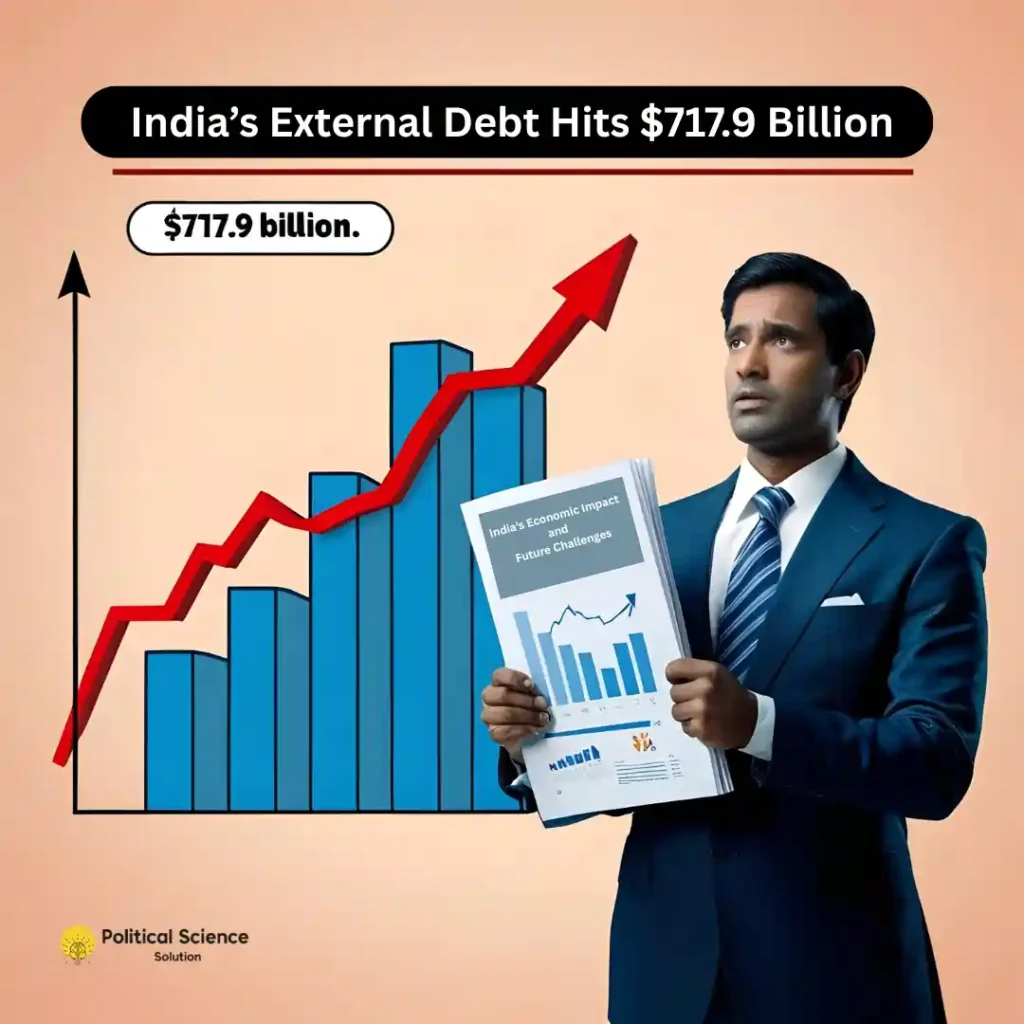
By Nantoo Banerjee The government may disagree but India’s persistent trade deficit is ruining the country’s economy despite its impressive growth. Last month, import-happy India’s trade deficit reached a record high level of US$41 billion as exports witnessed the sharpest monthly decline over a year. Unfortunately, a big surge in gold imports during October by […]

The article Behind India’s Rising Foreign Debt Is Growing Trade Deficit appeared first on Latest India news, analysis and reports on Newspack by India Press Agency).

Tickets will go on public sale on December 4, 2025 MACAU SAR – Media OutReach Newswire – 24 November 2025 – International film star and stand-up comedy icon Jimmy O. Yang is making a triumphant return to Galaxy Macau™, taking centre stage at the Galaxy Arena – Macau’s largest indoor arena – for a spectacular night of laughter in “Galaxy Macau Presents: The Jimmy O. Yang Chinese […]

Abu Dhabi-listed NMDC Energy has launched a full branch in Taiwan and a commercial office in Shanghai, marking a strategic move into the Asia-Pacific region to support its project pipeline and strengthen supply-chain relationships. The company also sealed a memorandum of understanding with CITIC Steel, one of China’s largest steel producers, signalling a concerted effort to lock in reliable sourcing for its energy-services operations. NMDC Energy’s decision […]

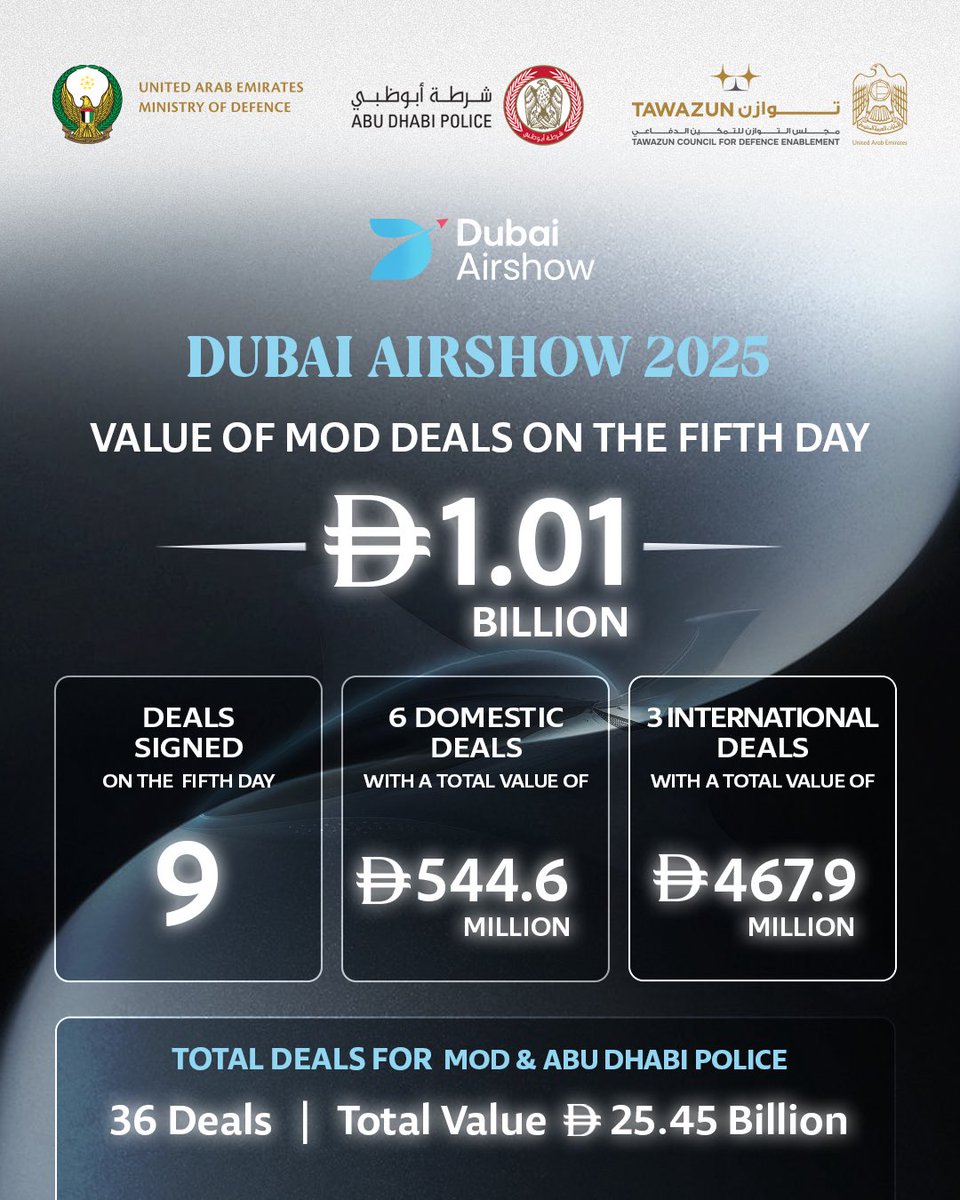
The Tawazun Council for Defence Enablement recorded nine new contracts worth AED 1.012 billion on behalf of the Ministry of Defence on the fifth and final day of the Dubai Airshow 2025, elevating the event’s five-day total to 36 agreements with a cumulative value of AED 25.455 billion.

At a press conference in Dubai attended by spokespersons Majed Ahmed Al Jaberi, Abdulla Ahmed Al Saeedi and Manea Abdulkarim Al Mansoori, the council detailed that six of the final-day contracts, sized at AED 544.675 million, were with local firms, while the balance, AED 467.913 million, involved international companies.

Among the domestic deals, two contracts with the Abu Dhabi-based M4 Trading comprised a AED 57.636 million order for a Grand Control Station and a AED 161.634 million deal for aircraft procurement. A AED 29 million contract went to Al Taif Technical Services Company for cooling-equipment and power-generator maintenance, while MP3 Company secured a AED 154.5 million agreement for aerial-rescue systems and spare parts. International Golden Group received AED 65.905 million for aerial drop systems and AED 76 million went to Abu Dhabi Autonomous Systems Investments for drone procurement.

On the global front, two agreements with Lockheed Martin amounted to AED 184 million and AED 63.551 million respectively for maintenance and spare-parts support. A third contract with Raytheon Technologies was valued at AED 220.362 million for friendly-force identification systems.

Across the event, earlier announcements show the council had already signed 20 contracts worth AED 18.01 billion during the first three days of the airshow. This underlines a consistent pace of deal-making spanning both national and international industrial partners.

The contract portfolio highlights the UAE’s emphasis on building a robust domestic defence-and-security-industrial ecosystem, spanning aircraft systems, drones, radars, simulation and service-support infrastructure. Analysts note this reflects a shift from traditional procurement towards localisation, technology transfer and national capability building.

Tawazun’s officials emphasised that the partnerships frame more than incremental orders; they represent structural steps toward embedding industry in sovereign defence strategy. Ms Mansoori observed that the council “continues to foster a competitive and enabling environment for the private sector” and that the outcomes achieved through the airshow “reflect the UAE’s vision of developing an integrated, innovative and strategically driven defence and security sector.”

While the headline figure of AED 25.455 billion positions Dubai Airshow 2025 among the region’s most commercially active defence gatherings, some independent observers caution that the true measure of success will rest on execution, delivery timelines and domestic-industry uptake. Questions remain about how many contracts include meaningful offsets, R&D components and long-term local value-creation versus straightforward procurement.

Nevertheless, the event’s records reinforce Dubai’s growing role as a hub for aerospace-defence engagement, with deals touching both military and dual-use capabilities. Compared with earlier editions, this year’s flow involves a higher proportion of contracts that combine hardware, maintenance-services and technology-transfer features — signalling deeper industrial ambition rather than purely kit acquisition.

The spread of contract-values — from tens of millions of dirhams for niche specialised systems to multi-hundred-million agreements with global primes — reveals a multipronged strategy. Domestic SMEs are being drawn into the supply chain alongside major established defence-sector players, thereby diversifying participation and reducing reliance on external supply.

As the UAE moves ahead with its national defence-industrial roadmap, the final-day flurry of deals from Tawazun brings the focus firmly onto the implementation phase of those agreements and the strategic partnerships that will underpin them over the coming years.

Advertisements

Arabian Post Staff -Dubai A major Abu Dhabi conglomerate has confirmed that it has formally expressed interest in acquiring overseas assets of a large Russian oil group, aligning with other global energy players eyeing the same prize. International Holding Company said it has notified the U. S. Treasury Department of its interest in buying foreign-based assets of Lukoil, placing it in active contention alongside the likes of […]

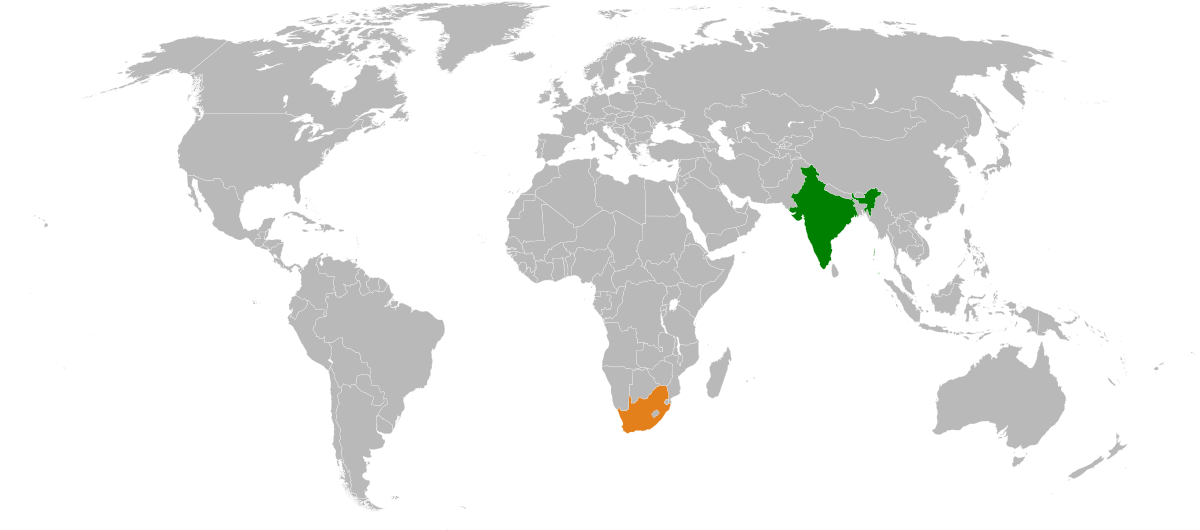
Leaders of India and South Africa affirmed a joint commitment to amplify the resonance of the Global South during a bilateral meeting on the margins of the G20 summit in Johannesburg. India’s Prime Minister met South African President Cyril Ramaphosa to review an expanding partnership that now encompasses trade, digital infrastructure and critical-minerals cooperation.

The leaders emphasised the historical foundation of bilateral ties, tracing back to shared anti-colonial struggles and longstanding people-to-people links. They identified emerging sectors of collaboration, including artificial intelligence and digital public platforms, as well as enhanced investment flows across innovation, infrastructure and mining sectors.

India expressed gratitude to South Africa for its role in relocating cheetahs to India and extended an invitation for South Africa to join the International Big Cat Alliance. At the G20 held in Johannesburg, which is the first summit of its kind hosted on African soil, South Africa has sought to spotlight issues of development, sustainability and Global South equity.

The two countries signalled their readiness to facilitate mutual investments, noting the growing footprint of Indian firms in South Africa and a shared interest in deepening bilateral ties in mining, start-ups, technology and infrastructure. They agreed to enhance support frameworks for these sectors.

In the domain of digital transformation, the meeting explored ways in which India’s Digital Public Infrastructure experience could be shared with South Africa, with the leaders discussing a roadmap for cooperation in those digital arenas that support transparency, inclusion and scalability.

On critical minerals—the backbone of technologies from electric vehicles to renewable energy systems—the dialogue underscored the strategic convergence of India’s growth ambitions and South Africa’s resource endowment. Both governments emphasised sustainable extraction, value-chain development and mutual investment as priorities.

The meeting also took place against the backdrop of global institutional reform debates, where developing countries increasingly seek to adjust frameworks such as the IMF and development banks. South Africa, as serving G20 chair, has framed its presidency around the themes of solidarity, equality and sustainability, particularly as representative of countries in the Global South.

While the two leaders concentrated on bilateral priorities, they also discussed multilateral coordination and collective platforms. They welcomed South Africa’s initiative to convene the IBSA leaders meeting and affirmed cooperation ahead of India’s upcoming chairship of BRICS in 2026.

Observers note that India–South Africa ties have evolved from traditional trade and diplomacy to a more strategic convergence around technology, investment, and global governance. According to experts, this shift reflects the changing priorities of middle powers in a multipolar world, where alignment on development and technological sovereignty is rising.

However, there remain practical challenges. For South Africa, translating resource-rich endowments into sustainable, inclusive growth has long been a domestic policy hurdle. For India, ensuring that digital partnerships respect both sovereignty and local capacity presents implementation risks. Critics argue that while high-level pledges are valuable, they must be matched by concrete mechanisms, regulatory clarity and project-level follow-through.

In trade terms, the two countries’ discussions come at a time when global supply-chain realignments and technology competition are raising the stakes for investment in emerging markets. Indian companies entering South Africa will need to navigate regulatory complexity, local participation requirements and the country’s infrastructure bottlenecks. South Africa, for its part, will have to ensure that its mining and start-up ecosystem attract and retain investment while meeting environmental and community benchmarks.

The diplomatic messaging also signals a broader orientation for both nations. India’s engagement with Africa has increasingly focused on capacity-building and infrastructure, while South Africa has positioned itself as a voice for Africa in global forums. Their joint push to amplify the Global South suggests an intention to influence agendas around debt relief, climate finance, digital equity and reform of global institutions.

The Fund offers a flexible revenue-share token, unlocking AI infrastructure access from US$1,000 HONG KONG SAR – Media OutReach Newswire – 23 November 2025 – Pioneer Asset Management Limited (“Pioneer“), a subsidiary of Tykhe Capital Group Limited (“Tykhe Capital“), a leading Real-World Asset (RWA) and Security Token Offering (STO) innovator in the Asia-Pacific region and Skyvast Digital Sdn. Bhd. (“Skyvast“), today announced the launch of the world’s […]

By R. Suryamurthy India’s student mobility crisis is no longer a question of data, it is an indictment of a system that has refused to reform while the world moved on. The new NITI Aayog paper does not so much analyse this imbalance as expose it. The numbers are brutal: for every foreign student who […]

The article India’s Higher-Education System Is Driving Students Out — Not Bringing The World In appeared first on Latest India news, analysis and reports on Newspack by India Press Agency).

Abu Dhabi’s infrastructure expansion enters an ambitious phase with the Abu Dhabi Projects and Infrastructure Centre announcing a capital-projects pipeline valued at US$54 billion over the next five years, and ambitions to double the size of this programme by 2040. Officials described the initiative as a broad invitation to overseas and regional contractors to engage in major new developments spanning housing and social infrastructure. During a road-show […]

The U. S. Commerce Department has authorised the export of advanced artificial-intelligence semiconductors to two Middle Eastern firms, granting licences for each to procure up to 35,000 units of Nvidia’s Blackwell chips. The approvals apply to G42 of the United Arab Emirates and Humain of Saudi Arabia, representing a significant shift in America’s technology-export policy. The licences impose stringent conditions: both companies must adhere to rigorous security […]

Arabian Post Staff -Dubai During a private audience at the Vatican, Pope Francis offered high praise for the United Arab Emirates, describing the country as a “global model” for promoting the values of coexistence and human fraternity. He underlined the readiness of the Holy See to deepen cooperation with the Higher Committee of Human Fraternity, an initiative rooted in the landmark February 2019 document on human fraternity. […]

The Abu Dhabi Securities Exchange has marked its 25th year, standing today as one of the world’s top 20 stock markets by market value. Founded in 2000 with just 12 listed companies, the exchange now hosts more than 200 securities, carries a market capitalisation in excess of AED 3 trillion and counts 1.2 million investors drawn from over 200 nationalities. This milestone comes as the ADX embarks […]

Many homeowners dream of turning a patio, garden, or balcony into a cozy open-air retreat. Yet in reality, these spaces often go underused. In fact, a 2024 survey by the International Casual Furnishings Association found that only 18% of people utilize their outdoor living areas as much as they’d like, but 94% said they would spend more time outside after updating their furniture and décor. This shows how quality, comfortable furnishings can transform a patio or deck […]

Valetax marked a major milestone with a powerful presence at Jeddah Fintech Week 2025, held on 16 and 17 November at the Jeddah Hilton Hotel. As the Official Sponsor, the company delivered an impactful showcase that strengthened its relationships with traders, partners, and fintech professionals while reaffirming its long-term commitment to innovation, transparency, and partnership-driven growth across the MENA region.   This year’s edition of Jeddah Fintech […]

First Abu Dhabi Bank has mandated a group of global and regional banks to arrange investor calls on Wednesday, 19 November, signalling the preparation of a benchmark USD-denominated Additional Tier 1 capital issuance. The Abu Dhabi-based lender, rated Aa3 by Moody’s and AA- by both S&P and Fitch, is targeting a fixed-rate, resettable perpetual instrument with a non-call six-year structure, expected to be rated Baa3 by Moody’s, subject to market conditions.

FAB has appointed Abu Dhabi Commercial Bank, Barclays, Emirates NBD Capital, itself, HSBC and Standard Chartered Bank as joint lead managers and bookrunners for the issuance, reflecting a strong syndicate backing. According to institutional-market briefings, the period of investor calls is intended to gauge pricing, demand, and issuance size ahead of launch.

This move marks FAB’s first benchmark AT1 issuance in approximately five years and comes as the bank seeks to bolster its capital buffer amid evolving regulatory expectations. Market-specialist commentary notes that such securities serve a dual purpose: providing permanent capital that counts towards Tier 1 regulatory ratios while offering issuers the flexibility of a call option after a set period — in this case six years — to redeem, subject to certain conditions.

FAB’s prior issuance of a senior green bond earlier this month — a €850 million deal priced at mid-swaps plus 70 basis points after opening at plus 100 basis points — underlined its readiness to access capital markets. That deal illustrated investor appetite for the bank’s funding instruments and the bank’s willingness to tap diverse instruments and jurisdictions. The proposed AT1 issuance broadens FAB’s capital-raising toolkit further.

In assigning an expected rating of Baa3 by Moody’s for the proposed issue, the bank is effectively targeting the lowest investment-grade category from that agency for this level of instrument. Such ratings reflect the subordinated nature of AT1 securities; they rank lower than senior debt in the creditor hierarchy and often incorporate features such as coupon discretion and loss-absorption mechanisms — factors that carry higher credit risk for investors compared to senior bonds.

Emerging-markets commentators note that demand for Gulf-region AT1 securities has been relatively scant over the past year as investors have weighed macro-economic headwinds, rising interest-rate environments and regulatory adjustments. The Gulf region’s total primary issuance of bonds and sukuk for the first quarter of the year was reported at USD 51.5 billion, down from USD 55.5 billion in the same period a year prior; within this, financial-institution capital instruments formed a subset of activity. Nevertheless, select banks continue to tap issuance windows that align with investor sentiment.

For FAB, the timing appears strategic: the bank’s common equity Tier 1 ratio stands at 13.7 per cent — a figure comfortably above its internal threshold of 13.5 per cent but lower than the 14.3 per cent recorded a year earlier. This suggests room for issuing capital-absorption securities like AT1 to reinforce buffers without triggering market concern. Regulatory changes also loom: UAE banks are due to face a 50-basis-point increase in the counter-cyclical buffer next year, which will raise total capital requirements and heighten the capital-management imperative.

Investor calls scheduled on 19 November are expected to cover structuring options, timing of launch, target size and investor syndication. Initial market commentary anticipates that FAB may aim for a headline size in the region of USD 750 million — consistent with its last AT1 benchmark in 2020 — although precise sizing will hinge on demand and market dynamics.

The joint bookrunners assemble a strong global footprint: Barclays, HSBC and Standard Chartered provide global investor access while Emirates NBD Capital and Abu Dhabi Commercial Bank offer regional distribution strength. That reflects FAB’s dual aim of tapping both GCC-based and international institutional investors. Market observers believe that if oversubscription builds, pricing could tighten relative to initial guidance and the syndicate may consider increasing sizing accordingly.

US-based artificial intelligence firm Luma AI has secured a $900 million Series C funding round led by Saudi-backed HUMAIN, the AI venture owned by the kingdom’s sovereign wealth fund, the Public Investment Fund. Participation also came from AMD Ventures and existing investors including Andreessen Horowitz, Amplify Partners and Matrix Partners. The funding is part of a broader strategy to advance multimodal artificial general intelligence capable of generating, interpreting and interacting with the physical world.

Luma AI’s valuation following the round is estimated at over $4 billion, underscoring the intense competition among frontier AI firms. The company specialises in “world models” that integrate video, audio, image and language to drive applications in robotics, simulation, advertising, gaming and personalised education. CEO Amit Jain described the aim as training systems on “a quadrillion tokens” of multimedia data to move beyond current large-language-model architectures.

HUMAIN, having positioned itself as a global full-stack AI player, will use the funding partnership to anchor its compute infrastructure ambitions. The joint roadmap includes the rollout of what HUMAIN terms “Project Halo” — a super-cluster targeting up to 2 gigawatts of AI compute capacity in the kingdom. Luma AI will become a key customer of this infrastructure.

The funding and infrastructure build-out reflect a strategic shift in Saudi Arabia’s economic diversification efforts. Under the leadership of Mohammed bin Salman, the PIF is deepening commitments to AI and high-performance computing as pillars of its wider Vision 2030 agenda. Luma AI’s partnership becomes a vehicle for exportable AI capabilities and for strengthening the kingdom’s position in the global tech ecosystem.

From Luma AI’s perspective, the capital infusion and access to sovereign-scale compute represent a strategic lever to accelerate development of next-generation models. In entertainment and creative industries the company already claims traction: its Ray3 reasoning video model has been embedded within major platforms. The new funding will allow expansion into simulation, robotics and immersive media. Jain asserted that only by integrating systems and infrastructure at scale can models “understand and simulate the universe”.

For HUMAIN the deal accomplishes several objectives: securing a marquee US AI partner, anchoring compute commitments, and beginning commercial deployments of its planned AI infrastructure. The first phase of the accompanying joint venture with Cisco Systems and AMD will deliver a 100-megawatt data-centre cluster in Saudi Arabia, fully subscribed by Luma AI, with construction scheduled to begin in 2026 and renewable energy powering the facility.

The global implications are significant. With Asia, Europe, India, the Middle East and Africa identified as target markets-worth an estimated 4.5 billion people-the infrastructure build-out promises to reshape the geography of AI training and inference. HUMAIN’s model seeks to challenge the dominance of US- and China-based AI supply chains.

Challenges remain. Developing multimodal AGI is widely acknowledged as highly complex, with technical risks, high compute costs and uncertain commercial timelines. Critics highlight concerns about geopolitical dependencies in AI infrastructure and the ethical implications of deploying models trained on vast multimedia datasets. The Saudi-US dimension adds further scrutiny given strategic sensitivities around data, export controls and digital sovereignty.

Dubai-based upstream operator Dragon Oil has announced a major new oil discovery offshore Egypt’s Gulf of Suez, a development that industry watchers say could underpin its ambition to boost production significantly by 2026. The company, a unit of Emirates National Oil Company, made the find at its North-East Ramadan Concession, reaching a total depth of 13,425 feet to intersect the Crystal NER-1X reservoir in the Honey Sand formation. Initial wireline logs confirmed a 224-foot hydrocarbon column, indicating meaningful commercial potential.

The well was drilled under the company’s commitment agreement in the NE Ramadan concession in partnership with Egypt’s Egyptian General Petroleum Corporation and the Gulf of Suez Petroleum Company. The pair of state-owned Egyptian entities jointly operate with Dragon Oil in the concession. The flow to production is projected at around 3,000 barrels per day once the well is tied into existing infrastructure. Final wireline logging, core sampling and reservoir evaluation are underway before full integration into the production grid scheduled for July.

The discovery supports Dragon Oil’s longer-term plan to raise output from its current base of more than 140,000 barrels of oil per day and achieve an aggregate target of roughly 300,000 barrels of oil equivalent per day by 2026, according to the company’s investor materials. The Gulf of Suez investment follows earlier gains from assets in Turkmenistan, Iraq and Algeria. Additionally, the firm signed a strategic memorandum of understanding with PETRONAS in late October to explore upstream growth opportunities in Asia-Pacific and other frontier regions, signalling a willingness to pursue both organic and acquisition-driven expansion.

In Turkmenistan, Dragon Oil expects production to rise to approximately 200,000 bopd by 2030, leveraging digital-technology programmes such as artificial-intelligence-enabled reservoir modelling and real-time monitoring. The company has invested more than US$11 billion in the country’s oil sector since the production-sharing agreement began in 1999 and has added more than 200 social-development projects in local regions. That upstream base remains a pillar of its global growth model.

Analysts say the Egyptian find is particularly significant because it taps an under-developed offshore domain using advanced Ocean-Bottom Node seismic technology that identified the Honey Sand formation. The drilling from the existing Al-Fanar platform avoided major new infrastructure investment, improving cost efficiency and time to tie-in. The fact that Dragon Oil already holds the working interest via its GUPCO joint venture means it can fast-track upstream investment and production.

Nevertheless, a number of risks remain. The Egyptian concession still requires commercial validation of reservoir behaviour and sustained flow testing; many wells encounter initial signs of hydrocarbons but fail to deliver long-term viability. The broader upstream industry is also under increasing pressure from the energy-transition agenda and environmental-regulation developments. Investors and stakeholders will watch closely how Dragon Oil balances growth ambitions with the demands of sustainability, given the global shift away from fossil fuels.

Company leadership emphasises that the teamwork between its Dubai and Cairo operations, together with EGPC and GUPCO partners, reflects a mature technical capability that bodes well for further exploration success. Chief Executive Abdulkarim Ahmed Al Maazmi said the technical result “demonstrates the strength of our technical partnership and underlines our vision to unlock new opportunities across our assets in Egypt.”

Regionally, the Gulf of Suez has been a mature producing basin, yet the new find suggests there remains untapped potential when combined with modern subsurface imaging and drilling techniques. Some energy-sector commentators believe the discovery could encourage other operators to revisit older fields or deeper formations, heightening competition.

Production at the Volkswagen Group Africa facility in Kariega, Eastern Cape, has surpassed two million units of the Volkswagen Polo, marking a significant achievement for the plant and the region’s automotive sector. The milestone vehicle, a smoky-grey model destined for Australia, rolled off the production line earlier this month, underlining the global scope of manufacturing at the site. The factory, known as the “Home of Polo”, began […]

The partnership with Visa makes the OCBC app the most connected banking app in the region with coverage of 10 digital wallets SINGAPORE – Media OutReach Newswire – 20 November 2025 – OCBC customers in Singapore can now transfer money directly from their OCBC bank accounts to eight leading digital wallets across Indonesia, Malaysia, the Philippines, and Vietnam via the OCBC app. This expansion builds on last […]

By Dr. Gyan Pathak By the Day 9 November 18, the COP30at Belem (Amazonia) under the Brazilian Presidency recorded several achievements, but the two key issues still remain sticking points – financing the climate action, and clear roadmap for phasing out of fossil fuels. We have now three days to go until the last day […]

The article COP30 So Far Have Some Achievements, But Finance Remains A Sticking Point appeared first on Latest India news, analysis and reports on Newspack by India Press Agency).

Apple Inc’s Chief Executive, Tim Cook, declared his confidence that China will surpass the United States as the company’s leading market, signalling a major strategic shift in the iPhone-maker’s global priorities. In a Beijing meeting with China’s Minister for Industry and Information Technology, Jin Zhuanglong, Cook pledged to deepen Apple’s investment in the country and underscored its significance to the firm’s long-term supply-chain and innovation plans. Cook’s […]

VISHNU RAJA
RYO YAMADA
HITORI GOTOH
IKUYO KITA