News related to
Singapore

House of Doge has struck a partnership with Paxos to place Dogecoin on regulated brokerage and custody infrastructure used by major financial technology platforms, marking a fresh push to move the meme-origin cryptocurrency deeper into mainstream digital asset services. The agreement, announced on June 1, 2026, will integrate DOGE into Paxos’s enterprise crypto platform, allowing Paxos clients to offer buying, selling, holding and transfer functions for the […]

SINGAPORE – Media OutReach Newswire – 3 June 2026 – Handshake Finance, the Singapore-based fintech company building escrow-as-a-service infrastructure for high-trust service industries, has closed a S$500,000 pre-seed funding round. The capital will accelerate the company’s expansion across its beachhead renovation and interior design market in Singapore, with longer-term ambitions to extend its platform across other service industries where payment trust remains a structural problem.

Handshake Finance Founders Christopher Chan (Left) and Lee Jun Xian (Right)

Born From Personal Experience

Handshake Finance launched in September 2025, founded by Christopher Chan and Lee Jun Xian. Both had seen the trust gap up close.

Jun’s close friend lost S$80,000 in pre-payments to a renovation company that collapsed mid-project. At the same time, Christopher’s friend paid a deposit on a rental home she had never viewed, only to discover the listing was fraudulent. Both incidents pointed to the same structural failure: in service industries, someone always carries the risk, and when trust breaks down, there is little recourse on either side.

The two founders met as university classmates in London and returned to the problem with complementary backgrounds. Christopher Chan had spent his career in fintech, designing compliant payment flows on regulated infrastructure. Lee Jun Xian came from venture capital, with experience scaling early-stage companies from zero to one.

Trust as the foundation, not the feature

Handshake operates on bank-grade payment infrastructure provided by MAS-regulated partners. All payment flows are fully MAS regulated, and funds are held with DBS in segregated escrow accounts. For the founders, this is not a checkbox — it is the entire foundation of the business.

“We are trying to solve a structural trust gap in service industries. But before any of that, our users have to trust us,” said Christopher Chan, Co-Founder of Handshake Finance. “Making sure every fund flow is fully compliant, and that our users feel completely assured handing us money in what are often life-changing transactions, is our number one priority. Everything else is built on top of that.”

Closing the Trust Gap Across Service Industries

Every high-trust service transaction carries the same structural flaw: either the customer pays before work is done, or the provider works before getting paid. Someone always carries the risk. Across industries — from renovation and interior design to event planning, creative agencies, and professional services — that risk falls entirely on one side, and when trust breaks down, there is little recourse for either party.

Handshake Finance was built to close that gap. The platform holds customer funds in escrow and releases them to service providers against agreed milestones, giving buyers protection from pre-payment risk while giving service providers the confidence to deliver. The model is designed to work across any service industry where the payment trust problem exists.

Why Renovation and Interior Design Is Handshake’s Beachhead Market

Renovation was where the structural failure ran deepest. The industry operates with no mandatory licensing or regulatory framework. Anyone can set up as an interior designer with no accreditation required, leaving homeowners with no reliable way to assess accountability before signing a contract.

There is no standard payment framework either. Homeowners routinely pay up to 50% of the total project value upfront, with funds going directly to the interior designer before any work begins. If a project stalls or a firm shuts down, there is limited protection and recourse. At the other end of the project, interior designers face the opposite problem: the final handover payment, where homeowners hold most of the leverage, can be withheld over disputes that wipe out up to half a project’s margin.

Eight Months of Listening Before a Single Line of Code

Before writing any software, the Handshake team spent eight months speaking with more than 80 interior designers and homeowners across Singapore to understand the real frictions on both sides of the transaction. What they found reinforced the decision to start here: high transaction values, a broken payment norm, an unregulated supply side, and no existing platform that protected both parties.

That research shaped how the product was built. After a renovation contract is signed, Handshake’s AI automatically generates the transaction structure with line items, payment schedules, and sub-milestones set out clearly to remove ambiguity. Homeowners place funds into escrow rather than paying upfront directly to the interior designer.

Payment releases to the designer as work progresses against agreed milestones, with sub-milestone releases providing faster cashflow access without compromising homeowner protection. The platform also replaces the manual spreadsheet-based back-office admin most interior design firms still run, and offers complimentary mediation and independent assessments in the event of a dispute.

More than 40 Interior Design Companies Onboarded and 2 Major Partnerships Signed

Handshake now has more than 40 interior design companies onboarded. The company has signed partnerships with Renonation.sg and Network SG, two of Singapore’s most established renovation marketplaces, to drive awareness and adoption across the broader ecosystem.

“It is an incredible feeling to see this much support behind us, and we are excited about what is ahead,” said Lee Jun Xian, Co-Founder of Handshake Finance. “We are industry-agnostic by design, but we are laser-focused on fixing renovation first. The scams that are still everyday occurrences in this space need to go, and the transactional experience for everyone involved needs to be better before we turn our attention to the next industry or market.”

Homeowners and interior designers can learn more or request access at handshake.finance.

Hashtag: #HandshakeFinance

The issuer is solely responsible for the content of this announcement.

About Handshake Finance

Handshake Finance is a Singapore-based fintech building escrow-as-a-service infrastructure for high-trust service industries. The platform holds customer funds in segregated escrow accounts and releases them against agreed milestones, protecting buyers from pre-payment risk while giving service providers the confidence to deliver. All payment flows are fully MAS regulated. Funds are held with DBS. Handshake is currently focused on Singapore’s renovation and interior design market as its beachhead, with plans to expand across other service industries and Southeast Asia.

  • FOMO Pay merchants in Singapore will soon be able to accept DuitNow QR payments, enabling Malaysian travellers and visitors to pay using familiar home-country banking and payment applications.
  • The rollout comes ahead of the Johor Bahru–Singapore RTS Link, expected to carry up to 40,000 passengers daily upon launch in January 2027.
SINGAPORE – Media OutReach Newswire – 3 June 2026 – FOMO Pay, a leading Singapore-headquartered payment institution, will launch DuitNow QR acceptance in Singapore, enabling Malaysian travellers and visitors to make payments using familiar banking and payment applications while merchants receive settlement in Singapore Dollars (SGD).
The rollout comes ahead of the opening of the Johor Bahru–Singapore Rapid Transit System (RTS) Link in January 2027, a landmark infrastructure project expected to carry up to 40,000 passengers daily. The rail link is expected to further strengthen travel and consumer activity between Singapore and Malaysia.

Supporting Singapore Merchants with Growing Malaysian Visitor Traffic
As travel between Singapore and Malaysia continues to increase, merchants are seeing a growing demand for payment experiences that are frictionless to regional consumers.
By enabling DuitNow QR acceptance in Singapore, FOMO Pay allows Malaysian visitors to pay using their local banking and payment apps in Malaysian Ringgit (MYR), while Singapore merchants receive full settlement in SGD. The rollout will simplify payment acceptance for merchants, removing the need for separate payment setups or manual foreign currency handling.
As cross-border consumer traffic continues to grow, seamless payment experiences are expected to play an increasingly important role in shaping consumer confidence and purchase behaviour, particularly in retail, dining, and lifestyle environments.

Enhancing Cross-Border Payment Experiences

“Cross-border commerce is no longer limited to large enterprises or international brands. Increasingly, everyday businesses are serving consumers who move frequently across markets,” said Rose Wang, Head of Digital Payments at FOMO Pay. “As travel and consumer movement across Southeast Asia becomes increasingly fluid, real-time payment rails like DuitNow are fast becoming part of the infrastructure powering everyday regional commerce. Enabling DuitNow QR acceptance in Singapore helps merchants better connect with Malaysian consumers in ways that feel natural to how they already transact in their daily lives.”
The rollout marks another step in FOMO Pay’s broader efforts to help merchants access Asia’s growing network of national instant payment systems through a unified multi-rail, multi-currency platform, better supporting increasingly cross-border consumer spending across the region.

Hashtag: #DigitalPayment #DigitalBanking #DigitalAsset #FinTech #AI


The issuer is solely responsible for the content of this announcement.

About FOMO Pay

Founded in 2015, FOMO Pay is a payment institution licensed in Singapore, Hong Kong and the Middle East. The firm has become a leading one-stop digital payment, digital banking, and digital asset solution provider. It is currently building Asia’s fully licensed financial platform, helping institutions and businesses connect between traditional and next-generation financial services. The firm offers its three flagship products:
* FOMO Payment – One-stop digital payment solution for merchants, corporates and financial institutions
* FOMO iBiz – Facilitate businesses’ everyday requirements for transactional banking needs
* FOMO Treasury – Corporate cash management and investment solutions for liquidity optimization and earning yield
Visit for more information. For media inquiries, contact .

Qatar Investment Authority has raised its exposure to Anthropic by joining the artificial intelligence company’s $65 billion Series H financing, marking its third consecutive investment in the Claude maker and signalling a deeper Gulf move into frontier AI infrastructure, enterprise software and advanced computing. The Series H round values Anthropic at $965 billion post-money, placing the San Francisco-based company among the most highly valued private technology groups […]

Between 2018 and 2023, Dr Ivan Puah treated over 550 cases, addressing unique challenges in Singapore’s multi-ethnic population. His study included diverse case profiles. Results revealing no complications and high satisfaction prove the need to adapt surgical techniques for variations in skin type between Asian and Caucasian patients.

SINGAPORE – Media OutReach Newswire – 3 June 2026 – The evaluation and management of surgical treatment for gynecomastia primarily focus on Western populations. However, Amaris B. Clinic’s decades of experience in Singapore highlight specific considerations for Asian patients.

Dr Ivan Puah, Medical Director at Amaris B. Clinic and the lead researcher on a recent study, has offered new insights into treating gynecomastia, a condition characterised by male breast enlargement, in Singapore.

The research paper titled ‘Surgical Management of Gynecomastia in Asian Men – Clinical Experience and Considerations for Different Patient Types’ provides detailed, important considerations, including the management of the consultation process, addressing varying patient expectations, and tackling the surgical aspects necessary to achieve desired aesthetic outcomes.

Between 2018 and 2023, Dr Puah treated over 550 cases at Amaris B. Clinic and presented six representative patient cases that illustrate the demographics and unique challenges faced by this multi-ethnic Asian population.

The typical patient profiles included obese, overweight, and lean adults, as well as adolescents. Common causes of gynecomastia observed in the patients included hormonal changes during puberty, drug-induced gynecomastia from anabolic steroids, and conditions related to weight loss.

Dr Puah’s proprietary surgical methods involve making a single incision along the areola to minimise scar visibility while effectively excising glandular tissue, performing liposuction to remove excess fat, and tightening the chest skin.

Six case studies of diverse gynecomastia patient profiles

Gynecomastia Grade Demographic Profile
Grade II 17-year-old Chinese
  • A history of bilateral breast enlargement since 13 years-old
Grade II 18-year-old Chinese
  • A history of bilateral breast enlargement since 12 years-old
Grade II 22-year-old Malay
  • Using anabolic hormone supplements for bodybuilding for 4 years
Grade II 46-year-old Chinese
  • Took anabolic steroids for 5 years
Grade IV 28-year-old Chinese
  • Overweight since childhood
  • No reduction in breast enlargement despite losing weight
  • Skin laxity present
Grade IV 21-year-old Indian
  • Overweight since childhood
  • No reduction in breast enlargement despite losing weight
  • Skin laxity present

At the 3-month follow-up after surgery, 5 of 6 patients reported no complications, highlighting the effectiveness of the tailored surgical approach. They expressed high satisfaction with the aesthetic results of the procedure, rating it a perfect 7 out of 7, and reported relief from emotional distress.

Only one patient experienced mild keloid formation at the edges of both areolae where incisions were made, which were not easily noticeable, and reported no complications or dissatisfaction.

Dr Ivan Puah emphasises, “It is important to adapt surgical techniques to address issues such as scarring and hyperpigmentation, which can be more pronounced in Asian patients due to their skin types. The differences in skin quality and glandular tissue characteristics between Asian and Caucasian patients with gynecomastia necessitate distinctions in treatment planning, particularly regarding careful incision placement.”

The full paper is available via World Journal of Plastic Surgery at https://pmc.ncbi.nlm.nih.gov/articles/PMC12843043/


The issuer is solely responsible for the content of this announcement.

ABOUT AMARIS B. CLINIC

Amaris B. Clinic, established in 2004 in Singapore and led by Dr Ivan Puah, focusing on medical aesthetics and cosmetic surgery.

The clinic offers facial and body sculpting services such as liposuction, gynecomastia surgery, and fat grafting, as well as non-surgical treatments like Ultherapy Prime, biostimulator injections, and hair loss therapy.

Amaris B. Clinic’s Signature Treatments

ABOUT DR IVAN PUAH

Dr Puah, an MOH-accredited liposuction doctor with extensive training in various cosmetic procedures, is committed to providing personalised care with an artful eye and proven medical techniques.

  • Dedicated surgical training in gynecomastia surgery in San Francisco
  • Chairman of the Lipo Peer Review Committee in Singapore
  • Trained in Vaser liposuction (fundamental and hi-definition) in Colorado and Argentina
  • Trained in syringe liposculpture, fat grafting, and thread lift from renowned French plastic surgeon, Dr Pierre Francois Fournier
  • Appointed trainer by Allergan and Merz for fellow doctors on cosmetic injectables
  • Designated trainer for PDO thread lift and Picolaser from Venusys Medical
  • Graduate Diploma in Family Dermatology from NUS
  • Graduate Diploma in Acupuncture from TCMB
  • Graduate Diploma in Sports Medicine from LKCMedicine, NTU

Advancing Research Commercialization and Building a Vibrant I&T Ecosystem

HONG KONG SAR – Media OutReach Newswire – 2 June 2026 – The Hong Kong University of Science and Technology (HKUST) today successfully hosted its annual “Unicorn Day,” one of Hong Kong’s flagship innovation and entrepreneurship events. The event brought together over 1,800 participants, including students, faculty, and alumni, as well as international and local government representatives, industry partners, investors, innovation and technology entrepreneurs, and researchers. Participants exchanged insights on strategies to strengthen collaboration across the innovation ecosystem, foster cross-disciplinary partnerships, and accelerate the translation of research outcomes into real-world impact.

The event was officiated by Prof. SUN Dong, Secretary for Innovation, Technology and Industry of the HKSAR Government, alongside consuls-generals and senior officials from countries including Australia, Chile, France, Hungary, India, Japan, Malaysia, the Netherlands, Vietnam, and the United Arab Emirates. They were joined by Prof. Nancy IP, HKUST President; Prof. Lionel NI, HKUST (Guangzhou) President; and Prof. Tim CHENG, HKUST Vice-President for Research and Development; in touring over 100 HKUST-nurtured startups, showcasing innovations and applications spanning areas such as healthcare, electronics, and artificial intelligence systems, as well as new materials, green energy, and sustainability.

Prof. Sun Dong remarked, “Innovation and technology (I&T) has always been at the top of the Hong Kong SAR Government’s agenda. We fully recognise the crucial role of local universities — not only as key partners, but as the bedrock of Hong Kong’s I&T ecosystem. In just three and a half decades, HKUST has risen to become a global powerhouse in deep tech, entrepreneurship, and innovation as demonstrated by its ability to nurture unicorns and deep-tech ventures. Hong Kong is entering a golden era of I&T development. We are building new engines to drive Hong Kong’s high-quality development, focusing on research and development in key fields and leading industry applications. I am confident that Hong Kong will rise as a leading international I&T center and contribute meaningfully to our nation’s high-quality development, and that HKUST will continue to be a driving force in this amazing journey.”

President Ip said, “As we mark the 35th anniversary of HKUST this year, we also celebrate the spirit of innovation and entrepreneurship that has long been embedded in our DNA. Both the Technology Transfer Center and the Entrepreneurship Center were established in the University’s early years to support faculty and students in realizing their entrepreneurial aspirations and to promote the translation of research outcomes into practical solutions. Over the past 35 years, the University has forged ahead with determination, sowing the seeds of innovation and yielding remarkable achievements across multiple frontier fields. Today, HKUST continues to broaden its horizons, strategically positioning itself in key domains. One example is medical education. The establishment of the HKUST Medical School will integrate the life sciences with cutting-edge technologies to nurture a new generation of interdisciplinary medical professionals.

Concurrently, HKUST has been actively involved in national initiatives such as the Chang’E 8 lunar exploration mission and research projects for the Tiangong Space Station, and the launch of the first commercially viable aerospace project under the RAISe+ Scheme. These achievements exemplify HKUST’s enduring ‘can do’ spirit over the past decades and echo the theme of today’s event—’From Ideas to Miracles—35 Years of Impact and Beyond’. Looking ahead, HKUST will continue to nurture bold ideas and action, working hand in hand with partners across different sectors to cultivate a vibrant innovation ecosystem, ensuring that research achievements benefit society and create lasting global impact.”

To support startups in expanding into global markets and to promote cross-border collaboration, HKUST introduced an “International Pavilion,” featuring startups and innovation organizations from various countries and regions. Participants from Thailand, Singapore and Korea were among those represented, strengthening connections between Hong Kong, and countries and regions along the Belt and Road in technology application and industry development.

The event also saw the signing of multiple partnership agreements, including six strategic collaborations with:

  • GPTX Investment Management Limited
  • China Everbright Water Limited
  • Jiangsu Daotop Environmental Technology
  • Samsung R&D Institute China – Guangzhou
  • CalmCar Physical AI Innovation Center
  • InnoAngel

to advance talent development and industry–academia integration, and foster innovation-driven research and real-world technology translation.

HKUST’s I&T Strength Driving Economic Growth

In addition, HKUST also released the report Driving Socioeconomic Impact Through Research and Innovation: Insights from HKUST, commissioned by the University and prepared by the international research information analytics organization Elsevier. The report highlights HKUST’s outstanding performance in innovation and entrepreneurship. Over the past five years, research output has recorded an average growth of 10%, approximately 9% higher than that of other local institutions. More than 65% of the research is concentrated in engineering and computer science, while 6.2% involves academia-industry collaboration, significantly higher than the global average of 2.7%. These collaborations have translated into impactful intellectual property, with approximately 1,670 patent applications and 700 grants over the same period, and a high IP utilization rate of above 30%.

Prof. Tim Cheng noted that the findings demonstrate HKUST’s steadily strengthening capabilities in research translation and academia-industry collaboration. HKUST’s publications achieved a Field-Weighted Citation Impact of 4.40, indicating that their citation impact is 4.4 times the global average. This underscores HKUST’s significant contributions to advancing Hong Kong’s socioeconomic development and enhancing its competitiveness in innovation and technology.

In addition, a “Marketplace” was also featured, showcasing products already launched by startups, including AI analytics tools, healthcare technologies, and smart city solutions, demonstrating the progress of translating research into practical applications.

Hashtag: #unicorn #unicornday #HKUST #partnership #innovation #startup #tech #AI #space #robotics #materialscience

The issuer is solely responsible for the content of this announcement.

Swiss watch exports fell sharply in April as shipments to the United States slumped from a distorted high base created last year, when brands and distributors rushed inventory across the Atlantic before higher US tariffs took effect. Exports dropped 16.6 per cent year on year to CHF2.13 billion, with the United States accounting for the largest drag on the industry’s monthly performance. Shipments to the US, still […]

Advertisements

UAE motorists are paying more for petrol in June, but pump prices remain below many major global markets, cushioning households and businesses from the full impact of higher international energy costs. The latest monthly adjustment raised Super 98 petrol to Dh3.95 a litre from Dh3.66 in May, while Special 95 increased to Dh3.83 from Dh3.55. E-Plus 91 moved up to Dh3.76 from Dh3.48. Diesel, however, fell to […]

SINGAPORE – Media OutReach Newswire – 2 June 2026 – UnionPay International (UPI) and the Singapore Tourism Board (STB) have renewed their strategic partnership to jointly promote Singapore tourism and enhance payment experiences for international travelers through integrated marketing campaigns, merchant collaborations, and cross-border payment initiatives.

Signing ceremony of Memorandum of Understanding between Singapore Tourism Board and UnionPay International

The renewed three-year Memorandum of Understanding (MOU) builds on previous successful collaborations between both parties and aims to drive tourism spending by combining STB’s destination marketing resources with UnionPay’s global payment network and regional marketing channels.

Under the partnership, both parties will jointly launch tourism and payment campaigns targeting key visitor markets including China and other regional outbound travel segments. Campaigns will promote Singapore tourism offerings alongside UnionPay’s payment privileges, merchant promotions, and acceptance network across shopping, dining, attractions, transportation and hospitality sectors.

The collaboration will also focus on premium travel and MICE segments through partnerships with banks, luxury travel platforms and tourism stakeholders to introduce tailored privileges and curated experiences for UnionPay cardholders visiting Singapore.

According to STB, Singapore welcomed approximately 16.9 million international visitors in 2025, with China’s mainland remaining the country’s largest source market. As international travel demand continues to recover, seamless and secure payment experiences are playing an increasingly important role in enhancing visitor satisfaction and driving tourism consumption.

Over the past cooperation period, UPI and STB jointly launched multiple tourism campaigns through leading travel and digital platforms, generating more than 40 million impressions and strengthening UnionPay’s presence among travelers visiting Singapore.

Moving forward, both parties will continue to explore new opportunities in tourism marketing, merchant collaboration, and consumer engagement to further support Singapore’s tourism growth and cross-border travel ecosystem.

Hashtag: #Unionpay

The issuer is solely responsible for the content of this announcement.

SINGAPORE – Media OutReach Newswire – 2 June 2026 – To position Taiwan’s premium agricultural products as high-end choices in global markets, Taiwan’s Ministry of Agriculture has partnered with the renowned Taiwanese pure-vegan fine-dining brand, YM Spring, to co-organize the inaugural “Taiwan International Plant-Based Festival” in Singapore. Running for four months from May 30 to September 30, this campaign features a diverse lineup of activities, including a plant-based promotion during the Vesak Day celebrations at Fo Guang Shan (Singapore), the “Fruity Symphony” set menu collaboration with the local iconic restaurant “Si Chuan Dou Hua Restaurant,” and an immersive floral and produce exhibition hosted at the official residence of the Taipei Representative Office in Singapore. Together, these events showcase the exquisite selection, cultural aesthetics, and sustainable value of Taiwanese agricultural products.

Press release photo 1

The Ministry of Agriculture stated that the festival’s first wave debuted from May 30 to June 1 during the “2026 Singapore Vesak Day Celebrations”. In partnership with Fo Guang Shan (Singapore), this initiative successfully integrated Taiwanese agricultural products into a religious, cultural, and festive setting for a cross-domain showcase. The event especially highlighted Taiwan’s new agricultural innovation, the “Mango Pineapple (Tainung No. 23)“. Celebrated for its delicate flesh and intense aroma, it blends a tropical mango-like fragrance with the perfect sweet-and-sour pineapple flavor, demonstrating Taiwan’s achievements in fruit breeding and quality research. On-site tasting sessions drew crowds of local residents, allowing Singaporean consumers to directly experience the sweet, juicy, and distinctive charm of Taiwan’s mango pineapples.

Press release photo 2

In addition to the featured fruits, Taiwanese floriculture emerged as a major highlight of the event. Premium Taiwanese Phalaenopsis (moth orchids) adorned the official Vesak Day banquet venue, with their elegant shapes, diverse colors, and exceptional longevity, proudly demonstrating the global competitiveness of Taiwan’s orchid industry in breeding and cultivation. Concurrently, Taiwanese Oncidium orchids—also known as dancing lady orchids—were seamlessly integrated into the decor at Fo Guang Shan (Singapore). This harmony of floral artistry and festive space beautifully presented a refined, elegant, and culturally rich aesthetic image of Taiwanese agriculture.

The Ministry of Agriculture noted that Singapore is Taiwan’s 9th-largest export market for agricultural products, with the export value reaching USD 130 million in 2025 (Year 114), making it a vital hub for Taiwan’s expansion into Southeast Asia and global high-end markets. The “Taiwan International Plant-Based Festival” is far more than a standard agricultural promotion; it is a premium brand showcase centered on plant-based dining, sustainable agriculture, and exquisite fruits and flowers. Through these festive experiences, culinary applications, and curated exhibitions, the initiative aims to deepen the Singaporean market’s recognition of and appreciation for Taiwanese agricultural products.

Hashtag: #MinistryofAgriculture #YMSpring

The issuer is solely responsible for the content of this announcement.

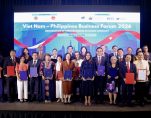
MANILA, PHILIPPINES – Media OutReach Newswire – 2 June 2026 – Vinpearl Joint Stock Company has signed Memorandums of Understanding (MoUs) with CAITO and Klook, partners with extensive networks and influence in the travel and digital tourism sectors in the Philippines and across the region. The agreements aim to enhance Vinpearl’s brand presence while promoting premium resort, golf, MICE and travel experience products in Nha Trang, Phu Quoc, and Da Nang to Filipino travelers.

Photo (11).jpg

The MoUs were signed during the Vietnam–Philippines Business Forum, held as part of the official visit by Party General Secretary and President Tô Lâm to the Republic of the Philippines.

The partnership with CAITO aims to enhance Vinpearl’s brand awareness within the Philippines’ travel trade community while creating additional opportunities to develop hospitality, entertainment and MICE offerings in Nha Trang, Phu Quoc and Da Nang. CAITO is currently one of the Philippines’ leading tourism organizations, with an extensive network of travel businesses across the region.

With Klook, one of Asia’s leading travel experience platforms, Vinpearl and VinWonders aim to expand their strategic collaboration across distribution, communications and tourism promotion in key international markets, particularly the Philippines and broader Southeast Asia. The partnership is expected to expand the presence of the Vinpearl–VinWonders ecosystem in major international markets, while further elevating Vietnam’s tourism image across global travel and digital media platforms.

Ms. Ngo Thi Huong, Chief Executive Officer of Vinpearl, shared: “Through these agreements in the Philippines, alongside a series of partnership initiatives in Thailand and Singapore, Vinpearl aims to drive high-quality inbound tourism to Vietnam, strengthen connectivity among ASEAN markets, and enhance the competitiveness of Vietnam’s tourism industry. With an integrated ecosystem spanning hospitality, entertainment, golf, and commercial services, Vinpearl remains committed to pioneering world-class experiences that contribute to positioning Vietnam as a leading destination in the Asia-Pacific region.”

Mr. Michelle Ho, Chief Executive Officer of Klook Philippines, said: “Vinpearl currently operates one of the region’s most distinctive tourism and entertainment ecosystems, with strong capabilities in integrating hospitality, theme parks and premium leisure experiences. We believe our partnership with Vinpearl will further enhance the appeal of Nha Trang, Phu Quoc and Da Nang among travelers across the region.”

Previously, during its business engagements in Thailand and Singapore, Vinpearl also entered into MoUs with Agoda, AirAsia MOVE, BeMyGuest and GlobalTix to expand international distribution channels for its hospitality, resort and travel experience offerings.

Together with the agreements established in the Philippines, this series of partnerships with leading regional players across aviation, travel trade, digital tourism, and travel distribution reflects Vinpearl’s ongoing efforts to build a comprehensive international market development network across Southeast Asia.

Beyond expanding its partner ecosystem, these collaborations provide a foundation for Vinpearl to strengthen its presence in key markets, engage more effectively with international travelers, and enhance the competitiveness of Vietnam’s tourism industry within the region.

Hashtag: #Vinpearl

The issuer is solely responsible for the content of this announcement.

About CAITO

CAITO (Calabarzon Alliance of Independent Tour Operators, Inc.) ONE CALABARZON is an association of independent travel businesses and tourism partners in the Philippines, established in 2020. With a rapidly expanding member network and close collaboration with the Philippines Department of Tourism (DOT), CAITO has become one of the country’s most dynamic tourism organizations, playing an active role in tourism promotion, business connectivity and international collaboration, particularly in the areas of MICE and B2B. The organization is anchored in a vision to promote Philippine destinations, tourism products, cultural heritage, cuisine, and services while strengthening the country’s tourism identity through collaboration, shared promotion, and collective growth.

About Klook
Klook is one of the leading travel experience platforms in the Asia-Pacific region, offering attractions, tours, transportation, accommodation, and travel services on a global scale. To date, Klook has recorded more than 65 million bookings across over 200 markets, supporting more than 40 payment methods alongside e-ticketing services and 24/7 customer support.

The platform currently operates a community of more than 30,000 content creators across 88 markets, helping promote tourism and inspire exploration for millions of travelers worldwide.

About Vinpearl

Vinpearl is Vietnam’s leading tourism, hospitality and entertainment brand, currently operating 60 properties across 20 provinces and cities nationwide. Its ecosystem includes a network of five-star hotels and resorts with more than 17,500 rooms; 16 VinWonders theme parks offering a wide range of attractions for all audiences; six world-class golf courses; and three international-standard convention centers and theaters under the VinPalace brand. The ecosystem also features two semi-wildlife conservation and care parks, an equestrian academy, and million-dollar live-action shows in Nha Trang and Phu Quoc, attracting millions of visitors each year.

BANGKOK/SINGAPORE – Media OutReach Newswire – 29 May 2026 – Vinpearl Joint Stock Company announced a series of strategic partnerships and agreements with Agoda, AirAsia MOVE, BeMyGuest, and GlobalTix, leading regional players in online travel, aviation, and experience distribution. These collaborations are aimed at expanding access to international travelers, strengthening the global presence of the Vinpearl, VinWonders, Vinpearl Golf, and VinPalace ecosystem, and bringing Vinpearl’s hospitality, leisure, and entertainment offerings to a broader audience across international markets.

Photo1.jpg

The agreements were signed at the Vietnam-Thailand Business Forum and the Vietnam-Singapore Technology Connectivity Forum, held as part of Party General Secretary and State President To Lam’s official visits to the Kingdom of Thailand, the Republic of Singapore, and the Republic of the Philippines from May 28 to June 1, 2026.

In Thailand, Vinpearl announced the expansion of its strategic partnerships with Agoda and AirAsia MOVE to strengthen the international presence of its integrated tourism, hospitality, and entertainment ecosystem.

Through Agoda, one of the world’s largest online travel platforms, Vinpearl aims to optimize business performance across its tourism, hospitality, and entertainment portfolio while expanding its reach in key markets including Southeast Asia, India, the Middle East, Australia, and long-haul international traveler segments. The partnership also marks a new milestone for VinWonders, with its integrated leisure and hospitality products now being offered directly through Agoda’s global platform.

The partnership with AirAsia MOVE is designed to broaden international access to Vinpearl and VinWonders hospitality, leisure, and entertainment offerings in Phu Quoc, Nha Trang, and Da Nang-Hoi An through one of the region’s leading digital travel platforms. Via AirAsia MOVE, travelers can conveniently book flights, accommodations, and attractions within a single itinerary, making it easier to choose integrated Vinpearl and VinWonders experiences when visiting Vietnam.

With access to a network of more than 700 airlines and over one million hotels worldwide, AirAsia MOVE is expected to further strengthen the visibility of the Vinpearl and VinWonders ecosystem among international travelers, while also enhancing Vietnam’s appeal as a destination for visitors from ASEAN and other key global markets.

Photo2.jpg

In Singapore, Vinpearl also signed partnership agreements with BeMyGuest and GlobalTix, two of the Asia-Pacific region’s leading technology and distribution platforms for travel experiences.

Supported by extensive partner networks and some of the region’s most diverse travel product portfolios, these collaborations are expected to strengthen the presence of the VinWonders brand across Southeast Asia, China, and India, while expanding international access to unique experience offerings in Nha Trang, Phu Quoc, and Da Nang.

Through these agreements, the partners will leverage their respective strengths in technology, distribution, and customer ecosystems to progressively expand the international footprint of Vinpearl and VinWonders while enhancing the global appeal of Vietnamese tourism.

Ms. Ngo Thi Huong, Chief Executive Officer, Vinpearl, said: “These partnerships not only expand Vinpearl’s network of strategic partners but also create a strong foundation for the Vinpearl and VinWonders ecosystem to connect more deeply with global traveler segments through some of the region’s leading travel, aviation, and distribution platforms. This represents an important step in our strategy to strengthen international competitiveness and position Vinpearl destinations among the top choices for travelers across Asia.”

Mr. Krishna Rathi, Associate Vice President, Supply, Agoda, said: “With its extensive scale of operations, diverse portfolio, and ability to develop integrated destinations, Vinpearl is one of the most outstanding partners in Vietnam’s tourism industry today. We believe this partnership will help the Vinpearl and VinWonders ecosystem engage more deeply with rapidly growing international traveler segments across Asia and global markets.”

Ms. Nadia Omer, Chief Executive Officer, AirAsia MOVE, said: “We highly value the opportunity to partner with Vinpearl in unlocking strategic collaboration potential within one of Southeast Asia’s most dynamic and fast-growing tourism markets. As an OTA platform with a comprehensive travel ecosystem and extensive regional connectivity, AirAsia MOVE is committed to further enhancing travel connectivity and intra-regional tourism flows. Vietnam is emerging as one of the region’s brightest tourism destinations, and we believe the combination of Vinpearl’s leading hospitality and entertainment ecosystem with AirAsia MOVE’s distribution and connectivity capabilities will create significant growth opportunities for the tourism sector in the years ahead.”

The partnerships with Agoda, AirAsia MOVE, BeMyGuest, and GlobalTix mark another milestone in Vinpearl’s strategy to internationalize its tourism, hospitality, and entertainment ecosystem while expanding the presence of Vinpearl and VinWonders accommodation, leisure, and experience offerings across global travel platforms.

Hashtag: #Vinpearl

The issuer is solely responsible for the content of this announcement.

About Agoda

Agoda is a global online travel platform offering more than six million accommodation options, including hotels, resorts, apartments, and vacation villas, as well as flight bookings, travel activities, and related travel services. Headquartered in Singapore, Agoda is part of Booking Holdings (Nasdaq: BKNG). The platform operates in 39 languages, provides 24/7 customer support, and employs more than 7,500 people worldwide.

About AirAsia MOVE
AirAsia MOVE (MOVE) is the digital travel platform of Capital A Group and has been recognized by the World Travel Tech Awards as Asia’s Best Travel Booking App for three consecutive years since 2023. Focused on building a comprehensive travel ecosystem, MOVE delivers affordable, seamless, and personalized travel experiences across Southeast Asia and international markets.

The platform currently connects travelers to more than 700 airlines and over one million hotels worldwide while offering a wide range of services including attraction tickets, airport transfers, travel insurance, and integrated travel products. AirAsia MOVE also enhances user experience through its loyalty program and AskBo, an AI-powered travel chatbot.

About BeMyGuest
BeMyGuest is a Singapore-based travel technology company founded in 2012, specializing in booking and distribution solutions for attractions, tours, and travel experiences across the Asia-Pacific region. Its ecosystem includes the Distribution Network and Xplore Booking System, which support sales management, multi-channel distribution, and digital operations for thousands of partners in the experience tourism industry. BeMyGuest is connected to numerous online travel platforms and international distribution partners while providing multilingual solutions and flexible pricing models for integrated systems.

About GlobalTix
GlobalTix is a global technology and distribution platform for attractions, tours, and travel experiences, headquartered in Singapore with operations across multiple Asia-Pacific markets. Founded in 2013, GlobalTix enables attractions and experience operators to connect with travel agencies, online travel platforms, and international distribution partners through a unified platform. Its partners include major brands such as Mount Faber Leisure Group, Taman Safari Indonesia, Mandai Wildlife Group, National Gallery Singapore, and Singapore Airlines.

About Vinpearl

Vinpearl is Vietnam’s leading hospitality, tourism, and entertainment brand, currently operating 60 properties across 20 provinces and cities nationwide. Its ecosystem includes a network of five-star hotels and resorts with more than 17,500 rooms; 15 VinWonders theme parks featuring attractions for visitors of all ages; six world-class golf courses; and three VinPalace convention and performing arts centers. The portfolio also includes two semi-wildlife conservation and care parks, an equestrian academy, and million-dollar live-action performance shows in destinations such as Nha Trang and Phu Quoc, attracting millions of visitors each year.

Sea Ltd has created a dedicated investment team to identify artificial intelligence opportunities, marking a deeper push by the Singapore-based technology group to find a new growth engine beyond online retail, gaming and digital financial services.

The unit sits under the president’s office and is evaluating AI start-ups globally, with long-serving executive Zhang Endong leading the effort. The move places investment activity closer to Sea’s top management at a time when the company is trying to convert its scale across Shopee, Garena and Monee into a stronger position in the next phase of consumer internet competition.

The new team is part of a wider internal reorganisation aimed at accelerating AI adoption across Sea’s businesses. Zhang is also involved in projects examining how the technology can be deployed inside the group, from product recommendations and seller tools to game development and financial services. A company spokesperson declined to comment on the investment unit.

The initiative follows a series of signals from chief executive Forrest Li that AI has become central to Sea’s long-term strategy. Li told investors last year that a trillion-dollar market capitalisation could be possible if the company doubled down on artificial intelligence and made the right calls. That ambition is now being tested against tougher operating conditions, heavier competition and investor scrutiny over margins.

Sea’s pivot comes as its core businesses remain sizeable but increasingly contested. Shopee continues to dominate e-commerce across South-east Asia, where price-led competition, live commerce, faster delivery expectations and merchant services have raised both growth potential and operating costs. Rivals including TikTok Shop, Lazada, Amazon and Rakuten are intensifying their own use of AI to personalise shopping, automate seller support and streamline logistics.

Artificial intelligence is already being built into Shopee’s customer and merchant systems. Its applications include recommendation engines, search improvements, advertising tools and seller assistance functions. The strategic logic is straightforward: more effective targeting can increase conversion, better seller tools can deepen merchant loyalty, and automated service functions can reduce costs across markets with different languages, payment habits and logistics infrastructure.

Sea has also expanded its partnership with Google to develop AI-powered tools across e-commerce and gaming. The companies are exploring an agentic shopping prototype for Shopee, designed to move beyond basic search and recommendation functions towards digital assistants capable of helping consumers complete tasks across the shopping journey. Garena is expected to use AI to improve game development productivity, an area where faster content cycles and lower development costs can carry significant commercial value.

Financial performance has given Sea room to invest, though not without pressure. First-quarter revenue rose 46.6 per cent year on year to US$7.1 billion, while gross profit increased 40.7 per cent to US$3.1 billion. Net income reached US$438.2 million, up 6.7 per cent, and adjusted EBITDA rose 9.3 per cent to US$1 billion. The figures showed continued momentum, but also reflected the cost of defending market share and expanding services.

Shopee delivered gross merchandise value of US$37.3 billion in the quarter, up 30.2 per cent from a year earlier, while gross orders climbed 29.3 per cent to 4 billion. Revenue from the e-commerce arm rose 45.1 per cent to US$5.1 billion, though adjusted EBITDA fell to US$223.2 million from US$264.4 million a year earlier, underlining the margin trade-off behind its expansion strategy.

Monee, Sea’s digital financial services unit, has become another pillar of growth. Revenue rose 57.8 per cent to US$1.2 billion, while consumer and small-business loans outstanding reached US$9.9 billion. Non-performing loans more than 90 days past due remained at 1.1 per cent, a key metric as the company expands credit services across emerging markets where risk controls are critical.

Garena, once Sea’s dominant profit engine, also showed stronger momentum. Bookings rose 20.1 per cent to US$931.4 million, while quarterly active users stood at 666.5 million. The unit remains anchored by Free Fire, but Sea’s AI push suggests management sees broader potential in development tools, content generation, player engagement and operational efficiency.

Sea’s AI Centre of Excellence in Singapore adds another layer to the strategy. The centre is intended to strengthen local AI capabilities, support enterprise adoption and develop talent in areas such as engineering, research and product development. Its launch aligns the company with Singapore’s broader ambition to become a regional AI hub and gives Sea a clearer institutional base for experimentation.

The investment team could give Sea access to external innovation at a time when start-ups are moving faster than large platforms in areas such as autonomous commerce, generative game design, fraud detection, credit scoring and AI-enabled logistics. The challenge will be distinguishing durable business models from inflated valuations in a crowded funding environment.

Investors will be watching whether Sea’s AI spending produces measurable gains in revenue growth, user engagement and margin improvement. The company has already shown that it can rebuild profitability after years of expansion-led losses. Its next test is whether AI can become more than an efficiency tool and help create the next major growth curve for one of South-east Asia’s most valuable technology groups.

Brussels has warned that Europe’s aviation fuel market could tighten further within weeks if disruption around the Strait of Hormuz continues, raising the prospect of higher fuel costs, pressure on airline schedules and fresh strain across the bloc’s energy supply chain before the peak summer travel season. The warning, issued after meetings of the European Commission’s oil and gas coordination groups, marks a sharper assessment of the […]

Arabian Post Staff -Dubai MarsLab Pte Ltd has introduced a Singapore-based roadmap for AI inference infrastructure, positioning the company around enterprise and edge deployment at a time when organisations are shifting from model experimentation to production-scale artificial intelligence systems. The roadmap, announced on 28 May, centres on what MarsLab describes as a system-first approach to inference, the stage at which trained AI models generate outputs in live […]

Binance has opened a supervised route back into the Philippines through a partnership with BlockShoals Technologies Inc., placing the world’s largest crypto exchange inside the Philippine Securities and Exchange Commission’s Strategic Sandbox after two years of regulatory tension over unlicensed offshore platforms.

The arrangement makes BlockShoals the approved local intermediary under the SEC’s StratBox framework, while Binance supplies technology, security systems, operational support and compliance expertise developed across regulated markets. The sandbox phase is expected to begin in the second half of 2026 and run for at least two years, giving regulators direct oversight of product testing before any wider rollout to users.

The move marks a notable shift in Binance’s strategy in the Philippines. Rather than seeking to restore access through an offshore model, the exchange is now pursuing market participation through a domestic company operating under SEC supervision. BlockShoals, a Philippine-incorporated fintech firm, secured approval under the crypto asset intermediary framework after a multi-year process involving regulatory conditions, compliance checks and investor-protection requirements.

Binance’s online presence in the Philippines was blocked in 2024 after the SEC said the platform had offered investment and trading services without the necessary licence. The regulator had warned the public about the exchange in November 2023, then moved to restrict website access through telecommunications authorities the following year. The action became one of the clearest signals that Manila intended to bring offshore digital-asset platforms under local rules.

That enforcement drive has since widened. The SEC’s crypto-asset service provider rules, issued in 2025, require firms serving Philippine users to register, maintain sufficient capital, observe marketing standards, and meet operational and reporting obligations. The framework is intended to protect retail investors while allowing controlled innovation in a market where crypto use remains high by regional and global standards.

The Philippines ranked ninth in the 2025 global crypto adoption index, reflecting strong activity across retail centralised services and digital-asset platforms. Usage has been driven by a young, mobile-first population, remittance demand, online work, gaming-linked crypto activity and a broad appetite for alternative financial products. That adoption has also heightened regulatory concern over fraud, weak disclosures, market volatility and the risks of foreign platforms serving users without domestic accountability.

Seker, Binance’s head of Asia-Pacific, described the Philippines as one of Southeast Asia’s most dynamic digital economies, saying frameworks such as StratBox create a channel for regulators and industry participants to work together while maintaining user protection and market integrity. The company has presented the BlockShoals partnership as part of a compliance-first approach rather than a conventional market relaunch.

BlockShoals has framed its role around local accountability. A company representative said the partnership was an opportunity to show that global digital-asset platforms and domestic regulatory frameworks could operate constructively together, adding that the firm would work under direct SEC supervision while building a secure platform for users.

The sandbox structure gives the SEC room to monitor how products are configured, how customer onboarding is handled, how risks are disclosed, and how safeguards such as know-your-customer checks, anti-money-laundering controls and transaction monitoring are applied. It also gives Binance a pathway to rebuild trust after a period in which its Philippine operations were defined by access restrictions and licensing concerns.

The Philippine approach mirrors a broader shift across Asia, where regulators are moving away from informal tolerance of offshore crypto activity and towards domestic licensing regimes. Singapore, Hong Kong, Thailand, Indonesia and Japan have tightened rules for exchanges, stablecoin activity, custody, marketing and investor suitability. The result is a more fragmented operating environment for global platforms, with access increasingly dependent on local registration, capital commitments and regulator-facing governance.

For Binance, the Philippine partnership carries strategic value beyond one market. The exchange has spent the past several years seeking to repair relations with regulators after facing scrutiny in multiple jurisdictions. A successful sandbox test in Manila would support its argument that global crypto platforms can adapt to local rules through partnerships, product controls and supervised deployment.

A record 142,000 millionaires are expected to relocate internationally this year alone — and most investors still do not fully understand what this means for markets. The movement of globally mobile wealth is rapidly becoming one of the defining investment forces of the decade. Capital is shifting across borders faster, more strategically and in greater volumes than at any point in modern financial history. I sincerely believe […]

THIMPHU, BHUTAN – Media OutReach Newswire – 26 May 2026 – In a landmark collaboration between the Ministry of Education and Skills Development (MoESD) of Bhutan and the EtonHouse International Education Group, EtonHouse Bhutan International School will open its doors as the nation’s first international K–12 school in Academic Year 26/27, marking a milestone that underscores Bhutan’s commitment to building human capital for a rapidly evolving global economy.

Mr Ng Yi-Xian, Group CEO, EtonHouse International Education Group and Mr Tshewang Chophel Dorji, Secretary, Ministry of Education and Skills Development

Founded in Singapore over 30 years ago, EtonHouse today operates over 100 schools across eight countries, and is widely recognised for its inquiry-led approach to international education.

The partnership positions EtonHouse as a long-term education partner to Bhutan, focused on listening, learning, and co-creating a school experience that honours Bhutanese culture and strengthens capability within the region. Professional development and education conferences will support collaboration among educators across Bhutan, enabling professional exchange and high-quality practice, contributing to a strong, future-ready pedagogical landscape.

A shared vision for Bhutan’s future education landscape

EtonHouse Bhutan aligns with the Royal Government’s vision to nurture world-class talent through greater access to high-quality international education. The school is designed to develop globally competent learners rooted in Bhutan’s cultural heritage and the principles of Gross National Happiness. This partnership reflects Singapore’s enduring contribution to international education, sharing a model that harmonises academic rigour with Asian values, creativity and innovation, advancing Bhutan’s long-term educational aspirations.

The school will offer a seamless K–12 pathway for over 500 students. In the Early Years, children will experience the EtonHouse Inquire. Think. Learn curriculum inspired by the Reggio Emilia approach. Primary students will engage in the International Primary Curriculum alongside Singapore Mathematics and UK-aligned core subjects, progressing to the Cambridge Lower Secondary, IGCSE and International A Level qualifications from Cambridge. Bhutanese History and Dzongkha remain integral, complemented by a multilingual language programme offering English, Dzongkha and Mandarin, alongside a strong emphasis on STEM, sustainability and holistic wellbeing.

“The Ministry of Education and Skills Development has entered into a landmark partnership with EtonHouse International Education Group to establish an international school in Bhutan, a significant milestone in the nation’s ongoing education reform, guided by His Majesty’s vision for a future-ready and globally competitive education landscape.

The initiative will provide Bhutanese students with access to internationally benchmarked learning opportunities while ensuring the deep integration of local knowledge, culture, and values into the curriculum. It seeks to create a dynamic platform for young Bhutanese to experience world-class education within the country, reducing the need to pursue such opportunities abroad and thereby strengthening Bhutan’s human capital for the future.

Beyond enhancing access to quality education, the partnership aims to strengthen national education capacity and bolster Bhutan’s attractiveness to skilled professionals and international institutions, positioning the Kingdom as an emerging hub for world-class learning,” said Mr Tshewang C. Dorji, Secretary of the Ministry of Education & Skills Development.

“Establishing Bhutan’s first international school marks a defining moment for education in the Kingdom. As a global education group, we bring internationally recognised standards and access to a worldwide learning network that connects students and educators across countries. Through the EtonHouse Global Classroom, students engage with peers across our international network, gaining global perspectives through shared learning and cultural understanding. Our ambition is to build a globally engaged school in Bhutan that expands opportunities and contributes to long-term national development.” said Mr Ng Yi-Xian, Group CEO of the EtonHouse International Education Group.

Creating Opportunities for Students and Advancing Educator Excellence

A dedicated scholarship scheme will provide full tuition sponsorship to up to ten outstanding Bhutanese students, reinforcing the school’s commitment to accessibility and national talent development.

EtonHouse will leverage its membership in the Reggio Children International Network to provide preschool educators in Bhutan with access to internationally recognised Reggio Children expertise, professional learning and regional educator exchange, strengthening teaching practice across the region.

A campus that celebrates Bhutanese identity and global perspective

“The design and curriculum of EtonHouse Bhutan pay homage to Bhutan’s cultural roots while opening doors to the world. Every space has been conceived to inspire curiosity, reflection, and innovation, echoing the nation’s aspiration to educate its youth for both local contribution and global engagement.” said Evelyn Tay, CEO of EtonHouse International Education Group, Singapore and EtonHouse Bhutan International School.

The purpose-built campus reflects a thoughtful fusion of traditional Bhutanese craftsmanship and contemporary collegiate design. Learning environments are designed in calm, neutral tones, reflecting the EtonHouse approach to inquiry-led, child-centered learning.

Students will have access to facilities including:

  • Research and Innovation Centre, integrating the Library, STEAM and ICT to support inquiry, experimentation and interdisciplinary learning
  • Dedicated Science Laboratories, designed for hands-on learning across Biology, Chemistry and Physics
  • Cultural Learning Spaces, honouring Bhutanese History and Dzongkha as integral parts of the curriculum
  • Multipurpose Sports Hall, supporting physical development, teamwork and wellbeing
  • Dedicated Performing Arts Studio, enabling expression through music, drama and movement
  • Reggio-inspired Ateliers, where children explore ideas through the hundred languages of expression, including light, sound, clay, mark-making and natural materials

Next steps

With enrolments opening for Nursery 1 to Year 5 (from 3 to 10 years) and plans to expand progressively to serve students aged up to 18 years, families interested in discovering more about EtonHouse Bhutan International School are warmly invited to attend our Experience Day on 30 May. This special event offers an opportunity to find out more and experience what defines the EtonHouse approach.

For more information, please visit etonhouse.edu.sg/bhutan.


The issuer is solely responsible for the content of this announcement.

About EtonHouse International Education Group

Founded in 1995 in Singapore, EtonHouse has grown into a global education group with more than 100 schools across eight countries. The Group offers a highly recognised international education pathway from infant care to high school, including the International Baccalaureate, Cambridge, and the Reggio Emilia-inspired approach, all designed to nurture inquiry, creativity, and intercultural understanding. Beyond schools, EtonHouse is deeply committed to community impact through teacher training, philanthropy, and purpose-driven educational initiatives.

Saudi Aramco will transfer its equity stakes in Malaysia’s PRefChem refining and petrochemical ventures to Petronas, bringing an eight-year downstream partnership in Southeast Asia to an end and giving the Malaysian state energy group full control of one of the region’s largest integrated energy complexes. Petronas and Aramco said the agreement, announced on Monday, covers Aramco’s holdings in Pengerang Refining Company Sdn Bhd and Pengerang Petrochemical Company […]

SINGAPORE – Media OutReach Newswire – 26 May 2026 – ASEAN Cableship Pte Ltd (ACPL) proudly marks its 40th anniversary this year under the theme “40 Years Leading Global Connectivity — Heritage, People, Fleet and Future.” For four decades, ACPL has been at the forefront of global connectivity, delivering submarine cable installation, repair and maintenance, as well as nearshore and onshore cable projects across Southeast Asia and the Indian Ocean with reliability and resilience.

To commemorate this milestone, ACPL hosted a gala dinner on 25th of May, where it unveiled its new corporate logo, symbolising the company’s evolution and forward-looking vision. The refreshed logo reflects ACPL’s continued commitment to innovation, operational excellence, and its role in enabling the future of global digital connectivity.

ACPL’s operational strength is anchored by its fleet of purpose-built cable vessels and supporting assets. Today, the company operates three cable ships and one barge — ASEAN Restorer, ASEAN Explorer, ASEAN Protector, and its latest addition, ASEAN Challenger, which was inaugurated in 2024. With the addition of this vessel, ACPL is better positioned to deliver timely and reliable cable operations, supporting the rapidly growing demand for submarine cable infrastructure driven by the continued expansion of global data traffic, cloud services, and digital connectivity.

“Our 40th anniversary is not only a celebration of our past, but a commitment to our future,” said Mr. Yue Meng Fai, Chief Executive Officer of ASEAN Cableship Pte Ltd. “The launch of our new corporate logo reflects our evolution as a company — one that is rooted in a strong heritage while continuously advancing towards the future. We will continue to safeguard our heritage of trusted operations, empower our people as a united team with resolute commitment to quality, enhance our fleet to remain reliable and innovative, and shape our future by leading the transformation of global connectivity in a responsible and sustainable way.”

The anniversary event brought together industry partners, stakeholders and clients to commemorate ACPL’s achievements and to mark the next chapter of its journey. Throughout the year, ACPL will commemorate this milestone through various initiatives that honour its legacy while reinforcing its dedication to responsible operations and long-term value creation.

With 40 years of trusted legacy, ACPL remains committed to connecting the world — resolutely, reliably and responsibly.

Hashtag: #ACPL #ASEANCableship #submarine #marine #shipping #anniversary #logo


The issuer is solely responsible for the content of this announcement.

ASEAN Cableship Pte Ltd (ACPL)

Established in 1986, ASEAN Cableship Private Limited (ACPL) is a leading provider of submarine cable installation, repair, and maintenance services in the Asia Pacific region. Headquartered in Singapore, ACPL was formed by a consortium of six prominent telecommunications entities from the original ASEAN member countries, reflecting strong regional cooperation across Indonesia, Malaysia, the Philippines, Singapore, and Thailand. ACPL has built a strong reputation as a pioneer in submarine cable repair and maintenance, supporting critical telecommunications infrastructure under the Southeast Asia and Indian Ocean Cable Maintenance Agreement (SEAIOCMA), spanning from Djibouti to Guam and from Taiwan to Australia.

In addition to its repair and maintenance capabilities, ACPL is also an established submarine cable installer and integrator. Its services include main lay submarine cable installation and maintenance, shore-end landing and beach works, project management, offshore and diving support services, Universal Joint consumable supplies and jointing equipment, as well as engineering consultancy, site surveys, and desktop studies. ACPL remains committed to advancing submarine cable system installation and repair, delivering professional and reliable services to meet evolving customer needs and support a sustainable, connected future.

For more information, please visit: .

As Singapore CBD office rents rise for a fifth consecutive quarter and vacancy hits a record low, CoWorkSpace aims to shield members from rent increases that flex operators typically pass through.

SINGAPORE – Media OutReach Newswire – 26 May 2026 – CoWorkSpace is conveniently located at 6 Raffles Quay #16-01, occupying an entire floor within the office tower and comprising more than 50 private suites designed for startups, SMEs, and established corporations across shipping, financial intermediaries, family offices, professional services, business consultancy, technology, and trade-related industries.

The building is linked to both Raffles Place and Downtown MRT stations via fully sheltered underground walkways, allowing members and their visitors to reach the office without exposure to Singapore’s heat or rain.
Unlike other industry players, CoWorkSpace owns the property it operates from. This owner-operated model provides members with the option of medium to long-term price stability and reduces the risks commonly associated with leased coworking spaces, such as sudden closures, forced relocations, and aggressive rental increases.
The facility is configured mainly as private suites, with no hot-desks and no virtual office members. Members on dedicated-desk arrangements are situated within private suites, providing greater privacy and a more professional working environment.
Each suite is equipped with electronic height-adjustable desks, modern office chairs, and pedestal cabinets according to the suite configuration. Data points are also included within each suite.
Shared facilities include an expansive business lounge, business-grade internet, reception services, meeting rooms and call booths, printing, scanning and shredding facilities, and utilities.
In addition, CoWorkSpace operates an in-house IT team that manages its network and infrastructure directly, enabling faster response and turnaround times for IT-related matters without relying on third-party vendors.

Hashtag: #ServicedOffice #Coworking #CoworkingSpace #RafflesQuay #RafflesPlace #SingaporeCBD #SGCBD #PrivateOffice #PrivateSuites #OwnerOperated #FlexibleWorkspace #BusinessAddress #SMESingapore #SGBusiness #CoWorkSpace


The issuer is solely responsible for the content of this announcement.

About CoWorkSpace

CoWorkSpace is an owner-operated serviced office at 6 Raffles Quay #16-01 in Singapore’s Central Business District. The property offers over 50 private suites, giving startups, SMEs, and established corporations a prestigious address, fully sheltered access to Raffles Place and Downtown MRT stations, privacy, and flexible medium to long-term membership options. Industries served include shipping, financial intermediaries, family offices, professional services, business consultancy, technology, and trade-related industries. More information at .

Chinese retail investors are scrambling to keep access to overseas equities after Beijing imposed its toughest enforcement action yet against cross-border stock trading channels used to buy shares in Hong Kong, New York and other offshore markets.

Regulators have moved against Futu Securities International, Tiger Brokers and Longbridge Securities, accusing them of operating securities businesses on the mainland without approval, soliciting domestic clients and processing offshore trading orders in breach of securities, fund and futures rules. The action has disrupted a once-popular route for mainland investors seeking exposure to global technology stocks, Hong Kong initial public offerings and US-listed Chinese companies.

The China Securities Regulatory Commission and other agencies have ordered a two-year rectification programme aimed at closing unauthorised cross-border securities, futures and fund businesses. During the wind-down period, affected mainland clients will be allowed to sell existing holdings and withdraw money, but will not be permitted to make new purchases through the targeted channels.

The clampdown marks a sharp escalation from the regulatory warning issued in late 2022, when online brokers were told to stop opening new accounts for mainland investors and remove trading apps from domestic app stores. Existing clients had largely been allowed to continue trading, preserving a grey-zone channel that gave better-off retail investors access to overseas markets despite China’s capital controls.

Futu has disclosed a proposed penalty of about 1.85 billion yuan, while Tiger Brokers’ parent, UP Fintech Holding, faces penalties and confiscation of illegal income totalling more than 400 million yuan. Longbridge has said it will comply with rectification requirements and that client fund safety is not affected. Regulators have also indicated that illegal gains from related onshore and offshore entities will be confiscated, with final administrative decisions subject to formal procedures.

Market reaction was swift. Shares of Futu and UP Fintech fell sharply in US trading after the enforcement announcement, while pressure spread to parts of the Chinese ADR universe as investors assessed whether reduced mainland retail participation could weigh on offshore-listed stocks. Hong Kong market participants also began reassessing the impact on brokerage flows, custody transfers and IPO distribution.

Citic Securities has estimated that as much as HK$250 billion in assets in Hong Kong could be affected by the crackdown, with Futu accounting for a large portion. The figure underlines the scale of wealth that had moved through offshore brokerage platforms even after Beijing tightened scrutiny of capital outflows and online financial services.

Investors are now exploring alternatives, including moving positions by custodian transfer to licensed Hong Kong banking channels, using accounts with international banks, or relying on approved schemes such as Stock Connect, the Qualified Domestic Institutional Investor programme and Wealth Management Connect. Those channels, however, have limits on eligibility, investment scope, quotas and product access, making them less flexible than the digital brokerage platforms that gained popularity during the pandemic-era boom in US and Hong Kong equities.

Beijing’s concern is not only securities law compliance. The wider policy objective is to control capital outflows, strengthen oversight of retail investment activity and prevent unlicensed overseas institutions from marketing financial products inside the mainland. The campaign also aligns with efforts to support domestic capital markets, where authorities have been trying to stabilise sentiment and encourage household savings to flow into regulated local investment products.

For the brokers, the enforcement action threatens an important part of their client base. Futu and Tiger expanded rapidly by offering low-cost, mobile-first access to overseas securities, appealing to younger and wealthier mainland clients who wanted exposure beyond A-shares. Both companies have been diversifying into Hong Kong, Singapore, Japan, Australia and the United States, but mainland-linked business remains material to investor perceptions of their growth prospects.

The crackdown may also reshape Hong Kong’s role as a financial gateway. Licensed institutions could benefit from account transfers and higher compliance-driven demand, but regulators in the city are expected to scrutinise whether account-opening documents, residency claims and fund-transfer routes meet legal requirements. That could raise operational costs and slow onboarding for brokers and banks serving mainland-related clients.

  • At the launch, KPMG also unveiled its Trusted AI Assurance offering that is aligned with relevant international standards and frameworks to mitigate risk and build trust in AI deployment. This gives businesses a clear, credible pathway to scale AI confidently as Singapore reinforces its position as a trusted node in the global community.

SINGAPORE – Media OutReach Newswire – 25 May 2026 – As Singapore deepens its commitment to becoming a world-leading AI hub, the question of how organisations build AI that is trusted — by customers, regulators and international partners — has become as consequential as how fast they build it. Today, KPMG took a significant step in answering that question with the launch of its Trusted Artificial Intelligence Centre of Excellence (AI CoE). Supported by the Singapore Economic Development Board (EDB), the AI CoE is a dedicated capability hub designed to help organisations move beyond AI experimentation and embed AI as a trusted, enterprise-ready asset.

At the same event, KPMG also unveiled its Trusted AI Assurance — a structured, business-focused, evidence-based approach that gives Singapore businesses a rigorous multi-faceted assessment of their AI deployment and a clear pathway to scale confidently. Today’s launch — bringing together government, enterprise and the professional services sector — signals a pivotal shift in the national AI conversation: from speed to scale of adoption where trust is the foundational bedrock of deploying AI.

The Trusted AI CoE was officially launched by Ms Jasmin Lau, Minister of State, Ministry of Digital Development and Information & Ministry of Education, alongside Mr Jermaine Loy, Managing Director of the Singapore Economic Development Board (EDB), and Ms Lee Sze Yeng, Managing Partner of KPMG in Singapore.

KPMG’s 2025 Global CEO Outlook shows that more than seven in ten CEOs now rank AI as a top investment priority — yet for many, the gap between ambition and sustained enterprise impact remains wide. Governance, data readiness and workforce capability are the defining constraints of this next phase of adoption. Singapore-based businesses face a further dimension: as they expand regionally and globally, they need their AI systems to be trusted not just at home but across multiple jurisdictions — each with its own regulatory expectations and stakeholder standards.

Lee Sze Yeng, Managing Partner at KPMG in Singapore, said: “Across every sector, we are seeing the same pattern: organisations that moved fast on AI are now asking harder questions — where is the real value, are our people genuinely ready to work alongside AI, and can we stand behind the decisions our systems make? These are not technical questions. They are leadership questions. And for Singapore businesses with ambitions beyond our shores, there is an added dimension: the trust that matters to customers and regulators in the markets you are entering may be defined differently from what is required here. Through the KPMG Singapore Trusted AI Centre of Excellence, we are partnering with businesses to rigorously assess where they stand, close the gaps that matter, and build AI that is trusted not just locally but in the markets most critical to their growth. Trusted AI is not a constraint on ambition. Done well, it is the foundation for it.”

Jermaine Loy, Managing Director, EDB, said: “KPMG’s Trusted AI Centre of Excellence here in Singapore will enable businesses across diverse sectors – including financial services, healthcare, logistics and manufacturing – to scale use of AI with confidence, supported by robust governance frameworks and assurance capabilities. At the same time, this strengthens Singapore’s growing AI ecosystem by building enterprise capabilities and workforce readiness for AI adoption. We welcome KPMG Singapore’s efforts to work with EDB and the relevant agencies in advancing Singapore’s position as a globally trusted hub for AI deployment and innovation.”

Trusted AI Assurance — Giving Singapore Businesses a Foundation to Scale AI

For Singapore businesses, the ambition to scale AI is rarely the obstacle. What is harder — and more consequential — is the question of whether the AI they are building and deploying can genuinely be stood behind: by their boards, by their customers, employees and by the regulators and partners they will encounter as they grow beyond Singapore’s shores.

KPMG’s Trusted AI Assurance offering (the “Trusted AI Assurance”) was developed in response to the need to address the trust deficit with AI in the business community to boost adoption. It is not a certification exercise or a compliance checklist. It is a rigorous, evidence-based independent assessment that gives leadership teams an honest picture of where they stand — and a clear, practical path to where they need to be.

What makes it meaningful is its specificity. The Trusted AI Assurance is calibrated to each organisation’s sector, operating context and growth ambitions — because a financial institution navigating cross-border data regulation faces a fundamentally different set of questions from a manufacturer embedding AI into operational workflows, or a healthcare provider deploying AI-assisted diagnostics. Generic benchmarks serve neither well.

The assessment examines two things that are often conflated but must be considered separately: whether an organisation has the governance, culture and leadership practices to deploy AI responsibly; and whether the AI solutions it has built or acquired are themselves trustworthy — documented, risk-assessed, well-integrated and performing as intended. An organisation can have the right intentions and still be running AI that falls short of what its stakeholders — or another country’s regulators — would accept.

Across four domains, the Trusted AI Assurance examines what genuinely matters:

AI Governance — Whether the frameworks, operating models, policies and procedures that govern AI are real and embedded, not aspirational documents that sit untouched between audits.

AI Systems — The AI systems themselves: how they are documented, how risks are inventoried, how models are integrated into business workflows, and whether the data foundations — including Retrieval-Augmented Generation, pipelines and datasets — are robust enough to be relied upon.

AI Regulatory Compliance — How prepared an organisation is for the regulatory environments it currently operates in, and those it intends to enter. For Singapore businesses with expansion ambitions, this is often where the most important gaps surface: the Trusted AI Assurance can identify whether a specific AI system meets the requirements for deployment in a given market — such as the European Union — or what adjustments would make it so.

AI Security — The strategies and processes in place to protect AI systems, manage privacy, and ensure the organisation can detect, respond to and recover from threats as they evolve.

The stakes are sharpest for businesses in highly regulated sectors. Financial institutions, healthcare providers and infrastructure operators have long been accustomed to navigating complex compliance environments — and Singapore’s AI governance frameworks are among the most developed in the region. But as the EU AI Act moves into full enforcement, a new and specific set of expectations is taking effect for any organisation deploying AI within European markets, or handling the data of European citizens. What satisfies regulators here does not automatically satisfy regulators there.

The reality is one of regulatory diversity: different jurisdictions are building their AI governance regimes at different speeds, with different emphases, and with different evidentiary requirements. A Singapore company that has passed relevant local standards may still find that its AI systems require different documentation, greater explainability, or additional human oversight controls to operate with compliance and trust in a European context. Discovering that gap in the middle of a market entry, a cross-border partnership or a regulatory review is a risk that can be avoided.

The Trusted AI Assurance maps these jurisdictional differences, giving organisations a clear read of where they stand against the specific requirements of markets they are entering — before those requirements become obstacles. It is aligned with globally recognised standards including the EU AI Act, the NIST AI Risk Management Framework, ISO 42001 and Singapore’s Model AI Governance Framework, ensuring that what organisations build here is credible and defensible everywhere.

The Trusted AI Assurance is coupled with consultancy guidance — from KPMG or partnered stakeholders — ensuring every assessment leads to a practical path forward. The intent is to give Singapore businesses the clarity and confidence to grow their AI ambitions without having to rebuild trust from scratch in new markets they enter into regionally or globally.

A Framework for Singapore’s AI Ambition: The Four Doors

Beyond the Trusted AI Assurance, organisations can leverage the AI CoE to assess their broader AI strategies through KPMG’s Four Doors framework — four strategic pillars that help Singapore businesses move from isolated pilots to trusted, sustained AI at scale. Together, they address what it takes for Singapore to be not just an AI-capable nation, but a globally trusted one: where the AI solutions developed and deployed here meet the expectations of regulators, partners and customers worldwide.

Value — From Activity to Impact: Establishing the clear metrics and sector-specific solutions needed to distinguish AI activity from measurable business value, across Financial Services, Government, Healthcare, Real Estate, Infrastructure and Manufacturing.

Trust — Trusted-by-Design AI: Built on a human-centric foundation encompassing ten ethical pillars — including Fairness, Transparency, Accountability, Privacy and Sustainability — the Trust pillar puts responsible governance at the centre of AI strategy, rather than treating it as a compliance afterthought.

People — Genuine AI Fluency: Covering sustainable AI workforce strategy, job redesign, leadership development and change management — from executive ignition sessions that build board-level commitment to the behavioural shifts needed to embed AI into everyday working practices.

Data and Technology — Scalable Foundations: Establishing the trusted data and technology infrastructure that enterprise AI requires, supported by KPMG’s proprietary platforms and a market-ready suite of AI tools, with rigorous attention to data quality, system integration, product development and enterprise-wide AI deployment.

For Singapore’s business community, the Four Doors offer a structured path to becoming AI-trusted — not just AI-active. As global regulatory standards tighten and international partners raise governance expectations, that distinction will increasingly determine which Singapore enterprises are positioned to lead in the markets they enter.

Building AI Capability in Singapore

The Trusted AI CoE (the “CoE”) is designed to function as a capability hub to support Singapore’s position as a trusted node in the global community — co-creating knowledge, accelerating innovation and strengthening Singapore’s AI ecosystem across the business community, academia and the public sector.

At its core is a dedicated innovation team of AI/Software Engineers, Solution Architects, Data Analysts, Product Managers, Tech Business Analysts and Designers — 100 per cent Singapore-based and locally hired. This specialist nucleus is complemented by KPMG’s 3,600-strong Singapore workforce and over 275,000 professionals globally, giving the CoE both deep technical capability and multi-disciplinary reach across Audit, Advisory and Tax.

Solutions co-developed through the CoE are pressure-tested with KPMG as default “Client Zero” where appropriate — rigorously iterated across the firm’s own operations before being brought to clients. Initial focus sectors include Financial Services, Infrastructure and Logistics, Manufacturing, Government, Healthcare and Real Estate, alongside functional domains such as Finance, Governance Risk and Compliance, Customer Services and Operations. Strategic partnerships with technology companies, academic institutions and government agencies further support Singapore’s ambition to serve as a trusted and well-governed regional AI hub.

KPMG’s Commitment to Singapore

KPMG is the world’s first professional services firm to attain ISO/IEC 42001 certification for AI Management Systems — the globally recognised standard for responsible AI governance. This underpins every element of today’s launch, reflecting KPMG’s commitment to practising what it advocates: embedding the disciplines of trusted AI governance into its own operations before bringing them to clients.

KPMG continues to invest in Singapore’s AI talent pipeline through international mobility programmes, internal rotations and capability development across data, digital and leadership disciplines — directly aligned with Singapore’s national goal of growing the skilled workforce its AI ambitions require.

ANNEX: Bringing the KPMG Singapore Trusted AI Centre of Excellence to Life

To bring the KPMG Trusted AI Centre of Excellence (AI CoE) to life, guests at the launch were invited to explore four interactive stops (“windows”) showcasing how trusted AI can move from strategy into real-world enterprise and national impact.

Spanning areas including governance, workforce readiness, ecosystem collaboration and SME enablement, the windows offered a practical look at how organisations can scale AI responsibly while building trust, resilience and long-term capability.

FIRST WINDOW – AI Philosophy

The first window introduced guests to KPMG’s Four Doors framework and Trusted AI Assurance – an evidence-based approach designed to help organisations move from AI experimentation to AI that is genuinely trusted by their boards, their customers, and the regulators and partners they encounter as they grow beyond our shores.

Through an interactive scenario set in the financial services sector, the demonstration illustrated how organisations are assessed across four strategic pillars: Value, Trust, People, and Data and Technology. The walkthrough explored whether businesses have the governance structures, workforce readiness, data foundations and operational oversight needed to support trusted, scalable AI deployment.

  1. Value — Whether the organisation has clearly defined what its AI investments are meant to deliver, and whether it has the metrics to distinguish genuine business impact from mere AI activity
  2. Trust — Whether the organisation’s AI is built on a responsible, human-centric foundation — covering governance frameworks, ethical guardrails, risk management, security and accountability for AI-driven decisions
  3. People — Whether the workforce, from board to frontline, has the genuine AI fluency needed to work alongside AI systems, including the leadership commitment, job redesign and capability development required for adoption to take hold
  4. Data and Technology — Whether the data assets, infrastructure and system integration practices are robust enough to support trusted, scalable AI deployment

The experience also demonstrated how AI systems themselves are assessed – including areas such as system documentation, risk inventories, model integration and data platform robustness – highlighting the importance of building AI that is genuinely trusted.

  1. System Card — Whether each AI solution is properly documented, including how it performs and how it is used in practice
  2. Risk Inventory — Whether AI systems across the enterprise have been identified and their risks catalogued
  3. Model Integration — Whether adequate processes and controls govern how AI models are integrated into business workflows
  4. Data Platform — Whether the data foundations underpinning AI outputs — including Retrieval-Augmented Generation (RAG) pipelines and datasets — are fit for purpose

A second stage of the scenario then explored the reality of regulatory diversity across jurisdictions. While an organisation may be assessed as “trusted” in Singapore, areas that require attention may emerge when expanding into international markets such as Europe under the EU AI Act.

The demonstration underscored the growing importance of regulatory readiness for Singapore businesses with international ambitions, and how the AI CoE is designed to help organisations expand with confidence through trusted AI governance.

SECOND WINDOW – AI Journey

The second window focused on KPMG’s “Client Zero” approach, where suitable AI solutions are developed and applied within its own operations under real-world conditions, and in some cases co-developed with clients depending on their specific needs. This model reflects a simple philosophy: credibility in guiding responsible AI adoption must be earned by applying the same discipline internally. This approach is particularly relevant in Singapore’s context, where trust and reliability are central to how AI is being adopted across sectors.

KPMG’s “Client Zero” approach provides a structured pathway for scaling AI responsibly. Solutions are first embedded into live workflows – allowing organisations to address practical considerations such as human oversight, explainability, data handling and accountability – before broader deployment. This mirrors the journey many enterprises in Singapore are now facing, as they transition from pilots to AI that can be relied on consistently in regulated, cross-border environments. This shift is important, as trust at scale is built not through experimentation alone, but through systems that are reliable, auditable, and able to operate consistently across different contexts.

At this window, MOS will see this pathway brought to life with AI applied across real business workflows, through three solutions: KPMG’s Digital Gateway (DG) GenAI, KPMG Clara Intelligence and Kiara. These solutions are already implemented in real-time across KPMG’s various functions.

The first demonstration illustrates how the audit and tax professions are beginning to deploy AI agents within their workflows to enhance how work is performed. Rather than treating AI as standalone tools, these capabilities are being embedded into business processes to support analysis, decision-making and execution in a controlled and accountable manner. DG GenAI, KPMG’s Generative AI capability embedded within our Digital Gateway platform, will be used as a demonstration of how this is operationalised in practice — showing how AI capabilities can be integrated into everyday workflows, with appropriate governance, data security and user controls in place.

The second demonstration presents KPMG Clara Intelligence, an intelligent AI-powered platform which acts as a centralised platform. KPMG Clara Intelligence showcases the future of audit, where AI is used to support data-driven risk assessment, better insights and analysis and decision-making on a single platform. This reduces reliance on manual processes and enables auditors to focus on higher-value judgement, improving both efficiency and audit quality. MOS will see how this reflects a broader shift in the profession — towards AI-assisted workflows that require new skills and deeper analytical capabilities.

This window also highlighted how AI is reshaping the accountancy and professional services sector. As AI becomes embedded into core workflows, roles within the profession are evolving — routine, manual tasks are increasingly automated, allowing professionals to focus on higher‑value judgement, analysis and advisory work. At the same time, this shift requires a broader base of AI fluency across the workforce, not just among specialists, as professionals will need to work alongside AI systems in their day‑to‑day roles.

These changes are driving a wider rethinking of skills development across the sector, including how institutions and employers prepare current and future talent. Efforts are underway to align training and education pathways with these evolving needs, ensuring that individuals entering the profession — and those already in it — are equipped to operate effectively in an AI‑enabled environment. This reflects a broader transition towards a workforce that combines strong domain expertise with AI capabilities, in line with Singapore’s ambition to develop an AI‑bilingual workforce.

The third solution, Kiara, is KPMG’s GenAI recruitment assistant, illustrating how AI can enhance the candidate engagement and streamline scheduling of interviews. This highlights how AI is not only transforming business processes, but also how people work and interact with technology.

Overall, the window demonstrated how these solutions reflect the same principles KPMG advises its clients to adopt: strong data foundations, embedded governance, and human oversight at key decision points – illustrating the practical steps organisations take to deploy AI responsibly at scale, underpinning the rigour required for Singapore to continue its progress as a trusted hub for AI.

THIRD WINDOW – AI Vision

The third window focused on how AI does not merely change the tools organisations use, but changes the nature of work itself – which roles exist, how decisions are made, and what it means to be genuinely capable in a professional environment.

As organisations navigate AI-driven workforce transformation, the showcase highlighted the same set of questions organisations consistently grapple with: which roles are genuinely enhanced by AI, and which risk being hollowed out? Where should organisations invest in reskilling, and on what timeline? How are accountability and professional standards maintained when AI is embedded into decisions that used to rest entirely with a person?

The insight that emerges across sectors is consistent: organisations that treat AI workforce transformation as a technology deployment tend to underinvest in the human dimensions – and that is where adoption stalls, quality erodes or trust breaks down. The organisations that get it right treat it as a leadership and organisational design challenge first, with technology as the enabler.

The window also demonstrated how KPMG Mystro™, an AI-enabled workforce intelligence platform, is used to map how work is done today at the task and decision level, and model where AI can responsibly augment human roles across functions such as finance, audit and operations.

Drawing on examples from finance, audit and operations, the showcase illustrated professionals working alongside AI in ways that redirect their expertise toward work requiring human judgement. More broadly, it reinforced the importance of approaching AI transformation not simply as a technology deployment exercise, but as a broader leadership and organisational design challenge.

Singapore’s commitment to building an AI-bilingual workforce – professionals who are not merely aware of AI but genuinely capable of working alongside it, questioning its outputs and being accountable for the decisions it informs – rests on organisations taking the human dimension of transformation as seriously as the technology itself. The insights at this window speak directly to that agenda: what it takes to build not just AI capability, but the kind of AI-confident workforce that sustains Singapore’s competitiveness over the long term.

FOURTH WINDOW – AI Ecosystem

The fourth window focused on how trusted AI adoption cannot be the preserve of large enterprises alone. Singapore’s economic resilience depends on its SME community — the businesses that form the backbone of the economy and that stand to gain enormously from AI, but that often lack the resources, expertise or confidence to navigate adoption responsibly.

Referencing the DBS Spark GenAI programme and DBS SME AI Playbook – developed through a collaboration between DBS and KPMG, and supported by SkillsFuture Singapore – the showcase highlighted practical pathways designed to help SMEs build awareness and accelerate their AI adoption through tailored pathways depending on their AI maturity.

  1. Start — For businesses at the beginning of their AI journey: practical orientation on what AI can realistically deliver, where to begin, and what foundational steps to take before committing to more significant investment
  2. Accelerate — For businesses that have taken initial steps and are ready to move further: guidance on identifying higher-value use cases, building internal capability and managing the operational changes that come with deeper AI adoption
  3. Scale — For businesses ready to embed AI more systematically: the governance, integration and workforce considerations that responsible scaling requires

The window also highlighted the broader support ecosystem available to SMEs, including a broader ecosystem of over 16,000 solution providers globally via IMDA’s Open Innovation Platform, alongside the SME AI Playbook which offers practical use cases, success stories from real businesses, FAQs and an AI readiness diagnostic tool.

Economy-wide AI adoption – the kind that drives meaningful productivity gains across the full breadth of Singapore’s business community – only happens if SMEs are part of the story. The DBS SME AI Playbook is a direct response to that reality: a practical, accessible entry point into AI adoption calibrated to the real constraints and real ambitions of smaller businesses.

The collaboration between DBS and KPMG reflects how Singapore’s AI ecosystem works at its best: financial institutions, professional services firms, government platforms and businesses working together to make trusted AI adoption accessible to every part of the economy, not just its largest players.

Hashtag: #KPMG

The issuer is solely responsible for the content of this announcement.

About KPMG in Singapore

KPMG in Singapore is part of a global organization of independent professional services firms providing Audit, Tax and Advisory services. We operate in 138 countries and territories with more than 276,000 partners and employees working in member firms around the world. Each KPMG firm is a legally distinct and separate entity and describes itself as such. KPMG International Limited is a private English company limited by guarantee. KPMG International Limited and its related entities do not provide services to clients.

For more details about our structure, please visit .
For more information, visit
LinkedIn:

Recognition reflects TDCX’s evolution into a global firm helping clients navigate digital and AI transformation with a combination of human expertise, intelligent technology, and operational precision

SINGAPORE – Media OutReach Newswire – 22 May 2026 – TDCX, a leading global customer experience (CX) solutions firm, has been named to the Outsource Accelerator (OA) 500 2026 Index Top 50, marking its fourth consecutive year on Outsource Accelerator’s global ranking of leading business process outsourcing firms. The OA500 evaluated 3,369 BPO companies worldwide across more than 20 performance metrics over a 15-month assessment period, drawing on independent data sources including Crunchbase, Glassdoor, LinkedIn, and ZoomInfo.

TDCX named among the world’s Top 50 outsourcing firms by Outsource Accelerator for the fourth consecutive year


The recognition comes in TDCX’s 30th anniversary year and seven months after the company unveiled its refreshed brand and Enable the Future positioning. The new identity reflects TDCX’s evolution into a global firm helping clients navigate digital and AI transformation with a combination of human expertise, intelligent technology, and operational precision.

Mr. Laurent Junique, founder and CEO of TDCX, said: “Outsourcing is shifting from cost arbitrage to capability arbitrage. The companies that win in this market will be the ones that combine deep human expertise with intelligent technology, and bring them together with judgment. Four consecutive years in the OA500 Top 50 says TDCX is doing that in a way the market recognizes.”

Mr. Derek Gallimore, founder and CEO of Outsource Accelerator, said: “TDCX’s fourth consecutive year in the OA500 Top 50 reflects something rare in this industry: sustained, disciplined execution paired with real strategic evolution. They’ve moved decisively beyond traditional CX into digital and AI-enabled service for some of the world’s most demanding brands. As outsourcing shifts from headcount to outcomes, TDCX is one of the operators best placed to lead that transition.”

The OA500 Index assesses BPO firms across criteria including global delivery footprint, online presence, employee sentiment, LinkedIn engagement, third-party analyst data, and operational benchmarks. With more than 20,000 employees across 37 campuses spanning Asia, Europe, and the United States, TDCX serves clients in digital advertising and social media, e-commerce, fintech, gaming, healthtech, media, technology, and travel and hospitality.

Hashtag: #TDCX #OA500 #CX #Outsourcing #EnableTheFuture

The issuer is solely responsible for the content of this announcement.

About TDCX

Singapore-headquartered TDCX is a leading global customer experience solutions firm that provides customer experience (CX) solutions, sales and digital marketing services, and content moderation for clients across various industries. These include digital advertising and social media, e-commerce, fintech, gaming, healthtech, media, technology and, travel and hospitality.

With a focus on helping companies enable the future, TDCX’s smart, scalable approach, driven by innovation and operational precision, positions it as a key partner for companies targeting tangible outcomes. With more than 20,000 employees across 37 campuses worldwide, TDCX provides its clients with comprehensive coverage in Asia, Europe and the Americas.

For more information, please visit .

VISHNU RAJA
RYO YAMADA
HITORI GOTOH
IKUYO KITA