News related to
Singapore

Singapore-founded company marks 17 years of growth as it builds a new category around everyday hydration and wellness

SINGAPORE – Media OutReach Newswire – 29 October 2026 – Singapore-founded water brand AOX has been named ‘Top Collagen Renewing Water 2026′ by Healthcare Business Review APAC, marking a new milestone for a brand that has spent more than 17 years developing a differentiated approach to drinking water.

The recognition comes as AOX seeks to build the Collagen Renewing Water category – moving the conversation beyond the appliances that dispense water towards the properties of the water people drink daily.

Unlike conventional water dispensers, which tend to compete on temperature settings, design or convenience, AOX’s central proposition is its proprietary approach to filtration and mineral formulation. Its systems combine filtration with a formulation that includes calcium, magnesium, potassium, sodium, and silica to deliver what the company describes as Collagen Renewing Water.

This latest recognition reflects AOX’s water-first approach, built around its proprietary mineral formulation, including the specific sourcing of minerals and the process used to create its final water profile. It adds to a long track record of business, brand and design awards accumulated over more than 17 years.

“A water dispenser can have all the features in the world, but ultimately, what matters most is the water you drink from it every day,” said John Tan, Chief Executive Officer of AOX. “That belief has shaped AOX for more than 17 years and is why we continue investing in Collagen Renewing Water, our proprietary formulation and the research behind it. This recognition encourages us to keep building that category and challenging consumers to look beyond the machine.”

The award also signals AOX’s next chapter under John Tan’s leadership. After working across finance, operations and marketing at AOX before becoming CEO, he is leading its next phase of research, product innovation and market growth, with a goal to reach new audiences and respond to changing consumer expectations around water quality and everyday wellness.

AOX has commissioned laboratory and preclinical research into the properties of its water, including collagen-related fibroblast activity, cell migration, antioxidant activity, and metabolic markers in preclinical models. The company will continue to invest in research while communicating its findings responsibly and within appropriate scientific boundaries.

Founder Jeffrey Tan said the recognition was a reminder of the original idea that shaped the business. “When we started AOX, we wanted people to think more carefully about the water they drink every day,” he said. “Over the years, the technology, products and people’s expectations have evolved, but that belief has remained the same. It is encouraging to see AOX recognised as we continue to build on that foundation.”

AOX’s product range includes direct-piped water systems for homes and organisations, spanning hot and cold, ambient and compact formats. The company’s focus remains on growing its Collagen Renewing Water category while continuing to develop products around the needs of modern households and workplaces.

Hashtag: #AOX

The issuer is solely responsible for the content of this announcement.

About AOX

Founded in Singapore in 2009, AOX is a homegrown water brand focused on the quality of the water itself. At the heart of AOX is Collagen Renewing Water, produced through its proprietary filtration and mineral formulation and delivered consistently across its range of water dispensers.

Over more than 17 years, AOX has grown to serve more than 10,000 households and organisations, while developing water systems that combine water quality, practical design and long-term after-sales support.

AOX has also commissioned laboratory studies using human cells and preclinical research into the properties of its water, including collagen-related activity, antioxidant activity, weight gain and liver-lipid accumulation. In 2026, AOX was recognised by Healthcare Business Review APAC as the Top Collagen Renewing Water Dispensers in APAC 2026.


Founders are pressing ahead with US expansion despite immigration uncertainty, according to new research from Beyond Border. Its Founder Mobility Pulse survey found that 82% have not changed their plans to expand to the US, while an analysis of 1,140 immigration inquiries from Asia offers insights into the region’s role in US market entry.

SINGAPORE & HONG KONG SAR – Media OutReach Newswire – 29 October 2026 – Despite continued uncertainty surrounding US immigration policies, founders remain committed to expanding into the American market, according to new research from US immigration platform Beyond Border.

Beyond Border’s Founder Mobility Pulse survey, conducted in August 2026 among 307 respondents worldwide, found that 82% had not changed their US expansion plans despite immigration uncertainty. A further 11% reported either accelerating their timelines or exploring alternative visa pathways.

The findings form part of Beyond Border’s October 2026 market commentary, which also draws on proprietary analysis of 1,140 US immigration enquiries from Asia-based individuals between August 2025 and September 2026, alongside US government immigration statistics and regional talent mobility data.

The research suggests that while immigration uncertainty is influencing how founders approach US market entry, access to the American market remains an important commercial priority.

“For founders, the question is no longer simply whether to expand into the US, but how to establish the right presence there. We’re seeing businesses pursue access to American customers while keeping key functions in their home markets. Immigration planning needs to be part of that strategy from the outset, rather than something founders address only when they’re ready to relocate,” said Fred Ng, Cofounder & CEO of Beyond Border.

Four Findings on US Expansion and Immigration Trends

Beyond Border’s research highlights four developments shaping US expansion and international talent mobility:

1. Access to US customers remains the biggest expansion driver: Some 85% of survey respondents identified access to US customers as their primary motivation for expansion, compared with 8% citing fundraising and investors. Meanwhile, 60% plan to expand into the US within the next 12 months.

2. Founders are taking a more distributed approach to US expansion: Nearly two-thirds (64%) expect to establish a US presence through the founder alone or alongside a small team. At the same time, 72% intend to retain engineering and product functions in Asia, suggesting that US market entry does not necessarily require relocating entire operations.

3. Immigration uncertainty is not deterring founders’ US expansion plans: Beyond Border’s analysis of 1,140 immigration enquiries from Asia-based individuals found that approximately 45% (510) concerned the O-1 visa. Meanwhile, US government data shows diverging approval trends across immigration pathways. Between FY2022 and FY2024, approved L-1 petitions declined by 31%, while O-1/O-2 approvals increased slightly by 1%. Over a separate period, FY2023 to FY2025, EB-1A approvals increased by 20%, while EB-2 NIW approvals declined by 39%. These figures reflect changes in approval volumes rather than approval rates.

4. Changing talent mobility patterns could create opportunities for Asian economies: Estimates from Xpheno indicate that the number of US-based technology professionals returning to India increased from approximately 7,200 in 2023 to 15,100 in 2025. While these movements cannot be attributed solely to immigration policies, they point to broader shifts in international technology talent mobility.

As founders navigate an evolving immigration environment, Beyond Border’s research highlights the importance of aligning immigration decisions with commercial priorities, market entry strategies and long-term business plans.

For the full market commentary, visit https://lp.beyondborderglobal.com/organic/us-expansion-report-2026

Hashtag: #beyondborder #tech #immigration


The issuer is solely responsible for the content of this announcement.

Beyond Border

Built by founders for founders and highly skilled professionals, Beyond Border is a trusted, Singapore-founded, tech-enabled U.S. immigration platform. Launched in 2024, the company helps clients pursue U.S. visas and employment-based green cards, with a focus on O-1 visas and EB-1A and EB-2 NIW green-card pathways. Beyond Border supports clients from eligibility assessment through petition preparation, connecting them with vetted specialist immigration attorneys. Beyond Border has supported thousands of founders including from companies backed by Y Combinator, Techstars, Antler and 500 Global, as well as cross-border technology companies including SuperOps and Biorce. Beyond Border has nine offices in the United States, United Kingdom, Singapore, Hong Kong, India, Brazil, Argentina, Colombia, and Nigeria. For more information, visit

HONG KONG SAR – Media OutReach Newswire – 28 October 2026 – XTransfer, the world’s leading B2B cross-border trade payment platform, will participate in Hong Kong FinTech Week and Singapore FinTech Festival for the third consecutive year, joining as a Silver Sponsor and Gold Sponsor, respectively. At both events, the company will showcase its latest innovations in cross-border collections and payments, AI-powered compliance and risk control, and inclusive financial services for SMEs.

XTransfer Returns to Hong Kong FinTech Week and Singapore FinTech Festival for Third Consecutive Year

Bill Deng, Founder and CEO of XTransfer, will join the management team at showcases and closed-door sessions in both cities, sharing views on AI risk control and operations, local-currency settlement in emerging markets and practical inclusive finance for SMEs. During the events, XTransfer will hold signing ceremonies for strategic cooperation with several international financial institutions, further extending its global clearing network.

A central focus will be XTransfer’s financial institution partnership model, which enables banks and payment institutions to participate as both co-builders and users. Partners can contribute local collection, payout and FX capabilities, while accessing services such as Pay-to-China, Local-Currency Collection and Local-Currency Payout through the XTransfer API.

Another focus will be XTransfer’s end-to-end local-currency settlement. In emerging markets, restricted access to foreign exchange can delay the settlement of legitimate trade payments. To address this, XTransfer has built an end-to-end B2B trade settlement network comparable to Visa and Mastercard, directly connecting paying and receiving banks. Paired with its pioneering local collection account service, it enables end-to-end local-currency settlement, a 24/7, fast, low-cost, and compliant option that lets buyers and sellers worldwide pay and receive trade funds in their respective local currencies. The service now covers nearly 60 countries and regions across Africa, Asia, Latin America, the Middle East, Europe, and North America, etc.

Today, XTransfer serves more than one million SMEs globally, with over US$60 billion in total payment volume in 2025, and is trusted by more than 170 global financial partners. Through its participation in Hong Kong and Singapore, XTransfer aims to deepen collaboration across the financial ecosystem and make cross-border payments more secure, efficient and accessible for trade businesses worldwide.
Hashtag: #XTransfer #SFF #HKFW #HongKong #Singapore #Crossborder #Payment #SMEs #ASEAN


The issuer is solely responsible for the content of this announcement.

Dubai’s flexible office market has substantial capacity for expansion, but a shortage of suitable buildings is preventing operators from fully meeting growing demand for furnished workplaces and shorter lease commitments. Flexible offices represent only 2.6 per cent of Dubai’s total office stock, according to Cushman & Wakefield Core’s UAE Trends in Flexible Office 2026 study, published on 22 October. The proportion is considerably lower than in several […]

HONG KONG SAR – Media OutReach Newswire – 28 October 2026 – Prudential plc (“Prudential”), a leading insurer and asset manager in Asia and Africa, brought together senior leaders from key banking and strategic partnerships for its inaugural Prudential Partnership Summit in Chengdu, China. Held under the theme “Catalyst for the Next Wave”, the two-day event gathered over 150 participants, including economists, banking and fintech leaders, and Prudential executives, to strengthen collaboration, expand capabilities and accelerate innovation.

Prudential Partnership Summit 2026

The Summit explored the trends reshaping customer expectations and the future of financial services. Discussions focused on rising wealth, increasing cross-border mobility, and the growing convergence of data, artificial intelligence and human expertise. Participants exchanged perspectives on how deeper partnerships can enhance customer outcomes and unlock new opportunities for the next phase of growth.

Chengdu’s history provided a fitting backdrop for the Summit. More than a thousand years ago, the city pioneered “jiaozi”, widely regarded as the world’s first paper money. Its success depended on trust in the promise behind it, a principle that remains equally important in successful partnerships today.

Dennis Tan, Regional CEO, Thailand, Vietnam, Cambodia, Myanmar; Group Partnership Distribution, Prudential plc, said: “Keeping promises sits at the heart of every partnership for Prudential. Founded on trust and strengthened through collaboration, these relationships help us meet customers’ increasingly interconnected health, protection and wealth needs.

“The Summit demonstrated the strength of Prudential’s partnership ecosystem and the opportunities ahead. By bringing together distribution expertise, digital capabilities and market insights, we are working to create better customer experiences and drive long-term, sustainable growth with our partners.”

The programme also featured guest speaker Pierluigi Collina, FIFA’s Chief Refereeing Officer and referee of the 2002 FIFA World Cup Final. Drawing on his experience at the highest level of international football, he shared perspectives on leadership, accountability and sound decision-making in complex and rapidly changing environments.

Partnership distribution at Prudential

Prudential harnesses the strength of its partnership ecosystem to translate shared priorities into action, helping more customers achieve greater financial security and confidence for the future.

Partnership distribution has long been central to Prudential’s growth strategy. Since establishing its first strategic bancassurance partnership in 1998, Prudential has built one of Asia’s largest bancassurance franchises, comprising more than 180 banking partnerships across markets. In the first half of 2026, the bancassurance channel delivered US$586 million in new business profit, up 13 per cent on a constant exchange rate basis from US$505 million in the same period last year.

Hashtag: #Prudentialplc

The issuer is solely responsible for the content of this announcement.

About Prudential plc

Prudential provides life and health insurance and asset management in Greater China, ASEAN, India and Africa. Prudential’s mission is to be the most trusted partner and protector for this generation and generations to come, by providing simple and accessible financial and health solutions. The business has dual primary listings on the Stock Exchange of Hong Kong (HKEX: 2378) and the London Stock Exchange (LSE: PRU). It also has a secondary listing on the Singapore Stock Exchange (SGX: K6S) and a listing on the New York Stock Exchange (NYSE: PUK) in the form of American Depositary Receipts. It is a constituent of the Hang Seng Composite Index and is also included for trading in the Shenzhen-Hong Kong Stock Connect programme and the Shanghai-Hong Kong Stock Connect programme.

Prudential is not affiliated in any manner with Prudential Financial, Inc. a company whose principal place of business is in the United States of America, nor with The Prudential Assurance Company Limited, a subsidiary of M&G plc, a company incorporated in the United Kingdom.


New capital positions the robotics and industrial automation group to expand hardware automation across KitchenBASE sites in Hong Kong, Singapore, Taiwan, Japan, Korea, and Australia

HONG KONG SAR – Media OutReach Newswire – 27 October 2026 – Six markets across Asia-Pacific stand to gain from a $1.7 billion investment into Atoms, the robotics and industrial automation group founded by Uber co-founder Travis Kalanick. Andreessen Horowitz (a16z) led the round, joined by Uber, Bain Capital, Fifth Wall, and other institutional investors. The result strengthens a group that includes KitchenBASE, a commercial kitchen network spanning six of the most active food markets in the region.

New Capital, New Capability

The a16z-led round also adds Ben Horowitz, co-founder of the firm, to the Atoms board. This positions the group to push harder into robotics across food, mining, and transport. Within Atoms Food, KitchenBASE sits alongside hardware projects such as automated bowl-builders and order conveyance robots built to cut labour friction inside commercial kitchens. Fresh capital gives these projects more room to develop, with knock-on gains for the KitchenBASE network across Hong Kong, Singapore, Taiwan, Japan, Korea, and Australia.

A Boost for Regional Operators

For operators across Asia-Pacific, the benefits are practical. KitchenBASE facilities come licensed and ready-to-fit, and this lets food businesses move in under flexible contracts without the capital outlay of a traditional lease.

Brands that want to test a single market or push into several at once find a foothold in high-demand delivery zones across all six markets. New investment from Atoms in hardware automation and physical workflow management is expected to further sharpen efficiency and reliability, giving KitchenBASE operators a faster path to scale.

Hashtag: #ATOMS

The issuer is solely responsible for the content of this announcement.

About Atoms

is an industrial automation and robotics company founded by . Atoms Food includes KitchenBASE alongside food-tech hardware projects. Autonomous haulage and machine systems sit under Atoms Mining. Robotic wheelbases and autonomous movement systems for heavy industry fall under Atoms Transport.

About KitchenBASE

is the food infrastructure arm behind six brands trading across Asia-Pacific. Formally known as in Hong Kong, in Singapore, in Taiwan, in Japan, in Korea, and in Australia. Each brand equips food businesses with licensed kitchen space built for speed to market, so operators can rely on a steady base to launch, test, and expand.

Iron ore remained close to its lowest level in more than two years as weakening steel demand in China and rising global shipments kept pressure on prices, despite expectations of additional economic support from Beijing. The benchmark November contract on the Singapore Exchange traded around $90.60 a tonne on Monday, October 26, after falling below $90 earlier this month. The most-traded contract on China’s Dalian Commodity Exchange […]

Advertisements

SINGAPORE – Media OutReach Newswire – 27 October 2026 – Singapore fashion label Anmako has launched the SEISO Collection, a new range of occasion wear in Singapore designed for weddings, celebrations, formal events and professional settings.

Anmako Launches SEISO, a New Occasion Wear Collection in Singapore

Officially launched on 21 August 2026, the collection takes its name from the Japanese term 「正装」, meaning “formal wear”, reflecting its focus on clothing for special occasions.

The collection was developed in response to customer demand for occasion wear, particularly for clothing suited to weddings, anniversaries and other significant events. It also expands the brand’s existing range, which covers everyday, holiday and formal wear.

The SEISO Collection incorporates heritage-inspired fabrics and silhouettes into contemporary designs. Traditional elements have been retained and adapted to create pieces intended to remain relevant beyond a single season.

“The SEISO Collection elevates our signature designs and craftsmanship into a more refined collection created especially for formal and meaningful occasions,” said Eiko Sumantri, Director of Anmako.

Batik Tulis Features Across the Collection
Batik Tulis is one of the main materials used in the SEISO Collection. Anmako’s batik fabric is mainly produced in Pekalongan and Cirebon, with many pieces made in limited quantities or as one-of-a-kind designs.

The collection also includes Batik Tulis Prada, a type of Batik Tulis featuring gold detailing. SEISO is also the brand’s first collection to include Natural Dye Batik Tulis.

Produced using plant-based dyes, the natural-dye fabric appears in softer shades such as smoky green and blue. It is used in the Batik Tulis Natural Dye Dress, providing a more understated contrast to the brighter colours found in some of the cotton-and-silk Batik Tulis pieces.

Contemporary Adaptations of Traditional Silhouettes
Several designs in the collection reinterpret traditional garment forms for contemporary use.

The Sarong Skirt takes inspiration from the traditional sarong but uses a back zip instead of a wrap-and-tie construction. This allows the skirt to retain the overall appearance of a sarong while making it easier to wear.

The Batik Tulis Cotton/Silk Cheongsam Dress expands on Anmako’s approach to the batik cheongsam by combining a cheongsam silhouette with Batik Tulis fabric. The cotton-and-silk blend gives the material a subtle sheen compared with pure cotton, making it more suited to formal occasions.

The collection also includes the White/Gold Lace Dress, which differs from many of Anmako’s existing designs as it uses neither batik nor Japanese fabric. The dress features a clean silhouette with gold detailing, adding another option to the SEISO range.

Most of the occasion wear pieces in the SEISO Collection are one of a kind.

Designed for a Range of Formal Occasions
Anmako developed SEISO for customers looking for occasion wear for weddings, graduation ceremonies, conferences, important meetings, festive celebrations and other significant occasions.

The designs have also been kept relatively timeless so that they can be worn beyond a single event or season. Through the collection, Anmako continues to incorporate traditional textiles and garment influences into clothing made for contemporary use.

“We developed SEISO in response to customers looking for distinctive occasion wear pieces for weddings, anniversaries and other special occasions,” said Eiko. “It gave us an opportunity to bring the fabrics and craftsmanship associated with Anmako into a collection created specifically for these moments.”

The SEISO Collection is available at Anmako’s store on Level 3 of Takashimaya and through the Anmako online store, with prices ranging from S$229 to S$899.

The collection will remain available throughout the rest of 2026 and through the Chinese New Year period in 2027.Hashtag: #Anmako

The issuer is solely responsible for the content of this announcement.

About Anmako

Anmako is a Singapore fashion label inspired by the city’s lifestyle and cultures. Its collections include clothing for everyday wear, holidays and formal occasions, with a focus on distinctive fabrics, craftsmanship and contemporary interpretations of traditional design.

SINGAPORE – Media OutReach Newswire – 27 October 2026 – Singaporeans are more active than ever, spending an average of $150 per month on fitness activities. But as sport and exercise participation hits an all-time high, so does the risk of injury, and most people are not financially prepared for what comes after.

Singapore clinics have reported a twofold increase in pickleball-related injuries as the sport’s popularity surges across all age groups. ACL injuries among young athletes are on the rise, with rehabilitation timelines stretching nine to 12 months. Cycling accidents continue to result in serious fractures requiring extended hospitalisation leave.

Whether it is a weekend football match, a morning run with a crew, or an evening game of pickleball, the risk of an injury that keeps a working adult off their feet, and off the payroll, is higher than many realise.

Staying active is one of the best things Singaporeans can do for their health, but a single sports injury can undo months of financial planning. While health insurance covers the hospital stay, it does not replace lost income during the weeks or months of recovery at home. Mortgage payments, household expenses, and rehabilitation costs do not stop just because a pay cheque does.

Allianz Accident Protect Plus, a personal accident insurance plan starting from SGD $14.25 per month, is designed to close that gap. When an accident leaves someone unable to work, the plan pays a weekly cash benefit of up to SGD $200 for up to 104 weeks, even if they are recovering at home rather than in a hospital bed.

The plan also covers medical and surgical expenses of up to SGD $7,000 per accident, including physiotherapy, Traditional Chinese Medicine, and chiropractic treatments. For those who do require hospitalisation, a daily hospital income of up to SGD $200 for up to 750 days provides additional support. And because the policy covers injuries sustained through recreational and leisure activities, and accidents beyond the sporting arena, it offers peace of mind whether you are on the court, on the road, or simply going about your day.

Allianz believes that an active lifestyle should be a source of wellbeing, not financial worry. Allianz Accident Protect Plus gives customers the confidence to stay active, knowing that if an injury sidelines them, their finances do not have to be.

For more information on Allianz Accident Protect Plus, visit: https://www.allianz.sg/individual-solutions/allianz-accident-protect-plus.html

Coverage is subject to the terms, conditions, and exclusions of the Allianz Accident Protect Plus policy. Please refer to the Policy Wording for full details. This policy is protected under the Policy Owners’ Protection Scheme which is administered by the Singapore Deposit Insurance Corporation (SDIC). This advertisement has not been reviewed by the Monetary Authority of Singapore.
Hashtag: #AllianzInsuranceSingapore


The issuer is solely responsible for the content of this announcement.

About Allianz Insurance Singapore Pte. Ltd.

At Allianz Insurance Singapore, we aim to secure the future and create a positive impact on society and the environment by leveraging our expertise in risk management. As we work toward strengthening our position as one of Singapore’s leading risk solutions providers, we deliver innovative and customer‑focused protection solutions for individuals, SMEs, and mid‑corporate clients – spanning Motor, Home Content, Travel, Personal Accident, Cancer, Hospital Income, and a comprehensive suite of commercial insurance offerings.

Joint study shows emerging markets will generate 60% of new online spending over the next decade — most of it from consumers without a credit card

SINGAPORE – Media OutReach Newswire – 21 October 2026 – Asia is projected to add 702 million middle-class adults between 2026 and 2036, three-quarters of all middle-class growth in emerging markets, according to a new study from World Data Lab (WDL) and EBANX, a global technology company specializing in payment services for emerging markets.

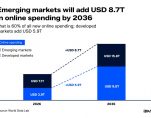
Emerging markets will add USD 8.7T in online spending by 2036

But this new consumer class will not shop the same way developed-market consumers do: by 2036, only 20% of adults in emerging markets will hold a credit card, against 66% in developed markets.

Global online spending is projected to grow from USD 11 trillion in 2026 to USD 25.6 trillion in 2036. Emerging markets add USD 8.7 trillion of that increase (60% of all new online spending), with China (USD +4.7 trillion) and India (USD +1.3 trillion) leading this growth. Indonesia (USD +243 billion), Brazil (USD +249 billion) and Mexico (USD +191 billion) form the next tier.

The categories matter as much as the markets. Online gaming spending in emerging markets grows 14% a year over the decade, the fastest of any category, and SaaS nearly 10%. Emerging markets will generate 76% of global growth in social media spending and 64% in SaaS.

The demographic picture challenges a common assumption. Consumers aged 45 and over account for 51% of emerging markets’ online spending growth through 2036, and spending by those aged 65 and over grows 12% a year, faster than any other age group.

The outlook was discussed during “Navigating Payments: How innovation and fragmentation are changing the game for e-commerce,” a webinar co-hosted by World Data Lab (WDL) and EBANX.

“Over the next ten years, people aged 45 and over will add USD 4.4 trillion in online spending in emerging markets, half of all the growth. Some of them already shop on their phones and will keep doing so as they get older. Others will buy online for the first time in their fifties or sixties. Merchants who build their checkout only for a 25-year-old will miss both groups,” explained Wolfgang Fengler, CEO of WDL.

The study models consumer spending, demographics, and financial access across 184 countries to 2036, drawing on the World Bank’s Global Findex and WDL’s consumer models, combined with EBANX’s experience processing payments for global merchants in emerging markets since 2012.

“If your checkout only takes credit cards, you are competing for one in five adults in emerging markets and conceding the other four”, said Marie-Elise Droga, Chief Revenue Officer of EBANX. “The merchants growing fastest with us didn’t wait for cards to arrive: they added the payment rails their customers already use, and they’re taking new buyers, bigger baskets and recurring revenue that card-only competitors can’t even see.”

834 million new online buyers, 281 million new credit cards

Between 2026 and 2036, the global economy will add 834 million online buyers but only 281 million credit card holders—a ratio of nearly three to one. In emerging markets, two in three new online buyers (67%) will arrive without a credit card. Adults without it already account for 55% of online spending in emerging markets, a share that rises to 90% in India and 93% in Sub-Saharan Africa. Credit cardless adults also represent 52% to 59% of spending in every digital category, from gaming and SaaS to streaming and travel.

Digital payment use is also running ahead of online shopping. Of the 2.6 billion emerging-market adults spending between USD 6 and USD 25 a day, 70% already pay merchants digitally while only 33% buy online, leaving at least 957 million digitally active consumers who are not yet online buyers. Many hold a bank account or mobile wallet but no card that works at an international checkout.

“This is closely tied to the innovation that came out of the financial industry in emerging markets, which developed solutions for an increasingly mobile economy and for the habits of local consumers. Today, we call them local payment methods, or LPMs, and they allowed e-commerce growth to decouple from the credit card, which still has very low penetration in these countries,” said Estelita Hass, head of Market Intelligence at EBANX.

Subscriptions are the next frontier — and India shows why

Recurring categories such as streaming, SaaS and online education will reach USD 2.1 trillion a year in emerging markets by 2036, with USD 1.1 trillion coming from adults without a credit card. In India, 82% of recurring online spending will be cardless. Account-based recurring rails are beginning to close that gap: a global SaaS company saw a 20% uplift in new subscribers after adding UPI at checkout in India, and cybersecurity company Nord Security now generates 28% of its revenue in Brazil through Pix Automático, Brazil’s recurring instant payment, six months after launching it with EBANX.

The webinar presentation is available at [LINK].

Hashtag: #EBANX #WorldDataLab #Fintech #Payments #EmergingMarkets #Consumers

The issuer is solely responsible for the content of this announcement.

ABOUT EBANX

EBANX is the leading technology platform connecting global businesses to the world’s fastest-growing digital markets. Founded in 2012 in Brazil, EBANX was built with a mission to expand access to international digital commerce. Leveraging proprietary technology, deep market expertise, and robust infrastructure, the platform enables global businesses to offer hundreds of local payment methods and streamline cross-border payments across Latin America, Africa, and Asia. With a global footprint, it established a technology and regulatory headquarters in Singapore in 2026. More than just payments, EBANX drives growth, enhances sales, and delivers seamless purchase experiences for businesses and end users alike.

For further information, please visit:

Website:
LinkedIn:

Overnight AI challenge saw 60 participants tackle a series of challenges using OpenAI Codex, with Kay Hng Quek taking the top prize

SINGAPORE – Media OutReach Newswire – 26 October 2026 – Coupang, a Seattle-based technology company that serves customers in 190 countries and territories, co-hosted an overnight AI hackathon, AI Grand Prix Singapore 2026 (“AI Grand Prix“) with OpenAI. It was presented by Elev8, with Carousell Group as venue partner.

Overnight AI challenge saw 60 participants tackle a series of challenges using OpenAI Codex, with Kay Hng Quek taking the top prize

Held from 24 to 25 October 2026 at Carousell Campus, the overnight AI Grand Prix brought together 60 participants, selected from a pool of 150 applicants, to tackle a series of challenges that tested their technical skills, creativity and ability to solve problems under pressure. All participants competed in individual challenges and formed 14 teams for the group challenge. Engagement remained strong through the night, with participants continuing to work on their solutions into the early hours.

From Challenge to Working Solution

Unlike a traditional hackathon centred on a single problem statement, the AI Grand Prix was a multi-challenge competition, requiring them to adapt their approach as the competition progressed. Using OpenAI Codex, participants were tasked with three distinct challenges: Game Hack, which focused on developing creative AI-powered games; Spot the Mismatch, a technical challenge to identify discrepancies in AI-generated product descriptions, images and prices; and Group Hack, in which 14 teams developed AI-powered shopping experiences and solutions. Performance across the challenges was assessed collectively to determine the overall rankings.

Taking the top spot was Kay Hng Quek, who demonstrated strong, consistent problem-solving skills across different technical challenges. He received the Champion’s Builder Kit, a special first-place award comprising a Mac mini, DJI Mic 3 and Elgato Stream Deck Plus, designed to support continued experimentation and creation as an AI builder.

A total of US$13,000 in OpenAI API credits was shared among the winners and OpenAI subscription benefits were also provided to all participants, alongside unlimited Codex usage resets during the event to encourage experimentation with different ideas and approaches. The top 10 participants are scheduled to attend an exclusive networking dinner on 26 October with leadership and technical representatives from Coupang and OpenAI, offering an opportunity to exchange ideas and experiences in building with AI.

Xin Fu, VP of Engineering at Coupang (left), and winner Kay Hng Quek (right)

“AI Grand Prix was an incredible opportunity to push myself beyond my comfort zone and explore what’s possible with AI. The variety of challenges encouraged us to think creatively, adapt quickly and approach problems from different perspectives. What made the experience even more rewarding was being surrounded by talented, passionate builders who shared ideas and inspired one another. I’m grateful to have been part of such an exciting community, and especially for Jerel, my cofounder, who brings out the best in me,” said Kay Hng Quek, overall champion of AI Grand Prix Singapore 2026.

“Technology and innovation are at the heart of how we create better experiences for our customers, and we see tremendous potential for AI to further transform the future of commerce. Singapore is home to an exciting community of engineers and researchers, and we are thrilled to co-host this event with OpenAI to provide a platform for them to come together, experiment and innovate with AI,” said Xin Fu, VP of Engineering at Coupang.

Derrick Choi, Head of Applied AI, Codex (APAC) at OpenAI, said, “AI is changing how software is built, giving developers new ways to accelerate the journey from concept to product. The AI Grand Prix highlighted the breadth of Singapore’s developer community. It was a great opportunity to give builders a chance to try different approaches with Codex and explore how they could use it to tackle real-world problems.”

The AI Grand Prix marks Coupang’s first event with OpenAI and underscores its continued investment in building the future of commerce with AI, while leveraging Singapore’s position at the heart of Southeast Asia’s technology ecosystem.

Hashtag: #Coupang

The issuer is solely responsible for the content of this announcement.

About Coupang

Coupang is a technology and Fortune 150 company listed on the New York Stock Exchange (NYSE: CPNG) that provides retail, restaurant delivery, video streaming and fintech services to customers around the world under brands that include Coupang, Eats, Play, Rocket Now and Farfetch. It operates in over 190 countries and territories around the world.

For more information, visit .

Arabian Post Staff -Dubai Singapore and Saudi Arabia have agreed to pursue underground crude oil storage on Jurong Island from the second half of 2027, strengthening supply safeguards amid disruptions caused by the war involving Iran. The two governments announced the proposed arrangement on Monday as Saudi Aramco exchanged a memorandum of understanding with Singapore’s Energy Market Authority and industrial infrastructure agency JTC Corporation during Singapore International […]

SINGAPORE – Media OutReach Newswire – 26 October 2026 – Programme choice, fees, university recognition and career prospects are often among the first considerations when students compare higher education options. For students who may require accessibility support, however, another practical question can be equally relevant: whether they will be able to participate effectively in learning and campus life once they enrol. Accessibility in higher education extends beyond physical infrastructure. It can include how students access learning, participate in classes and assessments, navigate the campus, and communicate individual requirements to their institution.

In Singapore, the Enabling Masterplan 2030 (EMP2030) sets out the national vision of becoming a more inclusive society by 2030. Its 29 recommendations span three strategic themes, including strengthening support for lifelong learning. One of its stated aspirations is for persons with disabilities to have greater access to lifelong learning opportunities and resources by 2030. Against this backdrop, SIM Global Education (SIM GE) is highlighting why accessibility should form part of the conversation when students and families evaluate their higher education choices.

Accessibility considerations can begin before classes start

Students who anticipate requiring accessibility support may benefit from raising their needs before beginning their studies, rather than waiting until an issue emerges during the semester. SIM GE encourages students with disabilities to contact its Student Development team early to explore accessibility services, including where formal documentation or a diagnosis may not yet be available. The institution works with its partners to reduce barriers in academic and non-academic areas.

Early discussion does not mean that every requested arrangement will automatically apply. SIM GE notes that available access arrangements depend on the university associated with the student’s programme. This is particularly relevant when comparing programmes delivered in collaboration with different university partners. Students may therefore need to understand how accessibility arrangements apply to the specific qualification they are considering, rather than assuming that the same provisions apply across all programmes.

Physical accessibility forms one part of the student experience

The physical environment remains an important consideration, particularly for students with mobility or other access requirements. SIM’s current campus accessibility provisions include ramps for building access, automatic sliding doors at the main entrances to Blocks A and B, stair lifts, accessible toilets and parking spaces, Braille on lift buttons and lift service at the overhead bridge opposite the campus. SIM also acknowledges on its accessibility information page that gaps in physical accessibility may still exist and provides a channel for students to raise barriers they encounter while navigating the campus.

For prospective students, this suggests that a campus visit can serve a purpose beyond viewing lecture theatres and recreational facilities. Students with particular accessibility requirements may also use the opportunity to understand how they would move between classrooms, student services, study spaces and other frequently used parts of the campus.

Inclusive learning extends beyond campus infrastructure

An accessible campus alone does not necessarily make the overall learning experience accessible. UNESCO has highlighted that students with disabilities can face barriers to higher education that extend beyond physical access, including barriers associated with learning environments and participation. It has called for broader collaboration to strengthen inclusion and equity within higher education.

For institutions, this places attention not only on facilities but also on how teaching and learning respond to different student needs. In 2026, SIM’s Centre for Teaching & Learning introduced a training series aimed at helping lecturers better understand and respond to students with special needs and diverse learning profiles. The initiative forms part of SIM Academic Division’s professional development efforts around more inclusive classroom practices.

Such efforts reflect a wider consideration for students choosing where to study: whether accessibility is addressed only through physical facilities or is also considered in the learning environment.

Programme-specific arrangements need to be understood early

Accessibility requirements can differ considerably between students. They can also be affected by programme structures, assessment requirements and the policies of the relevant awarding institution. SIM GE therefore advises early contact so that students can explore what accessibility services may be relevant to their individual circumstances. Its published guidance makes clear that available access arrangements are dependent on the university for the programme concerned.

For students and families comparing higher education options, practical considerations may include identifying who coordinates accessibility support, how early requirements should be raised, whether arrangements involve the institution, the awarding university or both, and what process applies if a student’s needs change during the course of study. Establishing these details before enrolment can provide greater clarity about what support may be available and what steps a student may need to take.

Accessibility is becoming part of the broader inclusion agenda

Singapore’s approach under EMP2030 places lifelong learning within the broader national effort to enable persons with disabilities to participate more fully in society. The Government’s 2025 updates to the Masterplan also included work to increase the availability of accessible training courses, alongside initiatives to create more inclusive physical and social environments.

Higher education institutions form one part of that wider learning ecosystem.

For prospective students, choosing a university will continue to involve considerations such as academic quality, programme fit, cost and future opportunities. For those who require accessibility support, understanding the learning environment and available support arrangements can provide another important piece of information before making that decision.

SIM GE’s position is that these conversations are better started early. By understanding what support is available, how it applies to a particular programme and where potential barriers may exist, students can make a more informed assessment of whether a learning environment meets their needs before their university journey begins.

References:

  1. Ministry of Social and Family Development — Enabling Masterplan 2030 – https://www.msf.gov.sg/what-we-do/enabling-masterplans/emp2030
  2. Ministry of Social and Family Development — EMP2030 Strategic Themes. – https://www.msf.gov.sg/what-we-do/enabling-masterplans/strategic-themes
  3. SIM Global Education — Student Accessibility – https://www.sim.edu.sg/degrees-diplomas/life-at-sim/student-care
  4. SIM Global Education — Student Care – https://www.sim.edu.sg/degrees-diplomas/life-at-sim/student-care
  5. SIM — Academic Development – https://www.sim.edu.sg/academics/teach
  6. UNESCO — Breaking Barriers in Higher Education for Students with Disabilities. Discusses accessibility and inclusion challenges faced by students with disabilities in higher education – https://www.unesco.org/en/articles/breaking-barriers-higher-education-and-students-disabilities

Hashtag: #SIMGlobalEducation #SIMGE

The issuer is solely responsible for the content of this announcement.

About SIM Global Education

SIM Global Education (SIM GE) is a leading private education institution in Singapore and the region. We offer more than 170 academic programmes ranging from diplomas and graduate diploma programmes to bachelor’s and master’s degree programmes with some of the world’s most reputable universities from Australia, Canada, Europe, United Kingdom, and the United States. SIM GE’s cohort is made up of 17,000 full- and part-time students and adult learners, of which approximately 41% are international students hailing from over 50 countries.

SIM GE’s holistic learning approach and culturally diverse learning environment aim to equip students with knowledge, industry skills and employability competencies, as well as a global perspective to succeed as future leaders in a fast-changing, technologically driven world.

For more information on SIM Global Education, visit

  • New report sets out a method the industry can use to put a financial value on climate resilience
  • The Westbund Central case study shows that its resilience measures are expected to keep storm-surge and rainfall-flood losses in 2050 below the losses an unprotected building would face today

HONG KONG SAR – Media OutReach Newswire – 23 October 2026 – Hongkong Land Holdings Limited (“Hongkong Land”) today published Building Value That Lasts: Quantifying the Return on Climate Resilience in Real Estate. The report developed with Marsh puts a financial value on designing buildings for a changing climate. Its case study is Westbund Central, Hongkong Land’s mixed-use waterfront development of approximately 1.7 million sq. m. on Shanghai’s Huangpu River.

(From left to right) From left: Michael Long, Head of Group Sustainability, Hongkong Land; Stuart Grant, Chief Executive of Westbund Central, Hongkong Land; Swenja Surminski, Managing Director of Climate and Sustainability, Marsh; and Michael Li, Chairman and President, Marsh Risk China.

The report finds that the development’s resilience measures cut expected storm-surge losses by 84% and rainfall-flood losses by 88% under today’s conditions. Westbund Central’s resilience measures are expected to keep storm-surge and rainfall-flood losses in 2050 below the losses an unprotected building would face today.

Closing the resilience valuation gap

Climate risk now shapes how real estate is assessed, financed and insured. Almost every climate related disclosure acknowledges the need for adaptation, yet fewer than one in ten puts a number on it. Hongkong Land and Marsh set out to close that gap together by treating resilience as an investment with a measurable return, not a cost to be absorbed.

Resilience pays, and the reductions are large

Working with global leading insurance broker and risk advisor Marsh, Hongkong Land modelled the average annual loss (AAL) at Westbund Central from storm surge, rainfall flooding and wind. AAL is the expected yearly cost of physical damage. The modelling compared climate risks today and in 2050 for buildings with and without resilience measures beyond those required by building codes. It assumed a future in which global greenhouse-gas emissions remain high.

Without the development’s enhanced resilience measures, expected storm-surge losses would more than double and wind losses would more than triple by 2050. The measures reduce expected losses as follows:

  • storm-surge losses fall by 84%, both today and in 2050
  • rainfall-flood losses fall by 88% today and 79% in 2050
  • wind losses fall by 36% today and 31% in 2050

Built for the climate of 2050

Westbund Central was engineered for projected climate conditions in 2050, rather than historical conditions. These measures significantly reduce the impact of increasing climate risk:

  • Storm surge: with Westbund Central’s resilience measures in place, average annual losses in 2050 are projected at 0.12%, compared with 0.38% for a building without these measures today.
  • Rainfall flooding: with the resilience measures in place, average annual losses in 2050 are projected at 0.05%, compared with 0.19% for a building without these measures today.

Insurers are raising premiums, tightening terms and withdrawing cover from exposed locations. In that market, a lower and more stable loss profile matters.

Westbund Centrals resilience features include:

  • 23% more drainage capacity, protecting against a 1-in-100-year rainfall event
  • Grade 1 waterproofed basements and the elevation of critical equipment
  • A “Sponge City” network of more than 12 features designed to capture and store stormwater, with capacity exceeding 2,000 m³

The figures are conservative. They count physical damage only and exclude extreme heat, the fastest-growing hazard at the site, which the development manages through design and operations.

Michael T. Smith, Group Chief Executive of Hongkong Land, said: “Climate change is a significant force reshaping real estate. At Westbund Central, climate resilience is core to all that we do because we believe resilience and commercial performance reinforce each other. This report shows the return on that investment can be measured today, with tools that already exist. The industry no longer has any excuse not to.”

Stuart Grant, Chief Executive of Westbund Central, said: “A premium destination is a seamless one. Much of the resilience work at Westbund Central is deliberately invisible to the tenants and visitors who use it every day. Its value shows in the disruption that never reaches them. Keeping the precinct open, comfortable and trading regardless of weather conditions is how resilience facilitates commercial performance.”

Michael Li, Chairman and President of Marsh Risk China, said: “Climate risk is now a balance-sheet risk. Westbund Central shows that adaptation pays back through lower loss exposure and stronger access to capital. As a risk orchestrator, Marsh matches protection needs to capital flows, helping clients quantify resilience and close the valuation gap.”

A method for the industry

The report is offered as a method others can apply, not just as an account of one development. It traces how climate risk can be assessed from site selection through to operations and linked to financial outcomes. It calls on the industry to:

  • quantify early, at site selection and design, when action is most cost-effective
  • bring insurers and lenders in from the start
  • build a shared standard so resilience can be benchmarked across assets, as carbon already is

For further details, please see the full report which is available for download [here].

Hashtag: #HongkongLand

The issuer is solely responsible for the content of this announcement.

Westbund Central

Hongkong Land’s Westbund Central is the Group’s largest-ever single investment. Scheduled to complete in phases up until 2028, it is an US$8 billion development encompassing approximately more than 1.7 million sq. m. of prime mixed-use property strategically located at Shanghai’s Xuhui Waterfront. It is a flagship development of Hongkong Land’s prime commercial properties’ CENTRAL Series. The ultra-premium integrated commercial property includes 240,000 sq. m of retail space, 650,000 sq. m. of premium Grade A offices, 160,000 sq. m. of high-end waterfront luxury residences, two hotels (55,000 sq. m.) and over 50,000 sq. m. of cultural and art venues.

Hongkong Land

Hongkong Land is a major listed property development, investment and management group. It focuses on developing, owning and managing premium and ultra-premium mixed-use real estate in Asian gateway cities, featuring Grade A office, luxury retail, residential and hospitality products. With over US$50 billion in assets under management, Hongkong Land’s ultra-premium mixed-use real estate footprint spans over 1.97 million sq. m. lettable area in operation and 1.43 million sq. m. lettable area under development, with flagship mixed-use projects in Hong Kong, Singapore and Shanghai. Its properties hold industry leading green building certifications and attract the world’s foremost companies and luxury brands. Established in 1889, Hongkong Land takes a long-term view, investing significantly alongside its capital partners and concentrating its portfolio where it can create the most value for tenants, customers and investors. Hongkong Land Holdings Limited has a primary listing on the London Stock Exchange, with secondary listings in Singapore and Bermuda. Hongkong Land is a member of the Jardine Matheson Group.

Marsh
Marsh (NYSE: MRSH) is a global leader in risk, reinsurance and capital, people and investments, and management consulting, advising clients in 130 countries. With more than 95,000 colleagues, Marsh helps build the confidence to thrive through the power of perspective. For more information, visit marsh.com, or follow us on LinkedIn and X.

The partnership pairs LeapThought’s own AI with Google Cloud’s Gemini models and sovereign Cloud offering, giving infrastructure owners control of their data and connected intelligence across the full project and asset lifecycle.

SINGAPORE – Media OutReach Newswire – 23 October 2026 – LeapThought and Google Cloud today announced a strategic partnership to bring sovereign, domain-native AI to the owners and operators of critical building infrastructure, giving them control of their data and sharper decision-making across the full value chain, from delivery through operations.

Ratnakar Garikipati, Founder, Chair, and CEO of LeapThought, alongside Rahul Sharma, Google Cloud Managing Director, APAC Public Sector. The partnership combines LeapThought's specialized AI with Google Cloud's Gemini models and sovereign infrastructure to deliver secure data control and end-to-end intelligence for infrastructure assets.
Ratnakar Garikipati, Founder, Chair, and CEO of LeapThought, alongside Rahul Sharma, Google Cloud Managing Director, APAC Public Sector. The partnership combines LeapThought’s specialized AI with Google Cloud’s Gemini models and sovereign infrastructure to deliver secure data control and end-to-end intelligence for infrastructure assets.

The partnership has two priorities. The first is value chain integration, which connects everyone involved in delivering and running an asset — owners, operators, developers, consultants, contractors, and suppliers — on one governed platform. The second is security and sovereignty: owners can keep control of their data, within compliant, standardized frameworks that can be repeated from one program to the next.

FULCRUMHQ, LeapThought’s globally recognized Integrated Digital Delivery (IDD) platform, gives infrastructure owners the option to run on Google Cloud, including Google’s sovereign, air-gapped solutions for defense, public sector, and private sector environments requiring high security. At its core is GENIEHQ, LeapThought’s own Industrial AI, embedded directly into the platform and built to reason over the structured and unstructured data that defines a capital program — BIM models, GIS and geospatial data, ERP financials, schedules, contracts, reality capture, telemetry, and data from field robotics and sensors. The partnership pairs GENIEHQ with Google Cloud’s Gemini models, giving owners and their delivery teams natural-language access to that data across a project and a portfolio.

The partnership delivers on these two priorities as follows:

1. Value Chain Integration: One Governed Record, Natural-Language Insight

Major capital and building infrastructure programs span owners, operators, developers, consultants, contractors, and suppliers — each typically working in separate systems, with design, construction, and operational data fragmented across handovers. LeapThought’s FULCRUMHQ platform brings this information together into a single governed record that follows an asset from design through operation, giving owners a consistent view across their portfolio, not just a single project.

By running FULCRUMHQ — and the GENIEHQ Industrial AI embedded within it — on Google Cloud, and integrating LeapThought’s proprietary data architecture with Google’s Gemini models, the partnership enables:

  • Interactive Model and Portfolio Querying: Combining GENIEHQ’s deep understanding of project and portfolio data with the multimodal capabilities of Gemini, owners, engineers, project managers, and field teams can ask complex, plain-language questions directly against BIM models and portfolio data — instead of manually clicking through complex 3D CAD/BIM model trees or running predefined filter scripts — such as identifying clash detections, extracting exact material quantities, verifying regulatory code compliance, or surfacing risk trends across a program (e.g., “Show me all fire-rated doors on Level 3 that don’t match the latest spec,” or “Which contractors across our portfolio have the highest rate of non- conforming work this quarter”).
  • Global Scale and Reliability: Google Cloud provides the high-performance compute and elastic scalability needed to process compute-intense multi-gigabyte 3D models and point-cloud datasets, across a single project or an entire portfolio, in real time.

2. Security and Sovereignty: Full Control on Google Cloud’s Sovereign Solutions

For critical civil assets, defense installations, public sector agencies, and private sector owners where data cannot traverse the public cloud, LeapThought gives owners the choice to deploy on Google Cloud’s data residency solutions, including Google Cloud Data Boundary, Google Cloud Dedicated, and Google Distributed Cloud. In these environments, GENIEHQ, LeapThought’s Industrial AI embedded within FULCRUMHQ, runs alongside Gemini locally, within the owner’s chosen security boundary, ensuring zero cross-boundary exposure or unauthorized external telemetry.

“The value of an asset now lies as much in the intelligence around it as in its physical form. That intelligence belongs to the owner, and it must be secure, sovereign, and shared across the whole value chain. Demand for this is growing quickly, in Asia and around the world, and that is what brought us and Google Cloud together. We’re starting from Singapore and building toward a standard for critical infrastructure everywhere,” said Ratnakar Garikipati, Founder, Chairman, and CEO of LeapThought.

“Public sector and critical infrastructure agencies manage some of the most intricate engineering and regulatory datasets in the world. The partnership between Google Cloud and LeapThought enables project teams and portfolio owners to quickly surface actionable insights directly from complex BIM models and program data using everyday language. Combined with Google’s sovereign, air-gapped solutions, we’re providing agencies with the option to modernize project workflows while maintaining strict data governance, residency, and operational sovereignty,” said Rahul Sharma, Managing Director, APAC Public Sector, Google Cloud.

Hashtag: #LeapThought

The issuer is solely responsible for the content of this announcement.

About LeapThought

LeapThought is a US technology company that builds software connecting people, data, and AI across the infrastructure lifecycle. It is headquartered in Bellevue, Washington, has its Asia headquarters in Singapore, and operates across the United States, Brazil, Singapore, and New Zealand. Its FULCRUMHQ platform and embedded GENIEHQ Industrial AI serve public agencies, developers, consultants, contractors, and universities and institutes of higher learning. Clients include Singapore’s Land Transport Authority, Building and Construction Authority, and JTC. The company was founded and led by Ratnakar Garikipati.

As younger travellers reshape travel across Asia Pacific, familiar payment options are becoming part of a smoother journey from search to booking.

SINGAPORE – Media OutReach Newswire – 23 October 2026 – Finding a suitable flight is only one part of booking a trip. For travellers comparing regional journeys online, the final decision can also depend on what happens at checkout, from the currency displayed to whether their preferred way to pay is available.

The payment options available at checkout can influence where consumers choose to complete a purchase. According to the 2025 Global Digital Shopping Index: Singapore Edition, 68% of Singapore consumers said access to their preferred payment option influences where they shop, while 41% described it as highly influential. Credit cards, debit cards and digital wallets also ranked among consumers’ preferred payment methods for online purchases.

For travellers, this creates a simple expectation: even when the destination is overseas, checkout should not feel unfamiliar.

For travel platforms, this means convenience needs to extend beyond search and comparison to the final step of booking. Airpaz, a travel booking platform founded in 2011, adapts its booking experience to the market where the traveller is booking, supporting more than 100 payment methods, 61 currencies and 38 languages. In Singapore, available options include PayNow, alongside major credit and debit cards, PayPal, Google Pay and other payment methods.

“Travellers may be heading to the same destination, but how they prefer to complete a booking can differ significantly from one market to another,” said Wesley Wijaya, Chief of Partnership at Airpaz. “Making familiar payment options available helps keep the final step of booking as straightforward as the search itself.”

The importance of that convenience becomes even clearer as travel habits change. The Pacific Asia Travel Association‘s September 2026 Tourism in Focus report, produced with Euromonitor International, found that 11% of Gen Z travellers in APAC take day trips weekly, while 25% cite value for money as their primary trip criterion.

With Gen Z now representing nearly a quarter of total travel spending, these findings highlight the growing commercial importance of younger travellers and the emphasis they place on value when making travel decisions. For this group, the ability to compare a broad range of flights and complete payment using a familiar method can help make the overall booking journey more convenient and easier to repeat.

This is where breadth of choice also becomes important. Airpaz provides access to more than 450 airlines and over 600,000 routes worldwide, giving travellers options across short regional getaways as well as longer international journeys. Popular regional routes available through the platform include Singapore–Kuala Lumpur and Singapore–Bangkok.

“Convenience is about more than comparing fares,” Wesley added. “It is also about how well a platform supports travellers throughout the booking journey, from evaluating their options to completing a transaction. Access to 24/7 live chat and travel protection options can provide an added layer of reassurance, particularly when plans change or travellers need support along the way.”

Whether it is a short regional getaway or a longer holiday, payment flexibility gives travellers another layer of choice once they have found the fare, schedule and route that suit their plans. Airpaz also offers reschedule and refund add-ons, with 24/7 live chat available to support travellers when plans change after booking.

Travellers can compare available flight and booking options through Airpaz.

The issuer is solely responsible for the content of this announcement.

About Airpaz

Airpaz is a Jakarta-headquartered travel booking platform founded in 2011. The company offers flight bookings, hotel and accommodation reservations, and activity bookings. Its mobile apps for iOS and Android support multiple currencies and languages, helping travellers plan and book in a more localised way. Airpaz partners with airlines and accommodation providers worldwide and aims to make travel planning simple, affordable and seamless from search to booking. Visit to explore available travel options.

QashierGM works from each merchant’s own sales, payouts and menu, and gets routine work done with the owner’s approval. With Crew, Qashier’s new team chat, anyone on the team can tag @GM to get things done, and QashierGM acts only within each person’s role.

SINGAPORE – Media OutReach Newswire – 23 October 2026 – Qashier, the unified merchant operating system serving more than 25,000 businesses across Southeast Asia, today launched QashierGM, an AI general manager that works with a merchant’s whole team. Available at no additional cost to all Qashier merchants in Singapore, QashierGM lives in QashierHQ, the web and mobile app (Android and iOS) merchants use to manage their sales, payouts, products and staff. Owners can ask it about sales, payouts and products in plain language. Merchants on the Qashier plan also get Crew, a new team chat where staff can bring QashierGM into any conversation by tagging @GM. Malaysia, Thailand and the Philippines follow in November.

Qashier_QashierGM_Press_Release_Hero_Banner

Because QashierGM works directly from each merchant’s own transactions and settlements, it can do what a general-purpose chatbot cannot: explain, line by line, why a payout is lower than the day’s sales, or show which outlet is underperforming this week. Owners get answers grounded in their actual operations, without piecing together reports.

“Most small business owners can’t afford a general manager, so they become one after closing, going through reports at midnight,” said Christopher Choo, Co-Founder and CEO of Qashier. “QashierGM is the manager they never had. It already knows the business, takes on the routine work and never makes a change without asking. With Crew, it now works alongside the whole team, not just the owner.”

The launch follows an open beta that began in September with merchants ranging from single-outlet cafés and shops to multi-outlet chains, with F&B operators the most active. Their most common questions were about sales trends, best sellers and payouts, and with the year-end festive season approaching, many are asking QashierGM to suggest festive promotions built around their most popular items.

Jun Rong, Operations Manager of Coexist Coffee Co., likens using QashierGM to talking to his store managers, only faster. “Running a café means wearing every hat, and the numbers usually wait until after closing. QashierGM already knows our sales, payouts and menu, so I just ask. When we plan a promotion, it suggests ideas based on what our customers actually buy, and nothing changes until I confirm. It feels like having a general manager who’s been with us from day one.”

QashierGM also takes routine admin off the owner’s plate. An owner can ask it to update a price, mark an item as sold out or add a new product, and QashierGM shows a card with exactly what will change and where. Nothing goes live until the owner taps confirm. Multi-outlet operators can compare stores, spot the one underperforming and push a change to every store in one request. Store managers see and change only their own store. Owners can also set alerts in their own words, such as “alert me on any unusual refunds” or “tell me when the first staff clocks in”, and QashierGM tells them when it matters.

Crew: the whole team, with QashierGM in the conversation

Crew, included in the Qashier plan and Enterprise plans, gives a merchant’s team a work chat of its own, separate from personal messaging groups where messages get lost and former staff keep the history. Owners, managers, kitchen and floor staff get private direct messages, group chats by team or department, and announcements with read receipts. Anyone can tag @GM to check a number, update an item or send a customer an invoice with a payment link. QashierGM acts only with the permissions of the person who tagged it, sends bigger changes to whoever can approve them right in the chat, and posts an update when an invoice is paid. It only sees the conversations it is tagged into.

On a typical day, a floor staff member can mark a dish sold out, a manager can approve a price change from her phone, and an owner can send an event deposit invoice and see it paid, all in the same app. Crew and QashierGM work in all major languages used across the region, including English, Mandarin Chinese, Malay and Thai.

Connectors to third party apps such as Gmail and Google Business Profile arrive in November, extending QashierGM beyond Qashier to supplier emails, customer enquiries and Google reviews. “A good general manager handles the work wherever it lands, not just inside one system,” added Choo. “This is the first step.”

Qashier processes more than US$1 billion in annualised payment volume for over 25,000 merchants across Singapore, Malaysia, Thailand and the Philippines. The company has been profitable since December 2025 and raised US$6.125 million in Series A+ financing in June 2026. QashierGM is available now to all Qashier merchants in Singapore through QashierHQ on web, Android and iOS, at no additional cost. Crew is included in the Qashier plan and Enterprise plans. Both launch in Malaysia, Thailand and the Philippines in November. To learn more, visit https://qashier.com/sg/.

Hashtag: #Qashier #QashierGM


Tiktok:

The issuer is solely responsible for the content of this announcement.

Qashier Pte. Ltd.

Qashier is a unified merchant operating system that brings together payments, business software, embedded financial services and customer engagement tools on one platform. Operating across Singapore, Malaysia, Thailand and the Philippines, Qashier supports more than 25,000 SMEs with an integrated ecosystem built for Southeast Asia’s digital economy. Qashier is licensed by the Monetary Authority of Singapore as a Major Payment Institution. Founded in Singapore in 2019, Qashier gives merchants an AI general manager, QashierGM, and a team chat, Crew, through QashierHQ.

Production-grade in-app messaging with no credit card required to start, plus an optional Cloud Bonus offering your choice of either 15% off AWS or 30% off Alibaba Cloud

SINGAPORE – Media OutReach Newswire – 22 October 2026 – Nexconn, a global cloud communications platform, announced the launch of its production-ready Free Chat Plan. Under the new initiative, developers and startups can deploy enterprise-grade chat infrastructure for up to 10,000 monthly active users (MAU) completely free—with full Chat Pro features enabled and no credit card required.

The launch tackles a persistent industry pain point: typical free tiers across the category cap at 100 to 1,000 MAU and restrict apps to sandbox environments—thresholds far too low to validate user retention or viral growth.

“A free tier should empower teams to validate their business model, not just verify that an SDK compiles,” said Will Song, Head of Global Business at Nexconn.

To further extend startup runway, Nexconn also introduced an additional Cloud Bonus: teams that link a payment method can choose between 15% off AWS or 30% off Alibaba Cloud to offset their backend cloud costs.

The offer is open to teams that simply send their first in-app message by December 31, 2026, 11:59 p.m. Singapore Time (SGT, UTC+8), locking in up to 10,000 MAU of Pro chat (valued at $860/month). Developers can claim the plan and view full details at https://www.nexconn.ai/free-chat-api?utm_source=pr.

What the Free Chat Plan Includes

The plan provides comprehensive capabilities across the entire application lifecycle:

Rich Messaging Architecture: Unlimited messages across direct (1-on-1), group, community, and open channels.

Modern Social Interactions: Read receipts, typing indicators, user mentions, unread badges, and cross-platform multi-device synchronization.

Native Push: Built-in multi-channel mobile push gateway included with no add-on fees.

High-Capacity Resource Quotas: Supports up to 500 peak concurrent connections, 10 GB of cloud storage, and 180 days of searchable message history.

No-charge Migration Support: End-to-end data migration support for teams transitioning from Sendbird, Stream, CometChat, PubNub, Agora, or Twilio.

Developer Acceleration: An open-source AI Integration Skill allows developers to generate client SDK code and backend token endpoints via simple text prompts.

The Cloud Bonus: The 10,000 MAU Chat plan remains free and does not require a credit card. Teams may optionally link a payment method to activate the Cloud Bonus—15% off AWS services or 30% off Alibaba Cloud services.

How to Get Started

Sign Up: Create an account in the Nexconn Console.

Build: Integrate the SDK manually or with the open-source AI Skill.

Activate Your Free Plan: Complete enrollment by simply sending at least one message before December 31, 2026, 11:59 p.m. Singapore Time (SGT, UTC+8).

(Optional) Cloud Discounts: Link a payment method to activate your choice of 15% off AWS services or 30% off Alibaba Cloud services.

Hashtag: #Nexconn #FreeChatPlan #InAppMessaging

The issuer is solely responsible for the content of this announcement.

About Nexconn

Nexconn is a global cloud communications platform engineered for developers, high-growth startups, and enterprises building real-time, mission-critical digital experiences.

The company delivers a unified real-time portfolio tailored to global scale:

AICP (AI Communication Platform): High-performance Chat and Call (voice/video) APIs, combined with production-ready, scenario-specific AI Agents (such as Smart Office and Social Marketing). This unified platform allows businesses to seamlessly embed intelligent, context-aware communications into any web or mobile application.

Enterprise & Public Sector Deployments: Carrier-grade private cloud and on-premises solutions engineered for organizations and government bodies requiring strict data residency, privacy, and compliance.

Japanese banks, airlines and transport operators suspended digital services as companies rushed to install emergency security patches for critical vulnerabilities in PHP, a programming language widely used across the internet. The disruptions spread across Japan on Wednesday and Thursday, affecting online banking, airline applications, airport information systems and commercial websites. Companies temporarily disabled vulnerable services while assessing their exposure to two security flaws that could allow attackers […]

HA NOI, VIETNAM – Media OutReach Newswire – 22 October 2026 – Vietnam Airlines has become the first Asian airline to receive the World’s Best Culinary Airline 2026 award at the World Culinary Awards, earning recognition ahead of leading international carriers including Emirates, Qatar Airways, Singapore Airlines, Air France, Cathay Pacific and Turkish Airlines.

The accolade recognises Vietnam Airlines' continued investment in its inflight dining experience as part of its ambition to achieve five star standards by 2030.
The accolade recognises Vietnam Airlines’ continued investment in its inflight dining experience as part of its ambition to achieve five star standards by 2030.

An annual global awards programme affiliated with the World Travel Awards, the World Culinary Awards celebrates excellence and innovation across the culinary industry.

The accolade recognises Vietnam Airlines’ continued investment in its inflight dining experience as part of its ambition to achieve five star service standards by 2030. Drawing on Vietnam’s rich culinary heritage and locally sourced ingredients, the airline’s menus bring together regional specialities, contemporary cooking techniques and thoughtful presentation. Dishes are tailored to individual routes and cabin classes, taking into account passenger preferences and the unique demands of dining at altitude.

From Pho and Hue style beef noodle soup to Quang style noodles and Banh Mi Hoi An, iconic Vietnamese dishes feature prominently on Vietnam Airlines’ menus. Each dish is carefully crafted to retain its authentic flavours, taking into account how changes in taste perception at altitude can affect the inflight dining experience. Vietnam Airlines also works closely with its catering partners and cabin crew to ensure consistent food quality, serving temperatures and presentation across its flights.

Beyond its signature dishes, Vietnam Airlines showcases the country’s agricultural diversity through locally grown produce. Seasonal ingredients include strawberries and plums from Son La, lychees from Luc Ngan, egg lychees and longan from Hung Yen, macadamia nuts from Dien Bien, cashews from Dong Nai, and dragon fruit and melons from Lam Dong. The selection varies according to seasonal availability and inflight catering requirements.

In the first nine months of 2026, Vietnam Airlines and its affiliated catering companies used a total of 2,260 tonnes of domestically grown fruits and vegetables, supporting local producers and bringing the flavours of Vietnam to passengers on board.

The airline also works with local authorities to share the stories behind these ingredients and the communities that produce them. Through Heritage magazine, inflight entertainment and other communication channels, passengers can discover the origins of the food served on board and the regional traditions behind each speciality.

Dang Anh Tuan, Executive Vice President of Vietnam Airlines, said: “This award is a proud milestone for Vietnam Airlines and a testament to our commitment to delivering an exceptional inflight dining experience. It also underscores the international appeal of Vietnamese cuisine and its potential to connect travellers with our country’s cultural identity. As Vietnam’s national flag carrier, we see every journey as an opportunity to share the richness of our culinary heritage, the diversity of our regional produce and the warmth of Vietnamese hospitality. As we work towards achieving five-star service standards by 2030, we remain focused on meeting the highest international standards while preserving the distinctive Vietnamese character that sets our service apart. Ultimately, we want every meal on board to be a memorable part of the journey and a reason for passengers to fly with us again.”

Beyond inflight dining, Vietnam Airlines incorporates Vietnamese cultural elements throughout the passenger journey, from airport services and Lotus lounges to its onboard products and services. The golden lotus in its brand identity, flight attendants’ traditional ao dai uniforms and the Lac bird motif on its aircraft all reflect the country’s heritage. Vietnamese cuisine adds another dimension to this cultural experience, introducing international passengers to the country’s regional flavours and culinary traditions.

Through these efforts, Vietnam Airlines continues to promote Vietnam’s cultural heritage and share its distinctive identity with the world as the country’s national flag carrier.

Hashtag: #VietnamAirlines

The issuer is solely responsible for the content of this announcement.

Government websites across Europe were temporarily shut down on Wednesday as authorities rushed to contain two critical vulnerabilities in PHP, the programming language supporting a substantial share of the world’s websites. The emergency prompted precautionary outages affecting public services in the Netherlands, Finland, France and Germany, while PHP developers released security updates and urged operators to install them immediately. Cybersecurity authorities warned that vulnerable servers could allow […]

PHP developers have released emergency security updates addressing two critical vulnerabilities after details of the flaws surfaced online ahead of their planned disclosure, prompting cybersecurity authorities worldwide to warn organisations about the risk of unauthorised access to vulnerable web servers. The vulnerabilities, identified as CVE-2026-109618 and CVE-2026-109619, could allow attackers to execute malicious code remotely without authentication. The PHP security team released patches on Wednesday, October 21, […]

The Orchard Road clinic outlines a goal-based alternative to off-the-shelf test packages*

SINGAPORE – Media OutReach Newswire – 22 October 2026 – Hisential Clinics Singapore, a doctor-led health screening and men’s health clinic at Mandarin Gallery, Orchard Road, has outlined its goal-based approach to men’s preventive health ahead of Movember 2026. As consumer platforms market standardised blood test panels directly to the public, the clinic is highlighting the role of doctor-led risk stratification, physical examination and long-term follow-up in effective health screening. Group Medical Director Dr Julian Ng is available for interviews during November to discuss the approach.

Each November, Movember campaigns encourage men to see a doctor. Health outcomes for men, however, have been slow to improve, according to the clinic. The clinic attributes this gap partly to preventive health having followed a consumerist route. Digital wellness platforms now sell blood tests the way meal-kit apps sell dinners: a panel is selected, purchased and delivered. Screening is packaged like phone plans, tiered and compared by item counts. The underlying assumption is that a health check is a product.

“The first question we ask is not which package are you here for. It is what is the goal,” Dr Ng said. “A thirty-five-year-old with a family history of heart disease and a fit fifty-year-old with none do not need the same tests. They need the same conversation. Everything that follows, what we test, what we watch, when we see you again, is built backwards from that answer.”

The clinical case against off-the-shelf testing is straightforward: medicine is not just blood tests. A number on a report means different things in different bodies. The same cholesterol reading can be reassuring for one man and a warning for another, depending on his age, family history, blood pressure, and what a doctor finds on examination.

This is risk stratification, and it is why the physical examination still matters in an age of app-ordered panels. A murmur heard through a stethoscope, a detail no mail-order test captures, can change how a doctor interprets a cholesterol reading and what target is appropriate for that patient. Without the examination and the history, screening becomes numbers without medical context.

“Men come to us carrying printouts from testing platforms, sometimes anxious over a value that means very little for them, sometimes reassured by one that should have prompted more questions,” Dr Ng said. “A blood test is a tool, not a diagnosis. It only becomes medicine when somebody takes the time to place it in the context of the person standing in front of them.”

The men who avoid screening appointments are often disciplined in other areas of life, the clinic has observed. What they avoid is being processed: selecting a package from a menu and leaving with numbers nobody explained.

Hisential’s answer is a different kind of appointment. At the Mandarin Gallery clinic, a consultation is built around two things: the goal, and the time to reach it. Time with the practitioner matters twice over. The first question a man asks is usually the safe one he rehearsed, often about cholesterol. The question that actually brought him in surfaces once he trusts the doctor and sees there is time for the answer. Most health systems never hear the second question.

The consultation also builds structure for what follows. Doctor and patient agree on what is being monitored, the patient’s baseline, and what happens at the next check. Patients who leave with that structure keep the habit, the clinic finds. Prevention, in this model, is a series of future decisions set up in advance.

The approach speaks to a wider conversation in Singapore about healthspan, healthy years rather than simply years. Healthspan is not bought in a single transaction, according to the clinic. It is built through understanding one’s health numbers, what they mean in context, and catching quiet changes early, when the response can still be small. That requires a practitioner who knows a patient’s goals and history, not a panel that knows neither.

“The men who do best in preventive health are not the ones who bought the biggest test package on day one,” Dr Ng said. “They are the ones who left with their questions answered, a goal defined, and a reason to return. Everything after that is easy.”

The clinic’s view is that men’s health services more broadly would benefit from the same shift: fewer standardised packages, more appointments and relationships worth keeping.

Hisential Clinics Singapore provides doctor-led health screening and men’s health services at Mandarin Gallery, 333A Orchard Road. Interviews with Dr Julian Ng, Group Medical Director, can be arranged on request.
Hashtag: #MensHealth #HealthScreening #Movember


The issuer is solely responsible for the content of this announcement.

Hisential Clinics Singapore

Hisential Clinics Singapore offers doctor-led health screening and men’s health services at Mandarin Gallery, Orchard Road. More information:

KUALA LUMPUR, MALAYSIA – Media OutReach Newswire – 21 October 2026 – UEM Edgenta Berhad (“UEM Edgenta” or “the Company”), a leading Asset Management and Infrastructure Solutions company, today announced the launch of its inaugural Young Entrepreneurship Programme (YEP), a new initiative developed to identify, train and mentor young entrepreneurs within the Company’s vendor ecosystem. The inaugural cohort comprises six vendors from UEM Edgenta’s Infrastructure Solutions and Asset Management business ecosystems, marking the start of a structured, multi-phase journey towards operational readiness and long-term business growth.

The six vendors were selected through a rigorous, multi-tiered screening process. Companies were assessed against eligibility criteria centred on youthful leadership and business track record, before undergoing desktop audits, pre-assessments and site visits benchmarked against the Malaysia Business Excellence Framework (MBEF). Vendors demonstrating the required readiness, strategic relevance to UEM Edgenta and potential for sustainable growth were shortlisted for the inaugural cohort.

YEP is designed to build on the success of UEM Edgenta’s existing Vendor Development Programme, with a sharper focus on empowering young business owners. The programme aims to develop industry-ready vendors that meet UEM Edgenta’s operational and compliance standards, while strengthening their long-term business viability. In doing so, YEP supports the aspirations of Rancangan Malaysia Ke-13 (RMK13) to raise the socioeconomic standing of the rakyat, particularly through youth empowerment, digital innovation, financial inclusion, and Technical and Vocational Education and Training (TVET).

To deliver the training component, the Company has forged strategic partnerships with Institut Keusahawanan Negara (INSKEN) and the Construction Industry Development Board (CIDB) Malaysia. INSKEN will lead training on business model development, leadership, and strategic planning, culminating in an INSKEN certification, while CIDB will provide technical training on tender, contract, and financial management as well as management systems, supporting participants’ compliance and competitiveness within the construction and infrastructure industry. These external modules are complemented by internal business training delivered through Edgenta Academy.

Shaiful Subhan, Managing Director/Chief Executive Officer of UEM Edgenta, said the programme reflects the Company’s commitment in nurturing a resilient and future-ready vendor base. “As we look ahead, we want to build a supplier ecosystem that is diverse, competitive and driven by capability and performance. We believe opportunities should be earned through commitment, quality and willingness to grow, not simply by how long a company has been in business. A strong supply chain is not built overnight. It is built by investing in people, developing capabilities and creating long-term partnerships that grow together,” he said.

Beyond its immediate vendor ecosystem, UEM Edgenta views YEP as a platform to contribute to the broader national agenda of socioeconomic mobility, helping young business owners transform innovative ideas into commercially viable ventures that, in time, create new employment opportunities within their own communities. The inaugural cohort has been intentionally kept small to allow for high-quality, intensive mentorship and customised training. The Company will evaluate the outcomes of this inaugural batch to guide future investment and the potential expansion of the programme to a wider pool of young entrepreneurs in subsequent years.

Hashtag: #UEMEdgenta #UEMEdgentaBerhad #YEP #YoungEntrepreneurshipProgramme

The issuer is solely responsible for the content of this announcement.

About UEM Edgenta

UEM Edgenta Berhad (“UEM Edgenta”), a wholly-owned subsidiary of UEM Group Berhad, is an Asset Management and Infrastructure Solutions company that delivers integrated, end-to-end solutions across the entire asset lifecycle, combining engineering excellence in design, project management and asset consultancy with tech-enabled asset management capabilities to optimise asset performance, efficiency and resilience.

With operations across Malaysia, Singapore, Indonesia, Taiwan, the United Arab Emirates and the Kingdom of Saudi Arabia, UEM Edgenta supports the reliable and sustainable performance of critical assets, including healthcare facilities, transportation networks and industrial infrastructure.

VISHNU RAJA
RYO YAMADA
HITORI GOTOH
IKUYO KITA