News related to
Space

Stadium 66, the newly unveiled sports bar and wagering venue at Route 66 Casino Hotel in Albuquerque, opens its doors on 4 September 2025, aiming to redefine sports entertainment in the Southwest. The venue pairs a fully equipped dining and viewing experience with a cutting‑edge Caesars Sportsbook, offering both excitement and convenience to fans this NFL season. The venue accommodates up to 250 guests and features expansive LED video walls […]

MrBeast is set to expand into telecommunications by launching a mobile phone service built using existing carrier networks, positioning himself as a mobile virtual network operator. According to investor materials seen by Business Insider, the YouTube star and his company plan to partner with carriers such as AT&T, T‑Mobile or Verizon, rather than constructing costly infrastructure. The business model mirrors that of Mint Mobile, where Ryan Reynolds […]

Rocket Lab has expanded its in‑house manufacturing strength by successfully incorporating Planetary Systems Corporation, a Maryland‑based specialist in satellite separation systems. The deal, announced on 15 November 2021 and concluded by December that year, involved $42 million in cash and 1.72 million shares of Rocket Lab stock, with an additional performance‑based stock earn‑out dependent on PSC’s performance through 2022 and 2023.

PSC, celebrated for its “Canisterized Satellite Dispenser” and Lightband separation systems, boasts a flawless 100 percent mission‑success record across more than 100 launches. Its hardware has served a broad spectrum of launch platforms—from Rocket Lab’s own Electron vehicles to those managed by SpaceX, United Launch Alliance, Northrop Grumman, and international agencies such as Arianespace, the Indian Space Research Organisation, and JAXA.

By bringing PSC into its fold, Rocket Lab enhances its vertically integrated Space Systems division, now including Photon satellite buses, Maxwell dispensers, reaction wheels, star trackers, solar solutions, flight software, and the newly added separation hardware. PSC will continue operations in Maryland under the leadership of Mike Whalen as CEO, with founder Walter Holemans remaining chief engineer.

Chunked behind this strategic move is Rocket Lab’s intent to streamline the satellite deployment value chain, offering customers a one‑stop solution—from launch services to the final separation of payloads in orbit. Founder and CEO Peter Beck noted that integrating PSC’s proven hardware “simplifies the journey to orbit” by aligning hardware, software, spacecraft, and launch into a seamless package.

Alongside the acquisition of Advanced Solutions, Inc. in October 2021, this move aligns with Rocket Lab’s broader objective to secure technology, talent, and production capacity internally, reducing external dependencies. Industry observers have characterised this as a deliberate backward integration effort. A participant in an online space‑industry discussion observed:

“It seems like they are reverse integrating into their supply chain… instead of paying for products, buy the company, make the products for yourself, and make the margin on selling to others.”

Operationally, the acquisition has borne tangible returns. In November 2022, Rocket Lab secured two contracts totalling $14 million to supply Lightband separation systems for the Space Development Agency’s Tranche 1 transport layer constellation, reinforcing its position in national security‑oriented space architecture. The Lightbands, inherited from PSC, now supply critical satellite deployments with demonstrated reliability in specialised environments.

Rocket Lab’s expanded suite of capabilities positions it advantageously within a market increasingly dominated by fully integrated space services providers. By combining its Electron launch vehicle, Photon spacecraft, separation hardware, and on‑orbit software offerings, the company provides end‑to‑end mission support—a compelling proposition for both commercial and government customers.

With growth in space demand showing no signs of abating, particularly in low-Earth orbit constellations and defence networks, consolidating key enabling technologies under one roof offers Rocket Lab both operational efficiencies and competitive edge. The PSC acquisition stands as a pivotal building block in that strategy.

Canada is advancing its Arctic security and defence strategy by expanding collaborations with NATO’s newest members—Finland and Sweden. As the geopolitical landscape shifts, Ottawa is actively moving beyond traditional reliance on the United States to forge deeper military, industrial and technological ties with Nordic allies, reinforcing its sovereignty and resilience in the High North. The Honourable Anita Anand, Minister of Foreign Affairs, has formalised a Canada–Finland strategic […]

A notable surge in interest marks China’s gaming community, with nearly four in 10 individuals expressing a keen desire for generative AI within gaming platforms.

A recently circulated report indicates that 39 per cent of gamers in China would welcome the integration of generative artificial intelligence into their gaming experiences. This figure underscores a significant shift in consumer expectations and highlights generative AI’s burgeoning role as a differentiator in content creation and gameplay dynamics.

The country’s generative AI gaming market is undergoing remarkable growth. A detailed forecast places market value at approximately USD 319.7 million in 2024, rising sharply to an anticipated USD 5.3 billion by 2035, driven by a robust compound annual growth rate of around 29 per cent. This surge is attributed largely to concerted efforts by major players such as Tencent, NetEase, ByteDance, MiHoYo and Alibaba – all heavily investing in generative AI technologies that promise tailored and dynamic gaming experiences.

Governmental backing is shaping much of this momentum: the Ministry of Industry and Information Technology has been advancing policies to encourage AI-driven innovation within the digital economy, reinforcing investments and research in generative AI applications across the gaming landscape.

On the technological front, Tencent recently introduced its Hunyuan 3D-generation system early this year. The platform enables the creation of 3D assets and environments using text prompts, streamlining content generation and unlocking new avenues for immersive game design. NetEase has also made strides by embedding AI-driven features into its mobile games, most notably with dynamic non-player characters that respond with lifelike reactions. Its upcoming title, Justice Online Mobile, will reportedly incorporate chatbot-style AI dialogue systems to allow players to engage in nuanced conversations with NPCs that may alter game progression.

Cloud gaming is emerging as another vector for AI’s influence. Tencent’s cloud gaming platform, START, developed in partnership with NVIDIA, enables users on low-end devices to stream AAA-quality games—blending AI, cloud infrastructure and advanced hardware to expand access and redefine the gaming experience.

Emerging trends include generative AI’s application across multiple stages of game production—from content creation and level design to character animation, testing and quality assurance. Mobile platforms, PC, console and cloud gaming are all key battlegrounds, assisted by both on‑premises and cloud-based deployment models. On-premises models offer enhanced control and data security, whereas cloud deployments grant scalability, faster updates and foster collaborative development.

China’s gaming population, exceeding 600 million users, offers a vast and varied demographic. That scale is bolstering demand for personalised, generative experiences.

Beyond purely technological innovation, generative AI is starting to influence the narrative and emotional depth of gameplay. NPC interactions, procedurally generated story arcs and real‑time adaptations informed by AI are creating fresh, immersive layers of engagement. Developers – both established studios and indie creators – are experimenting to align with gamer preferences and refine the interplay between narrative and agency.

Regulatory frameworks are also evolving. The Cyberspace Administration of China and other authorities introduced “Interim Measures for the Management of Generative AI Services” in August 2023. These regulations aim to ensure ethical application and secure deployment of generative AI technologies across public services – including gaming.

A landmark development has commenced as RRS International Development formally broke ground on the NH Collection Ras Al Khaimah Al Marjan Island Hotel & Apartments, a US‑$100 million mixed‑use venture in collaboration with Minor Hotels. This marks the debut of the NH Collection brand on Al Marjan Island, following its earlier branded residential entry in Palm Jumeirah, Dubai.

Construction will yield 121 hotel keys alongside 36 branded apartments, blending five‑star hospitality with modern residential design. The project’s architecture, crafted by Arkiplan Consulting Architects & Engineers, features a wave‑inspired structure symbolising a seamless union of desert and sea, while interiors by B8 Architectural Prospective Drawings Services bring tropical motifs and lush greenery into open‑plan living spaces. HMK Engineering Consultants serve as Architect of Record, Innovate Project Development is handling project management, and Atlas Star Piling Foundation oversees enabling works.

Rakesh Mirchandani, Co‑Founder of RRS International Development, described the groundbreaking as “more than the start of construction—it’s the beginning of a new chapter,” emphasising investor confidence in both the NH Collection brand and Ras Al Khaimah’s emergence as a global lifestyle destination.

The scheme has already earned multiple industry accolades, including Best Mixed‑Use Development and Best Mixed‑Use Architecture at the 2025–2026 Arabian Property Awards, Best Hospitality Project at the Architecture Leaders Awards, and a nomination for Best Design Concept at the 2025 Commercial Interior Design Awards.

Sanjay Narayandas Dhawan, another Co‑Founder of RRS International Development, noted the emirate’s evolving tourism landscape, highlighting multi‑billion‑dirham investments in leisure and gaming. He sees the new development as aligning with Ras Al Khaimah’s growing international appeal and setting new benchmarks for branded residences and hospitality‑led living.

This announcement builds on Minor Hotels’ strategy to expand its NH Collection portfolio beyond traditional strongholds. Initially unveiled in February 2025, the project is scheduled to open its doors in early 2028 and will comprise 156 keys, including 120 guest rooms and suites alongside 36 serviced apartments. Planned facilities include four restaurants and bars, a gym, an outdoor swimming pool, a kids’ club, a games room, a retail shop and a co‑working space—designed for layered functionality and service excellence.

Minor Hotels’ CEO, Dillip Rajakarier, remarked that the expansion underscores the brand’s global ambition and commitment to establishing NH Collection in new regions including the Middle East. Dhawan reaffirmed RRS’s pride in launching their first boutique hotel on Al Marjan Island, aiming to “blend style, functionality, and exceptional value” while supporting the vision of His Highness Sheikh Saud bin Saqr Al Qasimi, Ruler of Ras Al Khaimah.

Architect Abdulla Al Abdouli, Chief Executive Officer of Marjan—the master developer behind Al Marjan Island—welcomed the project as integral to transforming the destination into a dynamic branded‑tourism hub. He praised the synergy between NH Collection’s service standards and Marjan’s mission to curate high‑quality lifestyle offerings across the emirate.

Located on Al Marjan Island, the hotel and residences benefit from proximity to white‑sandy beaches, resort facilities and a growing leisure‑oriented environment. The project appeals to those seeking convertible living spaces that combine permanent residence, holiday retreat and investment potential—backed by internationally recognised hospitality.

Alongside the NH Collection development, Al Marjan Island is witnessing sweeping growth, including large‑scale tourism and gaming projects such as the Wynn Al Marjan Island integrated resort, which is under construction and slated for opening in early 2027. That mega‑resort will feature over 1,500 rooms, a casino, retail and convention facilities, and a marina for super‑yachts, reinforcing the island’s growing status as a landmark destination.

As the first event held at the newly inaugurated Vietnam Exposition Center in Hanoi, the exhibition titled “80 Years of Independence – Freedom – Happiness” has become a symbol of a modern, ambitious, and globally engaged Vietnam. HANOI, VIETNAM – Media OutReach Newswire – 2 September 2025 – Anyone who finds themselves in Hanoi these days can sense that history is not just something written on faded […]

Advertisements

Connecting thousands of community members with the annual Volunteer Day HONG KONG SAR and SHANGHAI, CHINA – Media OutReach Newswire – 1 September 2025 – Hang Lung Properties Limited (SEHK stock code: 00101) (the “Company” or “Hang Lung”) announced its kick-off of the 65th anniversary celebration month, featuring extensive promotions across Hong Kong and eight cities in mainland China. Together with its annual Nationwide Volunteer Day, the […]

Vivaldi has emphatically confirmed that it will not integrate artificial intelligence tools into its core web browser experience. Jon von Tetzchner, the company’s chief executive, made the position unequivocal: AI-driven chatbots, summarisation engines or form‑filling suggestion tools will not be added “until more rigorous ways to do those things are available”. He cautioned that such features risk turning active browsing into passive consumption, transforming users into spectators rather than […]

TECOM Group has committed AED 1.6 billion to acquire 138 land plots totalling 33 million sq ft from Dubai Holding Asset Management. The move enlarges the Group’s land portfolio to over 209 million sq ft and directly addresses strong customer demand for industrial space at Dubai Industrial City, which currently operates at 99 per cent occupancy. The acquisition reinforces TECOM Group’s role as a key contributor to the industrial sector within the UAE, aligning with national economic objectives such […]

In Dubai, nobody’s impressed by a pair of trainers or a designer watch alone – here, your car does the talking. From Sheikh Zayed Road to Jumeirah Beach, the vehicle you roll in is your calling card, your vibe, your crown. And the beauty? You don’t need to break the bank to sit on the throne. With cheap 7 seater car rental Dubai, you can cruise the city […]

DocumentDB is now officially hosted by the Linux Foundation, transitioning to a vendor-neutral model that promises to shape the future of document-based NoSQL technologies. Microsoft‑developed and built on PostgreSQL, the database has garnered substantial interest, earning nearly 2,000 GitHub stars and drawing contributions from a broad developer community since its debut in early 2025. The Linux Foundation’s governance will secure open‑source stewardship and foster collaboration across the […]

The US Department of the Treasury has issued a formal call for public feedback on cutting‑edge mechanisms that regulated financial institutions might deploy to detect illicit digital asset activity. This request stems from the Guiding and Establishing National Innovation for U. S. Stablecoins Act, signed into law on 18 July 2025, mandating that entities issuing payment stablecoins are treated as financial institutions under anti‑money laundering, sanctions, and related frameworks. The Treasury now seeks input on application programming interfaces, artificial intelligence, digital identity verification, and blockchain analytics as tools to bolster enforcement and transparency. Respondents are invited to submit comments by 17 October 2025.

The Treasury plans to assess submissions to evaluate how these technologies may enhance detection abilities, weigh the associated costs and privacy and cybersecurity implications, and understand operational hurdles. This evaluation will inform a report to Capitol Hill, which will include suggestions for legislative and regulatory action, possibly followed by guidance or rulemaking.

The request arrives on the back of Executive Order 14178, issued in January 2025, advocating for US leadership in digital finance technologies. It also follows the Working Group on Digital Asset Markets report, released in July 2025, which called for stronger AML/CFT and sanctions frameworks, including enhanced public–private cooperation and digital identity measures.

Regulated entities are urged to outline how they are using—or could use—APIs to improve risk detection, for example through real‑time data sharing or transaction monitoring. AI deployment examples might cover systems capable of spotting complex illicit finance networks via large‑scale transaction analysis. Digital identity verification inputs could focus on portable credentials or biometrics, and the blockchain component invites discussion of analytics tools that integrate on‑chain and off‑chain data, as well as efforts to overcome obfuscation techniques.

Treasury’s criteria for evaluating the proposals extend beyond efficacy. Institutions must weigh how sensitive the data is, the privacy implications of collection and analysis, the technological and operational burdens of implementation, and any cybersecurity vulnerabilities.

Industry reactions underscore both opportunity and burden. As the Treasury’s announcement puts it, “innovative tools are critical to advancing efforts to address illicit finance risks but can also present new resource burdens for financial institutions.” Advocacy groups like America’s Credit Unions have endorsed the consultation, framing it as a critical step in aligning stablecoin activity with the GENIUS Act’s one‑year implementation horizon, urging rapid progress toward safe digital asset services for communities.

Law‑firm analysis also points to the broader AML/CFT context. The consulting documents note that the GENIUS Act and its complementary Executive Order seek to fold stablecoin activities into the Bank Secrecy Act framework—bringing them under familiar obligations for AML, sanctions screening, transaction monitoring, and customer due diligence.

The public consultation ends on 17 October 2025. Following that, the Treasury is expected to synthesise the feedback into a report for the Senate’s Banking committee and the House Financial Services committee, and potentially proceed with issuing guidance or initiating rulemaking.

Beyond these regulatory actions, separate developments in the enforcement space illustrate an increasing reliance on technology to combat illicit finance. The IRS’s CI‑FIRST initiative streamlines subpoena processes and heightens data‑sharing with financial institutions to tackle financial crimes, including those linked to illicit trafficking and fraud, using AI and automation.

In parallel, academic innovations continue apace. Recent studies have explored graph neural networks and unsupervised anomaly detection for tracing illicit flows through Bitcoin, offering early malice‑detection frameworks that prioritise interpretability and adaptability—trends that align well with the Treasury’s probe into AI, APIs, identity verification and blockchain monitoring.

Paragraf has clinched a $55 million Series C financing round, anchored by a $35 million injection from Mubadala Investment Company—the sovereign wealth fund of Abu Dhabi—earning Mubadala a 12.8 per cent equity stake in the UK-based firm. The deal, formally approved under the National Security and Investment Act, will underpin Paragraf’s bid to scale up production of graphene-based semiconductors and pursue global expansion plans. Leading the company’s development, co‑founder […]

Major players and startups are racing to establish dominance in India’s quick‑commerce landscape, where urban consumers now expect deliveries within minutes. Blinkit, Zepto, Instamart, Amazon Now, BigBasket Now and others are expanding rapidly, focusing both on speed and diversification beyond groceries, even as questions mount over sustainability.

Blinkit, the q‑commerce arm of Eternal, delivered a sharp uplift in adjusted revenue for the first quarter of 2025, reaching ₹71.67 billion—a year‑on‑year increase of more than 70 per cent. However, soaring expenses, largely driven by aggressive discounting and the rapid build‑out of “dark stores,” pulled net profit down by nearly 90 per cent to ₹250 million. Blinkit continues to lead in the segment, delivering groceries and essentials within 10 minutes across more than 30 cities.

Zepto, founded in 2021 by Aadit Palicha and Kaivalya Vohra, has built a dense network of dark stores across ten metropolitan areas and operates over 250 stores as of 2024. Its valuation has surged past $5 billion, underpinned by a leap in FY24 revenue to ₹4,454 crore.

Swiggy’s Instamart continues recalibrating its business, shifting from its origins in restaurant delivery to prioritising ultra-fast delivery of grocery and everyday items in a broader consumer market.

Global giants are also aggressively entering the fray. Amazon’s “Now” 10‑minute delivery service, first piloted in Bengaluru, has now rolled out across select New Delhi pin codes. Flipkart, backed by Walmart, has likewise deployed its rapid‑delivery offering in the country. Competition has intensified, with both global and domestic players vying to own consumer mindshare.

Market projections suggest explosive growth: quick‑commerce has scaled from about $300 million in 2022 to $7.1 billion in 2025, with forecasts projecting a staggering $40 billion by 2030. Growth is being fuelled not only by metro usage, but also by demand in tier‑2 and tier‑3 cities, which have accounted for 60 per cent of new e‑retail customers since 2020.

To support this infrastructure leap, commercial property heights are shifting downwards—hyperlocal warehousing is surging in both major metros and smaller cities. Platforms are converting underused urban spaces—like basements and small plots—into rapid fulfilment hubs to meet expectations of 10‑ to 15‑minute deliveries.

Still, financial caution flags are being raised. Gopal Srinivasan, chairman of TVS Capital Funds, has warned that India’s quick‑commerce boom may be a “passing fad,” sustained mainly by private equity and venture capital rather than sustainable economics. Industry observers point to sharp increases in customer acquisition costs, shrinking margins, and low consumer loyalty if discounts and free delivery models are scaled back.

The origins of the model lie in a consumer demand for ultra‑fast replenishment, transforming smartphones into virtual marketplaces not just for staples, but festive goods, personal care items, apparel and electronics—especially during cultural festivals like Raksha Bandhan.

A financial corridor is emerging beneath the digital storefronts: hyperlocal logistics operators such as Xpressbees, already present in over 4,500 service centres and 250 hubs by March 2025, are becoming critical partners to power the last‑mile challenge.

Traditional players are also adapting. BigBasket, owned by Tata Digital, has introduced a 10‑minute food delivery service in Bengaluru, including offerings from Tata Starbucks and IHCL’s Qmin platform.


BingX AI has surpassed the milestone of two million active users and handled more than twenty million queries since launching in May, marking a significant leap for its AI-driven trading platform. The achievement underscores the rapid uptake of AI tools in digital asset trading and signals BingX’s growing influence in the Web3 sector.

BingX AI offers a suite of AI-powered avatars—The Analyst, Strategist, Recommender, Protector and Monitor—that support users at distinct phases of their trading journey. From decoding market charts and suggesting tokens to forecasting trends and simulating risk outcomes, the platform delivers a streamlined, real‑time trading experience. This multi‑modal intelligence relies on a combination of advanced AI engines and extensive trading data sets, designed to support traders across experience levels.

Vivien Lin, Chief Product Officer at BingX, emphasised that the platform is aimed at augmenting rather than replacing human decision‑making: “AI is redefining what’s possible in digital asset trading… offering users context, clarity and confidence in one unified platform.” Lin added that hitting two million users is just a step forward and flagged upcoming AI enhancements that promise to elevate the tool’s capabilities further.

This milestone aligns with BingX’s broader AI Evolution Strategy, a US$300 million initiative to embed AI across its trading ecosystem. The strategy aims to consolidate previously fragmented tools into a seamless, intelligent environment that empowers traders—from novices to professionals—to make better-informed decisions and trade with greater assurance.

Founded in 2018, BingX has grown into a significant player in the crypto and Web3 space, supporting over 20 million users globally across services such as derivatives, spot trading, copy trading and AI tools. Notably, the firm became the official crypto exchange partner of Chelsea Football Club in 2024, expanding its presence beyond fintech into sports sponsorship.

The rising appetite for AI-assisted trading reflects a broader trend of digital transformation within the crypto ecosystem, where users increasingly seek sophisticated yet accessible tools to navigate volatile markets. BingX’s success with AI avatars may well become a template for how AI interfaces can enrich the trading experience without sidelining user autonomy.

In the rapidly evolving world of finance, it is essential to have a partner you can trust by your side. Nexium Markets is not just a broker — it is a team of professionals who support clients at every stage of their investment journey. We work to provide traders with access to global markets while empowering them with knowledge, technology, and a reliable infrastructure. Nexium Markets is […]

The Next Generation of HID’s FIDO Portfolio Features Hardware Authenticators and a Centralized Management Experience that Simplifies Passkey Deployment HONG KONG SAR – Media OutReach Newswire – 27 August 2025 – HID, a global leader in trusted identity and access control solutions, has announced a new line of FIDO-certified credentials—now powered by the new Enterprise Passkey Management (EPM) solution— designed to help organizations deploy and manage passkeys […]

HANAU, GERMANY – Newsaktuell – 26 August 2025 – VACUUMSCHMELZE (VAC), a global leader in the production of rare earth permanent magnets and Torngat Metals, a Quebec-based rare earths development company, have signed a non-binding Memorandum of Understanding (MOU) to pursue an offtake agreement for Torngat Metals to supply VAC with long-term security of fully traceable and responsibly produced separated rare earth oxides. The MOU was signed […]

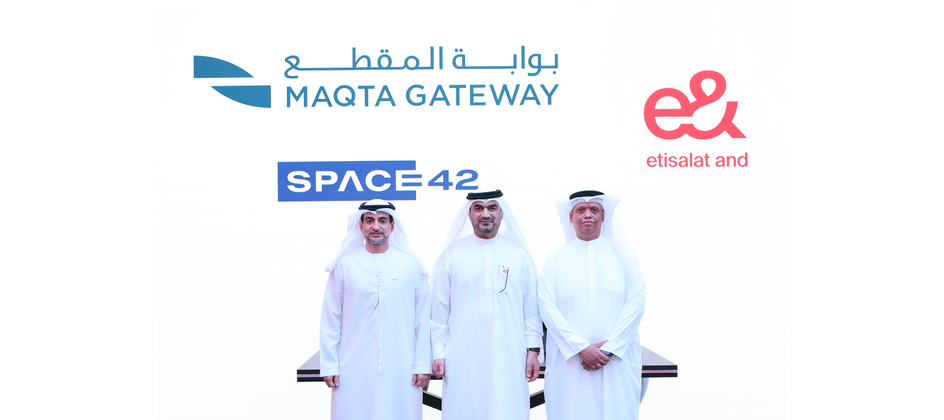
UAE-based Space42 has entered into a five-year memorandum of understanding with Microsoft and Esri to create the most comprehensive digital base map across Africa, aiming to serve more than 1.4 billion people and catalyse economic and infrastructural development. The “Map Africa Initiative” seeks to transform fragmented and outdated geospatial data into timely, accurate intelligence for governments, businesses and communities.

Under the agreement, Space42 will coordinate fundraising and project management, supply satellite data via its sovereign and commercial networks, devise AI-driven digital-twin models, and lead research and automation of map-production processes. Esri will handle the creation of the base maps using GeoAI and remote-sensing technologies while training regional teams to ensure long-term sustainability. Microsoft will provide Azure cloud infrastructure and AI capabilities to enable large-scale processing and secure data sharing.

Africa faces persistent challenges of unreliable and inaccessible mapping information, constraining infrastructure planning, investment decisions and service delivery. The Map Africa Initiative aims to address these by offering a uniform, high-resolution mapping platform, licensed to governments and updated locally by national mapping agencies. This platform is expected to foster a new commercial ecosystem, with African startups benefiting from access to essential geospatial intelligence. Data will be hosted in data centres managed by G42 and Microsoft across the continent.

The mapped data promises significant impact across multiple sectors. In logistics and ports, enhanced terrain mapping can facilitate route optimisation and reduce bottlenecks. Energy developers will gain more precise site-selection tools for solar and wind infrastructure. Governments will benefit from improved border monitoring, disaster preparedness and resource management. Urban planners and smart-city developers will gain foundational geospatial data critical for designing efficient public services and digital economies.

For Space42, the agreement deepens strategic partnerships with Microsoft and Esri, enlarges its African footprint, and opens pathways in analytics, licensing, and infrastructure. It positions Space42 as a trusted partner to governments in delivering scalable geospatial solutions. Peng Xiao, Chief Executive Officer of G42, stressed the broader goal: to close the “intelligence gap” by delivering AI-powered insights that enable smarter planning, sustainable development and inclusive innovation across the Global South.

Hasan Al Hosani, CEO of Smart Solutions at Space42, stated that partnership is integral to the UAE’s approach; this collaboration signals a strategic, not merely technical, advance. Jack Dangermond, President of Esri, emphasised the technical rigour required to convert satellite imagery into detailed, accurate base maps—a capability Esri brings to the initiative.

The initiative aligns closely with the broader UAE strategy. In 2024, the UAE was Africa’s largest investor, deploying around US $44 billion, nearly matching investment levels from the UK and China combined. Space42, as the UAE’s national space entity, serves as both a conduit for exporting data-driven development solutions and a facilitator of knowledge transfer between the UAE and Africa.

Strengthening its ecosystem, Shopee connects affiliates and brands to help shoppers enjoy Lagi Murah and Lagi Cepat deals. KUALA LUMPUR, MALAYSIA – Media OutReach Newswire – 26 August 2025 – For the first time Shopee’s flagship event, Shopee House, welcomed affiliates from every channel, including Shopee Live, Shopee Video, and YouTube Shopping, at its headquarters in Kuala Lumpur last weekend. The two-day activation brought together 500 top-performing […]

A group of social media users in the UAE have been referred to the Federal Public Prosecution for breaching the country’s media content standards. The National Media Office confirmed the development on Tuesday, highlighting the authority’s ongoing commitment to monitoring and enforcing the nation’s strict media regulations.

The NMO issued a statement via the official WAM news agency, stating that its team is dedicated to identifying violations in real-time and notifying users about their non-compliance. It further reiterated that such breaches, particularly those that fail to uphold the country’s foundational principles of respect, tolerance, and coexistence, will result in legal consequences for the offenders.

While the NMO did not disclose the identities or details of the specific violations, the action follows a prior reminder issued in March, warning social media users that any content deemed harmful or in violation of the country’s core values would be subject to prosecution. The reminder aimed to reinforce the country’s stance on maintaining a responsible media environment where positive and constructive dialogue is encouraged.

In line with the UAE’s broader vision for media, the NMO emphasized that these measures are in place to preserve the integrity of social media platforms and protect communities from harmful or non-constructive content. It is part of the government’s ongoing efforts to ensure that media activities, both traditional and digital, contribute positively to the nation’s social fabric.

The UAE has long maintained a strict regulatory framework for both traditional media and online content. The government regularly reminds both local and international users of the country’s media laws, which govern everything from speech to social media posts. These laws are designed to uphold public order and ensure that content aligns with the country’s moral and cultural values.

Although specific details of the recent violations were not disclosed, the NMO’s statement reflects the growing importance of regulating online platforms in the UAE. The country has increasingly tightened its oversight of social media activity, particularly as digital platforms play a larger role in daily life. As a result, many individuals and organisations are now more cautious about the content they post or share online.

The authorities continue to remind users that they are responsible for adhering to the UAE’s media standards. Social media users who engage in behaviour that contravenes these guidelines may find themselves subject to investigations, fines, or even criminal charges. This strict enforcement serves as a reminder to users that online behaviour is not without consequence in the UAE.

The UAE’s media laws focus heavily on maintaining public order and promoting social cohesion. The National Media Office stresses that social media must be a space where respectful, constructive discussions can occur, and where users contribute positively to the nation’s values. As such, users are encouraged to be mindful of the impact of their content, whether it be in the form of posts, comments, or shared material.

With these regulations in place, the NMO is poised to take swift action against those who undermine the principles of respect and tolerance, which are central to the country’s social contract. The agency has also emphasised its readiness to continue monitoring social media activity and enforcing compliance with the law.

Metaplanet, a rising star in the global financial landscape, has secured a spot on the FTSE Japan Index as part of the index provider’s upcoming September 2025 Semi-Annual review. This milestone marks a significant achievement for the company, reflecting its growing influence and the wider surge of interest in Bitcoin, of which Metaplanet is a notable accumulator.

The inclusion in the FTSE Japan Index is a noteworthy development for Metaplanet, a firm that has increasingly drawn attention for its strategic investments, particularly in cryptocurrency. By being added to such a prestigious index, the company solidifies its position as a key player in both the financial and digital asset sectors. This move aligns with the broader trend where digital currencies, including Bitcoin, are gradually being embraced by traditional financial markets, despite the volatility and regulatory challenges they often face.

This development also highlights the importance of cryptocurrency in the modern investment ecosystem. Bitcoin, the largest and most well-known cryptocurrency, has continued to capture the imagination of investors globally, with its price trajectory remaining a focal point of market analysts and institutional investors alike. Metaplanet, which has been accumulating Bitcoin in substantial amounts, stands to benefit significantly from this alignment with the FTSE Japan Index, as it opens up new avenues for investment and institutional partnerships.

For Metaplanet, this index inclusion is more than just a symbol of growth—it signals the company’s readiness to compete at a higher level in the global financial arena. The FTSE Japan Index is a barometer of leading Japanese stocks, and Metaplanet’s acceptance onto this index brings it into the fold of internationally recognized entities. This could potentially lead to more widespread institutional adoption of its business model, which is centred on the integration of cryptocurrency into mainstream investment strategies.

Experts suggest that this inclusion is likely to accelerate Metaplanet’s efforts to gain greater market exposure, especially within the highly competitive cryptocurrency sector. With major institutional investors showing increasing interest in Bitcoin as a store of value and a hedge against inflation, Metaplanet’s move to the FTSE Japan Index could drive its market valuation further, benefiting from an influx of both retail and institutional investors who view its role in the crypto market as promising.

While Bitcoin’s price has faced fluctuations, its long-term trajectory continues to be shaped by institutional interest. The broader cryptocurrency market, once considered a speculative investment class, is gaining momentum as a key asset class, with more traditional financial institutions moving towards crypto assets. For Metaplanet, this move is a calculated step in line with these market trends, positioning itself as a leader in the digital asset investment space.

The decision by FTSE to include Metaplanet in its Japan Index signals a shift in the broader financial market’s view of cryptocurrencies. As more companies within the cryptocurrency space are achieving mainstream recognition, it is becoming increasingly clear that digital currencies are not only a passing trend but a growing component of the future financial landscape.

While Metaplanet’s entry into the FTSE Japan Index is a significant milestone, the company’s focus remains squarely on its long-term investment strategy. With a growing portfolio of Bitcoin assets, the company is poised to leverage its inclusion in one of the world’s most prestigious indices to further its ambitions in both traditional financial markets and the digital currency world.

The inclusion could pave the way for Metaplanet to attract further attention from international investors seeking exposure to Bitcoin’s potential growth. As regulatory frameworks for cryptocurrencies continue to evolve, companies like Metaplanet are positioning themselves to navigate these challenges and capitalise on the growing integration of digital currencies into the global financial system.

The United States government is considering reallocating up to $2 billion originally designated for semiconductor manufacturing under the CHIPS Act to fund initiatives related to mineral production. This potential move reflects a growing focus on securing critical minerals, particularly rare earth elements, that are vital to numerous industries, including technology and defence. The proposal has been met with mixed reactions from industry experts and lawmakers. On one […]

VISHNU RAJA
RYO YAMADA
HITORI GOTOH
IKUYO KITA