Just in:
11 Boutique Xinjiang Wineries to Debut in Singapore // IEA forecasts fourth-quarter oil surplus as Gulf shipments rebound // The Honey Trap Is The Headline, The Chip Pipeline Is The Story // Inpex reaffirms Gulf oil strategy despite shipping constraints // OpenAI unveils ChatGPT Wallet for agent-led purchases // US authorities dismantle North Korean cryptocurrency deception infrastructure // Crescent Enterprises venture arm funds Oyster Therapeutics development // EBANX and Eneba strengthen partnership in Latin America with 138% YoY growth in payment volume // Microsoft apologises as Outlook services recover after outage // China Reconciled To U.S. Curbs On Chips Exports, Woos South Korea For Supply // Nvidia appoints Colette Kress interim chief after Huang departure // TORRAS Launches Two New iPhone Duo Cases from Its Popular Ostand Series, Addressing Foldable Phone Users’ Concerns About Difficult Stand Positioning and Scratches // Microsoft outage leaves Outlook and Teams users disconnected // Hackers falsify NVIDIA GPU readings to mask cryptomining // US resumes flights after nationwide air traffic shutdown // Microsoft restores services gradually but gives no recovery deadline // Yicura BioMed Advances Dual Capital and Industrial Strategy: Completes First Closing of Series B Financing Led by Gobi Partners // Fujairah highway pile-up leaves 14 dead and 30 injured // From Dubai to the EU: how UAE-based crypto firms can expand under MiCA // Rooftop solar planning gaps behind power shortages //

News related to
Space

Airbus and Tata Advanced Systems Limited have confirmed plans to establish a Final Assembly Line for the Airbus H125 helicopter in Kolar, Karnataka, marking the first privately-led helicopter manufacturing facility in India. This facility will become the fourth global production site for the H125, joining existing operations in France, the United States, and Brazil.

The H125, renowned for its versatility and performance, is expected to play a pivotal role in enhancing India’s civil aviation capabilities. With applications ranging from emergency medical services and disaster management to law enforcement and tourism, the helicopter is poised to address diverse operational needs. Its ability to operate in high-altitude and extreme environments, including a notable landing on Mount Everest, underscores its adaptability.

The decision to locate the assembly line in Karnataka was influenced by the state’s robust industrial infrastructure, skilled workforce, and supportive policies. The facility is anticipated to commence operations in 2026, with an initial production capacity of 10 helicopters annually, scalable based on demand.

This initiative aligns with the ‘Make in India’ programme, aiming to bolster domestic manufacturing and reduce reliance on imports. By producing the H125 locally, India seeks to meet its growing demand for helicopters, projected at 500 units over the next two decades, and position itself as a regional hub for aerospace manufacturing.

The collaboration between Airbus and TASL extends beyond this project, building on their partnership in the C295 military transport aircraft programme in Vadodara, Gujarat. This continued cooperation reflects a strategic commitment to developing a comprehensive aerospace ecosystem in India.

The H125 assembly line is expected to contribute significantly to the regional economy, creating employment opportunities and fostering technological advancements. It also represents a step forward in India’s efforts to enhance its capabilities in the aerospace and defence sectors through public-private partnerships.

SINGAPORE – Media OutReach Newswire – 27 May 2025 – Prudential Singapore (“Prudential”) has launched GenAI XPonential, a new programme in partnership with the Infocomm Media Development Authority (IMDA) to accelerate the adoption of Generative AI (GenAI) among small and medium-sized enterprises (SMEs). Unveiled by Senior Minister of State for Digital Development and Information, Mr Tan Kiat How, at ATxEnterprise – an Asia Tech x Singapore (ATxSG) […]

KUALA LUMPUR, MALAYSIA – Media OutReach Newswire – 27 May 2025 – Avenue K Shopping Mall is reaffirming its commitment to inclusivity, sustainability, and holistic well-being as core pillars of its community engagement. In today’s evolving urban landscape, Avenue K continues to be a vibrant hub where individuals of all backgrounds, interests, and abilities are welcomed and empowered—living out the mall’s tagline: “Make Friends, Create Trends.” The […]

HONG KONG SAR – Media OutReach Newswire – 27 May 2025 – Diginex Limited (“Diginex” or the “Company”)(Nasdaq: DGNX), a leading provider of Sustainability RegTech solutions, today announced the signing of a Memorandum of Understanding (MOU) dated 23 May 2025 for an all-share acquisition of Matter DK ApS (“Matter”), an innovative ESG data company focused on delivering sustainability data and analytics solutions to the investment industry and […]

A leading candidate for the presidency of the African Development Bank has outlined a strategy urging African nations to mobilise up to $4.5 trillion in domestic private capital to drive the continent’s development agenda, aiming to reduce dependence on expensive international debt. This vision signals a shift towards leveraging Africa’s own financial resources to fund infrastructure, healthcare, education, and energy projects critical for sustainable growth. The candidate, […]

Bitcoin exchange-traded funds have amassed over 75,000 BTC in net inflows over the past month, marking a significant shift in institutional investment patterns and fueling a surge in the cryptocurrency’s valuation. This influx, surpassing $6.5 billion, has been pivotal in driving Bitcoin to an all-time high of $109,900, reflecting a growing confidence among investors in the digital asset’s long-term prospects.

The substantial inflows into Bitcoin ETFs, particularly BlackRock’s iShares Bitcoin Trust , which alone attracted $6.5 billion, underscore a broader trend of institutional adoption. This movement is further evidenced by the actions of major financial entities such as JPMorgan Chase and Morgan Stanley, which have expanded their cryptocurrency offerings in response to increasing client demand.

Analysts attribute this surge to a confluence of factors, including favorable regulatory developments and macroeconomic conditions. The U.S. Senate’s progress on a regulatory bill for stablecoins and the establishment of a Strategic Bitcoin Reserve by the Treasury have provided a supportive policy environment. Concurrently, the weakening of the U.S. dollar and concerns over fiscal policies have prompted investors to seek alternative assets, positioning Bitcoin as a perceived safe haven.

The impact of these developments is evident in the market’s response. Bitcoin’s price trajectory has been bolstered by the sustained ETF inflows, with models estimating its fair value to be between $105,000 and $125,000 at the current rate of investment. This valuation aligns with the observed market behavior, where the cryptocurrency has maintained its upward momentum despite broader economic uncertainties.

The strategic moves by corporations also play a crucial role in this dynamic. Michael Saylor’s Strategy, for instance, has significantly increased its Bitcoin holdings, adding $765 million to its portfolio, which now exceeds $63 billion in value. Such corporate investments not only reflect confidence in Bitcoin’s potential but also contribute to its market stability and growth.

The entry of new players into the Bitcoin ETF space, such as Twenty One, led by the son of President Trump’s commerce secretary, indicates a diversification of investment vehicles and a broadening of the market base. This expansion enhances the accessibility of Bitcoin to a wider range of investors, further solidifying its position in the financial ecosystem.

A striking new technological marvel took centre stage at Beitou Shilin Technology Park in Taipei, where Nvidia revealed its latest innovation, the Constellation. The Constellation is an extraordinary modular structure, designed to resemble a spaceship that can transform into a fully operational factory. This development represents a bold step forward in integrating advanced manufacturing with futuristic design.

During the demonstration, the Constellation made a dramatic entrance, appearing as a sleek, spaceship-like vessel. As the event progressed, the structure descended gracefully and unfolded into an expansive, functional manufacturing facility. This transformation highlights Nvidia’s vision of combining mobility and rapid deployment with cutting-edge industrial capabilities.

The concept behind the Constellation aligns with the growing trend of adaptable infrastructure in the technology and manufacturing sectors. Traditional factories are often fixed in place, requiring extensive setup and significant lead time before production begins. Nvidia’s design challenges this by offering a mobile, transformable manufacturing hub that can be deployed wherever it is needed, potentially revolutionising how production lines are established and operated.

Experts point out that such flexibility is crucial for industries facing supply chain uncertainties, fluctuating demand, and the need for rapid response to market changes. The ability to deploy a factory-like unit that arrives as a compact structure and expands on-site offers strategic advantages, including reduced construction costs, faster operational readiness, and increased scalability.

Nvidia’s Constellation project reflects broader ambitions beyond graphics processing units and AI chips, tapping into the realm of smart manufacturing and Industry 4.0. The company has increasingly focused on leveraging its technological prowess to enable more efficient and intelligent production methods. Integrating AI, robotics, and modular hardware within a transformable space embodies this approach.

While the demonstration attracted attention for its visual spectacle, the underlying technology is equally compelling. The transformation mechanism relies on advanced engineering to ensure structural integrity and operational functionality once expanded. Nvidia has incorporated automated systems that manage the unfolding process and ensure the workspace is ready for immediate use. This level of automation underscores the company’s commitment to seamless user experience and operational efficiency.

Taipei’s Beitou Shilin Technology Park, known for fostering innovation and supporting high-tech ventures, provides an ideal setting for such a launch. The park hosts numerous tech companies and research institutions, creating a fertile environment for collaborative development and commercialisation of futuristic projects like the Constellation.

Industry observers note that Nvidia’s entry into mobile and modular factory design could spur competition and innovation in the manufacturing landscape. Competitors and collaborators alike are likely to explore similar concepts as the demand for agile manufacturing solutions increases globally. Companies in sectors such as automotive, electronics, and aerospace are already exploring mobile production units to address regional production needs and mitigate risks associated with global supply chains.

The Constellation’s ability to function as a compact transport vessel and a fully equipped factory could also have implications for disaster response and remote area manufacturing. Rapidly deployable factories can aid in recovery efforts by producing essential goods and equipment close to affected zones, thereby shortening supply lines and enhancing resilience.

Nvidia’s demonstration included a detailed explanation of the Constellation’s design philosophy. The modular units are constructed using lightweight but durable materials to withstand transport stresses and ensure longevity in operational environments. The internal layout is configurable, allowing for customised setups tailored to different manufacturing processes and industry requirements.

This flexibility extends to the technological ecosystem within the factory space. Nvidia envisions integrating AI-powered control systems to optimise production workflows, predictive maintenance, and resource management. The system’s connectivity supports real-time monitoring and remote management, enabling companies to maintain high efficiency and adapt quickly to changing production demands.

Although Nvidia has not disclosed specific plans for commercial rollout or pricing, the unveiling of the Constellation signals a clear intent to expand its footprint in manufacturing technology. The project dovetails with global shifts toward decentralised and digitised production models, which prioritise speed, adaptability, and intelligent automation.

As governments and corporations invest heavily in reshaping supply chains and boosting domestic manufacturing capabilities, innovations like the Constellation may play a pivotal role. The ability to deploy advanced manufacturing capabilities rapidly and in a self-contained format aligns with strategic priorities in multiple countries seeking greater industrial autonomy and technological leadership.

Critics caution that the real-world viability of such a mobile factory concept will depend on practical factors such as regulatory approvals, logistical considerations, and the ability to maintain consistent quality standards across deployments. Ensuring seamless integration with existing supply chains and labour forces will also be a challenge.

Advertisements

The allure of meme coins like Shiba Inu and Dogecoin has cooled, prompting investors and crypto enthusiasts to seek fresh opportunities beyond the fleeting hype. As these once high-flying tokens show patterns of price consolidation and reduced volatility, attention is increasingly shifting towards emerging decentralised finance projects, notably the Mantix decentralized exchange currently in its presale phase.

Mantix represents a new wave of crypto innovation aiming to capitalise on the growing demand for decentralised trading platforms with enhanced utility and community governance. Unlike meme coins, which primarily rely on social media buzz and speculative trading, Mantix offers a structured ecosystem designed to attract long-term participants. The project’s native token, $MTX, has garnered significant interest in crypto circles for its potential to integrate scalable blockchain solutions with user-driven decentralisation.

Market data indicates that meme coins, while maintaining a loyal base, have witnessed substantial corrections from their peak valuations over the past year. Shiba Inu, which surged into mainstream attention through aggressive marketing and celebrity endorsements, now faces resistance levels that limit further upward momentum. Dogecoin, originally launched as a parody cryptocurrency, similarly exhibits less price movement and trading volume than during its initial frenzy. This maturation phase has naturally led traders to explore De-Fi projects that promise utility beyond mere token speculation.

Mantix’s presale has emerged as one of the more watched events in the De-Fi space due to its approach of combining tokenomics with a robust decentralized exchange infrastructure. The platform is being built on a Layer 2 blockchain solution aimed at reducing transaction costs and enhancing speed, a crucial improvement over congested Layer 1 blockchains like Ethereum. By addressing scalability, Mantix hopes to attract users frustrated with high fees and slow confirmations, common complaints in existing DEX platforms.

Further intrigue surrounds Mantix’s governance model, which incorporates a decentralised autonomous organisation structure. Token holders of $MTX will have voting rights on key platform decisions, ranging from protocol upgrades to fee distribution. This democratic approach to platform management has resonated with investors seeking a voice in project development rather than passive holding.

Industry experts highlight that the shift from meme coins to utility-driven De-Fi projects reflects the broader evolution of the cryptocurrency market. Initial phases of crypto adoption were fuelled by hype and speculative mania, but the sector is now progressing toward maturity, where sustainable growth depends on practical applications and network effects. Mantix’s emphasis on building a scalable DEX aligns with this trajectory, placing it among a competitive set of projects trying to capture the next generation of crypto users.

Despite the buzz, experts caution that presale participation entails risks, including regulatory uncertainty and project execution challenges. De-Fi platforms often face complex security audits and require rigorous testing before launching fully. However, the team behind Mantix claims to have secured partnerships with established blockchain developers and auditors to mitigate vulnerabilities, although independent verification remains pending.

Investor enthusiasm around $MTX is also driven by the projected token supply model, which aims to incentivise early participants while avoiding excessive inflation. Unlike meme coins, where large token supplies have often led to price manipulation concerns, Mantix’s controlled issuance framework is designed to foster stability and gradual appreciation. Early investors see this as a key differentiator, especially as the crypto market enters a phase prioritising long-term viability over rapid gains.

Global crypto exchanges and wallets have reportedly begun integrating $MTX to facilitate seamless token distribution once Mantix transitions from presale to public trading. This integration plan underscores the project’s ambition to establish liquidity and market presence quickly. The initial roadmap also outlines plans for additional De-Fi features such as yield farming, staking, and cross-chain interoperability, which could position Mantix as a comprehensive platform for decentralized finance activities.

The shift in investor sentiment away from meme coins coincides with broader regulatory scrutiny across major markets, where authorities are increasing oversight of speculative tokens and trading platforms. This environment favors projects like Mantix that demonstrate transparent governance and clear utility. Regulatory compliance will likely remain a pivotal factor shaping the competitive landscape among De-Fi exchanges, with platforms adopting robust protocols gaining trust from institutional and retail investors alike.

Market analysts note that while Shiba Inu and Dogecoin have established themselves as cultural icons within the crypto space, their futures hinge largely on community support rather than fundamental technological advances. Conversely, De-Fi platforms like Mantix seek to blend technology innovation with community governance to drive adoption. This fundamental difference may influence which assets retain relevance as the market consolidates and matures.

Technical analysis of SHIB and DOGE price trends points to a phase of reduced volatility, marked by trading within defined ranges after sharp declines from all-time highs. Such patterns typically suggest accumulation phases or potential repositioning by holders. Meanwhile, Mantix’s presale momentum suggests a growing appetite for new projects with practical use cases, especially those tackling scalability and user empowerment issues prevalent in the crypto ecosystem.

The crypto market’s cyclical nature often sees hype-driven assets give way to infrastructure-focused projects. Mantix’s presale success could signal the start of such a rotation, as traders move capital into platforms offering tangible functionality. Nevertheless, the highly speculative environment demands due diligence, and investors are advised to assess project whitepapers, development progress, and team credentials before committing funds.

RAK Properties has unveiled Enta Mina, a 119-unit premium residential development in Ras Al Khaimah, developed in collaboration with HIVE and ARM Holding. The project aims to cater to the growing demand for integrated living and working spaces among young professionals and entrepreneurs.

Enta Mina is situated within Mina Al Arab, RAK Properties’ flagship community. The development comprises two buildings: a 117-unit HIVE-branded coliving space and a 116-unit residential building available for purchase. The HIVE building offers a plug-and-play living experience, emphasizing flexibility, community, and convenience.

The project includes 2,000 square meters of coworking space, marking HIVE’s first public workspace in Ras Al Khaimah. This facility features dedicated desks, private offices, meeting rooms, quiet zones, event spaces, and a coffee bar. Residents have complimentary access to these amenities, while the public can choose from various membership plans.

Additional amenities in the HIVE building include a flexible work lounge, listening room, chef’s kitchen, outdoor areas, and a private pool with scenic views. An all-day eatery will serve residents, coworking members, and the broader Mina Al Arab community.

Mohammad Al Shehhi, CEO of ARM Holding, stated, “We are pleased to announce our partnership with RAK Properties to develop HIVE Ras Al Khaimah. This collaboration represents a significant step forward in our journey, reinforcing our commitment to creating forward-thinking residential communities that align with the dynamic lifestyles of young professionals.”

Bass Ackermann, CEO of HIVE, added, “This collaboration seamlessly merges HIVE’s innovative living concept with RAK Properties’ desire to create a vibrant destination for young entrepreneurs and professionals. It is a merging of expertise, dedicated to shaping distinctive, community-centric living spaces that resonate with the unique aspirations for Mina Al Arab.”

RAK Properties is experiencing robust growth, with a 28% increase in revenue to AED 370 million in Q1 2025 compared to the same period in 2024. The company has over 3,000 units under construction and plans to deliver more than 800 units in 2025, marking its busiest operational year.

The launch of Enta Mina aligns with RAK Properties’ broader vision for Mina Al Arab, which includes a AED 5 billion development pipeline featuring residential, retail, hospitality, and waterfront infrastructure. The Mina masterplan encompasses three districts: Raha Island, Hayat Island, and Lagoons, designed to offer a dynamic hub for authentic island living, sustainability, and community.

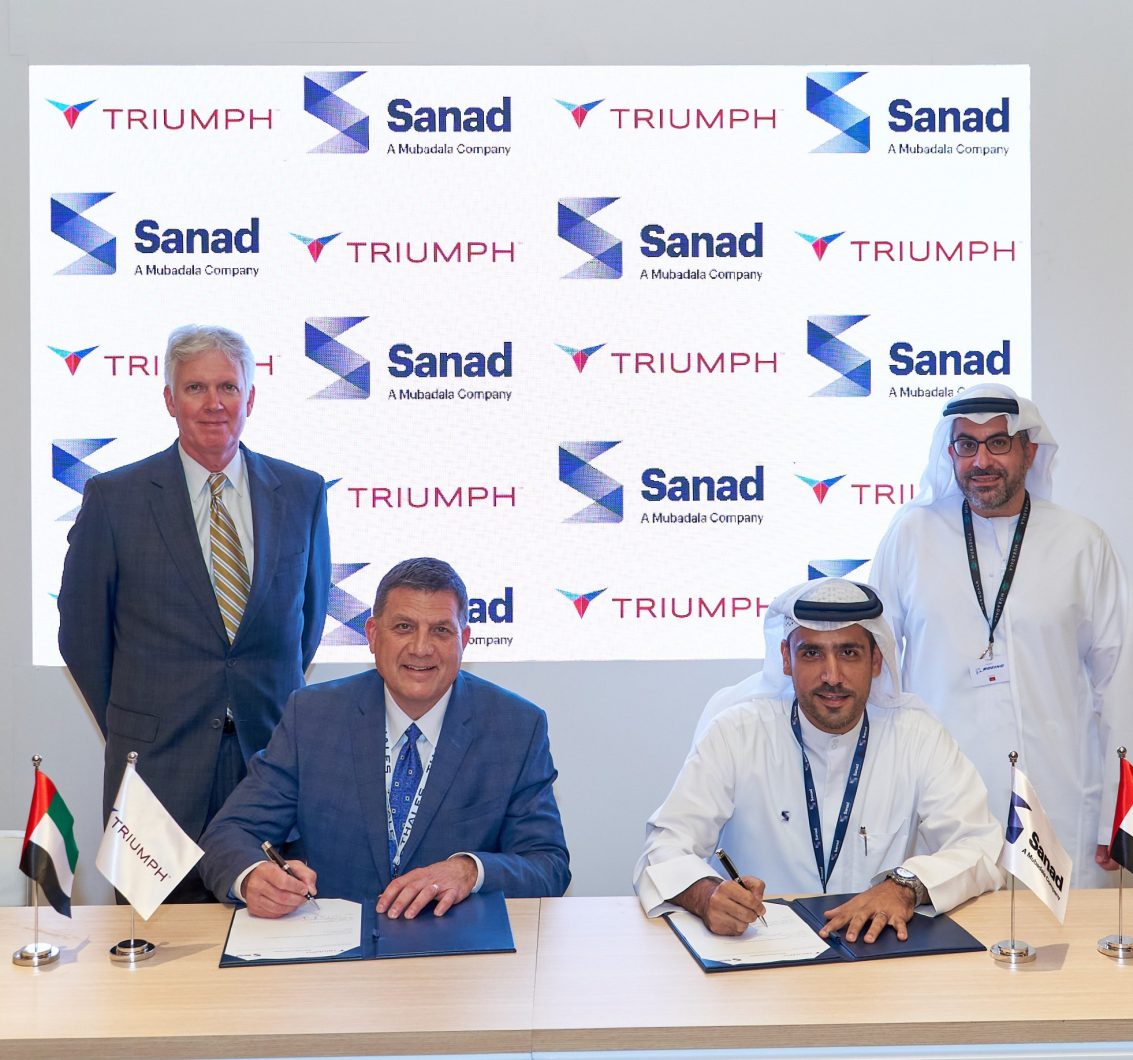
Sanad, a global aerospace engineering and leasing solutions provider wholly owned by Abu Dhabi’s Mubadala Investment Company, has partnered with GE Aerospace to bolster the UAE’s aerospace talent pool. This collaboration aims to address the projected surge in global demand for Maintenance, Repair, and Overhaul professionals, with the sector expected to reach $169 billion by 2037.

The partnership has led to the inauguration of the LEAP Engine MRO Center in Abu Dhabi, the first certified facility of its kind in the South Asia, Middle East, and North Africa region. This center is set to support over 450 LEAP-1A and LEAP-1B engines over an 11-year period, enhancing the UAE’s capabilities in servicing next-generation aircraft engines.

Sanad has invested over AED 100 million into its Abu Dhabi facility, expanding its state-of-the-art engine MRO capabilities. The center spans 5,000 square meters, contributing to a total of 30,000 square meters in Sanad’s Abu Dhabi campus. This expansion not only augments the company’s technical capabilities but also reinforces Abu Dhabi’s position as a leading global aviation hub.

The collaboration with GE Aerospace and Safran Aircraft Engines, formalized during the Paris Air Show in June 2023, has significantly expanded Sanad’s MRO services to include the new-generation CFM International LEAP-1A and -1B engines. These engines, powering Airbus A320neo and Boeing 737 MAX family aircraft, are recognized for their exceptional reliability and fuel efficiency.

Sanad’s LEAP Engine MRO Center began operations within a month of signing the agreement and successfully completed the MRO process on the first LEAP engine from flydubai just four months later. This rapid operationalization underscores Sanad’s commitment to excellence and speed in establishing state-of-the-art MRO capabilities.

The center is operated by a dedicated team of technical and engineering experts, utilizing cutting-edge MRO technologies. Sanad’s engineers and technicians have undergone intensive training programs with GE Aerospace, equipping them with the skills required for tasks such as Rotor Drive System and Inlet Gear Box quick turnaround, borescope inspection, and general familiarization.

This initiative not only ensures the operational efficiency of LEAP engines but also contributes to reducing the carbon footprint associated with transporting engines outside the region for maintenance. By providing in-country solutions, the partnership aligns with the UAE’s commitment to sustainability and operational efficiency.

The LEAP engine’s popularity has surged, with a backlog exceeding 10,000 engines, primarily due to its innovative design aimed at reducing carbon emissions in air transport. Sanad’s enhanced capabilities position it to meet the growing demand for MRO services for the LEAP engine, reinforcing Abu Dhabi’s status as a global aviation hub.

In addition to the LEAP Engine MRO Center, Sanad has expanded its global partnerships, including a strategic agreement with Airbus to provide MRO services for engines powering Airbus single-aisle and wide-body aircraft. This collaboration further solidifies Sanad’s position as a global partner of choice and a key player in the aerospace industry.

Sanad’s commitment to workforce development is evident in its focus on training and upskilling local talent. The company has established multi-tiered training programs to nurture local expertise, combining classroom training in aviation principles with hands-on experience in its facilities. This approach supports the UAE’s broader goals of economic diversification and the development of a knowledge-based economy.

Guinea’s media regulator concluded the “Forum on the Future of the Press,” an event aimed at revitalising the country’s media landscape. However, six prominent news outlets remain blocked, highlighting the ongoing challenges to press freedom under the military-led government. The Ministry of Information and Communications Technology revoked the broadcasting licences of FIM FM, Espace FM, Sweet FM, Djoma FM, Djoma TV, and Espace TV, citing “non-compliance with […]

A Strategic Partnership Accelerate New Industralisation and Microelectronics Development HONG KONG SAR – Media OutReach Newswire – 23 May 2025 – Hong Kong’s advanced manufacturing and microelectronics sector received a significant boost today with a three-year strategic partnership between Hong Kong Science and Technology Parks Corporation (HKSTP) and Würth Elektronik. Under this collaboration, Würth Elektronik —a global premier electronic components manufacturer with a R&D base at Hong […]

The Commodity Futures Trading Commission has affirmed that crypto perpetual futures are allowed for trading within the United States, providing much-needed regulatory clarity to market participants and investors in the digital asset space. This confirmation signals a significant development in the regulation of cryptocurrency derivatives, which have previously operated in a somewhat ambiguous legal environment. The CFTC’s explicit stance is expected to bring greater legitimacy and stability to an increasingly popular segment of the crypto market, while also setting the tone for future regulatory frameworks.

Crypto perpetual futures, a type of derivative contract that allows traders to speculate on the price movements of cryptocurrencies without an expiry date, have gained widespread traction globally. Unlike traditional futures contracts with fixed settlement dates, perpetual futures enable continuous trading, providing liquidity and hedging opportunities that attract institutional and retail investors alike. However, their regulatory status has often been unclear, causing uncertainty among exchanges and traders, especially in the US, where regulatory agencies tend to apply stringent oversight to financial instruments.

The CFTC’s confirmation comes amid growing scrutiny of the broader cryptocurrency ecosystem, which has faced regulatory challenges regarding investor protection, market manipulation, and systemic risks. The agency clarified that perpetual futures on cryptocurrencies fall under its jurisdiction as derivatives products, which means platforms offering these contracts must comply with relevant CFTC rules and regulations. This includes registration requirements for exchanges, adherence to anti-fraud measures, and maintaining transparent market practices.

Market leaders in crypto derivatives, such as Binance.US, FTX , and CME Group, have actively developed or listed perpetual futures contracts, but the lack of a formal regulatory framework had limited broader institutional adoption. The CFTC’s clear position may pave the way for more exchanges to offer these products, potentially increasing market liquidity and fostering innovation. The move also aligns with the agency’s broader approach to fostering responsible innovation in the derivatives market while safeguarding investor interests.

Industry experts note that the CFTC’s position contrasts with the Securities and Exchange Commission’s approach toward cryptocurrencies, which is generally more cautious, particularly regarding spot trading and certain crypto tokens. The delineation between the two agencies’ jurisdictions has been a subject of ongoing debate, especially since the SEC considers many digital assets as securities, thus subject to more stringent rules. The CFTC’s focus on futures and derivatives, rather than spot trading, offers a clearer regulatory path for these instruments.

This clarification from the CFTC also coincides with increased legislative and policy interest in digital assets at both federal and state levels. Lawmakers have debated comprehensive crypto regulatory frameworks to unify the patchwork of existing rules and provide consistency for market players. The CFTC’s explicit statement on perpetual futures could serve as a foundation for such legislative efforts, informing standards that balance innovation with risk management.

The implications of this regulatory clarity extend beyond the immediate crypto derivatives market. Institutional investors, including hedge funds, asset managers, and pension funds, have expressed cautious interest in digital asset products but often cite regulatory uncertainty as a key barrier. With perpetual futures formally recognised by the CFTC, these market participants may feel more confident engaging in cryptocurrency markets, potentially unlocking fresh capital inflows.

At the same time, consumer advocates and regulatory observers remain watchful. The high leverage and volatility inherent in perpetual futures trading can pose significant risks to less experienced traders, raising concerns about potential losses and market manipulation. The CFTC’s mandate includes protecting market integrity and consumer interests, so its enforcement actions and rulemaking around these contracts will likely intensify to address these risks effectively.

Cryptocurrency exchanges operating within the US have welcomed the announcement, viewing it as a step toward harmonising regulatory oversight and reducing operational uncertainty. Many platforms have invested heavily in compliance infrastructure, knowing that robust regulatory approval is crucial for long-term sustainability and growth. The clear jurisdictional guidance from the CFTC provides a framework for exchanges to innovate within established legal boundaries.

Internationally, regulatory bodies are also grappling with the rapid evolution of crypto derivatives. Countries such as Singapore, Switzerland, and the United Kingdom have developed varying approaches to the supervision of perpetual futures and similar instruments. The US’s decision to permit these contracts under the CFTC’s regulatory umbrella could influence global standards, encouraging a more coherent international regulatory environment.

Financial analysts highlight that the integration of crypto perpetual futures into regulated markets may increase price transparency and reduce volatility over time. By bringing these products under official oversight, the CFTC enables enhanced surveillance tools and risk controls, potentially deterring manipulative trading practices that have plagued the crypto space.

This regulatory clarity comes as decentralised finance platforms continue to explore perpetual futures through automated protocols. While the CFTC’s ruling primarily affects centralised exchanges and traditional trading venues, it sets a precedent that could influence regulatory approaches to DeFi derivatives as well. Authorities are closely monitoring DeFi developments, which challenge conventional frameworks due to their borderless and algorithm-driven nature.

Industry voices underscore the importance of balancing innovation with prudent oversight. The CFTC’s confirmation reflects a broader shift towards integrating cryptocurrency markets into the mainstream financial system while managing systemic risks. The move is likely to spur further collaboration between regulators, industry stakeholders, and market participants to develop standards that protect users without stifling technological advancement.

This regulatory milestone arrives amid a period of consolidation and maturation in the crypto market. After years of rapid growth, speculative excesses, and high-profile failures, the sector is increasingly focused on compliance, institutionalisation, and sustainable development. The CFTC’s stance on perpetual futures underlines the evolving recognition that digital assets and their derivatives require clear, enforceable rules tailored to their unique characteristics.


Chemin is a key pillar in enabling TDCX to tap $1 trillion AI services opportunity Brings together more than 50 technologists from 18 countries to accelerate AI adoption SINGAPORE – Media OutReach Newswire – 22 May 2025 – Mr. Laurent Junique, Founder and Chief Executive Officer of TDCX, a leading global business process outsourcing (BPO) company for technology and blue-chip companies, was today named the Businessman of […]

Revolutionary 7A Anti-Bacterial Sleep Technology Meeting Seven Major Sleep Needs in One Step Enjoy High-quality Sleep and Protect You and Your Loved Ones Every Night HONG KONG SAR – Media OutReach Newswire – 22 May 2025 – As a leader in the bedding industry and a trusted Hong Kong brand for over thirty years, Casablanca is dedicated to providing the highest quality and healthiest sleep products. Focusing […]

Etihad Water and Electricity , Al Dahra Agriculture Trading, and Fujairah Municipality have formalised a strategic partnership aimed at accelerating sustainable development in the Emirate of Fujairah. The agreement, signed under the patronage of H.H. Sheikh Mohammed bin Hamad bin Mohammed Al Sharqi, Crown Prince of Fujairah, underscores a shared commitment to environmental protection, resource efficiency, and community well-being.

The collaboration focuses on three primary objectives: enhancing water and energy efficiency, promoting sustainable agriculture, and fostering community engagement in environmental initiatives. EtihadWE brings to the partnership its expertise in innovative water and electricity solutions, including the deployment of advanced metering infrastructure and smart grid technologies. Al Dahra contributes its experience in sustainable agricultural practices and food security, while Fujairah Municipality provides governance and oversight to ensure alignment with the emirate’s development plans.

A key component of the initiative is the implementation of smart water management systems. EtihadWE plans to install sophisticated sensors in water pumping stations capable of detecting changes in water quality and automatically shutting down operations to prevent contamination. Additionally, the company will introduce remote inspection devices for high-pressure pipelines, enhancing the reliability and safety of the water supply network.

In the realm of agriculture, Al Dahra aims to introduce sustainable farming techniques that reduce water consumption and increase crop yields. The company will work closely with local farmers to implement drip irrigation systems, soil moisture monitoring, and the use of drought-resistant crop varieties. These measures are expected to contribute significantly to the emirate’s food security and environmental sustainability goals.

Fujairah Municipality will play a pivotal role in facilitating community engagement and education. Plans include the establishment of community gardens, educational workshops on sustainable practices, and the integration of environmental topics into school curricula. The municipality will also oversee the development of green spaces and the implementation of eco-friendly infrastructure projects.

The partnership aligns with the UAE’s broader sustainability objectives, including the UAE Energy Strategy 2050 and the National Water Security Strategy 2036. By fostering collaboration between public and private entities, the initiative aims to create a model for sustainable development that can be replicated across the country.

Yousif Ahmed Al Ali, CEO of EtihadWE, stated, “This partnership represents a significant step towards achieving our sustainability goals. By combining our technological expertise with Al Dahra’s agricultural knowledge and the strategic oversight of Fujairah Municipality, we are poised to make substantial progress in environmental conservation and resource efficiency.”

Khaleefa Al Mazrouei, CEO of Al Dahra Agriculture Trading, commented, “Our collaboration with EtihadWE and Fujairah Municipality underscores our commitment to sustainable agriculture and food security. We look forward to implementing innovative farming practices that will benefit both the environment and the local community.”

Eng. Mohamed Saif Al Afkham, Director-General of Fujairah Municipality, added, “This agreement marks a new chapter in our efforts to promote sustainable development in Fujairah. Through this partnership, we aim to enhance the quality of life for our residents while preserving our natural resources for future generations.”

The initiative also includes plans for the development of renewable energy projects, such as solar-powered public facilities and the integration of electric vehicle charging stations throughout the emirate. These projects are designed to reduce carbon emissions and promote the adoption of clean energy technologies.

As part of the agreement, the partners will establish a joint task force to oversee the implementation of the various projects and ensure that they meet established sustainability benchmarks. Regular progress reports will be published to maintain transparency and keep the public informed of developments.

OpenAI has agreed to acquire artificial intelligence device startup io in a $6.5 billion all-stock transaction, bringing onboard Apple’s iconic designer Jony Ive and his team as part of a bold expansion into hardware development. The deal, which is OpenAI’s largest to date, aims to reshape the future of consumer electronics by embedding artificial intelligence deeply into everyday devices. The acquisition values io based on a $5 […]

Featuring a First-Time Collaboration with Actress Chung Suet Ying to Showcase Her Take on the “Black to Basic” Look Plus: 7-Eleven Pre-order Exclusive – Limited First-Batch Release of the 1M Jumbo All Black Snoopy Plush And Stylish Snoopy Collectibles to Redefine Urban Cool HONG KONG SAR – Media OutReach Newswire – 22 May 2025 – 7-Eleven is teaming up with actress Chung Suet Ying to launch the […]

Object 1, a prominent real estate developer, has announced the launch of Essenlife, a new residential development located in Jumeirah Village Triangle , Dubai. The project is designed to cater to the growing demand for wellness-oriented living spaces, integrating modern amenities and sustainable features. Essenlife offers a range of studio to 3.5-bedroom apartments, each equipped with smart home technology and high-quality finishes. The development includes over 20 […]

Drone and robotics are evolving industry worldwide as well as in the Middle East where the UAE has taken a leadership role in gradually deploying them in government departments and public facilities – in addition to bringing in driver less vehicles and flying taxis – to transform its urban infrastructure into smart cities where drones, machines, robotics and AI will play a crucial role. The UAE’s General […]

Artificial Intelligence is expected to contribute around US$320 billion to the Middle East’s Gross Domestic Product (GDP) by 2030, with the Gulf Cooperation Council countries accounting for nearly 80 percent of that impact, translating to approximately US$260 billion, according to a latest report by global accounting firm PriceWaterhouseCoopers (PwC). The Gulf Cooperation Council (GCC) countries—Bahrain, Kuwait, Oman, Qatar, Saudi Arabia, and the United Arab Emirates—are at a […]

Abu Dhabi’s aerospace firm Space 42 is set to initiate production of prototype platforms designed to operate at altitudes reaching thousands of metres above the Earth’s surface. This development marks a significant step in the emirate’s growing ambitions within the aerospace sector, targeting near-space exploration and flight operations.

The prototypes will serve as platforms to launch near-space flights, a field that bridges traditional aviation and outer space exploration by operating at the edge of the Earth’s atmosphere. Space 42’s initiative is aligned with broader national goals to position Abu Dhabi and the United Arab Emirates as leaders in aerospace innovation and technology development. The company aims to contribute to the emerging commercial space economy by developing technologies capable of operating in the stratosphere and beyond.

Near-space platforms have a variety of potential applications, ranging from scientific research and atmospheric monitoring to telecommunications and high-altitude surveillance. These platforms can also serve as launchpads for suborbital missions, enabling experimental payloads or commercial ventures to access near-space environments more cost-effectively than traditional rockets.

Space 42 plans to produce the prototypes by the end of the year, employing advanced aerospace engineering and leveraging local expertise alongside international collaborations. The company’s approach involves creating modular, reusable platforms that can carry payloads to high altitudes while maintaining stability and control in the thin upper atmosphere.

Abu Dhabi has invested heavily in aerospace and space-related ventures as part of its strategy to diversify the economy away from oil. Space 42 is among several entities in the emirate focused on fostering innovation and building capabilities in advanced technologies. The move toward near-space flights reflects a global trend where governments and private companies alike are investing in technologies that can bridge the gap between Earth-bound aviation and space travel.

The platforms under development will use cutting-edge materials and propulsion technologies tailored to withstand harsh near-space conditions, including extreme temperature variations and low atmospheric pressure. The prototypes are expected to undergo rigorous testing phases before any commercial or scientific deployments.

Space 42’s project is part of a broader wave of interest in high-altitude platforms worldwide. These platforms offer a middle ground between satellites and aircraft, combining endurance and payload capacity with relative ease of deployment and maintenance. Their ability to provide persistent observation or communication coverage without the high costs associated with orbital launches makes them attractive for various industries.

The company’s initiative aligns with the UAE’s long-term space ambitions, which include Mars exploration, satellite development, and fostering a local space industry ecosystem. By manufacturing these prototype platforms, Space 42 aims to develop a technological edge that can be leveraged for both domestic and international markets.

Industry experts note that near-space platforms could transform how data is collected and transmitted across multiple sectors. They can support environmental monitoring by offering high-resolution data on atmospheric conditions, track climate change indicators, and improve weather prediction models. Telecommunications companies see potential in using such platforms to extend internet coverage to remote areas or enhance network resilience during emergencies.

Globally, the near-space flight market is gaining momentum as new entrants join established aerospace firms in developing technologies for stratospheric operations. Governments are increasingly recognising the strategic importance of controlling near-space assets for national security, scientific advancement, and economic competitiveness.

The production of prototype platforms by Space 42 is expected to position Abu Dhabi as a key player in this expanding field. This move may encourage further investments in research and development, talent acquisition, and infrastructure to support near-space flight activities. The initiative also aligns with the UAE’s vision to be a hub for science and technology innovation in the Middle East.

Space 42 has emphasised the role of sustainability and cost-effectiveness in their design philosophy, aiming to reduce the environmental footprint compared to traditional aerospace operations. Reusability and energy-efficient propulsion systems are central to this strategy, ensuring that the platforms can operate repeatedly without significant resource expenditure.

As the prototypes enter production, the company plans to collaborate with academic institutions, industry partners, and government bodies to validate performance and explore potential applications. This cooperation will be critical to overcoming technical challenges inherent in operating at the edge of space, where conditions differ markedly from those experienced by conventional aircraft.

The near-space platform project reflects a strategic blend of ambition and pragmatism. By focusing on prototype development, Space 42 is taking measured steps toward establishing a presence in an area that promises to grow significantly in importance and economic value. The company’s work contributes to the broader narrative of the UAE’s emergence as a forward-looking aerospace nation, committed to advancing scientific knowledge and commercial capabilities beyond the atmosphere.

While the production timeline anticipates completion before year-end, the path ahead will involve iterative testing and refinement. These phases are crucial to ensure the platforms meet stringent operational standards for safety, reliability, and performance under near-space conditions.

The company’s announcement has drawn attention from industry analysts and potential customers interested in utilising high-altitude platforms for various applications, from telecommunications to defence. The development also signals increasing competition in a sector where innovation and technical mastery are vital.

OSAKA, JAPAN – Media OutReach Newswire – 21 May 2025 – Tenchijin Inc., a space-tech innovator, showcased its innovative solutions at “TECHNOMART Malaysia-Japan: B2B Session on the Space Industry” (“TECHNOMART Malaysia”) held at the Malaysia Pavilion of EXPO 2025 Osaka-Kansai on May 15. Organized by the Malaysia External Trade Development Corporation (MATRADE), this event was part of “Creating a Sustainable Future: Malaysia-Japan Innovation Technology Seminar.” The strategic […]

SINGAPORE – Media OutReach Newswire – 21 May 2025 – Star Living, a home furnishing brand in Singapore, is proud to announce its expansion into the electronic product category this May. With a curated selection of everyday appliances and smart home essentials, the move marks a strategic step towards becoming a comprehensive, one-stop destination for modern homeowners. Electronics Range at Star Living Sungei Kadut Showroom This milestone […]

VISHNU RAJA
RYO YAMADA
HITORI GOTOH
IKUYO KITA