News related to
Space

Two Prime, a prominent investment firm managing $1.75 billion in assets, has partnered with Figment, the leading independent staking infrastructure provider with over $15 billion staked across 1,000 clients. The collaboration brings forth an innovative offering, enabling institutional investors to access staking across more than 40 protocols, including advanced BTC yield strategies. The agreement marks a significant milestone in the evolution of blockchain-based investments, catering to the growing demand for diversified digital asset yield solutions.

The partnership between Two Prime and Figment blends institutional expertise with cutting-edge blockchain infrastructure. Investors will now be able to simultaneously participate in Proof-of-Work and Proof-of-Stake mechanisms, two foundational components of the cryptocurrency ecosystem. This dual approach allows institutions to enhance their portfolio’s earnings by leveraging the best of both worlds — the robust security of Proof-of-Work systems like Bitcoin and the scalability and yield potential of Proof-of-Stake networks.

Proof-of-Stake, a consensus mechanism used in various blockchain networks, rewards participants who lock their assets in the network, enabling them to validate transactions and secure the blockchain. It is often seen as a more energy-efficient alternative to Proof-of-Work, which relies on miners to solve complex mathematical problems. By combining these two distinct methods, the partnership offers a unique opportunity for institutional investors to diversify their strategies and maximise their returns in an increasingly volatile market.

Two Prime’s strategy is rooted in its deep understanding of institutional investment dynamics, with a focus on building yield strategies tailored for high-net-worth individuals and large-scale investors. The firm has long been a trailblazer in the institutional BTC space, offering clients a comprehensive suite of digital asset products that include structured solutions and yield-bearing strategies. The collaboration with Figment represents a step forward in Two Prime’s mission to create more opportunities for institutional clients to benefit from the growing world of digital assets.

Figment, on the other hand, has built a strong reputation as the largest independent provider of staking services. The company’s impressive track record includes $15 billion staked across multiple blockchain networks, making it a trusted player in the field. Its infrastructure supports a wide variety of clients, from individual stakers to large-scale institutions, offering tools and services that simplify the process of staking digital assets. With the new partnership, Figment expands its reach even further, providing clients with an extensive range of staking options across more than 40 different protocols.

Both firms are capitalising on the increasing institutional interest in digital assets, particularly those that offer steady returns. As traditional financial institutions and wealth managers look to diversify their portfolios, cryptocurrencies have become an attractive option, thanks to their potential for high yields. The ability to generate income through staking adds an additional layer of appeal, allowing institutions to tap into passive income streams while supporting blockchain networks.

The strategic partnership between Two Prime and Figment is poised to redefine how institutions approach digital asset investments. By offering an extensive array of yield strategies that cover both Proof-of-Work and Proof-of-Stake networks, the firms are not only creating new opportunities but are also helping to drive the adoption of blockchain technology in institutional investment circles.

This collaboration comes at a time when the broader cryptocurrency market is showing signs of maturity. With the growing institutionalisation of digital assets, platforms and services that bridge the gap between traditional finance and the world of blockchain are becoming increasingly valuable. Two Prime and Figment’s joint offering positions both firms as key players in this evolving landscape, providing investors with the tools to stay ahead of the curve.

Key highlights include: The Integrated Facility Management Control Tower (IFMCT) unifies over 20 standalone building systems into a single AI-powered command centre and is poised for wider implementation, with plans to expand across Hongkong Land’s regional portfolio. The transition from reactive to proactive maintenance, powered by AI health analytics, has significantly reduced servicing frequency. 66% of work orders have been automated, boosting operational efficiency and reducing disruptions. […]

Two former Harvard students are poised to disrupt the tech world with a groundbreaking product: AI-powered smart glasses designed to record and listen to every conversation, even when the wearer is unaware. The venture, which has already garnered attention from the technology sector, promises to revolutionise the way people capture and interact with the world around them. The glasses, equipped with highly sensitive microphones and an advanced […]

Norway’s Sovereign Wealth Fund, managed by Norges Bank Investment Management, has achieved a new milestone in its investment portfolio with an increased exposure to Bitcoin. This exposure, reaching a record high, is now valued at the equivalent of 7,161 Bitcoin, achieved through investments in companies that hold Bitcoin on their balance sheets. This move signifies a notable shift in the fund’s diversification strategy, as it moves further into the digital asset space.

The fund’s strategy typically involves investing in a broad spectrum of assets, including global equities, bonds, and real estate. However, the rising value of cryptocurrencies and their growing acceptance in mainstream financial markets have prompted the fund to increase its indirect exposure to Bitcoin. NBIM’s current indirect holdings represent a stake in Bitcoin through companies that have embraced cryptocurrency, such as MicroStrategy and Tesla, which have allocated significant portions of their balance sheets to the digital currency.

With Bitcoin’s price having seen significant volatility over the years, the fund’s exposure to the digital asset has raised questions about the risks and benefits of investing in such a volatile commodity. As of the latest figures, the total value of these Bitcoin-linked investments stands at approximately 1,387 Norwegian kroner per Norwegian citizen, based on the current exchange rates and Bitcoin’s market price.

This development underscores the growing integration of digital currencies into traditional investment portfolios. The Norwegian Sovereign Wealth Fund, traditionally focused on more conventional assets, has now ventured into a more speculative investment arena. While the fund’s management has assured that this exposure remains minimal compared to its total assets, the move reflects broader trends within institutional investment.

NBIM’s strategy aligns with increasing interest among large-scale investors in diversifying into Bitcoin and other cryptocurrencies. Over the past few years, several prominent investment funds and financial institutions have adjusted their portfolios to include Bitcoin as a hedge against inflation or as a long-term store of value. These entities view Bitcoin’s finite supply and its potential as an alternative investment vehicle in a world of low-interest rates and global economic uncertainties as key drivers behind their investment decisions.

However, the fund’s Bitcoin exposure remains highly indirect. Instead of holding Bitcoin directly, NBIM’s stake comes from investments in companies like MicroStrategy, whose CEO, Michael Saylor, is a known advocate for Bitcoin. Tesla, another key player in the space, made headlines in 2021 when it disclosed its investment in Bitcoin, which led to an immediate surge in the digital currency’s value.

The Norwegian government, which oversees the fund’s operations, has expressed cautious optimism about its cryptocurrency exposure. While the fund is generally conservative in its investment approach, there is recognition that digital assets could play a role in long-term portfolio diversification. The Fund has made it clear that its current exposure is small and that the risk of loss is something it continues to monitor.

While Bitcoin has proven to be an incredibly volatile asset, some argue that its performance over time, including periods of significant appreciation, has made it an attractive speculative asset. Proponents believe that as Bitcoin becomes more integrated into the financial system and more institutional investors enter the market, its volatility will decrease, and its value will continue to appreciate in the long term. Conversely, critics caution that Bitcoin’s lack of intrinsic value and its exposure to regulatory scrutiny could render it a risky bet for long-term investors.

The Norwegian Sovereign Wealth Fund’s growing interest in Bitcoin is part of a wider trend that is seeing institutional investors increasingly embrace digital currencies. In addition to companies like MicroStrategy and Tesla, several other financial entities have made substantial investments in Bitcoin, such as Grayscale Investments and the publicly traded Bitcoin ETF, which tracks the price of Bitcoin directly.

As this trend continues, it raises broader questions about the role of cryptocurrencies in the global financial system. While Bitcoin and other digital assets were once viewed primarily as speculative investments or a form of digital gold, they are now starting to be considered by more traditional investors as part of a diversified investment strategy. The Norwegian Sovereign Wealth Fund’s increasing exposure to Bitcoin may serve as a bellwether for other institutional investors contemplating similar moves.

Dubai is set to expand its electric vehicle infrastructure, with plans to install 200 ultra-fast charging stations across key residential and retail areas. This initiative, which aligns with the emirate’s broader sustainability goals, aims to provide more convenient access to charging facilities for EV owners and contribute to the long-term vision of a green, sustainable city. The new stations, designed to offer ultra-fast charging, will play a […]

The North American data centre market is grappling with an unprecedented surge in demand, causing vacancy rates to plummet to their lowest levels in history. As organisations push for more robust digital infrastructure to support the rapid growth in cloud computing, artificial intelligence, and data-intensive applications, the industry’s response is struggling to keep up with the escalating requirements. Recent reports highlight a significant tightening of the market. […]

The Trump family has completed the acquisition of financial technology firm ALT5 Sigma in a move expected to reshape their investment portfolio. At a purchase price of $15 billion, the deal signals a shift towards further diversification of their business interests, marking a significant venture into the fintech space. This acquisition, which involved a combination of private equity and strategic investments, has drawn the attention of hedge funds and investment groups keen on gaining a stake in the evolving financial technology sector.

ALT5 Sigma, known for its sophisticated algorithms and artificial intelligence solutions aimed at streamlining investment strategies, has long been regarded as a key player in the fintech arena. The company provides innovative tools for hedge funds and asset managers to optimise trading operations and enhance decision-making processes. In acquiring the firm, the Trump family gains access to these advanced technologies, positioning themselves at the forefront of the increasingly competitive tech-driven investment world.

Hedge funds have been particularly keen on ALT5 Sigma’s cutting-edge trading platforms, which leverage artificial intelligence and machine learning to predict market movements and analyse large sets of data. These tools have proven invaluable in helping firms maximise returns, mitigate risks, and remain agile in an ever-evolving market. By entering the fintech industry, the Trump family secures a stake in a sector that is expected to grow exponentially in the coming years.

Financial experts suggest that the acquisition could help the Trump family tap into new revenue streams while also increasing their exposure to emerging technologies. The fintech sector has been attracting substantial investment over the past decade, with companies like ALT5 Sigma leading the charge in transforming how financial services are delivered. With this acquisition, the Trump family joins the ranks of high-profile investors looking to capitalise on the growing demand for innovative financial tools.

The involvement of hedge funds in the deal further highlights the strategic importance of ALT5 Sigma’s offerings. Several prominent hedge funds have expressed interest in supporting the Trump family’s new venture, recognising the potential for long-term returns through the use of cutting-edge trading systems. These hedge funds, which are known for their appetite for high-risk, high-reward investments, view the acquisition as a means to enhance their portfolios by gaining access to superior trading technology.

For the Trump family, the acquisition also marks a potential shift in their investment strategy. Historically known for real estate and branding ventures, this deal represents a move into the tech industry, which could position them for success in the rapidly expanding digital economy. By diversifying into fintech, they not only gain access to a lucrative sector but also strengthen their influence in the evolving financial landscape.

Industry analysts have raised questions about the potential challenges the Trump family may face as they navigate the complexities of the fintech sector. The industry is known for its regulatory challenges, technological demands, and intense competition. However, with the backing of well-established financial firms and a strong track record of business acumen, the Trump family may be well-positioned to overcome these obstacles.

As the Trump family’s acquisition of ALT5 Sigma begins to take shape, the deal is expected to attract increasing interest from other investors and stakeholders within the fintech space. Analysts will be closely monitoring how the family leverages its new acquisition, particularly in how it integrates ALT5 Sigma’s technologies into its broader investment strategies.

Advertisements

Pakistan’s authorities have implemented a sweeping ban on gambling and casino apps, alongside unregulated forex trading platforms and apps that gather users’ personal data. The decision follows increasing concerns over the safety, privacy, and legality of these mobile applications, which have gained significant traction in the country. The Federal Ministry of Information Technology and Telecommunication, in a statement, announced the prohibition of several mobile applications deemed harmful […]

Arabian Post Staff Ras Al Khaimah, once a quiet corner of the UAE, is now experiencing a property boom that is reshaping its skyline and economic future. The emirate’s real estate sector has witnessed a significant surge in property sales and prices over the last three years, driven by a series of large-scale developments underpinned by strategic long-term planning. Sheikh Saud bin Saqr Al Qasimi, the Ruler […]

Elon Musk has reportedly suspended his ambitious plans to create a new political party, instead shifting his attention back to his array of business ventures. According to the Wall Street Journal, sources close to the billionaire entrepreneur have confirmed that Musk now intends to focus on his companies, including Tesla, SpaceX, and Twitter, which recently rebranded as X. The idea of a new political movement was first […]

Backpack Exchange, a leading digital asset platform, has announced the launch of daily Proof of Reserves audits, marking a significant step in promoting transparency and security within the cryptocurrency exchange space. This move, verified by cybersecurity firm OtterSec, aims to provide users with real-time assurance that the exchange maintains more than enough reserves to cover all customer deposits.

The PoR initiative is part of a broader effort by cryptocurrency platforms to rebuild trust after a series of high-profile exchange collapses. These audits will detail the reserve ratio, with Backpack Exchange’s current reserve ratio standing at 100.42%. This indicates that for every unit of cryptocurrency held in customer accounts, the exchange holds an equivalent amount and more, ensuring liquidity and solvency.

The verification process, carried out by OtterSec, involves rigorous checks on Backpack Exchange’s crypto holdings and liabilities. This third-party validation is designed to increase investor confidence by ensuring that the platform does not engage in risky lending practices or operate with insufficient backing. The daily audits will be publicly accessible, allowing users to independently verify the platform’s financial stability.

This move comes as part of a growing trend in the cryptocurrency industry, where exchanges are being pressed to adopt higher standards of transparency in the wake of the collapse of firms like FTX and Celsius. These platforms were accused of operating with insufficient reserves and failing to disclose critical financial information to users and regulators. In response, many exchanges, including Backpack Exchange, are now taking proactive steps to restore credibility and accountability.

One of the major concerns that has plagued the crypto industry is the lack of clear regulation and oversight. While governments around the world have begun to implement new laws to protect investors, many exchanges have faced criticism for not providing enough information about their financial operations. Backpack Exchange’s decision to make PoR a daily practice is an attempt to address this concern directly, giving users the tools they need to assess the health of the platform without relying solely on regulatory bodies.

While the PoR audits provide an additional layer of transparency, experts caution that these measures should be viewed as part of a broader effort to ensure that exchanges operate within a secure and well-regulated framework. “Proof of reserves is important, but it does not guarantee the absence of other risks, such as fraud or mismanagement,” says Laura Tan, a blockchain security expert. “It is crucial that exchanges continue to improve their operational practices, beyond just audits, to protect users.”

The timing of Backpack Exchange’s announcement is also noteworthy, as it comes amid increasing scrutiny from both regulators and the public. In many jurisdictions, regulators are seeking to enforce stricter compliance requirements on cryptocurrency exchanges, including mandatory audits and greater financial disclosures. This trend is part of a larger push for comprehensive regulation in the crypto space, aimed at reducing market manipulation, fraud, and investor losses.

Despite the growing regulatory pressure, the cryptocurrency industry remains largely self-regulated, with few standardized practices for exchanges to follow. As a result, platforms like Backpack Exchange that adopt self-imposed transparency measures may set the bar for others to follow. Experts believe that this trend could encourage further innovation in the space, driving exchanges to develop new methods of ensuring financial integrity and user protection.

Another key benefit of daily PoR is its potential to deter malicious actors. By making the platform’s reserve status publicly available, Backpack Exchange creates an environment where any attempt to manipulate reserves would be immediately apparent. This level of visibility can help prevent fraud and instil confidence among users, knowing that they can rely on independent verification of the platform’s solvency at any given moment.

The decision to implement daily audits reflects a growing recognition that the cryptocurrency market must evolve to attract and retain mainstream investors. Institutional investors, in particular, have been cautious about entering the market due to concerns about security and transparency. With daily PoR audits, Backpack Exchange may be positioning itself as a more secure and trustworthy platform, appealing to both retail and institutional traders.

This transparency initiative also places significant pressure on other exchanges to adopt similar measures. As the market matures and regulatory bodies continue to apply pressure, exchanges that fail to provide adequate transparency or secure user funds may struggle to compete. Backpack Exchange’s early adoption of daily PoR audits could set a new standard for transparency in the crypto industry, raising the bar for exchanges across the board.

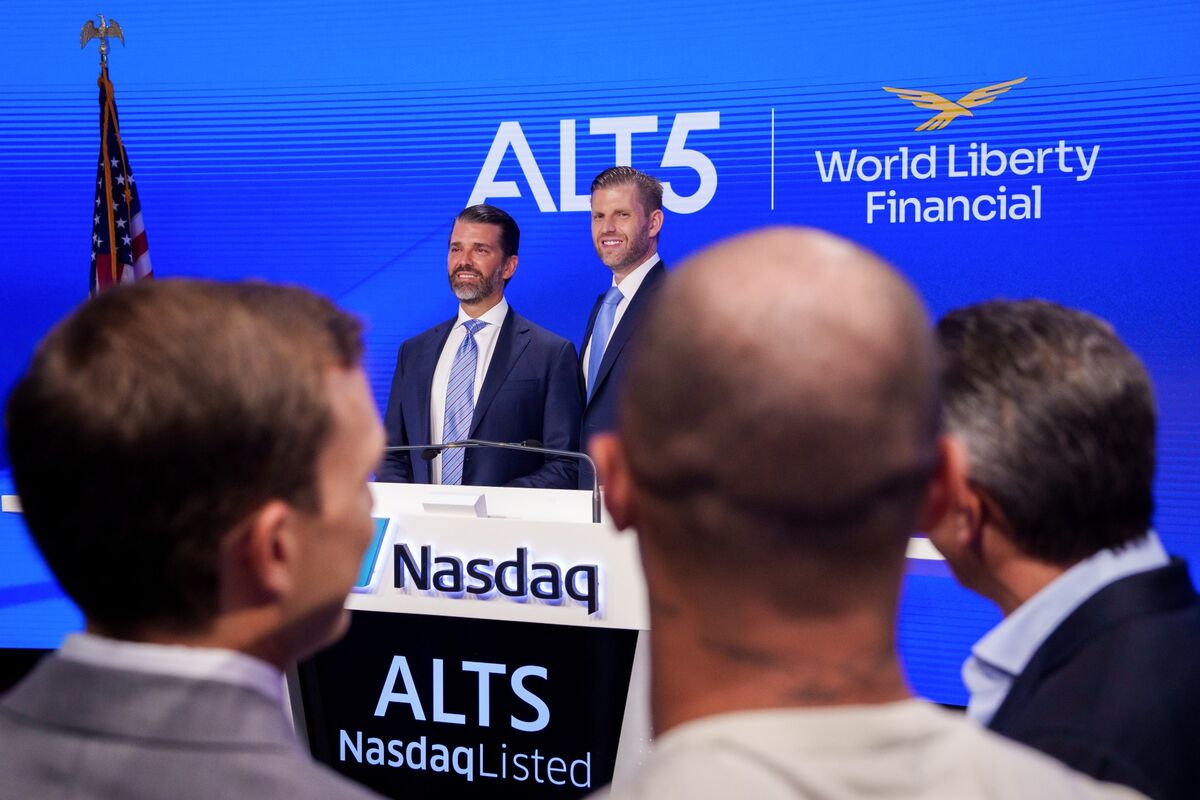
Eric Trump and Donald Trump Jr. marked a significant moment for the Trump family in the financial sector, ringing the Nasdaq opening bell as part of a high-profile $1.5 billion deal. The transaction involved the biotech-turned-crypto payments company Alt5 Sigma Corp. and the Trump-backed World Payment Network, a crypto firm under scrutiny due to its political affiliations. The deal has sparked interest among top financial firms, with Point72 Asset Management and ExodusPoint Capital Management both securing stakes in the venture.

Point72, a prominent hedge fund with a reputation for aggressive trading strategies, has previously invested in various tech-driven industries, but its entry into the crypto space marks a strategic pivot. The firm, led by billionaire Steve Cohen, has long been a major player in hedge funds, with a focus on alternative investments. ExodusPoint, a rising star in the hedge fund world, also moved to acquire a share, further solidifying its presence in the rapidly growing digital assets market.

Alt5 Sigma, originally founded as a biotech company, has undergone a dramatic transformation into a blockchain-powered payment network. With its backing from the Trump family’s business empire, the company has aimed to bridge the gap between cryptocurrency and traditional finance, particularly in the realm of payments processing. This shift has garnered attention from institutional investors and major financial players, eager to tap into the lucrative crypto market.

Both Point72 and ExodusPoint’s moves signal growing institutional interest in crypto-based financial products, which have garnered mixed reactions across the financial world. The cryptocurrency market, often volatile and speculative, remains a space that many traditional investors tread carefully within, though firms like Point72 and ExodusPoint see long-term growth potential.

The involvement of Trump-linked entities, particularly World Payment Network, has added a layer of political intrigue to the deal. World Payment Network, founded in connection with the Trump family’s business operations, has drawn attention for its ties to former President Donald Trump. Critics of the deal have raised concerns over potential conflicts of interest, pointing to the Trump family’s history of leveraging its brand for financial gain. Some worry that the high-profile nature of the Trump name could invite unwanted scrutiny from regulatory bodies, especially in a space already under heavy regulatory pressure.

Despite the controversy, the transaction illustrates the ongoing trend of high-profile figures and firms entering the crypto space, a market known for its innovation but also fraught with risks. In recent months, several hedge funds and institutional investors have increasingly allocated capital into digital assets as they look for high-return opportunities in the wake of traditional financial market fluctuations.

Point72’s foray into crypto comes as no surprise, as Cohen’s fund has long been known for diversifying into new and potentially high-reward areas. However, its involvement with a Trump-backed company adds an interesting layer of complexity, given the family’s polarizing influence on both the financial and political landscapes. ExodusPoint, on the other hand, is still a relatively new player in the hedge fund world, but its rapid growth and aggressive strategies have made it a name to watch. Its decision to back a Trump-linked crypto firm signals its willingness to embrace unconventional investment opportunities.

The crypto payments industry itself is growing rapidly, with companies such as Alt5 Sigma Corp. and World Payment Network at the forefront of bridging the gap between blockchain technology and traditional financial systems. The potential for global expansion and seamless cross-border payments has made blockchain an appealing solution for an industry looking for greater efficiency and security. However, the path forward remains uncertain. Regulatory challenges, particularly in the US, where authorities are seeking to increase oversight on crypto firms, could hamper the growth of companies like Alt5 Sigma.

At the same time, developments in blockchain technology continue to push the envelope for how financial transactions could be conducted in the future. If World Payment Network and its partners can navigate the regulatory hurdles and maintain a level of credibility amid political controversy, they may be well-positioned to capitalize on the growing demand for crypto-based financial services.

HANOI, VIETNAM – Media OutReach Newswire – 19 August 2025 – To mark the 80th anniversary of the National Day of the Socialist Republic of Vietnam, Vingroup inaugurated and broke ground on six major projects across the country. The highlight was the inauguration ceremony of the National Exhibition and Convention Center in Dong Anh, Hanoi, alongside five other landmark projects in the fields of socio-economic infrastructure, transportation, […]

Helium balloons add instant magic to any outdoor celebration whether it’s a birthday, wedding, or corporate gathering. Their bright colors and floating elegance can transform an ordinary space into a festive wonderland. However, many people discover that setting up helium balloons outdoors is trickier than it looks. Strong winds, direct sunlight, or poor anchoring can quickly turn your decoration plans into a disappointment. In this guide, we’ll […]

The United Arab Emirates has reached a significant milestone, securing the 16th position globally in the 2025 Government Support Index, as outlined in the IMD World Competitiveness Yearbook. This index evaluates how effectively governments foster the conditions needed for businesses to thrive, measuring factors such as infrastructure, regulatory environment, and public sector efficiency. With this advancement, the UAE solidifies its standing as a global leader in creating […]

By Nantoo Banerjee Come August 27, the picture of the Indo-US trade may show a considerable change. India’s merchandise exports to the US will be generally subjected to a 50 percent import tax from that date. A few categories, including drugs and pharmaceuticals, have been exempted. The reason advanced by US President Donald Trump for […]


Ethereum is once again challenging heavy resistance levels, sparking optimism among investors. The second-largest cryptocurrency by market capitalisation is showing signs of strength as it attempts to break through critical price points that have stalled its upward momentum in the past. This has caught the attention of analysts, who are predicting significant gains for the cryptocurrency in the final quarter of the year, driven by an anticipated surge in demand and institutional interest.

Ethereum’s price has been hovering in a narrow range, with investors closely watching for a decisive breakout. A clear move above its resistance level could signal a shift in market sentiment, potentially setting the stage for a new wave of bullish activity. Analysts have set their eyes on key technical indicators, suggesting that Ethereum may soon see a substantial increase in value, potentially surpassing previous highs and breaking new ground before the year’s end.

Meanwhile, Dogecoin, a long-standing favourite in the cryptocurrency space, continues to show resilience despite a fluctuating market. The meme-inspired coin is inching closer to its familiar ceiling, prompting speculation on whether it will finally break through and hit new highs. Dogecoin has experienced various cycles of growth and retracement, and many investors are now wondering if it can capitalise on Ethereum’s upward momentum and sustain a bullish rally of its own.

Dogecoin’s price action remains tied to broader market trends, but its reputation as a speculative asset with viral potential could play a pivotal role in driving future price movement. As the crypto community looks to Ethereum for cues, Dogecoin’s loyal following and established place in the market ensure it will continue to draw attention, particularly as some analysts see the potential for a significant rally in the latter half of the year.

On the other hand, Remittix, a newer entrant to the market, is steadily gaining traction. The cryptocurrency’s rapid rise can be attributed to an upcoming listing tied to a hard funding threshold, creating buzz in investor circles. Remittix has quickly become a focal point for those looking for high-growth opportunities in the crypto space. With its market debut on the horizon, analysts are forecasting a potential 500% gain in the short term as the market eagerly anticipates its full-scale launch.

The excitement surrounding Remittix is built on the expectations of a broader, global remittance network offering low-cost and instant cross-border payments. Its underlying technology and potential use case could position it as a viable player in the increasingly competitive financial services sector. As it prepares for its debut, Remittix is showing the type of explosive growth that crypto enthusiasts eagerly seek, especially when backed by a clear roadmap and strategic funding milestones.

The broader market conditions continue to show signs of improvement, with Ethereum, Dogecoin, and Remittix all benefitting from a renewed investor appetite for cryptocurrencies. As the final quarter approaches, analysts are bullish on the prospects for these assets, highlighting the crucial technical levels that could signal significant gains.

Ethereum’s position is especially important, given its role as a leader in the blockchain space. Any positive momentum in Ethereum could trigger a broader market rally, lifting altcoins like Dogecoin and Remittix along with it. As market conditions evolve and investor sentiment strengthens, these cryptocurrencies are poised to be among the key beneficiaries of what could be a dynamic finish to the year.

Saudi Arabia is solidifying its role as a key player in the global content industry, with a focus on the rapidly growing demand for Korean entertainment. The country’s recent partnership with South Korea highlights a strategic effort to bolster its creative sector and position itself as the leading creative hub in the Middle East.

The K-Content Expo held in Riyadh from July 22 to 24, 2025, served as a significant milestone in this collaboration. Organised by Korea’s Ministry of Culture, Sports and Tourism in conjunction with the Korea Creative Content Agency, the event attracted over 30 Korean content companies, who engaged in over 400 one-on-one business consultations with representatives from more than 80 regional partners across 12 Middle Eastern nations.

The expo, which showcased the best of Korean pop culture, including K-pop, K-dramas, and variety shows, offered Saudi Arabia an opportunity to deepen its ties with the thriving Korean entertainment industry. This partnership comes amid the growing influence of Korean content, especially among younger audiences in the Middle East, who have increasingly become avid consumers of K-pop and related media.

Saudi Arabia’s Vision 2030, which seeks to diversify the country’s economy and reduce its dependence on oil revenues, has increasingly focused on sectors such as entertainment, culture, and tourism. The Kingdom’s investment in the creative industries aligns with this long-term strategy and is positioning Riyadh as the region’s entertainment capital.

Notably, the Kingdom has already made strides to integrate the cultural aspects of South Korean entertainment into its media landscape. Recent collaborations between Saudi broadcasters and Korean content producers have resulted in the airing of popular K-dramas, with plans for further integration of Korean programming into Saudi television channels.

The role of Saudi Arabia’s state-backed media companies has also been pivotal in driving this initiative forward. These companies are facilitating the import of Korean content while simultaneously promoting local talent. Saudi Arabia’s growing production facilities and investments in digital media technologies are creating an ecosystem ripe for the exchange of ideas, talent, and content.

The government’s investment in the creative sector is not just limited to entertainment. It has also ventured into areas such as gaming, animation, and digital arts, all sectors in which South Korea has a global reputation. Through these joint ventures, Saudi Arabia hopes to create a self-sustaining creative economy that can compete on a global scale.

One of the primary objectives of the K-Content Expo was to open new opportunities for collaboration in areas such as co-productions, distribution, and marketing of content. The event saw numerous partnerships solidified between Saudi and Korean businesses, facilitating the exchange of not just media content but also expertise in areas such as production, distribution networks, and digital platforms.

With over 100 million people in the region under the age of 30, the Middle East has become a crucial market for content creators. According to recent reports, the demand for digital entertainment in the region has surged, with younger viewers flocking to streaming platforms to watch content from South Korea and beyond. As the digital space continues to grow, Saudi Arabia is positioning itself to capture a significant portion of this expanding market.

One of the standout agreements at the K-Content Expo was the joint initiative between Saudi Arabian streaming platforms and Korean entertainment giants to launch localised K-drama series tailored to the Middle Eastern audience. These series, while maintaining the core characteristics of Korean entertainment, will also incorporate local cultural elements, creating content that resonates with regional tastes and sensibilities.

Saudi Arabian officials have been vocal about their ambition to become a creative powerhouse, with plans to further develop infrastructure and offer financial incentives for foreign productions. This push is part of a broader strategy to not only cater to the domestic audience but also to attract international content producers who may see the region as a gateway for entry into the broader Middle Eastern and North African markets.

Experts have highlighted the role of such events in expanding bilateral relations and fostering cultural exchange between the two nations. The ongoing collaboration between Saudi Arabia and South Korea is poised to offer new business opportunities, particularly in light of the Kingdom’s efforts to develop its entertainment and cultural sectors.

PUTRAJAYA, MALAYSIA – Media OutReach Newswire – 18 August 2025 – Islamic Tourism Month (ITM) 2025 returns for its fourth and most exciting edition yet, inviting Malaysians and global travelers to embark on a journey of rediscovery through the rich lens of Muslim-Friendly Tourism and Hospitality (MFTH). Organised by the Islamic Tourism Centre (ITC), ITM 2025 takes place from 18 August to 30 September, showcasing the beauty, […]

Dubai’s office real estate market has experienced a remarkable upswing, with sales transactions reaching AED5.4 billion in the first half of the year, an 84% year-on-year increase. This surge comes on the back of a dynamic and growing demand for commercial spaces, particularly in the prime office and logistics segments, as noted in Cavendish Maxwell’s latest Dubai Office Market Report. According to the report, the number of […]

Terra/Luna founder Do Kwon has pleaded guilty to charges of misleading investors in the wake of the cryptocurrency platform’s dramatic collapse. The South Korean entrepreneur’s admission follows an extensive investigation into the catastrophic failure of his company, which resulted in billions of dollars in losses for global investors.

Kwon’s once-promising cryptocurrency project, Terra, alongside its native token Luna, was heralded as a revolutionary model in the digital finance space, promoting a stablecoin system backed by a complex algorithm. However, as Terra’s market value spiralled downward in May 2022, the system’s instability became glaringly apparent, triggering a collapse that sent shockwaves through the entire crypto industry.

At the heart of the scandal is the assertion that Kwon misled investors by downplaying the risks of the Terra/Luna ecosystem. During several public appearances and through communications with investors, Kwon had portrayed the Terra network as safe and resilient. His claims were underpinned by his ability to maintain a high market value for Luna and the purported stability of TerraUSD, a stablecoin tied to the project. The failure of the system, when TerraUSD’s peg to the US dollar faltered, led to an unprecedented crash in Luna’s value, rendering it almost worthless.

The legal proceedings against Kwon were initiated shortly after the collapse, with allegations of fraud, market manipulation, and a blatant disregard for investor protection laws. Following his arrest in Montenegro earlier this year, Kwon’s legal troubles intensified, with prosecutors alleging that his actions were tantamount to a Ponzi scheme, designed to artificially inflate the market for Luna and its associated assets.

Kwon’s defence team initially argued that he did not intentionally deceive investors and that the Terra/Luna collapse was the result of market conditions beyond his control. However, his guilty plea signals a change in approach. Experts suggest that Kwon may have opted for a guilty plea in order to avoid prolonged legal battles, especially as the mounting evidence pointed towards significant flaws in the way he operated the project.

The plea has drawn significant attention, not just from the cryptocurrency community, but also from regulators worldwide who have been closely monitoring the growing number of legal cases involving crypto fraud and market manipulation. The Terra/Luna crash is widely seen as one of the most significant incidents in the volatile history of cryptocurrency, highlighting the risks associated with algorithmic stablecoins and the lack of regulation in the sector.

Kwon’s case has also reignited discussions about the need for comprehensive regulation in the cryptocurrency space. Many in the industry believe that the failure of Terra/Luna could have been prevented or mitigated had there been clearer regulatory oversight governing the behaviour of blockchain-based projects. In the aftermath of the collapse, several global regulators have moved to draft stricter guidelines aimed at improving transparency and accountability for digital assets, particularly those promising stability through mechanisms like algorithmic stablecoins.

The consequences of Kwon’s actions extend beyond financial losses. The collapse of Terra/Luna resulted in a loss of trust in the cryptocurrency market, with many investors becoming wary of similar projects that promise high returns with little risk. While the crypto sector has made efforts to rebuild its reputation, the Terra/Luna scandal remains a cautionary tale for anyone entering the volatile world of digital finance.

For investors, the aftermath of the collapse has been bitter. Many are still seeking compensation, and several class action lawsuits have been filed against Kwon and his associates. However, the road to recovery for those affected may be long, as legal proceedings unfold and the extent of Kwon’s liability is determined.

Oracle’s aggressive expansion in AI and cloud services has set the stage for a major shift in the tech industry, with analysts predicting the company could achieve a $1 trillion market valuation by 2030. As one of the largest tech giants globally, Oracle’s growth trajectory is bolstered by significant revenue gains and strategic partnerships, positioning it to challenge established players like Amazon Web Services and Microsoft Azure. […]

Futu Securities International has launched Solana trading on its Futu NiuNiu App in Hong Kong, marking a significant step in expanding access to digital asset markets. The launch comes on the heels of a broader push for crypto adoption across Asia and aims to offer more flexible trading opportunities to the region’s retail investors.

This move positions Futu Securities, an influential brokerage firm, as a key player in the competitive landscape of cryptocurrency trading in Hong Kong. The company has been focusing on bridging traditional financial services with digital asset trading, reflecting a growing trend in the region towards integrating blockchain technology into mainstream investment platforms.

The new trading feature allows users to trade Solana directly, a cryptocurrency known for its high-speed transactions and scalability, which have positioned it as a potential competitor to Ethereum. The decision to add Solana to the platform follows a series of strategic partnerships and product enhancements by Futu, aimed at capturing a share of the rapidly evolving crypto trading market.

Solana’s inclusion is particularly notable given the increasing popularity of decentralized finance platforms and non-fungible tokens, sectors where Solana has made significant strides. Its fast transaction speeds and lower fees have made it a favourable option for developers and traders alike. By offering this asset, Futu Securities provides its customers with greater flexibility to tap into the growth of blockchain-based applications.

The launch also comes at a time when other crypto trading platforms are making similar moves to expand their offerings. The competitive pressure is particularly intense in Hong Kong, a city that is positioning itself as a major hub for digital assets in Asia. Several firms are already catering to the burgeoning demand for cryptocurrency products, prompting regulators to adapt to the new landscape.

Hong Kong’s regulators have taken a balanced approach to crypto oversight, striving to foster innovation while ensuring the protection of investors. This regulatory stance has attracted firms like Futu to launch new offerings with confidence, knowing that the regulatory framework is supportive of such developments.

Futu’s move into the retail Solana trading space also ties into the broader trend of financial firms integrating digital currencies into their portfolios. The platform already offers trading in various other digital assets, including Bitcoin and Ethereum, making Solana’s addition a natural extension of their crypto offerings.

This shift is not isolated to Hong Kong alone. Several other financial institutions in Asia have been exploring ways to incorporate blockchain technology into their traditional business models. Many see digital currencies as a way to diversify their service offerings and attract a new wave of tech-savvy investors who are more inclined to explore innovative financial products.

Futu Securities’ push into the crypto space also follows its international expansion strategy. The company has been actively seeking ways to grow its customer base beyond the borders of mainland China, where stricter crypto regulations have limited access to digital asset markets. By capitalising on Hong Kong’s more open regulatory environment, Futu aims to strengthen its position in the broader Asia-Pacific region.

As retail investors in Hong Kong and across Asia continue to show increasing interest in cryptocurrencies, platforms like Futu NiuNiu are tapping into this growing demand by offering accessible and secure trading options. This aligns with broader trends in the financial industry where the lines between traditional and digital assets are becoming increasingly blurred.

The decision to offer Solana trading comes at a pivotal moment for the cryptocurrency market. Solana has garnered attention as a potential alternative to Ethereum, largely due to its speed and lower costs. With the platform’s growing user base, the ability to trade SOL on a mainstream brokerage app represents an important shift in how digital assets are perceived by traditional investors.

The U. S. government is reportedly negotiating a potential stake in semiconductor giant Intel, as part of efforts to bolster the nation’s chip manufacturing capabilities. According to sources familiar with the matter, the deal could be a significant move in Washington’s ongoing strategy to strengthen domestic manufacturing of critical technologies, particularly semiconductors. Intel has been facing mounting challenges in the competitive semiconductor industry, with delays in its […]

VISHNU RAJA
RYO YAMADA
HITORI GOTOH
IKUYO KITA