Just in:

News related to
Space

The United Arab Emirates continues to solidify its position as a leader in global competitiveness, securing impressive rankings across various international indices in 2024. This success is attributed to the country’s strategic vision, progressive leadership, and investment in key sectors such as technology, infrastructure, and education.

According to the latest reports, the UAE ranks highly in multiple key performance indicators, reflecting its robust economy, forward-thinking policies, and well-developed infrastructure. The country’s emphasis on innovation, digital transformation, and sustainability has propelled it to the forefront of global competitiveness rankings. The World Economic Forum (WEF) Global Competitiveness Index, along with reports from the International Institute for Management Development (IMD), have highlighted the UAE’s growth trajectory in areas like business environment, digital readiness, and ease of doing business.

A key element in this achievement is the UAE’s continued push towards diversifying its economy. Efforts to reduce dependency on oil and expand non-oil sectors, particularly in finance, real estate, tourism, and renewable energy, have paid off. The country’s leadership has consistently invested in cutting-edge infrastructure and created an attractive business environment for international investors. This foresight has made the UAE an appealing destination for both foreign companies and skilled talent from around the world.

The UAE government’s leadership in prioritizing digitalization and innovation has also played a pivotal role in improving its competitive position. Initiatives such as the UAE Vision 2021 and the more recent National Innovation Strategy have facilitated the development of smart cities, e-governance platforms, and a thriving tech sector. Dubai, in particular, has become a global hub for technology startups and financial services, bolstering the UAE’s reputation as a competitive global player.

Another contributing factor is the UAE’s leadership in sustainability efforts. As the country shifts toward a greener economy, it has gained recognition for its strides in renewable energy, with projects like the Mohammed bin Rashid Al Maktoum Solar Park, one of the largest solar power projects in the world. Additionally, the UAE’s commitment to the UN’s Sustainable Development Goals (SDGs) has further cemented its standing as a global leader in sustainable growth.

While the UAE continues to excel, it also faces challenges that could impact its future competitiveness. The global economic climate, geopolitical factors, and shifts in energy markets are areas of concern. However, the UAE’s adaptability and strong governance systems have shown the country’s resilience in navigating these obstacles.

The UAE’s emphasis on education and skills development has proven essential in driving long-term competitiveness. By investing heavily in world-class educational institutions, both public and private, the country has cultivated a skilled workforce capable of meeting the demands of a rapidly evolving global economy. Programs such as the Mohammed bin Rashid Al Maktoum Foundation’s scholarship initiative and various partnerships with renowned international universities have supported the nation’s transition to a knowledge-based economy.

Despite the country’s success, there are ongoing efforts to ensure that the competitive edge is maintained. These efforts include advancing the national innovation ecosystem, enhancing digital infrastructure, and improving regulations to keep pace with global best practices. The UAE’s focus on ensuring economic resilience and sustainability positions it as a regional leader with the potential to further improve its global standing in the years to come.

Looking ahead, the UAE aims to strengthen its competitiveness by focusing on sectors such as artificial intelligence, biotechnology, and space exploration. Investments in these future-forward industries not only align with global trends but also position the country at the forefront of new technologies. The UAE’s space ambitions, embodied by initiatives such as the Hope Probe and Mars mission, highlight its determination to lead in cutting-edge research and development.


Telegram has taken a significant step into the world of non-fungible tokens (NFTs) by launching a new feature that allows users to trade digital stickers. The messaging platform’s latest initiative, in collaboration with the TON blockchain, introduces the “Sticker Shop” mini-app. This shop will enable Telegram users to purchase exclusive, limited edition NFT stickers using Telegram Stars, a virtual currency tied to Toncoin (TON).

The Sticker Shop allows creators to upload their own digital sticker packs and monetize their artwork by selling them as NFTs. Users can browse the store, buy, and trade these stickers with ease, making this a novel way for creators to gain recognition and profit from their digital creations. Telegram has built this feature around Toncoin, leveraging the TON blockchain to provide a secure and decentralized method for transactions.

The new mini-app aims to merge the growing NFT market with Telegram’s massive user base, which exceeds 700 million monthly active users. Telegram has been steadily expanding its platform with additional features, including payments and bots, and this new offering represents a significant push into the world of blockchain and digital art. The Sticker Shop not only enhances user engagement but also offers a new revenue stream for both Telegram and creators.

Toncoin, a cryptocurrency originally developed by Telegram’s parent company, has been central to the platform’s ambitions in the decentralized finance space. By integrating TON into the Sticker Shop, Telegram seeks to promote the adoption of its blockchain. Toncoin’s role in the system is pivotal, as it underpins all transactions within the Sticker Shop, including the purchase of the NFT stickers.

Telegram’s expansion into NFTs follows broader trends in social media and digital platforms, where companies are increasingly exploring ways to incorporate blockchain technology to offer new features. Major platforms like Twitter and Instagram have already integrated NFTs into their systems, capitalizing on the growing demand for digital assets. However, Telegram’s move is particularly significant given the platform’s focus on privacy and decentralization. This approach aligns with the ethos of blockchain technology, offering a unique blend of both features.

For users, the Sticker Shop promises to be a fun and interactive way to engage with digital art, adding value to stickers that have long been a central part of the Telegram experience. The platform has become known for its vibrant and creative communities, with stickers playing a key role in personalizing conversations. With this new feature, Telegram is tapping into the trend of digital ownership, where users can not only use these stickers in chats but also potentially sell or trade them, further enhancing the sense of ownership.

As Telegram continues to build its ecosystem, the inclusion of NFT capabilities creates a seamless integration with its existing infrastructure. Telegram Stars, the virtual currency within the platform, will allow users to make quick transactions without needing to rely on external crypto wallets or exchanges. This seamless integration lowers the barrier to entry for users who might be unfamiliar with cryptocurrency, thus broadening the appeal of NFTs beyond the crypto-savvy audience.

The focus on limited edition NFT stickers adds an element of rarity and exclusivity to the stickers, similar to how NFTs in other markets have gained value due to their scarcity. By allowing only a limited number of stickers to be sold, creators can cultivate a sense of urgency among buyers, driving demand and increasing the potential for higher prices on the secondary market. This mirrors trends seen in other NFT-based platforms, where the rarity of digital items drives up their perceived value.

The move is not just about providing a platform for creators but also positioning Telegram as a key player in the growing NFT market. The digital sticker economy has already proven to be lucrative for creators, with some stickers fetching high prices due to their uniqueness and the communities that develop around them. By offering a dedicated space for NFTs, Telegram gives these creators the tools to directly monetize their work while reaching a large, engaged audience.

Telegram’s decision to build its Sticker Shop using the TON blockchain also offers a glimpse into the broader strategy of the company. Telegram has consistently pushed for decentralization in its services, and by supporting blockchain technology, the company reinforces its commitment to privacy and data security. Unlike many other tech giants, Telegram has avoided traditional monetization strategies, such as data mining, and instead focuses on offering value-added services like the Sticker Shop to generate revenue. This commitment to a decentralized and user-centric model sets Telegram apart from other social media platforms, many of which have been criticized for exploiting user data.

Despite Telegram’s massive user base, it will face competition from other platforms already capitalizing on the NFT boom. While Telegram’s integration with Toncoin provides a unique selling point, platforms like Twitter and Instagram have already made substantial strides in the NFT space. However, Telegram’s established position as a communications tool could give it an edge in attracting a broader audience to the NFT market. By combining social interaction with digital ownership, Telegram offers a distinct value proposition for both users and creators.

The rise of Bitcoin exchange-traded funds (ETFs) has seen a notable milestone, with Bitcoin ETFs now surpassing gold ETFs in assets under management (AUM). This shift represents a significant turning point in the financial landscape, signaling growing investor confidence in digital assets despite gold’s long-established dominance as a safe haven investment.

Bitcoin ETFs, which first launched in 2021, have rapidly gained traction among institutional and retail investors alike. As of December 2024, Bitcoin ETFs in the United States have amassed over $40 billion in AUM, outpacing gold ETFs which currently hold around $38 billion. The accelerated growth of Bitcoin ETFs has prompted discussions regarding the evolving role of cryptocurrency in traditional investment portfolios and its potential to replace or complement gold as a store of value.

This change comes despite the fact that gold ETFs have been available for over two decades, providing investors with a simple, liquid, and low-cost way to gain exposure to the price of gold without physically owning the metal. Gold has historically been viewed as a stable investment, especially during periods of economic uncertainty, inflation, or geopolitical unrest. Bitcoin, on the other hand, has only been in existence since 2009 and has gained significant attention in recent years as an alternative asset class.

Several factors contribute to the growing appeal of Bitcoin ETFs. One of the key drivers has been the institutionalization of the cryptocurrency market. Large financial institutions, including BlackRock, Fidelity, and others, have entered the Bitcoin ETF space, bringing credibility to the market and attracting new investors. Additionally, the growing acceptance of Bitcoin as a legitimate asset class by regulators and financial authorities has alleviated concerns regarding its volatility and security risks.

In particular, the launch of Bitcoin ETFs backed by Bitcoin futures has helped to fuel the growth of the sector. These ETFs offer exposure to Bitcoin’s price movements without the need for investors to directly hold or store the cryptocurrency. By offering a regulated investment vehicle, these funds provide investors with the potential for Bitcoin’s upside without the complexities of self-custody and security issues associated with owning the cryptocurrency directly.

The rise of Bitcoin ETFs also reflects a broader shift in investor sentiment, particularly among younger investors who are more comfortable with technology and digital assets. Many millennials and Gen Z investors, who have grown up in an era of digital finance and cryptocurrency, view Bitcoin not only as a speculative investment but also as a hedge against traditional financial system risks. They often see Bitcoin as a “digital gold,” capable of offering similar benefits as gold, such as inflation protection, but with greater potential for upside in the long run.

Meanwhile, gold ETFs are showing signs of stagnation, with inflows into these products slowing as interest in alternative assets like Bitcoin continues to grow. While gold still holds its position as a primary hedge against inflation and economic instability, the digital asset class, led by Bitcoin, is capturing a larger portion of the market share. The price volatility of Bitcoin, which was once considered a major drawback, is now seen by many as an opportunity for higher returns, making it a more attractive option for risk-tolerant investors.

Another factor contributing to the growth of Bitcoin ETFs is the increasing interest in decentralized finance (DeFi) and blockchain technologies. As the blockchain ecosystem expands, more investors are recognizing the potential for Bitcoin and other cryptocurrencies to disrupt traditional financial systems. The transparency, security, and accessibility offered by blockchain technology make it a compelling alternative to conventional banking and financial services, leading more investors to explore Bitcoin as part of a diversified portfolio.

Despite its growing popularity, Bitcoin remains a volatile asset, subject to large price swings. While Bitcoin’s AUM has surpassed that of gold ETFs, it is important to note that Bitcoin’s value is still largely driven by speculation, regulatory developments, and market sentiment. Unlike gold, which has a long history of stability, Bitcoin’s future remains uncertain, with potential regulatory changes and market fluctuations posing risks for investors.

Nevertheless, Bitcoin’s ascent in AUM marks a significant shift in the investment landscape, reflecting growing acceptance of cryptocurrencies as a legitimate asset class. The race between Bitcoin and gold is far from over, and it remains to be seen whether Bitcoin can maintain its lead over gold in the long term or if the precious metal will once again take the upper hand.

As Bitcoin ETFs continue to grow in popularity, financial advisors and wealth managers will need to adjust their strategies to accommodate this shift. The inclusion of Bitcoin in traditional investment portfolios presents both opportunities and challenges, requiring investors to carefully consider their risk tolerance and long-term financial goals.

The Trump Organization is set to expand its presence in the Gulf with the development of Trump Towers in both Abu Dhabi and Dubai. These luxury projects, slated for construction in partnership with Dar Global, are expected to bring unparalleled opulence to the region, with one of the towers located in Downtown Dubai. According to Eric Trump, son of the US president-elect, the Abu Dhabi development is […]

Zand, a prominent player in the digital finance sector, has been strengthening its custody services with advanced security protocols aimed at protecting client assets. This move highlights the increasing importance of safeguarding digital assets amid growing concerns about cyber threats in the evolving financial landscape.

The company has invested significantly in both technology and expert security teams to fortify its custodial framework, ensuring that it remains at the forefront of security in digital asset management. Zand’s approach combines state-of-the-art encryption methods, multi-layered security systems, and a continuous audit process to maintain asset integrity. These measures are intended to offer clients a high level of confidence in the safety of their holdings, even as global attention on cybersecurity intensifies.

A key component of Zand’s security architecture is its reliance on encryption technologies, which serve as the first line of defense against unauthorized access. The encryption processes are designed to ensure that sensitive data, such as private keys and transaction details, are only accessible to the rightful owners. These measures are backed by continuous real-time monitoring systems that detect and respond to any potential breaches, ensuring that the platform remains secure at all times.

Zand employs a robust audit process, working with third-party security firms to conduct regular evaluations of its systems. This independent verification ensures that the company’s security protocols are effective and compliant with the latest industry standards. The constant review of its custodial operations reflects the company’s commitment to transparency and operational integrity.

Zand’s security framework also includes a dedicated team of cybersecurity experts who provide ongoing oversight. These professionals are tasked with identifying vulnerabilities and responding to emerging threats in real time. By employing a proactive approach, Zand ensures that any potential risks are mitigated before they can affect clients’ assets.

In the rapidly expanding world of digital finance, the need for secure custodial services has never been more crucial. With the rise in cyberattacks targeting financial institutions and digital platforms, companies like Zand are under increasing pressure to adopt advanced security measures. As digital assets gain popularity among both individual investors and institutional players, the stakes are high. Any breach in security could undermine trust in digital finance platforms, making robust security a top priority for companies operating in this space.

Zand’s emphasis on continuous audits and expert oversight sets it apart from many of its competitors, who may not invest as heavily in regular system evaluations or specialized security teams. This distinction has made Zand a trusted name for those seeking secure storage and management of their digital assets.

Despite the sophisticated security mechanisms, Zand is not resting on its laurels. The company continues to evolve its systems to stay ahead of emerging threats in the cybersecurity landscape. As cybercriminals become more sophisticated, financial institutions must adapt rapidly to counteract new forms of attacks, which range from phishing schemes to more complex forms of hacking and fraud.

As part of its commitment to staying at the cutting edge of security, Zand has also begun exploring the integration of blockchain-based solutions for asset management. The decentralized nature of blockchain offers an additional layer of security, as it makes it harder for attackers to alter or corrupt data. By incorporating these technologies into its existing security framework, Zand aims to offer clients an even more resilient solution to protect their assets.

Zand’s efforts reflect broader trends within the financial services industry, where the demand for secure and efficient digital asset management continues to rise. The growing involvement of institutional investors in the digital finance space has placed increased pressure on custodians to adopt best practices in security. These investors require assurance that their assets are being managed by platforms with stringent controls in place, and Zand’s comprehensive approach to security meets these high expectations.

The company has also worked to ensure that its custodial services are user-friendly, allowing both novice and experienced investors to manage their digital assets with ease. By prioritizing security without compromising on accessibility, Zand is positioning itself as a leading player in the evolving digital finance sector.

The UAE property market has experienced a significant surge in demand as a growing number of Europeans relocate to Dubai, seeking a dynamic lifestyle and favorable business environment. According to Ali Sajwani, Managing Director of Damac Properties, a leading real estate developer in the region, the shift has been fueled by a combination of factors that make Dubai an increasingly attractive destination for expatriates. These factors include […]

Parkin and BATIC, two prominent players in the realm of urban mobility solutions, have announced a strategic collaboration aimed at transforming parking systems in Saudi Arabia. The partnership focuses on leveraging cutting-edge technologies to enhance the efficiency and accessibility of parking infrastructure across key urban areas. Parkin, a company known for its innovative smart parking systems, and BATIC, a leader in digital transformation solutions for the transport […]

Advertisements

Abu Dhabi-based energy group XRG has entered into a strategic partnership with BP to establish a joint venture aimed at developing a state-of-the-art natural gas platform. The move marks a significant step in the region’s ongoing efforts to expand its energy infrastructure while aligning with global trends towards cleaner energy solutions. This collaboration highlights both companies’ shared commitment to innovating within the natural gas sector, one of […]

US investors are closely watching the performance of the Gulf Cooperation Council (GCC) countries, with expectations that they will soon surpass Latin America in key global equity indices such as MSCI and FTSE. As geopolitical stability, economic diversification, and investment-friendly policies continue to reshape the GCC region, investor sentiment is shifting in favor of markets like Saudi Arabia, the UAE, and Qatar. These shifts are positioning the GCC as a competitive alternative to Latin American markets, which have traditionally dominated emerging market portfolios.

The transformation of the GCC has been driven by the Vision 2030 initiatives in Saudi Arabia and similar long-term strategies in the UAE, Oman, and other member states, which aim to reduce dependence on oil exports and stimulate private-sector growth. The shift towards sustainable, knowledge-based economies has attracted foreign investment, with an increasing number of global funds seeking exposure to these markets. As a result, GCC markets are becoming more integrated into international investment indices, which influences investor behavior and portfolio allocations.

Over the last few years, the region has experienced remarkable economic resilience. Saudi Arabia, for instance, has embarked on large-scale infrastructure projects, including the $500 billion NEOM city, aiming to transform the country into a global tech hub. The UAE’s successful diversification into technology, tourism, and finance, alongside Qatar’s investments in real estate and sports, have been pivotal in shaping the region’s economic future. These developments have helped insulate the GCC from global economic shocks that have impacted other emerging markets, particularly in Latin America.

On the other hand, Latin America faces several challenges, including political instability, high inflation rates, and the ongoing effects of the COVID-19 pandemic. While countries like Brazil and Mexico continue to attract significant foreign investment, they struggle with internal issues that undermine their competitiveness in global markets. Currency devaluations, fiscal deficits, and socio-political unrest have made it difficult for Latin American nations to maintain the economic momentum necessary to attract sustained foreign capital flows.

One key factor driving the GCC’s rise in global indices is the region’s regulatory reforms and commitment to improving market transparency. The recent opening up of Saudi Arabia’s stock market to foreign investors has significantly boosted its profile in the MSCI Emerging Markets Index, making it one of the most important global equity markets. Likewise, the UAE and Qatar have undergone similar reforms to make their markets more attractive to international investors. These changes have helped secure the region’s position as a top destination for investment.

By contrast, Latin American markets face continued hurdles in enhancing their market accessibility to foreign investors. While efforts to reform capital markets have been made, the pace of regulatory change has often been slow, and institutional instability in countries like Argentina and Venezuela poses ongoing risks to foreign capital. The lack of uniform regulatory standards across the region makes it harder for investors to manage risk efficiently compared to the more standardized frameworks seen in the GCC.

Investor preferences are also shifting toward sectors where the GCC has a clear competitive advantage. The rise of the global green economy, for instance, has created new opportunities for the region, particularly in the fields of renewable energy and sustainable infrastructure. Countries like Saudi Arabia and the UAE have announced major green energy projects that are not only environmentally beneficial but also expected to generate long-term economic returns. These initiatives align well with the investment priorities of ESG (Environmental, Social, and Governance) focused funds, further boosting the region’s appeal.

Latin America, by contrast, has yet to fully tap into the green economy. While there are emerging opportunities, the lack of coherent national strategies and adequate infrastructure to support renewable energy projects has hindered the region’s growth in this space. The region’s natural resources, such as lithium and copper, are essential for the global transition to electric vehicles, but the lack of stable governance and investment in infrastructure has delayed progress.

The relative stability of GCC countries—especially in terms of governance and fiscal policy—has made them more attractive to foreign investors. With some Latin American countries struggling with political volatility, the GCC offers a more secure investment environment. Saudi Arabia’s Crown Prince Mohammed bin Salman has implemented various reforms to strengthen the business environment, which have been widely praised by foreign investors. Similarly, the UAE’s policies of attracting global talent and fostering innovation have made it one of the most dynamic economies in the region.

As the global economic landscape shifts, the GCC’s strong economic fundamentals, combined with its strategic initiatives to diversify and attract foreign capital, are making it a prominent contender for investors. The region’s stock markets are likely to continue their upward trajectory, surpassing Latin America in indices like MSCI and FTSE, further consolidating their position in the global investment community.

Former President Donald Trump recently addressed the Blockchain Association’s Annual Policy Summit, where he expressed strong support for the growth of the blockchain industry in the United States. During the dinner event, Trump emphasized the importance of blockchain technology as a key driver for maintaining economic strength and preventing American businesses from moving overseas to countries like China. His remarks at the summit highlighted the need for clear regulatory frameworks that encourage innovation while safeguarding national interests.

Trump’s engagement with blockchain technology comes as part of a broader push to modernize the U.S. economy and ensure that cutting-edge technologies remain within the country’s borders. The former president has previously voiced concerns over the global shift of technology and business hubs toward nations with more favorable regulatory environments, particularly China, which has become a major player in sectors like cryptocurrency mining and blockchain-based services.

Speaking to the gathered policy experts, business leaders, and lawmakers, Trump urged for a balanced approach to regulation that allows for growth and innovation in the blockchain sector. “The U.S. must stay ahead in this field,” he said, warning that without action, American companies may seek more favorable environments abroad. His comments reflect his long-standing view on the need to maintain U.S. competitiveness, particularly in sectors that are expected to define the global economy in the coming decades.

The former president’s endorsement of blockchain technology is seen as an attempt to position the U.S. as a global leader in the emerging digital economy. Blockchain, which underpins cryptocurrencies like Bitcoin and Ethereum, has a broad range of applications, including in finance, supply chain management, and even healthcare. As industries around the world explore its potential, the U.S. government faces pressure to implement regulations that both foster innovation and protect investors and consumers.

Trump’s position on blockchain aligns with a growing consensus in Washington about the need to establish clearer guidelines for the technology. Several lawmakers have recently introduced bills aimed at improving the regulatory environment for blockchain and cryptocurrencies. These efforts aim to address the challenges of crypto-related fraud, money laundering, and tax evasion, while also encouraging the growth of legitimate businesses in the space.

The Blockchain Association, which represents a wide array of blockchain companies, has been at the forefront of advocating for such regulations. Their policy priorities include ensuring that the U.S. remains a favorable jurisdiction for blockchain entrepreneurs, particularly when compared to jurisdictions like China, where regulatory crackdowns have stifled domestic innovation. For Trump, promoting blockchain development is part of his broader economic vision that focuses on retaining technological leadership within U.S. borders.

Trump’s dinner remarks were met with mixed reactions. Supporters lauded his call for stronger blockchain policies, viewing it as a necessary step to ensure that the U.S. remains a technological powerhouse. However, critics cautioned that any regulatory push must balance innovation with security and consumer protection. They highlighted concerns that overly restrictive regulations could stifle growth in a sector that is still in its early stages.

The blockchain industry has been grappling with regulatory uncertainty for years. While blockchain technology itself is decentralized and largely unregulated, the use of cryptocurrencies and blockchain-based applications in finance has drawn significant attention from government agencies. The U.S. Securities and Exchange Commission (SEC) and other regulatory bodies have been working to develop frameworks that protect investors and ensure that the industry does not become a haven for illegal activities.

For the blockchain sector, Trump’s comments highlight the urgency of developing a regulatory structure that allows businesses to thrive while maintaining a clear legal framework. Blockchain companies have expressed concerns over the patchwork of regulations at the state and federal levels, which can create confusion and limit their ability to scale operations.

As global competition heats up, blockchain is increasingly seen as a critical area for investment. Countries around the world are making moves to attract blockchain startups and developers by offering tax incentives, regulatory clarity, and business-friendly environments. Trump’s statements signal that the U.S. government may need to do more to support the sector to remain competitive.

The future of blockchain technology in the U.S. may hinge on the development of a coherent regulatory strategy. Proponents argue that clear and consistent guidelines are essential for encouraging investment and innovation, while detractors warn that too much regulation could stifle the sector’s potential. Trump’s position reflects the growing recognition that the U.S. must act quickly to ensure it remains a global leader in blockchain, cryptocurrency, and other emerging technologies.

flydubai has officially inaugurated its new Business Class Lounge at Terminal 2 of Dubai International Airport (DXB), a move aimed at enhancing the travel experience for its premium passengers. This opening aligns with the airline’s ongoing efforts to offer top-tier services and improve convenience for its growing number of high-end travelers.

The launch event was attended by key figures from the airline and local government, including Hamad Obaidalla, Chief Commercial Officer at flydubai, and H.E. Major-General Obaid Muhair bin Suroor, Deputy Director-General of the General Directorate of Residence and Foreigners Affairs in Dubai. Both emphasized the strategic importance of the new lounge in fostering customer satisfaction and reinforcing Dubai’s position as a global hub for air travel.

flydubai’s new Business Class Lounge is designed to offer a comfortable, spacious environment with state-of-the-art amenities, ensuring that passengers can relax or work in a serene setting before their flights. The lounge features a variety of seating options, private workstations, high-speed Wi-Fi, and an extensive selection of food and beverages, tailored to meet the needs of both business and leisure travelers.

The move marks a significant upgrade to the airline’s offerings, as it continues to expand its route network and improve its services. This new lounge, located in the busy Terminal 2, is also a step towards aligning the airline’s infrastructure with the high standards expected of modern international airports. Terminal 2 handles millions of passengers annually, with a significant portion of those traveling in premium classes, further underscoring the demand for such facilities.

The opening of the lounge comes at a time when global air travel is recovering from the pandemic, with airlines increasingly focusing on improving customer experience and loyalty. This lounge is part of flydubai’s broader strategy to distinguish itself in a highly competitive market by offering tailored services for its business class passengers. The airline has made significant strides over the years, with a focus on modernizing its fleet, expanding routes, and improving in-flight services. The introduction of premium lounges at key airports is another step in its long-term vision to provide a seamless travel experience that meets the expectations of today’s discerning passengers.

The flydubai Business Class Lounge is not only a reflection of the airline’s commitment to customer care but also a response to the growing trend among travelers seeking high-end, comfortable experiences at airports. According to aviation industry experts, premium passengers are increasingly looking for more than just luxury in-flight services; they want a complete experience, starting from the moment they step into the airport. This is particularly true in Dubai, where the airport is a critical hub for international connections, and many passengers spend hours waiting for their connecting flights.

The lounge’s design emphasizes a blend of functionality and luxury. The space is divided into different zones, offering everything from quiet areas for relaxation to more active zones for business meetings. The introduction of private workstations caters to business travelers who need a quiet place to prepare for meetings or make calls. For those looking to unwind, the lounge offers a variety of entertainment options, including television screens and comfortable lounge seating. The food and beverage offerings are diverse, with an emphasis on fresh and healthy options, as well as a selection of regional and international delicacies.

Hamad Obaidalla, speaking at the event, noted that the lounge was not only a response to growing demand but also a reflection of the airline’s dedication to innovation in customer service. “As we continue to expand our operations, we are committed to enhancing the travel experience for our passengers,” he said. “The new lounge is an example of how we are investing in facilities that provide our customers with comfort and convenience at every step of their journey.”

The inauguration of this lounge highlights Dubai’s continuous efforts to upgrade its aviation infrastructure. Dubai International Airport has long been a leading global airport, serving millions of passengers each year, and it continues to evolve to meet the needs of the growing air travel market. With new developments, such as the flydubai Business Class Lounge, the airport reaffirms its role as a key player in the global aviation industry.

The move also aligns with broader trends in the aviation sector, where airlines are increasingly focusing on customer experience to stay competitive. In recent years, airlines worldwide have been ramping up their investments in premium services, including dedicated lounges, personalized travel experiences, and enhanced in-flight offerings. As competition in the Middle East’s aviation market heats up, carriers like flydubai are striving to set themselves apart by offering not only affordable fares but also world-class services.

This new facility also reflects the airline’s increasing focus on the business and corporate travel market. Dubai’s status as a global business hub is well-established, and flydubai’s new lounge is designed to cater to the needs of travelers who prioritize efficiency and comfort. Business travelers often have tight schedules and expect high levels of service both on the ground and in the air. With this new lounge, flydubai hopes to make the airport experience as seamless and stress-free as possible.

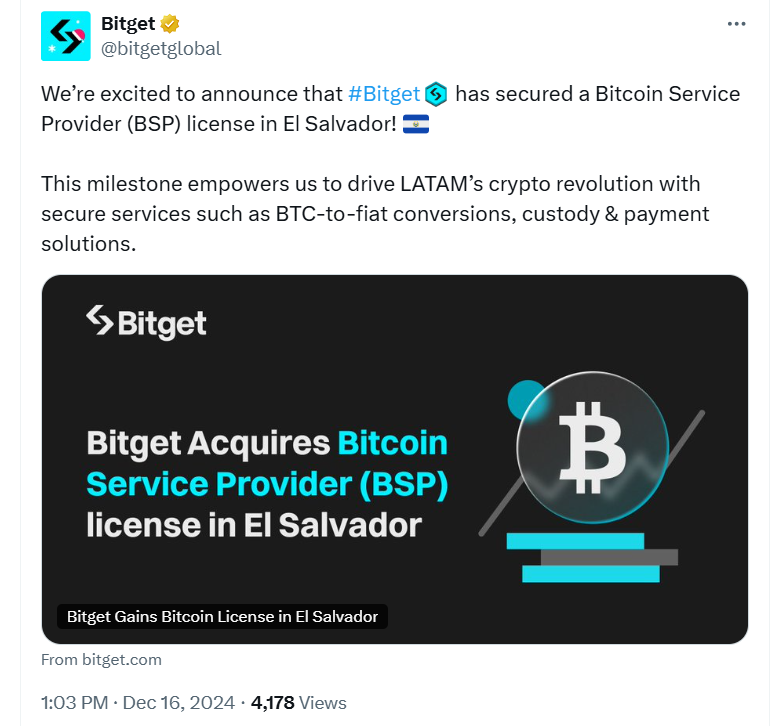
Bitget has received the coveted Bitcoin Service Provider (BSP) license from El Salvador’s Central Reserve Bank, marking a significant step in its global expansion strategy. This authorization allows the platform to offer a range of Bitcoin-related services, including exchanges, payments, and custody solutions, in the Central American nation known for its embrace of cryptocurrency.

The license represents a notable achievement for Bitget, signaling its commitment to adhering to regulatory frameworks in its pursuit of a stronger foothold in Latin America. El Salvador, which made Bitcoin legal tender in 2021, has positioned itself as a hub for crypto innovation, drawing interest from international players eager to tap into its growing digital economy.

Bitget’s decision to prioritize regulatory compliance aligns with its broader mission to establish trust and credibility in the global crypto space. By securing this license, the platform gains access to a burgeoning market while demonstrating its capability to meet the rigorous standards set by El Salvador’s financial authorities. This development underscores the firm’s ambition to build a robust presence in the region, leveraging the country’s pro-Bitcoin stance as a springboard for further growth.

El Salvador’s adoption of Bitcoin as legal tender has attracted significant attention, both for its groundbreaking approach and the challenges associated with integrating digital assets into a traditional economy. The move has created opportunities for companies like Bitget to introduce innovative solutions tailored to the unique needs of the Salvadoran market. By offering services such as secure custodial options and seamless payment integrations, Bitget aims to contribute to the local crypto ecosystem’s development while addressing concerns around security and accessibility.

Bitget’s license acquisition comes at a time when Latin America is experiencing an uptick in cryptocurrency adoption, driven by economic instability, high inflation rates, and limited access to traditional banking services. In this context, Bitcoin and other digital assets are increasingly seen as viable alternatives for financial inclusion. The platform’s expansion into El Salvador is expected to capitalize on these trends, providing users with reliable and regulated avenues for engaging with digital currencies.

Beyond its operations in El Salvador, Bitget has indicated plans to deepen its engagement with the wider Latin American region. Countries such as Brazil, Argentina, and Colombia have shown growing interest in blockchain technology, creating a fertile ground for companies looking to expand their footprint. By obtaining regulatory approvals and investing in localized solutions, Bitget aims to position itself as a leader in the regional crypto market.

El Salvador’s proactive stance on Bitcoin regulation has set it apart from many other nations, where digital assets remain subject to varying degrees of scrutiny and uncertainty. The BSP license issued to Bitget highlights the government’s willingness to work with private sector entities in fostering a dynamic and well-regulated crypto environment. This approach not only enhances the appeal of the Salvadoran market but also sets a precedent for other countries seeking to balance innovation with regulatory oversight.

As part of its expansion strategy, Bitget plans to introduce educational initiatives aimed at increasing awareness and understanding of cryptocurrencies among Salvadorans. These efforts are expected to complement the government’s existing programs and facilitate broader adoption of digital assets across diverse demographics. The company’s emphasis on education reflects its recognition of the need to address skepticism and build confidence among users new to the crypto space.

Bitget’s move also reflects broader industry trends, as major crypto firms increasingly seek to align with regulatory frameworks to ensure long-term sustainability. The BSP license not only enhances Bitget’s credibility but also serves as a testament to its operational rigor and strategic vision. By adhering to the highest standards of compliance, the platform positions itself to attract a diverse user base while mitigating risks associated with the volatile nature of the cryptocurrency market.

MicroStrategy, the business intelligence firm that has increasingly positioned itself as a major player in the Bitcoin space, is set to join the Nasdaq 100 index, a milestone that will further integrate Bitcoin-linked assets into mainstream financial markets. The decision underscores the growing intersection between traditional technology firms and cryptocurrency exposure, signaling to investors a new wave of passive investment flows.

This move places MicroStrategy among the 75 largest non-financial companies in the Nasdaq, a list traditionally populated by household names such as Apple, Microsoft, and Amazon. For the firm, it represents the culmination of a year marked by aggressive Bitcoin acquisitions, which have significantly boosted its market value. The firm’s stock has seen explosive growth as it has leaned heavily into Bitcoin, becoming one of the largest institutional holders of the digital asset.

Founded in 1989, MicroStrategy initially built its reputation as a provider of analytics software, helping companies harness data for decision-making. However, in recent years, under the leadership of CEO Michael Saylor, the company has transformed into a prominent Bitcoin advocate. MicroStrategy’s strategic pivot to Bitcoin began in 2020 when it made its first purchase of the cryptocurrency, and since then, it has continued to acquire more, amassing over 150,000 Bitcoin.

The company’s decision to enter the Nasdaq 100 has profound implications for investors. The inclusion not only boosts its visibility but also opens the door for passive investments from exchange-traded funds (ETFs) and mutual funds that track the Nasdaq 100. These funds, many of which are structured to automatically buy and sell stocks in the index, will now include MicroStrategy in their portfolios. As a result, Bitcoin-linked stocks could see billions of dollars in new investment inflows.

For passive investors who may have no direct interest in cryptocurrency but are focused on broad market exposure, MicroStrategy’s entry into the Nasdaq 100 offers a means to indirectly engage with Bitcoin’s price movements. While the firm’s stock has been volatile due to its dependence on the cryptocurrency market, this volatility may be tempered by its larger footprint in the tech sector, which has seen massive gains over the last decade.

MicroStrategy’s inclusion also reinforces the idea that Bitcoin is becoming entrenched in the financial ecosystem. Previously seen as an alternative investment for a select group of enthusiasts, the cryptocurrency is increasingly being integrated into corporate balance sheets and financial products. As traditional investors gain exposure to Bitcoin indirectly through stocks like MicroStrategy, it adds a layer of legitimacy to the cryptocurrency in the eyes of institutional investors and retirement funds.

While the move is seen as a victory for Bitcoin proponents, it has raised concerns among some analysts about the risks of such exposure. Bitcoin’s price fluctuations are well-known, and the cryptocurrency’s history of volatility could potentially affect MicroStrategy’s stock performance. For instance, as Bitcoin’s price rose, so too did MicroStrategy’s stock, but should Bitcoin experience a downturn, the company could face significant losses, which could then ripple through the broader Nasdaq 100 index.

Despite these risks, analysts view the inclusion of MicroStrategy in the Nasdaq 100 as a validation of the growing acceptance of Bitcoin by mainstream markets. The company’s transformation from a traditional business analytics firm to a Bitcoin-centric institution mirrors the broader trend of tech firms increasingly integrating digital assets into their business strategies. Companies like Tesla, Square, and Galaxy Digital have made similar moves, signaling a growing belief in Bitcoin as a store of value and hedge against inflation.

MicroStrategy’s financial standing has been propelled by Bitcoin’s rise. The firm’s market cap has swelled as its Bitcoin holdings have appreciated in value. Since its first purchase, Bitcoin’s price has experienced explosive growth, reaching over $60,000 per coin at its peak, although it has fluctuated significantly since then. Nevertheless, MicroStrategy’s heavy investment in Bitcoin continues to give it a major stake in the digital currency’s success.

One significant consequence of this shift is the potential impact on traditional investors who may not fully understand the cryptocurrency space. Many of these investors may now find themselves exposed to Bitcoin’s price swings through their broader equity holdings, even if they are not directly investing in cryptocurrency. This introduces a level of risk that was not present before, but also reflects the deepening ties between cryptocurrency and mainstream financial markets.

The inclusion of MicroStrategy in the Nasdaq 100 highlights a broader shift in how tech companies and institutional investors are incorporating cryptocurrency into their portfolios. The rise of Bitcoin-focused companies is part of a larger trend that is reshaping the landscape of global finance. As Bitcoin becomes more embedded in corporate strategies, its influence on traditional stock markets is likely to grow.

The cryptocurrency landscape is abuzz with the rise of a new meme coin that could soon join the ranks of the most explosive digital assets in the market. Catslap ($SLAP), a new feline-themed meme coin, has caught the attention of crypto enthusiasts with its impressive lineup of developments aimed at propelling the token to new heights. Riding on the success of previous meme coins like Popcat, which saw explosive gains in 2021, $SLAP is positioning itself as the next big player in the meme coin space, with forecasts suggesting it could experience gains as high as 700x in the coming year.

At the core of the latest buzz surrounding $SLAP is its innovative approach to building community engagement and boosting its market presence. The token has launched a series of initiatives designed to foster a dedicated user base and encourage participation, including a comprehensive Zealy social quests campaign. This initiative allows users to earn rewards and further engage with the $SLAP community, while simultaneously boosting the coin’s visibility across various social media platforms. The campaign’s success is critical, as it has the potential to accelerate the coin’s adoption among mainstream crypto investors.

Adding fuel to the fire is the coin’s airdrop event, designed to distribute tokens to new users, as well as those who have already shown interest in $SLAP. Airdrops have become a common tactic for crypto projects to create buzz and incentivize investment, and $SLAP’s airdrop is no exception. The campaign has already sparked excitement within the cryptocurrency ecosystem, as investors eagerly anticipate the distribution of tokens, hoping to capitalize on the anticipated surge in value.

The meme coin’s growth potential has also been bolstered by a growing online community that backs the project. Communities built around meme coins often play a significant role in their success, and $SLAP has quickly developed a dedicated following across platforms like Twitter, Telegram, and Reddit. As a result, the coin has generated significant buzz, with many hoping that it will follow in the footsteps of other meme-based tokens such as Dogecoin and Shiba Inu, which have both achieved substantial returns for early investors.

Cryptocurrency analysts have been keeping a close eye on $SLAP, with many seeing the coin as a potential powerhouse in the coming months. Some analysts predict that the coin could mirror the success of Popcat, a meme coin that took the crypto world by storm in 2021 and achieved astronomical gains. If $SLAP can capture the same level of attention and investor interest, it could see its value increase exponentially, making it a prime investment opportunity for those seeking high-risk, high-reward ventures.

The rise of meme coins has been one of the defining trends in the cryptocurrency world, particularly over the past few years. Coins like Dogecoin and Shiba Inu have shown that with the right amount of social media buzz and community support, meme coins can achieve massive growth. As more investors seek out the next big opportunity in the meme coin space, $SLAP is well-positioned to ride the wave of growing interest in this niche segment of the market.

However, as with all investments, there are risks involved. The volatility of meme coins is well-documented, and while the potential for massive returns exists, so too does the possibility of rapid losses. Critics argue that the hype surrounding meme coins can lead to unsustainable price surges, followed by sharp declines. For investors considering $SLAP, it is important to approach the coin with caution and an understanding of the risks associated with speculative digital assets.

Despite the risks, $SLAP’s developers have made strides to create a coin that offers more than just speculative trading opportunities. The team behind the project has emphasized its commitment to building a sustainable ecosystem, with plans for further utility integration and partnerships with other blockchain projects. By focusing on long-term growth and real-world use cases, $SLAP aims to differentiate itself from the typical meme coin, which often relies solely on hype and social media buzz for its value.

In addition to its marketing and community-building efforts, $SLAP is also exploring partnerships with other crypto projects to expand its utility and increase its market presence. Collaborations with decentralized finance (DeFi) protocols and non-fungible token (NFT) projects could provide $SLAP with additional use cases, helping to cement its place in the broader cryptocurrency ecosystem.

XRP has drawn renewed focus in the cryptocurrency market as on-chain data reveals substantial outflows of the token from major exchanges. Market analysts and blockchain trackers indicate that $300 million worth of XRP has been withdrawn, fueling speculation of accumulation by whales and institutional investors. This development arrives amid an extended phase of price consolidation for XRP, sparking discussions on its potential trajectory.

According to data from Coinglass, the significant outflows over the past week indicate a strategic shift by high-net-worth investors, who appear to be betting on the token’s future. The movement of such a considerable volume suggests confidence in XRP’s long-term potential despite broader market uncertainties. Observers highlight that such patterns of withdrawal often correlate with accumulation, as holders transfer their tokens to private wallets to prepare for anticipated price surges.

The timing of these transactions is notable, as XRP has demonstrated resilience following regulatory clarity in its ongoing legal battle with the United States Securities and Exchange Commission (SEC). The partial victory Ripple Labs achieved earlier this year, where XRP was deemed not to be a security when sold on secondary markets, has bolstered investor sentiment and rekindled interest in the asset.

XRP’s price has remained relatively stable, hovering within a tight range between $0.50 and $0.55. Analysts attribute this to broader market conditions and the lack of a significant catalyst in the crypto space. However, the scale of the $300 million outflows has prompted speculation that larger players could be positioning themselves for a breakout. Whale Alert, a blockchain tracker, recorded multiple transactions of XRP worth millions, adding weight to the idea that this activity is a precursor to strategic market movements.

Beyond these transactions, Ripple Labs has been advancing its efforts to expand XRP’s utility. The company has been actively pursuing partnerships with financial institutions globally, emphasizing cross-border payment solutions. Such initiatives aim to solidify XRP’s role as a preferred digital asset for seamless, low-cost transactions, a factor that experts believe could drive demand over time.

The cryptocurrency market has witnessed increased volatility in recent months, with fluctuating macroeconomic indicators and shifting investor sentiment impacting digital asset prices. While Bitcoin and Ethereum continue to dominate trading volumes, altcoins like XRP are gaining traction, especially among those seeking diversification in their crypto portfolios.

Analysts caution, however, that market dynamics remain uncertain. Although the $300 million outflows hint at positive sentiment, they do not guarantee immediate price action. Factors such as liquidity, macroeconomic conditions, and regulatory developments will play critical roles in shaping XRP’s near-term prospects. Some experts suggest that retail investors should carefully monitor market trends and avoid being swayed solely by whale activity.

On the regulatory front, Ripple’s legal entanglements continue to weigh on its ecosystem. Despite the partial victory in its case against the SEC, the broader question of XRP’s status under U.S. securities law remains unresolved. A final decision in the matter, expected in the coming months, could serve as a pivotal moment for the token, potentially influencing its adoption and price.

In addition to its legal battles, Ripple Labs is preparing for a new phase of innovation. Its recent announcements about leveraging XRP for real-world applications, including tokenized assets and central bank digital currency (CBDC) pilots, reflect the firm’s ambition to remain at the forefront of blockchain technology. This approach aligns with the growing demand for decentralized financial solutions, which many see as a transformative force in the global financial system.

Market participants are also paying close attention to XRP’s performance against broader altcoin indices. Some argue that the consolidation phase, coupled with heightened whale activity, presents a favorable entry point for long-term investors. However, the inherent volatility of cryptocurrency markets suggests that any investment carries significant risks.

MACAU SAR – Media OutReach Newswire – 12 December 2024 – The University of Macau (UM) has made significant progress in establishing itself as a leading research hub in the Asia-Pacific region. Since relocating to the Hengqin campus in 2014, UM has enhanced its innovative research capabilities by expanding research facilities, establishing a strategic research layout, developing national and regional research platforms, promoting industry-academia collaboration, and recruiting […]

The Linux Foundation has launched LF India, aiming to propel open source development across the country, focusing on key technological domains such as cloud computing, artificial intelligence (AI), the Internet of Things (IoT), and blockchain. This initiative aims to empower both developers and startups, providing the necessary infrastructure and support to build scalable, secure, and innovative open-source solutions. LF India reflects the growing importance of open-source technologies in India’s expanding digital ecosystem, emphasizing community-driven progress and collaboration.

LF India, established in partnership with several prominent tech companies, seeks to foster collaboration between global and local developers. The initiative is part of the Linux Foundation’s broader strategy to advance open-source innovation by creating a robust ecosystem that encourages sustainable development. By focusing on emerging technologies like AI, blockchain, and IoT, LF India aims to address key challenges and opportunities in sectors such as healthcare, finance, and education.

Open-source technologies have been rapidly transforming industries worldwide. With the launch of LF India, the Foundation aims to further accelerate this transformation within the Indian tech space. Open-source software offers significant advantages, including cost efficiency, flexibility, and security, which are particularly relevant in a fast-evolving market. As part of this initiative, LF India will provide resources and mentorship to Indian startups, fostering an environment conducive to innovation and scaling.

A key focus of LF India will be cloud-native technologies, which are integral to the future of computing and application development. Cloud-native frameworks and tools, powered by Kubernetes and containerization technologies, have gained traction across industries for their scalability and efficiency. By equipping local developers with the right tools and best practices, LF India intends to make India a leader in cloud-native open-source innovation.

The Foundation is keen to establish a stronger presence in AI and blockchain, two areas seeing rapid advancements globally. The increasing interest in AI-driven applications, particularly generative AI, highlights the demand for open-source frameworks that allow greater accessibility and customization. Blockchain, on the other hand, is transforming industries like finance and supply chain management, and LF India plans to support projects aimed at solving scalability and security issues within blockchain ecosystems.

India, with its large and growing tech community, is a perfect location for LF India’s new push. The country has seen a surge in tech startups and is already home to a vibrant developer community that has contributed to various open-source projects over the years. The local tech ecosystem has benefited from collaborations between global tech giants and local innovators, with the Linux Foundation now poised to take these efforts to the next level.

LF India is expected to serve as a hub for knowledge-sharing and collaboration, hosting conferences, hackathons, and other community-building events. These activities will allow developers and companies to stay at the forefront of technological advancements and best practices in the open-source domain. By bringing together key players from the industry, the Foundation aims to create a unified platform for developing solutions that are both innovative and sustainable.

The Linux Foundation’s investment in India also aligns with the country’s broader goals of digital transformation and tech-driven growth. As the Indian government continues to push for a “Digital India,” open-source solutions play a crucial role in enabling accessibility, inclusivity, and scalability across various sectors. LF India will not only support startups and developers but also collaborate with government bodies and educational institutions to help build a stronger foundation for the country’s digital future.

LF India’s focus on nurturing the startup ecosystem is significant. The Foundation recognizes that startups are often the birthplace of disruptive technologies. By providing them with access to open-source resources, technical support, and collaboration opportunities, LF India aims to create a fertile ground for the next generation of tech innovators. This effort is expected to help address some of the common challenges faced by startups, such as limited access to enterprise-grade infrastructure and high costs associated with proprietary technologies.

As India continues to position itself as a global tech hub, LF India’s launch marks a significant step forward in its ambitions. The country’s tech industry has already made substantial strides in areas such as software development, app-based solutions, and IT services. With LF India now playing a pivotal role in fostering open-source innovation, India could become a leader in the global open-source movement.

uBroker Spa has acquired a significant 49% share in the Italian independent game development studio, Memorable Games, marking a strategic move to broaden its presence in the burgeoning gaming industry. This partnership is poised to bolster the creative ambitions of Memorable Games, known for its innovative titles, while offering uBroker a stronger foothold in the gaming sector, which continues to grow rapidly worldwide. Memorable Games, founded in […]

Step Finance, a pioneering dashboard for Solana blockchain users, has unveiled its strategy to bring tokenized trading of popular stocks, such as Nvidia and Tesla, to the decentralized finance (DeFi) ecosystem. This initiative follows the acquisition of Moose Capital, an early-stage startup specializing in financial licensing and infrastructure. Step Finance aims to launch these services by the first quarter of 2025, positioning itself as a trailblazer in integrating traditional financial instruments with blockchain technology.

The acquisition is poised to address critical regulatory challenges associated with tokenized stocks, a burgeoning sector that links conventional equities to blockchain. By leveraging Moose Capital’s expertise, Step Finance intends to secure the necessary permissions to operate within compliant frameworks. This marks a significant step toward bridging the gap between mainstream financial markets and decentralized platforms.

Tokenized stocks have gained momentum for their potential to democratize access to equity trading, enabling users to buy fractional shares of major companies without requiring traditional brokerage accounts. Step Finance’s entry into this domain could enhance Solana’s appeal as a high-speed, low-cost blockchain, particularly in the DeFi space. The platform is already known for aggregating Solana transactions, serving as a comprehensive interface for managing portfolios.

The move aligns with a broader trend of DeFi platforms exploring interoperability with traditional finance. Solana, recognized for its scalable infrastructure, has seen increasing adoption among developers and investors seeking alternatives to Ethereum, which faces challenges with network congestion and high transaction fees. Step Finance’s plan could further cement Solana’s position as a leading blockchain for financial innovation.

Guillermo Söhnlein, co-founder of OceanGate, has put forth a groundbreaking proposal to establish a floating colony on Venus by 2050, aiming to send up to 1,000 humans to live in the planet’s atmosphere. This plan, under his venture Humans2Venus, focuses on creating a sustainable habitat at an altitude of about 30 miles above the Venusian surface, where conditions are more Earth-like and survivable. Unlike the harsh surface […]

Byte Federal, a prominent Bitcoin ATM network in the United States, has disclosed a security breach that compromised the personal data of 58,000 customers. The company revealed the incident after identifying unauthorized access to its systems, which reportedly led to the exposure of sensitive user information, including names, email addresses, and transaction details.

The breach has raised concerns about cybersecurity measures in the cryptocurrency sector. Byte Federal, known for operating over 1,000 Bitcoin ATMs across more than 40 states, has positioned itself as a major player in the digital asset ecosystem, facilitating cryptocurrency transactions for thousands of users daily. This incident underscores the vulnerabilities even in established networks within the fintech space.

Byte Federal’s systems were reportedly targeted in a sophisticated cyberattack, exploiting vulnerabilities in its data storage infrastructure. While the company has not confirmed whether financial information, such as bank account or credit card details, was accessed, it has assured customers that immediate steps were taken to address the breach and secure its systems. Additionally, Byte Federal is cooperating with law enforcement agencies and third-party cybersecurity firms to investigate the breach thoroughly and prevent future incidents.

This data breach follows Byte Federal’s expansion of its service offerings, including the integration of the Bitcoin Lightning Network, which enables faster and more cost-efficient transactions. The company’s focus on innovation has drawn significant attention, but this breach may lead to heightened scrutiny over its cybersecurity protocols. Industry experts have noted that companies in the cryptocurrency domain must balance innovation with robust security measures to protect user data.

Affected customers are being notified individually and advised to monitor their accounts for any unauthorized activity. Byte Federal has also recommended users to reset their passwords and adopt additional security measures, such as enabling two-factor authentication, to safeguard their accounts. The company is offering complimentary identity theft protection services to those impacted by the breach.

The incident has prompted discussions about regulatory oversight and the need for stricter cybersecurity compliance in the fintech and cryptocurrency sectors. Analysts argue that the growing adoption of digital assets necessitates a parallel emphasis on security standards to protect consumers and maintain trust in the ecosystem. This breach serves as a stark reminder of the challenges faced by firms operating in an increasingly digital financial landscape.

BANGKOK, THAILAND – Media OutReach Newswire – 12 December 2024 – Celebrating its 10th year, Chiang Mai Design Week 2024 (CMDW2024), organized by Thailand’s Creative Economy Agency (Public Organization), or CEA, has become a key platform for local creators, designers, artists, and craftsmen. It serves as a hub for talent showcases, knowledge exchange, and innovation, fostering meaningful collaborations among entrepreneurs, designers, and investors. These partnerships create new […]

Base, a layer-2 blockchain solution built atop Ethereum, has garnered significant attention due to its robust growth in 2024, securing $2.7 billion in net inflows year-to-date. The surge marks a pivotal moment for the project, reflecting strong investor confidence and the growing appeal of scaling solutions within the crypto ecosystem. In stark contrast, Ethereum itself, despite its dominance in the space, experienced a record $7.4 billion in net outflows over the same period, signaling a shift in investor sentiment away from the original Ethereum blockchain toward alternative platforms like Base.

The disparity in inflows and outflows has drawn attention from market analysts, particularly because both assets are intrinsically linked. Base’s success hinges on the Ethereum blockchain for security, but its tailored scalability and lower transaction costs have attracted considerable investment. Ethereum’s outflows are largely attributed to concerns over its scalability issues, particularly its high transaction fees and network congestion that have persisted despite ongoing updates.

The ongoing battle between layer-1 and layer-2 solutions illustrates a broader trend in blockchain development. Layer-2 solutions like Base aim to alleviate the scalability challenges faced by Ethereum by processing transactions off-chain while leveraging Ethereum’s security. This model has proven to be appealing to decentralized application developers and users who seek lower fees and faster transactions. Investors are increasingly recognizing these advantages, which has driven the substantial inflows into Base.

One of the key factors driving Base’s success has been its integration with Optimism, a layer-2 network that employs Optimistic Rollups. This technology allows transactions to be processed in batches, enhancing speed and efficiency while reducing costs. Optimism’s established track record, combined with the robust infrastructure of Base, has resulted in a growing number of decentralized finance (DeFi) protocols migrating to this ecosystem. These protocols are increasingly shifting their focus to Base, buoyed by its ability to scale and manage higher transaction volumes more effectively than Ethereum.

Ethereum’s struggle to retain investor confidence, on the other hand, can be traced to its long-standing scalability limitations. The Ethereum network, often hailed as the backbone of decentralized finance, has been plagued by network congestion, especially during periods of high transaction demand. While Ethereum’s transition to Ethereum 2.0, which aims to implement a Proof of Stake consensus mechanism, is intended to address some of these issues, many investors remain skeptical of its long-term viability in its current form. High transaction fees continue to plague the network, pushing investors and developers to seek alternatives that offer better scalability.

Despite Ethereum’s ongoing development efforts, including the introduction of sharding and other upgrades to enhance throughput, the market sentiment has leaned toward blockchain solutions that can offer immediate relief. Layer-2 solutions like Base, Arbitrum, and Polygon have benefitted from this shift, offering near-instant transaction finality and negligible fees. These benefits have not only attracted developers but also institutional investors who are looking to capitalize on the emerging layer-2 ecosystem, further driving the inflow into these platforms.

The contrast between Ethereum’s challenges and Base’s growth is particularly notable given the overlap in their underlying technologies. While Base runs on Ethereum’s base layer for security and consensus, its innovative scaling model has managed to sidestep many of the bottlenecks that continue to hinder Ethereum itself. This dynamic has led to the rapid rise of Base in the market, with many speculating that this trend could continue as more applications and investors shift their focus to layer-2 solutions.

A key consideration in the ongoing evolution of blockchain technology is the role of decentralization. Ethereum has long been the poster child for decentralization, emphasizing the importance of a trustless and distributed network. However, as scalability and efficiency have become more pressing issues, layer-2 solutions like Base are offering a middle ground—leveraging Ethereum’s security without burdening its mainnet with excessive transactions. This hybrid approach is increasingly gaining favor among users who value both decentralization and efficiency.

The entry of institutional investors into the blockchain space has played a critical role in shaping the landscape. Many institutional players have expressed interest in blockchain technologies that provide high throughput and minimal latency, qualities that are often found in layer-2 solutions. The inflows into Base reflect this shift, as institutions seek to diversify their portfolios in the rapidly evolving digital asset space. The growing adoption of decentralized finance, non-fungible tokens (NFTs), and other blockchain-based innovations has further cemented Base’s position as a platform that can support these applications with lower costs and faster speeds.

The contrasting trends in Ethereum’s outflows and Base’s inflows have sparked debate about the future of Ethereum’s role in the broader blockchain ecosystem. While Ethereum remains the dominant layer-1 blockchain, its scalability issues have led to increased competition from a range of layer-2 solutions. These developments highlight the evolving dynamics within the blockchain space, where scalability, speed, and cost-efficiency are becoming the key determinants of success.

Brian Quintenz, the head of crypto policy at Andreessen Horowitz, has emerged as a frontrunner for the position of chair at the Commodity Futures Trading Commission (CFTC). This potential appointment has generated considerable attention, particularly in the context of shaping the future of cryptocurrency regulation in the United States. Quintenz’s deep-rooted experience with the regulatory landscape, particularly his tenure at the CFTC under the Trump administration, positions him as a key figure in guiding the U.S. government’s approach to digital assets and derivatives markets.

During his tenure as a commissioner at the CFTC from 2017 to 2021, Quintenz made a significant impact in the world of financial regulation. He was one of the first regulators to recognize the growing importance of digital assets, including cryptocurrencies like Bitcoin and Ethereum, and the need to develop a regulatory framework that both fosters innovation and protects investors. Quintenz was known for his support of the crypto industry, advocating for clearer and more consistent rules governing digital asset markets. His work on derivatives, particularly around crypto futures contracts, laid the foundation for much of the regulatory framework in place today.

Quintenz’s appointment to the CFTC chair could signal a more crypto-friendly regulatory environment in the U.S., one that aligns with the priorities of industry advocates who have long argued for clearer rules to enable innovation without stifling growth. The CFTC, under Quintenz’s guidance, is expected to build upon his prior work, including his advocacy for creating a comprehensive regulatory framework that supports digital asset trading while ensuring financial stability.

Quintenz’s potential leadership is seen as crucial for addressing the growing demand for regulation in the cryptocurrency space, particularly as institutional interest in digital assets continues to rise. The U.S. has been grappling with questions around the appropriate regulatory body to oversee crypto markets, with the CFTC and the Securities and Exchange Commission (SEC) often at odds over jurisdictional issues. Quintenz, however, has long argued that the CFTC is best suited to oversee crypto derivatives and related markets due to its expertise in futures and commodities. If confirmed, Quintenz could play a pivotal role in resolving these jurisdictional disputes and advancing a clear, unified regulatory framework.

Under Quintenz’s leadership, the CFTC could also take a more proactive role in fostering innovation within the digital asset space. His track record at Andreessen Horowitz, one of Silicon Valley’s most influential venture capital firms, shows his keen understanding of the intersection between technology and regulation. At the firm, Quintenz has worked closely with emerging blockchain companies and crypto projects, providing guidance on navigating the complex regulatory landscape. This experience gives him a unique perspective on how to balance the need for regulation with the desire for innovation, making him a natural fit to lead the CFTC as it continues to evolve its approach to crypto.

The crypto industry, which has faced increasing scrutiny from lawmakers and regulators, would likely welcome a more consistent and favorable regulatory framework under Quintenz’s leadership. While some in the industry have expressed concerns about regulatory overreach, many are hopeful that Quintenz’s appointment could provide the clarity and stability needed to drive continued growth. The ongoing battle over cryptocurrency regulations has been marked by conflicting signals from different regulatory bodies, with the SEC taking a more aggressive stance on enforcement, particularly against centralized exchanges. In contrast, the CFTC has been more focused on ensuring that financial markets, including crypto derivatives, function within a legal framework that promotes transparency and market integrity.

One of the key challenges that Quintenz would face as CFTC chair is the evolving nature of the crypto market. With innovations like decentralized finance (DeFi) and non-fungible tokens (NFTs) continuing to gain popularity, the regulatory framework needs to be adaptable enough to keep pace with rapid changes in the industry. Quintenz’s previous work at the CFTC, where he helped craft rules for Bitcoin futures and other digital asset contracts, suggests he understands the importance of staying ahead of market developments and ensuring that regulation evolves in tandem with technological advancements.

Quintenz’s approach to digital asset regulation will likely focus on protecting consumers without stifling innovation. His stance during his time at the CFTC and his work at Andreessen Horowitz indicate that he views regulation as a tool to create a level playing field for all market participants while fostering innovation. This would be in stark contrast to some of the more stringent regulatory approaches favored by other factions within the U.S. government, which seek to impose more controls over the growing crypto market.

His potential appointment also comes at a time when the U.S. is facing mounting pressure to establish a clear and consistent regulatory framework for digital assets. Other countries, such as the European Union, have moved forward with comprehensive crypto regulation, and the U.S. risks falling behind in the global race to regulate emerging financial technologies. Quintenz’s appointment could help solidify the U.S.’s position as a leader in digital asset regulation, ensuring that the country remains competitive while safeguarding the financial system.

VISHNU RAJA
RYO YAMADA
HITORI GOTOH
IKUYO KITA