News related to
Space

Greenlogue/AP Telecom operator du has secured ISO 20400 certification, becoming the first telecom provider in the UAE and the second in the Gulf Cooperation Council region to attain the globally recognised standard for sustainable procurement. The certification underscores the company’s systematic approach to integrating sustainability into procurement decisions, ensuring that its supply chain aligns with international best practices for environmental, social, and economic responsibility. By adopting the […]

The National Centre of Meteorology issued an advisory este morn for southeasterly winds gusting up to 40 km/h across the UAE, leading to heavy dust and sand lifting in internal and coastal areas. The conditions are expected to significantly reduce horizontal visibility—at times below 2,000 metres—between roughly 08:45 and 17:00. Abu Dhabi Police cautioned motorists to drive with care, maintain low speeds, and avoid distractions like using phones or filming while on the move.

Winds forecast for the day have already led to hazy skies over urban centres, with dust clouds drifting across highways and neighbourhoods. Officials warn that compromised visibility on roads will heighten accident risks, prompting emergency services to remain on alert.

Abu Dhabi Police reinforced the message, urging:

“Drivers to remain alert and reduce speed … For your safety and the safety of others on the road, please avoid using mobile phones or taking videos while driving.”

The statement formed part of a broader appeal urging residents to secure outdoor items and stay informed via official channels.

High winds sweeping the region echo seasonal patterns observed in previous years. The meteorological phenomenon known as “Shamal” brings northwesterly gusts that whip up desert dust, especially during summer’s peak between April and October. These episodes often downgrade visibility to well under 2 km. In fact, storms recorded in 2008, 2009 and 2010 show how recurrent and sudden these events can be.

An Abu Dhabi dust storm struck last Thursday, when winds triggered restricted visibility and led authorities to issue similar warnings earlier in July. The NCM had foreseen rough sea conditions in the Arabian Gulf, cautioning mariners of choppy waters and advising against unnecessary travel offshore.

Studies by geophysics experts at Khalifa University and warnings from the World Meteorological Organization indicate that shifting climate patterns may be contributing to increased dust frequency in the Gulf, with “early summer and late winter” transitions becoming more pronounced.

Commuters in Abu Dhabi, Dubai, Al Ain and Sharjah were met with drifting dust obscuring visibility, particularly on highways and arterial routes. Between 1 pm and 3 pm yesterday, multiple reports noted local visibility dropping below 1 500 metres near Dubai International Airport and adjacent roadways.

Transport authorities are urging drivers to obey reduced speed limits displayed on overhead electronic boards, as fine particles may settle on windshields, diminishing visibility further. School bus operators, logistics firms, and delivery services have been advised to take precautions or suspend outdoor activities until conditions improve.

Indoor spaces and construction sites are under advisory to ensure dust mitigation measures are in place, including sealing entrances and using air filtration systems. Medical professionals have also warned individuals with respiratory concerns to limit outdoor exposure and keep medications close at hand.

The repeated advisories align with broader international efforts to establish regional early-warning systems. During last spring, the World Meteorological Organization highlighted Saudi Arabia’s leadership in a Gulf-wide sand and dust storm monitoring initiative.

Given the projected continuation of these conditions into the evening, motorists and residents are advised to remain alert. The police statement urged community action:

“For your safety and the safety of others … please avoid using mobile phones or taking videos while driving.”

The pattern of such weather events reflects the UAE’s climate trends, where extreme heat, strong winds, and suspended dust become frequent during the summer months. These conditions contribute to regional cautionary measures and highlight the interplay between natural climate cycles and growing urban risk exposure.

M A Hossain Donald Trump once campaigned on ending the war in Ukraine within 24 hours. He promised to bring an end to the proxy war with Russia, leveraging his self-proclaimed ‘Dealmaking’ skills. Yet, halfway into July, what we see instead is a new escalation dressed up as diplomacy. In a carefully choreographed appearance with NATO Secretary Mark Rutte at the White House, Trump offered Moscow a […]

JAKARTA, INDONESIA – Media OutReach Newswire – 15 July 2025 – VinFast today announced its return to the Gaikindo Indonesia International Auto Show (GIIAS) 2025, scheduled to take place from July 24 to August 3. At the premier automotive event, the Company will introduce an entirely new right-hand drive model to Indonesian consumers, perfectly complementing its diverse EV lineup. This strategic move reaffirms VinFast’s strong commitment to […]

Uber Technologies and Baidu Inc. have confirmed a multi‑year strategic alliance to bring Baidu’s Apollo Go autonomous robotaxis to markets beyond the U. S. and mainland China, initiating the programme later this year in select cities across Asia and the Middle East. The new service, integrated into the Uber app, will offer riders the option to choose fully driver‑free vehicles powered by Apollo Go’s advanced AI systems.

Apollo Go currently operates the world’s largest driverless ride‑hailing network, with more than 1,000 fully autonomous vehicles deployed across 15 cities—including Dubai and Abu Dhabi—and over 11 million rides completed as of May 2025. The expansion, announced on 15 July 2025, marks a significant move by Uber as it intensifies its foray into autonomous vehicles, supplementing existing partnerships with other AV developers such as Waymo, Pony AI, WeRide, May Mobility, Volkswagen and Avride.

Uber CEO Dara Khosrowshahi described the venture as a decisive milestone: “This partnership brings together two of the world’s most iconic technology companies to help shape the future of mobility. As the world’s largest platform of its kind, spanning mobility, delivery, and freight, Uber is uniquely positioned to help AV leaders like Baidu bring their autonomous technology to the world.” Baidu’s co‑founder and CEO Robin Li added that integrating Baidu’s autonomous driving technology with Uber’s network represents “a major milestone in deploying our technology on a global scale,” aimed at delivering safe, efficient and cost‑effective transport to a wider audience.

Market response to the announcement has been positive: Uber’s shares rose more than 1 % in pre‑market trading in the U. S., while Baidu’s U. S.‑listed stocks surged almost 5 %, reflecting investor confidence in the deal’s potential to accelerate autonomous mobility adoption worldwide.

The initial deployment targets key cities in Asia—potentially including Singapore and Malaysia where Baidu plans to launch Apollo Go this year—and in the Gulf region, where regulatory environments are favourable and infrastructure is supportive. Recent reports highlight that Gulf countries such as the UAE and Saudi Arabia aim to have at least 25 % of transport in major cities autonomous by 2030‑2040, presenting a promising opportunity for robotaxi services.

Analysts view the Uber‑Baidu partnership as a pivotal step in global AV expansion. By entering markets outside its core regions, Baidu leverages an “asset‑light” international strategy driven by collaboration instead of proprietary platforms. Uber gains immediate access to a proven self‑driving fleet without the development time and costs associated with in‑house technology, bolstering its competitiveness in the robotaxi space, particularly against rivals like Lyft and Waymo.

Safety and regulatory scrutiny remain top concerns. Apollo Go’s record of over 11 million rides with a robust safety profile strengthens public and regulatory confidence. Still, each market’s regulatory readiness varies, requiring phased live testing and strong oversight to meet local licensing standards.

Financially, the deal promises dividend benefits. By significantly increasing supply of robotaxis through Uber’s platform, Baidu stands to accelerate revenue from its autonomous segment, potentially addressing investor concerns over its core advertising business. Uber, which has seen its stock climb 56 % this year, reinforces its diversification into autonomous and freight services ahead of its Q2 earnings report scheduled for 6 August.

Competition is heating up. The Gulf region already hosts partnerships between Uber and Chinese AV firms such as Pony AI and WeRide, both of which are conducting trials or planning roll‑outs in Dubai and Abu Dhabi. Baidu’s entry into this competitive space joins a growing group of Chinese robotaxi operators—such as Pony AI, AutoX, DiDi and WeRide—vying for global market share.

While the United States and mainland China remain outside the deal’s scope—due to complex regulatory frameworks and entrenched competition—Uber and Baidu have hinted at future expansions into Europe and Oceania, suggesting a long‑term global vision. Baidu’s ongoing engagement with European regulators, including Switzerland and Turkey, supports predictions for expanded rollout later this year.

Successful Tokyo Roadshow Event Introduces Asia’s Unparalleled Ultra-Luxury Living to Japan STUTTGART, GERMANY / TOKYO, JAPAN – Media OutReach Newswire – 8 July 2025 – Porsche Design Tower Bangkok has partnered with List Sotheby’s International Realty as its agent representative in the Japanese real estate market, expanding its reach to one of Asia’s most sophisticated ultra-luxury markets. This strategic alliance introduces Porsche Design’s first residential tower in […]

SHENZHEN, CHINA – Media OutReach Newswire – 14 July 2025 – The inaugural promotion event for the 2025 Global Artificial Intelligence Machines and Electronics Expo (AIE) was held in Shenzhen, a thriving innovation hub in South China, on Thursday. Shenzhen hosts first promotion event for 2025 Global AI Machines and Electronics Expo Over 100 representatives from government, industry, and international trade associations attended the event. The event […]

Advertisements

High‑resolution images from orbiting spacecraft have revealed an extraordinary network of over 15,000 km of fluvial sinuous ridges—also known as inverted channels—spanning Noachis Terra in Mars’s southern highlands. This vast system, identified using data from Mars Reconnaissance Orbiter’s HiRISE, CTX and MOLA instruments, indicates long‑lasting surface water activity shaped by precipitation roughly 3.7 billion years ago, reshaping scientific views of Mars’s climate evolution. The ridges formed when river sediments […]

digiKam’s 8.7.0 update foregrounds artificial intelligence enhancements, integrating tools that tackle everyday pain points in photo management. Key features include bolstered facial recognition workflows, hardware‑accelerated processing, and a novel AI‑driven image auto‑rotation utility — moves that position digiKam as a free contender in the AI photo management space. Face recognition has undergone targeted refinement. The system now initiates automatic scans when a user confirms or tags a […]

OpenAI is preparing to unveil a web browser embedded with its flagship ChatGPT interface and “Operator” AI agent, marking a strategic shift directly targeting Google’s Chrome dominance. The forthcoming browser, expected within weeks, promises to streamline browsing by enabling conversational queries, task automation and form-filling without navigating multiple sites, according to Reuters. The browser is built atop Chromium, the open-source foundation behind Chrome, Edge and Opera, ensuring […]

Masdar City has initiated real‑world testing of Level 4 autonomous vehicles, partnering with smart mobility firm Solutions+, a Mubadala venture. Overseen by Abu Dhabi’s Integrated Transport Centre, the pilot marks a deliberate move in the emirate’s drive to establish itself as a leading smart and sustainable transport hub. The programme involves the registration, safety certification and operational approval of fully autonomous vehicles for deployment across a 2.4 km […]

A UAE delegation, under the leadership of Omran Sharaf, Assistant Foreign Minister for Advanced Science and Technology, has completed visits to the Netherlands and Belgium aimed at expanding strategic collaboration in R&D and critical advanced technologies. The two-day mission centred on forging partnerships in areas including AI, space, health and nanoelectronics.

Sharaf, who oversaw the Emirates Mars Mission and now leads the UAE’s science diplomacy efforts, engaged Dutch counterparts such as Vice Minister Michiel Sweers and Cyber Affairs Ambassador Ernst Noorman. Meetings with Erwin Nijsse and Harm van de Wetering from the ministries of innovation and space respectively focussed on aligning the UAE’s science ambitions with Dutch expertise.

A highlight was a high-level roundtable featuring public and private stakeholders, where both sides discussed collaborative initiatives in artificial intelligence, space tech, biotechnology and broader scientific research. Key Dutch institutions – including TNO, Deltares, ASML and Eindhoven University of Technology – were visited to explore joint applied research programmes spanning water management, semiconductor innovation and university- industry linkages.

The delegation’s mission concluded with a visit to the imec headquarters and labs in Leuven, Belgium. Imec, a globally recognised centre for nanoelectronics and digital innovation led by CEO Luc Van den Hove, is home to over 5,500 researchers and reported revenue of €846 million in 2022. The UAE delegation toured imec’s facilities to investigate potential partnerships involving semiconductor research, AI hardware and future communications.

Beyond institutional visits, UAE participants included Nouf Al Hameli, Science and Technology Adviser to Sharaf’s ministry, alongside representatives from EDGE Group, Dubai Future Foundation, MGX, G42 and the Technology Innovation Institute under the Advanced Technology Research Council. Their presence signals a cross‑sector push to integrate government, defence, private sector and academic R&D capabilities.

The timing of the visit aligns with Europe’s ambition to build technological autonomy. In May, EU officials emphasised the importance of domestic AI chip production to strengthen technological sovereignty. The UAE, keen on diversifying its tech ecosystem, stands to benefit from Dutch and Belgian strengths in microelectronics, photonics and applied AI.

Analysts note that such collaboration is consistent with a UAE strategy that blends national ambition with international partnerships. Sharaf himself has deep domain credibility: a former board member of the UAE Space Agency and chair of the UN Committee on the Peaceful Uses of Outer Space, he led the Emirates Mars Mission, forging global R&D alliances with institutions in the US and Europe.

While official communiqués framed the visits in diplomatic and institutional terms, sources familiar with discussions highlighted potential next steps: co-funded research programmes, joint innovation labs, and student exchange schemes in semiconductor and AI development.

Experts caution, however, that cross-border R&D frameworks require careful alignment. Differences in intellectual property regimes, export controls, and standard-setting processes between the UAE, EU and Belgium must be navigated for meaningful cooperation. Partners are expected to elaborate memoranda of understanding, agreeing on joint funding protocols and industry-academia mechanisms.

UAE’s delegation marks a strategic shift: away from transactional acquisition of tech, and towards co-development through knowledge ecosystems. In engaging flagship institutions like ASML and imec, and government bodies in The Hague, the UAE signals a move to deepen scientific diplomacy alongside its broader economic diversification goals.


MACAU – Media OutReach – 12 July 2025 – Japanese leading sportswear brand DESCENTE celebrates the grand opening of its new flagship store at Galaxy Promenade on July 11th. Located in one of Macau’s most vibrant and well-trafficked shopping districts, the new flagship store reflects the area’s “Healthy Lifestyle” positioning. With a design language that blends performance functionality and future aesthetics, DESCENTE aims to offer a sophisticated, […]

CHANGSHA, CHINA – Media OutReach Newswire – 11 July 2025 – On July 8, the exhibition “Encountering Pompeii: The Eternal City” opened at the Hunan Museum’s Special Exhibition Hall 1. It is jointly organized by the Hunan Museum, Naples National Archaeological Museum, Archaeological Museum of the Campi Flegrei in the Castle of Baia, and the Collections Department of Naples University “Federico II,” with Beijing Shengxuan Cultural Group […]

The first-ever full-scale solo exhibition by Udom Taephanich, sets a new milestone for Thai contemporary art on the global stage. BANGKOK, THAILAND – Media OutReach Newswire – 11 July 2025 – ICONSIAM, the global landmark on the Chao Phraya River, is forging ahead with its mission to become a Must-Visit Global Art Destination, reinforcing its commitment to offering exclusive art experiences while empowering Thai artists to shine […]

The summer months bring warmth, sunshine and long perfect days. These conditions are great for enjoying your garden, but with the seasons, benefits also come from challenges. Those soaring temperatures you’d love to sunbathe in and lead to burnout plants. An increasing number of pests can lead to destroyed vegetables, and the dry soil can threaten your plant’s growth. You want to keep your garden healthy, thriving […]

The Indian Institute of Technology Delhi has teamed up with TeamLease EdTech to introduce a 24‑week online executive programme in artificial intelligence for healthcare professionals. With live weekend sessions, hands‑on projects and mentorship from leading faculty, the course is scheduled to begin on 1 November 2025, and admissions are open until 31 July 2025.

The programme aims to equip clinicians, engineers, data scientists and med‑tech entrepreneurs with a robust understanding of AI applications across healthcare domains including diagnostics, imaging, risk scoring, hospital operations and public health analytics. Course modules cover foundational topics such as machine learning, deep learning, big data and IoT monitoring of patient data, before progressing to advanced concepts like natural language processing for electronic health records, predictive analytics and AI‑powered dashboards.

Classes will be conducted entirely online on weekends to accommodate working professionals, and participants will work with real clinical datasets and hospital data systems. A capstone project, mentored by IIT Delhi faculty and experts from AIIMS and the med‑tech industry, will enable learners to build deployable AI tools under guidance.

Fee structure is set at ₹1.20 lakh plus 18 per cent GST, payable in two instalments. Eligibility extends to any graduate professional working in healthcare, research, industry or academia with interest in AI, and no prior coding experience is required.

Officials emphasise that AI has moved from optional to essential in modern medicine. Professor Manav Bhatnagar, Head of the Continuing Education Programme at IIT Delhi, highlighted the institute’s goal to develop “next‑gen capabilities that respond to evolving healthcare needs”, adding that the programme will empower professionals to lead this transformation. Shantanu Rooj, Founder and CEO of TeamLease EdTech, noted that the collaboration bridges clinical knowledge and data intelligence to create impactful healthcare solutions.

External analysts point to broader global trends behind the move. The World Economic Forum estimates that AI could add over US $150 billion annually to global healthcare economies through enhanced efficiency and patient outcomes. In India, NITI Aayog and EY forecast the digital healthcare market—driven by AI diagnostics and telemedicine—to exceed $37 billion by 2030.

The curriculum is divided into several thematic blocks: foundational AI methods; clinical and hospital data analytics; predictive modelling; medical imaging and automation; IoT‑based monitoring; EHR and NLP; public health analytics; and design of dashboards and decision‑support tools. Over 10 case studies and numerous hands‑on exercises will ensure participants not only learn theory but also apply skills to real‑world challenges.

On completion, alumni can explore roles such as AI/ML Engineer developing diagnostic models; Healthcare Data Scientist analysing clinical datasets; Clinical AI Researcher validating AI systems in hospital settings; Digital Health Consultant guiding AI adoption; Medical Imaging Analyst interpreting scans; AI Product Manager in health‑tech; or Regulatory/Data Governance Specialist ensuring compliance.

The weekend‑only format promises greater flexibility for busy professionals, with interactive live sessions and opportunities to network with CIOs, med‑tech founders and industry experts. TeamLease EdTech will support the programme delivery and student success, integrating technology platforms with IIT Delhi’s academic oversight.

Applications close on 31 July 2025. The programme will run from 1 November 2025 through early May 2026. Prospective applicants are directed to IIT Delhi’s Continuing Education Programme portal for registration and scholarship information.

This launch positions IIT Delhi and TeamLease at the forefront of AI‑driven healthcare education, anticipating a future where data intelligence plays a transformative role in patient care, system efficiency and population health outcomes.

GATES Inc. is deploying blockchain technology to enable foreign investors to buy stakes in a portfolio of income-generating properties worth US $75 million in central Tokyo through the Oasys network. The initiative is part of a broader strategy to modernise how overseas buyers participate in Japan’s real estate market.

The pilot scheme will issue digital tokens representing fractional ownership in a basket of premium commercial and residential assets, held via an overseas special-purpose vehicle to ensure regulatory compliance. GATES CEO Yushi Sekino described the move as “building next‑generation investment infrastructure that allows global investors easy access to Japanese assets.”

GATES has signalled an ambitious scaling plan to encompass US $200 billion worth of real estate tokens—a fraction but strategic segment of Japan’s entire US $20.5 trillion market. Such a leap reflects growing institutional interest in tokenisation of real‑world assets worldwide, with projections valuing the tokenised bond and equity space at US $18 trillion by 2033.

Blockchain advocates argue this model eliminates traditional intermediaries—brokers, legal firms, language translators—while lowering costs and administrative burdens. GATES will enable the platform to carry out token issuance, secondary trades and compliance checks on-chain. This allows small-scale global investors to transact in real time, without navigating Japanese legal complexities directly.

Oasys, a layer‑1 blockchain originally built with gaming in mind, has repositioned itself toward tokenising real‑world assets, including property and intellectual property rights. Ryo Matsubara, Oasys Representative Director, emphasised that “Japanese content, whether game IP or other cultural assets, commands high global value,” thus reinforcing their pivot to real‑world asset tokenisation.

The first phase focuses on Tokyo, but GATES plans roll‑out to other major international markets including the United States, Europe and Southeast Asia. Future stages may target tokenised rights to Japanese media and entertainment franchises, unlocking new investment channels for cultural IP.

Global benchmarks suggest tokenised real estate is gaining speed: Dubai anticipates a US $16 billion market by 2033, while international banks and tech firms increasingly pilot similar schemes. CoinDesk highlighted that GATES is the first major Japanese real estate company to attempt a tokenisation project of this magnitude.

Yet challenges remain. Japanese regulatory frameworks governing securities—including digital asset classification—are still evolving. Local legal consultation remains essential, especially in structuring overseas vehicles to comply with the Financial Instruments and Exchange Act. Additionally, investor appetite outside Asia and Europe will hinge on clarity in custody, asset valuation methods, and secondary‑market liquidity.

Independent analysts note that tokenisation promises more than simplified access; it may improve transparency, tracking and governance by embedding ownership and contract details onto an immutable ledger. Such benefits could, over time, boost asset yields and reduce fraud risk.

However, critics caution that regulatory and technological bottlenecks, combined with customary conservatism in Japanese real‑estate investment, could slow adoption. So many see the success of this pilot in Tokyo as crucial evidence for scaling up to the US $200 billion target.

With GATES pursuing a Nasdaq listing and reporting revenue of roughly US $145 million in 2024, the company has both resources and strategic backing to drive forward. If Tokyo’s pilot succeeds, the combination of blockchain infrastructure and overseas special‑purpose vehicle structures could point the way for similar strategies across Asia and beyond.

While tokenisation of Japanese real estate may appear niche, the project could presage a broader redefinition of how global capital flows into property markets—promising greater access, efficiency and digital-native investment models.

GUIZHOU, CHINA – Media OutReach Newswire – 10 July 2025 – Capitalizing on its exceptional ecological resources, Zhanjie Town in Qingzhen City, Guizhou Province is actively promoting the optimization of its industrial structure and the integrated development of culture and tourism. The town is forging a new path to high-quality rural revitalization—transforming ecological beauty into prosperity for its residents. In recent years, Zhanjie Town has adhered to […]

For the winners of the 2025 Golden Bull Award, the answer is clear: vision, agility, and a drive to challenge the norm. KUALA LUMPUR, MALAYSIA – Media OutReach Newswire – 10 July 2025 – These are high-performing companies and trailblazers. This year’s winners are leading the way through innovation, from adopting AI and strengthening cybersecurity to integrating ESG values into their core operations. They show us that […]

San Francisco–based ZeroEntropy has emerged at the forefront of a crucial yet underrepresented segment in artificial intelligence: retrieval‑augmented generation. The startup, co‑founded by Moroccan engineer Ghita Houir Alami and CTO Nicolas Pipitone, has raised $4.2 million in seed funding to refine how large language models access contextually relevant data. This investment underscores growing investor conviction that LLM performance hinges on the quality of retrieved information, not just model […]

DoubleDown Interactive has struck an agreement to acquire Hamburg-based WHOW Games GmbH for €55 million, plus up to €10 million in performance-linked earn‑outs, in a move to deepen its foothold in Europe’s expanding social casino market. The transaction, financed from existing cash reserves, is slated to finalise in the third quarter of 2025. The licensing deal, part of a Share Purchase and Transfer Agreement with Azerion Tech Holding B. […]

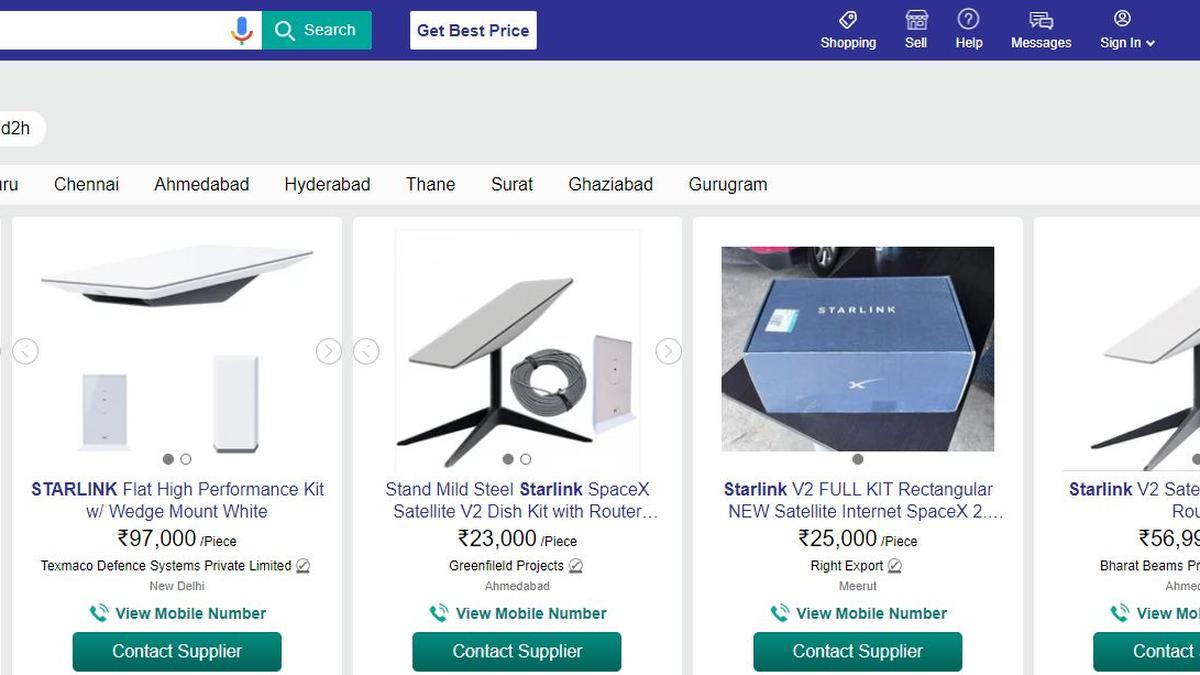
Elon Musk’s satellite‑internet venture has obtained its space regulator’s final approval to launch commercial services, removing the only remaining legal obstacle after securing a telecom licence last month. This paves the way for Starlink to become the third satellite broadband operator in India, alongside Eutelsat‑OneWeb and Reliance Jio‑SES.

The Department of Telecommunications issued Starlink the Global Mobile Personal Communication by Satellite permit in early June, marking a pivotal step towards nationwide commercial deployment. Space regulator IN‑SPACe has now finalised its authorisation—pending Starlink’s formal acceptance and countersignature—bringing the company on par with its established rivals.

Starlink must still secure dedicated spectrum, construct ground infrastructure, and complete stringent security trials before service can commence. Officials indicate the spectrum will be allocated administratively rather than via auction, aligning with Starlink’s position over competing demands that included those from Reliance Jio.

The security evaluation phase remains critical. Indian authorities have insisted that all satellite‑based traffic must transit through domestic gateways and comply with legal interception protocols. Supply chain localisation and gateway siting near international borders will also be mandated. Past concerns over unauthorised Starlink usage in border regions prompted increased scrutiny by the ministry of home affairs and Department of Telecommunications earlier this year.

Starlink joins an increasingly competitive satellite broadband landscape. Eutelsat‑OneWeb received its GMPCS licence in August 2021 and full permissions in late 2023, while Jio‑SES obtained its telecom licence in March 2022 and space clearance by mid‑2024. Meanwhile, Amazon’s Project Kuiper awaits its approvals.

Local telecom giants are now preparing partnerships with satellite providers to enhance connectivity. Bharti Airtel and Reliance Jio signed pacts with Starlink earlier this year to deliver broadband across remote regions once authorisations were finalised. These alliances reflect a broader push by India to extend digital infrastructure to underserved rural and mountainous communities, where roughly 40 percent of the population remains without reliable internet access.

Starlink’s global network now spans over 6,750 satellites and serves diverse markets from Antarctica to developing Asia. In India, the company faces challenges adapting to the country’s famously low data prices, with mobile rates among the world’s cheapest. Each operator must also comply with provisions demanding indigenisation of at least 20 percent of ground infrastructure and multilayered security approval regimes.

As New Delhi aligns satellite spectrum policy—including assigning bandwidth for five‑year terms at a fee capped at 4 percent of adjusted gross revenue—operators will negotiate additional urban or rural levies and infrastructure contributions. Communications Minister Jyotiraditya Scindia’s consultations with SpaceX executives signal sustained governmental interest in leveraging satellite technologies to bolster India’s digital ambitions.

Starlink’s entry marks a significant shift in India’s telecom ecosystem. It promises to elevate broadband penetration in neglected geographies while testing the resilience of India’s stringent regulatory and security frameworks. The speed at which Starlink secures spectrum, builds its ground presence, and satisfies national interception mandates will determine how soon millions of users beyond urban centres experience high-speed satellite internet.

With Bitcoin prices soaring past $100,000 again and investor optimism at a high, the UAE’s strategic push into crypto is paying off. But what does this bull market really mean for the country’s economy, its investors, and its long-term financial future? The UAE has spent the last few years laying the groundwork to become a global crypto capital. While some countries have struggled to regulate or simply […]

VISHNU RAJA
RYO YAMADA
HITORI GOTOH
IKUYO KITA