News related to
Space

Binance founder Changpeng “CZ” Zhao has publicly rejected Forbes’ assertion that his net worth is $87.3 billion, calling the figure “baseless and wildly overstated.” The dispute highlights ongoing tensions over the valuation of wealth tied to cryptocurrency assets, where transparency and methodology remain contested. Forbes placed Zhao near the top of its billionaire rankings, asserting that his holdings in Binance and related digital assets justify the $87.3 […]

By Nitya Chakraborty Just forty eight hours within the external affairs minister Dr. S Jaishankar’s candid statement that Trump has to respect red lines drawn by India at trade talks, Indian officials joining China, Russia, Taliban government of Afghanistan and even Pakistan denouncing President Trump’s bid to take over Bagram air base in Afghanistan, is […]

The article India’s Opposition To Trump Bid To Take Over Bagram Airbase Has Special Significance appeared first on Latest India news, analysis and reports on Newspack by India Press Agency).

Wizz Air Hungary is reopening bookings for flights from Abu Dhabi to several European destinations, with services beginning in October and November 2025. Flight schedules show routes from Katowice and Krakow in Poland launching on 10 October. The carrier plans to resume Larnaca services from 15 November, operating four times weekly on Tuesdays, Thursdays, Saturdays and Sundays, and Sofia flights from 17 November on Mondays, Wednesdays and […]

Over 200 films from 40 countries light up Bangkok until October 15 BANGKOK, THAILAND – Media OutReach Newswire – 8 October 2025 – The Bangkok International Film Festival (BKKIFF) has returned in spectacular form, transforming the Thai capital into a global stage for cinema and culture. Running from September 27 to October 15, 2025, the 19-day festival is now in full swing, already drawing packed audiences, international […]

BlackRock’s iShares Bitcoin Trust has overtaken all other funds in its suite to become its most profitable exchange-traded product, generating approximately $244 million in fee revenue over the past year, analysts estimate. Its assets under management are approaching the $100 billion mark, driven by massive capital inflows into the spot Bitcoin ETF space.

IBIT has pulled in surging investor interest, with around $970 million flowing into it in a single trading session — the largest share of the $1.2 billion that U. S. spot Bitcoin ETFs collectively attracted that day. The fund now sits about $2.2 billion short of the $100 billion milestone, a level it is on track to cross more rapidly than any ETF in history.

That speed is notable: IBIT has amassed nearly $98–$100 billion in under 435 days, compared to Vanguard’s flagship S&P 500 ETF, which required over 2,000 days to reach the same threshold. This acceleration reflects investor appetite for regulated, exchange-traded access to digital assets.

BlackRock’s fee structure — currently 0.25% of AUM on IBIT — means that each incremental inflow directly boosts revenue. Analysts Eric Balchunas and James Seyffart have identified IBIT as now bringing in more income than long-established heavyweights in BlackRock’s portfolio, such as the iShares Russell 1000 Growth ETF and iShares MSCI EAFE ETF.

The inflow pattern underscores a broader shift. Since the U. S. Securities and Exchange Commission authorised spot Bitcoin ETFs in January 2024, the category has seen multiple single-day inflows exceeding $1 billion. In several past instances, such inflow spikes have coincided with short-term peaks in Bitcoin’s price, raising questions among market watchers whether these are signs of a turning point.

Bitcoin itself has responded: it pushed past $125,000 this month, buoyed by demand for regulated crypto exposure and safe-haven demand amid macroeconomic pressures. This run-up in price further amplifies IBIT’s appeal, because asset growth happens both through net inflows and valuation gains on its holdings.

BlackRock is also deepening its Bitcoin product strategy. It has filed to create a Bitcoin Premium Income ETF, which would generate yield by selling covered call options on Bitcoin futures — a move aimed at appealing to yield-focused investors seeking regulated crypto exposure. BlackRock has avoided entering the altcoin ETF arena for now, focusing its efforts on Bitcoin-linked products where regulatory clarity is more established.

Still, the meteoric rise of IBIT carries risks. Fee compression remains a structural challenge across the ETF industry, and competitors are poised to launch rival crypto products. The volatility inherent in Bitcoin could reverse gains sharply. Moreover, regulatory shifts — whether through tax treatment, disclosure mandates, or limits on crypto exposure — could reshuffle the competitive landscape.

ASUS has confirmed that it will spotlight a broad suite of AI-enabled products and infrastructure at GITEX Global 2025, framing its participation around the theme “Ubiquitous AI. Incredible Possibilities.” The corporation aims to demonstrate how artificial intelligence can permeate devices, enterprise systems and urban environments.

The company’s exhibit will cover four core domains: AI-first design, cloud integration, sustainability and education technology. On the hardware front, ASUS plans to showcase the B5405 ergonomic laptop, the P5405 with a 47 TOPS NPU, and the B9403 weighing under 1 kg with all-day battery life. Chromebook models such as the CX5403 Plus and Windows devices like the BR1204 will cater to education users.

In its infrastructure tier, ASUS will highlight its AI POD, HGX servers and the Ascent GX10 platform powered by the NVIDIA GB10 Grace Blackwell superchip. Workspace innovation will include compact offerings such as the NUC 15 Pro and NUC 14 Pro AI. On the edge side, embedded systems for smart cities and autonomous systems—such as the PE2200U, PE6000G, and PE2100N—are also in the lineup.

ASUS emphasises the role of partnership in its vision. It plans to accentuate cooperation with NVIDIA via its “Enterprise AI Factory” programme, which supports AI-ready racks and POD designs tuned for large language models and immersive workloads. The company will also underline measures in security, durability and ease of maintenance across its product line.

Tolga Özdil, Regional SYS Commercial Director for META at ASUS, remarked that the Middle East is positioned at a digital inflection point, with AI shaping institutional and economic evolution. He framed GITEX as a platform to bring the company’s latest innovations into conversation with regional stakeholders. ASUS’s Regional Director for Middle East & Africa, Senic Chiu, added that the event offers opportunity to show how intelligent tools can reshape industries and daily life.

ASUS’s timing comes against the backdrop of an intensifying global push for AI infrastructure. GITEX 2025 is expected to draw more than 6,800 tech firms and 2,000 startups from 180 countries. Key event themes include advancements in quantum, biotech, data centres and robotics.

Beyond individual exhibitors, the show underscores the rapid expansion of the global AI economy. According to organisers, investment in data centres alone is forecast to surpass US$500 billion in 2025. Meanwhile, GITEX’s startup track, Expand North Star, will run in parallel and feature over 1,200 investors managing US$1.1 trillion in assets.

ASUS’s introduction of its AI roadmap at this scale signals that device manufacturers are no longer content to remain at the periphery of the AI stack. As more process layers—from silicon to application—are exposed to AI optimisation, hardware firms are positioning themselves to own more of the value chain. However, challenges remain: power efficiency, thermal constraints, ethical AI integration and data security are frontlines ASUS must navigate.

MetaMask is rolling out a new on-chain rewards programme that will allocate more than $30 million worth of LINEA tokens during its first season, offering “special benefits” to long-time users and bridging the move with the launch of its own token.

The wallet’s parent, Consensys, confirmed over the weekend that this initiative is not merely a farming scheme but a dedicated rewards system aimed at recognising consistent user engagement. The rewards package will include referral bonuses, incentives denominated in mUSD, exclusive partner rewards, and early token access. MetaMask emphasised that the campaign is built to reward habitual on-chain activity, not speculative intervention.

LINEA, the native token of Consensys’ Layer 2 network, was launched in September via a token generation event distributing roughly 9.4 billion tokens. By tying the MetaMask rewards system to LINEA, the firm aims to channel wallet activity toward its own roll-up infrastructure. The rewards plan positions MetaMask not just as an interface but as an active participant in building the Layer 2 ecosystem.

Joseph Lubin, CEO of Consensys and co-founder of Ethereum, described the rewards drive as a step toward redefining the MetaMask experience. He stated that the programme is a “genuine method of regularly giving back to our community” and stressed that long-time users—whom the team terms “OGs”—will receive priority consideration. This linkage is also viewed as a precursor to the upcoming MetaMask token, tentatively known as MASK, which Lubin first publicly referenced in September.

The broader strategy links three core components: MetaMask’s wallet, the mUSD stablecoin, and the LINEA network. The mUSD token, issued by Bridge, reportedly has a circulating supply of nearly $88 million. Participation in the rewards scheme is expected to stimulate usage across these components: swapping, bridging, stakes, and portfolio activity within MetaMask.

While the announcement lays out the broad contours of the rewards campaign, it leaves critical details unspecified. MetaMask has not yet revealed eligibility criteria by jurisdiction, and no clear anti-Sybil or bot-prevention measures have been announced. The absence of such safeguards has drawn scrutiny from observers concerned about gaming of reward systems.

Community reaction on X has been mixed. Some users welcomed the move as a long-awaited monetisation of loyalty, while others questioned whether the structure might favour larger holders or those in jurisdictions with favourable access. Some pointed to past programs in the crypto space that allowed special participants to disproportionately benefit.

Advertisements

The World Bank has upgraded its 2025 growth forecast for the Middle East, North Africa, Afghanistan, and Pakistan region to 2.8 percent, up from 2.6 percent, while trimming the outlook for 2026 amid intensifying conflict and faltering oil output. Expansion in the Gulf and non-oil sectors is driving the upward revision in 2025, securing a more optimistic tone for this year. But persistent geopolitical stress—particularly in Iran, […]

Dubai Aerospace Enterprise has enlisted a consortium of international and regional banks to host a series of fixed income investor calls beginning 6 October 2025, with the aim of gauging demand for a potential benchmark 5-year senior unsecured US dollar sukuk issuance. The mandate positions Emirates NBD Capital, First Abu Dhabi Bank, Goldman Sachs International and HSBC as active bookrunners, while Abu Dhabi Commercial Bank, Ajman Bank, […]

Dubai Airports has announced an extended 10-year strategy aimed at transforming Dubai International and Dubai World Central – Al Maktoum into the world’s most accessible and inclusive airports by 2035. The plan underscores a shift from enhancing infrastructure alone to driving cultural change, embedding empathy and user-centred design in every element of the passenger journey.

The strategy rests on three pillars: reinforcing existing accessibility frameworks, improving guest experience across every touchpoint, and elevating the airports’ status as global benchmarks in inclusive aviation. The commitment aligns with the UAE’s broader obligations to support the rights of People of Determination and Dubai’s ambition to become a disability-friendly city.

Majed Al Joker, Chief Operating Officer of Dubai Airports, emphasised that accessibility is a “core pillar” rather than a peripheral initiative. He noted that, for the first time, the airport authority is co-creating programmes with the PoD community to redesign the passenger journey from their lived perspective. The launch coincides with the debut of a public awareness campaign called “DXB for All”, which presents six narratives of travellers with sensory sensitivities, mobility challenges, hearing or visual impairments, and highlights their airport experiences.

This new phase builds on the 2022 “We All Meet the World Differently” campaign. While that initiative focused primarily on raising awareness, the current strategy delves deeper by integrating accessibility into operations, staff training, and passenger interactions. Airport operators intend to cultivate empathy across staff, travellers, and the public, encouraging all stakeholders to reframe how they engage with PoD.

To facilitate inclusive travel, Dubai Airports already provides a suite of services: a Travel Planner visual guide, the Sunflower Lanyard to signal discreet assistance, free two-hour parking, dedicated taxis, wheelchair support from curb to gate, over 520 hearing loops across terminals, and a sensory-friendly Assisted Travel Lounge in Terminal 2. These measures will be expanded and refined under the new strategy.

The initiative is being deployed through the “oneDXB” partnership network, which includes Emirates, flydubai, Dubai Police, GDIFA, Dubai Customs, dnata, Dubai Health, Dubai Duty Free, Serco, and other stakeholders. The collaborative structure ensures that airport services, security, passenger handling, health and taxi operations all align with inclusivity goals.

Challenges are considerable. DXB is already operating near capacity: in 2024 it handled 92.3 million passengers, its highest ever annual volume. That puts pressure on space, queueing, and infrastructure to adapt without undermining operational efficiency. Meanwhile, DWC is undergoing significant expansion—with a projected $35 billion investment to scale it toward handling up to 260 million passengers annually. Dubai Airports plans to shift major operations to DWC by 2032, adding urgency to ensuring that new terminals and systems are fully accessible from the start.


Arabian Post Staff -Dubai Goldman Sachs lifted its December 2026 gold price forecast from $4,300 to $4,900 per ounce, citing strength in Western exchange-traded fund inflows and sustained central bank purchases. Gold’s spot price hovered around $3,960 per ounce early on Tuesday, having earlier touched an intraday high of $3,977.19. Goldman analysts expect central banks—particularly in emerging markets—to continue diversifying foreign-exchange reserves into gold, with forecast average […]

Filestack has launched a sweeping upgrade to its core platform, introducing a fully integrated Digital Asset Management system, a comprehensive Event Logger, and a revamped Filepicker 4.0 with advanced upload control features. The move is aimed at giving developers stronger tools to manage file workflows, versioning, and audit trails—all without building these systems from scratch. At the heart of the update is the DAM, which allows users […]

Glencore has entered a 20-year agreement with Discovery Green to supply renewable energy for four of its South African mining operations, beginning 2027. The deal is expected to deliver over 290 GWh annually to mines in the eMalahleni area, replacing the bulk of their existing power demand with wind and solar energy. Under the terms of the agreement, renewable power will be delivered from Discovery Green’s contracted […]

Logitech will unveil a range of AI-enabled collaboration tools at GITEX Global 2025 in Dubai from 13 to 17 October, aiming to show how hardware and software can merge to support hybrid and human-centred work environments.

Under its “AI-Enabled Collaboration” theme, the company plans live demonstrations of its next-generation video conferencing, audio, and workspace peripherals. These products are designed to deliver equitable meeting experiences, seamless plug-and-play deployment, and sustainability throughout the product lifecycle.

Murad Ali, Head of GCC for Logitech for Business, says GITEX offers a stage to highlight innovations in “smart collaboration” that address evolving work trends in the Middle East, and that the company is committed to sustainable design practices. Logitech will host customers and partners at its Hall 3-C30 booth to showcase these developments.

A key highlight is the Rally Board 65, an all-in-one mobile conferencing device tailored to simplify complex meetings. The system combines a 65-inch touchscreen with built-in AI features such as RightSight 2 auto-framing, Depth Blur to reduce visual distractions, and sensors that measure occupancy and room health parameters. When unused, it can automatically shift into a lower power state to conserve energy—part of Logitech’s drive to embed sustainability into its hardware.

Logitech’s approach is underscored by statements from Moninder Jain, VP & Head of Global Emerging Markets. He notes that Logitech views AI not merely as a productivity tool, but as a means to deliver “more equitable collaboration experiences.” According to him, AI is embedded in features that equalise participation between in-room and remote contributors, including consistent audio/video quality, auto framing, and cloud-based device management that lets users carry settings across devices.

In recent months, Logitech has pushed AI integration further across its product lines. It has expanded its portfolio of Intel Evo-verified peripherals, reinforcing its strategy to support high-performance, low-latency user experiences. The company continues to evolve its Rally and video bar offerings, embedding AI to enhance meeting dynamics and reduce friction for IT teams managing hybrid environments.

Logitech’s sustainability credentials also receive attention in its corporate activities. The company’s “Future Positive” programme continues to support innovation in circular design. Past initiatives include collaborations on AI-powered e-waste recycling bins and exploration of alternative magnet materials to reduce reliance on rare earth elements.

Prinker, a South Korea–based self-expression technology firm, is launching its full suite of personalization solutions in the Middle East and North Africa region at GITEX GLOBAL 2025, seeking to penetrate a market showing robust growth in beauty and personal care.

At its Dubai showcase, Prinker will debut Prinker POP, a smart beauty kiosk that enables users to mix and preview custom makeup palettes via a touchscreen interface and AI-driven simulation. It will also bring its handheld devices—Prinker S and Prinker M—capable of applying temporary, skin-safe tattoos within seconds, as well as a standalone Prinker Tattoo Kiosk allowing users to self-apply designs in malls or entertainment venues without staff assistance.

The company aims to tap into accelerating demand for experiential retail and personalisation in beauty, positioning itself at the intersection of tech and aesthetics as regional consumers and retailers seek interactive, low-risk forms of self-expression.

The MENA beauty and personal care market is projected to expand sharply, with estimates placing its value at around USD 95.2 billion by 2030 and an annual growth rate of 9.0 %. Rising digital penetration, social media influence, and youthful demographics are driving demand for personalised and immersive beauty experiences.

Prinker’s approach reflects broader industry trends in tech-infused beauty. Beauty firms worldwide are increasingly adopting AR mirrors, AI skin diagnostics, and custom formulation platforms. Yet few have ventured into on-demand, skin-printing devices in public retail spaces. Prinker positions its handheld and kiosk systems as a bridge between digital and physical engagement.

Retailers and salon operators in the region may see appeal in integrating Prinker’s solutions as a customer acquisition tool. By offering interactive touchpoints, brands can boost dwell time and cross-sell products. Prinker’s machines also reduce staff overhead and allow consistent brand experiences across locations.

Prinker’s global track record includes deployments for brand activations and content creation campaigns in Asia and the United States. However, scaling into MENA requires navigating regulatory regimes for cosmetic safety, cultural sensibilities around appearance, and localisation of designs to reflect regional tastes.

Prinker faces competition from AR/VR beauty apps that let users visualise makeup digitally, as well as legacy cosmetic brands developing custom blends in stores. But none currently replicate live, direct-to-skin printing in physical venues. Prinker’s advantage lies in marrying hardware and software with a frictionless user experience.

Executives leading Prinker’s expansion emphasise strategic partnerships. They plan to collaborate with regional beauty chains, department stores and mall operators, integrating kiosks into high-footfall environments. They also intend to localise design libraries—such as Arabic calligraphy motifs and regionally relevant patterns—to enhance appeal.

Analysts note that success will depend on commercial viability: cost per use, durability, and consumer uptake. Prinker will need to balance affordability with perceptible novelty so that users perceive value in transient tattoos or customised palettes.

iFLYTEK is stepping up its engagement in the Middle East, unveiling two flagship AI products at GITEX 2025 in Dubai as part of a broader strategy to localise its offerings and anchor its presence in the region.

The company’s showcase spans three core portfolios—AI Translation, AI Infrastructure and AI Solutions—tailored for Gulf markets, with particular emphasis on Arabic dialect support and secure deployment. Among the new offerings is the AI Translation Earbuds, designed to enable seamless multilingual communication, and the e-ink AINote 2 work device, both making their global debut at the event. The debut underscores iFLYTEK’s intent to go beyond product marketing, emphasising solutions that address regional business needs.

Vincent Zhan, Vice President of iFLYTEK, asserted that the company is focused “to deliver intelligent solutions that address real business challenges” rather than merely present tech demonstrations. The firm has already placed a local team in Dubai to oversee deployment, maintenance, and customer support. It also customised algorithms to handle multiple Arabic dialects, expecting that linguistic responsiveness will differentiate it from global rivals.

iFLYTEK’s portfolio for the event includes the Spark WallEX system, designed for intelligent space management, along with Spark Smart Blackboard and Spark GuideX. The firm says these are engineered to support a range of sectors, including education, healthcare, enterprise operations and government. Its “All-in-One AI Solution” is positioned as a secure infrastructure package for organisations seeking turnkey AI adoption.

The Middle East expansion is part of a larger international push. Outside Asia, iFLYTEK is targeting Europe, as trade tensions and regulatory pressures create incentives to diversify markets. It is reportedly planning offices in France and Hungary, with growth ambitions in Spain and Italy. In March 2025, Zhan cited tariffs in the US as influencing iFLYTEK’s decision to look more aggressively into Europe and the Gulf.

China’s AI giant also faces headwinds. It was placed on a US trade blacklist in 2019, making procurement of certain high-end components dependent on US approvals. To mitigate vulnerability, iFLYTEK has shifted many of its models to Huawei’s chip platforms. It developed its Xinghuo X1 large language model in partnership with Huawei, reportedly running entirely on domestic chips. The firm claims to have pushed chip efficiency from 20 per cent to nearly 80 per cent of equivalent U. S. hardware, though Huawei leadership acknowledges that domestic chips still lag behind by a generation.

Market observers note that iFLYTEK’s shift toward the Gulf aligns with governments in the UAE and Saudi Arabia pushing AI-first national strategies. However, the company must navigate regulatory, data residency and market competition risks. In the Gulf, local AI and language processing firms are emerging, and global players like Amazon and Microsoft are pressing deeper into the region.

iFLYTEK’s presence at major global events is integral to its positioning. In July 2025, at MWC Shanghai, it launched the Spark All-in-One AI Machine and Dual-Screen Translator 2.0—capable of handling translation across dozens of languages—to reinforce its push into enterprise AI. The company has also rolled out smart products such as the AINOTE Air 2 across Asia and Gulf markets, with strong uptake in multilingual productivity segments.

From left, Kamran Muhammad (6th in frame), CEO of Mashriq Elite, and from right, Aamil Tabani (4th in frame), CEO of Golden Bridge. Launched in September 2023, the project has progressed to delivery as committed, a milestone that underscores investors’ confidence in Dubai’s real estate market  Mashriq Elite Developments and Golden Bridge (exclusive sales and marketing partner) have marked the successful on-time handover of Floarea Residence in […]

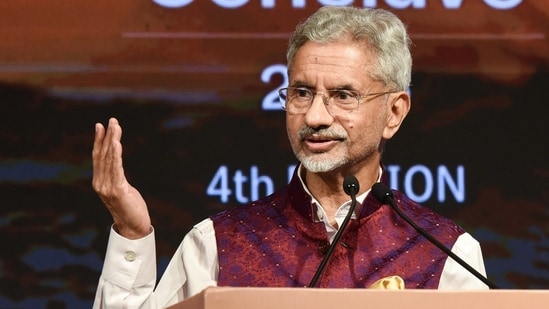
By Nitya Chakraborty Indian foreign policy makers have at last showing some mature understanding of the geopolitics of the post-Trump.2 months if the external affairs minister Dr. S Jaishankar’s observations at the concluding session of Kautilya Economic Conclave in New Delhi on Sunday, are any indication. The minister was quite candid in explaining the complexity […]

The article EAM Jaishankar Is Right: Trump Has To Respect India’s Red Lines appeared first on Latest India news, analysis and reports on Newspack by India Press Agency).

HANOI, VIETNAM – Media OutReach Newswire – 6 October 2025 – This November, for the very first time, Vietnamese audiences will be immersed in an unprecedented music event: the global superstar G-DRAGON’s world tour, landing right on the Eastern bank of Hanoi. Few realize that securing the nod from G-DRAGON required 8Wonder, the mega-festival brand of Vingroup, to overcome the incredibly stringent standards set by this S-tier […]

 by Mahboob Subuhani, Regional Director, IT Solutions – MEA & APAC at Sigma Software Group Dubai stands as a global benchmark for government digitalisation. In 2025, 99.5% of its services are digitised (120+ gov apps), with over 173 million digital transactions processed across 1400+ services, serving 57 million beneficiaries.    Today, Dubai ranks 4th globally in the IMD Smart City Index 2025, and 1st in the GCC, […]

Munich Airport reopened Saturday morning following a second shutdown in under 24 hours caused by drone activity near its runways, as Germany steps up its response to escalating airspace threats. Air traffic control first suspended operations late Thursday after multiple drone sightings prompted restrictions and cancellations. Authorities say 17 departing flights were grounded and 15 incoming flights diverted, with around 3,000 passengers left in limbo. Operations resumed […]

Botswana has become the target for a bold new data infrastructure initiative after U. S. operator ChillMine and Netherlands-based AAAS Energy inked a memorandum of understanding to develop a solar-plus-storage data centre campus near Palapye. The proposed facility, intended to support AI workloads, hyperscale operations and energy-intensive computing, will be integrated into the Leupane Energy Hub and Industrial Park. The energy backbone of the hub is planned […]

Perplexity has opened access to its AI-powered Comet browser for all users, eliminating its previous paywall and casting the browser as a direct challenger to Google Chrome’s dominance. Comet integrates Perplexity’s AI search engine with a built-in assistant designed to automate user tasks and summarise content across browsing sessions. The company emphasises that the browser is now free indefinitely, with a paid “Comet Plus” tier offering premium […]

Markets across the crypto derivatives space are on edge as Bitcoin and Ethereum options worth approximately $4.33 billion enter settlement today, setting the stage for heightened volatility in the near term.

On the Deribit platform, Bitcoin dominates the expiries, with about $3.5 billion notional value scheduled for settlement in roughly 30,200 contracts. Its put-to-call ratio stands at 1.23, suggesting more downside protection bets than bullish wagers. The so-called “max pain” level — the strike price at which the greatest number of contracts expire worthless — is pegged at $114,000, close to current trading levels and potentially acting as a magnet for price movement.

Ethereum’s portion comprises about $806.75 million, across 177,398 contracts, with a put-to-call ratio near 0.99, indicating a more balanced bias among traders. Its max pain is estimated at $4,500, just beneath recent market trading ranges.

Derivatives analysts caution that expiries of this size tend to exert short-term pressure on price behaviour, particularly as market makers and institutional actors roll, hedge or unwind positions ahead of settlement. In many past cycles, price action has gravitated toward max pain levels in the hours leading up to expiry.

Volatility expectations are reinforced by elevated implied volatility in both Bitcoin and Ethereum options markets. Some trading desks point to a compression of liquidity around strike clusters and warn that even modest directional flows may trigger outsized price swings.

Some market strategists argue that Bitcoin’s bearish tilt reflects growing hedging demand after price consolidation above major resistance zones. Meanwhile, Ethereum’s near-neutral PCR hints at structural hedging and profit-taking rather than outright directional bets.

Macro factors could amplify sensitivity. With markets digesting central bank policy signals, inflation indicators and equity market drift, crypto derivatives flows may act as a conduit for correlation shocks. That makes expiry day risk not purely technical but potentially reactive to broader sentiment shifts.

Earlier this month, a near-identical expiry event saw $4.3 billion in options settle, with BTC positioning yielding shortterm downside pressure and ETH holding more firmly near its pricing bands. That expiry foreshadowed a larger $18 billion BTC options expiry scheduled for 26 September, intensifying speculation on whether today’s event will prime momentum.

Market watchers are watching order-book depth near the $114,000 and $4,500 levels, as sharp absorption or rejection there may offer clues to directional bias post-expiry. In the absence of sustained trend breaks, much of the post-settlement period could hinge on whether institutions successfully reestablish exposure rather than exit.

Traders are also navigating strategy choices: rolling forward, closing positions, or rebalancing via delta hedges. The interplay of those flows may create forks in volatility—in which the first few hours post-expiry see directionless chop before a stronger move emerges.

VISHNU RAJA
RYO YAMADA
HITORI GOTOH
IKUYO KITA