Negotiators from India and the European Union have moved into the final stretch of talks on a long-pending free trade agreement that both sides now describe as a strategic necessity, as uncertainty over United States trade policy reshapes global supply chains and export strategies. Officials involved in the discussions say most market-access chapters are broadly settled, with remaining work focused on sensitive tariff lines, regulatory safeguards and timelines for implementation.
The proposed pact, under negotiation for more than a decade with several pauses, has regained momentum over the past two years as Brussels and New Delhi seek to reduce exposure to external shocks. For the European Union, diversifying trade ties beyond the US and China has become an explicit policy goal. For India, securing preferential access to one of the world’s largest consumer markets offers a counterweight to potential tariff pressures elsewhere.
Trade specialists say the structure of the deal reflects this shared urgency. India is expected to secure phased tariff reductions on a wide range of labour-intensive exports, including textiles, apparel, leather goods, footwear, gems and jewellery, and certain engineering products. These sectors employ millions and are among the most exposed to changes in external demand. Ajay Srivastava, a former trade official, has said that improved access to the EU market would help exporters partly offset the impact of higher duties or restrictive measures imposed by the US on selected product categories.
European manufacturers, in turn, are seeking lower tariffs and clearer rules for automobiles, high-end machinery, wines and spirits, medical devices and chemicals. Current import duties on some of these products remain among the highest faced by EU exporters in major economies. Brussels has also pressed for stronger commitments on intellectual property protection, government procurement and regulatory transparency, areas that have historically slowed progress.
People familiar with the talks say negotiators have narrowed differences on goods tariffs by agreeing to longer transition periods for politically sensitive items, allowing domestic industries time to adjust. Agriculture remains a delicate chapter, with India resisting broad concessions on dairy and certain farm products, while offering limited quotas and safeguards to protect small producers. The EU has signalled flexibility, recognising the social and political weight of agriculture in India’s economy.
Beyond goods, services and investment provisions are central to the pact’s commercial value. India is pushing for easier movement of professionals in information technology, engineering and healthcare, alongside mutual recognition of qualifications. European counterparts are cautious, balancing labour-market concerns with industry demands for skilled talent. Investment protection rules are also under discussion, with both sides aiming to avoid disputes that have characterised earlier bilateral treaties.
Geopolitics has added another layer to the negotiations. Heightened trade frictions involving the US have reinforced the case for dependable partners and rules-based commerce. European policymakers increasingly view India as a key pillar in their Indo-Pacific strategy, while New Delhi sees the EU as a stable market that complements its manufacturing and export ambitions. The alignment is evident in parallel talks on a separate investment protection agreement and a framework for cooperation on sustainable development.
Environmental and labour standards have emerged as important, though contentious, elements. The EU has sought binding commitments linked to climate goals and workers’ rights, consistent with its newer trade agreements. India has pushed back against provisions it views as intrusive or misaligned with domestic development priorities, arguing for cooperation rather than enforcement-driven clauses. Compromise language is being explored to bridge these positions without derailing the broader deal.
Economists note that the scale of potential gains is significant, though uneven across sectors. The EU is already one of India’s largest trading partners, with bilateral goods trade running into tens of billions of euros annually. A comprehensive agreement could lift trade volumes further by lowering costs, improving predictability and encouraging investment flows. Export-oriented clusters in states with strong manufacturing bases are expected to be among the main beneficiaries.
Industry groups on both sides have stepped up engagement, urging negotiators to maintain momentum. Indian exporters highlight the risk of losing market share to competitors that already enjoy preferential access to the EU. European businesses argue that delayed agreement leaves them at a disadvantage in a fast-growing market with rising consumer demand and infrastructure spending.
By Asad Mirza In today’s fractured world, fissures caused mostly by the ongoing Trumpomania, every nation is working post haste to forge new alliances particularly focussed on trade. The best example of this is the India-EU partnership FTA, to be formalized on January 27.. The enhanced partnership is going to eliminate tariffs on more than […]
Emirates NBD, Dubai’s largest bank by assets, posted a four per cent rise in full-year net profit on Monday, underpinned by record lending growth as borrowing demand strengthened across domestic and international markets. The lender said net profit reached 24 billion dirhams for the year, surpassing market expectations of about 22.8 billion dirhams based on analyst estimates tracked by LSEG. The performance was driven by what the […]
South Africa’s vast grasslands have become the testing ground for what is being described as a global first in community-led carbon markets, as farmers and pastoral groups begin to earn tradable carbon credits through regenerative land management verified under a new international standard. The initiative centres on Verra’s recently approved methodology for Improved Agricultural Land Management, which allows greenhouse gas reductions and soil carbon gains from grazing […]
HONG KONG SAR – Media OutReach Newswire – 26 January 2026 – The 19th Asian Financial Forum (AFF), opened this morning (January 26) at the Hong Kong Convention and Exhibition Centre with more than 3,600 influential leaders from over 60 countries and regions joining the two-day summit, the region’s first major international financial event of 2026.
Co-organised by the Hong Kong Special Administrative Region (HKSAR) Government and the Hong Kong Trade Development Council (HKTDC), this year’s AFF, themed “Co-creating New Horizons Amid an Evolving Landscape”, takes on added significance being the first such event of China’s 15th Five-Year Plan period (2026-2030).
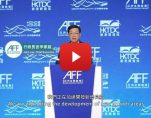
“Featuring more than 150 prominent speakers, from Hong Kong, throughout the Asian region and around the world, the Forum will inspire insight and innovation, create partnerships and explore fresh business opportunities,” John Lee, Chief Executive of the HKSAR, said in his opening remarks at the Forum.
Mr Lee also spoke of the boundless opportunities for Hong Kong under the unique principle of “one country, two systems”, that assures Hong Kong of the unwavering support of China, while continuing to expand its global markets and reach.
“This unparalleled positioning solidifies our institutional strengths: the rule of law, a judiciary that exercises its power independently, an open and transparent market, the free flow of capital and a low and simple tax regime,” Mr Lee said.
Mr Lee later witnessed the signing of a co-operation agreement between the Financial Services and the Treasury Bureau and the Shanghai Gold Exchange, marking a new milestone in deepening co-operation between the gold markets of Hong Kong and Shanghai.
The agreement was signed by the Secretary for Financial Services and the Treasury, Christopher Hui, and the Chairman of the Shanghai Gold Exchange, Yu Wenjian.
“The agreement just now signed is far more than a formal document,” said Mr Hui.
“It represents a resolute commitment to advancing the synergistic development of Hong Kong and Shanghai as premier international financial and gold markets. It reflects our joint determination to deepen the integration and complementary strengths of Hong Kong and Shanghai, so that together we can expand our share and influence in the global gold market, and better support Renminbi internationalisation.”
Mr Hui outlined the strategic significance of the agreement and the overall development blueprint for Hong Kong’s gold market.
“In recent years, amid heightened geopolitical uncertainty, inflationary pressures, and ongoing restructuring of the international monetary system, the strategic importance of gold has become even more pronounced,” Mr Hui said.
The agreement covers two major forward-looking areas of co-operation: establishing a high-level, collaborative governance structure for Hong Kong’s new gold central clearing system; and opening new avenues for physical infrastructure synergy and market interconnectivity.
“The signing of this agreement with the Shanghai Gold Exchange marks the dawn of a new chapter—one in which Hong Kong and Shanghai join forces to shape the future of global gold markets,” Mr Hui said.
A discussion session on gold trading themed “Global Spectrum – Gold Exchange” features expert panelists invited to examine recent market developments and share insights on Hong Kong’s role, potential and opportunity as a world-class gold trading centre. Speakers include overseas experts James Emmett, Chief Executive Officer, MKS PAMP SA and David Tait, Chief Executive Officer, World Gold Council.
Other highlights on day one of the AFF include a keynote luncheon speech by Dr José Manuel Barroso, former President of the European Commission, former Prime Minister of Portugal, and current Chairman of Goldman Sachs International Advisory Board, to share his insights on the current global landscape and macro‑level challenges.
Other notable speakers today include Zou Jiayi, President of Asian Infrastructure Investment Bank; Scott Morris, Vice-President (East and Southeast Asia, and the Pacific) of the Asian Development Bank; Mehmet Şimşek, Minister of Treasury and Finance of Türkiye; Klemen Boštjančič, Deputy Prime Minister and Minister of Finance of Slovenia; H.E. Waleed Saeed Abdul Salam Al Awadhi, Chief Executive Officer of Securities and Commodities Authority of United Arab Emirates; Burkhard Balz, Member of the Executive Board of the Deutsche Bundesbank; Rhee Chang-yong, Governor of the Bank of Korea; and Gokul Laroia, Chief Executive Officer Asia of Morgan Stanley.
The AFF serves as the opening event of the International Financial Week in Hong Kong, featuring over 10 partner activities covering a range of global financial and business topics, including ASEAN opportunities, asset and wealth management, and artificial intelligence.
Traffic across key commercial corridors in Dubai has slowed markedly as Gulfood 2026 opens its doors, prompting authorities to issue travel advisories and urging commuters to plan additional time for journeys near major exhibition hubs. The scale of the food and beverage show, running from January 26 to 30, has brought an exceptional influx of visitors, exhibitors and logistics traffic into the city during a working week […]
Digital assets now form the foundation of almost every business operation. Michael Jordan, the CEO of Gem Soft, promotes data sovereignty as a necessary element for organizational strength and strategic freedom. He brings over thirty years of experience in investment banking and six years of leadership at Gem Soft, first as Chief Investment Officer and now as CEO. Jordan emphasizes that real control over data involves privacy, […]
Advancing R&D, talent development and the region’s energy transition
SINGAPORE – Media OutReach Newswire – 26 January 2026 – ST Telemedia Global Data Centres (STT GDC), one of the world’s fastest growing data centre colocation providers headquartered in Singapore, today announced two significant initiatives that strengthen Singapore’s position in the global digital and energy transition: the launch of the FutureGrid Accelerator, Southeast Asia’s first live High Voltage Direct Current (HVDC)-powered AI infrastructure testbed; and a suite of strategic Memoranda of Understanding (MOUs) with four Institutes of Higher Learning (IHLs) to advance skills development and expand internship and early career pathways for Singaporeans entering the workforce. These initiatives align with national efforts to support talent graduating into a challenging job market, while building the specialised capabilities required for next generation power and digital infrastructure.
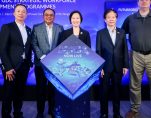
Celebrating the official launch of the FutureGrid Accelerator; a new benchmark for HVDC-powered AI infrastructure in the region.
[Pictured from left to right] Lim Kian Tiong, Chief Financial Officer, LITEON; Bruno Lopez, President & Group Chief Executive Officer, ST Telemedia Global Data Centres; Minister Gan Siow Huang, Minister of State, Ministry of Foreign Affairs & Ministry of Trade and Industry; Professor Lam Khin Yong, Vice President (Industry), Nanyang Technology University Singapore; Brian Dow, Chief Executive Officer, Amperesand.
Officiated by Ms Gan Siow Huang, Minister of State for Foreign Affairs and Trade & Industry, the announcement underscores a national push to build capabilities not only for AI-ready data centres, but also for the wider energy ecosystem, as Singapore and the region pursue net-zero ambitions.
FutureGrid Accelerator: HVDC innovation for AI and the wider energy transition Located at the Nanyang Technological University, Singapore (NTU Singapore) Electrification and Power Grids Centre (EPGC) on Jurong Island, the FutureGrid Accelerator is a pioneering initiative jointly developed by STT GDC and LITEON, supported by the Energy Research Institute @ NTU (ERI@N) and NTU deep-tech spinoff Amperesand. It is the region’s first live testbed demonstrating HVDC integration with real AI workloads, addressing the high-density and high-resiliency requirements of next-generation AI computing.
While central to the future of AI data centre architecture, HVDC represents a broader opportunity: it is a foundational technology that supports more efficient, resilient and integrated power systems. This is critical for Singapore’s long-term energy strategy, its transition to low-carbon energy grids and the region’s increasing need for sustainable power delivery.
Why HVDC Matters: A scalable platform beyond the data centre As AI and high-performance computing workloads scale, traditional alternating current (AC) power systems face inherent limitations. HVDC overcomes these constraints and delivers several transformative benefits:
Up to 30% overall energy savings compared to conventional AC systems
A reduction of up to 400 tonnes of CO2 equivalent (CO2e) per megawatt per year
45% lower copper consumption and a 30–40% smaller power-infrastructure footprint
The ability to support ultra-high-density racks exceeding 1,000kW, with higher reliability and lower cost
Native compatibility with renewable power sources able to feed directly to the direct-current system, avoiding inefficient power conversions
“The FutureGrid Accelerator is a strategic investment in Singapore’s long-term digital leadership,” said Bruno Lopez, President and Group Chief Executive Officer, ST Telemedia Global Data Centres. “By bringing together global industry leaders like LITEON with local deep-tech talent such as Amperesand, we are building infrastructure that is ready for future AI workloads while pioneering sustainable practices and setting new benchmarks for energy efficiency and carbon-conscious innovation. This initiative reflects our commitment to future-ready technologies and reinforces Singapore’s position as a global Centre of Excellence for advanced sustainable digital infrastructure. It is a bold step forward in shaping the future of data centres and accelerating energy transition across the region.”
Ms Gan Siow Huang, Minister of State for Foreign Affairs & Trade and Industry, said: “The FutureGrid Accelerator demonstrates how industry and academia can work together to drive innovation and strengthen Singapore’s global leadership in cutting-edge technologies. I also welcome STT GDC’s partnerships with ITE and SP, which will add to the suite of training options for the rapidly growing areas of AI and energy-efficient systems.”
The FutureGrid Accelerator will validate HVDC system performance at power loads of at least 325kW, incorporating the latest AI servers. The environment incorporates LITEON’s data centre reference architecture with Amperesand’s Solid State Transformer (SST) technology—an enabling innovation for next-generation HVDC deployment. STT GDC plans to deploy this technology in future data centres in Singapore and progressively scale adoption across its global operations.
“LITEON is committed to advancing the frontier of power management efficiency, and our collaboration with STT GDC and Amperesand is key to establishing the next standard for sustainable AI infrastructure in Asia,” said Jason Tsao, Head of Direct Current Microgrid at LITEON. “By deploying an end-to-end data centre reference architecture and integrated power management system in a live environment with STT GDC and partners, we are validating a high-density, energy-saving solution ready to meet the extreme demands of global technology leaders.”
“The FutureGrid Accelerator underscores NTU’s role as a strategic partner in shaping the future of sustainable AI infrastructure”, said Prof Lam Khin Yong, NTU’s Vice President (Industry). “By integrating cutting-edge HVDC technologies with our research capabilities and the entrepreneurial drive of NTU spin-offs like Amperesand, we are advancing impactful solutions that can significantly enhance energy efficiency and grid resilience. This collaboration showcases how universities can drive transformative innovations at the intersection of energy, digitalisation and sustainability.”
“Amperesand is obsessed with revolutionising Medium Voltage to critical load power delivery for next-generation AI data centres, defence, and other essential electrified assets. We focus on first principles to achieve market leading power density, efficiency, and reliability,” said Brian Dow, CEO and Co-Founder of Amperesand. “In this era of AI data centre and other critical power systems becoming economic and national security interests for many countries, Amperesand’s MV SST Platform enables in-country cyber-secure controls and data, regionally available supply chains, and low CAPEX intensity local manufacturing. Our solution is an intelligent, universal Medium Voltage power source that works on-and-off grid to improve critical infrastructure resilience as new large electrical loads come online.”
Developing Energy-Ready Skills: Partnerships with ITE, SP, NTU and NUS STT GDC signed MOUs with the Institute of Technical Education (ITE), Singapore Polytechnic (SP), NTU Singapore and National University of Singapore (NUS). These partnerships will benefit more than 8,000 Singaporeans over five years through industry-aligned training in AI infrastructure and sustainable energy systems. This ensures the scaling of HVDC—and the broader energy transition—is matched by the transformation and availability of skills, jobs and talent development pathways.
Mr Lopez added, “Talent is the decisive enabler as we advance AI and sustainability infrastructure. These partnerships build a skilled workforce needed to strengthen Singapore as a global hub for advanced digital and energy systems.”
Key initiatives and impact:
Building a talent pipeline: STT GDC will provide internship placements across ITE, SP, NTU and NUS over the next five years, with support from Enterprise Singapore. The programme offers immersive, hands-on experience in data centre operations and corporate functions such as IT, sustainability, finance and marketing, supported by mentoring from industry professionals. In addition, STT GDC will offer 100 sponsorships for Data Centre Foundation Certificate (DCFC®) offered by EPI, a global certification body for data centre facilities, data centre operations and industry professionals, accelerating entry into the sector.
Developing industry-ready talent with ITE: The collaboration with ITE will benefit approximately 800 students annually — totalling 2,400 students over three years — from ITE’s engineering and information and communications technology (ICT)-related Higher Nitec and Work-Study Diploma courses. Key initiatives include co-developing industry-relevant curricula for full-time and Continuing Education & Training (CET) courses in data centre operations and sustainability; deploying a data centre virtual reality system at the ITE Extended Reality Centre for immersive training; supporting lecturer attachments and student internships; and enabling students to pursue the sponsored DCFC® course.
Sustainability leadership with SP: The partnership with SP develops expertise in environmental sustainability and green data centre solutions. Initiatives include joint exploration of green technologies and practices; industry seminars and events to promote sustainable solutions; and targeted programmes for training, mentorship, applied projects and internships.
Innovation and research leadership with NTU: The partnership with NTU combines cutting-edge joint R&D of solutions for AI data centres powered by direct current sources; training, curriculum and talent development for the AI data centre sector; industry and career talks; and internship opportunities across STT GDC’s group of companies.
Graduate pathways with NUS: STT GDC’s collaboration with NUS supports accessible entry points for graduates through internships, training opportunities and ongoing career and industry engagement to raise awareness of digital infrastructure pathways.
The issuer is solely responsible for the content of this announcement.
About ST Telemedia Global Data Centres
ST Telemedia Global Data Centres (STT GDC) is one of the fastest-growing data centre providers with a global platform serving as a cornerstone of the digital ecosystem that helps the world to connect. Powering a sustainable digital future, STT GDC operates across Singapore, the UK, Germany, Italy, India, Thailand, South Korea, Indonesia, Japan, the Philippines, Malaysia and Vietnam, providing businesses an exceptional foundation that is built for their growth anywhere. For more information, visit https://www.sttelemediagdc.com/
Appendix: Partner Quotes
Mr Peter Lam, Chief Executive Officer, Institute of Technical Education (ITE): “At ITE, our focus is on equipping our students with future-ready skills for Singapore’s evolving economy. Through the partnership with STT GDC, our students gain valuable real-world training and exposure to advanced tools in data centre operations. This strengthens our efforts to prepare career-ready students and develop talent for Singapore’s growing digital infrastructure sector.”
Mr Soh Wai Wah, Principal and CEO of SP: “Singapore Polytechnic is committed to developing a future-ready workforce that can support Singapore’s growing demand for sustainable and resilient data centre operations. This partnership with STT GDC brings together our strengths in training, applied learning and industry collaboration to nurture talent in environmental sustainability and green solutions for data centres. Through co-developed programmes, mentorship, student projects and internships, we will build deeper capabilities and broaden pathways for learners to contribute to this important sector. SP looks forward to advancing this effort with STT GDC to support Singapore’s long-term industry and sustainability goals.”
Professor Lam Khin Yong, Vice President (Industry), Nanyang Technological University: “STT GDC is a partner that shares our commitment to advancing impactful research and developing future-ready talent. Leveraging NTU’s strengths in artificial intelligence, energy-efficient systems and translational innovation, this partnership will accelerate the co-development of next-generation AI data centre technologies while providing our students and researchers with valuable real-world experience. Together, we are helping to build a robust pipeline of skilled professionals who will support Singapore’s ambitions in sustainable and AI-driven digital infrastructure.”
Ms Joan Tay, Senior Director, NUS Centre for Future-ready Graduates: “NUS’ partnership with STT GDC is timely, as demand grows for skilled professionals to manage complex, high-density AI infrastructure. Through internships, training, industry engagement and access to recognised certification, we bridge education and industry to equip students with the skills and experience needed to thrive in today’s fast-evolving digital infrastructure space.”
Harare’s local authorities have escalated flood warnings and emergency preparations across the capital following prolonged heavy rainfall that has overwhelmed drainage infrastructure and triggered flash floods in multiple low-lying suburbs. Officials have urged residents and motorists to adjust travel plans, heed evacuation guidance where issued and monitor weather conditions as water levels continue to rise across a city whose ageing systems have struggled under intensifying storms. City […]
US lawmakers have called on the Federal Trade Commission to take an expansive and rigorous look at the proposed roughly $55 billion acquisition of Electronic Arts by a consortium led by the Saudi Arabian Public Investment Fund, urging scrutiny of its potential impact on workers, studios and competition across the video-game sector. Leaders of the Congressional Labor Caucus and a broader group of House Democrats warned that […]
Alibaba Cloud and NVIDIA as Key Technology Partners. Usher in a New Era of Industrial AI.
HONG KONG SAR – Media OutReach Newswire – 26 January 2026 – AsiaInfo Technologies Limited (“AsiaInfo Technologies” or the “Company”; HKEX stock code: 01675), a leading provider of software products, solutions, and services, and ABB Robotics jointly established the “Embodied Intelligence Laboratory” and held its inauguration ceremony at AsiaInfo Plaza in Beijing on 25 January.
Tian Suning, Chairman of AsiaInfo Technologies, and Dr. Ouyang Ye, Chief Executive Office and Chief Technology Officer of AsiaInfo Technologies, together with Han Chen, Vice President of ABB Group and President of ABB Robotics China, jointly held an unveiling ceremony for the laboratory. Li Li, Vice President of the Government-Enterprise Business Unit at Alibaba Cloud Intelligence Group, attended the ceremony as key technology partners, witnessing this milestone that ushers in a new phase of integration between Physical AI technologies and the real economy.
ABB Robotics is one of the world’s leading robotics suppliers, offering a comprehensive and integrated portfolio that includes industrial and collaborative robots, autonomous mobile robots (AMRs), controllers, application solutions, services, and equipment. Powered by its intelligent software, its technologies help businesses across industries from automotive to electronics and logistics to become more resilient, flexible, and efficient.
As AI rapidly moves from the digital realm into the physical world, Physical AI, as the key bridge linking AI capabilities with real‑world industries, is becoming a core engine driving the intelligent upgrade of manufacturing sector. Against this backdrop, AsiaInfo Technologies has established a strategic partnership with ABB Robotics to jointly set up the Embodied Intelligence Laboratory, integrating both parties’ core strengths in foundation AI large models, industrial automation, communications technologies and robot control. The laboratory will focus on cutting‑edge areas such as industrial simulation and Physical AI, aiming to break through bottlenecks in the perception, decision‑making and execution capabilities of intelligent agents in complex real‑world scenarios. It will build an end‑to‑end innovation system spanning technology research and development (“R&D”), technology commercialization and large‑scale industrial deployment, thereby injecting strong AI‑driven momentum into high‑quality development.
As a leader in full‑stack digital‑intelligence capabilities, AsiaInfo Technologies will take AI large model application as the core lever, deeply integrating its strengths in 5G‑A telecommunications technology and network security to drive technology integration and large‑scale deployment at the laboratory. By developing replicable, scalable scenario‑based solutions, the Company will accelerate the rollout and value realisation of innovation in the intelligent manufacturing sector. Leveraging its global expertise in industrial automation and flexible control, ABB Robotics will provide the laboratory with real‑world, production‑line use cases and strong engineering support capabilities, enabling efficient validation, optimisation and iteration of technical solutions, and achieving deep coupling and mutual empowerment between technology and application scenarios.
The laboratory will leverage external technology partners to reinforce its R&D capabilities. By utilising Alibaba Cloud’s massive data processing power and cutting‑edge algorithmic frameworks such as Vision‑Language‑Action (VLA), and NVIDIA accelerated computing technology for training optimisation, it will significantly speeding up the industrialisation of Physical AI technologies.
The Embodied Intelligence Laboratory jointly established by AsiaInfo Technologies and ABB Robotics has been officially launched, marking the shift of their strategic partnership into a practical stage of implementation based on previous research. This collaboration represents not only a forward-looking initiative by both parties to deploy cutting-edge technologies and fulfill their industrial responsibilities, but also a pivotal step in advancing Physical AI from the laboratory into real-world applications on the factory floor. Looking forward, AsiaInfo Technologies together with partners including ABB Robotics and Alibaba Cloud, will use the laboratory as a core platform to deepen technical collaboration and scenario co‑creation, drive large‑scale deployment of Physical AI in industry, build a globally impactful benchmark for industrial intelligence, and help shape an open and collaborative Physical AI ecosystem. Hashtag: #AsiaInfo
The issuer is solely responsible for the content of this announcement.
Microsoft and Amazon have issued an unusually blunt warning to policymakers in Washington State, declaring the region’s housing shortage an “emergency” and urging faster action to expand supply as costs rise and availability tightens. The message, delivered through a jointly authored full-page newspaper advertisement and accompanying public statements, marks a rare alignment between two technology rivals that together employ tens of thousands of workers across the Puget […]
E-commerce platforms and AI startups are under a sharper spotlight as automation deepens its role in online retail, with one fast-growing software firm facing governance questions even as a major commerce platform discloses a steep rise in AI-assisted transactions. The twin developments underline both the speed of adoption and the growing expectations around transparency and leadership as artificial intelligence moves from experimentation to core operations. Shopify has […]
DXC Technology has entered a strategic partnership with blockchain payments firm Ripple to integrate institutional-grade digital asset custody and payments into DXC’s Hogan core banking platform, a move aimed at accelerating banks’ adoption of tokenised assets and real-time settlement across borders. The collaboration brings Ripple’s blockchain infrastructure into a core system used by large financial institutions worldwide, positioning DXC to offer regulated banks a turnkey path to […]
Mubadala Investment Company has sold its minority holding in Arcadia Consumer Healthcare, completing its exit from the United States-based consumer health and wellness platform alongside the company’s acquisition by funds managed by Bansk Group. The transaction marks a change in ownership for Arcadia and reflects shifting investment strategies across the global consumer health sector, where private equity interest has intensified amid consolidation and portfolio reshaping. Arcadia, headquartered […]
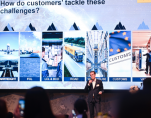
HONG KONG SAR – Media OutReach Newswire – 26 January 2026 – Dachser, a global logistics provider with over 90 years of experience, recently hosted a customer event in Bangkok, Thailand, bringing together customers and industry stakeholders to discuss the 2026 air and sea freight market outlook and the role of Supply Chain Optimization in navigating a challenging global trade environment.
Philipp Ramsbacher, Team Leader Supply Chain Optimization at Dachser, says today’s supply chains are too complex to rely on assumptions or past patterns. Data-driven simulation, rather than guesswork, helps create transparency, align expectations, and design logistics networks.
The event highlighted key developments shaping international trade flows, including geopolitical tensions, evolving sourcing strategies, capacity dynamics, and cost developments across air and sea freight markets. The discussions also underscored the growing importance of structured Supply Chain Optimization as companies adapt their logistics networks to changing market conditions.
“After several years of volatility, the air freight market is gradually moving toward a more balanced environment,” said Daniel Chua, Head of Air Freight, Air & Sea Logistics Asia Pacific at Dachser. “While demand fundamentals remain positive, careful capacity planning and realistic forecasting will be increasingly important as the market continues to normalize.”
In air freight, Dachser expects demand in 2026 to grow at a single-digit rate, supported by moderate capacity expansion and a normalization of rate patterns. While stable yields are anticipated, growth will continue to be driven by e-commerce, electronics – particularly AI-related components – and pharmaceuticals, alongside a structural shift of trade lanes toward Southeast Asia.
In sea freight, Dachser forecasts global demand growth to slow below three percent in 2026, despite continued strength in intra-Asia trade and Asia-Europe volumes. While fleet growth remains significant, supply and demand are relatively balanced, supported by blank sailings and vessel scrapping. Freight rates are expected to stabilize into early 2026, although uncertainty remains due to high operating costs and ongoing geopolitical developments.
“Even as rates soften, the market remains far from predictable,” said Eunice Yu, Head of Ocean Freight, Air & Sea Logistics Asia Pacific at Dachser. “Flexibility, diversified routing options, and realistic lead-time planning are essential for building resilient supply chains in the year ahead.”
Beyond outlooks: enabling resilience through Supply Chain Optimization
Beyond market analysis, Dachser sees that supply chains increasingly depend on structured, data-driven planning by taking a Supply Chain Optimization approach, which supports customers in analyzing, modeling, and redesigning logistics networks based on real operational data.
Philipp Ramsbacher, Team Leader of Supply Chain Optimization at Dachser says, “By applying Supply Chain Optimization with data-driven simulation, Dachser enables customers to evaluate scenarios, align stakeholders, and develop optimized and implementable supply chain solutions. These solutions help design logistics networks that are robust, efficient, and sustainable.”
Projects showcased during the event demonstrated measurable improvements, including cost savings, reduced CO₂ emissions, and enhanced delivery performance, underscoring the value of a structured Supply Chain Optimization approach.
With integrated air, sea, and contract logistics solutions and its strong presence across Asia Pacific as well as a well-established European road logistics backbone, Dachser continues to support customers navigate changing market conditions while strengthening long-term supply chain performance.
Hashtag: #Dachser
The issuer is solely responsible for the content of this announcement.
About Dachser
Dachser, a family-owned company headquartered in Kempten, Germany, provides transport logistics, warehousing, and customized services in two business fields: Dachser Air & Sea Logistics and Dachser Road Logistics. The latter consists of two business lines: Dachser European Logistics and Dachser Food Logistics. Comprehensive contract logistics services and industry-specific solutions round out the company’s range. A seamless shipping network—both in Europe and overseas—and fully integrated IT systems ensure intelligent logistics solutions worldwide.
Thanks to some 37,300 employees at 433 locations all over the globe, Dachser generated consolidated net revenue of approximately EUR 8 billion in 2024. The same year, the logistics provider handled a total of 83.2 million shipments with a tonnage of 44.1 million metric tons. Country organizations represent Dachser in 43 countries. For more information about Dachser, please visit dachser.com
In the DACHSER magazine, you will regularly find up-to-date reports, articles, and interviews on topics that concern us today and tomorrow: magazine.dachser.com
Matein Khalid Zohran Mamdani’s election as Mayor of New York City is the worst nightmare for the Big Apple’s commercial landlords, the reason why the shares of SL Green and Vornado have been sandbagged on the NYSE. The last thing a soft Manhattan office market with a plunge in inbound foreign tourism and spike in the 10-year US Treasury yield needed was a 35 year old self […]
Abu Dhabi National Oil Company has become the first Emirati brand to secure a spot among the world’s 100 most valuable brands, highlighting its expanding global footprint and brand strength. The Brand Finance annual league table shows ADNOC’s brand value climbed 11 per cent year-on-year to US$21.13 billion for 2026, marking growth of more than 350 per cent since 2017 and placing it ahead of a number […]
US President Donald Trump has launched a high-stakes $5 billion legal challenge against JPMorgan Chase & Co. and its chief executive, Jamie Dimon, claiming that the country’s largest bank cut off banking services to him and his businesses for political reasons. The lawsuit, filed in Miami-Dade County, Florida, alleges the bank closed multiple accounts in 2021 and placed the president and his companies on an informal “blacklist” […]
Arabian Post Staff -Dubai The United Arab Emirates’ hospitality sector has posted a substantial rise in hotel revenues in 2025, with total takings reaching around AED 44.4 billion for the period from January to November, marking an 8.8 per cent uplift compared with the same span a year earlier, driven by stronger average daily rates and robust demand across key markets. This performance underscores the UAE’s ongoing […]
Google DeepMind chief executive Demis Hassabis has challenged the way artificial general intelligence is being discussed and marketed, pointing to what he described as a “big irony” in OpenAI’s plans to introduce advertising into ChatGPT while simultaneously framing the system as a step towards human-level intelligence. His remarks underline widening philosophical and commercial differences between leading AI labs as competition intensifies and public scrutiny grows. Speaking in […]
Revolut has shelved plans to buy a United States bank and is instead pursuing a fresh regulatory pathway as it recalibrates its long-delayed push into the world’s largest retail finance market. The London-based digital banking group has begun laying the groundwork for an application to the Office of the Comptroller of the Currency for a national banking licence, according to people familiar with the company’s strategy, marking […]
Microsoft and the Mercedes-AMG PETRONAS Formula One Team have entered a multi-year partnership that places cloud computing and enterprise artificial intelligence at the centre of one of the sport’s most analytics-intensive operations, extending from race-weekend decision-making to long-term car development and factory workflows. The agreement positions Microsoft as the team’s official cloud and AI partner, with Azure, Microsoft Fabric and Copilot technologies set to be woven into […]
Arabian Post Staff -Dubai Dubai has approved a Dh12.8bn expansion of Dubai Silicon Oasis, signalling a renewed push to scale the emirate’s knowledge economy and deepen its appeal to global technology, research and advanced manufacturing firms. The programme was launched by Sheikh Mohammed bin Rashid Al Maktoum, Vice President and Prime Minister of the UAE and Ruler of Dubai, and positions the zone for a new phase […]




 https://www.brandhk.gov.hk/
 https://www.linkedin.com/company/brand-hong-kong/
 https://x.com/Brand_HK/
 https://www.facebook.com/brandhk.isd
 https://www.instagram.com/brandhongkong