Arabian Post Staff -Dubai Riyadh’s property landscape is being re-engineered at pace as public investment, private capital and planning reforms converge, with a multi-year pipeline spanning transport, data infrastructure and construction altering how the city builds, works and lives. The shift is being underpinned by the acceleration of Vision 2030, which is redirecting demand across offices, homes, retail and hospitality while seeding new growth in AI infrastructure […]
KINSHASA, CONGO – Media OutReach Newswire – 29 December 2025 –Vingroup today announced the signing of a trilateral Memorandum of Understanding (MoU) with Kinshasa (Democratic Republic of Congo) and Exposure SARL, establishing a comprehensive cooperation framework to support the development of a sustainable, modern, and accessible urban transportation system in Kinshasa.The agreement represents an important step forward in advancing urban infrastructure modernization and accelerating the green transition in the capital of the Democratic Republic of Congo.
From left to right: Mr. Fely Lukwaka Samuna, Director of Exposure Sarl; Ms. Nguyen Hoang Phuong, CEO of Vingroup Africa; Mr. Fiston Lukwebo Musengo, Provincial Minister for Public–Private Partnerships, Trade and Industry; and Mr. Jésus-Noël Sheke Wa Domene, Provincial Minister for Planning, Budget, Transport and Urban Mobility, at the signing ceremony.
Under the MoU, Vingroup, Exposure, and the City of Kinshasa, through its relevant authorities, will collaborate to study and promote the procurement and deployment of VinFast’s fully electric vehicles, including electric buses, electric cars, and electric scooters, to meet the transportation needs of the city and its residents. In parallel, the parties will jointly develop a comprehensive electric mobility ecosystem encompassing charging infrastructure and after-sales services.
To support the transition to electric mobility, the cooperation will focus on modernizing and greening Kinshasa’s transportation system across public transport services, mobility solutions for government officials and civil servants, and transportation options for the general public.
Vingroup, through its subsidiary VinFast, will provide detailed commercial and technical proposals for vehicle fleets, including buses, cars, and scooters. Exposure will be responsible for developing a detailed preliminary business plan for vehicle procurement and infrastructure development, as well as initiating the necessary local administrative and legal procedures for importation, distribution, and operations. Meanwhile, the City of Kinshasa will review and propose appropriate incentive mechanisms, covering tax policies, regulatory frameworks, and access to infrastructure, to encourage the development and adoption of green mobility. A designated focal authority will also be appointed to manage and oversee the electric bus fleet.
During the initial phase, expected to run from now through the end of Q1 2026, the parties have agreed on a roadmap to conclude formal contracts to operationalize the above objectives. Under this roadmap, VinFast is expected to supply approximately 500 electric buses and 1,000 electric cars for public fleet operations in Kinshasa. Over the same period, VinFast and Exposure plan to implement supply and distribution agreements to introduce between 10,000 and 20,000 electric cars and between 50,000 and 100,000 VinFast electric scooters to the local market.
In pursuit of a comprehensive green ecosystem, the parties will cooperate in developing an extensive charging station network and an authorized service workshop system, ensuring stable operations and convenience for electric vehicle users.
Specifically, Vingroup reaffirmed its commitment to sustainable development and positive local impact through knowledge transfer and human resource development. These initiatives include training programs for drivers, technicians, and on-site operations personnel, as well as technical design support for electrified transportation infrastructure. Exposure will undertake technical and economic assessments of the charging network and vehicle maintenance and repair facilities. For its part, the City of Kinshasa has committed to supporting land allocation, identifying locations for charging stations, and ensuring reliable power supply solutions, thereby establishing a solid infrastructure foundation for Vingroup’s green mobility ecosystem in the city.
Mr. Jésus-Noël SHEKE WA DOMENE, Provincial Minister of Planning, Budget, Public Service, Employment, Tourism, Transport and Urban Mobility, representative of the City of Kinshasa stated: “The City of Kinshasa highly values ourcooperation with Vingroup in advancing green and smart mobility solutions. This is a strategic step aligned with the city’s sustainable urban development vision, aiming to reduce environmental impacts, improve transportation infrastructure, and deliver long-term benefits to our citizens. We believe this partnership will help transform Kinshasa into a dynamic, modern, and livable city in the region.”
Mrs. Phuong NGUYEN, General Director of Vingroup Africa shared: “Vingroup is honored to partner with the City of Kinshasa on the journey toward building a modern, civilized, and sustainable living environment. The deployment of green and smart mobility solutions will not only gradually transform Kinshasa’s urban transportation landscape, but also create long-term, tangible value by improving quality of life for residents and supporting the city in achieving its future sustainable development goals.”
Previously, the Government of Kinshasa and Vingroup also signed a Memorandum of Understanding to explore large-scale urban development projects in the Democratic Republic of Congo. Under the MoU, the two parties will jointly study and develop a large riverside urban project covering approximately 6,300 hectares, strategically located within the capital’s urban expansion plan.
The mega urban development is expected to include residential areas, villas, hospitals, schools, shopping centers, hotels, entertainment complexes, and future government and ministerial offices, positioning it as a new tourism destination and a landmark of Kinshasa’s development. The city is expected to allocate land for the project in accordance with the agreed cooperation framework.
These strategic agreements underscore Vingroup’s international vision and growing global presence, reaffirm its pioneering role in green mobility, and further deepen economic cooperation between Vietnam and the Democratic Republic of Congo, as both countries pursue green growth and sustainable development.
Vingroup is Vietnam’s largest private conglomerate, operating across six core sectors: Industrials & Technology, Real Estate & Services, Infrastructure, Green Energy, Culture and Social Enterprises, guided by the vision of “To Create a Better Life for People”.
With a strong track record, scale, and proven capabilities, Vingroup continues to expand its international footprint. The Group was recognized by TIME magazine (USA) in the “TIME World’s Best Companies 2025” list, ranking among the world’s top 1,000 companies for outstanding contributions to sustainable development, innovation, and global impact.Hashtag: #Vingroup
The issuer is solely responsible for the content of this announcement.
The recognition of MIR Holding subsidiaries at FO.GE.CA illustrates the potential of African companies to establish themselves beyond their domestic markets
DAKAR, SENEGAL – EQS Newswire – 29 December 2025 – In the margins of the 18th edition of the Forum of Operators for the Guarantee of Economic Emergence in Africa (FOGECA), held from 18 to 20 December 2025 in Dubai, several subsidiaries of MIR Holding SAS (https://MIRHolding.Odoo.com) were recognized for the quality of their achievements, their operational structuring, and their ability to operate sustainably in demanding international economic environments.
FOGECA has established itself as a high-level economic forum bringing together each year business leaders, investors, financial institutions and public decision- makers from Africa, the Middle East, Europe and Asia. The distinctions awarded during the forum aim to recognize companies that demonstrate, beyond discourse, a genuine capacity for execution, strong governance, and measurable, long-term value creation.
Three companies recognized across strategic sectors
Among the MIR Holding group entities recognized this year are three companies operating in key strategic sectors:
JC Maclean International, specializing in high-end fit-out and interior design for residential, commercial and corporate projects. Based in Dubai, the company has distinguished itself through its technical rigor, its ability to manage complex projects, and its strict adherence to international standards in quality, timelines and safety.
Moustev Limousine Dubai, a premium VTC and chauffeur-driven transport company, recognized for its integrated approach and its capacity to support corporate clients in managing their mobility needs, particularly in multicultural and multi-country contexts. Its model is built on service reliability, operational responsiveness and adaptability to both local and international environments.
Majestic Living Properties, a real estate platform focused on development, marketing and investment advisory for residential and commercial assets. The company was recognized for its vision of real estate investment, combining transparency, asset quality and customer experience, particularly across Africa–Middle East investment flows.
A recognition rooted in long-term structuring
For MIR Holding SAS, these distinctions are not an end in themselves but rather the outcome of a long-term structuring process. They reflect the ability of companies originating from an African group to grow, attract talent and operate successfully within major global economic hubs, while maintaining a pragmatic and disciplined understanding of markets.
Present in Dubai during the forum, Mouhamad Dieng, Founder and CEO of MIR Holding and President of the Mouhamad Rassoul Dieng Foundation, emphasized that this trajectory is above all the result of entrepreneurial discipline, method and long- term vision.
“These distinctions primarily recognize the work of committed teams and the strength of business models built to last. They demonstrate that starting from local realities, and remaining demanding in terms of structuring and governance, it is possible to build companies capable of operating at the highest international level,” he stated.
Originally from Senegal, Mouhamad Dieng highlighted that this international recognition also carries a message of inspiration for young Senegalese and African entrepreneurs, illustrating a path to success grounded in hard work, rigor and the ability to think globally without renouncing one’s roots.
A strong signal for Senegal’s economic ecosystem
At a time when Senegal is seeking to strengthen the role of its private sector within regional and international value chains, the recognition of MIR Holding subsidiaries at FOGECA illustrates the potential of African companies to establish themselves beyond their domestic markets.
Through its various entities, MIR Holding SAS continues to pursue a development strategy based on the structuring of robust companies, the upgrading of service offerings, and expansion into high-value markets, particularly between Africa and the Middle East.
The distinctions awarded in Dubai are part of a broader dynamic in which credibility is built through results, consistency and the ability to generate tangible economic impact.
Distributed by APO Group on behalf of MIR Holding.
Hashtag: #MIRHolding
The issuer is solely responsible for the content of this announcement.
Mirae Asset is holding advanced discussions to acquire Korbit, one of South Korea’s earliest cryptocurrency exchanges, in a transaction valued between 100 billion and 140 billion won, according to people familiar with the matter. The talks underline a renewed push by established financial groups to position themselves for a potential rebound in digital asset trading and related services after a prolonged market downturn. The negotiations, which remain […]
The United Arab Emirates is on course to generate more than one million additional jobs by 2030, placing it among the world’s fastest-expanding labour markets as economic diversification, technology adoption and population growth intensify demand for skilled workers, according to a workforce outlook released by ServiceNow.
The projection underscores the scale of change under way in the UAE’s employment landscape, where public and private sector investment is being channelled into advanced industries, digital services, clean energy, logistics and financial technology. Policymakers have positioned job creation as a central pillar of national economic strategy, linking employment growth to productivity gains, innovation and long-term competitiveness.
ServiceNow’s analysis indicates that the strongest employment momentum is emerging in technology-led roles, particularly in cloud computing, artificial intelligence operations, cybersecurity, data analytics and enterprise software services. Demand is also rising for professionals who can combine technical skills with business process expertise, reflecting the increasing automation of workflows across government entities, banks, energy companies and logistics firms.
This expansion is unfolding alongside steady population growth driven by immigration, as professionals from Asia, Europe and Africa relocate to the UAE for work opportunities. Labour market specialists say the inflow of skilled workers has become an economic asset, helping employers fill gaps in high-value roles while supporting consumption and domestic demand.
Beyond technology, job creation is expected to be broad-based. Construction and real estate continue to absorb labour as infrastructure spending remains strong, while tourism, hospitality and aviation are benefitting from sustained visitor growth and expanding airline capacity. Healthcare and education are also projected to add sizeable numbers of jobs as authorities invest in social infrastructure to support a larger and more diverse population.
The digital transformation of government services has emerged as a significant employment driver. Federal and emirate-level entities are accelerating the shift towards paperless operations, data-driven decision-making and AI-enabled public services. This has increased demand for systems architects, digital policy specialists and programme managers who can oversee complex technology deployments while ensuring regulatory compliance and data security.
Employers are also rethinking workforce structures as automation changes how tasks are performed. Routine administrative roles are increasingly being replaced or augmented by software platforms, while new positions are emerging in system oversight, process design and user experience management. Analysts say this transition is not eliminating jobs at scale but reshaping them, with a premium placed on adaptability and continuous learning.
Education and training institutions are responding by expanding programmes focused on digital skills, coding, data science and cyber resilience. Partnerships between universities, vocational institutes and multinational firms are becoming more common, aimed at aligning curricula with labour market needs. Corporate upskilling initiatives are also gaining traction as employers seek to retrain existing staff rather than rely solely on external hiring.
Wage dynamics are expected to reflect these shifts. Salaries in high-demand technology and specialist roles have been rising faster than the broader market, while competition for experienced professionals has intensified. Human resources consultants note that non-salary benefits, including flexible working arrangements, career progression pathways and residency incentives, are increasingly important in attracting and retaining talent.
The ServiceNow report places the UAE’s projected job growth ahead of many mature economies, where ageing populations and slower productivity gains are constraining employment expansion. By contrast, the UAE’s relatively young workforce, openness to foreign talent and willingness to adopt new technologies are seen as structural advantages.
Challenges remain, particularly around ensuring that job creation keeps pace with population growth and that skills mismatches do not widen. Economists warn that without sustained investment in education and training, shortages could emerge in critical areas, potentially pushing up labour costs and slowing project delivery. There is also a need to integrate more nationals into private-sector roles, a long-standing policy objective supported by wage subsidies, training schemes and regulatory measures.
Dubai’s metro and tram network will operate around the clock over the New Year period as authorities move to manage heavy holiday demand and ensure safe, continuous mobility across the city during one of its busiest travel windows. Services on the Red and Green Metro lines will begin at 5.00 a. m. on December 31 and continue without interruption until 11.59 p. m. on Thursday, January 1, […]
By Dr Arun Mitra The new nuclear bill, titled Sustainable Harnessing and Advancement of Nuclear Energy for Transforming India (SHANTI), passed by Parliament, has received the assent of the President of India, Droupadi Murmu. With this, it has become an Act governing various aspects of nuclear energy in the country. There is a strong push […]
Dealmaking across the Middle East gathered pace through 2025, underscoring a shift from opportunistic transactions to targeted consolidation and long-term strategic bets. Mergers and acquisitions activity in the region posted a sharp rise in value, climbing 260 per cent to about $53 billion during the first nine months of the year compared with the same period in 2024, reflecting renewed confidence among corporate buyers and state-linked investors […]
The UAE has rolled out a broad overhaul of its residency and visa framework, introducing new visit-visa categories and tightening eligibility criteria as part of a wider effort to reinforce its standing as a global destination for talent, business activity and long-term investment. The reforms, approved by the Federal Authority for Identity, Citizenship, Customs and Port Security, standardise durations and sponsorship rules across multiple permit types while […]
BinDawood Holding Company has agreed to acquire a controlling 51% stake in UAE-based Wonder Bakery in a deal valued at 96.9 million dirhams, marking a significant step in the Saudi retailer’s regional expansion strategy and its push into food manufacturing. The Riyadh-listed group said the share purchase agreement will be funded through internal resources alongside existing financing facilities, underlining a balance-sheet-led expansion rather than reliance on new […]
SINGAPORE – Media OutReach Newswire – 26 December 2025– Apical continues to reinforce its commitment to preventing and reducing stunting by prioritising women’s health in Cilincing subdistrict, North Jakarta. Through its business unit, PT Asianagro Agungjaya (PT AAJ), Apical collaborated with the Cilincing Community Health Centre (Puskesmas Cilincing) to implement community-based programmes focused on women’s health and early stunting prevention.
The initiative was launched on 15 December 2025 at the RW 03, RW 09 and RW 10 community offices within the Cilincing public housing complex. Targeting women of reproductive age, the programme was designed as a preventive effort to raise awareness and improve access to essential health services, particularly reproductive health, as a foundation for healthy families and future generations.
Apical’s CSR Manager, Sugiantoro, said the collaboration reflects the company’s long-term, preventive approach to public health. “We believe that healthy women are the pillars of strong families and a key force in shaping healthy communities. Through PT AAJ’s involvement, we aim to create tangible impact by prioritising early prevention, rather than focusing solely on treatment,” he said.
A key focus of the initiative was the early detection of cervical cancer, a serious but largely preventable disease when identified through routine screening and timely intervention. Services provided included IVA screening (visual inspection with acetic acid) and HPV (human papillomavirus) testing.
Dr Kezia Ivana from the Cilincing Community Health Centre explained that IVA and HPV screenings are effective methods for detecting cervical cancer at an early stage.
“Early detection allows us to identify the virus that causes cervical cancer sooner, significantly reducing the risk of disease progression. When detected early, the chances of recovery are very high. However, if left undetected, cervical cancer can lead to severe pain, abnormal bleeding, kidney and urinary tract disorders, swelling of the legs, and fertility problems that may prevent women from having children,” she said.
Apical’s participation in this initiative aligns with the company’s 5Cs philosophy that whatever it does must be good for the Community, Country, Climate and Customer, and only then will it be good for the Company, which underpins its commitment to inclusive and sustainable growth. Through partnerships with local stakeholders, Apical, a member of the RGE group of companies founded by Sukanto Tanoto, continues to support government efforts to address stunting while contributing to improved social and women’s health outcomes, particularly in communities surrounding its operational areas. Hashtag: #RGE #Apical #CSR #Stunting #Indonesia #Women #Health #Communities
The issuer is solely responsible for the content of this announcement.
About Apical
Apical is a leading vegetable oil processor with an expanding global footprint. Our vertically integrated mid-stream refining and value-added downstream processing makes us an integral supplier that supports the needs of various industries namely food, feed, oleochemicals and renewable fuel, including sustainable aviation fuel (SAF) which enables a great reduction of CO2 emissions.
With integrated assets in strategic locations spanning Indonesia, China and Spain, Apical operates numerous refineries, oleochemical plants, renewable fuel plants and kernel crushing plants. Through joint ventures and strategic partnerships, Apical also has processing and distribution operations in Brazil, India, Pakistan, Philippines, Middle East, Africa, USA and Vietnam.
Apical’s growth is built on the foundations of sustainability and transparency, and motivated by our strong belief that we can contribute to a circular economy for a more meaningful impact, even as we continue to grow our business and deliver innovative solutions to our customers.
CAN GIO, VIETNAM – Media OutReach Newswire – 25 December 2025 – In 2024, when Hines released its seminal report Why Asia Now, the message was simple yet profound: The world’s most compelling growth story was shifting eastward. At that time, global markets were turbulent but still predictable.
Vinhomes Green Paradise: A Hidden Gem Poised to Shine in Vietnam’s Real Estate Market.
A year later, the landscape has morphed into something far more complex, rippling with tariff shocks, persistent inflation, rising bond yields, and growth downgrades across traditional economic powerhouses. The world feels as if it is moving through a narrow channel, buffeted by waves from every direction. And yet, amid all the noise, Asia has not only held its ground but stepped forward with a clarity and confidence that few regions can match.
Why Asia Now: A New Era of Resilience, Growth, and Opportunity
The forces shaping Asia’s rise have been gathering momentum for decades. What we are witnessing now is their convergence. Asia is not simply adapting to global volatility, it is redefining the foundations of resilience and growth. Its economies are becoming wealthier, stronger, and more self-reliant, and its real estate markets are revealing layers of opportunity that long-term investors have waited years to see.
The near-term picture, though challenged, underscores this resilience. Tariffs have uneven effects, and countries with strong domestic engines such as Australia are absorbing shocks with surprising ease.
But it is the longer horizon that illuminates Asia’s true arc. The region’s working-age population and middle class have expanded at a breathtaking pace, setting the stage for decades of consumption-led dynamism. Education levels are rising, service sectors are flourishing, and manufacturing capabilities are climbing the value chain.
Meanwhile, intra-Asia trade has quietly become the backbone of global commerce, with Asia-to-Asia routes now forming the largest share of world trade. As the region turns inward, not in isolation, but in self-reinforcing collaboration, Asia ex-China is projected to contribute more to global growth than the United States and Europe combined.
Real estate, often seen as a mirror for economic sentiment, is telling a similar story. Transaction volumes across Asia have been less volatile than those in Western markets, and pricing has remained more stable, offering a predictable return profile. Supply constraints, elevated construction costs, and a decade-low pricing position relative to long-term trends are creating what can only be described as an extraordinary entry window.
Why Capital is Flowing into Vietnam
If Asia’s trajectory could be captured in a single idea, it would be the beginning of a Value Uprising, a structural rise in long-term asset worth, powered by demographics, policy, and economic integration, rather than speculation.
From this continental narrative emerges Vietnam, a nation whose ascent is increasingly impossible to ignore. Over the past decade, Vietnam has transformed from a rising star into a gravitational force for global investors. Supply chain diversification has accelerated its role as a manufacturing and logistics nexus. Even with global tariffs shifting, Vietnam’s logistics sector continues to expand in sophistication, efficiency, and international relevance. Its demographic profile, marked by a median age years younger than China, offers a demographic dividend that many Asian economies have already spent. And as Southeast Asia’s digital backbone grows, Vietnam is stepping into the spotlight as one of the region’s next major data-center markets, a signifier of future industrial depth.
Ho Chi Minh City, in particular, has entered a new chapter. Its standing among Asia-Pacific cities for investment and development has climbed steadily, reflecting not only macroeconomic resilience but the confidence of global capital. It has become a symbolic frontier, an emerging metropolis where the contours of modern Asia are being redrawn.
At the heart of Vietnam’s momentum lies another extraordinary phenomenon: The consistent and rising flow of remittances. Vietnam ranks among the world’s top recipients, and Ho Chi Minh City alone welcomed over USD 9.46 billion in 2023, USD 9.6 billion in 2024, and more than USD 5.3 billion in the second quarter of 2025.
A remarkable portion of these funds, around one-fifth, finds its way into real estate. But this is not passive investment. It is a gesture of return, of building a future homeland, of preparing for business, family, and retirement. It is long-term capital with long-term intent.
Vinhomes Green Paradise: A Hidden Gem Poised to Shine in Vietnam’s Real Estate Market
Regulatory reform is reinforcing this trust. The revised Land Law and Real Estate Business Law offer stronger protections and broader rights for Vietnamese citizens, including those living abroad. In a period where global currencies fluctuate and deposit rates decline, investors are increasingly confronting a hard truth: Holding cash is, in many cases, a slow erosion of value. As economist Can Van Luc notes, the VND has lost 3.4 percent of its value in two years, even as the USD depreciated. Real estate, therefore, is not merely an alternative, it has become one of the few asset classes capable of preserving and multiplying value in real terms.
Against this backdrop, regions entering new cycles of infrastructure development are drawing accelerated capital inflows. And among them, one name rises above all others: Can Gio.
For decades, Can Gio stood quietly at the edge of Ho Chi Minh City, an ecological jewel, admired but distant. Today, it has become the most powerful symbol of Vietnam’s coastal urban future. Massive infrastructure investment is reshaping its accessibility, and yet its real estate prices remain a fraction of central districts. Compared to Phu My Hung, Can Gio’s price base is nearly half; compared to Districts 1 and 3, just one-fifth. The gap is not a discount, it is untapped potential waiting to be realized.
The emergence of Vinhomes Green Paradise has pushed this transformation into global consciousness. As the first official participant in the New7Wonders “7 Wonders of Future Cities” campaign, the project is channeling the same catalytic energy once witnessed in iconic developments. Internationally, such recognitions do not merely elevate prestige, they accelerate valuation cycles, attract global capital, and redefine a city’s future skyline.
With its one-of-a-kind geographic formation and proximity to Can Gio’s million-year-old biosphere reserve, Vinhomes Green Paradise stands as a once-in-a-century asset. It embodies scarcity in its purest form, an asset class that cannot be replicated, reshaped, or reborn elsewhere.
And that is where the narrative converges. Asia’s rise, Vietnam’s momentum, Ho Chi Minh City’s evolution, and Can Gio’s emergence are not isolated stories. Together, they form a new investment epoch characterized by structural uplift, demographic acceleration, and a rapidly expanding middle class. It is the era of the Value Uprising, a phase in which the forces of economics, policy, population, and global capital align to propel real estate into a new price horizon.
In moments like this, markets rarely wait. History shows that investors who move early define the benchmark for everyone who follows. The question is no longer whether Asia will rise, or whether Vietnam will lead, or whether Can Gio will transform. The question, now, is whether investors will seize a moment that may not return for another generation.
Positioning Vietnam as Production-Export Hub to Global Markets, with SCGD Leading Decorative Surface Materials and Ceramic Tiles Market Ready to Drive Cement Business Expansion of Low-Carbon Products to Global Markets
HCMC, VIETNAM – Media OutReach Newswire – 25 December 2025 – SCG continues its Regional Optimization strategy, positioning Vietnam as a Strategic Hub in the ASEAN region for manufacturing and exports to global markets. SCG Decor (SCGD) supports PRIME GROUP in expanding production capacity for high-quality tiles to meet growing demand. The cement and building materials business in Vietnam is accelerating development of low-carbon cement for both domestic sales and global exports under the Green Building policy to create sustainable growth while enhancing quality of life.
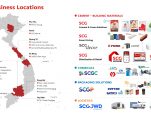
Mr. Kulachet Dharachandra, Country Director – Vietnam, SCG, stated: “Vietnam is a strategically important country for SCG, with total investments exceeding 7 billion US dollars across 28 companies, representing 28% of SCG’s total assets. This covers chemicals, cement, building materials, packaging, and logistics businesses to serve both domestic and export market demands, enhancing competitive capabilities and building comprehensive production and supply chain potential.
Under the Regional Optimization strategy, SCG combines the strengths of Thailand and Vietnam in digital technology, artificial intelligence and automation, safety standards, and plant management, as well as social, environmental, and governance practices following ESG principles. Vietnam is a high-growth potential market due to its economy, government infrastructure policies, and increasing Green Building trends. It also has consumers with purchasing power for high-quality products and a large consumer base of over 100 million people, plus export potential with efficient production costs, which strengthens sustainable business growth and elevates quality of life in the region.”
SCGD supports PRIME GROUP, Vietnam’s Number One Market Leader of Decor Surface
PRIME GROUP, the flagship business in which SCG acquired shares in 2012, is the market leader of decorative surface materials in Vietnam and will be a key force strengthening SCGD toward its goal of becoming ASEAN leader.
Mr. Numpol Malichai, The Chief Executive Officer and President of SCG Decor Public Company Limited, stated: “Vietnam’s economy is growing, the middle class is expanding, and the real estate market is recovering in mid-range to premium residential projects that favor Glazed Porcelain (GP) tiles, leading to continuously increasing demand for these products.
PRIME has sales revenue of approximately 5,500 million baht with total production capacity of around 80 million square meters. The company plans to invest in expanding GP tile production capacity from 19 million square meters in 2025 to 25.6 million square meters in 2026, targeting expansion to 45 million square meters by 2030 to align with increasing demand. PRIME can also manage and control production costs of GP tiles to be able to competitive with the products from world-class competitors. This cost advantage supports PRIME to become the strategic production and export base of SCGD, strengthening the Regional Optimization strategy for sustainable growth.
In response to market change and maintain competitive level, PRIME invested in Biomass Gasifier systems at the Pho Yen plant to replace fossil fuel with biomass, thereby reducing energy costs and greenhouse gases, supporting Vietnam to become the strategic export hub to ASEAN and other countries. Furthermore, PRIME’s products meet customers’ needs of all market segments with product offering that covers innovative design and health and safety functions that are well-recognized throughout the Asian region. This supports business growth along with environmental care enhancement. Additionally, SCGD grows bathroom business and strengthens COTTO brand in the ASEAN market with over 44 distributors appointed in Vietnam, as well as growing Complementary products such as adhesive and grout, and others.”
SCG Low-Carbon Cement Supports Vietnam’s Infrastructure and Green Cities, Advancing Its Role as a Global Export Hub
SCG Cement and Building Materials has operated in Vietnam for more than 20 years, with 11 companies across the cement, roofing, and building materials businesses. With production bases located in the central and southern regions, the company supports domestic market growth while also serving as a strategic manufacturing hub for exports to global markets.
Mr. Wichet Chuchaeu, Country Director – Vietnam, SCG Cement and Building Materials Business, stated: “Vietnam’s economy continued to expand in 2025, driven by growth in the industrial and construction sectors. Accelerated government infrastructure investment has supported a steady recovery in demand for building materials and cement—especially low-carbon cement, whose growth aligns with national policies such as the 2050 Net Zero Emission commitment and the Green City policy, which targets that by 2050 at least 50% of new urban areas and 10% of all cities nationwide must meet government-defined green city criteria.”
The cement business has an annual production capacity of 3 million tons of clinker and 4 million tons of cement. Vietnam is the best-managed production-cost base among SCG’s regional cement operations, positioning the country not only as a strong domestic supply base but also as a key hub for exports. SCG currently exports both low-carbon cement and clinker to America, Europe, Africa, Oceania, and Asia.
SCG Cement continues to enhance environmental performance through the use of alternative and recycled materials, reduced coal consumption via alternative fuels such as biomass and refuse-derived fuel (RDF), and the implementation of Waste Heat Recovery (WHR) systems that significantly reduce natural resources, lower energy consumption and reduce CO2 emission.
These initiatives have earned SCG recognition through international environmental standards, including Singapore Green Building Product certification and International Environmental Product Declaration (EPD) System certification—affirming sustainability from production through to finished products.
“Our investment strategy and production cost optimization under the Regional Optimization concept have strengthened SCG’s competitiveness. Vietnam is now positioned as a central hub for manufacturing and exporting quality products to global markets. This supports growing demand for high-quality surface materials and environmentally friendly building materials, contributing to green city development and sustainably enhancing the quality of life for people in Vietnam and the region.”, Mr. Kulachet concluded.
Hashtag: #SCGCement
The issuer is solely responsible for the content of this announcement.
As Web Summit Qatar approaches, we spoke with Marina Levina, CEO of WISH, an international communications agency, about several persistent myths around PR. “During this marathon season of startup and investor events from Web Summit and Slush to GITEX Global, we at WISH keep hearing the same assumptions about PR repeated over and over again. Many of them sound reasonable at first, but in practice, they hold […]
KUALA LUMPUR, MALAYSIA – Media OutReach Newswire – 24 December 2025 – As Malaysians gear up for multiple financial commitments in the upcoming weeks and months, especially during the year-end holidays, back-to-school and double festive season, AEON Bank (M) Berhad, Malaysia’s first digital Islamic bank, strengthens its commitment to financial inclusion by offering accessible support through its Personal Financing-i (PF-i).
From December 2025 till March 2026, the bustling seasons present convergence of multiple spending needs for many households. Acknowledging that this might raise the need for flexible liquidity, AEON Bank provides a solution to address such budgetary constraints in the form of the PF-i; an inclusive, hassle-free financing facility, easily accessible via its digital banking app.
Optimising a Risk-Based Pricing (RBP) framework to determine a competitive and personalised profit rate, AEON Bank ensures that customers can seamlessly apply for PF-i online, as long as they are Malaysian citizens aged 18 to 55, with a minimum monthly gross income of RM2,500 – be it salaried employees or self-employed individuals, freelancers, as well as gig economy workers.
Aligned with Shariah banking principles, PF-i offers financing facility from RM1,000 up to RM100,000 with flexible tenure options ranging from 3 to 84 months, allowing for repayments tailored to individual budget needs. The Flat Profit Rate starting from 3.88% p.a. and a nominal Wakalah Fee of RM1 is applicable upon acceptance.
The entire process, from the application to fund disbursement are all managed online via the AEON Bank app. This simplifies the process and eliminates the need for physical paperwork or branch visits. To apply for PF-i, customers simply need to follow these steps :
Download the AEON Bank app and activate the Savings Account-i, prior to applying for PF-i.
Step 2 : Eligibility check and employment details
Applicants must be Malaysian citizens aged 18 and above, earning a minimum monthly gross income of RM2,500 – either as salaried employees, self-employed or gig workers.
Step 3 : Financing selection
Select the preferred financing amount ranging from RM1,000 up to RM100,000 and flexible repayment tenure, with options between 3 to 84 months.
Step 4 : Supporting document submission
Upload the latest EPF (KWSP) statement, reflecting the latest consecutive 6-months contributions (for salaried workers) or latest consecutive 6-month bank statement (for self-employed/gig workers).
Step 5 : Approval and fund disbursement
Applications will be processed immediately and upon approval, funds will be disbursed directly into the applicant’s AEON Bank Savings Account-i. Repayments will be automatically deducted via monthly auto-debit.
PF-i enables Malaysians to access a Shariah compliant financing facility to ease their needs; be it an emergency financial support, family budget constraint, small renovation, vehicle repair or a much needed financial aid to bridge the temporary cashflow gaps.
The issuer is solely responsible for the content of this announcement.
AEON Bank (M) Berhad
AEON Bank (M) Berhad is the first digital Islamic bank in Malaysia, licensed and regulated by Bank Negara Malaysia and the Ministry of Finance. Officially launched on 26 May 2024, we currently offer a suite of Shariah-compliant products and services under the Personal Banking and Business Banking (AEON Bank Biz).
Our Personal Banking offerings are 100% accessible via the AEON Bank app, namely the deposit Savings Account-i, AEON Bank x Visa Debit Card-i, Personal Financing-i, Term Deposit-i, Savings Pots, DuitNow QR, utility bill payments, personal financial management and budgeting tools with Neko Sensei, and a range of digital payment services with strategic partners and merchants, as well as Neko Missions, Malaysia’s first gamified digital banking interactive rewards programme.
On 8 August 2025, AEON Bank (M) Berhad officially launched AEON Bank Biz, anchored by the Current Business Account-i and integrated cash management capabilities, with the initial onboarding of vendors from AEON Credit Service (M) Berhad and suppliers within the broader AEON ecosystem. The targeted approach is designed to create an integrated value chain linking AEON’s retail and financial services networks, supporting strategic growth and greater inclusivity. AEON Bank Biz offers streamlined processes for account onboarding, credit assessments and financial services, utilising AI-driven fintech solutions to enable simplified procedures, faster approvals, and an enhanced digital banking experience for business owners and entrepreneurs. AEON Bank Biz’s products and services will soon be extended to more local businesses and entrepreneurs across Malaysia.
Being part of the AEON Group conglomerate, AEON Bank (M) Berhad is equally held by AEON Financial Service Co. Ltd. (AFS Japan) and AEON Credit Service (M) Berhad (ACSM). AFS Japan is responsible for the AEON Group’s financial services businesses, with strong roots in the retail sector which operates in Japan and 10 countries across Asia and it is. AEON Group is Japan’s largest retail group and it is a pure holding company that comprises eight core businesses.
AEON Group Malaysia consists of several entities, namely, AEON Co. (M) Bhd, AEON Credit Service (M) Berhad, AEON Bank (M) Berhad, AEON BiG (M) Sdn Bhd, AEON Fantasy (M) Sdn Bhd, AEON Delight (M) Sdn Bhd, AEON Global Supply Chain Sdn Bhd and Malaysian AEON Foundation (MAF). AEON Group has been a recognizable household brand with more than 200 years of history and evolution in Japan since the Edo era, along with 4 decades of growth in Malaysia, providing consumers with daily financial solutions and diversified retail convenience.
Our cloud native agility and AI optimisation, combined with the strength of our Shariah DNA, Malaysian roots and Japanese heritage are our distinguishing factors, while the integration with the AEON ecosystem gives us a competitive advantage of being the only bank in Malaysia with its own nationwide retail network. On top of that, AEON Points loyalty programme offers customers value-added benefits and meaningful rewards, as the AEON Points can be redeemed into cash value, deposited directly into customers’ AEON Bank Savings Account-i.
AEON Bank (M) Berhad is committed to provide accessible financial solutions for Malaysians and we aim to empower the community in pursuing their financial aspirations and achieve economic independence, hence fostering a more inclusive financial future for all. We will continue to contribute towards the Islamic banking development in the region and the nation’s digital economy.
By K Raveendran As 2026 approaches, the global oil market is heading into a year that could decisively reshape price dynamics, fiscal planning in producing states, and energy security calculations for importing economies. The defining feature of the coming year is not demand destruction or geopolitical shock, but the growing weight of surplus supply. Market […]
Arabian Post Staff -Dubai Qatar Investment Authority has joined a consortium of global investors backing a move to take Janus Henderson Group private, marking one of the largest asset-management buyouts announced this year and underlining sovereign interest in long-term financial services platforms. The all-cash transaction values the New York-listed firm at about USD 7.4 billion and is being led by Trian Fund Management alongside General Catalyst. Qatar’s […]
By Umesh Sangaralingam The influx of private capital into Middle East markets is securing the region’s place as an evolving global investment hub. With sovereign wealth funds, institutional investors, family offices, and fund managers all increasing allocations, capital commitments are increasing at scale—but it’s not an equal field of opportunity for private investment firms in the region. Capital isn’t the sole defining factor that’s separating private […]
The food-surplus app returned more than HKD 20 million to partner businesses while making meals more affordable for consumers
HONG KONG SAR – Media OutReach Newswire – 23 December 2025 – As Southeast Asia grapples with growing food waste and rising living costs, Yindii, Asia’s number 1 food‑surplus marketplace, celebrates a year of remarkable growth and impact. Co-founded in 2020 by Louis‑Alban Batard‑Dupré and Mahima Rajangam Natarajan, Yindii connects restaurants, bakeries, grocers and hotels with diners who collect “Surprise Bags” of unsold food at 50-80% off the usual price. By turning what would otherwise become waste into affordable meals, Yindii offers a simple, scalable solution that benefits consumers, businesses and the environment.
One meal rescued every minute. In 2025, the Yindii community saved over 500,000 meals across the region, helped Hong Kong users save more than HK$10 million, and kept surplus food out of landfills.
In 2025 alone, the Yindii community across the region saved over half a million meals from going to waste. That is roughly one meal rescued every single minute, equivalent to offsetting over 1,375 tonnes of CO₂. To put this into perspective, that saving is comparable to driving an average petrol-powered car for about 6.9 million miles, or around 277 trips around the world. It is also on par with the emissions from burning around 154,000 gallons of petrol, or roughly 575 one-way passenger flights from Paris to New York.
Elaborating on the ethos that drives Yindii’s growth, Co‑Founder and Chief Marketing Officer, Mahima Rajangam Natarajan, shared, “Every meal rescued is a step toward making high-quality food accessible and affordable for everyone. We’re proving that sustainability and affordability can go hand in hand with social equity. What excites us most is seeing families, students and office workers discover new neighbourhood favourites while knowing they are doing something tangible to help the planet. We are also watching our partners turn what used to be an end-of-day loss into a new source of loyalty, revenue and pride for their teams. Thousands of F&B brands are now transforming surplus into a meaningful new revenue stream, with more than US$2.5 million (HKD 19.45 million) flowing back into their businesses instead of into the bin.”
Across the region, the numbers tell an even richer story at the market level. In Hong Kong, diners using Yindii rescued over 250,000 meals in 2025. Flagship partners such as Saint Honore Cake Shop, Circle K and Pret A Manger have turned surplus into real value, with Saint Honore alone saving over 75,000 meals or 187 tonnes of CO₂. Other partners, including Rosewood Hong Kong, Little Mermaid, NOC Coffee Co and Pacific Coffee, all managed to clear an impressive 85-95% of their surplus on the app. In Hong Kong, Yindii has more than tripled in size since last year and reached profitability, strengthening partner confidence in a model especially popular with women, who make up around two-thirds of users.
In Singapore, diners using Yindii rescued over 300,000 meals in 2025. Since launching in 2024, the app has helped partners achieve a nationwide saved ratio of around 75%. Popular brands such as Paul, Baker & Cook and SaladStop, alongside hotel buffets and neighbourhood grocers, are using “Surprise Bags” to move premium food at accessible prices while cutting waste. Altogether, Singapore partners have already recovered more than SGD1.5 million in avoided food losses, underscoring Yindii’s role in helping diners stretch their budgets while giving the F&B industry a powerful new way to protect profitability.
“Looking ahead to 2026, we are focused on building on this momentum by bringing Yindii to more cities, including South Korea, and deepening our partnerships where we are already present. Our goal is to make it easier for people to save great food rather than see it go to waste, and for businesses to treat surplus as an opportunity rather than a loss. At the heart of all this, our mission goes far beyond transactions. It is about building a community where strangers become food heroes and where food that once represented loss becomes a source of joy and connection. We have seen that spirit take root in Thailand, Hong Kong and Singapore, and we cannot wait to grow new communities of local food heroes in the years ahead,” Mahima concluded.
Throughout the year, Yindii’s success also earned recognition beyond the dining table. In October, it was named a finalist in the Spirit of Hong Kong Awards for its creative approach to tackling food waste. During Impact Week at ONE in Singapore, the company hosted the Yindii Eco‑Brand Awards 2025, celebrating 25 leading brands and media partners. Guest of Honour Poh Li San, Chair of Singapore’s Parliamentary Environment Committee, highlighted that Singapore wastes 800,000 tonnes of food annually and noted that fighting waste is essential not just for the planet but for national food security.
Since launching in 2020, Yindii has registered more than 700,000 food heroes, rescued over 900,000 meals and prevented more than 2,250 tonnes of carbon dioxide emissions. For more information, visit www.yindii.co or follow Yindii on Instagram, Facebook, and LinkedIn. Hashtag: #Yindii #SaveFoodWithYindii #YindiiHK
The issuer is solely responsible for the content of this announcement.
About Yindii
Yindii is Asia’s #1 sustainable food app, connecting people with surplus meals from restaurants, bakeries, grocers, and hotels at a fraction of the price. Operating in Singapore, Hong Kong, Thailand and South Korea, Yindii empowers communities to rescue food, save money, and fight climate change — one meal at a time.
Japan has taken a decisive step towards restarting the Kashiwazaki-Kariwa nuclear power station, the largest such facility in the world by capacity, marking a pivotal moment in the country’s post-Fukushima energy policy. The move follows regulatory clearance and political backing after more than a decade of safety reviews, legal scrutiny and local opposition stemming from the 2011 nuclear disaster. The plant, located in Niigata prefecture on the […]
Boeing has appointed Omar Arekat as vice-president for the Middle East, Gulf and North Africa, a senior leadership move that places a long-serving regional executive at the helm of one of the company’s most strategically important markets. The appointment comes as aircraft demand across the region continues to be shaped by fleet expansion, widebody replacement cycles and sustained defence procurement.
Arekat, who will be based in Dubai, takes charge of Boeing’s commercial and defence engagement across a region where the aerospace group employs more than 700 people and supports over 30 commercial airline customers alongside 12 armed forces. His remit covers government relations, industrial partnerships, customer support and business strategy across markets ranging from the Gulf to North Africa.
The leadership change underscores Boeing’s intention to maintain continuity in a region that has long been central to its widebody sales, particularly for long-haul aircraft. Airlines in the Gulf operate some of the world’s largest fleets of twin-aisle jets, while carriers in North Africa are increasingly modernising fleets to support tourism recovery and regional connectivity. Defence ties, including fighter aircraft, rotorcraft, training systems and sustainment contracts, also form a significant pillar of Boeing’s regional presence.
Arekat is widely regarded within the industry as a seasoned regional hand. Before taking on the vice-presidential role, he held senior commercial positions within Boeing’s Middle East operations, working closely with airline leadership teams, civil aviation authorities and defence ministries. His career has been closely tied to the region’s aviation growth story, particularly the expansion of hub-based carriers and the emergence of maintenance, repair and overhaul ecosystems in the Gulf.
Boeing’s Middle East footprint extends beyond sales offices. The company has invested heavily in training, engineering and supply-chain partnerships, working with local firms on aerostructures, composites and advanced manufacturing. These initiatives are often framed as part of national industrial diversification strategies pursued by several Gulf states, where aerospace has been identified as a priority sector.
The appointment takes place against a complex commercial backdrop for Boeing globally. The manufacturer continues to navigate production stabilisation, regulatory scrutiny and supply-chain constraints, particularly in its narrowbody programmes. While these issues have been most visible in North America, their implications are closely watched by Middle East carriers, many of which have large order backlogs and tightly planned delivery schedules.
Industry analysts note that leadership continuity and strong regional relationships are especially important for Boeing in this market. Gulf airlines tend to place large, long-term orders, often timed around major fleet renewals or network expansion phases. Any disruption to deliveries can have cascading effects on capacity planning, route launches and leasing strategies, making senior-level engagement critical.
Defence remains another key dimension of Boeing’s regional strategy. Several armed forces across the Middle East and North Africa operate Boeing platforms, including fighter aircraft, transport planes, helicopters and surveillance systems. The company’s regional leadership is typically involved in government-to-government frameworks, offset arrangements and long-term sustainment planning, areas that require deep familiarity with local regulatory and security environments.
Arekat’s appointment also reflects a broader trend among global aerospace firms to elevate executives with strong regional expertise rather than rotating leadership from headquarters. This approach is seen as a way to navigate increasingly complex geopolitical, regulatory and industrial landscapes, particularly in regions where aviation policy, defence procurement and industrial strategy are closely intertwined.
Boeing has indicated that the Middle East and North Africa will remain a growth priority over the coming decade, driven by air traffic growth above the global average and continued investment in defence modernisation. The company’s market outlooks have consistently pointed to strong demand for both single-aisle aircraft, supporting intra-regional travel, and widebodies for long-haul connectivity linking the region to Asia, Europe and the Americas.
By Nantoo Banerjee US President Donald Trump may have problems with Russia, Venezuela and a host of other states and has every right to decide on the US trade and diplomatic policies to deal with those countries. But he has no right to thrust upon other free nations his likes, dislikes and prejudices. Unfortunately, he […]
Matein Khalid The Indian equity markets have experienced one of Asia’s most frenetic IPO bonanzas in 2024-25 even if no less than 50% of all new flotations are now trading below their offer price. Despite the decline of the Indian rupee’s new low against the dollar beyond 91 and Dalal Street’s underperformance relative to my fave emerging markets Argentina, Poland and Brazil in 2025, the macro omens […]
Google has committed USD 8 million to support a network of artificial intelligence Centres of Excellence in India, signalling a deeper push into applied AI for public services, health care and local-language technologies while tying the investment to a parallel clean-energy partnership aimed at powering digital infrastructure sustainably.
The funding, announced by Google, is designed to accelerate research, product development and deployment across priority areas that include healthcare delivery, Indic language models and urban governance tools. The company said the centres will work with academic institutions, startups and public-sector bodies to translate laboratory advances into systems that can be deployed at scale, reflecting a broader shift among global technology firms towards mission-oriented AI programmes.
The allocation targets three primary domains. In healthcare, the centres are expected to focus on AI-assisted diagnostics, disease surveillance and workflow automation to reduce administrative burdens on clinicians. Google has previously tested AI models for medical imaging and population health analytics, and the new funding is intended to localise such tools for regional health systems, with attention to data privacy and clinical validation. Researchers involved in early-stage planning say the emphasis will be on interoperable platforms rather than standalone pilots, a response to criticism that many AI health projects fail to move beyond proof of concept.
Language technology forms the second pillar of the initiative. India’s linguistic diversity has long posed challenges for digital inclusion, and the centres are tasked with advancing large language models and speech systems that perform reliably across Indic languages and dialects. Google has already released open datasets and models for low-resource languages; the new programme seeks to improve accuracy, reduce bias and expand access for education, e-governance and small businesses. Industry observers note that competition in multilingual AI has intensified as regional startups and global rivals race to build models that can handle code-switching and local context.
Urban governance rounds out the focus areas, with planned projects covering traffic management, air-quality monitoring and municipal service delivery. Smart-city programmes have generated mixed results over the past decade, often constrained by fragmented data and procurement hurdles. By situating research within Centres of Excellence, Google aims to create replicable frameworks that cities can adapt, rather than bespoke systems tied to individual vendors.
Beyond the AI investment, Google has paired the announcement with a new solar partnership intended to support the energy needs of data centres and AI workloads. The company has pledged to match growth in computing capacity with clean-energy procurement, aligning with its global goal to operate on carbon-free energy around the clock. Analysts say the coupling of AI funding with renewable energy reflects mounting scrutiny of the environmental costs of large-scale computing, particularly as generative AI drives higher power demand.
The USD 8 million commitment is modest compared with Google’s global AI spend, yet its targeted design has drawn attention from policymakers and researchers. Government officials involved in discussions around the Centres of Excellence say the model allows for shared governance, with academic rigour balanced against industry deployment expertise. The approach also aligns with national ambitions to position the country as a hub for responsible AI development, emphasising safety, transparency and societal benefit.
Competition among technology firms has sharpened as Microsoft, Amazon and others expand partnerships with universities and public agencies across the Global South. In this context, Google’s move is seen as both a strategic investment and a reputational play, aimed at demonstrating that advanced AI can address public-interest challenges rather than solely commercial applications. Startups working in health tech and language processing expect spillover benefits through access to datasets, compute resources and mentorship.






 https://www.apicalgroup.com






 https://www.linkedin.com/company/aeonbankmy/?viewAsMember=true
 https://x.com/aeonbankmy
 https://www.facebook.com/aeonbankmalaysia
 https://www.instagram.com/aeonbankmy


 By K Raveendran As 2026 approaches, the global oil market is heading into a year that could decisively reshape price dynamics, fiscal planning in producing states, and energy security calculations for importing economies. The defining feature of the coming year is not demand destruction or geopolitical shock, but the growing weight of surplus supply. Market […]