Just in:
Meraas showcases five residential zones at Dubai Design Week // Private varsities bill all set to face the axe // CR Longdation Aethereal Cybersecurity × Global Cybersecurity Alliance (GCSA) Join Hands to Establish the “AI and Cybersecurity Research Centre” // Hong Kong mandates crypto transaction disclosures to tax authorities // Oil advances towards $100 as tanker attacks persist // Dubai boat show confirms international shipyard line-up for November // The “1st Greater Bay Area Health and Longevity Summit & Awards Ceremony” concludes successfully in Macao // Kochi police detain two actors over bid to honey trap doctor // Emaar approves Development buyout ahead of planned delisting // Miss Universe Hong Kong Jen Zhou Departs for Puerto Rico to Compete in the 75th Miss Universe World Final // Ousted top Kochi cop gets IG post // TVM –Mangaluru Vande Bharat claims top spot // Xi Jinping Preparing For A Trilateral Summit With Trump And Putin At APEC Summit On Nov 18-19 // UK air traffic outage inflicted £33m financial losses // APT29-linked campaign exploits outdated Apple and Android software // OpenAI introduces GPT-6 Cyber with restricted security access // Geely’s i-HEV Intelligent Hybrid Technology Offers a New Direction Vision for Gasoline-Powered Vehicles // Dubai details five-year visa benefits for returning visitors // Geely’s i-HEV Intelligent Hybrid Technology Offers a New Direction for Gasoline-Powered Vehicles // OpenAI identifies 948 Linux privilege escalation flaws using AI //

News related to
global

Etihad Airways will discontinue its codeshare agreement with Virgin Australia in June 2025, impacting travelers who have relied on the convenience of booking flights with Virgin Australia through Etihad’s channels. The decision ends an almost decade-long partnership between the two airlines, which began in 2011 and allowed passengers to seamlessly book flights between the Middle East and Australia via Etihad’s extensive global network.

Under the terms of this codeshare agreement, travelers could book flights operated by Virgin Australia using Etihad’s booking system, giving them more options for connecting flights from Abu Dhabi to various destinations in Australia. However, starting June 2025, this will no longer be possible, forcing passengers to explore alternative booking channels.

The shift follows Virgin Australia’s changing strategy and its increasing focus on its own alliances. The airline has also forged new partnerships with other international carriers, such as Qatar Airways, which has made moves to strengthen its own position in the Australian market. This will provide Virgin Australia with more flexibility to offer direct connections to different global markets, without relying on a codeshare arrangement.

Etihad has stated that the end of this agreement is part of a broader strategy to streamline its network and partnerships. The airline has refocused its efforts on enhancing its offerings with other key airline alliances, such as the “three major alliances”, including the Oneworld, SkyTeam, and Star Alliance groups. This reorientation reflects a global trend where airlines are reassessing codeshare partnerships to bolster stronger joint ventures that can bring higher revenue-sharing models and offer more coordinated schedulesare agreements, which allow airlines to sell tickets for each other’s flights, often come under scrutiny when airlines look to sharpen their competitive edge. They are generally seen as a stepping stone to closer partnerships or joint ventures, with some airlines choosing to transition into joint ventures as they become more closely aligned. For example, partnerships such as the one between American Airlines and British Airways have led to more coordinated pricing and shared services, while also increasing flexibility for passengers【8†sourceve by Etihad could signal a more competitive landscape for both Virgin Australia and Etihad, particularly in terms of their strategies for connecting long-haul travelers to destinations across the Middle East, Asia, and Australia. As part of this, both airlines may also adjust their pricing models in the coming years to adapt to the new dynamics of their respective international networks.

SHENZHEN, CHINA – Media OutReach Newswire – 18 November 2024 – On November 6, 2024, the Establishment Agreement of the International Mangrove Center was officially signed in Shenzhen, Guangdong. Representatives from the first batch of 18 member countries jointly signed the agreement and unveiled the International Mangrove Center. China will use this platform to deepen communication and cooperation with all members, promote global joint actions for mangrove […]

The United Nations General Assembly has overwhelmingly voted in favor of a resolution recognizing the right of the Palestinian people to self-determination, paving the way for the establishment of an independent Palestinian state. A total of 170 countries supported the resolution, signaling strong international backing for the Palestinian cause, while six nations, including Israel and the United States, voted against it. Nine others abstained from the vote, […]

TAIPEI, TAIWAN – Media OutReach Newswire – 18 November 2024 – Arla Foods Ingredients is moving forward with its acquisition of Volac’s Whey Nutrition business, after it was approved by the UK’s Competition and Markets Authority. The regulator’s go-ahead followed an agreement between the two companies, which was signed in April 2024. Arla Foods Ingredients The business is built around a processing facility at Felinfach in Wales, […]

By Nantoo Banerjee from Manila The US-backed new Philippine Maritime Zones Act and Archipelagic Sea Lanes Act clearly defining the extent and boundaries of the country’s maritime zones and nullifying China’s sweeping claims in the South China Sea promises to raise fresh tensions in the region threatening to affect the estimated global maritime trade of […]

A groundbreaking partnership between DP World and Schneider Electric aims to elevate the skillsets of Emirati youth, with a focus on sustainability and advanced technical expertise. The collaboration aligns with the UAE’s strategic objectives to develop a knowledge-based economy and empower its young professionals to thrive in globally competitive industries.

DP World, a key player in logistics and trade facilitation, signed a Memorandum of Understanding with Schneider Electric, a global leader in energy management and automation. This agreement is set to integrate cutting-edge training programs within DP World’s existing initiatives to promote technical proficiency and environmental stewardship among Emirati graduates.

The partnership’s cornerstone is the integration of Schneider Electric’s advanced training methodologies with DP World’s “Tumoohi” initiative. The Tumoohi program provides practical exposure to young Emirati professionals, offering placements in dynamic sectors such as energy, automation, and digital transformation. Participants will work directly with industry veterans, gaining experience in critical domains like energy efficiency and sustainable practices.

This alliance also includes workshops, mentorships, and on-the-job training, with a particular emphasis on developing skills in emerging fields such as AI-driven energy solutions and renewable energy management. By embedding sustainability within the technical training modules, the program seeks to prepare participants for roles that address the global demand for sustainable solutions while contributing to the UAE’s ambitious green goals.

DP World’s leadership highlighted this collaboration as a significant step toward cultivating a skilled and forward-thinking workforce. The company’s representatives underscored the importance of empowering young Emiratis with tools to lead innovative projects that shape the UAE’s economic future.

Quantoz Payments, a fintech company headquartered in the Netherlands, is set to launch two regulated stablecoins, EURQ and USDQ, with backing from prominent industry players Tether, Kraken, and Fabric Ventures. The tokens, which will be pegged to the euro and U.S. dollar respectively, are designed to comply with the European Union’s Markets in Crypto-Assets Regulation (MiCA), a framework aimed at standardizing digital asset oversight across the bloc.

Scheduled for release on November 18, these electronic money tokens (EMTs) are licensed by the Dutch Central Bank, marking a significant milestone in the evolution of stablecoin infrastructure within Europe. Unlike traditional cryptocurrencies, EMTs offer the added assurance of being fully backed by reserves held in secured accounts. These accounts are audited and managed under strict regulatory oversight, ensuring a level of transparency that aligns with MiCA’s rigorous standards.

CEO Nick Haasnoot of Quantoz Payments emphasized the transformative potential of this launch, noting that the tokens aim to merge the efficiencies of blockchain technology with robust financial safeguards. The company, which operates as a licensed electronic money institution, has structured the EMTs to enable seamless integration into a variety of payment systems, including those powering machine-to-machine transactions and IoT networks. This design aligns with MiCA’s objectives to foster innovation while mitigating risks within the rapidly expanding crypto ecosystem.

Both tokens are tailored to cater to businesses and individuals within the European Economic Area. This geographical focus not only aligns with MiCA but also positions the EMTs as a cornerstone for emerging financial applications, from microtransactions to Web3-enabled economies. Industry insiders have lauded Quantoz for its proactive engagement with regulators and its commitment to setting a high compliance standard in the issuance of blockchain-based financial instruments.

Advertisements

Pony AI, the autonomous vehicle technology company backed by Saudi Arabia’s Public Investment Fund (PIF), is aiming for a valuation of $4.5 billion in its upcoming initial public offering (IPO) in the United States. This target marks a significant reduction from the company’s peak valuation of $8.5 billion in 2022, highlighting the challenges the self-driving vehicle industry faces amid broader market volatility and investor caution. The company’s […]

The Russian Ministry of Finance has introduced new tax policies for digital currencies, signaling a shift toward a more regulated and structured financial ecosystem. Key elements of this overhaul include exemptions from Value Added Tax (VAT) on digital currency transactions and modifications to income tax structures for digital currency earnings. These changes are expected to affect a wide array of individuals and businesses engaged in the cryptocurrency sector, both within Russia and internationally.

The newly announced tax regime establishes that transactions involving digital currencies, such as Bitcoin and Ethereum, will no longer be subject to VAT. This exemption aligns digital currencies with other financial assets like securities, simplifying the tax process for traders, investors, and institutions engaging in crypto operations. For the cryptocurrency sector, this marks a significant regulatory shift aimed at promoting transparency and growth.

Along with VAT exemption, the Ministry of Finance has outlined a framework for taxing income generated from digital currency operations. Income derived from cryptocurrencies will be taxed similarly to income from securities transactions. Under this new tax structure, individuals will be taxed on their cryptocurrency earnings at a Personal Income Tax (PIT) rate capped at 15%. This represents a favorable move for Russian crypto investors, particularly when compared to global norms, where many countries impose significantly higher tax rates on digital assets.

However, there are notable differences for foreign investors or non-residents. For non-residents of Russia, the tax rate is considerably higher at 30%. The definition of a tax resident remains unchanged, with individuals who spend at least 183 days within a 12-month period in Russia qualifying as tax residents. This distinction is expected to have a direct impact on non-resident cryptocurrency traders and investors operating in or with Russian entities, as it could increase the tax burden for foreign entities in the Russian digital economy.

The financial authorities in Russia have emphasized that this overhaul is part of a broader initiative to bring greater clarity and regulation to the growing cryptocurrency market. The Russian government has expressed its intention to enhance the country’s appeal as a destination for crypto-related business and investment. This includes efforts to attract global crypto businesses and individual investors who may have been hesitant due to regulatory uncertainty.

Experts suggest that the VAT exemption is a positive step for the industry, particularly for businesses that are involved in digital asset trading, mining, or related services. Without VAT on transactions, the tax landscape becomes more predictable and streamlined, allowing businesses to focus on expansion rather than complex compliance measures. For individual investors, the introduction of a 15% PIT rate is seen as a relatively low barrier for cryptocurrency returns, which could make Russia a more attractive market for crypto investors, especially those from countries with higher tax rates.

However, the tax rate for non-residents has sparked mixed reactions. While the 30% rate may reflect Russia’s stance on limiting tax evasion and ensuring a fair contribution from foreign entities, it could also dissuade international players from fully engaging with the Russian crypto market. Non-resident traders and firms may reconsider their involvement in the country, particularly if the tax burden proves to be prohibitive compared to other jurisdictions with more favorable tax treatments for international investors.

This tax policy change comes at a time when global cryptocurrency regulation is undergoing significant shifts. Many countries are grappling with how to integrate digital currencies into their financial systems while addressing concerns about financial stability, taxation, and fraud. Russia’s tax changes signal a more definitive stance, potentially positioning the country as a major player in the evolving global cryptocurrency landscape.

The Ministry of Finance has also indicated that the changes will not just affect taxation but will likely be part of a broader set of measures aimed at establishing a clear legal framework for digital currencies. There are reports that Russia may soon introduce additional regulatory measures for cryptocurrency exchanges, initial coin offerings (ICOs), and other digital currency-related activities, aligning these entities with traditional financial regulations.

While these developments are a significant step forward, they also raise questions about the long-term impact of such changes on Russia’s digital currency ecosystem. Some industry observers suggest that while these tax incentives could attract crypto investors, they may not be sufficient to build a robust, innovative crypto ecosystem. The success of this tax overhaul will depend on Russia’s ability to integrate it with broader financial infrastructure reforms, ensuring that the country’s digital currency sector remains competitive on the global stage.

Air travel demand is steadily recovering, as evidenced by the latest traffic reports from the International Air Transport Association (IATA). Despite global economic uncertainties, IATA’s January 2024 statistics indicate that passenger demand continued to grow, signaling robust recovery in the aviation sector.

Global passenger traffic surged by 40% year-on-year in January 2024, compared to the same month in 2023. This was primarily driven by increased international travel, especially in the Asia-Pacific region, where long-haul flights experienced a significant uptick. The strong rebound is also attributed to consumers’ willingness to travel, driven by pent-up demand following the pandemic.

As nations lifted COVID-related restrictions over the past year, airlines began ramping up their services to meet the growing demand. A report from IATA shows that international traffic has exceeded pre-pandemic levels, a milestone that was expected but achieved sooner than anticipated. The domestic travel sector also saw impressive results, with traffic in major markets such as the U.S., China, and India continuing to grow steadily.

IATA’s Director General, Willie Walsh, highlighted that this growth trend is consistent with the association’s forecast, which predicted a return to near-full recovery in 2024. Walsh pointed out that while inflation and high fuel prices are still challenges for the industry, the demand for travel is resilient enough to offset these pressures, marking a strong recovery trajectory.

One of the key drivers of this rebound is the resurgence in business travel, which had initially lagged in the wake of the pandemic. With many companies now adopting hybrid work models, corporate travel has rebounded sharply, especially to destinations in Europe and North America. Walsh indicated that while some business travel remains subdued, demand for international meetings, conventions, and events continues to rise, further stimulating air travel.

China, in particular, has been a standout performer, with the lifting of strict travel restrictions boosting both international and domestic flights. According to IATA, China’s air traffic levels have surpassed 2019 figures, supported by increased demand from tourists and business travelers alike. As China regains its position as a dominant player in global aviation, the country’s airlines have seen their flight frequencies and routes expand significantly.

In Europe, the trend has also been positive, with the European Union and the U.K. reporting a consistent recovery in flight bookings. Particularly notable is the increase in travel from European countries to Asia-Pacific, with long-haul flights seeing particularly strong performance. Both business and leisure travelers are driving demand, underscoring how global tourism is once again a major contributor to economic recovery.

Another important factor contributing to the ongoing recovery is the ability of airlines to adapt to new market conditions. Airlines have modernized their fleets and implemented new service offerings, such as flexible booking options, which have enhanced customer confidence. These changes have been pivotal in retaining and attracting travelers who may have been hesitant to fly just a few years ago.

However, IATA’s reports also note that the aviation industry faces several challenges moving forward. While air travel demand is recovering, issues such as rising fuel costs, inflationary pressures, and labor shortages remain. In addition, environmental sustainability concerns continue to be at the forefront of the industry, with many airlines setting ambitious carbon neutrality targets for the coming decades.

Despite these obstacles, Walsh remains optimistic. He emphasized the importance of policy support and investment in infrastructure to ensure that the industry continues to grow at a sustainable pace. Governments have been encouraged to continue their support for the aviation sector, recognizing it as a critical part of the global economy. Walsh also underlined the necessity for a coordinated approach to address sustainability goals, which will require the cooperation of airlines, manufacturers, and governments.

In terms of passenger sentiment, there is clear evidence that travelers are returning to the skies in full force. According to surveys conducted by IATA, over 70% of passengers reported feeling confident about flying, citing the enhanced safety and hygiene measures implemented by airlines in response to the pandemic. Moreover, travelers are increasingly prioritizing travel experiences, such as unique leisure and business trips, further driving the demand for air services.

The global economic outlook for emerging markets (EMs) faces mounting pressure, with US trade policies under former President Donald Trump continuing to disrupt trade and growth patterns. Citigroup analysts predict that these shifts, primarily driven by tariffs and protectionist measures, will exacerbate the challenges that EMs already grapple with, such as inflation, currency instability, and volatile capital flows. However, one country in the Middle East stands resilient: Saudi Arabia. The kingdom’s economic diversification efforts and strategic positioning in global markets have placed it in a favorable position despite ongoing global economic turbulence.

Trump’s trade war, initiated during his presidency, was centered on tariffs and trade barriers, primarily targeting China, but with ripple effects felt across various sectors and regions. As the Biden administration seeks to reverse some of these policies, analysts remain concerned about the long-term effects of trade disruptions that began during the previous administration. Trade relationships between the US and major economies have been restructured, pushing supply chains into new configurations and altering global market dynamics.

Citigroup’s latest forecast outlines how these global shifts impact emerging markets in particular, given their high exposure to US tariffs and trade restrictions. Countries in Asia, Latin America, and Africa are expected to see a slow recovery, as protectionist policies strain international trade and hinder foreign direct investment (FDI) inflows. For these nations, the US-China trade tensions have underscored their vulnerability to global supply chain disruptions. Export-dependent countries, particularly in the manufacturing and agriculture sectors, may face reduced market access to some of their largest trading partners, further hindering growth prospects.

Yet, some countries are managing to navigate these headwinds with relative ease. Saudi Arabia, buoyed by its ongoing economic reforms under the Vision 2030 initiative, appears to be one of the more resilient players in the face of these global shifts. The kingdom has significantly reduced its reliance on oil exports by developing non-oil sectors such as tourism, entertainment, and technology. Moreover, its vast sovereign wealth fund, the Public Investment Fund (PIF), has strategically invested in sectors poised for growth, such as green energy, healthcare, and artificial intelligence.

Saudi Arabia’s successful diversification strategies have positioned it to weather the storm of changing global trade conditions. Citigroup’s analysis highlights that while the US’s trade policies could dampen global economic growth, Saudi Arabia’s economic stability remains largely intact. The kingdom’s ability to maintain steady oil revenues, coupled with its ambitious reform agenda, has placed it at the forefront of efforts to build a more diversified, future-proof economy. Additionally, Saudi Arabia’s participation in major international investment initiatives, such as the Belt and Road Initiative and the G20 summit, further solidifies its standing as a key global economic player.

While many emerging markets struggle with inflationary pressures and a rising cost of living, Saudi Arabia has implemented strategic fiscal policies that keep inflation levels manageable. The country’s introduction of VAT and other tax reforms have helped bolster its financial resilience. Furthermore, the government’s commitment to large-scale infrastructure projects, such as NEOM, a futuristic city being built with cutting-edge technology, signals a strong push toward positioning the kingdom as a global hub for innovation.

However, despite these favorable conditions in Saudi Arabia, Citigroup warns that other emerging markets are not as fortunate. Nations heavily dependent on exports to the US and China, such as Mexico, Brazil, and South Africa, face significant challenges as they cope with reduced demand and trade restrictions. For these countries, the combination of trade disputes, inflationary pressures, and weaker currency values is likely to hamper economic growth in the short to medium term. Analysts also point out that the global interest rate hikes prompted by the Federal Reserve’s tightening policy may further strain emerging market economies, particularly those with substantial debt burdens.

For some countries, the trade environment under Trump’s policies has created structural weaknesses that continue to hinder growth. The slowdown in global demand for goods and services, coupled with rising costs for raw materials and energy, has impacted countries dependent on commodity exports. As a result, the broader emerging markets community is facing an uncertain recovery trajectory, with little optimism for a swift rebound.

Saudi Arabia’s resilience, however, is noteworthy in this context. The kingdom’s emphasis on economic diversification has shielded it from some of the more detrimental effects of global trade disruptions. This shift towards a more diversified economy has not only safeguarded the country’s economic standing but has also attracted international investors, further securing its position as a pivotal player in the global marketplace.

The Al Ain Book Festival 2024 launched this week, bringing together literary enthusiasts, authors, publishers, and cultural figures from around the world. Held at the Al Ain Convention Centre, the event promises a series of engaging discussions, workshops, and book exhibitions aimed at promoting reading and encouraging creative exchanges in the literary world.

The festival, now in its 12th edition, is a cornerstone of the UAE’s rich cultural landscape, reflecting its commitment to supporting the arts and literature. It draws attention to a growing national interest in fostering a literary environment that aligns with the country’s Vision 2030 initiatives. The UAE has long championed the promotion of knowledge and culture, making the Al Ain Book Festival a significant event for intellectuals and cultural figures across the Middle East and beyond.

A variety of activities is set to unfold throughout the festival, including book signings, panel discussions, and performances by local and international authors. Organizers have emphasized the importance of creating an inclusive space for both seasoned authors and newcomers to share their perspectives on current global trends in literature and storytelling. Among the festival’s primary objectives is to foster a deeper connection between local audiences and global literary movements.

As a growing international platform, the Al Ain Book Festival also showcases the UAE’s role as a bridge between Eastern and Western literary traditions. The festival’s theme this year centers on “Innovating Tradition,” reflecting the evolving nature of literature in a rapidly changing world. This theme resonates with the ongoing cultural shift seen in various media and publishing channels, including the rise of digital publishing, podcasts, and multimedia storytelling.

The opening day highlighted some of the festival’s major attractions, including the participation of prominent authors such as novelist and essayist Dr. Maha Al-Fahim, whose works explore the intersection of personal identity and societal change. Her recent work on cultural transitions in the Arab world has been a focal point of many academic discussions. Also, the event sees participation from acclaimed international authors, with discussions on themes ranging from contemporary fiction to non-fiction, and an exploration of how traditional forms of storytelling are being reshaped by technology.

Emerging trends in global literature are central to this year’s programming, with a focus on works that challenge conventional narratives, particularly regarding gender, race, and global migration. At the heart of these discussions is the rise of diverse voices within the literary world, marking a shift from historical literary canons toward a more inclusive and multifaceted approach to writing and storytelling. The festival’s organizers are keen to promote dialogue about the global influences on literature, and many panels are centered around how regional narratives blend with global themes.

Another notable development this year is the festival’s expanded outreach through digital platforms, allowing virtual participation for international attendees. With digital media becoming an integral part of the literary world, the festival embraces hybrid events, making it accessible to a wider audience globally. This approach has received positive feedback from both exhibitors and attendees, who recognize the importance of adapting to new methods of engagement in a post-pandemic world.

The event also emphasizes the role of publishing in shaping cultural conversations. UAE-based publishers are showcasing their latest works, while international publishers are promoting books that address a range of social issues. This presents an opportunity for publishers and authors to connect, share experiences, and discuss future trends in the global book market. Industry experts are discussing the challenges and opportunities within the publishing sector, including the impact of digital transformation and the growing demand for content across various media.

The festival has become a key event for nurturing local talent. Emirati authors, whose works have garnered attention for their unique perspectives on history, society, and culture, continue to have an increasingly significant presence at the festival. They use the platform to reach a broader audience, seeking to preserve and promote their cultural narratives while engaging with the global literary community.

An important aspect of the Al Ain Book Festival is its educational outreach. Schools and universities across the region are encouraged to bring students to the event, fostering early engagement with literature and learning. Educational workshops designed for young people are held throughout the festival, encouraging them to express their creativity and explore their literary interests. This initiative reflects the festival’s ongoing commitment to cultivating a new generation of readers and writers.

Keynote speeches and discussions also delve into the challenges faced by the modern publishing industry. Themes of copyright protection, digital piracy, and the economic viability of print publishing in an increasingly digital world have been discussed in-depth by panelists. These discussions emphasize the need for adapting traditional business models to stay relevant in a fast-changing global market.

The festival is not just an academic event but also a celebration of the arts. Cultural performances, including poetry readings, music inspired by literary themes, and live art installations, add to the dynamic nature of the festival. This integration of different forms of artistic expression reflects the growing convergence between literature, music, and visual arts in today’s cultural scene.

Ras Al Khaimah has launched a new industrial initiative with the establishment of Ras Al Khaimah Minerals, marking a significant step in the emirate’s ambition to become a regional industrial hub. This new venture will focus on advancing the minerals and metals sector, an area that is poised for growth in the region. The announcement underlines Ras Al Khaimah’s strategic vision to diversify its economy and attract investments that will stimulate its industrial development.

The establishment of Ras Al Khaimah Minerals is expected to draw attention from investors both locally and internationally, particularly as the emirate seeks to leverage its natural resources and strengthen its position in the global minerals market. This move aligns with broader efforts by the UAE to diversify its economy beyond oil and gas, focusing on sustainable growth and innovation in key industries.

Ras Al Khaimah has long been recognized for its strategic geographic position, which offers access to both regional and international markets. The new company aims to capitalize on this advantage by providing a platform for investment in industrial minerals and metals, with an emphasis on sustainable practices and advanced technologies. By focusing on these sectors, Ras Al Khaimah aims to not only drive economic growth but also contribute to the broader goals of the UAE’s economic diversification plans.

The decision to create Ras Al Khaimah Minerals comes at a time when the global demand for industrial minerals and metals is growing, driven by the rise of technology, infrastructure development, and clean energy initiatives. Ras Al Khaimah is positioning itself to take advantage of these trends by fostering an environment conducive to innovation and growth within the mining and manufacturing sectors.

Industry experts have highlighted the importance of this new initiative for Ras Al Khaimah’s economy, noting that the emirate’s natural reserves of minerals and metals, including limestone, gypsum, and other raw materials, offer a strong foundation for the development of the sector. Ras Al Khaimah Minerals will play a central role in ensuring that these resources are harnessed efficiently and responsibly, creating value for both the local economy and global markets.

The formation of the new company is also expected to create new job opportunities and boost the emirate’s industrial capabilities. As the UAE continues to push forward with its Vision 2030 agenda, Ras Al Khaimah’s commitment to industrial development will play a key role in achieving national objectives, particularly in the areas of sustainability, innovation, and economic diversification.

As the emirate expands its industrial footprint, it also aims to attract investment from multinational corporations, particularly in sectors such as construction, manufacturing, and renewable energy. The launch of Ras Al Khaimah Minerals will be pivotal in driving this forward, with the company’s strategic focus on enhancing the emirate’s competitive edge in the minerals market.

With the formation of Ras Al Khaimah Minerals, the emirate is poised to become a key player in the regional industrial landscape. The new company will help expand Ras Al Khaimah’s industrial base, creating synergies with other sectors such as construction and infrastructure, which are expected to benefit from the increased availability of high-quality raw materials.

Ras Al Khaimah Minerals will also serve as a catalyst for the development of new technologies and innovations in the mining and manufacturing sectors. The company will prioritize research and development to enhance the efficiency and sustainability of operations, ensuring that the emirate remains at the forefront of industry advancements. This approach will be crucial in attracting investment, as the global mining sector increasingly favors companies that adopt environmentally responsible practices and embrace technological innovation.

The UAE’s broader economic strategy, which emphasizes diversification and sustainability, is set to benefit from the growth of Ras Al Khaimah’s industrial minerals and metals sector. As the country seeks to reduce its reliance on oil revenues, projects like Ras Al Khaimah Minerals play a crucial role in building a resilient, future-proof economy. By strengthening its industrial base, Ras Al Khaimah is not only supporting the UAE’s diversification goals but also enhancing its competitive position in the global marketplace.

Pure Harvest Smart Farms, a controlled environment agriculture (CEA) pioneer based in the UAE, is setting the stage for rapid expansion beyond the Middle East. The company, which specializes in growing crops in climates that are inhospitable to traditional agriculture, is attracting significant investment to fuel its growth. With a focus on expanding into new markets, Pure Harvest aims to take advantage of the increasing global demand for sustainable food production solutions.

In a recent round of funding, Pure Harvest secured $180.5 million from international investors, including a mix of private equity firms and corporate partners. These funds are intended to help the company scale its operations, introduce new technologies, and explore product extensions. The investors are betting on Pure Harvest’s ability to expand into new geographic areas, particularly in Asia, where controlled-environment agriculture is seen as a solution to food security challenges caused by climate change. With the support of these investors, the company is poised to grow significantly over the next few yearsarvest’s investment in technology and innovation is at the heart of its strategy. The company’s cutting-edge CEA systems allow it to grow produce with less water and land compared to traditional farming methods. This technology has proven especially important in regions with extreme weather conditions, like the UAE, where water scarcity and high temperatures make farming a challenge. By using hydroponics, aeroponics, and other advanced techniques, Pure Harvest can produce crops year-round, making it a reliable food source even in harsh climates .

The ceadership has been crucial to its growth. Pure Harvest’s co-founders, who include former executives with backgrounds in agriculture, technology, and sustainability, have worked to create a business model that is both scalable and environmentally responsible. Their vision for a sustainable future has resonated with investors, as evidenced by the backing from firms like IMM Investment Corp and the Olayan Financing Company. The conancial backers believe that Pure Harvest is well-positioned to thrive in a market that is becoming increasingly concerned with food security and sustainability.

Beyond expanding its technology and operations, Pure Harvest is also exploring new product lines. The company is investigating ways to use its expertise in water-efficient systems to produce fodder, a key ingredient for animal feed, in areas where water is scarce. This initiative could not only provide a new revenue stream but also contribute to global efforts to improve food security.

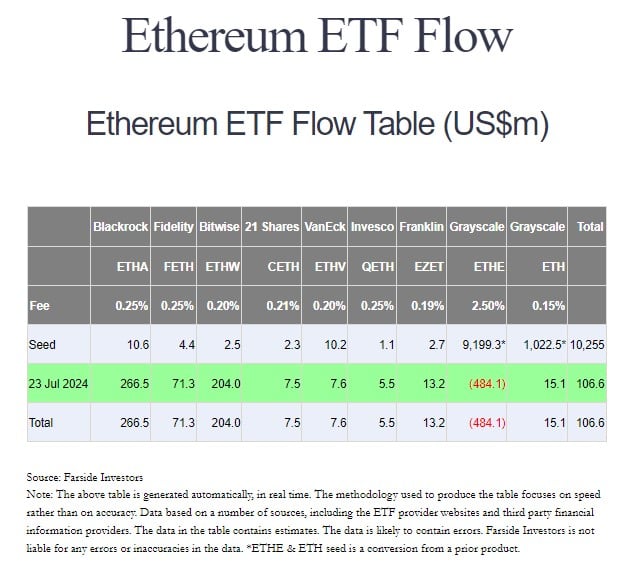
Ethereum spot ETFs experienced an extraordinary surge in inflows last week, with net inflows reaching a record $515 million, driven largely by BlackRock’s Ethereum ETF (ETHA). This marks a significant milestone for the digital asset market, particularly as Ethereum’s spot ETFs continue to gain traction among institutional investors.

The biggest beneficiary was BlackRock’s ETHA, which attracted over $500 million of the total, reaffirming its dominance in the burgeoning sector of cryptocurrency-linked investment vehicles. This ETF has garnered significant attention, reflecting growing institutional confidence in Ethereum, despite the asset’s volatility compared to Bitcoin. The inflows into ETHA have been particularly notable given the widespread competition in the market, with other Ethereum spot ETFs, such as Grayscale’s ETHE and Fidelity’s FETH, also drawing substantial investments, though not on the same scale.

The surge in Ethereum ETF inflows is seen as a positive sign of mainstream acceptance of the cryptocurrency, with institutional players seeking exposure to Ethereum’s value proposition. BlackRock’s strong performance is part of a broader trend of large financial institutions moving into the crypto space, with BlackRock leading the charge after its success with Bitcoin ETFs. The company’s Ethereum ETF has become one of the most popular in the market, a testament to BlackRock’s well-established presence and trust among investors.

This trend comes amidst a series of positive developments in the cryptocurrency sector, with regulatory frameworks slowly taking shape and increased clarity surrounding the investment vehicles that offer exposure to digital assets. Analysts believe the influx of institutional capital into Ethereum ETFs will help stabilize the market, providing a more structured path for retail investors and pushing Ethereum further into the spotlight as a key player in the world of digital finance.

Despite the record-breaking inflows, the Ethereum spot ETF sector remains under scrutiny from some quarters. Experts are watching closely to determine whether this spike in investments will be sustained, as Ethereum’s price has historically been more volatile than Bitcoin. The success of Ethereum ETFs could, however, signal a shift in how traditional financial markets view cryptocurrency, making it a more mainstream asset.

The ETF market for Ethereum is still evolving, and with large players like BlackRock driving momentum, its future looks increasingly intertwined with the broader financial ecosystem. As more institutional investors and crypto-focused funds enter the space, the legitimacy and long-term viability of Ethereum-linked ETFs will be tested. However, last week’s influx proves that the appetite for such products is growing steadily, and Ethereum may be positioned for greater integration into global financial markets in the years to come.

The Bitcoin Fear and Greed Index surged to an extraordinary 90 on November 17, signaling an ‘Extreme Greed’ sentiment in the cryptocurrency market. This mark, which has only been seen three times in the past, reflects heightened optimism and a surge in speculative investment, as traders and investors appear more eager than ever to embrace the volatile market. The last time this index hit a similar level was nearly three years ago, and analysts are closely monitoring this sudden spike to assess its long-term implications on Bitcoin’s price trajectory.

This sharp increase in market sentiment has stirred up both excitement and caution among market observers. The last occasions the Fear and Greed Index reached such high numbers were in 2019 and 2020, periods of rapid price increases followed by corrections. The cryptocurrency community is now wondering if history will repeat itself or if Bitcoin has entered a new era of sustained bullish behavior.

The Fear and Greed Index, a tool designed to gauge market sentiment on a scale from 0 to 100, reflects the psychological mood of investors by measuring factors like price volatility, trading volume, social media activity, and surveys. When the index reaches extreme values like 90, it often signals that the market is overheated, making it vulnerable to a pullback or sudden correction. However, for many Bitcoin enthusiasts, these numbers can also be a signal of continued upward momentum.

Historically, periods of extreme greed have been followed by significant price swings. For instance, the 95 reading from June 26, 2019, coincided with a massive rally that saw Bitcoin’s price rise from around $3,500 to $13,800 within a span of just six months. Similarly, in December 2020 and January 2021, Bitcoin saw a steady climb, crossing the $40,000 mark after months of extreme greed in the market.

The trend in 2021 was particularly notable as Bitcoin reached an all-time high above $60,000 in April, but quickly fell back under $30,000 by July. This marked a period of high volatility, demonstrating how quickly the market can shift from euphoria to fear. Investors have long debated whether these rapid cycles of boom and bust are an inherent part of Bitcoin’s behavior or whether the cryptocurrency has reached a level of maturity that will temper these fluctuations.

With the Fear and Greed Index at 90, the market is again facing similar conditions. The latest surge comes amid growing institutional interest in Bitcoin, as companies like MicroStrategy, Tesla, and Square have all made substantial investments in the digital currency. This institutional involvement has provided a degree of legitimacy to Bitcoin, which was once seen primarily as a speculative asset. Now, as more hedge funds and financial firms enter the space, many are predicting that Bitcoin’s volatility may decrease, although the current spike in sentiment would suggest otherwise.

Further driving this bullish sentiment is the recent activity in the broader cryptocurrency market, which has seen impressive growth across altcoins as well. Ethereum, the second-largest cryptocurrency by market capitalization, has also been gaining traction, partly due to its role in decentralized finance (DeFi) and its upcoming network upgrades aimed at improving scalability. This has led to a renewed interest in the broader crypto ecosystem, with Bitcoin often viewed as a bellwether for the entire market.

Some analysts, however, remain cautious, warning that extreme greed could lead to a price correction. The market’s unpredictable nature is amplified by external factors such as government regulations and macroeconomic conditions. In the past, China’s crackdown on cryptocurrency mining and trading has led to sudden market drops, and recent discussions around U.S. regulatory measures have raised concerns over potential tightening of crypto policies.

The Fear and Greed Index is also influenced by public sentiment and media coverage. Bitcoin has garnered increased attention from mainstream media outlets, particularly as the price of Bitcoin has soared in 2024. This media coverage has sparked a new wave of retail investment, with more individuals entering the market without fully understanding the risks involved. The growing presence of social media influencers in the cryptocurrency space has further amplified these feelings of optimism, with prominent figures encouraging followers to invest in Bitcoin as a hedge against inflation or as a means of achieving significant returns.

Despite the overwhelming sense of optimism, some are warning that the Bitcoin market remains highly speculative. Bitcoin’s inherent volatility means that even small shifts in investor sentiment can cause large fluctuations in price. The high levels of greed recorded on the index could be a precursor to another sudden sell-off, where a rapid rise in price triggers profit-taking and causes a sharp decline. This cycle of fear and greed is something that Bitcoin investors have experienced multiple times in the past, and while each cycle offers new lessons, it remains a constant in the world of cryptocurrency.

What stands out about this particular surge in the Fear and Greed Index is the context in which it occurs. Bitcoin has shown resilience amid global economic uncertainty, and many investors now view it as a store of value, similar to gold. With inflation fears, currency devaluation, and geopolitical tensions rising around the world, more individuals are turning to Bitcoin as a hedge, driving up demand and fueling the optimism reflected in the index.


Global climate goals are facing an escalating challenge as the 1.5°C target, a key ambition set under the Paris Agreement, increasingly appears unattainable. Despite decades of concerted global efforts, the pace of emissions reductions has remained insufficient to halt the ongoing rise in global temperatures. Many experts now argue that it is time to reassess strategies and focus on more adaptable and pragmatic climate solutions. The central […]

Pure Harvest Smart Farms, a UAE-founded controlled environment agriculture (CEA) company, is positioning itself for further growth as it sets its sights on expanding operations beyond the Middle East. Following significant milestones in its domestic and regional markets, the company is now exploring opportunities in the USA, Mexico, Morocco, and Singapore. This expansion aligns with the company’s long-term vision of becoming a global leader in the technology-driven […]

Abu Dhabi Catalyst Partners (ADCP) has entered into a strategic partnership with Investindustrial, a prominent European investment firm, to accelerate growth and innovation in the Middle East and North Africa (MENA) region. The collaboration, which is set to combine ADCP’s deep regional expertise with Investindustrial’s robust investment portfolio, marks a significant milestone for both firms as they aim to strengthen the economic ecosystem across the region. Under […]

Citigroup has forecast significant challenges for emerging markets (EMs) as US trade policies under Donald Trump are expected to disrupt global economic growth. Analysts believe that the resulting strength of the US dollar could put further pressure on EM assets. Despite these hurdles, Saudi Arabia is predicted to remain largely insulated from these trade risks. The financial giant upgraded the kingdom’s status to “overweight” from “underweight,” highlighting […]

Mergers and acquisitions (M&A) activity in the Middle East and North Africa (MENA) region has been notably strong in 2024, with the UAE and Saudi Arabia emerging as the dominant players, driving a significant share of the regional deal flow. A combination of strategic investment initiatives, favorable business regulations, and robust economic frameworks has positioned these two countries as key contributors to the growing M&A landscape.

The first half of 2024 saw the total M&A activity in the MENA region reach $49.2 billion, with a 12% increase in deal value compared to the previous year. Both the UAE and Saudi Arabia accounted for a substantial portion of this growth, with the UAE in particular benefiting from its business-friendly environment. The UAE’s reputation as a hub for cross-border investments, particularly in sectors such as real estate, energy, and technology, has been key to its position as a leader in regional M&A activity. The country’s strong legislative framework, along with the ease of doing business, has attracted both regional and international investors.

In Saudi Arabia, M&A deals have largely been driven by the government’s Vision 2030 reform plan, which focuses on diversifying the economy and reducing dependency on oil. This vision has led to a surge in infrastructure and energy-related deals, as well as investments in sectors like tourism, healthcare, and entertainment. Major sovereign wealth funds like Saudi Arabia’s Public Investment Fund (PIF) have been instrumental in facilitating these high-value transactions.

An interesting trend in the region has been the growing dominance of sovereign wealth funds in driving M&A. These funds, which include the Abu Dhabi Investment Authority (ADIA), Mubadala, and PIF, have been actively acquiring stakes in both domestic and international markets. They are increasingly playing a pivotal role in shaping the region’s investment climate, particularly in high-growth sectors such as insurance, real estate, and energy.

Noteworthy transactions include the acquisition of a 60% stake in Zhuhai Wanda Commercial Management Group by a consortium including Mubadala and ADIA, valued at $8.3 billion. Another significant deal saw Abu Dhabi Future Energy Company (Masdar) acquire a 67% stake in Greek company Terna Energy for $2.9 billion. These transactions are part of a broader strategy of cross-border investments aimed at expanding the MENA region’s global influence.

Despite fluctuations in global oil prices, the MENA region’s M&A market has demonstrated resilience, supported by stable oil revenue streams and continued government infrastructure spending. Industry experts attribute the growth to the diversification efforts by governments and a strategic push to invest in sectors beyond oil and gas.

Insurance and real estate are among the sectors that have seen the most M&A activity, driven by factors such as the growth in tourism, major infrastructure projects, and the rising middle class. These sectors, which traditionally account for a significant portion of M&A transactions, have attracted investments that reflect both short-term returns and long-term strategic goals.

The shift towards cross-border M&A activity has also been a defining characteristic of the market in 2024. Cross-border deals accounted for 52% of the total deal volume, with outbound investments, particularly from the UAE and Saudi Arabia, directed largely towards the United States, which remains a preferred target market. The growing influence of MENA-based investors in international markets reflects a broader trend of increased economic diversification.

This surge in M&A activity aligns with broader economic trends within the MENA region, where countries like the UAE and Saudi Arabia continue to build economic power through diversification and international partnerships. Local economic policies are tailored to foster an attractive investment climate, which has been crucial in maintaining the momentum of M&A deals.

Dedicated to Promoting the Development of eVTOL Technology and Boosting the Low-altitude Economy in Hong Kong and the Greater Bay Area of China HONG KONG SAR – Media OutReach Newswire – 18 November 2024 – To support the Hong Kong Government’s initiative to develop the low-altitude economy, the Centre for Intelligent Multidimensional Data Analysis (CIMDA) at the City University of Hong Kong (CityU), a member of the […]

Accelsius, a Texas-based innovator in high-performance computing and data center solutions, has secured $24 million in a Series A funding round to propel its revolutionary NeuCool cooling technology. Designed to address growing energy demands in artificial intelligence and high-performance computing sectors, this two-phase liquid cooling system is a breakthrough in sustainability and efficiency. NeuCool technology enables direct-to-chip cooling, reducing energy consumption by up to 50% compared to […]

XRP has emerged as a key focus in the cryptocurrency market, experiencing heightened activity in its futures contracts amid a notable price rally. The token has shown resilience following Ripple Labs’ partial legal victory against the U.S. Securities and Exchange Commission (SEC), with its value surpassing $1.20, marking a significant recovery in investor sentiment.

The surge in XRP’s price has been accompanied by a sharp increase in open interest (OI) within futures markets. This metric, which measures the number of outstanding contracts, rose substantially, signaling a robust influx of capital and growing trader interest. Analysts attribute this development to renewed confidence stemming from Ripple’s legal clarity, combined with broader market optimism toward the utility of blockchain-based payment solutions.

Technical indicators for XRP have bolstered this bullish narrative. Market charts highlight sustained momentum in its Relative Strength Index (RSI), suggesting strong buying pressure. Concurrently, the Moving Average Convergence Divergence (MACD) indicator remains positive, reinforcing expectations of a continued upward trajectory. A breakout above resistance levels has positioned XRP as a key contender for further price gains in the altcoin segment.

This optimistic outlook is underpinned by Ripple’s strategic initiatives. The company has expanded its operations globally, securing new partnerships and integrating its On-Demand Liquidity (ODL) solution across various markets. This expansion has not only enhanced the adoption of XRP in cross-border payments but also strengthened its position within the financial ecosystem. Ripple’s commitment to compliance and technological innovation has further boosted investor confidence, particularly as regulatory uncertainties begin to ease.

Market participants are also closely watching developments in the broader cryptocurrency space. The potential approval of exchange-traded funds (ETFs) for digital assets in major markets is anticipated to unlock institutional interest, with XRP positioned as a beneficiary. Additionally, Ripple’s focus on emerging markets and tokenization projects has attracted attention, creating pathways for further adoption of XRP-based solutions.

VISHNU RAJA
RYO YAMADA
HITORI GOTOH
IKUYO KITA
Just in:
Xi Jinping Preparing For A Trilateral Summit With Trump And Putin At APEC Summit On Nov 18-19 // Meraas showcases five residential zones at Dubai Design Week // Hong Kong mandates crypto transaction disclosures to tax authorities // Geely’s i-HEV Intelligent Hybrid Technology Offers a New Direction Vision for Gasoline-Powered Vehicles // Emaar approves Development buyout ahead of planned delisting // e-Crime Bureau Signs Cybersecurity Partnership With Smart Africa, Reinforcing Its Global Expansion // Ousted top Kochi cop gets IG post // Technology shares plunge as Nasdaq enters correction // Kochi police detain two actors over bid to honey trap doctor // CR Longdation Aethereal Cybersecurity × Global Cybersecurity Alliance (GCSA) Join Hands to Establish the “AI and Cybersecurity Research Centre” // Geely’s i-HEV Intelligent Hybrid Technology Offers a New Direction for Gasoline-Powered Vehicles // OpenAI identifies 948 Linux privilege escalation flaws using AI // After Reaching 7 Million Users in the Philippines, Skyro Launches Transparent Cash Loans in Malaysia // OpenAI introduces GPT-6 Cyber with restricted security access // APT29-linked campaign exploits outdated Apple and Android software // Dubai boat show confirms international shipyard line-up for November // TVM –Mangaluru Vande Bharat claims top spot // Asia Left Behind: Ten international companies have yet to report delivering on their cage-free egg pledges across the region // Beyond the exhibition floor: How robots, AI and networks are moving into the real world // Oil advances towards $100 as tanker attacks persist //