News related to
growth

Dubai is witnessing a sharp rise in gold-driven fortunes as long-established Indian entrepreneurs reshape its jewellery sector. Titan Company, known for its Tanishq brand, will acquire 67 per cent of Damas, a leading luxury jewellery retailer with some 146 outlets across the Gulf, for 1.04 billion dirhams, in a deal expected to close by 31 January 2026. This bold expansion markedly strengthens Titan’s foothold under its emerging […]

Net profits for banks listed across the Gulf Cooperation Council surged to an unprecedented $16.6 billion in the second quarter, marking the second straight quarter of gains and a sequential increase of roughly 3.7 %, with year-on-year growth at a robust 9.2 %, according to Kamco Invest. This performance was driven by broadly higher revenues and a lower cost-to-income ratio that more than compensated for a rise in impairments. Lending activity remained resilient, underpinned by strong economic fundamentals and a pipeline of projects in the region.

Banks across the GCC achieved strong growth, with net profits rising 10.3 % year-on-year to $16.6 billion in Q2 2025, according to the latest Kamco Invest analysis. The sequential increase of about 3.7 % was fuelled by a broad-based rise in revenues, while a leaner cost-to-income ratio offset the impact of elevated impairments. Lending growth persisted, reflecting healthy demand and continued economic momentum.

Abu Dhabi led regional outperformers as its banks posted aggregate Q2 earnings of $3.2 billion—a 23.1 % rise compared to the year before. First Abu Dhabi Bank stood out with a 29.4 % surge in quarterly net profits to $1.5 billion, supported by stronger non-interest income and lower impairment charges. Abu Dhabi Commercial Bank and Abu Dhabi Islamic Bank also delivered solid gains, buoyed by elevated interest and fee income.

Dubai’s banks, by contrast, experienced a contraction: aggregate city-listed earnings fell by 6.4 % to $3.2 billion, weighed down by increased impairments at major lenders such as Emirates NBD. Some resilience came from Commercial Bank of Dubai, which posted a 15.4 % rise, alongside a surge in real-estate and utilities profits—Emaar Properties and DEWA among the top performers.

Among other GCC markets, Q2 net profits for Oman-listed banks were around $1 billion, while those in Qatar also posted gains, contributing to the overall strength in the banking sector.

The headline figure—$16.6 billion in quarterly profit for GCC banks—captures the scale of the region’s banking sector resilience. This strong performance highlights how GCC banks post record-high quarterly profits, powered by sustained credit growth and operational efficiencies even amid higher impairments.
—

Arabian Post Staff -Dubai Deal volumes across the Middle East hit 271 in the first half of 2025, up from 228 a year earlier, defying a 9 per cent contraction in global M&A activity. The region owes this strong performance to sovereign capital, regulatory reforms, and strategic investments in high-growth sectors. Middle East M&A Volume Climbs Amid Global Decline now captures the robust upswing. Driving this growth […]

Egypt and Sudan insist that discussions surrounding the Grand Ethiopian Renaissance Dam must remain confined to the three riparian countries—rejecting calls to broaden the talks to include other Nile Basin nations. The two have signalled mounting concern over Ethiopia’s unilateral conduct, describing the situation as a “continuous threat to stability in the Eastern Nile Basin.” They warned that Ethiopia’s steps to fill and operate the dam could […]

Thailand’s incoming prime minister, Anutin Charnvirakul, will nominate veteran economic official Ekniti Nitithanprapas to lead the finance ministry, aiming to stabilise an economy weighed down by US tariffs and mounting household debt.

Anutin, fresh from his parliamentary victory and poised to assume the premiership, unveiled his cabinet selections on Saturday, naming experienced hands to key posts: Ekniti for finance, diplomat Sihasak Phuangketkeow for foreign affairs, and energy executive Auttapol Rerkpiboon to helm the energy ministry. Seasoned Bureaucrat Bound for Finance Ministry signals a clear intention to anchor the economic team with trusted professionals.

Anutin said he chose Ekniti due to his broad leadership across the finance ministry’s departments and his readiness to meet the challenges of the role swiftly. He underscored the appointee’s capacity to help guide Thailand through the turbulence created by US-imposed tariffs and persistent high levels of household debt.

Ekniti, 54, brings an extensive résumé. He has served as director-general across revenue, excise, and treasury departments, and held roles at the Fiscal Policy Office and State Enterprise Policy Office. His résumé also includes positions as financial attaché in London, adviser at the World Bank, and board chairmanships across major financial institutions and state enterprises—including Siam Commercial Bank, EXIM Bank, and Thai Airways.

Anutin’s selections come at a critical juncture. Thailand’s economy has been under strain from weaker growth compared to regional peers, ongoing political unrest, border tensions with Cambodia, declining tourism, and disruptions linked to global trade pressures—particularly from US tariffs. These factors have combined to sap investor confidence.

The finance nomination must receive royal assent before becoming official. Assuming approval, Ekniti will carry the mandate to reassure markets and manage policy responses that address fiscal and external vulnerabilities. His depth of institutional experience positions him as a credible figure to help guide economic policy swiftly during the transition.

By Anjan Roy The GST reforms introduced by the GST council at its September 4 meeting is a mega budget for the entire country. It will be the determining factor for the budgets of the central government as well as those of the states. The goods and services tax, shorter form GST, had consolidated all […]

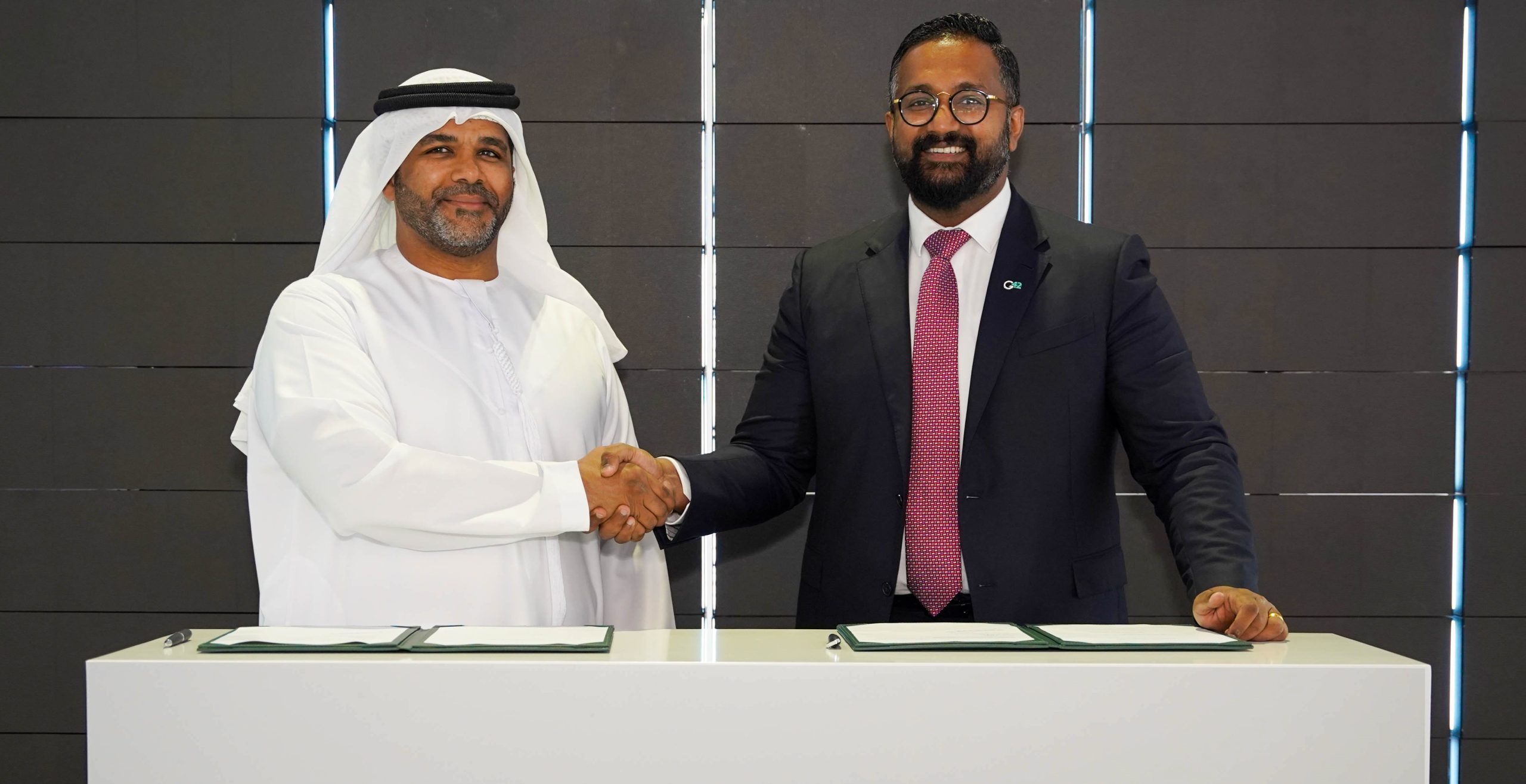
Abu Dhabi’s G42 is offering 2 % of its shareholding in its subsidiary, Presight AI, to institutional investors through an accelerated book-build, aiming to raise slightly more than $100 million. The transaction will reduce G42’s holding in the analytics group from 70.5 % to 68.5 %, while retaining majority control. First Abu Dhabi Bank and Jefferies are acting as joint global coordinators and joint bookrunners, with International Securities serving as joint bookrunner.

Demand for the placement has been strong, with books reportedly fully covered ahead of finalisation. Settlement is expected around 10 September 2025, following final terms being set by 4 September. G42 has also committed to a 180-day lock-up period before any further sale of its Presight shares.

The strategic purpose behind G42 lowers Presight AI stake via ABB is to broaden and institutionalise Presight’s investor base, enhance liquidity, and strengthen its case for inclusion in the FTSE Emerging Market Index. Greater free float and international institutional ownership would increase trading activity and appeal to passive investment funds.

Presight AI, which listed on the Abu Dhabi Securities Exchange in 2023, has posted strong financials through 2025. Its share price has risen by approximately 67 % year-to-date, closing recently at AED 3.47. In the first half of 2025, organic revenue grew by 33.5 %, supported by new domestic contracts. In the second quarter, group net profit rose by nearly 8 % to Dh77 million, with revenue up by over 53 % to Dh523.9 million. International markets now contribute 26.8 % of revenue, up from just 4.9 % a year earlier.

G42 group CFO Ricky Thirion described Presight as “a critical pillar of the G42 ecosystem and a cornerstone of our Intelligence Grid offering,” noting that its performance reflects consistent growth and strong leadership.

Regionally, secondary offerings like this one are gaining traction. In 2025, follow-on sales across the Middle East have raised roughly $3.7 billion, surpassing IPO proceeds—a sign of deepening market maturity.

The placement’s proceeds will go entirely to G42, with no dilution or impact on other shareholders or Presight’s operations.

Abu Dhabi’s G42 has therefore engineered a measured recalibration of its ownership in Presight AI—G42 lowers Presight AI stake via ABB—while securing capital, expanding its shareholder base, and positioning the company for broader market inclusion and visibility.

Advertisements

du has unveiled its Envision 2025 agenda, signalling a decisive push towards an AI-first future. The event is scheduled for 9 September 2025 at Atlantis, The Royal, and is designed to mobilise public and private sector leaders around AI-enabled smart communities and sovereign digital innovation.

The Envision 2025 blueprint brings together a distinguished roster of sponsors and partners. Oracle is confirmed as Host Sponsor, contributing expertise in cloud and sovereign AI capabilities. Cisco, as Platinum Partner, reinforces commitments to digital advancement. Gold Partners include HPE, Huawei, Akamai Technologies and CyberKnight, while Silver Partners—Dell Technologies, Fortinet, Accenture, Hexaware and Palo Alto Networks—support AI and cybersecurity resilience. Equinix and Joy Smart Technologies join as Bronze Partners, emphasising a collaborative approach to transformation. du charts AI-first future with Envision 2025 echoes this collaborative vision, emphasising alignment between leadership and technological innovation.

The threefold Envision platform will host both an exhibition and a conference, spotlighting cutting-edge domains: AI Data Centres, Sovereign Cloud, Generative and Agentic AI, GPU-as-a-Service, Industry 4.0, Advanced Robotics, and Cloud Computing. It seeks to provoke strategic alliances and stimulate discourse aligned with the UAE’s National AI Strategy and National Digital Government Strategy 2025.

Fahad Al Hassawi, Chief Executive Officer of du, underscored the alignment with national vision, referencing the leadership of H. H. Sheikh Mohammed bin Rashid Al Maktoum, who asserted that “future is not something we wait for, but something we make.” Al Hassawi emphasised that converging leadership with advanced technology will underpin the creation of a scalable, secure, and AI-first UAE.

Jasim Al Awadi, Chief ICT Officer at du, described Envision 2025 as more than a technology event—but as a national platform uniting future shapers to align vision, innovation and execution. He stressed that the collaborators are vital to delivering secure, scalable, sovereign digital solutions that enhance smart communities, economic growth and quality of life.

Miguel Vega, Senior Vice President for Database Platform & Cloud Infrastructure at Oracle for the Middle East, Turkey and Africa, said Oracle’s participation will centre on advancing sovereign AI and cloud functions, aiming to help public and private sectors unlock greater levels of innovation, security and efficiency.

Hon Hai Precision Industry Co. reported August sales of NT$606.5 billion, marking a 10.6 per cent increase year-on-year. The Taiwanese manufacturer, a key production partner for Nvidia’s AI-enabled servers, anticipates both sequential and year-on-year growth in third-quarter revenue, underpinned by a sharp rise in cloud and networking product shipments. Hon Hai’s August sales climb 10.6 per cent amid AI demand reflects continued strength in AI infrastructure spending. […]

A protocol on phytosanitary standards agreed upon during President Emmerson Mnangagwa’s visit to Beijing has unlocked the possibility of Zimbabwe exporting blueberries to China, the Horticultural Development Council has announced. This agreement offers local growers access to one of the world’s fastest-growing blueberry markets, although actual export volumes will depend on their ability to meet stringent sanitary conditions and manage compliance-related costs. Zimbabwe’s blueberry production is set […]

Tether is weighing entry into the gold industry by initiating discussions with mining, refining, trading and royalty firms to channel its crypto-generated profits into bullion-linked ventures. The company holds US $8.7 billion in gold reserves stored in Zurich as collateral, and already holds a minority stake in a royalty firm, with talks underway to expand that involvement. This move marks a strategic shift toward physical assets, seeking to broaden its exposure across the gold supply chain and diversify beyond the cryptocurrency market. While CEO Paolo Ardoino has likened gold to “natural bitcoin”, the gold sector has responded to the overture with caution and scepticism.

Tether’s consideration of investments in new realms of the gold industry underscores a calculated attempt to strengthen its position beyond USDT’s dollar peg. The firm has reportedly held talks with multiple royalty companies and even mining investment vehicles—but not all discussions have yielded results. Notably, Tether’s efforts include growing its exposure via Elemental Altus, a Toronto-listed gold royalty company in which it holds a minority stake, with potential for further investment. Talks with Terranova Resources reportedly ended without agreement.

Tether already anchors its stablecoin operations with nearly US $8.7 billion in gold backing, using physical bullion to support its broader digital asset ecosystem. The gold-backed token XAU₮ remains modest in scale compared to its dollar-pegged counterpart, holding a market value of approximately US $880 million.

Parallel to these strategic talks, Tether’s gold-backed offering—Tether Gold —demonstrates measurable growth. As of the end of June 2025, around 246,524 XAU₮ tokens were in circulation, each representing one fine troy ounce of physical gold; the total backing equates to more than 7.66 metric tonnes of gold. A paraphrase of the headline above encapsulates the thrust: Tether eyes gold mining expansion.

Dubai Holding Asset Management has unveiled Dubai Retail as the new unified brand bringing together more than 40 malls and lifestyle destinations across the emirate. This consolidation stems from the 2024 integration of Nakheel and Meydan into Dubai Holding, aimed at driving scalability, efficiency and long-term competitiveness across its retail operations. The newly branded network spans 10 malls, 15 lifestyle destinations and 18 community-focused retail centres, housing […]

Falcon Finance has reached a new milestone as the circulating supply of its decentralized stablecoin, USDf, climbs to an all-time high of $1.5 billion, signalling sharply increased adoption and confidence in its DeFi infrastructure. The expansion tracks a surge from $1.12 billion over approximately one month, a performance driven by a blend of yield innovation, enhanced transparency, and risk-mitigation frameworks.

The $10 million on-chain insurance fund plays a pivotal role in strengthening institutional trust. Seeded initially with USD1 and replenished via protocol fees, the fund is structured to act as a financial buffer during market stress—supporting yield commitments, offsetting rare instances of negative returns, and serving as a fallback bidder for USDf to uphold its peg. Premium collateral strategies further bolster systemic resilience.

Yield generation remains a cornerstone: the yield-bearing counterpart of USDf, sUSDf, has delivered a standout 30-day APY of 9.30 per cent as of 30 August, outperforming notable competitors such as Ethena’s sUSDe, Maple’s SyrupUSDC, Sky’s sUSDS, Ondo’s OUSG, and BlackRock’s BUIDL.

To deepen engagement and expand utility, Falcon Finance launched the frxUSD–USDf Curve liquidity pool, which offers participants more than 20 per cent APR and rewards denominated as “40× Miles.” The community-oriented Yap2Fly campaign—run in partnership with Kaito—distributed $50,000 in rewards to its top 50 users in August, further stimulating active participation.

Transparency remains central to the protocol’s ethos. Falcon now publishes full reserve breakdowns and supports these with weekly third-party attestations. As per the latest reporting, USDf reserves amount to $1.29 billion—comprising $640.16 million in bitcoin, $375.65 million in stablecoins, with remaining allocation across Dogecoin, Fetch. ai, TRON, TON, and Ethereum. Custody spreads across Fireblocks, Ceffu, and multisignature setups, with 72.2 per cent held under multisig, fostering verifiable security.

These developments are underpinned by earlier strategic investments and roadmap expansions. A $10 million funding from World Liberty Financial in July accelerated technical integration with the fiat-backed USD1 stablecoin, facilitating liquidity sharing and conversion infrastructure. By mid-2025, USDf had already breached the $1 billion supply threshold, demonstrating steady growth ahead of its latest benchmark.

Falcon portrays USDf as more than a synthetic dollar; it is positioned as a global liquidity solution. The protocol’s architecture permits any custody-ready asset—including crypto, stablecoins, and real-world tokenised assets—to be turned into USD-pegged on-chain liquidity. This dual-token model is geared towards unlocking yield while safeguarding against volatility, effectively merging traditional risk frameworks with DeFi innovation.

Market observers note that USDf’s climb to $1.5 billion is emblematic of a broader shift in DeFi: users and institutions are increasingly seeking stable, yield-bearing alternatives to both fiat and traditional stablecoins. Falcon’s layered risk-management systems, institutional-grade safeguards, and developer partnerships appear to answer that demand with growing credibility.

Apple shares rallied following a pivotal ruling from U. S. District Judge Amit Mehta, who allowed the technology giant to continue receiving payments—estimated at around $20 billion annually—for default search placement in Safari, while imposing targeted restrictions on exclusivity and data practices. The verdict, delivered on 2 September 2025, represents a significant reprieve for Apple amid ongoing antitrust scrutiny. The ruling bars Google from enforcing exclusive distribution […]

China has issued a bold action plan to propel its electronic information manufacturing industry through 2025 and 2026, targeting sustained growth in industrial output, revenue, and technological capability as it seeks to strengthen its position in the global technology arena.

The plan, jointly issued by the Ministry of Industry and Information Technology and the State Administration for Market Regulation, sets forth a target of roughly 7 per cent average annual growth in industrial output across major segments—including computer, communications, and electronic equipment manufacturing. Revenue growth across related sub-sectors such as lithium batteries, photovoltaics and components is projected to exceed 5 per cent per annum.

Authorities further anticipate that by the close of 2026, the electronic information manufacturing category will retain its status as the largest among China’s 41 key industrial sectors in both revenue and export share. Ambitious local targets aim to elevate five provinces to over 1 trillion yuan in annual manufacturing revenues, with the server industry aiming to surpass 400 billion yuan.

Beyond output and revenue, the plan calls for accelerated equipment modernisation and the development of high-end, intelligent, and eco-friendly production lines. Central to this strategy is the creation of internationally competitive industry bases and specialised clusters serving smaller enterprises.

This industrial blueprint emerges amid broader national efforts to invigorate advanced manufacturing. In August, authorities unveiled new financial guidelines, integrating structural monetary instruments and “green channels” for critical technology firms, aimed at spurring innovation and easing access to capital for integrated circuits, industrial software, medical equipment and advanced materials. Concurrently, China continues to pursue consolidation within its semiconductor sector—though merger negotiations have encountered obstacles, reflecting legal, valuation and fragmentation challenges.

Observers note that China’s renewed emphasis on domestic capability complements longer-standing ambitions under industrial strategies such as “Made in China 2025”, which have driven progress in robotics, solar technology, electric vehicles and rail systems, yet left persistent weaknesses in semiconductors and aerospace.

The current two-year action plan appears to reinforce this trajectory by tying industrial upgrading to environmental standards and smart manufacturing. Provincial authorities are being pressed to deliver on revenue milestones, while the focus on intelligent and eco-friendly production signals an effort to align with global sustainability trends and elevate manufacturing sophistication.

This approach also reflects the government’s response to external pressure, including export controls and trade friction, by targeting resilience and self-sufficiency. By prioritising hubs and clusters, China aims to decentralise innovation and drive inclusive industrial progress across regions, not just within flagship firms or coastal areas.

The twin objectives of maintaining international leadership and building more advanced, cleaner industrial capacity are central to this strategy. As China moves into the mid-2020s, its success will depend on execution—not just on paper targets, but on implementation, regional mobilisation, talent development, and the ability to absorb and apply new technologies at scale.

Abu Dhabi will host the BRIDGE Summit from 8 to 10 December 2025 at the ADNEC Centre, uniting heads of state, media executives, policymakers, technologists and content creators in an ambitious bid to redefine the global media landscape. Announced in Washington by Abdulla bin Mohammed bin Butti Al Hamed, chairman of the National Media Office, alongside Dr Jamal Mohammed Obaid Al Kaabi, director-general of the NMO, the summit pledges to foster dialogue, innovation and sustainable growth across the sector. Attendance is expected to exceed 5,000 participants, underpinning its status as a global media landmark.

Preparatory efforts have extended worldwide. In June, a roundtable in London convened Al Hamed and Al Kaabi with media experts during London Tech Week to reinforce the summit’s commitment to transparency, accountability and cross-sector collaboration in an increasingly digital era. In Asia, the BRIDGE roadshow landed in Shanghai, following stops in New York, London and Osaka, each event contributing insights to shape the summit’s agenda. A mission to Seoul in August further advanced partnerships with technology and media firms, including I-ON Communications on AI and data storytelling; Dentons on regulatory frameworks; Lotte Caliverse on immersive media; and SM Entertainment on cultural collaboration. These discussions cemented shared goals around content credibility, technology ethics and investment in creative startups.

The BRIDGE Summit is embedded within a broader ecosystem spearheaded by the National Media Office. Alongside the summit lies the BRIDGE Foundation, a non-profit body dedicated to empowering media professionals, funding research and supporting startups. This aligns with the UAE’s pursuit of media as a force for societal development and economic progress. A recently published fact sheet outlines the summit’s six thematic zones—Academy, Diplomacy, Forum, Marketplace, Impact and Spotlight—designed to foster skills, policy engagement, tech innovation, social impact and cultural exchange across a three-day programme.

AI and ethics feature prominently among the summit’s themes. Organisers emphasise human values in storytelling amid accelerating digital disruption and algorithmic influence. Al Hamed has characterised media as a humanitarian force that must uphold integrity and cohesion, not merely chase clicks. The summit will address responsible AI’s potential and pitfalls, ethical journalism, and media business models fit for the digital age.

Beyond content and tech, BRIDGE seeks to bridge policy and practice. With roundtables and forums designed to foster international dialogue, policymakers, creators and academics will collaborate on frameworks that safeguard credibility while embracing innovation.

The summit’s global scope is reflected in its steady itinerary of international engagements. From Washington to London, Shanghai to Seoul, each stop has contributed regional perspectives and partnerships that will inform the summit’s structure, themes and participant networks.

SHENZHEN, CHINA – Media OutReach Newswire – 5 September 2025 – On September 3, ASIA FRUIT LOGISTICA opened at AsiaWorld-Expo in Hong Kong. BGY Fruits, China’s leading fruit retail chain, participated alongside its subsidiary Jin Chengtai, continuing its annual presence at the event. Through consistent participation, BGY Fruits showcases its strengths in supply chain integration and brand development to global partners and potential clients—further advancing its strategy […]

Financial management is certainly an ordeal for any business, be it a massive corporation or a small company that is just starting out. To some extent, with practical knowledge and math skills it is possible to do accounting even in Google Sheets. Still, modern software with automation functions accelerates this process by a considerable amount. More and more accounting solutions are making their appearance on the market, […]

BEIJING, CHINA – Media OutReach Newswire – 4 September 2025 – On August 27, Mengniu Dairy (2319.HK) released its interim results for 2025, reporting revenue of RMB 41.57 billion for the first half of the year, with operating profit reaching RMB 3.54 billion—an increase of 13.4% year-on-year. Thanks to the company’s ongoing implementation of lean management practices, Mengniu also achieved a 46.2% year-on-year growth in operating cash […]

Central bankers rarely admit defeat. But Jerome Powell’s latest remarks left little doubt: the Federal Reserve now sees the labour market faltering before inflation is fully tamed. This shift in focus – from bringing down prices to protecting jobs – marks a profound change in the policy backdrop. For investors, it is a wake-up call. For two years, the dominant story was inflation. Central banks tightened aggressively […]

Entrepreneurship is a challenge, especially when it comes to your own project: a small restaurant, a boutique, or an online store. For many women, starting a business feels like a personal trial, a test of resilience. But in reality, any business is a game, an opportunity to grow, create something of your own, and bring ideas to life. And yes, every business faces crises. But this is […]

Collaboration combines Mirai Bridge Capital’s financing expertise with NCI’s trade credit insurance to deliver secure, growth-driven solutions for businesses across Asia. KUALA LUMPUR, MALAYSIA – Media OutReach Newswire – 4 September 2025 – Mirai Bridge Capital Sdn Bhd (“MBC”), a fast-growing private equity management company, has signed a Collaboration Agreement with NCI Malaysia Sdn Bhd (“NCI”) to expand into trade credit facilities for businesses in Malaysia and […]

Northern Ireland stands to benefit significantly from growing economic and technological ties with India, as boosted trade, tariff relief, and joint research initiatives begin to materialise. A free-trade agreement between India and the United Kingdom promises a settlement that could deliver a multi-million-pound boost to Northern Ireland’s economy, particularly in advanced engineering, technology, and services. At the same time, enhanced academic and innovation partnerships are expanding the region’s opportunities.

Northern Ireland’s technology, services and manufacturing sectors are especially poised for growth under the new trade agreement, which includes substantial tariff reductions and near-elimination on key exports such as medical devices and engineering goods. Analysis shows that the deal is expected to generate around £50 million in economic benefit for the province. The agreement also unlocks access to India’s growing services market, opening new pathways for Northern Irish firms to scale internationally and enhance competitiveness.

Simultaneously, India and the UK have elevated their broader strategic engagement, having signed the Comprehensive Economic and Trade Agreement on 24 July 2025. This landmark deal opened India’s government procurement market—worth £38 billion annually—to UK businesses for the first time, offering additional opportunities for Northern Ireland firms in technology, infrastructure and innovation services sectors. Negotiations had culminated in May 2025, after extensive rounds that resolved issues including visas, whisky, automobiles and pharmaceuticals.

Beyond trade, there is growing momentum in research collaboration. Imperial College London has launched a global science hub in Bengaluru, aiming to deepen its research alliances across AI, climate resilience, food security and antimicrobial resistance. Such initiatives highlight the intensifying India–UK scientific partnership, which Northern Ireland research institutions could tap into—particularly given the province’s established strengths in digital innovation and software engineering, with major global tech firms like Microsoft, Nvidia and SAP already present.

The launch of a joint India–Ireland Joint Economic Commission, as agreed by Indian External Affairs Minister S Jaishankar and Irish counterparts, further sets the stage for elevated economic and tech engagement involving Northern Ireland. The commission aims to enhance trade, investment and technology linkages; discussions have also included cybersecurity, artificial intelligence, fintech, semiconductors and higher education cooperation. Moreover, a new Indian consulate in Belfast reflects deepening diplomatic and commercial engagement with the region.

Northern Ireland benefits not only economically but also in innovation ecosystems. The UK–India Technology and Security Initiative, launched in July 2024, emphasises strategic collaboration across seven core areas including semiconductors, AI, quantum, biotech and advanced materials. The initiative is being overseen and reviewed by senior officials from both nations, reinforcing a structured framework for bilateral tech partnerships and supply-chain resilience; Northern Irish tech organisations with capabilities in cybersecurity, data analytics and smart infrastructure are well-positioned to participate.

These developments dovetail with the broader UK-wide free-trade agenda and strategic dialogues. India is the United Kingdom’s fastest-growing trade partner, with goods trade up to £17.8 billion in 2024 and services trade exceeding £24 billion—both substantial increases from pre-pandemic levels. Yet, awareness among UK firms, including in Northern Ireland, remains low, with only a small fraction actively exporting to India, despite high willingness among Indian consumers to pay premiums for UK products. Areas such as advanced engineering, manufacturing, and innovation services remain ripe for expansion.

Northern Ireland’s existing attributes further reinforce its readiness. The region hosts a cluster of world-class tech operations, supported by local firms such as Kainos and FD Technologies, and connectivity to universities and innovation centres. Access to India’s large and diverse markets—combined with policy support under the free-trade agreement—sets the scene for emerging partnerships in fintech, med-tech, smart infrastructure, and green technologies.

Finally, though not specific to Northern Ireland, institutions such as the UK India Business Council provide advisory networks and policy advocacy that can help local businesses navigate market entry, regulatory frameworks, and collaboration models with Indian partners across sectors including digital innovation, life sciences and advanced manufacturing.


ADNOC Logistics and Services plc has secured strong institutional backing through a $317 million placement of approximately 222 million shares—equivalent to about 3 percent of its issued capital—with demand reaching seven times the offering, ranking among the region’s most heavily oversubscribed secondary share sales. The transaction lifts ADNOC L&S’s free float from 19 percent to 22 percent, significantly enhancing trading liquidity and widening its appeal to institutional […]

VISHNU RAJA
RYO YAMADA
HITORI GOTOH
IKUYO KITA