Just in:
Kochi police detain two actors over bid to honey trap doctor // Cloudflare unveils Zero Wire vulnerability intelligence service // ADIA and partners establish $1.4 billion aviation venture // Middle East governments assess Iran war after US vote // CR Longdation Aethereal Cybersecurity × Global Cybersecurity Alliance (GCSA) Join Hands to Establish the “AI and Cybersecurity Research Centre” // APT29-linked campaign exploits outdated Apple and Android software // UK air traffic outage inflicted £33m financial losses // Millions Of Indians May Soon Be Deprived Of Government Assistance // Vance attributes Republican midterm defeats to Iran conflict // Xi Jinping Preparing For A Trilateral Summit With Trump And Putin At APEC Summit On Nov 18-19 // Emirates Group records AED 4.1 billion half-year profit // e-Crime Bureau Signs Cybersecurity Partnership With Smart Africa, Reinforcing Its Global Expansion // Dubai boat show confirms international shipyard line-up for November // Hong Kong mandates crypto transaction disclosures to tax authorities // Cyberport Venture & Capital Forum 2026 Grand Opening // After Reaching 7 Million Users in the Philippines, Skyro Launches Transparent Cash Loans in Malaysia // Asia Left Behind: Ten international companies have yet to report delivering on their cage-free egg pledges across the region // The “1st Greater Bay Area Health and Longevity Summit & Awards Ceremony” concludes successfully in Macao // Fast Just Got Fastest: STING Energy Boost™ Celebrates Kimi Antonelli’s Formula 1® World Championship and the Fan Energy Behind It // Ta’ziz finalises $1.39bn funding for Ruwais industrial facilities //

News related to
growth

Global investment bank Goldman Sachs has secured the richest place in regional mergers and acquisitions activity in the Middle East and North Africa market, advising on 24 deals worth a combined US$104 billion in the first nine months of 2025, according to data from LSEG Deals Intelligence. The firm’s Co-head of Investment Banking for the Middle East & North Africa, Jassim AlSane, said the growth was driven by “national champions … with significant growth objectives” and government-backed strategies.

M&A volumes across the region have picked up substantially, supported by sovereign backing and major consolidation efforts. According to LSEG’s broader MENA investment banking review, M&A activity hit US$66.4 billion in the first quarter alone, illustrating a robust trajectory for the region. The strong performance underscores an increasingly active market for deals even amid global macro-economic headwinds.

Goldman’s dominance emerged as national-champion companies in the Gulf co-led big transactions. These firms often benefit from state support and predefined strategic mandates that accelerate investment decisions. AlSane highlighted that the top-10 deals for the firm in the region were “underpinned by an approved strategy” and “government-backed,” signalling a close alignment between private investment banks and states seeking large-scale diversification.

Key sectors powering the deal flow include energy-transition assets, infrastructure, and digital platforms. Observers note that the MENA region is embracing its role as a growth frontier for capital deployment, leveraging both private and sovereign funds to consolidate industries and build scale quickly. In particular, Saudi Arabia and the United Arab Emirates continue to push forward national frameworks that incentivise large transactions.

Despite the gains, the environment is not without uncertainty. Globally, deal volume has not uniformly increased — while deal value is up, the overall number of transactions in certain markets remains flat or declining. In the MENA context, some deals have faced delays or regulatory hurdles associated with cross‐border scrutiny and the need for state coordination. Critics argue that heavy reliance on government-backed mandates may reduce private-sector initiative and create hurdles in negotiation and valuation.

Goldman’s rise in the region also reflects wider trends in global investment banking. The firm posted a 42 per cent jump in investment-banking fees in the third quarter of 2025, citing advisory revenue jolts of 60 per cent year-on-year. While that data is global rather than specifically MENA-focused, it indicates that investment banking hunger for strategic transactions is rising and Goldman is benefiting. These elevated fee levels are the highest the firm has seen in years and point to a structural shift in deal-making dynamics.

Africa is entering a phase of accelerated digital inclusion, backed by substantial investment and strategic partnerships, yet persistent infrastructure and cybersecurity gaps pose growing concerns. The World Bank Group recently co-chaired the launch of the Mobilizing Access to the Digital Economy Alliance: Africa, aimed at bringing 100 million individuals and enterprises online by 2034. According to the World Bank’s data, broadband access across Africa rose from 26 […]

Lagos-based fintech firm Moniepoint Inc. has secured more than USD 200 million in its Series C equity funding round, a move that underscores its rapid growth, profitability at scale and continental ambition. The funding was led by Development Partners International’s African Development III fund and included heavyweight participation from LeapFrog Investments, Visa Inc., Google LLC’s Africa Investment Fund, the International Finance Corporation, Proparco, Swedfund and others. Moniepoint […]

For years, the cryptocurrency debate has centred on price. Every discussion returned to charts, volatility, and market speculation. The fixation on value swings has distracted from a much more important story. The future of digital finance is not about price movement. It is about infrastructure. Regulated stablecoins are emerging as the foundation of a new global financial system. They combine the trust of established currencies with the […]

Japan’s exports rose by 4.2 % in September compared with a year earlier, marking the first increase after five consecutive months of decline. The rebound was driven by a 12.6 % jump in shipments of semiconductors and electronic components as demand across Asia strengthened. Meanwhile shipments to the United States fell by 13.3 %, reflecting persistent tariff pressures.

The official data released by the Ministry of Finance show total export value reached ¥9.41 trillion, while imports rose 3.3 % to ¥9.65 trillion, resulting in a trade deficit of ¥234.6 billion. Economists had expected exports to climb about 4.4 %.

The shift in trade dynamics highlights Japan’s evolving export mix. Analysts attribute the up-turn primarily to regional technology supply-chain demand, particularly from China and other parts of Asia, where exports climbed by around 9.2 %. Shipments to mainland China rose approximately 5.8 %. By contrast, the United States market remained weak, hit by ongoing tariffs and cooling automotive exports.

Japan has been repositioning itself within the global semiconductor industry, capitalising on strengths in chip-making equipment and materials, even as it lags peers in logic-chip fabrication. According to the ASEAN+3 Macroeconomic Research Office, Japanese firms still hold about 30 % of global equipment market share and roughly half of materials supply, although they are behind in advanced logic nodes.

With global demand shifting toward next-generation technologies such as artificial-intelligence servers and 5G infrastructure, Japan’s export engine appears to be realigning. The sharp rise in chip-related shipments suggests that Japanese firms are responding to increased regional tech investment and supply-chain diversification away from the US-China axis.

Japan’s auto industry remains under pressure, however. The drop in exports to the US was exacerbated by a 15 % tariff on Japanese autos imposed in July, which continues to dampen shipments to that key destination. This has left Japan reliant on growth elsewhere. Japan’s new prime minister, Sanae Takaichi, who took office amid this trade shift, sees the export data as an early boost; her government has pledged fiscal stimulus and monetary support to sustain momentum.

The export recovery still carries caveats. While the semiconductor and electronic component sectors are expanding, traditional export categories such as automobiles and machinery have not yet shown comparable strength. Imports rising faster than forecast reflect continuing underlying demand for energy and raw-material inputs, and the trade deficit underscores Japan’s ongoing reliance on external inputs despite the export uptick.

Japan’s export performance could indicate a structural shift rather than a temporary bounce. The country’s strategy to revive its chip industry through initiatives such as the Rapidus consortium and the Japan Advanced Semiconductor Manufacturing venture illustrates a long-term push into advanced-node technologies and supply-chain resilience. These initiatives, supported by government subsidies targeting thousands of billions of yen, aim to re-establish Japan as a key node in advanced electronics manufacturing.

The Dubai Department of Economy and Tourism has launched an incentive programme that reimburses eligible hotel developments for 100 per cent of the Dubai Municipality room-sales fee and the Tourism Dirham levy for two years following opening. The scheme targets new hotels, resorts, hotel apartments and other approved hospitality facilities in the designated growth zones of Dubai South, Palm Jebel Ali, Dubai Parks and Dubai Islands. The move stems from Executive Council Resolution No.  of 2025, […]

Dubai-headquartered digital operator VEON Ltd. is set to acquire full ownership of classified-ads platform OLX Kazakhstan through its Kazakh subsidiary Beeline Kazakhstan for US$75 million, marking a strategic push into Central Asia’s digital services ecosystem. The deal expands Beeline’s footprint beyond connectivity into online marketplace operations at a time when Kazakhstan’s internet penetration and e-commerce engagement are advancing. Under the terms, Beeline Kazakhstan will acquire 100 per cent of […]

Advertisements

A significant outage at Amazon Web Services rippled through the digital economy on 20 October 2025, cutting off access to dozens of major websites and applications. The disruption emerged from AWS’s US-EAST-1 data-centre region in Northern Virginia — a hub that hosts some of the world’s most critical cloud infrastructure. The fault, described by AWS as a failure in network-load-balancer health monitoring and associated DNS resolution problems, […]

By Nantoo Banerjee     There is nothing to be particularly shocked about Tata Capital stocks declining 2.4 percent below the company’s IPO issue price of Rs. 326 per share a day after its debut in intraday trade on the Bombay Stock Exchange. Tata Capital, a Tata Sons subsidiary, made a flat debut on Dalal Street on […]

The article SEBI Fails To Prevent Aggressive IPO Pricing To Protect Investors appeared first on Latest India news, analysis and reports on Newspack by India Press Agency).

BANGKOK, THAILAND – Media OutReach Newswire – 21 October 2025 – The Gem and Jewelry Institute of Thailand (Public Organization), or GIT, has unveiled a strategic plan to accelerate the adoption of Sustainability Standards aimed at strengthening Thailand’s gem and jewelry industry. The initiative promotes good governance, transparency, and traceability across the supply chain, establishing international benchmarks that build confidence among global buyers and leading brands. GIT […]

JAKARTA, INDONESIA – Media OutReach Newswire – 21 October 2025 – SCG participated in the Forbes Global CEO Conference 2025: THE WORLD PIVOTS in Jakarta, Indonesia, which was organized under the theme “Sustainable Philanthropy.” The conference brought together business leaders from around the world to exchange visions on driving sustainable business practices amid the changing global economic, technological, and environmental landscape. Photo credit: Forbes Global CEO Conference […]

The government of British Columbia has introduced legislation that would permanently ban new crypto-mining operations from connecting to the provincial grid via BC Hydro, and impose formal limits on power access for AI and data-centre operators. The bill, known as the Energy Statutes Amendment Act, aims to steer the province’s clean-electricity supply toward mining, LNG and natural-resource industries viewed as higher-priority than the high-load crypto sector.

Under the new framework, BC Hydro will no longer approve fresh power-grid connections for crypto-mining facilities. The moratorium first established in 2022 is now set to become law. In parallel, beginning in late 2025 the province will introduce an allocation process for electricity demanded by AI and data-centres: only a capped amount of power will be available to those sectors, and they must compete for it under stricter criteria.

Government officials say the shift reflects a need to address surging grid-demand from emerging industries and to ensure that public electricity resources deliver broad economic and employment benefits. Premier David Eby said the move will help the province “move faster” on major transmission infrastructure and support industrial growth in a planned megaproject in the northwest. Energy and Climate Solutions Minister Adrian Dix added: “Our new allocation framework will prioritise vital growth in sectors like mining, natural gas and lowest-emission LNG, while ensuring our clean energy is directed to projects that deliver the greatest benefit to British Columbians.”

The backdrop encompasses the looming construction of the North Coast Transmission Line, a roughly $6 billion project designed to bring new clean-electricity capacity to the province’s sparsely-electrified northwest. That infrastructure is central to the government’s strategy of prioritising industrial connections over speculative, high-load users such as crypto-mining farms.

Industry analysts have mixed reactions. Supporters say the policy reflects sound planning in a jurisdiction dependent on hydroelectric power and facing increasing pressure from multiple large-scale electricity users. They note that the high energy-intensity of crypto-mining—with relatively modest job creation and economic multiplier effects—makes it a less compelling candidate compared with mining, LNG, hydrogen and industrial AI. On the other hand, critics warn that the framework gives the government wide discretionary power, potentially reducing transparency and favouring incumbents. As one Green-party MLA noted: “With no detail on this framework or the criteria for decision-making in Bill 31, we are concerned that the minister will be the one making these consequential determinations under the influence of friends or lobbyists.”

The government has indicated that data-centres and AI firms will still be eligible for power, but will face competition under the new mechanism: for example, BC Hydro reportedly will allocate only about 300 megawatts for AI and 100 megawatts for data-centre use every two years. Those thresholds will represent a major scaling down in open-access grid connections for such technology users and signal a shift away from first-come, first-served power allocations.

For prospective crypto-miners, the measure marks a turning point. Major mining projects that had anticipated low-cost Canadian hydro power will face altered calculus: either repurpose for non-crypto uses, or relocate to jurisdictions with more open grid access. This may induce capital flight or slow the growth of a nascent mining industry in the province. Conversely, proponents of the policy argue it will preserve affordability for households and existing industrial users by preventing unmanaged load growth.

The government’s timing is also notable. The bill not only formalises the ban on new crypto-mining connections, but synchronises with the broader policy shift to accelerate the NCTL and re-shape grid access rules. Construction is scheduled to begin in 2026 and extend into the early 2030s. For the grid, this means a period of constrained supply allocation while demand from resource-intensive projects expands.

Community and Indigenous groups have been emphasising that increased industrial electrification must occur in consultation and benefit-sharing with First Nations. The legislation allows for First Nations co-ownership of the transmission line and signals a broader reconciliation dimension to the infrastructure strategy.

In the crypto-community the reaction is sharp. Firms and investors note that BC’s abundant hydro power was a major attraction to set up mining operations at scale. With the ban in place, developers will need to evaluate stranded-asset risk or shift to other Canadian provinces or international venues. Some warn that innovation in GPU- and AI-mining overlap may find itself constrained as power availability tightens.

From a global lens, British Columbia joins a growing cohort of jurisdictions imposing stricter controls on high-energy crypto-activities and re-examining how emerging tech intersects with energy policy. The regulation underscores the tension between rapid tech growth and public-utility responsibilities in regions reliant on renewables and constrained transmission.

Oil markets have turned once again into a supply-heavy arena as investors take note of swelling global production and a lagging demand backdrop. Prices for Brent crude slipped below $61 a barrel, while U. S. West Texas Intermediate hovered near $57, on signals that stockpiles and tanker-held quantities are climbing. Data from analytics firm Vortexa show that crude and condensate in transit rose to 1.24 billion barrels […]

Abu Dhabi — Multip­ly Group PJSC’s subsidiary Emirates Driving Company PJSC has secured a 22.5 per cent shareholding in Mwasalat Holdings LLC, the Abu Dhabi-based transport operator, with an option to raise its stake to 50.6 per cent pending regulatory approval and other conditions. The acquisition reflects Multiply Group’s push into the broader mobility sector beyond its legacy in driving education and training, positioning EDC as a […]

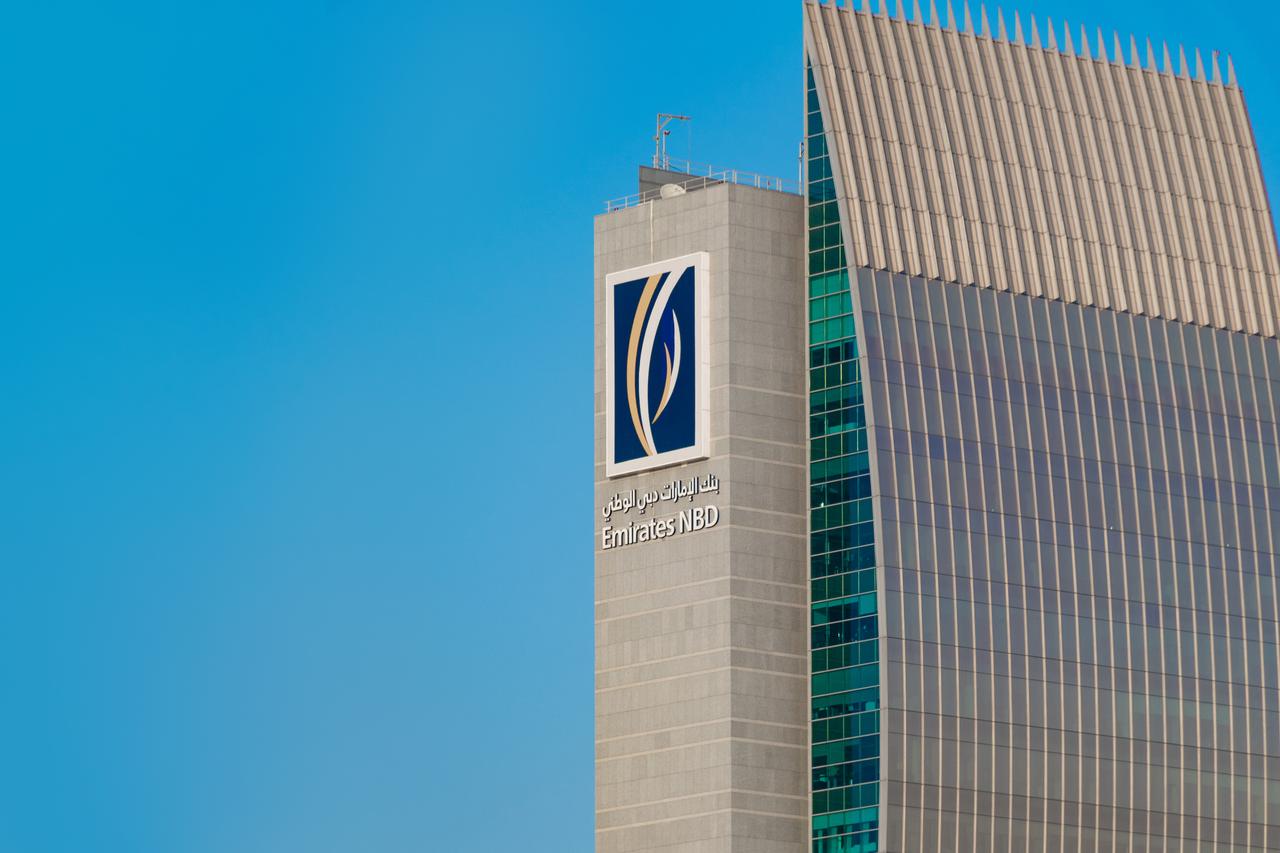
Dubai-based Emirates NBD PJSC is poised to acquire a 60 per cent stake in India’s RBL Bank via a $3 billion investment, marking the largest foreign direct investment ever recorded in India’s banking sector. The move, announced on 18 October 2025, is structured through a preferential share issuance of up to 959.04 million shares at ₹280 each and is subject to regulatory approvals.

RBL Bank’s management expects the deal to close within five to eight months, positioning the infusion within the current financial year, according to statements made by the lender’s leadership. Emirates NBD will assume promoter status at RBL, gaining board-nomination rights and solidifying its long-term presence in the Indian market.

The deal comes as India’s financial sector registers a surge in cross-border deals, with total deal-value reaching approximately $8 billion from January to September 2025—a 127 per cent increase over the same period last year. For its part, RBL Bank, a private lender headquartered in Mumbai with assets estimated at ₹1.46 trillion and a customer base of over 15 million, will benefit from the capital uplift and expanded ecosystem access.

Emirates NBD’s group chief executive, Shayne Nelson, said the investment underscores the bank’s confidence in India’s financial services growth trajectory and reflects its ambition to leverage RBL’s domestic franchise alongside Emirates NBD’s regional reach. RBL’s managing director & CEO, R Subramaniakumar, described the alliance as providing “an enormous opportunity” to move from mid-sized to large-bank status in India, reinforcing its ambitions to enter wealth management and strengthen corporate and retail lending.

Under the terms of the agreement, Emirates NBD will first subscribe to a preferential issue up to 60 per cent of RBL Bank, and then launch a mandatory open offer to public shareholders of up to 26 per cent at the same ₹280 per share price. The final stake will depend on maximum permissible foreign-investment limits and minimum public shareholding norms. The Indian regulatory framework allows up to 74 per cent foreign investment in private banks, but typically limits individual foreign investors to a maximum of 15 per cent unless an exemption is granted by the Reserve Bank of India, which is reported to have given informal backing to the deal.

Analysts say the deal is transformative for both parties: RBL stands to enhance its capital adequacy ratio—projected around 40 per cent post-transaction—and may scale up its corporate banking, digital payments and branch network expansion, tapping into ties between India and the Middle East. For Emirates NBD, the acquisition consolidates its Indian market access and complements its existing footprint in the Middle East, North Africa and Turkey.

Challenges remain. The transaction is subject to regulatory approvals in India and requires compliance with public-shareholding rules, which could complicate the open-offer structure. In addition, RBL has grappled with governance concerns in the past—its former CEO stepped down abruptly in 2021 following regulatory scrutiny—which means integrating under a foreign majority owner will require careful management of culture, controls and strategic alignment.

Observers suggest the deal may set a precedent for greater foreign involvement in India’s mid-sized banking sector, with implications for capital flows, market consolidation and competition. Brokers in Mumbai noted that the infusion of “confidence capital” into RBL could unlock higher credit growth and improve investor perception of the Indian private-banking sector. Meanwhile, the broader wave of cross-border activity, including Japanese and UAE groups entering Indian banks, highlights the shifting dynamics of the India-Middle East-Europe economic corridor.

Merchandise exports rose to USD 220.12 billion in the six-month period ending September, an uptick of 3.02 per cent compared with the equivalent span of the prior year, while imports climbed by 4.53 per cent to USD 375.11 billion, resulting in a trade deficit of USD 154.99 billion.

A key facet of this performance is that exports to 24 nations recorded growth, underscoring a push by Indian exporters to diversify markets beyond traditional strongholds. These countries span regions from the Middle East and Southeast Asia to Africa and Latin America, and collectively accounted for USD 129.3 billion, or 59 per cent of the country’s total exports in the period.

Despite this diversification, exports to the United States — one of the largest destination markets — slipped in September as tariffs imposed by Washington weighed on certain sectors. For the month, shipments to the US declined by 11.93 per cent to USD 5.46 billion.

Those opposing movements such as exporters point to the 50 per cent tariff introduced by the US on Indian goods from late August. The exports community says that while growth is evident in alternative geographies including Africa, Latin America and the Middle East, the US tariff climate remains a drag.

Within the group of 24 countries that posted export growth are the UAE, Germany, Vietnam, Mexico, Russia, Kenya, Nigeria, Canada, Poland, Sri Lanka, Oman, Thailand, Bangladesh, Brazil, Belgium, Italy and Tanzania, among others.

At the same time, exports to 16 other countries recorded negative growth, representing roughly USD 60.3 billion or about 27 per cent of total exports in the period. This reveals that while diversification is under way, certain destination markets continue to deliver weak outcomes.

Industry observers suggest that the strategic reorientation of markets has been accelerated by external pressures such as protectionist measures in key markets and supply-chain disruptions across sectors. One exporter noted: “The trend will continue in the coming months as well.”

Meanwhile, the Government of India is engaging on multiple fronts to sustain export momentum. Officials from the commerce ministry signalled that structural steps will be needed to strengthen manufacturing competitiveness and integrate India more deeply into global value chains. They pointed to raw‐material bottlenecks and high logistics costs among the constraints.

In parallel, trade discussions with the US are underway, aimed at reducing friction caused by duties and exploring possibilities for energy-and-goods cooperation. For instance, US officials have raised concerns over Indian imports of Russian oil and bilateral trade.

Another trend shaping export performance is the push into manufacturing sectors aligned with global demand shifts. The electronics and mobile-phone export segment, for example, has delivered strong growth: exports in certain months surged by as much as 39-60 per cent in year-on-year terms, signalling India’s growing role as a manufacturing hub for global brands.

On the import side, the widening of the trade deficit is partly explained by rising inbound shipments of gold, silver and crude oil, ahead of domestic demand spikes and festival season pickup. These pressure points reflect larger global cost dynamics rather than domestic export weakness per se.

Export diversification is also being viewed as a risk-mitigation strategy. The weakening of certain traditional markets combined with tariff exposure in the US has underscored the importance of broadening the destination base. Africa, Latin America and Southeast Asia are emerging as focal regions.

Manufacturers and trade bodies emphasise that sustaining this diversification will require improving logistics efficiency, deepening downstream processing, upgrading product quality and securing better access via trade agreements and export-promotion schemes.

For exporters that achieved growth in the 24-country set, end-markets include consumer goods, engineering exports, pharmaceuticals, agro-products and electronics. Their performance demonstrates the incremental success of strategic investment and policy alignment.

Still, the fact that over a quarter of export value was derived from countries with declining shipments signals a dual challenge. Growth pockets exist, but structural weaknesses and external dependencies remain persistent obstacles.

The Dubai-based airline Emirates has formally marked 25 years of its flight operations to Uganda, signalling both a milestone in the company’s growth in East Africa and its deeper entrenchment in the Ugandan travel market. Since its first landing in 2000, the carrier reports transporting 2.8 million passengers on 15,900 flights between Uganda’s capital region and Dubai. At launch, the service flew three times weekly, routed via […]

Chicago-based hospitality group Hyatt Hotels Corporation has entered into a management agreement to bring its full-service Regency brand to Lusaka, Zambia. The five-star property, to be known as Hyatt Regency Lusaka The Pamodzi, will undergo substantial refurbishment and reopen in 2026 under the new branding. The deal partners Hyatt with affiliates of ASB Hotel Properties and Albwardy Investments, placing the landmark previously called The Pamodzi Hotel at the centre […]

Greenlogue/AP The 28th edition of the trade-fair and conference platform Ecomondo 2025 will convene from 4 to 7 November at the Rimini Expo Centre, Italy, with a reinforced international agenda that organisers expect will draw more than 1,000 exhibitors and upwards of 100,000 visitors. This year’s event is emphasising several strategic growth areas: climate-tech innovation, digitalisation in resource management, blue economy and Mediterranean-Africa partnerships. The organising body, […]

The social-media platform X has introduced a dedicated “Handle Marketplace” that allows paying subscribers to request usernames tied to inactive accounts, marking a significant shift in its monetisation strategy. Under the scheme, Premium Plus and Premium Business users can browse a catalogue of unused handles and make claim requests under varying terms. Eligible subscribers will see available usernames divided into two tiers: “Priority” handles, which include full […]

The world’s largest cryptocurrency, Bitcoin, vaulted above $111,000 after a steep dip earlier this week, triggering sharp gains across major tokens including Ethereum, XRP and Solana. On-chain metrics signalled accumulating momentum while traditional equity markets in Asia registered fresh highs, boosting risk-assets overall.

Bitcoin climbed to around $111,223, representing a gain of approximately 3.7% within 24 hours, after briefly touching a low near $103,602. Other digital assets followed: Ethereum reached roughly $4,062, XRP $2.47 and Solana approximately $193.33, with 24-hour gains of between 3% and 5%.

Analysts highlight several factors underpinning this recovery. On-chain data show the realised value-to-transaction ratio for Bitcoin has declined — a historical marker of heightened accumulation rather than passive holding. A crypto-analytics firm noted that “strong declines in the RVTS have preceded major bull phases, as they indicate that Bitcoin is being used, accumulated, and transferred — not just held.”

Broader market dynamics provided further tailwinds. In Japan, the Nikkei 225 index soared past 49,000 for the first time, advancing the year-to-date gain to 25%. The move followed media reports indicating that the country’s leading opposition party plans to join coalitions which position its fiscal-dove leader for the prime ministership — one with a policy inclination towards low interest rates and expansionary fiscal measures.

Meanwhile, China’s third-quarter gross domestic product growth of 4.8% year-on-year narrowly exceeded forecasts of 4.7%, providing support for risk assets globally.

Beyond macro-signals, institutional behaviours also deserve attention. A leading publicly listed company with large Bitcoin holdings, Strategy, has signalled fresh crypto purchases — adding a layer of institutional demand to the structural thesis.

Within the crypto space, major platforms tied to tokenisation and stable-coin activity are also part of the narrative. Analysts at Galaxy Digital emphasise three structural drivers: increased AI-capex from tokenised assets, accelerating stable-coin infrastructure, and the migration of real-world assets onto blockchain networks. These are seen as propositions that may sustain momentum beyond short-term price moves.

Yet, market participants remain cautious. Liquidity remains thin and residual risks — such as further macro headwinds, regulatory tightening or a reversal in risk appetite — continue to warrant vigilance. As one analyst put it: “The near-term message is caution — respect thinner liquidity, post-crash psychology and a ‘wall of worry’ mood. The medium-term message is resilience.”

Within altcoins, XRP is gaining renewed focus ahead of potential ETF-related developments, while Solana is benefitting from its association with on-chain tokenisation flows. Market-data platform CoinGecko shows that XRP trades at around $2.46, with volume flows increasing as sentiment rebuilds.

Riyadh — The inaugural edition of FIBO Arabia drew a total of 12,399 participants from regional and international markets to the three-day expo at the Riyadh Front Exhibition & Conference Center, signalling a notable step in Saudi Arabia’s push to define itself as a wellness and fitness hub in the Middle East.

The event, held under the theme “For a Strong and Healthy Society” and aligned with the kingdom’s Vision 2030 agenda, was conducted under the strategic partnership of the Ministry of Investment, the Ministry of Sport and the Ministry of Health. More than 80 exhibitors from around 18 countries participated, while attendees were presented with more than 50 industry-leading speakers across live arenas and conference forums.

One of the centre-piece announcements was the launch of the first Fitness Sector Development Report for the Kingdom, spearheaded by the Ministry of Sport in collaboration with advisory firm CAA Portas. The report projects the domestic fitness industry could expand to a value of SAR 15.5 billion by 2030, driven by policy reforms, investor interest and a growing consumer base.

International brands such as Technogym, Life Fitness, Keiser Corporation and Therabody featured in the line-up, underscoring the global interest in the kingdom’s wellness market. The conference programme included global fitness strategist Herman Rutgers and Morgan Stanley’s Alexey Naumov among its headline speakers.

Speakers and industry insiders described the event as a sign that the Gulf region is moving into a higher gear in terms of wellness infrastructure, investment and consumer engagement. “The success of FIBO Arabia’s inaugural edition reflects both the strength of Saudi Arabia’s wellness economy and the appetite for innovation, collaboration and growth across the industry,” said Vasyl Zhygalo, Managing Director of RX Middle East and Emerging Markets.

A particularly prominent feature of the expo was its emphasis on inclusivity and community participation. Female-led sessions and anecdotes of women athletes such as Nelly Attar — recognised as the first Arab woman to climb K2 — and Saudi fitness professional Rawan Al Saadi featured in discussions on access, empowerment and facility design. Meanwhile, event organisers hosted a variety of live arenas: a Performance Arena, a Strength Arena, a Tech Arena, a Calisthenics Arena, and a Group Fitness Arena powered by Les Mills.

Business-to-business networking and investment matchmaking were core to the strategy. The ecosystem included gym operators, wellness technology firms, nutrition solution providers and investors seeking access to opportunities in the region. One panel commented on how the kingdom’s younger demographic, rising female participation, and regulatory support combine to make the market appealing. The Fitness Sector Development Report cites private-sector expansion and policy reform among the key growth drivers.

Notably, the event’s timing and format reflect a regional pivot from traditional oil-led growth toward wellness, lifestyle and economy diversification. Saudi Arabia’s commitment to developing its ecosystem was underscored through both government support and the presence of global industry players. Industry experts observed that the applied technology, live experiences and cross-border brand involvement distinguish FIBO Arabia from earlier regional trade shows in the fitness sector.

Visitor figures of 12,399 set a baseline for the event’s future editions. The organisers have already announced that FIBO Arabia will return to the same venue from 29 September to 1 October 2026.

BANGKOK, THAILAND – Media OutReach Newswire – 20 October 2025 – The grandest fashion event of the year, “Siam Paragon Bangkok International Fashion Week 2025” (BIFW2025), concluded with a resounding success after four spectacular days that ignited the regional fashion scene. Featuring 11 groundbreaking runway shows from Thailand’s top designers and brands, the event drew an impressive turnout of fashion industry leaders, celebrities, and style enthusiasts, with […]

HONG KONG SAR – Media OutReach Newswire – 20 October 2025 – For Hong Kong tertiary students, pursuing dreams often comes with financial pressures. While applying for the government’s Student Financial Assistance Scheme (“Grant Loan”) is a common option, its complex application process and strict deadlines frequently catch students off guard, potentially leading to missed tuition payments and penalties. uFinance, a dedicated student loan platform, addresses this […]

VISHNU RAJA
RYO YAMADA
HITORI GOTOH
IKUYO KITA