News related to
growth

BEIJING, CHINA – Media OutReach Newswire – 19 September 2025 – At the Tianwan Nuclear Power Station (TNPS), located in Lianyungang City, east China’s Jiangsu Province, eight nuclear power units are lined up, among which six operational units have a total installed capacity of over 6.6 million kilowatts, supplying approximately 158 million kilowatt-hours of clean electricity daily to the East China Power Grid. Today, the station has […]

United Arab Emirates holds between 40 and 45 per cent share of the Middle East and Africa space market, which is estimated at US$18 billion, according to a report from the Boston Consulting Group. The UAE invested approximately US$443 million in civil space activities in 2024—nearly half of all government space spending across MEA.

Saudi Arabia and Qatar follow with civil space investments of about US$220 million each. Saudi Arabia accounts for an estimated 20–25 per cent of MEA government space spending, while Qatar contributes about 5 per cent.

Downstream services—such as satellite communications, navigation, and Earth observation—comprise roughly 70 per cent of the global space industry. The UAE is positioned to capture more than half of the downstream services market within MEA, while Saudi Arabia aims for over 20 per cent. Qatar’s role remains modest in downstream services, at just under 5 per cent.

All three countries are expected to grow at or above the global space economy’s compound annual growth rate of 5 per cent through 2033.

The report identifies several flagship programmes in the UAE—MBZ-SAT, the Hope Probe, and Arab 813—that are likely to generate returns of roughly 3-4 times the investment. These initiatives illustrate how long-term strategic planning, public-private partnerships, risk-tolerant policy frameworks, and global cooperation are central to the UAE’s leadership in the sector.

Saudi Arabia is expanding its international partnerships, including with NASA and Axiom, while Qatar’s Es’hailSat is strengthening its role in regional satellite communications. Digital policy integration—especially in satellite broadband, low Earth orbit constellations, and Earth observation—is emerging as a key success factor.

UAE–India non-oil trade reached US$37.6 billion in the first half of 2025, marking a 33.9 per cent increase over the same period last year, the UAE’s Minister of Foreign Trade, Dr Thani bin Ahmed Al Zeyoudi, announced. This growth is seen as firm evidence that both countries are on track to meet their shared goal of US$100 billion in annual non-oil trade by 2030. Dr Al Zeyoudi […]

Helldivers 2 surged to fourth place on Newzoo’s August revenue charts following its launch on Xbox platforms on 26 August, fuelled by strong sales and heightened player engagement across the US, UK, Germany, France, Spain, and Italy. Data shows that before its Xbox debut the game occupied the 37th position in the same rankings; its dramatic jump reflects what Newzoo describes as a “substantial uplift” in revenue. […]

Crypto influencer Ben Armstrong, known as BitBoy, has asserted that Ripple’s XRP possesses potential to rival Bitcoin’s dominance—not in every metric, but in overall market influence and growth. He argues that while Bitcoin remains unmatched on decentralisation and brand recognition, XRP may outpace Bitcoin in return-on-investment and adoption under certain conditions.

Armstrong points to several factors he believes could drive XRP forward: its far faster transaction settlement times, its emerging use for cross-border payments, and increasing interest from both retail and institutional investors. He acknowledges these victories come with drawbacks—particularly XRP’s higher centralisation compared with Bitcoin, given significant holdings of its supply are controlled by Ripple.

He describes market capitalisation as one pathway for competition, noting that XRP lags far behind Bitcoin’s more than US$2 trillion valuation. Nevertheless, he suggests that XRP could narrow that gap by capitalising on regulatory improvements and product developments in the crypto space. He cited possibilities such as exchange-traded funds for XRP and Ripple’s potential corporate moves that could boost legitimacy.

Comparisons with Ethereum form a large part of Armstrong’s argument. He has predicted that XRP may overtake Ethereum in market cap, saying Ethereum’s role in decentralised finance gives it current strength but also comes with trade-offs in efficiency and scalability. XRP, in his view, may benefit from being lighter in overhead, and more directly applicable in payment systems. Critics, however, highlight that Ethereum’s developer ecosystem, DeFi dominance, and smart contract utility are powerful advantages that XRP must overcome.

Recent legal developments related to Ripple have itself affected XRP’s trajectory. Armstrong notes that favourable rulings, greater regulatory clarity in jurisdictions like the US, and growing institutional interest are enhancing investor confidence. He also emphasises that the narrative around cryptocurrency regulation is shifting, which could favour assets like XRP that are often under scrutiny.

On price forecasts, Armstrong has offered a range of scenarios: gains ranging from three-fold to much higher depending on whether certain catalysts—such as regulatory approvals or ETF launches—unfold as hoped. He cautions that for XRP to truly rival Bitcoin, sustained momentum must be maintained over a multi-year horizon, not just in speculative bursts.

The UK government announced a record-breaking inward investment package of £150 billion from U. S. companies during President Donald Trump’s state visit, with commitments aimed at clean energy, AI infrastructure, life sciences and advanced manufacturing. The deals are expected to create around 7,600 high-quality jobs across the country. Blackstone pledged the largest share of the investment with £100 billion over the next decade. Prologis committed £3.9 billion […]

Abu Dhabi and Baku have sealed two Memoranda of Understanding between Presight and Azerbaijan’s government aimed at fuelling the country’s Artificial Intelligence Strategy 2025–2028, with strong emphasis also placed on education. The agreements were formalised with top-level signatories during the state visit of the UAE President to Azerbaijan. Under the deal with the Ministry of Digital Development and Transport, Presight will act as a strategic advisory and […]

Advertisements

Flydubai began service to Iași in Romania with twice-weekly flights, making it the first carrier from the United Arab Emirates to connect Dubai directly with Romania’s cultural capital of Moldavia. The new route operates on Tuesdays and Fridays between Dubai International’s Terminal 2 and Iași International Airport.

The airline is also scaling up its operations to Bucharest, moving from three weekly flights to three daily services, which will bring the weekly frequency between Dubai and the Romanian capital to 21 flights.

Flydubai has placed Iași as its second Romanian destination, following Bucharest, and has already expanded into the neighbouring region with the launch of flights to Chișinău in Moldova. Further expansion for Europe includes planned routes to Vilnius and Riga later in the year.

Jeyhun Efendi, Divisional Senior Vice President of Commercial Operations and E-commerce at Flydubai, said growth in Romania has averaged about 16 per cent annually on the Bucharest route since flights launched in 2012. He expressed confidence that the new Iași service and increased frequency to Bucharest will offer passengers more convenience and opportunities for both cultural and business travel.

Romeo Vatră, General Manager of Iași Airport, described the route’s inauguration as a “significant milestone”, noting that Iași becomes the only airport in the Moldova region with a direct link to the United Arab Emirates.

Fare details were published: return fares in Business Class from Dubai to Iași start from AED 8,000, while in Economy Lite they begin at AED 1,600. In the reverse direction, prices start at EUR 2,000 and EUR 380 respectively.

HONG KONG SAR – Media OutReach Newswire – 19 September 2025 – Speeding up the large-scale Northern Metropolis development was a central theme of the 2025 Policy Address announced by Hong Kong’s Chief Executive, John Lee, on September 17, including measures to reduce construction costs and time, promote market participation, encourage enterprises to set up and invest in the area, and reduce the cost of land premiums […]

Abu Dhabi’s XRG, the ambitious investment arm of ADNOC, has abandoned its US$18.7–19 billion bid to acquire Australia’s Santos Ltd after failing to agree on key commercial terms, while its takeover attempt of German chemicals firm Covestro AG faces serious threats from an EU competition and subsidy probe. The Santos takeover fell apart largely over valuation disagreements and tax liabilities, according to people familiar with the negotiations. […]

Alec Holdings is set to list about 20% of its shares in an initial public offering on the Dubai Financial Market, while Binghatti Holding is preparing for a possible IPO, as both seek to harness surging demand in Dubai’s real estate sector. These moves reflect growing confidence among developers and investors in a rapidly expanding market. Alec, wholly owned by the Investment Corporation of Dubai, will offer […]

Sharjah has posted a striking upturn in foreign direct investment capital in the first half of 2025, attracting $1.5 billion, a leap of 361 percent compared to $325 million in the same period last year. The emirate also saw the launch of 74 new projects—57 percent more than in H1 2024—and generated 2,578 new jobs, an increase of 45 percent. The gains are concentrated in four sectors: […]

Governments across the Gulf Co-operation Council are expanding their civil space programmes, driving the Middle East and Africa space market to a valuation of about $18 billion, with one nation commanding 40-45 per cent of regional government spending in this sector.

Boston Consulting Group’s latest analysis shows that the UAE, Saudi Arabia, and Qatar are at the heart of civil space investment across MEA. The UAE led with roughly $443 million committed for civil space in 2024, capturing nearly half of governmental spending in the region. Saudi Arabia and Qatar followed with approximately $220 million each.

The report highlights downstream services—satellite communications, earth observation—as the fastest-growing segments. UAE is projected to grab over 50 per cent of that downstream services market, while Saudi Arabia is set to hold over 20 per cent, and Qatar remains just under 5 per cent.

In the upstream sphere, where spacecraft design, launch facilities, and ground operations are concentrated, the Gulf countries are boosting capacity. Saudi Arabia has stepped up partnerships with foreign agencies such as NASA and commercial firms like Axiom, and domestic players including Neo Space Group are increasingly involved. Qatar’s Es’hailSat is cited as a key actor in satellite communications. The UAE’s Hope Mars Probe is named as an example of both international cooperation and technical achievement.

Growth rates projected through to 2033 are in line with, or exceed, the expected global compound annual growth rate for the space economy, which BCG estimates at about 5 per cent. Analysts point to policy support, institutional frameworks, public-private partnerships, and investment in human capital as enablers.

Opportunities in downstream services are being amplified by trends in artificial intelligence and cloud computing. These are reshaping data collection, processing and applications for earth sensing, environmental monitoring, agritech, and disaster response. The Gulf states are working to consolidate their roles not only as financiers but as centres of innovation and regional service provision.

The report also situates the MEA region’s space efforts within broader economic diversification agendas, particularly in the Gulf. For the UAE, Saudi Arabia and Qatar, space is not merely symbolic ambition but a sector being leveraged to build scientific ecosystems, boost high-tech employment and attract international collaboration.

HONG KONG SAR – Media OutReach Newswire – 18 September 2025 – Hong Kong’s Chief Executive, John Lee, in his 2025 Policy Address announced yesterday (September 17) set out a range of measures to diversify Hong Kong’s economy and reinforce the city’s status as an international hub for business, investment and new industrialisation. “Backed by strong national support and a high degree of global connectivity, Hong Kong […]

DUBAI, UAE – Media OutReach Newswire – 18 September 2025 – VinFast has officially announced a strategic partnership with the Arabian Automobile Association (AAA), a leading provider of vehicle support services in the Middle East, to launch comprehensive roadside assistance for VinFast customers across six countries: the United Arab Emirates (UAE), Saudi Arabia, Kuwait, Qatar, Bahrain, and Oman. This collaboration marks a significant milestone in VinFast’s ongoing […]

Abu Dhabi has become the newest member of a 14-country initiative called the Future of Investment and Trade Partnership, a coalition committed to defending “open and free” trade in response to rising global protectionism. The partnership, unveiled with a joint declaration, seeks to tackle barriers that impede cross-border commerce, amplify foreign direct investment, and ensure that trade rules are inclusive and transparent. Its launch reflects growing concern […]

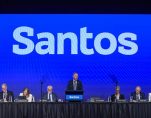
Shares in Santos plunged by up to 13.6% as the Abu Dhabi National Oil Company-backed XRG consortium formally withdrew its A$36.4 billion takeover offer, stating it could not reach agreement with Santos on critical commercial terms.

The consortium, which includes ADQ and Carlyle alongside XRG, had proposed A$8.89 per share in June, equivalent to US$5.76 at the time. Santos had adjusted that for a dividend and told XRG on Monday that it was prepared to accept US$5.626 per share.

This marks the third unsuccessful major offer for Santos over seven years, including a rejected bid from Harbour Energy in 2018 and abandoned merger talks with Woodside Energy. Analysts warn that repeated deal failures erode investor confidence in the company’s ability to seal a large-scale acquisition.

Investor concern was immediately reflected in the market. Santos shares dropped to A$6.61 in early trading, their lowest level since June 10, as the premium embedded in the bid evaporated. The benchmark S&P/ASX200 index was marginally down.

Analysts and banks responded by downgrading the stock. Jarden cut its rating from “overweight” to “underweight”, lowering its 12-month target from A$8.40 to A$7.05 per share. turn0news10turn0search1turn0search2

Santos leadership emphasised its strong project pipeline, pointing to the Barossa gas project in northern Australia and the Pikka oil venture in Alaska as key future growth drivers. Company chair Keith Spence reiterated that Santos has a clear strategy to generate cash, reward shareholders, reinvest in infrastructure and grow production while maintaining safety and reliability.

XRG stated that a “combination of factors, when considered collectively, have impacted the Consortium’s assessment of its indicative offer”, including inability to agree on terms under the Scheme Implementation Agreement. Among sticking points was the demand that the consortium assume certain regulatory and tax-risk obligations, which XRG considered unacceptable.

/India Press Agency/

By Nitya Chakraborty Prime Minister Narendra Modi has stepped into his 75th year on Wednesday, September 17.His birthday is being celebrated by the BJP nationally. The significance is much more as PM’s 75th birthday celebrations have coincided with the centenary programmes on the founding of the RSS in 1925.On October 2 this year, Vijaya Dasami […]

The article Decoding Prime Minister Narendra Modi As A Political Leader On His 75th Birthday appeared first on Latest India news, analysis and reports on IPA Newspack.

Curve DAO is considering a proposal to pre-mint 60 million crvUSD to support its new Yield Basis AMM, a mechanism designed to use leveraged Bitcoin pools to eliminate impermanent loss while boosting yield. The crvUSD would be borrowed and paired with BTC in liquidity positions rather than sold on the open market, avoiding direct dilution of circulating stablecoin supply.

Proposed by Curve founder Michael Egorov, Yield Basis is expected to launch with three capped pools, each for BTC wrappers, with deposit limits of about US$10 million per pool. The proposal claims that Yield Basis returns value to both veYB holders and to Curve / veCRV holders through trade-and-fee flows, vote incentives, and other revenue mechanisms.

However, the plan has met with resistance in Curve’s governance forums. Critics warn that pre-minting unbacked crvUSD introduces systemic risk, including potential for unmanageable supply growth, governance overreach, and threats to the peg of crvUSD. One commenter described the risk of minting “out-of-thin-air, unbacked, 60M crvUSD”. Some community members argue the DAO’s current permissions already allow arbitrary minting of crvUSD, a concern in light of past vulnerabilities.

Risk mitigation is a major topic of debate. Suggestions include turning the pre-mint into a strict credit line structure, with per-pool limits, a governance-controlled kill-switch, staged rollout starting with a single BTC wrapper, insurance or first-loss vaults, and better transparency via telemetry dashboards. Yield Basis proponents have responded by noting that the protocol has passed six audits to date, is running a Sherlock bug bounty, and intends to enforce caps at launch. They emphasise that crvUSD in Yield Basis is minted only when BTC is deposited.

Scale and revenue projections form a core of the discussion. The proposal argues that Yield Basis solves what’s known as the demand-side absorption issue for crvUSD: rather than minting tokens that are sold, pairing them internally with BTC leverages LP positions, creating supply sinks and revenue flows. Fee distributions—from arbitrage trades, stablecoin pair pools involving crvUSD, and trading commissions—are structured to benefit veCRV holders, veYB holders, and liquidity providers. The DAO ecosystem is slated to receive a share of YB token inflation for vote incentives in major stablecoin pools.

Stakeholders are closely watching governance dynamics. veCRV voting power is fragmented, voter turnout on high-stakes proposals is variable, and some members say optics could affect market confidence. The precedent set by this mint could influence how future protocol decisions are made.

HONG KONG SAR – Media OutReach Newswire – 17 September 2025 – Response to the Policy Address 2025/26 by KK Chiu, International Director, Chief Executive, Greater China of Cushman & Wakefield: Housing Supply and Land Policy Optimize land resource allocation and accelerate public housing supply Hong Kong’s land allocation policies have a profound impact on people’s lives. We are pleased to see the government actively promoting Light […]

Prosus NV has raised its holding in Urban Company Ltd to 7.35 per cent, after acquiring roughly an additional 4 percentage points by investing about $139 million, ahead of the home services startup’s Initial Public Offering. This move positions Prosus as one of Urban Company’s largest shareholders and signals strong institutional faith in the firm’s prospects.

Urban Company’s IPO drew overwhelming demand — it was subscribed over 103 times — and its shares listed at a premium of about 57.5 per cent over the issue price on the National Stock Exchange, opening at ₹162.25 versus the ₹103 issue price. The listing surged the company’s market valuation to nearly $2.8 billion.

According to Ashutosh Sharma, head of Prosus India Ecosystem, the firm increased its stake during the IPO allotment. Prosus first backed Urban Company in 2021; this latest acquisition underscores its continued appetite for stakes in Indian startups with domestic consumer and service-led business models.

Urban Company, founded in 2014 by Abhiraj Singh Bhal, Varun Khaitan, and Raghav Chandra, operates across home services such as beauty, cleaning, appliance repair and plumbing. It has expanded into over 50 cities in India and also operates in international markets including UAE and Singapore. The company reported strong financial performance in its fiscal year ending 2025, with revenue growth of around 36 per cent year-on-year and its first net profit of approximately ₹239–₹240 crore.

Investor enthusiasm was evident in the IPO process. Qualified Institutional Buyers led the subscription with particularly strong bids. The grey market premium, which reflects expectations ahead of listing, had risen to over 50 per cent above the issue price, signalling investor confidence in an upward listing trajectory.

Prosus’s move comes amid a broader trend of institutional investors increasing their exposure to Indian startups ahead of IPOs, particularly those in consumer-facing, service-oriented sectors. Earlier urban and tech-led listings have attracted robust demand, and IPOs that show solid unit economics—strong margins, revenue growth, steps toward profit—are being favoured by capital.

Urban Company’s stock market debut saw a steep rise: the shares not only opened with a 57.5 per cent premium on NSE, but trading surged further, reflecting both investor optimism and perceived underpricing in its IPO offer.

Prosus, headquartered in the Netherlands and known for its early stake in Tencent Holdings, has invested over $8-9 billion in the Indian startup ecosystem. It has backed firms such as Swiggy, Meesho, and PayU. Its amplified investment in Urban Company exemplifies a strategy of anchoring bets on firms that combine growth potential with improving financial metrics.

Hong Kong’s technology sector soared as benchmarks hit their highest point since 2021, supported by mounting investor confidence in China’s artificial intelligence ambitions. The Hang Seng Tech Index jumped about 4.2%, reaching a level not seen since November 2021, while Alibaba, Baidu and other major players saw robust gains on optimism around AI innovation.

Baidu led the charge, climbing roughly 16% in Hong Kong trading—its biggest surge since March 2022—as analysts upgraded its outlook in light of growing belief in its chip-development strategy. Alibaba also rose strongly; its Hong Kong-listed shares have reached levels unseen since late 2021, bolstered by its expanding cloud and AI-linked operations. Market watchers noted increasing activity in China Unicom and internal chip design projects contributing to the momentum.

This surge comes amid broader trends: domestic AI developers are accelerating roll-outs of proprietary chips, cloud computing investment is rising, and regulatory signals suggest stronger support for technology self-reliance. Meanwhile, progress in international matters—such as negotiations over TikTok’s operations—has reduced investor uncertainty, further boosting risk appetite in equity markets.

While enthusiasm is widespread, concerns persist among analysts over the sustainability of growth. High valuations have raised questions about how quickly revenue from AI and cloud services can scale. The technical challenge of chip design and the global competition in semiconductor technology remain formidable barriers.

Dubai Future Foundation has sealed a Memorandum of Understanding with XSOLLA, a global video-game commerce company, under the framework of the Dubai Program for Gaming 2033. The agreement seeks to reinforce Dubai’s position as a gaming innovation hub, drive thought-leadership in the sector, and deliver economic impact with goals of 30,000 new jobs and an additional US$1 billion in GDP by 2033.

DPG33, launched in November 2023 under the patronage of His Highness Sheikh Hamdan bin Mohammed bin Rashid Al Maktoum, Crown Prince of Dubai and Chairman of the Board of Trustees of DFF, aims to place Dubai among the world’s top ten gaming hubs over the next decade. The XSOLLA deal was inked during Dubai’s participation in Gamescom 2025 in Germany, where the DFF-led pavilion showcased local developers and gaming initiatives.

Under the MoU, the partners will co-operate on generating thought leadership initiatives and spotlight key activities in content, monetisation, infrastructure, and talent development. DFF also will use its platform to attract investment and cultivate a supportive ecosystem for game developers.

Local game studios have already been gaining traction. Dubai-headquartered iBLOXX secured US$5 million in funding to further develop its online game Strayshot, and Artisan Studios’ Lost Hellden drew over 15,000 wishlist additions on Steam plus more than 300,000 views of its promotional video across platforms such as IGN, PlayStation and Nintendo of America during the Gamescom showing. These examples illustrate growing visibility for indie development as well as commercial promise in Dubai’s gaming sector.

Abdulaziz AlJaziri, Deputy CEO of DFF, said that the level of local and international interest in Dubai’s gaming sector reveals “a real appetite to explore and partner with one of the industry’s most promising markets.” He emphasised Dubai’s advantages in infrastructure, investment, and competitive advantages under DPG33.

The economic projections tied to these initiatives rely heavily on success in three arenas: scaling game creation and publishing, enhancing monetisation capabilities, and developing skilled talent. The MoU with XSOLLA is expected to assist especially in the monetisation and scaling end, leveraging XSOLLA’s global commerce tools and developer support services. Analysts note that aligning global platforms like XSOLLA with local innovation programmes is a strategy used in other leading gaming hubs, helping to bridge gaps in market access, revenue optimisation, and international distribution.

Regulatory and infrastructure support remain under scrutiny, as talent attraction—both local and international—depends not only on capital and tools, but also on clarity in regulation, availability of education and training, creative incentives, and digital and physical infrastructure. Dubai’s gaming strategy, via DPG33, aims to address many of these pain-points through government partnership, industry collaboration, and ecosystem development.


Matein Khalid Mauritius, an island archipelago state in the Indian ocean, has long maintained extensive economic and cultural ties with the GCC. Thanks to tax treaties with India, Mauritius is a favourite domicile for wealthy Indian expatriate residents of the UAE and Saudi Arabia. GCC citizens and residents are prominent investors in some of Africa’s most expensive luxury beach resorts located in the island nation, where property […]

VISHNU RAJA
RYO YAMADA
HITORI GOTOH
IKUYO KITA