News related to
watch

OPEC+ has opted to raise oil production by approximately 548,000 barrels per day in August, marking a sharp departure from earlier plans and surprising markets worldwide. The move, confirmed in a brief video conference, is projected to accumulate a surplus towards the close of the year, potentially eroding revenues for both OPEC members and higher-cost producers, including US shale firms.

With Brent crude prices slipping over 1% to around $67.50 and West Texas Intermediate falling to the mid‑$65 range, the group’s decision has already begun to ripple through markets. The scale of the increase is unprecedented compared to prior months—more than 130% larger than April’s hike and substantially above the 411,000 bpd rise earlier this summer.

Leaders within OPEC+ signalled that this shift reflects a strategic pivot: from defending elevated prices to asserting market share. Saudi Arabia, the group’s dominant force, spearheaded the increase, while also raising premiums for Arab Light crude sold to Asian markets—a move widely interpreted as a signal of confidence in near-term demand.

Analysts emphasise that current market structure is supportive of absorbing this surge. UBS’s Giovanni Staunovo remarked that “the oil market remains tight, suggesting it can absorb additional barrels,” though he cautioned about potential headwinds from macroeconomic uncertainties and lingering trade tensions in the next 6–12 months. Similarly, Reuters reporting notes that the decision followed assessments of low inventories and healthy economic indicators.

US President Donald Trump, whose administration has repeatedly lobbied for lower fuel costs domestically, is widely seen as a direct beneficiary of this policy. OPEC+ officials framed the increase as responsive to US pressure, with Saudi Arabia effectively stepping into a balancing role ahead of diplomatic visits.

Nevertheless, market watchers warn of mounting risks. RBC Capital projects that around 80% of the voluntary cuts—a total of 2.2 million bpd—will be reversed by September, hinting at oversupply. Financial institutions such as Morgan Stanley anticipate Brent could slide below $60 by early 2026, while ING and Barclays have also trimmed their forecasts in response to expanding inventories.

Geopolitical variables add further complexity. Though Middle Eastern tensions have eased since the brief flare‑up between Israel and Iran, any resurgence in conflict could inject volatility into the supply outlook. Moreover, internal cohesion within OPEC+ remains fragile, with nations such as Kazakhstan and Iraq reportedly exceeding quotas in recent months.

US domestic production continues its ascent, as data shows output from shale and other sources has hit record levels—adding to potential global gluts. The prospect of elevated US tariffs and slowing economic momentum could further suppress demand, amplifying price pressures.

Even so, OPEC+ remains optimistic in the short run. Saudi Arabia’s decision to lift regional premiums and analysts’ assessments of supportive market conditions reinforce this stance.

As this enlarged supply enters the market, price-sensitive producers such as US shale operators may face tighter margins. Global capitals will closely follow whether OPEC+ sustains this production path or retreats in the face of a deepening surplus.

Heads of government gathered in Rio de Janeiro for the 17th BRICS summit on 6–7 July 2025, yet Iran’s President Masoud Pezeshkian will not attend in person, opting to join virtually amid escalating regional tensions. This marks a notable shift in IRGC diplomatic strategy and signals Tehran’s cautious engagement with the global bloc. Brazilian host Lula da Silva extended formal invitations to all member nations, including Iran. […]

A record net outflow of 16,500 high-net-worth individuals is set to leave the UK in 2025, marking the largest wealth exodus recorded globally. This trend, stemming from major shifts in tax policy and visa regulations, signals a turning point in the UK’s appeal to the global rich. High earners are relocating in large numbers in response to the scrapping of the non-domicile status in favour of a […]

A coalition of eight OPEC+ nations is preparing to approve another increase in oil production for August, locking in a 411,000 barrels‑per‑day boost during their meeting on Saturday. The group—comprising Saudi Arabia, Russia, the UAE, Kuwait, Oman, Iraq, Kazakhstan and Algeria—has steadily wound back earlier cuts, reversing a 2.2 million bpd reduction begun in April.

Market analysts note that this would mark the fourth straight monthly escalation, totaling around 1.78 million bpd so far this year—equivalent to more than 1.5 per cent of global oil consumption. While the group has repeatedly implemented these increases, actual output has varied, as some members still clamp down to make up for past quota overshoots.

A shift ahead of schedule

OPEC+ fast‑tracked this weekend’s gathering by one day, underscoring its urgency to reclaim market share amid rising competition, particularly from U. S. shale producers. This realignment follows a strategy change observed across May, June and July, a pivot away from enforced cuts towards restoration of production volumes.

Internal friction persists

Tensions within the group continue, especially with Kazakhstan. The country’s June output reached record levels—1.88 million bpd—far exceeding its quota, as Chevron’s expansion at the Tengiz field ramped up operations. Other members, observing tighter compliance, have expressed frustration over these deviations. Observers suggest the bulk output increases serve multiple purposes: penalising over‑producers and deterring further deviations by rewarding compliant members.

Price and market reception

Brent crude recently edged lower, trading in the mid‑$60s per barrel, partly due to assurances that supply will remain ample, and also on uncertainties around U. S. tariff policy. Analysts at ING and Morgan Stanley expect prices to hover near $60‑$67, citing well‑supplied markets. Goldman Sachs forecasts a similar output increase at 0.41 mbpd and anticipates stable production after August, projecting average Brent prices around $60 in 2025.

HSBC, meanwhile, warned that ongoing supply hikes could push Brent below $65 in the fourth quarter, predicting mounting market surplus through 2026 and into 2027.

Strategic trade‑offs

OPEC+ appears to be walking a tightrope between market share expansion and price support. The rollout of successive supply increases challenges the group’s previous aim of bolstering prices. Analysts from Energy Aspects and RBC’s Helima Croft view this as a deliberate shift: smoothing out supply reductions to prevent erosion of influence, while retaining flexibility to respond to demand surprises.

Geopolitical context also features in the calculus. The group continues to factor in global uncertainties—such as U. S. tariff threats and geopolitical strains in the Middle East—into its supply decisions. Saudi Arabia is expected to raise its official selling prices to Asia in August, even amid the production uptick, reflecting efforts to defend revenue amid market volatility.

Looking ahead, market watchers will scrutinise whether all eight members will fully support the proposed increase—or whether some seek a more aggressive supply push above the already ambitious 411,000 bpd figure.

KUALA LUMPUR, MALAYSIA – Media OutReach Newswire – 4 July 2025 – Wishpro uses patented Magnetic Infusion Technology (MIT) to support deeper delivery of oil-based active ingredients. Designed to nourish without clogging pores, it helps reinforce the skin barrier and retain moisture—especially beneficial in humid climates. Unlike many devices that rely on water-based formulas, Wishpro focuses on oil-based actives for targeted, lasting results. The Future of Skin […]

Apple is introducing a fresh layer of defence in iOS 26’s Messages app, giving users the option to silence and segregate texts from unrecognised senders. The update shifts spam and unknown contacts into a separate section, reducing notifications and clutter without permanently blocking messages. Built to enhance user control, the feature adds toggles in Settings under Messages → Unknown & Spam, enabling distinct screening options for unknown senders and suspected […]

Ukrainian President Volodymyr Zelensky has formally stated he is prepared to meet Russian President Vladimir Putin in person to negotiate a ceasefire and work towards ending the conflict. He emphasised that a direct encounter between the two leaders is the only path to a meaningful halt in hostilities. Zelensky’s announcement follows previous calls for a 30‑day ceasefire that would hold until a summit could be arranged between him and […]

Advertisements

Economic indicators confirm that the UAE’s non‑oil private sector maintained growth in June, as the S&P Global Purchasing Managers’ Index rose to 53.5 from 53.3 in May. A reading above 50 denotes expansion, illustrating continued momentum despite mounting headwinds from regional instability. Amid rising output, firms are focused on easing backlogs even as new orders decelerate to their slowest pace in nearly four years. The PMI sub‑index […]

Business Bay achieved over AED 4.5 billion in off‑plan real estate sales during the second quarter of 2025, completing more than 1,900 transactions and cementing its reputation as a premier residential and investment epicentre in Dubai. Contributing 5 per cent of the emirate’s total real estate sales value, while representing only 3 per cent of transaction volume, the district demonstrated its enduring appeal and pricing power amid a booming market. Dubai’s overall property […]

KUALA LUMPUR – Media OutReach Newswire – 2 July 2025 – This Thursday at 12:30 p.m. UTC, the U.S. Bureau of Labor Statistics will release its highly anticipated Nonfarm Payroll (NFP) report. While typically issued on the first Friday of each month, this week’s release has been brought forward due to the upcoming U.S. Independence Day holiday. The NFP report is traditionally considered to be the most […]

After discovering institutional inefficiencies in traditional finance, this young CFA is helping investors access opportunities previously reserved for Wall Street. The mahogany-paneled conference room fell silent. On the 47th floor of one of Wall Street’s most prestigious firms, Tan Gera stared at his computer screen in disbelief. The evidence of systematic insider trading was not only shocking—it was the final piece of a puzzle he’d been putting […]

Binance now commands a staggering 87 per cent of global taker futures volume, overshadowing all other platforms combined. OKX, Deribit, BitMEX and Bybit together account for just 10 per cent, underscoring Binance’s extraordinary grip on the derivatives market.

Liquidity advantages explain this dominance. Binance routinely records 24‑hour futures volumes exceeding US$50 billion and open interest of similar scale, dwarfing competitors. Such vast trading depth appeals to institutional players and retail investors alike, reinforcing Binance’s centrality in price discovery and leverage trading.

Data from on‑chain analytics firm CryptoQuant notes that Binance alone accounts for 87 per cent of global taker buy volume. This metric tracks market‑order consumption of liquidity, a key indicator of exchange activity in fast‑moving markets. Analysts say this dominance not only reflects Binance’s scale but also amplifies its influence on global derivatives flows.

While Binance’s dominance is clear, other exchanges continue to carve out niche roles. Bybit holds steady as the second largest player in perpetuals, and OKX remains a major competitor for altcoin futures. Deribit continues its leadership in the Bitcoin options space, though its slice of futures volume remains small in comparison.

Regulatory scrutiny, however, poses threats to Binance’s hegemony. The exchange has confronted legal challenges across multiple jurisdictions, including high‑profile cases in the US, UK, Canada, Belgium and Nigeria. While a US plea agreement in late 2023 imposed a US$4‑billion fine and saw Changpeng Zhao step aside, Binance has since implemented compliance reforms and launched regional ventures to navigate regulatory barriers.

Despite regulatory headwinds, Binance’s infrastructure remains formidable. Its capacity to offer up to 125× leverage on Bitcoin futures, along with hundreds of perpetual and quarterly contracts, attracts traders seeking high‑speed, high‑stakes strategies. The exchange also sustains deep liquidity across both USDT‑margined and coin‑margined instruments, further cementing its appeal.

Market observers flag potential risks in concentrated market power. Binance’s outsized role means shifts in its taker behaviour can reverberate across crypto markets. A recent dip in Binance’s taker buy/sell ratio to below 1.0—while other platforms remained net buyers—sparked concern that Binance‑driven selling pressure could herald broader price corrections.

Still, Binance’s dominance exerts a self‑reinforcing effect. Traders aim to engage where order books are deepest and execution is fastest—creating a virtuous cycle that keeps Binance at the centre. For competitors, gaining even modest gains in market share requires overcoming Binance’s head start, deep pockets and global reach.

Looking ahead, industry watchers see Binance’s influence persisting as long as it maintains technical robustness, product innovation and competitive fees. Rival exchanges are stepping up with new offerings—such as OKX’s grid trading bots, Bybit’s aggressive funding strategies, and Deribit’s options liquidity—but their futures volume remains dwarfed.

Saudi Arabia’s Public Investment Fund posted a 60 per cent plunge in net profit for 2024, even as its assets surpassed the US $1 trillion mark, the fund disclosed on 30 June. The drop came amid persistent high interest rates, inflationary pressures, and a wave of impairments tied to escalated costs and shifting operational plans.

Net income dwindled to 25.8 billion riyals, down sharply from 64.4 billion riyals in the prior year. This contrast underscored the divergence between headline growth and bottom‑line volatility within Saudi Arabia’s principal engine for economic diversification.

Assets under management rose by 18 per cent to 4.321 trillion riyals, up from 3.664 trillion riyals in 2023. The surge came largely from fresh capital injections, including transfers from oil‑linked revenues, plus appreciation in existing holdings, particularly in domestic champions such as Saudi Aramco and Saudi National Bank.

Yet, comprehensive income—an accounting measure that factors in unrealised gains and asset revaluations—tipped into negative territory, registering a 140 billion riyals loss following a gain of 138.1 billion riyals the previous year. The swing reflected deep writedowns, tied to project revaluations across the PIF’s footprint.

Monica Malik, chief economist at Abu Dhabi Commercial Bank, attributed the downturn in part to recalibration of investment strategies. She highlighted how “prioritisation of some projects and the extension in the timelines of some giga projects could have been a factor for the impairments,” and pointed to rising costs as another pressure point.

Among these giga‑projects is NEOM, an ambitious urban megacity on Saudi’s Red Sea coast. Backed by hundreds of billions of dollars in PIF funding, NEOM remains central to the fund’s strategy, though its scale and timeline have been under increased scrutiny amid cost inflation and changing economic dynamics.

Cash reserves stood firm at 316 billion riyals, while group loans edged up to 570 billion riyals, signalling ongoing borrowing to propel expansions. This reflects PIF’s dual posture: aggressive investment on one hand, and debt financing on the other.

Historically, PIF has been pivotal to Saudi Arabia’s Vision 2030 programme—Crown Prince Mohammed bin Salman’s blueprint to reduce national dependence on oil by building world‑class tourism, tech and renewable sectors. Since 2015, the fund’s remit expanded from passive equity holdings to sovereign‑directed mega‑investments. By end‑2024, PIF had amassed over US $1 trillion in assets, bolstered by successive Aramco asset transfers.

Its investment portfolio spans global holdings—Uber, Boeing, Disney—and domestic ventures like Qiddiya, the Red Sea luxury resort and NEOM. The fund also pursued high‑profile investments, including planned stakes in Heathrow Airport and European hotel chains. Overseeing this expansion has drawn both political and governance scrutiny, reflecting complex trade‑offs under Saudi rules.

Despite today’s profit contraction, the growth in assets cements the fund’s scale and influence. Dividends from Aramco and SNB now fuel a substantial portion of PIF’s recurring income, augmenting returns from non‑oil investments.

The portfolio writedowns—particularly impairments linked to escalated project outlays—underline broader macroeconomic challenges. High global interest rates have upped the cost of capital for long‑gestating developments, while inflation has pushed construction, labour and materials costs upward. PIF’s balance sheet has borne both pressures.

Operating amid this headwind, the fund has begun recalibrating timelines and reprioritising capital deployment. Malik’s comments suggest PIF faces a complex balancing act: stewarding mega‑projects while preserving fiscal discipline. Illiquidity risk, rising debt and market exposure also feature in ongoing risk assessments.

In parallel, PIF is broadening its footprint via bond issuances and global partnerships. According to finance industry disclosures, it is preparing a seven‑year sukuk targeting US $1.25 billion in proceeds. Such moves signal evolving financing strategies that complement traditional government funding and cash reserves.

Central to this outlook is Vision 2030. Despite the profit slump, PIF retains its mandate to catalyse non‑oil economic sectors, from tourism to tech to renewable energy. Arab regional peers have pursued similar diversification, but few match PIF’s scale. The fund’s willingness to shoulder large‑scale writedowns may reflect long‑term thinking: strategic build‑out today, stabilised returns in future decades.

Global investors and markets will likely watch upcoming quarterly and full‑year data for signs of recovery or further calibrations. Rising global interest rates remain a wildcard. Additionally, cost overruns in mega‑projects may prompt sharper scrutiny and public debate about deliverables.

PIF’s holding company, chaired by the Crown Prince, retains political backing, but governance observers continue to emphasise improved transparency and oversight. The fund’s decisions now carry wider implications: not just for returns, but as a barometer for Saudi Arabia’s Long‑Term economic strategy.

“Yuyuan Lantern Festival 2025” Lights Up Bangkok to Celebrate 50 Years of Thai–Chinese Diplomatic Ties BANGKOK, THAILAND – Media OutReach Newswire – 1 July 2025 – ICONSIAM, the global landmark along the Chao Phraya River, joins hands with Shanghai Yuyuan Tourist Mart Group, the legendary host of China’s most prestigious lantern festival to present the first-ever Yuyuan Lantern Festival in Thailand. Titled “Spirit of Mountains and Seas […]

Kraken has launched xStocks, a platform enabling users outside the United States to trade 60 tokenised U.S. stocks and ETFs around the clock, five days a week. Accessible through the Kraken app, these equities are issued on the Solana blockchain and are fully backed one‑for‑one by genuine shares held via Backed and Dinari, offering both price parity and economic rights.

The new service opens over 60 blue‑chip names—including Apple, Tesla, Nvidia and Amazon—to non‑U.S. investors, granting fractional ownership starting at just US$1, with no purchase fee in USD or Kraken’s native USDG. Trading is available 24/5 via the exchange, while withdrawal to self‑custodial wallets allows for 24/7 on‑chain usage, such as collateral in DeFi.

Kraken’s co‑chief executive Arjun Sethi described xStocks as a “foundational” shift in investment accessibility, emphasising seamless, permissionless ownership without intermediaries or geo‑barriers. The tokens are structured as SPL assets on Solana, chosen for its speed and efficiency, and dividends are auto‑reinvested into additional tokens, though users forfeit direct voting rights.

Kraken has imposed geo‑restrictions, excluding U.S. persons as well as residents in Canada, EU, UK and Australia during the initial rollout—but plans to expand to more than 185 countries in the coming weeks and eventually extend to multiple blockchains. The exchange emphasizes adherence to regulatory frameworks, supported by its partnerships with Swiss issuer Backed and U.S. SEC‑registered transfer agent Dinari.

The advent of tokenised stocks follows earlier, less‑successful attempts by Binance in 2021, which encountered regulatory pushback in multiple jurisdictions. Coincidentally, Bybit unveiled access to the same xStocks pool two hours after Kraken, signalling an intensifying push within the crypto sector. Bybit’s version supports both Solana and Ethereum versions, aimed at users seeking a bridge between traditional finance and crypto.

The global tokenisation of equities is attracting attention across the industry. Robinhood has launched tokenised stock trading in the EU in partnership with Arbitrum, enabling EU residents to trade over 200 U.S. equities 24/5. Coinbase is also pursuing approval from the U.S. Securities and Exchange Commission to offer tokenised equities domestically, pending regulatory clearance. Several firms recognise tokenisation’s potential to reduce costs, improve settlement times, and introduce continuous trading, though they acknowledge challenges surrounding liquidity and regulatory harmonisation.

Market watchers suggest tokenised equities could reshape global finance. The linkage to blockchain allows cross‑border access, seamless custody and composability in DeFi ecosystems. Critics note limitations, such as absence of voting rights and uncertain secondary‑market liquidity. The World Economic Forum and legal analysts have underlined the need for clearer disclosure standards and global regulatory coordination.

Kraken’s move appears calibrated to capitalise on a regulatory shift favouring tokenisation. It actively engages with international regulators, avoiding pitfalls that stymied predecessors. Its strategy builds on existing infrastructure—such as its listing of more than 11,000 traditional U.S. securities to U.S. clients—melding established market access with on‑chain innovation.

The launch of xStocks marks a pivotal moment in mainstreaming tokenised finance. By undercutting geographical limitations, slashing fees and uniting traditional equities with crypto rails, Kraken and peers are edging global capital markets closer to seamless, inclusive accessibility. As the ecosystem evolves, attention will turn to how regulatory authorities respond and whether liquidity deepens to support this new asset class.

Easou Technology Holdings Ltd surged as much as 69 per cent to HK$7 before settling at HK$5.88, responding to a strategic 10‑year agreement with a Hong Kong tech firm to co‑develop real‑world‑asset tokenisation and digital asset products. The agreement, coupled with a letter of intent to invest up to HK$3 billion in data centre acquisitions, signals a significant pivot for the Shenzhen‑headquartered digital technology group.

The 10‑year development pact positions Easou at the forefront of a booming tokenisation trend. With the global RWA tokenisation market now valued at US$24 billion — private credit representing over half that sum — the timing gives Easou a chance to capitalise on institutional and retail appetite for immutable, on‑chain asset exposure.

Under the agreement, Easou’s partner in Hong Kong will provide technological infrastructure and regulatory insight. Together they will craft tokenised products spanning private credit, real estate and commodities, tapping into growing investor demand for fractionalised, programmable yield instruments. Analysts expect such collaboration to drive Easou’s AI‑powered content, recommendation engine, and blockchain capabilities to new heights.

Market watchers also note that Ethereum remains dominant in tokenisation — hosting about US$7.5 billion of RWA tokens — but newer blockchains such as Solana, Aptos and Avalanche are gaining ground in niche sectors. Easou’s decade‑long commitment may allow it to adapt across multiple ledger protocols and regulatory frameworks.

The announcement arrived amid a flurry of capital‑raising activity for Easou: on 20 June it placed 57.33 million shares at HK$3.20 each for gross proceeds of around HK$183.5 million, primarily earmarked for deepening its AI‑driven content ecosystem — including short drama, online gaming, content ad tech, and overseas expansion. Chairman Wang Xi also agreed to a 75‑day lock‑up on his shareholding, a gesture insurers interpret as a show of confidence.

Wang Xi described the tokenisation initiative as “a pivotal step” in building an AI‑and‑content synergy, while the capital placement strengthens Easou’s balance sheet, allowing it to invest across new domains without diluting core content investments.

Turning attention to its second headline move, Easou signed a letter of intent to deploy up to HK$3 billion towards acquiring data centres in key Asian markets, including Hong Kong, Japan or Southeast Asia. Industry sources suggest the facilities will support the computing demands of tokenisation platforms and AI workloads — marrying robust infrastructure with financial innovation.

Easou’s stock performance reflects the market’s enthusiasm. The share price rose over 8 per cent earlier in the week to HK$3.51 following the share placement announcement. The near‑tripling to HK$7 on tokenisation news demonstrates confidence in the long‑term vision and revenue potential of its dual strategy.

Still, investors caution about execution risks. Developing tokenised products requires navigating evolving global regulations, particularly in Asia. Hong Kong’s Securities and Futures Commission has signalled willingness to regulate stablecoins, custodians and tokenised offerings as part of its digital‑asset hub initiative, which includes new licensing regimes and frameworks for RWAs. Easou and its partner will need consistent compliance and adaptive governance structures over the decade‑long horizon.

Capital deployment into data infrastructure is capital intensive and faces competitive pressures from established cloud providers. Achieving scale and operational efficiency will be crucial if Easou’s data‑centre investments are to complement its tokenisation ambitions rather than become a costly diversion.

Easou’s strategy illustrates several emerging trends: the convergence of AI‑content and blockchain infrastructure; the pivot to tokenised finance underpinned by robust tech stacks; and Asia‑based companies aligning with local regulatory expansions. By investing in both digital asset innovation and foundational infrastructure, Easou aims to move beyond its role as an AI recommendation engine provider into a multi‑vector technology aggregator.

Decentralised exchanges now account for 27.92% of global spot trading volume compared with centralised exchanges, marking a sharp rise from just 0.36% in June 2020.

Trading platforms operating without intermediaries have attracted a growing user base. The surge is primarily driven by rapid token listings, enhanced accessibility, and traders seeking autonomy over assets.

Crypto‑analytics firm CryptoRank reports the 27.92% figure as of 27 June 2025. On the same date, CoinStats and Cointelegraph confirmed that DEX activity has surpassed one quarter of combined CEX volumes.

Market analysts say this shift reflects a fundamental change in how users approach crypto. DEXs often offer immediate listing for new tokens, while CEXs enforce extensive vetting, delaying token debut. This gives DEXs an edge for traders looking to seize early opportunities.

Industry professionals highlight improved user interfaces, multi‑chain support, and deep wallet integration—such as MetaMask and Coinbase Wallet—as key enablers reducing friction for users.

At the same time, spot volume on CEXs has declined, reverting to levels last seen in 2020, according to CryptoQuant data. This drop has fed into the rising share of DEXs even if total trading volumes remain flat.

Numerous industry insiders emphasise that long‑term holders, or ‘HODLers’, are withdrawing assets from centralised platforms to personal wallets. This trend has further depressed CEX volumes and benefited decentralized trading.

Beyond token listings, privacy and transparency concerns have played a role. Faced with heightened scrutiny of centralised platforms and regulatory pressures, users often gravitate towards DEXs that allow control over private keys and transaction traceability.

The market has witnessed high‑value token offerings, including memecoins and Web3 project tokens, debuting exclusively on DEXs where speculative interest is strong. These listings typically bypass CEX vetting procedures, reinforcing DEX popularity among investors seeking first‑mover advantage.

Despite DEX progress, CEXs still dominate overall trading: the remaining 72.08% of spot volume remains on centralised systems. Their robust liquidity, institutional investor access, and features like leverage trading continue to appeal to many investors.

Analysts caution that DEX market share gains may plateau unless total trading activity grows or CEX volume drops further. However, if DEX share surpasses 30%—a threshold some industry observers regard as a tipping point—it could reshape how trading infrastructure evolves.

Technological strides are helping drive DEX adoption. Layer‑2 rollout, smart-contract efficiency, and multisignature governance have reduced fees and slippage. Cross‑chain bridges further improve functionality, with networks like Ethereum, Solana, and Polygon enabling seamless movement across blockchains.

Security remains a concern, however. DEX platforms, while reducing risks associated with central custodians, expose users to smart‑contract vulnerabilities. High‑profile exploits continue to underscore these weaknesses. That said, liquidity protocols such as Uniswap v3 and LayerZero have incorporated rigorous audits, bug‑bounty programmes, and verifiable codebases to bolster confidence.

Regulation continues to loom over both exchange types. Centralised platforms must comply with KYC/AML rules and are vigilant following recent regulatory crackdowns. DEXs operate in a more decentralised fashion but may face scrutiny for permitting unvetted tokens. Some global jurisdictions are investigating DEX platforms for facilitating illicit finance.

Emerging market participants – from speculative traders to institutional investors – are now evaluating DEXs as viable alternatives. These platforms support algorithmic trading bots, liquidity pools, yield‑farming incentives, and governance staking. Both market segments are adapting to a blended ecosystem.

Looking ahead, analysts are watching developments in decentralised autonomous organisations and algorithmic market‑making, which may reshape trading dynamics. Advances in privacy protocols, like zero‑knowledge rollups, could further catalyse DEX appeal by enhancing user confidentiality.

Institutional adoption remains cautious. Regulatory clarity, custody solutions, and conventional compliance standards are still being developed. Yet a growing cohort of fintech firms are exploring hybrid DEX‑CEX offerings, combining institutional-grade services with decentralised execution.

While DEX market share has reached unprecedented levels, it remains uncertain whether this marks a permanent realignment. The next pivotal indicator will be whether DEXs can sustain growth in a stable or expanding market, rather than merely displace CEX volume amid stagnation.

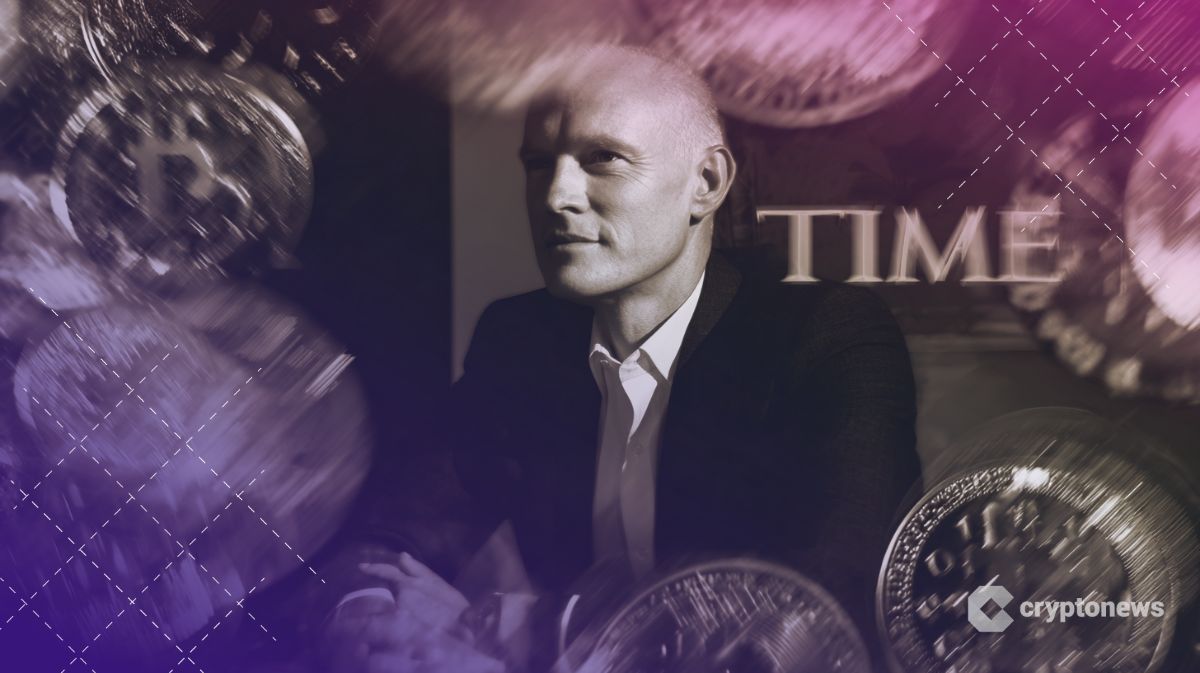
Coinbase, headquartered in the United States, has secured a place among Time Magazine’s 100 Most Influential Companies of 2025, hailed for reshaping the landscape of digital finance and regulatory engagement. This accolade reflects a marked shift in how cryptocurrency firms are perceived by mainstream institutions.

With over 108 million users and more than $400 billion in custodial assets, Coinbase stands as the largest US-based crypto exchange. Analysts attribute significant weight to its aggressive advocacy efforts in Washington DC and its proactive approach to regulatory compliance, positioning the company as a key policy driver for the digital asset space.

Coinbase’s stock has mirrored its growing stature—rising approximately 42 per cent year-to-date and briefly touching $382 per share following the US Senate’s passage of the GENIUS stablecoin bill on 17 June. Market watchers note that its inclusion in the S&P 500 in May reinforces its transition from niche crypto exchange to mainstream financial institution. That move not only provides visibility to traditional investors but also signals regulatory confidence.

The cardinals of Coinbase’s ascent include its push for firm regulatory frameworks: it recently secured a MiCA license from Luxembourg’s Commission de Surveillance du Secteur Financier, enabling full European market operations. Plans are underway to establish its EU headquarters in Luxembourg, marking a strategic foothold in the continent.

Another bold initiative is Coinbase’s application to the US Securities and Exchange Commission to launch tokenised stock trading. If approved, this service could see the platform rival fintech peers such as Robinhood and Webull, offering fractionalised equity products under one roof.

Financially, Coinbase reported over $2 billion in trailing annual revenue and maintained $420 billion in assets under custody as of Q1 2025, up from $310 billion the preceding year. These figures, alongside institutional-tailored offerings such as Coinbase Prime, have caught the attention of Bernstein analysts, who raised their COIN price target by 50 per cent in light of this recognition.

Despite its successes, Coinbase’s journey has not been without hurdles. A May cyber-extortion attempt linked to stolen customer data resulted in an estimated cost of up to $400 million, though the company managed to contain the breach and refused to submit to ransom demands. This incident followed growing scrutiny from blockchain investigators concerning vulnerabilities and scam-related losses attributed to the platform. Still, the US SEC dismissed its enforcement action in February 2025, signalling regulatory progress.

Beyond its core operations, Coinbase wields significant influence in shaping public policy. Its 2024 lobbying campaign played a central role in positioning cryptocurrency as a campaign issue in the US election cycle. Time again underscored its impact, quoting: “Coinbase led a massive lobbying campaign … helping cement crypto as a voting issue,” and framing the company as “a key driver of the industry’s policy efforts in Washington D.C.”.

Looking ahead, industry observers anticipate further advances as Coinbase expands tokenised equity offerings and solidifies its role in institutional-grade products. These efforts, coupled with sustained lobbying presence and international expansion, point to a future where digital assets underpin new investment paradigms.

A Singapore court has postponed the trial of three men accused of illegally redirecting Nvidia AI chips to China until 22 August, after prosecutors stressed the need for additional time to analyse fresh documents and obtain international cooperation. The adjournment allows police to deepen their review of evidence and reach out to overseas authorities for responses.

Charged with fraud, the defendants—Singaporeans Aaron Woon Guo Jie, 41, and Alan Wei Zhaolun, 49, along with Chinese national Li Ming, 51—stand accused of falsifying end‑user information to secure servers during purchases in 2023 and 2024. Those servers, allegedly equipped with high-end Nvidia chips, were then shipped via Singapore to Malaysia before possibly continuing to China. Political pressure surrounds the case, as the United States banned exports of leading-edge chips to China in 2022 over military and intelligence concerns. A senior U.S. official has asserted that DeepSeek, the Chinese AI firm implicated, supports military and intelligence operations.

Home Affairs Minister K. Shanmugam confirmed that Singapore authorities pursued the investigation independently after an anonymous tip-off, and preliminary findings indicate the servers may indeed contain Nvidia’s chips. The equipment, originally sourced from Dell Technologies and Super Micro Computer via Singapore‑based firms, was rerouted to Malaysia, though the final destination remains uncertain.

This case forms part of a broader probe involving 22 individuals and companies alleged to have falsified end‑user data in order to bypass export restrictions. Singapore’s position as a regional invoicing hub—recording 18% of Nvidia’s fiscal year revenues despite accounting for less than 2% of physical shipments—underscores its vulnerability as a transit point in such schemes.

Observers note that policing such complex supply chains is increasingly difficult, especially when high‑performance AI hardware carries dual-use potential with applications in advanced military or surveillance systems. Singapore’s legal actions and multilateral engagements will be closely watched as the court reconvenes late in August.

Australia’s earnings from mining and energy exports are set to decline over the coming years, with rising gold revenues unable to fully offset weak demand and price falls in iron ore, liquefied natural gas and coal. Government projections show a fall from A$415 billion in 2023–24 to A$385 billion in 2024–25, and further to A$352 billion by 2026–27. The Office of the Chief Economist highlights that surplus global supply—particularly in […]

Demand for physical gold is diverging sharply across regions, with US investors cashing in on their bullion holdings while Asian buyers ramp up their purchases. Data shows US retail demand for gold bars and coins dropped to roughly 19.3 tonnes in the first quarter of 2025 — a five‑year low, down 22% year‑on‑year — as Americans took advantage of record prices to realise gains. Meanwhile, in Asia, […]

A sharply rising trend in India’s share markets is encountering resistance from multiple fronts, prompting increasing scrutiny over its sustainability. Benchmark indices have enjoyed roughly a 14 per cent rally over the past six months, invigorating initial public offerings and share sales. Yet, foreign investors have been net sellers to the tune of US$10 billion this year, triggering alarm among market watchers.

The spike in corporate fundraising—from HDB Financial Services and others—has elevated supply to near record levels, raising the prospect of a correction should demand fail to keep pace. With IPOs totalling around US$1.75 billion launching this week and dozens more awaiting approval, promoters are cashing out aggressively. Companies such as British American Tobacco and Reliance Industries have conducted substantial secondary offerings, exacerbating the supply pressure.

Foreign institutional investors have pulled capital at a faster clip. Already offloaded nearly US$29 billion from Indian equities since October as they pivoted to China in search of stimulus-led returns. Over the January–March period, FPIs unwound ₹61,000 crore from the Indian market amid global headwinds, while June saw ₹8,749 crore in fresh outflows on escalating US–China trade friction and rising yields abroad.

The domestic funding round is proving insufficient to fill the gap. Domestic mutual fund inflows recorded a 13‑month low, signalling wavering local investor sentiment. The result: valuations are increasingly stretched, and analysts caution that the market may be overextending.

Oil price volatility adds another layer of risk. India’s dependence on imported crude leaves its markets vulnerable to geopolitical flare-ups. Experts warn that if Brent crude surpasses US$80 per barrel due to conflict in West Asia, inflation could spike and equity valuations may come under renewed selling pressure.

Offsetting these challenges are encouraging technical patterns. The market has recently broken out of a five‑week consolidation phase, with key indices like the Nifty approaching the 26,000 mark. Renewed investor interest in metals and chart‐based breakout signals have sparked fresh optimism. Improved global sentiment—including a cooling of trade tensions and reported progress in US–China negotiations—may underpin further gains if inflows resume.

Still, some analysts remain unconvinced of a robust economic shift. Growth indicators have softened and wage pressures remain muted. India’s cyclical revival is far from assured, with consensus calling for cautious optimism over the next 18–24 months. Delays in domestic reforms or widening global pressures could blunt momentum.

A UAE-based investment vehicle, Aqua 1 Foundation, has acquired $100 million in governance tokens from World Liberty Financial, the cryptocurrency venture affiliated with the Trump family, making it the most prominent publicly disclosed investor to date. The move, confirmed by both parties, signals a strategic push to accelerate the creation of a blockchain-based financial ecosystem built on stablecoins and tokenised real-world assets.

Aqua 1 described the allocation of governance tokens—known as WLFI—as an opportunity to contribute to decisions on the platform’s development. Although WLFI is currently non-transferable, World Liberty has confirmed it is “working behind the scenes” to enable trading functionality. At the Permissionless conference in Brooklyn, WLF co‑founder Zak Folkman stated that WLFI could soon be tradable, with the stablecoin set for an independent audit “within days”.

Dave Lee, founding partner at Aqua 1, emphasised the synergy expected from the partnership, citing plans to jointly identify and foster high‑potential blockchain initiatives. The intention is to integrate WLF’s USD1 stablecoin infrastructure into global commercial payments and treasury systems. The move marks Aqua 1 as a key bridge between traditional finance and decentralised finance, aligning with its ambition to extend influence into South America, Europe, Asia and Middle Eastern markets.

Despite its substantial investment, Aqua 1 has maintained a low profile. Reports indicate its web presence is minimal—with just a handful of social media posts and evidence of a website only registered on 28 May.

WLF, launched in late 2024 by Donald Trump, three of his sons and associate Steve Witkoff, has raised well over half a billion dollars through token sales. The Trump family controls a significant stake—around 60% ownership and 75% of net token sales revenue—raising concerns over conflicts of interest. Democratic lawmakers and ethics watchdogs have repeatedly voiced apprehension that these financial interests may influence policy, amid reports that WLF proceeds reached hundreds of millions of dollars.

WLF’s stablecoin, USD1, is 100% backed and supported by U.S. dollar reserves, including Treasuries, and has already drawn sizeable institutional backing. In May, an Abu Dhabi firm used USD1 in a $2 billion transaction with Binance, while WLF prepares to publish an attestation of its stablecoin reserves as part of forthcoming audit disclosures.

The institutionalisation of WLFI governance aligns with the platform’s roadmap, which includes plans to launch a consumer‑friendly mobile app to streamline access to its digital ecosystem. The expected transition to transferable governance tokens is likely a precondition to broader distribution and potential listings on third‑party exchanges.

Regulatory scrutiny remains a key challenge. Critics argue that WLF’s entanglement of private financial interests with public office contradicts norms protecting against foreign influence. At least one senator has raised concerns after the Abu Dhabi stablecoin transaction. Additional worries stem from the Trump administration’s shift toward crypto deregulation, a change that coincides with WLF’s rise, prompting concerns from ethics groups about policy bias favoring the platform.

That overlap of influence has fuelled broader debates in Congress. Legislators have begun proposing amendments such as the GENIUS Act, which would regulate stablecoins more robustly, and restrictions on digital asset investments by sitting presidents. Observers note that WLFI’s new status and Aqua 1’s involvement could sharpen the need for regulatory clarity and transparency around token governance.

Meanwhile, WLF’s expansion plans are proceeding apace. The platform is reportedly developing a Middle East‑based Aqua Fund to support digital economy projects leveraging blockchain and artificial intelligence. The collaboration is expected to produce tokenisation platforms such as BlockRock, targeting institutional asset-digitisation markets.

Aqua 1’s governance stake marks a turning point. By becoming the lead institutional backer, the foundation now holds significant influence over decisions shaping WLF’s evolution. With token transferability and app launches on the horizon, WLFI stands poised for a new phase of adoption—though progress will likely be watched closely by regulators and investors alike.

A north‑Toronto casino has been hit with a $350,000 penalty after permitting an unscheduled after‑party on its gaming floor without proper risk assessment or controls. Ontario’s Alcohol and Gaming Commission determined that the event violated multiple standards, exposing patrons to safety hazards and operational lapses. On 27 September 2024, an electronic dance music event held in the adjacent theatre overflowed into the Great Canadian Casino Resort Toronto. […]

VISHNU RAJA
RYO YAMADA
HITORI GOTOH
IKUYO KITA