News related to
watch

A compact secondary display called WebScreen is being promoted as a hacker-friendly add-on for gaming and creator setups, with crowdfunding underway. It is designed to perch atop a primary monitor and display notifications, stats or reminders without distracting the user from full-screen work. WebScreen emerges from HW Media Lab, conceived by Pedro Martin and Eleo Basili. It features a 1.9–2.1 inch AMOLED panel at 240×536 resolution, powered […]

Arabian Post Staff -Dubai Tokyo — Casio Computer Co. has introduced its first mechanical timepiece within its EDIFICE family, unveiling the EFK-100 series that incorporates a forged-carbon dial in one variant and combines motorsport aesthetics with traditional watch engineering. The flagship model, EFK-100CD-1A, features a dial made of forged carbon—never before used in an EDIFICE timepiece—and is powered by an automatic movement visible through a display case […]

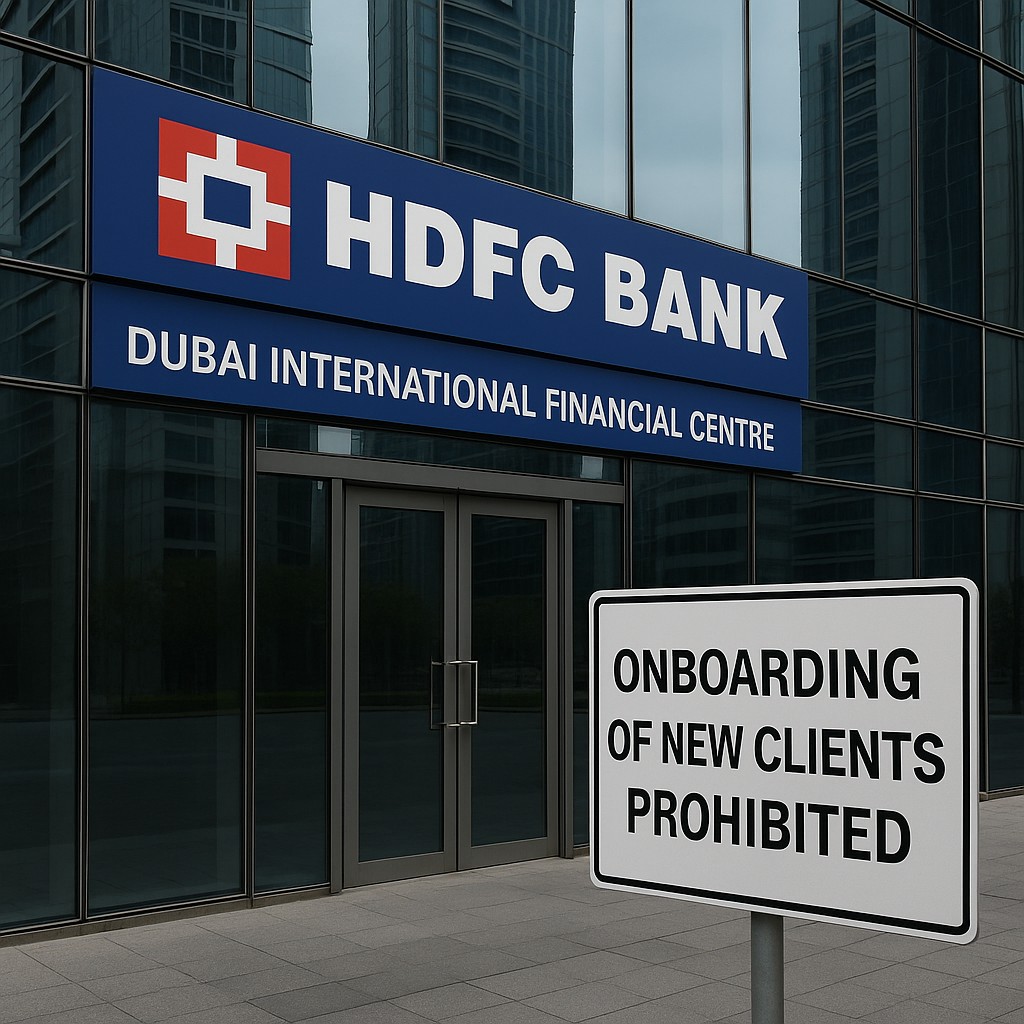
Dubai’s financial regulator has barred HDFC Bank’s Dubai International Financial Centre branch from soliciting, onboarding or servicing new clients, citing compliance lapses.

The order, issued by the Dubai Financial Services Authority and effective from 26 September, remains in force “until otherwise amended or revoked,” the bank stated. HDFC said it is taking steps to comply with the directive while engaging with the DFSA to address concerns.

HDFC clarified that the restriction does not apply to existing clients of the DIFC branch, nor to those who had already been offered services prior to the notice. As of 23 September, the branch had 1,489 customers, including joint holders.

According to HDFC, the bank does not expect this to materially affect its overall operations or financial position, noting that the Dubai branch’s business is not significant relative to its global activities.

The DFSA’s decision notice accuses the branch of servicing clients who were not properly onboarded, deficiencies in client onboarding processes, and other unspecified compliance shortcomings. The prohibition extends to advising on financial products, arranging deals, extending credit, custodial services, and financial promotions for new clients.

Analysts point to a backdrop of scrutiny over HDFC’s role in selling risky instruments—particularly Credit Suisse additional tier-1 bonds—to retail investors in the UAE. Those clients accused the bank of misclassification and inadequate risk disclosures. Investor accounts allege that KYC records were manipulated to designate them as “professional clients,” a requirement under DIFC rules for high-risk products.

Some UAE-based investors welcomed the DFSA’s move but urged stronger action, stating the suspension of new client intake is a limited measure given potential damage already done.

HDFC has a broader international presence including representative offices in Abu Dhabi, Kenya, London and Singapore, and branches in Bahrain and Hong Kong. The bank faces parallel scrutiny in India regarding related sales practices, prompting investigations by Indian enforcement agencies.

As the DFSA and HDFC engage in remediation talks, markets will closely watch whether the regulator escalates sanctions or lifts the ban after compliance is demonstrated.


HANGZHOU, CHINA – Media OutReach Newswire – 27 September 2025 – As east China’s digital tech hub Hangzhou is gearing up for the 4th Global Digital Trade Expo (September 25–29), a globally watched digital gala centered on “deep integration of digital trade and AI,” many would wonder who are the creators of the world-leading computing infrastructure, large models, embodied intelligent robots, and over 100 AI application scenarios […]

By Salah Uddin Shoaib Choudhury Bangladesh is entering one of the most dangerous phases of its history. At the centre of this looming crisis is the unelected regime of Muhammad Yunus, which is presenting itself abroad as democratic and reformist while systematically dismantling the country’s defence and intelligence structure. Behind the veneer of Nobel fame and global endorsements lies a far darker reality: Yunus’ growing alignment with […]

A stylised throwback to its 1998 branding greeted millions of users today as Google celebrated its 27th birthday, reviving its very first logo in a specially designed doodle. The artwork, published on Google’s official doodle site, reintroduces the original wordmark as a nod to its early days, while signalling the company’s ambition to balance heritage with future ambitions. Although Google was officially incorporated on 4 September 1998, […]

Dubai is gearing up to host the third edition of the Invest Web3 Forum, powered by bepay money, assembling over $500 billion in assets under management and more than 80 institutional investors. The one-day gathering, slated for 15 October at Dubai Knowledge Park, seeks to advance institutional adoption of blockchain through capital allocation, policy dialogue and startup investing. Market watchers point to the forum as a bellwether […]

Advertisements

Emaar has announced Dubai Mansions, a highly exclusive enclave of ultra-luxury homes positioned adjacent to Dubai Hills Estate. The development will include mansions available in 10,000, 15,000 or 20,000 square feet configurations, targeting elite global buyers seeking exceptional scale, privacy and design. The founder, Mohamed Alabbar, has framed the project as a statement of understated luxury: “There’s a kind of luxury that isn’t loud … from knowing […]

MetaMask’s long-awaited native token, MASK, has received confirmation from ConsenSys CEO Joe Lubin that it is on the horizon, stoking anticipation across crypto markets. Lubin suggested the token may arrive sooner than many expect, reawakening speculation about a potential airdrop tied to user activity. Traders have already begun positioning around the move.

Parallel to the MASK buzz, derivatives activity around Aster’s native token has escalated dramatically: futures open interest has expanded by 46 per cent, reflecting aggressive speculative demand.

Bitcoin’s climb toward as high as $113,500 has added momentum to altcoin risk appetite, though analysts warn of resistance near $115,000 as a critical hurdle for sustained upside.

Momentum behind Aster has been fuelled by on‐chain flows and whale accumulation. One address spent over $1.18 million acquiring nearly 595,580 ASTER tokens in a single trade, underscoring deep-pocketed conviction in the token’s trajectory. Aster has also introduced 300x leverage trading for HYPE, drawing comparison and competition with Hyperliquid’s native token ecosystem.

Meanwhile, Hyperliquid’s own tokenomics are under pressure. A major holder transferred around 200,000 HYPE tokens—worth roughly $8.9 million—within two hours, moving the assets toward Aster platforms. The selling pressure from large holders is prompting governance discussions: one proposal suggests burning 45 per cent of HYPE supply to counterbalance impending token unlocks.

Liquidity metrics reflect the competitive dynamics among perpetual DEX platforms. While Hyperliquid historically dominated, new entrants such as Aster, Lighter and edgeX are aggressively capturing share through incentives and token distribution programmes. Some analysts caution that much of Aster’s volume is driven by incentive-seeking rather than long-term retention.

The MASK narrative adds an extra layer of complexity. Decrypt reports that prediction markets assign roughly 32 per cent odds to a token launch by November, indicating widespread uncertainty despite Lubin’s confident tone. MetaMask’s path to decentralisation is expected to involve allocation to active users—those conducting swaps or interacting with dApps—though tokenomics remain unpublished.

Traders are watching to see whether cross-correlations form between MASK speculation and derivative positioning in ASTER and HYPE. If Aster’s futures momentum continues, it may draw further capital away from incumbents, even while regulatory risk looms over token launches.

We’ve all done it, started strong with our fitness routine and felt like we were really getting somewhere, then boom, life happened. Maybe work got crazy, your family needed you, or honestly, you just got bored of the same old routine. Whatever knocked you off course, the important thing is getting back up and dusting yourself off. Take It Easy at First Your body remembers what you […]

China is pursuing arrangements with allied central banks to store foreign sovereign gold within its territory, aiming to elevate its influence over global bullion holdings. The People’s Bank of China is deploying the Shanghai Gold Exchange as a vehicle to attract sovereign clients to park bullion inside China. At least one Southeast Asian country has expressed interest.

Officials involved say that the proposal involves central banks of “friendly” states buying gold and placing it in warehouses tied to the Shanghai Gold Exchange. This builds on China’s strategy of diversifying reserves and enhancing its status in global bullion markets.

China’s own gold holdings are growing steadily. As of July, its official international reserves included approximately 73.96 million ounces of gold, up from 73.9 million the month before. That marks nine months of continuous growth. At that point gold accounted for about 7% of China’s foreign reserves—well below the global average of around 15%. Analysts said China is likely to continue buying gold while moderately reducing holdings of US Treasuries, both to strengthen the renminbi’s international standing and mitigate exposure to dollar-linked risks.

Gold-buying by China fits into a larger global trend among central banks. Many are raising their allocation to gold as a hedge against geopolitical risks, inflation, and the uncertainty of reliance on major foreign currencies. Market watchers note that China’s moves are consistent with efforts from BRICS countries to build financial infrastructure and reserve mechanisms less dependent on dollar-centred systems.

For China, becoming a custodian for others’ gold reserves would represent a significant shift. It would mean not only controlling its own gold supply but also offering vaulting, storage, and custodial services to foreign sovereign clients. Such an arrangement would involve regulatory, security, and diplomatic considerations—from ensuring physical security of bullion to managing compliance with international rules around audits, transparency, and cross-border transfers.

Questions remain about how much demand exists among sovereigns for such an arrangement. The identity of the Southeast Asian country showing interest has not been confirmed. Some central banks prefer keeping reserves offshore for perceived neutrality or diversification of geographic risk. Others may hesitate due to concerns over sovereignty, geopolitical leverage, or storage fees and logistics.

China’s global gold purchases continue regardless. Observers point to continued accumulation of gold by the People’s Bank of China, a trend seen in the State Administration of Foreign Exchange data. Gold holdings have increased month after month, even as foreign exchange reserves fluctuate.

KUALA LUMPUR, MALAYSIA – Media OutReach Newswire – 23 SEPTEMBER 2025 – Webull Malaysia, a subsidiary of Webull Corporation (NASDAQ: BULL), the owner of the Webull trading platform, has launched its nationwide campaign #SamaSamaWebull, aiming to make investing more accessible for Malaysians. The campaign addresses challenges many Malaysians face, including limited financial literacy, complex platforms, and perceived high costs, by offering low-cost and simplified tools that make […]

NEW YORK, US – Media OutReach Newswire – 21 September 2025 – A team from Monash University Malaysia has won the 4th edition of the Universities for Goal 13 competition, a global challenge organised by the United Nations Sustainable Development Solutions Network (SDSN) in partnership with Siemens Energy. The winning project, “Turning algae into the future of a clean industry”, exhibits how microalgae can be used to […]

Abu Dhabi and Baku have sealed two Memoranda of Understanding between Presight and Azerbaijan’s government aimed at fuelling the country’s Artificial Intelligence Strategy 2025–2028, with strong emphasis also placed on education. The agreements were formalised with top-level signatories during the state visit of the UAE President to Azerbaijan. Under the deal with the Ministry of Digital Development and Transport, Presight will act as a strategic advisory and […]

HONG KONG SAR – Media OutReach Newswire – 19 September 2025 – Speeding up the large-scale Northern Metropolis development was a central theme of the 2025 Policy Address announced by Hong Kong’s Chief Executive, John Lee, on September 17, including measures to reduce construction costs and time, promote market participation, encourage enterprises to set up and invest in the area, and reduce the cost of land premiums […]

Abu Dhabi’s XRG, the ambitious investment arm of ADNOC, has abandoned its US$18.7–19 billion bid to acquire Australia’s Santos Ltd after failing to agree on key commercial terms, while its takeover attempt of German chemicals firm Covestro AG faces serious threats from an EU competition and subsidy probe. The Santos takeover fell apart largely over valuation disagreements and tax liabilities, according to people familiar with the negotiations. […]

Alec Holdings is set to list about 20% of its shares in an initial public offering on the Dubai Financial Market, while Binghatti Holding is preparing for a possible IPO, as both seek to harness surging demand in Dubai’s real estate sector. These moves reflect growing confidence among developers and investors in a rapidly expanding market. Alec, wholly owned by the Investment Corporation of Dubai, will offer […]

Curve DAO is considering a proposal to pre-mint 60 million crvUSD to support its new Yield Basis AMM, a mechanism designed to use leveraged Bitcoin pools to eliminate impermanent loss while boosting yield. The crvUSD would be borrowed and paired with BTC in liquidity positions rather than sold on the open market, avoiding direct dilution of circulating stablecoin supply.

Proposed by Curve founder Michael Egorov, Yield Basis is expected to launch with three capped pools, each for BTC wrappers, with deposit limits of about US$10 million per pool. The proposal claims that Yield Basis returns value to both veYB holders and to Curve / veCRV holders through trade-and-fee flows, vote incentives, and other revenue mechanisms.

However, the plan has met with resistance in Curve’s governance forums. Critics warn that pre-minting unbacked crvUSD introduces systemic risk, including potential for unmanageable supply growth, governance overreach, and threats to the peg of crvUSD. One commenter described the risk of minting “out-of-thin-air, unbacked, 60M crvUSD”. Some community members argue the DAO’s current permissions already allow arbitrary minting of crvUSD, a concern in light of past vulnerabilities.

Risk mitigation is a major topic of debate. Suggestions include turning the pre-mint into a strict credit line structure, with per-pool limits, a governance-controlled kill-switch, staged rollout starting with a single BTC wrapper, insurance or first-loss vaults, and better transparency via telemetry dashboards. Yield Basis proponents have responded by noting that the protocol has passed six audits to date, is running a Sherlock bug bounty, and intends to enforce caps at launch. They emphasise that crvUSD in Yield Basis is minted only when BTC is deposited.

Scale and revenue projections form a core of the discussion. The proposal argues that Yield Basis solves what’s known as the demand-side absorption issue for crvUSD: rather than minting tokens that are sold, pairing them internally with BTC leverages LP positions, creating supply sinks and revenue flows. Fee distributions—from arbitrage trades, stablecoin pair pools involving crvUSD, and trading commissions—are structured to benefit veCRV holders, veYB holders, and liquidity providers. The DAO ecosystem is slated to receive a share of YB token inflation for vote incentives in major stablecoin pools.

Stakeholders are closely watching governance dynamics. veCRV voting power is fragmented, voter turnout on high-stakes proposals is variable, and some members say optics could affect market confidence. The precedent set by this mint could influence how future protocol decisions are made.

Hong Kong’s technology sector soared as benchmarks hit their highest point since 2021, supported by mounting investor confidence in China’s artificial intelligence ambitions. The Hang Seng Tech Index jumped about 4.2%, reaching a level not seen since November 2021, while Alibaba, Baidu and other major players saw robust gains on optimism around AI innovation.

Baidu led the charge, climbing roughly 16% in Hong Kong trading—its biggest surge since March 2022—as analysts upgraded its outlook in light of growing belief in its chip-development strategy. Alibaba also rose strongly; its Hong Kong-listed shares have reached levels unseen since late 2021, bolstered by its expanding cloud and AI-linked operations. Market watchers noted increasing activity in China Unicom and internal chip design projects contributing to the momentum.

This surge comes amid broader trends: domestic AI developers are accelerating roll-outs of proprietary chips, cloud computing investment is rising, and regulatory signals suggest stronger support for technology self-reliance. Meanwhile, progress in international matters—such as negotiations over TikTok’s operations—has reduced investor uncertainty, further boosting risk appetite in equity markets.

While enthusiasm is widespread, concerns persist among analysts over the sustainability of growth. High valuations have raised questions about how quickly revenue from AI and cloud services can scale. The technical challenge of chip design and the global competition in semiconductor technology remain formidable barriers.

Vitol and Sunoco have taken delivery of the first U. S.-bound gasoline shipment from Nigeria’s Dangote refinery, marking a milestone in its global trade profile. The cargo, about 320,000 barrels, was loaded aboard the tanker Gemini Pearl, purchased from Mocoh Oil by Vitol and mostly resold to Sunoco, and discharged at Sunoco’s Linden facility in New York Harbor. Dangote’s refinery, the largest single-train facility in Africa with […]

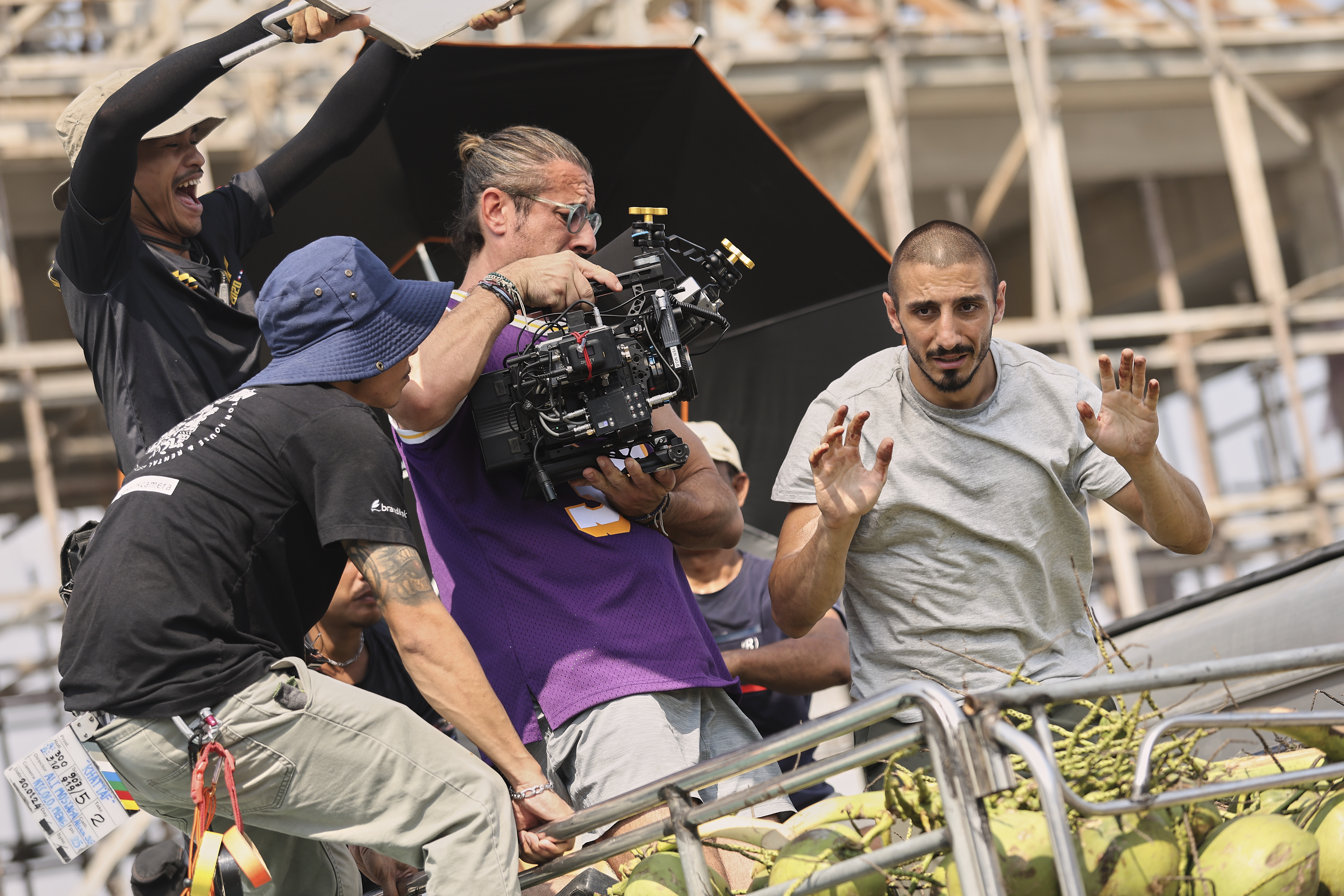
Abu Dhabi will become the base for a new production venture aiming to create large-scale action films, as Emirati actor-producer Mohamed F. Mostafa joins forces with British filmmakers Neil Marshall and Jadey Duffield.

The trio plan to produce under the UK company Art of Action, with two projects already in development: Marshall’s Skeleton Coast, a desert survival thriller, and Duffield’s Blackout, described as a whodunnit in the style of Knives Out crossed with The Raid. Mostafa is establishing a production company in Abu Dhabi to ensure that Emirati talent is deeply involved both in front of and behind the camera.

Abu Dhabi’s film incentive scheme is a cornerstone of the plan. Productions can receive up to 50% cashback on qualifying spend, provided they meet criteria including hiring local cast and crew and investing in local infrastructure. This enhanced rebate framework is intended to attract big-budget shoots while developing the skills of the domestic film workforce.

Marshall, known for directing episodes of Game of Thrones such as “Blackwater” and “The Watchers on the Wall”, described action as a genre with worldwide appeal. He and Duffield emphasise that their films will draw on regional fighting styles and action choreography seldom seen in global cinema, aiming to push what local crews can do alongside their work.

Mostafa said the timing is opportune, asserting that the Emirati entertainment sector has abundant talent that has so far lacked full exposure. He hopes this partnership will showcase that local crews and performers can deliver action content with international production values.

Abu Dhabi has over time hosted major international productions including Dune, Mission: Impossible, and Star Wars-related work. But Mostafa, Marshall and Duffield see potential beyond serving as a filming location: their goal is to make Abu Dhabi a creative base for action filmmaking with staying power.

Duffield emphasises translating external expertise into local growth, especially in areas like stunt and action design, with “knowledge transfer” baked into the structure of their planned films. The idea is not merely to import crews but to train and promote domestic specialists.

Australian legislation banning under-16s from holding social media accounts will permit platforms to make some errors when checking age, government and watchdog officials have clarified, as new trials show limits in technology and equity in age verification. The law, passed in November 2024, comes into force on 10 December 2025, obliging “age-restricted social media platforms” to take “reasonable steps” to stop users under 16 from creating or […]

Space42, listed in Abu Dhabi, and Viasat, a US communications company on Nasdaq, have joined forces to launch a new entity called Equatys to deliver Direct-to-Device and mobile satellite services worldwide leveraging 5G standards.

Equatys will combine satellite and terrestrial networks under a 3GPP Non-Terrestrial Network architecture so that standard smartphones and IoT devices can connect even where ground-based networks cannot reach. It will use over 100 MHz of harmonized Mobile Satellite Services spectrum across more than 160 markets. The venture aims to begin commercial service within three years.

The “space tower” model at Equatys is built on shared multi-tenant infrastructure covering both space and ground components. This setup is designed to cut redundant investment, improve spectrum utilisation, and reduce overall capital costs for operators. Licensed terrestrial and satellite operators will be able to tap into this infrastructure for D2D and next-generation MSS offerings.

Space42 was formed in 2024 through a merger combining the operations of Bayanat and Yahsat. Its business units include upstream satellite operations and geospatial analytics/AI-powered smart solutions. Major shareholders include G42, Mubadala, and IHC. Viasat, having acquired Inmarsat in 2023, operates globally in secure satellite communications, for government, enterprise, and consumer markets.

While financial terms of the venture were not disclosed, Equatys is expected to issue equity in phases, opening opportunities for strategic and financial partners as the system scales. The model is pitched as infrastructure-grade, aiming to offer returns tied to long-term deployment and spectrum utilisation rather than short-term hardware sales.

The project is subject to regulatory and customary conditions. It follows a Memorandum of Understanding signed in March 2025 between Space42 and Viasat which moved from exploratory technical and commercial studies to forming a jointly owned infrastructure company.

Experts are watching closely how spectrum harmonisation will be maintained across the many markets Equatys aims to cover. Nation-level telecom regulators often impose latency, licensing or usage constraints on MSS and NTN services, which can complicate global rollout. Also, implementing a shared infrastructure model across multiple orbits of satellites presents technical and operational challenges, from latency and hand-off between orbits, to ground station coordination, spectrum interference and service reliability.

Memecoins have surged across cryptocurrency markets as traders shift bets toward a probable interest-rate cut by the Federal Reserve and the possibility of U. S. altcoin ETF approvals. Bitcoin’s market share has declined by about 3.5% over the past month, while indexes comparing altcoin performance versus Bitcoin have entered so-called “altseason” territory.

Expectations that the Federal Reserve may reduce rates by 25 basis points later this month are currently priced in at over 90% by market observers using tools such as Polymarket and the CME’s FedWatch. A rate cut is widely seen as a trigger boosting risk-assets by lowering the comparative appeal of fixed-income securities.

The CoinDesk Memecoin Index rose roughly 7.1% over 24 hours, led by tokens like SHIB and BONE. These gains came despite Shiba Inu’s layer-2 network, Shibarium, being hit by a flash-loan exploit, which did not dampen investor enthusiasm.

Analysts point out that falling Bitcoin dominance, which reflects a shrinking slice of total crypto market capitalisation for the biggest token, often heralds a shift into altcoins. Indexes from providers including CoinMarketCap and CoinGlass have signalled this rotation of capital away from Bitcoin toward altcoins.

Institutional momentum is also tightening around altcoin exchange-traded funds; proposals for ETFs covering DOGE and TRUMP tokens are reportedly under consideration for U. S. markets in the final quarter of the year. Approval of such funds could draw both retail and institutional capital into memecoin-adjacent assets.

VISHNU RAJA
RYO YAMADA
HITORI GOTOH
IKUYO KITA