News related to
watch

Ritchie Bros.’ Dubai auction on June 4–5, 2024, recorded significant international participation, with 981 bidders from 69 countries. The event saw 1,123 lots sold to 309 buyers, reflecting strong global interest in heavy equipment. The United Arab Emirates led with 416 bidders, followed by the United States , Canada , Saudi Arabia , and the United Kingdom . This diverse participation underscores the auction’s global appeal. Notable […]

By K Raveendran Strong signs of undercurrents are emerging in the aviation space between India and the Gulf. There is renewed tussle over landing rights — the coveted permissions that determine which airlines get to fly where, how often, and with how many seats. For years, this battleground has been tilted in favour of Gulf-based […]

Dubai’s tech and creative sectors are booming, and local startups and agencies are keen on tools that save time and cut costs. On one hand, Make (formerly Integromat) is a no‑code automation platform that lets non-technical teams link apps and automate workflows visually. On the other hand, Replit is an AI‑powered cloud IDE for building and deploying software, aimed at developers. Both promise “do more with less,” […]

Germany’s antitrust authority, the Bundeskartellamt, has issued a formal warning to Amazon regarding its pricing policies on the Amazon Marketplace. The watchdog contends that Amazon’s mechanisms for controlling third-party sellers’ prices may infringe upon both national and European Union competition laws.

The Bundeskartellamt’s concerns centre on Amazon’s use of algorithms and policies that potentially penalise third-party sellers for setting prices deemed too high. Such penalties could include demotion in search rankings or outright removal of products from the platform. The authority argues that these practices may constitute an abuse of market dominance, restricting fair competition and consumer choice.

This development follows the Bundeskartellamt’s designation of Amazon as an entity of “paramount significance for competition across markets” under Section 19a of the German Competition Act. This classification subjects Amazon to heightened regulatory scrutiny and obligations to ensure competitive fairness.

In response to the ongoing investigation, the Bundeskartellamt conducted a survey in September 2024 involving 2,000 third-party retailers. The survey aimed to assess the impact of Amazon’s pricing policies on sellers’ behaviour and market dynamics. Preliminary findings suggest that Amazon’s practices may deter sellers from offering competitive prices, thereby limiting market diversity.

Amazon has previously defended its pricing policies, asserting that they are designed to prevent price gouging and protect consumers. However, the Bundeskartellamt maintains that such justifications do not exempt the company from adhering to competition laws.

The European Commission is also monitoring Amazon’s practices, particularly in light of the Digital Markets Act , which seeks to regulate large online platforms and prevent anti-competitive behaviour. Under the DMA, companies designated as “gatekeepers” are prohibited from favouring their own services or imposing unfair conditions on business users.

The outcome of the Bundeskartellamt’s investigation could have significant implications for Amazon’s operations in Germany and potentially across the European Union. If found in violation of competition laws, Amazon may face substantial fines and be required to alter its business practices to promote fair competition.

Apple is set to unveil macOS 26, internally dubbed ‘Tahoe’, at its Worldwide Developers Conference commencing on June 9. This iteration signifies a substantial overhaul in both design and branding for the Mac operating system. Continuing its tradition of naming macOS versions after Californian landmarks, Apple has selected Lake Tahoe—a renowned resort area straddling the California-Nevada border—as the namesake for its latest release. The choice reflects the […]

A tow truck is a bright representative of specialized equipment, a vehicle designed for transportation, loading and unloading of vehicles in case of breakdowns, accidents, traffic violations, when the driver is unable to deliver the vehicle to its destination. Transportation is carried out by full or partial loading or towing. Evacuators are equipped with a special platform with a winch or manipulator installed on it. If you […]

Emaar Development has secured a significant land acquisition in Ras Al Khor, marking a strategic expansion amid Dubai’s robust property market. The construction subsidiary of Emaar Properties, the emirate’s largest publicly listed real estate firm, completed the purchase of the plot from Amlak Property Investment for 2.9 billion dirhams , alongside associated transaction costs. This move enhances Emaar Development’s land portfolio, positioning the company to capitalise on […]

Advertisements

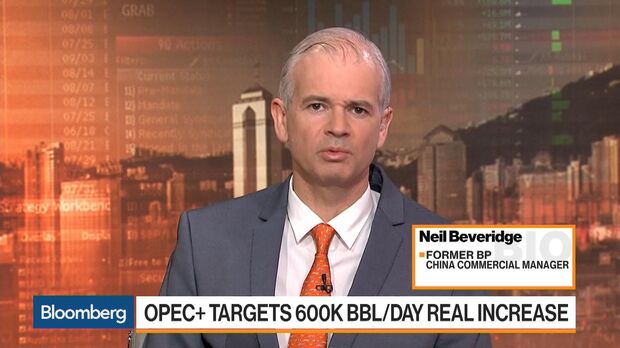
Prince Abdulaziz bin Salman’s tenure as Saudi Arabia’s energy minister has marked a decisive shift in OPEC+ dynamics, culminating in a significant production decision that underscores Riyadh’s growing influence within the cartel. The latest OPEC+ meeting saw Saudi Arabia successfully advocate for a third consecutive super-sized monthly output increase, a move that has reshaped the alliance’s approach to oil supply management despite opposition from key players such as Russia.

Since assuming office six years ago, Prince Abdulaziz has positioned Saudi Arabia as a firm leader within OPEC+, emphasising discipline and adherence to agreed production quotas. This approach contrasts with the historically more conciliatory stance the kingdom sometimes took within the cartel. The current strategy reflects a broader ambition to reclaim market share lost to non-compliant members and emerging producers outside the alliance’s remit.

The decision to boost output again—by approximately 500,000 barrels per day—signals a willingness to absorb short-term price volatility in favour of longer-term market dominance. Riyadh’s strategy appears geared towards punishing those within OPEC+ who have routinely exceeded their quotas, thereby undermining the cartel’s collective efforts to control supply and sustain prices. Saudi Arabia’s emphasis on stringent compliance aims to reinforce OPEC+ cohesion, even at the risk of dampening crude prices temporarily.

Russia’s resistance to the output increase highlighted fissures within OPEC+ as Moscow has consistently advocated a more cautious production approach, citing concerns over oversupply and the fragility of global demand recovery. Russia’s stance reflects a balancing act between maximising revenue and preserving the alliance’s unity. However, Saudi Arabia’s assertiveness in pushing the hike through demonstrates Riyadh’s readiness to leverage its dominant production capacity and market position to set the cartel’s agenda.

Global oil markets responded to the output hike by seeing a downward adjustment in prices, reflecting the increased supply entering the market. This shift contrasts with the supply restraint policies of previous years, which had been instrumental in stabilising prices amid fluctuating demand and geopolitical uncertainty. Market analysts note that the Saudi-led increase could signal a new phase in OPEC+ policy, one in which Riyadh is prioritising market share recovery over price support.

The broader context of this development involves multiple factors. The energy transition and climate policies worldwide have added pressure on oil producers, particularly those heavily reliant on hydrocarbons. Saudi Arabia’s move suggests a pragmatic response to these challenges, aiming to maximise current revenues while investing in diversification strategies such as renewable energy and petrochemicals.

The kingdom’s position as the de facto swing producer within OPEC+ gives it substantial leverage. Saudi Arabia can modulate output to influence global prices, a power that has been increasingly evident under Prince Abdulaziz’s stewardship. The kingdom’s vast spare capacity and low production costs enable it to sustain output increases that smaller or higher-cost producers cannot match.

The decision also reflects Saudi Arabia’s geopolitical considerations. Energy policy remains a critical tool of regional influence and international diplomacy. By asserting control over OPEC+ production decisions, Riyadh reinforces its leadership role not only within the cartel but also in broader energy markets, which remain pivotal to global economic stability.

The internal dynamics of OPEC+ have evolved since the alliance’s formation in 2016. Initially established to coordinate between OPEC members and major non-OPEC producers like Russia, the group has faced ongoing challenges balancing competing national interests. Saudi Arabia’s push for discipline and market share signals a new era where Riyadh asserts a more centralised command, even if that risks tensions with key allies.

The output increase also responds to market signals, including stronger oil demand forecasts and inventory levels that have stabilised. By expanding supply, Saudi Arabia aims to pre-empt supply shortages that could push prices beyond levels palatable to consuming nations and industries. This approach seeks to sustain demand growth by ensuring adequate supply and avoiding disruptive price spikes.

Critics argue that the output hike risks destabilising markets by flooding them with excess supply amid uncertainties in global economic growth, inflation, and energy transition timelines. They caution that prolonged lower prices could undermine investment in the oil sector, affecting long-term supply security. However, proponents view Saudi Arabia’s move as a necessary recalibration to reinforce market order and assert control over a fragmented supply landscape.

The ripple effects of the Saudi-led decision extend beyond OPEC+ members. Non-OPEC producers, including the United States shale industry, watch closely as changes in cartel policy impact global price signals and investment decisions. The output hike could influence the pace and scale of shale production, which remains a significant factor in global supply dynamics.

As the alliance navigates these complexities, Saudi Arabia’s approach under Prince Abdulaziz bin Salman sets a clear tone of leadership and strategic resolve. The kingdom’s readiness to push through output increases despite opposition illustrates its confidence in wielding its production capacity as a geopolitical and economic tool.

This assertive posture aligns with Saudi Arabia’s broader economic vision, including the ambitious Vision 2030 plan to diversify its economy and reduce dependence on oil revenues. Managing oil production to balance market share and price stability forms a critical part of this strategy, enabling the kingdom to finance diversification projects and maintain fiscal stability.

KUALA LUMPUR, MALAYSIA – Media OutReach Newswire – 2 June 2025 – June 2025 is shaping up to be one of the most eventful months of the year for global markets. For traders, this means opportunity—but also volatility. The economic calendar is packed with macroeconomic data releases and central bank meetings, while geopolitical risks remain close to the surface. Beyond the usual inflation prints and interest rate […]

MUNICH, GERMANY – Media OutReach Newswire – 1 June 2025 – The 2024/25 UEFA Champions League season reached its spectacular conclusion on 31 May at Munich Football Arena. As the Official Smartphone Product Partner of the prestigious competition for the third consecutive year, OPPO celebrated the event with a series of football-related CSR programs and cultural activations around the final as well as reaffirming its commitment to […]

By K Raveendran Brent crude oil futures continue to hover around the $65 per barrel mark, a level that reflects the push and pull of market forces clouded by a cocktail of geopolitical tensions, environmental disruptions, and strategic production decisions. As prices hold steady, the broader sentiment among traders and analysts leans toward caution, with […]

KUALA LUMPUR, MALAYSIA – Media OutReach Newswire – 30 May 2025 – Traders and investors alike are unnerved by the recent turbulence in the bond markets. After Moody’s—a major rating agency—downgraded U.S. government debt on 16 May, and Japanese long-term bond yields soared to multi-decade highs, some market participants started to fear that the world may be on the verge of a major debt crisis. Meanwhile, the […]

Morgan Stanley has firmly denied accusations from the Dutch Public Prosecution Service alleging the financial giant evaded tax on dividends worth nearly $1 billion more than ten years ago. The dispute centres on complex tax structures employed by the bank that Dutch authorities contend were designed to avoid paying the appropriate tax on substantial dividend income. Dutch prosecutors assert that the investment bank engaged in schemes dating […]

Solana’s cryptocurrency token has experienced a notable price surge, driven primarily by an inflow exceeding $1.1 billion to exchanges during May. This substantial movement of funds has attracted significant attention within the digital asset community, highlighting the growing interest in Solana amid an increasingly volatile market environment. The influx of tokens onto exchanges typically signals heightened trading activity, often preceding sharp price movements, and in Solana’s case, it appears to have been a catalyst for recent upward momentum.

The past weeks have seen a consolidation phase for Solana’s price, characterised by fluctuating trading volumes and cautious investor sentiment. However, May’s exchange inflow data reveals a sharp contrast, indicating a renewed wave of buying and selling pressure. This influx surpasses figures recorded in previous months, reflecting intensified activity from institutional players and retail investors alike. Analysts point out that such large-scale transfers to exchanges often suggest an intent to capitalise on price volatility, either through profit-taking or strategic accumulation.

Solana’s blockchain platform, known for its high throughput and fast transaction speeds, has gained traction beyond its original niche, appealing to a broader base of developers and users. Its ecosystem supports a wide range of decentralised applications, including DeFi protocols and NFTs, which have collectively contributed to increasing token demand. Industry experts attribute Solana’s recent price gains not only to market speculation but also to fundamental growth in network usage and ecosystem expansion.

Market participants closely monitor the inflow and outflow trends of tokens on exchanges as indicators of potential price directions. The reported $1.1 billion inflow represents tokens transferred from wallets to trading platforms, signalling that holders are preparing to trade. This can be interpreted in various ways: it may represent holders positioning themselves to sell and realise profits, or conversely, traders gearing up to buy or hedge positions amid market uncertainty.

Broader market conditions have influenced Solana’s trajectory as well. The cryptocurrency sector has witnessed uneven performance across different assets, with some coins consolidating while others rally sharply. Bitcoin’s fluctuating dominance and regulatory developments have introduced layers of complexity into trading decisions. Against this backdrop, Solana’s price action stands out due to the volume and scale of exchange inflows, setting it apart from many peers.

Further analysis of blockchain data confirms that the inflows were concentrated over several large transactions, often linked to known institutional wallets and prominent traders. This pattern contrasts with typical retail trading behaviour, which tends to be characterised by numerous smaller transfers. The presence of institutional activity points to growing confidence in Solana’s potential for medium-term gains, despite lingering concerns over market volatility and regulatory scrutiny.

Solana’s technological edge is often cited as a key factor supporting its valuation. The platform utilises a novel proof-of-history mechanism combined with proof-of-stake consensus, enabling it to process thousands of transactions per second with low fees. This scalability advantage is critical in sustaining the network’s appeal amid growing congestion issues faced by some competing blockchains. The surge in exchange inflows may partly reflect investor anticipation of further adoption driven by these technical strengths.

However, the rapid influx of tokens to exchanges also raises questions about market stability. Large sell-offs following such inflows could lead to increased price swings, challenging traders and investors to navigate the volatility carefully. Some market analysts warn that while the current price rise appears robust, it may be vulnerable to corrections if selling pressure intensifies or if broader market sentiment deteriorates.

Solana’s recent developments extend beyond price movements and token flows. The network has announced partnerships and upgrades aimed at enhancing security and interoperability, which could underpin longer-term growth. These initiatives include collaborations with major fintech firms and integration with cross-chain protocols, designed to broaden Solana’s accessibility and utility. Such advancements bolster the narrative that the project is moving beyond speculative trading into a more mature phase of ecosystem development.

The token’s growing use in decentralised finance applications adds an additional layer of interest for investors. DeFi platforms on Solana have attracted liquidity providers through competitive yields and efficient transaction processing, making them popular alternatives to Ethereum-based solutions burdened by higher fees. This trend has helped sustain demand for SOL tokens, supporting price levels despite wider market fluctuations.

Regulatory scrutiny remains an ongoing challenge for the cryptocurrency industry, including Solana. Various jurisdictions continue to debate rules concerning token classifications, trading practices, and investor protections. How regulators approach emerging blockchain technologies could significantly affect Solana’s market dynamics. Investors are closely watching for clarity that could either open new opportunities or impose restrictions affecting token liquidity and valuation.

Investor sentiment towards Solana reflects a balance of optimism and caution. While the large-scale exchange inflows and fundamental network growth signal promising prospects, market participants acknowledge the inherent risks posed by external economic factors, potential regulatory changes, and technological competition. The interplay of these forces will likely shape Solana’s price trajectory in the weeks ahead.

Telegram has entered into a one-year agreement with Elon Musk’s artificial intelligence company, xAI, to integrate the Grok chatbot into its messaging platform, which boasts over one billion users globally. Under the terms of the deal, Telegram will receive $300 million in a combination of cash and equity, along with 50% of the revenue generated from xAI subscriptions sold through the app.

This partnership marks a significant expansion for Grok, which was previously available exclusively to premium subscribers of X . By integrating Grok into Telegram, xAI aims to broaden its user base and compete more directly with established AI chatbots like OpenAI’s ChatGPT and Google’s Gemini.

Telegram CEO Pavel Durov announced the collaboration on X, highlighting the strategic move to enhance user engagement through advanced AI capabilities. The integration of Grok into Telegram is expected to provide users with a more interactive and intelligent messaging experience, leveraging Grok’s ability to generate text, understand images, and summarise conversations.

The financial structure of the deal underscores the growing value of AI integration in messaging platforms. The $300 million investment from xAI not only provides Telegram with substantial capital but also aligns both companies’ interests through the shared revenue model. This approach reflects a broader trend in the tech industry, where companies seek to monetise AI tools by embedding them into widely used applications.

Grok’s integration into Telegram comes amid a competitive landscape for AI chatbots. xAI, founded by Elon Musk in 2023, has rapidly developed Grok to offer features such as web search results, PDF uploads, and image understanding. The chatbot is designed to provide responses with a touch of wit and humour, distinguishing it from more conventional AI assistants.

The rollout of Grok on Telegram also raises questions about content moderation and user data privacy. Telegram has faced scrutiny in the past for its approach to content oversight, and the addition of an AI chatbot with unfiltered responses could attract further attention from regulators and watchdogs. xAI has previously faced criticism for Grok’s use of user data from X, leading to investigations by European privacy regulators.

China Media Group debuted the world’s first humanoid robot combat event in Hangzhou on May 25, 2025, showcasing bots performing martial arts moves learned from motion-captured fighters. Celebrated as a tech milestone, the competition merges innovation with spectacle, signaling China’s ambition to lead the robotics industry and pioneer real-world applications. BEIJING, CHINA – Media OutReach Newswire – 28 May 2025 – China Media Group (CMG) unveiled the […]

Demonstrating Financial Stability, Proposed Final Dividend of HK$0.81 cents per share, Exploring Overseas Market to Diversify Income Source HONG KONG SAR – Media OutReach Newswire – 27 May 2025 – The board of directors of Oi Wah Pawnshop Credit Holdings Limited (HKEx stock code: 1319.HK, the “Group” or “Oi Wah”) announced its annual results and its financial position. For the year ended 28 February 2025 (“FY2025”), the […]

By Dr Arun Mitra The unprecedented humanitarian crisis going on in Gaza is extremely disturbing. No sane and sensitive person can ever condone this on any pretext. Only the beastly instinct can make one kill the innocent toddlers. With an official figure of over 55000 people killed out of which 70% are women and children, […]

A leading candidate for the presidency of the African Development Bank has outlined a strategy urging African nations to mobilise up to $4.5 trillion in domestic private capital to drive the continent’s development agenda, aiming to reduce dependence on expensive international debt. This vision signals a shift towards leveraging Africa’s own financial resources to fund infrastructure, healthcare, education, and energy projects critical for sustainable growth. The candidate, […]

If you’ve spent the past few months watching the Trump tariff drama unfold, AI stocks become volatile and listening to everyone from your broker to your barista talk about rate cuts and inflation, you might think the only path to investment success in 2025 runs through stocks. But quietly, away from the hype, a growing number of individual investors are making a different move: they’re locking in […]

The allure of meme coins like Shiba Inu and Dogecoin has cooled, prompting investors and crypto enthusiasts to seek fresh opportunities beyond the fleeting hype. As these once high-flying tokens show patterns of price consolidation and reduced volatility, attention is increasingly shifting towards emerging decentralised finance projects, notably the Mantix decentralized exchange currently in its presale phase.

Mantix represents a new wave of crypto innovation aiming to capitalise on the growing demand for decentralised trading platforms with enhanced utility and community governance. Unlike meme coins, which primarily rely on social media buzz and speculative trading, Mantix offers a structured ecosystem designed to attract long-term participants. The project’s native token, $MTX, has garnered significant interest in crypto circles for its potential to integrate scalable blockchain solutions with user-driven decentralisation.

Market data indicates that meme coins, while maintaining a loyal base, have witnessed substantial corrections from their peak valuations over the past year. Shiba Inu, which surged into mainstream attention through aggressive marketing and celebrity endorsements, now faces resistance levels that limit further upward momentum. Dogecoin, originally launched as a parody cryptocurrency, similarly exhibits less price movement and trading volume than during its initial frenzy. This maturation phase has naturally led traders to explore De-Fi projects that promise utility beyond mere token speculation.

Mantix’s presale has emerged as one of the more watched events in the De-Fi space due to its approach of combining tokenomics with a robust decentralized exchange infrastructure. The platform is being built on a Layer 2 blockchain solution aimed at reducing transaction costs and enhancing speed, a crucial improvement over congested Layer 1 blockchains like Ethereum. By addressing scalability, Mantix hopes to attract users frustrated with high fees and slow confirmations, common complaints in existing DEX platforms.

Further intrigue surrounds Mantix’s governance model, which incorporates a decentralised autonomous organisation structure. Token holders of $MTX will have voting rights on key platform decisions, ranging from protocol upgrades to fee distribution. This democratic approach to platform management has resonated with investors seeking a voice in project development rather than passive holding.

Industry experts highlight that the shift from meme coins to utility-driven De-Fi projects reflects the broader evolution of the cryptocurrency market. Initial phases of crypto adoption were fuelled by hype and speculative mania, but the sector is now progressing toward maturity, where sustainable growth depends on practical applications and network effects. Mantix’s emphasis on building a scalable DEX aligns with this trajectory, placing it among a competitive set of projects trying to capture the next generation of crypto users.

Despite the buzz, experts caution that presale participation entails risks, including regulatory uncertainty and project execution challenges. De-Fi platforms often face complex security audits and require rigorous testing before launching fully. However, the team behind Mantix claims to have secured partnerships with established blockchain developers and auditors to mitigate vulnerabilities, although independent verification remains pending.

Investor enthusiasm around $MTX is also driven by the projected token supply model, which aims to incentivise early participants while avoiding excessive inflation. Unlike meme coins, where large token supplies have often led to price manipulation concerns, Mantix’s controlled issuance framework is designed to foster stability and gradual appreciation. Early investors see this as a key differentiator, especially as the crypto market enters a phase prioritising long-term viability over rapid gains.

Global crypto exchanges and wallets have reportedly begun integrating $MTX to facilitate seamless token distribution once Mantix transitions from presale to public trading. This integration plan underscores the project’s ambition to establish liquidity and market presence quickly. The initial roadmap also outlines plans for additional De-Fi features such as yield farming, staking, and cross-chain interoperability, which could position Mantix as a comprehensive platform for decentralized finance activities.

The shift in investor sentiment away from meme coins coincides with broader regulatory scrutiny across major markets, where authorities are increasing oversight of speculative tokens and trading platforms. This environment favors projects like Mantix that demonstrate transparent governance and clear utility. Regulatory compliance will likely remain a pivotal factor shaping the competitive landscape among De-Fi exchanges, with platforms adopting robust protocols gaining trust from institutional and retail investors alike.

Market analysts note that while Shiba Inu and Dogecoin have established themselves as cultural icons within the crypto space, their futures hinge largely on community support rather than fundamental technological advances. Conversely, De-Fi platforms like Mantix seek to blend technology innovation with community governance to drive adoption. This fundamental difference may influence which assets retain relevance as the market consolidates and matures.

Technical analysis of SHIB and DOGE price trends points to a phase of reduced volatility, marked by trading within defined ranges after sharp declines from all-time highs. Such patterns typically suggest accumulation phases or potential repositioning by holders. Meanwhile, Mantix’s presale momentum suggests a growing appetite for new projects with practical use cases, especially those tackling scalability and user empowerment issues prevalent in the crypto ecosystem.

The crypto market’s cyclical nature often sees hype-driven assets give way to infrastructure-focused projects. Mantix’s presale success could signal the start of such a rotation, as traders move capital into platforms offering tangible functionality. Nevertheless, the highly speculative environment demands due diligence, and investors are advised to assess project whitepapers, development progress, and team credentials before committing funds.

Billionaire investor Bill Ackman has taken a substantial position in Uber Technologies by investing $2.8 billion, marking one of the most significant recent moves by a major hedge fund into the ride-hailing giant. This sizeable commitment comes as Uber navigates an increasingly competitive and evolving landscape in mobility, delivery, and autonomous vehicle development. Ackman’s Pershing Square Capital Management purchased approximately 36.4 million shares, representing nearly 8% of […]

The Commodity Futures Trading Commission has affirmed that crypto perpetual futures are allowed for trading within the United States, providing much-needed regulatory clarity to market participants and investors in the digital asset space. This confirmation signals a significant development in the regulation of cryptocurrency derivatives, which have previously operated in a somewhat ambiguous legal environment. The CFTC’s explicit stance is expected to bring greater legitimacy and stability to an increasingly popular segment of the crypto market, while also setting the tone for future regulatory frameworks.

Crypto perpetual futures, a type of derivative contract that allows traders to speculate on the price movements of cryptocurrencies without an expiry date, have gained widespread traction globally. Unlike traditional futures contracts with fixed settlement dates, perpetual futures enable continuous trading, providing liquidity and hedging opportunities that attract institutional and retail investors alike. However, their regulatory status has often been unclear, causing uncertainty among exchanges and traders, especially in the US, where regulatory agencies tend to apply stringent oversight to financial instruments.

The CFTC’s confirmation comes amid growing scrutiny of the broader cryptocurrency ecosystem, which has faced regulatory challenges regarding investor protection, market manipulation, and systemic risks. The agency clarified that perpetual futures on cryptocurrencies fall under its jurisdiction as derivatives products, which means platforms offering these contracts must comply with relevant CFTC rules and regulations. This includes registration requirements for exchanges, adherence to anti-fraud measures, and maintaining transparent market practices.

Market leaders in crypto derivatives, such as Binance.US, FTX , and CME Group, have actively developed or listed perpetual futures contracts, but the lack of a formal regulatory framework had limited broader institutional adoption. The CFTC’s clear position may pave the way for more exchanges to offer these products, potentially increasing market liquidity and fostering innovation. The move also aligns with the agency’s broader approach to fostering responsible innovation in the derivatives market while safeguarding investor interests.

Industry experts note that the CFTC’s position contrasts with the Securities and Exchange Commission’s approach toward cryptocurrencies, which is generally more cautious, particularly regarding spot trading and certain crypto tokens. The delineation between the two agencies’ jurisdictions has been a subject of ongoing debate, especially since the SEC considers many digital assets as securities, thus subject to more stringent rules. The CFTC’s focus on futures and derivatives, rather than spot trading, offers a clearer regulatory path for these instruments.

This clarification from the CFTC also coincides with increased legislative and policy interest in digital assets at both federal and state levels. Lawmakers have debated comprehensive crypto regulatory frameworks to unify the patchwork of existing rules and provide consistency for market players. The CFTC’s explicit statement on perpetual futures could serve as a foundation for such legislative efforts, informing standards that balance innovation with risk management.

The implications of this regulatory clarity extend beyond the immediate crypto derivatives market. Institutional investors, including hedge funds, asset managers, and pension funds, have expressed cautious interest in digital asset products but often cite regulatory uncertainty as a key barrier. With perpetual futures formally recognised by the CFTC, these market participants may feel more confident engaging in cryptocurrency markets, potentially unlocking fresh capital inflows.

At the same time, consumer advocates and regulatory observers remain watchful. The high leverage and volatility inherent in perpetual futures trading can pose significant risks to less experienced traders, raising concerns about potential losses and market manipulation. The CFTC’s mandate includes protecting market integrity and consumer interests, so its enforcement actions and rulemaking around these contracts will likely intensify to address these risks effectively.

Cryptocurrency exchanges operating within the US have welcomed the announcement, viewing it as a step toward harmonising regulatory oversight and reducing operational uncertainty. Many platforms have invested heavily in compliance infrastructure, knowing that robust regulatory approval is crucial for long-term sustainability and growth. The clear jurisdictional guidance from the CFTC provides a framework for exchanges to innovate within established legal boundaries.

Internationally, regulatory bodies are also grappling with the rapid evolution of crypto derivatives. Countries such as Singapore, Switzerland, and the United Kingdom have developed varying approaches to the supervision of perpetual futures and similar instruments. The US’s decision to permit these contracts under the CFTC’s regulatory umbrella could influence global standards, encouraging a more coherent international regulatory environment.

Financial analysts highlight that the integration of crypto perpetual futures into regulated markets may increase price transparency and reduce volatility over time. By bringing these products under official oversight, the CFTC enables enhanced surveillance tools and risk controls, potentially deterring manipulative trading practices that have plagued the crypto space.

This regulatory clarity comes as decentralised finance platforms continue to explore perpetual futures through automated protocols. While the CFTC’s ruling primarily affects centralised exchanges and traditional trading venues, it sets a precedent that could influence regulatory approaches to DeFi derivatives as well. Authorities are closely monitoring DeFi developments, which challenge conventional frameworks due to their borderless and algorithm-driven nature.

Industry voices underscore the importance of balancing innovation with prudent oversight. The CFTC’s confirmation reflects a broader shift towards integrating cryptocurrency markets into the mainstream financial system while managing systemic risks. The move is likely to spur further collaboration between regulators, industry stakeholders, and market participants to develop standards that protect users without stifling technological advancement.

This regulatory milestone arrives amid a period of consolidation and maturation in the crypto market. After years of rapid growth, speculative excesses, and high-profile failures, the sector is increasingly focused on compliance, institutionalisation, and sustainable development. The CFTC’s stance on perpetual futures underlines the evolving recognition that digital assets and their derivatives require clear, enforceable rules tailored to their unique characteristics.


SHENZHEN, CHINA – Media OutReach Newswire – 22 May 2025 – In celebration of the World Day for Cultural Diversity for Dialogue and Development, OPPO reaffirms its commitment to cultural preservation and cross-cultural understanding through its global initiative Culture in a Shot, in partnership with Discovery Channel. Launched in 2024, this global initiative enters its second year and has documented cultures in 15 countries, continuing its mission […]

VISHNU RAJA
RYO YAMADA
HITORI GOTOH
IKUYO KITA