News related to
watch

By K Raveendran     When Google announced that Visakhapatnam would be home to its $15 billion project to build the company’s first artificial intelligence hub in India, the news landed like a thunderclap across the southern states. For Andhra Pradesh, it was nothing short of a jackpot — a once-in-a-generation opportunity to rewrite the […]

The article Google’s AI Hub: Visakhapatnam’s Jackpot, South India’s Heartburn appeared first on Latest India news, analysis and reports on Newspack by India Press Agency).

Apparel Group and Arabian Alesaar Group have struck a retail alliance to introduce 24 international brands across more than 9,000 sqm at the forthcoming Al Shubaily Grand Mall in Saudi Arabia. The agreement positions the partners to capture demand in one of the region’s fastest-growing markets and expands Apparel Group’s strategic footprint in the Kingdom.

Under the partnership, Apparel Group will bring a mix of fashion, lifestyle, beauty and F&B brands including Calvin Klein, Tommy Hilfiger, Birkenstock, Skechers, Crocs, Levi’s, Charles & Keith, Rituals, Tim Hortons, and Cold Stone Creamery among others. The range spans apparel, footwear, beauty and food & beverage, combining merchandise that appeals across categories. The deal is intended to dovetail with Saudi Arabia’s retail and tourism ambitions.

Apparel Group already has a significant presence in the Kingdom. It recently opened three new R&B outlets in Dhahran, Riyadh Gallery and Nakheel Mall — bringing the total number of R&B stores to 165 across the Middle East and India. The Nakheel location covers 2,500 sqm, making it one of the largest in Riyadh. The R&B concept covers men’s, women’s and children’s wear, footwear, accessories and home products. The expansion underscores the group’s goal of penetrating deeper into the Saudi market.

Chief Executive Officer Neeraj Teckchandani commented that the tie-up with Arabian Alesaar represents a strategic milestone in the group’s Saudi journey and will enable customers to engage with brands that combine global appeal with local relevance. He reiterated that Apparel Group is prioritising experiential retail, mall partnerships and omnichannel integration in its growth plan.

Market watchers see the deal as aligned with the accelerating growth of Saudi retail infrastructure. Analysts note that more than 30 new malls are in development across the Kingdom over the next few years, creating opportunities for global retail brands and investors. Apparel Group has earlier signed MoUs with mall developers such as Point and Mall of Dhahran to secure anchoring positions in new properties.

The partnership also reflects Apparel Group’s broader regional expansion strategy. The group now operates over 2,300 stores across 14 countries, representing more than 85 brands. It has been actively signing new labels in fashion, beauty, home and F&B segments to diversify its portfolio and diminish reliance on any single category.

Arabian Post Staff -Dubai Apple is reportedly ready to unveil a major revamp of its MacBook Pro line, introducing a touch-enabled OLED display and a hole-punch front camera in models expected during 2026 or early 2027, according to people familiar with the matter. The upgrade is slated for Apple’s high-end 14- and 16-inch Pro models, internally codenamed K114 and K116, and will be powered by the forthcoming […]

Bitcoin’s price dropped below $105,000 early Friday in London trading, recovering marginally later but signalling mounting pressure in crypto markets. Bloomberg data showed a fall of as much as 3 percent before a modest bounce. The slide comes after a week of heightened volatility that has dragged digital-asset valuations lower.

The crypto sector has shed billions. Total market capitalisation fell to its lowest point since July, as institutional and leveraged positions faced heavy liquidations. Ethereum, the second-largest token, also fell sharply, trading under $3,800.

One key driver has been intensifying stress in U. S. regional banks. Shares of Zions Bancorp plunged after it disclosed a $50 million loan impairment, while Western Alliance is embroiled in fraud allegations tied to borrowers. Those troubles have sparked a “flight to safety” across risk assets, nudging investors away from speculative trades.

The collapse in derivatives markets was steep: over $1 billion in long and short positions were wiped out in rolling liquidations, especially on exchanges with aggressive leverage mechanics. The drop below the 200-day moving average—around $107,500—has undermined a long-term support zone, fuelling further anxiety among traders.

At the same time, trading volume surged. Weekly volume for Bitcoin hit its highest level since March, suggesting heavy participation even amid panic. Some analysts see that as a sign of re-accumulation by institutional players, though it remains unclear whether those inflows will stabilise prices.

Technical watchers are eyeing potential floor zones near $100,000, while others suggest $88,000 could act as an “open target” if selling accelerates. Meanwhile, on-chain data reveals that wallets holding between 100 and 1,000 BTC—sometimes called “shark wallets”—are accumulating aggressively, marking the fastest rate of inflow since 2013. Those trends echo previous panic phases, which often preceded longer rallies.

Some observers caution that Bitcoin’s repeated failure to behave as a “safe harbour” during market stress undermines one of its selling points. Still, others argue that the fundamentals remain intact—citing diminishing supply on exchanges, renewed institutional interest, and the durability of blockchain infrastructure.

Volatility is unlikely to subside soon. The week ahead includes major U. S. economic data releases and potential policy statements from central banks that could sway risk sentiment. In parallel, geopolitical frictions—particularly over trade and supply chains—may further rattle markets already in flux.

Over $250 million has been wiped out from leveraged positions across major cryptocurrency markets within the last 60 minutes, according to real-time tracker alerts. The bulk of the liquidations hit long bets, triggering a sharp lash of volatility that rattled traders across exchanges.

Data from multiple crypto-analytics feeds show that Bitcoin and Ethereum bore the brunt of the forced closures, with long positions cascading under mounting downward pressure. The alerts indicate that around $200 million of that total was liquidated in just the preceding 15 minutes. Margin calls and automatic stop-loss triggers have sharply pared back open interest.

Market participants point to a combination of lower-than-expected macro signals and heightened global risk aversion as catalysts for the sudden liquidation wave. Macro equity markets have seen risk assets fall under pressure over the past sessions, prompting a spillover into speculative crypto positions. The added strain from derivatives exposure amplified the move.

Crypto exchange data show that Binance, Bybit and OKX recorded the highest volumes of liquidations, especially in their perpetual futures markets. On Binance alone, over $80 million in long positions may have been forcibly closed, according to traders cross-checking the on-chain and order-book flows. Ethereum perpetuals also registered substantial losses, particularly in mid- and high-leverage tiers.

Analysts observing funding rates and open interest across exchanges have flagged an abrupt deleveraging. The funding rates for many altcoins flipped negative, signalling that the short side was gaining dominance as leverage unwound. Open interest across high-risk tokens dropped by 15 – 20 % in many cases, suppressing liquidity and heightening slippage.

Several algorithmic trading desks and quant funds experienced knock-on effects. As large liquidations pulled prices lower, stop orders cascaded, exacerbating the decline in thin markets. Some trading firms reported losses due to slippage and forced exits—even though positions were hedged—with automated strategies failing to escape the downdraft in time.

A few larger holders, often designated as ‘whales’, appear to have opportunistically repositioned. Some have placed bids closer to now-discounted levels in anticipation of a bounce; others reduced exposure altogether. On-chain indicators suggest increased inflows to stablecoin pools and accumulation in non-spot holdings, hinting at a cautious redeployment rather than wholesale exit.

Institutional interest remains muted amid the turmoil. According to contacts in digital-asset fund management, most institutions were already operating with limited leverage and hedges in place. Few entered new positions during the seizure of volatility, and many paused trades to watch whether support levels would hold.

Walmart has forged a deal with OpenAI to allow customers and Sam’s Club members to purchase goods directly through ChatGPT using its Instant Checkout system. The move turns the AI chatbot into a full-fledged retail interface, collapsing the gap between conversational query and completed sale. Shares of Walmart rose about 3 percent following the announcement, signalling investor confidence in this bold shift in e-commerce. The companies say […]

Tether has agreed to pay $299.5 million to the Celsius Network bankruptcy estate, resolving long-standing disputes over Bitcoin collateral transfers tied to Celsius’s collapse in 2022. The deal was announced by the Blockchain Recovery Investment Consortium, a joint venture between GXD Labs and VanEck, acting as litigation administrator and asset recovery manager for Celsius’s creditors.

The settlement brings closure to adversary claims filed in August 2024 in the U. S. Bankruptcy Court for the Southern District of New York. Celsius had contended that Tether improperly liquidated Bitcoin collateral backing loans denominated in USDT, executing sales when Bitcoin’s market value closely matched Celsius’s debt — thereby undermining the lender’s position. Under the agreement, those claims will be dismissed, though the broader wind-down of Celsius remains ongoing.

BRIC was appointed by Celsius’s debtors and the unsecured creditors committee in January 2024 to steer recovery efforts of illiquid assets and litigation claims. According to BRIC’s announcement, the payment reflects a negotiated resolution consistent with maximizing returns for creditors. David Proman of GXD Labs remarked on the “timeliness” of the settlement and the objective of concluding contentious matters against Tether.

While $299.5 million is a substantial sum, it accounts for a relatively small fraction of the total claims Celsius had pursued—estimated at approximately $4 billion. Tether’s side had resisted full liability, positioning its role as merely transactional rather than one bearing responsibility for downstream collateral use, a stance it has maintained in past legal challenges. Some observers interpret the settlement as signalling heightened legal risks for stablecoin issuers in future insolvency contexts, where courts may scrutinize the proximity of collateral actions to debtor collapse.

The settlement does not necessarily foreclose other claims linked to the Celsius wind-down. BRIC remains responsible for managing a portfolio of residual litigation and illiquid digital assets, with the aim of continuing creditor recovery. The deal, in effect, removes one major legal obstacle in a broader restructuring process that has spanned years.

Market reaction has been muted. Crypto stakeholders and legal analysts are now closely watching whether regulators or courts will treat this settlement as a template—potentially influencing how stablecoin issuers are held to account in distressed scenarios. Some argue that issuers will face increased pressure to adopt stronger governance and compliance frameworks to mitigate similar exposures. Others caution against overinterpreting the settlement as an admission of liability.

Advertisements

“Give Time, Share Hope” campaign transforms dormant watches into tangible support for Geylang East Home for the Aged SINGAPORE – Media OutReach Newswire – 15 October 2025 – As Singapore’s population rapidly ages, with nearly 1 in 4 citizens expected to be 65 and above by 2030 according to the Ministry of Health, aged care facilities face mounting pressure with limited resources. In response, independent luxury watch […]

BERLIN, GERMANY – Newsaktuell – 14 October 2025 – Global leaders reaffirmed their commitment to health as a political priority and a cornerstone of peace and resilience on day 2 of the World Health Summit, the leading platform for global health. Against the backdrop of geopolitical crises, global leaders called for shared responsibility in shaping a healthier, more resilient world on the World Health Summit stage. World […]

German Pavilion “Wa! Germany” closes after 184 days with over three million visitors Koelnmesse, as the organisation responsible for operations, reports resounding success COLOGNE, GERMANY and OSAKA, JAPAN – Newsaktuell – 13 October 2025 – After 184 days, the German Pavilion “Wa! Germany” at Expo 2025 in the Japanese city of Osaka has closed its doors. More than three million people from around the world visited the […]

Hamas has handed over seven Israeli hostages to the International Committee of the Red Cross, fulfilling the first phase of a broad ceasefire and prisoner­exchange accord with Israel. The hostages are now in Israeli custody, and more releases are expected in the coming hours.

The released individuals—identified as Matan Angrest, Guy Gilboa Dalal, Alon Ohel, Gali Berman, Ziv Berman, Eitan Mor and Omri Miran—were transferred through Gaza to a reception point near the border, where they reunited with family members and began medical assessments. Under the terms of the deal, they will be swiftly transported to Israeli hospitals for further care.

Alongside the handover, Hamas published the names of all 20 Israeli captives slated for release in the deal’s first stage. Among the names are Bar Abraham Kupershtein, Evyatar David, Yosef-Chaim Ohana, Segev Kalfon and Avinatan Or—adding to the list previously released to the media. Israel has warned Hamas that any mistreatment or propaganda stunts during the transfer would provoke retaliation.

The agreement accompanying the hostages’ release calls for Israel to free more than 1,900 Palestinian prisoners. That includes women, children and individuals serving long sentences. As per the deal, Israel must also return the bodies of 28 deceased captives. Hamas has acknowledged some uncertainty about certain remains, citing burial under debris and loss of access to previous guard posts.

The exchange is part of a U. S.-brokered “21-point” plan, mediated by Egypt, Qatar and other parties. Provisions include a phased withdrawal of Israeli forces from key areas in Gaza, the reopening of humanitarian corridors, and reconstruction efforts under an international framework. As part of the agreement, President Donald Trump and regional leaders are convening in Egypt to formalise implementation.

Hamas’ Gaza chief, Khalil Al-Hayya, said the group has secured guarantees from U. S. mediators and Arab sponsors that the conflict is “ended,” highlighting that the release of 20 living hostages would occur within 72 hours of the agreement taking effect. Hamas insists it will “faithfully uphold” its terms, while reserving the right to resume fighting if Israel fails to meet its commitments.

Israeli officials emphasised that the ceasefire and release process are conditional and subject to strict oversight. The Israeli cabinet has approved the deal, though several ministers from the far-right bloc opposed it. Prime Minister Benjamin Netanyahu’s office warned that any violation by Hamas would void the agreement and trigger military responses.

Public reaction in Israel has been emotional. Tens of thousands gathered in Tel Aviv’s Hostages Square to watch televised feeds of the transfers. Families expressed cautious optimism over the hostages’ return. In Gaza, displaced residents and aid agencies are gearing up to facilitate relief efforts under the newfound calm.

The Philippines has accused a Chinese coast guard ship of deliberately ramming and deploying a water cannon on a Philippine government vessel near Thitu Island in the disputed Spratly archipelago, causing minor damage but no injuries, according to Manila’s coast guard.

Manila says three Philippine government vessels were anchored off Thitu to support local fishermen when Chinese ships approached and fired water cannon. One Chinese coast guard ship is alleged to have rammed the stern of the Philippine vessel BRP Datu Pagbuaya after using the water cannon. China, however, claims the Philippine vessels “illegally entered” waters near Sandy Cay and caused the collision by dangerous manoeuvres.

Beijing condemned Manila’s accusations as a distortion of facts, stating that the Philippine boats ignored repeated stern warnings and violated Chinese territorial waters. According to the Chinese coast guard, the Philippines bore responsibility for the collision.

The U. S. embassy in Manila weighed in, denouncing China’s actions as “dangerous ramming” and stressing support for the Philippines in upholding maritime rights under international law. Philippine officials vowed to press diplomatic action while continuing patrols to protect Filipino fishermen’s access in the area.

Experts tracking the South China Sea dispute see this episode as part of an intensification of maritime confrontations. Overlapping claims by China, the Philippines, Vietnam, Malaysia, Brunei and Taiwan have long made the region volatile, especially around fishing zones and strategic shipping routes.

In August, a high-speed pursuit near Scarborough Shoal resulted in a China Coast Guard cutter and a Chinese naval vessel colliding while chasing a Philippine patrol. That incident injured none but raised alarm over the risks of escalation.

Manila’s strategy has increasingly leaned on international legal norms, especially the 2016 ruling by a Hague tribunal that rejected China’s sweeping maritime claims under the “nine-dash line.” Beijing refuses to accept that decision and has steadily expanded coast guard deployments, artificial island construction, and maritime militia activity.

Analysts suggest that China’s recent operations indicate a shift towards more assertive enforcement in its claimed seas. Pressure tactics such as water cannon use, ramming, and vessel interdiction are becoming more frequent in contested zones. Philippine officials contend such tactics intimidate local fishing communities and undermine sovereign rights over their exclusive economic zone.

Diplomatic watchers note that the timing of these clashes often aligns with Chinese domestic political or military posturing, especially as Beijing seeks to reinforce its claims ahead of international scrutiny. For its part, the Philippines has stronger backing from Washington, and its defence and coast guard are gradually upgrading capabilities and interoperability with allies.

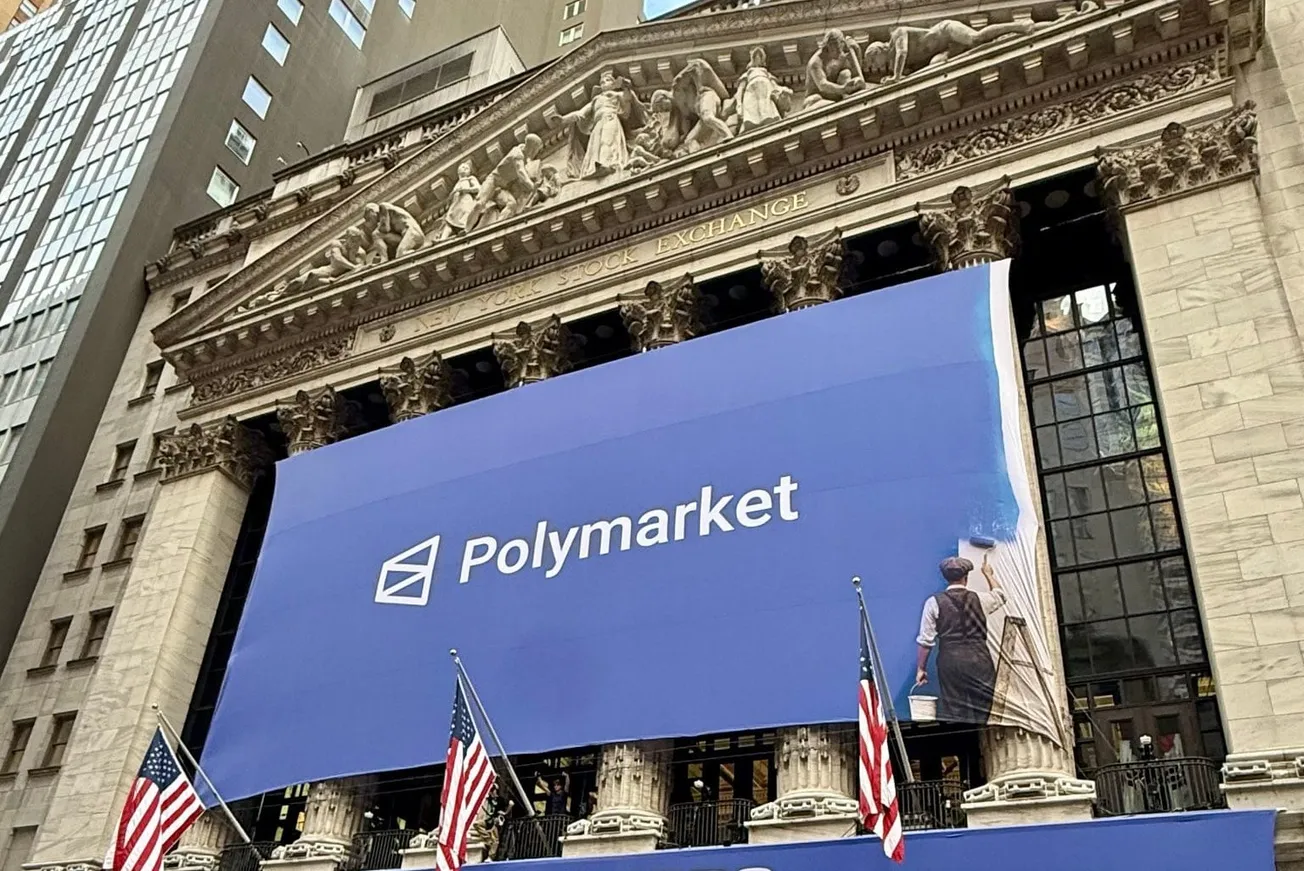
Intercontinental Exchange, which owns the New York Stock Exchange, is committing up to $2 billion in Polymarket, valuing the event-prediction platform at about $8 billion before the investment. ICE will serve as a global distributor of Polymarket’s event-driven data and will collaborate on tokenisation and related infrastructure.

Polymarket is gearing up for its return to U. S. markets following a multi-year regulatory hiatus. The firm acquired QCEX, a derivatives exchange and clearinghouse with CFTC licensure, for $112 million, enabling it to operate under U. S. regulation. The Commodity Futures Trading Commission has granted a no-action letter for event contracts, clearing a path for U. S. users to trade again.

Born in 2020 under the leadership of CEO Shayne Coplan, Polymarket permits users to wager on outcomes by purchasing “Yes” or “No” tokens. The market price implies a probability. Winning tokens settle at $1, while losing ones expire worthless. All trades occur via peer-to-peer smart contracts built on the Polygon blockchain.

Polymarket saw a surge in profile during the 2024 U. S. presidential campaign, when trading volume on election markets surpassed $3 billion. Its probability signals have since been picked up by mainstream outlets and financial analysts as indicators of public sentiment and forecasting.

ICE’s strategic investment reflects growing institutional interest in prediction markets. With control over NYSE infrastructure and deep data capabilities, ICE aims to monetise sentiment analytics and integrate such signals alongside traditional financial indicators. ICE has maintained that the investment will not materially affect its 2025 financials.

Coplan has acknowledged the significance of the tie-up, saying the partnership “marks a major step in bringing prediction markets into the financial mainstream.” Jeffrey Sprecher, ICE’s CEO, praised the union as an alignment between legacy market infrastructure and next-generation decentralised finance innovation.

Observers suggest that navigating regulatory risk is central to Polymarket’s success. Its three-year exit from U. S. users followed a 2022 settlement with the CFTC over unregistered derivatives operations. That settlement barred U. S. users from accessing the platform, and investigations into U. S. usage had been a cloud over the company. With the regulatory clearance and ICE backing, Polymarket is now executing a comeback in the U. S. domain.

Polymarket also attracted backing from 1789 Capital, a venture fund backed by Donald Trump Jr., which joined its advisory board earlier this year. Kalshi, a peer prediction market, won a favorable court ruling against the CFTC last year, setting precedents that influence Polymarket’s legal and operational landscape. The broader industry is watching closely, as the success or failure of this bet by ICE may signal whether prediction markets can transition from niche crypto tools to mainstream financial instruments.

Shayne Coplan, born in 1998 and a former dropout from New York University, is now recognised as the youngest self-made billionaire under the Bloomberg index following the deal. His trajectory illustrates the accelerating nexus among finance, tech and speculative market platforms.

Arabian Post Staff -Dubai Warner Bros. has formally approved a sequel to A Minecraft Movie, with the next installment scheduled to release on 23 July 2027. Jared Hess will return to direct and co-write the film, and Jason Momoa will once again serve as one of the producers. The original film, released on 4 April 2025, proved a major box office success. It grossed approximately $957 million […]

Large language models powered by artificial intelligence are now matching or even exceeding human-level empathic accuracy based solely on text, according to a new study that pits cutting-edge systems like GPT-4, Claude, and Gemini against human participants. The study challenged models to infer emotional states from transcripts of deeply personal and emotionally complex narratives. Human participants were split: some read the same transcripts; others watched the original […]

China’s expanded export controls on rare-earth materials have jolted global semiconductor supply chains, with firms scrambling to assess vulnerabilities while the United States countered by threatening a sweeping 100 % tariff and new software export curbs. The Chinese Ministry of Commerce broadened restrictions to 12 elements and extended licensing requirements to include mining, refining and recycling equipment—pressing that any dual-use or defence-tied requests will be denied. Foreign […]

Cryptocurrency markets endured a historic collapse as leveraged positions were liquidated en masse – over 1.6 million traders wiped out $19.13 billion in bets within 24 hours, data from Coinglass shows.

The crash accelerated sharply after U. S. President Donald Trump announced an additional 100 per cent tariff on Chinese imports and threatened export controls on critical software, heightening fears of a full-blown trade war. Bitcoin plunged more than 12 per cent from its recent highs, briefly sliding below $102,000 before rebounding above $113,000.

Before the sell-off, Bitcoin had breached a new all-time peak above $125,000, buoyed by institutional inflows into crypto exchange-traded funds. Governments and institutional investors had viewed digital assets as a hedge amid macroeconomic uncertainty.

Today’s market rout, however, exposed the fragility of overleveraged positions in a thinly capitalised market. In a single hour on Friday, more than $7 billion of liquidations occurred. The top losses were seen among long positions, particularly in Bitcoin and Ethereum derivatives, which accounted for a substantial share of the forced unwinds.

Institutional players and high-net-worth traders were swept up in the cascade. Market watchers noted that order books lacked the depth to absorb such a severe shock, triggering knock-on effects through futures and perpetual swap markets.

Beyond crypto, equity indices faltered under the weight of renewed global risk aversion. The S&P 500 dropped 2.7 percent, while tech stocks, sensitive to trade tensions, bore steep losses.

Some analysts likened the event to a “black swan” moment for crypto markets — a sudden shock revealing systemic vulnerabilities in a still nascent asset class. Traders operating with high leverage, little hedging, and aggressive margin policies found themselves particularly exposed.

Efforts to assess contagion effects to traditional finance are underway. Banks offering crypto derivatives and prime brokers are now scrutinising counterparty risks. Regulators in several jurisdictions may use today’s crash to justify stricter margin and leverage rules for crypto trading.

Reviewing policy implications, the tariff escalation marks a sharp pivot in U. S.–China trade strategy. Trump framed the measures as retaliation for China’s export curbs on rare earth metals, which are critical for tech manufacturing. The move signals willingness to escalate economic confrontation, with markets already pricing in broader disruption to global supply chains.

Despite the volatility, some investors are still betting on long-term resilience of digital assets. The week before the crash saw a record $5.95 billion flow into global crypto ETFs, led by U. S. allocations, suggesting that capital rotation into crypto remains strong over medium timeframes.

Liquidity providers and market makers face fresh trials. Some have temporarily withdrawn from funding markets or widened spreads to mitigate risk exposure. In highly volatile hours, arbitrage desks and algorithmic liquidity engines contributed to exaggerated price swings.

Wider sentiment has turned cautious: on-chain analytics show a rise in stablecoin inflows to exchanges, possibly reflecting flight from risk. Options markets registered growing demand for deep out-of-the-money puts, as traders brace for further downside.

Dubai — DOOGEE is rolling out a bold “Tech For Nature” showcase at GITEX GLOBAL 2025, positioning itself at the intersection of rugged devices and sustainability. From 13 to 17 October, the company will host its exhibit at booth A40 in Hall 13, where its outdoor-oriented hardware and eco-aware design features will be on full display.

DOOGEE describes the exhibit as centred around its “Tech Impact” zone, a curated space meant to demonstrate how its devices can withstand extreme conditions while serving the needs of explorers, scientists, and rescue personnel. The lineup includes models engineered for shock, heat, immersion, and drops — with features aimed at bridging utility and resilience.

Among the highlight products is the V Max Play, which pairs a high-capacity battery with a 200 MP main camera and integrates a mini projector for on-the-go displays. DOOGEE also plans to exhibit the S200 Ultra, built with aluminium-titanium alloy framing and a rear display for rapid glanceable information. Wearables and peripheral devices are similarly designed for outdoor resilience: the Anywise W1 Pro watch offers dual-band GPS, 5ATM water resistance, and offline map capability, while BoneAir Swim provides bone conduction audio under IP68 waterproof rating.

The firm frames “Tech For Nature” as both a mission and a product philosophy—suggesting that its devices should “coexist with nature” rather than merely tolerate it. In its public communications, DOOGEE emphasises use of sustainable materials and energy-efficient design elements. For instance, it references the use of recycled coffee grounds in casing composites and UV-responsive surfaces that shift hues with ambient light.

DOOGEE is no stranger to rugged or niche technology showcases. Earlier in 2025, the company participated in GITEX Europe, where it spotlighted AI-enhanced rugged devices and wearables built for industrial and outdoor environments. The Dubai event, by contrast, marks its largest commitment yet to the consumer-facing “outdoor tech” narrative.

Analysts note that DOOGEE is entering a competitive space where brands like CAT, Ulefone, and Blackview already target the rugged market segment. To distinguish itself, DOOGEE appears to lean into hybrid positioning: ruggedness plus eco credentials. “The idea is to appeal to users who don’t want to sacrifice environmental sensibility for durability,” commented one industry observer.

GITEX GLOBAL 2025 is itself a major platform: this 45th edition of the event draws participants across AI, quantum, data centres, and startup ecosystems. DOOGEE’s exhibit is aligned with the trend of hardware firms emphasizing sustainability, resilience, and experience-driven product showcases.

Visitors at booth A40 will have hands-on access to the full “Tech For Nature” suite, including tablets, phones, wearables, and audio gear. DOOGEE is also promoting discounts on first orders for attendees and encouraging media and partners to trial devices on-location. Beyond demonstration, the firm is signalling intention to gear up distribution and service channels in regions where demand for rugged outdoor gear is rising.

Ethereum’s value slipped beneath the psychologically and technically significant $4,000 mark today, intensifying fears that the second-largest cryptocurrency may be entering a deeper correction. On Binance, ETH dipped to $3,988.89, down almost 8 per cent in 24 hours.

The abrupt drop triggered widespread liquidations, especially among leveraged positions. On-chain liquidation trackers show nearly $188 million in crypto was liquidated in just one hour during the sharp move.

Persistent macroeconomic headwinds, alongside renewed U. S.–China trade tensions, appear to have compounded selling pressure. The Nasdaq and other equity benchmarks also suffered, amplifying risk aversion among crypto investors.

Technical analysts now view the breakdown below $4,000 as a turning point. From a charting perspective, the fall invalidated previously bullish setups such as bull flags, leaving Ethereum exposed to further downside. One analyst cautioned that extended weakness could push ETH toward the $3,750 to $3,500 zone if pivotal support fails.

Support between $4,200 and $4,300 had held in recent sessions, but now that zone is under siege. Should it collapse, the stage may be set for a retest of $3,900 or lower. Traders are watching whether buyers will defend this corridor or capitulate.

Despite today’s plunge, some investors see accumulation underway. Ethereum’s total on-exchange supply has declined to a nine-year low, with large holders withdrawing ETH from exchanges—an indicator that long-term confidence may still remain intact.

Longer term, expectations remain cautiously optimistic. Standard Chartered recently raised its year-end target for ETH to $7,500, citing heightened institutional adoption and increasing use of the Ethereum network in stablecoin and DeFi infrastructures. Meanwhile, Citigroup offers a more conservative forecast of $4,300 by end-2025, warning that current prices may be more sentiment-driven than fundamentals-rooted.

Major upgrades on Ethereum’s roadmap could yet shift sentiment. Among them: the Glamsterdam upgrade, which integrates enhanced proposer-builder separation. However, a fresh academic study warns of a “free option” risk under high volatility, whereby builders may cancel committed payloads without penalty—posing challenges to network liveness during stress.

In the short term, analysts are split. Some argue that the slide is a healthy reset before ETH resumes an uptrend, provided support zones hold. Others say the breach of $4,000 suggests a loss of momentum strong enough to spark a deeper correction.

Crypto markets are already exhibiting signs of strain beyond Ethereum. Bitcoin is under pressure as well, and risk assets broadly are being squeezed by mixed macro data and higher real-interest rates. Some strategists say the crypto pullback could morph into a broader derisking wave unless fresh catalysts emerge.

Looking ahead, observers point to a few key variables: whether ETH can reclaim and sustain above $4,500; whether buyers will step in at $4,200–$4,300; and whether the network upgrades can deliver tangible improvements to gas, scalability, and decentralisation.

Ethiopia’s central bank has held its benchmark rate at 15 per cent while expanding the cap on credit growth to 24 per cent for the 2025/26 fiscal year, balancing a cautious monetary stance with support for economic expansion. The move coincided with the country’s inaugural export shipments under the African Continental Free Trade Area, marking a defining moment in Ethiopia’s trade and financial policy strategy. The National […]

Arabian Post Staff -Dubai TAG Heuer is stepping up its game in the smartwatch market with the release of its latest model, the Connected Calibre E5. This new iteration marks a significant departure from the brand’s previous reliance on Google’s Wear OS. Instead, TAG Heuer has opted for a proprietary operating system designed to offer a more seamless experience for its high-end clientele. The shift aims to […]

Having a baby is a joyful journey, but it comes with real medical costs. Maternity insurance helps cover these expenses — from prenatal checkups to delivery and newborn care. In cities like Dubai and Abu Dhabi, maternity benefits are often part of your health insurance, but the details matter. After all, not all plans offer the same level of coverage. The fine print can also make a […]

Smartphone storage is on the cusp of its biggest leap in years as the Universal Flash Storage 5.0 specification arrives with headline sequential bandwidth touted at up to 10.8GB/s, nearly a twofold jump over today’s mainstream UFS 4. x. The stated aim is clear: keep pace with feature-rich camera pipelines and the growing wave of on-device AI so that apps open quickly, multitasking holds steady, and background […]

Gemini has secured registration with AUSTRAC and formally established its Australian arm, positioning itself as a regulated digital currency provider in the country. With the move, Australians can now trade with Australian dollars through local payment rails and the firm has named a dedicated country head to lead its strategy.

The new entity, Gemini Intergalactic Australia Pty Ltd, is now recognised by AUSTRAC as a digital currency provider, enabling full operations in compliance with Australia’s anti-money laundering and counter-terror financing laws. Local deposit and withdrawal options via PayID and Australia’s New Payments Platform will be enabled, reducing reliance on cross-border transfers.

Saad Ahmed, Gemini’s head of APAC, said the expansion aligns with robust demand in Australia’s crypto market, which the company estimates at roughly 22–25 per cent adoption. He emphasised that the decision to push into Australia preceded the government’s latest regulatory proposals. The firm plans to apply for an Australian Financial Services License to roll out advanced services such as staking and lending, but these will not be available at launch.

To lead its local presence, Gemini has appointed James Logan as Head of Australia. Logan was formerly in leadership roles at Luno and Bitget in Australia, thus bringing regional experience in crypto operations and regulatory compliance. His responsibilities include building partnerships, scaling operations, and navigating evolving policy frameworks.

Gemini’s entry comes amid intensifying regulatory focus in Australia. The government recently released draft legislation that would require crypto exchanges to hold an AFSL under the Corporations Act, thus applying the same regulatory rigour to digital assets as to traditional finance firms. Some industry observers view the move as a consolidation trigger—smaller platforms may struggle to absorb compliance costs.

Beyond regulation, banking integration remains a competitive differentiator. Australian customers have long faced friction when depositing and withdrawing via crypto platforms due to banks restricting or flagging such transactions. Gemini’s local setup aims to mitigate such barriers by partnering with Australian payment systems and financial institutions.

In the competitive landscape, Gemini will go head to head with established players such as Independent Reserve, CoinSpot, Binance Australia and OKX. While some already operate under established local compliance frameworks, Gemini emphasises institutional-grade infrastructure, regulatory integrity and global liquidity as its advantages.

Analysts view the timing of Gemini’s move as strategic. The firm’s recent listing on Nasdaq, in which it raised USD 425 million, has strengthened its capital base and credibility. Establishing operations in Australia now allows it to lock in market share under current rules, ahead of any stricter licensing regime.

Australia’s crypto adoption has surged in recent years. Surveys and industry reports suggest that by 2025 nearly one in four Australians hold digital assets—a rate comparable to the U. S. This growth, along with rising institutional interest, makes the market an increasingly attractive target for global exchanges.

Gemini has had a presence in Australia since 2019, serving local users via its global platform but with limited features and higher costs. Under the new structure, native AUD deposits, enhanced trading pairs, and faster settlement are expected to improve user experience and price competitiveness.

While Gemini’s initial rollout will omit certain features like crypto-backed credit or staking, the company says it is pacing its product expansion in tandem with regulatory clarity. It is adopting a “wait-and-watch” posture with respect to the government’s consultation process, but remains confident that its operations will comply.

The Australian push is one element in Gemini’s broader global strategy. It has also moved ahead in Europe under MiCA and is exploring tokenised stock trading in key markets. The firm now claims to serve customers in over 60 jurisdictions and has processed hundreds of billions of dollars in cumulative trading volume.


VISHNU RAJA
RYO YAMADA
HITORI GOTOH
IKUYO KITA
Just in: