News related to
watch

Filestack has launched a sweeping upgrade to its core platform, introducing a fully integrated Digital Asset Management system, a comprehensive Event Logger, and a revamped Filepicker 4.0 with advanced upload control features. The move is aimed at giving developers stronger tools to manage file workflows, versioning, and audit trails—all without building these systems from scratch. At the heart of the update is the DAM, which allows users […]

Goldman Sachs Bank Europe Se-ODI has sold 8.1 crore shares in Eternal Limited, parent company of Zomato, in a block transaction worth about ₹266.1 crore, marking its fourth offloading in a month.

The shares were priced at ₹328.45 each, roughly 2 per cent below the stock’s prior closing. The buyer was BofA Securities Europe SA, which absorbed the entire block.

Earlier in October, Goldman Sachs sold 8.2 crore shares to Morgan Stanley for ~₹266.9 crore, and executed a ₹355.3-crore deal—offloading 1.08 crore shares at ₹329 apiece—to BofA. Prior to that, it disposed of 9.52 lakh shares in September for ₹31.6 crore. From these four block transactions, the firm has realised over ₹900 crore.

The continuous divestment follows a rally in Eternal’s share price. Over the past three months, the stock surged by approximately 26 per cent, reaching a high of ₹343.95 in late September, and has clocked an 18 per cent gain year to date.

Despite the strong top-line momentum, Eternal’s profitability has come under significant strain. In the first quarter of fiscal year 2025–26, consolidated net profit plunged over 90 per cent to ₹25 crore, while operating revenue rose 70 per cent to ₹7,167 crore.

Goldman Sachs’ repeated stake reductions evoke questions over motive, especially as its own brokerage arm continues to maintain a bullish stance. In September, it reaffirmed a “Buy” rating on Eternal and raised the price target to ₹360 from ₹340, citing the growth potential of its quick-commerce vertical Blinkit.

The buyer, BofA Securities, could be positioning itself on expectations of long-term value, absorbing these large blocks. The handling of these blocks at slight discounts suggests a balance between exit urgency and price discipline.

Analysts are watching closely for further block deals from Goldman Sachs, and whether these are timed to capitalise on current valuations or signal a recalibration of confidence. The broader investor community may interpret the continuous divestment, despite favourable stock momentum, as a nuanced signal regarding risk, liquidity or internal reshuffling.

Robinhood’s platform is showing no signs of disruption after earlier reports emerged of a service breakdown affecting user access to its trading tools.

The company’s official status portal now declares “All Systems Operational,” even as its legacy status page has been retired. Meanwhile, independent monitors such as StatusGator and Uptime report no active outages.

Accounts of platform failure surfaced earlier today, with multiple users posting screenshots of login failures, trading delays and “app frozen” errors. Robinhood’s support centre responded with standard troubleshooting advice: update the app, check network connectivity, and switch to cellular data if needed.

Analysts and platform watchers say the timing of such incidents often elevates anxiety in retail trading communities, particularly when broader market volatility is feeding uncertainty. Past disruptions at Robinhood have been linked to temporary liquidity shifts and skewed price responses in thinly traded stocks. A study published in a financial markets journal suggests that outages on digital trading platforms tend to reduce order imbalances—but only until normal service resumes.

The brokerage has faced similar failures before, most notably during the meme-stock frenzy and other high-volume trading periods. In 2020, service breakdowns prompted class-action lawsuits, claiming users lost money because orders could not be processed. The company later agreed to settle those lawsuits and paid penalties to state regulators.

Regulators have continued to scrutinise Robinhood’s operations. In March, the company agreed to pay $29.75 million to settle a FINRA probe over inadequate supervision, lax anti-money laundering controls, and failures in handling order execution policies. Under that settlement, $26 million is assigned as a fine and $3.75 million as customer restitution. The firm did not admit wrongdoing.

Market observers say this backdrop intensifies scrutiny over any glitch at Robinhood. Trust in digital brokerages hinges on uninterrupted service, especially for retail investors who often enter or exit positions during sharp market moves.

Robinhood recently announced moves to expand in the UK, directly challenging legacy platforms like Hargreaves Lansdown and AJ Bell. Its planned British entry includes proposals for a no-fee stocks and shares ISA and prediction market offerings, pending discussions with the UK’s Financial Conduct Authority.

Internal sources suggest the company is investing heavily in backend resilience and redundancy to mitigate future downtime risks. Whether today’s incident will spur formal review or regulatory inquiry remains to be seen.

Teams at GITEX Global 2025 in Dubai will put liquid-cooled AI laptops under extreme thermal stress, testing whether advanced cooling systems can uphold sustained performance in one of the world’s harshest climates. Omnix International’s HOT Systems division, in partnership with PNY, will unveil a lineup of AI workstations, liquid-cooled laptops and the new HOT Guard monitoring suite, aiming to prove that these machines can maintain stability in high ambient temperatures.

At the heart of the exhibit is the challenge posed by regional heat: daytime temperatures in Dubai frequently exceed 40 °C, while indoor exhibition halls still pose cooling constraints. For high-performance AI workloads—particularly those involving CAD, BIM and machine learning—thermal throttling can cripple throughput. HOT Systems claims its integrated cooling and hardware optimisation can circumvent that performance drop. The accompanying HOT Guard software will monitor temperatures, fan and pump behaviour and security in real time on site.

Liquid cooling is no novelty in high-density server enclosures, but applying it in portable form factors presents a tougher engineering problem. In data centres, the shift from air to liquid systems has accelerated because conventional cooling struggles to keep up with power densities above 10–15 kW per rack. Liquid systems offer reduced power use, higher thermal headroom and often reclaimed waste heat reuse. But translating that to mobile form demands compact and robust fluid paths, efficient pumps, and risk control against leakage.

Advances in chip cooling are reinforcing that liquid systems represent more than a marginal improvement. Microsoft engineers have developed a microfluidics cooling technique that embeds coolant channels within the silicon substrate itself, enhancing heat removal efficiency at the chip level. That suggests future AI hardware may increasingly rely on liquid solutions at a micro scale.

Regional data centre operators are already embracing the shift: Khazna Data Centres, active across the UAE, has rolled out the country’s first liquid-cooled AI data centre and is developing more AI-optimised campuses. The move reflects recognition that standard cooling infrastructure cannot scale profitably with AI workloads.

Technical design choices behind liquid cooling include direct-to-chip systems, which place cold plates atop CPUs or GPUs, and immersion cooling, where liquid envelops hardware. The former is more suited for modular, retrofit deployments; the latter can offer full heat removal but introduces maintenance and material challenges, especially for localised devices. A recent review in AI systems architecture emphasises single-phase direct cooling as a flexible compromise for power levels below extreme thresholds, though it demands high reliability in fluid delivery and sealing.

Within the exhibition context, the HOT Systems demo will likely emphasise sustained throughput rather than peak benchmarks. The company plans real-world workflows—such as rendering, simulation and AI model inference—to demonstrate how the cooling system maintains clock speeds under load. PNY’s involvement underlines the reliance on qualified memory, GPUs and driver support, ensuring that thermal gains translate into usable computing stability.

End-users in architecture, media, engineering and AI fields are closely watching such developments. If heat throttling can be mitigated in this climate, portable AI rigs could expand in markets previously constrained to air-conditioned labs. But adoption depends on how well the solutions resist failure under harsh dust, vibration and heat cycles inherent to Gulf environments.

A major cross-border deal is underway as Abu Dhabi’s International Holding Company will invest about ₹8,850 crore to acquire a 43.5 per cent stake in Sammaan Capital, formerly Indiabulls Housing, making IHC the company’s key promoter and granting it control over board appointments. Sammaan Capital, a publicly listed non-bank financial company specialising in mortgage lending, will issue 330 million equity shares and 306.7 million convertible warrants to […]

OpenAI chief executive Sam Altman is leading a high-stakes campaign across East Asia and the Middle East to secure investment and bolster chip supply for the company’s AI infrastructure push. He has held talks since late September in Taiwan, South Korea and Japan with leading hardware suppliers to prioritise OpenAI’s orders and expand capacity.

Altman has met with Taiwan Semiconductor Manufacturing Company and Foxconn, as well as Samsung and SK Hynix, pressing them to accelerate production and give OpenAI preferential access. In South Korea, Samsung and SK Hynix have signed letters of intent to supply memory chips for OpenAI’s data centres. Meanwhile, OpenAI plans further fundraising discussions in the United Arab Emirates.

The urgency of Altman’s mission reflects the intensifying global competition for advanced computing resources. OpenAI projects it will spend around US$16 billion this year on renting computing servers, with long-term forecasts stretching to US$400 billion by 2029 as AI models grow ever more complex.

Industry analysts note that the semiconductor supply chain remains highly constrained. TSMC dominates GPU chip production, and memory manufacturing is largely concentrated in East Asia, creating significant strategic leverage for the manufacturers approached by Altman.

As part of his tour, Altman is also pressing Japanese firms to contribute to infrastructure support. Hitachi has entered discussions to provide power transmission and distribution systems for OpenAI’s data centres, while sharing technical resources under joint development agreements.

Sources familiar with the process say Altman pushed for direct prioritisation in chip delivery schedules, asking that OpenAI receive top-tier production slots. In some cases, he proposed co-investment or co-development of next-generation AI hardware to bind partner incentives more closely.

In South Korea, early architecture proposals include planned data centres of 20 megawatts in collaboration with Samsung and SK Hynix. Altman is reportedly exploring “floating” data centre designs to manage land constraints and cooling demands.

The UAE leg of his mission is expected to involve negotiations with sovereign investment firms such as MGX and Mubadala, with the aim of funding both OpenAI’s expansion and joint infrastructure ventures in the region. In past rounds, UAE investors have already taken part in funding OpenAI operations.

Challenges remain significant. The sheer scale of chips and memory required for stacked AI model training is pushing the boundaries of global wafer fabrication capacity. Market watchers point to the high capital expenditure and long lead times in the semiconductor industry as obstacles to rapid scaling. Some of Altman’s proposals—for example, co-development of bespoke ASICs—are still in preliminary stages and face technical risk.

OpenAI’s valuation and investor backing give the company leverage. Earlier this year, it closed deals that valued it at about US$500 billion, with new capital injections from investors including SoftBank and UAE entities. Those moves have fortified its position in negotiating upstream deals with manufacturers.

SINGAPORE – Media OutReach Newswire – 6 October 2025 – Energea has introduced its Tangerine collection, a strategic mix of fresh innovations and popular products now enhanced with vibrant orange. Harmonizing with the iPhone 17 Pro and Pro Max’s new orange finish, this collection highlights the synergy between cutting-edge technology and thoughtful design. Introducing the latest collection in a bold orange shade, designed for a complete charging […]

Advertisements

The Ai Everything Global Supernova Challenge concluded in Dubai with Pulsar. ml crowned champion among 30 startups from 15 nations vying for a USD 60,000 prize pool. The event drew over 150 global investors representing some USD 50 billion in assets under management, who watched founders pitch AI solutions across sectors including robotics, fintech, e-commerce and healthcare. Pulsar. ml, based in Canada and led by founder Mohamed […]

Hamas has announced that it will free the final Israeli hostages taken in its October 2023 assault on Israel, but insisted that other elements of a U. S.-backed 20-point peace plan remain subject to negotiation, leaving the path ahead fraught with uncertainty. President Donald Trump welcomed the announcement, calling for an immediate halt to Israeli bombardment and offering indications that he might allow flexibility on the broader proposal.

Under the deal endorsed by Israel, all hostages—alive and deceased—are to be returned within 72 hours of Israel’s public acceptance, in exchange for the release of around 1,950 Palestinian detainees. The agreement envisages a phased Israeli withdrawal, transfer of Gaza’s administrative functions to apolitical technocrats, and demilitarization of Hamas. But Hamas has declined to commit to disarmament, signalling that parts of the plan will undergo further negotiation.

Trump, in a public message, said Israel “must immediately stop” its bombing of Gaza and asserted that he believed Hamas was “ready for lasting peace.” He also warned that failure to accept the terms by the deadline—Sunday at 6 p. m. Eastern Time—would provoke severe consequences. Israel has given tentative backing to the first phase of the plan, though it maintains reservation about Hamas’s retention of weapons.

Israeli Prime Minister Benjamin Netanyahu has accepted the peace initiative in principle but imposed caveats: Israel’s withdrawal will be partial, and Gaza will remain under strong security oversight. Netanyahu rejected formation of a Palestinian state under this framework, warning that such a move would reward terrorism. He has also suggested that Hamas participants who commit to peaceful transition could be granted amnesty.

Egypt, Qatar and other regional powers are acting as intermediaries to push Hamas toward acceptance. Israeli officials have reportedly reduced ground operations in Gaza City following U. S. pressure, instructing troops to limit activities to defensive operations even as the air campaign continues. Meanwhile, humanitarian groups warn that any ceasefire in name must be accompanied by unimpeded aid delivery and infrastructure repairs.

Some opposition voices in Israel—particularly among far-right coalition partners—view the latest developments as insufficient, demanding continued military pressure. Families of hostages have expressed cautious optimism, although they remain sceptical of open-ended guarantees.

In Hamas’s statement, the group claimed that the hostage release marks a gesture of “good faith,” but stressed that Israel’s withdrawal, guarantees on the safety of Gaza’s population, and the future role of Palestinian governance must be negotiated further. It described disarmament as “off the negotiating table” and refused to accept unconditional terms.

Analysts caution that the hostages’ release, while important, does not resolve deep structural issues: the role of Hamas in governance, security guarantees for Israel, and Gaza’s long-term reconstruction remain unresolved. Regional watchers view the moment as the most significant opening for a potential ceasefire in years—but one that may collapse without strict adherence to implementation timelines and third-party oversight.

International leaders have responded with varying tones. Some support the deal as a rare breakthrough, while others urge caution, calling for clear mechanisms to enforce demilitarization and civilian protections. The United Nations has reiterated its demand for accountability under international law and its role in aid operations.

Stock market information for Bitcoin
Bitcoin is a crypto in the CRYPTO market.
The price is 122782.0 USD currently with a change of 1997.00 USD from the previous close.
The intraday high is 123928.0 USD and the intraday low is 119360.0 USD.

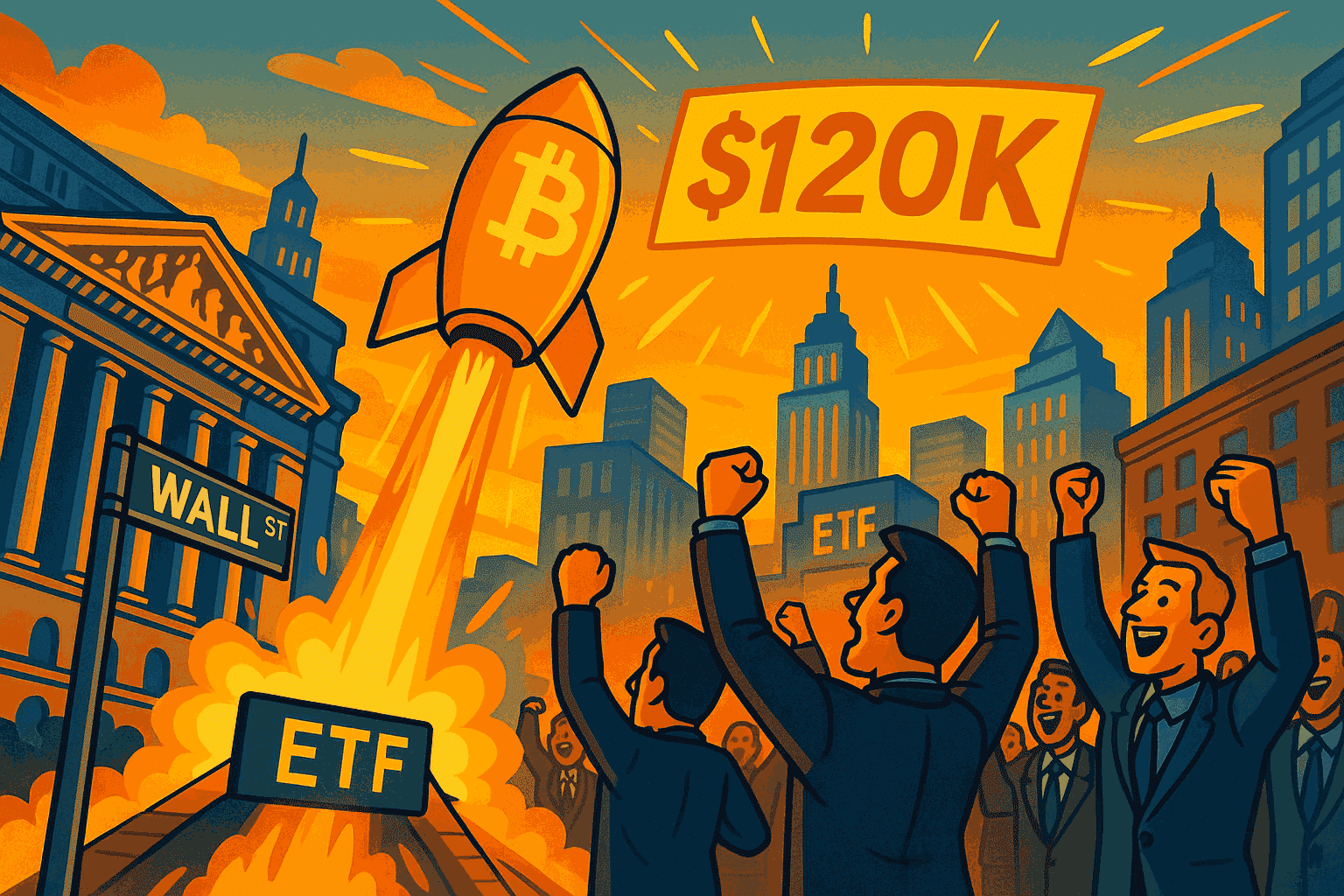
Bitcoin cleared the $120,000 mark on Friday, marking its strongest move in months as inflows into U. S. spot Bitcoin exchange-traded funds and fears of U. S. political gridlock spurred investor appetite.

The sharp rally saw Bitcoin rise toward levels not seen since August, with price action driven by mounting demand from institutional channels and growing speculative interest in its safe-haven appeal. Observers link the surge to accelerating purchases via ETFs, as well as elevated yields on derivative positions betting on further strength.

Citigroup this week trimmed its year-end Bitcoin forecast to $133,000, citing headwinds from a strengthening U. S. dollar and weak gold prices, while lifting expectations for Ethereum to $4,500 on the back of increasing inflows. The contrasting moves reflect a recalibration of expectations amid shifting capital flows in crypto markets.

Analysts tracking ETF inflows suggest that institutional adoption remains the catalyst for upward momentum. Bitwise reiterated a $200,000 target for Bitcoin in 2025, emphasising sustained demand from endowments, corporates, and sovereign treasuries. Meanwhile, Coindesk’s mid-year forecast placed a $150,000–$160,000 range as a probable zone should monetary policy ease.

Technical indicators show the path is not without resistance. Price models project a critical threshold at $117,000–$120,500: surpassing it decisively would confirm a bullish breakout, while failure to hold could trigger pullbacks toward $110,000 or lower support zones. Analysts caution that leveraged long positions may be vulnerable to liquidation should sentiment cool.

On-chain data shows accumulation by so-called “whales” has intensified over recent weeks, reinforcing the theory that major players are driving the advance. Machine-learning forecasting studies underscore that low, high, and opening price series remain the most informative variables for trend prediction, though the authors note models still struggle with sudden macro shocks.

MicroStrategy, a prominent corporate Bitcoin holder, has slowed its acquisitions. Its latest SEC filing disclosed a modest $22 million purchase, significantly down from earlier, more aggressive buys. That shift reflects a degree of caution in managing dilution risk and capital allocation.

Around the political landscape, speculation over a potential U. S. government shutdown elevated demand for non-traditional assets, while weak private sector job data has stoked hopes of a future rate cut by the U. S. central bank. Market participants are watching whether rate expectations shift further in favour of growth-assets like Bitcoin.

Rain, Ekin Cheng, Hins Cheung and other music icons brought on the festival energy as part of Grand Prix™ Season Singapore 2025 SINGAPORE – Media OutReach Newswire – 3 October 2025 – JAM OFF 2025 roared back into Singapore last weekend, igniting Resorts World Sentosa with two unforgettable days of star-studded performances, dynamic competitions, and festival cheer. Organised by Destinations Network Tourism and Leisure Marketing Ltd., a […]

Markets across the crypto derivatives space are on edge as Bitcoin and Ethereum options worth approximately $4.33 billion enter settlement today, setting the stage for heightened volatility in the near term.

On the Deribit platform, Bitcoin dominates the expiries, with about $3.5 billion notional value scheduled for settlement in roughly 30,200 contracts. Its put-to-call ratio stands at 1.23, suggesting more downside protection bets than bullish wagers. The so-called “max pain” level — the strike price at which the greatest number of contracts expire worthless — is pegged at $114,000, close to current trading levels and potentially acting as a magnet for price movement.

Ethereum’s portion comprises about $806.75 million, across 177,398 contracts, with a put-to-call ratio near 0.99, indicating a more balanced bias among traders. Its max pain is estimated at $4,500, just beneath recent market trading ranges.

Derivatives analysts caution that expiries of this size tend to exert short-term pressure on price behaviour, particularly as market makers and institutional actors roll, hedge or unwind positions ahead of settlement. In many past cycles, price action has gravitated toward max pain levels in the hours leading up to expiry.

Volatility expectations are reinforced by elevated implied volatility in both Bitcoin and Ethereum options markets. Some trading desks point to a compression of liquidity around strike clusters and warn that even modest directional flows may trigger outsized price swings.

Some market strategists argue that Bitcoin’s bearish tilt reflects growing hedging demand after price consolidation above major resistance zones. Meanwhile, Ethereum’s near-neutral PCR hints at structural hedging and profit-taking rather than outright directional bets.

Macro factors could amplify sensitivity. With markets digesting central bank policy signals, inflation indicators and equity market drift, crypto derivatives flows may act as a conduit for correlation shocks. That makes expiry day risk not purely technical but potentially reactive to broader sentiment shifts.

Earlier this month, a near-identical expiry event saw $4.3 billion in options settle, with BTC positioning yielding shortterm downside pressure and ETH holding more firmly near its pricing bands. That expiry foreshadowed a larger $18 billion BTC options expiry scheduled for 26 September, intensifying speculation on whether today’s event will prime momentum.

Market watchers are watching order-book depth near the $114,000 and $4,500 levels, as sharp absorption or rejection there may offer clues to directional bias post-expiry. In the absence of sustained trend breaks, much of the post-settlement period could hinge on whether institutions successfully reestablish exposure rather than exit.

Traders are also navigating strategy choices: rolling forward, closing positions, or rebalancing via delta hedges. The interplay of those flows may create forks in volatility—in which the first few hours post-expiry see directionless chop before a stronger move emerges.

Electronic Arts, creator of blockbuster franchises like “Battlefield” and “Madden NFL,” has agreed to be acquired by a consortium led by Saudi Arabia’s Public Investment Fund, private equity firm Silver Lake, and Jared Kushner’s Affinity Partners, in what would be the largest leveraged buyout in history. Under the terms, EA shareholders will receive $210 per share in cash, valuing the company at roughly $55 billion. The transaction […]

The spectacular showcase reaffirms Bangkok’s rising status as a premier global destination for luxury watches. BANGKOK, THAILAND – Media OutReach Newswire – 2 October 2025 – Siam Paragon, a legendary landmark in the heart of Bangkok, Thailand, and a must-visit destination for local and international visitors, has solidified its reputation as the premier luxury watch destination with the success of “Siam Paragon Bangkok Watch Week 2025.” Recognized […]

The cryptocurrency market saw more than US$330 million of short positions liquidated over a 24-hour span, reflecting mounting pressure on traders betting on a downturn in Bitcoin and Ethereum. Liquidations of this magnitude underscore the fragility of leveraged positions amid sudden price swings.

Data compiled from derivatives analytics shows that the bulk of the liquidations struck bears — traders who had placed bets that the prices of BTC and ETH would fall. While precise exchange-level breakdowns vary across analytics platforms, the overall magnitude points to a sharp reversal in market dynamics.

The liquidation wave was triggered as both Bitcoin and Ethereum posted upward moves, igniting what appears to be a short squeeze — a market condition where rising prices force short-sellers to cover positions, further accelerating the rally. On-chain volume and open interest metrics surged, suggesting that traders were forced to exit leveraged bets en masse.

Ethereum stood out in the mix: analysts attributed a substantial portion of the liquidated shorts to ETH derivatives. The second-largest cryptocurrency has often been more volatile in these situations, and its recent upward momentum inflicted considerable pain on those betting against it. The pressure on short positions flowed into Bitcoin markets as well, although to a lesser degree.

The exchange derivatives arena—spanning platforms such as Binance, Bybit and OKX—saw divergent stress levels. Some exchanges reported that short liquidations exceeded those of longs by a wide margin, suggesting that hedged strategies and aggressive shorting were particularly vulnerable during the surge. In several cases, individual orders topping tens of millions of dollars were forcibly closed.

Market analysts caution that such events can create feedback loops. Forced liquidations push prices higher, inflicting further losses on lagging short sellers, which in turn intensifies the rally. At the same time, elevated funding rates and reduced liquidity become major risks for momentum traders and institutional participants.

Macro and sentiment factors are believed to have played contributory roles. Speculation around easing monetary policy, stronger demand for risk assets, and renewed interest from institutional crypto funds have been cited by analysts as underlying catalysts. In particular, expectations that interest rates may soften have fuelled investor appetite for higher-volatility assets like Bitcoin and Ethereum.

Nevertheless, this kind of volatility also invites skepticism. Some market watchers warn that forced liquidations of this scale may not reflect genuine organic demand but rather mechanical stress in overleveraged market segments. The question is whether the rally can sustain itself once all forced short covering has played out.

The overnight Hong Kong Interbank Offered Rate surged to 5.018 %, marking its first breach of 5 % this year amid tightening liquidity pressures tied to quarter-end demand.

Liquidity in the local banking system has become deeply constrained as the aggregate balance of Hong Kong dollar deposits plunged to historically low levels and the Hong Kong Monetary Authority continues active currency-peg defence. The jump in HIBOR reflects mounting stress in short-term funding markets even as the HKMA’s base rate remains at 4.50 %, following its downward adjustment earlier this month in line with the U. S. Federal Reserve.

Banks are confronting sharper funding costs just as capital market activity intensifies. The costs of intra-day and overnight loans between financial institutions are rising, exerting upward pressure on lending rates and potentially damping leveraged trading strategies and margin financing. Several market participants have begun repricing forward rate agreements to reflect a higher floor for short-term rates.

The sharp move in overnight HIBOR comes after months of extreme volatility. Earlier in 2025, the overnight rate plunged—from around 4.50 % in May to near zero—as the HKMA intervened by selling Hong Kong dollars to counter excessive strength, flooding banks with liquidity. That in turn compressed funding costs across all tenors. But the very intervention that depressed rates is now being reversed: as the HKMA buys Hong Kong dollars to defend the weak end of its trading band, it is draining system liquidity, pushing interbank rates upward.

Analysts view this as part of the natural adjustment embedded in Hong Kong’s Linked Exchange Rate System, where capital flows and monetary interventions translate into automatic interest rate feedback mechanisms. With the aggregate balance shrinking sharply, funding is now scarcer and HIBOR has begun to converge toward U. S. dollar rates.

Still, structural frictions remain. Banks have so far been cautious to fully pass through heightened HIBOR into lending rates, citing competitive pressures and deposit stickiness. Likewise, mortgage borrowers on HIBOR-based plans face mounting exposure.

The HKMA’s earlier 25 basis point cut to its base rate to 4.50 % followed a matching reduction from the U. S. Federal Reserve. That move provides a nominal cushion to banks’ cost of funds. But with HIBOR now overshooting expectations, the policy buffer is tightening.

In foreign exchange markets, the HKMA’s continued interventions to maintain the HKD’s 7.75–7.85 peg are intensifying. Pounds and U. S. dollar flows have grown more volatile, pressuring capital inflows and outflows that ripple into short-term rates. Some strategists caution that if HIBOR remains elevated, Hong Kong’s carry trade — borrowing in HKD at low cost to invest in higher-yielding assets — may lose its appeal.

At the same time, robust IPO issuance and equity market activity bolster demand for Hong Kong dollars, adding to funding stresses. Brokers and margin financiers, squeezed by rising short-term rates, are beginning to reduce leverage usage.

Monetary officials have reiterated that the primary mandate of the HKMA is exchange rate stability, not targeting specific interest rates. But as interbank funding becomes more expensive, the tension between rate dynamics and peg defence is becoming harder to manage.

Market watchers are now eyeing whether HIBOR will stabilise around the 4.5 %–5.5 % band or continue climbing. Forward curves imply that some of the rate shock is already priced in. Meanwhile, banks are expected to adjust lending floors and reframe risk pricing over the coming weeks, especially in the mortgage and leveraged finance sectors.


U. S. equity markets eked out modest gains on Monday as investors absorbed mixed signals from policymakers and braced for a potentially disruptive funding impasse. The S&P 500 rose about 0.3 percent, while the Nasdaq added 0.5 percent.

Tech and semiconductor names powered much of the upside, with Nvidia climbing nearly 2 percent and Micron advancing over 4 percent. Meanwhile, energy lagged, weighing on the Dow Jones. Treasuries rallied: the 10-year yield fell to around 4.14 percent.

Markets have long eyed the congressional standoff over government funding, now escalating toward a possible shutdown as the funding deadline tightens. If Congress fails to agree on a stopgap measure by the start of October, crucial economic reports — including this week’s non-farm payrolls — may be delayed.

Within the Senate, tension has grown around healthcare and Medicaid funding demands, a key sticking point in negotiations. Democratic leaders have warned against accepting a funding plan that omits those measures, even as pressure mounts to avoid a closure.

Analysts warn that the shutdown risk magnifies uncertainty over Federal Reserve policy. Without fresh labour and inflation data, the central bank may have to lean more heavily on its own forecasts, complicating rate-cut expectations. Some strategists suggest the Fed could still manage two cuts in 2025, contingent on how deeply economic data is disrupted.

Historical precedent somewhat tempers alarm. In past shutdowns of limited duration, equities have tended to rebound quickly. On average, the S&P 500 returns roughly 0.1 percent during shutdowns, and over the following year the index has gained about 12.2 percent. Still, the threat this time includes a new wrinkle: proposals for mass federal layoffs rather than traditional furloughs, which could intensify economic and psychological fallout.

Sector watchers anticipate uneven effects. Government contractors and firms reliant on federal payments could see downside pressure. In contrast, defensive and AI-linked names may continue attracting flows.

Gold cracked past $3,800 per ounce as investors rotated into safe havens, and the dollar weakened amid risk aversion. Meanwhile, earnings announcements and deal activity remain under close scrutiny: Electronic Arts jumped nearly 4.5 percent after announcing a $55 billion going-private deal.

Markets have thus far held up despite the political drama. The headline indexes are still straddling their 50-day moving averages — Nasdaq has run more than 100 sessions without dipping below. But as the week progresses, volatility could spike if lawmakers stall or key data go missing.

Saudi Arabia’s Public Investment Fund is driving a landmark $55 billion leveraged buyout of Electronic Arts, committing more fresh capital than private equity heavyweight Silver Lake and Jared Kushner’s Affinity Partners, according to people familiar with the deal. The transaction calls for EA shareholders to receive $210 per share in cash, equating to a 25 percent premium over the stock’s unaffected closing price on September 25. PIF, […]

A compact secondary display called WebScreen is being promoted as a hacker-friendly add-on for gaming and creator setups, with crowdfunding underway. It is designed to perch atop a primary monitor and display notifications, stats or reminders without distracting the user from full-screen work. WebScreen emerges from HW Media Lab, conceived by Pedro Martin and Eleo Basili. It features a 1.9–2.1 inch AMOLED panel at 240×536 resolution, powered […]

Arabian Post Staff -Dubai Tokyo — Casio Computer Co. has introduced its first mechanical timepiece within its EDIFICE family, unveiling the EFK-100 series that incorporates a forged-carbon dial in one variant and combines motorsport aesthetics with traditional watch engineering. The flagship model, EFK-100CD-1A, features a dial made of forged carbon—never before used in an EDIFICE timepiece—and is powered by an automatic movement visible through a display case […]

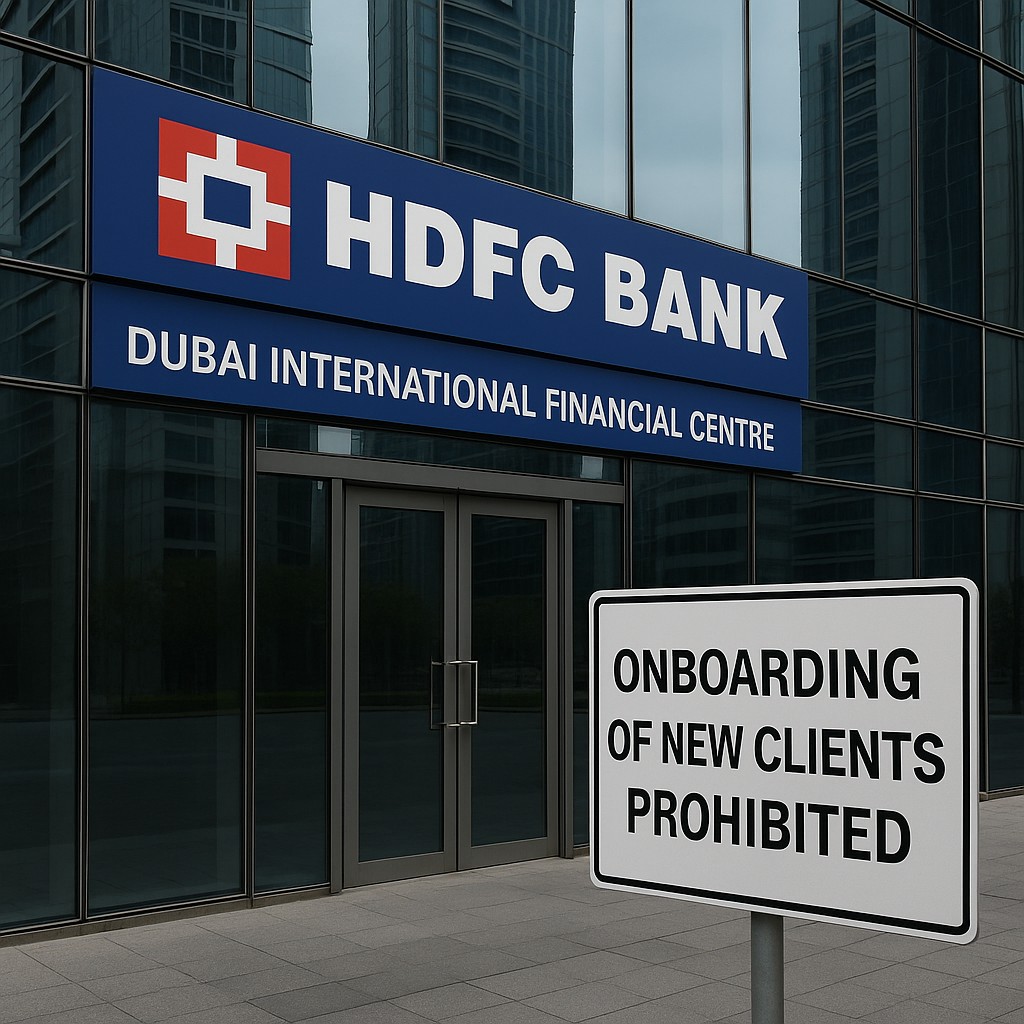
Dubai’s financial regulator has barred HDFC Bank’s Dubai International Financial Centre branch from soliciting, onboarding or servicing new clients, citing compliance lapses.

The order, issued by the Dubai Financial Services Authority and effective from 26 September, remains in force “until otherwise amended or revoked,” the bank stated. HDFC said it is taking steps to comply with the directive while engaging with the DFSA to address concerns.

HDFC clarified that the restriction does not apply to existing clients of the DIFC branch, nor to those who had already been offered services prior to the notice. As of 23 September, the branch had 1,489 customers, including joint holders.

According to HDFC, the bank does not expect this to materially affect its overall operations or financial position, noting that the Dubai branch’s business is not significant relative to its global activities.

The DFSA’s decision notice accuses the branch of servicing clients who were not properly onboarded, deficiencies in client onboarding processes, and other unspecified compliance shortcomings. The prohibition extends to advising on financial products, arranging deals, extending credit, custodial services, and financial promotions for new clients.

Analysts point to a backdrop of scrutiny over HDFC’s role in selling risky instruments—particularly Credit Suisse additional tier-1 bonds—to retail investors in the UAE. Those clients accused the bank of misclassification and inadequate risk disclosures. Investor accounts allege that KYC records were manipulated to designate them as “professional clients,” a requirement under DIFC rules for high-risk products.

Some UAE-based investors welcomed the DFSA’s move but urged stronger action, stating the suspension of new client intake is a limited measure given potential damage already done.

HDFC has a broader international presence including representative offices in Abu Dhabi, Kenya, London and Singapore, and branches in Bahrain and Hong Kong. The bank faces parallel scrutiny in India regarding related sales practices, prompting investigations by Indian enforcement agencies.

As the DFSA and HDFC engage in remediation talks, markets will closely watch whether the regulator escalates sanctions or lifts the ban after compliance is demonstrated.

HANGZHOU, CHINA – Media OutReach Newswire – 27 September 2025 – As east China’s digital tech hub Hangzhou is gearing up for the 4th Global Digital Trade Expo (September 25–29), a globally watched digital gala centered on “deep integration of digital trade and AI,” many would wonder who are the creators of the world-leading computing infrastructure, large models, embodied intelligent robots, and over 100 AI application scenarios […]

By Salah Uddin Shoaib Choudhury Bangladesh is entering one of the most dangerous phases of its history. At the centre of this looming crisis is the unelected regime of Muhammad Yunus, which is presenting itself abroad as democratic and reformist while systematically dismantling the country’s defence and intelligence structure. Behind the veneer of Nobel fame and global endorsements lies a far darker reality: Yunus’ growing alignment with […]

A stylised throwback to its 1998 branding greeted millions of users today as Google celebrated its 27th birthday, reviving its very first logo in a specially designed doodle. The artwork, published on Google’s official doodle site, reintroduces the original wordmark as a nod to its early days, while signalling the company’s ambition to balance heritage with future ambitions. Although Google was officially incorporated on 4 September 1998, […]

VISHNU RAJA
RYO YAMADA
HITORI GOTOH
IKUYO KITA