News related to
City

Abu Dhabi-based XRG P. J. S. C. has finalised its acquisition of an 11.7 percent equity interest in Phase 1 of the Rio Grande LNG project in Brownsville, Texas, marking the company’s first natural gas investment in the United States. The purchase was made through a joint-venture structure involving Global Infrastructure Partners, an investment vehicle affiliated with BlackRock. Phase 1 of Rio Grande LNG is one of […]

Abu Dhabi — The Strategic Directions Committee of the UAE Research Programme for Rain Enhancement Science has completed a midterm site visit to Mohamed bin Zayed University of Artificial Intelligence, assessing progress on its Cycle 5 project “Identification of Clouds’ Microphysical Seedability in an Actionable Manner.” Led by Prof. Daniel Rosenfeld of the Hebrew University of Jerusalem, the initiative is executed in partnership with the National Centre […]

Dubai’s Roads and Transport Authority has unveiled a new strategic focus for the 5th Dubai World Challenge for Self-Driving Transport, scheduled for 2027: smart integrated infrastructure. Mattar Al Tayer, Director-General and Chairman of the Board of Executive Directors of the RTA, said the competition will pivot to challenges that bind sensing, connectivity and analytics to urban infrastructure across Dubai.

At the closing of the Dubai World Congress for Self-Driving Transport held at the Dubai World Trade Centre, RTA inked four key agreements with Emaar Properties, Al Futtaim Group, and the winners of the 2025 challenge—WeRide and Deutsche Bahn consortium, together with Zelos Technology—to deploy and test autonomous systems in Festival City, Creek Harbour and other strategic urban zones. Al Tayer affirmed that the move aligns with Dubai’s ambition to serve as a global testbed for mobility innovation.

This year’s theme shifts from discrete vehicle-centric competition to a systems-level mandate: entrants will be judged on how well their solutions embed into city-wide networks of sensors, roads, communication links and data platforms. The RTA framework calls for designs that anticipate traffic dynamics, weather variations and public transit interaction, while maintaining safety, resilience and sustainability.

Over 3,000 participants and more than 80 expert speakers participated in the Congress, spanning government, academia and industry. The gathering marked the formal launch of the 2027 edition. The Congress also highlighted Dubai’s strategic goal that by 2030, one quarter of all journeys within the emirate will be autonomous or smart-enabled—an ambition already embedded in the RTA’s transport roadmap.

Stakeholders see this shift as an essential maturation of the challenge format. Rather than focusing only on individual vehicle prototypes, the next competition will test ecosystem coherence and scalability across urban modules. According to industry analysts, the new direction presses participants to align with evolving demands in mobility, where digital and physical layers must fuse.

Dubai’s prior edition in 2025 carried the theme “Dubai Autonomous Transport Zone,” pushing contestants to integrate multiple autonomous mobility modes in defined neighbourhoods. That foundation now gives way to a broader remit, with RTA officials stressing that smart infrastructure is the backbone for reliability and public acceptance of self-driving systems.

The agreements struck with developers and past challenge winners will see pilots in zones like Festival City and Creek Harbour, where road layouts, sensor grids and vehicle operations will be tested side by side. RTA counts on these field deployments to validate technical performance, operational cost and citizen experience before full-scale adoption.

Critics caution that the complexity of integrating diverse systems—communications, edge computing, failsafe control layers—could raise cost, regulatory and interoperability risks. Some stakeholders argue the success of the 2027 challenge will depend on whether entrants can navigate not only technical but institutional challenges across urban agencies and telecommunications providers.

For technology firms and research groups, the new emphasis offers both opportunity and challenge. It rewards proposals able to harmonise hardware, software, data and governance. Observers expect to see consortia spanning telecom operators, municipal agencies, AI firms, and road infrastructure specialists.


BEIJING, CHINA – Media OutReach Newswire – 25 September 2025 – As China celebrates the 70th anniversary of the founding of the Xinjiang Uygur Autonomous Region, CGTN published an article underscoring the region‘s extraordinary socioeconomic advancements over the past seven decades. It traces Xinjiang‘s astonishing transformation under the leadership of the CPC, highlighting unprecedented achievements in development and concrete improvements in the lives of its people. A […]

HANGZHOU, CHINA – Media OutReach Newswire – 25 September 2025 – From September 25 to 29, Hangzhou, capital city of east China’s Zhejiang Province, will play host to the 4th Global Digital Trade Expo. As the world’s gaze turns to eastern China, the city is using this premier digital trade gathering to paint a vivid picture of the “AI +” era. Official picture of the 4th Global […]

Abu Dhabi is marketing a three-year and a 10-year US dollar Reg S/144A bond offering, aiming to capitalise on robust investor demand and reinforce its global funding outlook. The three-year tranche is pitched at approximately 40 basis points over US Treasuries, while the longer 10-year issue is offered at around 55 bps.

By mid-morning in Dubai, books had swelled past $10 billion, excluding joint lead manager interest, with slight tilt toward the 10-year line. The bonds will be senior, unsecured and rated AA/AA by S&P and Fitch, matching the issuer’s prevailing Aa2/AA/AA credit standing. Listings are planned in both London and Abu Dhabi.

Investors see this transaction as a test of global appetite for Gulf sovereign credits amid a cautious backdrop of moderate US interest rates and evolving geopolitical risk. Despite volatility in energy prices and external debt markets, Abu Dhabi’s strong fiscal and balance sheet metrics underpin confidence in its sovereign name. The credit ratings assigned reflect the emirate’s resilient fiscal policy, substantial hydrocarbon reserves, and large sovereign wealth fund buffers.

Structurally, the Reg S/144A setup allows the issuer to access both non-US and US institutional investor pools. Regulation S permits offers outside the United States, while Rule 144A enables sales to qualified institutional buyers within the US, offering dual reach while maintaining issuance flexibility. The base offering circular explicitly restricts transfers and resales to be compliant with those regimes.

Observers note that the pricing levels—40 bps for three years and 55 bps for 10 years over Treasuries—are ambitious but not unprecedented within Gulf sovereign borrowing. Prior precedent includes a multi-tranche Abu Dhabi sovereign bond of $5 billion in April 2024, which achieved strong oversubscriptions and favourable pricing benchmarks. That deal underlined investor appetite for Gulf issuers with strong credit credentials.

Market participants closely monitor skew and order distribution between tenors. That the books are marginally skewed toward the 10-year suggests appetite for duration, perhaps reflecting yield scarcity in core markets. Should the order book widen further, the issuer may flex uncertainty concessions or tighten spreads modestly before final pricing. Co-ordinating banks are likely adjusting intermediate guidance as allocations firm.

Analysts flag that appetite for Gulf sovereign issuance is tempered by global headwinds: tighter US credit spreads, sticky inflation, and competition from other supranational and sovereign issuers. Some international investors may demand additional premium for regional or geopolitical exposures. Yet Abu Dhabi’s entry with a dual-tranche issuance signals intent to extend its credit curve, deepen investor relationships, and enhance liquidity in its sovereign bonds.

The listings in London and Abu Dhabi are intended to enhance secondary market trading, improve visibility to European and global investors, and cement Abu Dhabi’s status in global bond markets. The London listing, especially, provides access to a deep pool of international fixed income investors and a regulatory framework well understood by global asset managers.

Crafting a serene but vigorous harvest season for guests with a repertoire of exquisite multifaceted dining, wining, and playing choices MACAU SAR – Media OutReach Newswire – 25 September 2025 – As the air begins to cool in Macau, the city’s appetite turns towards indulgence; nourishment for the body, soul, and appetite becomes a premier priority. At Galaxy Macau™ Integrated Resort (hereafter “Galaxy Macau”), autumn is a […]

Advertisements

The decentralized finance space is undergoing a critical transformation in 2025, ushering in what many observers call “DeFi 3.0.” While the earlier waves of DeFi focused on decentralized exchanges and liquidity incentives, the next generation is centered on permissionless lending, composability, capital efficiency, and real-time adaptation. As platforms such as Euler, Morpho and Hyperliquid gain traction, the shifts promise to reshape how capital moves, how risk is […]

Dubai is gearing up to host the third edition of the Invest Web3 Forum, powered by bepay money, assembling over $500 billion in assets under management and more than 80 institutional investors. The one-day gathering, slated for 15 October at Dubai Knowledge Park, seeks to advance institutional adoption of blockchain through capital allocation, policy dialogue and startup investing. Market watchers point to the forum as a bellwether […]

Luma Protocol, incubated by PopChain and Nivex, officially entered the market on 20 September 2025, positioning itself as a new architecture in decentralized finance that anchors value in computing power rather than speculative token mechanics. At midday UTC+8 the project launched its pre-sale and, within hours, issued the first mining rewards — signalling a shift from purely token-based incentives toward infrastructure-backed models.

The project’s core proposition is that “Hash Power” — the computational capacity underlying blockchains — becomes a tangible, tradeable asset integrated into DeFi systems. Luma’s model seeks to counterbalance what its promoters describe as the unsustainable cycles of token subsidies that have affected prior generations of DeFi protocols. Underpinning the system, Luma plans to merge capital, computational resource markets, and application layers in a closed-loop infrastructure.

PopChain contributes its identity and settlement capabilities, while Nivex offers liquidity, exchange infrastructure, and compliance support. This strategic alignment aims to deliver an ecosystem where value issuance, transaction execution, and mining resource distribution interlock. According to the announcement, the first mining rewards were disbursed at midnight UTC+8, immediately after launching the pre-sale.

Market reaction to the LUMA token has been volatile. On the MEXC exchange, LUMA traded with a 24-hour jump of 26 per cent, reflecting speculative interest. Yet the token’s 7-day price variance is extremely steep, plunging nearly 99.97 per cent over the week, pointing to high risk and low liquidity stability. The circulating supply and full market capitalisation currently remain opaque.

Critics caution that the concept of tokenizing hash power is not without inherent risk. In the realm of blockchain security, high concentration of mining capacity has historically exposed smaller networks to attacks. The accessibility of mining power through services like NiceHash demonstrates how hash power can be rented and concentrated, creating vulnerability, especially for new entrants. At the same time, mainstream DeFi research underscores systemic risks emerging from leverage, protocol interdependence, and opacity in governance.

Luma’s governance architecture is not fully detailed in public documentation, but the model will need to grapple with decentralised decision-making, hardware centralisation, and incentives for fair participation. Without sufficient safeguards, the protocol may face the same challenges of centralisation, collusion, or exploitability that have troubled other DeFi platforms.

For its part, Nivex has been scaling its ecosystem prior to Luma’s debut. It recently launched a Web3 wallet integrated with PopChain, with plans to embed users into a flow from wallet to liquidity operations to settlement. This vertical integration may benefit Luma by driving demand for the infrastructure stack. Nivex also recently listed the POP/USDT trading pair, anchoring the POP ecosystem that underlies PopChain’s social finance ambitions.

On the supply side, the broader mining industry’s economics are under strain. Electricity, hardware depreciation, and operational costs continue to restrict profitable deployment of hash power. The Cambridge Digital Mining Report underscores that energy cost variance across geographies is a major barrier for expansion. Projects that seek to monetise compute power must navigate this cost differential.

Emaar has announced Dubai Mansions, a highly exclusive enclave of ultra-luxury homes positioned adjacent to Dubai Hills Estate. The development will include mansions available in 10,000, 15,000 or 20,000 square feet configurations, targeting elite global buyers seeking exceptional scale, privacy and design. The founder, Mohamed Alabbar, has framed the project as a statement of understated luxury: “There’s a kind of luxury that isn’t loud … from knowing […]

Game Freak is poised to upend expectations with Pokémon Legends: Z-A, launching on 16 October 2025 for both Nintendo Switch and Switch 2. The title places players squarely in Lumiose City, turning the familiar Kalos region into a battleground where Pokémon and trainers share the same urban landscape. Unlike prior Pokémon titles, Z-A abandons turn-based encounters in favour of real-time combat. Trainers roam the environment, positioning themselves […]

Leading Financial Institutions, Regulators, and Tech Innovators Converge to Accelerate Hong Kong’s AI Readiness and Global Leadership HONG KONG SAR – Media OutReach Newswire – 24 September 2025 – Citi Hong Kong, in collaboration with Mastercard and the FinTech Association of Hong Kong (FTAHK), successfully co-hosted the “Creating an AI Ready Economy” forum yesterday. Riding on the success of last year, this flagship event, now in its […]

The inaugural Open Source Summit Korea is set to take place in Seoul on 4–5 November, gathering developers, community leaders, corporate adopters and policy advocates under one roof. Organisers expect a high-powered two-day event blending technical deep dives, cross-domain dialogue and community building across open source’s diverse ecosystems. The summit will host seven major tracks: Cloud & Containers, Embedded Linux, Linux, Open AI + Data, Open Source […]

Exports of gasoline and diesel from India have climbed to multi-year highs in 2025, pushed by expanded refinery output, elevated ethanol blending, and weakening domestic demand during the monsoon season. Analysts expect gasoil shipments to reach 610,000–630,000 barrels per day, according to Wood Mackenzie, while Kpler forecasts hover nearer 560,000 bpd.

Heightened crude processing capacity has enabled major refiners such as Reliance Industries and Mangalore Refinery and Petrochemicals Ltd to divert more fuel into exports. Gasoline exports are estimated at about 400,000 bpd this year, supported by the country’s adoption of 20 % ethanol blending in petrol—a marked rise from 12 % in 2023.

Much of India’s diesel is now bound for Europe, where supply may tighten later this year due to refinery maintenance across the Middle East and Europe. The shift is occurring as the European Union phases in restrictions on refined petroleum imports derived from Russian crude, which clears the way for alternative sources. In August alone, India’s diesel exports to Europe surged by 137 % year-on-year, reaching 242,000 bpd.

India’s push into export markets is aided by discounts on Russian crude supplied during Western sanctions, allowing refiners to maintain margins even as exports grow. The increase in export volumes comes despite diplomatic criticism from Washington, which questions the use of discounted crude for profit. India asserts that its procurement practices stabilise global fuel markets rather than distort them.

Domestically, the monsoon period has dampened fuel demand, helping free up surplus supply for export. In parallel, Indian refiners have managed fewer unscheduled maintenance shutdowns, keeping plants operating near capacity. Wood Mackenzie anticipates India’s crude processing will increase by 130,000 to 160,000 bpd in 2025, reaching around 5.51 million bpd.

The higher share of ethanol in petrol has been key to redirecting conventional fuel toward exports. As of August, India achieved a 19.8 % ethanol blend—putting the country on track for its 20 % target. To facilitate further expansion of cleaner fuels, the Directorate General of Foreign Trade has also authorised exports of second-generation ethanol, subject to certification and authorisation.

Europe’s transition away from Russian-derived refined products leaves a strategic opening for India. Saudi Arabia’s refined product shipments are projected to dip by about 300,000 bpd in October–November due to maintenance of several Aramco plants, creating additional export opportunities for Indian producers.

Yet the surge is not without complexity. In April 2025, India’s diesel exports hit their lowest point in over a decade, dropping to an estimated 1.15 million metric tons amid refinery maintenance at the Jamnagar complex. That earlier slump underscores the delicate balance between sustaining export momentum and managing domestic operations.

Simultaneously, India is also redirecting surplus rice stocks toward ethanol production to bolster blending targets. The government has allocated 5.2 million metric tons of rice for biofuel conversion—a move that helps ease pressure on grain reserves while reinforcing fuel strategy.

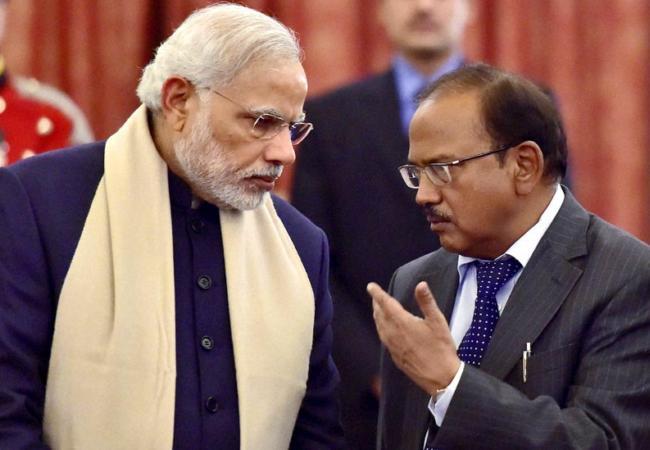
By Nitya Chakraborty India’s South Asia diplomacy is proving a disaster as the neighbouring countries of the South Asian Association of Regional Cooperation (SAARC) are discussing in details the issue of the revival of SAARC which has been lying inactive in the political arena since 2016 due to India’s decision not to deal with Pakistan […]

The article How Narendra Modi’s Ego Has Destroyed India’s South Asian Diplomacy In The Recent Past? appeared first on Latest India news, analysis and reports on Newspack by India Press Agency).

Electric vehicle insurance policies in the UAE are commanding about 72 per cent higher premiums than those for comparable petrol or diesel cars, largely because of elevated repair costs, limited workshop capacity, and parts supply chain challenges. Such figures, derived from data compiled by leading insurance and automotive analysts, shed light on systemic pressures across the market. Average comprehensive EV insurance is being priced at approximately AED […]

Citadines strengthens leadership in the resilient upper-midscale segment through rapid conversions and geographical diversification Franchise model gains momentum as a driver of scalable, efficient growth Global brand campaign amplifies refreshed Citadines lifestyle with activ∞ and “For the Love of Coffee” experiences across operational properties SINGAPORE – Media OutReach Newswire – 24 September 2025 – The Ascott Limited (Ascott), the wholly owned lodging business unit of CapitaLand Investment […]

China’s solar manufacturing industry is under pressure as Beijing intensifies efforts to restrain aggressive pricing tactics and eliminate surplus capacity. The National Energy Administration has signalled that firms engaging in destructive price competition will face stricter oversight, while draft regulations threaten shutdowns of plants that fail to comply with energy efficiency standards.

Wang Hongzhi, head of the NEA, published a directive ordering more balanced alignment between supply and demand, with emphasis on improving quality across the solar value chain. His message highlights that continued overcapacity and “cut-throat competition” must be contained to preserve the viability of the sector.

A key focus lies in the polysilicon segment. New standards proposed by China’s Standardization Administration would require factories to meet energy consumption thresholds—6.4 kgce/kg initially, and 5.5 kgce/kg after remediation. Facilities failing to upgrade would be shut. These rules could remove about 16.4 percent of capacity, trimming effective production to roughly 2.4 million metric tons annually.

At the same time, major polysilicon producers are planning capacity cuts via a 50 billion yuan consolidation fund. That plan aims to retire roughly one-third of low-efficiency production and impose output quotas akin to those used by oil producers. The expected cutback would reduce capacity from approximately 3.25 million tons to around 2 million.

Industry ministry meetings with solar firms have escalated in frequency, with Li Lecheng of the Ministry of Industry and Information Technology reiterating the need to phase out outdated lines, raise product standards, and enforce self-discipline among companies. The government is pushing for cleaner governance, stiffer quality controls, and curbs on unfair price undercutting. Several top-tier firms—LONGi, Trina, JA Solar, GCL, and others—attended these discussions.

Financial pressures on the solar sector have been acute. In 2024, the manufacturing chain posted losses of about US$40 billion. Many firms slashed their workforce by nearly a third. Utilisation rates in polysilicon and module production have hovered near 50 percent, constraining margins. Recent easing of pricing pressures shows polysilicon prices rebounding as the market anticipates tighter supply control.

Emerging leaders in next-generation module technology may gain an edge as the sector readjusts. N-type modules—such as TOPCon and HJT types—are being seen by some manufacturers as instruments to command premium pricing and differentiate from low-cost rivals. Companies that invest early could secure advantages in both domestic and export markets.

A longer-term obstacle is aligning central directives with local compliance. Local governments have historically defended regional solar output through subsidies, land allocation, and lax enforcement. Analysts warn that meeting the central government’s expectations may prove disruptive to local industrial planning. Enforcement is anticipated to ramp over the coming months.

OpenAI, Oracle and SoftBank have unveiled plans for five new artificial intelligence data centres across the United States under their Stargate infrastructure initiative, pushing the programme’s capacity to almost 7 gigawatts and investment to over US$400 billion over the next three years. Three of the new sites will be developed in partnership between OpenAI and Oracle, located in Shackelford County, Texas; Doña Ana County, New Mexico; and […]

Environmental analysts and transport groups have called for a major shift in Uganda’s boda-boda motorcycle sector, urging adoption of electric bikes as a means to curb greenhouse gas emissions, improve air quality, and relieve economic burdens on riders. A health-impact modelling study led by Dr Gabriel Okello and Dr Lambed Tatah found that converting petrol-powered boda-bodas in Kampala to electric ones could lower fine particulate matter levels […]

HO CHI MINH, VIETNAM – Media OutReach Newswire – 24 September 2025 – ECOVACS, a global leader in intelligent home robotics, unveiled its flagship DEEBOT X11 Family for the first time in the APAC region. The prestigious regional launch event brought together over 600 guests, including key distributor partners, leading influencers, and prominent tech media representatives, who gathered in Ho Chi Minh City for an exclusive firsthand […]

China’s goods exports expanded by 4.4% year-on-year in August, the slowest growth in six months, as shipments to the United States plunged more than 33%, weighed down by steep tariffs. Customs data showed imports rising just 1.3%, leading to a trade surplus of approximately US$102.3 billion for the month. China has now posted a goods surplus of more than US$785 billion through the first eight months of the year.

Exporters are offsetting the loss of U. S. demand by shifting focus to markets in Southeast Asia, Africa and Europe. Shipments to Southeast Asian nations rose 22.5%, while exports to Africa are on track for an annual peak, demonstrating that China’s firms are diversifying sales away from U. S. consumers.

India has emerged as a critical destination. August saw Chinese sales to India hit record highs, with strong volumes in electronics playing a central role. Firms assembling smartphones and components have increasingly used export routes into India, capitalising on shifting supply-chains that seek to avoid punitive duties in U. S. trade policy.

The gains elsewhere have only partially compensated for losses in the U. S. Bilateral shipments to America fell by about 33% in August compared to the same month last year; exports to the EU, by contrast, rose about 10.4%.

Manufacturers are accepting lower profit margins to maintain volume. Domestic industrial profits have declined in recent months as overcapacity forces price-cutting for export orders. Meanwhile, home consumption remains weak, undercut by a property sector in distress, tight credit for consumers, and muted wage growth.

Trade policy experts warn the durability of this export pivot depends heavily on external stability. Many countries receiving surging shipments from China are contemplating anti-dumping investigations; India, for example, has reportedly registered dozens of petitions addressing low-cost imports from China and Vietnam. Indonesia has raised concern over ultra-cheap clothing items appearing in its large urban markets.

TAIPEI, TAIWAN – Media OutReach Newswire – 23 September 2025 – TVBS’s newest original drama, The Good, the Bad, and the Ugly (舊金山美容院), will premiere on October 19. Before its debut, General Manager Sheena Liu led lead actors Simon Lien and Nash Zhang to Seoul for the 25th Broadcast Worldwide (BCWW), where the series drew attention as part of the Team Taiwan Pavilion. Simon Lien and Nash […]

VISHNU RAJA
RYO YAMADA
HITORI GOTOH
IKUYO KITA