News related to
City

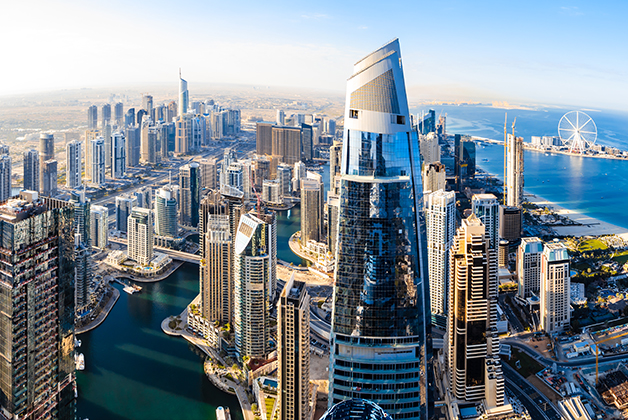
India is positioning itself as a global food supplier using Dubai as the logistical gateway, according to statements made by Chief Minister N. Chandrababu Naidu of Andhra Pradesh during his visit to the UAE. He declared that India’s strengths in agriculture, horticulture, aquaculture and logistics will enable the country to serve “the global community” through Dubai’s market access.

Naidu spoke of the UAE city’s strategic connectivity and global reach as ideal for scaling Indian-food exports. He noted that the Andhra Pradesh government is aiming to reduce logistics costs by integrating inland waterways, railways, road and seaports, and by spending around 14 per cent of the state’s GDP on logistics infrastructure as part of the drive to increase efficiency. His role as chief minister of Andhra Pradesh places him at the centre of an ambitious push to offer the state as a manufacturing and supply-chain hub with Indian agriculture at its core.

The announcement comes amid a broader investment road-show in which Naidu met with senior policymakers and business leaders in the UAE to discuss partnerships across multiple sectors, including food processing, green energy, AI and infrastructure. During a dialogue in Dubai the chief minister stated that India will supply food to the global community through Dubai as a hub, adding that he met ministers, family-business leaders and airlines executives during the visit. He praised the Indian diaspora for their contributions and flagged the state’s goal of making the new capital Amaravati a “green and blue city” built around water, greenery and advanced infrastructure.

Andhra Pradesh’s food-processing ambitions are a central plank of the strategy. The state government has invited investment from UAE food-conglomerates to scale cocoa cultivation, chocolate manufacturing, aquaculture and related logistics. The Chinese food-industry trend of “value-added exports” is echoed by India’s attempt to move beyond raw agricultural exports towards packaged, processed and high-logistics-integrated supply chains.

From a trade perspective, positioning Dubai as a re-export hub can offer Indian producers quicker access to Middle East, African and European markets. Dubai’s status as a global logistics and trading hub gives India the opportunity to piggy-back on existing infrastructure and reach. It also offers investors assurances of regulatory, financial and physical connectivity.

However, a number of challenges stand in the way. India already faces structural issues in agriculture: fragmented landholdings, variable productivity, post-harvest losses, and high domestic logistics costs. While Naidu cites a logistics cost of about 14 per cent of GDP for Andhra Pradesh, the national average remains higher and such a figure implies major optimisation ahead. The use of Dubai as a hub also raises questions of tariff regimes, transit duties, warehousing handling cost and competition from other international producers using the Gulf as re-export platforms.

Critics also point to the risk of over-promising on export capacity. India’s agriculture export ratio remains modest relative to the size of its production, and moving up the value chain into globally competitive processed foods will require investment in cold-chain infrastructure, quality standards and market-specific certifications. The reliance on a single state’s announcement may also raise concerns about federal coordination and falling short of expectations if broader national agricultural reforms lag.

Dr Imran Khalid In an era when the global economy staggers under the weight of inflation, trade wars, and geopolitical fractures, China’s Communist Party has just unveiled a roadmap that feels less like a policy document and more like a quiet revolution. The fourth plenary session of the 20th Central Committee, which wrapped up in Beijing on October 23, adopted recommendations for the 15th Five-Year Plan, covering […]

US-based data-centre specialist Crusoe Energy Systems LLC has secured approximately $1.38 billion in a Series E funding round, raising its valuation to more than $10 billion underlining the intensity of demand for artificial-intelligence infrastructure. The equity fundraising was co-led by Mubadala Capital and Valor Equity Partners, and attracted backing from major investors including Nvidia Corporation, Fidelity Management & Research Company and Founders Fund. Crusoe, founded in 2018, […]

KINSHASA, CONGO – Media OutReach Newswire – 25 October 2025 – The Government of Kinshasa, the capital of the Democratic Republic of the Congo, and Vingroup (Vietnam) have signed a Memorandum of Understanding (MoU) to collaborate on research and development of large-scale urban projects and green mobility. The agreement marks an important milestone in the cooperation between Vietnam and Democratic Republic of the Congo, reflecting the shared […]

Gulf states are emerging as influential players in digital assets, with governments across the region intensifying efforts to regulate cryptocurrencies, tokenisation and Web3 innovations. A growing number of jurisdictions are introducing licensing frameworks for virtual asset service providers, stablecoin regimes and asset-tokenisation structures, signalling a shift in strategy from reactive oversight to proactive design.

The Central Bank of the United Arab Emirates has introduced a Payment Token Services Regulation that obliges issuers, distributors and custodians of payment tokens to maintain full reserve backing, undergo mandatory licensing and meet robust anti-money-laundering and cybersecurity standards, thereby positioning the UAE as a regulatory pioneer in the region. Across the region, countries such as Bahrain and Saudi Arabia have developed layered digital-asset frameworks, with Bahrain’s central bank among the earliest movers and Saudi launching fintech sandboxes and pilot token-asset schemes under its Vision 2030 plan.

Market data underline these developments. Analysis shows that between July 2023 and June 2024 the Middle East and North Africa region handled some US$338.7 billion in on-chain crypto value, accounting for approximately 7.5 per cent of global transaction volume. Institutional flows dominate: about 93 per cent of value transferred in the region came in amounts of US$10,000 or more.

Several regional platforms have obtained new licences under this regulatory push. The region’s first licensed crypto-asset service provider, Rain Financial Inc., has expanded its services under licence from both Bahrain’s regulator and Abu Dhabi’s ADGM-FSRA. In Bahrain, over 50 firms including nearly half focused on digital-assets are in discussions to establish operations under the Central Bank’s regime.

The tokenisation of real-world assets is gaining traction, with banks and global institutions exploring issuance of token-backed bonds, real estate and commodity-linked tokens. According to consultancy research, tokenisation could add as much as US$230 billion annually to MENA-region GDP. Major international exchanges and asset-managers are establishing footholds: for instance, the global exchange Binance uses the UAE as its regional base and has obtained a licence under Dubai’s Virtual Assets Regulatory Authority.

Despite this momentum, the region faces challenges. Implementation remains uneven: regulatory capacity across jurisdictions varies, local consumer-protection rules are still emerging and cybersecurity vulnerabilities in wallet providers and exchanges pose material risk. Energy-use and environmental impacts of crypto-mining have also drawn regulatory scrutiny: in one Gulf city, electricity consumption fell by over fifty per cent after enforcement of mining curbs.

Taxation and corporate-governance issues are also under development. In Saudi Arabia individuals currently pay no capital-gains tax on crypto, though businesses may face up to 15 per cent tax with corporate income taxed at 20 per cent plus a 2.5 per cent zakat levy. Given the youth-skewed demographics of Gulf markets and high smartphone penetration, regulators see digital-assets as both a diversification lever and a conduit to broader fintech innovation.

For global crypto and Web3 players the Gulf region offers a combination of clear regulation, large capital pools and government-driven ambition. However firms must navigate rigorous licensing conditions, reserve-backing rules, AML frameworks and evolving governance standards. The regulatory focus on stability and consumer protection underscores that the region expects digital-asset innovation to be embedded in mainstream finance rather than existing outside it.

A partnership between the investment firm Orion Resource Partners, the U. S. International Development Finance Corporation and sovereign investor ADQ has launched a major critical-minerals fund, mobilising an initial $1.8 billion in capital with a target of up to $5 billion to support supply-chain development of essential raw materials. The initiative, known as the Orion Critical Mineral Consortium, aims to invest in and scale near-term producing assets for minerals such as copper, cobalt and rare earths, in line with partner-government industrial and security goals. The DFC has confirmed its cornerstone commitment, matched by funds managed by Orion and ADQ, creating the foundation of the expanding pool of capital.

The fund emerges amid heightened concern in Washington over the concentration of critical-minerals processing in rival economies and the lag in Western investment, with deferred permitting, falling ore grades and decelerating mine-development pipelines cited as systemic pressures. Orion, which manages around $8 billion in assets and has global mining-finance experience, brings its platform into the consortium, while ADQ’s prior joint venture with Orion—announced earlier this year for $1.2 billion—provides a blueprint for the strategic partnership. The fresh consortium will prioritise assets capable of delivering supply within a shorter timeframe rather than frontier exploration, signalling a shift towards faster-payback, lower-development-risk opportunities.

The strategic calculus ties directly into U. S. national-security and industrial-policy ambitions. “Securing critical minerals is a paramount matter of U. S. strategic interest and economic prosperity,” said DFC CEO Ben Black. Orion founder and CEO Oskar Lewnowski described the consortium as a “bridge” between emerging-market production jurisdictions and advanced-manufacturing demand in the U. S. and among allies. The fund will focus on eligible jurisdictions for DFC investment and will integrate production, processing and offtake structures.

The $1.8 billion commitment represents the current scale of the vehicle, with Orion CMC envisaged to grow further as aligned investors join. Observers note that while the headline target is $5 billion, execution will depend on securing suitable assets, navigating permitting and securing host-nation partnerships. The model mirrors the earlier ADQ-Orion joint venture launched in January, which committed to deploy $1.2 billion over its first four years across metals-and-mining investments in Africa, Asia and Latin America.

For Orion and ADQ, this represents an expansion of their earlier alliance: the Abu Dhabi-based JV served both to secure long-term resource links and to align with ADQ’s infrastructure-and-critical-minerals cluster. For the U. S., the consortium marks one of the largest private-sector-linked initiatives in the critical-minerals domain, aligning DFC’s mandate of mobilising private capital abroad with the administration’s aim to reduce strategic vulnerabilities in supply chains.

Challenges remain. Mining projects are long-horizon endeavours, and merely committing funds does not guarantee results. Host-country regulatory regimes, permitting timelines, environmental and social governance constraints and market-price volatility all play roles in investment outcomes. Industry analysts caution that while the push for supply-chain resilience is timely, the gap between intent and delivery is sizeable. Even with $5 billion in capital, global demand for some critical minerals is projected to outstrip supply capacity.

Operationally, the consortium’s emphasis on “existing or near-term producing assets” rather than early-stage exploration is intended to accelerate results and mitigate development risk. That strategy reflects frustration in industry circles with projects that take a decade or more to bring into production. The presence of sovereign-wealth capital, allied-government backing and private-sector mining-finance expertise may create a differentiated pathway for this fund compared with earlier, traditional mining-investment funds.

The lead up to the table tennis contests at the 15th National Games of China take place next month at the Galaxy Arena, embracing the spirit of ‘National Games for All’ with the unique integration of record-breaking ‘sports-meet-art’ activations MACAU SAR – Media OutReach Newswire – 24 October 2025 – In celebration of the 15th National Games of China, which will be hosted in the Guangdong-Hong Kong-Macao […]

Advertisements

The kingdom is committing multibillion-dollar investments into artificial intelligence, high-tech manufacturing and gaming as it repositions its economy away from a flagship megacity project. Officials have indicated that the NEOM venture will receive a smaller share of funding as more capital flows into next-generation industries. The move reflects a pivot by policymakers toward technology-driven growth sectors. Top-level figures including the Public Investment Fund highlight that the ecosystem […]

Global oil prices climbed sharply following new sanctions targeting Russia’s major producers, underscoring how geopolitical risk is once again reshaping the energy sector. The United States moved to impose measures against Rosneft and Lukoil, companies that together account for roughly half of Russia’s oil production. The measures froze U. S. assets of the companies, barred American business dealings and threatened secondary penalties for third-party entities dealing with them.

The immediate market reaction was decisive. Brent crude rose by about 5.7 per cent after the announcement, while U. S. futures recorded their most significant one-day jump in over four months. Supply concerns and uncertainty around the disruption of Russian flows have added a new premium to oil prices. Some analysts describe this as the return of the “geopolitical risk premium” that had subsided earlier this year.

Key dynamics are emerging in the global energy landscape. One of them is the pressure on refineries in China and India that have heavily relied on Russian crude. With sanctions threatening secondary penalties, buyers are reconsidering their linkages. The ramifications extend beyond immediate flows: Russia’s ability to route crude via its so-called ‘shadow fleet’ of tankers and opaque trading chains may be challenged further, complicating its export capacity.

From the Russian side, President Vladimir Putin described the U. S. move as “unfriendly” and warned it could backfire by pushing up global oil costs. However, Moscow also signalled that production would continue, and previous sanctions have not immediately led to a collapse in output, suggesting resilience and adaptation persist in the Russian energy sector.

For the buyer nations, the calculus is shifting. Indian and Chinese refineries, which have depended on discounted Russian grades, now face the risk of being cut off from Western-dollar financing, insurance and shipping links if they flout U. S. rules. The potential loss of Russian supply at discount could create a scramble for alternative sources. Meanwhile, Russia may turn more aggressively towards friendly states or deepen barter trade, but such shifts would likely come with higher costs and logistical complexity. Analysts argue that the global spare capacity outside OPEC is already thin, so any reduction in Russian supply could tighten the market further.

In financial markets the impact is tangible. Energy stocks in Europe rose alongside oil prices, while Russian stock indices registered losses on the back of sanction pressure. Firms in the Asia-Pacific region with exposure to Russian crude may face heightened risk premiums or supply disruptions. The confluence of sanctions and market reactions underscores how inter-linked energy flows, geopolitics and financial exposure have become.

On the structural front, situation highlights the ongoing challenge of sanction enforcement. The U. S. Treasury and allied agencies are increasingly focusing not just on Russia’s producers but the broader ecosystem: shipping, insurance, finance. The effectiveness of these measures depends upon the willingness of non-U. S. players to comply and the ability of Russia to create work-arounds through alternative trade routes. The efficiency of existing infrastructure, the cost of shipping to farther markets, and the reliability of insurance all factor into how quickly Russian production or exports may come under strain.

Riyadh is advancing its push into artificial intelligence, sidestepping some of the previous fanfare around the massive urban-megaproject Neom, and signalling a new strategic pivot by its sovereign wealth arm Public Investment Fund. The fund is repositioning to attract global AI investment, deepen partnerships with major tech players and harness data-centre infrastructure at scale.

The kingdom’s leadership is steering resources away from grand construction ambitions to technology-driven growth. The newly formed Humain — a PIF-backed AI company — was launched in May with the mission of establishing Saudi Arabia as a global hub for AI. The firm plans to build advanced data centres, cloud services and one of the world’s most powerful Arabic large-language models.

Strategic deals have followed. U. S. chip-maker Nvidia has agreed to ship some 18,000 Blackwell chips to Saudi Arabia to support a 500-megawatt data-centre facility coordinated by Humain. PIF and international analysts say the move reflects a shift in focus: less emphasis on sprawling “giga-projects” of construction, more on the digital-infrastructure layer that underpins a future knowledge-economy.

Globally, transformative AI applications — from generative-AI language models to edge computing in industries — require vast compute power, energy and state coordination. PIF’s governor Yasir Al‑Rumayyan has said the kingdom is well-placed, given its energy resources and large-scale capital, to become a “hub outside the U. S.” for AI development. Analysts suggest the pivot acknowledges market realities: mega-cities like Neom have proved slower to materialise than envisaged, while digital-economy bets offer faster, more measurable returns.

The megacity Neom and its flagship component – The Line – have faced scepticism over timelines, cost-overruns and foreign investor pull-back. Executive reshuffles in Neom’s leadership and recalibrated investment priorities have signalled the shift. Meanwhile, PIF has begun trimming the proportion of its portfolio allocated to global investments — moving foreign-allocation toward 18 per cent from previous targets — to double-down on domestic strategic sectors like AI.

The investment case for Saudi Arabia is sizeable. Humain aims to tap into the Arab-language market of over 450 million people, while deploying data-centre capacity measured in gigawatts. Academic and industry voices say the kingdom has already built one of the strongest AI-ready physical infrastructures in the Middle East: multiple super-computers, data centres and training programmes are in motion. On the human-capital front, programmes to train 20,000 data/AI experts by 2030 are underway through partnerships with international firms such as Microsoft, Accenture and Huawei Technologies.

For global tech firms and investors, Saudi Arabia’s offer now centres around “sovereign AI infrastructure” rather than purely construction or real-estate play. The deal with Nvidia is seen as precedent-setting: Nvidia’s CEO told reporters that AI infrastructure is “essential infrastructure” akin to power and internet. Moreover, the shift aligns with the kingdom’s broader strategic framework Vision 2030 — which seeks to reduce oil-dependence and build a diversified economy.

Nevertheless, risks remain. Observers caution that the AI ambition is spectacular in scale yet faces operational and regulatory challenges — from data-governance to talent retention and ideological scrutiny. The push may also attract geopolitical scrutiny given the involvement of U. S. technology in Saudi infrastructure. The earlier mega-project model illustrates how bold vision can be slowed by delivery hurdles.

HONG KONG SAR – Media OutReach Newswire – 23 October 2025 – The Hong Kong Productivity Council (HKPC) today released the results of the “AI Readiness in Workplace Survey 2025”, which delves into the overall readiness, actual needs, challenges and future development opportunities of local enterprises in the application of artificial intelligence (AI). Building on these insights, HKPC set out eight strategic recommendations to drive broad and […]

HONG KONG / SINGAPORE – Media OutReach Newswire – 23 October 2025 – Regent Hong Kong has etched its name in hospitality history by becoming the first and only hotel in Asia with the best views to secure a flawless 100/100 rating from The Most Perfect View Certified Program. This recognition cements the luxury waterfront hotel’s reputation as the hotel with the best views of Victoria Harbour, […]

The urban development landscape of the Emirate of Ras Al Khaimah is being reshaped as Marjan and RAK Hospitality Holding announced a landmark merger to form a unified entity under the Marjan brand, merging land-development and hospitality arms into one. Under the partnership, Marjan will consolidate real-estate development, hospitality operations and lifestyle offerings, effectively becoming one of the largest property developers in the United Arab Emirates. According […]

Oil prices shot up by around 3% Thursday, driven by fresh US sanctions on Russia’s top oil producers and signs that major buyers are rethinking their purchases. Brent crude futures rose to approximately $64.53 per barrel, while US West Texas Intermediate climbed to about $60.39.

The sanctions, targeting Rosneft and Lukoil, mark a marked escalation by the US in response to Russia’s war-time exports. The measures were accompanied by a US warning that further action could follow unless Moscow commits to a cease-fire.

A key knock-on effect: Indian refiners, including state-owned entities, have begun reviewing trade documents to ensure they are not sourcing crude directly from the sanctioned suppliers. With India having become one of the largest importers of discounted Russian oil following Western withdrawals, the scale of this review is significant.

The sanctions underscore a new risk premium in the oil market. Unlike previous rounds of sanctions—which largely constrained financing, insurance and shipping without substantially affecting physical oil flows—this move seeks to directly curtail output from Russia’s two largest producers. Rosneft and Lukoil collectively account for a large share of Russian crude exports and fuel the Kremlin’s budget.

Analysts caution, however, that while the immediate reaction has been sharp, structural supply disruption is not guaranteed. Russia retains significant production capacity and a sophisticated network of intermediaries and a “shadow fleet” of tankers that have helped maintain exports despite earlier sanctions. Nevertheless, the combination of curtailed Russian supply and potential reductions in purchases by major refiners sets the scene for tighter market conditions.

In India, refiners such as Indian Oil Corporation, Bharat Petroleum Corporation and Hindustan Petroleum Corporation are scrutinising bills of lading and cargo origins to ensure compliance. India imported roughly 1.7 million barrels per day of Russian crude in the first nine months of the year, predominantly via intermediaries rather than directly from Rosneft or Lukoil. The new sanctions give insurers, banks and traders until 21 November to wind down transactions involving the sanctioned firms.

The US move also dovetails with other sanctions developments: the EU approved a 19th package targeting Russia’s energy exports, including a ban on Russian liquefied natural gas imports and restrictions on shadow-fleet tankers. The combined effect is to intensify pressure on Russia’s energy supply chains.

From a market-demand vantage point, the worry is whether alternative sources can swiftly fill any gap. OPEC+ producers have some spare capacity but not enough to instantly offset a major Russian shortfall. Meanwhile, the US inventory situation added fuel to the rally: US crude stockpiles declined unexpectedly, reinforcing supply-tightness perceptions.

Energy-market specialists say the key factors to watch include India’s crude-import strategy, China’s stock-building trends and how aggressive Russia’s response will be—whether via production cuts or leveraging its ties with China and others. One observer noted the sanctions could be “a knee-jerk reaction” rather than a structural pivot, given Russia’s past ability to maintain volumes despite sanctions.

Purchasers of Russian crude face a growing compliance burden. Firms must navigate insurance exclusions, shifting shipping patterns and potential secondary sanctions from the US. Some refiners may opt to ramp up purchases from the US Gulf and other non-Russian sources, which could reorient trade flows and raise Atlantic-coast pricing.

Michelin-starred 8½ Otto e Mezzo BOMBANA recognized for the second year running while Long Bar makes the prestigious list just one year after opening MACAU SAR – Media OutReach Newswire – 23 October 2025 – Galaxy Macau™, the world-class luxury integrated resort, garnered two more accolades to its glittering array of honours with 8½ Otto e Mezzo BOMBANA at Galaxy Macau and Long Bar both being named […]

Africa is entering a phase of accelerated digital inclusion, backed by substantial investment and strategic partnerships, yet persistent infrastructure and cybersecurity gaps pose growing concerns. The World Bank Group recently co-chaired the launch of the Mobilizing Access to the Digital Economy Alliance: Africa, aimed at bringing 100 million individuals and enterprises online by 2034. According to the World Bank’s data, broadband access across Africa rose from 26 […]

CHANGSHA, HUNAN – Media OutReach Newswire – 22 October 2025 – On the morning of October 13, a ceremony for the transfer and incorporation of the Zidanku Chu Silk Manuscripts (Volumes Ⅱ and Ⅲ), namely The Five Elements Decree and The Offence and Defense Divination, into the collection of Hunan Museum was grandly held. Present at the ceremony were guests from both China and the United States, […]

  K Raveendran   The very idea of a Lokpal riding in a BMW, reeks of irony so strong that it almost feels like satire. The institution that stands as the sentinel of public probity, the watchdog against corruption, has managed to draw ridicule upon itself by its desire for luxury wheels. A BMW-driven Lokpal […]

The article Lokpal’s BMW Fixation Is Outright Corruption, If Not Vulgar appeared first on Latest India news, analysis and reports on Newspack by India Press Agency).

Travel Influencers Christy Leung and “African Prince” Kunbi Journey into the Heart of Childhood HONG KONG SAR – Media OutReach Newswire – 22 October 2025 – Hongkongers love to travel, and in recent years, more people are seeking in-depth experiences, venturing into local communities to feel the cultural pulse. Travel enables us to experience diverse traditions and build genuine connections with people. Similarly, helping to improve the […]

The Dubai Department of Economy and Tourism has launched an incentive programme that reimburses eligible hotel developments for 100 per cent of the Dubai Municipality room-sales fee and the Tourism Dirham levy for two years following opening. The scheme targets new hotels, resorts, hotel apartments and other approved hospitality facilities in the designated growth zones of Dubai South, Palm Jebel Ali, Dubai Parks and Dubai Islands. The move stems from Executive Council Resolution No.  of 2025, […]

The government of British Columbia has introduced legislation that would permanently ban new crypto-mining operations from connecting to the provincial grid via BC Hydro, and impose formal limits on power access for AI and data-centre operators. The bill, known as the Energy Statutes Amendment Act, aims to steer the province’s clean-electricity supply toward mining, LNG and natural-resource industries viewed as higher-priority than the high-load crypto sector.

Under the new framework, BC Hydro will no longer approve fresh power-grid connections for crypto-mining facilities. The moratorium first established in 2022 is now set to become law. In parallel, beginning in late 2025 the province will introduce an allocation process for electricity demanded by AI and data-centres: only a capped amount of power will be available to those sectors, and they must compete for it under stricter criteria.

Government officials say the shift reflects a need to address surging grid-demand from emerging industries and to ensure that public electricity resources deliver broad economic and employment benefits. Premier David Eby said the move will help the province “move faster” on major transmission infrastructure and support industrial growth in a planned megaproject in the northwest. Energy and Climate Solutions Minister Adrian Dix added: “Our new allocation framework will prioritise vital growth in sectors like mining, natural gas and lowest-emission LNG, while ensuring our clean energy is directed to projects that deliver the greatest benefit to British Columbians.”

The backdrop encompasses the looming construction of the North Coast Transmission Line, a roughly $6 billion project designed to bring new clean-electricity capacity to the province’s sparsely-electrified northwest. That infrastructure is central to the government’s strategy of prioritising industrial connections over speculative, high-load users such as crypto-mining farms.

Industry analysts have mixed reactions. Supporters say the policy reflects sound planning in a jurisdiction dependent on hydroelectric power and facing increasing pressure from multiple large-scale electricity users. They note that the high energy-intensity of crypto-mining—with relatively modest job creation and economic multiplier effects—makes it a less compelling candidate compared with mining, LNG, hydrogen and industrial AI. On the other hand, critics warn that the framework gives the government wide discretionary power, potentially reducing transparency and favouring incumbents. As one Green-party MLA noted: “With no detail on this framework or the criteria for decision-making in Bill 31, we are concerned that the minister will be the one making these consequential determinations under the influence of friends or lobbyists.”

The government has indicated that data-centres and AI firms will still be eligible for power, but will face competition under the new mechanism: for example, BC Hydro reportedly will allocate only about 300 megawatts for AI and 100 megawatts for data-centre use every two years. Those thresholds will represent a major scaling down in open-access grid connections for such technology users and signal a shift away from first-come, first-served power allocations.

For prospective crypto-miners, the measure marks a turning point. Major mining projects that had anticipated low-cost Canadian hydro power will face altered calculus: either repurpose for non-crypto uses, or relocate to jurisdictions with more open grid access. This may induce capital flight or slow the growth of a nascent mining industry in the province. Conversely, proponents of the policy argue it will preserve affordability for households and existing industrial users by preventing unmanaged load growth.

The government’s timing is also notable. The bill not only formalises the ban on new crypto-mining connections, but synchronises with the broader policy shift to accelerate the NCTL and re-shape grid access rules. Construction is scheduled to begin in 2026 and extend into the early 2030s. For the grid, this means a period of constrained supply allocation while demand from resource-intensive projects expands.

Community and Indigenous groups have been emphasising that increased industrial electrification must occur in consultation and benefit-sharing with First Nations. The legislation allows for First Nations co-ownership of the transmission line and signals a broader reconciliation dimension to the infrastructure strategy.

In the crypto-community the reaction is sharp. Firms and investors note that BC’s abundant hydro power was a major attraction to set up mining operations at scale. With the ban in place, developers will need to evaluate stranded-asset risk or shift to other Canadian provinces or international venues. Some warn that innovation in GPU- and AI-mining overlap may find itself constrained as power availability tightens.

From a global lens, British Columbia joins a growing cohort of jurisdictions imposing stricter controls on high-energy crypto-activities and re-examining how emerging tech intersects with energy policy. The regulation underscores the tension between rapid tech growth and public-utility responsibilities in regions reliant on renewables and constrained transmission.

CHAOZHOU, CHINA – Media OutReach Newswire – 21 October 2025 – From November 28th to 30th, the city will host the 23rd Teochew International Convention, welcoming Teochew people from around the world and sharing the city’s cultural story on a global stage. Leveraging this opportunity, Chaozhou has prioritized engagement with the global Teochew diaspora, mobilizing the strength of overseas communities and entrepreneurs to enhance development capacity and […]

The Dubai-based airline Emirates has formally marked 25 years of its flight operations to Uganda, signalling both a milestone in the company’s growth in East Africa and its deeper entrenchment in the Ugandan travel market. Since its first landing in 2000, the carrier reports transporting 2.8 million passengers on 15,900 flights between Uganda’s capital region and Dubai. At launch, the service flew three times weekly, routed via […]

Chicago-based hospitality group Hyatt Hotels Corporation has entered into a management agreement to bring its full-service Regency brand to Lusaka, Zambia. The five-star property, to be known as Hyatt Regency Lusaka The Pamodzi, will undergo substantial refurbishment and reopen in 2026 under the new branding. The deal partners Hyatt with affiliates of ASB Hotel Properties and Albwardy Investments, placing the landmark previously called The Pamodzi Hotel at the centre […]

VISHNU RAJA
RYO YAMADA
HITORI GOTOH
IKUYO KITA