News related to
Dubai

Arabian Post Staff -Dubai Member states of the OPEC+ alliance approved a new framework to assess each country’s maximum sustainable oil production capacity, with the outcome to determine output baselines from 2027. The decision was announced by Saudi Energy Minister Prince Abdulaziz bin Salman, who described the methodology as fair and transparent. The evaluation process covering most members will run from January to September 2026, laying the […]

Dubai Duty Free registered its highest-ever monthly sales with AED 876.56 million in November, marking a major breakthrough in the retailer’s 42-year history. By mid-November the operation had already surpassed the US$2 billion threshold for the year, underscoring a powerful run of commercial momentum across its global travel-retail network.

Sales surged by 16.8 per cent compared with the same month last year, pushing average daily revenue to ~AED 29.21 million, compared with AED 26.51 million in December 2024. High-value purchases — defined as transactions above AED 500 — have accelerated, growing 15.2 per cent in count and 20.5 per cent in value over prior-year levels, forming roughly three-quarters of total spend.

Luxury and lifestyle categories remain the backbone of this growth. Perfumes again led the charts with AED 160.6 million in sales, followed by liquor at AED 103.6 million. Gold sales rose sharply to AED 87.7 million, reflecting strong demand for jewellery and precious metals among departing travellers. Confectionery recorded a striking 42.9 per cent increase, with the retailer’s “Dubai Chocolate” brand alone contributing AED 35.7 million — equivalent to over 80 tonnes of product across multiple luxury brands.

Electronics posted robust gains as well, with AED 67.2 million in sales, fuelled by a standout performance for new smartphone launches. The luxury fashion segment saw its strongest month of the year: brands such as Louis Vuitton, Dior, Chanel, Gucci and Cartier — along with the pre-owned luxury concept store REKLAIM — witnessed a 40 per cent plus rise in sales. Notable transactions included a high-end watch priced over AED 200,000 and multiple Hermès handbags.

The growth was broad-based across concourses and markets. Concourse A led with a 38 per cent jump in sales, while arrivals stores rose 14 per cent despite intensified competition from other retail outlets. Regional spending grew across the board, with Europe up 23.6 per cent, Russia 27.6 per cent, and Africa 16.5 per cent. The Indian subcontinent contributed modestly with a 6.3 per cent uptick.

Tracking year-to-date performance, Dubai Duty Free’s cumulative sales reached AED 7.75 billion, up nearly 9.6 per cent compared with the same period last year. Management credits this growth to strategic expansion of luxury offerings, optimized retail footprint at Dubai International Airport and Al Maktoum International Airport, and enhanced engagement with travellers from emerging and traditional markets.

UAE and Saudi Arabia are embarking on sweeping reforms to reshape their healthcare and life-sciences sectors, opening the door to expanded private-sector participation, foreign investment and rapid technological adoption across the region.

Legal changes in the UAE have restructured the regulatory framework for medical products, pharmacies and pharmaceutical establishments under updated laws that strengthen protections and streamline compliance. These alterations aim to catalyse domestic pharmaceutical manufacturing and support a growing life-sciences ecosystem, signalling government intent to shift from reliance on imports to building a robust local industry. The reforms dovetail with a broader healthcare strategy that encourages research, innovation and long-term capacity building in biotechnology and medical technology.

Parallel reforms in Saudi Arabia have dramatically altered the investment climate. Regulatory adjustments now allow 100 per cent foreign ownership of healthcare facilities including hospitals, polyclinics and telehealth centres. This change aligns with government objectives under its economic diversification plan, which seeks to raise private-sector involvement from roughly 40 per cent today to nearly 65 per cent by 2030. Licensing procedures for new medical facilities and services are being streamlined and digitised to offer greater transparency and efficiency, thereby lowering entry barriers for both domestic and international investors.

Market data underscore the scale of transformation. Industry forecasts suggest that overall healthcare and life-sciences investment across Gulf countries could rise sharply, supported by demographic changes, growing demand for chronic-care and geriatric services, and increased appetite for digital health and preventive medicine. In the UAE, life-sciences clusters are being developed to host pharmaceutical and medical-device companies, while production of biosimilars and expansion of research facilities indicate a strategic push to localise supply chains.

Digital health and health-tech are playing a central role in this transformation. Both nations are investing in national platforms for unified electronic health records, AI-powered diagnostics, and telemedicine services designed to expand access to care and improve efficiency. These efforts are complemented by regulatory frameworks that encourage medical innovation and private–public partnerships, creating environments where start-ups and established firms alike can experiment with new models of care delivery.

Despite broad optimism, some challenges remain. Large-scale hospital projects still face regulatory and approval delays, even as efforts are underway to simplify licensing and reduce bureaucratic hurdles. In Saudi Arabia, private investors must navigate evolving cultural and regulatory norms, especially around areas such as reproductive medicine and biotechnology. Recruiting and retaining specialised medical professionals remains difficult, given relatively limited existing local expertise in certain advanced fields.

Although regulatory reforms lay the groundwork for growth, translating legal change into improved patient outcomes and equitable access will demand careful oversight. Ensuring quality across a rapidly expanding private healthcare market and balancing profitability with affordability will require rigorous standards, transparent governance and robust public-health planning.

Arabian Post Staff -Dubai Leaders of the oil-exporting alliance OPEC+ confirmed they will maintain their pause on increasing crude output through the first quarter of 2026. The group’s decision, reconfirmed after a weekend of virtual meetings, reflects growing evidence of oversupply in global oil markets and subdued demand prospects for early 2026. The eight member countries involved in output adjustment — among them Saudi Arabia, Russia, UAE, […]

Abu Dhabi is preparing to host what organisers describe as the world’s largest debut media and entertainment gathering, with the BRIDGE Summit 2025 scheduled to run from 8–10 December at the Abu Dhabi National Exhibition Centre. The summit is expected to draw more than 60,000 participants from around the globe and bring together over 400 speakers and 300 exhibitors under a single roof.

Organisers envisage BRIDGE as an immersive platform that merges content, technology, culture, and commerce, structured across seven thematic tracks: Media; Creator Economy; Music; Gaming; Tech & AI; Marketing; and Picture — the latter covering film, streaming, and visual storytelling. The schedule includes more than 300 activities: roughly 200 panels, 50 workshops and interactive showcases, masterclasses and matchmaking zones designed to connect creators, investors, policymakers and media platforms.

Participation confirmed by high-profile figures signals the summit’s global ambition. International actor, filmmaker and DJ Idris Elba will join the line-up, bringing his cross-sector experience in entertainment and advocacy to the Summit’s discussions. Alongside traditional media heavyweights and cultural leaders, the Summit aims to spotlight emerging voices in the digital creator economy. The Creator Economy track alone is slated to feature more than 80 global contributors across 50 sessions investigating how influence, ownership and monetisation are reshaping creative industries worldwide.

Central to the Summit’s narrative is the challenge facing modern media: trust, credibility and sustainability. As traditional broadcast gives way to streaming and social platforms, and as generative AI reshapes production, issues of editorial independence, content verification, audience dynamics and revenue stability are moving to the forefront. The Media track is expected to convene over 100 global editors, founders, policymakers and investors to discuss funding models, algorithmic distribution, content integrity and the very ethics of influence in media today. The Summit’s ambition is to provoke debate and propose frameworks that can guide media’s future in an era of rapid technological disruption.

Beyond content and discussion, BRIDGE is designed as a marketplace for partnerships — blending culture, commerce and policy. Conversations already under way include cross-sector collaborations between media companies, tech firms, venture capital, and energy and infrastructure players. For example, recent talks involving global tech leadership have highlighted an alignment of media innovation with digital infrastructure capacity and clean energy, reflecting how foundational resources are becoming integral to media’s next frontier.

For countries and organisations navigating the tension between creative independence, monetisation and regulatory frameworks, the Summit offers a testbed. Delegates include creators seeking sustainable revenue, investors eyeing cultural-sector returns, technology firms exploring policy-driven AI integration, and governments looking to harness media’s influence in soft power projection. That diversity suggests the Summit could influence not just entertainment and content markets, but regulatory norms, global standards, and potentially the geopolitics of information dissemination.

Attendance projections and speaker rosters aside, the Summit’s scale poses logistical and structural challenges. Managing 60,000 attendees across multiple tracks, workshops and networking zones demands rigorous coordination. Questions around equitable representation — of global South artists, independent creators and regional media voices versus established global brands — remain. Observers are watching whether BRIDGE can balance commercial ambition with inclusivity and whether media integrity and creative freedom will be genuine priorities.

If execution aligns with vision, BRIDGE Summit 2025 could mark a turning point for the media and entertainment industry — reimagining how content, community, technology and commerce converge in the coming decade.


Travel demand across the Gulf is undergoing a distinctive shift as Saud Arabia and Bahrain emerge as the region’s fastest-growing outbound markets. Airport usage data compiled by Dragonpass shows that Saudi travel volumes increased by 36 per cent this summer, with June marking its busiest month ever. Meanwhile Bahrain posted a 208 per cent year-on-year rise, the sharpest growth among Gulf Cooperation Council nations and a clear signal of expanding mobility across the region.

The surge in air travel across these Gulf states reflects a combination of expanded airport capacity, evolving travel behaviour and government efforts to reposition their countries as regional travel hubs. Saudi Arabia’s growth aligns with its strategic development blueprint under Saudi Vision 2030, which aims to promote tourism and business travel alongside infrastructure investment. Bahrain’s dramatic increase illustrates its emergence as a regional connector, reinforcing its role in the Gulf’s evolving aviation and tourism ecosystem.

The upturn is not limited to those two. Other Gulf states including Qatar and Oman also recorded notable increases—travel volumes in Qatar rose by 198.9 per cent year-on-year, while Oman saw an 89.2 per cent boost as its airport infrastructure and heritage-led tourism gained traction. At the same time the region’s historical hub United Arab Emirates witnessed a 21 per cent decline over the summer, a reversal that observers attribute to shifting travel patterns and growing competition from its neighbours.

Beyond sheer volume, travel habits are evolving. A rising number of travellers across the Gulf are opting for premium airport services such as lounge access, signalling growing demand for comfort and convenience. Bahrain now leads globally on lounge-use, with 1.35 per cent of passengers utilising premium facilities — a rate ahead of major global aviation hubs. Saudi Arabia placed second in the region at 0.86 per cent.

Analysts suggest that this shift is driven by a combination of rising disposable incomes, increased business travel, and a changing perception of intra-Gulf mobility from a necessity to a lifestyle and leisure choice. Expansion of airport capacity, new routes and better services have made air travel more accessible and attractive than before. In Saudi Arabia, expanding infrastructure investment under Vision 2030 has increased flight connectivity and lifted capacity constraints. In Bahrain, efforts to position the nation as a regional aviation hub seem to be bearing fruit as the kingdom leverages its strategic geographic location and growing investment in tourism.

The broader context signals a reconfiguration of Gulf air travel dynamics. As smaller Gulf states and Saudi Arabia ramp up capacity and services, they are drawing passengers who might previously have transited through traditional hubs such as the UAE. This pattern points to intensifying intra-Gulf competition in aviation and travel services, accompanied by a shift in consumer preferences toward convenience, comfort and variety.

Arabian Post Staff -Dubai Airlines worldwide mobilised to install a mandatory software update on jets in the Airbus A320 family after a software flaw linked to intense solar radiation threatened critical flight-control systems. The issue came to light after an aircraft operated by JetBlue experienced a sudden, uncommanded drop in altitude while cruising in October, prompting a global safety alert issued by the manufacturer Airbus SE and […]

Advertisements

The Ministry of Finance, acting as issuer alongside Central Bank of the UAE as the issuing and payment agent, has completed the November 2025 auction of dirham-denominated Islamic Treasury Sukuk with a total issuance of AED 1.1 billion. This marks the final scheduled T-Sukuk auction under the 2025 issuance programme. Demand outpaced supply sharply: bids submitted for the auction totalled AED 5.48 billion, implying an oversubscription of […]

Arabian Post Staff -Dubai A US$500 million Sukuk issued by Sharjah Islamic Bank has begun trading on Nasdaq Dubai, strengthening the exchange’s position as a leading hub for Sharia-compliant debt instruments and marking another step in Sharjah’s broader capital-raising strategy. The exchange confirmed that the five-year issuance, structured under the lender’s US$3 billion Trust Certificate Issuance Programme, enhances the visibility of Gulf-based issuers seeking to tap international […]

ADES Holding Company has announced that its wholly owned subsidiary Shelf Drilling has secured a two-year contract with Brunei Shell Petroleum for the deployment of the Compact Driller standard jack-up rig offshore Brunei, with a contract value of roughly SAR 236 million. The rig is slated to begin operations in the fourth quarter of 2026 after undergoing contract-preparation procedures in Singapore; it is currently engaged under contract in India until May 2026.

The contract will see the jack-up rig employed for plug-and-abandonment operations in Bruneian waters, signalling an expansion of ADES’s footprint in Southeast Asia. The award represents the first contract secured under the newly finalised merger between ADES and Shelf Drilling, following acquisition of all outstanding shares of the UAE-based firm.

Completion of the acquisition marked a major expansion of ADES’s global reach, bringing its offshore fleet to 83 jack-up rigs, including 46 premium units, along with on- and offshore assets deployed across 19 countries. The company, headquartered in Al Khobar, emphasises its strong fleet capacity and geographic diversification as strategic advantages.

Colife, a property management firm operating in Dubai, is advertising that apartments under its portfolio are leased out in an average span of 12 days, claiming landlords using its services earn 20–25 per cent more income compared to traditional rental routes. The company markets this as a “no downtime, no extra fees” model, promising direct bookings, continuous tenant flow, and full-service property management — from marketing and […]

US President Donald Trump announced that his administration will “permanently pause” migration from all so-called Third-World countries, declaring that current immigration flows have eroded national progress and vowing to revert admissions approved under his predecessor. The declaration came in a post on his social-media platform following a fatal shooting near the White House involving an Afghan national.

The measures outlined by Trump include revoking benefits for non-citizens, denaturalising certain migrants, and deporting those viewed as security risks or a burden to the state. He described the move as necessary to allow the US immigration system to “fully recover.” The policy lacks clarity on which countries fall under the Third-World classification and how the pause will be implemented.

This move marks the most sweeping immigration restriction since the start of his second term, which has already seen a broad tightening of refugee resettlement, expanded travel bans, and stricter visa controls. Since January, the administration has expanded vetting procedures and raised the administrative burden on legal immigration processes, affecting international students, skilled workers, and asylum seekers.

The freeze on migration follows a comprehensive review ordered by immigration authorities of all green cards issued to people from 19 countries flagged as “of concern.” That evaluation was initiated after the Washington shooting, with authorities signaling possible revocations. Government officials have described the overhaul as central to restoring order and safeguarding national security.

Critics warn the sweeping restrictions will hamper the United States’ ability to attract global talent and undercut its economic competitiveness. International students, skilled professionals, and refugees — all contributors to innovation and workforce growth — may now face steep hurdles, or clearance may be indefinitely delayed. Humanitarian organisations have expressed alarm over the impact on vulnerable populations seeking refuge and legal residency.

Bahrain-based alternative investment firm Investcorp has agreed to sell its majority stake in the European fintech firm Shine to cloud-software group Cegid, marking the end of an eight-year partnership. The deal will be executed via Investcorp Technology Partners and comes nearly a decade after Investcorp first backed the Danish fintech, then known as Ageras. Financial terms remain undisclosed, and the sale awaits customary regulatory clearances.

Shine, headquartered in Copenhagen, operates across multiple European markets including France, the DACH region, the Netherlands and Denmark. The platform provides a broad suite of services for small and medium-sized businesses — covering business formation, digital banking, invoicing, accounting, and payroll. Under Investcorp’s stewardship, it expanded its reach and grew recurring revenues more than ten-fold, while completing nine acquisitions in its core regions.

Cegid — majority-owned by private equity firm Silver Lake — aims to integrate Shine into its Small Business division, positioning the combined entity as a pan-European “financial copilot” for SMEs and accountants. The merged platform is being designed to offer a unified, cloud-native, AI-driven ecosystem combining e-invoicing, accounting, business banking, payments, payroll, HR and tax compliance. The target user base across Europe is estimated at over one million SMBs and 15,000 accounting professionals.

Reflecting on the sale, Investcorp’s Head of Technology Partners and Chairman of Shine, Gilbert Kamieniecky, said the firm is proud of having supported Shine’s evolution “from a start-up with only a few million in revenue into a European leader and unicorn.” Shine’s co-founders, Rico Andersen and Martin Hegelund, expressed optimism about the next phase under Cegid, emphasising their ambition to deliver more advanced, scalable financial infrastructure to businesses across Europe.

For Cegid, adding Shine strengthens its footprint across key European markets and significantly boosts its SMB customer base, offering opportunities to deploy embedded finance solutions and streamline compliance workflows ahead of evolving e-invoicing and digital reporting mandates across the continent. The integration of Shine’s scalable technology stack with Cegid’s existing cloud and AI infrastructure underscores a strategic bet on digital transformation in SME finance and accounting.

Arabian Post Staff -Dubai Alpha Dhabi Holding’s acquisition of an additional stake in NMDC Group has raised its total holding in the marine services and engineering firm to 76.68 per cent, consolidating its controlling position in one of the UAE’s largest dredging and EPC-contractors. The purchase involved 82.5 million shares — equivalent to 9.77 per cent of NMDC’s share capital — acquired from AD Ports Group at […]

Organisers DMCC and Bybit have selected five winning projects from their global Web3 Unleashed #3 hackathon, granting a total prize pool of US$140,000 to the top teams. The live finale took place at S/O Uptown Dubai where finalists pitched across six tracks — DeFi, Web3 Gaming, SocialFi, Infrastructure, Tokenisation, as well as two new areas, DeFAI and DeSci.

More than 90 teams applied from around the world and ten were chosen to present before a panel of industry experts and investors. Judges assessed the entries on technical execution, innovation, business potential and real-world impact. The five winners were Yumi Finance, Glint Analytics, Sorachain AI, Aurayale and Spout Finance.

Ahmed Bin Sulayem, Executive Chairman and CEO of DMCC, said the Web3 Unleashed programme has evolved from a regional initiative into a global benchmark for Web3 innovation, and adding new tracks this year reflects organisers’ commitment to technological evolution and decentralised transformation.

Helen Liu, Co-CEO of Bybit, noted the growing technical depth and global calibre of hackers joining the competition. She underscored that despite volatility in crypto markets — with major tokens facing pullbacks — the exchange remains committed to backing builders working on utility-driven Web3 solutions.

Support for the hackathon came from partners including DWF Labs, Hacken, CV Labs, Blockchain for Good Alliance, Verse8, CROSS and Cointelegraph, which contributed mentorship, technical guidance and exposure to participating teams.

The hackathon’s broadened scope this year, especially with DeFAI and DeSci categories, highlights widening interest in merging blockchain with artificial intelligence and decentralised scientific research — areas gaining traction among developers worldwide. The winners’ projects are expected to benefit from access to mentors, potential backing from investors and integration into DMCC’s expanding Web3 ecosystem.

Stakeholders consider the outcome indicative of a maturing Web3 landscape in Dubai and beyond, where decentralised technologies are increasingly judged on real-world utility, technical robustness, and cross-sector applicability.

JPMorgan Chase & Co has upgraded its recommendation on China’s stock market to “overweight,” arguing that potential gains in the coming year now outweigh the risks of sharp losses. Strategists at the firm, including Rajiv Batra, explained that China’s market has already surrendered much of its outperformance this year, creating what they describe as an attractive entry point. They highlighted a combination of factors poised to support equities — widespread adoption of artificial intelligence, renewed consumption measures, and expectations of governance reforms. The performance setback appears to have reset valuations and left positioning relatively light, paving the way for what JPMorgan analysts see as potentially strong upside ahead.

The shift follows a quarter in which the MSCI China Index dropped around 6.2 percent even as broader regional indices in Asia-Pacific posted modest gains. JPMorgan noted that the Chinese equity market remains in the early stages of recovering from a downcycle that began in late 2020. With valuations now seen as acceptable and investor sentiment subdued, the bank anticipates room for rally once supportive catalysts take hold.

Analysts argue that companies tied to technology and AI stand to benefit most from upcoming tailwinds. Firms previously weighed under regulatory and macroeconomic uncertainty may now attract renewed investor interest, especially where corporate governance improvements and capital discipline have strengthened balance sheets. Entities with exposure to domestic consumption, industrial automation, electric vehicles, and energy storage are viewed as especially well positioned.

Some investors remain cautious, citing lingering macroeconomic headwinds, weak property prices, deflationary pressures and subdued consumer sentiment that have dampened retail participation in equity markets. But for long-term investors with a willingness to absorb volatility, JPMorgan’s call marks a turning point: the market’s immediate downside appears limited while its upside — if China’s growth impulses and structural reforms materialise — could be substantial.

JPMorgan also sees potential gains for Asian equities more broadly. With China, Hong Kong, South Korea and India judged as overweight, and Taiwan as neutral, the bank expects the MSCI Asia ex-Japan Index could rise roughly 15 percent from current levels if global liquidity remains supportive. Regional equities, they argue, may benefit from a reorientation of capital flows away from developed markets towards Asia’s current valuations.

At the same time, the bank’s optimism contrasts with more cautious forecasts from some rivals, which warn earnings uncertainty and high valuations could trigger consolidation rather than a sustained rally. That divergence underscores the highly bifurcated nature of the market: selective positioning may offer rewards, but indiscriminate exposure could remain risky.

Sunteck Realty Ltd of Mumbai has formally entered the United Arab Emirates market under a new international arm, Sunteck International, by unveiling a prime land parcel in Downtown Dubai for an ultra-luxury residential development valued at AED 5 billion. The 2.5-acre plot is located in the Burj Khalifa district, just steps away from The Dubai Mall, suggesting the project will cater to high-net-worth buyers seeking exclusivity and proximity to Dubai’s iconic landmarks.

The debut project will comprise two residential towers that combine standard luxury apartments with branded residences developed in collaboration with global hospitality names. The initial launch marks the first overseas venture for Sunteck, long known for high-end real estate in Mumbai, and lays the foundation for a larger pipeline targeting AED 15 billion over the next three years.

Sunteck’s chairman highlighted the strategic appeal of Dubai: a city combining strong infrastructure, international connectivity, favourable tax structures and a growing concentration of affluent residents—conditions that the company believes are ideal for luxury real estate. This view aligns with projections of continued inflows of global wealth into Dubai’s property market.

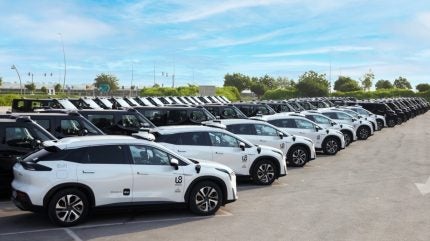
Abu Dhabi now offers public rides in fully driverless robotaxis operated jointly by WeRide and Uber, marking the first deployment of such services on the Uber platform outside the United States. Passengers can hail an autonomous vehicle on Yas Island using the Uber app — either through UberX or Uber Comfort — or select the newly added “Autonomous” ride option for a dedicated robotaxi.

The launch follows grant of a city-level commercial permit for Level 4 autonomous driving, issued in late October to WeRide, allowing the company to operate robotaxis without a safety driver on board. Local transport authorities approved the licence after WeRide demonstrated its technology and safety protocols through extensive testing over several months. This regulatory clearance and licensing represent a breakthrough in public acceptance of self-driving mobility in the region.

Initial operations are restricted to the tourist and leisure enclave of Yas Island, home to the Formula 1 Grand Prix circuit, where road traffic and infrastructure are relatively controlled. WeRide and Uber plan to expand coverage into central Abu Dhabi by the end of the year, aiming to broaden the footprint beyond the initial zone. The fleet — managed in collaboration with local operator Tawasul Transport — includes GXR-class robotaxi vehicles equipped with multiple sensors and cameras to navigate urban streets autonomously.

WeRide retains what it describes as a four-year first-mover advantage in deploying robotaxis in Abu Dhabi, having operated test and pilot robotaxi services since 2021. The company’s broader Middle East fleet already includes more than 100 robotaxis, with ambitions to scale into thousands over the coming years. This launch fits into Uber’s global vision for autonomous mobility, which aims to expand driverless operations to at least 10 cities by the end of next year.

Ride-hailing firms and autonomous-vehicle companies have long eyed the Middle East as a favourable terrain for self-driving deployment, thanks to relatively predictable urban layouts, supportive regulators, and growing appetite for smart mobility solutions. For Uber and WeRide, the Abu Dhabi rollout demonstrates that regulatory, technological and commercial challenges can be addressed in unison.

City officials from the Integrated Transport Centre have emphasised that the licensing process required rigorous review of safety standards and compliance steps before granting commercial operator status. WeRide had earlier secured a national-level licence for self-driving vehicles in 2023, and the new city-level permit is among the first of its kind outside the United States. That dual-licence history helped accelerate trust among authorities and the public.

Drivers and ride-hailing staff will still be involved behind the scenes — Uber, through Tawasul Transport, will handle fleet maintenance, cleaning, charging and vehicle readiness, while WeRide retains responsibility for sensor calibration, software updates and compliance. That model reflects a hybrid approach aimed at balancing technology, operations and safety.

Passengers have reacted with cautious optimism. Some early users welcomed the novelty and convenience of driverless rides, especially in a region with extreme weather and limited public transport options. Others raised concerns over reliability, data privacy, and how the autonomous system would respond to unpredictable road events such as pedestrians or errant drivers.

GFH Partners, the real-estate investment arm of GFH Financial Group headquartered in Dubai, has secured a majority stake in Devmark Real Estate Brokers, a UAE-based consultancy specialising in real-estate development sales and marketing. The acquisition marks a strategic step by GFH to deepen its presence in the Gulf’s residential real-estate ecosystem. GFH did not reveal the financial terms or size of the stake acquired. Devmark, established in […]

Sunteck Realty Ltd has launched its international arm, Sunteck International, and formally entered the UAE real-estate market with the unveiling of a 2.5-acre land parcel in Downtown Dubai. The site is positioned within seconds walking distance of the Burj Khalifa and The Dubai Mall. The first development—a pair of ultra-luxury residential towers—is projected at AED 5 billion gross development value as the initial phase of a broader […]

Arabian Post Staff -Dubai Crown Prince Mohammed bin Salman arrived in Washington to meet U. S. President Donald Trump with a sweeping agenda spanning defence, technology and economic cooperation — signalling a clear recalibration of Saudi Arabia–United States relations. The meeting resulted in high-stakes commitments including a pledge of up to $1 trillion in Saudi investments and approval for advanced defence hardware, underscoring the kingdom’s ambition to […]

Bahrain has lowered the minimum real estate investment needed to secure its 10-year Golden Residency visa from BD 200,000 to BD 130,000. The adjustment by the Ministry of Interior’s Nationality, Passports and Residence Affairs is expected to boost interest in premium properties and make the residency scheme more accessible to a wider group of investors.

Under the revised threshold, people purchasing property worth at least BD 130,000 now qualify for long-term residence. Previously this benefit was available only to those investing BD 200,000 or more. The Golden Residency programme — launched in 2022 — offers a 10-year renewable permit that allows holders to work, sponsor family members, and enter and exit the kingdom freely. Those migrating under the scheme need not tie their status to an employer or lock in property ownership permanently.

The change may prove timely given growing competition in Gulf real-estate markets. Experts point out that the lower entry cost could reshape demand patterns, especially among mid-to-high net-worth expatriates seeking a base in the Gulf without committing the higher investment required by rival regional programmes. Real estate brokers report a noticeable uptick in enquiries from foreign nationals since the announcement — many exploring apartments and villas that now meet the updated investment threshold.

The authorities emphasised that despite the relaxed investment criteria, the high standards of the Golden Residency system remain intact. Investors must meet all documentation and qualification processes managed by the Ministry of Interior. Other pathways to qualify — including employment of a certain tenure and salary, retirement income or official recognition of exceptional talents — remain unaffected.

For property developers and brokers, the revised threshold may translate into renewed velocity in Bahrain’s high-end property segment. Several luxury residential projects are now being re-marketed, stressing that units previously deemed beyond reach now fall within qualification range. This could lead to increased sales volume, stronger investor inflows, and potentially an uptick in real-estate pricing.

Gulf-region expatriates assessing residency options have long compared the Kingdom’s Golden Residency with similar visas in neighbouring states. The reduced investment bar adds appeal to Bahrain’s model — with its combination of long-term residency, flexibility of employment, opportunity for family sponsorship and comparatively modest financial commitment.

Arabian Post Staff -Dubai Markets across the Gulf Cooperation Council are undergoing a shift as Islamic debt instruments embrace digital formats and new issuance technologies. Outstanding sukuk — Shariah-compliant bonds — in the GCC reached US$1.1 trillion by the end of the third quarter of 2025, marking a 12.7 percent rise over the prior year as debt-capital-market activity surged. Debt capital market issuances in the region saw […]

Matein Khalid want my Arabic friends to address me from now on as Abu Nuhas or Father of Copper. Why? The red metal that has been human kind’s best mineral friend for 30,000 years is also the best conductor of electricity known to man, woman or beast as the AI revolution necessitates a multi-trillion dollar demand shock in upgrading the power grid as the world electrifies, decarbonizes […]

VISHNU RAJA
RYO YAMADA
HITORI GOTOH
IKUYO KITA