News related to
Dubai

Abu Dhabi’s G42 is offering 2 % of its shareholding in its subsidiary, Presight AI, to institutional investors through an accelerated book-build, aiming to raise slightly more than $100 million. The transaction will reduce G42’s holding in the analytics group from 70.5 % to 68.5 %, while retaining majority control. First Abu Dhabi Bank and Jefferies are acting as joint global coordinators and joint bookrunners, with International Securities serving as joint bookrunner.

Demand for the placement has been strong, with books reportedly fully covered ahead of finalisation. Settlement is expected around 10 September 2025, following final terms being set by 4 September. G42 has also committed to a 180-day lock-up period before any further sale of its Presight shares.

The strategic purpose behind G42 lowers Presight AI stake via ABB is to broaden and institutionalise Presight’s investor base, enhance liquidity, and strengthen its case for inclusion in the FTSE Emerging Market Index. Greater free float and international institutional ownership would increase trading activity and appeal to passive investment funds.

Presight AI, which listed on the Abu Dhabi Securities Exchange in 2023, has posted strong financials through 2025. Its share price has risen by approximately 67 % year-to-date, closing recently at AED 3.47. In the first half of 2025, organic revenue grew by 33.5 %, supported by new domestic contracts. In the second quarter, group net profit rose by nearly 8 % to Dh77 million, with revenue up by over 53 % to Dh523.9 million. International markets now contribute 26.8 % of revenue, up from just 4.9 % a year earlier.

G42 group CFO Ricky Thirion described Presight as “a critical pillar of the G42 ecosystem and a cornerstone of our Intelligence Grid offering,” noting that its performance reflects consistent growth and strong leadership.

Regionally, secondary offerings like this one are gaining traction. In 2025, follow-on sales across the Middle East have raised roughly $3.7 billion, surpassing IPO proceeds—a sign of deepening market maturity.

The placement’s proceeds will go entirely to G42, with no dilution or impact on other shareholders or Presight’s operations.

Abu Dhabi’s G42 has therefore engineered a measured recalibration of its ownership in Presight AI—G42 lowers Presight AI stake via ABB—while securing capital, expanding its shareholder base, and positioning the company for broader market inclusion and visibility.

du has unveiled its Envision 2025 agenda, signalling a decisive push towards an AI-first future. The event is scheduled for 9 September 2025 at Atlantis, The Royal, and is designed to mobilise public and private sector leaders around AI-enabled smart communities and sovereign digital innovation.

The Envision 2025 blueprint brings together a distinguished roster of sponsors and partners. Oracle is confirmed as Host Sponsor, contributing expertise in cloud and sovereign AI capabilities. Cisco, as Platinum Partner, reinforces commitments to digital advancement. Gold Partners include HPE, Huawei, Akamai Technologies and CyberKnight, while Silver Partners—Dell Technologies, Fortinet, Accenture, Hexaware and Palo Alto Networks—support AI and cybersecurity resilience. Equinix and Joy Smart Technologies join as Bronze Partners, emphasising a collaborative approach to transformation. du charts AI-first future with Envision 2025 echoes this collaborative vision, emphasising alignment between leadership and technological innovation.

The threefold Envision platform will host both an exhibition and a conference, spotlighting cutting-edge domains: AI Data Centres, Sovereign Cloud, Generative and Agentic AI, GPU-as-a-Service, Industry 4.0, Advanced Robotics, and Cloud Computing. It seeks to provoke strategic alliances and stimulate discourse aligned with the UAE’s National AI Strategy and National Digital Government Strategy 2025.

Fahad Al Hassawi, Chief Executive Officer of du, underscored the alignment with national vision, referencing the leadership of H. H. Sheikh Mohammed bin Rashid Al Maktoum, who asserted that “future is not something we wait for, but something we make.” Al Hassawi emphasised that converging leadership with advanced technology will underpin the creation of a scalable, secure, and AI-first UAE.

Jasim Al Awadi, Chief ICT Officer at du, described Envision 2025 as more than a technology event—but as a national platform uniting future shapers to align vision, innovation and execution. He stressed that the collaborators are vital to delivering secure, scalable, sovereign digital solutions that enhance smart communities, economic growth and quality of life.

Miguel Vega, Senior Vice President for Database Platform & Cloud Infrastructure at Oracle for the Middle East, Turkey and Africa, said Oracle’s participation will centre on advancing sovereign AI and cloud functions, aiming to help public and private sectors unlock greater levels of innovation, security and efficiency.

Dubai Holding Asset Management has unveiled Dubai Retail as the new unified brand bringing together more than 40 malls and lifestyle destinations across the emirate. This consolidation stems from the 2024 integration of Nakheel and Meydan into Dubai Holding, aimed at driving scalability, efficiency and long-term competitiveness across its retail operations. The newly branded network spans 10 malls, 15 lifestyle destinations and 18 community-focused retail centres, housing […]

A high-level delegation from Dubai Electricity and Water Authority, led by MD & CEO HE Saeed Mohammed Al Tayer, is in the People’s Republic of China to boost collaboration with leading firms in solar and battery storage technology. The mission aims to support Dubai’s clean energy ambitions under its 2050 strategies by examining advanced practices in renewable energy systems. DEWA Seeks Deeper Energy Ties With Chinese Firms, as the delegation intends, marks a pivotal move in cross-border energy engagement.

Al Tayer and his team engaged with Huawei, BYD, Tesla’s battery energy storage plant, Sungrow, and the CRRC Zhuzhou Institute to survey cutting-edge developments in photovoltaic panels, energy storage solutions, artificial intelligence applications, smart infrastructure, and Fourth Industrial Revolution advancements. These interactions reinforce DEWA’s commitment to integrating global expertise into its operations.

The delegation includes prominent executives such as Waleed bin Salman, Executive Vice President of Business Development and Excellence; Hussain Lootah, Executive Vice President of Transmission Power; Marwan bin Haidar, Executive Vice President of Innovation and the Future; Dr Yousef Al Akraf, Executive Vice President of Business Support and Human Resources; Mohammed Jamea, Vice President of Clean Energy and Diversification; and Ghanim Al Qassim, Senior Manager of Solar Energy. Their breadth of expertise equips DEWA to absorb and apply technological insights strategically.

Central to the discussions is the seventh phase of the Mohammed bin Rashid Al Maktoum Solar Park, currently at the tendering stage. This phase will incorporate 2,000 MW of photovoltaic solar capacity alongside 1,400 MW of battery energy storage, delivering six hours of storage—establishing it among the largest solar-plus-storage projects globally under the independent power producer model. The delegation’s visit underscores this project’s importance in shaping Dubai’s sustainable energy future.

Saudi authorities have tested drone delivery of postal parcels in Jeddah, a pivotal move in modernising logistics and postal services. The General Authority of Civil Aviation and the Transport General Authority, backed by Dr Rumaih Al-Rumaih, Vice Minister of Transport and Logistic Services and Acting President of TGA, led the operation on Thursday, 4 September 2025. Saudi Drone Parcel Trial Signals Smarter Logistics encapsulates this milestone in eight purposeful words.

The trial, overseen by GACA and TGA, was executed under updated aviation safety regulations aligning with international standards such as those of ICAO and EASA, ensuring rigorous oversight of drone operations. GACA managed aviation-related protocols while TGA handled regulatory and legislative support for the postal sector.

Dr Al-Rumaih described the drone operation as a breakthrough that will “open new horizons” for expanding delivery services and fostering innovative logistics solutions in line with national digital transformation goals. Meanwhile, GACA’s Executive Vice President for Aviation Safety and Environmental Sustainability, Captain Suleiman Al-Muheimidi, said the trial heralds faster, greener, and more advanced delivery methods.

This initiative forms part of the Kingdom’s Vision 2030 strategy to boost transport efficiency, shorten delivery times, and integrate technology into everyday life. Authorities emphasised that advanced drone deployment promises safer, quicker, and more sustainable parcel delivery across the country.

Arabian Post Staff Dubai has again claimed first place in the Savills Executive Nomad Index 2025 as the most sought-after destination for executive nomads worldwide, while Abu Dhabi holds second place for the second year running. Dubai’s dominance stems from its unmatched airline connectivity and comprehensive amenities, with Dubai Maintains No-1 Spot as Executive Nomads’ Top Choice capturing the essence of its appeal. The index, evaluating 30 […]

Astana International Exchange and Abu Dhabi Securities Exchange have activated a direct connection between their central securities depositories, enhancing post-trade infrastructure and extending investor access across markets. The move, under the October 2021 memorandum of understanding that brought AIX into the Tabadul digital hub, expands on the existing Tabadul network and enables fully operational CSD-to-CSD communication.

The newly established arrangement builds on Tabadul’s digital trading network, which launched in mid-2023 when AIX formally joined and began enabling bilateral trading with ADX. Tabadul, introduced in 2022, operates on a mutual market access model, facilitating cross-exchange trading across member markets.

Under the framework established in October 2021, AIX had integrated into Tabadul, paving the way for today’s deeper integration via its direct CSD link with ADX.

Assel Mukhanova, chief executive of AIX, welcomed the formalisation, noting that this will bring tangible benefits to participants through more efficient trading corridors and deeper cross-border investment flows. Abdulla Salem Alnuaimi, group chief executive of ADX, emphasised that the direct CSD connection supports capital markets accessibility, post-trade connectivity, and opens new avenues for both global and regional investors.

This development underscores a strategic commitment from both exchanges to deepen connectivity, bolster liquidity, and accelerate regional capital market integration. By complementing the stronger ties forged through Tabadul, the new ADX–AIX direct CSD link strengthens market access for issuers and investors alike.

Advertisements

OPEC’s oil output rose further in August, hitting 27.84 million barrels per day—a gain of 360,000 bpd over July’s revised total. The rise was driven chiefly by expanded production from Saudi Arabia and the United Arab Emirates under an OPEC+ agreement to gradually reverse output curbs.

The production boost stemmed from an agreement by eight OPEC+ countries for August output, under which five OPEC members—Algeria, Iraq, Kuwait, Saudi Arabia and the UAE—were to raise output by 416,000 bpd, before accounting for compensation cuts totalling 178,000 bpd imposed due to earlier overproduction. In practice, those five delivered a net increase of 310,000 bpd.

This escalation forms part of OPEC+’s accelerated effort to dismantle its most recent output cuts. Simultaneously, some members continue to implement additional cuts to offset previous excesses, theoretically capping the effect of these increases.

This latest surge underlines OPEC+’s strategy of reclaiming market share through coordinated rollback of production restraints, even as the group attempts to preserve price stability by enforcing compliance and offset mechanisms.

China has issued a bold action plan to propel its electronic information manufacturing industry through 2025 and 2026, targeting sustained growth in industrial output, revenue, and technological capability as it seeks to strengthen its position in the global technology arena.

The plan, jointly issued by the Ministry of Industry and Information Technology and the State Administration for Market Regulation, sets forth a target of roughly 7 per cent average annual growth in industrial output across major segments—including computer, communications, and electronic equipment manufacturing. Revenue growth across related sub-sectors such as lithium batteries, photovoltaics and components is projected to exceed 5 per cent per annum.

Authorities further anticipate that by the close of 2026, the electronic information manufacturing category will retain its status as the largest among China’s 41 key industrial sectors in both revenue and export share. Ambitious local targets aim to elevate five provinces to over 1 trillion yuan in annual manufacturing revenues, with the server industry aiming to surpass 400 billion yuan.

Beyond output and revenue, the plan calls for accelerated equipment modernisation and the development of high-end, intelligent, and eco-friendly production lines. Central to this strategy is the creation of internationally competitive industry bases and specialised clusters serving smaller enterprises.

This industrial blueprint emerges amid broader national efforts to invigorate advanced manufacturing. In August, authorities unveiled new financial guidelines, integrating structural monetary instruments and “green channels” for critical technology firms, aimed at spurring innovation and easing access to capital for integrated circuits, industrial software, medical equipment and advanced materials. Concurrently, China continues to pursue consolidation within its semiconductor sector—though merger negotiations have encountered obstacles, reflecting legal, valuation and fragmentation challenges.

Observers note that China’s renewed emphasis on domestic capability complements longer-standing ambitions under industrial strategies such as “Made in China 2025”, which have driven progress in robotics, solar technology, electric vehicles and rail systems, yet left persistent weaknesses in semiconductors and aerospace.

The current two-year action plan appears to reinforce this trajectory by tying industrial upgrading to environmental standards and smart manufacturing. Provincial authorities are being pressed to deliver on revenue milestones, while the focus on intelligent and eco-friendly production signals an effort to align with global sustainability trends and elevate manufacturing sophistication.

This approach also reflects the government’s response to external pressure, including export controls and trade friction, by targeting resilience and self-sufficiency. By prioritising hubs and clusters, China aims to decentralise innovation and drive inclusive industrial progress across regions, not just within flagship firms or coastal areas.

The twin objectives of maintaining international leadership and building more advanced, cleaner industrial capacity are central to this strategy. As China moves into the mid-2020s, its success will depend on execution—not just on paper targets, but on implementation, regional mobilisation, talent development, and the ability to absorb and apply new technologies at scale.

Abu Dhabi will host the BRIDGE Summit from 8 to 10 December 2025 at the ADNEC Centre, uniting heads of state, media executives, policymakers, technologists and content creators in an ambitious bid to redefine the global media landscape. Announced in Washington by Abdulla bin Mohammed bin Butti Al Hamed, chairman of the National Media Office, alongside Dr Jamal Mohammed Obaid Al Kaabi, director-general of the NMO, the summit pledges to foster dialogue, innovation and sustainable growth across the sector. Attendance is expected to exceed 5,000 participants, underpinning its status as a global media landmark.

Preparatory efforts have extended worldwide. In June, a roundtable in London convened Al Hamed and Al Kaabi with media experts during London Tech Week to reinforce the summit’s commitment to transparency, accountability and cross-sector collaboration in an increasingly digital era. In Asia, the BRIDGE roadshow landed in Shanghai, following stops in New York, London and Osaka, each event contributing insights to shape the summit’s agenda. A mission to Seoul in August further advanced partnerships with technology and media firms, including I-ON Communications on AI and data storytelling; Dentons on regulatory frameworks; Lotte Caliverse on immersive media; and SM Entertainment on cultural collaboration. These discussions cemented shared goals around content credibility, technology ethics and investment in creative startups.

The BRIDGE Summit is embedded within a broader ecosystem spearheaded by the National Media Office. Alongside the summit lies the BRIDGE Foundation, a non-profit body dedicated to empowering media professionals, funding research and supporting startups. This aligns with the UAE’s pursuit of media as a force for societal development and economic progress. A recently published fact sheet outlines the summit’s six thematic zones—Academy, Diplomacy, Forum, Marketplace, Impact and Spotlight—designed to foster skills, policy engagement, tech innovation, social impact and cultural exchange across a three-day programme.

AI and ethics feature prominently among the summit’s themes. Organisers emphasise human values in storytelling amid accelerating digital disruption and algorithmic influence. Al Hamed has characterised media as a humanitarian force that must uphold integrity and cohesion, not merely chase clicks. The summit will address responsible AI’s potential and pitfalls, ethical journalism, and media business models fit for the digital age.

Beyond content and tech, BRIDGE seeks to bridge policy and practice. With roundtables and forums designed to foster international dialogue, policymakers, creators and academics will collaborate on frameworks that safeguard credibility while embracing innovation.

The summit’s global scope is reflected in its steady itinerary of international engagements. From Washington to London, Shanghai to Seoul, each stop has contributed regional perspectives and partnerships that will inform the summit’s structure, themes and participant networks.

Organisations across Africa, the United Kingdom, the Middle East and Brazil are accelerating a shift away from traditional payroll systems as cloud-native platforms transform how companies manage staff pay, compliance and workforce data. With remote and hybrid workforces now common, employers are under pressure to modernise systems that were built for office-bound staff and paper-based reporting. The payroll function, often overlooked, has emerged as a critical lever […]

Beautyworld Middle East will run from 27 to 29 October 2025 at the Dubai World Trade Centre, drawing an extensive global delegation of beauty professionals to explore innovations across the full spectrum of the industry. Organised by Messe Frankfurt Middle East, the event has become the region’s preeminent platform for unveiling trends, forging partnerships, and showcasing global brands and breakthrough technologies. Projected attendance data highlights the scale […]

Alona Shevtsova, CEO of the British fintech company Sends, will moderate a panel discussion at the Middle East Banking Innovation Summit (MEBIS) 2025 in Dubai. The session will focus on strategies for banking technology innovation and scale-up. Alona Shevtsova is a moderator of a panel discussion titled “Navigating the digital frontier: Strategies for banking technology leaders in a rapidly evolving landscape” at the Middle East Banking Innovation Summit […]

A $2.62 billion, 10‑year credit facility has been secured by Khazna Data Centres, underwritten by a consortium led by Abu Dhabi Commercial Bank and First Abu Dhabi Bank, providing a substantial boost to the company’s strategy for regional and global expansion. The funds are earmarked to accelerate build‑out of high‑capacity data hubs across the Middle East and North Africa, with a clear focus on supporting high‑demand, AI‑intensive infrastructure. […]

Paramount Skydance has sealed an agreement with Activision Blizzard to develop, produce and distribute a live‑action film based on the blockbuster Call of Duty video game franchise. That deal places the studio squarely behind one of the most lucrative and enduring gaming series, with both companies underscoring their determination to preserve its signature narrative intensity and visual style. Under the arrangement, Paramount will lead all aspects of filmmaking—from scripting […]

Arabian Post Staff DP World has agreed to manage the logistics operations for Atlantis, The Palm and Atlantis The Royal, overseeing daily on‑demand delivery of perishables, dry goods and speciality items across nearly 7,000 pallets, supported by temperature‑controlled storage, inventory management and real‑time tracking systems. The transaction positions DP World to address the complexity of luxury‑hotel supply chains, enabling the resorts to uphold high service standards as they serve thousands of […]

A pivotal online gathering on Sunday will determine whether the Organisation of the Petroleum Exporting Countries and its allies proceed with further oil production increases or hold current levels. The group has already rolled back its earlier cuts by 2.5 million barrels per day, equivalent to around 2.4 per cent of global demand, and is now assessing whether to unwind the next 1.65 million bpd tranche ahead of schedule.

Markets responded to the impending meeting with cautious anticipation. Brent crude fell modestly, trading near $67 a barrel, while U. S. West Texas Intermediate hovered around $63–$64. Analysts, including those at ANZ, flagged that any additional supply could deepen the surplus during a typically weak demand season. The softening outlook has already rippled through equity markets: major oil producers and service firms such as APA, Occidental, Halliburton and Schlumberger saw their shares slip between 3 and 5 per cent.

Since April, OPEC+ has pursued an aggressive unwind of output curbs. Initial increases began with modest tranches but have since accelerated: April saw the first rise, followed by consistent monthly boosts—from 411,000 bpd in May, June and July to 548,000 bpd for August and 547,000 bpd for September. These decisions reflect strategic moves to regain market share amidst growing competition, especially from U. S. shale producers, and external pressures, including public calls from the U. S. administration to increase global supply.

Despite these ramped-up supplies, prices have retained considerable strength—hovering around the $70 mark—bolstered by low inventory levels and geopolitical constraints, particularly sanctions on Russia and Iran. Analysts at the Commonwealth Bank of Australia observe that OPEC+ now appears comfortable with Brent trading in the $60–$65 range, a level that could pressure U. S. shale operations by narrowing profit margins.

Meanwhile, data from the American Petroleum Institute indicated an unexpected rise of 622,000 barrels in U. S. crude stocks, counter to forecasts, adding another layer of downward pressure on prices. The situation reflects a delicate balance: rising supply meets lukewarm demand, particularly as global economic growth shows signs of softening in key regions like China, India and Brazil.

Executive voices within OPEC+ remain tight-lipped. No official statements were forthcoming from Riyadh or other capitals prior to the weekend meeting. Analysts remain split: some believe the group will maintain its current stance through October, exercising caution amid market saturation concerns. Others argue that continued increases are part of a calculated strategy to defend or expand market share well into next year.

Anthropic has secured a monumental US $13 billion Series F funding round, propelling its post-money valuation to approximately US $183 billion and firmly establishing itself as one of the highest valued private startups globally. The round was spearheaded by Iconiq Capital, Fidelity Management & Research, and Lightspeed Venture Partners, with the Qatar Investment Authority joining as a “significant” investor alongside an impressive roster of global financial institutions and sovereign wealth funds.

Anthropic’s valuing nearly tripled since March, climbing from US $61.5 billion, when it completed a US $3.5 billion Series E raise earlier in 2025. This leap reflects the surging investor appetite for generative AI developers, despite growing debates over tech spending sustainability.

Anthropic’s growth trajectory is underpinned by its financial performance. The company’s run-rate revenue soared from roughly US $1 billion at the start of 2025 to over US $5 billion by August. The enterprise customer base now tops 300,000, with so-called “large accounts” expanding nearly seven-fold in just one year.

The rise of Claude Code, Anthropic’s developer-centric AI tool launched fully in May 2025, has been especially impactful. It currently generates over US $500 million in run-rate revenue, and usage has surged more than ten-fold within three months.

Anthropic’s research credentials and product roadmap also underpin its valuation. In August, the company rolled out Opus 4.1, an upgrade tailored to agentic tasks, coding, and reasoning. Its rapid expansion, focus on AI safety, and growing international footprint were cited by investors as further proof of its potential.

The participation of the Qatar Investment Authority marks a notable chapter in Gulf sovereign wealth funds’ deepening role in AI financing. While Anthropic did not disclose the precise QIA investment amount, it was highlighted as a “significant” backer in the funding syndicate. QIA’s April 2025 holdings were estimated at around US $557 billion, underscoring the strategic weight that such sovereign investments carry in global tech markets.

This infusion of capital will enable Anthropic to scale its enterprise operations, intensify its AI safety research, and accelerate international growth of its Claude platform. Amazon, already a stakeholder, may deploy the funding to expand its cloud infrastructure support for Anthropic, particularly through AWS Project Rainier. Analysts note this could meaningfully boost Anthropic’s spending on cloud services, with projections suggesting an uptick to as much as US $5 billion by 2026.

Amid this whirlwind of funding and growth, some experts caution about the long-term sustainability of such capital-intensive AI ventures. Infrastructure demands for large language model development can rival those of tech giants like Google, Microsoft, or Meta.

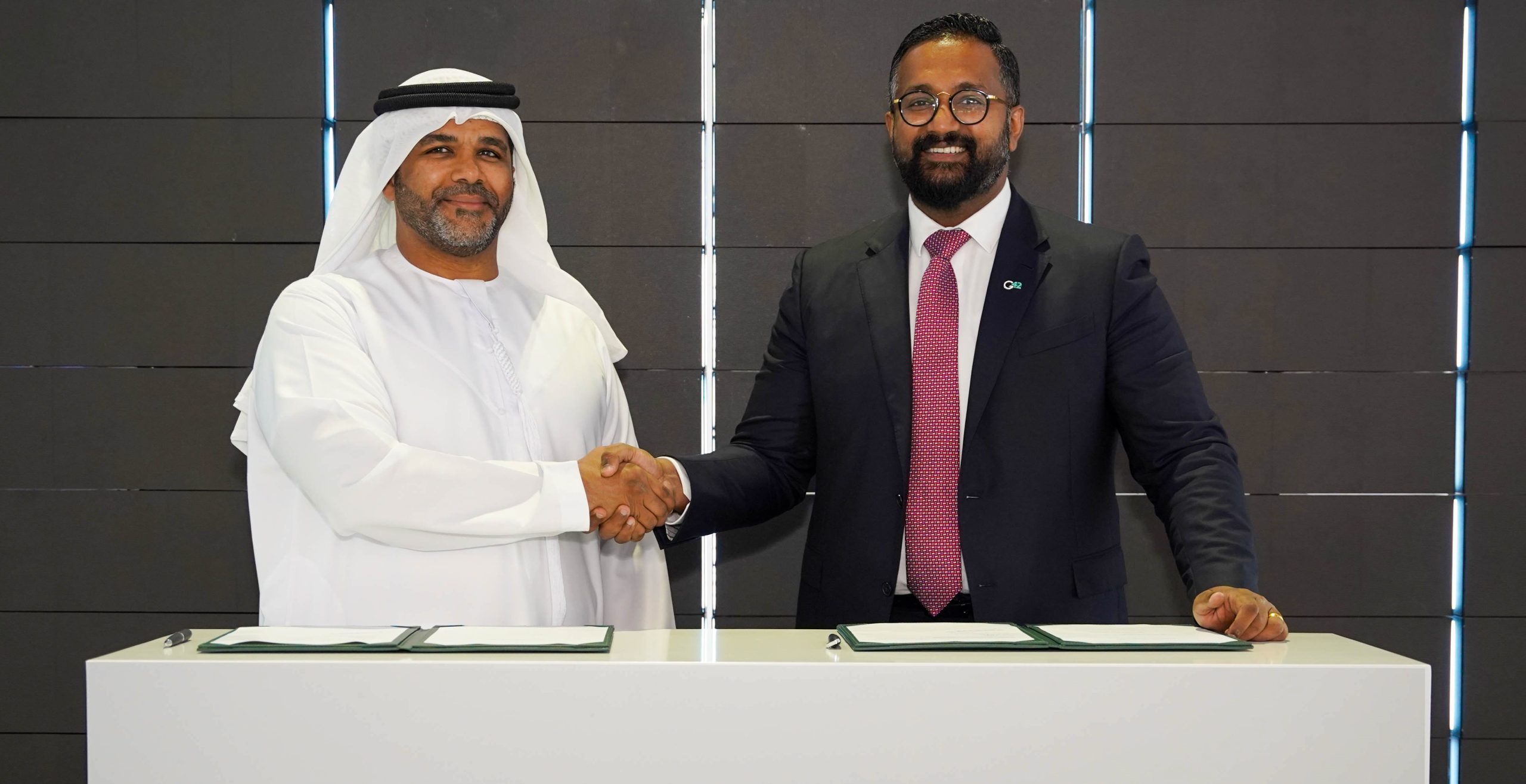
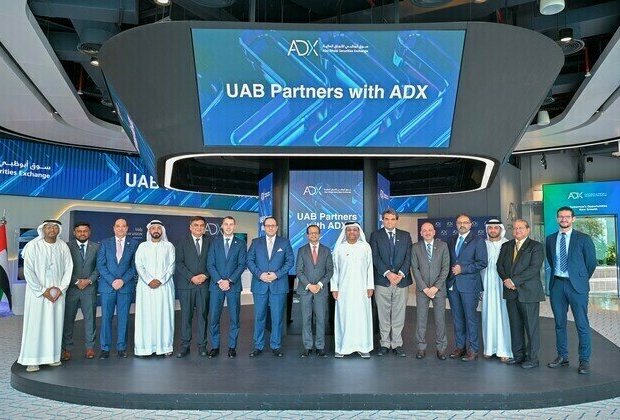
United Arab Bank has formed a strategic alliance with Abu Dhabi Securities Exchange to enable its customers to subscribe for upcoming IPOs through the bank’s digital channels or ADX’s eIPO Investor Portal. This arrangement aims to simplify the process of accessing capital markets, offering a secure and intuitive experience to investors.

At a ceremony held at ADX’s headquarters in Abu Dhabi, the agreement was formalised in the presence of Abdulla Salem Alnuaimi, Group Chief Executive Officer of ADX, and Shirish Bhide, Chief Executive Officer of UAB, alongside senior officials from both organisations.

This collaboration is designed to strengthen UAB’s wealth management proposition by embedding investment opportunities within its digital ecosystem. Customers will now be able to access IPO applications directly via UAB’s mobile application, replacing previously cumbersome procedures with streamlined, guided pathways that enhance transparency and usability.

According to Shirish Bhide, this partnership reflects the bank’s dedication to innovation and long-term value creation. By integrating investment services within UAB’s digital channels, customers gain more inclusive access to the UAE’s capital markets. Abdulla Salnuaimi added that this initiative reaffirms ADX’s aim to enhance the investor experience by collaborating with leading financial institutions and advancing digital solutions.

The move aligns with UAB’s broader digital transformation strategy, as demonstrated by prior efforts such as launching RegPRISM, an AI-powered regulatory intelligence platform developed with Smarbl to improve compliance and operational efficiency.

Further underpinning UAB’s financial robustness is its first-quarter 2025 performance. The bank reported a 49 per cent year-on-year increase in net profit—rising to AED 102 million—driven by growth in assets, loans, Islamic financing, and investments. Capital adequacy remains solid, with a CET1 ratio of 12.6 per cent and a total capital adequacy ratio of 17.1 per cent. Non-performing loans saw improvement from 4.8 per cent to 3.4 per cent, with coverage at 118 per cent.

These financial strengths were in part bolstered by a rights issue completed earlier, which raised around AED 1.03 billion and strengthened UAB’s capital position.

ADX, for its part, continues to pursue innovation in financial market infrastructure. In July, it collaborated with First Abu Dhabi Bank and HSBC to launch the Middle East’s first DLT-based digital bond, reinforcing its frontier role in tokenised finance.

Through this latest agreement, UAB and ADX are promoting a more integrated, accessible investment landscape—blending digital banking and capital markets participation in a manner that could redefine customer expectations and market engagement.

Saudi Aramco is poised to issue U. S.‑dollar denominated sukuk within September in a bid to fortify its financial position amid subdued oil prices. The company aims to raise between $3 billion and $4 billion through Shariah‑compliant bonds, according to insiders familiar with the matter.

Aramco’s timing underscores a strategic response to heightened volatility in oil markets. The company’s dividend payouts remain intact—$21.1 billion in Q2 and still on track for an $85.4 billion annual total—demonstrating a commitment to returns despite pressure on profit margins. The sukuk issuance follows a $5 billion conventional bond sale in May, as indicated by Aramco’s sukuk prospectus filing with the London Stock Exchange on 30 May. That filing allows up to one year for issuance, signalling flexibility in debt deployment.

Despite the fall in crude prices, Aramco’s gearing remains among the lowest in the global oil industry—a point highlighted during the company’s August earnings call. That financial cushion gives it room to tap capital markets when conditions are favourable.

The sukuk issuance aligns with broader Kingdom‑level bond activity. Saudi Arabia has raised $5.5 billion through a dual‑tranche sukuk offering, comprising a $2.25 billion five‑year tranche and a $3.25 billion ten‑year tranche—sold at spreads of 65 bps and 75 bps over U. S. Treasuries respectively, substantially tighter than initial guidance. Investor demand exceeded $17 billion.

Aramco’s anticipated issuance would tap into the same deep liquidity pool, appealing to Islamic finance and ESG‑oriented investors while preserving fiscal discipline. This approach mirrors the Kingdom’s strategy to diversify its funding base and reduce reliance on hydrocarbons. The proceeds are likely to support refinancing, cost‑management efforts, and strategic asset redeployment.

In parallel, measures such as an $11 billion lease‑and‑leaseback deal for Jafurah gas processing assets with a BlackRock‑led consortium, reflect efforts to raise liquidity without reducing shareholder returns. CFO Ziad Al‑Murshed emphasised the aim to “redirect capital away from low‑return assets to core operations” during the earnings briefing.

This financial planning arrives at a time when Aramco continues to face earnings pressure—second‑quarter profit fell by 22 per cent—but the dividend pledge remains firm, maintaining investor confidence.

Dubai Chambers, together with the International Chamber of Commerce and its World Chambers Federation, introduced a new digital platform designed to elevate the performance of chambers of commerce worldwide. Unveiled at the 14th World Chambers Congress in Melbourne, the Chamber Benchmarking Tool offers structured data analysis, best-practice comparisons and a repository of global insights to help chambers advance operational standards.

The launch was witnessed by over 1,200 chamber officials representing more than 100 countries, reaffirming the tool’s role as a global platform for strategic exchange.

The Chamber Benchmarking Tool evaluates performance across seven principal functions of chamber institutions—spanning economic research and business intelligence, advocacy and policy representation, trade and investment facilitation, workforce training and support, networking, advisory services and legal or dispute resolution. These are assessed alongside eight dimensions of operational excellence, including strategic alignment, innovation, governance and financial impact.

Mohammad Ali Rashed Lootah, President and CEO of Dubai Chambers, described the initiative as emblematic of the emirate’s ambition to lead in institutional innovation, enabling chambers to elevate their value to business communities through streamlined services and resilient strategies. John W. H. Denton AO, Secretary‑General of the ICC, hailed the tool as a “milestone,” praising Dubai Chambers for their leadership in bringing the platform to fruition.

Built from research examining 19 diverse chambers, the tool rests on a foundation of empirical insight. It offers a data-driven framework of self-assessment, enabling chambers to compare their metrics against anonymised regional and global averages and receive tailored strategic guidance drawn from global case studies.

Developed in confidence under ICC‑WCF’s secure, cloud‑based infrastructure, the platform ensures high standards of data confidentiality. Only aggregated benchmarking results are shared publicly, with each chamber’s data kept private unless explicit consent is granted.

The tool assigns two access roles: the ‘chamber steward’, who leads data submission, assessment completion and case‑study creation; and ‘chamber staff’, who receive view‑only access to performance dashboards, insights and the best‑practice library.

Participation remains voluntary and open to all types of chambers—whether national, regional, thematic or international—particularly those connected to the ICC‑WCF network. Non‑members may apply for membership to gain access.

Chambers that perform well in given categories become eligible to develop case studies, using an integrated creator to document initiative details, global trends addressed, outcomes and lessons learned. Authors may enrich submissions with supporting documents, media, and contact details. Approved case studies are added to the global repository, fostering peer learning and strategic inspiration.

With an emphasis on continuous improvement, the platform allows chambers to refresh their assessments annually—or after major organisational shifts—and to update roles and responsibilities over time, ensuring the tool remains current with evolving strategic priorities.

Beyond benchmarking, the platform is a strategic intelligence system. Chambers gain access to emerging trends, visibility into gaps and growth opportunities, and direction for innovation and future readiness. It fosters cross‑border collaboration, data‑led decision‑making and collective excellence across the global chamber ecosystem.

A federal district court in Virginia has ruled that Google unlawfully monopolised its publisher ad‑server and ad‑exchange markets, a decision that has now been met with a pause in Brussels, where regulators have deferred a long‑anticipated fine while awaiting developments in U. S. trade policy. A U. S. judge determined that Google secured illegal dominance in the open‑web display advertising ecosystem, by tying its ad‑server to its […]

BruteForceAI accelerates credential testing by automating form discovery and attack workflows with human‑like finesse. Security teams and penetration testers now gain a powerful tool that merges AI‑driven analysis and ethical safeguards, promising deeper insights into authentication weaknesses across web applications. BruteForceAI enables swift parsing of HTML to pinpoint login fields with near‑precise CSS selector generation— reportedly accurate in approximately 95 per cent of real‑world scenarios. Once fields are mapped, […]

Growth in the United Arab Emirates’ non‑oil private sector held above the threshold indicating expansion in August, buoyed by stronger output, even as sales registered their weakest performance in more than four years. The S&P Global UAE Purchasing Managers’ Index edged up to 53.3 from July’s reading of 52.9, affirming ongoing growth but reflecting persistent underlying challenges. Despite the headline PMI maintaining expansionary territory, new orders – […]

VISHNU RAJA
RYO YAMADA
HITORI GOTOH
IKUYO KITA