News related to
Dubai

Gold surged to an unprecedented high on Wednesday, driven by investor flight to safe assets after the United States entered a federal government shutdown that threatens to delay key economic data releases.

Spot gold climbed above $3,875 per ounce, and U. S. gold futures for December touched $3,887.40, marking fresh peaks in the metal’s dramatic rally this year. The dollar weakened, while U. S. stock futures slid, reflecting the heightened uncertainty gripping global markets.

The shutdown froze large swathes of federal operations after Congress failed to approve funding for the 2026 fiscal year, triggering furloughs for approximately 750,000 federal workers and imposing a daily cost to the government of around $400 million.

With the shutdown effectively halting the release of critical economic indicators—most notably the September non-farm payrolls data—the Federal Reserve is being forced to rely on alternate data sources to assess conditions ahead of its October meeting. Chicago Fed President Austan Goolsbee warned that central bankers will need to “turn to other data sources” if official reports are suspended.

In labor market reports released earlier, the JOLTS data showed only marginal growth in job openings in August, while hiring declined—signalling cooling momentum in the U. S. labour market. This, combined with the shutdown, has increased market expectations that the Fed will move to cut interest rates in October. Futures now price in a 96 per cent likelihood of a 25-basis-point cut.

Institutional demand has bolstered the gold rally: central banks have continued to accumulate bullion, even as inflows to gold-backed exchange-traded funds have surged. Analysts point to a powerful confluence of safe-haven inflows and speculative momentum. Deutsche Bank and other firms have flagged upside targets in the $3,900–$4,000 range if current conditions persist.

Silver also posted gains, hitting a 14-year high, while platinum and palladium lagged modestly. In India, gold prices on the MCX breached all-time highs, crossing ₹1,17,351 per 10 grams as global and domestic investors sought shelter from volatility.

Analysts caution, however, that the rally faces key risks. A rebound in the dollar, a surprise hawkish tilt from the Fed, or a sudden resolution of the funding impasse could reverse momentum. The longer the shutdown endures, the greater the danger that data collection becomes impaired—threatening the quality of future releases such as inflation, GDP, and employment statistics.

The valuation of the U. S. Treasury’s gold reserves has also gained attention: the gold holdings—officially booked at historical rates—now command a market value exceeding $1 trillion, driven by the steep rise in bullion prices.

Wall Street insiders note that the shutdown has injected a new element of volatility into markets already stretched by geopolitical tensions and macro imbalances. Equity futures were already under pressure on Wednesday, with the S&P 500 and Nasdaq both down nearly 0.5 per cent in early trade.

DoBeGo announces the launch of its all-in-one digital platform designed to transform the way cars are purchased, leased, financed, and resold in the UAE and beyond. Built to serve both individual drivers and automotive businesses, DoBeGo integrates every step of the vehicle journey — from acquisition to resale — into a single, seamless ecosystem. A Connected Ecosystem for Smarter Mobility DoBeGo bridges key stages of car ownership […]

India defeated Pakistan in the Asia Cup final in Dubai, but it was the trophy presentation that has reverberated across cricketing circles. Indian players refused to accept the trophy or medals from Mohsin Naqvi, the head of the Pakistan Cricket Board and President of the Asian Cricket Council, turning what should have been a moment of celebration into a publicly charged standoff.

Tensions ripple beyond the pitch because of this act. Through the refusal, both nations have set what analysts say is a dangerous template where political grievances eclipse sport itself. The decision to rebuff a symbolic handover, traditionally steeped in sporting civility, signals that future India-Pakistan fixtures may be shaped less by cricketing merit than by national narratives.

The refusal drew immediate attention. India’s captain, Suryakumar Yadav, lamented that his team was denied the rightful moment of recognition. Across national media, voices questioned the boundaries between patriotism and play. In Pakistan, captain Salman Ali Agha accused India of disrespecting the spirit of cricket, while insisting that gestures made behind closed doors had been misrepresented.

For India, the refusal came after repeated snubs in the tournament — players declined to shake hands with their Pakistani counterparts. The Board of Control for Cricket in India confirmed that the team had resolved not to accept the trophy from Naqvi. The BCCI plans to lodge a formal protest at the upcoming ICC meeting.

Observers see this as the collapse of the practice known as “cricket diplomacy” — the idea that cricketing encounters might ease broader geopolitical tensions. Analysts warn that once such norms crumble, they are difficult to resurrect. The absence of handshakes, the broken presentation protocol, and accusations of politicisation all feed into a narrative that cricket is simply another front in the bilateral rivalry.

This is not the first time politics has shadowed India-Pakistan cricket, but few moments match the clarity of this rupture. Political polarisation in both countries has long influenced bilateral relations, and the 2025 military flare-ups between them have deepened fissures. Some critics argue that the match-day conduct was unavoidable given the broader climate of hostility. Others contend that the sanctity of the game deserves insulation from statecraft.

Stakeholders are now walking a tightrope. The ACC must decide whether to uphold its leadership’s neutrality or face accusations of bias. The ICC will be pressured to weigh in — either by endorsing standards that separate sport from politics or by allowing countries to redefine the conduct of play. Grassroots cricket lovers, meanwhile, worry that the spectacle of national identities may overshadow the joy of the game itself.

Dubai-based AMIS Development has received the opening tranche of Dh5 billion from Singapore’s First APAC Fund VCC, following a memorandum signed in November 2024 to invest the full amount over time. The capital injection will be used to accelerate AMIS’s land acquisitions, expand its project pipeline, and progress ongoing luxury residential developments across Dubai.

Founder and CEO Neeraj Mishra confirmed that the funds are earmarked for strategic purchases in key areas such as Meydan and Dubai Islands, as well as advancing flagship projects already underway. He described the investment as a vote of confidence in AMIS’s vision and execution. Darrell Lim, founding shareholder and director at First APAC Fund, said this initial disbursement marks a milestone in their collaboration and pledged continued support tied to performance.

AMIS is working on multiple high-end residential projects including Woodland Terraces and the recently announced Woodland Crest, scheduled for handover in the second quarter of 2027. The developer previously sold out its Woodland Residences development, valued at Dh425 million, with delivery expected in April 2026. The new funding is set to support these and future projects, giving AMIS greater flexibility to accelerate timelines and expand its footprint.

The First APAC Fund is managed by Pilgrim Partners Asia, licensed under Singapore’s regulatory framework. For the AMIS deal, PPA has appointed Greenback Capital Limited, a Dubai-based firm, as the sub-investment manager to oversee transaction structuring and monitoring. Funds will be deployed in tranches, subject to milestones in AMIS’s project execution.

Abu Dhabi — The Federal Authority for Identity, Citizenship, Customs and Port Security has introduced sweeping changes to the UAE’s visa regime, adding four new visit-visa categories tailored to specialists in artificial intelligence, entertainment, events, and cruise or leisure-boat tourism, while also rolling out humanitarian and widow/divorcee residence permits.

Under the new framework, the AI Specialist Visit Visa allows single or multiple entries, provided applicants submit a sponsorship letter from a recognised technology or AI institution. The Entertainment Visit Visa is intended for individuals engaging in licensed entertainment or gaming activities, while the Event Visit Visa covers attendance at festivals, exhibitions, conferences, sports, or cultural events, sponsored by public or private hosts. The Cruise & Leisure-Boat Visit Visa offers multiple-entry permits for travellers arriving via marine routes, on condition of submitting a detailed itinerary and engaging a licensed host in the tourism industry.

Alongside these targeted visit visas, the ICP now issues a Humanitarian Residence Permit, valid for one year, with possible extension under certain conditions. This permit is designed to assist individuals from countries experiencing conflict, natural disasters, or severe unrest. Notably, it can be granted without a guarantor or host, though it may be cancelled or voided if the holder departs the UAE. In exceptional cases involving relatives or in-laws, the authority may waive requirements like financial solvency or degree of kinship.

The revisions also extend protections to foreign widows and divorcees. A one-year renewable residence permit is available to foreign women whose UAE-based husband died or divorced, provided applications are submitted within six months. If the husband was a non-UAE national, eligibility depends on whether the woman held residency at the time, whether she has custody of children, and whether she was previously sponsored. Provisions for adequate housing and financial stability apply, and custody disputes will be adjudicated by a designated committee.

Revised rules for sponsoring friends or relatives now incorporate income thresholds: sponsors must earn at least AED 4,000 per month to sponsor first-degree relatives, AED 8,000 for second- or third-degree relatives, and AED 15,000 to sponsor friends. The updated system also introduces a structured schedule defining visit-visa durations and extension rules.

Other key visa reforms include tightening the Business Exploration Visa criteria and easing Truck Driver Visas—allowing single or multiple entries provided drivers are sponsored by licensed freight or transport companies and meet health, fee, and financial guarantee conditions.

In a statement, Major General Suhail Saeed Al Khaili, Director General of ICP, said the reforms emerge from “careful studies and forward-looking assessments” that considered global residency trends, client feedback, and the UAE’s strategic demands. He described the changes as intended to “meet the needs of customers while considering humanitarian and economic circumstances” and to drive technology, tourism, and economic diversification.

The Central Bank of the UAE and Dubai Finance today formalised an agreement to deepen collaboration in the development of the country’s capital markets, enabling Dubai to draw on the central bank’s infrastructure to issue dirham-denominated government bonds.

Khaled Mohamed Balama, Governor of the CBUAE, and Abdulrahman Saleh Al Saleh, Director-General of Dubai’s Department of Finance, signed the Memorandum of Understanding in Abu Dhabi before senior officials and assistant governors.

Under the pact, Dubai Finance gains access to the central bank’s systems and platforms to support bond issuance, while both parties commit to joint efforts in fintech, payment systems, and digital currency development. The agreement further encompasses capacity building, knowledge exchange and coordination in regulatory and infrastructural domains.

Balama described the partnership as “an important step toward advancing the country’s financial markets, supporting their growth, and ensuring their readiness to adapt to future changes.” He affirmed that the nation’s leadership is focused on promoting innovation and digitisation in financial services to boost private-sector participation and investor confidence.

Al Saleh said the MoU would help diversify the UAE’s investment tools and align capital market expansion with the vision of the country’s leadership. He emphasised the importance of collaboration with regulatory bodies at both federal and local levels to elevate the nation’s reputation as an investment hub.

The MoU aligns with broader moves by the central bank in strengthening financial infrastructure and market regulation. The central bank has recently advanced its “Financial Infrastructure Transformation” programme, which includes the rollout of the domestic card scheme Jaywan and development of a Central Bank Digital Currency, known as the Digital Dirham. The institution also introduced regulations on Open Finance platforms and has conducted stress tests affirming resilience in the banking sector under diverse macroeconomic pressures.

The UAE’s push to build robust capital markets fits into a regional trend of using debt instruments to broaden funding sources beyond oil and real estate. In December 2024, the CBUAE signed an MoU with the Hong Kong Monetary Authority to enhance cross-border debt issuance and settlement between the UAE and Asia, aiming to foster deeper connectivity between debt markets.

Analysts see the newly inked agreement as a mechanism to centralise the infrastructure layer of government debt issuance under one roof, avoiding fragmentation across emirates. Doing so could lower costs, standardise procedures, and deepen liquidity in domestic markets. It may also foster greater issuance activity from state and municipal entities.

Arabian Post Staff -Dubai Tokyo — Casio Computer Co. has introduced its first mechanical timepiece within its EDIFICE family, unveiling the EFK-100 series that incorporates a forged-carbon dial in one variant and combines motorsport aesthetics with traditional watch engineering. The flagship model, EFK-100CD-1A, features a dial made of forged carbon—never before used in an EDIFICE timepiece—and is powered by an automatic movement visible through a display case […]

Advertisements

Washington’s plan to sharply raise the cost of H-1B visas—the key route for skilled overseas professionals into the United States—has consequences far beyond immigration policy. It signals a potential reallocation of talent, capital and innovation that could redefine where the next wave of technology growth takes place. If the US prices out the world’s top engineers, data scientists and entrepreneurs, those individuals will gravitate toward regions offering […]

QNB Group has shifted its US dollar corporate payment operations in Qatar onto JPMorgan’s blockchain-based platform, enabling business clients to execute dollar payments within minutes, around the clock. The move marks a notable milestone in the uptake of decentralised ledger technology in mainstream banking.

The Doha-based lender will use JPMorgan’s Kinexys Digital Payments system to facilitate 24/7 USD transfers for its corporate clientele. Traditional banking rails, by contrast, typically operate during business days and may take several days to complete a transfer. The QNB–JPMorgan tie-up underscores the intensifying push by major financial institutions to modernise payment infrastructure.

Kinexys, previously known as JPMorgan’s payments and tokenisation arm, has seen growing traction across the Middle East and North Africa. QNB became one of the first banks in the region to adopt the system, following Saudi National Bank’s earlier deployment. The platform allows programmable payments, enabling banks to embed automated rules or compliance checks directly into settlement flows.

Under its new arrangement, QNB clients in Qatar will now enjoy significantly improved settlement speed and liquidity management. Instead of waiting for traditional cut-off windows, funds flow without interruption, reducing operational risk and improving cash-flow efficiency. Internally, the system allows QNB to manage its USD liquidity more dynamically across its branches and treasury operations.

JPMorgan’s wider strategy with Kinexys spans tokenised deposit accounts, cross-border settlements, and programmable payment capability. Earlier this year, the firm announced a GBP-denominated blockchain deposit offering, complementing its USD tokenisation efforts. JPMorgan has also piloted USD deposit tokens built on its Base blockchain in collaboration with institutional clients.

Across the MENA region, several leading banks have gone live on Kinexys. Commercial Bank of Dubai, First Abu Dhabi Bank and Bank ABC are among the adopters. Saudi National Bank currently uses the system for its U. S. dollar-denominated flows and plans to extend the infrastructure to large corporates in its domestic market.

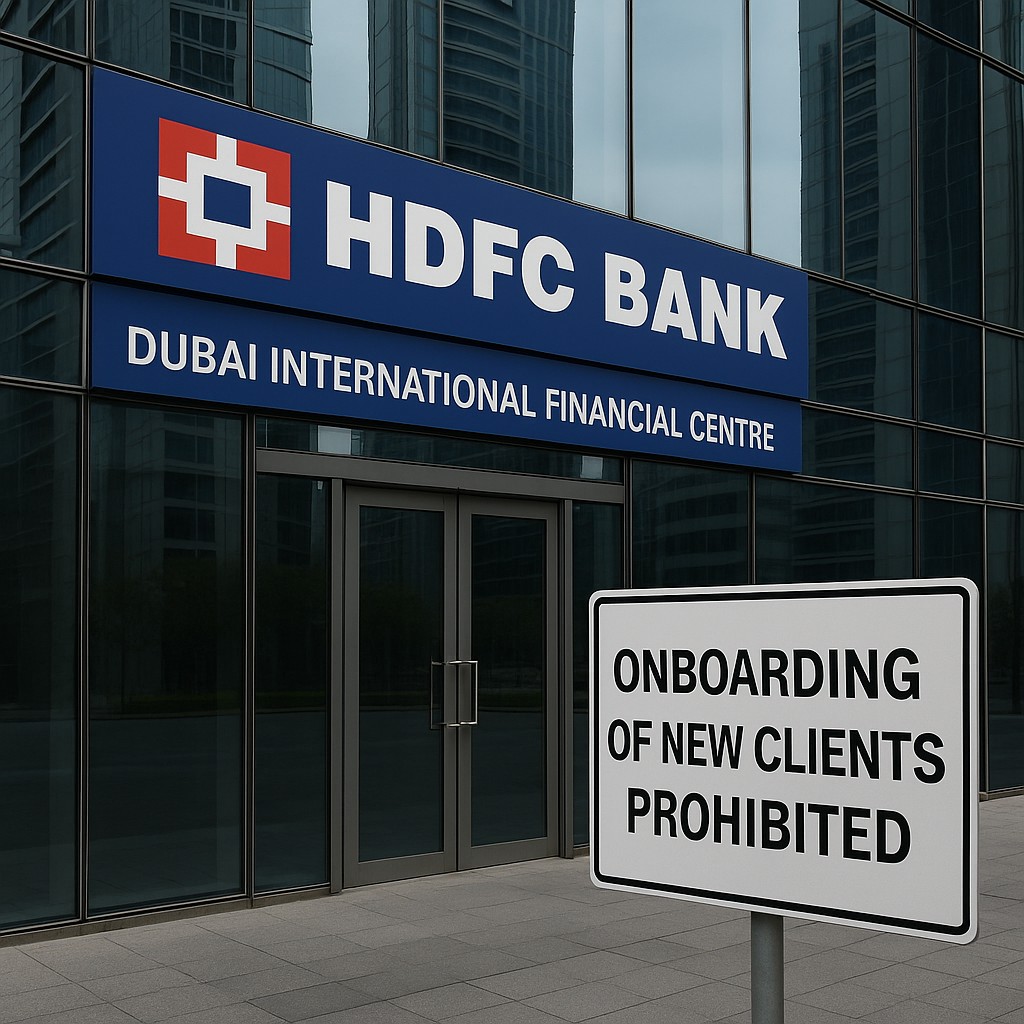
Dubai’s financial regulator has barred HDFC Bank’s Dubai International Financial Centre branch from soliciting, onboarding or servicing new clients, citing compliance lapses.

The order, issued by the Dubai Financial Services Authority and effective from 26 September, remains in force “until otherwise amended or revoked,” the bank stated. HDFC said it is taking steps to comply with the directive while engaging with the DFSA to address concerns.

HDFC clarified that the restriction does not apply to existing clients of the DIFC branch, nor to those who had already been offered services prior to the notice. As of 23 September, the branch had 1,489 customers, including joint holders.

According to HDFC, the bank does not expect this to materially affect its overall operations or financial position, noting that the Dubai branch’s business is not significant relative to its global activities.

The DFSA’s decision notice accuses the branch of servicing clients who were not properly onboarded, deficiencies in client onboarding processes, and other unspecified compliance shortcomings. The prohibition extends to advising on financial products, arranging deals, extending credit, custodial services, and financial promotions for new clients.

Analysts point to a backdrop of scrutiny over HDFC’s role in selling risky instruments—particularly Credit Suisse additional tier-1 bonds—to retail investors in the UAE. Those clients accused the bank of misclassification and inadequate risk disclosures. Investor accounts allege that KYC records were manipulated to designate them as “professional clients,” a requirement under DIFC rules for high-risk products.

Some UAE-based investors welcomed the DFSA’s move but urged stronger action, stating the suspension of new client intake is a limited measure given potential damage already done.

HDFC has a broader international presence including representative offices in Abu Dhabi, Kenya, London and Singapore, and branches in Bahrain and Hong Kong. The bank faces parallel scrutiny in India regarding related sales practices, prompting investigations by Indian enforcement agencies.

As the DFSA and HDFC engage in remediation talks, markets will closely watch whether the regulator escalates sanctions or lifts the ban after compliance is demonstrated.

Dubai police have announced an extensive set of security measures and entry restrictions for spectators attending the Asia Cup 2025 final between India and Pakistan at the Dubai International Cricket Stadium. Violations of the rules could trigger fines of up to Dh30,000 and imprisonment under federal law governing sports venues.

Every seat for Sunday’s showdown has been sold, with organisers confirming a full capacity of 28,000 spectators. With the historic match being the first final between these arch-rivals in Asia Cup history, expectations of heightened emotions have driven authorities to step up security preparations.

The police directive mandates that attendees arrive at least three hours before the start and that each ticket admits a single entry—re-entry will not be allowed. All spectators must enter through gates assigned by organisers, follow instructions from stewards and security staff, and park only in specified areas. Any departure from the stadium during the match will forfeit re-entry.

The list of prohibited items is comprehensive. Fireworks, flares, laser pointers, and any flammable or hazardous materials are banned outright. Sharp objects, weapons, toxic substances, remote-controlled devices, large umbrellas, camera rigs, tripods, selfie sticks, and unauthorised photographic equipment are also barred. Flags, banners, or placards without official approval, pets, bicycles, skateboards, scooters, glass items, and outside food or drink are disallowed. Smoking or carrying any item that could endanger public safety will attract penalties.

Under the Federal Law on the Security of Sports Facilities and Events, the penalties range from Dh5,000 to Dh30,000 for breaches such as entering the pitch, carrying banned items or misbehaving. More severe violations — including throwing objects, abusive or racist language — may lead to fines in the Dh10,000 to Dh30,000 range or imprisonment for up to three months.

Multiple specialised police units and surveillance teams will be deployed around the stadium. Authorities have urged full cooperation from fans to allow the match to proceed without incident. The Events Security Committee is jointly monitoring crowd movement, traffic, and stadium access.

On the transport front, traffic congestion is expected to peak along Al Khail Road, Sheikh Mohammed bin Zayed Road, Hessa Street, Umm Al Suqeim Street, and via routes through Al Barsha, Dubai Motor City and surrounding neighbourhoods. Alternate routes such as Umm Al Suqeim Street or Al Fay Road via Sheikh Mohammed bin Zayed Road are being recommended, especially for motorists approaching from the south.

Parking zones P1 to P4 at the stadium are allocated, and overflow areas in Dubai Motor City and Dubai Studio City will provide shuttle services. Some park-and-ride facilities near Mall of the Emirates and First Abu Dhabi Bank Metro stations will function, connecting visitors to the venue via feeder services and taxis.

Dubai police have also issued multilingual advisories to reach a broader cross-section of fans. Authorities emphasise that the cooperation of spectators will be crucial to preserving a safe environment and ensuring that the focus remains on the cricketing spectacle.

A surge of new initiatives is underway across the UAE ahead of the upcoming global heart-health campaign, as health authorities intensify efforts to curb cardiovascular risks among residents. The Ministry of Health and Prevention is urging citizens to monitor blood pressure and cholesterol levels, adopt healthier diets and exercise regimens, and steer clear of tobacco, underscoring that cardiovascular disease remains the leading cause of death globally. Officials […]

A widespread veil of fog has prompted the National Centre of Meteorology to raise red and yellow alerts across several emirates, with parts of Abu Dhabi reporting visibility under 1,000 metres and road users urged to exercise extreme caution.

Fog enveloped numerous regions across the UAE, including Al Dhafra, Ghiyathi, Yaw Al Nadhrah, Baynounah and Um Al Ashtan, as well as parts of Dubai, resulting in variable speed limits on key highways and frequent warnings from traffic authorities. In Abu Dhabi, electronic signboards are being used to dynamically adjust permissible speeds in response to shifting visibility. Authorities also issued repeated reminders to follow traffic signals and stay alert to sudden changes in road conditions.

The NCM forecast clear to partly cloudy skies for the day, but cautioned that humidity levels would rise overnight, which may cause fog formation to persist into early Monday morning in inland and coastal areas. Winds are expected to be light to moderate, occasionally gusting to 40 km/h over sea areas. Sea conditions are likely to remain slight to moderate in the Arabian Gulf, becoming rough toward the western zones, while the Gulf of Oman is expected to stay relatively moderate.

Temperature highs for the day are projected to reach around 40 °C in Abu Dhabi and Dubai, while overnight lows may dip to between 25 °C and 31 °C, further elevating the risk of condensation and mist formation by dawn. Humidity is set to reach levels as high as 90–95 percent, especially in coastal zones.

Abu Dhabi Police, in a public advisory, urged motorists to keep lights on, maintain safe following distances and heed variable speed signs. They reiterated that foggy patches may develop unpredictably along inter-emirate and rural routes. Traffic safety officers are being stationed at vulnerable corridors to assist drivers and manage flow.

The Dubai Financial Services Authority has issued a decision notice barring HDFC Bank’s Dubai International Financial Centre branch from onboarding or engaging new clients, citing deficiencies in its onboarding procedures and promotional practices.

Under the DFSA’s directive dated 25 September 2025, the branch is prohibited from soliciting or conducting any business with clients who had not already completed the onboarding process by that date. The restrictions span across a range of financial services: advising on financial products, arranging investment deals, arranging or advising credit, custody services, and engaging in financial promotions.

HDFC Bank has confirmed the measure, stating the branch’s Dubai operations are not “material to [the] overall business or financial position.” It said it has initiated steps to engage with the DFSA and address the regulator’s concerns.

Existing customers of the DIFC branch remain unaffected by the decision, and clients who had already been offered services may still be served.

The DFSA’s public register confirms the restrictions imposed on HDFC DIFC under Article 75 of the Regulatory Law 2004.

Concern over HDFC’s UAE operations has been mounting since investigations linked to the mis-selling of Credit Suisse Additional Tier-1 bonds surfaced. High-net-worth non-resident Indian investors alleged that HDFC’s UAE arms had pushed leveraged exposure to these risky instruments without adequate disclosure. When Credit Suisse’s AT1 bonds were written down in 2023, several clients in the Middle East faced losses and margin calls.

Regulatory scrutiny has coalesced around whether the branch’s client onboarding systems sufficiently aligned with the stricter DIFC regime for assessing and classifying “professional clients.”

Observers note that the regulatory move at HDFC’s DIFC arm fits a broader trend in the UAE: ensuring that financial institutions operating in its free zones adhere to rigorous compliance standards. While the central bank has in recent months fined other banks and suspended new customer intake over Sharia or anti-money laundering violations, this is a rare case targeting the onboarding practices of a foreign bank’s offshore branch.

Market analysts suggest the restriction could dampen HDFC’s ambitions in the Gulf region. The DIFC branch caters largely to high-net-worth and institutional clients, a growing segment across the Middle East.

Analysts also note that, though the branch is currently a limited part of HDFC’s global footprint, reputational damage and extended regulatory enforcement could constrict cross-border investment programmes tied to its UAE hub.

HDFC’s next steps include formal remediation under DFSA oversight, and the bank will need to demonstrate that its compliance and client due diligence processes meet the regulator’s expectations. Meanwhile, the directive will remain active until the DFSA issues a written amendment or revocation.

Dubai has secured a position among the world’s top four FinTech centres, according to the latest Global Financial Centres Index published on 25 September, signalling a pivotal shift in the emirate’s financial technology trajectory.

The GFCI report places Dubai at 11th globally in the overall ranking of financial centres, but underscores its standing as one of the most dynamic hubs for FinTech innovation. The Dubai International Financial Centre has played a central role in driving this transformation.

DIFC now houses over 1,500 companies focused on AI, FinTech, and innovation, making it the region’s largest cluster of its kind. These firms have collectively raised more than US$4.2 billion in funding, strengthening the UAE’s appeal as a destination for growth-stage tech ventures. Sheikh Maktoum bin Mohammed bin Rashid Al Maktoum, First Deputy Ruler of Dubai and Minister of Finance, credited the rise to the strategic goals of the Dubai Economic Agenda D33 and to Dubai’s business-friendly infrastructure and regulatory regime.

Essa Kazim, Governor of the DIFC, stressed that the momentum reflects long-term planning and deep investment. He noted that positioning Dubai among the top global FinTech players has required calibrated incentives, robust legal frameworks, and international partnerships. Arif Amiri, Chief Executive Officer of the DIFC Authority, said the locale’s success stems from synergy among institutional support, talent attraction, and ecosystem-building efforts.

Dubai’s ascent in the FinTech league emerges amid intensifying global competition. Traditional financial centres such as London, Singapore, and Hong Kong continue to maintain strong footholds, leveraging established networks, global institutions, and mature regulatory systems. Yet Dubai’s rapid rise indicates that newer hubs with nimble regulation and aggressive incentives can leapfrog in the tech-driven financial services landscape.

The GFCI 38 ranking shows Dubai overtaking several peers in the Gulf and Asia, with the city gaining one rank to 11th place overall and closing gaps in score metrics used to assess competitiveness, such as human capital, reputation, and business environment. The GFCI emphasises that “expected future significance” is one of the domains in which Dubai leads globally—an indication that market participants foresee further growth in its influence.

Dubai’s Roads and Transport Authority has revealed a 15-kilometre Dubai Autonomous Zone, an integrated corridor designed to link driverless land and water transport modes. The zone will stretch from Creek Station on the Metro Green Line through Al Jaddaf toward Dubai Creek Harbour and Festival City. The plan aims to weave Metro, RoboTaxis, RoboBuses, self-driving shuttles, autonomous abras, driverless logistics vehicles and street-sweeping bots into one seamless […]

The Ministry of Energy and Infrastructure has set in motion a major infrastructure programme valued at AED 750 million to upgrade Emirates Road over two years, aimed at relieving traffic congestion and accelerating inter-emirate connectivity. Stretching some 25 km from the Al Badee Interchange to Umm Al Quwain, the project will expand the highway from three to five lanes in each direction and reinforce its capacity to […]

Arabian Post Staff -Dubai Google has begun deploying firmware version 4.467 to Pixel Buds Pro 2 units, introducing several enhancements designed to make the earbuds more context-aware, safer, and easier to control without touching your phone. The most significant addition, Adaptive Audio, lets the device adjust noise cancellation in real time rather than forcing users to pick between full ANC, transparency mode or off. The system analyses […]

Kuwait Petroleum International and payments provider WEX have launched a joint fuel card in Italy, called CartissimaQ8-WEX, offering business customers access to a network of more than 3,400 service stations, including Q8, Q8easy, and authorised partners.

Under the partnership, WEX cardholders will be able to refuel across Italy’s Q8 network and partner sites, gaining visibility over fuel consumption and simplified billing. KPI said the initiative is part of its strategy to deepen its footprint in the Italian market by introducing a new sales channel in collaboration with a payments specialist.

The agreement provides WEX customers access to a broad distribution system spanning Q8, Q8easy and authorised stations across Italy. KPI’s network in the country already includes several hundred stations, and this card linkage aims to consolidate its reach by leveraging WEX’s fleet and payments infrastructure.

WEX has been actively expanding its European fuel network via partnerships in countries such as France and the Netherlands, tying up with Carrefour and Sakko to broaden its acceptance footprint. That expansion effort dovetails with this new agreement, enabling cross-market leverage.

While KPI is the local operating arm of Kuwait Petroleum Corporation, WEX is a US-based payments and fleet services firm. The alliance represents a fusion of upstream fuel retailing and downstream payments infrastructure. It also reflects a broader trend in the energy sector: fuel retailers seeking to strengthen customer retention through integrated payment and fleet management services.

Stakeholders in the Italian fuel and mobility markets view the move as a response to intensifying competition from independent fleet card providers and mobility fintechs. By embedding payments into its fuel ecosystem, KPI hopes to capture a larger share of corporate fleet spend and lock in recurring usage.

Industry analysts note that acceptance scale is key to fleet card uptake; the more stations that accept a given card, the more attractive it becomes for fleet operators. With 3,400 stations accessible under CartissimaQ8-WEX, the offering is immediately competitive.

Nasdaq Dubai has admitted a US$450 million Sukuk issued by Arada Developments LLC under Arada Sukuk 2 Limited’s US$1 billion trust certificate programme. The securities carry a maturity in 2030 and were priced at a profit rate of 7.150 percent. The offering drew orders in excess of US$2 billion, representing over four times oversubscription. The listing increases Arada’s cumulative Sukuk outstanding on the exchange to US$1.5 billion […]

Arabian Post Staff -Dubai Dubai-based lifestyle and hospitality conglomerate FIVE Holdings has secured a $460 million revolving credit facility that will be used to repay its $350 million green bond ahead of schedule and free up capital for further growth. The facility, arranged with Commercial Bank of Dubai, AAIB and Santander, enables the group to retire its green bond three years before it matures, leaving it with […]

The UAE Ministry of Finance, acting as issuer with the Central Bank of the UAE as issuing and payment agent, has completed the September 2025 auction for dirham-denominated Islamic Treasury Sukuk, issuing AED1.1 billion in two tranches.

Investor appetite proved robust: total bids reached AED5.1 billion, representing an oversubscription rate of 4.6 times. The two tranches mature in August 2028 and May 2030. Yields to maturity were set at 3.64 percent for the 2028 tranche and 3.72 percent for the 2030 tranche, with spreads of up to 5 basis points over comparable US Treasuries. The new Sukuk are now listed under the UAE Treasury Islamic Sukuk Programme on Nasdaq Dubai, bolstering their tradability in secondary markets.

This issuance is part of the 2025 T-Sukuk programme designed to deepen the UAE’s domestic Islamic capital market and to help establish a dirham yield curve. Authorities view it as a tool for liquidity management and as a mechanism to broaden investment options for both regional and international investors participating in the UAE’s fixed-income markets.

Market observers note that the oversubscription signals confidence in the UAE’s fiscal credentials and its commitment to injecting dynamism into its debt capital markets. The tight pricing relative to US Treasuries is seen as competitive and attractive for institutional players seeking yield in the Gulf region.

In recent months, the UAE has steadily pursued domestic sovereign Islamic issuances as a complement to conventional instruments, seeking to accommodate demand from Islamic financial institutions as well as conventional banks’ Shariah-compliant units. The coordination between the Ministry of Finance and the Central Bank ensures that these issuances are integrated into broader monetary and financial stability objectives.

Across the Gulf, sovereign issuers have increasingly leaned into domestic currency Islamic instruments to reduce dependence on external funding, develop local capital markets, and provide alternative yield playbooks for investors. Within that context, the UAE’s T-Sukuk programme is gaining traction as a benchmark vehicle.

Primary dealers participating in the auction included eight banks, all mandated under the program to support both primary and secondary market activity. Their participation is key to maintaining liquidity and encouraging wider investor participation beyond the initial subscription.

Dubai’s Roads and Transport Authority has unveiled a new strategic focus for the 5th Dubai World Challenge for Self-Driving Transport, scheduled for 2027: smart integrated infrastructure. Mattar Al Tayer, Director-General and Chairman of the Board of Executive Directors of the RTA, said the competition will pivot to challenges that bind sensing, connectivity and analytics to urban infrastructure across Dubai.

At the closing of the Dubai World Congress for Self-Driving Transport held at the Dubai World Trade Centre, RTA inked four key agreements with Emaar Properties, Al Futtaim Group, and the winners of the 2025 challenge—WeRide and Deutsche Bahn consortium, together with Zelos Technology—to deploy and test autonomous systems in Festival City, Creek Harbour and other strategic urban zones. Al Tayer affirmed that the move aligns with Dubai’s ambition to serve as a global testbed for mobility innovation.

This year’s theme shifts from discrete vehicle-centric competition to a systems-level mandate: entrants will be judged on how well their solutions embed into city-wide networks of sensors, roads, communication links and data platforms. The RTA framework calls for designs that anticipate traffic dynamics, weather variations and public transit interaction, while maintaining safety, resilience and sustainability.

Over 3,000 participants and more than 80 expert speakers participated in the Congress, spanning government, academia and industry. The gathering marked the formal launch of the 2027 edition. The Congress also highlighted Dubai’s strategic goal that by 2030, one quarter of all journeys within the emirate will be autonomous or smart-enabled—an ambition already embedded in the RTA’s transport roadmap.

Stakeholders see this shift as an essential maturation of the challenge format. Rather than focusing only on individual vehicle prototypes, the next competition will test ecosystem coherence and scalability across urban modules. According to industry analysts, the new direction presses participants to align with evolving demands in mobility, where digital and physical layers must fuse.

Dubai’s prior edition in 2025 carried the theme “Dubai Autonomous Transport Zone,” pushing contestants to integrate multiple autonomous mobility modes in defined neighbourhoods. That foundation now gives way to a broader remit, with RTA officials stressing that smart infrastructure is the backbone for reliability and public acceptance of self-driving systems.

The agreements struck with developers and past challenge winners will see pilots in zones like Festival City and Creek Harbour, where road layouts, sensor grids and vehicle operations will be tested side by side. RTA counts on these field deployments to validate technical performance, operational cost and citizen experience before full-scale adoption.

Critics caution that the complexity of integrating diverse systems—communications, edge computing, failsafe control layers—could raise cost, regulatory and interoperability risks. Some stakeholders argue the success of the 2027 challenge will depend on whether entrants can navigate not only technical but institutional challenges across urban agencies and telecommunications providers.

For technology firms and research groups, the new emphasis offers both opportunity and challenge. It rewards proposals able to harmonise hardware, software, data and governance. Observers expect to see consortia spanning telecom operators, municipal agencies, AI firms, and road infrastructure specialists.

Abu Dhabi is marketing a three-year and a 10-year US dollar Reg S/144A bond offering, aiming to capitalise on robust investor demand and reinforce its global funding outlook. The three-year tranche is pitched at approximately 40 basis points over US Treasuries, while the longer 10-year issue is offered at around 55 bps.

By mid-morning in Dubai, books had swelled past $10 billion, excluding joint lead manager interest, with slight tilt toward the 10-year line. The bonds will be senior, unsecured and rated AA/AA by S&P and Fitch, matching the issuer’s prevailing Aa2/AA/AA credit standing. Listings are planned in both London and Abu Dhabi.

Investors see this transaction as a test of global appetite for Gulf sovereign credits amid a cautious backdrop of moderate US interest rates and evolving geopolitical risk. Despite volatility in energy prices and external debt markets, Abu Dhabi’s strong fiscal and balance sheet metrics underpin confidence in its sovereign name. The credit ratings assigned reflect the emirate’s resilient fiscal policy, substantial hydrocarbon reserves, and large sovereign wealth fund buffers.

Structurally, the Reg S/144A setup allows the issuer to access both non-US and US institutional investor pools. Regulation S permits offers outside the United States, while Rule 144A enables sales to qualified institutional buyers within the US, offering dual reach while maintaining issuance flexibility. The base offering circular explicitly restricts transfers and resales to be compliant with those regimes.

Observers note that the pricing levels—40 bps for three years and 55 bps for 10 years over Treasuries—are ambitious but not unprecedented within Gulf sovereign borrowing. Prior precedent includes a multi-tranche Abu Dhabi sovereign bond of $5 billion in April 2024, which achieved strong oversubscriptions and favourable pricing benchmarks. That deal underlined investor appetite for Gulf issuers with strong credit credentials.

Market participants closely monitor skew and order distribution between tenors. That the books are marginally skewed toward the 10-year suggests appetite for duration, perhaps reflecting yield scarcity in core markets. Should the order book widen further, the issuer may flex uncertainty concessions or tighten spreads modestly before final pricing. Co-ordinating banks are likely adjusting intermediate guidance as allocations firm.

Analysts flag that appetite for Gulf sovereign issuance is tempered by global headwinds: tighter US credit spreads, sticky inflation, and competition from other supranational and sovereign issuers. Some international investors may demand additional premium for regional or geopolitical exposures. Yet Abu Dhabi’s entry with a dual-tranche issuance signals intent to extend its credit curve, deepen investor relationships, and enhance liquidity in its sovereign bonds.

The listings in London and Abu Dhabi are intended to enhance secondary market trading, improve visibility to European and global investors, and cement Abu Dhabi’s status in global bond markets. The London listing, especially, provides access to a deep pool of international fixed income investors and a regulatory framework well understood by global asset managers.

VISHNU RAJA
RYO YAMADA
HITORI GOTOH
IKUYO KITA