News related to
Dubai

Arabian Post Staff -Dubai Crown Prince Mohammed bin Salman arrived in Washington to meet U. S. President Donald Trump with a sweeping agenda spanning defence, technology and economic cooperation — signalling a clear recalibration of Saudi Arabia–United States relations. The meeting resulted in high-stakes commitments including a pledge of up to $1 trillion in Saudi investments and approval for advanced defence hardware, underscoring the kingdom’s ambition to […]

Bahrain has lowered the minimum real estate investment needed to secure its 10-year Golden Residency visa from BD 200,000 to BD 130,000. The adjustment by the Ministry of Interior’s Nationality, Passports and Residence Affairs is expected to boost interest in premium properties and make the residency scheme more accessible to a wider group of investors.

Under the revised threshold, people purchasing property worth at least BD 130,000 now qualify for long-term residence. Previously this benefit was available only to those investing BD 200,000 or more. The Golden Residency programme — launched in 2022 — offers a 10-year renewable permit that allows holders to work, sponsor family members, and enter and exit the kingdom freely. Those migrating under the scheme need not tie their status to an employer or lock in property ownership permanently.

The change may prove timely given growing competition in Gulf real-estate markets. Experts point out that the lower entry cost could reshape demand patterns, especially among mid-to-high net-worth expatriates seeking a base in the Gulf without committing the higher investment required by rival regional programmes. Real estate brokers report a noticeable uptick in enquiries from foreign nationals since the announcement — many exploring apartments and villas that now meet the updated investment threshold.

The authorities emphasised that despite the relaxed investment criteria, the high standards of the Golden Residency system remain intact. Investors must meet all documentation and qualification processes managed by the Ministry of Interior. Other pathways to qualify — including employment of a certain tenure and salary, retirement income or official recognition of exceptional talents — remain unaffected.

For property developers and brokers, the revised threshold may translate into renewed velocity in Bahrain’s high-end property segment. Several luxury residential projects are now being re-marketed, stressing that units previously deemed beyond reach now fall within qualification range. This could lead to increased sales volume, stronger investor inflows, and potentially an uptick in real-estate pricing.

Gulf-region expatriates assessing residency options have long compared the Kingdom’s Golden Residency with similar visas in neighbouring states. The reduced investment bar adds appeal to Bahrain’s model — with its combination of long-term residency, flexibility of employment, opportunity for family sponsorship and comparatively modest financial commitment.

Arabian Post Staff -Dubai Markets across the Gulf Cooperation Council are undergoing a shift as Islamic debt instruments embrace digital formats and new issuance technologies. Outstanding sukuk — Shariah-compliant bonds — in the GCC reached US$1.1 trillion by the end of the third quarter of 2025, marking a 12.7 percent rise over the prior year as debt-capital-market activity surged. Debt capital market issuances in the region saw […]

Matein Khalid want my Arabic friends to address me from now on as Abu Nuhas or Father of Copper. Why? The red metal that has been human kind’s best mineral friend for 30,000 years is also the best conductor of electricity known to man, woman or beast as the AI revolution necessitates a multi-trillion dollar demand shock in upgrading the power grid as the world electrifies, decarbonizes […]

Market attention turned sharply towards World Liberty Financial as its WLFI token climbed more than 7% on the daily chart, supported by renewed momentum in a buyback programme that has drawn heightened interest from traders. The jump in value, which pushed volumes higher across multiple exchanges, underscored a shift in sentiment around the project after a period of steady consolidation in its price trajectory.

Traders noted that the upswing aligned with the recommencement of the token buyback scheme, which had been announced earlier in the year as part of the platform’s strategy to stabilise circulating supply and incentivise long-term holding. The renewed activity around the programme appeared to signal confidence within the project’s core team, with market participants interpreting the move as an effort to strengthen liquidity and reinforce the token’s market position during a phase of broader volatility in digital assets.

The project, positioned as a decentralised finance ecosystem offering yield products and cross-border payment tools, has been attempting to carve out a more distinct space in the congested DeFi landscape. Its token performance has shown periods of sharp movement in line with broader market swings, but the latest rise stood out due to the targeted intervention through the buyback initiative. Analysts tracking on-chain data confirmed a noticeable reduction in WLFI circulating supply over the past 48 hours, indicating execution of the buyback in measurable volumes.

A senior market analyst at a Dubai-based digital asset fund said the token’s rebound reflected “a coordinated liquidity strategy combined with renewed user engagement,” adding that sustained price support would depend on whether the buybacks continue at a stable pace. The analyst also pointed to the rising interest in tokens backed by structured DeFi models, noting that these projects have gained traction as traders search for instruments offering more predictable mechanics compared with purely speculative assets.

WLFI’s latest surge coincided with a broad improvement in sentiment across mid-cap digital tokens, though its gain exceeded the general market trend. Data aggregators showed that while major assets such as Bitcoin and Ether recorded modest upward moves, WLFI’s performance outpaced most alternative tokens in its category. The increase was accompanied by a measurable uptick in wallet activity, with new holders entering the market as trading forums circulated speculation about further buyback rounds.

Company representatives had earlier disclosed that the buyback programme was designed to respond dynamically to market conditions, enabling the project to reinforce token value during periods of instability. Blockchain analysts have noted that such mechanisms, if implemented with transparency and predictable parameters, can help sustain community confidence and mitigate sharp sell-offs. The WLFI team’s renewed engagement, including technical updates and communication around upcoming ecosystem features, also contributed to the current sentiment shift.

Industry observers said market participants were also watching regulatory signals closely, as global jurisdictions continue to refine frameworks for digital assets. A clearer regulatory environment, particularly in markets influential to token liquidity, has historically contributed to greater investor participation. WLFI’s activity in markets such as the UAE and Southeast Asia has expanded over the past year, aided by partnerships with payment service providers and liquidity networks aiming to widen adoption.

Developments in DeFi have shown that buyback-driven appreciation, while effective in the short term, typically requires sustained platform growth to maintain momentum. This has put attention on WLFI’s roadmap, which outlines the rollout of additional financial tools and integrations aimed at strengthening ecosystem utility. Market analysts said user adoption metrics over the next quarter would be critical in determining whether the token can retain the gains recorded following the buyback revival.

The broader digital asset market has been characterised by alternating periods of risk appetite and caution, shaped by shifting macroeconomic indicators and geopolitical developments. WLFI’s rise occurred during a phase where traders were displaying a stronger preference for tokens linked to structured platforms with defined use cases. This positioned WLFI favourably as its developers highlighted enhancements to yield mechanisms and expansion into multi-chain support, which could increase platform accessibility.

Trading desks reported that the token’s order books reflected thicker buy-side interest as the session progressed, suggesting that momentum-driven traders were reinforcing the upward movement. Price analysts, however, cautioned that tokens experiencing sudden appreciation following buybacks may face corrections if broader market sentiment turns or if programme intensity decreases. Despite this, WLFI’s advocates argue that the project’s tokenomics structure is engineered to provide periodic support without distorting long-term market behaviour.


Abu Dhabi: Financial executives from over 20 Arab countries gathered this week at the newly formed Sanadak unit to examine its dispute-resolution model designed for banks and insurance firms, marking a push by the UAE to raise consumer-protection standards across the region. Sanadak cited engagement with the 50 delegates as an opportunity to showcase how its independent mechanism can serve as a regional benchmark, while participants praised the UAE’s pro-consumer frameworks and stressed transparent regulation as vital for financial trust.

Sanadak operates under the oversight of the Central Bank of the UAE and was established to adjudicate complaints between consumers—or small to medium-sized enterprises—and licensed financial institutions or insurance companies. Its core functions include receiving complaints online or via app, verifying that 15 calendar days have passed from the institution’s response or a lack thereof, and moving the matter into resolution or referral to appeal-committees.

At the gathering, Sanadak emphasised that its role extends beyond the UAE, as the first financially-regulated specialised ombudsman unit in the Middle East and North Africa region. The unit highlighted how its jurisdiction, rules and structure could offer a template for cross-border alignment among Arab states seeking stronger consumer redress in banking and insurance. The discussion touched on the unit’s values of impartiality, accessibility, efficiency and integrity.

The session underscored several key trends: First, financial-services regulators globally are moving toward early-intervention powers, unified licensing for banks and insurers, and forward-looking oversight of fintech and digital-asset services. The UAE’s newly enacted Federal Decree-Law No. 6 of 2025 consolidates banking, finance and insurance regulation and confirms Sanadak’s independent mandate for complaints resolution.

Second, consumer-protection mechanisms are gaining regulatory prominence as market participants cope with rising complexity in product offerings, from digital banking to insurance-linked investment products. Sanadak’s model aims to provide a single portal of access and streamline resolution without resorting to litigation. Officials say this helps build consumer confidence, enhance financial inclusion and strengthen institutional integrity.

Third, regional cooperation and benchmarking among Arab states were highlighted as emerging priorities. Delegates at the meeting emphasised that harmonised complaint-handling standards will bolster cross-border financial activity and investor trust. One delegate observed that adopting a model such as Sanadak’s “sends a strong signal that consumer rights are integral to banking-sector stability”.

Sanadak’s leadership also outlined practical outcomes: the resolution of insurance-sector disputes via permanent committees including independent judges and experts was mandated by Administrative Resolution No. 10-A/1/2024, issued by the Central Bank. That rule establishes minimum timelines, virtual-hearing options and defined fee structures—from AED 100 for fixed-value disputes up to AED 30,000 for higher-value claims.

The initiative aligns with the UAE’s broader ambition — underpinned by its “digital-first” strategy — to present its financial sector as accessible, regulated and globally competitive. Sanadak states its mission to support trust in the financial system and foster financial-inclusion goals through education and accessible redress.

Nonetheless, challenges loom. Ensuring that external, regional institutions adopt the same discipline and that complaints-resolution outcomes are enforceable across jurisdictions remains uncertain. Some financial-services observers caution that consumer-protection frameworks must evolve as digital-asset services proliferate and as cross-border financial activity expands. One expert described the regulatory change as “about future-proofing the UAE’s financial system by ensuring it remains resilient, inclusive and responsive to emerging technologies”.

Dubai’s leadership has approved a landmark three-year fiscal plan totalling AED 302.7 billion in expenditure and AED 329.2 billion in projected revenues for the 2026-2028 period, marking the largest budget cycle in the emirate’s history. The approval came under Law No. 15 of 2025, signed off by His Highness Sheikh Mohammed bin Rashid Al Maktoum in his capacity as Vice-President and Prime Minister of the UAE and […]

Advertisements

Arabian Post Staff -Dubai Saudi Arabian Oil Company has entered preliminary talks to sell stakes in key export and storage terminals and possibly parts of its real-estate portfolio, aiming to raise over US$10 billion in what may become its most substantial disposals to date. The oil giant has invited banks to pitch feasibility studies and is weighing financing options that include equity raises or structures resembling the […]

Prepare for an evening where history comes to life. This December, the iconic Dubai Opera will become the epicenter of the musical universe as it hosts a once-in-a-lifetime convergence of talent. The legendary tenors José Carreras and Plácido Domingo will reunite for the “Stars of the Century” gala — a performance destined to be remembered for years to come. Scheduled for December 22, 2025, at 7:00 PM, this […]

Dubai’s leadership has endorsed a comprehensive architectural identity for the emirate’s road network, signalling a major shift in how transport infrastructure is designed and experienced. Sheikh Hamdan bin Mohammed bin Rashid Al Maktoum, in his capacity as Chairman of the Executive Council of Dubai, approved the framework that aligns with the city’s broader ambition to deliver integrated, sustainable and visually coherent urban environments. The initiative, overseen by […]

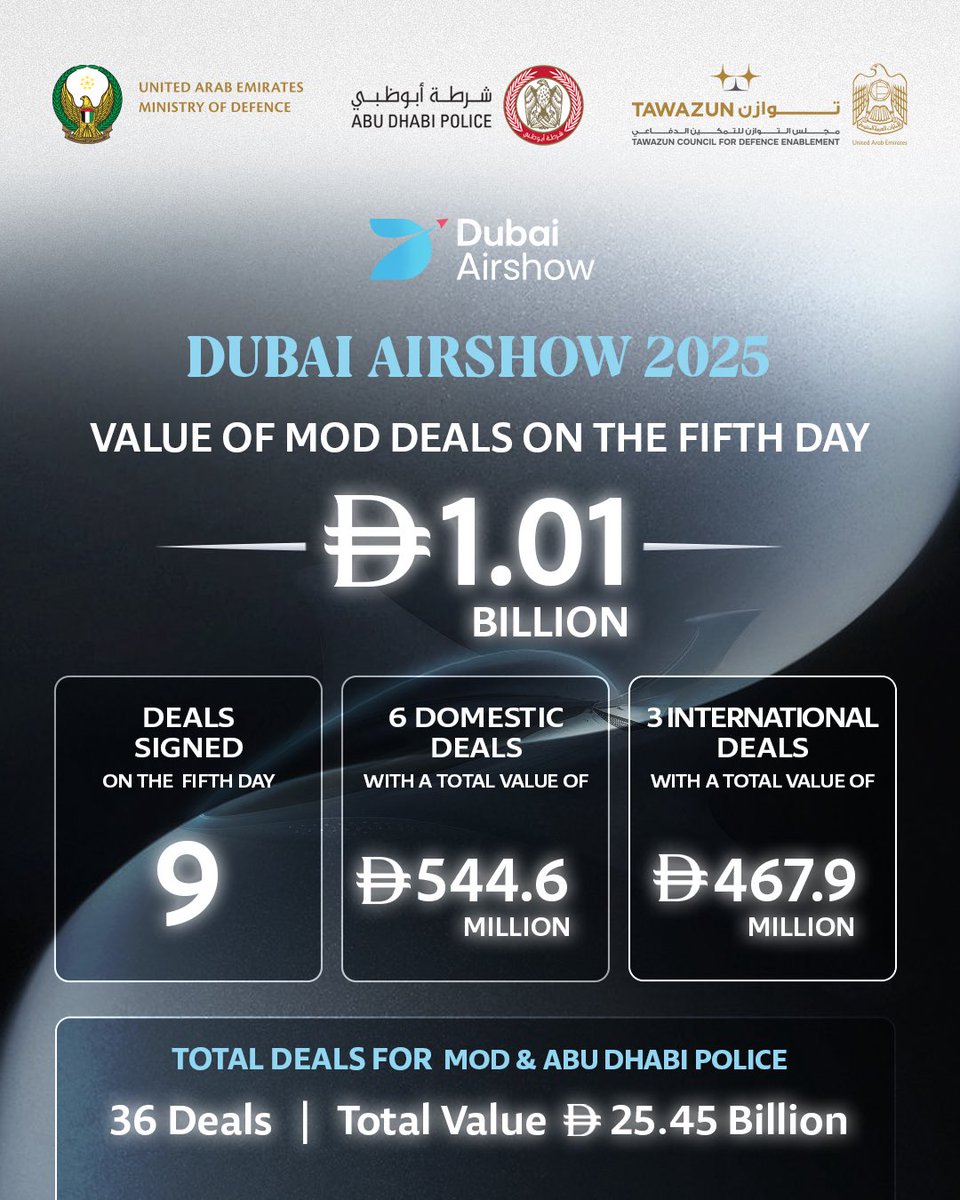
The Tawazun Council for Defence Enablement recorded nine new contracts worth AED 1.012 billion on behalf of the Ministry of Defence on the fifth and final day of the Dubai Airshow 2025, elevating the event’s five-day total to 36 agreements with a cumulative value of AED 25.455 billion.

At a press conference in Dubai attended by spokespersons Majed Ahmed Al Jaberi, Abdulla Ahmed Al Saeedi and Manea Abdulkarim Al Mansoori, the council detailed that six of the final-day contracts, sized at AED 544.675 million, were with local firms, while the balance, AED 467.913 million, involved international companies.

Among the domestic deals, two contracts with the Abu Dhabi-based M4 Trading comprised a AED 57.636 million order for a Grand Control Station and a AED 161.634 million deal for aircraft procurement. A AED 29 million contract went to Al Taif Technical Services Company for cooling-equipment and power-generator maintenance, while MP3 Company secured a AED 154.5 million agreement for aerial-rescue systems and spare parts. International Golden Group received AED 65.905 million for aerial drop systems and AED 76 million went to Abu Dhabi Autonomous Systems Investments for drone procurement.

On the global front, two agreements with Lockheed Martin amounted to AED 184 million and AED 63.551 million respectively for maintenance and spare-parts support. A third contract with Raytheon Technologies was valued at AED 220.362 million for friendly-force identification systems.

Across the event, earlier announcements show the council had already signed 20 contracts worth AED 18.01 billion during the first three days of the airshow. This underlines a consistent pace of deal-making spanning both national and international industrial partners.

The contract portfolio highlights the UAE’s emphasis on building a robust domestic defence-and-security-industrial ecosystem, spanning aircraft systems, drones, radars, simulation and service-support infrastructure. Analysts note this reflects a shift from traditional procurement towards localisation, technology transfer and national capability building.

Tawazun’s officials emphasised that the partnerships frame more than incremental orders; they represent structural steps toward embedding industry in sovereign defence strategy. Ms Mansoori observed that the council “continues to foster a competitive and enabling environment for the private sector” and that the outcomes achieved through the airshow “reflect the UAE’s vision of developing an integrated, innovative and strategically driven defence and security sector.”

While the headline figure of AED 25.455 billion positions Dubai Airshow 2025 among the region’s most commercially active defence gatherings, some independent observers caution that the true measure of success will rest on execution, delivery timelines and domestic-industry uptake. Questions remain about how many contracts include meaningful offsets, R&D components and long-term local value-creation versus straightforward procurement.

Nevertheless, the event’s records reinforce Dubai’s growing role as a hub for aerospace-defence engagement, with deals touching both military and dual-use capabilities. Compared with earlier editions, this year’s flow involves a higher proportion of contracts that combine hardware, maintenance-services and technology-transfer features — signalling deeper industrial ambition rather than purely kit acquisition.

The spread of contract-values — from tens of millions of dirhams for niche specialised systems to multi-hundred-million agreements with global primes — reveals a multipronged strategy. Domestic SMEs are being drawn into the supply chain alongside major established defence-sector players, thereby diversifying participation and reducing reliance on external supply.

As the UAE moves ahead with its national defence-industrial roadmap, the final-day flurry of deals from Tawazun brings the focus firmly onto the implementation phase of those agreements and the strategic partnerships that will underpin them over the coming years.

Arabian Post Staff -Dubai A major Abu Dhabi conglomerate has confirmed that it has formally expressed interest in acquiring overseas assets of a large Russian oil group, aligning with other global energy players eyeing the same prize. International Holding Company said it has notified the U. S. Treasury Department of its interest in buying foreign-based assets of Lukoil, placing it in active contention alongside the likes of […]

City streets that normally teem with early-morning traffic transformed into vast running lanes as the seventh edition of the event drew a record turnout. More than 307,000 participants took part in the event, surpassing the previous year’s figure of 278,000. The highly inclusive free event offers both 5 km and 10 km distances and is open to people of all ages and fitness levels. The race commenced […]

A pioneering bio-textile crafted from marine algae has been rolled out by the Fashion Commission of Saudi Arabia at the Misk Global Forum in Riyadh, marking a bold step into sustainable fashion. The initiative, termed the Red Sea Seaweed Project, turns algae harvested from the Red Sea into fabric through a collaboration with King Abdullah University of Science and Technology and the fibre-specialist PYRATEX. The unveiling took place during a panel titled “Fabric of the Future: Red Sea Seaweed Textile” and was led by the commission’s CEO Burak Çakmak.

The textile is created by integrating seaweed biomass with Lyocell and organic cotton to form a sustainable fibre. Py­ra­tex’s expertise in seaweed-based fabrics—previously applied in other regions—has been adapted here for local algae species. The venture relies on KAUST’s research unit KAUST Beacon Development to harvest Red Sea algae while maintaining its bioactive properties and supporting a traceable supply chain. Çakmak said the material “marks a defining moment in our journey to build a future-ready sustainable fashion ecosystem. By transforming a local natural resource into a fully traceable, sustainable textile, we are demonstrating the power of science, creativity and industry working together.”

KAUST’s involvement builds on its broader algal biotechnology work, including the DABKSA initiative set up with the Ministry of Environment, Water and Agriculture to establish local algae-based industries. That scheme originally focused on animal feed, but now its marine-species work is feeding into fashion applications. PYRATEX’s page confirms seaweed-based fabrics offer anti-irritation and skincare benefits—though that model was previously developed in Iceland.

The project is designed not only as a material innovation but as a symbol of economic diversification. The Fashion Commission says it aims to strengthen the Kingdom’s domestic fashion ecosystem by embedding sustainability principles and leveraging local resources. The Lab, the commission’s in-house development studio, converted the seaweed fibre into wearable garments, emphasising full supply-chain transparency.

Analysts note that the fashion industry globally is under rising pressure to reduce its environmental footprint. The Guardian estimated the sector accounts for up to 10 per cent of global greenhouse-gas emissions. By tapping coastal biomass, the Saudi initiative could offer a distinct regional advantage. The Red Sea region’s marine environment provides access to algae species adapted to high salinity and heat, meaning less intensive cultivation may be required. KAUST’s earlier trials with extremophile algae in desert conditions underline that point.

However, questions remain about how the new textile will scale commercially and how its sustainability claims will hold in full life-cycle analyses. Industry watchers emphasise that adopting bio-based textiles is only part of the solution; supply-chain energy use, water consumption, and end-of-life recyclability also matter. The Fashion Commission acknowledged those challenges in its public statement but noted this is a “first step” in a broader innovation roadmap.

Beyond the material itself, the move aligns with broader strategic priorities such as Vision 2030 and the Saudi Green Initiative, which call for economic diversification and sustainable development across the Kingdom. It also positions Saudi fashion as a player in the global sustainability agenda, where brands are looking for story-driven innovation and regional supply-chain transparency. The Fashion Commission’s statements emphasise that this home-grown development can contribute meaningful solutions to the global fashion landscape.

Arabian Post Staff -Dubai During a private audience at the Vatican, Pope Francis offered high praise for the United Arab Emirates, describing the country as a “global model” for promoting the values of coexistence and human fraternity. He underlined the readiness of the Holy See to deepen cooperation with the Higher Committee of Human Fraternity, an initiative rooted in the landmark February 2019 document on human fraternity. […]

Matein Khalid India’s NSE Nifty scaled a milestone on Dalal Street this morning, rising 160 points as I write to 26205. This has little to do with Nvidia/Jensen Huang’s fabulous guidance last night and everything to do with global fund managers attracted Asia’s Cinderella EM of 2025 by the BJP’s supply side policy pivot to slash the GST, ramp up post-Bihar election capex, boost consumption even as […]

A collaboration between the Technology Innovation Institute and Space42 will deliver the first space-to-ground quantum-communication network in the United Arab Emirates, signalling a significant step in national cyber-security strategy. The partnership, unveiled at the Dubai Airshow, brings together TII’s advanced research into Quantum Key Distribution and Space42’s satellite infrastructure to form a sovereign system capable of ultra-secure data transfer between orbiting platforms and terrestrial stations. TII and […]

Many homeowners dream of turning a patio, garden, or balcony into a cozy open-air retreat. Yet in reality, these spaces often go underused. In fact, a 2024 survey by the International Casual Furnishings Association found that only 18% of people utilize their outdoor living areas as much as they’d like, but 94% said they would spend more time outside after updating their furniture and décor. This shows how quality, comfortable furnishings can transform a patio or deck […]

First Abu Dhabi Bank has mandated a group of global and regional banks to arrange investor calls on Wednesday, 19 November, signalling the preparation of a benchmark USD-denominated Additional Tier 1 capital issuance. The Abu Dhabi-based lender, rated Aa3 by Moody’s and AA- by both S&P and Fitch, is targeting a fixed-rate, resettable perpetual instrument with a non-call six-year structure, expected to be rated Baa3 by Moody’s, subject to market conditions.

FAB has appointed Abu Dhabi Commercial Bank, Barclays, Emirates NBD Capital, itself, HSBC and Standard Chartered Bank as joint lead managers and bookrunners for the issuance, reflecting a strong syndicate backing. According to institutional-market briefings, the period of investor calls is intended to gauge pricing, demand, and issuance size ahead of launch.

This move marks FAB’s first benchmark AT1 issuance in approximately five years and comes as the bank seeks to bolster its capital buffer amid evolving regulatory expectations. Market-specialist commentary notes that such securities serve a dual purpose: providing permanent capital that counts towards Tier 1 regulatory ratios while offering issuers the flexibility of a call option after a set period — in this case six years — to redeem, subject to certain conditions.

FAB’s prior issuance of a senior green bond earlier this month — a €850 million deal priced at mid-swaps plus 70 basis points after opening at plus 100 basis points — underlined its readiness to access capital markets. That deal illustrated investor appetite for the bank’s funding instruments and the bank’s willingness to tap diverse instruments and jurisdictions. The proposed AT1 issuance broadens FAB’s capital-raising toolkit further.

In assigning an expected rating of Baa3 by Moody’s for the proposed issue, the bank is effectively targeting the lowest investment-grade category from that agency for this level of instrument. Such ratings reflect the subordinated nature of AT1 securities; they rank lower than senior debt in the creditor hierarchy and often incorporate features such as coupon discretion and loss-absorption mechanisms — factors that carry higher credit risk for investors compared to senior bonds.

Emerging-markets commentators note that demand for Gulf-region AT1 securities has been relatively scant over the past year as investors have weighed macro-economic headwinds, rising interest-rate environments and regulatory adjustments. The Gulf region’s total primary issuance of bonds and sukuk for the first quarter of the year was reported at USD 51.5 billion, down from USD 55.5 billion in the same period a year prior; within this, financial-institution capital instruments formed a subset of activity. Nevertheless, select banks continue to tap issuance windows that align with investor sentiment.

For FAB, the timing appears strategic: the bank’s common equity Tier 1 ratio stands at 13.7 per cent — a figure comfortably above its internal threshold of 13.5 per cent but lower than the 14.3 per cent recorded a year earlier. This suggests room for issuing capital-absorption securities like AT1 to reinforce buffers without triggering market concern. Regulatory changes also loom: UAE banks are due to face a 50-basis-point increase in the counter-cyclical buffer next year, which will raise total capital requirements and heighten the capital-management imperative.

Investor calls scheduled on 19 November are expected to cover structuring options, timing of launch, target size and investor syndication. Initial market commentary anticipates that FAB may aim for a headline size in the region of USD 750 million — consistent with its last AT1 benchmark in 2020 — although precise sizing will hinge on demand and market dynamics.

The joint bookrunners assemble a strong global footprint: Barclays, HSBC and Standard Chartered provide global investor access while Emirates NBD Capital and Abu Dhabi Commercial Bank offer regional distribution strength. That reflects FAB’s dual aim of tapping both GCC-based and international institutional investors. Market observers believe that if oversubscription builds, pricing could tighten relative to initial guidance and the syndicate may consider increasing sizing accordingly.

US-based artificial intelligence firm Luma AI has secured a $900 million Series C funding round led by Saudi-backed HUMAIN, the AI venture owned by the kingdom’s sovereign wealth fund, the Public Investment Fund. Participation also came from AMD Ventures and existing investors including Andreessen Horowitz, Amplify Partners and Matrix Partners. The funding is part of a broader strategy to advance multimodal artificial general intelligence capable of generating, interpreting and interacting with the physical world.

Luma AI’s valuation following the round is estimated at over $4 billion, underscoring the intense competition among frontier AI firms. The company specialises in “world models” that integrate video, audio, image and language to drive applications in robotics, simulation, advertising, gaming and personalised education. CEO Amit Jain described the aim as training systems on “a quadrillion tokens” of multimedia data to move beyond current large-language-model architectures.

HUMAIN, having positioned itself as a global full-stack AI player, will use the funding partnership to anchor its compute infrastructure ambitions. The joint roadmap includes the rollout of what HUMAIN terms “Project Halo” — a super-cluster targeting up to 2 gigawatts of AI compute capacity in the kingdom. Luma AI will become a key customer of this infrastructure.

The funding and infrastructure build-out reflect a strategic shift in Saudi Arabia’s economic diversification efforts. Under the leadership of Mohammed bin Salman, the PIF is deepening commitments to AI and high-performance computing as pillars of its wider Vision 2030 agenda. Luma AI’s partnership becomes a vehicle for exportable AI capabilities and for strengthening the kingdom’s position in the global tech ecosystem.

From Luma AI’s perspective, the capital infusion and access to sovereign-scale compute represent a strategic lever to accelerate development of next-generation models. In entertainment and creative industries the company already claims traction: its Ray3 reasoning video model has been embedded within major platforms. The new funding will allow expansion into simulation, robotics and immersive media. Jain asserted that only by integrating systems and infrastructure at scale can models “understand and simulate the universe”.

For HUMAIN the deal accomplishes several objectives: securing a marquee US AI partner, anchoring compute commitments, and beginning commercial deployments of its planned AI infrastructure. The first phase of the accompanying joint venture with Cisco Systems and AMD will deliver a 100-megawatt data-centre cluster in Saudi Arabia, fully subscribed by Luma AI, with construction scheduled to begin in 2026 and renewable energy powering the facility.

The global implications are significant. With Asia, Europe, India, the Middle East and Africa identified as target markets-worth an estimated 4.5 billion people-the infrastructure build-out promises to reshape the geography of AI training and inference. HUMAIN’s model seeks to challenge the dominance of US- and China-based AI supply chains.

Challenges remain. Developing multimodal AGI is widely acknowledged as highly complex, with technical risks, high compute costs and uncertain commercial timelines. Critics highlight concerns about geopolitical dependencies in AI infrastructure and the ethical implications of deploying models trained on vast multimedia datasets. The Saudi-US dimension adds further scrutiny given strategic sensitivities around data, export controls and digital sovereignty.

Dubai-based upstream operator Dragon Oil has announced a major new oil discovery offshore Egypt’s Gulf of Suez, a development that industry watchers say could underpin its ambition to boost production significantly by 2026. The company, a unit of Emirates National Oil Company, made the find at its North-East Ramadan Concession, reaching a total depth of 13,425 feet to intersect the Crystal NER-1X reservoir in the Honey Sand formation. Initial wireline logs confirmed a 224-foot hydrocarbon column, indicating meaningful commercial potential.

The well was drilled under the company’s commitment agreement in the NE Ramadan concession in partnership with Egypt’s Egyptian General Petroleum Corporation and the Gulf of Suez Petroleum Company. The pair of state-owned Egyptian entities jointly operate with Dragon Oil in the concession. The flow to production is projected at around 3,000 barrels per day once the well is tied into existing infrastructure. Final wireline logging, core sampling and reservoir evaluation are underway before full integration into the production grid scheduled for July.

The discovery supports Dragon Oil’s longer-term plan to raise output from its current base of more than 140,000 barrels of oil per day and achieve an aggregate target of roughly 300,000 barrels of oil equivalent per day by 2026, according to the company’s investor materials. The Gulf of Suez investment follows earlier gains from assets in Turkmenistan, Iraq and Algeria. Additionally, the firm signed a strategic memorandum of understanding with PETRONAS in late October to explore upstream growth opportunities in Asia-Pacific and other frontier regions, signalling a willingness to pursue both organic and acquisition-driven expansion.

In Turkmenistan, Dragon Oil expects production to rise to approximately 200,000 bopd by 2030, leveraging digital-technology programmes such as artificial-intelligence-enabled reservoir modelling and real-time monitoring. The company has invested more than US$11 billion in the country’s oil sector since the production-sharing agreement began in 1999 and has added more than 200 social-development projects in local regions. That upstream base remains a pillar of its global growth model.

Analysts say the Egyptian find is particularly significant because it taps an under-developed offshore domain using advanced Ocean-Bottom Node seismic technology that identified the Honey Sand formation. The drilling from the existing Al-Fanar platform avoided major new infrastructure investment, improving cost efficiency and time to tie-in. The fact that Dragon Oil already holds the working interest via its GUPCO joint venture means it can fast-track upstream investment and production.

Nevertheless, a number of risks remain. The Egyptian concession still requires commercial validation of reservoir behaviour and sustained flow testing; many wells encounter initial signs of hydrocarbons but fail to deliver long-term viability. The broader upstream industry is also under increasing pressure from the energy-transition agenda and environmental-regulation developments. Investors and stakeholders will watch closely how Dragon Oil balances growth ambitions with the demands of sustainability, given the global shift away from fossil fuels.

Company leadership emphasises that the teamwork between its Dubai and Cairo operations, together with EGPC and GUPCO partners, reflects a mature technical capability that bodes well for further exploration success. Chief Executive Abdulkarim Ahmed Al Maazmi said the technical result “demonstrates the strength of our technical partnership and underlines our vision to unlock new opportunities across our assets in Egypt.”

Regionally, the Gulf of Suez has been a mature producing basin, yet the new find suggests there remains untapped potential when combined with modern subsurface imaging and drilling techniques. Some energy-sector commentators believe the discovery could encourage other operators to revisit older fields or deeper formations, heightening competition.

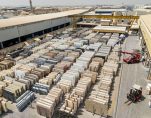
Uniting heritage, craftsmanship, and advanced technology to elevate the GCC’s luxury design standards Charl Broummana, the chief executive officer of Siom Marble, is leading the firm towards a futuristic approach where old-fashioned stonework is not only kept alive but also modern methods and international standards are completely accepted. The company is innovating, becoming more efficient, and increasingly focused on design under his guidance. Having started in 1990 […]

Starting a business in Dubai is one of the most exciting ventures you can undertake in 2026. The city’s dynamic economy, global connectivity, and investor-friendly policies make it an ideal destination for entrepreneurs and corporations alike. However, navigating government approvals, visa processing, and licensing can be time-consuming if you go it alone. That’s where PRO services in Dubai comes into the picture. These professional support services simplify […]

The developer behind the world-famous skyscraper in Dubai has acquired a 12th-century fortress in the rolling hills of Umbria and laid out a vision for one of Europe’s most opulent destination resorts. Mohamed Alabbar, founder of Emaar Properties, confirmed the purchase of Castello di Antognolla for around US $55 million and disclosed plans to invest as much as US $145 million further, bringing the total commitment to […]

VISHNU RAJA
RYO YAMADA
HITORI GOTOH
IKUYO KITA