News related to
Dubai

GITEX Global 2025 in Dubai has become a battleground for dominance in nation-scale artificial intelligence, as governments and tech giants compete to control the infrastructure that will underpin the next wave of the digital economy. The event has already featured multiple high-stakes unveilings of sovereign AI platforms, hyperscale data centres, and public-service automation systems illustrating how computing power is being weaponised as strategic capital. The opening day […]

The International Monetary Fund has lifted its projection for the United Arab Emirates’ economic expansion to 4.8 per cent in 2025 and sees 5.0 per cent growth in 2026, citing accelerating non-hydrocarbon activity and a rebound in oil output.

Stronger-than-expected performance in tourism, construction, trade and financial services is underpinning the upward revision. The IMF attributes resilience to the country’s diversified strategy and structural reforms such as enhanced trade agreements and sustained investment in infrastructure.

Analysts say the revision contrasts sharply with broader regional downgrades. The IMF now expects growth across the Middle East and North Africa to expand by only 2.6 per cent in 2025, constrained by policy uncertainty, volatile energy markets and geopolitical tensions.

Within the UAE, central bank data reinforce the narrative of dual expansion. The non-hydrocarbon sector is forecast to grow by around 4.5 per cent annually in both 2025 and 2026, while the hydrocarbon segment is expected to rebound more sharply—by 5.8 per cent in 2025 and 6.5 per cent in 2026—on increased output as OPEC+ quotas are relaxed.

When IMF staff visited the UAE in January 2025, they noted that domestic demand remained robust amid modest oil production, forecasting real GDP growth at about 4 per cent for the year. They projected that fiscal and external surpluses would remain comfortable, helped by elevated non-oil revenues and cautious fiscal management.

Still, risks linger. The UAE’s banking sector, while well capitalised, faces exposure to real estate, and high house prices pose concerns for asset quality. In mid-2025, exposure to property in banks’ portfolios stood at around 18 to 19 per cent of risk-weighted assets. A sudden shift in investor sentiment or capital flows could test the stability of credit markets.

On the external front, the current account surplus is projected at about 7.5 per cent of GDP, supported by stronger non-oil exports and moderating import growth. Liquidity buffers remain healthy, with international reserves covering more than eight months of imports.

European Commission officials are poised to grant approval to Abu Dhabi’s state oil company for its €14.7 billion acquisition of Germany’s Covestro, conditional on minor adjustments to compliance measures, according to sources familiar with the process. The decision could mark one of the most significant Gulf-to-EU corporate takeovers to date.

Brussels opened a detailed investigation into the deal earlier this year under its Foreign Subsidies Regulation, citing concerns that the United Arab Emirates might have leveraged state-backed advantages—such as an unlimited state guarantee and pledged capital injections—to win the bid. The Commission’s probe, initially suspended in September pending additional information, has now resumed as ADNOC submits remedial proposals.

In its revised remedy package, ADNOC has committed to removing language referencing the unlimited guarantee from Covestro’s articles of association and to preserving Covestro’s intellectual property within Europe. Sources suggest the Commission may insist on further tweaks before final clearance, but no major restructuring is expected.

ADNOC’s international investment arm, XRG, has framed the concessions as reflective of its long-term investor stance and asserted confidence that the proposals are “robust and proportionate.” The supreme size of the deal amplifies scrutiny—a deal described by analysts as ADNOC’s largest ever and among the biggest foreign acquisitions of a European company by a Gulf state.

Opponents and industry peers have raised flags about the competitive effects of the transaction. Critics argue that ADNOC’s state backing might have deterred rival bidders, distorting the playing field in Europe’s chemicals sector. Regulators collected feedback from market participants as part of the remedy review, a standard stage in EU merger oversight.

In September, the EU paused its review, citing gaps in the information submitted by the parties. ADNOC responded by accusing the Commission of issuing “disproportionate and invasive” demands. It warned such tactics jeopardised the deal’s viability. Brussels has indicated it will reset its decision deadline after receiving all necessary material. Its previous deadline had been 2 December.

Analysts suggest that the minimal expected adjustments reflect the Commission’s confidence that the core concerns have been addressed. Some believe that failure to clear the deal now would signal strained investment relations between EU institutions and sovereign-backed acquirers. Others caution that even small remedial changes—especially on governance rights or intellectual property handling—could materially alter deal returns.

Covestro, a leader in polymer materials, chemicals, coatings and adhesives, stands to bolster its growth potential under ADNOC’s ownership. The acquisition aligns with ADNOC’s drive to diversify beyond hydrocarbons toward higher-value downstream chemical operations. Yet the deal also pits strategic ambition against regulatory sensitivity—a balancing act now unfolding in the corridors of Brussels.

Dubai’s government has unveiled plans for a radical upgrade to its “Invest in Dubai” digital platform, enabling business licences to be granted in as little as 17 seconds. The platform’s new version, featuring Agentic AI capabilities, was introduced at GITEX Global 2025 and is expected to go live by the end of 2026. Ahmad Khalifa AlQaizi AlFalasi, CEO of Dubai Business Registration and Licensing Corporation, explained that […]

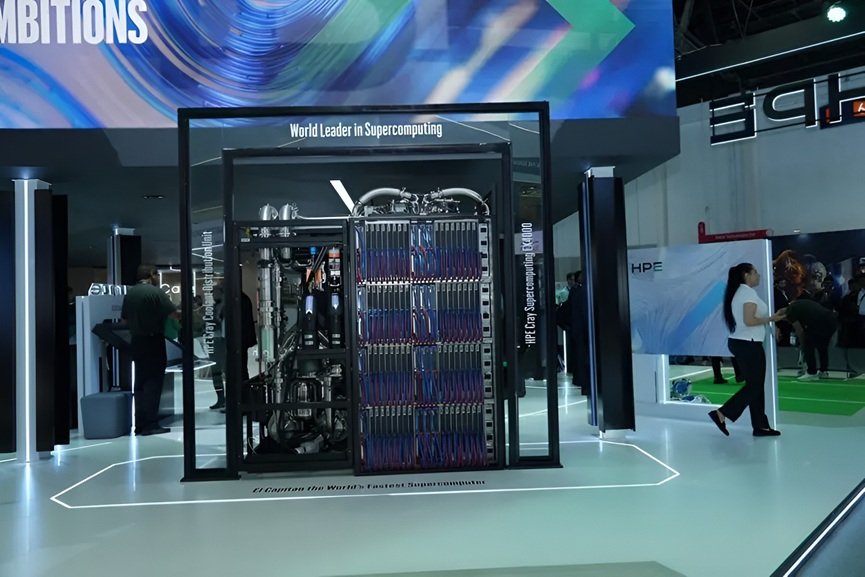
Commvault has entered a Memorandum of Understanding with HPE to scale joint cybersecurity, backup and recovery services across the Gulf and wider Middle East, unveiling the pact at GITEX Global in Dubai.

The agreement mandates co-development of integrated solutions and joint market initiatives combining HPE’s infrastructure platforms — such as GreenLake, Alletra Storage MP, Zerto, StoreOnce — with Commvault’s cyber-resilience and data protection capabilities. It aims to drive enterprise adoption of hybrid cloud backup, ransomware mitigation and cross-region redundancy.

HPE previously announced a broader strategic expansion of its alliance with Commvault aimed at neutralising advanced cyberthreats, spotlighting tighter integration across cloud, storage and policy automation. The local MoU is intended to bring those capabilities closer to enterprises operating in the Gulf and MENA markets.

HPE’s Zerto platform will feed into Commvault Cloud offerings to enable near-zero recovery time and point objectives, while snapshot immutability, geographic replication, and anomaly detection powered by AI are planned as central joint features. Running side by side, HPE’s storage and infrastructure fabric supports Commvault’s orchestration layer for unified policy enforcement across hybrid deployments.

Regional leadership within both firms emphasised the growing urgency of resilience as data volumes and threat sophistication rise. Yacob Ahli, HPE’s Commercial Director for UAE, said that the Gulf’s data-centric growth narrative demands infrastructure foundations that safeguard continuity. Havier Haddad, heading Commvault’s EMEA emerging markets distribution, framed the MoU as a strategic move to reinforce customer confidence in mission-critical operations across the region.

Analysts say the new alliance helps bridge a gap many enterprises in the Middle East face: lacking in-region partner support for complex, integrated cyber resilience stacks. By localising go-to-market strategies, certification and training, the partnership may reduce friction in adoption. Still, adoption also depends on regulatory compliance, cross-border data governance, and interoperability with incumbent systems.

Commvault has also introduced new additions to its HyperScale portfolio — HyperScale Edge and HyperScale Flex — designed to support remote and edge data protection workloads, broadening its partner ecosystem to include HPE, Dell, Lenovo and others. These tools complement its flagship HyperScale X offering.

Dubai—Dell Technologies asserts it commands more than 24 per cent of the UAE’s data centre server market, signalling a strong foothold in a region where demand for digital infrastructure is surging. Samer Al Jayyusi, Specialty AI & GenAI Regional Lead for Central & Eastern Europe, Middle East and Africa at Dell, made the disclosure at GITEX Global 2025, emphasising that national institutions have shown growing confidence in […]

Dubai’s 45th edition of GITEX GLOBAL opened on 13 October at the Dubai World Trade Centre, attracting what organisers call unprecedented global participation. The event hosts more than 6,800 exhibitors, 2,000 startups and 1,200 investors from over 180 countries. Sheikh Mohammed bin Rashid Al Maktoum inaugurated the event, underscoring the UAE’s ambition to lead in AI-driven economies. Dubai’s leadership has signalled this edition will be the last […]

Advertisements

Mohammed Bin Rashid Housing Establishment is spotlighting a suite of digital housing solutions at GITEX Global 2025, announcing strategic tie-ups aimed at advancing smart infrastructure and inclusive living. The initiative underscores Dubai’s push to fuse technology with urban development amid intensifying global competition in digital transformation.

MBRHE is presenting new digital services engineered to optimise housing operations, energy efficiency and resident experience. At GITEX, the entity finalised a partnership with Emirates Islamic Bank to develop financing and digital payment tools tailored for homeowners, and earlier inked an agreement with AI Smart to retrofit housing units with assistive technologies for People of Determination. The latter includes deploying smart systems in five identified residences to enhance mobility and independence. These deals complement an existing MoU with Emirates Gas to supply next-generation LPG composite cylinders across MBRHE communities, complete with annual maintenance services.

As part of Dubai’s government ecosystem at GITEX, MBRHE is listed among Gold Partners in the Digital Dubai pavilion, joining over 50 public and private entities promoting the emirate’s City-as-a-Service model. This placement gives MBRHE visibility amid hundreds of technology players from more than 180 countries. The pavilion is intended to demonstrate cross-sector digital synergies across health, energy, mobility and governance spheres.

MBRHE officials emphasise a multipronged strategy. The partnership with Emirates Islamic is geared toward embedding embedded financial tools into housing services. The AI Smart alliance is positioned as a step toward inclusive smart homes. Meanwhile, the collaboration with Emirates Gas addresses energy reliability and safety in residential zones under MBRHE’s purview. In announcing the AI Smart engagement, MBRHE described it as aligning with UAE leadership’s agenda to empower all segments of society, especially People of Determination.

The move follows MBRHE’s earlier commitment with GFS Developments to launch the Smart Housing Forum 2025, a platform to convene global experts on sustainable housing innovation. That partnership, formalised in late September, frames GITEX as a conduit for showcasing outcomes and inviting further collaboration.

Industry analysts say MBRHE’s integration of housing, finance, energy and assistive technology is representative of a wider trend in the Gulf: public agencies are no longer viewing infrastructure in isolation but as an integrated service ecosystem. State-linked housing bodies are increasingly collaborating with fintech, cleantech, proptech and social inclusion tech firms to convert static assets into responsive, data-enabled platforms.

Critics caution that the true test lies in execution, particularly in integrating legacy systems, ensuring cybersecurity across interconnected modules, and managing equitable access across lower-income beneficiary groups. For instance, retrofitting older housing stock with IoT or assistive systems often requires structural upgrades, which carry cost and logistical burdens.

At GITEX, MBRHE is expected to demonstrate live pilot models of smart home systems, energy monitoring dashboards, and resident apps that tie into real estate finance. These demos will act as proof points to entice further private sector engagement and scaling. MBRHE’s role as both regulator and operator gives it leverage but also raises accountability for outcomes.

Amin H. Nasser, President & CEO of Aramco, told delegates at the Energy Intelligence Forum in London that the company will pursue “energy addition” to cope with intensifying global demand, underlining its steadfast ambition to maintain dominance in oil. He argued that conventional energy sources will remain critical even as the energy transition narrative evolves.

Nasser projected that global oil demand will grow by 1.1–1.3 million barrels per day this year and by 1.2–1.4 million bpd in 2026. He added that Aramco, having kept extraction costs at about $2 per barrel of oil equivalent for oil and $1 for gas, is well-positioned to meet the incremental demand. Speaking to a gathering of energy executives, he said the company can sustain maximum crude output of 12 million bpd for a full year without incurring extra cost.

He stressed that while many promises of the energy transition have fallen short, three shifts are now underway. First, he said the market is conceding that underinvestment in supply has risks. Second, cost pressures on alternative technologies are forcing a reevaluation of pace. Third, energy security is reclaiming a central role in policy-making. “Much of the promised progress has not been delivered, with many unintended consequences. Thankfully, it is finally shifting the narrative in three key ways,” Nasser said.

Behind the rhetoric lies a more cautious reality: Aramco has pared back its previous ambition to reach 13 million bpd, reverting instead to a 12 million bpd sustainable ceiling. That policy shift reportedly followed directives from Saudi energy authorities in early 2024.

In his remarks, Nasser also affirmed Aramco’s push into downstream and petrochemicals. He cited the company’s recent majority acquisition of Petro Rabigh, a 10 percent stake in China’s Rongsheng Petrochemical, and a joint $11 billion ethylene complex with TotalEnergies that is slated to come online by 2027. These moves, he said, diversify revenue streams beyond crude.

His stance echoes his commentary at earlier industry events. At CERAWeek in Houston, Nasser had cast doubt on the viability of green hydrogen and questioned the assumption that renewables alone can displace fossil fuels. He then quipped that there was “more chance of Elvis speaking” than seeing the current transition plans succeed.

Analysts say that Aramco’s optimism hinges on its low-carbon upstream intensity and vast reserves, which give it flexibility against higher-cost producers. The International Energy Agency’s estimates place Saudi spare capacity at about 2.43 million bpd, part of OPEC+’s total idle capacity of around 4.05 million bpd.

Still, external pressures persist. Governments worldwide face competing goals of emissions reduction, energy access, and geopolitical security. In many markets, renewables and storage technologies remain maturing, requiring heavy capital and regulatory support before they can scale. Critics argue that overreliance on fossil fuels could lock in carbon-intensive infrastructure and slow the path to net zero.

At the London forum, however, Nasser signalled that Aramco sees its role as not merely supplying more oil but shaping the discourse. “We are determined to remain dominant in oil thanks to a massive resource base, low costs, and one of the lowest upstream carbon intensities across the industry,” he said. He urged policymakers and financiers to support broad energy investment rather than prematurely dismiss conventional sources.

Emirates NBD is in advanced negotiations to acquire up to a 25 percent stake in Mumbai-based RBL Bank through a preferential allotment of equity and warrants, two people familiar with the matter told Reuters. The proposal would mark a major move by the Dubai-based lender into India’s private banking sector.

The Dubai bank is evaluating the terms of the deal, including pricing and structure, though both parties have yet to confirm the arrangement publicly. One of the sources indicated that the deal may be announced once approvals are in place.

On the Indian equities front, news of the talks propelled RBL’s shares higher: the stock climbed over 3 percent on 14 October, reaching its highest level since January 2024, and became one of the top gainers among private banks. Investor optimism stemmed from expectations that a reputable foreign investor might bolster transparency, governance and capital strength at RBL Bank.

Under Indian banking regulations, strategic foreign investors are generally restricted to a 15 percent stake, although exceptions have been made in high-profile cases. The Reserve Bank of India earlier permitted Sumitomo Mitsui Banking Corporation to hold 20 percent in Yes Bank, setting a precedent for flexibility in exceptional circumstances. Simultaneously, India is exploring adjustments to foreign ownership rules to enhance capital inflows into its banking sector.

Emirates NBD already holds regulatory approval in principle to convert its branches in India into a wholly owned subsidiary, positioning itself to operate on par with domestic Indian banks. That architecture would facilitate compliance with local regulations and provide greater autonomy to its Indian operations.

RBL Bank maintains a dispersed shareholding structure, with retail investors, mutual funds and small institutional holders driving most of its capital. It has no traditional promoter group. In June 2024, the bank had announced plans to raise ₹65 billion through a mix of institutional share issuance and debt instruments to support growth plans.

Previous media reports spanning earlier in 2025 suggested Emirates NBD’s interest in acquiring a minority stake in RBL, via a preferential allotment route, as part of its Asian expansion push. Those earlier discussions laid the groundwork for the current advanced negotiations.

The deal—if consummated—would align with Emirates NBD’s broader strategy of deepening its footprint in India, a market it already serves through branches in Mumbai, Chennai and Gurugram, and via its approved subsidiary structure. The bank has posted robust growth: in the first quarter of 2025, it exceeded profit expectations, buoyed by strong loan expansion and net interest income.

Still, multiple hurdles remain. Key among them are regulatory approvals from the RBI and possibly the finance ministry, clearances from capital markets regulators, and acceptance by RBL Bank’s board. Moreover, the valuation will be closely scrutinised, since acquiring a wedge of 25 percent may require pricing the equity at a premium to prevailing market values.

On the regulator’s side, officials have been deliberating over changes to banking ownership norms to attract foreign capital, particularly in systems where capital demand is rising rapidly. Some observers view case-by-case relaxation of limits as a likely path forward.

Institutional analysts have viewed Emirates NBD’s possible entry as a positive for RBL. One equity research note from ICICI Direct argued that the presence of a well-capitalised global investor could strengthen governance practices and investor confidence.

German Pavilion “Wa! Germany” closes after 184 days with over three million visitors Koelnmesse, as the organisation responsible for operations, reports resounding success COLOGNE, GERMANY and OSAKA, JAPAN – Newsaktuell – 13 October 2025 – After 184 days, the German Pavilion “Wa! Germany” at Expo 2025 in the Japanese city of Osaka has closed its doors. More than three million people from around the world visited the […]

By K Raveendran Sushil Kutty, who passed away on Sunday night, lived and wrote like a man apart — a loner in every sense, and yet deeply connected to the world through the force of his words. A regular columnist for the India Press Agency for the last ten years, Sushil was that rare journalist whose writing transcended political lines, winning admiration from across the ideological spectrum. […]

Dubai has recorded a landmark quarter in its upper-tier residential sector, with 103 homes sold for over US$ 10 million in Q3, representing a 24 % rise compared with Q3 of 2024. Demand in the ultra-luxury segment translated into 17 sales above US$ 25 million — more than double the tally from the same period last year. By the end of September, the cumulative number of US$ […]

Dubai Healthcare City Authority has unveiled a Dhs1.3 billion development programme for Phase 1 of Dubai Healthcare City, marking an aggressive expansion that aims to elevate its global standing in health infrastructure. Construction is set to start in December, with a targeted completion window by November 2027.

At the heart of the initiative lies a triple-pronged buildout: a LEED Platinum-certified office block, a purpose-built medical complex, and supporting infrastructure—each tailored to attract health-related investors and operators. The office building, designed by P&T Architects & Engineers, spans some 13,000 sqm across nine levels and includes flexible workspaces and ground-floor retail zones. The medical complex, by Design & Architecture Bureau, covers 5,800 sqm, with two basements and five floors, and is planned to accommodate surgical units, diagnostics, outpatient services and lab facilities.

Beyond buildings, the infrastructure scope includes multi-storey parking with electric vehicle charging points, integration with Salik for smart parking, and accessibility enhancements. The aim is to strengthen the underlying ecosystem so that the healthcare precinct becomes not just a cluster of clinics, but a fully serviced global health hub.

Issam Galadari, DHCA’s CEO, asserted that these projects reflect the authority’s ambition to combine sustainability, global investment appeal and design excellence, aligned with Dubai’s Economic Agenda and the UAE’s Net Zero Strategy 2050. Allae Almanini, COO, added that the works will “boost confidence for healthcare providers and investors” by improving efficiency, accessibility and sustainability across the community.

Phase 1 of DHCC, located in Oud Metha, currently operates within a 4.1 million sq ft footprint dedicated to medical services and education. Phase 2, by contrast, spans around 19 million sq ft at Al Jaddaf, and is oriented more toward wellness and mixed support services.

This new investment signals a sharpened focus on physical infrastructure as a differentiator. In recent years, DHCC has emphasised partnerships and innovation: its free-zone model already supports over 400 licensing entities and more than 168 clinical facilities. Earlier this year, DHCA collaborated with AI Quantum Intelligence Institute to launch an AI healthcare innovation lab in the free zone, and formed an agreement with AirMed International to deepen medical transport capabilities.

Analysts see the move as a bid to compete not only regionally, but globally. Healthcare infrastructure, especially when linked with sustainability credentials such as LEED Platinum certification, is increasingly a factor in investors’ decisions. The new build will position DHCC among the few healthcare zones worldwide that combine clinical, administrative and research capacity within one contiguous ecosystem.

However, the scale and timeline carry risks. Dubai’s construction sector is already navigating supply-chain pressures, labour constraints, and rising material costs. Ensuring timely delivery and quality control in a high-performance project will demand rigorous project management. Meanwhile, the authority must ensure that demand from healthcare operators, both local and international, matches the expanded real estate supply, lest vacancy rates rise.

More immediately, the December commencement date — just weeks away — will test DHCA’s readiness in securing contractors, tendering work packages and coordinating certifications. Delays in permitting or approvals could cascade into missed target windows. Yet, if executed successfully, the project will enable DHCC to present itself as an integrated health campus offering offices, clinical space, and support services under one sustainable umbrella.

Observers note that medical tourism in Dubai already commands significant weight, drawing patients from the GCC, the broader Arab world, Europe, and Asia. DHCA’s bet is that infrastructure sophistication will amplify that pull, especially for high-end specialty and precision medicine segments.


Hamas has handed over seven Israeli hostages to the International Committee of the Red Cross, fulfilling the first phase of a broad ceasefire and prisoner­exchange accord with Israel. The hostages are now in Israeli custody, and more releases are expected in the coming hours.

The released individuals—identified as Matan Angrest, Guy Gilboa Dalal, Alon Ohel, Gali Berman, Ziv Berman, Eitan Mor and Omri Miran—were transferred through Gaza to a reception point near the border, where they reunited with family members and began medical assessments. Under the terms of the deal, they will be swiftly transported to Israeli hospitals for further care.

Alongside the handover, Hamas published the names of all 20 Israeli captives slated for release in the deal’s first stage. Among the names are Bar Abraham Kupershtein, Evyatar David, Yosef-Chaim Ohana, Segev Kalfon and Avinatan Or—adding to the list previously released to the media. Israel has warned Hamas that any mistreatment or propaganda stunts during the transfer would provoke retaliation.

The agreement accompanying the hostages’ release calls for Israel to free more than 1,900 Palestinian prisoners. That includes women, children and individuals serving long sentences. As per the deal, Israel must also return the bodies of 28 deceased captives. Hamas has acknowledged some uncertainty about certain remains, citing burial under debris and loss of access to previous guard posts.

The exchange is part of a U. S.-brokered “21-point” plan, mediated by Egypt, Qatar and other parties. Provisions include a phased withdrawal of Israeli forces from key areas in Gaza, the reopening of humanitarian corridors, and reconstruction efforts under an international framework. As part of the agreement, President Donald Trump and regional leaders are convening in Egypt to formalise implementation.

Hamas’ Gaza chief, Khalil Al-Hayya, said the group has secured guarantees from U. S. mediators and Arab sponsors that the conflict is “ended,” highlighting that the release of 20 living hostages would occur within 72 hours of the agreement taking effect. Hamas insists it will “faithfully uphold” its terms, while reserving the right to resume fighting if Israel fails to meet its commitments.

Israeli officials emphasised that the ceasefire and release process are conditional and subject to strict oversight. The Israeli cabinet has approved the deal, though several ministers from the far-right bloc opposed it. Prime Minister Benjamin Netanyahu’s office warned that any violation by Hamas would void the agreement and trigger military responses.

Public reaction in Israel has been emotional. Tens of thousands gathered in Tel Aviv’s Hostages Square to watch televised feeds of the transfers. Families expressed cautious optimism over the hostages’ return. In Gaza, displaced residents and aid agencies are gearing up to facilitate relief efforts under the newfound calm.

Dubai-based Dubizzle Group Holdings has unveiled plans to float about 30.34 % of its share capital via an initial public offering on the Dubai Financial Market. The offer comprises 1.25 billion ordinary shares, of which 196.1 million are fresh issues from the company and 1.05 billion are existing shares sold by current shareholders. Subscription will be open from 23 to 29 October, the price will be fixed on 30 October, and trading is expected to begin on 6 November 2025.

The firm has appointed Rothschild & Co. as Independent Financial Advisor and Emirates NBD Capital as Listing Advisor. The IPO will be co-managed by banks including Abu Dhabi Commercial Bank, Barclays, EFG-Hermes UAE, Emirates NBD, Goldman Sachs International, HSBC Middle East and Morgan Stanley. Dubizzle’s largest shareholder, Prosus N. V., is committing USD 100 million to the issuance, signaling continued backing after initially investing in 2011.

Dubizzle operates across two main platforms: dubizzle, which handles automotive and general classifieds, and Bayut, focused on real estate. In the 18 months leading up to the IPO, the group pursued strategic acquisitions such as Drive Arabia, Hatla2ee, and most recently Property Monitor, a UAE real estate data and analytics provider. The acquisition of Property Monitor, which delivered a revenue CAGR of 55 % from 2022 to 2024, is expected to deepen Dubizzle’s insight offering in its property vertical.

Financially, the group has improved its performance. In 2024, revenues reached USD 222 million, with the net loss narrowing. For the first half of 2025, revenue rose to USD 133 million, while adjusted profit stood at USD 14 million. The more constrained net loss of USD 8.9 million in H1 2025 marks further progress in reducing deficits.

Market conditions have played in Dubizzle’s favour. Dubai’s real estate market has surged, with prices climbing over 70 % over four years, boosting transaction activity and demand for online classifieds. Analysts view the Dubizzle IPO as one of the largest tech offerings this year in the UAE, designed to attract capital inflows into the growing digital marketplace sector.

Yet challenges lie ahead. Investor scrutiny of valuations and corporate transparency will intensify, and Dubizzle must show sustainable path to profitability beyond growth. Some analysts estimate the IPO value in the USD 500 million to USD 1 billion range, consistent with its fundraising and valuation aspirations. Liquidity and free float requirements—especially for inclusion in indices like MSCI—may pressure the group to deliver consistent operational metrics.

In preparing for the public listing, Dubizzle has restructured its syndicate. It previously engaged banks such as Emirates NBD, Goldman Sachs, HSBC, and now rotated in Morgan Stanley, replacing former links to Citigroup. The reconfiguration suggests an adaptive approach designed to secure stronger placement and institutional interest.

Dubizzle and many other UAE firms are benefiting from momentum in the IPO pipeline. According to regional capital markets observers, between 25 IPOs were recorded in the first half of 2025, generating about USD 4.5 billion. Brokers like Citi assert that the pipeline remains healthy, even amid macro and geopolitical headwinds, and highlight investor demand for exposure to unlisted technology, fintech, and real estate-adjacent sectors.

Abu Dhabi hosted the two-day Regional Sports Arbitration Seminar, drawing officials and experts from across Asia to strengthen the legal architecture in sport governance.

The event, organised by the UAE National Olympic Committee and the UAE Jiu-Jitsu Federation in coordination with the Olympic Council of Asia, featured sessions ranging from case management to institutional development in sports law.

One of the spotlight panels, led by the Court of Arbitration for Sport, addressed existential pressures on arbitration mechanisms under the title “Is Sports Arbitration Under Threat?” Participants from Qatar’s Sports Arbitration Foundation presented their evolving model, underscoring capacity building and procedural innovations.

Dr Mohammed bin Nasser Basem, chair of the Saudi Sports Arbitration Center, laid out his country’s journey in building regulatory frameworks, managing caseloads, and engaging media stakeholders. He urged the expansion of arbitration capacity at both continental and national levels. At the same time, Oman’s Salem Al Rawahi pointed to plans to set up an independent sports arbitration body in the Sultanate, and he commented that the diverse mix of Asian contributions enriched the exchange.

On the first day, Dr Abdullah Al-Hayyan of CAS guided attendees through foundational concepts of sports arbitration, and the Saudi experience was cited as a case study in governance and procedural practices. The seminar also explored cooperation between national courts, ministries of justice and sports arbitration bodies, a recurring theme as countries aim to enshrine arbitration decisions in enforceable legal frameworks.

The Olympic Council of Asia judged the programme a success, asserting that it deepened participants’ grasp of emerging trends in sports law and encouraged engagement among Asian legal and sport justice officials.

Across the two days, attendees weighed the tension between evolving global standards and region-specific contexts in structuring fair dispute resolution. Lessons from Qatar and Saudi Arabia were discussed as potential models adaptable to other national settings.

Dubai hosted the first public manned flight of Aridge’s Land Aircraft Carrier over Palm Jumeirah, a demonstration that showcases the vehicle’s dual-mode driving and flying capabilities and signals ambitions for the Gulf as an early adoption market.

The modular vehicle, combining a ground “mothership” with a detachable two-seat aerial unit, lifted off from the grounds near the Waldorf Astoria before reattaching and driving away. Aridge said the flight marks a milestone in its plan to roll out consumer deliveries in the Middle East by 2027.

Company executives reported that 600 units have already been pre-ordered by GCC firms, including UAE’s Ali & Sons Group, Kuwait’s Al-Sayer, and Qatar’s Almana, pushing the global tally past 7,000. The firm expects deliveries to begin in 2026 from a new facility in Guangzhou, capable of producing 10,000 vehicles annually.

Aridge’s modular design addresses a common challenge in flying car development: how to balance driving performance, storage, and aerial capability. The ground vehicle acts as a mobile energy platform and storage base, while the air module docks and undocks autonomously. The air unit’s control system uses a single-stick interface managing ascent, speed, and stability with built-in safety constraints such as geofencing.

This version is the fifth generation of the platform, evolving from earlier prototypes demonstrated in Dubai in 2022. For mass adoption, regulatory certification is pivotal: the UAE granted a special flight permit, allowing the test flights to proceed. Aridge’s air module has already received civil aviation type certification in China.

The startup forecasts a market worth of US $41 billion for China’s eVTOL sector by 2040, while projecting Middle East demand to reach about $11 billion. Executives say technological advances—shortened development cycles and lower costs—are making what once seemed science fiction increasingly viable.

Despite the showpiece flight, challenges remain. Integrating city air traffic management, ensuring safety for public use, and building air-ground infrastructure—such as landing pads, vertiports, and regulatory frameworks—are hurdles in most jurisdictions. Some analysts caution that even with promising prototypes, wide adoption may lag until certification, cost reduction, and public trust converge.

In the Gulf region, regulatory openness is proving advantageous: the UAE’s willingness to issue experimental permits positions it as a testbed, attracting innovators who might struggle to get approval elsewhere. Meanwhile, Aridge is lining up partnerships and agreements across the GCC to support sales, operations, and maintenance in local markets.

Arabian Post Staff -Dubai Warner Bros. has formally approved a sequel to A Minecraft Movie, with the next installment scheduled to release on 23 July 2027. Jared Hess will return to direct and co-write the film, and Jason Momoa will once again serve as one of the producers. The original film, released on 4 April 2025, proved a major box office success. It grossed approximately $957 million […]

Dubai — The Syrian Pavilion will make its first appearance at GITEX Expand North Star 2025, opening from 12 to 15 October, under the banner “Syria is Online.” This marks a milestone in Syria’s efforts to reconnect with the international innovation community and attract investment for its fledgling tech ecosystem.

The pavilion is being organised by SYNC, the Syria-Next Conference network, and backed by the Syrian Business Council and the U. S.–Syria Business Council. It aims to provide Syrian startups a platform to showcase digital solutions, engage in pitching sessions, facilitate panel discussions, and establish connections with global investors and industry partners.

Bassel Yassine Ojjeh, Chairman of SYNC and project lead for the pavilion, stated that the initiative intends to generate 25,000 tech-related jobs over five years through strengthened collaboration and external funding. He emphasised that GITEX offers “a vital step … to showcase Syrian talent and build partnerships that open doors for a new generation shaping the digital future.”

The pavilion will include startup pitch showcases, interactive tech talks, and networking forums. It plans to highlight projects in sectors such as fintech, AI, e-commerce, digital health and creative tech. Several Syrian entrepreneurs have already submitted entries, and a curated selection will present on the main stages of Expand North Star.

The move aligns with a broader expansion of national pavilions in this year’s GITEX edition. Brazil is participating as the Country Partner, and new delegations from Serbia, Hong Kong, Canada and Ecuador are set to join the global tech showcase. The event is expected to host over 1,800 startups and 1,000 investors managing over USD 1 trillion AUM, turning Dubai into a tech capital for dealflow.

Despite decades of conflict and economic sanctions, Syria retains a reservoir of technical talent across its population, especially among youth and diaspora communities. SYNC was founded with the objective of bridging Syrian innovators in Silicon Valley and the diaspora with on-ground talent, thereby facilitating collaboration, mentorship, and capital flows. The 2025 edition of SYNC was held in Damascus earlier this year, bringing together local technologists and overseas experts to discuss ecosystem development.

Still, Syrian tech ambitions face significant headwinds. Infrastructure deficits, internet connectivity constraints, regulatory uncertainties, difficulties in accessing cross-border payment systems, and war-induced economic fragmentation continue to challenge the sector’s scalability. International sanctions and distrust around financial compliance also complicate foreign investment.

To mitigate these risks, the pavilion’s backers aim to frame Syria’s entry into the tech market as more than symbolic. Organisers say they are structuring due diligence frameworks, matchmaking with vetted investors, and post-event follow-up mechanisms to sustain momentum beyond the exhibition.

Dubai has launched a new permit scheme that enables free-zone companies to conduct business within its mainland, a move designed to dismantle long-standing regulatory barriers between jurisdictions and unlock new commercial opportunities.

Under Executive Council Decision No. 11 of 2025, the “Free Zone Mainland Operating Permit” allows companies already holding a Dubai Unified Licence to apply for mainland access digitally via the Invest in Dubai platform. The permit spans six months, priced at AED 5,000, and may be renewed under the same terms. The scheme applies initially to non-regulated sectors such as technology, consulting, design, professional services and trading. Companies granted the permit must maintain distinct financial records for mainland operations and will incur a 9 per cent corporate tax on revenues generated onshore.

Dubai Business Registration and Licensing Corporation, part of the Dubai Department of Economy and Tourism, has partnered with the Dubai Free Zone Council to administer the framework. Ahmad Khalifa Al Qaizi Al Falasi, CEO of DBLC, described the initiative as a step toward “regulatory modernisation” and a more seamless investor experience. Dr Juma Al Matrooshi, Assistant Secretary-General at the Free Zones Council, said the permit enhances Dubai’s competitiveness by combining the flexibility of free zones with access to domestic markets.

Authorities expect the permit to benefit over 10,000 existing free-zone firms, adding 15–20 per cent to cross-jurisdiction business activity in its first year. Businesses can now tap domestic trading avenues and contend for government tenders previously off-limits to entities without a mainland presence. Existing free-zone staff may serve mainland operations, eliminating the need for new hiring under those permits.

Though the permit removes many structural hurdles, certain limitations and compliance obligations remain. Firms dealing in regulated activities—such as banking, healthcare, education or financial services—must still secure approvals from relevant regulators. The new scheme prohibits its use for entities within the Dubai International Financial Centre, which remains under a distinct legal regime.

The resolution introduces three permitted pathways: establishing a branch physically in the mainland, setting up a branch that operates out of the free zone, or obtaining a temporary permit for limited operations. All applications require consent from both DET and the corresponding free-zone authority. The permit regime mirrors the requirements of Resolution No. 11, which mandates separate bookkeeping and compliance under federal and local laws.

Dubai’s regulatory architecture has evolved in recent years: free zones traditionally offered full foreign ownership and streamlined processes, but lacked direct access to local markets. To counter that gap, companies often had to replicate operations via separate mainland entities or dual licences—a burden that increased costs and administrative duplication.

The new permit scheme thus signals a strategic pivot toward harmonising the city’s jurisdictional divide. Corporate law specialists note that simpler structures reduce overhead, ease governance challenges and mitigate tax or substance-test scrutiny. As one regional legal adviser put it, “Businesses can now use a single platform to expand rather than duplicating corporate filings.”

The pricing and validity terms are notable. The six-month, AED 5,000 permit is significantly more affordable and flexible than establishing a full mainland company, lowering the threshold for smaller firms and startups to experiment with onshore operations. The 9 per cent tax rate aligns with federal rules that apply to mainland income, while free-zone revenues remain eligible for preferential regimes.

Cryptocurrency markets endured a historic collapse as leveraged positions were liquidated en masse – over 1.6 million traders wiped out $19.13 billion in bets within 24 hours, data from Coinglass shows.

The crash accelerated sharply after U. S. President Donald Trump announced an additional 100 per cent tariff on Chinese imports and threatened export controls on critical software, heightening fears of a full-blown trade war. Bitcoin plunged more than 12 per cent from its recent highs, briefly sliding below $102,000 before rebounding above $113,000.

Before the sell-off, Bitcoin had breached a new all-time peak above $125,000, buoyed by institutional inflows into crypto exchange-traded funds. Governments and institutional investors had viewed digital assets as a hedge amid macroeconomic uncertainty.

Today’s market rout, however, exposed the fragility of overleveraged positions in a thinly capitalised market. In a single hour on Friday, more than $7 billion of liquidations occurred. The top losses were seen among long positions, particularly in Bitcoin and Ethereum derivatives, which accounted for a substantial share of the forced unwinds.

Institutional players and high-net-worth traders were swept up in the cascade. Market watchers noted that order books lacked the depth to absorb such a severe shock, triggering knock-on effects through futures and perpetual swap markets.

Beyond crypto, equity indices faltered under the weight of renewed global risk aversion. The S&P 500 dropped 2.7 percent, while tech stocks, sensitive to trade tensions, bore steep losses.

Some analysts likened the event to a “black swan” moment for crypto markets — a sudden shock revealing systemic vulnerabilities in a still nascent asset class. Traders operating with high leverage, little hedging, and aggressive margin policies found themselves particularly exposed.

Efforts to assess contagion effects to traditional finance are underway. Banks offering crypto derivatives and prime brokers are now scrutinising counterparty risks. Regulators in several jurisdictions may use today’s crash to justify stricter margin and leverage rules for crypto trading.

Reviewing policy implications, the tariff escalation marks a sharp pivot in U. S.–China trade strategy. Trump framed the measures as retaliation for China’s export curbs on rare earth metals, which are critical for tech manufacturing. The move signals willingness to escalate economic confrontation, with markets already pricing in broader disruption to global supply chains.

Despite the volatility, some investors are still betting on long-term resilience of digital assets. The week before the crash saw a record $5.95 billion flow into global crypto ETFs, led by U. S. allocations, suggesting that capital rotation into crypto remains strong over medium timeframes.

Liquidity providers and market makers face fresh trials. Some have temporarily withdrawn from funding markets or widened spreads to mitigate risk exposure. In highly volatile hours, arbitrage desks and algorithmic liquidity engines contributed to exaggerated price swings.

Wider sentiment has turned cautious: on-chain analytics show a rise in stablecoin inflows to exchanges, possibly reflecting flight from risk. Options markets registered growing demand for deep out-of-the-money puts, as traders brace for further downside.

Abu Dhabi — EDGE entity FADA has completed a week-long “Space Roadshow” across six Emirati educational institutions, aiming to galvanise youth interest in space sciences and strengthen the UAE’s space ecosystem. The roadshow, conducted in collaboration with the UAE Space Agency and Space42, carried the theme “Living in Space” and comprised workshops, interactive sessions, and networking opportunities touching on Earth observation, satellite communications, CubeSat technologies and astronaut […]

Saudia’s inaugural direct passenger flight from Riyadh to Moscow landed on Friday at Sheremetyevo airport, signalling a new chapter in Saudi–Russian air connectivity. The airline plans to operate three weekly round-trip services, integrating tourism, business and diplomatic traffic between the two capitals.

The launch positions Saudia alongside Flynas, which commenced direct operations between Riyadh and Moscow’s Vnukovo airport in August with three weekly flights. Flynas is also slated to begin a Jeddah–Moscow route come December. The twin developments reflect a concerted push by both states to deepen bilateral ties through aviation links.

The Riyadh–Moscow air bridge is underpinned by the Saudi Tourism Authority and the Air Connectivity Program, designed to promote cross-border mobility and support Saudi Vision 2030. Saudia officials say ticketing and scheduling are aligned to accommodate business travellers, diplomats and leisure tourists. The route’s launch was celebrated in both capitals, where it was honoured with a water cannon salute at Sheremetyevo and a gala in Moscow attended by diplomatic representatives and aviation executives.

Russia has experienced a surge in travellers from Saudi Arabia. In 2024, over 52,400 Saudis visited Russia, a leap from just 9,300 the previous year, following Moscow’s August 2023 e-visa reform that enabled Saudis easier access. Likewise, Russian visitors to the Kingdom have grown steadily, aided by anticipatory visa liberalisation and reciprocal travel facilitation efforts.

Russian Foreign Minister Sergey Lavrov, during talks with his Saudi counterpart, described the launch as an enabler of “tourist exchanges and business contacts,” citing that growing demand warranted direct air links. On the ground, Sheremetyevo’s scheduling system already lists flights to Riyadh beginning mid-October, operating up to five times weekly.

The timing dovetails with a broader recalibration in Saudi foreign policy and energy diplomacy. The personal rapport between Crown Prince Mohammed bin Salman and President Vladimir Putin has been instrumental in facilitating cooperation within the OPEC+ framework. Cooperation in trade, energy and security has steadily flourished in recent years, and aviation ties now offer a tangible bridge between economies.

Saudia’s fleet expansion and network strategy underscore that the Moscow link is more than symbolic. The airline now serves over 100 destinations across four continents, with plans to expand to 145 destinations by 2030. Performance figures underscore ambition: in the first half of 2025, Saudia carried 17.5 million passengers and operated 100,000 flights.

The route is expected to spur ancillary sectors. Saudi tour operators are preparing Russia-focused packages including Moscow, St Petersburg, and beyond, while Russian travel agencies are packaging Saudi cities and pilgrimage circuits. Pilgrim traffic is especially significant: the Moscow launch could funnel more Russian pilgrims directly to Mecca or Medina via Riyadh.

VISHNU RAJA
RYO YAMADA
HITORI GOTOH
IKUYO KITA