Just in:
The Honey Trap Is The Headline, The Chip Pipeline Is The Story // TORRAS Launches Two New iPhone Duo Cases from Its Popular Ostand Series, Addressing Foldable Phone Users’ Concerns About Difficult Stand Positioning and Scratches // UAE crews sustain coastal oil removal as beaches reopen // Yicura BioMed Advances Dual Capital and Industrial Strategy: Completes First Closing of Series B Financing Led by Gobi Partners // US authorities dismantle North Korean cryptocurrency deception infrastructure // Fujairah highway pile-up leaves 14 dead and 30 injured // EBANX and Eneba strengthen partnership in Latin America with 138% YoY growth in payment volume // L’OCCITANE Celebrates 50 Years Of Provençal Craftsmanship With Holiday 2026 Collection // Sun World Ba Den Mountain marks Vietnam Culture Day, welcoming Cambodian visitors over Bon Om Touk // Crescent Enterprises venture arm funds Oyster Therapeutics development // Rooftop solar planning gaps behind power shortages // Lego restores BrickLink marketplace after security investigation // OpenAI unveils ChatGPT Wallet for agent-led purchases // 11 Boutique Xinjiang Wineries to Debut in Singapore // Microsoft restores services gradually but gives no recovery deadline // Microsoft apologises as Outlook services recover after outage // October Food Price Shock Has Far Reaching Consequences // Saudi fund assets forecast to cross $400 billion // Messi affair SIT finds all-round violations // Electoral register gains 2.17 lakh voters //

News related to
First

WhatsApp is rolling out a trio of monetisation tools within its Updates tab, signalling a significant shift in strategy while keeping its core service intact. Businesses and creator‑led Channels can now access new advertising options, subscribers can unlock exclusive content, and adverts will begin appearing in status updates – all isolated from personal chats. Approximately 1.5 billion users engage with the Updates feed daily, where ephemeral Status posts […]

Coinbase has received authorisation under the EU’s Markets in Crypto‑Assets regulation through Luxembourg, designating the country as its primary European hub and shifting focus away from Ireland. The approval — the first of its kind for a major U.S. exchange — grants Coinbase a passport to operate across all 27 EU member states.

Luxembourg’s growing financial stature and regulatory strength made it a logical choice, according to Coinbase, which already employs around 200 staff across Europe. The exchange plans to expand its Luxembourg team by at least 20 personnel by year-end. Luxembourg’s regulator declined to comment, but insiders say the jurisdiction sets a “high‑bar” for entry — a stance that counters concerns from other nations about lax standards in smaller markets.

This move underscores a broader shift in the EU crypto ecosystem. Gemini, founded by Tyler and Cameron Winklevoss, is expected to be granted its MiCA licence by Malta, following earlier approvals of OKX and Crypto.com. These licensing decisions highlight the increasing competition among EU member states to attract digital‑asset firms.

Meanwhile, Ireland — previously heralded as Coinbase’s launchpad with an e‑money licence and Virtual Asset Service Provider registration — has lost momentum. Its central bank governor previously warned that crypto often operates like a Ponzi scheme, reflecting a cooler official attitude toward the industry.

MiCA’s passport system allows a single licence to provide regulatory cover throughout the bloc, but some EU financial watchdogs are raising concerns. They argue that rapid approvals in smaller jurisdictions like Malta or Luxembourg could lead to uneven regulatory enforcement, undermining the very protections the framework aims to provide. The European Securities and Markets Authority is reportedly monitoring these developments amid internal discussions about its oversight role.

Luxembourg’s emerging appeal as a crypto gateway appears rooted in its established reputation as a financial centre with robust supervision. In contrast, Ireland’s more sceptical posture may have made it less attractive for firms seeking clearly defined regulatory environments under the new rules.

Market analysts say these MiCA approvals could significantly increase institutional confidence in European digital‑asset markets, offering a model for compliance and consumer protection. However, they warn that inconsistent national implementation could result in “regulatory arbitrage,” where firms exploit jurisdictional loopholes.

The global crypto market, valued at around US $3.3 trillion, is still navigating the fallout from major collapses like FTX in 2022. MiCA marks a pivotal shift toward formal oversight in the EU, aiming to safeguard investors while fostering innovation. The licensing of high‑profile U.S. exchanges such as Coinbase and Gemini represents a critical test of whether this new continental regime can deliver both growth and stability.

By Nitya Chakraborty The Israel-Iran war which entered its eighth day on Friday June 20 witnessed some major developments in the last 24 hours frustrating Tel Aviv’s desperate bid to speedily finish off its task of destroying Iran, especially Teheran. Chinese President Xi Jinping talked to Russian President Vladimir Putin late Thursday on the joint […]

Experience the legendary ‘Plácido Domingo’ live in Thailand for the first time—alongside an Indian epic, dazzling Chinese ballet, operas, and jaw-dropping acrobatics Tickets Now Available! BANGKOK, THAILAND – Media OutReach Newswire – 20 June 2025 – Get ready for a world-class spectacle like no other—right here in Thailand. Bangkok’s 27th International Festival of Dance & Music is making a grand comeback, bringing 14 stunning performances from over […]

Barclays has appointed Farzad Billimoria as head of its private bank for the United Arab Emirates, strengthening its foothold in a region experiencing rapid wealth creation. Based in Dubai, Billimoria will report directly to Annabelle Bryde, head of Private Bank International, commencing his role on 1 July pending regulatory approval. Billimoria brings 30 years of financial services expertise, most recently serving as Senior Executive Officer and head […]

Google’s array of AI‑powered services—Search, Ads, Play, Maps, YouTube and Gemini—delivered a Dhs21.8 billion uplift to the UAE’s economy in 2024, fueling digital transformation, consumer value and job creation.

Search and Ads alone generated Dhs20.2 billion by enabling thousands of local companies to reach new customers and expand operations. Gemini, Google’s AI assistant, has seen 63 per cent of UAE adults using it, with nine in ten users reporting gains in productivity and 71 per cent praising its Arabic‑language ease of use. Other tools, including Maps, Waze and mobile wallets, further enhanced daily routines.

The Google Maharat Min Google skilling initiative has equipped more than 430,000 people in the UAE with digital and AI competencies since 2018. Meanwhile, the Android and Google Play ecosystem supported around 30,000 jobs and generated approximately Dhs455 million in revenue for UAE‑based app developers in 2024.

Survey data from March 2025, with responses from over 1,100 consumers and nearly 400 business leaders, indicates that Google’s services offer an estimated average monthly benefit of Dhs683 per user. Half of adults describe Search as essential to their routine, 89 per cent rely on Maps or Waze for navigation, and 90 per cent use mobile payment platforms like GPay or GWallet to streamline transactions.

Adoption of AI tools among UAE businesses is nearing ubiquity, with 91 per cent reporting use of at least one AI product in workflows, while 97 per cent of public‑sector respondents confirm boosted productivity from Google’s AI solutions. Consumer engagement is likewise robust: 94 per cent use Search monthly to compare prices, 86 per cent check reviews before visiting venues, 80 per cent use mapping apps to locate businesses, and 73 per cent of 18–24‑year‑olds browse or shop via Search weekly.

Google’s platforms have also strengthened the creative and developer landscape: over 600 UAE‑based YouTube channels surpassed one million subscribers—a 15 per cent annual rise—and the Google News Initiative has trained more than 20,000 journalists and journalism students across the MENA region, including the UAE.

Anthony Nakache, Google’s Managing Director for the Middle East and North Africa, emphasised that the firm’s “investment in accelerating the country’s ambitious journey towards a diversified, AI‑powered economy” is reflected in the findings. He highlighted how local partnerships, AI‑driven tools and continuous skilling programmes contribute to “substantial economic value” and empower individuals, enterprises and communities within the UAE.

Public First’s Economic Impact Report, published mid‑June, is based on econometric modelling, consumer and business polling, case studies and secondary data. Survey responses were weighted to reflect the UAE’s national demographics.

A landmark exhibition of Thai artisanship and contemporary design, inspired by the UNESCO Creative Cities Network and featuring two debut clutches handcrafted from master-woven textiles by the SIRIVANNAVARI brand BANGKOK, THAILAND – Media OutReach Newswire – 19 June 2025 – UNESCO and Sustainable Arts and Crafts Institute of Thailand (Public Organization), a national agency promoting Thai craftsmanship, have joined hands with ICONCRAFT—Thailand’s hub of creative innovation–to launch […]

Advertisements

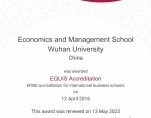
WUHAN, CHINA – Media OutReach Newswire – 19 June 2025 – Recently, the European Foundation for Management Development (EFMD) released a formal letter informing that the Economics and Management School (EMS) of Wuhan University (WHU) has successfully gained the five-year re-accreditation of EQUIS (EFMD Quality Improvement System). This is the first time that the EMS has been accredited by EQUIS’ highest honor, a five-year period, following its […]

If the United States launches direct military strikes against Iran, global stock markets will likely react with speed and force—dropping hard before any official policy statements are made or economic forecasts adjusted. This would not be a measured repricing. It would be a sharp reflex from investors who have, until now, largely overlooked the rising threat of a wider regional war in the Middle East. Equities across […]

Scientists have observed that under intense environmental pressure, nematode worms assemble into towering collective structures to disperse by hitching rides on passing insects. This phenomenon, documented in decaying orchard fruit in Germany, represents the first natural evidence of cooperative “towering” behaviour among nematodes. Field researchers from the Max Planck Institute of Animal Behavior and the University of Konstanz spent months scanning fallen apples and pears with digital […]

Zurich-based 21Shares AG has extended its reach in the Nordic financial market by adding five cryptocurrency exchange-traded products to Nasdaq Stockholm, taking its total offerings on the Swedish exchange to ten. The newly cross-listed products—Uniswap, Avalanche, Bitcoin Gold, Solana Core Staking and Ethereum Core —join the firm’s existing Bitcoin, Ethereum, Solana, XRP and Bitcoin Core ETPs.

This move reflects mounting interest among both retail and institutional investors in regulated access to a broader range of digital assets via established trading venues. With the latest additions, 21Shares reinforces its position as a leading provider of physically backed, transparent crypto investment products in Europe.

Mandy Chiu, Head of Financial Product Development at 21Shares, highlighted that the expansion enables investors to craft more bespoke portfolios. “By offering a broader selection of single‑asset and thematic crypto ETPs, we’re empowering investors to build more customised and resilient portfolios through a familiar exchange environment,” she said. Nasdaq’s European ETF & ETP head, Helena Wedin, welcomed the new suite, noting such innovation as shaping the future of capital markets.

The newly listed ETPs offer exposure to distinct niches within the crypto ecosystem. AUNI provides a stake in Uniswap, the leading decentralised exchange. AVAX tracks Avalanche, a platform noted for its scalability. BOLD focuses on Bitcoin Gold—a fork designed to democratise mining. CSOL delivers both Solana price exposure and staking yield, while ETHC covers Ethereum’s core asset. These additions allow investors to target specific segments, from DeFi protocols to next‑generation blockchains and staking-enabled assets.

All 21Shares ETPs are physically collateralised and traded under regulated frameworks, removing the burden of wallet management and key custody. Fees range from 0.21% to 2.50% annually, offering a competitive alternative to direct crypto exchange transactions. The firm’s products are also listed on Euronext Paris, Amsterdam, London and SIX Swiss Exchange, contributing to a diversified pan-European presence.

This latest development comes as Europe prepares for implementation of the Markets in Crypto‑Assets Regulation, aimed at standardising crypto oversight. More listings on regulated exchanges help issuers align with the evolving regulatory landscape.

21Shares’ strategy compares with best-in-class players in traditional finance pushing crypto integration. From Bitcoin and Ethereum to platforms like Solana and Avalanche, the firm’s growing suite meets demand both for mainstream exposure and thematic investment strategies.

Despite these advances, some challenges persist. Liquidity conditions for less‑traded tokens such as Bitcoin Gold can be thin, and tracking discrepancies may emerge between product performance and spot prices. Fees, while competitive, can vary significantly: niche products may carry noticeably higher rates, impacting returns.

Nevertheless, for investors seeking regulated and familiar vehicles, the benefits are tangible. ETPs provide access through existing brokerages, transparency under established compliance standards and relief from the technical complexity of self-custody.

This expansion also underscores Nasdaq Stockholm’s evolving role as a hub for crypto‑linked financial instruments. Stockholm’s regulatory environment and market infrastructure make it attractive for issuers and investors alike. The increased product diversity enhances its appeal to both domestic and regional markets.

Beyond booming local interest, 21Shares continues to push forward globally. In the US, the firm is pursuing approvals for a suite of spot crypto exchange-traded funds—including for Solana, XRP, Dogecoin, Polkadot, and Sui—as it seeks to replicate its European success. Additionally, its ARK 21Shares Bitcoin ETF underwent a 3‑for‑1 stock split on 16 June to enhance accessibility.

Since launching the first physically backed crypto ETP in 2018, 21Shares has built a track record of innovation and adaptation. Backed by deep market expertise and proprietary custody systems, the company now manages approximately US $9.15 billion in assets under management. Leadership changes—including new CEO Russell Barlow—reflect an evolving operational structure focused on scalability.


KUALA LUMPUR, MALAYSIA – Media OutReach Newswire – 19 June 2025 – On 16 June 2025, Chairman Xu Guanju of Transfar Group was invited to speak at the 2025 Energy Asia Conference. Hosted by PETRONAS, the Energy Asia Conference was held at the Kuala Lumpur Convention Centre from 16 to 18 June. Focusing on the theme ‘Delivering Asia’s Energy Transition’, the conference brought together policymakers, industry leaders, […]

Murena has introduced Murena Find, a privacy-first search engine embedded in its latest /e/OS 3.0 update, delivering an ad‑free, no‑tracking search experience powered by Qwant. Designed to launch without user configuration, the engine ensures searches remain private while maintaining quality results. As part of /e/OS 3.0, Murena Find is one of several significant upgrades aimed at fortifying users’ privacy. Alongside enhancements such as weekly privacy reports, end‑to‑end encrypted vaults, […]

Bitcoin Solaris is gaining rapid momentum, positioning itself as a potential outperformer of Polkadot’s early expansion. Analysts and on‑chain metrics highlight growth indicators that not only replicate Polkadot’s debut phase but in several cases significantly surpass it. Market observers attribute this shift to Solaris’s mobile‑first mining approach, hybrid consensus architecture, and aggressive presale execution.

Polkadot established its reputation through multi‑chain interoperability and shared security via parachains—a design emphasising developer adoption over mainstream user engagement. In contrast, Bitcoin Solaris is scaling through mass inclusivity. Its Solaris Nova app enables users to mine with everyday smartphones or PCs, eliminating the need for costly ASICs or complex infrastructure—barriers that still restrict Polkadot validator participation. This strategy has sparked an influx of retail interest, including among existing Polkadot investors turning to BTC‑S presale phases in search of higher short‑term returns.

Solaris’s roadmap reflects an ambition to execute where Polkadot encountered slowdowns. From launching testnet and mobile wallet in early 2026 to a full mainnet and exchange listings by late 2026, the timeline is concrete and time‑bound. In contrast, Polkadot’s parachain roll‑out, while pioneering, has been criticised for complexity and slower-than-expected mainstream uptake.

Technically, Solaris combines foundational Proof‑of‑Work for security with Delegated Proof‑of‑Stake for instant transactions and smart contracts. Its target throughput—10,000 to 100,000 TPS with finality in as little as two seconds—edges ahead of both Polkadot and competing layer‑1 networks. Validators rotate daily to enhance decentralisation, and its Helios security layer brings protocol-level safeguards comparable with Bitcoin’s scarcity model and Solana’s performance.

Energy consumption is also a focal point. Solaris claims 99%+ savings in power usage compared with legacy mining operations. With escalating scrutiny of crypto’s environmental impact, that low‑energy design resonates with both regulators and eco‑conscious investors.

The presale narrative underscores urgency. Currently in mid‑phases, token pricing has ranged from US $2–8, with anticipated exchange‑launch pricing plateauing near US $20. This structure has already attracted over US $4–5 million in capital, and presale bonuses approach 12–14% per phase.

Comparisons to Bitcoin’s early growth phase are emerging. Financial analysts argue that Bitcoin Solaris’s fixed supply, mobile mining model, and early‑stage presale echo crypto’s 2013 dynamics. Even modest investments—US $1,000 today—are being framed as having potential to outperform multi‑thousand‑dollar Bitcoin buys over a similar timeframe.

However, such enthusiasm is not without admonitions. As a relatively new protocol, Solaris remains in development, with adoption hinging upon mainstream acceptance of the Nova app, audit outcomes, smart contract integrity, and exchange listings. Polkadot’s longevity and proven ecosystem via robust parachain deployment stand as a counterpoint—Solaris must demonstrate resilience under live load.

The academic and developer communities have taken note of Polkadot’s strengths—shared security via NPoS consensus, governance frameworks, and scholarly analysis of its sharding mechanisms. Yet critiques surrounding complexity, validator cost thresholds, and centralisation risks persist. By contrast, Solaris is proactively targeting those criticisms with user‑centric design, streamlined entry, and full audit transparency.

Early data from presale participants suggests substantial uptake. West African and Southeast Asian communities—traditionally underrepresented in high‑end mining—are increasingly engaging through mobile mining accessibility. While precise regional figures are opaque, anecdotal evidence and community growth metrics from Solaris’s Telegram and X channels point to significant global traction.

Institutional interest remains unsubstantiated. Vertex Ventures and other blockchain‑focused funds have yet to announce allocations. Solaris’s validation remains retail‑driven, though its governance plan includes institutional play in later roadmap phases. By contrast, Polkadot has cultivated grants via Web3 Foundation and tapped institutional bonds for parachain funding.

As of now, the crypto community stands at a divergence point. One path reflects Polkadot’s methodical but slower‑burn strategy, centred on developer utilisation and cross‑chain infrastructure. The other is a sprint toward inclusion, speed, and mobile participation via Bitcoin Solaris.

By P. Sudhir It may appear rather unusual to recall the inglorious sequence of events that began at midnight on June 25, 1975, with the declaration of the Internal Emergency. However, we are reminded of those immortal words of wisdom: ‘those who tend to forget the lessons of history are condemned to repeat them.’ These […]

The market capitalisation of tokenised Real‑World Assets has soared to over $23 billion, marking a surge of more than 260% since the start of the year, with private credit and US Treasury tokens accounting for the bulk of the growth.

Leading the charge, tokenised private credit comprises roughly 58% of the total market, while tokenised US Treasuries make up about 34% of the overall valuation. The dramatic expansion reflects increasing demand for on‑chain exposure to established asset classes beyond cryptocurrencies, as investors seek yield and diversification within a regulated digital framework.

Market participants have highlighted the clarity in evolving regulatory frameworks as a crucial catalyst. The enhanced transparency and legal recognition of tokenised assets in jurisdictions such as Abu Dhabi Global Market are encouraging institutional players to engage more actively. Concurrently, technology platforms and traditional finance firms are racing to establish token issuance and trading infrastructure.

One of the most prominent sector players, Securitize Inc., provides a full-stack platform enabling compliant tokenisation across asset types. As of May 2025, the firm has issued over $4 billion on‑chain, including $2.8 billion in tokenised US Treasury exposure, commanding more than 70% share of tokenised US Treasury products. Its leadership on tokenised private credit is also significant, with major asset managers like Apollo and BlackRock utilising the platform for their tokenised offerings.

Private credit, defined as non‑bank lending embedded in project, corporate, and direct lending vehicles, has long been one of the fastest‑growing alternative asset classes. Currently valued at an estimated $2–3 trillion globally, private credit forms a natural fit for tokenisation, enabling fractionated access, faster settlement, and enhanced transparency. By bridging direct lending with blockchain infrastructure, tokenisation platforms are opening access to smaller investors and unlocking liquidity for traditionally illiquid instruments.

US Treasury tokens have also gained rapid traction. In October 2024, Abu Dhabi‑based Realize launched a tokenised US Treasury ETF fund targeting $200 million assets. This initiative marked the first tokenised Treasury fund domiciled in Abu Dhabi Global Market, reflecting the growing confidence in sovereign debt tokens.

Growth to date appears driven by institutional interest, but emerging trends suggest growing participation from global wealth firms, family offices, and retail platforms. Securitize has onboarded numerous institutional investors and is planning retail channels in collaboration with custodians like Anchorage Digital, BitGo, and Copper.

Regulatory clarity is playing a defining role. US leadership from figures such as Securitize’s CEO appearing before House Financial Services, along with the Commodities Futures Trading Commission and Securities and Exchange Commission’s deliberations, is building a foundation for mainstream adoption. Internationally, regulatory sandbox setups—like Abu Dhabi’s—are providing live environments for tokenised asset experimentation.

As the total market cap moves beyond $23 billion, key drivers include mature tokenisation platforms, growing regulator engagement, and rising investor demand for yield-bearing digital assets within compliant frameworks. Whether private credit and Treasury tokens continue to dominate depends on lasting improvements in interoperability, standardisation, and token issuance efficiency.

Going forward, momentum may attract tokenisation of other asset types—real estate, commodities, infrastructure debt and equity. Yet challenges such as secondary market liquidity, cross‑chain compatibility, and investor education remain to be addressed. Leading infrastructure providers and asset managers appear intent on solving these, which may mutate tokenised RWAs from a niche tool into a mainstream financial innovation.

Saudi Arabia’s budget carrier Flynas debuted on the Tadawul at SAR 80, raising SAR 4.1 billion, but shares closed at SAR 77.30—down over 3 %—despite an opening high of SAR 84.10 and a low of SAR 69.90. Investors responded nervously to heightened regional instability following military activity between Iran and Israel. Across Gulf markets, risk aversion sharply impacted airline stocks: Flynas dropped roughly 3.4 % on debut, ACWA Power slipped 3.3 %, and […]

Greenlogue/AP Mubadala Investment Company and the Abu Dhabi Projects and Infrastructure Centre have formalised a partnership designed to accelerate the emirate’s infrastructure agenda. The agreement, inked during the opening of the Abu Dhabi Infrastructure Summit 2025, establishes a broad cooperation blueprint aimed at advancing key development projects. The accord commits both entities to conduct thorough feasibility studies and share knowledge to assess the viability of proposed ventures. It also […]

Cushman & Wakefield Greater China has been honoured with three five‑star awards at the 2025 Asia Pacific Property Awards, recognising its excellence in commercial real estate services across the region. The firm also received an additional “Award Winner” designation, strengthening its regional leadership credentials. Judged by an expert panel comprising property professionals, these awards are regarded as one of the industry’s most prestigious marks of quality, celebrating […]

Oil markets surged on Tuesday and Wednesday as escalating military exchanges between Iran and Israel sparked investor anxiety. Brent crude futures climbed approximately 2.1 per cent to $74.79 a barrel by 12:02 GMT, while US West Texas Intermediate settled near $73.19—following intraday swings exceeding 2 per cent gains and drops. The gains were driven by soaring geopolitical concerns after Israel bombed Iran’s South Pars gas field—shared with Qatar—igniting a fire that prompted Iran […]

FalconX, a leading cryptocurrency prime brokerage, has initiated informal talks with bankers and advisers to explore an initial public offering in 2025, signalling a significant move to satisfy burgeoning institutional demand for digital assets. The firm, which last raised $150 million in 2022 at an $8 billion valuation, is not yet retaining an underwriter—an early but strategic step toward going public.

Founded in 2018, FalconX began as a crypto-focused prime broker, enabling clients to trade directly on exchanges. Today it spans three verticals—markets, custody and staking, and direct market access prime brokerage—positioning itself as a full-spectrum financial services provider for institutional clients. This evolution reflects growing investor interest in digital assets and the firm’s expansion through deals and strategic integration.

In early 2025, FalconX acquired Arbelos Markets, marking its entry into the derivatives segment, a lucrative but highly competitive space. It also forges partnerships with established players such as Standard Chartered, integrating global banking and foreign-exchange capabilities, and with Cantor Fitzgerald, accessing a credit facility collateralised by Bitcoin—its “first step in a broader credit framework” to bolster institutional offerings.

The broader crypto sector is experiencing an IPO wave. Several digital-asset platforms, including Fold, Exodus and eToro, have listed in 2025. Notably, stablecoin issuer Circle achieved a landmark $1.1 billion IPO on 5 June, marking the largest crypto-market debut in history and fuelling expectations of further listings. Following Circle’s success, firms such as Bullish and Gemini filed for public listings, with Kraken and Justin Sun’s Tron Group also preparing filings.

Amid this sector-wide momentum, FalconX is working to enhance its public profile, seeking to craft a compelling narrative ahead of a potential IPO. The firm’s strategy, according to one insider, emphasises readiness to appeal to public-market investors, including both strategic partnerships and public relations positioning.

The firm’s track record underpins its IPO ambition. In June 2022, it secured a $150 million Series D led by Singapore’s GIC and B Capital at an $8 billion valuation. That round also involved Thoma Bravo, Wellington Management, Adams Street Partners and Tiger Global Management. CEO Raghu Yarlagadda emphasised FalconX’s market‑neutral model, rigorous risk‑management and profitability amid volatility—a rarity in the crypto space.

With over $430 million in capital raised to date, FalconX has demonstrated resilience, continuing to hire and expand services even as competitors retrench. GIC’s commitment and the firm’s strategic posture reflect stable investor confidence.

Institutional demand for crypto is rapidly growing, and FalconX’s moves align with this shift. The acquisition of Arbelos, banking collaboration and credit facility signal a broader ambition to integrate traditional and digital finance infrastructures, broaden offerings and close service gaps. As co-head of markets Joshua Lim observed, strategic partnerships and acquisitions enable FalconX to fill missing links that would otherwise force customers to assemble services piecemeal.

Within this context, launching an IPO emerges as both a capital‑raising tool and a visibility lever. As one adviser noted, “When you launch an IPO, you need to have a story…. You’re selling yourself to the investing public”. FalconX’s groundwork suggests readiness to craft that narrative, aligning with its strong financial position and strategic trajectory.

ISTANBUL, TURKEY – Media OutReach Newswire – 18 June 2025 – The report “Evolving Legacy: Decoding the Scientific Trajectory of Chinese Medicine” released today by Hong Kong Baptist University (HKBU) and Elsevier, reveals the growing impact of Chinese Medicine research on global healthcare and modern health challenges. In this context, “Chinese Medicine research” encompasses not only clinical practice, but also basic and translational science, AI-driven systems medicine, […]

JD.com is preparing to deploy a regulated stablecoin through its Hong Kong arm as part of a significant expansion into digital payments. Its subsidiary, Jingdong Coinlink Technology Hong Kong, entered the Hong Kong Monetary Authority’s stablecoin sandbox in July 2024. The project is testing tokens pegged to the Hong Kong dollar and other major currencies, aiming for a wider rollout in the fourth quarter of 2025.

Tests performed by JD Coinlink have covered cross-border payment mechanisms, retail use cases—initially in JD Global’s Hong Kong and Macau markets—and investment applications on a public blockchain, ensuring transparency and regulatory compliance. JD is targeting integration across its extensive e-commerce ecosystem, including fast‑settling transactions for global trade, M&A deals, B2B settlements and consumer checkouts.

Richard Liu, JD’s founder and chairman, highlighted the company’s aim to secure stablecoin licences across major currency jurisdictions, citing the potential to cut cross‑border payment costs by up to 90 per cent and reduce settlement times to approximately 10 seconds. Liu underlined that once B2B applications prove viable, JD intends to broaden the stablecoin’s use to everyday consumer purchases within its platform.

The HKMA granted licences only to firms demonstrating robust risk controls and consumer protections. Under the Stablecoins Ordinance, which passed on 21 May 2025, issuers using or referencing the Hong Kong dollar must obtain formal approval and meet stringent obligations including reserve backing, redemption rights, transparent governance and segregation of client assets.

Jingdong Coinlink is complemented by parallel efforts to issue an offshore yuan stablecoin, though its launch hinges on regulatory authorisation from mainland authorities. This aligns with wider interest in the stablecoin market: Ant Group is also pursuing Hong Kong licences, and Western giants including JPMorgan, PayPal and Standard Chartered are racing to launch stablecoins.

Hong Kong’s regulatory clarity gives JD.com and its peers a regional advantage. The sandbox initiative, begun in March 2024, enabled live testing under HKMA supervision prior to licence application. With the Ordinance’s full force due on 1 August 2025, JD appears well aligned to capitalise on a rapidly evolving framework.

JD’s stablecoin will be issued on a public blockchain, enabling open verification of issuance volume and reserve data. CEO Liu Peng confirmed that the second phase of testing concluded in May, focusing on cross-border, retail and investment use cases. Assuming regulatory approval, licensing and integration plans are on track for Q4 2025.

These efforts form part of JD’s broader strategy to become a fintech powerhouse. The company recently expanded in food delivery and consumer finance, acknowledging a “lost” five‑year stretch of innovation. Its current push builds on JD’s in‑house blockchain infrastructure—Zhizhen Chain—which already facilitates roughly US $7 billion annually in supply‑chain finance.

Industry analysts observe that JD’s combination of logistics, e‑commerce reach and blockchain technology positions it uniquely among digital‑asset issuers. With nearly 600 million active users and operations spanning over 20 countries, the company could accelerate stablecoin adoption by integrating token payments into its merchant network.

As global stablecoin activity accelerates—fuelled by regulatory developments like the U.S. GENIUS Act and Hong Kong’s licensing framework—JD.com may emerge as one of Asia’s first large-scale retail-facing stablecoin providers.

Depending on its licensing trajectory, JD plans to list its stablecoin on regulated exchanges and deploy it on a public blockchain in Q4 2025. Beyond the HKD coin, the company is developing offshore yuan functionality, pending mainland approval.

voco Dubai The Palm has unveiled an expanded private beachfront, enhancing its leisure offering on Palm West Beach with additional space, panoramic sea views, and a curated beach day experience tailored for non-resident guests. The development adds a premium draw to Dubai’s hospitality sector, capitalising on the city’s demand for upscale coastal experiences without the need for an overnight stay. Located along the West Beach stretch of […]

VISHNU RAJA
RYO YAMADA
HITORI GOTOH
IKUYO KITA