Just in:
Lancet researchers seek global health emergency recognition for climate // US intelligence suspects Megaspeed executive of Chinese espionage // Lancet researchers seek global health emergency recognition for climate // Lancet researchers seek global health emergency recognition for climate // CPM role in Mammootty cyber attacks ruled out // 10 CENTS CAPITAL Completes US$20 Million Financing and Sets Out a Phased Deployment Plan // Ex-Kochi police chief rejects judicial interference // High Court opens toddy shop jobs to women // 10 CENTS CAPITAL Completes US$20 Million Financing and Sets Out a Phased Deployment Plan // Sharjah Islamic Bank’s $500 million sukuk joins Nasdaq Dubai // Lancet researchers seek global health emergency recognition for climate // IBS Proposes HK$563 Million Acquisition of AI Chip Enterprise // 10 CENTS CAPITAL Completes US$20 Million Financing and Sets Out a Phased Deployment Plan // Lancet researchers seek global health emergency recognition for climate // ZJLD Group Returns to Hong Kong Wine & Dine Festival 2026 // Mumbai to host global blockchain leaders at November conference // Hill’s Enhances Cat and Dog Food with Prebiotics to Support Senior Pet Health in Hong Kong // Crown Workspace wins Gold and special Trinity recognition at HR Vendors of the Year Awards 2026 // Anchored in Data Sovereignty, the Engagement Enables the Legal Sector to Adopt Generative AI Safely and Confidently // Binance estimates $6.3 billion impact from security breach //

News related to
Industrial

HANOI, VIETNAM – Media OutReach Newswire – 17 June 2026 – Vingroup ranked 26th in Fortune’s Southeast Asia 500 ranking, rising 11 places from 37th in 2025 and 19 places from 45th in 2024. The Group continues to be the highest-ranked private enterprise in Vietnam.Advancing in the ranking for two consecutive years underscores Vingroup’s scale, competitiveness, and sustainable growth momentum, while highlighting its increasingly prominent position among the region’s leading companies.

Photo (15).JPG

This marks the third year that Fortune has published its Southeast Asia 500 ranking. The list ranks companies based on total revenue across seven countries in the region, including Vietnam, Indonesia, Thailand, Malaysia, Singapore, the Philippines, and Cambodia.

According to Fortune, Vingroup ranked as the No. 1 private enterprise in Vietnam and No. 26 among the 500 largest companies in Southeast Asia. This year’s Southeast Asia 500 recognizes companies that are well positioned to capitalize on shifts in global supply chains and the rapid growth of strategic industries such as electric vehicles and artificial intelligence.

In addition to its scale of assets, Vingroup was highly recognized for its financial performance and operational efficiency. According to Fortune, in 2025, Vingroup recorded revenue of USD 12,760.6 million, representing year-on-year increases of 69.1% compared to the figures reflected in the 2025 ranking. Vingroup recorded net profit of USD 436.5 million and total assets of USD 42,536.4 million.

Vingroup is a diversified conglomerate operating across Industrials – Technology, Real Estate and Services, Infrastructure, Green Energy, Culture and Social Enterprises.

Within the Industrials – Technology pillar, VinFast reinforced its leading position in Vietnam’s automobile and electric two-wheeler markets while continuing its global expansion.

In 2025, VinFast delivered nearly 200,000 electric vehicles worldwide, up 102% year-on-year. The result exceeded the Company’s 2025 target and marked the highest annual delivery volume since its inception. In the first quarter of 2026, VinFast delivered 58,577 electric vehicles across all markets, representing a further 61% increase compared with the same period last year.

Within the Real Estate and Services pillar, Vinhomes maintained its market-leading position with 32 residential developments in operation, home to approximately 650,000 residents. In 2025, Vinhomes recorded contracted sales of VND 205.3 trillion, up 98% year-on-year, with more than 34,000 units delivered. Its unrecognized contracted sales backlog reached VND 186.4 trillion, providing a solid foundation for future growth. Consolidated net revenue totaled VND 153.3 trillion, up 49.8% from 2024, while net profit after tax reached VND 43.3 trillion, up 23.6% year-on-year and exceeding the Company’s annual target.

In 2026, Vinhomes launched a series of large-scale urban developments across Vietnam, including the 6,200-hectare Vinhomes Global Gate Ha Long in Quang Ninh Province, the 512-hectare Vinhomes Hai Van Bay in Da Nang, and the 1,080-hectare Vinhomes Saigon Park in Ho Chi Minh City. These developments are expected to reshape Vietnam’s urban landscape while contributing to the sustainable growth of the real estate market.

Meanwhile, Vinpearl continued to lead Vietnam’s hospitality, tourism and entertainment sector, operating 60 facilities across 20 provinces and cities. Its ecosystem includes more than 17,500 rooms across a network of five-star hotels and resorts; 15 VinWonders theme parks; six championship golf courses; and three international-standard convention centers and theaters under the VinPalace brand. The portfolio also features two semi-wildlife conservation parks and an equestrian academy. In addition, Vinpearl’s signature live-action performances in destinations such as Nha Trang and Phu Quoc attract millions of visitors each year.

Within the Infrastructure pillar, VinSpeed has commenced construction of Vietnam’s first two high-speed rail projects: the Ben Thanh – Can Gio line in Ho Chi Minh City and the Hanoi – Quang Ninh line. Launched in April 2026, the Hanoi – Quang Ninh route is the country’s first interregional high-speed railway project. Beyond creating a powerful growth engine for Northern Vietnam’s key economic region, the project represents an important step toward enhancing the nation’s long-term competitiveness.

Within the Green Energy pillar, VinEnergo announced its expansion plans across Asia and Europe, supported by a renewable energy project pipeline with a total capacity of 10 GW that has already secured development agreements. In Vietnam, the company has obtained investment registration certificates for four renewable energy projects.

Within the Social Enterprises pillar, VinUniversity became the youngest university in Vietnam to receive the FIBAA Quality Seal in March 2026. In healthcare, Vinmec inaugurated its 10th hospital, spanning over 31,000 sqm, with 114 inpatient beds and a designed capacity of 135,000 patient visits annually.

At the end of 2025, Vingroup launched its Culture pillar to preserve and promote Vietnamese cultural values and bring them to the world. In May 2026, the Group introduced V-Film, a film and television production and distribution company, with the goal of supporting the development of a professional, modern, and globally integrated Vietnamese film industry.

Looking ahead, Vingroup remains committed to accelerating its core business activities, leveraging the strengths of its diversified ecosystem, enhancing operational efficiency, and expanding its international presence. Through these efforts, the Group aims to achieve its 2026 targets while further strengthening its position as one of the region’s leading enterprises.
Hashtag: #Vingroup

The issuer is solely responsible for the content of this announcement.

Intersec Saudi Arabia has formed two advisory committees to steer the conference agenda for its 2026 edition, bringing senior security, aviation, infrastructure, fire-protection and emergency-management figures into the planning of the Future Security Summit and the Fire Protection & Technology Summit. The move places artificial intelligence, cyber-physical security, critical infrastructure resilience, predictive risk management and next-generation fire protection at the centre of the Riyadh event, scheduled for […]

Nvidia has raised $25 billion through its largest bond sale, drawing a wave of investor demand that underlines Wall Street’s confidence in long-term artificial intelligence spending despite rising questions over the cost of the global data-centre buildout. The Santa Clara-based chipmaker priced the investment-grade deal on June 15 after initially targeting at least $20 billion. Orders reached about $85 billion, allowing the company to expand the transaction […]

Telegram’s temporary blocking across India has turned a medical entrance scandal into a wider test of digital governance, platform liability and telecom-sector influence, as the messaging company challenges the order in the Delhi High Court. The restriction, imposed until June 22 ahead of the NEET-UG 2026 re-examination on June 21, was justified by authorities as a measure to curb paper-leak rackets and exam-related fraud. Telegram’s message-editing feature […]

Arabian Post Staff -Dubai A proposed $300 billion private investment fund has become the most sensitive economic element in the US-Iran framework agreement, with more than half of the target committed as Washington and Tehran prepare for a formal signing ceremony on Friday. The vehicle, described by a person with direct knowledge as the Reconstruction and Development Fund, is intended to create a commercial incentive for both […]

HANOI, VIETNAM – Media OutReach Newswire – 16 June 2026 – Vietnam National Chemical Group (Vinachem) has been recognized for the first time in the 2026 Fortune Southeast Asia 500 (Fortune SEA 500) ranking, marking a significant milestone in the Group’s development journey and reaffirming its position as one of Vietnam’s leading industrial corporations on the regional economic landscape.

Vinachem Recognized In The 2026 Fortune Southeast Asia 500 Ranking

According to Fortune, Vinachem ranked 148 among Southeast Asia’s 500 largest companies in 2026. This marks the third year that Fortune has published the Southeast Asia 500 ranking, recognizing companies that demonstrate scale, operational excellence, and significant contributions to regional economic development. The list ranks companies based on total revenue across seven countries in the region, including Vietnam, Indonesia, Thailand, Malaysia, Singapore, the Philippines, and Cambodia.

Based on Fortune’s report, Vinachem recorded revenue of USD 2.332 billion and profit of USD 103.8 million in 2025. These results reflect the Group’s solid financial foundation, resilience in responding to market fluctuations, and the effectiveness of its restructuring and productivity improvement efforts across the organization.

Mr. Nguyen Huu Tu, Chief Executive Officer of Vietnam National Chemical Group (Vinachem), said:”Vinachem’s inclusion in the Fortune Southeast Asia 500 ranking as early as 2026 represents a significant milestone in the Group’s development journey. It is a tangible outcome of our determined efforts to implement the directives set forth by the Politburo in Resolution No. 79-NQ/TW dated January 6, 2026, which aims to have 50 state-owned enterprises ranked among Southeast Asia’s 500 largest companies by 2030.

This recognition not only acknowledges the efforts of nearly 20,000 employees, engineers, and workers across Vinachem in driving innovation, transformation, and sustainable development, but also reflects the growing competitiveness of Vietnamese industrial enterprises in the regional integration process.

The achievement provides further momentum for Vinachem to accelerate innovation, digital transformation, green transition, and the development of high-tech industries. At the same time, it reinforces our commitment to fulfilling our role as a core enterprise of Vietnam’s chemical industry and contributing to the goal of building large-scale, efficient, and internationally competitive state-owned economic groups in line with the spirit of Politburo Resolution No. 79-NQ/TW.”

The development of the VinachemMart e-commerce platform and the launch of the Vinachem Agriculture platform represent concrete steps in implementing this strategy. While VinachemMart contributes to advancing digital commerce and strengthening market connectivity, Vinachem Agriculture seeks to connect farmers with scientists, experts, businesses, and government agencies, thereby improving the efficiency of the agricultural value chain and promoting green and sustainable agricultural development.

Looking ahead, Vinachem has identified innovation, digital transformation, green transition, and sustainable development as its key growth drivers. The Group is prioritizing investment in high-value, technology-intensive sectors, including pharmaceutical chemicals, advanced materials, chemicals serving the electronics and semiconductor industries, rare-earth extraction and processing, and circular economy initiatives. In parallel, Vinachem is investing in research and development (R&D) centers and integrated industrial parks designed around modern, circular, and sustainable principles, contributing to the enhanced competitiveness of Vietnam’s chemical industry within regional and global value chains.

Vinachem’s inclusion in the Fortune Southeast Asia 500 reflects not only the Group’s scale and financial strength, but also the progress achieved through its transformation, international integration, and efforts to elevate the standing of Vietnam’s chemical industry. This recognition provides a solid foundation for the Group to continue fulfilling its role as a leading enterprise, contributing to national industrial development and strengthening the presence of Vietnamese enterprises on the regional economic stage.

Hashtag: #Vinachem

The issuer is solely responsible for the content of this announcement.

Oxford physicists have demonstrated a new class of Schrödinger’s cat-like quantum states, pushing laboratory control of quantum superposition beyond the familiar model of two classical-looking wave packets held in a fragile balance. The advance, published in Physical Review X on 3 June, shows that cat-like states can be built from components that are already strongly quantum, rather than from the coherent states traditionally used to mimic the […]

Advertisements
Foreign investors delivered their strongest one-day purchase of Vietnamese equities in nearly six years on 15 June, signalling a sharp improvement in risk appetite after fears over Middle East energy disruption eased.

Overseas funds bought a net US$160.4 million of Vietnamese shares on Monday, the largest daily inflow since 10 September 2020. The buying helped steady a market that had been under pressure from rising oil prices, global risk aversion and sustained foreign withdrawals despite Vietnam’s long-awaited move towards emerging-market status.

The VN-Index rose 0.43 per cent to 1,799.31 on Monday and moved back above the 1,800-point area on Tuesday, keeping the benchmark close to levels that still represent a strong annual advance even after a pullback over the past month. The shift was part of a wider rebound across Asian emerging markets after the United States and Iran agreed on terms aimed at ending hostilities and reopening the Strait of Hormuz, easing concerns over inflation and fuel costs.

The reversal is notable because foreign investors have remained net sellers of Vietnamese equities this year. Even after Monday’s inflow, overseas funds have sold about US$2.6 billion of Vietnamese stocks in 2026, following withdrawals of roughly US$4.8 billion last year. Those outflows reflected concerns over market concentration, heavy exposure to a few large-cap groups, tariff uncertainty, currency pressure and the impact of higher energy prices on a manufacturing-led economy.

“De-escalation in the Middle East and Vietnam’s own underperformance have created a textbook re-entry set-up for foreign capital,” said Quynh Cao, head of institutional business at VNDirect Securities. “Positioning was already tight and it does not take much to flip that.”

Vietnam’s appeal to global investors rests on more than a single trading session. FTSE Russell has confirmed that the country will be reclassified from frontier to secondary emerging-market status from 21 September, with inclusion in global equity indices to be phased through 2027. The upgrade is expected to bring passive inflows of about US$1.5 billion, with broader active flows potentially lifting the total to several billion dollars if market reforms continue.

The reclassification follows changes aimed at improving foreign access, including the removal of full pre-funding requirements for equity trades and the development of a global broker model. These reforms address long-standing obstacles for institutional investors, who had complained about settlement risk, limited access channels and operational frictions that made Vietnam harder to replicate within global index portfolios.

Large-cap names expected to draw attention include Vingroup, Masan Group, FPT Corp and Hoa Phat Group, alongside banks, securities firms, industrial stocks and consumer companies with sufficient liquidity and foreign room. Average daily trading value in Vietnamese equities this year has been around US$789 million, underscoring the market’s growing depth, though liquidity remains uneven across sectors.

The macroeconomic backdrop remains supportive. Vietnam’s economy expanded 8.02 per cent in 2025, helped by strong exports, public investment, manufacturing activity and resilient consumption. Foreign direct investment disbursement rose to about US$27.6 billion last year, while exports reached roughly US$475 billion. Growth is expected to moderate this year, but projections still place Vietnam among Asia’s faster-growing economies.

Higher oil prices had complicated that outlook. Vietnam is exposed to imported fuel and energy costs, making any disruption in the Strait of Hormuz a direct risk to inflation, transport costs and factory margins. The drop in crude prices after the US-Iran accord helped restore confidence among investors looking at countries with strong structural growth but sensitivity to external shocks.

The market is not without vulnerabilities. Retail investors remain a major force in daily trading, making sentiment swings sharper when liquidity thins. Foreign ownership limits continue to constrain buying in some leading companies. Corporate governance, disclosure quality and settlement infrastructure also remain areas under watch as Vietnam seeks eventual MSCI emerging-market status.

Analysts say the latest inflow will need to be sustained before it can be treated as a durable turning point. A single large session can reflect short-covering, index positioning or tactical buying after a sell-off. A lasting reversal would require more consistent foreign participation, firmer currency conditions, stable oil prices and evidence that earnings growth can match valuations after the market’s strong run.

Hyderabad-based Drogo Aerospace has delivered 41 JK 250e surveillance drones to the Indian Army, advancing a ₹72-crore order that places the defence technology firm among a growing group of domestic companies supplying unmanned systems for frontline military use.

The first batch was received by officials of the Army’s Southern Command in Nashik, Maharashtra. The delivery forms part of a 217-drone contract, with the company aiming to supply the remaining 176 units by August 2026. The schedule gives Drogo Aerospace a tight execution window at a time when demand for tactical drones is rising across reconnaissance, border monitoring and battlefield support roles.

The JK 250e drones have been developed and built by Drogo Aerospace for surveillance, reconnaissance and other military missions. The platform can fly for up to three hours on a single charge, giving field units extended aerial coverage without depending on conventional runway infrastructure. The drone’s role is centred on intelligence gathering and real-time observation, areas that have become central to ground operations as armies adapt to a battlefield shaped by low-cost aerial systems, loitering munitions and sensor-driven targeting.

Drogo Aerospace founder and chief executive Yeshwanth Bonthu said the delivery validates the company’s technology base, manufacturing capability and commitment to national security. The company is now working on indigenous loitering munitions, long-endurance UAVs, AI-powered aerial intelligence platforms, advanced surveillance systems and reconnaissance products aimed at future operational requirements.

The order also marks a transition point for the company, formerly known as Drogo Drones Pvt Ltd. Its rebranding as Drogo Aerospace reflects a broader move beyond conventional drone manufacturing into defence, aviation, unmanned systems, satellite-linked platforms and aerospace technologies. Headquartered in Madhapur, Hyderabad, the firm has positioned itself as a next-generation unmanned systems developer at a time when procurement policy is opening more space for private manufacturers and specialised start-ups.

The company is setting up a 100,000-square-foot drone manufacturing facility at Maheshwaram in Telangana’s Ranga Reddy district. The state government has allotted about 4.5 acres to the firm within the Electronics Manufacturing Cluster for the project. The facility is expected to generate around 500 additional jobs, adding to an existing workforce of about 300. The investment is designed to support scale production as defence orders move from prototypes and limited trials to larger supply commitments.

The delivery comes as the armed forces are accelerating induction of drones for tactical and operational roles. Planned domestic military drone orders may exceed $2 billion this year, with deliveries expected over 18 to 24 months. More than 600 drone and component companies now operate in the country, including over 100 focused on defence applications. The sector includes large industrial groups as well as specialist start-ups developing reconnaissance platforms, logistics drones, loitering munitions, precision-strike systems and critical components.

Battlefield developments over the past three years have sharpened the focus on unmanned systems. The war in Ukraine demonstrated how inexpensive drones can alter artillery targeting, logistics interdiction and frontline surveillance. Conflicts in West Asia have further highlighted the value of layered air defence, counter-drone technology and rapid intelligence cycles. Along the northern and western frontiers, persistent surveillance has become a core requirement for ground formations operating across difficult terrain and extended lines of control.

The Ministry of Defence has also widened support for smaller firms through innovation challenges and procurement pathways aimed at turning prototypes into deployable systems. Under the iDEX framework, hundreds of start-ups, MSMEs and individual innovators have entered the defence innovation ecosystem since 2018. Dozens of prototypes have received procurement clearance, and contracts worth thousands of crores have moved from concept development into acquisition. This has helped shorten the distance between battlefield requirements and production-ready technology.

For Drogo Aerospace, execution of the JK 250e order will test its ability to deliver at scale while maintaining quality and mission reliability. Military drone contracts require not only airframe performance but also secure communications, rugged field handling, dependable batteries, payload integration, training, maintenance support and spare availability. The Army’s experience with the first batch is likely to shape follow-on acceptance, deployment tempo and confidence in the remaining units due by August.

By Nitya Chakraborty Prime Minister Narendra Modi will be taking part in the outreach session of the 52nd meeting of G7 being held in Evans of France hosted by the French President Emanuel Macron. Already the main session started on Monday with the participation of the leaders of the seven nations. The main task of […]

The article Can PM Narendra Modi Redeem India’s Status As Defender Of Global South At G7 Meet In France? appeared first on Latest India news, analysis and reports on Newspack by India Press Agency).

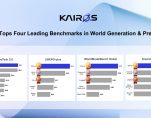
SHANGHAI, CHINA – Media OutReach Newswire – 15 June 2026 – ACE ROBOTICS today announced that its open-source Kairos world model has achieved leading results across four global embodied-intelligence benchmarks: RoboTwin 2.0, LIBERO-Plus, WorldModelBench Robot and DreamGen. Kairos ranked first among evaluated world models and vision-language-action (VLA) systems on these benchmarks’ public leaderboards as of 12 June 2026, leading across the core capabilities of embodied intelligence, including complex robotic manipulation, scene-level generalization, physical-world modeling and zero-shot transfer. The project is openly available on GitHub, Hugging Face and ModelScope, giving researchers and developers a public reference point for the model, benchmark results and technical materials.

Tops Four Leading Benchmarks in World Generation & Prediction

Embodied intelligence faces a fundamental challenge: generalization. A robot must operate reliably in environments it has never seen, adapting to new lighting, layouts, objects, embodiments and noisy real-world conditions. While VLA models have become a prevailing approach by directly mapping perception and language inputs to robot actions, ACE ROBOTICS believes world models offer a more scalable path by explicitly learning the underlying dynamics of the physical world and predicting how environments evolve. Kairos is designed to validate that approach.

Leading scene-level generalization on LIBERO-Plus

One of Kairos’ most significant results comes from LIBERO-Plus, a scene-level generalization benchmark proposed by the Shanghai Innovation Institute with Fudan University, Tongji University and the National University of Singapore. It evaluates robustness under seven real-world variables: camera angle, robot embodiment, language instruction, lighting, background, sensor noise and spatial layout.

Kairos achieved an overall score of 89.0, ranking first among all evaluated world models and VLA systems. It surpassed leading VLA models including ACoT-VLA (88.0), Pi 0.5 (85.7) and ProGAL-VLA (85.5), as well as the Being-H0.7 world model (84.8). It also showed strong environmental robustness, with near-ceiling performance on lighting (97.7), noise (96.8) and background (95.8), and ranked highly on camera angle and language instruction.

According to ACE ROBOTICS, this marks the first time a world-model approach has outperformed leading VLA systems on LIBERO-Plus for scene-level generalization, pointing to a path where robots adapt to homes, factories, retail spaces and other environments with far less environment-specific retraining.

A compact model with strong physical modeling efficiency

On WorldModelBench Robot, a physical-modeling benchmark proposed by researchers from UC Berkeley, UC San Diego, NVIDIA and MIT, Kairos-4B achieved an overall score of 9.30, ranking first on the benchmark. With only 4 billion parameters, it outperformed larger systems including 28-billion-parameter Lingbot, 16-billion-parameter Cosmos 3, 14-billion-parameter Abot-PhysWorld and 5-billion-parameter Wan 2.2, setting a new record for parameter efficiency in embodied world models.

Kairos matched the top instruction-following score (2.36) of the 16-billion-parameter Cosmos 3 with about one quarter of the parameters, a fourfold efficiency gain. It scored 4.96 on physics adherence, with perfect marks on Newtonian mechanics and gravity, and a perfect score on temporal quality, reflecting strong temporal consistency and visual continuity over long horizons.

A unified architecture, not a modular pipeline

ACE ROBOTICS attributes Kairos’ performance to its native unified “multi-modal understanding-generation-prediction” architecture. Unlike modular approaches that stitch together separate components for world understanding, generation and prediction, Kairos integrates these within a single backbone that shares one global world state, reducing the information loss and coordination latency between modules for more consistent physical modeling, stronger long-horizon prediction and more reliable action planning.

ACE ROBOTICS first introduced this architecture in December 2025, and the broader industry is now converging on a similar path: NVIDIA’s Cosmos 3.0, introduced in 2026, adopts a comparable single-system design that brings vision reasoning, world generation and action prediction into one architecture. Built on this foundation, Kairos-4B is, in ACE ROBOTICS’ description, the first embodied world model able to drive a physical robot directly on-device, closing the perception-to-action loop without intermediate translation latency.

Leading on synthetic data transfer and complex robot manipulation

Kairos also ranked first on DreamGen Bench, a benchmark led by NVIDIA with the University of Washington, UC Berkeley and UCLA that measures how well synthetic data generated by world models transfers to unseen objects, behaviors and environments, a key predictor of downstream robot-training value. Kairos ranked first on both average physics adherence (AVG_PA 0.538) and overall average score (AVG_Score 0.618), and led globally on new-behavior execution and new-environment adaptation.

On RoboTwin 2.0, a demanding dual-arm manipulation benchmark proposed by Shanghai Jiao Tong University and the University of Hong Kong with Shanghai AI Laboratory, Kairos scored 96.1% — a state-of-the-art result on the benchmark’s public leaderboard as of 12 June 2026. Across the benchmark’s 50 complex two-arm tasks it scored 96.9% in clean scenarios and 95.2% in randomized scenarios, ahead of VLA models such as G0.5 (93.2) and starVLA (88.3) and world models including AIM (93.1), Fast-WAM (91.8) and MotuBrain (96.0).

From benchmark leadership to commercial deployment

Together, these results validate Kairos’ technical direction across the core dimensions of embodied intelligence, from physical-rule understanding and zero-shot generalization to environmental robustness and fine-grained dual-arm manipulation, supporting ACE ROBOTICS’ aim to move robots beyond task imitation toward physical-world understanding, long-horizon reasoning and real-world execution.

The results come as ACE ROBOTICS accelerates commercialization. The company says it has raised several hundred million U.S. dollars across financing rounds in the first half of 2026, including a recent Angel+ round backed by investors such as Geely Capital, Dachen Caizhi, Shenzhen Capital Group and the Shanghai Sci-Tech Innovation Fund, with existing shareholder SenseTime’s Guoxiang Capital increasing its stake. The proceeds will support continued world-model research and integrated hardware-software solutions for sectors including smart retail, security and inspection, tourism and hospitality.

“Embodied intelligence is the next era of AI, and a world model is the key to unlocking it,” said Wang Xiaogang, Chairman of ACE ROBOTICS. “Our mission is to give every robot a capable brain.”

Kairos is openly available on GitHub, Hugging Face and ModelScope:
https://github.com/kairos-agi/kairos-sensenova
https://huggingface.co/kairos-agi
https://modelscope.cn/collections/kairos-team/kairos30

Hashtag: #ACEROBOTICS


The issuer is solely responsible for the content of this announcement.

About ACE ROBOTICS – Equipping robots with intelligent “brains” and engaging “souls”

ACE ROBOTICS is a pioneering robotics company dedicated to advancing the field of embodied intelligence. Through breakthrough technological innovations and deep insights into embodied intelligence scenarios, we aim to empower robots with the ability to autonomously understand and explore the physical world, thereby accelerating their commercial implementation.

The company pioneered the ACE R&D paradigm and built a vision-based “environmental data engine, real-world cognition, embodied interaction generalization” technology chain. Using full spatiotemporal and multi-perspective environmental capture as its engine, along with Kairos 3.0 – China’s first open-source and commercially applicable world model – plus the Embodied Foundation Model as its technical backbone, ACE ROBOTICS addresses core industry challenges such as data scarcity, common sense gaps, poor generalization, and limited versatility. Simultaneously, the company unveiled its flagship A1 Embodied Super Brain Module, accelerating the large-scale commercial deployment of embodied intelligence across diverse scenarios.

ACE ROBOTICS is both a technology pioneer and an ecosystem builder. Through strategic cooperation with top hardware manufacturers, cloud service providers, and vertical scenario partners, we have broken through the “model-hardware-scenario” industrial deadlock, providing standardized and customized solutions that are driving the development of China’s embodied intelligence industry.

By K Raveendran The promise of a ‘great settlement’ from President Trump has been enough to pull oil prices lower, calm equity markets and revive hopes that the Strait of Hormuz may return to normal traffic. Yet it shows how fragile the relief remains. A diplomatic opening can move prices in an instant, but a […]

The article The ‘Great Settlement’ That Could Decide Price Of Iran War World Will Pay appeared first on Latest India news, analysis and reports on Newspack by India Press Agency).

Arabian Post Staff -Dubai Abu Dhabi’s International Holding Company has begun an AED1.8 billion share repurchase, opening the first tranche of an approved AED5 billion buyback after a sharp rise in first-quarter profit and continued expansion across its investment portfolio. The initial purchase, launched on 12 June, represents 36 per cent of the total programme approved by shareholders at the company’s annual general assembly on 16 March […]

XIAMEN, CHINA – Media OutReach Newswire – 12 Jun 2026 – On June 12, the 7th Cross-Strait Financial Forum and Taiwan-Funded Enterprise Development Forum was held in Xiamen.The event was jointly organized by the Fujian Provincial Financial Regulatory Administration, the Xiamen Municipal Financial Regulatory Administration, and the Association of Taiwan Investment Enterprises on the Mainland, hosted by Xiamen Jinyuan Investment Group, and executed by Jinyuan Uni-President Securities. Under the theme “Three Years of Integration Embarking on a New Journey, United Development Writing a New Chapter,” the forum focused on cross-strait financial cooperation, expanded financing channels for Taiwan-funded enterprises, industrial transformation and upgrading, and financial innovation between Fujian and Taiwan. It aimed to support Fujian’s efforts to accelerate the development of the first-choice home for Taiwan compatriots and Taiwan-funded enterprises on the mainland.

This year’s forum is an important supporting event of the 18th Cross-Strait Forum. During the event, nine Fujian-Taiwan financial integration projects were signed, with a total value of RMB 9.1 billion. The projects cover a wide range of financial services across areas including cross-strait industrial cooperation, water supply security for public welfare, capacity upgrades for long-established Taiwan-funded enterprises, technology and innovation industries, and modern agriculture. These initiatives continue to unlock the benefits of financial policies, promote shared access to financial resources for Taiwan compatriots and Taiwan-funded enterprises, and inject new momentum into industrial integration between Fujian and Taiwan.

At the forum, the Cross-Strait Wealth and Asset Management Cross-Sector Alliance was officially inaugurated. Supported by Jinyuan Group and jointly proposed by its affiliated financial institutions, the alliance was co-founded by Xiamen International Trust, Jinyuan Uni-President Securities, Yuanxin Yongfeng Fund, Fubon Bank (China), Junlong Life Insurance, and Xiamen Chang Gung Hospital, among others. Centered on serving the wealth management and asset management needs of people on both sides of the Taiwan Strait, the alliance aims to build a one-stop service platform covering asset allocation for Taiwan compatriots and Taiwan-funded enterprises on the mainland, family trusts and wealth succession planning, pension finance, and healthcare protection solutions.

The forum also unveiled a series of innovative financial achievements related to Taiwan. The banking industry’s first group standard dedicated to Taiwan-related financial services on the mainland, the “Specification for Taiwan-Related Financial Services of Banking Financial Institutions,” was officially released. At the same time, the “Bailufen” Taiwan Compatriot Financial Service Platform was introduced, further enhancing financial services for Taiwan compatriots living in Fujian and supporting the development of Taiwan-funded enterprises.

Hashtag: #StraitsFinancialForum

The issuer is solely responsible for the content of this announcement.

Taiwan is moving to anchor its alliance with Paraguay through a data-centre project expected to require at least $200 million in its first phase, tying diplomatic survival to artificial intelligence, clean energy and strategic infrastructure.

The plan, centred on a sovereign AI computing facility in Paraguay, gives Taipei a rare large-scale investment platform in South America as Beijing intensifies pressure on Asunción to cut formal ties. Paraguay remains Taiwan’s only diplomatic partner on the continent and one of just 12 governments worldwide that maintain official relations with Taipei.

The project emerged from a memorandum signed in Taipei during President Santiago Peña’s visit to Taiwan, where he met President Lai Ching-te and senior technology officials. The proposed centre is intended to combine Taiwan’s computing and semiconductor expertise with Paraguay’s abundant hydroelectric power, a resource the Peña administration wants to convert into higher-value digital services.

Paraguay’s authorities have described the first stage as a 10-megawatt data centre focused largely on state use, including secure processing of public records, health data, tax systems and other sensitive government information. Investment for that phase has been estimated at between $200 million and $300 million. Officials have also outlined broader ambitions for later stages that could lift power demand to 100 megawatts and eventually 1,000 megawatts, though those targets remain politically and commercially demanding.

The initiative is being framed by both governments as a sovereign AI project rather than a conventional colocation facility. That distinction is important for Asunción, which wants to avoid being seen merely as a low-cost power host for foreign cloud companies. The official pitch is that Paraguay would retain strategic use of the computing capacity while Taiwan helps provide technology, financing channels and international credibility.

For Taiwan, the political stakes are clear. Paraguay established diplomatic relations with Taipei in 1957 and has resisted repeated calls to recognise Beijing. China claims Taiwan as part of its territory and rejects any formal state-to-state relationship with the island. Taipei rejects Beijing’s sovereignty claim and has sought to hold its remaining partners by shifting assistance from grants and symbolic diplomacy towards trade, investment, technology and education.

Peña has defended the relationship as one based on democracy, freedom and institutions, saying the partnership must produce tangible opportunities for Paraguayans. During the Taipei visit, he also reiterated support for Taiwan’s participation in international organisations and criticised pressure directed at the island. Beijing responded sharply, urging Paraguay to “stand on the right side of history” and sever ties with Taipei.

The diplomatic contest has domestic resonance in Paraguay. Agribusiness exporters and some opposition figures have long argued that formal ties with Taiwan limit access to China’s vast market, particularly for soybeans and beef. Peña’s government is trying to counter that argument by showing that the Taiwan relationship can deliver higher-value investment, technology transfer and market access, including Taiwan’s decision to open its market to Paraguayan poultry.

The data-centre proposal fits into a wider push to position Paraguay as a digital infrastructure hub. The country draws most of its electricity from major hydroelectric assets, including Itaipú and Yacyretá, giving it one of the cleanest power profiles in the region. That advantage is attracting interest from data-centre developers, crypto-mining firms and AI infrastructure companies seeking cheap, low-carbon electricity at a time when demand for computing power is rising worldwide.

Yet the plan faces serious tests. Data centres require not only electricity, but firm grid delivery, fibre connectivity, cooling systems, specialised construction, cybersecurity rules and skilled engineers. Paraguay’s digital workforce remains limited, and critics have questioned whether the country can support an AI facility on the scale described by officials. Energy planners also face pressure to balance industrial demand against future domestic consumption and export commitments.

Regional experience offers both encouragement and caution. Latin America is drawing heavier investment from cloud and AI companies because of renewable energy, growing digital markets and geopolitical diversification. Brazil, Chile, Mexico and Uruguay have advanced faster because they combine power access with deeper telecoms networks, larger technology labour pools and clearer regulatory pathways. Paraguay’s advantage lies in energy supply, but its success will depend on whether infrastructure, governance and talent can catch up.

Mistral AI is in talks to raise about €3 billion at a valuation of roughly €20 billion, a potential deal that would sharply lift the Paris-based artificial intelligence company’s standing among Europe’s most valuable private technology groups. The discussions remain fluid and may still change in size, timing or investor composition. If completed near the terms being discussed, the financing would mark another significant jump for a […]

Arabian Post Staff -Dubai Dubai has established the Dubai Longevity Authority under Law No. 17 of 2026, setting up a dedicated regulator to oversee one of the fastest-growing areas of healthcare, wellness and life sciences as the emirate seeks to build a global hub for advanced medicine and healthy ageing. The law was issued by His Highness Sheikh Mohammed bin Rashid Al Maktoum, Vice President and Prime […]

Investors have become so focused on AI software that many are overlooking the industries making the boom possible. I believe this could prove to be an expensive mistake. The dominant investment narrative has revolved around the companies building AI models, designing advanced chips and providing cloud-computing services. Investors have poured huge amounts of capital into firms such as NVIDIA, Microsoft, Amazon, Alphabet and Meta Platforms. Those businesses […]

Advanced Micro Devices is extending its x86 challenge beyond data centres and personal computers, using its Ryzen AI Embedded processor portfolio to target cars, robots, medical systems and industrial machines as edge devices demand more local artificial intelligence computing. The move puts AMD more directly against Arm-based suppliers that have built strong positions in embedded and automotive systems through power-efficient designs, licensing flexibility and broad developer ecosystems. […]

Arabian Post Staff -Dubai Hafeet Rail has completed 40 per cent of the Oman-UAE railway link, moving the Gulf’s first cross-border rail connection into a more advanced construction phase as work accelerates across tunnels, bridges, earthworks and logistics facilities along the corridor. The company, a joint venture between Etihad Rail, Oman Rail and Mubadala Investment Company, said the milestone covers civil works and major structures on the […]

Shin-Etsu Chemical plans to build a new rare-earth refining facility in Fukui Prefecture as Japan accelerates efforts to protect critical mineral supply chains from disruption caused by China’s export controls.

The project marks the company’s first new rare-earth refining facility since 2008 and comes as demand for high-performance magnets rises across electric vehicles, hard disk drives, robotics, wind power systems, defence equipment and advanced electronics. The investment is expected to exceed ¥35 billion, with ¥17.5 billion to be covered by government subsidy support, although the final cost and production schedule have not yet been fixed.

The new facility is intended to reinforce supplies for Shin-Etsu’s rare-earth magnet business and strengthen access to raw materials used in neodymium-based magnets. Heavy rare earths such as dysprosium, terbium and yttrium are particularly important because they improve magnet performance in high-temperature and high-stress applications, including vehicle motors and precision industrial systems.

Shin-Etsu already operates rare-earth refining facilities in Japan and has long been one of the country’s most important producers in the sector. Its rare-earth operations are centred in Fukui Prefecture, where it smelts materials and manufactures magnets at its plant in Echizen. The company says it works from raw materials through production to provide stable quality and supply, while also pursuing recycling and resource diversification.

The planned expansion reflects a broader shift in Japan’s industrial policy after months of tightening access to critical minerals. Chinese shipments of several heavy rare earths and gallium to Japan have been severely restricted since late 2025, heightening concerns among manufacturers that depend on these materials for magnets, semiconductors and other precision components. China continues to dominate mining, separation and refining capacity across the rare-earth value chain, giving Beijing considerable leverage over downstream industries.

Japan remains the largest rare-earth magnet producer outside China, but its manufacturers are still exposed to bottlenecks in the supply of heavy rare earths. The country has built stockpiles, backed overseas projects and encouraged recycling since the 2010 rare-earth shock, when diplomatic tensions with China exposed the risk of overdependence on one supplier. Those measures have improved resilience, but they have not removed the vulnerability.

The latest project is significant because it targets refining and processing rather than simply raw-material procurement. Mining deposits alone do not solve the supply challenge; rare earths require complex separation, purification and alloy processing before they can be turned into magnets. China’s advantage lies not only in reserves but also in decades of accumulated processing capacity, cost efficiency and industrial integration.

Shin-Etsu’s move also fits into a wider network of partnerships being pursued by Japan with Australia, France and the United States. Tokyo has backed alternative producers, supported offtake arrangements and encouraged private-sector investment in midstream processing. Australia-based Lynas has become a key non-China supplier, but output of heavy rare earths remains far below the volumes needed to replace Chinese supply in full.

The pressure is not limited to Japan. Manufacturers in the United States and Europe have faced similar supply uncertainty as export licensing delays affect rare earths used in aerospace, defence, clean energy and electronics. Companies exposed to the restrictions are searching for alternative suppliers, but industry executives warn that rebuilding a fully independent supply chain will take years.

For Shin-Etsu, the business case rests on both security and demand. Permanent magnets are central to electrification and digital infrastructure. Electric vehicles require compact, powerful motors; data centres and hard disk drives depend on precision magnetic components; wind turbines need high-strength magnets to improve efficiency. Demand growth has made the magnet supply chain a strategic concern for governments as well as manufacturers.

The company’s project is unlikely to eliminate Japan’s reliance on imported feedstock, especially for heavy rare earths where global non-China supply remains thin. It could, however, give domestic manufacturers greater control over processing, quality assurance and emergency production planning. That matters for customers in sectors where delivery delays can disrupt production lines and where material specifications are tightly controlled.

The government subsidy underscores how rare earths have moved from a specialist materials issue to a national industrial priority. Public support reduces the financial burden on companies undertaking technically demanding projects with long payback periods. It also signals that Tokyo is prepared to use industrial policy to keep strategic capabilities onshore.

BEIJING, CHINA – Media OutReach Newswire – 11 June 2026 – AIVA, an AI-native mobility brand, was officially unveiled in Beijing on 9 June 2026.

AIVA will collaborate with Volcano Engine, ByteDance’s cloud and AI platform, to jointly define, design, and develop a new generation of AI vehicles. Volcano Engine will provide AIVA with advanced capabilities, including the Doubao AI Foundation Model and intelligent cockpit, enabling smarter in-vehicle interactions.

At the launch event, AIVA unveiled its brand name and logo, introducing a development philosophy centered on “AI-first vehicle creation”—where AI comes before the car itself. It is believed that AI-native vehicles will fundamentally redefine the relationship between people and automobiles. AIVA also showcased the AIVA Origin Concept, while AIVA ME7, its first mass-production model, is scheduled to debut in 2026. The AIVA lineup will target the mainstream market segment priced above RMB 200,000.

AIVA, short for Artificial Intelligence Voyage Ahead, reflects the brand’s vision of AI accompanying users on every journey toward the future. Built around AI-native mobility, AIVA aims to create embodied AI companions powered by advanced intelligence, transforming vehicles from mere transportation tools into trusted partners that understand, accompany, and serve their users.

When AI is deeply integrated into the vehicle, users no longer need to navigate complex menus. Instead, AI operates around human intent, making the interaction intuitive and direct. By understanding real-time context and user preferences, it can proactively anticipate needs and coordinate vehicle capabilities, delivering a more natural, personalized mobility experience.

As an independently operated company backed by a powerful alliance of strategic shareholders, AIVA will oversee brand development, product strategy, and business operations. SERES Group, as a key shareholder and industrial partner, will provide expertise in vehicle manufacturing and supply chain management. CATL will contribute comprehensive battery solutions. Shaci Zhiyuan, a strategic institutional investor, will provide industrial resource support.

Looking ahead, AIVA will broaden its product lineup through rapid innovation and iteration. By focusing on AI-powered interaction, intelligent experiences, emotional companionship, and safety-centered care, AIVA is committed to creating vehicles that not only move people, but understand them, unlocking a new era of intelligent mobility.
Hashtag: #AIVA

The issuer is solely responsible for the content of this announcement.

Abu Dhabi’s L’IMAD Holding has deepened its grip on TAQA after its subsidiary Abu Dhabi Power Corporation bought a further 8.09 per cent stake in the listed power and water utility, lifting its holding to 98.12 per cent. The transaction, disclosed on Wednesday, involved the acquisition of 9.1 billion TAQA shares from Two Point Zero Group. Based on TAQA’s closing share price that day, the stake was […]

Arabian Post Staff -Dubai Industrial and Commercial Bank of China Limited’s Dubai branch is marketing dual-currency green bonds, offering investors a dollar floating-rate tranche and a renminbi fixed-rate tranche as sustainable debt issuance continues to gain traction across Gulf capital markets. The proposed three-year dollar notes carry initial price guidance at the Secured Overnight Financing Rate plus 90 basis points, while the three-year offshore renminbi tranche is […]

VISHNU RAJA
RYO YAMADA
HITORI GOTOH
IKUYO KITA