News related to
Industrial

SEALSQ Corp, a company specializing in semiconductors and post-quantum technology, has announced a strategic partnership with IC’ALPS, a French ASIC design house, to develop advanced Application-Specific Integrated Circuits aimed at enhancing functional safety in the automotive sector. This collaboration seeks to address the emerging cybersecurity challenges posed by quantum computing advancements. IC’ALPS brings to the partnership its expertise in power management integrated circuits and adherence to automotive […]

Grade A office rents remained under pressure in Q1, while a tourist inflow recovery is yet to boost retail market confidence Smaller-sized residential units have been more sought-after following the relaxation of the maximum property value chargeable at a HK$100 stamp duty level as announced in the latest government budget speech, supporting first-hand residential sales. The total residential unit transaction number for Q1 climbed 24% y-o-y to […]

Private equity investments in India’s real estate sector have experienced a downturn, with total inflows decreasing by 16% to USD 3.67 billion in the fiscal year ending March 2024, down from USD 4.36 billion the previous year. This decline is primarily attributed to reduced interest from foreign investors, influenced by global economic uncertainties and geopolitical tensions.

The office segment, traditionally a significant recipient of PE funding, witnessed a substantial reduction in investments. In the first half of FY25, investments in office assets plummeted by 79%, contributing to an overall 4% decline in PE investments during this period. Shobhit Agarwal, Managing Director and CEO of ANAROCK Capital, noted that foreign investors, who predominantly drive office sector investments, have scaled back due to factors such as geopolitical tensions and elevated interest rates.

Conversely, the industrial and logistics sector emerged as a bright spot, capturing 67% of total PE investments in the first half of FY25. This surge was significantly bolstered by a landmark deal wherein Abu Dhabi Investment Authority and KKR invested USD 1.54 billion in Reliance Logistics and Warehouse Holdings’ assets across multiple locations. This transaction alone accounted for a substantial portion of the sector’s investment inflow during this period.

The residential segment also saw an uptick in PE interest, with its share rising to 17% in the first half of FY25, up from 8% in the same period the previous year. This increase reflects growing investor confidence in the residential market’s potential.

Despite the overall decline in PE investments, the average deal size has seen an upward trajectory. In the first nine months of FY25, the average deal size increased by 32.5%, reaching USD 117.3 million, compared to USD 88.5 million in the corresponding period of FY24. This rise underscores the impact of large-scale transactions on the market, with the top 10 deals comprising 93% of total PE transactions during this timeframe.

Foreign capital continues to play a dominant role in India’s real estate PE landscape, accounting for 87% of total investments in the first half of FY25. However, this represents a slight decrease from the previous fiscal year, where foreign investments constituted 76% of the total. The decline is indicative of the cautious approach adopted by foreign investors amid global economic challenges.

World’s Pioneering Drone Solution Achieving Millimetre-level Precision Setting a New Benchmark for Smart Sites in Hong Kong HONG KONG SAR – Media OutReach Newswire – 7 April 2025 – ​The Hong Kong Productivity Council (HKPC), the Civil Engineering and Development Department, and the Hyder-Meinhardt Joint Venture have co-developed the “Autonomous Air-ground Cooperative Tunnel Inspector” in the Trunk Road T2 and Cha Kwo Ling Tunnel project. This system […]

Goldman Sachs has increased the probability of a United States recession in the next 12 months to 45%, aligning with a wave of revised risk assessments by major investment banks as escalating trade tensions and tighter financial conditions unsettle global markets. The adjustment from Goldman’s previous estimate of 35% reflects the firm’s assessment that a sharp tightening in financial conditions and heightened policy uncertainty will significantly hinder […]

The global shipping industry is experiencing significant upheaval following the implementation of extensive tariffs by U.S. President Donald Trump. These measures, including a 25% tariff on imports from Canada and Mexico and a 10% levy on Chinese goods, have disrupted international trade flows and introduced widespread economic uncertainty.

In anticipation of these tariffs, container vessel traffic to American ports surged by 12% last month, reaching a record 281 port calls in the week ending March 13, as reported by Ami Daniel of AI data provider Windward. This rush to ship goods ahead of the tariffs has complicated annual freight contract negotiations, set to begin on May 1, according to Norwegian analytics firm Xeneta. Asian shipping companies have responded by raising prices for routes to the U.S. to offset the expected tariffs on Chinese-built ships, as noted by Singapore-based Linerlytica.

The automotive sector has been notably affected. Jaguar Land Rover announced a temporary halt to exports of its British-made vehicles to the U.S. in response to the 25% import tariff. The company, which exports nearly a quarter of its 400,000 annual vehicle sales to the U.S., is assessing the financial impact and exploring options such as price increases for American consumers and boosting sales in other markets. Other UK-based automakers, including BMW, Rolls-Royce, and Ineos Automotive, are also evaluating their responses, with Ineos already raising U.S. prices.

The financial markets have reacted sharply to the tariff announcements. The Dow Jones Industrial Average and S&P 500 experienced significant declines over the past week, falling 7.9% and 9.1%, respectively, with the Dow dropping over 2,200 points on Friday alone. China responded with retaliatory 34% tariffs, escalating fears of a deepening trade war. Experts, including Moody’s chief economist Mark Zandi, warned that the tariffs could hinder productivity, damage the U.S.’ investment image, and prompt global allies to distance themselves from U.S. trade.

In the United Kingdom, Prime Minister Keir Starmer is considering a significant reset of the country’s economic policies in response to the U.S. tariffs. The FTSE 100 has plummeted over 7% in its worst week since the COVID-19 panic in March 2020. Amid fears of a prolonged recession, Starmer and Chancellor Rachel Reeves are reportedly contemplating raising taxes or altering fiscal rules to increase borrowing and stimulate growth, despite previous pledges to the contrary. British businesses, such as JLR, are already feeling the pressure, with the automotive sector particularly vulnerable due to its reliance on exports to the U.S.

The tariffs have also intensified discussions around supply chain deglobalization. Companies are reassessing their sourcing strategies, with potential shifts toward domestic production and alternative countries like Vietnam and India. This trend is driven by the need to mitigate the impact of tariffs and reduce reliance on any single country for manufacturing. However, such shifts are complex and require significant investment and time to implement.

The shipping industry is facing additional challenges due to the removal of the de minimis exemption for shipments under $800 from Canada, Mexico, and China. This change means that goods arriving by air will be subject to the new and existing tariffs, incur significant filing requirements and costs, and take longer to clear customs. This development could sharply reduce air cargo volumes from China to the U.S., leading to downward pressure on transpacific air cargo rates and potentially affecting the broader air cargo market.

Industry leaders are expressing concern over the escalating trade tensions. Billionaire Elon Musk expressed hopes for a future zero-tariff trade zone between North America and Europe. Meanwhile, leaders from the UK and France emphasized the importance of global cooperation and warned against the detrimental effects of trade wars. Italy’s economy minister cautioned against retaliatory actions and urged a rational response to safeguard Europe’s economic interests.


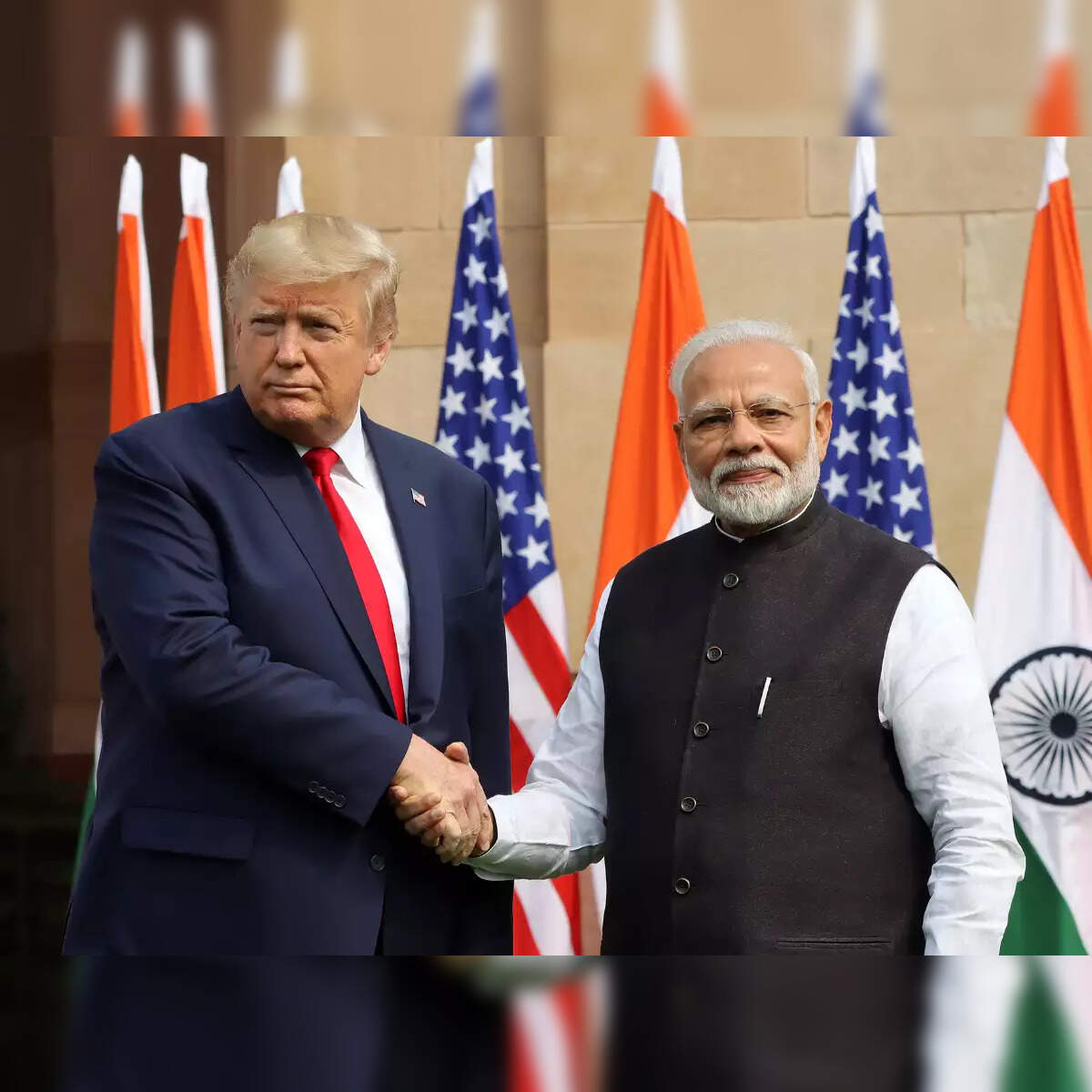
By K Raveendran Donald Trump and Narendra Modi never seem to tire of expressing admiration for each other, their mutual regard forming an odd but undeniable transnational political camaraderie. What binds them is not simply shared ideology but a similar worldview shaped by populism, nativism, and a flair for dramatic, often reckless, decision-making. Modi’s ‘Atmanirbhar […]
Advertisements

The semiconductor industry experienced a remarkable surge in 2024, with annual revenues climbing approximately 25% to reach $683 billion. This growth was predominantly fueled by escalating demand for artificial intelligence applications, particularly high-bandwidth memory used in AI graphics processing units . The memory segment, buoyed by HBM, saw a 74% year-over-year increase, significantly contributing to the industry’s overall rebound from a challenging 2023. SK hynix reported record-breaking […]

Gold-backed cryptocurrencies have experienced significant declines following the announcement of sweeping tariffs by President Donald Trump. These digital assets, which are pegged to the value of physical gold, initially surged to record highs as investors sought safe havens. However, they have since retreated, mirroring the broader market sell-off.

On April 3, 2025, President Trump unveiled a series of reciprocal tariffs, imposing a minimum of 10% on global imports and up to 49% on certain countries, including Vietnam. This move prompted immediate reactions across financial markets, with the Dow Jones Industrial Average plunging over 1,000 points, the Nasdaq dropping 3%, and the S&P 500 slumping 2.7%. The technology sector was notably affected, with major companies like Apple, Amazon, and Meta experiencing substantial losses. citeturn0news27turn0news29

In the commodities market, gold initially rallied, reaching an all-time high of $3,167.84 per ounce. This surge was driven by investors seeking refuge amid escalating trade tensions. However, the precious metal’s value soon declined, with spot gold prices falling 1.4% to $3,090.00. This reversal was attributed to investors liquidating positions to cover losses in other asset classes. citeturn0search2turn0search4

Gold-backed cryptocurrencies, which are digital tokens pegged to the price of gold, mirrored this trajectory. PAX Gold and Tether Gold both saw declines, with PAXG trading at $3,047.64, down 2.44%, and XAUT at $3,047.16, down 2.51%. These movements reflect the broader market’s volatility and investors’ shifting sentiments.

The cryptocurrency market as a whole was not immune to the turmoil. Bitcoin, the largest cryptocurrency by market capitalization, fell to the $82,000 level, marking a significant drop from its previous position near $88,000 prior to the tariff announcements. Altcoins such as Ethereum and Solana also experienced declines, with Ethereum dropping over 6% to fall back under $1,800. citeturn0search17turn0search20

Analysts suggest that the aggressive nature of the tariffs has heightened fears of a global trade war, leading to increased market volatility. The tariffs’ impact extended beyond equities and cryptocurrencies, affecting commodities like crude oil, which saw a 6.4% decline. Bond yields also dropped as investors moved towards safer assets.

Central banks’ recent activities have also played a role in the gold market’s dynamics. In February, institutions such as Poland and China increased their gold reserves, contributing to the metal’s price movements. However, the current market conditions have overshadowed these factors, with immediate reactions to trade policies taking precedence.

The Nasdaq Composite Index entered bear market territory on Friday, April 4, 2025, closing over 20% below its December peak. This significant downturn was precipitated by President Donald Trump’s imposition of a 10% tariff on all imports to the United States, with additional substantial levies targeting technology-centric nations such as China, Taiwan, and Vietnam. China’s swift retaliation, announcing a 34% tariff on all U.S. imports, intensified fears of a global recession and inflationary pressures.

Major U.S. stock indices experienced sharp declines. The S&P 500 fell approximately 2.5%, while the Dow Jones Industrial Average dropped nearly 2.45%, shedding 994.46 points to close at 39,551.47. Technology stocks bore the brunt of the sell-off, with Apple Inc. shares declining over 4%, following a nearly 10% drop the previous day. Nvidia and Broadcom each lost more than 7%, and Tesla shares plummeted almost 10%.

The newly announced tariffs, dubbed “Liberation Day” tariffs by the administration, include a universal 10% tariff on all imports and higher targeted tariffs for numerous countries. Economists warn that these measures could disrupt global supply chains, particularly impacting the technology sector, which relies heavily on components from China and Taiwan. The Semiconductor Industry Association expressed concern that the tariffs could stymie growth and innovation within the industry.

International responses were swift. The European Union signaled readiness to implement countermeasures, while the International Monetary Fund cautioned that escalating trade tensions pose significant risks to global economic stability. In the U.S., political figures across the spectrum voiced apprehension. Senate Majority Leader Mitch McConnell and Senator Ted Cruz criticized the tariffs, warning of potential harm to American workers and farmers.

Despite a robust March jobs report indicating the addition of 228,000 new jobs and a slight uptick in unemployment to 4.2%, market sentiment remained negative. Investors are now looking to Federal Reserve Chair Jerome Powell’s upcoming speech for insights into potential monetary policy adjustments in response to the escalating trade conflict.

The CBOE Volatility Index, a measure of market anxiety, surged to levels not seen since August 2024, reflecting heightened investor concern. Oil prices also declined significantly due to fears of reduced global demand amid the escalating trade tensions.

President Trump defended the tariff strategy, asserting that the measures are necessary to address longstanding trade imbalances and would ultimately benefit the U.S. economy. He urged investors to view the market downturn as a wealth opportunity.

Greenlogue/AP Carbon Clean has announced the successful completion of the world’s first industrial deployment of its modular carbon capture technology, CycloneCC. Over a six-month period, the system achieved approximately 4,000 operating hours, delivering a high-purity carbon dioxide product. CycloneCC is designed to address key challenges in industrial carbon capture by offering a fully modular solution that reduces both cost and space requirements. The technology utilises rotating packed […]

Impressive technological applications win international praise, assisting enterprises in going global to explore more opportunities HONG KONG SAR – Media OutReach Newswire – 3 April 2025 – The Hong Kong Productivity Council (HKPC) debuted with a dedicated pavilion at Hannover Messe 2025 (Hannover Messe), showcasing a range of Hong Kong’s technological applications, which were highly regarded by international companies and investors. HKPC successfully showcased the impressive achievements […]

European Union antitrust regulators are set to announce by May 12 their decision regarding the Abu Dhabi National Oil Company’s proposed €15.9 billion acquisition of German chemicals manufacturer Covestro. This transaction, initiated in October 2024, represents ADNOC’s most significant foray into the European chemicals sector. The European Commission, responsible for ensuring fair competition within the EU’s 27 member states, faces several options: granting unconditional approval, approving the […]

President Donald Trump has announced a comprehensive tariff strategy, imposing a baseline 10% duty on all imports into the United States, with significantly higher rates targeting approximately 60 countries. This move, declared during a White House event termed “Liberation Day,” aims to address trade imbalances and bolster domestic industries. Under the new policy, key trading partners will face steep tariffs: China is subjected to a 34% duty, […]

Greenlogue/AP Abu Dhabi National Oil Company has initiated a tender process for the engineering, procurement, and construction of Project Rabdan, a low-carbon ammonia production facility slated for construction in the Taziz industrial complex. The plant is designed to produce one million tonnes per year of blue ammonia, leveraging natural gas feedstocks while capturing and storing carbon dioxide emissions to reduce its carbon footprint. The EPC tender follows […]

MemryX Inc., a semiconductor company specializing in edge artificial intelligence solutions, has announced the completion of a $44 million Series B funding round. The investment aims to scale the production of its MX3 AI accelerator and further the development of its next-generation MX4 chip. Founded in 2019 and based in Ann Arbor, Michigan, MemryX has focused on creating energy-efficient AI accelerators designed for edge computing applications. The […]

Highlights of the Annual Results for the Year Ended December 31, 2024: With rising demand for chips from AI technology-related industries, AI chip orders from Comtech continued to grow, driving the Group’s revenue up by 14.3% year-on-year to RMB10,129.1 million. The Group recorded a gross profit of approximately RMB889.4 million and a net profit of approximately RMB273.5 million. Profit attributable to equity shareholders of the Company was […]

HKSTP park company Laservall aims to advance high-precision laser technology with AI-driven automation, empowering advanced manufacturing through microelectronics innovation HONG KONG SAR – Media OutReach Newswire – 31 March 2025 – Laservall today announced a landmark HKD 300 million (USD 38 million) investment plan for the next five years. This strategic commitment focuses on R&D, manufacturing and technology enhancement, and tech talent development in Hong Kong. A […]

Audi has initiated the deployment of virtual programmable logic controllers at its Böllinger Höfe facility in Germany, marking a significant advancement in automotive manufacturing. This initiative, part of Audi’s Edge Cloud 4 Production strategy, aims to enhance production efficiency and flexibility. The EC4P platform enables the virtualization of control systems, replacing traditional hardware-based programmable logic controllers with software-driven solutions. This transition allows for centralized management and real-time […]

Foxconn, Apple’s primary manufacturing partner, plans to produce 25 to 30 million iPhones in India this year, more than doubling its output from the previous year. This move underscores Apple’s strategy to strengthen its manufacturing footprint in India and diversify its supply chain amid global uncertainties.

The Taiwanese contract manufacturer has been conducting trial runs at its facility in Bengaluru, Karnataka, aiming to meet Apple’s stringent quality standards and production targets. This initiative aligns with Apple’s broader objective to reduce reliance on Chinese manufacturing and mitigate risks associated with geopolitical tensions and supply chain disruptions.

Foxconn’s expansion in India is part of a larger trend of global tech companies seeking alternative manufacturing hubs. India’s Production-Linked Incentive scheme has been instrumental in attracting such investments by offering financial incentives to boost domestic manufacturing. In the fiscal year ending March 2023, Foxconn produced approximately ₹300 billion worth of iPhones, surpassing the PLI scheme’s cap of ₹200 billion, indicating the program’s success in scaling up production.

In addition to iPhone assembly, Apple is broadening its product manufacturing in India. A unit of Foxconn is set to commence the assembly of AirPods at a new factory near Hyderabad, Telangana, by early 2025, following successful trial productions. This diversification reflects Apple’s commitment to expanding its product assembly capabilities within the country.

However, the expansion has encountered challenges. Reports suggest that China is imposing restrictions on the movement of employees and specialized equipment essential for high-tech manufacturing to India and Southeast Asia. These measures appear aimed at limiting technology transfers and mitigating potential job losses, posing obstacles to Apple’s efforts to diversify its production bases.

Despite these hurdles, Apple’s manufacturing partners in India are making significant strides. Tata Electronics has acquired a 60% stake in Pegatron Technology India, which manages an iPhone plant near Chennai. This acquisition positions Tata as a formidable competitor to established players like Foxconn in the Indian iPhone manufacturing landscape.

The Indian government’s support has been pivotal in this expansion. Foxconn is establishing a mobile phone manufacturing plant in the Devanahalli Industrial Area, Bengaluru, with an investment of ₹21,911 crore. The company will receive incentives amounting to ₹6,970 crore under the Electronics System Design and Manufacturing policy, as announced by Karnataka’s Chief Minister.

India is significantly enhancing the operational capabilities of its special forces by integrating advanced technologies such as nano drones, loitering munitions, and sophisticated communication systems. This strategic initiative aims to bolster covert operations and counter-terrorism efforts, enabling deep penetration into hostile territories with heightened efficiency and precision.

The Indian Army’s Para , the Navy’s Marine Commandos , and the Air Force’s Garud Commando Force are at the forefront of this modernization drive. These elite units are being equipped with state-of-the-art surveillance tools and specialized weaponry designed to meet the demands of contemporary warfare. The incorporation of nano drones facilitates real-time intelligence gathering, allowing operatives to assess situations and execute missions with unprecedented accuracy.

Loitering munitions, often referred to as “kamikaze drones,” have emerged as a pivotal asset in this technological upgrade. These unmanned aerial vehicles can hover over target areas, identify high-value threats, and execute precision strikes, effectively neutralizing adversaries while minimizing collateral damage. The Indian Army has been actively integrating these systems into its arsenal, recognizing their potential to revolutionize battlefield tactics. Indigenous development efforts have led to the creation of loitering munitions tailored to the specific needs of India’s defense forces, reflecting a commitment to self-reliance in military technology.

In addition to aerial advancements, the deployment of midget submarines is being considered to enhance maritime special operations. These compact vessels offer stealth capabilities, enabling covert insertion and extraction of forces in littoral zones. Such assets are particularly valuable for the Navy’s MARCOS unit, which specializes in amphibious warfare and maritime counter-terrorism operations.

The Armed Forces Special Operations Division , established to foster jointness among the three services, plays a crucial role in this modernization effort. Headquartered in Bengaluru, AFSOD serves as a hub for coordinating special operations training and missions, ensuring seamless integration of new technologies across all branches. The division’s formation marks a significant step toward creating a unified command structure akin to those found in other major military powers.

Despite these advancements, the absence of a full-fledged Special Operations Command presents challenges in achieving optimal synergy among the various special forces units. The current structure relies on collaborative efforts facilitated by AFSOD, but experts argue that a dedicated command could further streamline operations and command-and-control mechanisms. Addressing this structural gap remains a subject of ongoing discussion within defense circles.

The push for technological enhancement extends beyond hardware acquisition. Comprehensive training programs are being implemented to ensure that personnel can effectively operate and integrate these advanced systems into their missions. Exercises such as “Poorvi Prahar” have been conducted along the eastern borders, where troops honed their skills with swarm drones, first-person view drones, and loitering munitions. These drills not only test the efficacy of new equipment but also refine tactics and strategies for future engagements.

India’s focus on indigenous development of defense technologies aligns with the broader “Atmanirbhar Bharat” initiative. By investing in domestic research and production capabilities, the country aims to reduce dependency on foreign suppliers and cultivate a robust defense industrial base. Companies like Kadet Defence Systems have been instrumental in this endeavor, delivering loitering aerial munitions designed and manufactured within India.

The integration of artificial intelligence and satellite communications further augments the operational effectiveness of special forces. These technologies enhance situational awareness, enable secure and rapid information exchange, and support decision-making processes in dynamic combat environments. As warfare becomes increasingly network-centric, such capabilities are indispensable for maintaining a strategic edge.

By Nitya Chakraborty The inevitable has happened. Narendra Modi government’s myopic policy on handling the interim government of Bangladesh headed by Dr. Muhammad Yunus has led this important neighbour of India into Chinese lap. The Xi Jinping-Yunus meeting held in Beijing on March 28 gave its final seal of approval to the economic strategy of […]
By Nitya Chakraborty Prime Minister Narendra Modi is known as the super salesman of jumlas. Beginning from Jan Dhan account of Rs. 15 lakh for everyone to generating two crore jobs for youth every year, all the hyped up propaganda of the BJP led government since 2014 have turned into a big flop. Even in […]

Siemens has finalized the acquisition of Altair Engineering Inc., a prominent provider of industrial simulation and analysis software, for approximately $10.6 billion. This strategic move is set to enhance Siemens’ capabilities in simulation, high-performance computing , data science, and artificial intelligence . The transaction involves Siemens purchasing all outstanding shares of Altair at $113.00 per share in cash, representing a 19% premium over Altair’s closing price on […]

VISHNU RAJA
RYO YAMADA
HITORI GOTOH
IKUYO KITA