Ras Al Khaimah’s first university research and innovation awards have drawn 189 submissions, giving the emirate a new platform to connect student ideas with national priorities in technology, sustainability, healthcare and advanced industry. The inaugural RAK Award for Excellence in University Research and Innovation 2026, organised by the American University of Ras Al Khaimah, brought together entries from 20 universities across the UAE. Of those, 94 projects […]
A loaded liquefied natural gas tanker has crossed out of the Strait of Hormuz bound for India, marking the country’s first confirmed LNG shipment from the Persian Gulf since the Iran war disrupted one of the world’s most important energy corridors.
The Al Hamra, operated by ADNOC Logistics & Services, was tracked leaving the Gulf with a cargo headed towards western India after weeks of restricted tanker movements through the narrow waterway. The vessel had stopped transmitting its position around April 19, when it was empty and near the eastern entrance of Hormuz, before reappearing with indications that it had loaded and moved through the passage.
The shipment is significant because it points to a cautious reopening of Gulf energy trade for selected cargoes, even as shipping remains constrained by security checks, insurance costs and uncertainty over whether the waterway can return to normal operations. The Strait of Hormuz links the Persian Gulf with the Gulf of Oman and the Arabian Sea, making it the most sensitive maritime route for Gulf oil and gas exports to Asia.
For India, the transit offers limited relief after weeks of pressure on energy logistics. The country relies heavily on imported LNG to supply fertiliser plants, city gas networks, refineries, power producers and industrial users. Western India, where several import terminals are located, is a critical landing point for Gulf cargoes because of its proximity to major gas-consuming states and pipeline networks.
The war that began on February 28 led to a sharp fall in tanker traffic through Hormuz, leaving ships idle inside the Gulf and forcing buyers to consider alternative cargoes from outside the region. LNG, crude oil and liquefied petroleum gas flows were all affected, with importers seeking supplies from the United States, Africa and Southeast Asia where available. The disruption came at a sensitive time for Asian buyers, with summer demand rising and spot cargoes becoming more costly.
Around one-fifth of global LNG trade passes through Hormuz in normal conditions. Qatar is the dominant LNG exporter through the route, while the UAE also ships cargoes from its Das Island facility. Asia receives the overwhelming share of Hormuz-linked LNG, with China, India and South Korea among the leading destinations. Any sustained restriction therefore has an immediate effect on Asian gas pricing and supply planning.
India’s LNG import system has expanded over the past decade, but dependence on seaborne supply remains a strategic vulnerability. The country has operational terminals at Dahej, Hazira, Dabhol, Kochi, Ennore, Mundra and Dhamra, with combined capacity of nearly 48 million tonnes a year. Dahej in Gujarat remains the most important facility, serving fertiliser units, refineries, power plants and city gas distributors across northern and western markets.
The Al Hamra movement follows earlier signs that limited LNG traffic had resumed through the chokepoint. The Mubaraz, another LNG tanker linked to the UAE, crossed out of the Gulf in late April after weeks of inactivity, becoming the first loaded LNG shipment to exit Hormuz since the conflict began. A second ADNOC-linked LNG tanker followed in early May, showing that Gulf suppliers were testing the scope for controlled departures.
Shipping executives and energy traders remain cautious, however. Vessel owners are facing higher war-risk premiums, tighter routing decisions and uncertainty over whether transponders should remain active in conflict-sensitive waters. Some tankers have switched off tracking systems for security reasons, making it harder for buyers and market participants to confirm loading and transit details in real time.
India has also been dealing with pressure in LPG supply, a politically sensitive segment because of household cooking fuel demand. Several LPG cargoes linked to India were stranded or delayed after the Hormuz disruption, prompting authorities to prioritise the return of ships already inside the Gulf before sending more vessels into the area. That approach reflects a broader effort to balance energy security with crew safety and insurance exposure.
Arabian Post Staff -Dubai Sharjah has waived truck toll gate fees for cargo vehicles arriving from Oman and operating along approved logistics corridor routes, in a move aimed at cutting freight costs, easing cross-border movement and strengthening the emirate’s role in regional supply chains. The measure applies to cargo trucks entering through the Khatmat Malaha and Al Madam border crossings, provided shipments meet the initiative’s conditions and […]
Arabian Post Staff -Dubai Saudi Arabia’s ambassador to Canada hosted Defence Minister David J. McGuinty in Ottawa, underscoring a continuing effort by both governments to deepen diplomatic, security and economic engagement after years of strain in the relationship. Ambassador Amal Almoalimi received McGuinty at her official residence on May 22, where the two sides discussed issues of mutual interest and reaffirmed the strength of relations between the […]
Masdar has signed an agreement with China’s Sungrow to supply battery energy storage and photovoltaic inverter systems for Abu Dhabi’s round-the-clock renewable energy project, strengthening the supply chain behind one of the world’s most ambitious attempts to make solar power available as firm baseload electricity. The agreement covers 7.5 gigawatt-hours of Sungrow’s PowerTitan 3.0 battery energy storage systems and 2.6 gigawatts of PV inverter solutions. The equipment […]
Arabian Post Staff -Dubai Jazeera Airways has launched its first direct service between Kuwait and Italy, operating an inaugural flight from Kuwait International Airport’s Terminal 5 to Milan Bergamo Airport on Friday as the carrier pushes deeper into the European leisure and business travel market. The new Kuwait–Milan Bergamo route will operate three times a week, on Mondays, Wednesdays and Fridays, using Airbus A320neo aircraft. The service […]
British Columbia fusion developer General Fusion is weighing a Toronto Stock Exchange listing alongside its planned Nasdaq debut, a move that would give Canadian investors a direct public-market route into one of the most closely watched private energy technologies. Vancouver-headquartered General Fusion, backed over the years by investors linked to Jeff Bezos and Shopify founder Tobias Lütke, is preparing to go public through a business combination with […]
Bangladesh Bank has launched a 600 billion-taka support package to revive closed factories, expand credit to small businesses and lift growth after a prolonged slowdown in production, exports and private investment. Governor Md Mostaqur Rahman announced the programme at the central bank headquarters in Dhaka, setting out a refinancing and support structure aimed at restoring industrial capacity, creating jobs and easing pressure on businesses hit by high […]
Dubai Maritime City has opened Maritime Business Centre 2, an AED160 million commercial tower designed to add premium office capacity to DP World’s maritime, logistics and trade ecosystem at a time of sustained demand for Grade A workspace across the emirate. The new tower, located in the Commercial District of Dubai Maritime City, was completed in 20 months and had secured leasing commitments for 78 per cent […]
State-run fuel retailers raised petrol and diesel prices on Saturday for the third time in eight days, extending a phased pass-through of higher crude costs to consumers after nearly four years of broadly frozen pump rates.
Petrol in New Delhi rose by 87 paise to ₹99.51 a litre, while diesel increased by 91 paise to ₹92.49 a litre. The latest increase takes the cumulative rise in both fuels to about ₹5 a litre this month, following the first retail fuel price increase since April 2022.
The pricing move reflects mounting pressure on oil marketing companies as international crude benchmarks remain elevated amid conflict in West Asia and supply concerns around key shipping routes. The controlled increases also point to a calibrated approach by the government, which is seeking to protect refiners’ balance sheets without delivering a sharp one-time shock to household budgets, freight operators and small businesses.
Indian Oil Corporation, Bharat Petroleum Corporation and Hindustan Petroleum Corporation dominate the retail fuel market, operating more than 90 per cent of the country’s roughly 103,000 fuel stations. Their pricing decisions carry wide implications for transport costs, food supply chains, inflation expectations and fiscal calculations.
The latest revision follows a ₹3-a-litre increase on May 15 and another smaller increase during the week, marking a clear shift from the long freeze that had shielded consumers from global volatility while pushing losses onto state-run refiners. That freeze had become harder to sustain as crude prices climbed and the rupee’s movement added to import costs.
The country imports more than four-fifths of its crude oil requirements, leaving domestic retail prices exposed to global oil markets and exchange-rate swings. Refiners have been selling petrol and diesel at discounted rates relative to landed costs, with diesel under-recoveries remaining larger because of its central role in freight, agriculture, public transport and industry.
Losses on diesel sales have been estimated at ₹25-30 a litre even after the first hike, while petrol losses have been placed at about ₹10-14 a litre. The fresh increase narrows that gap only modestly, suggesting further upward revisions could follow if crude prices stay high or the currency weakens.
Diesel is the more sensitive fuel for the broader economy. It powers trucks, buses, farm equipment, construction machinery and a large part of the country’s goods movement. Even modest increases can feed into freight rates, especially for smaller fleet operators with limited capacity to absorb higher running costs.
Petrol demand has also stayed firm, supported by urban commuting, two-wheeler use and private vehicle ownership. April consumption data showed petrol sales at about 3.7 million tonnes, up more than 6 per cent from a year earlier, while gasoil sales stood near 8.3 million tonnes, marginally higher than last year. The numbers indicate that demand has not weakened sharply despite higher living costs.
Bulk fuel demand has added another layer of pressure. Large users such as transport operators, mining companies and industrial consumers often respond quickly to price differences between retail outlets and direct industrial supply. A spike in retail buying can worsen supply imbalances and deepen losses for refiners if pump prices remain below market-linked levels.
The government has so far signalled little appetite for direct subsidies to compensate refiners for continuing under-recoveries. That stance increases the likelihood of gradual price adjustments, particularly if global crude remains above levels assumed in company projections. A sudden subsidy programme would also complicate fiscal planning at a time when public spending priorities remain stretched across infrastructure, welfare and defence.
State-level taxes mean consumers across major cities will see different pump prices even when the base increase is broadly similar. Mumbai, Kolkata, Chennai, Bengaluru and Hyderabad typically record higher retail rates than New Delhi because of local levies, dealer commissions and freight costs. That variation also affects inflation differently across regions.
Compressed natural gas prices have moved higher as well, with Delhi seeing another ₹1-per-kg increase, the third rise in ten days. The parallel increase in CNG adds pressure on taxis, autorickshaws and urban commuters who had shifted to gas-based transport as a cheaper alternative to petrol and diesel.
For oil marketing companies, the price increases may support margins but are unlikely to restore full profitability immediately. Investor attention is now focused on how quickly the companies can recover past losses, whether demand holds up, and whether policymakers allow market-linked pricing to continue if inflationary pressure grows.
Arabian Post Staff -Dubai Brazilian refiner Acelen has secured $1.5 billion to begin construction of a major biofuels refinery in Bahia, advancing Abu Dhabi’s Mubadala-backed strategy to build a large-scale renewable fuels platform in Latin America. The project, led by Acelen Renováveis, is expected to start operations in 2029 and produce up to 1 billion litres a year of sustainable aviation fuel and renewable diesel. The financing […]
Arabian Post Staff -Dubai Abu Dhabi’s exit from OPEC has placed the UAE at the centre of a wider debate over how Gulf producers should manage oil wealth as long-term demand faces pressure from the energy transition. Anwar Gargash, diplomatic adviser to President Sheikh Mohamed bin Zayed Al Nahyan, said the decision was shaped over three years and reflected the leadership’s view that the world is approaching […]
Hyundai Motor Group has committed to placing more than 25,000 Atlas humanoid robots across Hyundai Motor and Kia factories, setting up a major test of industrial automation as its South Korea labour union warns that no deployment can proceed without a formal labour-management agreement. The plan, outlined to investors this week, marks one of the most ambitious humanoid robot rollouts yet proposed by a global carmaker. The […]
BANGKOK, THAILAND – Media OutReach Newswire – 22 May 2026 – Thai Cement Manufacturers Association (TCMA) marked a significant national milestone in advancing the decarbonization of Thailand’s cement and concrete industry toward Net Zero 2050. This progress is driven by strong collaboration among government agencies, industry players, and international partners under the “Decarbonization of the Cement and Concrete Sectors in Thailand” project, while accelerating the adoption of technology, innovation, and green investment to enhance competitiveness and support long-term economic growth.
Dr. Chana Poomee, Honourary Chairman of TCMA and President of ASEAN Federation of Cement Manufacturers (AFCM), stated that today’s “National Milestone” reflects the power of collaboration at both national and international levels. The initiative is led by the United Nations Industrial Development Organization (UNIDO), in partnership with TCMA and key Thai government agencies, including the Department of Climate Change and Environment and the Department of Industrial Works, with financial support of CAD 8 million from the Government of Canada through Environment and Climate Change Canada (ECCC), to accelerate tangible greenhouse gas reductions in the cement and concrete sector.
TCMA, as the industry representative, serves as a central platform connecting stakeholders across the entire value chain, driving the implementation of the “Thailand 2050 Net Zero Cement and Concrete Roadmap.” This aligns with Thailand’s NDC 3.0 targets, strengthening industrial competitiveness, attracting green investment, and fostering sustainable economic growth.
“Decarbonization is not only a pressing challenge but also a strategic opportunity to enhance national competitiveness. The progress achieved under this project spans policy development, innovation, technology deployment, standards, and capacity building-key enablers that will accelerate the industry’s transition toward Net Zero”, Dr. Chana said.
A key technological advancement under the project is the introduction of the Mobile Carbon Capture Unit (MCCU) from CETRI, Canada. This advanced and flexible technology is designed for real-world industrial operations and will be piloted starting in June, rotating across cement plants of TCMA members in the SARABURI SANDBOX. The pilot aims to validate performance under diverse operational conditions and pave the way for large-scale industrial application.
“The deployment of MCCU in Thailand highlights the strength of international collaboration in bringing advanced technologies into real-world application. It accelerates learning-by-doing, validates technological performance, strengthens local technical capabilities, and reduces investment risks-laying a strong foundation for future scale-up”, Dr. Chana added.
From an investment perspective, the development of technology-ready and standards-aligned projects enhances investor confidence, increases the attractiveness of green investment, and improves access to sustainable finance-key drivers in accelerating the industry’s transition to Net Zero.
TCMA continues to advance the industry under a “Collaborative Mindset-Action-Value,” promoting the systematic adoption of low carbon technologies, including low carbon cement innovations such as Limestone Calcined Clay Cement (LC3), Carbon Capture, Utilization and Storage (CCUS). These solutions not only reduce emissions but also improve efficiency, lower long-term costs, and strengthen global competitiveness.
At the regional level, TCMA is expanding its role through AFCM by fostering collaboration and advancing the AFCM Decarbonization Roadmap, which serves as a shared framework to reduce carbon emissions across ASEAN’s cement industry while enhancing regional technology, standards, and competitiveness.
“As President of the AFCM, TCMA is committed to driving ASEAN toward becoming a low carbon region by leveraging collaboration as a key mechanism to accelerate technology transfer, strengthen the industry capabilities, and unlock new regional economic opportunities”, Dr. Chana said.
TCMA reaffirmed its commitment to strengthening collaboration and welcoming international support in both technology and finance to accelerate the transition toward a low carbon industry, while enhancing Thailand’s competitiveness on the global stage.
Significant reductions in energy consumption, CO₂ emissions, and operating costs for energy-intensive industries
Growing demand highlights strong market potential for sustainable heating technologies
NUREMBERG, GERMANY – Newsaktuell – 21 April 2026 – Innomotics, a globally leading supplier of electric motors and large drive systems, is advancing the decarbonization of industrial heat processes with its solutions for industrial heat pumps. By electrifying the heat process, companies can significantly improve energy efficiency, reduce emissions, and lower long-term operating costs.
Industrial heating is one of the largest contributors to global energy consumption, with more than 70 percent of process heat still generated from fossil fuels. Industrial heat pumps offer a highly efficient alternative by upgrading ambient and waste heat to usable temperature levels of up to 150°C. This makes them a key technology for reducing CO₂ emissions and achieving global climate targets.
The electrification of heat processes is a critical step in industrial transformation. Heat pumps deliver thermal output several times higher than the electrical energy input, making them one of the most efficient technologies for converting electricity into heat. When powered by renewable energy, CO₂ emissions can be virtually eliminated.
Innomotics provides a comprehensive portfolio of high- and low-voltage motors as well as medium-voltage drives to ensure reliable and efficient operation of heat pump compressors. The systems are designed for maximum availability, enabling operation for up to five years without scheduled shutdowns, and can be seamlessly integrated into existing industrial processes.
In addition to environmental benefits, operators gain from significantly lower operating costs, reduced maintenance requirements, and system availability of up to 99.9 percent. Industrial heat pumps also enable new opportunities for waste heat recovery and integration into district heating networks.
A flagship example is the largest heat pump system in the Netherlands, where heat is recovered daily from 65 million liters of treated wastewater. With Innomotics solutions, the system supplies district heating to around 20,000 households, covers approximately 15 percent of regional heat demand, and reduces CO₂ emissions by about 30,000 tons annually.
“Industrial heat pumps are a key technology for the energy transition and energy addition. They enable efficient use of existing heat sources while significantly reducing emissions. With our drive solutions, we provide the foundation for a sustainable and economically viable heat supply in industry,” says Michael Reichle, CEO of Innomotics.
He adds, “Operators are under pressure to make their processes both more efficient and more sustainable. Our technologies offer a scalable and economically a very attractive solution that supports the transition to electrified, low-carbon industrial operations.”
Recently awarded industrial heat pumps projects
Innomotics supplies key drive technology for world’s largest industrial heat pump at BASF, Germany: Innomotics GmbH has received a major order from Piller Blowers & Compressors GmbH to deliver 11 water-cooled HV M high-voltage motors and GH180HC medium-voltage converters. The systems will be deployed in the world’s most powerful industrial heat pump at BASF in Ludwigshafen.
Designed specifically for the requirements of PILLER and BASF, the Innomotics solutions combine compact design, high efficiency, and long-term reliability. The heat pump system will generate up to 500,000 tons of steam per year, while the water-cooled drive technology ensures low noise emissions and efficient, continuous operation.
Largest heat pump system in the Netherlands supplies 20k households with sustainable district heat The Dutch energy company Eneco is pursuing climate neutrality by leveraging aquathermal energy from wastewater to supply district heating networks in Utrecht and Nieuwegein. At the core of the Netherlands’ largest heat pump system, advanced motor and drive solutions from Innomotics enable the recovery of heat from around 65 million liters of treated wastewater per day. This results in a highly efficient and sustainable solution: approximately 30,000 tons of CO₂ emissions are saved annually, around 20,000 households are supplied with district heating, about 15 percent of Utrecht’s heat demand is covered, and 27 MW of thermal energy is generated.
Innomotics powers wastewater-based district heating in Amiens, France: With high-performance motor and drive solutions from Innomotics, Amiens Énergies is transforming treated wastewater into sustainable district heating. At the core of the system, 24 compact SD motors drive six large ammonia heat pumps, generating 18 MW of clean heat and supplying around 26,800 households.
By recovering thermal energy from 8.5 million m³ of wastewater annually, the solution reduces CO₂ emissions by approximately 41,000 tons per year while enabling a renewable energy share of over 70 percent. The robust and efficient Innomotics motors ensure reliable continuous operation under demanding industrial conditions, making the project a benchmark for climate-neutral urban heating.
Innomotics enables efficient industrial heat pump operation in Finland: At a major industrial heat pump installation in Finland, Innomotics supplied advanced drive technology to increase overall plant efficiency in a connected paper mill.
Innomotics delivered a variable frequency drive for a centrifugal compressor, supporting a 6.1 MW motor (6.6 kV, 2-pole). The system recovers process heat and feeds it back into operations, improving efficiency while reducing energy consumption and emissions.
HONG KONG SAR – Media OutReach Newswire – 22 May 2026 – At the International Hydrogen Development Symposium 2026 today (May 18), nine pioneering companies from Korea, the Chinese Mainland, France, and Hong Kong – including Hyundai Motor Group – signed a landmark Memorandum of Understanding (MOU) on hydrogen ecosystem building, marking a major step toward advancing the city’s green economy.
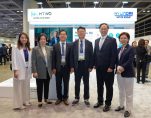
At the International Hydrogen Development Symposium 2026 today (May 18), nine pioneering companies from Korea, the Chinese Mainland, France, and Hong Kong – including Hyundai Motor Group – signed a landmark Memorandum of Understanding on hydrogen ecosystem building, marking a major step toward advancing the city’s green economy. Photo shows (from left) Senior Vice President (Sustainability) for Technology, Innovation and Entrepreneurship of Invest Hong Kong (InvestHK), Ms Olivia To; the Director-General of Investment Promotion of InvestHK, Ms Alpha Lau; Executive Vice President and Head of Energy & Hydrogen Policy Sub-Division at Hyundai Motor Group, Mr Seung Kyu-shin; Deputy Minister for Territorial and Urban Policy at Ministry of Land, Infrastructure and Transport of the Republic of Korea, Mr Jeong Eui-kyung; the Global Head of Financial Services, Fintech & Sustainability of InvestHK, Mr King Leung; and Senior Vice President, Transport, Logistics and Industrials of InvestHK, Ms Bonnie Ho, at the symposium.
This multi-party signing was officiated by Deputy Minister for Territorial and Urban Policy at Ministry of Land, Infrastructure and Transport of the Republic of Korea, Mr Jeong Eui-kyung; the Acting Secretary for Environment and Ecology, Miss Diane Wong; the Director of Electrical and Mechanical Services, Mr Poon Kwok-ying; and the Director-General of Investment Promotion of Invest Hong Kong (InvestHK), Ms Alpha Lau.
At the International Hydrogen Development Symposium 2026 today (May 18), nine pioneering companies from Korea, the Chinese Mainland, France, and Hong Kong – including Hyundai Motor Group – signed a landmark Memorandum of Understanding on hydrogen ecosystem building, marking a major step toward advancing the city’s green economy. Photo shows the Director-General of Investment Promotion of Invest Hong Kong, Ms Alpha Lau, delivering a speech.
Spearheaded by Hyundai Motor Group, the MOU establishes a collaborative framework to build a comprehensive, self-sustaining hydrogen ecosystem in Hong Kong, targeted to be fully operational by the end of 2030. The collaboration will prioritise the development of waste-to-hydrogen technologies to convert landfill gas into clean energy, along with an immediate focus on piloting a liquefied hydrogen refuelling infrastructure. To enable full value chain integration, it also targets the deployment of customised hydrogen fuel cell commercial vehicles, including tour and airport shuttle buses.
Through facilitating public-private partnerships and inter-governmental collaboration, InvestHK is supporting Hyundai Motor Group and its partners to implement go-to-market strategies aligned with the shared vision for hydrogen ecosystem building.
This partnership will also position Hong Kong as a strategic base for Hyundai Motor Group’s hydrogen business expansion across the Asia-Pacific region.
Miss Wong said, “This collaboration marks a significant milestone in developing tangible, on-the-ground hydrogen applications to accelerate the green transition towards carbon neutrality. By combining Korea’s world-class technological capabilities with Hong Kong’s strategic urban context, Hong Kong could serve as an exceptional international demonstration platform for showcasing green and low-carbon technologies. If these cutting-edge innovations could be applied and scaled up successfully here, it will serve as a positive model and provide highly viable options for reference by modern cities worldwide.”
Ms Lau said, “Today’s multi-party signing is both a landmark moment for Hong Kong’s green economy and a clear signal that the city’s hydrogen ecosystem is gaining real traction. Over the past three years, InvestHK has helped leading hydrogen enterprises establish themselves in Hong Kong, several of which have since listed on the Hong Kong Stock Exchange, raising over $2.5 billion in total. For businesses with global green ambitions, Hong Kong is where business growth takes shape.”
At the International Hydrogen Development Symposium 2026 today (May 18), nine pioneering companies from Korea, the Chinese Mainland, France, and Hong Kong – including Hyundai Motor Group – signed a landmark Memorandum of Understanding on hydrogen ecosystem building, marking a major step toward advancing the city’s green economy. Photo shows the Acting Secretary for Environment and Ecology, Miss Diane Wong, delivering a speech.
Executive Vice President and Head of Energy & Hydrogen Policy Sub-Division at Hyundai Motor Group, Mr Seung Kyu-shin, said, “This MOU was signed as Hyundai Motor Group’s commitment to advancing Hong Kong’s proactive hydrogen policies and driving the acceleration of its hydrogen ecosystem utilising the Group’s hydrogen business capability and experience. Starting with Hong Kong, we look forward to expanding our collaboration and business opportunities across the broader Asia-Pacific hydrogen market.”
At the International Hydrogen Development Symposium 2026 today (May 18), nine pioneering companies from Korea, the Chinese Mainland, France, and Hong Kong – including Hyundai Motor Group – signed a landmark Memorandum of Understanding on hydrogen ecosystem building, marking a major step toward advancing the city’s green economy. Photo shows Deputy Minister for Territorial and Urban Policy at Ministry of Land, Infrastructure and Transport of the Republic of Korea, Mr Jeong Eui-kyung (back row, second right); the Acting Secretary for Environment and Ecology, Miss Diane Wong (back row, second left); the Director of Electrical and Mechanical Services, Mr Poon Kwok-ying (back row, first left); and the Director-General of Investment Promotion of Invest Hong Kong, Ms Alpha Lau (back row, first right), witnessing the signing.
Partners entering into this MOU include Hyundai Motor Company and Hyundai Engineering & Construction from Hyundai Motor Group, China Inspection Co Ltd, Chun Wo Bus Services Limited, Chun Wo Construction & Engineering Company Limited, Jiangsu Guofu Hydrogen Energy Equipment Co Ltd, JEA ENG, Templewater Limited, the Hong Kong and China Gas Company Limited, and Veolia Hong Kong Holding Limited.
This multi-party, long-term collaboration is set to establish a robust, end-to-end hydrogen industry chain – spanning production, storage, transportation, refuelling and utilisation.
New energy is vital to Hong Kong’s Climate Action Plan 2050 and the national dual-carbon goals. As set out in the Chief Executive’s 2025 Policy Address, Hong Kong will establish public hydrogen filling facilities on Hong Kong Island and in Kowloon, press ahead with more hydrogen trial projects, and develop the GBA Hydrogen Corridor in collaboration with Guangdong Province. The Hong Kong Special Administrative Region Government is actively advancing hydrogen development through technological innovation, talent cultivation, ecosystem building, and regional co-ordination. To date, over 30 hydrogen trial projects have been greenlit, paving the way not only for decarbonisation targets, but also for unlocking new quality productive forces for green economic growth. Hashtag: #InvestHK
The issuer is solely responsible for the content of this announcement.
About InvestHK
Invest Hong Kong (InvestHK) is the investment promotion agency of the Government of the Hong Kong Special Administrative Region (HKSAR).
Singapore business leader Teo Siong Seng has been accused by US prosecutors of taking part in a multi-year conspiracy to restrict output and fix prices of standard dry shipping containers, a case that places one of the city-state’s most prominent maritime figures at the centre of a major antitrust action. The indictment names four container manufacturing companies and seven executives in an alleged scheme that prosecutors say […]
Full oil shipments through the Strait of Hormuz are not expected to return before the first or second quarter of 2027, even if the Middle East conflict were to end immediately, ADNOC chief Sultan Ahmed Al Jaber has said, signalling that the energy shock from the Iran war could outlast any diplomatic settlement by many months. The warning from the head of the Abu Dhabi National Oil […]
Core42 has secured $550 million in structured trade finance from HSBC to accelerate artificial intelligence cloud and compute deployments across the United States and Europe, strengthening the Abu Dhabi group’s position in the global race to build large-scale AI infrastructure. The financing, arranged through two non-equity dilutive facilities, gives the G42 company additional capital without requiring a share sale. The first facility, worth $240 million, was completed […]
UAE economic growth is expected to slip into a mild contraction in 2026 as the Iran war disrupts oil exports through the Strait of Hormuz, before staging a strong recovery in 2027 on higher crude and gas production, major energy projects and continued strength in non-oil sectors. The projected setback marks a sharp reversal for the Gulf’s second-largest economy, which has spent the past decade reducing its […]
NANNING, CHINA – Media OutReach Newswire – 21 May 2026 – The China-ASEAN Business and Trade Information Platform was officially launched in Nanning, Guangxi Zhuang Autonomous Region on Tuesday.
A sub-forum themed international exchange and mutual learning of cyber civilization at the 2026 China Internet Civilization Conference is held in Nanning, Guangxi Zhuang Autonomous Region, May 19, 2026. (Photo: China News Service/Li Taiyuan)
The platform offers comprehensive information services and an international communication platform to support economic and trade cooperation between China and ASEAN countries.
Built and operated by China News Network, the official website of China News Service, the platform serves as ASEAN trade agencies, industry associations, overseas Chinese communities, and cross-border enterprises, providing one-stop trade information services.
China News Service will leverage its strengths to build the China-ASEAN Business and Trade Information Platform into an influential and dynamic communication channel that promotes information sharing and provides services, to facilitate trade and people-to-people exchanges between China and ASEAN countries.
Currently, a trade information network between China and ASEAN countries has been built, with key content covering policy explanations, market conditions, investment promotion, business cooperation, and industry analysis, to comprehensively support cross-border trade activities.
Prior to the platform’s launch, representatives from government departments, media outlets, research institutes, and universities in China and multiple ASEAN countries participated in discussions on economic and trade information exchange between China and ASEAN countries, as well as the development of the platform.
Consular officials from ASEAN member states including Cambodia, Myanmar, and Vietnam, stationed in Nanning expressed their hopes for enhancing China-ASEAN economic and trade connectivity as well as people-to-people ties through information sharing.
Against the backdrop of the signing of the China-ASEAN Free Trade Area 3.0 Upgrade Protocol, the platform serves as an information bridge for expanding cooperation, promoting trade, enhancing industrial upgrade, and achieving mutual benefits and win-win outcomes, they said.
They hope that the platform will play a greater role in trade facilitation and logistics services, empowering micro, small and medium-sized enterprises (MSMEs), and investment policies and regulatory measures, while helping share cooperation stories between China and ASEAN countries.
Hashtag: #Nanning
The issuer is solely responsible for the content of this announcement.
Mexico’s sovereign credit rating has been cut to the last rung of investment grade, placing fresh pressure on President Claudia Sheinbaum’s administration as investors weigh rising debt, sluggish growth and the continuing fiscal burden of Petróleos Mexicanos. Moody’s Ratings lowered Mexico’s long-term local and foreign-currency issuer and senior unsecured ratings to Baa3 from Baa2, while changing the outlook to stable from negative. The move leaves Latin America’s […]
Samsung Electronics is preparing one of the largest employee bonus packages in the global technology sector after a last-minute wage agreement with unions averted a threatened strike at its South Korean chip operations, where soaring demand for artificial intelligence memory has transformed the company’s earnings outlook. The tentative deal could channel about 40 trillion won, or roughly $26.6 billion, to semiconductor employees this year, implying an average […]
Arabian Post Staff -Dubai Abu Dhabi’s push to build a new crude pipeline bypassing the Strait of Hormuz has reached the halfway mark, with ADNOC chief executive Sultan Al Jaber saying the project is being accelerated towards a 2027 launch as regional tensions continue to expose the vulnerability of Gulf energy routes. Al Jaber said the pipeline, intended to expand export capacity through Fujairah on the Gulf […]