News related to
Industrial

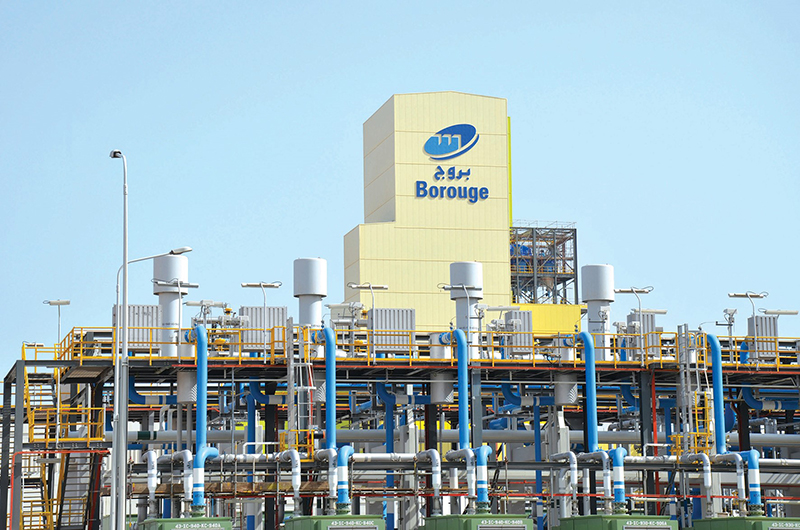
Borouge Plc has been included in the FTSE ADX Dividend Stars Index, a new benchmark launched by Abu Dhabi Securities Exchange in December 2025 that is designed to spotlight companies with a sustained record of dividend distributions, underlining the petrochemicals producer’s position as a core income stock within the local market.

ADX said the FTSE ADX Dividend Stars Index is the first income-focused index of its kind in the region, created to meet growing demand from investors seeking predictable cash returns alongside exposure to liquid, large-cap equities. The index brings together 17 companies that collectively accounted for more than 70 per cent of total cash dividends paid by ADX-listed firms during 2025, highlighting its role as a barometer for dividend strength across the exchange.

Borouge’s inclusion reflects its established dividend policy and scale within the Abu Dhabi market. The company, which produces polyolefins for infrastructure, energy, automotive and packaging applications, has been a consistent dividend payer since listing and is among the exchange’s most actively traded stocks by both institutional and retail investors. Its presence in the index places it alongside leading financial, energy and utility companies that dominate cash returns on ADX.

For market participants, the creation of the FTSE ADX Dividend Stars Index represents a strategic shift in how income strategies can be implemented in the Gulf. Until now, dividend-focused investors relied largely on individual stock selection or broader market indices that did not explicitly weight for income stability. By concentrating on dividend history and payout consistency, the new benchmark offers a clearer framework for portfolio construction aimed at long-term yield.

ADX officials have positioned the index as part of a broader effort to deepen the exchange’s product suite and attract international capital. Abu Dhabi has steadily expanded its market infrastructure through the introduction of sectoral indices, derivatives, exchange-traded funds and sustainability-linked products. An income-focused index is intended to complement these offerings by appealing to pension funds, insurers and asset managers with mandates tied to regular distributions.

Borouge’s operational and financial profile has supported its standing as a dividend anchor stock. The company benefits from integrated feedstock arrangements and proximity to key growth markets in Asia, the Middle East and Africa. Its production base in Ruwais, combined with access to Borouge 4 expansion capacity, has strengthened cash generation, even amid volatility in global petrochemical pricing cycles.

The company’s dividend record has also been closely watched in the context of broader consolidation within the Abu Dhabi energy and industrial ecosystem. Strategic alignment with major shareholders has emphasised balance sheet resilience and shareholder returns, factors that are central to index eligibility criteria focused on payout sustainability rather than short-term yield spikes.

The FTSE ADX Dividend Stars Index methodology places weight on historical dividend payments, liquidity thresholds and free-float considerations, ensuring that constituents are both investable and representative of income generation on the exchange. By capturing more than two-thirds of all dividends paid on ADX during the year, the index underscores the concentration of cash returns among a relatively small group of large, established issuers.

Market analysts note that such concentration can work to the advantage of income investors by reducing volatility and enhancing predictability, while also posing questions about diversification within dividend strategies. The index structure addresses this by capping individual weights and maintaining sector balance, allowing exposure to financial services, energy, utilities and industrials without over-reliance on a single name.

For Borouge, index inclusion may translate into incremental demand from passive and semi-passive investment products tracking the benchmark. Fund managers often use newly launched indices as the basis for exchange-traded funds or structured products, potentially increasing liquidity and reinforcing valuation support for constituent stocks.

KUALA LUMPUR, MALAYSIA – Media OutReach Newswire – 17 December 2025 – The SME100 Awards has become one of the most trusted and influential platforms for high growth Malaysian enterprises, recognised for its rigorous evaluation standards and its role in identifying the country’s most promising businesses. Over the years, the programme has evolved into more than an award. It has become a springboard for SMEs seeking credibility, visibility and a supportive ecosystem in an increasingly volatile business landscape.

That landscape has grown more challenging than ever. Malaysian SMEs are operating in a climate defined by rising costs, talent shortages, complex regulatory requirements and tightening cash flow. Inflation continues to push operational expenses upward, while difficulties in hiring and retaining skilled talent have slowed growth for many. These pressures have created a harsh reality. Companies that lack adaptability risk losing market share, while those that act decisively are discovering opportunities in places previously overlooked.

Despite these obstacles, the SME sector has demonstrated a remarkable ability to rebound. Recent data shows that SME GDP grew by 11.6 percent, surpassing the national average and signalling that transformation, not stability, is driving growth. Many businesses have embraced digital tools, streamlined operations and explored new revenue pathways. The divide between surviving and thriving is becoming clearer, and it is defined by mindset, capability and speed.

In this environment, the SME100 Awards serves as a crucial platform for SMEs to strengthen their position. The programme provides a structured pathway for benchmarking performance, accessing regional networks and gaining recognition that matters to customers, partners and investors. By combining quantitative financial indicators with qualitative assessments and a full interview process, SME100 identifies companies that are not only resilient, but ready for the next phase of growth. For winners, the programme offers visibility, connection to a strong ASEAN SME community and access to continuous learning and collaboration opportunities.

Datuk William Ng, National President of SAMENTA, underscored the importance of this support. He said, “Malaysian SMEs are confronting some of the toughest market realities in decades. Yet the most progressive among them are proving that adversity can be a turning point. The SME100 Awards highlight these companies not simply for their achievements, but for the mindset they represent. They show the entire SME sector what is possible when we combine innovation, discipline and the willingness to change.”

The SME100 programme is further strengthened by the involvement of key industry partners. CTOS serves as the official credit reporting partner, Baker Tilly Malaysia as the official auditor and CGC Digital as the gold sponsor. Together, they enhance the transparency, credibility and relevance of the awards while reinforcing the broader ecosystem that supports SME growth.

For more information about the SME100 Awards 2025 Malaysia and the complete list of winners, please visit www.sme100.asia

LIST OF WINNERS OF THE MALAYSIA SME100 AWARDS 2025 (IN ALPHABETICAL ORDER):

  1. AA AVIATION SDN BHD
  2. AGENSI PEKERJAAN KAWA GLOBAL SDN BHD
  3. AL HIJRA HEALTHCARE SDN BHD
  4. AMD SOLUTIONS SDN BHD
  5. ARVIA SOLUTIONS
  6. AUTHENTIC TIMBER RESOURCES SDN BHD
  7. BIMAGE CONSULTING (M) SDN BHD
  8. BINA SKK SDN BHD
  9. BLACK GOLD SECURITY SDN BHD
  10. BUMI SENDAYAN SDN BHD
  11. CASA ENTERTAINMENT GROUP SDN BHD
  12. CEE INDUSTRIES SDN BHD
  13. CRILIGHT MARKETING (M) SDN BHD
  14. CRT INSIGHTS TECHNOLOGIES SDN BHD
  15. CTRM TESTING LABORATORY SDN BHD
  16. DAYASAKTI TRAVEL & TOURS SDN BHD
  17. DREAMAZE SDN BHD
  18. EDCA ENERGY SDN BHD
  19. EF STORE SDN BHD
  20. EG TECH SYSTEM SDN BHD
  21. ELITE MARKETING GROUP SDN BHD
  22. EVOPOINT SDN BHD
  23. FLEX SEAL & PUMP ENGINEERING SDN BHD
  24. FLEXI FLEX HYDRAULICS SDN BHD
  25. GREEN EXCEL ENGINEERING AND CONSULTANCY SDN BHD
  26. HAI SUAR HUAT PILING SDN BHD
  27. HEAP WAH BARAKAH SDN BHD
  28. IDMS TECHNOLOGIES SDN BHD
  29. IDPM ENGINEERING SDN BHD
  30. INDAH CLEANING SERVICES & MAINTENANCE (M) SDN BHD
  31. INDS CAPITAL SDN BHD
  32. IX REALTY SDN BHD
  33. J20 ADVANCE SDN BHD
  34. JIN SAN CONCRETE SDN BHD
  35. JNDESIGN MARKETING SDN BHD
  36. KIMAL AWNING & IRON WORKS SDN BHD
  37. KMS MANUFACTORY SDN BHD
  38. KPRJ E&C SDN BHD
  39. LES’ COPAQUE PRODUCTION SDN BHD
  40. LOGIX EXPRESS SDN BHD
  41. MABUCO SDN BHD
  42. MALGAZ INDUSTRIES SDN BHD
  43. MARCH INTERIOR STUDIO SDN BHD
  44. MATTECH MANUFACTURING SDN BHD
  45. MEOFCO SDN BHD
  46. MK HARAMAIN TRAVEL & TOURS SDN BHD
  47. MK PORRIDGE SDN BHD
  48. MTC CAFE AND RESTAURANT
  49. NEW KC TRADING SDN BHD
  50. NURSERY HONG SOON SDN BHD
  51. OG MARKETING GROUP SDN BHD
  52. QUANTUM COMPUTING SDN BHD
  53. RADDISH TECHNOLOGY SDN BHD
  54. RAY TECH (MALAYSIA) SDN BHD
  55. RFY ACES (M) SDN BHD
  56. SAI COND SALES & ENGINEERING SDN BHD
  57. SALAM MEDICAL CENTRE SDN BHD
  58. SARAMOLY (M) SDN BHD
  59. SATRIA TECHNOLOGIES SDN BHD
  60. SAUDAGAAR ASIA SDN BHD
  61. SIN THYE & COMPANY (PRO SAFETY)
  62. SIS INTEGRATED SDN BHD
  63. SK GLOBE BUSINESS CAPITAL SDN BHD
  64. SKA TRANSPORT (M) SDN BHD
  65. SKINVILLE SOLUTION SDN BHD
  66. SKY POWER SDN BHD
  67. SOFTWELL SDN BHD
  68. SOLAR VOLTECH SDN BHD
  69. SOLARLINK ENERGY SDN BHD
  70. SOON LEE STEEL SDN BHD
  71. SPEEDBRICK SDN BHD
  72. SSEMEDX SERVICES SDN BHD
  73. SUPER EDUCATIONAL ALLIANCE SDN BHD
  74. SUSTEN SDN BHD
  75. TERAS IMPIANA SDN BHD
  76. THONG WORLD SDN BHD
  77. TONG SHENG ENGINEERING SDN BHD
  78. TRUZ HOME SDN BHD
  79. UBINGO VACATIONS SDN BHD
  80. V CRITICAL ENGINEERING SDN BHD
  81. VIRTUAL ECONOMY TECHNOLOGY SDN BHD
  82. YPS TECHNOLOGY SDN BHD
  83. ZABSI INDUSTRIAL VENTILATION SDN BHD

SME100 OUTSTANDING INSPIRATIONAL ENTREPRENEUR AWARDS 2025

  • MR. DONAHUE CHONG – BIMAGE CONSULTING (M) SDN BHD
  • MR. EDWARD CHYE WEI YANG – EDCA ENERGY SDN BHD
  • MR. KALVIN CHUA – EVOPOINT SDN BHD
  • YBHG. DATO’ RAVINTHRAN S/O BALAH – INDAH CLEANING SERVICES & MAINTENANCE (M) SDN BHD
  • MR. BENJAMIN GUNG SIE KAI – JIN SAN CONCRETE SDN BHD
  • MR. CHIN KAH SHING – NURSERY HONG SOON SDN BHD
  • MR. YEE HONG HO – RFY ACES (M) SDN BHD
  • MR. DESMOND GOH – SKY POWER SDN BHD
  • MR. SIEW YOUNG MING – SSEMEDX SERVICES SDN BHD
  • IR. BAVANANTHAN A/L SELVAMANY – TERAS IMPIANA SDN BHD

SME100 SUSTAINABLE BRAND AWARDS 2025
  • EDCA ENERGY – EDCA ENERGY SDN BHD
  • JardinPèau – SKINVILLE SOLUTION SDN BHD
  • SAI COND – SAI COND SALES & ENGINEERING SDN BHD
  • IDMS TECHNOLOGIES – IDMS TECHNOLOGIES SDN BHD
  • UbinGO VACATIONS – UBINGO VACATIONS SDN BHD
SME100 WOMEN ENTREPRENEUR AWARDS 2025
  • MS. YUNLU LEE – AUTHENTIC TIMBER RESOURCES SDN BHD
  • MS. NURUL AIN BINTI MOHAMAD KHDRI – ARVIA SOLUTIONS
  • MS. FLORENCE GOH SIEW BOEY – CRT INSIGHTS TECHNOLOGIES SDN BHD
  • MS. DOREEN DING – INDS CAPITAL SDN BHD
  • MRS. SURIA HANI BINTI AFFANDI CHEW – MERAQUE SERVICES SDN BHD
  • MS. ELLEN LIM – SKA TRANSPORT (M) SDN BHD
  • TS. KOK SHIN LIN – SUSTEN SDN BHD
  • MS. MICHELLE YEONG – THONG WORLD SDN BHD

SME100 CTOS CREDIT EXCELLENCE AWARDS 2025

  • BUMI SENDAYAN SDN BHD
  • IDPM ENGINEERING SDN BHD
  • JNDESIGN MARKETING SDN BHD
  • KMS MANUFACTORY SDN BHD
  • NURSERY HONG SOON SDN BHD

Hashtag: #SME100Awards

The issuer is solely responsible for the content of this announcement.

About SAMENTA

Established in 1986, SAMENTA is Malaysia’s largest association of SMEs, with over 5,500 members across the country. A multi-racial, multi-sector association, SAMENTA has been at the forefront of championing a SME-friendly business environment and connecting SMEs to regional and global opportunities.

About Business Media International

Business Media International is a subsidiary of Audience Analytics Limited, a regional leader in promoting growth for companies in Asia through data-driven brands and initiatives. We own renowned media brands such as SME Magazine, HR Asia, Capital Asia, Energy Asia, Logistics Asia, TruthTV, and CXP Asia as well as business impact assessment brands such as SME100, HR Asia Best Companies to Work for in Asia, Golden Bull Awards and CXP Asia Best Customer Experience Awards. Audience Analytics also owns a number of exhibition brands and has the proprietary software-as-a-service – Total Engagement Assessment Model.

Eastern European Union governments are coordinating a collective push to unlock larger and faster streams of funding to strengthen military defences against Russia, as leaders from eight frontline states meet in Helsinki to align priorities and influence the bloc’s budget and lending rules. Discussions among leaders from Finland, Estonia, Latvia, Lithuania, Poland, Czech Republic, Slovakia and Romania focus on closing gaps in air defence, long-range fires, ammunition […]

Tether, the issuer of the world’s largest stablecoin, has taken a formal step towards acquiring Juventus Football Club, signalling a deeper push by a major crypto firm into mainstream European sport. Paolo Ardoino, Tether’s chief executive, has confirmed that the company has submitted a proposal to buy the Turin-based club, opening a new chapter in speculation over the future ownership of one of football’s most recognisable names. […]

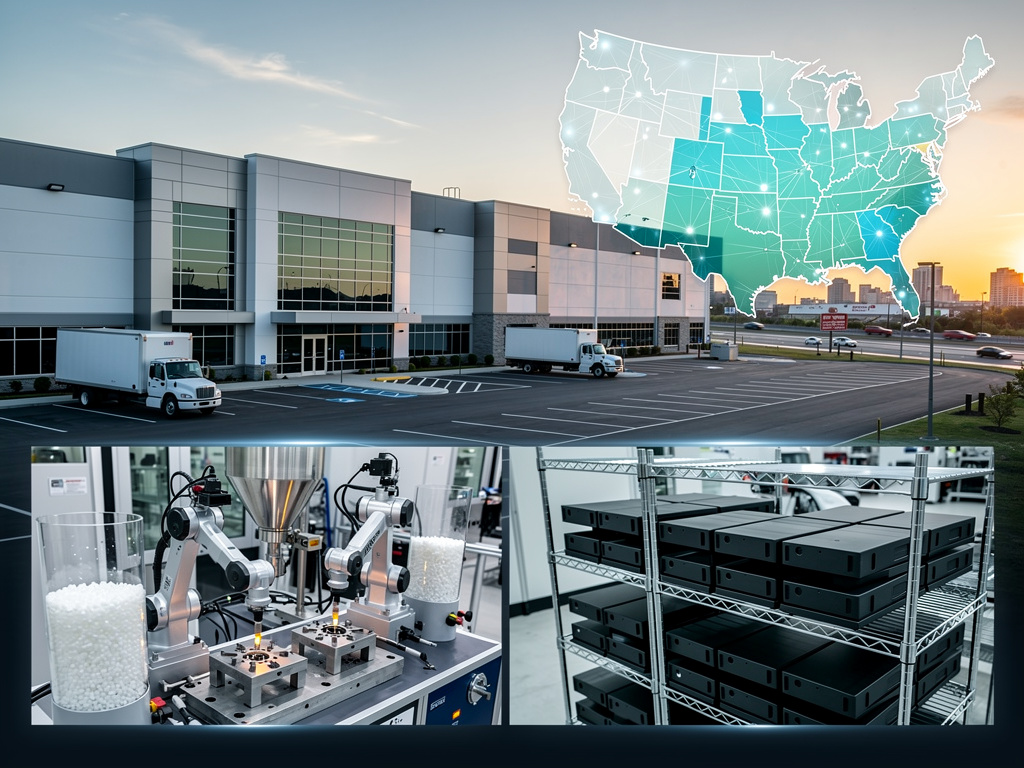
Foxconn will invest $173 million to build a consumer electronics manufacturing facility in Louisville, Kentucky, creating 180 jobs and marking another step in the contract manufacturer’s effort to expand its United States footprint as companies seek to rebalance global supply chains.

The facility, scheduled to begin operations in the third quarter of 2026, will focus on injection moulding, tooling and the production of key components used in consumer electronics. Company executives said the plant would support domestic manufacturing demand and align with a broader push by technology firms and policymakers to strengthen industrial capacity within the US.

State and local officials confirmed that the project has received approvals tied to job creation and capital investment benchmarks. Kentucky’s economic development authorities described the investment as part of a strategy to attract advanced manufacturing and reduce exposure to overseas supply disruptions that became evident during the pandemic and amid geopolitical frictions affecting global trade.

Foxconn, formally known as Hon Hai Precision Industry, is the world’s largest electronics contract manufacturer and a critical supplier to several major technology brands. While the company is best known for its vast manufacturing operations in China, it has been diversifying production across regions including Southeast Asia, Latin America and North America. The Kentucky plant adds to that network but on a scale that contrasts with earlier, more ambitious US plans.

The new facility is expected to employ engineers, technicians and production workers, with roles centred on high-precision manufacturing rather than large-scale assembly. Injection moulding and tooling are considered foundational processes in electronics production, supplying parts used across a range of devices. Industry analysts note that locating these processes closer to end markets can shorten lead times and reduce logistics costs, even if final assembly remains globally distributed.

Foxconn executives have framed the project as a “Made in America” initiative designed to support customers seeking domestic sourcing options. Several technology companies have been under pressure from governments and consumers to demonstrate resilience and transparency in their supply chains, particularly for components linked to critical infrastructure or sensitive technologies.

The Kentucky investment comes against the backdrop of Foxconn’s mixed history in the US. The company’s high-profile Wisconsin project announced in 2017 promised tens of thousands of jobs and billions in investment but was later scaled back significantly, leading to criticism from local communities and policymakers. That experience has made state governments more cautious, with incentives increasingly tied to verifiable outcomes rather than headline commitments.

In Kentucky, officials emphasised that the Foxconn deal is structured around realistic employment numbers and phased investment. The projected 180 jobs are modest by the standards of traditional manufacturing plants, but they reflect the capital-intensive and automated nature of modern electronics production. Wages are expected to be above the regional manufacturing average, according to preliminary workforce plans shared with state authorities.

For Foxconn, the move aligns with a broader recalibration of its global strategy. Rising labour costs in China, trade restrictions affecting technology exports, and growing scrutiny of cross-border dependencies have pushed manufacturers to adopt a “China plus one” or even “plus many” approach. The US has also introduced incentives aimed at encouraging domestic manufacturing, particularly in semiconductors and advanced electronics, although Foxconn’s Kentucky plant does not fall directly under federal chip subsidy programmes.

Supply chain experts say the investment reflects a pragmatic approach rather than a wholesale shift. Building a specialised plant focused on components allows Foxconn to serve US customers without replicating the scale of its Asian campuses. It also limits financial exposure while testing the economics of domestic production in a high-cost environment.

Local economic impact assessments suggest the project will have secondary benefits for suppliers, logistics firms and technical training providers in the Louisville area. Community colleges and workforce agencies have begun discussions with the company on skills development, particularly in precision tooling and materials processing.

Middle Eastern crude markets have shown clear signs of weakening as traders and refiners grapple with mounting concerns that regional supply is exceeding demand, adding pressure to an already fragile global oil balance. Pricing indicators closely watched by physical traders point to softer buying interest from Asia, where refiners face ample alternative supplies and uncertain consumption growth. One of the most telling signals has been the narrowing […]

Washington’s state dinner honouring Saudi Arabia’s crown prince offered a carefully curated guest list that blended politics, finance and technology. Alongside executives such as Apple chief Tim Cook and Citigroup head Jane Fraser sat Lubna Olayan, placed next to Elon Musk, a seating choice that quietly reflected her standing as one of the most connected figures linking Wall Street and the Gulf. The gathering drew attention to […]

Advertisements

Kuwait has moved to deepen its role in Gulf maritime trade after the Kuwait Ports Authority said it signed a memorandum of understanding with Abu Dhabi Ports Group to develop and operate the container terminal at Shuaiba port under a concession agreement. The arrangement places a major state-backed ports operator from Abu Dhabi at the centre of a facility that has long served as a backbone of Kuwait’s seaborne commerce, signalling a shift towards international partnerships to modernise ageing infrastructure and boost competitiveness.

The memorandum outlines a framework for collaboration that could see Abu Dhabi Ports Group involved in terminal operations, capacity upgrades and efficiency improvements at Shuaiba, subject to regulatory approvals and the finalisation of commercial terms. While financial details have not been disclosed, officials described the understanding as a step towards unlocking investment, technology transfer and operational expertise at Kuwait’s oldest port, which has faced mounting pressure from larger and more automated hubs elsewhere in the region.

Shuaiba port was established in the 1960s and remains a critical gateway for imports and exports despite growing competition from newer facilities along the Gulf. The port covers a total area of about 2.2 million square metres and has 20 berths, according to data published by the Kuwait Ports Authority. Its container terminal includes a storage area of roughly 318,000 square metres, making it a significant asset in a country that relies heavily on maritime trade for food, consumer goods and industrial inputs.

Officials familiar with the discussions said the focus of the partnership would be on improving berth productivity, reducing vessel turnaround times and expanding container-handling capacity to meet shifting trade patterns. Kuwait’s logistics sector has faced challenges linked to congestion, limited automation and slower clearance processes compared with regional peers. Partnering with an experienced international operator is seen as a way to narrow that gap without placing the entire investment burden on the state.

Abu Dhabi Ports Group has expanded rapidly beyond the UAE over the past few years, building a portfolio that spans ports, terminals, maritime services and logistics corridors across the Middle East, Africa and South Asia. Its strategy has centred on long-term concessions and joint ventures that integrate port operations with industrial zones and inland logistics. The Shuaiba memorandum aligns with that approach, offering access to a mature but under-optimised port in a strategically located market.

For Kuwait, the agreement reflects a broader policy push to diversify the economy and improve infrastructure efficiency as part of long-term development plans. While the country has invested heavily in oil and gas facilities, progress in logistics and transport has been slower, partly due to regulatory complexity and limited private-sector participation. Bringing in a regional operator with a track record in terminal modernisation could help accelerate reforms that have proved difficult to deliver through public investment alone.

Industry analysts note that container volumes in the Gulf are increasingly concentrated at mega-ports with deep drafts, advanced cranes and integrated digital systems. Smaller or older ports risk being sidelined unless they upgrade or specialise. Shuaiba’s location near industrial zones and population centres gives it an advantage, but sustaining that position requires capital spending and operational know-how. The proposed concession model would allow Kuwait Ports Authority to retain ownership while delegating day-to-day operations to a specialist partner.

The memorandum also carries geopolitical and commercial significance. Closer cooperation between Kuwait and Abu Dhabi in maritime infrastructure adds to a growing web of Gulf logistics partnerships aimed at strengthening regional supply chains. As global trade routes adjust to disruptions in other corridors, Gulf ports are competing to attract transshipment traffic and value-added services. Collaboration rather than rivalry is increasingly seen as a way to enhance resilience and bargaining power with global shipping lines.

SHENZHEN, CHINA – Media OutReach Newswire – 15 December 2025 – SF has launched two new cross-border supply chain products — “SF Smartlink Vietnam”, connecting China with Mainland Southeast Asia, and “SF India Sky Prime”, linking China with South Asia. The company has also unveiled “Ylink”, an innovative end-to-end integrated supply chain solution that combines financial services, logistics and warehousing, and data-driven capabilities. SF Smartlink Vietnam: It […]

Hassan Allam Construction has secured a contract valued at about $250 million to deliver the new headquarters of the African Export-Import Bank in Egypt, marking one of the most significant institutional construction awards in the country’s financial infrastructure sector this year. The project will house Afreximbank’s global headquarters and is positioned as a flagship development reflecting the lender’s expanding role in trade finance across the continent. The […]

Abu Dhabi-based International Holding Company has increased its ownership in Invictus Investment Company to about 40 per cent after acquiring an additional 17.5 per cent stake in a transaction valued at roughly Dhs420m, signalling a deeper strategic alignment between one of the region’s largest conglomerates and a global commodities trading platform. The investment was executed through the purchase of about 196 million shares in a major block […]

Advanced Micro Devices has reshaped its standing in the global semiconductor industry under chief executive Lisa Su, evolving from a company once associated mainly with cyclical PC demand into a diversified supplier central to the artificial intelligence build-out now reshaping data centres, cloud computing and high-performance workloads. AMD’s market capitalisation has hovered around the $200bn mark during 2024 and 2025, reflecting investor confidence that the company can […]

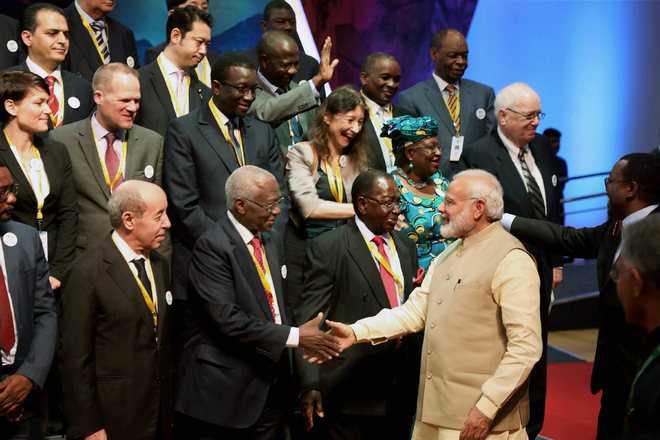
Prime Minister Narendra Modi began a three-nation diplomatic tour covering Jordan, Ethiopia and Oman, signalling a calibrated push to deepen political engagement, economic cooperation and people-to-people ties across West Asia and Africa. The visit places emphasis on long-standing partnerships while marking diplomatic milestones that officials describe as pivotal to a wider strategy linking the Gulf, the Horn of Africa and South Asia.

The tour opened in Jordan, where Modi held talks with King Abdullah II in Amman. Discussions focused on regional stability, counter-terror cooperation and expanding trade and investment links. Jordan occupies a strategic position in West Asia diplomacy, and both sides underlined shared concerns over conflicts affecting the region and their spillover effects. Bilateral exchanges also addressed cooperation in health care, education and technology, areas where existing agreements are being reviewed for expansion.

Jordan has emerged as a steady political partner, and the visit underscored efforts to elevate ties beyond symbolism. Officials highlighted collaboration in renewable energy and pharmaceuticals, alongside labour and skills partnerships that reflect Jordan’s role as a hub for regional services. Cultural engagement featured prominently, with references to the shared heritage reflected in academic exchanges and archaeological cooperation.

From Amman, Modi travelled to Addis Ababa, marking a significant diplomatic moment with Ethiopia. The visit coincides with the strengthening of relations with the African Union, headquartered in the Ethiopian capital, and signals intent to broaden engagement with Africa’s multilateral institutions. Talks with Prime Minister Abiy Ahmed centred on development cooperation, infrastructure financing and capacity building, as well as coordination in international forums.

Ethiopia’s role as a gateway to the Horn of Africa places it at the centre of regional connectivity and security discussions. The leaders examined cooperation in agriculture, manufacturing and digital public infrastructure, with attention to skills development and technology transfer. Ethiopia has been seeking diversified investment partnerships to support industrial parks and export-oriented growth, and the talks reflected interest in long-term collaboration rather than project-based engagement.

Diplomatic officials also pointed to cooperation in peacekeeping and humanitarian assistance, noting Ethiopia’s contribution to regional stability and its engagement with multilateral peace processes. The visit reinforced engagement with Africa at a time when competition for influence and investment has intensified, and when African economies are prioritising infrastructure and human capital development.

The final leg of the tour takes Modi to Oman, a country with deep historical and economic links, particularly in trade, energy and maritime cooperation. Meetings in Muscat are expected to focus on energy security, logistics and defence ties, building on agreements covering strategic petroleum reserves, port development and naval collaboration. Oman’s role as a stable interlocutor in the Gulf has given it a distinctive place in regional diplomacy.

Economic cooperation remains central to the Oman visit, with attention on bilateral trade, investment flows and collaboration in downstream energy projects. The presence of a large expatriate community has added a people-centric dimension to relations, shaping discussions on labour welfare, skills recognition and mobility. Financial services, tourism and green energy have emerged as additional areas of interest as both sides seek to diversify economic engagement.

Across the three stops, the tour reflects a broader pattern of outreach that links West Asia and Africa through trade corridors, energy routes and strategic partnerships. Officials involved in the preparations described the itinerary as a deliberate effort to balance political dialogue with economic substance, moving beyond ceremonial diplomacy. The focus on infrastructure, digital governance and energy transition aligns with priorities shared by many emerging economies.

Dubai Chamber of Commerce has launched the Bulgarian Business Council, marking a new institutional step aimed at expanding bilateral trade, strengthening commercial partnerships and encouraging mutual investment between Dubai and Bulgaria.

The council has been established under the umbrella of Dubai Chambers and is intended to serve as a structured platform for companies from both markets to collaborate, exchange market intelligence and identify joint opportunities. Officials involved in the initiative said the move reflects growing interest among Bulgarian firms in using Dubai as a regional base, while Dubai-based businesses increasingly view Bulgaria as a gateway to the European Union and South-Eastern Europe.

The new body brings together representatives from key sectors including manufacturing, logistics, food and agriculture, information technology, tourism, construction and renewable energy. Its mandate includes organising business delegations, facilitating B2B meetings, supporting regulatory understanding and helping members navigate investment frameworks in both jurisdictions. Dubai Chamber of Commerce indicated that the council will also work closely with public institutions and trade promotion agencies in Bulgaria to ensure alignment with national economic priorities.

Speaking at the launch, Dubai Chambers officials said the council was designed to “build stronger partnerships between business communities and unlock new opportunities for joint investment”, highlighting a shared interest in diversifying trade flows and deepening private-sector engagement. Bulgarian representatives echoed that view, noting that Dubai’s position as a global trade and logistics hub offers Bulgarian exporters and investors access to markets across the Middle East, Africa and Asia.

Trade ties between Dubai and Bulgaria have been expanding steadily, supported by improved logistics links and a broader push by Dubai to strengthen economic relations with European economies. Non-oil trade between the UAE and Bulgaria has grown over the past decade, driven by machinery, metals, chemicals, food products and pharmaceuticals, according to publicly available trade data. Dubai’s role as a re-export centre has also helped Bulgarian firms reach third markets more efficiently.

The launch of the Bulgarian Business Council fits into Dubai Chamber of Commerce’s wider strategy of establishing country-specific business councils to institutionalise trade relations and provide structured support to foreign investors. Dubai Chambers now hosts dozens of such councils, covering markets across Europe, Asia, Africa and the Americas. These councils have become a central tool in Dubai’s efforts to attract foreign direct investment, promote cross-border partnerships and reinforce the emirate’s status as a preferred base for international companies.

Analysts note that Bulgaria’s competitive advantages include its EU membership, relatively low operating costs, skilled workforce and strategic location linking Europe, the Balkans and the Black Sea region. For Dubai-based companies, these factors make Bulgaria an attractive destination for manufacturing, near-shoring, logistics and technology development. At the same time, Bulgarian companies see Dubai as a stable business environment with advanced infrastructure, business-friendly regulations and strong connectivity.

Investment interest between the two sides has been widening beyond traditional trade. Sectors such as renewable energy, agri-tech, fintech, health care and tourism development have emerged as areas of mutual focus. Bulgarian technology firms have shown growing interest in Dubai’s innovation ecosystem, while companies from Dubai are exploring opportunities in Bulgaria’s industrial zones, real estate and tourism assets.

The Bulgarian Business Council is expected to play a coordinating role in these areas by aligning private-sector initiatives with broader economic strategies. Its agenda includes promoting joint ventures, supporting start-ups seeking cross-border expansion and encouraging knowledge exchange in areas such as digitalisation and sustainability. Council members will also work to address practical barriers faced by businesses, including regulatory clarity, market entry requirements and partner identification.

Diplomatic and business officials involved in the initiative stressed that the council is intended to complement, rather than replace, existing government-to-government frameworks. By focusing on commercial engagement, it aims to translate high-level economic cooperation into tangible outcomes for companies operating on the ground. Similar councils under Dubai Chambers have previously been credited with accelerating deal-making and improving investor confidence by providing direct access to market insights and decision-makers.

A powerful earthquake measuring 6.7 on the moment magnitude scale struck northeastern Japan on Friday, triggering a tsunami advisory and prompting authorities to urge coastal communities to remain alert while assessments were carried out. The Japan Meteorological Agency said the quake occurred offshore, with tremors felt across parts of the Tohoku region, an area that remains closely monitored because of its seismic history. Officials said the advisory […]

Engineered for the AI era, MIMO delivers breakthrough metrics: 400 GB/s bandwidth, 54 million IOPS, and 40–90 μs latency—all within a form factor comparable to a large suitcase. MIMO serves as both a high-performance data hub for large-scale GPU clusters and a flexible edge deployment platform, extending seamlessly to desktop environments where it orchestrates workflows with various DGX Spark units based on NVIDIA’s GB10 Grace Blackwell superchip. […]

The investment landscape of 2026 is being shaped by a set of forces that are measurable, global, and impossible for any serious investor to overlook. The noise around short-term market swings has masked the reality that structural trends—not sentiment—are driving the next decade of value creation. Investors focused on what actually moves markets should concentrate on seven megatrends that are now setting the pace. The first is […]

Borrowing against physical and financial assets has become a defining feature of credit markets as more companies look for flexible funding beyond traditional loans. The model, known as asset-based lending, is drawing interest from mid-sized firms facing tighter bank standards and from fast-growing businesses seeking to unlock capital tied up in receivables, inventory, or machinery. This shift reflects an environment where cash-flow volatility, higher borrowing costs, and […]

Dubai once again became a hub for celebrating business excellence as industry leaders gathered at W Dubai – The Palm for the Entrepreneur Middle East Leadership Awards 2025. Among the standout honorees was Faruh Kurbanov, Co-Founder of DIA Holding, who received the Real Estate Leader of the Year award — a recognition of his growing influence on the region’s development landscape.  The annual awards highlight executives who […]

Arabian Post Staff -Dubai Abu Dhabi’s move to establish an investment corridor with China gained further traction after the Abu Dhabi Investment Office confirmed a strategic partnership with China International Capital Corporation aimed at expanding two-way capital flows and creating a formal framework for long-term collaboration. The initiative positions the emirate to attract a new wave of Chinese companies while giving institutional investors in Abu Dhabi structured […]

Senegal is moving to start construction of a domestic gas pipeline network before the end of 2025, marking a decisive step in its strategy to channel offshore gas discoveries into power generation and industrial development. The announcement from Petroleum and Energies Minister Birame Soulèye Diop signals that the government aims to accelerate the transition from planning to execution as major gas projects come onstream. The minister confirmed […]

Lucid Group has inaugurated a new retail studio in Al Khobar on December 5, extending its operational footprint across the Kingdom by adding a facility in the Eastern Province. This marks Lucid’s third studio in Saudi Arabia, joining its existing sites in Riyadh and Jeddah — a move the company says reflects growing demand and commitment to the region.

The Al Khobar studio offers prospective customers the opportunity to view the company’s flagship models, including the Lucid Air sedan and Lucid Gravity SUV, alongside services such as product consultations, vehicle customisation and after-sales support.

According to the company’s Middle East president, the new facility brings Lucid closer to buyers in what is considered one of the Kingdom’s most affluent markets. Lucid described the Eastern Province as its third-largest market, underscoring the importance of establishing a direct presence there.

The expansion comes amid broader efforts by Lucid to localise electric vehicle production. Since 2023, the company has operated a manufacturing facility at King Abdullah Economic City, which began with semi-knocked down assembly of its vehicles and is being upgraded to full build capability. The factory is expected to reach a production capacity of up to 150,000 vehicles annually once completely operational.

This localisation aligns with Saudi Arabia’s drive to transform its economy under Vision 2030, by promoting advanced manufacturing, reducing reliance on oil, and supporting sustainable mobility. In January 2025, Lucid became the first global automaker to join the country’s “Made in Saudi” programme, reinforcing its long-term industrial and strategic role in the Kingdom.

Industry analysts highlight the creation of a nascent Saudi EV ecosystem, with Lucid among the pioneers shaping domestic market demands, infrastructure build-out and consumer adoption of electric vehicles.

Bank lending across the UAE, Saudi Arabia and wider Middle East is projected to gather momentum next year as resilient economic conditions and steady financing demand strengthen the outlook for regional lenders. The assessment reflects the prevailing view among major rating analysts that banks have entered the coming year with solid balance sheets, expanding pipelines in corporate and retail credit, and a supportive macroeconomic environment. Fitch Ratings […]

The Kingdom of Saudi Arabia is planning a massive infrastructure push to achieve net-zero carbon emissions by 2060, with a significant portion of financing expected to come from the private sector. Investment Minister Khalid Al-Falih, speaking at the MOMENTUM2025 Development Finance Conference in Riyadh, projected that infrastructure investments could reach up to $1 trillion over the medium term, with private capital accounting for around 40 per cent — equivalent to $400-500 billion.

Al-Falih outlined that this influx of investment will be channelled across diverse programmes: privatisation schemes, energy infrastructure under the supervision of the Ministry of Energy, and major initiatives led by key domestic players such as ACWA Power and Saudi Aramco, including expansion of blue hydrogen production and global marketing. The minister emphasised that the push reflects the Kingdom’s evolving infrastructure and energy strategy — aligning economic diversification under Saudi Vision 2030 with climate-related commitments.

Officials at the conference stressed that the investment liquidity will flow through multiple channels. Besides large-scale energy and infrastructure projects, capital will also support expansion in sustainable tourism, desalination plants, airport and logistics development, and logistics hubs, boosting sectors beyond oil and traditional energy. This drive is underpinned by a broader green finance framework recently introduced by domestic regulators, including the issuance of green bonds and the creation of a domestic carbon-credit market under Tadawul.

Despite the ambitious plan, some observers remain cautious. Independent analysts — such as those at the Climate Action Tracker — rate the Kingdom’s net-zero pledge for 2060 as “poor”, noting that the target lacks legal codification and fails to clarify which greenhouse gases or sectors are included. They underline that while domestic investments in renewables, carbon capture and clean hydrogen are growing, the lack of a comprehensive emissions-reduction pathway — especially regarding export-related emissions — leaves a significant portion of emissions unaddressed.

Al-Falih acknowledged the challenges but framed the plan as a transformation rather than a short-term campaign. He pointed out that the Kingdom has already exceeded some Paris Agreement-linked targets, and underlined an energy mix strategy aiming for 50 per cent of electricity generation through renewables by 2030, supplemented by high-efficiency gas turbines and storage technologies to ensure reliability.

As global demand for energy continues to rise — driven in part by rapid advances in artificial intelligence and digital infrastructure — Riyadh’s roadmap envisages that growing energy needs will dovetail with sustainable investment in infrastructure, industrial transformation and green-energy exports.

VISHNU RAJA
RYO YAMADA
HITORI GOTOH
IKUYO KITA