News related to
Industrial

Arabian Post Staff -Dubai Saudi Arabia’s Public Investment Fund has stepped up its backing of Lucid Group with a fresh $550 million investment through affiliate Ayar Third Investment Company, extending the sovereign wealth fund’s role as the electric vehicle maker’s financial anchor at a time when Lucid is trying to stabilise cash burn, repair operational strains and broaden its commercial reach. The commitment forms part of a […]

China’s President Xi Jinping used talks in Beijing with Spain’s Prime Minister Pedro Sánchez on Tuesday to press for closer ties with Madrid, casting Spain as a useful partner at a time of what he described as a “crumbling” international order. The meeting placed Spain at the centre of China’s broader effort to keep channels open with Europe as trade frictions, security tensions and strategic rivalry with Washington continue to reshape diplomacy.

Sánchez, on his fourth trip to China in four years, arrived with a message that mixed engagement with caution. On the eve of meeting Xi, he told an audience at Tsinghua University that China should assume a larger role in tackling climate change, inequality, global health, responsible artificial intelligence and major conflicts, while also arguing that Europe must step up as the United States pulls back from several fronts. That language reflected Madrid’s attempt to deepen economic relations with Beijing without ignoring the strategic unease that still colours China’s ties with much of the West.

For Xi, Spain offers a politically valuable counterpart inside the European Union. Beijing has been looking for reliable European interlocutors as Brussels tries to defend industrial interests, scrutinise state-backed Chinese investment and manage disputes over electric vehicles and market access. Spain has often sounded less confrontational than some other European capitals. Sánchez has previously urged compromise over tariffs on Chinese-made electric vehicles and has continued to frame China as a strategic partner rather than only a rival. That posture does not place Madrid outside the EU mainstream, but it does make Spain one of the more open major economies for Chinese diplomacy.

Trade remains the hardest fact beneath the warmer language. Sánchez acknowledged in Beijing that China accounts for 74 per cent of Spain’s overall trade deficit, and Reuters reported that Spain’s deficit with China approached $50 billion in 2025 after more than doubling over four years. Madrid wants better access for agricultural and manufactured exports while preserving inward investment that could help its green transition and industrial base. Chinese capital has already been tied to projects in batteries, hydrogen and manufacturing in Spain, underlining why the government sees practical gains in staying engaged even as the imbalance in trade grows harder to ignore.

That commercial logic is colliding with a tougher geopolitical climate. Sánchez’s visit has drawn scrutiny because it comes as China seeks stronger European ties during a period of strain with Washington. Reuters reported before the trip that Sánchez’s independent line on China had already irritated U. S. President Donald Trump, while Spain also rejected sharp U. S. criticism of moves to expand trade with Beijing. Chinese officials, for their part, signalled before the visit that they wanted to use it to deepen strategic trust, cooperation and multilateral coordination. The result is a diplomatic balancing act in which Madrid is trying to protect its autonomy, retain access to both superpowers and avoid being forced into a binary choice.

The political symbolism runs beyond bilateral ties. Sánchez’s stop in Beijing follows a succession of other European leaders visiting China this year, suggesting that even governments wary of Beijing’s security posture and industrial policies still see a need for direct dialogue. China is encouraging that trend, presenting stable relations with Europe as proof that it is not isolated despite mounting tension elsewhere. Spain’s government has echoed part of that argument, with Sánchez saying in Beijing that Europe and China had prospered together before and could do so again. That sentiment fits neatly with Xi’s effort to frame China as a pillar of order against a backdrop of war, protectionism and institutional drift.

Federal investigators in the United States, working with Indonesian police, have dismantled the W3LL phishing network, a cybercrime operation that authorities say enabled the theft of thousands of account credentials and supported more than $20 million in attempted fraud. The action, led by the FBI’s Atlanta field office, included the seizure of infrastructure linked to the service and the detention in Indonesia of an alleged developer identified […]

Cisco is closing in on a deal to buy Astrix Security for as much as $350 million, according to multiple reports, in a sign that one of the world’s largest networking and security groups is moving faster to secure the fast-growing risks created by AI agents and other non-human identities inside large organisations. The talks, first reported on April 10, value the Israeli startup at roughly three […]

Iran-linked cyber operatives using the CyberAv3ngers banner are again in the spotlight after U. S. authorities warned on April 7 that Iranian-affiliated hackers have stepped up efforts to compromise programmable logic controllers and supervisory control systems used in water, energy and government facilities, with some intrusions already causing operational disruption and financial loss. The alert marks a sharper phase in a campaign that security officials say has […]

TCL Electronics is exploring the sale of a stake in its television manufacturing business in India to local buyers, in a move that could help the Chinese consumer electronics group expand more deeply in one of the world’s fastest-growing electronics production bases, according to people familiar with the matter. Bloomberg reported the company is working with an adviser and is seeking to raise at least $200 million from the proposed stake sale.

The deliberations point to a broader shift in strategy for global electronics groups operating in India, where policy support for domestic manufacturing, supply-chain localisation and greater local participation in ownership are increasingly shaping investment decisions. India approved more than $750 million in projects for electronic component manufacturing at the end of March and has set a target of lifting electronics output to $500 billion by fiscal 2031, up from $125 billion in the year to March 2025.

TCL has spent years building out its industrial footprint in the country. The group’s Tirupati manufacturing base, unveiled as its largest such facility outside China, was designed to produce TV and mobile phone screens at scale. Economic Times reported the plant was built with annual capacity for eight million large-sized TV screens and 30 million small-sized mobile screens.

That industrial push has since been reinforced by TCL CSOT India, the company’s display-panel arm, which said it had completed three production lines with monthly capacity of 1.2 million units and was moving towards full bonding, lamination and assembly operations with capacity reaching two million units a month. The company said the India operation was supplying panel modules to customers including Samsung, underscoring that the business is not only about selling finished televisions under the TCL brand but also about embedding itself in the wider supply chain.

A partial stake sale to domestic investors would therefore carry strategic weight beyond capital raising. It could give TCL stronger local alliances, improve regulatory comfort, and help the company navigate a market where manufacturing, sourcing and ownership are increasingly entwined with industrial policy. It may also position the business more favourably in dealings with state governments, suppliers and large retail channels as competition intensifies across the television segment. The company has not publicly announced any transaction, and the talks may not lead to a deal.

For TCL, India matters not just as a sales market but as a production and export platform. The company’s 2024 annual report showed it shipped 29 million televisions worldwide last year, with global market share by shipments rising to 13.9%, placing it among the top two TV brands globally, according to Omdia data cited by the company. The same report said TCL ranked among the top three in retail sales volume in nearly 20 overseas markets and recorded strong growth across emerging markets, including the Middle East and Africa.

Those figures help explain why TCL may be seeking a structure that allows it to preserve momentum in India while adapting to local realities. India is becoming harder to treat as a simple import destination. Policy incentives are encouraging assembly, component manufacturing and deeper supply-chain integration, while geopolitical tensions and tariff shifts are prompting multinational groups to diversify production beyond a single geography. For television makers, that means scale alone is no longer enough; local manufacturing depth and political acceptability also matter.

The move also reflects a wider pattern among Asian electronics manufacturers, many of whom have expanded capacity in India to reduce dependence on imports and align themselves with official manufacturing goals. Reuters reported in late March that New Delhi’s incentive programmes are aimed at cutting import dependence and strengthening local supply chains. That policy environment has created room for both foreign and domestic investors, but it has also made partnership structures more attractive than wholly externally controlled operations in sensitive or high-volume sectors.

Hexagon has agreed to buy Waygate Technologies from Baker Hughes for about $1.45 billion in cash, giving the Swedish measurement technology group a bigger presence in industrial inspection and opening a new front in its push beyond traditional metrology. The deal, announced on Monday, hands Hexagon control of a business that supplies non-destructive testing equipment used to inspect critical components and assets without taking them apart or […]

Advertisements

Brussels is preparing to urge European Union governments to cut electricity taxes and trim power-grid charges, betting that cheaper power can both shield households and industry from the latest oil and gas shock and speed the shift towards cleaner technologies. The move comes as the European Commission tries to contain the economic fallout from surging fossil-fuel prices without abandoning the bloc’s longer-term decarbonisation plans. The recommendation would […]

Arabian Post Staff -Dubai AD Ports Group is accelerating its effort to turn itself from a Gulf port operator into a broader trade and logistics network, using expansion in Egypt, Africa, Pakistan and the Mediterranean to win a larger role in global supply chains as companies seek more resilient routes and integrated cargo services. For the Abu Dhabi-based group, 2025 marked another year of record financial growth. […]

Arabian Post Staff -Dubai Oil vaulted above $100 a barrel and share markets retreated on Monday after President Donald Trump ordered a US naval blockade targeting traffic to and from Iranian ports, sharply escalating tensions around the Strait of Hormuz after weekend talks between Washington and Tehran collapsed in Islamabad. The move revived fears of a wider confrontation across the Gulf and renewed concern over inflation, shipping […]

Arabian Post Staff -Dubai Abu Dhabi-based Etihad Airways has unveiled one of its largest single-market expansions in years, adding five mainland China destinations and 28 weekly flights as it deepens its joint venture with China Eastern Airlines and sharpens its focus on a corridor carrying growing weight in trade, tourism and cargo. The move will lift Etihad’s mainland China operation to 35 weekly services across six gateways, […]

Arabian Post Staff -Dubai Saudi Arabia has restored full pumping capacity on its East-West pipeline to about seven million barrels a day, reactivating a strategic export artery that has become central to global crude flows during the disruption of shipping through the Strait of Hormuz. The Ministry of Energy said operational and technical teams brought the line back to full strength within days of attacks that had […]

Arabian Post Staff -Dubai   Saudi Arabia Railways has launched five new logistics routes aimed at accelerating cargo movement between Gulf ports, inland industrial centres and cross-border markets, in a move designed to strengthen the Kingdom’s position in regional and international trade. The new network combines rail and road links, tying Arabian Gulf gateways to central and northern regions, with onward access to the Red Sea and […]

Scientists tracking airborne particles over agricultural land in Oklahoma have identified medium-chain chlorinated paraffins, or MCCPs, in the atmosphere, marking what researchers describe as the first airborne detection of the chemical group in the Western Hemisphere. The finding has drawn attention because MCCPs are toxic industrial compounds under growing international scrutiny, and the researchers suspect the material may have reached the air from fertiliser made with treated […]

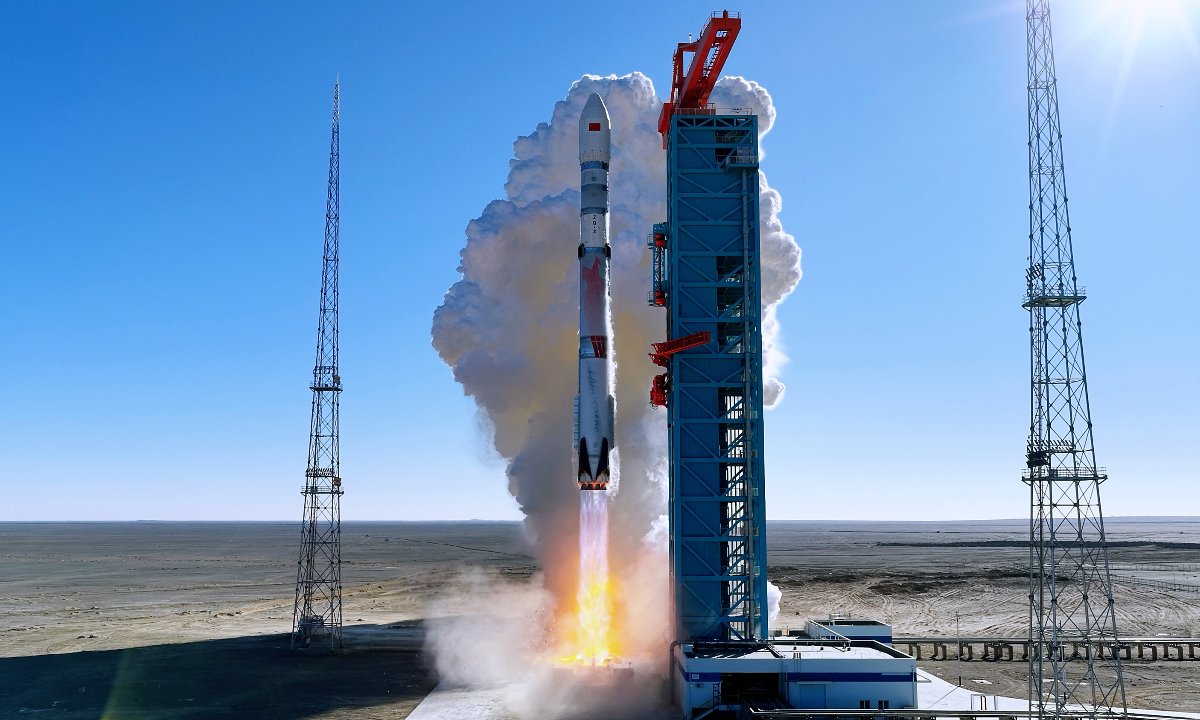
Beijing has pushed its reusable space programme a step further with the launch of an experimental spacecraft that state media described as a technology-verification mission, underlining how the country is trying to cut launch costs, raise flight tempo and broaden the range of missions it can carry out in orbit. The spacecraft was launched on 7 February aboard a Long March-2F rocket from the Jiuquan Satellite Launch Center in northwest China, in what was the fourth publicly disclosed mission of this type since 2020.

Chinese authorities released only a brief account of the flight, saying the spacecraft would verify reusable-spacecraft technologies and support the peaceful use of space. No official duration was given, and no details were provided on the systems being tested, the orbit reached or the vehicle’s configuration. That secrecy has become a hallmark of the programme and makes it difficult to judge exactly how far the technology has advanced, but the pattern of repeated flights suggests a sustained effort rather than a one-off demonstration.

Chronology matters here. China’s first disclosed flight in September 2020 lasted about two days. A second spacecraft launched in August 2022 stayed in orbit for 276 days before landing in May 2023. A third mission, launched in late 2023, returned in September 2024 after 268 days in orbit. Those longer flights point to growing confidence in long-duration autonomous operations, recovery procedures and mission endurance. Outside observers have often compared the craft with the United States’ X-37B-style approach to reusable uncrewed orbital vehicles, though Beijing has not publicly confirmed such comparisons.

This mission also fits into a much wider acceleration in Chinese space activity. On 7 April, China used a Long March-8 rocket from the Hainan commercial launch site to place 18 internet satellites into orbit for the Qianfan constellation. On 11 April, it carried out a sea launch using a Smart Dragon-3 rocket from waters off Guangdong, sending up a test satellite aimed at supporting satellite internet technology. Taken together, those launches show a programme expanding on several fronts at once: reusable vehicles, commercial launch infrastructure and large low-Earth-orbit communications networks.

Beyond low-Earth orbit, China is tying these advances to a broader national space agenda. Beijing is aiming for a crewed lunar landing by 2030 and is developing the Long March-10 rocket, the Mengzhou spacecraft and the Lanyue lunar lander for that effort. At the same time, the Chang’e-7 lunar probe is scheduled for launch in the second half of 2026. That means the reusable-spacecraft programme should be viewed less as an isolated experiment than as one part of an expanding architecture that spans launch systems, spacecraft design, lunar exploration and space-based connectivity.

Money and industrial policy are also shaping the picture. Reuters has reported that Beijing is funnelling more support towards private launch companies as it tries to build capacity for large satellite constellations and reduce reliance on state-owned providers alone. CAS Space has targeted fresh capital for reusable rocket research, while LandSpace and other firms are also turning to capital markets. Separate policy changes have given reusable-rocket developers a faster route to listing, provided they meet technical milestones, showing how closely commercial launch activity is now aligned with national strategic goals.

Yet the programme’s momentum should not be mistaken for mastery. China is advancing, but it is still chasing a lead established by SpaceX in frequent booster recovery and reflight. On 3 April, Space Pioneer said the maiden flight of its Tianlong-3 reusable rocket had failed, and Reuters reported that no Chinese firm had yet demonstrated the ability to recover and reuse a rocket’s main stage. LandSpace plans another recovery test for its Zhuque-3 rocket this year, while the Long March-12B reusable rocket completed a static firing test in January ahead of later flight missions. Progress is visible, but so are the engineering gaps.

More than 5,000 Rockwell Automation and Allen-Bradley programmable logic controllers are exposed to the public internet, sharpening concern across United States critical infrastructure as federal agencies warn that Iran-affiliated cyber actors are actively targeting such devices. Security researchers at Censys said they identified 5,219 internet-exposed hosts globally that responded as Rockwell or Allen-Bradley systems, with nearly three quarters of them located in the United States. The warning […]

Three ransomware operations — Qilin, Akira and DragonForce — were behind 40% of the 672 attacks logged worldwide in March, according to Check Point Research, highlighting how a criminal market that still looks fragmented on the surface is being pulled by a smaller group of high-output players. Check Point said Qilin accounted for 20% of published attacks, Akira 12% and DragonForce 8%, while 47 separate groups were […]

Earth is becoming brighter after dark overall, but the shift is proving far less uniform than older global averages suggested, with fast-growing parts of Asia and Africa lighting up while sections of Europe and some older urban zones are dimming through efficiency drives, new lamp technologies and policies aimed at cutting waste and light pollution. The clearest picture yet, drawn from daily satellite observations between 2014 and […]

Greenlogue/AP Climate litigation is exerting growing force over energy policy, with judges and international tribunals increasingly shaping how governments approve projects, regulate emissions and weigh the costs of climate harm. That legal shift is becoming especially significant for Africa, where policymakers and lawyers are pressing for a stronger voice in rulings that could affect development choices, energy access and the pace of transition across a continent that […]

Samsung Electronics is weighing a semiconductor packaging and testing project in Vietnam that could be valued at about $4 billion, a move that would deepen the country’s role in the global chip supply chain and expand Samsung’s manufacturing base in one of its most important overseas hubs. Reporting over the past two days has shown that the company is discussing a semiconductor project with Vietnamese authorities, while […]

Qatar and India have moved to reinforce one of Asia’s most important energy relationships, with senior ministers in Doha pledging closer cooperation and calling for urgent protection of global supply chains as conflict-linked disruption continues to unsettle oil and gas markets. During talks on April 9 and 10, Qatar’s Minister of State for Energy Affairs and QatarEnergy chief executive Saad Sherida Al-Kaabi told India’s Minister of Petroleum and Natural Gas, Hardeep Singh Puri, that Doha would remain a reliable energy supplier, while both sides stressed the need for uninterrupted navigation and the free flow of commerce.

The meeting carried weight beyond bilateral symbolism. Qatar is India’s largest supplier of liquefied natural gas and a major source of liquefied petroleum gas, making the Gulf state central to India’s fuel security at a time when shipping risks and production interruptions have tightened markets. New Delhi’s outreach came as it sought assurances on supply after weeks of strain across West Asian energy routes and amid concern over the effect of regional instability on domestic fuel availability and industrial consumption.

Doha’s message was also framed by diplomacy. The official Indian statement said the ministers welcomed the two-week ceasefire agreed on April 8 and underlined the need for an early end to disruption in global energy supplies. It added that Puri conveyed greetings and a message of solidarity from Prime Minister Narendra Modi to Qatar’s leadership, reflecting how the energy relationship is now closely tied to broader strategic engagement covering trade, investment and regional stability.

For India, the stakes are immediate. The country depends on imports for about half of its natural gas needs, and the supply shock has already exposed vulnerabilities in infrastructure and procurement. GAIL’s finance director said this week that the Dabhol LNG terminal in Ratnagiri was operating at less than half its 5 million-tonnes-a-year capacity because of constrained global supplies. Hindustan Petroleum’s Chhara LNG terminal in Gujarat has also faced difficulties after missing two cargoes in March and April that were expected from Qatar via ADNOC Trading.

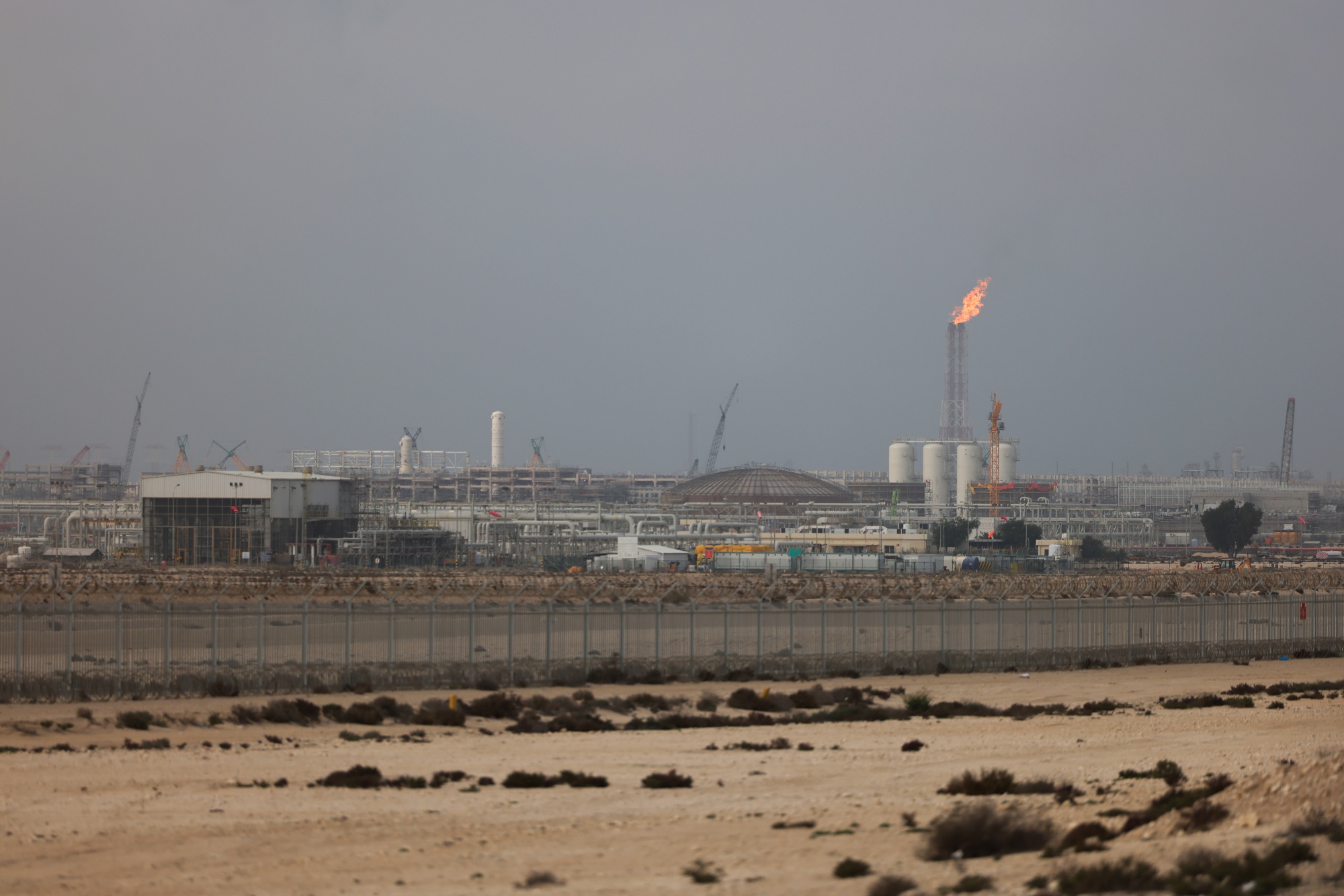
The background to the Doha talks is a sharp deterioration in regional energy logistics. Reuters reported on April 8 that QatarEnergy was preparing to restart LNG production after attacks in March forced stoppages at facilities in Ras Laffan and Mesaieed. Two of three trains at QELNG North 1 had been restarted, but a full return depended on vessels being able to pass safely through the Strait of Hormuz, one of the world’s most sensitive energy chokepoints. The same disruption has inflated spot prices and increased anxiety among large importers across Asia.

That makes Qatar’s long-term importance to India even clearer. In February 2024, QatarEnergy and Petronet LNG signed their largest single LNG supply agreement, under which Qatar will deliver 7.5 million metric tonnes a year from 2028 to 2048. Reuters reported at the time that Qatar planned to lift LNG liquefaction capacity to 126 million tonnes a year by 2027, up from 77 million, as it sought to strengthen its role in Asian and European markets. The scale of that agreement gives India a measure of stability, but it also underlines how deeply its gas strategy remains linked to a single Gulf supplier.

That dependence has advantages and risks. Qatar has earned a reputation for contractual reliability and remains among the lowest-cost LNG producers in the world, qualities prized by importers facing volatile spot markets. At the same time, the events of March and April have shown that even long-established energy corridors can be shaken by military escalation, damage to infrastructure and pressure on maritime routes. For policymakers in New Delhi, that is likely to sharpen interest in diversification through additional long-term contracts, more storage, broader sourcing and faster domestic gas infrastructure expansion.

India’s longer-term energy ambitions add another layer to the relationship. The government has repeatedly said it wants to raise the share of natural gas in the energy mix to 15 per cent by 2030, from just over 6 per cent at present. That target cannot be met without dependable imported LNG, even as the country pushes renewables, domestic gas output and cleaner urban fuels. Reliable Qatari supply therefore remains integral not only to short-term energy security, but also to India’s broader transition strategy and industrial planning.

Jack Ma-backed Yunfeng Capital and Hillhouse Investment are among investors said to be planning to buy shares in Victory Giant Technology’s Hong Kong share sale, a deal that could raise about $2 billion and add fresh momentum to the city’s revival as a venue for large equity offerings. Bloomberg reported on Friday that the Guangdong-based company could begin taking investor orders as early as Monday, though the proposed allocations and timing were described as private and subject to change.

Victory Giant, formally known as Victory Giant Technology Co., Ltd., is already listed in Shenzhen and filed an application proof for a Hong Kong offering in February. The draft filing makes clear that the process was still incomplete at that stage and that no investment decision should be based on the draft document alone, a reminder that the final terms, investor line-up and valuation could still shift before launch. China’s securities regulator had already given the green light for the offering in early March, according to Bloomberg’s earlier reporting.

The company sits in a part of the technology supply chain that has drawn growing investor attention as spending on artificial intelligence infrastructure accelerates. Victory Giant makes printed circuit boards, including high-layer-count multilayer boards and high-build-up high-density interconnect boards used in AI accelerator cards, AI servers and high-speed networking equipment. In its Hong Kong filing, the company said such products are designed for high-frequency, high-speed and high-stability applications and are used in components including GPU accelerator modules, CPU motherboards and network interface cards for AI servers.

Its own figures point to a sharp improvement in financial performance as demand for those products strengthened. According to the application proof, revenue rose from RMB7.93 billion in 2023 to RMB10.73 billion in 2024. For the nine months to September 30, 2025, profit climbed to RMB3.24 billion from RMB764.6 million a year earlier, while the net profit margin rose to 23.0% from 9.9%. The filing attributes a large part of that jump to stronger demand for high-end HDI products used in AI-related applications, which command higher prices and fatter margins.

That performance helps explain why anchor demand matters. Cornerstone-style support from investors such as Yunfeng and Hillhouse would give the offering greater signalling power at a time when fund managers are trying to separate durable AI-linked manufacturers from companies benefiting only from short-lived enthusiasm. Neither investor had publicly confirmed participation at the time of Bloomberg’s report, so any description of their role remains conditional until final deal documents are published.

Victory Giant’s filing also underlines the industrial logic behind the listing. The company says it plans to use proceeds for capacity expansion, infrastructure enhancement and equipment purchases in Huizhou, Changsha and Yiyang, as well as investment in smart manufacturing. In Huizhou alone, it expects capacity additions for premium high-layer-count multilayer boards and high-build-up HDI products, reflecting management’s bet that demand tied to AI computing, data centres and advanced electronics will stay strong enough to justify further capital expenditure.

Industry data included in the filing suggest the company is positioning itself in one of the faster-growing corners of the electronics market. The application proof says the global PCB market grew to US$75.0 billion in 2024 and could reach US$93.7 billion by 2029. It estimates the PCB segment tied to AI and high-performance computing at US$6.0 billion in 2024, with that figure projected to rise to US$15.0 billion by 2029. The same filing says Victory Giant ranked first globally in the first half of 2025 for high-layer-count multilayer PCBs with 14 layers and above, and also first globally in high-build-up HDI PCB in that period. Those market-share claims are drawn from third-party industry research cited by the company and should be read in that context.

The backdrop in Hong Kong is supportive, though not uncomplicated. Reuters reported in late February that the city had its strongest start to a year since 2021, with IPOs and second listings raising about $5.5 billion in January. By March 18, LSEG data cited by Reuters showed Hong Kong’s IPO market had raised about $11.64 billion in the first quarter, up 385% from a year earlier. At the same time, Reuters also noted in March that worsening geopolitical tensions had begun to weigh on trading debuts, a sign that even a revived market remains vulnerable to shifts in sentiment.


Arabian Post Staff -Dubai Saudi supply lines face deeper strain Attacks on Saudi energy facilities have knocked about 600,000 barrels per day from the kingdom’s oil production capacity and cut throughput on the East-West Pipeline by roughly 700,000 bpd, according to Saudi state media citing an Energy Ministry official, in a blow to the world’s top oil exporter at a time when its western pipeline route has […]

China has authorised state oil refiners to draw on commercial crude reserves as the Middle East war enters its sixth week, a move that points to mounting concern in Beijing over supply security, refinery operations and fuel stability in the world’s biggest crude importer. The decision marks a notable shift after reporting in March indicated that access to such reserves had been denied, underscoring how sharply the market backdrop has changed.

The policy adjustment comes as the conflict centred on Iran has disrupted flows through the Strait of Hormuz, a route that handled about 20 million barrels a day of crude and oil products in 2025 and remains one of the most critical chokepoints in global energy trade. The International Energy Agency said in March that the war had created the biggest supply disruption in oil market history, with flows through Hormuz falling from around 20 million barrels a day before the war to only a trickle.

For China, the timing is especially sensitive. State refiners have already been grappling with higher feedstock costs, disrupted shipping routes and a scramble for replacement barrels from outside the Gulf. Reuters reported in late March that Sinopec, the country’s largest refiner by capacity, had sought access to state reserves after deciding against buying Iranian crude, while also trimming refinery runs. Earlier reporting in mid-March said China had been building inventories rather than drawing them down, suggesting Beijing initially preferred to preserve stocks.

That stance now appears to have softened. Bloomberg reported on April 10 that authorities had given state refiners the green light to tap commercial reserves. While the precise volume and duration were not publicly disclosed, the move is significant because it signals Beijing is willing to use part of the country’s stock cushion to smooth supplies for domestic processing rather than rely solely on the spot market at a time of exceptional volatility.

The wider market has been under intense pressure even as talk of a ceasefire has briefly cooled futures prices. Reuters reported that physical crude markets in Europe and Africa remained extremely tight despite a temporary truce, with buyers in Asia and Europe competing aggressively for non-Middle East barrels. Another Reuters report said U. S. crude premiums had surged to record highs as importers sought alternatives to Gulf supplies. That matters for China because replacing lost or delayed Middle East cargoes has become more expensive just as refining margins in parts of Asia remain fragile.

Supply conditions deteriorated further this week after attacks on Saudi energy infrastructure cut output capacity by around 600,000 barrels a day and reduced throughput on the East-West Pipeline by about 700,000 barrels a day, according to Saudi state media cited by Reuters. The pipeline is vital because it allows exports to bypass Hormuz via the Red Sea. Damage there narrowed one of the few remaining alternative routes for Gulf producers trying to keep oil moving to Asian customers.

Asian refiners have already felt the strain. Reuters reported that seaborne crude imports into Asia in April were estimated at 19.22 million barrels a day, sharply below the three-month average of 25 million barrels a day. Although refined fuel prices eased after hopes of a truce, the same report said the market was still stressed and that it could take months for normality to return even if shipping improves. For Beijing, releasing commercial stocks is therefore less a dramatic emergency measure than a tactical effort to bridge a period of dislocation.

The decision also reflects China’s domestic balancing act. Authorities have been trying to keep fuel output steady even as weak underlying demand and higher crude costs squeeze refiners. Reuters reported on April 2 that officials had pressed independent refiners to maintain production despite the surge in oil prices and wartime disruption. That suggests Beijing is seeking to avoid sharp swings in fuel availability or industrial costs while preserving broader economic stability.

There is also a geopolitical layer. China has opposed any overtly force-based international response around Hormuz and has pushed for de-escalation at the United Nations, according to Reuters reporting on Security Council negotiations. At the same time, the reserve release shows that Beijing is preparing for a conflict that may not be resolved quickly and for shipping conditions that may remain uncertain even if diplomatic language softens.

VISHNU RAJA
RYO YAMADA
HITORI GOTOH
IKUYO KITA