News related to
Industrial

Beijing is preparing to roll out limited fiscal and monetary support as China faces weakening growth, dimming export demand and a fragile property sector. Analysts expect modest interest-rate cuts and additional spending, but size and scope will be constrained by a heavy debt burden and local government financing risks.

Official data shows industrial output rose 5.2% year-on-year in August, the slowest since August 2024, while retail sales grew just 3.4%, their weakest since November 2024. Fixed-asset investment across the first eight months of the year is up only 0.5%. Economic indicators like rising unemployment and falling home prices underscore growing domestic stress. Export demand, especially to the United States, has softened sharply.

Finance Minister Lan Fo’an has asserted that China’s debt remains at a “controllable and reasonable level,” while promising further fiscal reform to bolster consumption and investment. Hidden local government debt is being addressed, with over 60% of local government financing vehicles having mitigated their undisclosed obligations. Beijing has issued about 4 trillion yuan in special bonds out of a 6 trillion‐yuan quota allocated under its 2024-2026 framework.

Despite these assurances, fiscal options appear limited. Local governments, heavily dependent on land sales and property development for revenue, are seeing income dwindle amid the property slump. Many of them carry large off-balance-sheet debts, which limit their ability to borrow further without risking financial instability. Analysts warn that fiscal expansion beyond existing special bond quotas could trigger credit risk and undermine monetary policy transmission.

Monetary policy tools are seen as more flexible. The central bank is expected to pursue cuts in policy interest rates and perhaps reduced reserve requirement ratios for banks. Some targeted measures, such as support for housing and subsidised consumer loans, are under discussion. But reliance on monetary easing brings its own challenges—lower rates may offer limited stimulus when private sector demand is weak and households are wary of debt.

The property sector remains a key drag on growth. Unsold homes, delayed or incomplete projects, and tightly controlled borrowing rules for developers all erode confidence and investment. Local governments, deprived of revenue from land sales due to the real-estate slowdown, face pressures both to stabilize the housing market and to reduce their contingent liabilities.


Arabian Post Staff India’s Rana Group has launched Erisha Smart Manufacturing Hub that will see the development of 150 large industries with an investment outlay of US$10 billion (Dh3.7 billion) at Al Ghail Industrial Area in Ras Al Khaimah, UAE, in the next five years. Rana Group has recently signed an agreement with Ras Al Khaimah Economic Zones (RAKEZ) to acquire the license and the industrial plots […]

BEIJING, CHINA – Media OutReach Newswire – 15 September 2025 – In Shougang Park, a former ironworks site in western Beijing, new technologies from AI to cloud computing and green innovation are on display amid the rusty blast furnaces and steel relics. The 2025 China International Fair for Trade in Services (CIFTIS), featuring digital innovation and intelligent technologies, is underway in the park, gathering nearly 2,000 enterprises, […]

Abu Dhabi is now home to over US$758.79 billion worth of active development projects, industry reports show, as the capital’s property, construction and investment sectors receive considerable investor attention at the International Real Estate & Investment Show. Urban construction projects lead the charge at roughly $221.56 billion, followed by transportation ventures valued at $238.01 billion, industrial projects totalling $151.36 billion, utilities at $130.29 billion, and oil & […]

Gold surged past levels not seen in over four months after growing confidence that the Federal Reserve will cut interest rates this month boosted demand for bullion, while silver climbed above $40 per ounce for the first time in over a decade.

Spot gold rose around 0.9% to roughly US$3,486.86 per ounce, reaching highs last marked in late April. US gold futures for December delivery also advanced, riding momentum from dovish comments by San Francisco Fed President Mary Daly and a U. S. appeals court decision that struck down most of former President Trump’s tariffs, which weighed on the dollar. Silver jumped about 2.2%, to near US$40.56, its best since September 2011. Other precious metals followed: platinum added 1.5% and palladium rose around 0.8%.

Investors have been digesting a weakening US dollar, cautious labour market indicators, and signals from policymakers suggesting the Fed could lower rates by 25 basis points. Some traders contemplate a larger cut, although forecasts remain varied. Demand for gold as a hedge has been reinforced by geopolitical uncertainty and concerns around the independence of central banking.

Analysts at ANZ and UBS have revised their forecasts for gold upward. ANZ now expects gold to average about US$3,800 per ounce by year-end, with upside toward US$4,000 by mid-2026. UBS similarly raised its year-end target, citing robust central bank buying, persistent inflation pressures, and the likelihood of further policy easing.

Silver’s rally, driven by industrial demand and tight supply, outpaces gold in percentage gains. ETF inflows have also favoured silver, reflecting investor appetite for high-beta exposure in the precious metals space.

HONG KONG SAR – Media OutReach Newswire – 13 September 2025 – The 10th Belt and Road Summit was successfully held at the Hong Kong Convention and Exhibition Centre from September 10 to 11, 2025. China Telecom Global Limited (hereinafter referred to as “China Telecom Global”) made a strong appearance under the theme “Empowering the New Silk Road via AI for Good.” The company spotlighted three key […]

Harare has been thrust into the spotlight over severe human rights violations linked to mining operations, as watchdog groups and local activists issue alarming reports of forced displacement, environmental destruction and labour abuse. The Crisis in Zimbabwe Coalition has accused mining firms and state actors of orchestrating “grave human rights violations” against residents in mining regions. These include evictions without proper compensation, widespread water and air pollution, […]

Advertisements

Shares of Orascom Construction leapt sharply when the company began trading on the Abu Dhabi Securities Exchange, underscoring investor appetite for infrastructure-linked growth in the Gulf. The stock closed its first session up about 27 per cent at AED 38.10, having opened near AED 30.15, valuing the company at approximately AED 4.2 billion. Orascom Construction shifted its primary listing from Nasdaq Dubai, while maintaining its secondary listing […]

AACHEN, GERMANY – Newsaktuell – 11 September 2025 – FEV, a leading global engineering and consulting service provider for the energy industry has announced a strategic partnership with the Japan-based Chiyoda Corporation (Chiyoda). The company is one of the world’s leading integrated engineering firms, active in a wide range of business areas including energy, decarbonization, and life sciences. FEV and Chiyoda combine their expertise to offer customers […]

BEIJING, CHINA – Media OutReach Newswire – 11 September 2025 – Against the backdrop of repurposed blast furnaces and industrial relics of Shougang Park in western Beijing, the 2025 China International Fair for Trade in Services (CIFTIS) opened on Wednesday, striking a tone of open markets and digital innovation. People visit a booth of Pop Mart during the 2025 China International Fair for Trade in Services (CIFTIS) […]

A consortium led by BlackRock’s Global Infrastructure Partners is negotiating with lenders to secure up to US$10.3 billion in debt for its infrastructure agreement with Saudi Aramco over the Jafurah gas processing project. Key banks engaged include JPMorgan and Sumitomo Mitsui Banking Corporation, with the loan set to be structured in both short‐term and long‐term tranches. Under this arrangement, a newly formed subsidiary named Jafurah Midstream Gas […]

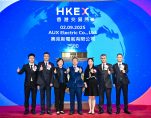
HONG KONG SAR – Media OutReach Newswire – 10 September 2025 – AUX Electric Co., Ltd. (Stock Code: 2580.HK), the core air conditioning business of AUX Group, listed on the Hong Kong Stock Exchange on September 2nd. As the third major Chinese air conditioning company to list on the exchange, the event marks a milestone for the industry reflecting AUX’s philosophy of “quality as the cornerstone, innovation […]

MUNICH, GERMANY – Newsaktuell – 10 September 2025 – REMA TIP TOP acquires significant assets and operations of the Canadian Almex Group. With the acquisition, the company expands its portfolio in the area of conveyor belt vulcanizing systems and herewith strengthens its position as the world’s leading provider of integrated conveying solutions. REMA TIP TOP acquires significant assets and operations of the Canadian Almex Group and strengthens […]

NMDC Group PJSC and ADNOC Logistics and Services Plc forged a three-year agreement today to assess joint delivery of maritime services for offshore projects, reinforcing their partnership in Abu Dhabi’s energy infrastructure.

The agreement, signed by Engineer Yasser Zaghloul, Group Chief Executive of NMDC Group, and Captain Abdulkareem Al Masabi, Chief Executive of ADNOC L&S, at NMDC’s headquarters, lays the groundwork for a stronger framework for offshore EPC collaboration. It covers marine services and integrated logistics, signalling both organisations’ dedication to supporting the emirate’s offshore energy operations. This expanded collaboration reaffirms the offshore maritime services pact strengthening cooperation between the two groups.

Zaghloul highlighted NMDC Group’s five decades of expertise in multi-sector marine engineering, procurement, construction delivery and complex project logistics. He underscored that the launch of NMDC LTS, the group’s latest business unit, allows the market to leverage these capabilities. He praised ADNOC L&S for its leadership in offshore energy support and hydrocarbon logistics, pointing out that both entities operate some of the region’s largest marine fleets. He said the pact would “ensure a robust framework between our two powerhouse organisations” to drive synergies, market differentiation and value growth, ultimately fortifying the industrial marine sector in Abu Dhabi and beyond.

Captain Al Masabi said the collaboration aligns with ADNOC L&S’s long-term ambition to deliver top-tier, integrated logistics that underpin the UAE’s offshore energy expansion. He commented that combining strengths with NMDC would unlock new opportunities, deliver value to ADNOC, its shareholders and clients, and support the UAE’s broader economic development.

Splash247 noted that the pact establishes an “expanded framework for continued collaboration on offshore EPC projects in Abu Dhabi,” emphasising its role in promoting synergies and value growth. It also highlighted ADNOC L&S’s aim to enhance performance through such partnerships.

This development follows earlier significant milestones and investments by NMDC that demonstrate its pivotal role in regional marine and energy infrastructure. In 2024, NMDC secured a contract worth more than US$200 million from ADNOC for marine dredging works in the Ruwais LNG Project, involving removal of approximately 15 million cubic-metres across a five-kilometre channel and installation of navigational aids. NMDC also launched the NMDC LTS unit as part of efforts to diversify into logistics and technical services, reinforcing its leadership in the UAE’s marine EPC, dredging, and logistics sectors.

Ethiopia has officially inaugurated the Grand Ethiopian Renaissance Dam, now Africa’s largest hydroelectric facility, signalling both a landmark in national development and renewed geopolitical strain along the Nile. The $5 billion project, capable of generating up to 5,150 MW, has launched with two turbines delivering about 750 MW, with full capacity yet to come online. The dam’s reservoir, now named Nigat Lake—meaning “Lake of Dawn”—floods an area […]

Matein Khalid My readers and friends know that I have been a boring perma-bull on gold since early 2024, when it became obvious that the People’s Bank of China was accumulating gold bullions as a hedge against an overvalued King Dollar and a capricious White House, which had just seized $300 billion in Russian central bank reserves to punish Putin’s invasion of Ukraine. The bullish gold trade […]

As the morning light kisses the glazed curtain wall of the Burj Khalifa over the Persian Gulf, and the evening breeze of Doha whispers against the dome of the Museum of Islamic Art, a practice team named “Weihai Yangxing” from Weiyang College of Tsinghua University is measuring the lands of the Middle East with their footsteps and building bridges of cooperation through dialogue. From August 14 to 24, […]

Aldar has unveiled plans to deliver the UAE’s first Tesla Experience Centre on Yas Island, comprising a purpose-built showroom, service centre and delivery hall integrated into one state-of-the-art facility. Spanning more than 5,000 sqm of leasable area, the development aims to offer an elevated customer experience while boosting operational efficiency and reinforcing Tesla’s long-term growth strategy in the region. The complex will feature 170 dedicated parking spaces […]

Abu Dhabi National Oil Company has entered an agreement with RIQ to secure over $500 million in risk coverage across the next ten years. The AI-driven reinsurance platform, backed by International Holding Company, will work closely with ADNOC to structure capital-efficient protection tailored to complex operational, climate-related and specialty risks using advanced modelling and AI-augmented underwriting. ADNOC Secures $500 Million AI-Driven Reinsurance Pact embodies this forward-looking collaboration […]

A high-level delegation from Dubai Electricity and Water Authority, led by MD & CEO HE Saeed Mohammed Al Tayer, is in the People’s Republic of China to boost collaboration with leading firms in solar and battery storage technology. The mission aims to support Dubai’s clean energy ambitions under its 2050 strategies by examining advanced practices in renewable energy systems. DEWA Seeks Deeper Energy Ties With Chinese Firms, as the delegation intends, marks a pivotal move in cross-border energy engagement.

Al Tayer and his team engaged with Huawei, BYD, Tesla’s battery energy storage plant, Sungrow, and the CRRC Zhuzhou Institute to survey cutting-edge developments in photovoltaic panels, energy storage solutions, artificial intelligence applications, smart infrastructure, and Fourth Industrial Revolution advancements. These interactions reinforce DEWA’s commitment to integrating global expertise into its operations.

The delegation includes prominent executives such as Waleed bin Salman, Executive Vice President of Business Development and Excellence; Hussain Lootah, Executive Vice President of Transmission Power; Marwan bin Haidar, Executive Vice President of Innovation and the Future; Dr Yousef Al Akraf, Executive Vice President of Business Support and Human Resources; Mohammed Jamea, Vice President of Clean Energy and Diversification; and Ghanim Al Qassim, Senior Manager of Solar Energy. Their breadth of expertise equips DEWA to absorb and apply technological insights strategically.

Central to the discussions is the seventh phase of the Mohammed bin Rashid Al Maktoum Solar Park, currently at the tendering stage. This phase will incorporate 2,000 MW of photovoltaic solar capacity alongside 1,400 MW of battery energy storage, delivering six hours of storage—establishing it among the largest solar-plus-storage projects globally under the independent power producer model. The delegation’s visit underscores this project’s importance in shaping Dubai’s sustainable energy future.

China has issued a bold action plan to propel its electronic information manufacturing industry through 2025 and 2026, targeting sustained growth in industrial output, revenue, and technological capability as it seeks to strengthen its position in the global technology arena.

The plan, jointly issued by the Ministry of Industry and Information Technology and the State Administration for Market Regulation, sets forth a target of roughly 7 per cent average annual growth in industrial output across major segments—including computer, communications, and electronic equipment manufacturing. Revenue growth across related sub-sectors such as lithium batteries, photovoltaics and components is projected to exceed 5 per cent per annum.

Authorities further anticipate that by the close of 2026, the electronic information manufacturing category will retain its status as the largest among China’s 41 key industrial sectors in both revenue and export share. Ambitious local targets aim to elevate five provinces to over 1 trillion yuan in annual manufacturing revenues, with the server industry aiming to surpass 400 billion yuan.

Beyond output and revenue, the plan calls for accelerated equipment modernisation and the development of high-end, intelligent, and eco-friendly production lines. Central to this strategy is the creation of internationally competitive industry bases and specialised clusters serving smaller enterprises.

This industrial blueprint emerges amid broader national efforts to invigorate advanced manufacturing. In August, authorities unveiled new financial guidelines, integrating structural monetary instruments and “green channels” for critical technology firms, aimed at spurring innovation and easing access to capital for integrated circuits, industrial software, medical equipment and advanced materials. Concurrently, China continues to pursue consolidation within its semiconductor sector—though merger negotiations have encountered obstacles, reflecting legal, valuation and fragmentation challenges.

Observers note that China’s renewed emphasis on domestic capability complements longer-standing ambitions under industrial strategies such as “Made in China 2025”, which have driven progress in robotics, solar technology, electric vehicles and rail systems, yet left persistent weaknesses in semiconductors and aerospace.

The current two-year action plan appears to reinforce this trajectory by tying industrial upgrading to environmental standards and smart manufacturing. Provincial authorities are being pressed to deliver on revenue milestones, while the focus on intelligent and eco-friendly production signals an effort to align with global sustainability trends and elevate manufacturing sophistication.

This approach also reflects the government’s response to external pressure, including export controls and trade friction, by targeting resilience and self-sufficiency. By prioritising hubs and clusters, China aims to decentralise innovation and drive inclusive industrial progress across regions, not just within flagship firms or coastal areas.

The twin objectives of maintaining international leadership and building more advanced, cleaner industrial capacity are central to this strategy. As China moves into the mid-2020s, its success will depend on execution—not just on paper targets, but on implementation, regional mobilisation, talent development, and the ability to absorb and apply new technologies at scale.

Central bankers rarely admit defeat. But Jerome Powell’s latest remarks left little doubt: the Federal Reserve now sees the labour market faltering before inflation is fully tamed. This shift in focus – from bringing down prices to protecting jobs – marks a profound change in the policy backdrop. For investors, it is a wake-up call. For two years, the dominant story was inflation. Central banks tightened aggressively […]

China’s solar industry, particularly its polysilicon segment, is experiencing a defining shift. Six leading solar makers reported a combined loss of Rmb20.2 billion during the first half of 2025, prompting regulatory intervention to stem overcapacity and destructive price competition.

In early September, GCL Technology Holdings confirmed that investors can anticipate clarity soon on a plan to restructure the polysilicon industry—potentially this year. Chief Financial Officer Yang Wenzhong indicated that GCL may invest its own capital into the effort but is proceeding with caution amid financial uncertainty.

The core of this restructuring lies in a proposed RMB50 billion pooling of funds by top producers like GCL and Tongwei. The aim is to acquire and retire roughly one-third of existing production capacity, targeting approximately one million metric tonnes of lower-quality output. This supply reduction could help raise prices and restore downstream solar panel maker profitability.

Government authorities are reinforcing this market realignment through direct meetings with industry representatives. In August, China’s Industry Ministry held its second session in two months, urging the sector to eliminate outdated manufacturing capacity and curb “low-price disorderly competition” as part of a broader effort to reverse deflationary trends.

The policy response reflects concern over global glut: in 2024, China produced 588 GW of solar capacity while global demand stood at 451 GW, leaving utilisation at just 54%. Analysts estimate that up to 20–30% or more of solar manufacturing capacity must exit the market to reestablish profitability.

This state-guided consolidation faces substantial obstacles. Local governments that have boosted regional development through subsidies, tax breaks and favourable land deals for solar manufacturers may resist decommissioning facilities tied to local GDP and employment. Even if a cartel is formed, analysts warn that members might sneak back into production once prices rebound.

While the outlook remains complex, sentiment among investors appears cautiously optimistic. Markets showed tentative improvement after reports of progress in industry coordination and price gains surfaced. Trina’s commentary on earnings, describing polysilicon as “the first step of anti-involution,” hints at broader hopes for a turnaround.

Global attention is intensifying. Successful restructuring could reinforce China’s dominance—already controlling around 90% of global solar cell capacity—while disrupting cheap exports that have pressured international markets. But a failed effort could compound challenges in other overcapacity-prone sectors such as electric vehicles or shipbuilding.

Longi, another solar powerhouse, is also adapting. Its founder, Li Zhenguo, has relinquished daily management to focus on R&D, including back‑contact cell and green hydrogen technology. The shift comes amid sustained losses and an 80% decline in its share price since 2021, as analysts predict that overcapacity will persist through 2028.

China’s solar supply chain—from polysilicon to panels—is at an industrial crossroads. The restructuring effort is perhaps the boldest policy move yet to recalibrate supply with demand. But its success hinges on overcoming entrenched regional interests, ensuring disciplined industry behaviour, and catalysing sustainable demand growth.

A wave of profit‑taking sent the Nigerian equities market lower, with the NGX All‑Share Index falling by around 0.7 per cent to approximately 138,737 points on Tuesday—equivalent to a loss of nearly 0.67 per cent in market capitalisation, which dropped to about ₦87.8 trillion. The sell‑off was driven largely by pressure on heavyweight stocks such as Lafarge Africa and Transnational Corporation, while market breadth skewed negative, with far more declines than gains. […]

VISHNU RAJA
RYO YAMADA
HITORI GOTOH
IKUYO KITA