HONG KONG SAR – Media OutReach Newswire – 22 September 2026 – Hong Kong’s Chief Executive John Lee announced the First Five-Year Plan for Economic and Social Development of the Hong Kong Special Administrative Region (HKSAR) (2026-2030) and his fifth Policy Address on September 16, rolling out measures to further sharpen Hong Kong’s edge amid global competition, consolidate development of the Guangdong-Hong Kong-Macao Greater Bay Area (GBA) and promote green transformation.
Initiatives aim to support high-quality development of the GBA, align rules and mechanisms within the region, and promote cross-boundary collaboration.
“The HKSAR Government will continue its efforts in fostering synergistic development of the GBA,” said Mr Lee. “We will strengthen co‑operation in technological innovation, promote ‘hard connectivity’ in infrastructure, foster ‘soft connectivity’ by deepening the alignment of rules and mechanisms, and achieve ‘connectivity of hearts’ among residents of the three places.”
The HKSAR Government will continue to actively participate in the development of the various major co-operation platforms, including Qianhai of Shenzhen, Nansha of Guangzhou, Hengqin of Zhuhai and the Hetao Shenzhen-Hong Kong Co-operation Zone, to promote mutual benefits.
In terms of “hard connectivity” the HKSAR Government will support Nansha in its role as a high‑standard gateway for opening up, including encouraging the trade to participate in Nansha’s infrastructure development.
“To promote the co‑ordinated development of rail transit in Guangdong, Hong Kong and Macao, we are pressing ahead with the Northern Link Project and the Hong Kong‑Shenzhen Western Rail Link (Hung Shui Kiu‑Qianhai), with target commissioning in 2034 and 2035 respectively, to fully connect the rail transit networks of Hong Kong and Shenzhen,” Mr Lee said.
Regarding “soft connectivity”, Mr Lee said the HKSAR Government will set up a Task Force to explore ways to advance the alignment of rules and mechanisms within the GBA.
To achieve “Connectivity of Hearts” among residents across the GBA, Hong Kong will strengthen co-operation between its higher education institutions and those in other GBA cities by establishing cross‑disciplinary partnerships, facilitating scientific research, knowledge transfer, and commercialisation, with a view to promoting high‑level research.
Hong Kong’s Secretary for Constitutional and Mainland Affairs, Janice Tse, noted that the First Five-Year Plan clearly states that Hong Kong will participate in the development of the GBA into an international first‑class bay area and a world‑class city cluster with global influence.
“Hong Kong will forge closer alignment and synergy with the nine GBA cities in Guangdong Province and Macao, making full use of our respective advantages to jointly promote the high-quality development of the GBA,” Miss Tse said.
To foster financial development in the GBA, Hong Kong will continue to capitalise on institutional innovation, financial infrastructure upgrading and enhanced regulatory alignment to encourage the orderly flow of financial elements among GBA cities.
The Hong Kong Exchanges and Clearing Limited’s Core Climate, in collaboration with the Guangzhou Power Exchange Centre, is working towards the pilot trading of national renewable‑energy, green electricity certificates in Hong Kong in 2026.
“On connecting the Chinese Mainland and the world, the HKSAR Government will continue to support green technology development through the HK$400 million (aboutUS$51 million) Green Tech Fund, leveraging Hong Kong’s function as a springboard for green technology and assisting national green technologies and products in going global,” said Hong Kong’sSecretary for Environment and Ecology, Tse Chin-wan. “On the development of hydrogen energy, we have participated in drafting national hydrogen energy standards with a view to helping these standards align with international practice.”
To meet the country’s “dual carbon” targets and fulfil Hong Kong’s commitment to achieving carbon neutrality before 2050, the HKSAR Government steered the establishment of a production base for sustainable aviation fuel (SAF) in Dongguan, leveraging the leading position of Hong Kong enterprises in the international SAF industry.
“By combining technology strengths with industrial foundation, Hong Kong and Guangdong will jointly develop a globally influential green industry,” Mr Lee said.
The HKSAR Government will take forward the construction of an SAF blending facility in Hong Kong to build an end‑to‑end SAF value chain and reduce logistics costs to make SAF prices more competitive. The target is to achieve an SAF consumption ratio of 1% to 3% for flights departing from Hong Kong International Airport in 2030.
Hong Kong’s Five-Year Plan promotes the integrated development of culture, sports, and tourism, to develop the GBA into a cultured bay area.
Under the strategic framework of the Agreement on Strengthening of Sports Cooperation and Promotion of Integrated Development, Hong Kong will deepen co-operation, and strive to co‑organise important regional and international single‑sport events. It will also strengthen cultural exchanges, pass on Cantonese opera and the characteristics of Lingnan culture, and promote the sales and cross‑boundary exhibition of Hong Kong publications.
Arabian Post Staff -Dubai Saudi Arabia, Turkey and Pakistan have moved to activate military coordination under their new joint defence pact after Houthi attacks on the kingdom, with Pakistan pledging to defend Saudi Arabia by “whatever means” are required. Pakistan’s Defence Minister Khawaja Muhammad Asif said Islamabad stood unequivocally behind the kingdom under the Makkah Joint Defence Agreement, though he did not say whether Pakistan had joined […]
Arabian Post Staff -Dubai Abu Dhabi sovereign investor L’Imad Holding is positioning AD Ports Group for tighter state control as the emirate strengthens trade routes outside the Strait of Hormuz, with its takeover of the ports operator moving towards settlement after attracting acceptances that will lift its holding above 98.5 per cent. The transaction, conducted through L’Imad’s wholly owned subsidiary ADQ, values AD Ports at Dh31.8 billion. […]
Arabian Post Staff -Dubai Abu Dhabi-based Shorooq and Presight have invested in Maven Robotics as part of the US industrial robotics company’s $100 million Series A financing round. The investment was made through the Presight–Shorooq AI and Bedaya funds managed by Shorooq, the companies said. RoboStrategy, LocalGlobe, Vine Ventures and XTX Ventures also participated in the financing, which Maven announced earlier this month. The individual commitments from […]
SHANGHAI, CHINA – Media OutReach Newswire – 29 September 2026 – From October 12 to 15, 2026, the 2026 International Brew & Beverage Processing Technology and Equipment Exhibition for China (CBB 2026) — the benchmark full-industry-chain exhibition for the liquid food sector in the Asia-Pacific region — will open at the Shanghai New International Expo Centre (SNIEC). With the final countdown underway, this biennial industry event is sending a rallying call to the global liquid food community on an unprecedented scale.
The next decade of the liquid food industry is beginning here — ahead of time.
Guided by the themes of innovation, intelligence, sustainability and high-end development, and committed to “building a new platform for upgrading the entire liquid food industry chain while writing a new chapter of high-quality development,” CBB 2026 will bring together leading enterprises from every segment: baijiu (Chinese spirits), beer, beverages, dairy, condiments and packaging equipment. More than 900 exhibitors from China and abroad will make a joint appearance, and over 60,000 professional visitors from around the world are expected to attend for business discussions, across an exhibition area exceeding 100,000 square meters.
After more than three decades of development, CBB has long been more than a trade fair. It continuously connects the entire chain — from raw materials, brewing and filling to packaging and digital smart manufacturing — creating an integrated industry platform for business matching, technical exchange and innovation. Step into CBB and you will see an exhibition; look closer and you will read the present and the future of an entire industry chain.
01 Leading Enterprises from Every Segment — One Show for the Entire Industry Chain
This year’s exhibitor lineup can truly be described as a full mobilization of the industry chain.
From upstream raw and auxiliary materials, brewing and processing, to midstream filling, packaging equipment and production line integration, and on to downstream labeling and coding, smart warehousing and digital solutions — leading enterprises from every segment, including baijiu, beer, beverages, dairy and condiments, will take the stage together, forming a complete map of the industry.
Whether you are sourcing turnkey production lines or comparing individual machines, whether you focus on a single process or evaluate complete smart-manufacturing solutions, you will find your answer at this show.
02 Four Highlights: Unlocking the 2026 Trends of the Liquid Food Industry
Closely aligned with industry development trends, this edition focuses on four main themes — internationalization, localization, intelligentization and green development — bringing together cutting-edge technologies and innovations from around the world to present a clear picture of where the industry is heading.
Highlight 1 | Global Giants Gather as Frontier Technologies Take the Stage
The international zone boasts a stellar lineup: world-renowned brands including BarthHaas, Fermentis, Krones, HEUFT, CIMC Enric, SACMI, ifm, Endress+Hauser, SEW-Eurodrive, Alfa Laval and Grundfos will all be present, covering core supporting technologies that range from hops, raw and auxiliary materials and pre-treatment processes to filling and packaging equipment and integration, end-of-line packaging and conveying, smart factory solutions and water treatment — spanning the entire liquid food production and packaging chain. A number of brand-new machines and solutions will make their on-site debuts, showcasing the latest achievements in smart manufacturing and green sustainability for the liquid food industry.
Highlight 2 | Chinese Smart Manufacturing Breaks Through as Homegrown Equipment Goes Global
Leading Chinese liquid food equipment manufacturers — Tech-Long, Newamstar, Lehui, Zhongya, Zhongchen, SUNRISE, Hermann and Talos — will exhibit in force, showcasing independently developed core equipment and technologies such as high-speed filling, aseptic packaging, intelligent inspection and integrated smart production, covering the entire production process from raw material pre-treatment, brewing and processing to filling and sealing, labeling and coding, and smart warehousing. These achievements not only help small and medium-sized food producers cut costs, boost efficiency and optimize their production systems, but will also accelerate the expansion of Chinese high-end equipment into global markets.
Highlight 3 | Smart Upgrading Across All Scenarios: Building a New Ecosystem of Digital Production
Digital transformation is one of the defining features of this edition, addressing smart-upgrading needs across the entire liquid food industry chain. From automated and intelligent production scheduling, predictive maintenance and big-data quality control throughout the process, to complete digital-twin factory solutions, every scenario is covered. Core intelligent equipment — including smart sensors, automated control systems and unmanned sorting machines — will be on display, helping the industry move from traditional manual control toward fully digital, intelligent and unmanned production.
Highlight 4 | Green and Low-Carbon Empowerment: Sustainable Production Solutions That Deliver
Aligned with global dual-carbon strategies and the industry’s low-carbon transition, exhibitors will launch a range of low-carbon technologies and equipment, including energy-efficient filling machines, circulating water treatment technologies, equipment for biodegradable packaging, and waste heat recovery systems. While optimizing production costs and efficiency, these solutions comprehensively support energy conservation and emission reduction, offering practical, full-coverage green production solutions for producers of alcoholic drinks, beverages, water, dairy products, condiments and other liquid foods — and helping the industry build a sustainable future.
03 More Than Ten High-Level Forums: Decoding the Trends Shaping the Industry
More than ten high-quality concurrent events will be held during the show, bringing together authoritative industry experts, chief engineers of leading enterprises and industry leaders for in-depth discussions on segment trends, technological innovation and industrial transformation.
04 Why Attend? Three Audiences, Three Answers
If you are a business owner or procurement decision-maker: compare leading solutions from across the industry chain in one place, connect with quality suppliers, and identify practical paths to lower costs, higher efficiency and transformation.
If you are an engineer or part of a production technology team: experience live demonstrations of cutting-edge equipment, meet manufacturers’ technical experts face to face, and be among the first to grasp the trends in smart manufacturing and green, low-carbon technologies.
If you are an industry observer or investor: read the next three to five years of the liquid food industry through the exhibitor lineup, technology directions and forum topics.
05 See You in Shanghai This October
A biennial rendezvous — and a shared point on the calendar for the entire industry.
From October 12 to 15, 2026, CBB 2026 looks forward to welcoming you at the Shanghai New International Expo Centre. For more information, please visit www.chinabrew-beverage.com.
Hashtag: #CBB2026
The issuer is solely responsible for the content of this announcement.
China Securities has established a regional office in the Dubai International Financial Centre, giving the Beijing-headquartered investment bank a regulated base for serving clients, investors and financial institutions across the Middle East.
DIFC confirmed on Monday that the publicly listed securities firm had received a licence from the DIFC Authority and authorisation from the Dubai Financial Services Authority, the independent regulator overseeing financial services conducted in or from the centre.
The office extends China Securities’ international footprint and is intended to support its engagement with regional institutions while improving links between Chinese, UAE and international capital markets. The firm has operations spanning equity and debt capital markets, investment banking, asset management and institutional services.
The move places China Securities among a substantial group of China-based financial institutions operating from Dubai’s financial free zone. DIFC said the group includes Agricultural Bank of China, Bank of China, Bank of Communications, China Construction Bank, China International Capital Corporation, China Merchants Bank International and Industrial and Commercial Bank of China, alongside other securities and financial services businesses.
China’s five largest banks together account for more than 30 per cent of total assets in DIFC’s Banking and Capital Markets sector, underscoring the scale of their existing presence within the centre. China Securities is the latest investment bank from the country to join that cluster.
DIFC said the opening followed sustained engagement with China Securities, during which the financial centre worked with the firm to explain opportunities available through Dubai, develop its understanding of the regional market and support its longer-term international expansion plans.
The Dubai base also gives the investment bank a presence within a financial centre that has been expanding rapidly. DIFC had 10,018 active registered companies at the end of the first half of 2026, crossing the 10,000 threshold for the first time. The total was 30 per cent higher year on year, after 2,318 new active registered companies were added over the preceding 12 months.
The number of regulated financial services firms in DIFC reached 1,134 during the same period, up 16 per cent from a year earlier. Banking and capital markets firms numbered 327, while the centre had 592 wealth and asset management companies and 165 insurance and reinsurance entities.
China Securities’ arrival comes as financial institutions seek to capture increasing business flows between Asia and Gulf markets. For the firm, the DIFC office provides a platform for direct interaction with Middle East clients and investors rather than relying solely on operations elsewhere in its international network.
The regulatory approvals are central to that expansion. A DIFC Authority licence establishes the company’s corporate presence in the financial centre, while DFSA authorisation covers regulated financial services carried out within or from the jurisdiction. The precise category and detailed scope of China Securities’ DFSA permissions were not specified in DIFC’s announcement.
The firm’s regional expansion also adds another securities house to a Chinese financial network in Dubai that already covers commercial banking, investment banking and capital-markets services. China International Capital Corporation and several of China’s largest commercial lenders are among the institutions with an established DIFC presence.
DIFC operates a separate legal and regulatory framework for financial businesses based in the centre, with the DFSA responsible for regulating financial services. That structure has helped attract international banks, investment managers, insurers and other financial institutions seeking a regional operating base.
The centre’s first-half figures show that growth has extended beyond banking. Wealth and asset management companies increased 35 per cent year on year to 592, while insurance and reinsurance entities rose 22 per cent to 165. Banking and capital markets businesses grew 13 per cent over the same period.
For China Securities, the immediate focus of the Dubai operation is engagement with clients, investors and financial institutions across the Middle East. DIFC said the office would also support connections between capital markets in China and the UAE and wider international markets.
Arabian Post Staff -Dubai Unilever Egypt has commissioned a new Sunsilk shampoo production line at its Mashreq Personal Care factory in 6th of October City, raising the plant’s annual production capacity by 20% and directing the additional output entirely to export markets. The line is the 13th at the factory and forms part of the consumer goods group’s expansion of manufacturing in Egypt. The facility currently sends […]
Arabian Post Staff -Dubai Huawei is making its first appearance at the Egypt Mining Forum on Monday, presenting digital-power and clean-energy technologies aimed at improving the reliability, efficiency and sustainability of mining operations. The company is participating in the fifth edition of the two-day forum, which opens on September 28 at the St Regis New Capital in Cairo under the patronage of President Abdel Fattah El-Sisi. Egypt’s […]
DÜSSELDORF, GERMANY – Media OutReach Newswire – 26 September 2026 – QUORRA X5, a micro-mobility robot, has made its global debut at REHACARE International 2026 – International Trade Fair for Rehabilitation and Care, which opened in Düsseldorf, Germany on 23 September and runs until 26 September. As the world’s leading trade fair for rehabilitation, prevention, inclusion and care, REHACARE serves as a key international platform for industry exchange and product showcase.
QUORRA is a global physical AI company focused on Door-to-Door (D2D) mobility scenarios and dedicated to developing micro-mobility robots. Its first mass-produced model, the QUORRA X5, reimagines the form factor of conventional mobility aids. Equipped with five LiDAR sensors and front- and rear-facing cameras, it uses fused LiDAR-vision perception and on-board AI for real-time, 360-degree awareness of its surroundings. On detecting pedestrians, obstacles, steps or uneven ground, it decelerates and brakes within milliseconds, steers around obstacles and passes through narrow passages, and stops safely when the path ahead is impassable. Drop-off protection applies smooth braking on detecting a change in ground level. Smart Cruise, being demonstrated live at the show, holds a set speed while avoiding obstacles without constant joystick input; pulling the joystick back exits the mode.
A 5-inch display shows real-time system status and key operating parameters, with one-tap switching between “Sport” and “Comfort” driving modes. Over-the-air updates enable continuous improvement, while a rear-view camera and reversing collision-avoidance system bring the robot to a smooth, controlled stop. The high-end variant supports autonomous return-to-charge.
Through the iQUORRA app, users can check battery level, online status and real-time location, and operate the robot via Bluetooth remote control within effective range. Caregiver authorization and “Safe Zone” (geofencing) let caregivers define safe activity areas, with instant alerts if the robot leaves preset boundaries.
The QUORRA X5 has won two prestigious international design awards — the Red Dot Award: Design Concept and the International Design Excellence Awards (IDEA®) presented by the Industrial Designers Society of America (IDSA). Retaining a stable four-wheel chassis and joystick control, it adopts a foldable body and wraparound cockpit, shedding the clinical look of traditional mobility aids for consumer-electronics styling.
The QUORRA X5 holds CE marking for the European Union and UKCA marking for the United Kingdom, meeting the safety and technical standards of global markets.
The issuer is solely responsible for the content of this announcement.
HONGHU, CHINA – Media OutReach Newswire – 25 September 2026 – Honghu lotus root ranks first in antioxidant content among major lotus-root-producing regions, according to industrial report by China Merchants Securities (CMS), highlighting the ingredient’s potential beyond traditional food and into functional food, superfood and biotechnology markets. Building on Honghu’s nutritional profile and industrial scale, Huagui Group is expanding from lotus root and aquatic vegetables into functional ingredients, wellness products and biotechnology, while developing a broader global platform connecting China’s aquatic resources with international food, health and commercial markets.
As a global player in lotus root and aquatic vegetables, Huagui has established an international commercial network. The Honghu Lotus Root brand was valued at RMB 25.861 billion in 2025, reflecting its market position. Related products reach more than 50 countries and markets and are present in retail and food conglomerates channels including Costco and Yum! Brands, the parent company of KFC and Pizza Hut. Co-headquartered in Beijing and Hubei, Huagui continues to expand sourcing, international distribution, private-label programs and cross-border supply-chain partnerships. The conference brought together the China Vegetables Association, representatives from Europe, the United States and South Korea, and international guests including a representative member from the Saudi royal family.
Alongside its commercial expansion, Huagui is strengthening its position in the biotech and superfood market. Honghu lotus root naturally contains dietary fiber, vitamin C, potassium and polyphenols. According to a report by China Merchants Securities (CMS), Honghu lotus root ranks first among major lotus-root-producing regions in antioxidant content. The report also notes that the output value of Honghu’s lotus root industry is approximately five to six times that of Jiangsu, highlighting its nutritional profile and the scale of its commercial potential across plant-based nutrition, functional foods and health applications. Huagui is also establishing bio-extraction, functional ingredients and wellness products through its biotech business.
“Our strategy is creating a global ecosystem connecting aquatic plants, aquatic animals, food, biotech and longevity,” said Melody Zhao, Executive Vice President of Huagui Group. “From natural resources to R&D, and from brand building to global shelves, Huagui is connecting China’s aquatic industries with global consumers through products, supply chains and international channels.”
Supporting this strategy is a diversified business platform built around four core sectors. Huagui Food anchors food manufacturing and supply, while Huagui Health develops functional foods, wellness products and higher-value ingredients. Huagui’s e-commerce, commodities supply-chain finance and import-export operations connect digital channels, financing, global sourcing, international trade and private-label programs under its “Buy Global, Sell Global” approach. On the aquatic-animal side, Huagui’s Fishery Joint Venture with Hubei Agricultural Development Group, a China Top 500 enterprise group, extends the platform into fisheries and large-scale open-water operations, covering approximately 666.7 million square meters of fishing and aquaculture waters.
From global food channels to superfoods, Huagui is building an integrated platform across aquatic plants and animals, creating opportunities in international food, biotech and commerce.
Hashtag: #HuaguiGroup
The issuer is solely responsible for the content of this announcement.
By Tirthankar Mitra At the sight of the slogan “bhoi out, bhorsa in”, people sat up and took notice, making up their mind to vote for the BJP candidates in 2026 Assembly elections in West Bengal. Little did these men and women who exercised their franchise in favour of the saffron camp nominees know that […]
Three-phase roadmap prioritizes photonics, power semiconductors, and sensors to advance the “Made in Thailand” chip initiative, targeting over 230,000 new jobs.
BANGKOK, THAILAND – Media OutReach Newswire – 24 September 2026 – Thailand has approved its first national strategy for the semiconductor and advanced electronics industry, establishing a long-term framework to build an integrated domestic ecosystem spanning chip research and design, front-end manufacturing, conventional and advanced assembly, packaging and testing, and high-value electronics applications.
Thailand Unveils First National Semiconductor Strategy
Approved on Thursday by the National Semiconductor and Advanced Electronics Policy Board, chaired by Deputy Prime Minister and Finance Minister, Mr. Ekniti Nitithanprapas, the strategy targets about $80 billion in cumulative investment and about $150 billion in annual industry revenue by 2050. It also aims to create more than 230,000 new jobs under Thailand’s long-term “Made in Thailand” chip initiative.
“This is Thailand’s first comprehensive national framework for building semiconductor capabilities and moving the country into higher-value activities across the global supply chain,” said Mr. Ekniti. “It gives investors a clear view of our technology priorities, infrastructure commitments and workforce-development plan through 2050.”
The roadmap will be implemented in three phases. By 2030, Thailand will reinforce its established assembly and testing base, scale advanced packaging capabilities and lay the foundations for front-end wafer production. By 2040, it will seek more anchor investors in upstream activities, including chip design, wafer fabrication and advanced-technology manufacturing, to fill gaps in the supply chain. By 2050, Thailand aims to have a complete domestic supply chain. Thai companies are expected to grow into local champions that co-develop innovation and hold key positions in the chain.
The strategy identifies three priority technology platforms aligned with Thailand’s industrial strengths and global demand: photonics for artificial intelligence, data centers and high-speed communications; power semiconductors for electric vehicles, energy-storage systems and power grids; and sensors, building on Thailand’s micro-electro-mechanical systems (MEMS) capabilities, for connected devices, automation, automotive, smart devices and medical applications.
Implementation will be supported through five coordinated mechanisms: tax incentives, grants and low-interest financing; high-skilled workforce development with industry and academic partners; upgraded research and chip-design infrastructure and partnerships between foreign and Thai companies; investment-ready infrastructure, including cluster sites, reliable water and electricity, clean energy and disaster-resilience systems; and regulatory reform and business facilitation for foreign investors and Thai suppliers including a broader market access through FTAs.
The board also approved a workforce program under the national strategy coordinated by the Ministry of Higher Education, Science, Research and Innovation with universities, research institutes, industry and international partners. By 2030, the program aims to develop 86,600 people, including 84,900 highly skilled personnel and approximately 1,700 advanced researchers, through specialized curricula, industry placements, overseas training, and programs for faculty members, researchers and technical instructors.
The strategy builds on strong investment momentum. From 2023 through the first half of 2026, the BOI received investment-promotion applications for 879 semiconductor and advanced electronics projects worth about $27.2 billion (909 billion baht). The projects span chip production at various stages, printed circuit boards (PCBs), hard disk drives, AI servers, networking and power-management equipment, and electronic parts for vehicles and office equipment.
Infineon Technologies, the world’s largest maker of power semiconductors and automotive chips, will open its first Thai factory in Samut Prakan on Oct. 1. The facility will produce and package advanced power modules for electric vehicles, energy storage, clean energy and advanced electronics. Infineon also plans to establish an R&D center, develop joint curricula with Thai educational institutions and employ more than 5,000 people in Thailand at full operation.
Thailand’s expanding ecosystem also includes Foxsemicon Integrated Technology in semiconductor-equipment supply, Analog Devices in analog and mixed-signal chips, Zhen Ding Technology in printed circuit boards, Terahop in optical communications, and Malaysian Pacific Industries (MPI) in semiconductor assembly, packaging and testing.
“The ‘Made in Thailand’ chip initiative will bring together the country’s technology, infrastructure, investment and talent through a strong, coordinated and comprehensive national plan to turn this ambition into reality,” said Mr. Narit Therdsteerasukdi, Secretary General of the Thailand Board of Investment (BOI). “For semiconductor investors, specialized talent is as critical to site selection as infrastructure and incentives. The strategy is also designed to provide a dependable workforce pipeline for faster ramp-up and long-term expansion.”
Note: Investment, revenue and job figures are strategy targets. The U.S. dollar equivalent of 909 billion baht is based on an exchange rate of approximately 33.44 baht per dollar.
The issuer is solely responsible for the content of this announcement.
Thailand Board of Investment (BOI)
Established in 1966, the Office of the Board of Investment (BOI) has continuously played an essential role for over 60 years in promoting value-adding investment for the country, from both foreign and Thai investors, to enhance national competitiveness and drive towards a new era of sustainable and balanced growth.
Investment Services Center- PR Section, The Office of the Board of Investment (BOI)
Arabian Post Staff -Dubai Turkish Airlines has finalised an agreement with Boeing for up to 150 737 MAX aircraft, securing 100 firm 737-8 orders and options for 50 more jets in its largest single-aisle purchase from the US manufacturer. The agreement, announced on Wednesday, concludes negotiations that began in 2025 and gives the carrier substitution rights allowing some of the additional aircraft to be converted to the […]
WUHAN, CHINA – Media OutReach Newswire – 23 September 2026 – The Global Mayors Dialogue · Wuhan and the 2026 Wuhan International Friendship Cities Cooperation Conference, held from Sept. 18 to 21, brought together 80 international guests from 24 cities across 22 countries, according to organizers.
The Global Mayors Dialogue and the 2026 Wuhan International Friendship Cities Cooperation Conference kicked off on September 20.(Photo by Chen liang)
At the event, mayors and city representatives from six international sister cities of Wuhan called for closer cooperation in technology, industry, education and culture.
Representatives from Manchester in Britain, Kemi in Finland, Cape Town in South Africa, Yangon in Myanmar, Rzeszów in Poland and Turkistan in Kazakhstan took part in discussions on urban innovation, industrial cooperation and cultural exchange.
Manchester: a new start after 40 years of friendship
This year marks the 40th anniversary of the sister-city relationship between Wuhan and Manchester.
Shaukat Ali, lord mayor of Manchester, said the city was ready to deepen cooperation with Wuhan in education, culture, youth affairs, innovation and industry.
“Manchester is committed to promoting urban transformation through open cooperation, sharing opportunities, and fostering common development with international sister cities like Wuhan,” he said.
Ali said Manchester had developed from a post-industrial city into an innovation-oriented economy, with a focus on advanced manufacturing, artificial intelligence, life sciences and green technologies.
He said the two cities could share experience in urban transformation, innovation districts, university-industry cooperation and low-carbon development, while encouraging links among universities, businesses and research institutions.
He also highlighted existing educational and cultural links, including cooperation between Hubei University and Manchester Metropolitan University and exchanges between the Royal Northern College of Music and Wuhan Conservatory of Music.
Kemi: balancing growth with environmental protection
Mikko Koivulehto, chairman of the City Council of Kemi, said the Finnish city sought to balance economic growth with environmental protection.
“We believe that protecting nature and building a prosperous city can go hand in hand,” he said.
Kemi, a port city in Finnish Lapland, has developed industries based on renewable raw materials, clean energy and the bioeconomy. The city is also seeking to expand tourism and improve livability.
This year marks the 10th anniversary of the friendly exchange relationship between Wuhan and Kemi. The two cities have cooperated in areas including trade, the circular economy, tourism and youth exchanges.
Cape Town: technology and jobs key to urban transformation
Lungelo Mbandazayo, city manager of Cape Town, said technological innovation, talent development, infrastructure and green renewal were key to Wuhan’s transformation.
Cape Town, a UNESCO City of Design, is seeking to expand its technology and digital sectors while promoting green technology and an inclusive economy.
Mbandazayo said youth unemployment remained a major challenge for Cape Town and that technological development needed to create jobs.
After visiting Wuhan companies and technology facilities, he said Cape Town hoped to deepen exchanges with Wuhan in technology and talent.
Yangon: seeking practical cooperation with Wuhan
Yangon Mayor Myo Myint Aung said the city was looking to Wuhan for experience in smart-city development, digital governance, intelligent transport and urban resilience.
Wuhan and Yangon signed a letter of intent on friendly exchanges and cooperation during the event.
Yangon is developing a long-term plan to accommodate population growth and expand its urban, industrial and transport infrastructure.
During a visit to Wuhan on Sept. 19, Myo toured the Optics Valley “Photon” suspended monorail, HGTECH and a Xiaomi smart home appliance factory.
“We came to Wuhan not just to observe, but to learn and cooperate,” he said, adding that Yangon hoped to develop smart manufacturing and strengthen cooperation in information technology.
Rzeszów: opportunities in aerospace and technology
Rzeszów Mayor Konrad Fijołek said the Polish city hoped to cooperate with Wuhan in aerospace, sensor technology, biodiversity and climate action.
Rzeszów is home to the “Aviation Valley,” a major aerospace cluster in Central Europe.
“Exploring cooperation with Wuhan is the reason I came here,” Fijołek said.
After visiting HGTECH and a Xiaomi smart home appliance factory, he said Wuhan’s automated manufacturing and technologies in sensors and satellite systems had impressed him.
He said cities could help connect universities, businesses and research institutions and promote international cooperation.
Turkistan: five areas for cooperation
Turkestan Mayor Azimbek Pazylbekuly said his city hoped to expand cooperation with Wuhan in tourism and culture, education and science, investment and entrepreneurship, digitalization and innovation, and transport and logistics.
Wuhan and Turkistan signed a memorandum of intent on friendly exchanges and cooperation during the event.
Turkistan, an ancient Silk Road city and a UNESCO World Heritage site, has been developing industries including food processing, textiles, furniture and construction materials.
Pazylbekuly said cooperation between governments, businesses, universities and research institutions could help turn the two cities’ exchanges into concrete projects.
The conference also included friendship-city anniversary celebrations and a signing ceremony for 10 cooperation projects. A digital list of cooperation opportunities and an initiative on international friendship-city cooperation were released.
During their stay, the visiting mayors toured Wuhan’s technology, manufacturing and ecological facilities, including the Optics Valley suspended monorail, a Yangtze finless porpoise conservation center, Xiaomi, HGTECH and Dongfeng Motor facilities.
Hashtag: #wuhan
The issuer is solely responsible for the content of this announcement.
By Ashok Nilakantan Ayers NEW YORK: External Affairs Minister S Jaishankar arrived at the 81st UN General Assembly with an unusually broad diplomatic canvas before him. In meetings with European, Ukrainian, Arab, Asian and other counterparts, India was simultaneously talking to countries that sit on opposite sides of some of the world’s sharpest geopolitical divides. […]
South African businesses are treating water security as a core continuity risk as unreliable municipal supply, ageing infrastructure increase operational risk across affected municipal networks and major cities. Companies are responding by expanding on-site storage, drilling boreholes where viable, installing treatment systems, recycling wastewater and improving consumption monitoring. The shift resembles the earlier move towards private power resilience, with businesses seeking alternatives to dependence on a single […]
By Dr Arun Mitra Forest fires across different parts of Europe, devastating heat waves in many western countries, growing concern over El Niño & similar phenomena and the rapid melting of glaciers are alarming indicators of a planet under severe stress. The formation of large glacial lakes poses an additional danger, as the breaching of […]
Arabian Post Staff -Dubai GFH Bank has signed a partnership agreement with AlNassr Club Company, making the Bahrain-headquartered bank a partner of the Saudi football club for the 2026–2027 season as it seeks to strengthen its profile in key regional markets. The agreement was signed in Riyadh by GFH Bank chief executive and board member Hisham Alrayes and AlNassr chief executive José Semedo, with senior representatives of […]
Arabian Post Staff -Dubai Etihad Rail and AD Ports Group have launched a direct freight service linking Fujairah Terminals with the Industrial City of Abu Dhabi, creating a rail-based inland logistics route between the UAE’s East Coast and Abu Dhabi’s main industrial zone. The service combines scheduled rail freight with a customs-enabled inland cargo gateway at ICAD, allowing containers arriving at Fujairah to move directly to Abu […]
Abu Dhabi’s International Holding Company has identified Fount Trust as its ultimate parent above Royal Group Holding LLC, formalising the ownership structure that followed an earlier restructuring. IHC said on Monday that the change affects the legal ownership chain but does not alter its ultimate beneficial ownership, operations, strategy or business activities. Royal Group continues to exist and operate within the structure, while IHC remains governed by […]
European electricity prices for the coming winter have risen to their highest levels since the 2022 energy crisis, with German January contracts trading above €180 a megawatt-hour as gas supply concerns and geopolitical disruption tighten the market across the continent now. The German benchmark on the European Energy Exchange is more than 60 per cent higher than a year ago, signalling growing concern over the cost of […]
NANNING, CHINA – Media OutReach Newswire – 20 September 2026 – On September 16, as an international science and technology exchange platform included in the list of cooperation initiatives for the series of leaders’ meetings on East Asia cooperation, the Fourth Forum on China-ASEAN Artificial Intelligence Cooperation was successfully held in Nanning, Guangxi. With the theme of “AI for Industries, Digitalization for Shared Future”, this forum was co-hosted by the China-ASEAN Technology Transfer Center, the China-ASEAN Innovation Cooperation Center for Artificial Intelligence, the Department of Science and Technology of Guangxi Zhuang Autonomous Region, and the Guangxi Institute of Industrial Technology. More than 700 government representatives, research scholars, tech entrepreneurs, and venture capital representatives from China and ASEAN countries gathered on site, focusing on three major directions, namely embodied intelligence, AI finance, and data circulation, discussing collaborative technological innovation, jointly pursuing industrial digital transformation, and comprehensively deepening pragmatic cooperation between China and ASEAN in the field of artificial intelligence.
Fourth Forum on China-ASEAN Artificial Intelligence Cooperation Successfully Held in Nanning, Drawing Over 700 Delegates
Coinciding with the historic milestone of the Pinglu Canal being completed and navigable, a canal opens up a physical trade corridor between China and ASEAN, opening a new chapter of digital economy collaboration. “Goods Flow Across Rivers and Seas, Digital Intelligence Connects ASEAN” has become the most distinctive symbol of the era at this forum. The forum closely follows the differentiated development path of “R&D in Beijing, Shanghai, and Guangzhou + Integration in Guangxi + Application in ASEAN”, solving problems through technological breakthroughs, gathering momentum through industry-finance linkage, and promoting effectiveness through scenario implementation, to deepen and solidify China-ASEAN AI cooperation.
Technology empowers the opening, creating a new paradigm of human-machine collaboration
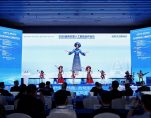
The forum kicked off with Guangxi’s classic ethnic song “Folk Songs like the Spring River”, where human dancers, dancing robots, accompaniment robots, and a digital crowd performing the folk song collaborated across disciplines to perform group collaborations. Relying on millisecond-level cluster scheduling technology, ethnic culture and embodied intelligence were deeply integrated to create an immersive technological audiovisual feast. This forum innovatively adopted a three-party collaborative hosting model of “human host + digital human avatar + intelligent robot”. Yang Yanqing, Professor of ShanghaiTech University, coordinated with her digital human avatar and AGIBOT Lingxi X2 to jointly host the forum, empowering the forum scene through technology, which became a major highlight of the event.
Dr. Padapxay SAYAKHOT, Director-General, Institute of Information and Communication Technology, Ministry of Technology and Communications, Lao PDR, Sun Ruijun, Director-General, China-ASEAN Technology Transfer Center, Secretary of the Party Leadership Group and Director-General, Department of Science and Technology of Guangxi Zhuang Autonomous Region, Secretary of the Party Committee, Guangxi Institute of Industrial Technology, delivered speeches in succession. Both sides stated that they will use this forum as a link to deepen the connection of scientific research and innovation, the implementation of industrial scenarios, and the coordination of policies and mechanisms, gather synergy for digital and intelligent development, and serve the building of a closer China-ASEAN community with a shared future.
Industry authorities gather, anchoring regional AI development directions
The speakers at the forum combined international breadth and professional depth, bringing together industry experts, academic and cutting-edge research forces, industrial technology, and cross-border implementation capabilities from ASEAN countries, forming a core high ground for intellectual exchange and gathering top intellectuals for China-ASEAN AI innovation and development.
Industry experts from ASEAN countries: Dr. Wasan Pattara-atikom, Vice President, National Science and Technology Development Agency, Thailand; Li Haizhou, Fellow of the Academy of Engineering, Singapore (SAEng), Dean of the School of Artificial Intelligence, the Chinese University of Hong Kong, Shenzhen; YAP Hwa Jen, Professor of Universiti Malaya, Managing Director of the UPUM Sdn. Bhd.;
Academic and cutting-edge research forces: Yang Chao, Professor of Peking University, Founder and Chief Scientist of Beijing 1011 Technology Co., Ltd.; Cui Peng, Professor of Tsinghua University and Chief Scientist of Stable AI (Xiong’an) Technology Co., Ltd.; Wang Shisong, Professor of Guangzhou University, Co-founder of Abelian (a quantum-resistant blockchain infrastructure);
Industry technology and cross-border implementation forces: Li Nan, Founder, Chairman, and CEO of Maimai Technology Group; Yao Yuan, Vice President of the Middle East Asia-Pacific Region Division, AGIBOT Innovation (Shanghai) Technology Co., Ltd.; Lyu Jun, Chief Scientist of Shanghai Noematrix Technology Co., Ltd.; Liu Liqi, General Manager of Data Strategy Department, X Square Robot Technology (Shenzhen) Co., Ltd.
The guests focused on three major directions, namely embodied intelligence, AI finance, and data circulation, exploring feasible paths for technological breakthroughs, ecosystem co-construction, and joint innovation. They covered the key stages of artificial intelligence from source research and development and technology transfer to industrial implementation and cross-border cooperation, achieving a two-way dialogue between cutting-edge academic theories and practical industry needs, and providing diverse perspectives and action ideas to bridge the regional digital divide and unlock the inclusive value of AI.
Five achievements released, strengthening the solid foundation for digital intelligence cooperation
At the forum, five scientific and technological innovation achievements were released together, constructing an AI innovation supply system oriented toward ASEAN from multiple dimensions including technology products, platform carriers, talent systems, and decision-making support.
1. The China-ASEAN Cross-Border Industrial Large Language Model: It covers multilingual capabilities and industry knowledge graph for ASEAN, integrates six major agents to collaboratively analyze business scenarios, and serves as a professional intelligent partner for Chinese enterprises to expand into the ASEAN market.
2. Achievements in AI Talent Development for ASEAN: Relying on the Guangxi Academy of Artificial Intelligence, a talent training model of “a dual-mentor system, dual-integrated teaching, dual training tracks, and an integrated master-doctoral program” has been created, achieving an international education pattern of enrolling at one university, earning credits from multiple universities, gaining practical experience in multiple countries, and strengthening talent support for cross-border AI cooperation.
3. “Guikerong” Sci-Tech Finance Digital-Intelligent Foundation Platform: Developed under the guidance of the Department of Science and Technology of Guangxi Zhuang Autonomous Region, it uses data-driven technology credit evaluation to open the value transformation chain of “technology, industry, and finance”, supporting the innovative development of technology-based enterprises.
4. Lao-Language Large Language Model (LLM) for the Energy and Power Sector: China’s first AI overseas project in the power industry, implemented on Electricite du Laos, exploring a new model of “Retaining Computing Power in Guangxi, Exporting Services Globally” for compliant token going global, providing a practical example for cross-border services in the energy sector.
5. “2026 China-ASEAN Artificial Intelligence Industry Development Study Report”: A panoramic overview of regional industrial policy environment, market scale, and application patterns, analyzing core industry development trends, and providing decision-making references for China-ASEAN AI industry cooperation.
Exhibition and negotiation are working together to build a pragmatic platform for exchange and cooperation
The forum adheres to the principles of “promoting research through exhibitions, cooperation through meetings, and implementation through business matchmaking”, simultaneously hosting the Special Session on AI: Bank-Enterprise Matchmaking and the Industry Supply-Demand Matchmaking and Technology Achievement Exhibition, achieving precise coordination between exhibition displays and business negotiations, and building a cross-border cooperation ecosystem deeply integrating industry, academia, research, and application.
The Technology Achievement Exhibition showcased high-tech products such as the General Embodied Intelligent Robot, Fingertip 3D Force Sensors, Integrated Land-Sea-Air Inspection Equipment, Smart Wall-Climbing Industrial Robot, and AI + Embodied Intelligence Teaching and Experiment Platform, covering key tracks like humanoid robots, industrial intelligent equipment, and education and training, demonstrating the innovative strength of domestic AI technology adaptation to ASEAN scenarios.
The venue also set up an immersive AI experience zone, where interactive projects such as coffee-making robots, agile robotic arms, AI customized cultural products, and unmanned retail attracted attendees to stop and experience the vivid effects of AI empowering people’s services up close, highlighting the development philosophy of technology for good and digital intelligence benefiting the people.
Focusing on collaborative win-win cooperation to jointly build a new pattern of regional development
As an international platform for scientific and technological exchange aimed at ASEAN, the Forum on China-ASEAN Artificial Intelligence Cooperation has been held consecutively for four sessions, bringing together more than 4,300 guests from China, foreign government, industry, academia, and research, facilitating the connection of over a hundred industrial projects, and becoming an important platform for the exchange of ideas, interconnection of technologies, and mutual industrial support between China and ASEAN in the field of artificial intelligence.
Looking to the future, China and ASEAN will continue to deepen cross-border joint innovation, promote the orderly flow of AI innovation elements, cultivate a vibrant and inclusive regional digital innovation ecosystem, facilitate digital intelligence benefiting regional industrial upgrading and livelihood development, and jointly build a new mutually beneficial and win-win pattern of China-ASEAN digital economy.
This forum was supported by the Ministry of Technology and Communications of Laos and the ASEAN Secretariat, and co-hosted by Guangzhou University, Guangxi Beibu Gulf Bank, Guangxi Academy of Artificial Intelligence, and Computer Academy of Guangxi.
The issuer is solely responsible for the content of this announcement.
By K Raveendran Donald Trump now possesses one of the most formidable economic weapons available to an American president against countries sustaining Russia’s energy revenues. Yet, the decision on how aggressively to wield it is complicated by a contradiction that Washington cannot easily escape: squeezing Russian oil out of the international market could also push […]
Arabian Post Staff -Dubai Cross-border investment in commercial property rose 56 per cent to $71.8 billion in the first half of 2026, with stronger activity in Asia and Europe helping international deals outpace the broader recovery in global real estate transactions. Data from property consultancy JLL showed overseas investment into Asian property quadrupled to $19.3 billion, while cross-border investment in Europe increased 31 per cent to $39.9 […]




 https://www.brandhk.gov.hk/
 https://www.linkedin.com/company/brand-hong-kong/
 https://x.com/Brand_HK/
 https://www.facebook.com/brandhk.isd
 https://www.instagram.com/brandhongkong