

Just in:
US intelligence suspects Megaspeed executive of Chinese espionage // Strategy drives listed companies’ Bitcoin holdings to 1.3 million // Sharjah Islamic Bank’s $500 million sukuk joins Nasdaq Dubai // Lancet researchers seek global health emergency recognition for climate // Lancet researchers seek global health emergency recognition for climate // Crown Workspace wins Gold and special Trinity recognition at HR Vendors of the Year Awards 2026 // Lancet researchers seek global health emergency recognition for climate // Binance estimates $6.3 billion impact from security breach // US intelligence suspects Megaspeed executive of Chinese espionage // 10 CENTS CAPITAL Completes US$20 Million Financing and Sets Out a Phased Deployment Plan // IBS Proposes HK$563 Million Acquisition of AI Chip Enterprise // Mumbai to host global blockchain leaders at November conference // Polymarket restores trading after third-party security breach // Lancet researchers seek global health emergency recognition for climate // New authentication research charts shift away from passwords // Anchored in Data Sovereignty, the Engagement Enables the Legal Sector to Adopt Generative AI Safely and Confidently // Hill’s Enhances Cat and Dog Food with Prebiotics to Support Senior Pet Health in Hong Kong // Ex-Kochi police chief rejects judicial interference // ZJLD Group Returns to Hong Kong Wine & Dine Festival 2026 // 10 CENTS CAPITAL Completes US$20 Million Financing and Sets Out a Phased Deployment Plan //

News related to
Industrial

Another significant step towards the success of ICVAX®

HONG KONG SAR – Media OutReach Newswire – 27 May 2026 – Immuno Cure Group (“Immuno Cure“), headquartered at Hong Kong Science Park, is pleased to announce the inauguration of the research facility for its HIV therapeutic DNA vaccine (“ICVAX®“) at the Center of International Innovation for Technology and Science (“CIITS”) located in Hetao, Shenzhen. The facility aims for the development and application of key technologies for the clinical research and commercialization of Immuno Cure’s ICVAX®. ICVAX® is developed by Immuno Cure with the aim of achieving antiretroviral therapy (“ART“)-free functional cure for HIV infection. This project is carried out in collaboration with Prof. Zhiwei CHEN, the Founding Director of the AIDS Institute of Li Ka Shing Faculty of Medicine, the University of Hong Kong (“HKU AIDS Institute“), and Prof. Hongzhou LU, President of the Third People’s Hospital of Shenzhen, in the capacity as advisors.

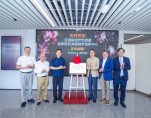
From left to right: Dr.Tengfei CAO, Deputy Director of CIITS; Mr. Tom LAU, Corporate Finance Director and Co-Founder of Immuno Cure; Dr. Renchen LIU, Executive Deputy Dean of Research Institute of Tsinghua University in Shenzhen and Director of CIITS; Dr. Xia JIN, CEO and Co-Founder of Immuno Cure; Prof. Zhiwei CHEN, Principal Scientific Advisor and Co-founder of Immuno Cure; Dr. Percy CHENG, Chairman and Co-Founder of Immuno Cure

CIITS is a national-level achievement transformation platform co-built by Guangdong Province, Shenzhen Municipality, and Tsinghua University, and is located at the Hetao Shenzhen-Hong Kong Science and Technology Innovation Co-operation Zone (“Hetao Co-operation Zone“). It is committed to building a world’s leading major technological innovation and industrialization platform with a global perspective. It focuses on key tracks including biomedicine, high-performance materials, and artificial intelligence (AI). It aims to aggregate global innovation resources, connect with leading enterprises, and conduct organized scientific research and achievement transformation to address national major strategic needs.

Since AIDS was first identified in 1981, 40.8 million people have died from HIV infection, with over 44.1 million people living with HIV globally. While antiretroviral therapy can effectively control HIV replication, it cannot cure the disease, highlighting the critical need for immunotherapies. Designed to enhance the host’s immune response, immunotherapies aim to achieve sustained viral control without lifelong ART, ultimately leading to complete viral suppression and functional cure. Immuno Cure’s proprietary innovative HIV therapeutic DNA vaccine, ICVAX®, induces broad-spectrum, polyfunctional virus-specific T cells to achieve the ultimate goal of ART-free functional cure of HIV infection.

Immuno Cure completed the first-in-human Phase I clinical trial of ICVAX® in November 2024, demonstrating excellent safety and promising immunogenicity. Two multi-center Phase II clinical trials—randomized, double-blind, and placebo-controlled—are scheduled to launch in Q2-2026 to evaluate the vaccine’s mechanism of action and efficacy. The trials will be conducted at Prince of Wales Hospital in Hong Kong, as well as eight top-tier hospitals in China, including the Shenzhen Third People’s Hospital, Beijing Ditan Hospital Affiliated to Capital Medical University, Beijing Youan Hospital affiliated to Capital Medical University, the Eighth People’s Hospital of Guangzhou, the Second People’s Hospital of Tianjin, the Sixth People’s Hospital of Zhengzhou, Chengdu Public Health Clinical Medical Center, and Chongqing Public Health Medical Center.

Notably, standardized testing systems for evaluating immunological and virological indicators are crucial for HIV vaccine clinical trials. However, the lack of domestic standard operating procedures (SOPs) for infectious samples in clinical trials hinders the clinical development and regulatory approval of novel infectious disease therapies like ICVAX®. The mission of this research facility at CIITS is to establish an internationally aligned standardized clinical testing system for T-cell immunogenicity and viral reservoirs, as well as identify core biomarkers associated with vaccine efficacy — filling a domestic technical gap. Immuno Cure will offer the ICVAX® Phase II clinical trial to facilitate the development of this standardized precision testing method for clinical sample analysis.

Dr. Xia JIN, CEO of Immuno Cure, stated, “I am delighted to be appointed to lead this key project of CIITS. I would also like to thank CIITS for the fully fitted modern laboratory space and the RMB10.0m funding support for this 2-year initial phase. My whole scientific team is committed to contributing diligently to the success of this project. I have no doubt that the development of a standardised testing regime would not only enhance the quality of our clinical trials for ICVAX® but would also eventually be adopted as industry and national standards for the clinical translation of medicine for HIV/AIDS and other infectious diseases.

Renchen LIU, Executive Deputy Dean of Research Institute of Tsinghua University in Shenzhen and Director of CIITS, stated, “Warmest congratulations on the inauguration of the research facility for ICVAX® at the CIITS. In the future, CIITS will continue to leverage its platform resources to implement full-chain incubation services. Project managers will provide service support throughout the entire project period, ensuring the smooth progress of the project through resource integration, talent recruitment and development, clinical collaboration, and achievement transformation. These efforts will safeguard the steady progress of the project.”

As the project advances, Immuno Cure’s ICVAX® is positioned to become the world’s first therapeutic DNA vaccine to deliver an ART-free functional cure for HIV infection, bringing new hope to people currently living with HIV. In parallel, the standardized testing platform and collaborative innovation model developed through this effort will provide a scalable, replicable blueprint for R&D of novel therapies targeting other major infectious diseases. Together, these outcomes will strengthen the global competitiveness of biomedicine development in GBA and contribute to the development of national biosecurity capabilities and a more resilient public health system.

Hashtag: #ImmunoCure


The issuer is solely responsible for the content of this announcement.

About the Center of International Innovation for Technology and Science (“CIITS”)

Center of International Innovation for Technology and Science (CIITS), as the international headquarter of the Greater Bay Area National Center of Technology Innovation (GBA NCTI), is operated by Research Institute of Tsinghua University in Shenzhen (RITS). CIITS actively promotes the commercialization of technology and scientific advances with overseas and domestic innovation institutions and teams, as well as industry partners, focusing on areas such as biomedicine, advanced materials and artificial intelligence.

To learn more about CIITS, please follow the WeChat official account: gh_425f503135d5

About Immuno Cure

Immuno Cure is a clinical-stage biotechnology group headquartered at Hong Kong Science Park. Immuno Cure is committed to the R&D of innovative DNA vaccines and antibody immunotherapies for infectious diseases, inflammations, and cancers. Immuno Cure possesses two technologies: the “PD-1 Enhanced DNA Vaccine Platform” and the “Anti-Δ42PD1 Antibody”.

To learn more about Immuno Cure, please visit:

Brussels faces resistance from Germany and Spain over a proposed EU-wide move to force telecom operators to remove Huawei and ZTE equipment from critical networks, exposing a rift between the European Commission’s security agenda and national concerns over cost, timing and market disruption. Officials in Berlin and Madrid are pushing back against plans that would turn the EU’s existing 5G security guidance into binding law, arguing that […]

Humanity is consuming resources at a rate the planet cannot sustain, a new peer-reviewed study has warned, placing pressure on food systems, climate stability, biodiversity and living standards as the global population moves deeper into ecological overshoot. Researchers led by Corey J. A. Bradshaw of Flinders University found that the world’s population has already surpassed Earth’s sustainable carrying capacity, with today’s 8.3 billion people well above the […]

KUALA LUMPUR, MALAYSIA – Media OutReach Newswire – 27 May 2026 – As traditional large-model scaling laws near their computational limits, the global tech community is racing to explore next-generation AI pathways. On May 12, at the Science x AI Summit 2026 in Silicon Valley, Turing winners, Fields Medal-level scientists, and leaders from Google, OpenAI, and NVIDIA discussed algorithm efficiency, high-value data, and industrial restructuring. Chow Kit Hui, a senior finance expert and AI founder, drew attention for his data‑rationality and vertical risk‑control perspective.

The summit signaled a clear “cross‑border restructuring.” With computing power collaboration entering a new phase, AI competition is expanding from single‑model parameters to industrial scenarios like math, life sciences, financial risk control, and complex macro decisions. Chow Kit Hui argues that extensive competition based on capital and model scale is shifting to refined competition—the future AI ecosystem hinges on integrating technology, data, and scenarios.

At the summit, Chow Kit Hui and NVIDIA launched a new strategic collaboration on algorithm optimization, AI training architecture, vertical data assets, and decision‑model integration, aiming to boost computing efficiency and drive deployment of industry‑level AI agents and autonomous reasoning in complex scenarios.

Chow Kit Hui unveiled his strategically positioned AI fund, AlgoVision AI Growth Partners Foundation. Driven by computing power, capital, and application scenarios, it backs upstream tech breakthroughs and high-value downstream applications, bridging AI research with industrial use. From academic discourse to computing coordination, the summit revealed a new competitive landscape: core advantage now lies in integrating technology, data, scenarios, capital, and resources—not the capability of a single model. With data-driven rationality and risk control, Chow injected lasting long-termism into global AI deployment.

Hashtag: #KitHuiGrowthFinancialAcademy

The issuer is solely responsible for the content of this announcement.

About KitHui Growth Financial Academy

Kit Hui Growth Financial Academy was founded by Chow Kit Hui. Chow Kit Hui has long focused on global asset allocation, corporate mergers and acquisitions, private equity, derivatives, risk management, macroeconomic research, and financial valuation modeling. The academy does not center on short-term market predictions or teaching investment “tricks.” Instead, it helps learners establish a rational, long-term, and structured path to financial understanding. The academy emphasizes structured comprehension of market mechanisms, risk-prioritized decision-making, and independent judgment.

Official website: https://www.kithuiacademy.com/

Qualcomm has secured a major opening in artificial intelligence infrastructure through a deal to supply ByteDance with chips for AI data centres, giving the San Diego-based group a high-profile customer as it pushes beyond its traditional smartphone processor business. The agreement covers application-specific integrated circuits, or ASICs, designed to support AI workloads in ByteDance’s expanding data-centre operations. The chips are expected to be used for AI agent […]

China’s e-commerce industry expanded steadily in the first four months of 2026, reinforcing its role as a major support for consumption even as the broader economy showed signs of uneven demand and weaker momentum in traditional retail channels.

Online retail sales of goods and services rose 6.6 per cent year on year in January-April, reaching about 6.53 trillion yuan, as digital platforms continued to draw shoppers through discounts, livestreaming, faster delivery and wider service offerings. Online retail sales of goods contributed 72.2 per cent to the growth of total retail sales of consumer goods, underlining the sector’s importance to household consumption and the wider services economy.

The performance stood out against a softer macroeconomic backdrop. Total retail sales of consumer goods increased 1.9 per cent year on year to 16.49 trillion yuan in the first four months, while April’s retail sales rose only 0.2 per cent from a year earlier, slowing sharply from March. Industrial output also moderated in April, while fixed-asset investment weakened in the January-April period, adding pressure on policymakers to keep consumption and digital commerce at the centre of growth-support measures.

Food, apparel, daily necessities and services remained key pillars of online demand. Online sales of agricultural products rose 12.2 per cent during the four-month period, reflecting stronger farm-to-consumer supply chains and the growing ability of digital platforms to connect rural producers with urban buyers. E-commerce transactions involving metal products climbed 34.8 per cent, while chemical products rose 12.2 per cent, signalling that business-to-business digital trade is becoming a larger part of the sector’s expansion.

Services delivered some of the strongest growth. Online tourism sales jumped 33.2 per cent, while online catering sales rose 20 per cent, helped by domestic travel demand, app-based restaurant bookings, group-buying promotions and instant delivery networks. This shift has broadened the definition of e-commerce beyond parcel delivery, making it a channel for local services, entertainment, travel and food consumption.

China’s major platforms remain central to the sector’s trajectory. Alibaba continues to rely on Taobao and Tmall while pushing faster local delivery through integrated quick-commerce services. JD. com is using its logistics network to defend its position in electronics, household goods and same-day fulfilment. Pinduoduo remains a powerful force in value-led shopping, while Douyin and Kuaishou have expanded livestream commerce by converting entertainment traffic into direct sales. Meituan has become a key player in instant retail, extending its food-delivery infrastructure into groceries, medicines, flowers, consumer goods and convenience-store items.

The fastest change is taking place in instant retail, where platforms promise deliveries within an hour by linking consumers to nearby warehouses, restaurants, pharmacies and shops. The model has moved beyond food delivery into daily essentials and non-food categories, creating a new battleground for Alibaba, JD. com and Meituan. Heavy subsidies have helped attract users, but they have also raised concerns about margins, rider welfare, food safety and wasteful competition.

Regulatory scrutiny is rising alongside the sector’s growth. Authorities have fined major food-delivery and e-commerce platforms over failures in vendor verification and consumer protection, while new rules on platform pricing and unfair competition are tightening oversight of discounting, algorithms and merchant treatment. The regulatory direction suggests support for digital commerce will continue, but platforms are being pushed towards higher-quality growth rather than unchecked subsidy wars.

Cross-border e-commerce also remained a bright spot. The Silk Road e-commerce initiative helped lift online sales of imported products from partner countries, with Thai durians, beverages from the UAE and Italian casual trousers recording sharp gains in January-April. The trend points to growing consumer appetite for imported food, fashion and lifestyle products, while also helping overseas exporters access China’s vast digital marketplace through platform partnerships, bonded warehouses and livestream selling.

Rural e-commerce is another policy priority. Expanded digital infrastructure, village-level logistics points and platform-backed agricultural campaigns have helped smaller producers sell fruit, tea, seafood, grains and speciality foods directly to consumers. The model supports rural incomes and reduces dependence on traditional wholesale chains, though smaller sellers still face challenges from platform fees, return costs, traffic concentration and intense price competition.

South Africa’s diesel shock has turned a distant Middle East conflict into a domestic economic threat, exposing how sharply the country’s transport, mining, farming and power systems now depend on imported refined fuel. The Iran war and disruption around the Strait of Hormuz have pushed global energy markets into a new phase of volatility, but South Africa’s vulnerability is not driven by crude oil alone. The deeper […]

Advertisements
China’s artificial intelligence market is entering a faster and more expensive phase, with enterprise spending forecasts pointing to a surge that could reshape global competition in cloud computing, semiconductors, robotics and industrial automation.

Global enterprise AI expenditure is expected to reach about $940 billion in 2026 and climb to roughly $2.1 trillion by 2029, reflecting a shift from experimental deployments to large-scale use across manufacturing, finance, logistics, health care, energy and public services. China is emerging as one of the fastest-expanding markets within that cycle, helped by heavy infrastructure spending, state-backed industrial policy and a corporate race to build domestic alternatives to foreign chips, models and cloud platforms.

The acceleration is no longer confined to model development. China’s AI buildout is moving across the full technology stack, from data centres and accelerators to enterprise software, robotics and agentic systems capable of handling complex workflow tasks. The first phase of the investment wave was dominated by computing power, foundational models and large infrastructure projects. The next phase is being shaped by applied AI, intelligent services and automation across production lines, offices and consumer platforms.

That transition is putting pressure on global rivals. US technology groups still lead in advanced chips, frontier models and hyperscale cloud capacity, but China’s market has advantages in deployment speed, manufacturing depth and policy coordination. Companies including Alibaba, Tencent, Baidu, Huawei and ByteDance are expanding AI services while also trying to reduce dependence on restricted US semiconductor supplies. Alibaba has unveiled a new AI chip through its T-Head unit and is directing tens of billions of dollars into cloud and AI infrastructure over several years. Huawei’s Ascend processors have become central to China’s domestic accelerator strategy as export controls limit access to top-tier Nvidia products.

Infrastructure remains the foundation of the race. Worldwide AI infrastructure spending is on course to exceed $1 trillion by 2029, with accelerated servers accounting for the overwhelming share. China remains the second-largest AI infrastructure market after the US, even though export restrictions have created supply constraints for high-end accelerators. Those restrictions have encouraged domestic chip design, local server ecosystems and more efficient deployment models for inference, where many commercial AI applications run after models have been trained.

China’s data centre expansion is also moving into more specialised formats. AI workloads demand dense computing power, stable electricity supply and advanced cooling, all of which are raising costs and straining grids. Projects near Shanghai and other technology hubs are testing alternative energy and cooling systems, including offshore and renewable-powered facilities. These efforts reflect a broader attempt to manage the energy burden of AI while supporting national ambitions in cloud services, industrial software and smart manufacturing.

Robotics is becoming a central pillar of the spending wave. China already has the world’s largest industrial robot base and is pushing into embodied intelligence, where AI systems are integrated into machines that operate in factories, warehouses, homes and public spaces. Forecasts for China’s robotics market point to rapid expansion over the next five years, with demand coming from electric vehicles, electronics, logistics and elder care. The combination of AI models, sensors, batteries and manufacturing scale gives domestic firms a route to compete internationally beyond software alone.

Policy support is reinforcing corporate investment. Beijing’s “AI Plus” strategy, issued in 2025, aims to embed artificial intelligence across the economy by expanding access to data, compute and talent while promoting open-source ecosystems and industrial adoption. Local governments have added funding programmes, innovation parks and procurement support, creating competition among cities such as Beijing, Shanghai, Shenzhen and Hangzhou. That model can accelerate deployment, though it also raises the risk of duplicated capacity, uneven standards and projects driven more by subsidy incentives than commercial demand.

The competitive picture remains mixed. China leads in AI publication volume, citations, patent output and industrial robot installations, while the US continues to produce more frontier models and higher-impact patents. The performance gap between leading US and Chinese models has narrowed, aided by open-source releases and engineering efficiency from Chinese labs. DeepSeek’s breakthrough earlier in the cycle demonstrated that capable systems could be produced with fewer resources than previously assumed, intensifying debate over whether raw spending alone will determine leadership.

Arabian Post Staff -Dubai Etihad Rail has unveiled the official uniforms for its passenger-facing teams, offering the clearest sign yet that preparations for the UAE’s first national passenger rail service are moving into their final operational phase. The new look, built around a contemporary grey palette with bold red accents, will be worn by onboard hosts, station staff and other customer-facing employees across the passenger network. The […]

New Delhi and Washington have signed a framework agreement to secure critical minerals and rare earth supplies, placing mining, processing, recycling and financing at the centre of a strategic push to reduce exposure to China-dominated supply chains.

The agreement was signed on Tuesday during the Quad foreign ministers’ meeting in New Delhi, where External Affairs Minister S Jaishankar and US Secretary of State Marco Rubio held talks covering economic security, energy resilience and Indo-Pacific cooperation. The pact gives both countries a structured route to work together across the full minerals value chain, from exploration and extraction to refining and downstream industrial use.

Critical minerals and rare earth elements have become central to the global contest over clean-energy technologies, semiconductors, electric vehicles, defence systems, communications equipment and advanced manufacturing. For New Delhi, the agreement offers access to US capital, technology partnerships and supply-chain coordination at a time when domestic demand for lithium, cobalt, nickel, graphite, copper and rare earth magnets is expected to rise sharply.

China’s dominance remains the main strategic driver behind the pact. Beijing controls a large share of global rare earth refining and magnet production, giving it leverage over industries that depend on high-performance permanent magnets, battery inputs and specialised industrial materials. Export restrictions and licensing measures imposed by China on select critical minerals have added urgency to efforts by major economies to diversify sourcing and processing.

New Delhi’s gains could come in several layers. The first is supply security. India’s electronics, defence, renewable energy and electric mobility sectors need stable access to minerals that are often mined in one region and processed in another. A bilateral framework with Washington can help identify viable projects, link producers with manufacturers and create longer-term offtake arrangements that reduce price and availability shocks.

The second benefit lies in processing. India has mineral-bearing resources, a large manufacturing base and expanding demand, but it lacks sufficient refining and separation capacity for several high-value critical minerals. Collaboration with US companies and research institutions could support technology transfer, pilot processing facilities, environmental safeguards and recycling systems. That is particularly important because rare earth value chains are not only about mining; separation, purification and magnet-making often determine strategic control.

A third advantage is financing. Critical mineral projects are capital-intensive, slow to develop and vulnerable to volatile prices. The new framework is expected to encourage coordinated investment, risk-sharing and policy support. For India, this could help attract patient capital into mineral exploration, processing parks, recycling ventures and specialised manufacturing units linked to batteries, magnets and electronics.

The agreement also fits into New Delhi’s wider industrial strategy. The government has launched auctions for critical mineral blocks, expanded exploration and moved to build partnerships with resource-rich countries. State-backed and private companies have shown growing interest in lithium, rare earths and battery materials, while domestic manufacturers are seeking greater localisation of supply chains for electric vehicles, solar power, wind equipment and semiconductors.

Washington’s interest is equally clear. The US wants trusted partners that can help build alternatives to China-centred mineral flows. India offers scale, engineering capacity, a large market and geopolitical alignment through the Quad. A stronger minerals partnership can also support US efforts to diversify clean-energy and defence supply chains beyond a narrow group of suppliers.

The pact follows earlier India-US cooperation in technology, defence, semiconductors and clean energy. It also complements Quad-level initiatives designed to strengthen supply chains and energy security across the Indo-Pacific. Australia brings mining strength, Japan brings advanced materials and manufacturing capacity, the US brings capital and technology, and India brings market scale and industrial ambition.

Challenges remain substantial. New mining and processing projects often face long approval timelines, environmental scrutiny, land acquisition issues and high upfront costs. Rare earth separation involves complex chemistry and waste management concerns. Recycling can reduce dependence on fresh extraction, but collection systems and processing capacity remain underdeveloped. India will also need a skilled workforce, stable regulation and clear pricing signals to convert diplomatic agreements into viable industrial projects.

India and Canada are moving to conclude a comprehensive trade agreement by the end of 2026, setting a target to lift two-way commerce to $50 billion by 2030 as both governments try to convert a diplomatic thaw into a wider economic partnership.

Commerce and Industry Minister Piyush Goyal’s visit to Ottawa and Toronto, accompanied by more than 100 business leaders, has added momentum to negotiations on a Comprehensive Economic Partnership Agreement, which both sides see as central to expanding market access, investment flows and supply-chain cooperation. The visit comes after a prolonged freeze in trade discussions caused by the diplomatic dispute that followed the 2023 killing of Sikh separatist Hardeep Singh Nijjar in British Columbia.

New Delhi and Ottawa are now working to rebuild trust through a structured commercial agenda covering energy, agriculture, critical minerals, technology, education and services. The scale of the business delegation travelling with Goyal underlines the attempt to shift the relationship from political caution to transaction-led engagement. A “Team Canada” delegation is expected to visit India later this year, signalling that both governments want to sustain ministerial and private-sector contact beyond formal negotiating rounds.

Bilateral trade remains below potential for two large economies with complementary strengths. Merchandise trade between the two countries stood at about $13.6 billion in 2025, with Canada exporting vegetables, mineral fuels, oils and wood pulp, while imports from India were led by precious stones and metals, machinery, pharmaceuticals and manufactured goods. Services trade, especially in technology, education, professional services and mobility-linked sectors, has grown into a significant part of the relationship.

The $50 billion target is ambitious but not beyond reach if negotiations produce tariff concessions, regulatory clarity and stronger investment protections. India is seeking reliable access to critical minerals, energy products, gas, fuel and agricultural inputs from Canada. Ottawa, for its part, sees India as a large growth market at a time when Canada is trying to diversify trade beyond its heavy dependence on the United States.

Energy is likely to become one of the pillars of the renewed partnership. Canada’s reserves of uranium, potash, natural gas and critical minerals fit India’s requirements for food security, clean energy expansion and industrial supply chains. Civil nuclear cooperation has returned to the agenda, with uranium supply discussions forming part of the broader effort to rebuild strategic confidence. India’s rising electricity demand and its plan to expand non-fossil energy capacity give Canada a commercial opening in nuclear fuel and related technologies.

Agriculture and fertilisers also carry strategic weight. Canada is a major supplier of potash, while India’s farm sector requires stable input supplies to support food production. Pulses have long been part of the trade basket, though pricing, phytosanitary rules and domestic market sensitivities have at times complicated flows. A broader agreement could provide more predictable rules, but both sides will have to manage farmer concerns and safeguard mechanisms carefully.

Technology and education offer another route to deeper engagement. Canada remains a major destination for students from India, while companies in both countries are exploring artificial intelligence, clean technology, fintech, cybersecurity and advanced manufacturing. Talent mobility will remain a sensitive but crucial component of any expanded economic relationship, especially as Canada adjusts immigration settings and India pushes for easier access for skilled professionals.

The political backdrop remains complex. Relations deteriorated sharply in 2023 after Canada alleged involvement by agents linked to New Delhi in Nijjar’s killing, an accusation India rejected. Diplomatic expulsions and a pause in trade talks followed, slowing a relationship that had already been marked by differences over separatist activism, security concerns and diaspora politics. The decision to restart CEPA negotiations reflects a pragmatic calculation that economic interests can create stabilising channels even when political trust is still being repaired.

Business groups on both sides are pressing for faster progress. Exporters want lower tariffs, simpler customs procedures and clearer standards rules. Investors are seeking safeguards, dispute-resolution mechanisms and sectoral openings. Canada’s pension funds and institutional investors already have exposure to infrastructure, real estate and financial assets in India, while companies from India are looking at Canadian opportunities in technology, mining, manufacturing and services.

Pope Leo XIV has used the first encyclical of his papacy to call for tighter regulation, transparency and human oversight of artificial intelligence, warning that unchecked systems could intensify misinformation, deepen inequality and make war easier to wage. The document, Magnifica Humanitas, places AI at the centre of the new pontificate’s social agenda, treating the technology not as a narrow technical issue but as a test of […]

By Nantoo Banerjee India’s economy is navigating severe stress. The impact of Persian Gulf war, high cost of imported crude oil, frequent upward adjustment of retail oil prices, rising commodity rates, soaring transportation costs, weakening Rupee and continuous exit of foreign portfolio investors (FPI) are posing a big challenge to the economy. The government appears […]

The article Rising Prices, Falling Rupee And FPI Exit Pose Big Challenge To Economy appeared first on Latest India news, analysis and reports on Newspack by India Press Agency).

Arabian Post Staff -Dubai Ras Al Khaimah’s push to build a deeper corporate real estate market has gained momentum after major structural works were completed at RAK Central Square, the emirate’s first luxury Grade A office complex, keeping the project on track for a planned opening in the fourth quarter of 2027. The five-building development will provide 2.27 million sq ft of high-quality workspace, with large, efficient […]

Australia is moving to extend its domestic gas reservation scheme across liquefied natural gas projects and export arrangements, including volumes tied to existing contracts, sharpening a policy shift aimed at easing pressure on households, power generators and manufacturers exposed to volatile east coast gas prices. The draft design framework for the scheme requires LNG exporters to supply gas equal to 20 per cent of their export volumes […]

Gold rose more than 1 per cent on Monday as hopes of a possible US-Iran agreement pushed oil prices lower, weakened the dollar and reshaped inflation expectations across commodity and currency markets. Spot bullion climbed to about $4,559 an ounce, while US gold futures traded near $4,560, extending gains as investors assessed signals that Washington and Tehran had moved closer to a framework that could ease pressure […]

Greenlogue/AP UAE officials used the World Hydrogen Summit & Exhibition in Rotterdam to reinforce the country’s ambition to become a global hub for low-emission hydrogen, placing cross-border trade, common standards and industrial decarbonisation at the centre of its energy transition agenda. The Ministry of Energy and Infrastructure represented the UAE at the gathering in the Netherlands, where governments, technology developers, financiers and energy companies examined the commercial […]

Arabian Post Staff -Dubai Abu Dhabi National Oil Co is moving oil, gas and refined fuel cargoes out of the Gulf through the Strait of Hormuz using ships linked to its own logistics network, keeping a limited export channel open while one of the world’s most important energy corridors remains under severe strain. Ship-tracking data indicates that vessels associated with ADNOC Logistics & Services have crossed or […]

Qatar has stepped up its investment campaign in China with high-level business meetings in Shanghai and Hangzhou aimed at turning long-standing trade links into deeper industrial, technology and financial partnerships.

Invest Qatar’s delegation, led by its chief executive Sheikh Ali bin Alwaleed Al-Thani, held executive-level meetings, site visits and closed-door business discussions with Chinese companies across advanced manufacturing, life sciences, industrial technologies and digital platforms. The engagements included WuXi Biologics, Shanghai SUS Environment, Cainiao Group and Ant International, placing the tour at the intersection of Qatar’s diversification agenda and China’s strengths in biotechnology, logistics, environmental services and digital finance.

The visit was designed to present Qatar as a platform for regional expansion, with Invest Qatar highlighting support for market entry, regulatory coordination, site selection, expansion planning and aftercare services. The pitch reflects Doha’s effort to move beyond energy-led ties and attract capital, technology and operational expertise into sectors linked to the Third National Development Strategy and Qatar National Vision 2030.

China already occupies a central place in Qatar’s external economic network. Bilateral cooperation spans energy, logistics, manufacturing, technology and financial services, while Qatar hosts about 520 Chinese companies. Over the 2017-2026 period, China has ranked among Qatar’s top 10 sources of foreign direct investment, with 59 projects generating more than $3bn in capital expenditure and creating more than 3,200 jobs across multiple sectors.

The Shanghai and Hangzhou programme signals a more targeted approach by Qatar’s investment promotion authorities. Rather than broad promotional activity, the delegation focused on companies that fit Qatar’s priority clusters. WuXi Biologics brings relevance to life sciences and contract research, Shanghai SUS Environment operates in waste-to-energy and environmental infrastructure, Cainiao Group is a major logistics and supply-chain player, and Ant International strengthens the digital payments and fintech dimension of the outreach.

Energy remains the anchor of Qatar-China economic relations. China is Qatar’s largest trading partner, with bilateral trade reaching $24.22bn in 2024. China exported goods worth about $4.17bn to Qatar and imported about $20.05bn, led by liquefied natural gas and industrial helium. Qatar is also China’s second-largest source of LNG imports, reinforcing the strategic weight of the relationship at a time when Asian demand remains central to global gas markets.

QatarEnergy’s expansion strategy has further tightened industrial links with China. Long-term LNG supply arrangements linked to the Chinese market, together with major vessel orders placed with Chinese shipbuilders, have created a broader commercial ecosystem around the North Field expansion. Qatar aims to raise LNG production capacity from 77mn tonnes a year to 142mn tonnes by 2030, a target that will require shipping, engineering, financing and downstream partnerships across Asia.

The investment outreach comes as Gulf states increasingly seek to use energy relationships as a foundation for wider economic cooperation with Asia. For Qatar, China offers scale, capital depth and technology capacity. For Chinese groups, Qatar provides political stability, strong transport connectivity, free-zone infrastructure and access to Gulf, African and South Asian markets.

Doha is also seeking to position itself as a business base for companies navigating a more fragmented global trade environment. Regulatory certainty, a relatively high-income market, advanced digital infrastructure and a sovereign investment ecosystem give Qatar tools to compete for regional headquarters, specialised manufacturing and services projects. The challenge will be converting exploratory meetings into project commitments in sectors where regional competition is intense, particularly from Saudi Arabia and the UAE.

Financial services form another important strand of the relationship. Qatar Investment Authority’s moves in China’s asset management sector and broader Gulf interest in Asian financial markets point to a shift from passive portfolio exposure towards more strategic investment channels. That trend could support new capital-market links, fintech partnerships and investment vehicles connecting Doha and Chinese financial centres.

The latest Invest Qatar tour also reflects a diplomatic-economic strategy that has become more visible across Asia. Qatar has sought to deepen ties with major economies while keeping its partnerships diversified across the United States, Europe, China and other Asian markets. This balancing approach allows Doha to pursue commercial opportunities while avoiding excessive dependence on any single investment corridor.

For Chinese companies, Qatar’s offer is strongest where national development goals align with corporate expansion plans. Life sciences companies can tap healthcare investment and research partnerships, logistics operators can link into Hamad Port, Hamad International Airport and regional re-export networks, and digital platforms can benefit from a market that has been investing in cashless payments, cloud services and smart-city infrastructure.

Gold prices advanced by more than 1 per cent on Monday as a weaker dollar and a sharp fall in crude oil prices strengthened demand for bullion, with investors reassessing inflation risks and the likely course of US monetary policy amid signs of progress in Washington’s talks with Tehran. Spot gold traded near $4,560 an ounce, extending gains after the dollar slipped against major currencies and oil […]

UAE Minister for Foreign Trade Dr Thani bin Ahmed Al Zeyoudi used a high-level GLOBSEC Forum 2026 panel in Prague to present the country’s trade-continuity strategy as the Iran war continues to disrupt Gulf shipping, energy flows and global supply chains. Speaking during “The Ripple Effect: How the Iran War is Shaping Global Economies and Politics”, Al Zeyoudi told senior policymakers, business executives and international officials that […]

California Governor Gavin Newsom has declared a state of emergency in Orange County after an overheating chemical storage tank at a Garden Grove aerospace facility raised fears of an explosion, toxic release or hazardous spill affecting tens of thousands of residents. The emergency proclamation covers a GKN Aerospace site where a tank holding roughly 5,000 to 7,000 gallons of methyl methacrylate began heating and emitting fumes on […]

Matein Khalid US President Donald Trump’s recent state visit to China has done little to end the stalemate in the Strait of Hormuz. If anything, Iran appears to have been emboldened enough to escalate Gulf tensions through drone strikes near the Barakah Nuclear Energy Plant in Abu Dhabi and rocket attacks targeting sites in Saudi Arabia. Brent crude trading at about $110 a barrel has coincided with a brutal sell-off […]

President Donald Trump said a proposed agreement with Iran to reopen the Strait of Hormuz has been “largely negotiated”, raising hopes of a diplomatic breakthrough after months of conflict disrupted one of the world’s most important energy routes. Final terms are still being discussed among Washington, Tehran and regional governments, with an announcement expected once the remaining points are settled. Trump said the framework followed calls with […]

VISHNU RAJA
RYO YAMADA
HITORI GOTOH
IKUYO KITA
Just in:
Strategy drives listed companies’ Bitcoin holdings to 1.3 million // IBS Proposes HK$563 Million Acquisition of AI Chip Enterprise // 10 CENTS CAPITAL Completes US$20 Million Financing and Sets Out a Phased Deployment Plan // Lancet researchers seek global health emergency recognition for climate // Polymarket restores trading after third-party security breach // High Court opens toddy shop jobs to women // LiveWire flags survival doubts as cash reserves shrink // Lancet researchers seek global health emergency recognition for climate // Lancet researchers seek global health emergency recognition for climate // Mumbai to host global blockchain leaders at November conference // US intelligence suspects Megaspeed executive of Chinese espionage // Lancet researchers seek global health emergency recognition for climate // Binance estimates $6.3 billion impact from security breach // 10 CENTS CAPITAL Completes US$20 Million Financing and Sets Out a Phased Deployment Plan // ZJLD Group Returns to Hong Kong Wine & Dine Festival 2026 // Hill’s Enhances Cat and Dog Food with Prebiotics to Support Senior Pet Health in Hong Kong // Anchored in Data Sovereignty, the Engagement Enables the Legal Sector to Adopt Generative AI Safely and Confidently // A Better Start, Ready for the Day: Green SM Elevates the Urban Mobility Experience in the U.S. // Lancet researchers seek global health emergency recognition for climate // Crown Workspace wins Gold and special Trinity recognition at HR Vendors of the Year Awards 2026 //



