News related to
Industrial

A novel method from Rice University scientists means electrochemical CO₂ conversion devices can now run more than 50 times longer thanks to a simple yet effective switch in their humidification process. By bubbling carbon dioxide through a gentle acid—such as hydrochloric, formic or acetic—the team has prevented blockages that previously cut runtimes to mere hundreds of hours. Electrochemical CO₂ reduction systems traditionally suffer from salt buildup. Potassium […]

Saudi Arabian Oil Company, widely known as Aramco, is dramatically expanding beyond its oil and petrochemical roots into a diversified, technology-centric energy powerhouse. Under Chief Executive Amin Nasser, the enterprise is balancing its historic role as a revenue pillar for the Kingdom with aggressive investments in artificial intelligence, renewables, blue hydrogen, carbon capture and e‑fuels. Aramco’s strategic pivot is anchored in its financial strength. The company reported […]

A British Royal Navy F‑35B Lightning II remains immobilised at Thiruvananthapuram International Airport after declaring an emergency on 14 June. The pilot reported low fuel amid rough sea conditions over the Arabian Sea before the jet, deployed from HMS Prince of Wales during the Indo‑Pacific Operation Highmast, touched down at 21:28 IST. The Indian Air Force’s Integrated Air Command and Control System coordinated the diversion alongside civilian air traffic control, declaring a full-scale emergency to ensure safe handling.

Initial refuelling took place on Sunday under IAF supervision, but the aircraft could not return to the carrier due to a hydraulic system failure. Royal Navy technicians arrived via helicopter from the carrier that night and began repair operations, but their efforts remain unsuccessful six days on. Additional British and American technical personnel—possibly including Lockheed Martin experts—have since taken charge, while a larger maintenance team is expected. If repairs remain inconclusive, the jet may be airlifted back aboard a military transport aircraft.

Valued at over $100 million, the F‑35B represents one of the world’s most advanced and expensive combat aircraft, equipped with short take‑off and vertical landing capability, stealth design, networked sensors, and naval adaptability. Its unscheduled landing in India highlights both the logistical complexities of advanced military aviation and the robust coordination between allied forces.

Security protocols have been stringent. The aircraft is stationed in Bay 4 under armed Central Industrial Security Force guard. The British team rejected offer to relocate it to a civilian hangar or protective shed, citing confidentiality concerns over sensitive systems, and insisted on repairs in open view under controlled conditions. Meanwhile, Royal Navy personnel, including the pilot and technicians, remain onsite with food and lodging provided by airport authorities, with Indian teams facilitating logistics throughout.

The incident marks the first unscheduled landing of a foreign-manufactured F‑35 on Indian territory and comes amid growing UK‑India defence cooperation. The jet had been flying as part of joint maritime exercises, including PASSEX drills with INS Tabar and other British ships in the northern Arabian Sea on 9–10 June. Analysts have noted the deployment underscores interoperability and strategic alignment between both nations, rather than any response to Middle East tensions.

Within 48 hours of landing, the aircraft had been refuelled and initially positioned for departure. However, the discovery of hydraulic malfunction extended its stay, prompting the dispatch of specialists from the UK and the US. Defence officials confirmed that the jet could be repatriated on a cargo plane if ground repairs remain unfeasible.

The episode has drawn public attention not only for its rarity but also for the international coordination displayed. Local observers are closely watching developments, while military commentators underscore the necessity of emergency recovery airfields like Thiruvananthapuram for carrier-based operations during unpredictable monsoon-season weather.

As of 20 June, the jet remains on the tarmac, awaiting either restoration or return via air transport. With a multinational technical team now assembled, a departure window is expected later this week—subject, of course, to successful hydraulic repair and formal clearances under Indian aviation protocols.

The University of Dubai and the Artificial Intelligence Journalism for Research and Forecasting have unveiled the Arab AI Researchers initiative, marking the first pan‑Arab programme dedicated to training academics in artificial intelligence for research and teaching. The launch aligns with efforts to implement the Arab Index for Artificial Intelligence in Universities, announced in May 2024, and formalised at the 5th Artificial Intelligence Journalism World Forum in Sharjah earlier this year.

President of the University of Dubai, Dr Eesa Al Bastaki, explained that AAIR responds to a growing call for universities in Arab states to embed AI into scholarly work and curricula. He noted that the programme reflects the aim of the AIU, which benchmarks integration across six domains: curriculum design, faculty capabilities, smart laboratory infrastructure, student proficiency, research output, and global partnerships.

Dr Saeed Al Dhaheri, Director of the Centre for Futures Studies and President of the AIU, emphasised the initiative’s breadth. “AAIR offers specialised training to integrate AI across all academic tiers,” he said, underscoring the programme’s ambition to reach a wide academic audience across the Arab world. That ambition gains momentum in tandem with AIJRF’s global training portfolio of more than 120 courses and over 20 active AI initiatives, which includes the annual AIJWF and the GAIJI index.

Under the leadership of AIJRF’s CEO Dr Mohamed Abdulzaher, AAIR will offer a free, accredited training programme conducted thrice yearly. Each session will involve four days of intensive instruction—totalising 15 practical hours—for approximately 150 participants. Graduates, upon submission of a project, will receive certification jointly from AIJRF, the University of Dubai and cooperating institutions. Dr Abdulzaher emphasised the programme’s dual focus: practical AI tool use in research and instruction that covers emerging pedagogical approaches such as smart classrooms, automated assignments and AI‑generated project frameworks, underpinned by ethical guidelines.

Experts highlight the significance of AAIR against a backdrop of evolving demand for localised AI capacity in the region’s higher education sector. Gulf News records that the Arab Index for AIU initially pioneered this area by evaluating Arab universities on their strategic integration of AI into humanities and theoretical sciences, spanning institutions from Morocco to Qatar. This quantitative benchmarking now finds practical implementation through AAIR.

The initiative affords multiple strategic gains. It aims to develop an Arab‑centred community of practice in AI, offer Arabic‑language curricular resources, and foster collaborations among universities, research centres and technology providers. Policy experts suggest that by nurturing such ecosystems, the region can more accurately reflect its socio‑cultural context in AI tools and methodologies.

AAIR also responds to economic and educational drivers. UAE government-backed surveys estimate the Arab educational sector will expand rapidly alongside digital acceleration, yet critical gaps remain in Arabic‑language AI content and smart infrastructure. By empowering faculty and students alike, AAIR seeks to deepen the region’s AI talent pool and sustainability.

Formative metrics indicate uptake: AIJRF announced an AAIR target of training 500 academics during the first phase, with enrollment details shared via LinkedIn and public briefings. Dr Abdulzaher credits the partnership between University of Dubai, AIJRF, and other institutional collaborators for enabling broad access to the programme.

Still, the initiative faces challenges inherent to regional adoption. Previous AI integration efforts highlight logistical barriers—such as uneven access to AI‑equipped labs, variable levels of faculty digital literacy, and limited Arabic AI datasets. AAIR’s focus on standardisation and community‑based learning aims to alleviate such bottlenecks.

Industry observers are tracking AAIR’s impact on research and higher education closely. Stakeholders expect ripple effects, including: greater academic publication in AI‑focused journals; the emergence of Arab‑context AI pedagogies; enhanced employability of STEM graduates with real‑world AI experience; and institutional impetus to invest in smart infrastructure.

The AAIR launch also complements AIJWF’s wider initiatives, including the Human Talents vs Gen‑AI Challenge introduced at the 5th edition in April at American University of Sharjah. Collectively, these initiatives contribute to a regional strategy to navigate the Fourth and Fifth Industrial Revolutions, with emphasis on generative AI and its socio‑economic consequences.


Siemens has completed its acquisition of Altair Engineering in a £8.3 billion all-cash transaction, signalling a significant evolution in its industrial software strategy. The integration of Altair’s high-performance computing, data analytics and simulation portfolio into the Siemens Xcelerator platform represents a major leap in the company’s ambition to lead in AI-powered engineering. At the heart of this consolidation lie clear financial and strategic benefits. The deal, offering Altair […]

ImFact today unveiled its “Blockchain Anywhere” infrastructure, enabling 6.8 billion devices—from smartphones to IoT hardware—to operate individual blockchain instances. Dubbed Personal Blockchain and On‑Device Blockchain, the rollout promises cryptographic data verification embedded directly within devices, marking a pivotal shift in trust architecture for artificial intelligence applications. The launch was showcased through Korea’s DaeguChain deployment across Daegu city and supported by a global testnet.

Personal Blockchain runs as a standalone blockchain on smartphones via mobile apps such as MyChain and Fact Stamp, allowing users to verify image authenticity, certify legal documents and complete offline transactions. In parallel, On‑Device Blockchain embeds blockchain functionality into internet-connected hardware—security cameras, autonomous vehicles, industrial sensors—assuring tamper-evident data creation at the source. Together, they integrate with ImFact’s Layer‑1 mainnet through a proprietary Station protocol.

These innovations build on six years of development and have undergone trials within DaeguChain, the civic blockchain network of Daegu city—South Korea’s fourth largest—with a population of 2.5 million. ImFact confirmed the system has proven reliable at enterprise scale. A dual‑track Testnet 2.0 currently supports more than 50,000 users across 97 countries, with participants incentivised via device mining rewards and verification incentives. The team aims to launch the Layer‑1 mainnet in Q4 2025.

Driving ImFact’s initiative is a leadership team comprising Professor Minkyu Je from KAIST—previously with Samsung—as head of hardware blockchain integration; Professor Yasin Ceran of San Jose State University and Stanford Medical School, focusing on privacy-sensitive health data verification on-device; and David Woong Jin Yoon, ex‑CEO of Gravity, steering strategic market deployment. Senior Ecosystem Builder San Jun described the development as the group’s solution to embedding blockchain functionality wherever computing power exists.

The announcement arrives against a backdrop of broader technological investment in South Korea. The government has pledged 16.1 trillion KRW over five years to boost artificial intelligence infrastructure, including data centres and GPU capacity, as outlined in a policy paper presented to the Presidential Policy Planning Committee on 18 June 2025. Key objectives include constructing AI data centres and offering open‑model development to citizens.

Industry analysts suggest that while South Korea’s blockchain strategy originated in controlled, closed networks, the growth of AI demands public and verifiable data systems. Infrastructure such as ImFact’s aligns with this strategic shift, seamlessly enabling decentralised trust within traditionally siloed environments.

ImFact positions its infrastructure as DePIN, distinct from existing offerings that rely on external validation. Instead, their data integrity is assured at the point of generation—whether it be a camera capturing footage or a sensor logging readings—with cryptographic proof to prevent tampering. The embedded nature enhances security and auditability, crucial for sectors like healthcare, autonomous vehicles, legal systems, and industrial monitoring.

While ImFact’s public roadmap outlines the L1 mainnet launch in late 2025, it is already actively engaging early adopters through Testnet 2.0. Users are deploying personal blockchain nodes on smartphones and integrating on-device blockchain chips in IoT hardware, generating token rewards and engaging in verifiable proof tasks. These early-stage validators are cultivating a nascent ecosystem that could mature rapidly ahead of commercial stage.

South Korea’s public sector stance and investment in AI and related infrastructure create a favourable landscape for projects like ImFact. The 16.1 trillion KRW policy emphasises open‑source AI models and GPU availability—initiatives that align with ImFact’s objective to offload cryptographic verification tasks to the edge of the network. The convergence of national policy and device-level trust architecture underscores an ecosystem designed to support AI at scale.

ImFact’s strategy hinges on the deployment and interoperability of three layers: personal blockchains for users, on-device blockchains for hardware, and an L1 mainnet offering global anchoring. Success depends on adoption rates of its mobile apps and IoT kits, regulatory acceptance of on-device verification for legal and medical use cases, and demonstration of clear ROI for participants in device mining.

KUALA LUMPUR, MALAYSIA – Media OutReach Newswire – 19 June 2025 – On 16 June 2025, Chairman Xu Guanju of Transfar Group was invited to speak at the 2025 Energy Asia Conference. Hosted by PETRONAS, the Energy Asia Conference was held at the Kuala Lumpur Convention Centre from 16 to 18 June. Focusing on the theme ‘Delivering Asia’s Energy Transition’, the conference brought together policymakers, industry leaders, […]

Advertisements

Hundreds of metal industry professionals converged on Cairo this week for the debut of the wire and Tube Middle East Africa events, held alongside GIFA and METEC Middle East Africa at METAL & STEEL EGYPT, hosted at the Egypt International Exhibition Center from 2 to 4 September. The four Messe Düsseldorf satellite fairs collectively presented machinery, technology, materials and services from the wire, cable, tube, foundry and […]

HONG KONG SAR – Media OutReach Newswire – 19 June 2025 – Cushman & Wakefield, a leading global real estate services firm, has again been recognized at the Asia Pacific Property Awards, scoring three best Five Star Awards plus one “Award Winner” for outstanding achievements in the Greater China commercial real estate market, highlighting the firm’s leading industry position and exceptional service offerings. Best Property Agency/Consultancy China […]

Saudi Arabia’s Capital Market Authority has greenlit three initial public offerings on the Tadawul Parallel Market, signalling sustained investor interest and broadening of the kingdom’s capital markets. The regulator authorised offerings for Zahr Al Khuzama Aluminium Company, Quality Education Company and Sahat Almajd Company Trading on 18 June 2025. The combined volume of shares to be sold stands at approximately 6.175 million, constituting stakes ranging from 11 […]

A coalition of South Korea’s top 100 firms generated an economic contribution of 1,615.2 trillion won in 2024, marking a 3.9 percent rise from the previous year, according to CEO Score data released on 18 June. Samsung Electronics led the charge with a 7 percent increase to 157.5 trillion won, accounting for 9.8 percent of the total haul.

This growth reflects an integrated model of wealth distribution across stakeholders—suppliers, workers, government, shareholders and communities. Total sales of these firms reached 2,122.4 trillion won, growing 6.6 percent year-on-year, underlining the deep economic interlinkages driving expansion.

Hyundai Motor secured the second position with a contribution of 115.2 trillion won, followed by Kia at 86.6 trillion won, which spectacularly posted the steepest increase thanks to surging supplier payments. Among the top ten contributors were LG Electronics, Hyundai Mobis, GS Caltex, SK Energy, Posco, Samsung C&T and LG Chem. In contrast, LG Energy Solution saw a pronounced drop of 28.3 percent to 19.2 trillion won, weighed down by lower stakeholder payouts.

Industry breakdown highlights that electronics and IT firms contributed about 370 trillion won, followed by petrochemicals at 312 trillion won and the auto sector at 303.5 trillion won. Construction, shipbuilding, steel and distribution made further sizeable additions, reflecting a diverse industrial base.

The dominance of chaebol giants—especially Samsung—continues unabated. Samsung and its affiliates, constituting nearly a quarter of national GDP, help drive national innovation and exports. Beyond scale, these conglomerates are embracing strategic shifts. Government figures show a record R&D investment of 83.6 trillion won by South Korean firms, with Samsung alone ploughing 30.2 trillion won into innovation, followed by SK hynix at 4.5 trillion won, Hyundai at 4.3 trillion won, and LG Electronics at 3.4 trillion won.

Despite stepping up R&D budgets by 15.3 percent, only 40 domestic firms made the global top 2,000 by R&D outlays, compared to 681 in the US and 524 in China—underscoring scope for further thrust in innovation. Within semiconductors, South Korea continues to hold a dominant global footprint, commanding approximately 60 percent of the DRAM market and 52.6 percent of NAND, led by Samsung and SK hynix. Notably, SK hynix claimed 36 percent of DRAM market share in Q1 2025, overtaking Samsung’s 34 percent.

This data reveals a dual narrative: chaebol behemoths remain the backbone of the economy, but a growing reliance on innovation and global competitiveness is reshaping the corporate landscape. Hyundai’s pivot to electric vehicles, Kia’s ramped-up supplier integration and LG’s diversification into chemicals and energy solutions are emblematic of this shift.

However, concentration risk persists. Samsung and its affiliates form a significant share of GDP and exports, but reliance on a limited set of heavyweights may expose the economy to global headwinds. The comparative lag in R&D-intensive mid-sized firms risks stifling long-term resilience.

Nevertheless, public policy is responding. Regulatory tweaks aimed at supporting corporate research and streamlining licensing protocols, alongside financial incentives and infrastructure development, suggest a proactive stance to broaden innovation beyond the chaebol core.

As South Korea navigates economic turbulence—from fluctuating global demand to supply chain uncertainties and U.S.–China tech tensions—the measured expansion of stakeholder-driven value and intensification of R&D efforts signal a strategic repositioning.

Fitch Ratings upgraded Ghana’s long‑term foreign currency sovereign rating from “restricted default” to “B‑” on 16 June, accompanied by a stable outlook. The move reflects substantial progress in debt restructuring after the West African nation normalised relations with a large majority of its external commercial creditors. Ghana’s economy endured its most severe crisis in decades, driven by collapses in its cocoa and gold sectors. The government’s proactive restructuring […]

Lawmakers in Ohio’s House Technology and Innovation Committee have approved House Bill 116 — dubbed the “Bitcoin Rights” measure — with a unanimous 13‑0 vote. The legislation safeguards personal control over encrypted digital assets, explicitly legalises individual and corporate mining and node operation, and provides a state income‑tax break of up to US $200 per transaction in capital gains from digital assets.

The bill, formally titled the Ohio Blockchain Basics Act, moves to the full House for a vote as part of an initiative to position the state as a hub for blockchain and cryptocurrency operations.

At the heart of the measure is the protection of self‑custody rights, allowing citizens to keep their crypto in hardware or self‑hosted wallets without interference from state or local authorities. It also shields miners and node operators from regulatory burdens. Individuals may mine at home, in residential zones, and businesses may operate industrial‑scale mining farms where zoning rules permit. Additionally, digital‑asset activities such as mining, staking, token swaps and node‑running would not trigger money‑transmitter or investment licensing requirements.

Another key component is the $200 per transaction exclusion from Ohio state income tax on capital gains from digital assets used as payment. That threshold is set to rise annually with inflation, offering relief to small‑scale users and encouraging routine use of cryptocurrency in commerce. Local governments, including municipalities and charter counties, would also be barred from imposing their own taxes or fees on such transactions.

The legislative analysis explains that the bill prevents state or locality from prohibiting acceptance of crypto as payment or from confiscating hardware or wallets. In industrial zones, mining operations enjoy protections from discriminatory rezoning, though noise and zoning regulations still apply.

Proponents, including the bill’s primary sponsor, Representative Steve Demetriou, have framed the bill as a foundational move to foster technology innovation, champion financial autonomy and attract blockchain businesses to Ohio. The bipartisan, unanimous committee vote reflects broad political willingness to embed crypto‑friendly measures at state level.

Supporters argue Ohio will benefit economically by drawing in infrastructure investment and fostering public familiarity with digital assets — especially with enhanced legal certainty and tax incentives in place.

However, critics caution that the bill may leave regulatory gaps, presenting consumer‑protection and environmental challenges. Concerns have been raised over potential disregard for energy‑intensive mining’s impact on local power grids and carbon emissions. Others warn that dubbing activities like mining and staking as outside the scope of money‑transmitter laws could allow for unmonitored financial operations.

Industry experts and legal analysts note that the bill’s nuanced definitions — covering digital assets, hardware wallets, self‑hosted wallets, nodes and mining operations — constitute one of the more comprehensive legal frameworks for crypto in the US. Its allowance for pension funds to study digital‑asset ETF investment is also seen as a significant institutional development.

Under the bill, each state retirement system must submit a report within a year assessing the viability, advantages and risks of investing in digital‑asset ETFs, and offer recommendations to reduce exposure in case of such investments.

Should the full House and Senate pass the bill and the governor sign it, Ohio will rank among the most crypto‑welcoming states. Observers suggest that its balanced approach — mixing legal clarity, tax relief and targeted environmental zoning controls — may serve as a model for other jurisdictions exploring blockchain policy frameworks.

With the committee stage complete, attention now turns to the legislature’s upper chamber, where further amendments or debates may arise. Policy‑wonks will be watching for potential changes on environmental stipulations and consumer protections, as well as alterations to the tax‑exemption levels.

Oil surged on Wednesday amid escalating friction between Iran and Israel, with Brent crude topping $76.60 and West Texas Intermediate reaching roughly $75.10 a barrel. Market momentum was powered by rising fears over supply chain vulnerabilities in the Middle East, even though core oil infrastructure remains largely intact and operational. The escalation entered its sixth day as both nations exchanged strikes. President Trump has intensified U.S. military […]

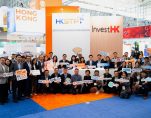
Seizing Global Business and Investment Opportunities for Sustainable Growth HONG KONG SAR – Media OutReach Newswire – 17 June 2025 – Hong Kong Science and Technology Parks Corporation (HKSTP), in collaboration with InvestHK, led 16 prominent life and health technology companies to BIO 2025, the world’s largest biotechnology event, held in Boston, USA, from June 16 to 19. This year marks the first time HKSTP joined forces […]

A landmark agreement between UAE’s Autocraft and Indonesian aerospace maintenance giant GMF AeroAsia positions the Autocraft E20+ electric vertical take‑off and landing aircraft for regional deployment, signalling a major advance in Southeast Asian air mobility. Signed on 11 June at the Indo Defence Expo in Jakarta, the memorandum of understanding enlists GMF as the official Maintenance, Repair and Overhaul partner for the E20+ platform, while establishing frameworks […]

EdgeCortix has launched its SAKURA‑II M.2 AI accelerator for the Raspberry Pi 5 and other Arm‑based platforms, enabling high‑performance, energy‑efficient execution of generative AI at the device edge. With 60 TOPS and 30 TFLOPS performance within an 8–10 W power envelope, the SAKURA‑II module supports advanced models including Llama 2, Stable Diffusion, Vision Transformers and VLMs on compact, affordable hardware. Dr Sakyasingha Dasgupta, EdgeCortix founder and CEO, highlighted that the integration “opens […]

Iran’s multifaceted network of proxies and covert operatives is poised to broaden its campaign of retaliation against Israel by extending its operations into Europe. Having weakened regional assets such as Hezbollah, the Houthis and Hamas, Tehran is reportedly turning to clandestine cells and criminal syndicates across the continent as a new front in its “ring of fire”. Heightened security advisories for Jewish communities from London to Berlin […]

HONG KONG SAR – Media OutReach Newswire – 13 June 2025 – The 2025 International Automotive Supply Chain Expo (Hong Kong), co-hosted by the China Association of Automobile Manufacturers, Hong Kong Chinese Enterprises Association, The Chinese Manufacturers’ Association of Hong Kong, China General Association For Hong Kong, Macao And Taiwan, and Phoenix Media Group commenced on June 12 and will run until June 15 at AsiaWorld-Expo in […]

Dubai’s Roads & Transport Authority has confirmed the Blue Line of the Metro will begin operations on 9 September 2029, coinciding deliberately with the 20th anniversary of the Red Line’s inauguration on 9 September 2009, signalling a significant milestone in the city’s transport evolution. The 30 km line will feature 14 stations, linking residential and commercial hubs such as Al Jaddaf, Dubai Silicon Oasis, and Dubai Academic City, and is projected to […]

A surge in Adversary‑in‑the‑Middle phishing attacks exploiting Phishing‑as‑a‑Service frameworks has been recorded in 2025, allowing cybercriminals to systematically bypass multi‑factor authentication and harvest corporate credentials at industrial scale. Researchers from Sekoia and Barracuda warn that tools like Tycoon 2FA, EvilProxy and Sneaky 2FA are being rapidly refined, embedding advanced evasion techniques and automation that make detection increasingly challenging. AiTM phishing campaigns leverage reverse proxies that intercept login credentials and […]

Foxconn’s latest customs data confirms that from 1 March to 31 May 2025, an overwhelming 97 per cent of all iPhones assembled in India were destined for the United States, totalling $3.2 billion in exports—nearly double the 50 per cent average seen throughout 2024. May alone accounted for almost $1 billion, the second‑highest monthly export value ever recorded—just behind March’s $1.3 billion. This sharp shift reflects Apple’s concerted effort to navigate escalating U.S. tariffs targeting Chinese […]

Bridging French and Hong Kong innovation ecosystems to supercharge global tech development HONG KONG SAR / PARIS,FRANCE – Media OutReach Newswire – 13 June 2025 – Hong Kong Science and Technology Parks Corporation (HKSTP) is leading 18 of Hong Kong’s brightest innovators in AI and robotics, healthtech, greentech and fintech in its first-ever delegation to VivaTech 2025, Europe’s largest startup and tech showcase held in Paris. The […]

All countries under DHL Supply Chain APAC are now certified DHL Supply Chain Japan becomes the newest office to achieve certification SINGAPORE – Media OutReach Newswire – 13 June 2025 – DHL Supply Chain, the global leader in contract logistics, has been certified as a Great Place to Work® across Asia Pacific. DHL Supply Chain Japan is the latest country office to achieve this certification, bringing the […]

VISHNU RAJA
RYO YAMADA
HITORI GOTOH
IKUYO KITA