Just in:
Fast Just Got Fastest: STING Energy Boost™ Celebrates Kimi Antonelli’s Formula 1® World Championship and the Fan Energy Behind It // CR Longdation Aethereal Cybersecurity × Global Cybersecurity Alliance (GCSA) Join Hands to Establish the “AI and Cybersecurity Research Centre” // Private varsities bill all set to face the axe // Technology shares plunge as Nasdaq enters correction // Kochi police detain two actors over bid to honey trap doctor // Hong Kong mandates crypto transaction disclosures to tax authorities // Ta’ziz finalises $1.39bn funding for Ruwais industrial facilities // Ousted top Kochi cop gets IG post // Cloudflare unveils Zero Wire vulnerability intelligence service // Emirates Group records AED 4.1 billion half-year profit // e-Crime Bureau Signs Cybersecurity Partnership With Smart Africa, Reinforcing Its Global Expansion // ADIA and partners establish $1.4 billion aviation venture // Asia Left Behind: Ten international companies have yet to report delivering on their cage-free egg pledges across the region // Dubai boat show confirms international shipyard line-up for November // APT29-linked campaign exploits outdated Apple and Android software // Emaar approves Development buyout ahead of planned delisting // Trump’s Iran War Has A Share Of Contribution To His Midterm Debacle // Oil advances towards $100 as tanker attacks persist // UK air traffic outage inflicted £33m financial losses // Millions Of Indians May Soon Be Deprived Of Government Assistance //

News related to
Mid Term

Focus on Data Governance to Help Hong Kong Enterprises Build Trusted AI Decision-Making Capabilities

HONG KONG SAR – Media OutReach Newswire – 9 June 2026 – FanRuan Software, a leading business intelligence (BI) software brand in the Asia-Pacific region, today held the “FANRUAN DATA & AI SUMMIT 2026” at the Kowloon Shangri-La Hotel. Themed “Data Shapes AI, AI Redefines Decisions,” the summit brought together enterprise representatives and technology experts from industries including finance, construction, retail, and manufacturing to explore practical pathways for enterprise data governance, BI applications, and intelligent decision-making in the AI era.

FANRUAN DATA & AI SUMMIT 2026 Data Shapes Al, Al Redefines Decisions

At the event, FanRuan highlighted that as generative AI and intelligent analytics tools accelerate their entry into enterprise scenarios, the focus of Hong Kong businesses has shifted from “whether to adopt AI” to “whether AI can truly support business judgment and management decisions.” In an environment characterized by multiple coexisting systems, complex cross-departmental collaboration, and heightened compliance and access control requirements, enterprises lacking a consistent, accurate, and traceable data foundation will find it difficult for AI to produce analytical results trusted by management.

Therefore, FanRuan proposed an enterprise AI implementation pathway of “Governance First, Intelligence Second,” emphasizing that AI’s value stems not only from model capabilities but also depends on whether enterprises possess a governable, verifiable, and sustainably usable data foundation.

AI Applications Enter Deep Waters: Data Governance Becomes a Critical Prerequisite

In recent years, Hong Kong enterprises have actively explored AI applications in operational management, financial analysis, procurement decisions, customer engagement, and risk control. However, in actual implementation, many companies still face challenges such as data fragmentation, inconsistent metrics, system silos, and complex access controls.

For enterprises, the true value of AI lies not merely in generating answers, but in its ability to help managers faster understand business changes, diagnose problems, and take action based on trusted data. If underlying data sources are untraceable, metric definitions are inconsistent, or different departments maintain separate versions of data for the same business issues, even advanced AI tools will struggle to form analytical bases credible to decision-makers.

FanRuan believes that enterprise AI applications are moving from tool experimentation into the deep waters of business operations. In the future, the key to successful AI adoption within enterprises hinges on whether they can first establish a clear, stable, and manageable data governance foundation.

From Standardization to Intelligent Analytics: FanRuan Presents an Enterprise AI Implementation Pathway

Addressing enterprise needs to progress from data governance to intelligent decision-making, FanRuan showcased its “Governance First, Intelligence Second” implementation approach at the summit, helping enterprises sequentially build comprehensive capabilities from data standardization and BI applications to AI analytics.

First, at the data standardization level, FanRuan provides standardized analytics templates across multiple industries through Fine Gallery (App Marketplace), assisting enterprises in rapidly establishing consistent metric definitions and analytical frameworks. For companies whose data architectures still require refinement, standardized analytics scenarios serve as a starting point for building a Single Source of Truth (SSOT), reducing cross-departmental communication costs and enhancing the reusability of data applications.

Second, at the BI application level, FanRuan helps enterprises transform data scattered across ERP, finance, procurement, project management, CRM, and other systems into reports, dashboards, and analytical charts usable by both management and business teams. Through consistent data presentation and access control management, enterprises can more effectively grasp operational conditions, transforming data from backend records into daily management tools.

Building on this foundation, FanRuan further demonstrated Dora Data Agent, an AI-powered data analytics assistant designed for enterprise management and business analysis scenarios. Based on governed enterprise business data, Dora assists users in conducting multi-dimensional root-cause analysis, anomaly interpretation, and issue diagnosis. When enterprises face performance fluctuations, cost variations, procurement anomalies, or deviations in operational metrics, Dora helps managers shorten the time from “problem discovery” to “cause diagnosis,” making AI analytics more aligned with actual business objectives and decision-making contexts.

Deepening Presence in Hong Kong Market to Drive AI Data Analytics Adoption

FanRuan stated that for AI applications to deliver long-term value within enterprises, reliance on single tools is insufficient; supporting data governance methodologies, talent training, and localized service support are equally essential. For the Hong Kong market, FanRuan will continue to advance its digital talent certification system, helping enterprises reduce dependence on individual technical staff experience, enabling more business and management personnel to acquire data analytics capabilities, and gradually fostering an organizational culture where “everyone can understand data and use data for decision-making.”

As Hong Kong enterprises accelerate their digital transformation, the key to successful AI adoption will be how to transform data scattered across different systems, departments, and processes into decision-making assets trusted by management and routinely used by frontline business operations. Moving forward, FanRuan will continue to center on the “Governance First, Intelligence Second” core pathway, helping Hong Kong enterprises lay a solid data foundation for the AI era and establish more robust decision-making advantages.
Hashtag: #FanRuan #DataGovernance #ArtificialIntelligence #BusinessIntelligence #DoraDataAgent #DigitalTransformation #HongKongTech #TrustedAI #DataAnalytics


The issuer is solely responsible for the content of this announcement.

About FanRuan Software

As the leading all-in-one Data Analytics & BI platform, FanRuan empowers enterprises worldwide to bridge the gap between raw data and strategic action. Founded in 2006, FanRuan serves over 43,000 clients globally through 50 strategic branches, combining international leadership with localized expertise to help organizations transform information into lasting business value. With over 5 million daily users across industries including finance, construction, manufacturing and retail, FanRuan provides the future-ready foundation for sustainable growth. For more information, please visit

Nvidia has signed a wide set of artificial intelligence and data centre agreements with major South Korean companies, placing the country at the centre of its next phase of AI infrastructure expansion across Asia.

The agreements involve SK Telecom, SK Hynix, Naver, Doosan Group, LG Group, Hyundai Motor Group and continued discussions with Samsung Electronics, linking Nvidia’s graphics processors, AI factory architecture and robotics platforms with South Korea’s strengths in memory chips, telecoms, manufacturing, cloud services and industrial automation.

The deals were unveiled during Nvidia chief executive Jensen Huang’s Seoul visit, which has underlined how South Korea is moving from being a supplier of critical memory chips to a broader AI infrastructure hub. The push comes as governments and large companies seek sovereign computing capacity, tighter control over data, and dedicated facilities capable of training and running advanced AI models.

SK Telecom plans to build a gigawatt-scale AI cloud in South Korea using Nvidia’s DSX platform, with the first AI factory expected to come online in 2027. The infrastructure is designed to support enterprise AI, robotics, industrial automation and agentic AI services, using SK Telecom’s network, data centre and corporate technology base.

Naver, one of South Korea’s leading internet and cloud companies, is expanding its sovereign AI infrastructure with Nvidia, starting with 55 megawatts of capacity and a plan to move towards gigawatt scale. The collaboration is aimed at serving businesses, public-sector users and industries seeking locally controlled AI platforms.

SK Hynix, already a key supplier of high-bandwidth memory for Nvidia’s AI accelerators, has entered a multi-year technology partnership to develop next-generation memory for global AI data centres. The agreement strengthens the role of high-bandwidth memory as one of the most important bottlenecks in the AI hardware supply chain, with demand rising sharply as large models require faster data movement between processors and memory.

Samsung Electronics remains part of the wider conversation around next-generation foundry and memory cooperation. Its semiconductor leadership held talks with Nvidia on advanced chip manufacturing and future high-bandwidth memory, including technologies beyond the current HBM4 generation. Samsung is also involved in manufacturing AI accelerator chips for other customers, keeping it central to Nvidia’s broader supply chain calculations even as SK Hynix maintains a strong position in premium memory.

Doosan Group’s cooperation with Nvidia extends the agreements beyond data centres into physical AI. Doosan Robotics is working with Nvidia’s simulation, robotics and on-device AI platforms to develop an agentic robot operating system, while Doosan Enerbility is expected to support power infrastructure for AI factories. Doosan Corporation’s electronics materials unit is also positioned to support next-generation data centre hardware through advanced materials used in AI accelerators.

LG Group is working with Nvidia on an AI factory focused on physical AI, mobility and data centre technologies. The partnership is expected to support LG’s work in robotics, autonomous driving, smart manufacturing and GPU cloud services, giving the conglomerate a platform for applying AI across consumer electronics, industrial systems and vehicle technologies.

Hyundai Motor Group’s cooperation with Nvidia is centred on mobility, manufacturing and robotics, including support for Hyundai’s AI Valley project in Saemangeum. The group’s ownership of Boston Dynamics gives it a strong position in humanoid and industrial robotics, while Nvidia’s platforms can support simulation, model training and factory deployment.

South Korea’s national AI strategy gives the corporate agreements wider significance. The country had already announced plans to secure more than 260,000 Nvidia GPUs, with more than 50,000 intended for public AI infrastructure and the rest allocated to major companies including Samsung, SK Group, Hyundai Motor Group and Naver. The latest agreements suggest that those commitments are moving into more defined industrial projects.

The expansion also reflects a shift in Nvidia’s business model. The company is no longer selling chips only as components; it is promoting full-stack AI factories that combine processors, networking, software, reference architecture and operations. That approach gives Nvidia deeper influence over how data centres are designed and operated, while offering partners faster deployment at a time when AI capacity remains constrained.

South Korea’s Science and ICT Ministry is also seeking priority access to Nvidia’s Vera Rubin GPUs, amid expectations that next-generation chip supply could face delays. The effort shows how advanced AI processors have become strategic assets for countries competing in model development, cloud infrastructure and industrial automation.

The agreements carry risks as well as opportunity. AI factories require vast power supplies, expensive cooling systems and long-term commitments from corporate customers. Heavy dependence on one US chip supplier may also raise questions over supply security and bargaining power, even for a country with world-class semiconductor companies.

For Nvidia, the South Korean partnerships strengthen memory access, broaden its AI factory customer base and create new demand in robotics, cloud services and industrial AI. For South Korean companies, the deals offer a faster route into high-value AI infrastructure at a time when global competition is shifting from model development to the computing systems needed to run them at scale.

Arabian Post Staff -Dubai Wizz Air will introduce Starlink-powered internet across its fleet from 2027, making one of Europe’s most cost-focused airlines the first ultra-low-cost carrier on the continent to commit to satellite connectivity at scale and raising fresh questions over how far budget aviation can stretch beyond its bare-fare model. The Hungary-based airline plans to install the SpaceX service on its next-generation aircraft, offering passengers high-speed, […]

Oil markets lurched higher on Monday as renewed Israeli strikes on Iran and attacks on Lebanon revived fears that the Middle East conflict could threaten energy flows through one of the world’s most critical crude corridors. Brent crude rose by more than $4 a barrel at one stage, climbing above $98 before paring gains, while West Texas Intermediate also advanced sharply as traders priced in a higher […]

Investment by leading industry institute supports Tracr’s evolution to becoming an independent, industry-wide platform for natural diamond provenance

LAS VEGAS, US – Media OutReach Newswire – 9 June 2026 – De Beers Group and GIA (Gemological Institute of America) today announced the signing of a definitive agreement for GIA to acquire a 30 per cent shareholding in Tracr, the De Beers Group-backed company behind the development of the pioneering diamond provenance blockchain-driven platform.

The agreement marks a significant milestone in Tracr’s evolution towards independence and reflects GIA’s confidence in the platform’s role as an industry-wide infrastructure to advance natural diamond provenance and traceability at scale.

GIA’s investment – which builds on a 2023 initiative to include diamond provenance information registered on Tracr’s platform on eligible GIA diamond grading reports – represents a significant step in this transition, reinforcing Tracr’s long-term credibility across the diamond value chain.

Al Cook, CEO of De Beers Group, said: “Consumers deserve to know where their diamonds come from and they should feel more confident in their understanding of each diamond’s source. At De Beers we have been providing provenance data on diamonds through Tracr for several years and we believe that delivering provenance should become an industry standard. Following our promise to open Tracr up to broad ownership, we are proud to be partnering with GIA as Tracr evolves into an independent, industry-wide platform. We will work alongside GIA to advance provenance transparency for the entire diamond sector.”

Pritesh Patel, President and CEO of GIA, said: “At GIA, our mission has always been rooted in trust, integrity, and consumer confidence. Our collaboration with Tracr over the past several years reinforced our belief that combining source-based blockchain provenance with GIA’s independent grading and identification expertise can help unlock a new level of transparency for the diamond industry. As Tracr continues to scale globally, we see a tremendous opportunity to deliver meaningful, verifiable provenance information from the source to the consumer. We are proud to deepen our commitment through this investment and help shape the next evolution of transparency, traceability, and trust across our industry.”

Jillian Wolk, CEO of Tracr, said: “The start of Tracr’s evolution into an independent platform, as a result of GIA’s investment, creates a strong foundation for the future. I am excited to continue scaling the platform and bringing more producers on board, which will support Tracr in enabling the individual journey of every registered diamond to come to life. Each stone carries its own narrative, defined by its source and the craftsmanship that has shaped it, and as Tracr continues to grow we have a fantastic opportunity to help reveal those unique stories.”

De Beers has been developing Tracr since 2018 and it is now a leading distributed diamond blockchain platform that starts at the source, registering diamonds at the point of recovery. In 2023, De Beers opened the platform to the wider diamond industry, positioning Tracr as an industry-wide, scalable solution for rough-to-polish verification of natural diamond provenance, which starts at a stone’s source.

Today, more than five million rough diamonds have been registered on Tracr at source, representing around two-thirds of De Beers’rough diamond production by value. Since January 2025, single country of origin for De Beers diamonds has been available on Tracr, with all newly sourced De Beers rough diamonds of one carat and above being registered on the platform.

Hashtag: #NaturalDiamonds #Diamonds #DeBeersGroup #GIA #Tracr


The issuer is solely responsible for the content of this announcement.

About De Beers Group

Established in 1888, De Beers Group is the world’s leading diamond company with expertise in the exploration, mining, marketing and retailing of diamonds. Together with its joint venture partners, De Beers Group employs more than 20,000 people across the diamond pipeline and is the world’s largest diamond producer by value, with diamond mining operations in Botswana, Canada, Namibia and South Africa. Innovation sits at the heart of De Beers Group’s strategy as it develops a portfolio of offers that span the diamond value chain, including its jewellery houses, De Beers Jewellers and Forevermark, and other pioneering solutions such as diamond sourcing and traceability initiatives Tracr and GemFair. De Beers Group also provides leading services and technology to the diamond industry in the form of education and laboratory services via De Beers Institute of Diamonds and a wide range of diamond sorting, detection and classification technology systems via De Beers Group Ignite. De Beers Group is committed to ‘,’ a holistic and integrated approach for creating a better future – where safety, human rights and ethical integrity continue to be paramount; where communities thrive and the environment is protected; and where there are equal opportunities for all. De Beers Group is a member of the Anglo-American plc group. For further information, visit.

About GIA
An independent nonprofit organization, GIA (Gemological Institute of America), established in 1931, is recognized as the world’s foremost authority in gemology. GIA invented the famous 4Cs of Color, Clarity, Cut and Carat Weight and, in 1953, created the International Diamond Grading System™ which is recognized around the world as the standard for diamond quality.

Through research, education, gemological laboratory services and instrument development, the Institute is dedicated to ensuring the public trust in gems and jewelry by upholding the highest standards of integrity, academics, science and professionalism.

Arabian Post Staff -Dubai Etihad Airways is ordering more widebody aircraft as the Abu Dhabi carrier moves to restore momentum across long-haul markets and lift flying by about 8 per cent from year-earlier levels by 15 June. Chief executive Antonoaldo Neves said the airline was buying widebody planes in double digits, though he declined to identify the manufacturer, aircraft type or exact number. The remarks, made on […]

Air France-KLM has left open the possibility of taking a role in any takeover approach for easyJet, adding a strategic airline dimension to Castlelake’s early-stage interest in the Luton-based low-cost carrier. Chief Executive Ben Smith indicated that the Franco-Dutch airline group would consider contact from Castlelake if the investment firm sought a partner for a possible offer. His comments come as the US-based asset manager studies whether […]

Advertisements

Dubai’s Roads and Transport Authority has completed 90 per cent of the new Dubai Harbour access bridge, moving the 1.5-kilometre link closer to a phased opening that is expected to cut travel time between Sheikh Zayed Road and the waterfront district from 12 minutes to three. The bridge, being developed with Shamal Holding, will provide direct entry and exit between Sheikh Zayed Road and Dubai Harbour, one […]

Abu Dhabi will add a Sphere entertainment venue to Yas Island by the end of 2029, placing a $1.7 billion immersive arena beside some of the emirate’s biggest visitor attractions and intensifying its drive to become a global leisure and live-events hub. The project, announced by the Department of Culture and Tourism – Abu Dhabi and Sphere Entertainment Co., will be the first Sphere venue outside the […]

HONG KONG SAR – Media OutReach Newswire – 5 June 2026 – A large high-level business delegation led by John Lee, Chief Executive of the Hong Kong Special Administrative Region (HKSAR), today (June 5) wrapped up its five-day visit to Kazakhstan and Uzbekistan respectively, achieving fruitful results of strengthening bilateral relations and deepening ties with Central Asia.

The delegation of over 70 business and institutional leaders from Hong Kong and the Chinese Mainland is the largest and most diverse overseas mission led by the current term of the HKSAR Government so far.

Hong Kong SAR's Chief Executive, John Lee (fifth right) and the Advisor to the President of Uzbekistan on Strategic Development, Sardor Umurzakov (fourth right) witness the exchange of memoranda of understanding and co-operation agreements between government departments, enterprises and organisations from Hong Kong and Uzbekistan.
Hong Kong SAR’s Chief Executive, John Lee (fifth right) and the Advisor to the President of Uzbekistan on Strategic Development, Sardor Umurzakov (fourth right) witness the exchange of memoranda of understanding and co-operation agreements between government departments, enterprises and organisations from Hong Kong and Uzbekistan.

Speaking to the media in Uzbekistan yesterday (June 4), Mr Lee set out the three main objectives of the visit: further explore emerging markets and lay the foundation for long-term economic and trade development; strengthen government-to-government (G2G) relationships and promote closer bilateral co-operation; and build a “hub-to-hub” model of co-operation.

He said the visit had been successful, yielding achievements in eight areas, including:

  • Establishing high-level contacts and ties between the HKSAR Government and the Governments of Kazakhstan and Uzbekistan, and reaching consensus on co-operation in multiple areas;
  • A total of 96 co-operation agreements and memoranda of understanding (MoUs) were reached during the visit (61 with Kazakhstan, 35 with Uzbekistan), involving specific amounts exceeding US$1.65 billion in total;
  • The governments agreed to commence bilateral discussions on agreements in various areas;
  • Deepening project matching and research collaboration between Hong Kong and Central Asian region in areas including finance, innovation and technology (I&T), and aviation;
  • Demonstrating Hong Kong’s effective role as a platform for going global and achieving substantial results, with Hong Kong and Mainland enterprises joining forces in tapping new markets and bringing synergistic advantages into full play;
  • Facilitating more convenient people-to-people exchanges by promoting direct flights, aviation and transport co-operation, and extensions to the mutual visa-free period;
  • Promoting exchanges in education, talent and culture to further deepen people-to-people bonds; and
  • Advancing a hub-to-hub co-operation model to open up broader room for co-operation between Hong Kong and the Central Asian region.

image-1.jpeg

While in Tashkent (June 3-5), Mr Lee met with local leaders, government officials and business representatives to deepen co-operation between Hong Kong and Uzbekistan in areas including trade, investment, finance, I&T, and people-to-people exchanges.

Mr Lee held meetings with the President of Uzbekistan, Shavkat Miromonovich Mirziyoyev, his Advisor on Strategic Development, Sardor Umurzakov, the Prime Minister, Abdulla Nigmatovich Aripov, as well as the Deputy Prime Minister, Jamshid Khodjayev, to exchange views on furthering mutual co-operation.

Mr Lee highlighted that under the “one country, two systems” principle, Hong Kong enjoys both the China advantage and the global advantage. He said that Hong Kong would continue to play its roles as a “super connector” and a “super value-adder” to further deepen co-operation and exchanges with Uzbekistan on various fronts in line with Uzbekistan’s goal of achieving high-quality development.

Hong Kong SAR's Chief Executive, John Lee (left) meets with the President of Uzbekistan, Shavkat Miromonovich Mirziyoyev.
Hong Kong SAR’s Chief Executive, John Lee (left) meets with the President of Uzbekistan, Shavkat Miromonovich Mirziyoyev.

Earlier (June 3), Mr Lee met with the Minister of Foreign Affairs of Uzbekistan, Bakhtiyor Saidov, after which they jointly witnessed an exchange of notes between the two places on a mutual visa-free arrangement, which would allow a visa-free period of 30 days for visitors from both sides.

“Moreover, we are glad to have initialed the Air Services Agreement with Uzbekistan, and look forward to launching direct passenger flights between the two places soon,” Mr Lee said, during a high-level business dinner (June 4). The Chief Executive pointed out that Hong Kong and Uzbekistan are important trade and investment gateways to their respective regions – the Asia-Pacific and Central Asia.

“It helps that we are all believers in the Belt and Road (B&R) Initiative, a modern expression of the ancient Silk Road spirit,” Mr Lee said. “Today, China is Uzbekistan’s largest trading partner, and the two countries work closely on major infrastructure and connectivity projects that are revitalising the Silk Road. Hong Kong is a pivotal player in the B&R Initiative, thanks to our world-class professional and financial services expertise.”

The delegation also toured the IT Park Uzbekistan and the Center for Islamic Civilization before concluding its visit in Tashkent.

Hashtag: #HongKong #BrandHongKong #CentralAsia #Kazakhstan #Uzbekistan


The issuer is solely responsible for the content of this announcement.

Japan is preparing to replace as many as 14 ageing nuclear reactors by the 2050s, marking one of its clearest moves yet towards restoring atomic power as a central pillar of national energy security after more than a decade of post-Fukushima restraint.

The Ministry of Economy, Trade and Industry has set out a policy proposal calling for the rebuilding of between two and five reactors by the 2040s and up to 14 by the 2050s. The plan would add about 16 gigawatts of nuclear capacity, helping the country meet rising electricity demand from artificial intelligence, data centres, advanced manufacturing and wider electrification.

The proposal reflects a major shift in Japan’s energy strategy. After the Fukushima Daiichi disaster in March 2011, Japan shut all 54 operating reactors, leaving the world’s third-largest economy more dependent on imported liquefied natural gas, coal and oil. Only 15 of the 33 remaining operable reactors have returned to service, while many units face retirement pressure as they approach or exceed their permitted 60-year operating life.

Tokyo’s latest energy plan targets nuclear power at around 20 per cent of electricity generation by fiscal 2040, while renewables are expected to provide 40 to 50 per cent. Thermal power, which still accounts for a large share of supply, is expected to decline but remain important for grid stability and emergency backup. The policy removes earlier language about reducing reliance on nuclear power, replacing it with a call to maximise the use of both renewables and atomic energy.

The renewed push is driven by a combination of economic and geopolitical pressures. Japan imports most of its energy, leaving households and industry exposed to volatile fuel prices, shipping risks and currency swings. The war in Ukraine, instability in the Middle East and tighter global gas markets have strengthened the case within government for expanding domestic low-carbon baseload power.

Electricity demand, which had been broadly flat for years, is also expected to turn higher. The spread of AI computing, semiconductor plants, battery factories and digital infrastructure has increased concern that inadequate power supply could weaken Japan’s ability to attract investment. Officials view nuclear energy as a way to provide stable, large-scale electricity without increasing carbon emissions.

The plan is likely to benefit major utilities including Tokyo Electric Power, Kansai Electric Power, Kyushu Electric Power and Chubu Electric Power, although the sector still faces high regulatory, financial and social hurdles. Reactor replacement requires local consent, safety approval, heavy capital spending and long construction timelines. Japan has not built a new reactor since before Fukushima, and public trust remains fragile.

Safety concerns remain the central political obstacle. The Fukushima disaster, triggered by the March 2011 earthquake and tsunami, forced mass evacuations and left deep scepticism about official oversight of the nuclear industry. Questions over seismic risk, evacuation planning, spent fuel storage and operator transparency continue to shape public debate, particularly in communities near existing plants.

Controversies have added to the challenge. Chubu Electric has faced scrutiny over falsified seismic risk assessment data at the Hamaoka nuclear plant, a facility long viewed as sensitive because of its location in an earthquake-prone area. Incidents of that kind reinforce concerns among critics who argue that Japan should prioritise renewables, storage, grid upgrades and efficiency rather than committing to another generation of nuclear infrastructure.

Supporters counter that renewables alone will not meet Japan’s industrial needs quickly enough, given land constraints, permitting delays and the intermittency of solar and wind power. Offshore wind has long-term potential, while next-generation solar technologies such as perovskite cells are being promoted, but large-scale deployment will take time. Nuclear advocates argue that replacing old reactors with advanced designs could improve safety and reliability while supporting climate targets.

The government’s approach is to rebuild reactors at existing or decommissioned nuclear sites rather than open entirely new locations, a strategy designed to reduce political resistance and use established grid infrastructure. Next-generation reactors are expected to incorporate stronger passive safety systems and improved resilience against natural disasters, although costs and construction schedules remain uncertain.

Arabian Post Staff -Dubai Dubai’s Emirates has promoted Hanan Mohammed Jawad and Bakhita Al Mheiri to captain rank, making them the first UAE national women to reach the command position at the airline and placing both on its Boeing 777 flight deck. The promotion gives the two pilots their fourth stripes after years of training, line flying and command preparation within one of the world’s largest long-haul […]

SHANGHAI, CHINA – Media OutReach Newswire – 5 June 2026 – SKYWORTH Solar has reinforced its commitment to Thailand’s growing clean energy sector following the opening of its Bangkok office and the signing of a 100MW commercial and industrial (C&I) solar project memorandum of understanding with local partner CapSolar.

Source: SKYWORTH

The announcement forms part of SKYWORTH Solar’s newly unveiled global growth strategy, revealed at the 2026 SNEC Exhibition and Global Customer Summit in Shanghai, where the company introduced its new positioning as a “Global Smart Energy Ecosystem Leader” and outlined plans to accelerate expansion across key international markets.

Thailand has emerged as one of SKYWORTH Solar’s strategic markets in Southeast Asia, driven by rising energy demand, increasing electricity costs for businesses, and growing momentum behind renewable energy adoption.

The opening of the company’s Thailand office at Empire Tower in Bangkok strengthens SKYWORTH Solar’s local presence. It enables the company to provide customers and partners with enhanced support across consultation, project execution, after-sales service, supply chain coordination and project delivery.

“Thailand represents a significant growth opportunity for SKYWORTH Solar as businesses increasingly seek reliable and cost-effective clean energy solutions,” said Wanfei Qu, Chief Investment Officer of SKYWORTH Group, CEO and Director of SKYWORTH Solar. “Our strategy is built on the principle of ‘Global Vision, Local Execution’, combining global expertise with strong local partnerships to support Thailand’s energy transition and long-term sustainability goals.”

As part of its expansion plans, SKYWORTH Solar signed a 100MW C&I solar project MOU with CapSolar, supporting the growing demand for rooftop solar solutions among commercial and industrial businesses.

The company is also strengthening its local ecosystem through investments in project development, financing partnerships and service capabilities. This includes a strategic banking collaboration with ICBC Thai and access to a US$500 million investment fund to support solar project development and deployment in Thailand and other international markets.

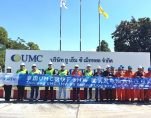
One example of SKYWORTH Solar’s growing footprint in Thailand is its 3MW rooftop solar project at UMC Steel Plant in Chonburi Province. The project is expected to generate approximately 4.4 million kWh of clean electricity in its first year, helping reduce energy costs while supporting the facility’s sustainability objectives.

The developments in Thailand were highlighted as part of SKYWORTH Solar’s broader global strategy unveiled at SNEC 2026. The company announced plans to expand its solar, energy storage, and integrated smart energy solutions across Europe, Southeast Asia, the Middle East, and Africa, in response to increasing global demand for renewable energy technologies.

As governments and businesses accelerate their decarbonisation efforts, SKYWORTH Solar aims to support customers through a combination of advanced technology, flexible business models and localised service capabilities.

For more information about SKYWORTH Solar and its clean energy solutions, please visit https://www.skyworth-pv.com.
Hashtag: #SKYWORTH

The issuer is solely responsible for the content of this announcement.

About SKYWORTH

SKYWORTH Solar, the cutting-edge PV brand under SKYWORTH Group, is a global leader in providing comprehensive one-stop solar solutions. Comprehensive end-to-end services are provided, encompassing consulting, design, and product O&M, all supported by a portfolio of self-developed solutions.

As a leading global renewable energy developer, service provider and energy solutions provider, SKYWORTH is actively shaping the future of energy. With a strong presence in EPC services and one-stop product solutions, SKYWORTH delivers high-quality, reliable, and innovative energy solutions. SKYWORTH ‘s commitment to originality and excellence has earned widespread recognition in international markets such as Germany, Italy, the UK, Brazil, and Senegal.

First Abu Dhabi Bank has entered a strategic partnership with Water. org and WaterEquity, placing capital behind an impact fund aimed at expanding access to safe water and sanitation across emerging markets. The Abu Dhabi lender has invested in the WaterEquity Everspring Fund, an open-ended vehicle designed to channel private capital into financial institutions and enterprises that serve low-income households and small businesses needing affordable water and […]

By Dr. Gyan Pathak The preliminary version of the OECD Outlook released on June 3, 2026 has projected the real GDP of India to grow by 6.3% during the FY 2026-27, which is a sharp decline from the robust growth rate of 7.8 per cent year-on-year in the quarter ending in December 2025 (Q3 FY2025–26), […]

The article India Stares At Difficult Days Ahead With Sharp Decline In Growth Rate In 2026-27 appeared first on Latest India news, analysis and reports on Newspack by India Press Agency).

MMC Port Holdings Sdn Bhd has approached prospective bidders for a minority stake in the business, shifting attention from a delayed public listing to a private transaction that could test investor appetite for one of Southeast Asia’s most significant port platforms. The move follows the postponement of an initial public offering that had been expected to rank among Malaysia’s largest listings in more than a decade. The […]

Arabian Post Staff -Dubai A divided US House of Representatives has approved a war powers resolution directing President Donald Trump to end American military involvement in Iran, handing the White House a symbolic but politically pointed rebuke as unease grows on Capitol Hill over the scope and duration of the conflict. The measure passed 215-208 on Wednesday, with four Republicans breaking ranks to join Democrats in support. […]

HONG KONG SAR – Media OutReach Newswire – 4 June 2026 – AECOM, the trusted global infrastructure leader, and the Urban Land Institute (ULI), today announced the launch of the Asia Pacific Infrastructure Innovation Index 2026, a new thought leadership report examining how the infrastructure industry across the region is prioritizing innovation in response to stakeholders’ needs, increasing system complexity, operational pressures and evolving delivery challenges.

AECOM and Urban Land Institute launch inaugural Asia Pacific Infrastructure Innovation Index, highlighting region's evolving infrastructure innovation priorities.
AECOM and Urban Land Institute launch inaugural Asia Pacific Infrastructure Innovation Index, highlighting region’s evolving infrastructure innovation priorities.

Developed in collaboration between AECOM and ULI, the report brings together perspectives from stakeholders across infrastructure, government, utilities, investment, planning and development sectors. It draws on a survey of more than 100 senior infrastructure professionals in Asia Pacific, alongside in-depth interviews with industry leaders. As the first edition of the Index, it establishes a baseline for understanding how infrastructure innovation is currently being prioritized and delivered across the region.

“This report highlights how organizations are moving beyond ideas and applying innovation in practical ways to improve delivery, resilience and system performance,” said Ian Chung, chief executive of AECOM’s Asia region. “Infrastructure leaders across Asia Pacific are responding to growing complexity by strengthening digital capabilities, improving coordination across interconnected systems and focusing on long-term operational performance.”

“Our collaboration with AECOM reflects a growing recognition that infrastructure and real estate are increasingly interdependent,” said Alan Beebe, CEO Asia Pacific, ULI. “As cities in Asia Pacific evolve, infrastructure is no longer just a technical consideration, but plays a critical role in shaping how places function, grow and perform. Understanding how innovation is being applied in this context is essential for those involved in the built environment.”

Among the top ten takeaways highlighted in the report, three key themes emerged consistently across both the survey findings and interview insights: the role of AI in infrastructure systems, the integration and growing demands on energy systems, and the need to design and operate infrastructure for climate resilience. Together, these themes highlight a broader shift toward enhancing how infrastructure systems are developed and perform under increasingly complex, real-world conditions.

Read the report here: Asia Pacific Infrastructure Innovation Index | AECOM Insights

Hashtag: #AECOM #AsiaPacificInfrastructureInnovationIndex

The issuer is solely responsible for the content of this announcement.

About AECOM

AECOM is the global infrastructure leader, committed to delivering a better world. As a trusted professional services firm powered by deep technical abilities, we solve our clients’ complex challenges in water, environment, energy, transportation and buildings. Our teams partner with public- and private-sector clients to create innovative, sustainable and resilient solutions throughout the project lifecycle — from advisory, planning, design and engineering to program and construction management. AECOM is a Fortune 500 firm that had revenue of $16.1 billion in fiscal year 2025. Learn more at aecom.com.

About the Urban Land Institute

The Urban Land Institute (ULI) is a non-profit education and research institute supported by its members. Its mission is to shape the future of the built environment for transformative impact in communities worldwide. Established in 1936, the Institute has more than 48,000 members worldwide and over 3,000 members in the Asia Pacific region representing all aspects of land use and development disciplines. For more information on ULI Asia Pacific, please visit , or follow us on , , , , and .

Washington and Tehran exchanged fresh military strikes across the Gulf, placing new pressure on a fragile ceasefire and raising the risk of wider disruption around one of the world’s most important energy corridors. US forces intercepted Iranian ballistic missiles and drones aimed at neighbouring Middle East countries and then struck a military ground control station on Iran’s Qeshm Island, near the Strait of Hormuz. The operation followed […]

Greenlogue/AP Dairy processors can cut greenhouse gas emissions from liquid dairy lines by as much as 49% by modernising existing equipment rather than replacing entire production systems, a Tetra Pak assessment has found, pointing to a faster route for plants under pressure to lower costs, reduce waste and meet climate targets. The analysis, released from Lausanne, examined upgrades to chilled and ambient liquid dairy processing lines and […]

Oman India Fertiliser Company is preparing to sell 25 per cent of its share capital through an initial public offering, setting up a July debut on the Muscat Stock Exchange as Oman pushes ahead with a broader programme to widen public ownership of strategic assets.

The offering will comprise existing ordinary shares held by the company’s current shareholders, meaning proceeds from the sale will go to the selling shareholders rather than to OMIFCO. The subscription period is expected to open this month, subject to final regulatory approvals from the Financial Services Authority, with trading targeted for July if market conditions remain supportive.

OMIFCO is 50 per cent owned by Oman state energy group OQ, while Indian Farmers Fertiliser Cooperative Limited and Krishak Bharati Cooperative Limited each hold 25 per cent. The float is expected to give investors access to one of Oman’s largest industrial exporters and a fertiliser producer with strong exposure to global urea and ammonia demand.

The company operates from Sur Industrial City, where its complex includes two ammonia trains and two urea trains. Annual nameplate capacity stands at about 1.15 million tonnes of ammonia and 1.65 million tonnes of urea, making the producer one of the largest fertiliser operators in the Gulf. The business is supported by long-term gas supply arrangements, established marketing relationships and export infrastructure, including a dedicated deep-water berth that connects the plant to overseas markets.

The IPO comes at a sensitive moment for fertiliser supply chains, with Middle East producers drawing stronger investor attention as global prices respond to disruptions in energy and shipping routes. Urea remains OMIFCO’s dominant revenue source, accounting for the bulk of sales, while ammonia provides an additional export stream and supports integrated production at the Sur complex.

OMIFCO generated revenue of $802.3 million in 2025, with an EBITDA margin of 50.6 per cent and a net profit margin of 40 per cent. Revenue for the first quarter of 2026 reached $207.4 million, while EBITDA margin stood at 50.5 per cent and profit margin at 40.4 per cent. The company has said it has maintained a net cash position for several years and has no interest-bearing debt, a profile likely to feature prominently in investor marketing.

The company expects to distribute dividends of about RO71.2 million, equivalent to roughly $185 million, for the 2026 financial year. The payout is planned in two equal instalments, scheduled for September 2026 and April 2027. For the following two financial years, dividend guidance is expected to be linked to either 90 per cent of net profit or a minimum annual compounded increase from the 2026 dividend base, whichever is higher.

The planned sale follows a series of listings and privatisation moves aimed at expanding the depth of Oman’s capital market. OQ Exploration and Production’s 2024 listing was one of the largest offerings in the region that year, while Asyad Shipping also formed part of the state-linked pipeline of public market transactions. OMIFCO’s proposed listing would extend that momentum into industrial manufacturing and food-security-linked exports.

Bank Muscat and Société Générale have been appointed joint global coordinators for the offering, with Bank Muscat also acting as issue manager. Arqaam Capital and United Securities are serving as joint bookrunners. The final structure, allocations and investor eligibility terms will be detailed in the prospectus after approval by the Financial Services Authority.

The offering is expected to include tranches for institutional and retail investors, with participation governed by Oman’s regulations for public joint stock companies. Shares will also be offered to selected qualified investors outside the United States under applicable securities rules, broadening the potential investor base while keeping the formal listing on the Muscat Stock Exchange.

OMIFCO’s position is closely linked to demand from agriculture markets, particularly urea used in crop nutrition. India has remained a major destination for its exports, supported by long-term commercial ties with its cooperative shareholders. From 2023 to 2025, the country accounted for most exported urea volumes and a substantial share of ammonia shipments, reinforcing the company’s role in cross-border fertiliser supply.

SINGAPORE – Media OutReach Newswire – 3 June 2026 – Handshake Finance, the Singapore-based fintech company building escrow-as-a-service infrastructure for high-trust service industries, has closed a S$500,000 pre-seed funding round. The capital will accelerate the company’s expansion across its beachhead renovation and interior design market in Singapore, with longer-term ambitions to extend its platform across other service industries where payment trust remains a structural problem.

Handshake Finance Founders Christopher Chan (Left) and Lee Jun Xian (Right)

Born From Personal Experience

Handshake Finance launched in September 2025, founded by Christopher Chan and Lee Jun Xian. Both had seen the trust gap up close.

Jun’s close friend lost S$80,000 in pre-payments to a renovation company that collapsed mid-project. At the same time, Christopher’s friend paid a deposit on a rental home she had never viewed, only to discover the listing was fraudulent. Both incidents pointed to the same structural failure: in service industries, someone always carries the risk, and when trust breaks down, there is little recourse on either side.

The two founders met as university classmates in London and returned to the problem with complementary backgrounds. Christopher Chan had spent his career in fintech, designing compliant payment flows on regulated infrastructure. Lee Jun Xian came from venture capital, with experience scaling early-stage companies from zero to one.

Trust as the foundation, not the feature

Handshake operates on bank-grade payment infrastructure provided by MAS-regulated partners. All payment flows are fully MAS regulated, and funds are held with DBS in segregated escrow accounts. For the founders, this is not a checkbox — it is the entire foundation of the business.

“We are trying to solve a structural trust gap in service industries. But before any of that, our users have to trust us,” said Christopher Chan, Co-Founder of Handshake Finance. “Making sure every fund flow is fully compliant, and that our users feel completely assured handing us money in what are often life-changing transactions, is our number one priority. Everything else is built on top of that.”

Closing the Trust Gap Across Service Industries

Every high-trust service transaction carries the same structural flaw: either the customer pays before work is done, or the provider works before getting paid. Someone always carries the risk. Across industries — from renovation and interior design to event planning, creative agencies, and professional services — that risk falls entirely on one side, and when trust breaks down, there is little recourse for either party.

Handshake Finance was built to close that gap. The platform holds customer funds in escrow and releases them to service providers against agreed milestones, giving buyers protection from pre-payment risk while giving service providers the confidence to deliver. The model is designed to work across any service industry where the payment trust problem exists.

Why Renovation and Interior Design Is Handshake’s Beachhead Market

Renovation was where the structural failure ran deepest. The industry operates with no mandatory licensing or regulatory framework. Anyone can set up as an interior designer with no accreditation required, leaving homeowners with no reliable way to assess accountability before signing a contract.

There is no standard payment framework either. Homeowners routinely pay up to 50% of the total project value upfront, with funds going directly to the interior designer before any work begins. If a project stalls or a firm shuts down, there is limited protection and recourse. At the other end of the project, interior designers face the opposite problem: the final handover payment, where homeowners hold most of the leverage, can be withheld over disputes that wipe out up to half a project’s margin.

Eight Months of Listening Before a Single Line of Code

Before writing any software, the Handshake team spent eight months speaking with more than 80 interior designers and homeowners across Singapore to understand the real frictions on both sides of the transaction. What they found reinforced the decision to start here: high transaction values, a broken payment norm, an unregulated supply side, and no existing platform that protected both parties.

That research shaped how the product was built. After a renovation contract is signed, Handshake’s AI automatically generates the transaction structure with line items, payment schedules, and sub-milestones set out clearly to remove ambiguity. Homeowners place funds into escrow rather than paying upfront directly to the interior designer.

Payment releases to the designer as work progresses against agreed milestones, with sub-milestone releases providing faster cashflow access without compromising homeowner protection. The platform also replaces the manual spreadsheet-based back-office admin most interior design firms still run, and offers complimentary mediation and independent assessments in the event of a dispute.

More than 40 Interior Design Companies Onboarded and 2 Major Partnerships Signed

Handshake now has more than 40 interior design companies onboarded. The company has signed partnerships with Renonation.sg and Network SG, two of Singapore’s most established renovation marketplaces, to drive awareness and adoption across the broader ecosystem.

“It is an incredible feeling to see this much support behind us, and we are excited about what is ahead,” said Lee Jun Xian, Co-Founder of Handshake Finance. “We are industry-agnostic by design, but we are laser-focused on fixing renovation first. The scams that are still everyday occurrences in this space need to go, and the transactional experience for everyone involved needs to be better before we turn our attention to the next industry or market.”

Homeowners and interior designers can learn more or request access at handshake.finance.

Hashtag: #HandshakeFinance

The issuer is solely responsible for the content of this announcement.

About Handshake Finance

Handshake Finance is a Singapore-based fintech building escrow-as-a-service infrastructure for high-trust service industries. The platform holds customer funds in segregated escrow accounts and releases them against agreed milestones, protecting buyers from pre-payment risk while giving service providers the confidence to deliver. All payment flows are fully MAS regulated. Funds are held with DBS. Handshake is currently focused on Singapore’s renovation and interior design market as its beachhead, with plans to expand across other service industries and Southeast Asia.

Arabian Post Staff -Dubai Abu Dhabi’s AD Ports Group has agreed to acquire Corredor Logística e Infraestrutura, a São Paulo-based agribulk terminal operator, in an AED3.1 billion deal that gives the company its first operating platform in Latin America and a stronger position in global food supply chains. The transaction, valued at about $835 million, is the largest acquisition undertaken by AD Ports Group and is expected […]

By T N Ashok The dust may have settled on the 2026 West Bengal Assembly election, but the political war has only intensified. Defeated former Chief Minister Mamata Banerjee has launched perhaps the most serious challenge yet to the legitimacy of the Bharatiya Janata Party’s sweeping victory, alleging that the saffron party manipulated electoral rolls, […]

The article Poll Results Were Out In Bengal A Month Ago, But Political Violence Is Still Continuing appeared first on Latest India news, analysis and reports on Newspack by India Press Agency).

VISHNU RAJA
RYO YAMADA
HITORI GOTOH
IKUYO KITA
Just in:
UK air traffic outage inflicted £33m financial losses // Ta’ziz finalises $1.39bn funding for Ruwais industrial facilities // Dubai boat show confirms international shipyard line-up for November // APT29-linked campaign exploits outdated Apple and Android software // Ousted top Kochi cop gets IG post // Miss Universe Hong Kong Jen Zhou Departs for Puerto Rico to Compete in the 75th Miss Universe World Final // Kochi police detain two actors over bid to honey trap doctor // Xi Jinping Preparing For A Trilateral Summit With Trump And Putin At APEC Summit On Nov 18-19 // Asia Left Behind: Ten international companies have yet to report delivering on their cage-free egg pledges across the region // Emirates Group records AED 4.1 billion half-year profit // Private varsities bill all set to face the axe // After Reaching 7 Million Users in the Philippines, Skyro Launches Transparent Cash Loans in Malaysia // Technology shares plunge as Nasdaq enters correction // Fast Just Got Fastest: STING Energy Boost™ Celebrates Kimi Antonelli’s Formula 1® World Championship and the Fan Energy Behind It // TVM –Mangaluru Vande Bharat claims top spot // ADIA and partners establish $1.4 billion aviation venture // Middle East governments assess Iran war after US vote // Emaar approves Development buyout ahead of planned delisting // CR Longdation Aethereal Cybersecurity × Global Cybersecurity Alliance (GCSA) Join Hands to Establish the “AI and Cybersecurity Research Centre” // Hong Kong mandates crypto transaction disclosures to tax authorities //