Just in:
Dubai boat show confirms international shipyard line-up for November // UK air traffic outage inflicted £33m financial losses // Hong Kong mandates crypto transaction disclosures to tax authorities // Geely’s i-HEV Intelligent Hybrid Technology Offers a New Direction for Gasoline-Powered Vehicles // Technology shares plunge as Nasdaq enters correction // Asia Left Behind: Ten international companies have yet to report delivering on their cage-free egg pledges across the region // CR Longdation Aethereal Cybersecurity × Global Cybersecurity Alliance (GCSA) Join Hands to Establish the “AI and Cybersecurity Research Centre” // Xi Jinping Preparing For A Trilateral Summit With Trump And Putin At APEC Summit On Nov 18-19 // Meraas showcases five residential zones at Dubai Design Week // e-Crime Bureau Signs Cybersecurity Partnership With Smart Africa, Reinforcing Its Global Expansion // Middle East governments assess Iran war after US vote // Private varsities bill all set to face the axe // ADIA and partners establish $1.4 billion aviation venture // Emirates Group records AED 4.1 billion half-year profit // Ta’ziz finalises $1.39bn funding for Ruwais industrial facilities // Fast Just Got Fastest: STING Energy Boost™ Celebrates Kimi Antonelli’s Formula 1® World Championship and the Fan Energy Behind It // TVM –Mangaluru Vande Bharat claims top spot // Emaar approves Development buyout ahead of planned delisting // Kochi police detain two actors over bid to honey trap doctor // After Reaching 7 Million Users in the Philippines, Skyro Launches Transparent Cash Loans in Malaysia //

News related to
Mid Term

Qatar and India have moved to reinforce one of Asia’s most important energy relationships, with senior ministers in Doha pledging closer cooperation and calling for urgent protection of global supply chains as conflict-linked disruption continues to unsettle oil and gas markets. During talks on April 9 and 10, Qatar’s Minister of State for Energy Affairs and QatarEnergy chief executive Saad Sherida Al-Kaabi told India’s Minister of Petroleum and Natural Gas, Hardeep Singh Puri, that Doha would remain a reliable energy supplier, while both sides stressed the need for uninterrupted navigation and the free flow of commerce.

The meeting carried weight beyond bilateral symbolism. Qatar is India’s largest supplier of liquefied natural gas and a major source of liquefied petroleum gas, making the Gulf state central to India’s fuel security at a time when shipping risks and production interruptions have tightened markets. New Delhi’s outreach came as it sought assurances on supply after weeks of strain across West Asian energy routes and amid concern over the effect of regional instability on domestic fuel availability and industrial consumption.

Doha’s message was also framed by diplomacy. The official Indian statement said the ministers welcomed the two-week ceasefire agreed on April 8 and underlined the need for an early end to disruption in global energy supplies. It added that Puri conveyed greetings and a message of solidarity from Prime Minister Narendra Modi to Qatar’s leadership, reflecting how the energy relationship is now closely tied to broader strategic engagement covering trade, investment and regional stability.

For India, the stakes are immediate. The country depends on imports for about half of its natural gas needs, and the supply shock has already exposed vulnerabilities in infrastructure and procurement. GAIL’s finance director said this week that the Dabhol LNG terminal in Ratnagiri was operating at less than half its 5 million-tonnes-a-year capacity because of constrained global supplies. Hindustan Petroleum’s Chhara LNG terminal in Gujarat has also faced difficulties after missing two cargoes in March and April that were expected from Qatar via ADNOC Trading.

The background to the Doha talks is a sharp deterioration in regional energy logistics. Reuters reported on April 8 that QatarEnergy was preparing to restart LNG production after attacks in March forced stoppages at facilities in Ras Laffan and Mesaieed. Two of three trains at QELNG North 1 had been restarted, but a full return depended on vessels being able to pass safely through the Strait of Hormuz, one of the world’s most sensitive energy chokepoints. The same disruption has inflated spot prices and increased anxiety among large importers across Asia.

That makes Qatar’s long-term importance to India even clearer. In February 2024, QatarEnergy and Petronet LNG signed their largest single LNG supply agreement, under which Qatar will deliver 7.5 million metric tonnes a year from 2028 to 2048. Reuters reported at the time that Qatar planned to lift LNG liquefaction capacity to 126 million tonnes a year by 2027, up from 77 million, as it sought to strengthen its role in Asian and European markets. The scale of that agreement gives India a measure of stability, but it also underlines how deeply its gas strategy remains linked to a single Gulf supplier.

That dependence has advantages and risks. Qatar has earned a reputation for contractual reliability and remains among the lowest-cost LNG producers in the world, qualities prized by importers facing volatile spot markets. At the same time, the events of March and April have shown that even long-established energy corridors can be shaken by military escalation, damage to infrastructure and pressure on maritime routes. For policymakers in New Delhi, that is likely to sharpen interest in diversification through additional long-term contracts, more storage, broader sourcing and faster domestic gas infrastructure expansion.

India’s longer-term energy ambitions add another layer to the relationship. The government has repeatedly said it wants to raise the share of natural gas in the energy mix to 15 per cent by 2030, from just over 6 per cent at present. That target cannot be met without dependable imported LNG, even as the country pushes renewables, domestic gas output and cleaner urban fuels. Reliable Qatari supply therefore remains integral not only to short-term energy security, but also to India’s broader transition strategy and industrial planning.

A Microsoft-tracked cybercrime group is using adversary-in-the-middle techniques to hijack Microsoft 365 sessions, bypass multifactor authentication and reroute employee pay into attacker-controlled bank accounts, in what researchers describe as a geographically focused campaign against users in Canada. Microsoft said the actor, tracked as Storm-2755, combined search-result poisoning, fake sign-in pages and session replay to move from account takeover to payroll fraud, causing direct financial loss for at […]

SINGAPORE – Media OutReach Newswire – 10 April 2026 – The success and impact of the ASEAN–UK Advancing Creative Economy programme was on show at the recent 2nd ASEAN–UK Creative Economy Symposium 2026 in Manila. The Symposium showcased how research, capacity building, and regional collaboration are shaping the future of the creative economy across Southeast Asia, further advancing the goals of the ASEAN Creative Economy Sustainability Framework, adopted at the 46th ASEAN Summit. The Symposium also celebrated the 5th anniversary of the ASEAN–UK Dialogue Partnership, focused on deepening cooperation and connection.

The Department of Trade and Industry of the Philippines, together with the Foreign, Commonwealth and Development Office, the British Council and the ASEAN Secretariat, convened over 270 leaders, policymakers, creatives, and investors from ASEAN and the United Kingdom in Manila for the ASEAN–UK Creative Economy Symposium 2026, reinforcing the region’s push to harness the creative economy as a key driver of growth, innovation, and cultural identity.

Deputy Secretary-General of ASEAN for ASEAN Economic Community (AEC), Satvinder Singh, said:
“ASEAN is well-positioned to harness the full potential of the creative economy. Six out of eleven ASEAN Member States now rank among the top 70 globally in the WIPO Global Innovation Index’s creative outputs dimension. ASEAN recognises that intangible assets, such as intellectual property, brands, and design as the currencies of modern creative economy. The ideas, expressions, and innovations our creators produce must be protected, valued, and commercialised.”

UK Ambassador to ASEAN, Helen Fazey, said:
“The UK and ASEAN are advancing together through trust, cooperation, and shared priorities. This partnership reflects a strong and growing relationship built on mutual respect and a shared ambition to support sustainable economic growth, innovation, and opportunity across the region. Through initiatives like the ASEAN–UK Advancing Creative Economy programme, we are deepening collaboration, strengthening people-to-people links, and supporting the development of vibrant and resilient creative sectors.”

ASEAN-focused research highlights pathways for growth in the creative economy
New research under the ASEAN–UK Advancing Creative Economy initiative is providing critical insights into the evolution and economic potential of cultural industries across the region.

Arts and Technologies in ASEAN: Interconnected Parts, commissioned by the British Council, examines the fast-growing creative technology landscape across ASEAN. Drawing on more than 60 interviews and case studies, the report explores how artists are using digital tools—from AI to immersive media—while also analysing the regulatory environments shaping innovation. It highlights both the dynamism of the sector and the need for stronger support systems to sustain growth.

Complementing this, the Regional Perception Poll on the ASEAN Creative Economy offers a comprehensive view of how the sector is understood across the region. Based on insights from over 4,000 respondents, including both producers and audiences, the study highlights the interconnected nature of creative ecosystems and the relationships between artists, industries, policymakers, and communities. Its findings underscore the need for tailored, context-specific strategies and stronger regional collaboration to unlock further growth.

Together, these research outputs provide valuable evidence to inform policy, guide investment, and strengthen UK–ASEAN partnerships.Building on this work, a new ASEAN festival research and mapping initiative is underway, expanding earlier studies to provide a more comprehensive understanding of the region’s diverse festival landscape and identify opportunities for future collaboration.

Country Director Indonesia and Director South East Asia, Summer Xia, said:
“Through the ASEAN–UK Advancing Creative Economy initiative, we are investing in the research, skills, and partnerships needed to support long-term growth in the creative sector. The symposium in Manila was an important opportunity to share these resources and ensure they are shaped by and for the region. By working closely with the Foreign, Commonwealth and Development Office and the ASEAN Secretariat, we are helping to build a stronger, more connected creative economy across ASEAN countries.”

Underscoring the broader vision of the initiative, Deputy Secretary-General of ASEAN for ASEAN Socio-Cultural Community (ASCC) San Lwin has reaffirmed, in separate engagements, that the ASEAN-UK Advancing Creative Economy programme maximises the region’s creative potential to fuel socio-economic growth and cultural exchange. He reiterated the shared commitment to leveraging innovation and creativity as key connectors to drive prosperity, deepen cultural unity, advance social equity, and promote sustainable, inclusive development in order to forge an “ASEAN Community of Opportunities for All.”

Learn more at: ASEAN Creative Economy Initiative
Hashtag: #BritishCouncil

The issuer is solely responsible for the content of this announcement.

About the British Council

The British Council is the UK’s international culture and education organisation. We support peace and prosperity by building connections, understanding and trust between people in the UK and countries worldwide. We do this through our work in arts and culture, education and the English language. We work with people in over 200 countries and territories. In 2024–25, we reached 600 million people.

Arabian Post Staff -Dubai Saudi supply lines face deeper strain Attacks on Saudi energy facilities have knocked about 600,000 barrels per day from the kingdom’s oil production capacity and cut throughput on the East-West Pipeline by roughly 700,000 bpd, according to Saudi state media citing an Energy Ministry official, in a blow to the world’s top oil exporter at a time when its western pipeline route has […]

Bank of Korea left its benchmark interest rate unchanged at 2.50 per cent on Friday, extending its policy pause to a seventh straight meeting as policymakers confronted a harder mix of rising price pressures, a weak won and a growth outlook darkened by higher energy costs and disruption linked to conflict in the Middle East.

The seven-member Monetary Policy Board said uncertainty had intensified and judged it appropriate to hold the base rate while assessing how the conflict, financial-market volatility and foreign-exchange swings feed through to the domestic economy. The central bank’s statement made clear that the policy dilemma has sharpened: inflation risks are moving up even as growth is expected to slow more than earlier forecast.

Governor Rhee Chang-yong, speaking after what Reuters reported was his final press conference before his term ends on April 20, said supply-side shocks from the Middle East were especially damaging for Asian economies reliant on imported energy. That matters acutely for South Korea, where policymakers are trying to prevent a renewed inflation cycle without choking activity at a time when sentiment has softened and some industries are already facing production constraints.

The rate hold had been widely anticipated. Reuters said all 31 economists in its poll expected no move at this meeting, reflecting a market consensus that the central bank had little room to ease and few grounds to tighten immediately. Instead, the decision underscored how monetary authorities in export-driven Asian economies are being forced to navigate a narrow path between external shocks and domestic fragilities.

At the centre of the debate is inflation. Official data showed consumer prices in March rose 2.2 per cent from a year earlier, up from 2.0 per cent in February, while core inflation, which excludes food and energy, also stood at 2.2 per cent. The Bank of Korea said petroleum prices had risen sharply and noted that short-term inflation expectations among the public edged up to 2.7 per cent. It now expects consumer inflation this year to exceed its February projection of 2.2 per cent by a meaningful margin, with core inflation also likely to come in above the earlier 2.1 per cent forecast.

That shift is important because the central bank had been able for months to argue that price growth was gradually stabilising near target. The worsening external backdrop has disrupted that narrative. The board said inflation is likely to move into the mid- to upper-2 per cent range as global oil prices and supply constraints lift import costs, though government price-stabilisation measures may soften part of the blow. Reuters reported that Seoul’s fuel-price caps, introduced last month for the first time in decades, helped restrain March inflation but are unlikely to provide a lasting shield if energy costs stay elevated.

Growth, meanwhile, is losing momentum. The central bank said the economy had been supported by strong exports, firmer consumption and continued job gains, but warned that downside pressure had increased since the outbreak of the Middle East conflict. It expects expansion this year to come in below the 2.0 per cent forecast issued in February, as higher energy prices and supply bottlenecks offset support from semiconductor exports and a supplementary budget. That combination leaves the Bank of Korea confronting an uncomfortable form of policy tension: weaker activity alongside stronger inflation.

The won has added to the pressure. The central bank said the currency weakened into the 1,500-won range against the US dollar as investors moved into safer assets and foreign investors sold domestic equities, before recovering some ground after a temporary ceasefire between the United States and Iran. A softer currency raises the local-currency cost of imported fuel and raw materials, complicating the inflation picture and limiting the case for any near-term rate cuts.

Financial markets reflected that cautious tone. Reuters reported that South Korea’s policy-sensitive three-year treasury bond futures erased early gains during the governor’s press conference, suggesting investors interpreted the message as more alert to inflation risks than to immediate growth support. Analysts cited by Reuters said the rebound in energy prices and the won’s weakness have narrowed the central bank’s room for manoeuvre, even if domestic demand still needs close watching.

Air travellers in Germany faced widespread disruption on Friday after Lufthansa cabin crew staged a one-day strike that the airline and airport officials said would force the cancellation of more than 520 flights and affect about 90,000 passengers, hitting the carrier’s Frankfurt and Munich hubs during a busy holiday return period. The walkout, called by the UFO cabin crew union, ran from 00:01 to 22:00 local time […]

A cross-border espionage campaign that targeted journalists, civil society figures and some government-linked entities across the Middle East and North Africa between 2023 and 2024 has been tied by researchers to BITTER, a long-tracked South Asian threat actor, marking what investigators describe as the first documented case linking the group to attacks on civil society in the region. The attribution remains qualified rather than definitive: Lookout said […]

Advertisements
SINGAPORE – Media OutReach Newswire – 10 April 2026 – With warmer conditions expected in the coming weeks, Singapore’s heat and humidity could contribute to increased fatigue and reduced mental clarity among urbanites balancing long commutes and high-pressure work.

iHerb Launches "Heatwave Essentials" Campaign for Singapore Consumers

Despite the sweltering weather, Singaporeans’ passion for an active lifestyle remains strong—from post-work gym sessions to weekend outdoor runs. To help Singaporeans maintain their peak performance, iHerb has curated a “Heatwave Essentials” guide focused on hydration, fatigue resistance, and recovery.

As part of this initiative, iHerb is offering a 22% discount sitewide from April 10 to April 24, with consumers able to apply the promo code “78IHERB” at checkout.

Essentials for Hydration and Recovery

In Singapore’s climate, sweating is constant—but many don’t realise that perspiration depletes both water and essential electrolytes, which is why plain water alone may not be enough to prevent fatigue.

  • For Instant Hydration: Nuun Sport Electrolyte Tablets are a top choice for active commuters, offering a balanced blend of sodium, potassium, and magnesium.
  • For Natural Purity: Wilderness Poets Evaporated Coconut Water Powder provides a refreshing, sugar-free alternative rich in natural potassium.
  • For Long-term Balance: Nutricost Potassium + Magnesium capsules offer high-efficiency support to maintain neuromuscular balance and prevent heat-induced weakness.

Expanded Heatwave Essentials for Daily Wellness and Recovery

As part of its “Heatwave Essentials” guide, iHerb features a curated selection of products that supports broader daily wellness needs during warmer conditions. This includes supplements commonly incorporated into routines for general nutritional support, post-activity recovery, and day-to-day maintenance:

  • Swanson Albion Magnesium Glycinate is a popular choice for supporting relaxation and overall daily wellness.
  • California Gold Nutrition Brain Health vegetarian capsules provide multi-nutrient support for those requiring prolonged focus.
  • Nutricost HMB Capsules have become a favorite among the local fitness community for supporting physical endurance and recovery under high-temperature conditions.
  • Doctor’s Best Natural Vision Enhancers – formulated with lutein, zeaxanthin, and omega-3 (DHA/EPA), and included within iHerb’s broader wellness offering.

Shop Smarter, Live Cooler

To support the growing demand for daily health management, iHerb is offering a 22% discount sitewide from April 10 until April 24. Simply enter the promo code “78IHERB” at checkout to access savings across a wide range of health and wellness products, including those featured in the “Heatwave Essentials” selection.

  • Free Delivery: Enjoy free shipping on orders over S$60.
  • Fast Shipping: Products typically arrive in Singapore within approximately 4 days.

Hashtag: #iHerb

The issuer is solely responsible for the content of this announcement.

Ethereum hovered near the $2,000 mark on Thursday after a choppy stretch that left the world’s second-largest cryptocurrency caught between stronger long-term supply dynamics and a fresh wave of geopolitical and macroeconomic uncertainty. Ether was trading around $2,178 during the session, after moving within an intraday range of roughly $2,167 to $2,264, underscoring the tight consolidation that has kept traders focused on whether the token can build […]

Arabian Post Staff -Dubai Dubai’s financial regulator has unveiled temporary relief measures for firms in the Dubai International Financial Centre, offering regulatory flexibility on licensing, staffing, reporting and selected implementation deadlines as companies manage an exceptional operating environment. The Dubai Financial Services Authority said the package is designed to help regulated firms continue serving clients and markets while preserving supervisory standards. The measures apply both to firms […]

By Nitya Chakraborty All nations in the globe except perhaps Israel have welcomed the ceasefire agreement for two weeks between U.S. and Iran announced by President Donald Trump on April 7 evening US time and later endorsed by the Iranian government. The ceasefire is fragile – Israel has bombed Lebanon killing 254 persons on Wednesday […]

The article Ceasefire Agreement Is Fragile But Islamabad Talks Must Be Used For Stable Peace appeared first on Latest India news, analysis and reports on Newspack by India Press Agency).

Arabian Post Staff -Dubai Saudi medical devices distributor ProMedEx has renewed an 84 million riyal Islamic financing package with Riyad Bank for one year, extending a facility the company says will be used to fund existing projects and back expansion plans as healthcare suppliers across the kingdom continue to seek working capital for inventory, imports and contract execution. The facility is equivalent to about $22.4 million. The […]

HO CHI MINH CITY, VIETNAM – Media OutReach Newswire – 9 April 2026 – Within the context of a new global growth cycle, Vietnam is cementing its position as a strategic hub for global institutional capital. At the ‘Inbound Capital Flows’ forum, analysts underscored that Vinhomes is making a significant contribution to shaping the next generation of urban development and also addressing critical mass challenges in the Asian property sector. Through ‘urban marvels’ like Vinhomes Green Paradise, Vietnam is effectively repositioning itself as a leader in large-scale, infrastructure-led real estate on the world map.

Experts at the 'Inbound Capital Flows' forum discuss Vietnam’s growing resilience and its strategic role as a hub for global institutional capital, underpinned by political stability, legal reforms, and massive infrastructure investment.
Experts at the ‘Inbound Capital Flows’ forum discuss Vietnam’s growing resilience and its strategic role as a hub for global institutional capital, underpinned by political stability, legal reforms, and massive infrastructure investment.

Vietnam’s Macroeconomic Resilience Amid Global Volatility

Amid global volatility, geopolitical fragmentation, and monetary tightening cycles, Vietnam has distinguished itself as a rare convergence of macroeconomic stability and long-term growth potential. International analysts now recognize the country as a strategic hub for institutional capital.

Political consistency is the bedrock of Vietnam’s appeal. The country’s high-growth trajectory is underpinned by strong governance coherence, with a unified government that minimizes execution risk. Over the past five years, a series of legal reforms have strengthened land valuation transparency, financial discipline, and environmental compliance. These regulatory improvements systematically align Vietnam’s real estate market with international institutional standards.

Infrastructure investment serves as another structural catalyst. With public investment reaching approximately 7% of GDP, Vietnam is undertaking one of the region’s most aggressive infrastructure expansion programs. Flagship projects such as Long Thanh International Airport, Cai Mep deep-sea port, and metropolitan ring roads are not merely improving connectivity, they are fundamentally reshaping spatial economics and unlocking new real estate frontiers.

Urbanization further amplifies this trajectory. Unlike many regional peers that have reached saturation, Vietnam remains in an early-to-mid stage of urban transformation, creating a sustained demand pipeline for residential, commercial, and mixed-use developments. From a capital markets perspective, Vietnam demonstrates stronger growth across key indicators compared to neighboring countries, with robust FDI inflows and a favorable demographic profile positioning it as a top-tier emerging market in Asia’s real estate investment landscape.

Vinhomes Green Paradise (Can Gio): A New Urban Wonder of Asia

As global investor preferences shift from fragmented, single-asset developments toward integrated urban ecosystems, Vinhomes has emerged as a master developer capable of delivering internationally competitive megaprojects. At the center of this evolution is Vinhomes Green Paradise in Can Gio, a coastal development that international experts describe as unmatched in Asia.

Infrastructure plays a catalytic role in unlocking such projects. The transformation driven by Long Thanh Airport and Cai Mep Port significantly improves accessibility to Can Gio, redefining peripheral land into high-value development corridors. Vietnam’s coastal real estate, long overlooked, now offers a unique opportunity to develop globally competitive destinations, provided they are master-planned and executed at scale.

The defining factor is achieving critical mass. A large-scale integrated development that combines education, healthcare, entertainment, and residential zones within a single master plan is what truly differentiates a project. This philosophy is embedded from inception in Vinhomes’ development model. From an international vantage point, investors are increasingly looking for “urban wonders”, destinations that act as economic engines and catalysts for regional development. Vinhomes Green Paradise is regarded as truly a wonder, featuring world-class infrastructure and amenities.

Stephen Higgins, representing Cushman & Wakefield, emphasized the project’s unique positioning: “There is currently nowhere else in Asia delivering a project like Vinhomes Green Paradise in Can Gio, located adjacent to an existing major city.”

When benchmarked against global icons such as Marina Bay Sands and Palm Jumeirah, the project signals Vietnam’s emergence as a new frontier for landmark urban developments. In this paradigm, Vinhomes transcends the role of a conventional developer, positioning itself as a place-maker that engineers destination ecosystems, an increasingly critical concept in global real estate investment strategy.

Competitive Advantages of Scale, Pricing, and a Strategic Entry Point

A defining characteristic of Vietnam’s real estate market is the rare combination of high growth potential and relatively attractive pricing at scale. With a population of 100 million and a median age of 32, ideal within the region, Vietnam benefits from a demographic dividend that underpins long-term housing demand, absorption rates, and market liquidity.

Vietnam’s strategic geographic positioning near major economic hubs such as China, Singapore, and Hong Kong enhances its role within regional supply chains and capital flows. Importantly, the country can deliver world-class developments at a much more competitive price point. This pricing arbitrage creates significant upside potential as the market continues to mature and converge toward regional benchmarks.

Scale is another decisive factor. Mega-scale developments exceeding 1,000 hectares provide a rare opportunity to design entirely new urban environments. Globally, such large contiguous land parcels are increasingly scarce, making Vietnam one of the few markets capable of delivering next-generation master-planned cities. Within this landscape, Vingroup stands out as a dominant force, with Vinhomes at the forefront of executing these large-scale visions. By integrating residential, commercial, and smart-city infrastructure within a unified master plan, Vinhomes is not merely supplying real estate, it is institutionalizing a new asset class for global investors.

Highlighting the requirements for market competitiveness, Troy Griffiths from Savills stated: “Vietnam must compete through pricing, quality, and the value delivered within a master-planned estate.“ When these three pillars converge, real estate evolves from a transactional asset into a long-term value platform.

With global capital increasingly reallocating toward markets with structural growth and scalable opportunities, Vietnam is transitioning from an emerging destination to a strategic investment hub.

As a central figure in this transition, Vinhomes is playing a significant role in evolving Vietnam’s urban landscape and elevating the nation’s standing within the global real estate sector.

Hashtag: #Vinhomes

The issuer is solely responsible for the content of this announcement.

Arabian Post Staff -Dubai Mubadala Capital has closed its biggest Brazil-focused investment vehicle at about $900 million, exceeding its original $750 million target in a sign that large overseas investors still see room for opportunistic deals in Latin America’s biggest economy despite a tougher global fundraising climate. The fund, Brazil Special Opportunities Fund III, was backed by a $250 million anchor commitment from Mubadala Capital, the investment […]

Commercial Bank of Dubai will redeem $600 million of perpetual additional tier 1 securities on April 21 and seek to cancel their listings on Euronext Dublin and Nasdaq Dubai once the repayment is completed, marking the planned exit of a capital instrument the lender issued in 2020 as Gulf banks were strengthening balance sheets during a volatile funding period. The securities were issued on October 21, 2020 […]

S&P Global Ratings has lowered the Philippines’ outlook to stable from positive, while affirming its long-term sovereign credit rating at BBB+, saying the war in the Middle East has raised the risks facing the country’s external accounts and public finances. The move keeps the nation within investment-grade territory but signals that a near-term upgrade is now less likely as higher energy costs, inflation pressure and a weaker peso complicate the policy outlook.

The ratings agency said elevated oil prices are likely to widen the current-account deficit this year and weaken external buffers, even as it still expects the economy to expand at a healthy pace and the fiscal deficit to narrow over the next two years. S&P projected growth of 5.8% in 2026 after the economy expanded 4.4% in 2025, with softer momentum in the first half and a rebound later in the year.

The decision lands at a delicate moment for Manila. The Bangko Sentral ng Pilipinas warned this week that higher fuel costs were already feeding into broader prices after March inflation accelerated to 4.1%, above the central bank’s 2% to 4% target band and sharply higher than February’s 2.4%. Transport costs were the main driver, with diesel prices up 59.5% from a year earlier and gasoline up 27.3%, while core inflation also edged higher, suggesting second-round effects may be starting to build.

That inflation pulse helps explain why S&P has become more cautious. A country that depends heavily on imported fuel is especially exposed when conflict disrupts Middle East energy flows, and the Philippines has been among the Asian economies hit hardest by the latest oil shock. Reuters reported that Brent crude had risen 55% since the Iran war began on February 28, while the Philippine peso slid to record lows against the dollar, adding another layer of imported inflation pressure.

The external vulnerability is not new, but the conflict has made it harder to ignore. Philippine officials have been scrambling to secure energy supplies, including seeking assurances over safe passage for Philippine-flagged ships and fuel cargoes through the Strait of Hormuz. Manila has also explored alternative sources of crude and emergency measures to protect domestic supply, underlining how quickly a geopolitical crisis can turn into a ratings issue for an energy-importing economy.

For investors, the key point is that S&P did not cut the rating itself. The agency kept the BBB+ grade in place, indicating that it still sees underlying strengths in the economy, including growth potential, remittance support and expectations of gradual fiscal repair. That distinction matters. An outlook change signals rising risk over the medium term, but it is not the same as a downgrade, and it leaves room for the sovereign to stabilise if external pressures ease and macroeconomic management holds firm.

Still, the downgrade in outlook will sharpen attention on the government’s fiscal path. The Philippines has already lowered its medium-term growth targets to reflect the impact of Middle East tensions and shifts in US trade policy. Official forecasts now put 2025 growth at 5.5% to 6.5%, down from 6% to 8%, while targets for 2026 to 2028 have been narrowed to 6% to 7%. That softer growth backdrop makes deficit reduction harder, particularly if the state is forced to spend more on fuel relief, transport support or other measures to cushion households and businesses.

There are signs, however, that the fiscal picture is not uniformly worsening. Treasury data showed the budget deficit in February narrowed marginally from a year earlier, while year-to-date figures improved sharply because of stronger revenues and earlier remittance of dividends. S&P’s own statement suggests it still expects fiscal metrics to improve, even if the war has made that path more vulnerable to setbacks.

Beyond the government balance sheet, the social cost of the energy spike is becoming harder to miss. Reuters reported that some farmers in Benguet province were abandoning harvests because higher fuel, labour and transport costs made it uneconomic to bring produce to market. That kind of strain matters for credit analysis because it shows how an oil shock can move from shipping lanes and currency markets into household spending, food supply chains and political pressure for intervention.

Iran-affiliated cyber actors are targeting internet-facing industrial control equipment used by parts of the United States’ critical infrastructure, with federal agencies warning that the campaign has already caused operational disruption and financial loss in some cases. The alert, published on April 7, said the activity was focused on operational technology devices, including programmable logic controllers, or PLCs, made by Rockwell Automation’s Allen-Bradley line. The warning matters because […]

Anthropic has launched Project Glasswing, a controlled cybersecurity programme that gives a select group of large technology, finance and security organisations access to its unreleased Claude Mythos Preview model to identify and help fix serious software vulnerabilities in widely used systems. The company says the model has already uncovered thousands of significant flaws across operating systems, browsers and other foundational software, but has stopped short of making […]

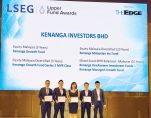
KUALA LUMPUR, MALAYSIA – Media OutReach Newswire – 9 April 2026 – Kenanga Investors Berhad (“Kenanga Investors“) has swept four accolades at the LSEG Lipper Fund Awards 2026 (“the Awards“).

Xav Feng, Asia Pacific Research director, LSEG Lipper, Christopher Kok, Head of Equities, Kenanga Investors Berhad, Lee Sook Yee, Chief Investment Officer, Mohd Faiz Hamsidi, Fixed Income Fund Manager, and Kuek Ser Kwang Zhe, Wealth editor, The Edge Malaysia.

The firm was recognised across various categories, a testament to its continued outperformance:

  1. Kenanga Growth Fund (“KGF“) – Best Equity Malaysia – Malaysia Provident Funds over 5 Years
  2. Kenanga Growth Fund Series 2 MYR Class (“KGFS2“) – Best Equity Malaysia Diversified – Malaysia Provident Funds over 3 Years
  3. Kenanga Malaysian Inc Fund (“KMIF“) – Best Equity Malaysia Diversified – Malaysia Provident Funds over 10 Years
  4. Kenanga Managed Growth Fund (“KMGF“) – Best Mixed Asset MYR Balanced Malaysia – Malaysia Provident Funds over 10 Years

Datuk Wira Ismitz Matthew De Alwis, Chief Executive Officer and Executive Director said, “We are honoured to be recognised by LSEG Lipper for our consistent performance in 2025 against a backdrop of volatility, underpinned by heightened trade wars. During the year, geopolitical risks and trade tensions caused sudden swings in sentiment, which affected small- and mid-cap stocks. We steered clear of headlines and focused on sustainable earnings. This allowed us to selectively position ourselves for when valuations turned compelling while reducing exposure when risks escalated which proved effective and underscores our expertise in Malaysian equities”.

Since the launch of KGF in 2000 and KGFS2 in 2018, both funds have demonstrated consistent performance. As of December 2025, each has surpassed RM1 billion in assets under management1, underscoring Kenanga Investors’ disciplined investment approach and commitment to long term value creation. This year’s Awards also mark KGF’s sixth Lipper title while KGFS2 celebrates its inaugural win.

Lee Sook Yee, Chief Investment Officer, elaborated on the firm’s approach, “We maintained a disciplined bottom‑up stock‑picking strategy anchored in company fundamentals, giving us the conviction to stay invested in high quality businesses with strong balance sheets and structural growth drivers. This was supported by a strict risk management framework focused on sector diversification, prudent buffers, and incremental rebalancing. In 2026, we will emphasise themes such as artificial intelligence and data centre expansion, infrastructure, utilities, and selective REITs, while remaining true to our investment philosophy”.

Over the five‑year period ended 31 December 2025, KGF delivered a total return of 48.82%, significantly outperforming its benchmark2 of 3.25%. Similarly, KGFS2 achieved a robust 49.92% return compared to its benchmark’s3 46.93%. KMIF also recorded solid results with a 32.67% return against a benchmark4 of 5.26%, while KMGF posted a commendable 25.88% return, exceeding its benchmark’s5 11.32%.

The firm also recently introduced the Kenanga Growth Fund Series 3 (“KGFS3“), the third fund within its flagship conventional fund series. The KGFS3 utilises the firm’s proven investment philosophy and is managed with an active investment strategy depending on the market conditions and outlook, combining a top-down asset and sector allocation process with a bottom-up stock selection methodology.

The LSEG Lipper Fund Awards, granted annually, highlight funds and fund companies that have excelled in delivering consistently strong risk-adjusted performance relative to their peers. The Awards are based on the Lipper Leader for Consistent Return rating, which is a risk-adjusted performance measure calculated over 36, 60 and 120 months. This year’s achievements will serve to strengthen Kenanga Investors’ market leadership and drive its focus on creating enduring value for its investors.

For more information about Kenanga Investors, please visit kenangainvestors.com.my.

1 Source: Lipper, 31 December 2025

2 Benchmark: FTSE Bursa Malaysia KLCI CR

3 Benchmark: 8% p.a.

4 Benchmark: FTSE Bursa Malaysia Top 100 CR

5 Benchmark: FTSE Bursa Malaysia Top 100 Index (50%) & All MGS Index by RAM Quant Shop (50%)

Hashtag: #Kenanga

The issuer is solely responsible for the content of this announcement.

Kenanga Investors Berhad 199501024358 (353563-P)

We provide investment solutions ranging from collective investment schemes, portfolio management services, alternative investments, as well as wills and trusts for retail, corporate, institutional, and high net worth clients via a multi-distribution network.

The LSEG Lipper Fund Awards 2026 recognised four funds under the Malaysia Provident Funds category; Kenanga Growth Fund was named Equity Malaysia (5 Years), Kenanga Growth Fund Series 2 was awarded Equity Malaysia Diversified (3 Years), Kenanga Malaysian Inc Fund was awarded Equity Malaysia Diversified (10 Years) while Kenanga Managed Growth Fund was recognised with the title Mixed Asset MYR Balanced – Malaysia (10 Years).

The Hong Kong-based Asia Asset Management’s (“AAM“) 2026 Best of the Best Awards awarded Kenanga Investors under the following categories, Malaysia Best Impact Investing Manager, Best Impact Investing Manager in ASEAN, Malaysia Best Equity Manager, Malaysia CEO of the Year (Co-Winner), Malaysia CIO of the Year, Malaysia Best House for Alternatives and Malaysia Best ESG Engagement Initiative.

At the AAM ETF Awards 2026, Kenanga Investors received an accolade under the category Malaysia Leverage and Inverse ETF of the Year for the Kenanga KLCI Daily 1x Inverse ETF. The IFN Investor Awards 2025 awarded the Kenanga Islamic Balanced Fund under the categories of “IFN Investor Best Balanced Mixed Assets Fund in Malaysia — MYR 2025”, “IFN Investor Best Balanced Mixed Assets Fund in Asia Pacific 2025”, and “IFN Investor Best Global Balanced Mixed Assets Fund 2025”.

The FPAM Financial Planning Leadership Award 2025 presented Kenanga Investors with the Platinum Award under the Charter Member Category, highlighting our dedication to shaping the future of financial planning. The FSMOne Recommended Unit Trusts Awards 2025/2026 has awarded the Kenanga Growth Fund Series 2 with the “Sector Equity — Malaysia Focused” award for the fourth consecutive year since 2022. For the ninth consecutive year, we were affirmed an investment manager rating of IMR-2 by Malaysian Rating Corporation Berhad, since first rated in 2017. The IMR rating on reflects the fund management company’s well-established investment processes and sound risk management practices.

This Press Release was issued by Kenanga Group’s Marketing, Communications & Sustainability department.

Matein Khalid The US-Israel war with Iran has now stretched beyond five weeks, inflicting extensive damage on energy infrastructure, airports, ports and commercial and technology hubs across the six GCC states. The closure of the Strait of Hormuz to Gulf oil and gas exports is, in itself, an economic catastrophe. It forces the GCC to conclude that energy export security is not national security. Drone and missile attacks triggered a sharp […]

HONG KONG SAR – Media OutReach Newswire – 9 April 2026 – Jardine Matheson Holdings Limited (Jardines) has released its 2025 Sustainability Report, which outlines the Group’s approach to sustainability, progress towards its objectives and 2025 performance. The report can be found at sustainability.jardines.com/2025/.

Jardines embeds sustainability within its value creation strategy and applies a rigorous lens to investment and capital allocation decisions. There are clear sustainability expectations for our diverse portfolio of market‑leading businesses with the aim to build resilience and mitigate emerging risks.

Earlier, Jardines announced its strategic repositioning from owner-operator to an investment company with a focus on sustainable, top-quartile Total Shareholder Return. Jardines is also committed to active portfolio value creation, talent development, world-class governance and sustainability improvements across its portfolio.

In 2025, Jardine Matheson delivered strong progress on its ‘Building Towards 2030’ sustainability strategy:

  • Climate action – Decarbonisation remains top priority. 8% decline in scope 1 and 2 emissions from companies on the Decarbonisation and Transition pathway
  • Responsible consumption – Improvements in waste reduction, resource efficiency and circularity initiatives. 29% decrease in total waste generated and 95% total waste diverted from landfill
  • Social inclusion – Ongoing investments in education, health and livelihoods. US$59m in community investments made
  • Governance and transparency – Enhanced sustainability governance and disclosure as Jardines maintains portfolio oversight of sustainability across its portfolio. ESG ratings improvement reflect positive response on sustainability performance (S&P: 82nd percentile, ISS ESG: Prime)


Ben Keswick, Executive Chairman of Jardine Matheson said
, “Sustainability is foundational to how we protect and enhance economic value and build long-term resilience across Jardine Matheson – it is an essential value that every business in our portfolio must commit to and that guides the investment decisions we make. We will continue to embed sustainability in our strategy and portfolio management decisions, with a clear focus on decarbonisation, by setting clear commitments, measuring progress against our roadmaps, and applying disciplined governance across our portfolio.”

Decarbonisation is top priority
Contributing to a sustainable, low-carbon future is a strategic priority for Jardines. In 2025, the Group delivered an 8% reduction in total scope 1 and 2 emissions, reflecting steady progress across its diversified portfolio. This was supported by a continued shift away from fossil-fuel energy, with renewable energy accounting for 45% of total energy consumption, alongside an overall reduction in energy use.

Jardines’ decarbonisation approach is structured around two pathways: a Decarbonisation Pathway, and a Transition Pathway for mining and energy businesses.

In 2025, Jardines’ portfolio companies began formal reporting on climate risks and opportunities to their audit committees, following the integration of climate risks into existing ERM processes the prior year. Alongside, Jardines is also integrating sustainability factors into investment due diligence and decision-making, ensuring material sustainability-related aspects of an investment are considered as Jardines continues to unlock value creation for its stakeholders.

Looking forward
Looking ahead, Jardines will continue to embed sustainability as a core value driver across its portfolio by setting clear commitments and prioritising decarbonisation. The Group will continue to strengthen governance and incentives to drive accountability and deliver on scope 1 and 2 emissions reduction pathways.

To access the Sustainability Report 2025, please visit sustainability.jardines.com/2025/ or click here to download the PDF.
Hashtag: #JardineMatheson


The issuer is solely responsible for the content of this announcement.

Jardine Matheson

Jardine Matheson (Jardines) is a diversified, Asia-focused investment company. Founded in China in 1832, Jardines creates value for our stakeholders by building lasting, scalable businesses in Asia that produce sustainable returns and market leading services and products.

We ensure highly-qualified boards and leadership teams are in place across the Group, with incentives aligned to driving shareholder value. At the holding company level, we aim for decisive portfolio management built on disciplined capital allocation and strong investment expertise.

At Jardines, we value integrity and long-term partnerships. We ensure global best practice in risk management and governance is embedded across our portfolio, and coupled a strong balance sheet with excellent access to low-cost funding from banks and the capital markets.

Since our founding, Jardines has benefitted from the role of family shareholders who act as long term stewards of our values and commitments – which includes embedding sustainability across our portfolio companies and doing right by our communities for the long term. We are proud to build value for shareholders while also making a positive contribution to the communities we serve.

Jardine Matheson holds interests in Hongkong Land (54.7%), DFI Retail Group (77.5%), Mandarin Oriental (100%), Jardine Pacific (100%), Jardine Cycle & Carriage (JC&C) (85.7%), and Zhongsheng (21.4%). JC&C in turn has a 50.1% shareholding in Astra.

Jardine Matheson Holdings Limited is a listed company with a primary listing on the London Stock Exchange and a secondary listing in Singapore.

SINGAPORE – Media OutReach Newswire – 8 April 2026 – A new documentary Building Icons: The Global One explores the complexities of architecture and engineering, with the team behind The Global One – showcasing how one of Taiwan’s most earthquake-resistant residential complexes came to life. The documentary is set to premiere in Southeast Asia on the Discovery Channel on Friday, April 10 2026 at 7:10 PM SGT and on Discovery Asia on Sunday, April 12 at 9:00 PM SGT.

Set in the Nangang district in Taipei, the new documentary features a residential development designed to withstand major earthquakes, typhoons and extreme weather conditions. The project faced extraordinary engineering challenges due to its location on soft ground and vulnerability to earthquakes, conditions rarely encountered in urban environments.

The Global One is the realization of the vision of Nankang Rubber Tire Corporation’s late Chairman, Lin Hsueh‑Pu, and redefines the standards of safety in residential developments, with a goal to last a century and provide peace of mind to its residents. The documentary follows teams on the ground as they combine advanced engineering and rigorous testing, to enhance the building’s safety specifications, beyond other critical buildings in Taiwan.

Audiences will get insight into engineering practices and hear how The Global One is built for extreme disaster resilience and long‑term durability, with a structure that incorporates special shock absorbers into the walls to dampen the violent tremors, as well as specific electrical wiring and pipes, which were carefully selected to reduce fire risk and function during emergencies.

Catch Building Icons: The Global One in Southeast Asia on Discovery Channel, Friday, April 10 2026 at 7:10 PM SGT and on Discovery Asia on Sunday, April 12 at 9:00 PM SGT.

The issuer is solely responsible for the content of this announcement.

About Discovery Channel

Across every platform, Discovery Channel is dedicated to connecting audiences who have a passion for adventure and crave a connection to the world around them. Popular series including Deadliest Catch, Expedition Unknown and Gold Rush, along with Shark Week, the annual tentpole programming event, serve as trusted portals that transport viewers directly into thrilling, real, high stakes moments. Through smart, authentic characters whose stories inform and inspire, Discovery celebrates the men and women who will stop at nothing to explore new spaces and achieve their dreams. For more information, please visit

Arabian Post Staff -Dubai Physical crude prices for immediate delivery have surged to levels close to $150 a barrel for some grades, leaving paper benchmarks lagging and exposing the depth of the supply strain caused by the Hormuz crisis. European and Asian refiners have been forced to pay sharply higher premiums for cargoes that can be processed now, as the disruption to flows through the Strait of […]

Arabian Post Staff -Dubai Airlines and energy traders are bracing for a prolonged squeeze in aviation fuel supplies even after the Strait of Hormuz reopened under a two-week ceasefire arrangement announced by US President Donald Trump, with the head of the International Air Transport Association warning that disruption to jet fuel availability could take months to unwind. Oil prices dropped sharply below $100 a barrel after the […]

VISHNU RAJA
RYO YAMADA
HITORI GOTOH
IKUYO KITA
Just in:
Fast Just Got Fastest: STING Energy Boost™ Celebrates Kimi Antonelli’s Formula 1® World Championship and the Fan Energy Behind It // Emaar approves Development buyout ahead of planned delisting // Geely’s i-HEV Intelligent Hybrid Technology Offers a New Direction for Gasoline-Powered Vehicles // Xi Jinping Preparing For A Trilateral Summit With Trump And Putin At APEC Summit On Nov 18-19 // Hong Kong mandates crypto transaction disclosures to tax authorities // Middle East governments assess Iran war after US vote // APT29-linked campaign exploits outdated Apple and Android software // Oil and chip shares retreat after Democratic victories // Ta’ziz finalises $1.39bn funding for Ruwais industrial facilities // Ousted top Kochi cop gets IG post // OpenAI identifies 948 Linux privilege escalation flaws using AI // Trump’s Iran War Has A Share Of Contribution To His Midterm Debacle // Dubai boat show confirms international shipyard line-up for November // Meraas showcases five residential zones at Dubai Design Week // Millions Of Indians May Soon Be Deprived Of Government Assistance // Oil advances towards $100 as tanker attacks persist // Miss Universe Hong Kong Jen Zhou Departs for Puerto Rico to Compete in the 75th Miss Universe World Final // CR Longdation Aethereal Cybersecurity × Global Cybersecurity Alliance (GCSA) Join Hands to Establish the “AI and Cybersecurity Research Centre” // TVM –Mangaluru Vande Bharat claims top spot // e-Crime Bureau Signs Cybersecurity Partnership With Smart Africa, Reinforcing Its Global Expansion //